13 Burst Fade Haircuts for Men That Look Insanely Sharp
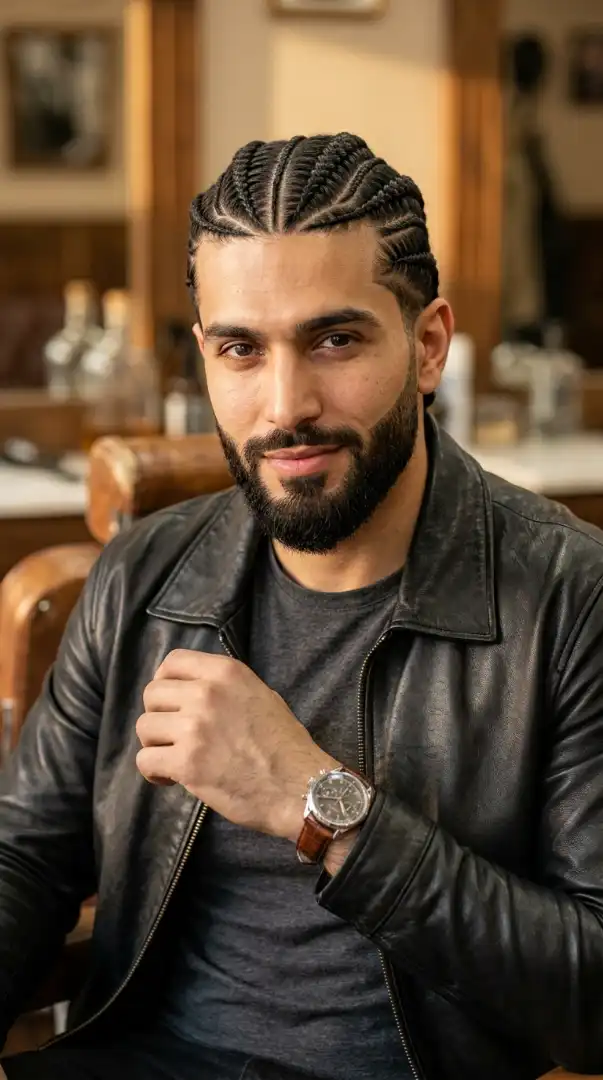
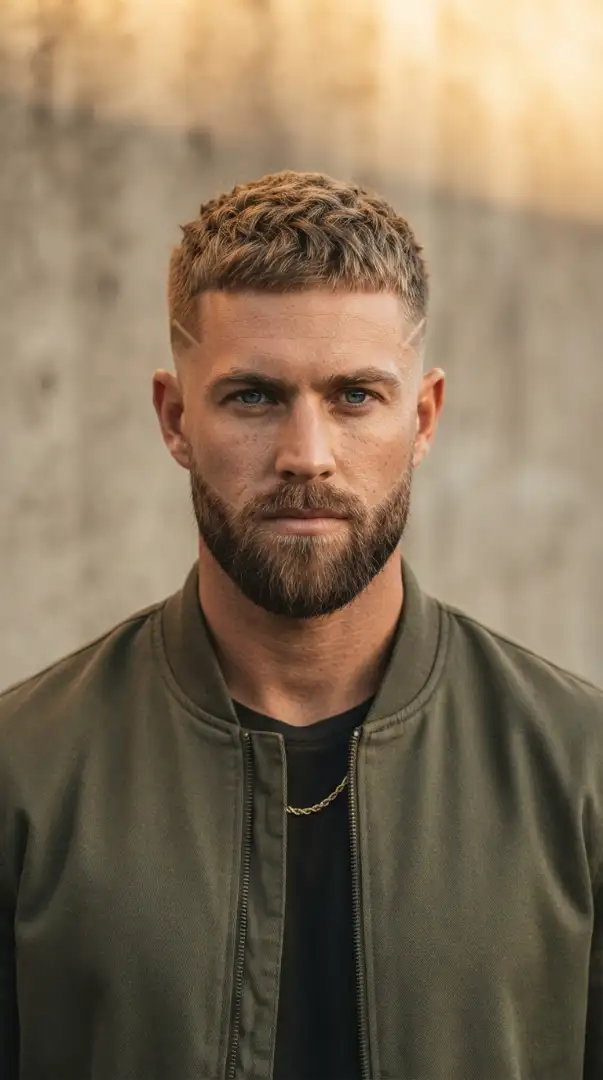
1 of 13 — The Burst Fade Powerhouse

Why the Burst Fade Powerhouse Works for Your Face Shape
The burst fade is one of the sharpest cuts you can walk into 2026 with, and the reason it photographs so well starts with the curve of the fade itself. Instead of a straight line down the side of the head, the burst fade sweeps around the ear in a semi-circle, which visually softens a Square jaw while still keeping the top dense and structured. This particular shape works best on Square, Oval, and Diamond faces because the rounded fade line balances out strong angles at the jawline, while the height retained on top adds vertical proportion without overwhelming the face. Round faces can still pull off a burst fade, but should ask for a slightly higher starting point so the curve doesn’t add extra width at the cheek.
Oblong faces should be more cautious here. Because the burst fade keeps noticeable density and height on top, it can stretch an already long face even further, so a lower burst starting point and reduced top length is the safer call for that face shape.
Grooming Kit You Need for This Cut
- Clippers: Wahl Magic Clip (Model 5049-400) or Andis Master (Model 01557) for the base cut and curved fade blend
- Trimmer/Outliner: Andis T-Outliner (Model 04710) for the crisp lineup and curved edge work around the ear
- Finishing Tools: Kent 81T fine-tooth comb for parting precision, Denman boar bristle brush for final polish
- Styling Product: Layrite Original Pomade (medium hold) — a dime-sized amount worked from root to tip for texture and shine
- Maintenance: Honest Amish beard oil, a few drops daily to keep the beard-to-fade connection looking sharp
How Often You Need a Touch-Up
Maintenance level: Medium-High. The curved fade line on this cut is precise, so you’re looking at a barbershop visit every 10-14 days to keep the burst shape crisp — this is not a fade that ages gracefully past two weeks. The top length can stretch to 5-6 weeks before a full cut is needed. Daily styling takes about 5-7 minutes: towel-dry, apply a dime-sized amount of pomade, comb through, then finger-style for texture. Expect to spend roughly $25-40 per touch-up visit, meaning $50-80 a month is realistic if you’re keeping the fade tight. This is an intermediate-difficulty cut to maintain at home between visits, since blending the curve yourself without a barber’s precision is genuinely hard.
If this level of upkeep sounds like more than you want, the next style on this list trades the curved precision for a straighter, lower-maintenance line that still looks razor sharp.
Exactly What to Say to Your Barber
Say this to your barber: “I want a burst fade with a mid skin fade starting just above the ear and curving around it in a semi-circle instead of a straight line. Take the top to 3 inches with scissor-over-comb for movement. Keep enough weight at the crown for texture. For the fade, blend from a guard #1 near the ear up to a guard #4 at the parietal ridge, keeping the curve tight and symmetrical on both sides. Taper the beard into the fade at the jawline, keeping length at 5mm. Finish with a sharp lineup at the temples and a natural, undefined hairline at the front.”
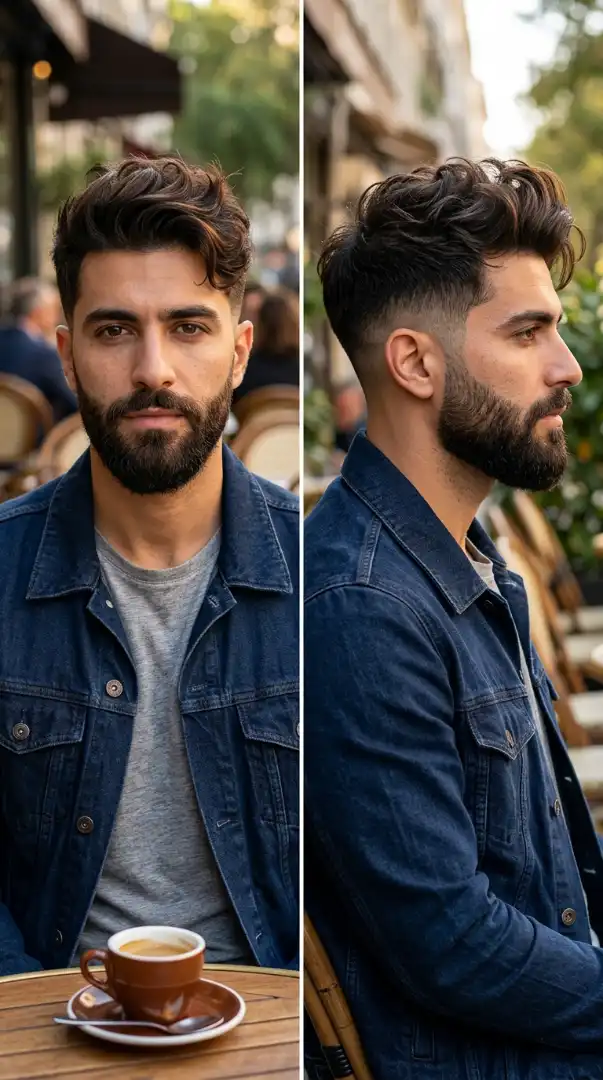
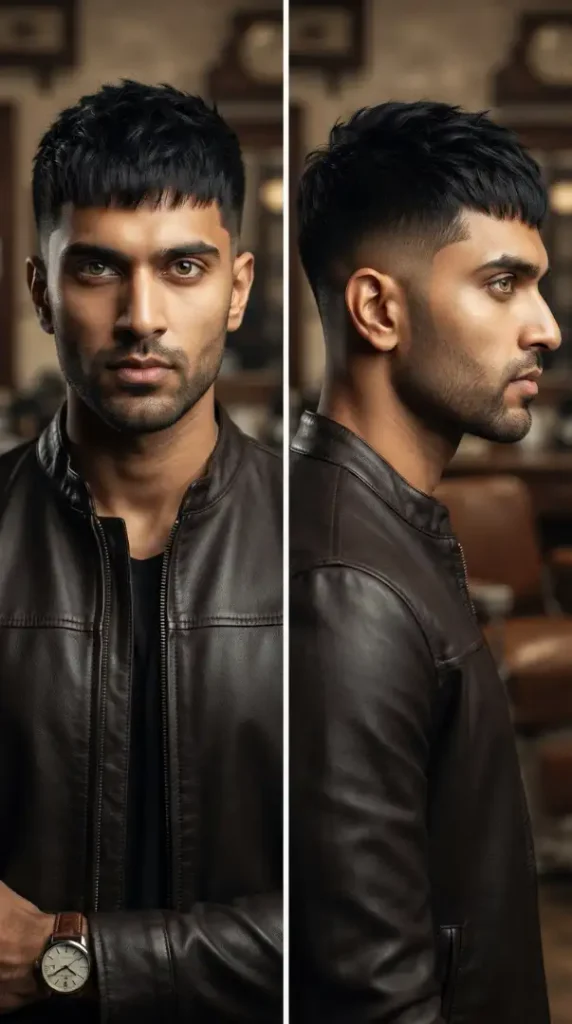
2 of 13 — The Modern Burst Fade Icon
Why the Modern Burst Fade Icon Works for Your Face Shape
This burst fade haircut men keep coming back for pairs a textured crop with the same curved fade line as its predecessor, but the difference is in the top length and how it’s cut. The added texture on top draws attention upward and slightly narrows an Oval face’s natural width, which is exactly why Oval and Heart-shaped faces get the most out of this specific version. The crop’s forward-leaning fringe also softens a wider forehead, making it one of the more forgiving burst fade variations on this list.
Diamond faces benefit here too, since the textured top adds width at the crown that balances a narrower jawline. Square faces can still wear it, but should ask for slightly less texture on top so the cut doesn’t compete visually with an already strong jawline. This is a burst fade haircut men with rounder faces should approach carefully, since the added crown height can make cheeks appear wider by comparison.
Grooming Kit You Need for This Cut
- Clippers: Andis Master (Model 01557) for the fade, Wahl Magic Clip (Model 5049-400) as a backup for detailing
- Trimmer/Outliner: Andis T-Outliner (Model 04710) for the curved lineup around the ear
- Finishing Tools: Denman boar bristle brush for polish, wide-tooth comb for detangling the textured top
- Styling Product: American Crew Fiber (matte finish, high hold) — a pea-sized portion for definition without shine
- Maintenance: Viking Revolution beard oil, applied daily to keep stubble soft and healthy
How Often You Need a Touch-Up
Maintenance level: Medium. Expect a barbershop visit every 2-3 weeks to keep the curved fade sharp, while the textured top can stretch to 6 weeks before needing a trim. Daily styling takes 5-6 minutes: apply a pea-sized amount of fiber, work through damp hair with fingers, then push texture toward the front. Monthly cost typically runs $50-70 depending on your barber’s rates. This is a beginner-to-intermediate cut to maintain at home, since the top styling is forgiving even as the fade grows out slightly.
If you like the fade but want even less daily effort, keep scrolling — the next style trades texture for a cleaner, wash-and-go silhouette.
Exactly What to Say to Your Barber
Say this to your barber: “I want a burst fade haircut men are asking for right now — a mid skin fade curving around the ear, blending into a textured crop on top. Take the top to 2.5 inches and cut it with a crop technique for texture, not a blunt cut. For the fade, blend from a guard #1 near the ear to a guard #3 at the parietal ridge. Keep my stubble tapered into the fade at the jawline. Finish with a sharp lineup and a slightly undefined, natural-looking hairline at the front.”
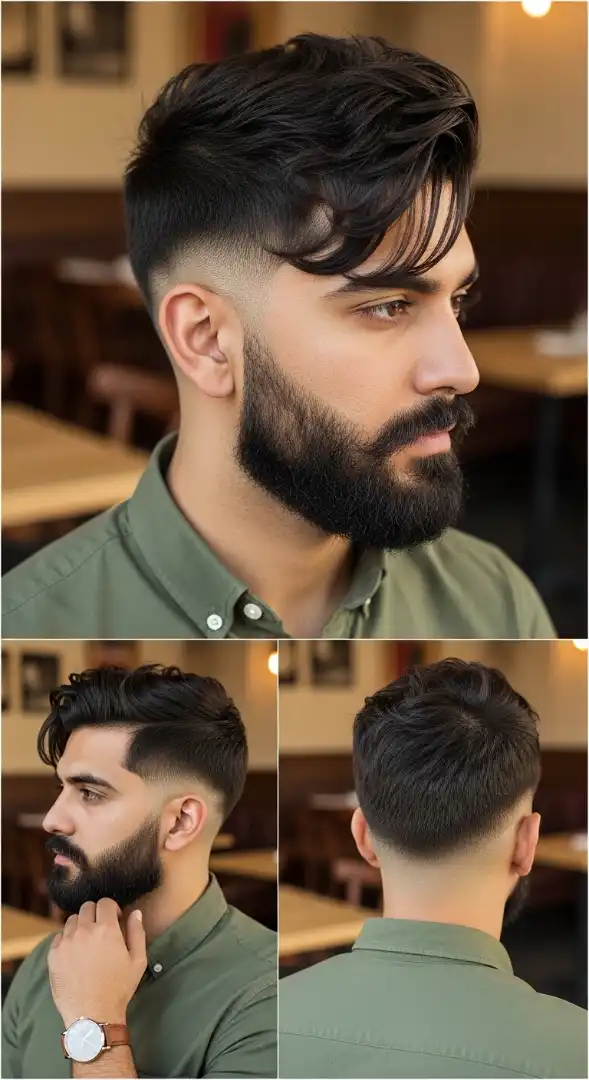
3 of 13 — The High Skin Fade Sharpshooter

Why the High Skin Fade Sharpshooter Works for Your Face Shape
A high skin fade is the boldest fade height you can ask for, and that boldness is exactly what makes it so flattering on a Round face. Because the skin-close fade starts so high on the sides, it removes almost all visual width below the temple, creating a strong vertical line that elongates the face and adds definition a Round jaw naturally lacks. This is one of the few cuts on this list that genuinely reshapes the perceived proportions of a rounder face rather than just complementing it.
Oval and Square faces also wear a high skin fade extremely well, since the dramatic contrast between the bald sides and the dense top emphasizes bone structure. Faces on the narrower side — particularly Oblong and Diamond shapes — should be cautious with this height, since removing that much width at the temple can make an already long face look even longer. A mid or low skin fade is usually the safer alternative for those shapes.
Grooming Kit You Need for This Cut
- Clippers: Andis Master (Model 01557) for the bald skin blend, Wahl Magic Clip (Model 5049-400) for detailing
- Trimmer/Outliner: Andis T-Outliner (Model 04710) for the razor-sharp perimeter lineup
- Finishing Tools: Kent 81T fine-tooth comb for the side part, Denman boar bristle brush for polish
- Styling Product: Layrite Original Pomade (medium hold), a dime-sized amount for a classic finish
- Maintenance: Honest Amish beard oil, applied daily to keep the full beard conditioned against the skin-close fade
How Often You Need a Touch-Up
Maintenance level: High. A high skin fade grows out fast and loses its sharpness quickly, so plan on a barbershop visit every 1-2 weeks to maintain the bald blend. Top length can stretch to 4-5 weeks. Daily styling takes about 5 minutes: apply a dime-sized amount of pomade and comb into a defined side part. Monthly cost typically runs $60-100 given the frequency of visits required. This is an advanced cut to maintain at home, since a bald skin fade is very difficult to touch up without professional clippers and a steady hand.
If that visit frequency feels like a lot, the next style on this list keeps the sharpness but stretches your barbershop visits out considerably longer.
Exactly What to Say to Your Barber
Say this to your barber: “I want a high skin fade starting above the temple and blending down to skin with zero guard at the bottom. Take the top to 2 inches with a blunt cut for weight and a defined side part. For the fade, blend from skin at the bottom up through a guard #2 near the top of the fade, into the parietal ridge. Taper my beard into the fade cleanly at the jawline. Finish with a razor-sharp lineup at the temples and hairline.”
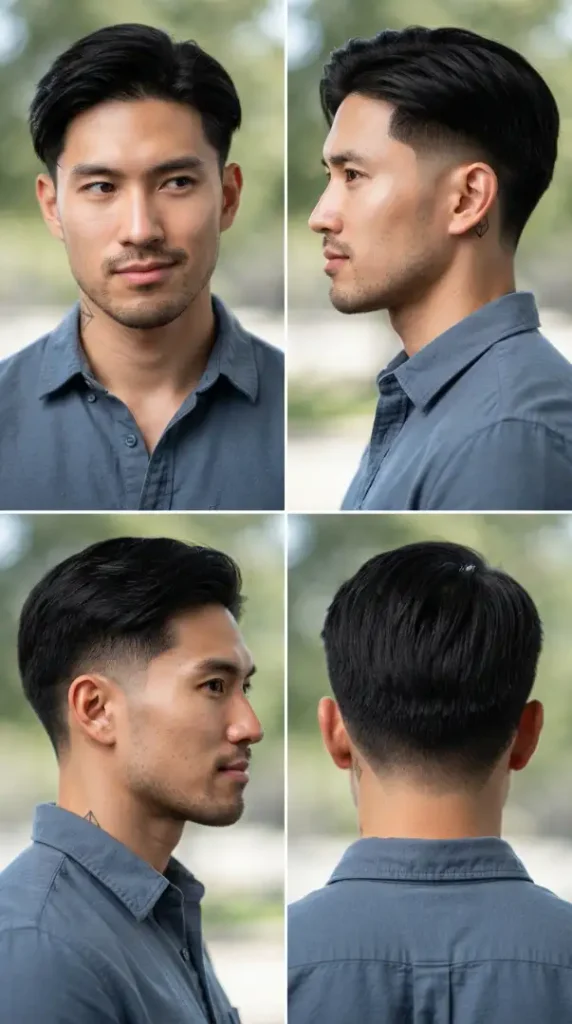
4 of 13 — The Drop Fade Trendsetter
Why the Drop Fade Trendsetter Works for Your Face Shape
A drop fade is defined by one detail: the fade line curves and drops noticeably lower behind the ear instead of running in a straight horizontal path. That single curve changes how the whole cut reads on a Diamond face, softening the narrow forehead and pointed chin that Diamond faces are known for by adding a rounded, organic line where the face is otherwise all angles. It’s one of the most flattering fade styles for Diamond and Heart-shaped faces specifically because of that dropped curve.
Oval faces do well with a drop fade too, since the style doesn’t add width or length, it simply adds visual interest at the temple. Square and Round faces can wear it, but should ask their barber to keep the drop subtle rather than dramatic, since an exaggerated drop fade can pull unwanted attention toward the jaw and cheek area on those shapes.
Grooming Kit You Need for This Cut
- Clippers: Wahl Magic Clip (Model 5049-400) for the base fade, Andis Master (Model 01557) for detailing the drop curve
- Trimmer/Outliner: Andis T-Outliner (Model 04710) for the precise curved lineup behind the ear
- Finishing Tools: Denman boar bristle brush for polish, wide-tooth comb for the natural side sweep
- Styling Product: American Crew Fiber (matte finish, high hold), a pea-sized portion worked through damp hair
- Maintenance: Viking Revolution beard oil for the stubble, a few drops applied nightly
How Often You Need a Touch-Up
Maintenance level: Medium. The curved drop line needs a barbershop visit every 2-3 weeks to stay defined, while the top can go 5-6 weeks between full cuts. Daily styling takes roughly 5 minutes: apply a pea-sized amount of fiber and sweep the top to one side. Monthly cost typically runs $50-70. This is an intermediate cut to maintain at home, since the curved drop is trickier to touch up than a straight fade but still manageable with a steady trimmer.
If the curve of a drop fade isn’t quite your thing, the next style keeps things short and clean with a straight taper that’s even easier to grow out.
Exactly What to Say to Your Barber
Say this to your barber: “I want a drop fade where the fade line curves and drops noticeably lower behind the ear instead of staying straight across. Take the top to 2.5 inches with scissor-over-comb for a natural side sweep. For the fade, blend from a guard #1 at the drop point up to a guard #3 at the parietal ridge, keeping the curve consistent on both sides. Keep my stubble light and even. Finish with a sharp lineup at the temples and a natural hairline at the front.”
5 of 13 — The Short Taper Fade Classic

Why the Short Taper Fade Classic Works for Your Face Shape
A short hair taper fade keeps length minimal everywhere, which is exactly why it’s such a strong option for an Oblong face. Instead of adding more height on top the way longer styles do, this cut keeps everything close and even, which stops the face from looking any longer than it already is. Oblong and Square faces benefit most here, since the short, even taper doesn’t exaggerate length in either direction.
Round faces can wear a short hair taper fade comfortably too, since the tight sides remove width without adding competing height on top. Diamond and Heart-shaped faces are the ones to be more thoughtful with, since this cut offers very little volume to balance a narrower chin or forehead — a slightly longer top with light texture is usually a better call for those shapes.
Grooming Kit You Need for This Cut
- Clippers: Wahl Magic Clip (Model 5049-400) for the full taper, Andis Master (Model 01557) for a tighter finish if preferred
- Trimmer/Outliner: Andis T-Outliner (Model 04710) for the clean, low lineup
- Finishing Tools: Kent 81T fine-tooth comb for a quick part, Denman boar bristle brush for daily upkeep
- Styling Product: Layrite Original Pomade (medium hold), a small dime-sized amount for light hold and natural finish
- Maintenance: Honest Amish beard oil applied daily to keep the full beard conditioned
How Often You Need a Touch-Up
Maintenance level: Low. This is one of the easiest cuts on the list to maintain, needing a barbershop visit only every 3-4 weeks since the short length hides regrowth well. Daily styling takes just 3-5 minutes: towel-dry, run a small amount of pomade through, and go. Monthly cost typically runs $30-50. This is a beginner-friendly cut for home maintenance, since the even taper is forgiving even with a basic clipper set.
If a wash-and-go routine like this appeals to you, the next style pushes even further into low-effort territory with an unexpected twist on a classic silhouette.
Exactly What to Say to Your Barber
Say this to your barber: “I want a short hair taper fade — keep the top short, around 1.5 inches, with a blunt cut for a clean, even finish. For the fade, blend from a guard #2 at the bottom up to a guard #5 near the top, keeping the transition short and tight all around. Keep my beard full but neatly edged. Finish with a clean, low lineup at the hairline and temples, nothing too dramatic.”
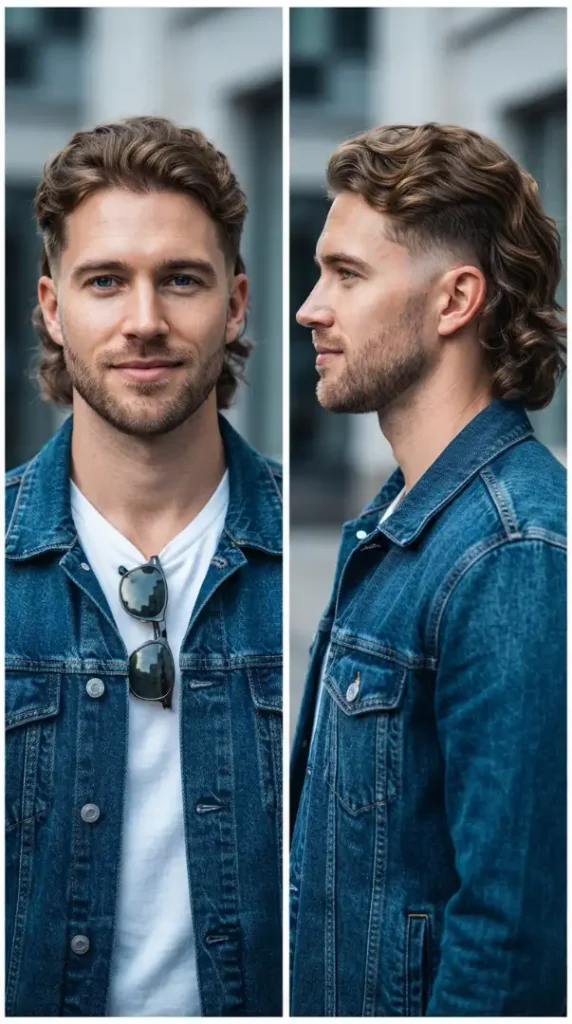
6 of 13 — The Modern Mullet Rebel
Why the Modern Mullet Rebel Works for Your Face Shape
A modern mullet with faded sides works by creating deliberate contrast: short, clean sides paired with noticeably longer length at the back and crown. On a Heart-shaped face, that longer back adds weight and volume exactly where the face narrows toward the chin, which helps balance out a wider forehead. It’s one of the more flattering ways to wear extra length without the style looking unstructured.
Oval and Square faces also take well to this cut, since the faded sides keep things clean and the length at the back stays purely a style choice rather than something that changes the face’s proportions. Round faces should be a little more careful, since the extra volume at the crown and back can add visual width if the barber doesn’t keep the sides tight enough — a higher, tighter fade helps counter that.
Grooming Kit You Need for This Cut
- Clippers: Wahl Magic Clip (Model 5049-400) for the faded sides, Andis Master (Model 01557) for detail work
- Trimmer/Outliner: Andis T-Outliner (Model 04710) for the clean lineup where the fade meets the longer length
- Finishing Tools: Denman boar bristle brush for the wavy top, wide-tooth comb for detangling length at the back
- Styling Product: Layrite Original Pomade (medium hold), a dime-sized amount worked through the longer sections for natural wave definition
- Maintenance: Viking Revolution beard oil for the stubble
How Often You Need a Touch-Up
Maintenance level: Medium. The faded sides need a barbershop visit every 2-3 weeks to stay sharp, while the length at the back and crown can go 8-10 weeks or longer since you’re growing it out on purpose. Daily styling takes about 5-7 minutes: apply a dime-sized amount of pomade and scrunch or comb through the wavy back for texture. Monthly cost typically runs $40-60. This is an intermediate cut to maintain at home, since keeping the fade sharp between visits takes some practice with a trimmer.
If you like the idea of extra length but want something a little more traditional, the next style on this list is a straightforward taper that’s easy to explain to any barber.
Exactly What to Say to Your Barber
Say this to your barber: “I want a modern mullet with faded sides — a mid skin fade on the sides blending up into a longer top and back. Take the sides down to skin at the bottom, blending through a guard #1 to a guard #3 near the crown. Leave the back and crown noticeably longer, at least 4-5 inches, and don’t cut into the length there. Keep my stubble light and even. Finish with a clean lineup at the temples, but leave the nape a little looser for the mullet shape.”
7 of 13 — The Taper Icon
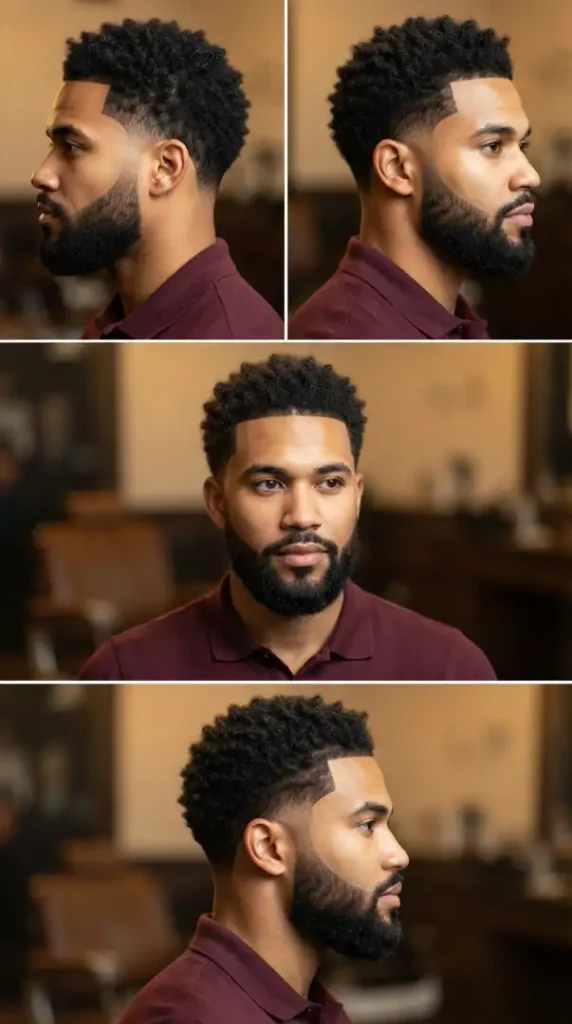
Why the Taper Icon Works for Your Face Shape
A taper haircut is the most versatile fade-adjacent style on this list because the length reduction is gradual rather than dramatic, which makes it genuinely wearable on nearly every face shape. On a Square face specifically, the soft graduation at the sides takes some of the visual weight off the jaw without erasing the strong bone structure that makes Square faces so photogenic in the first place.
Oval, Diamond, and Heart-shaped faces all handle a taper haircut easily too, since the gradual blend doesn’t force any particular proportion. Round faces benefit from asking for a slightly tighter taper at the sides, since a looser taper can read as more width than a true fade would. This is genuinely the safest, most universally flattering cut in this entire list if you’re not sure what will suit you.
Grooming Kit You Need for This Cut
- Clippers: Wahl Magic Clip (Model 5049-400) for the gradual taper, Andis Master (Model 01557) for extra precision on coily texture
- Trimmer/Outliner: Andis T-Outliner (Model 04710) for the clean, natural-looking lineup
- Finishing Tools: Denman boar bristle brush for definition, wide-tooth comb for detangling coily hair before cutting
- Styling Product: American Crew Fiber (matte finish, high hold), a pea-sized portion for defined texture
- Maintenance: Honest Amish beard oil applied daily for the full beard
How Often You Need a Touch-Up
Maintenance level: Low-Medium. Because the taper is gradual rather than sharp, it grows out more gracefully than a hard fade, needing a barbershop visit every 3-4 weeks. Top length can go 6-8 weeks depending on how much texture you like to keep. Daily styling takes 5 minutes: apply a pea-sized amount of fiber and work through for definition. Monthly cost typically runs $35-55. This is a beginner-friendly cut to maintain at home, since the soft graduation forgives small inconsistencies far more than a skin fade does.
If you love the low-maintenance nature of a taper but want one more layer of texture on top, the next style keeps things short while adding a wave pattern that photographs beautifully.
Exactly What to Say to Your Barber
Say this to your barber: “I want a classic taper haircut with a gradual length reduction from the top down to the hairline, no hard fade line. Take the top to 2 inches, keeping the coily texture with a natural finish, not too heavily thinned. For the taper, blend gradually from a guard #2 at the bottom to a guard #4 near the crown, with no visible sharp line. Keep my beard full and edged evenly. Finish with a soft, natural lineup at the hairline, not razor sharp.”
8 of 13 — The Wavy Burst Fade Charmer
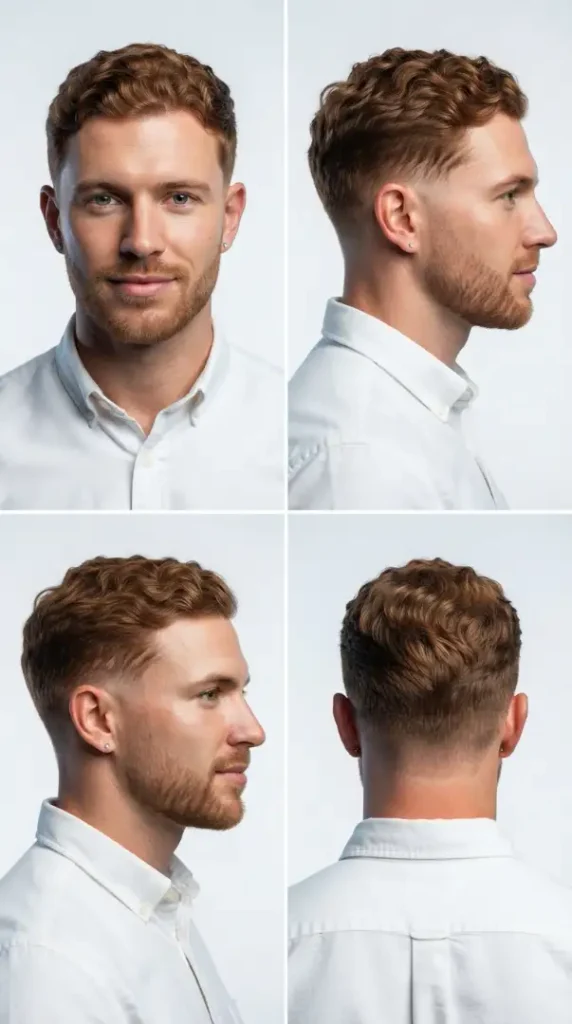
Why the Wavy Burst Fade Charmer Works for Your Face Shape
Burst fade short wavy hair works because the natural movement in the waves adds texture and dimension without adding real length, which makes it a strong match for an Oval face that already has balanced proportions and doesn’t need correction, just enhancement. The waves catch light beautifully and give the style a lived-in, effortless look that reads as natural rather than overly styled.
Round faces benefit from this cut too, since the wave pattern breaks up the outline of the head in a way that a completely smooth, straight top doesn’t, softening the overall silhouette. Square and Diamond faces can absolutely wear burst fade short wavy hair as well, though a slightly tighter curve on the burst fade helps keep the sharper features of those face shapes from getting visually overwhelmed by too much texture up top.
Grooming Kit You Need for This Cut
- Clippers: Andis Master (Model 01557) for the curved burst fade, Wahl Magic Clip (Model 5049-400) for detail work
- Trimmer/Outliner: Andis T-Outliner (Model 04710) for the lineup around the ear
- Finishing Tools: Denman boar bristle brush to define waves without disrupting the natural pattern, wide-tooth comb for detangling
- Styling Product: Layrite Original Pomade (medium hold), a dime-sized amount scrunched through damp hair to enhance the natural wave
- Maintenance: Viking Revolution beard oil applied daily for the light stubble
How Often You Need a Touch-Up
Maintenance level: Medium. The curved fade needs a barbershop visit every 2-3 weeks to stay sharp, while the wavy top can stretch to 6-7 weeks since the texture actually looks better with a little extra length. Daily styling takes 5-6 minutes: apply a dime-sized amount of pomade to damp hair and scrunch upward to encourage the wave pattern. Monthly cost typically runs $45-65. This is an intermediate cut to maintain at home, mainly because getting the curved fade line right takes some trimmer practice, while the wavy top is genuinely low-effort.
This wraps up the shorter, single-focus cuts on this list — the next several styles revisit these same keyword families with fresh looks, so keep scrolling for even more angles and inspiration.
Exactly What to Say to Your Barber
Say this to your barber: “I want burst fade short wavy hair — a curved fade that wraps around the ear, blending into a top that keeps enough length to show my natural wave pattern. Take the top to 2.5-3 inches and avoid over-thinning so the waves stay visible. For the fade, blend from a guard #1 at the curve up to a guard #3 at the parietal ridge. Keep my stubble light and even. Finish with a clean lineup at the temples and a soft, natural hairline.”
9 of 13 — The Street Burst Fade King
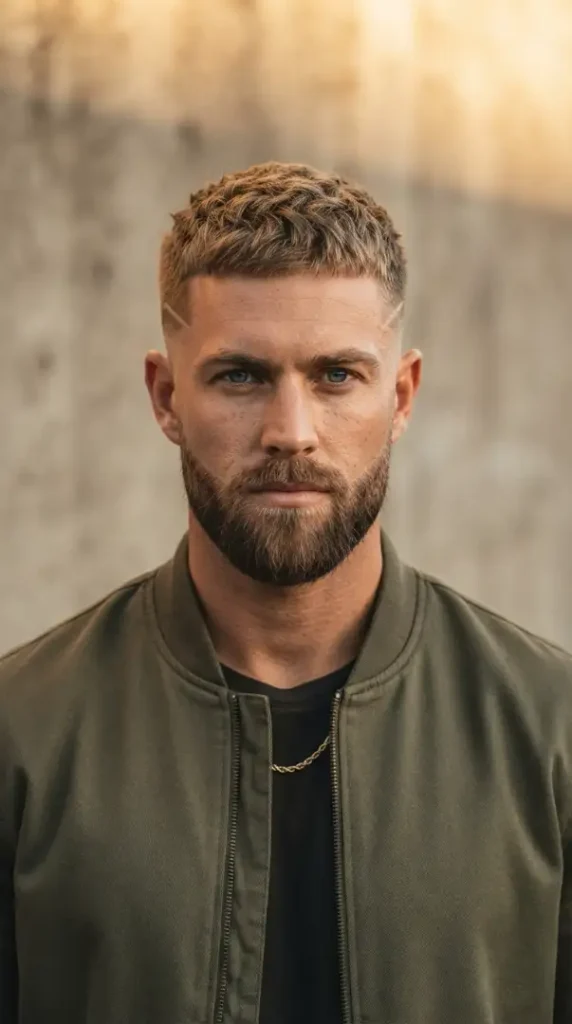
Why the Street Burst Fade King Works for Your Face Shape
This version of a burst fade haircut men wear for a street-ready look keeps the top cropped short instead of longer and textured, which changes how it flatters a Round face compared to the earlier burst fade styles on this list. The short, cropped texture on top adds height at the crown without adding width, giving a rounder face a sharper, more angular impression overall.
Square and Oval faces wear this cropped version just as easily, since the tight top texture pairs cleanly with strong or balanced bone structure alike. Oblong faces should ask for slightly more length on top than shown here, since an extremely short crop can occasionally emphasize a longer face shape rather than balancing it.
Grooming Kit You Need for This Cut
- Clippers: Andis Master (Model 01557) for the curved fade, Wahl Magic Clip (Model 5049-400) for the cropped top
- Trimmer/Outliner: Andis T-Outliner (Model 04710) for the sharp lineup around the ear
- Finishing Tools: Denman boar bristle brush for texture, Kent 81T fine-tooth comb for detail work
- Styling Product: American Crew Fiber (matte finish, high hold), a pea-sized portion for a textured, matte crop finish
- Maintenance: Honest Amish beard oil applied daily for the full beard
How Often You Need a Touch-Up
Maintenance level: Medium-High. The curved fade needs a barbershop visit every 10-14 days to stay defined, while the cropped top can go 4-5 weeks between cuts. Daily styling takes about 4-5 minutes: apply a pea-sized amount of fiber and press texture forward or upward depending on preference. Monthly cost typically runs $50-75. This is an intermediate-difficulty cut to maintain at home, since the curved line requires practice but the short top itself is low-maintenance.
If the street-style crop isn’t quite your speed, the next style takes the same fade family into a more polished, executive-ready direction.
Exactly What to Say to Your Barber
Say this to your barber: “I want a burst fade haircut men are wearing for a sharper street look — a mid skin fade curving around the ear, blending into a cropped top with matte texture. Take the top to 1.5-2 inches with a crop cut, not blunt. For the fade, blend from a guard #1 at the curve up to a guard #3 at the parietal ridge. Keep my beard full and edged evenly. Finish with a crisp lineup at the temples and hairline.”
10 of 13 — The Skin Fade Executive
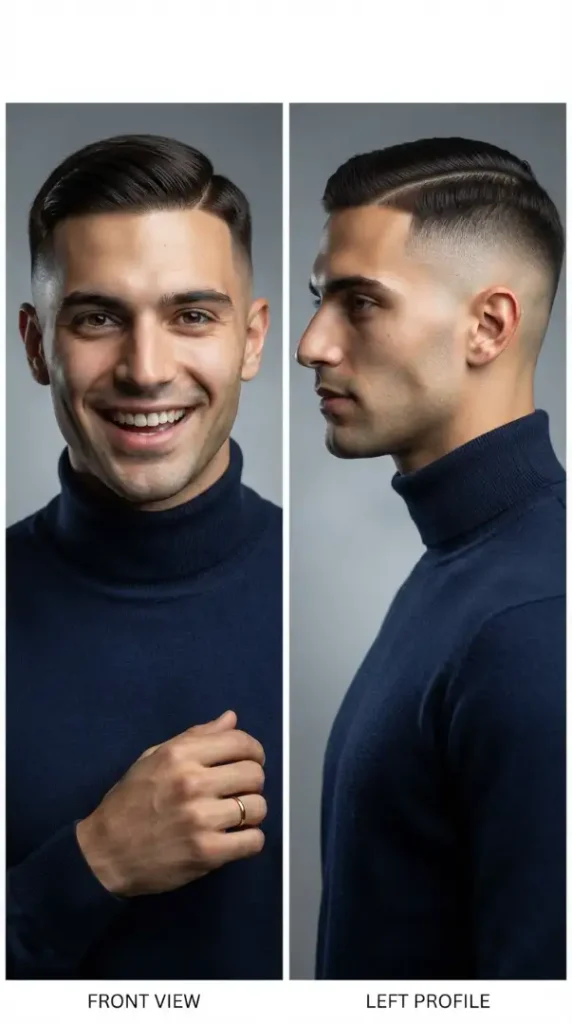
Why the Skin Fade Executive Works for Your Face Shape
This polished take on a high skin fade swaps the beard and casual finish of the earlier version for a clean-shaven, combed-top look built for a Diamond face. The sharp cheekbones that define a Diamond face pair naturally with the strong vertical line the skin fade creates, and without a beard to soften the jaw, the whole look reads more angular and refined — ideal for a business setting.
Square and Oval faces adapt to this executive version just as well, since the neatly combed top keeps things polished regardless of jaw strength. As with the earlier high skin fade style, Oblong and narrower faces should still be cautious with this height, since the dramatic side contrast can add unwanted length to the face if the top isn’t kept full enough to balance it.
Grooming Kit You Need for This Cut
- Clippers: Andis Master (Model 01557) for the bald skin blend, Wahl Magic Clip (Model 5049-400) for detailing
- Trimmer/Outliner: Andis T-Outliner (Model 04710) for the razor-sharp perimeter lineup
- Finishing Tools: Kent 81T fine-tooth comb for a precise side part, Denman boar bristle brush for a polished finish
- Styling Product: Layrite Original Pomade (medium hold), a dime-sized amount for a sleek, controlled finish
- Maintenance: A quality facial moisturizer for the clean-shaven look, applied daily to keep skin healthy under close shaving
How Often You Need a Touch-Up
Maintenance level: High. Just like the original high skin fade, this executive version needs a barbershop visit every 1-2 weeks to keep the bald blend sharp for a professional environment. Top length can stretch to 4-5 weeks. Daily styling takes about 5 minutes: comb a dime-sized amount of pomade into a precise side part. Monthly cost typically runs $60-100. This remains an advanced cut to maintain at home for the same reason as before — a bald skin fade genuinely requires professional-grade clippers and technique.
For a cut with the same sharp energy but a much lighter maintenance schedule, the next style trades the curved sides for a straighter, more forgiving fade line.
Exactly What to Say to Your Barber
Say this to your barber: “I want a high skin fade for a polished, professional look — starting above the temple and blending down to skin with zero guard at the bottom. Keep the top around 2 inches, combed neatly with a defined side part, not overly textured. For the fade, blend from skin at the bottom through a guard #2 near the top, into the parietal ridge. I’m clean-shaven, so keep the perimeter lineup extremely sharp and precise around the ears and neckline.”
11 of 13 — The Drop Fade Street King
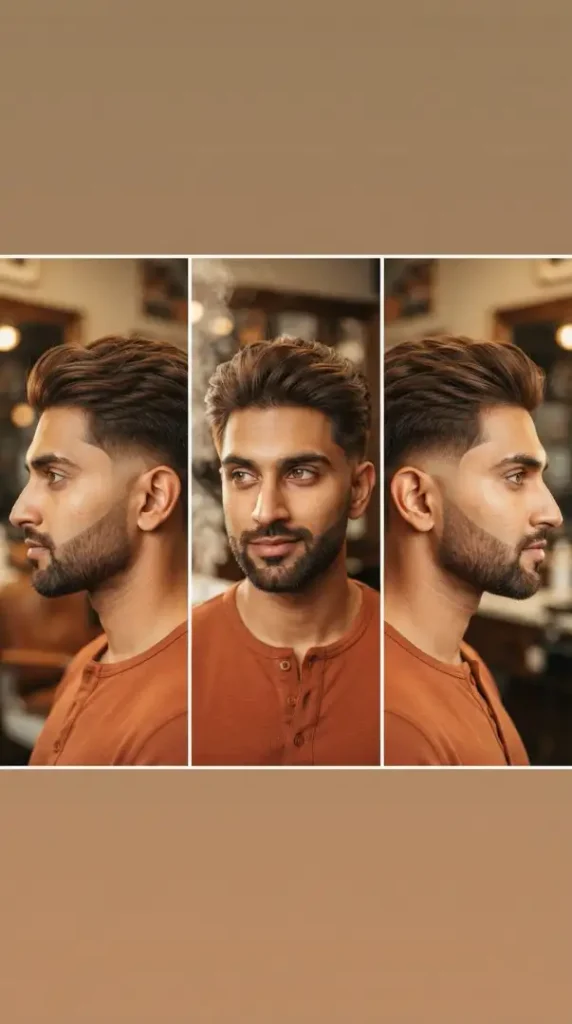
Why the Drop Fade Street King Works for Your Face Shape
This bolder drop fade keeps more volume and length on top than the earlier version, which changes the balance for an Oblong face. Extra height at the crown normally risks lengthening the face further, but the dropped curve of the fade below it counteracts that by drawing the eye sideways and downward at the temple, keeping the overall proportions from feeling top-heavy.
Diamond and Heart-shaped faces continue to be the strongest natural match for a drop fade, and the added top volume here gives those face shapes even more balance against a narrower chin. Round and Square faces can wear this bolder version too, but should ask their barber to keep the top slightly more controlled so the extra volume doesn’t add unwanted width.
Grooming Kit You Need for This Cut
- Clippers: Wahl Magic Clip (Model 5049-400) for the base fade, Andis Master (Model 01557) for detailing the drop curve
- Trimmer/Outliner: Andis T-Outliner (Model 04710) for the precise curved lineup behind the ear
- Finishing Tools: Denman boar bristle brush for volume, wide-tooth comb for the thick top
- Styling Product: American Crew Fiber (matte finish, high hold), a generous pea-sized portion for hold with added volume
- Maintenance: Honest Amish beard oil applied daily for the full beard
How Often You Need a Touch-Up
Maintenance level: Medium. The curved drop line needs a barbershop visit every 2-3 weeks, while the fuller top can stretch to 6 weeks before it needs shaping again. Daily styling takes about 6-7 minutes given the extra volume: work a pea-sized amount of fiber through from the roots for lift, then shape forward or to the side. Monthly cost typically runs $50-70. This is an intermediate cut to maintain at home, with the added volume actually making minor regrowth less noticeable day to day.
The next style trades this bold volume for one of the lowest-maintenance cuts on the entire list — perfect if daily styling time is your main concern.
Exactly What to Say to Your Barber
Say this to your barber: “I want a drop fade with more volume on top than a standard version — the fade line should curve and drop lower behind the ear. Take the top to 3-3.5 inches, keeping thickness and volume rather than thinning it down. For the fade, blend from a guard #1 at the drop point up to a guard #3 at the parietal ridge. Keep my beard full and well-edged. Finish with a sharp lineup at the temples and a natural hairline.”
12 of 13 — The Taper Fade Weekend Cut
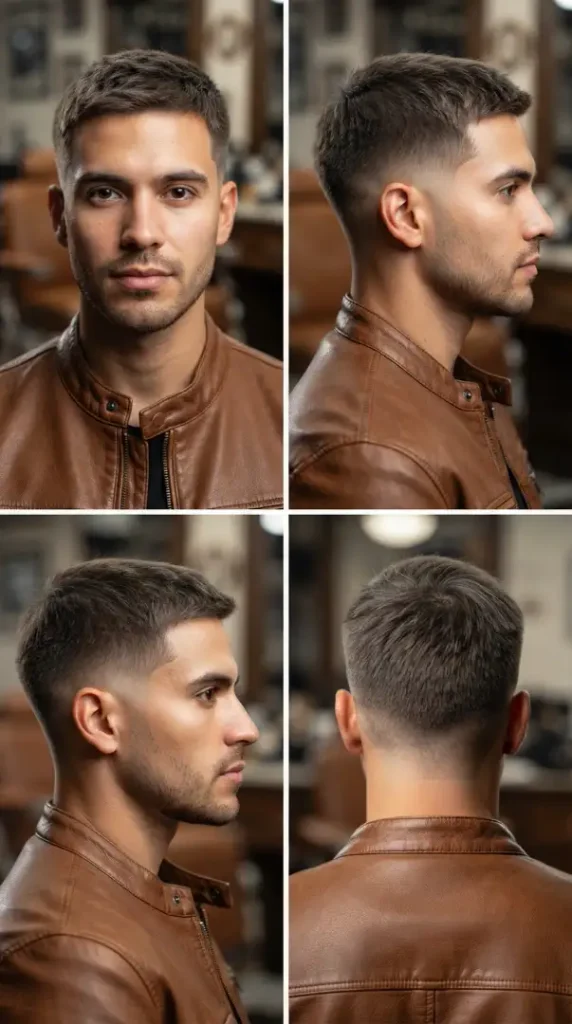
Why the Taper Fade Weekend Cut Works for Your Face Shape
This even shorter version of a short hair taper fade pares things down further, which pairs especially well with a Heart-shaped face. With almost no length left to add volume anywhere, this cut avoids adding width at the temples or crown, which keeps the wider forehead of a Heart face from feeling exaggerated by comparison to a narrower chin.
Oval and Oblong faces both suit this ultra-short taper for the same reason the earlier version worked well — it doesn’t stretch or shorten the face, it simply stays out of the way. Diamond faces are, again, the shape to be most careful with here, since this cut offers essentially no volume to soften sharp cheekbones or a narrow chin, and a version with slightly more length on top is usually more flattering.
Grooming Kit You Need for This Cut
- Clippers: Wahl Magic Clip (Model 5049-400) for the full taper at a tight setting, Andis Master (Model 01557) for a closer finish
- Trimmer/Outliner: Andis T-Outliner (Model 04710) for the clean, low lineup
- Finishing Tools: Kent 81T fine-tooth comb, though minimal styling is needed given the short length
- Styling Product: Optional light Layrite Original Pomade, a pea-sized amount for slight sheen if desired
- Maintenance: Viking Revolution beard oil applied daily for the light stubble
How Often You Need a Touch-Up
Maintenance level: Low. This is the lowest-maintenance style on the entire list, needing a barbershop visit only every 4 weeks since the very short length hides regrowth almost completely. Daily styling takes under 3 minutes, and for many guys, no product at all is needed. Monthly cost typically runs $25-40. This is a beginner-friendly cut to maintain at home with almost any basic clipper set, since there’s minimal room for error at this length.
You’ve now seen the full range of low, medium, and high-maintenance cuts on this list — the final style brings back a longer silhouette for anyone who wants to close things out with something a little different.
Exactly What to Say to Your Barber
Say this to your barber: “I want an even shorter version of a short hair taper fade — keep the top very short, around 1 inch, with a clean, even finish and minimal texture. For the fade, blend from a guard #1 at the bottom up to a guard #4 near the top, keeping the whole cut tight and low-profile. Keep my stubble light and even. Finish with a clean, low lineup at the hairline, nothing dramatic.”
13 of 13 — The Faded Mullet Maverick

Why the Faded Mullet Maverick Works for Your Face Shape
This bolder take on the modern mullet with faded sides pushes the length contrast even further than the earlier version, styling the wavy back and crown up and back rather than leaving it loose. On a Square face, that swept-back styling opens up the forehead and draws attention to the jawline, letting the strong bone structure lead while the faded sides keep things from feeling heavy.
Oval and Diamond faces handle this bolder mullet well too, since the added height at the crown from styling it back adds proportion without adding width. Round faces should stick with the more relaxed version of this cut from earlier in the list, since swept-back volume at this level can add noticeable width to an already rounder silhouette.
Grooming Kit You Need for This Cut
- Clippers: Wahl Magic Clip (Model 5049-400) for the faded sides, Andis Master (Model 01557) for detail work
- Trimmer/Outliner: Andis T-Outliner (Model 04710) for the clean lineup where the fade meets the length
- Finishing Tools: Denman boar bristle brush for the swept-back finish, wide-tooth comb for detangling
- Styling Product: Layrite Original Pomade (medium hold), a generous dime-sized amount for a strong, swept-back hold
- Maintenance: Honest Amish beard oil applied daily for the full beard
How Often You Need a Touch-Up
Maintenance level: Medium. The faded sides need a barbershop visit every 2-3 weeks to stay sharp, while the length at the back and crown can go 8-10 weeks or more since the goal is ongoing growth. Daily styling takes about 6-8 minutes given the swept-back finish: apply a generous amount of pomade and comb the top and back away from the face. Monthly cost typically runs $40-60. This is an intermediate cut to maintain at home, with the styled-back finish actually easier to manage day-to-day than a loose, wavy finish.
That wraps up all 13 burst fade haircuts on this list — save your favorites and bring the exact barber script to your next appointment for a cut that looks this sharp in real life, not just in photos.
Exactly What to Say to Your Barber
Say this to your barber: “I want a bolder modern mullet with faded sides — a mid skin fade on the sides blending up into a longer top and back that I’ll style swept back. Take the sides down to skin at the bottom, blending through a guard #1 to a guard #3 near the crown. Leave the back and crown long, at least 5-6 inches, with enough length to sweep back and hold. Keep my beard full and edged evenly. Finish with a clean lineup at the temples, leaving the nape slightly looser.”