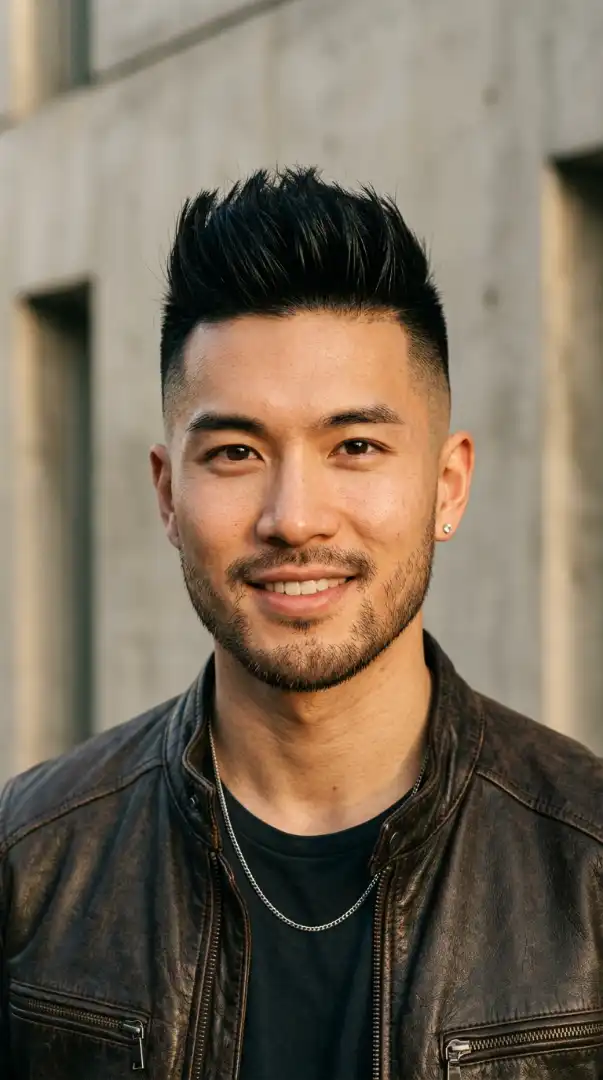
13 Neo-Quiff Haircuts That’ll Make You Look Effortlessly Expensive
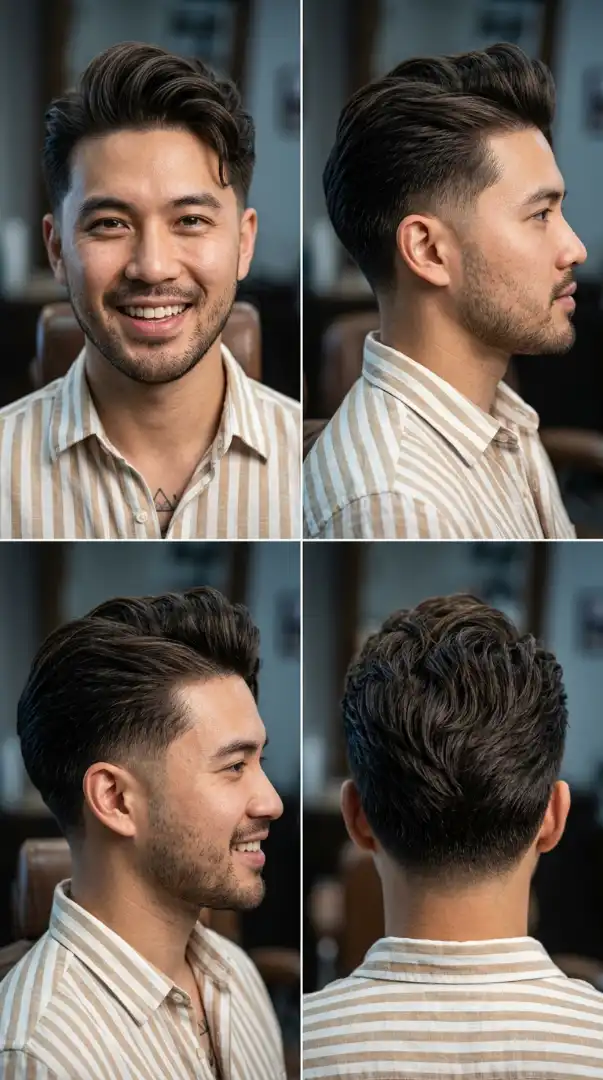
1 of 13 — The Modern Quiff Rebel

The Modern Quiff Rebel: Everything You Need to Know
The Modern Quiff Rebel is a high-volume, forward-swept neo-quiff built for men who want texture and height without the stiff, over-styled look of a classic pompadour. It relies on a natural side part, dense crown volume, and short blended sides to create a shape that reads as effortless rather than engineered.
Best Face Shapes for The Modern Quiff Rebel
Square face shapes are the strongest match for The Modern Quiff Rebel. The height and forward sweep of the quiff softens strong angular jawlines by drawing the eye vertically instead of emphasizing horizontal width at the jaw. Oval faces also wear it well since there’s no proportion to correct — the style simply adds dimension. Round faces benefit from extra height at the crown, which visually lengthens the face, but should ask their barber to keep the sides tighter to avoid adding width. Men with oblong faces should be cautious with this particular cut, since the added vertical volume can make an already-long face appear stretched; a lower, denser quiff with less lift is usually a smarter substitution for that face shape.
Grooming Kit You’ll Need
Clippers: Wahl Magic Clip (Model 5049-400) or Andis Master (Model 01557) for the side taper. Trimmer/Outliner: Andis T-Outliner (Model 04710) for lineup and edge work around the temples. Finishing Tools: Kent 81T fine-tooth comb for the part line, Denman D31 boar bristle brush to train the fringe upward and back. Styling Product: Layrite Original Pomade (medium hold) for a natural sheen, or American Crew Fiber (matte finish, high hold) if you prefer a more textured, matte finish. Maintenance: Honest Amish Beard Oil to keep the stubble conditioned and soft against the fade line. A dime-sized amount of pomade is enough for most hair lengths — warm it between your palms before applying from root to tip.
How Often to Maintain This Cut
This is a medium-maintenance style. Book a barbershop touch-up every 3 weeks to keep the side fade and hairline crisp, though the top length can stretch to 6-8 weeks before it needs trimming. Daily styling takes about 6-8 minutes: blow-dry the fringe upward with a round brush while damp, then apply pomade and comb into the final shape. It’s a two-step routine — pomade first, then a light matte texture spray if you want to knock back the shine. As it grows out, the quiff loses its sharp lift and starts to fall forward instead of standing up, which is usually the signal it’s time for a trim. Expect to budget roughly $30-45 per month for maintenance depending on your local barbershop rates. This is an intermediate-difficulty cut to maintain at home; the styling itself is manageable, but the fade requires a professional touch.
Exactly What to Say to Your Barber
Say this to your barber: “I want a Modern Quiff Rebel with a mid skin fade starting just above the ear. Take the top to about 3 inches at the front, tapering down to guard #1 at the sides and back. Keep enough weight at the crown for volume and a forward-and-up brushed finish — don’t over-thin it. Blend the fade from a #1 at the temple up to a #4 at the parietal ridge for a smooth gradient. Keep my stubble at around 3mm and taper it slightly into the sideburn line. Finish with a crisp lineup at the temples and a natural, undisturbed front hairline.”
If this rebellious, high-texture look feels like a bit much for the office, the next style channels the same volume into a sharper, more polished silhouette that’s ready for the boardroom by 9am.
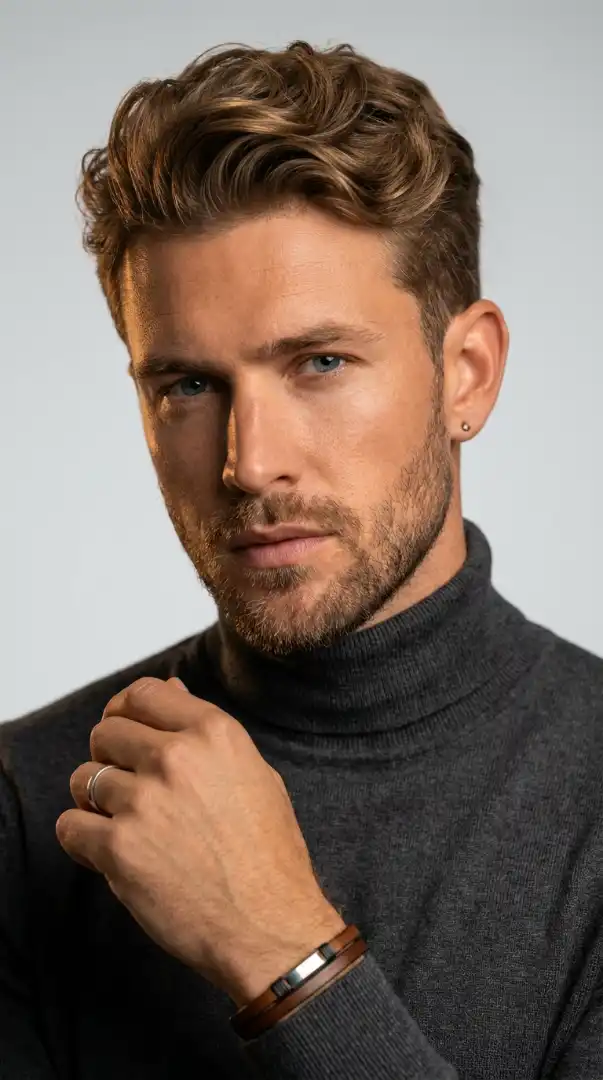
2 of 13 — The Executive Quiff
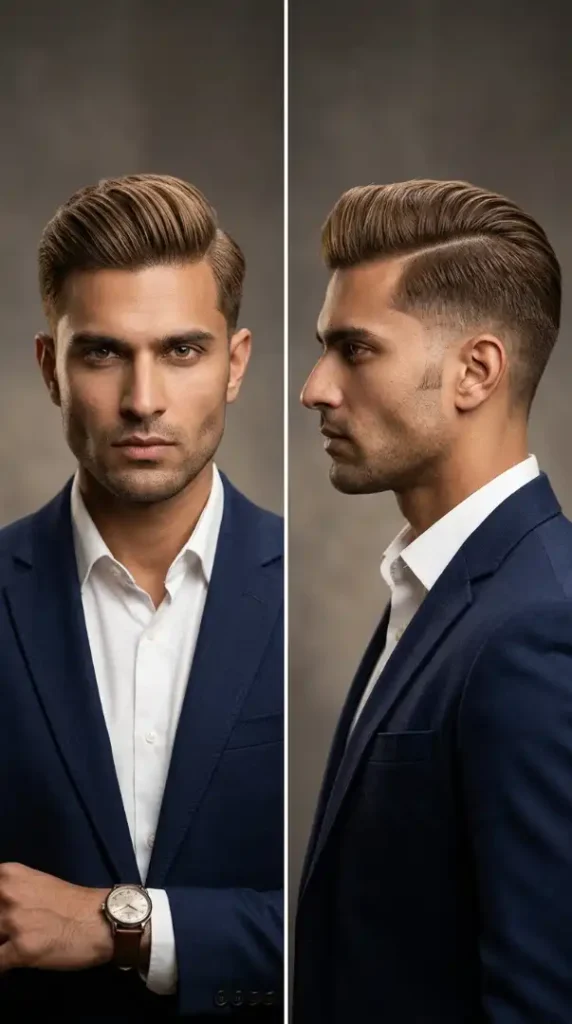
The Executive Quiff: Everything You Need to Know
The Executive Quiff trades wild texture for polish. It keeps the signature forward-and-up quiff shape but flattens the finish into a glass-smooth, controlled silhouette that reads as boardroom-appropriate while still carrying the volume that makes a neo-quiff distinct from a plain slick-back.
Best Face Shapes for The Executive Quiff
Oval and square face shapes see the cleanest results with The Executive Quiff, since the controlled height doesn’t need to correct any existing proportion — it simply adds structure. Diamond faces also do well, as the smooth crown volume balances a narrower jawline nicely. Round faces should ask for slightly more height at the front to elongate the face, while heart-shaped faces should keep the sides a touch fuller rather than razor-tight, since an overly narrow silhouette can exaggerate a wider forehead. This is not the best choice for very oblong faces, where the vertical lift can make the face look stretched rather than sharpened.
Grooming Kit You’ll Need
Clippers: Andis Master (Model 01557) for the fade blend. Trimmer/Outliner: Andis T-Outliner (Model 04710) for the temple lineup. Finishing Tools: Kent 81T fine-tooth comb for the precise part, Denman D31 boar bristle brush to smooth the crown flat. Styling Product: American Crew Firm Hold Gel for the glass finish, or Baxter of California Clay Pomade if a slightly softer sheen is preferred. Maintenance: A light-hold hairspray such as Redken Guts 10 to lock the shape through a full workday. Use a dime-sized amount of gel, applying from roots to ends with a comb for even distribution.
How Often to Maintain This Cut
This is a medium-maintenance, office-friendly style. Plan on a barbershop visit every 2-3 weeks to keep the fade sharp, since this polished look shows growth faster than textured styles. The top can be left for 5-6 weeks before it needs a trim. Morning styling takes about 5 minutes: comb through with gel or firm-hold pomade while damp, then set with a blast of cool air for hold. It’s a simple one-product routine most days. As it grows out, the crown starts to lose its clean lift and the part becomes less defined — that’s your cue to book a touch-up. Monthly cost typically runs $35-50. This is a beginner-friendly style to maintain at home once the fade has been freshly cut.
Exactly What to Say to Your Barber
Say this to your barber: “I want an Executive Quiff with a low bald fade starting right above the ear. Take the top to 3 inches, kept blunt rather than heavily textured so it lies flat and smooth. Blend the fade from skin at the hairline up to a #3 at the parietal ridge for a subtle gradient. Keep the sideburns square and precise. Finish with a crisp lineup at the temples and hairline, and please don’t thin the crown too much — I need the density for volume when I comb it back.”
If a fully polished, glass-finish look feels a touch too formal for everyday wear, the next style keeps that same structured height but adds movement and grit for a more rugged, off-duty edge.
3 of 13 — The Textured Storm Quiff
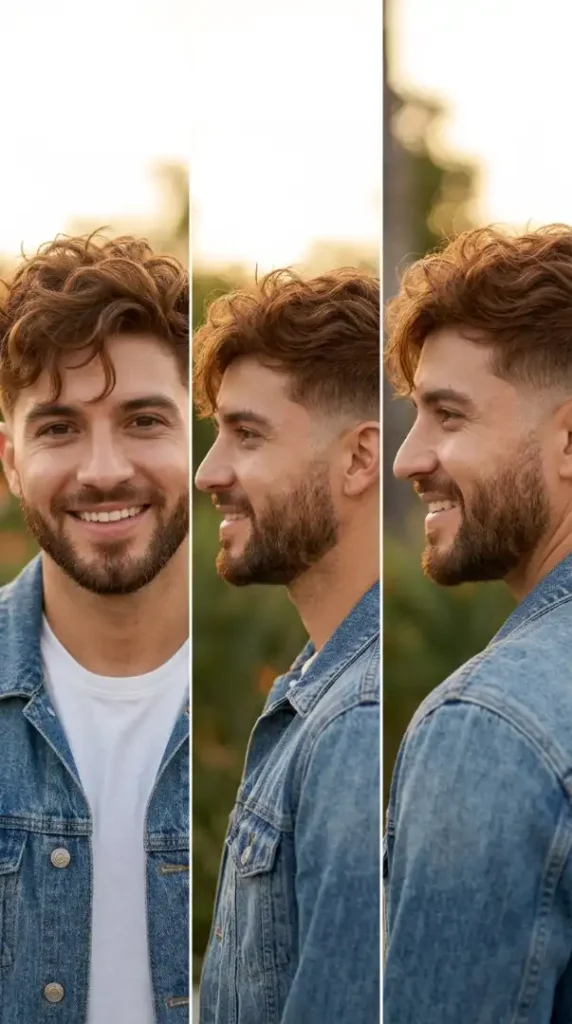
The Textured Storm Quiff: Everything You Need to Know
The Textured Storm Quiff is a heavily tousled, matte-finish take on the neo-quiff, built for men who want maximum texture without a hard, sculpted line. Instead of a glassy sweep, this version uses choppy layering and a wind-blown fringe for a rugged, undone look that photographs beautifully in natural light.
Best Face Shapes for The Textured Storm Quiff
Round faces benefit the most from The Textured Storm Quiff, since the tousled height at the crown creates a vertical line that elongates the face, while the textured fringe softens the roundness at the cheeks without adding bulk. Oval and square faces also carry the messy volume well since there’s no correction needed. Heart-shaped faces should keep the sides slightly fuller to balance a narrower chin. This style is not ideal for very oblong faces, since the additional lift at the crown can stretch the face further; a flatter, low-volume crop is usually a better direction for that face shape.
Grooming Kit You’ll Need
Clippers: Wahl Magic Clip (Model 5049-400) for the side taper. Trimmer/Outliner: Andis T-Outliner (Model 04710) for beard-to-fade blending. Finishing Tools: Denman D31 boar bristle brush for lift, a wide-tooth comb for detangling wavy texture. Styling Product: Uppercut Deluxe Matte Pomade for a natural, non-shiny finish, or a sea salt spray such as Baxter of California Sea Spray for beach-texture volume. Maintenance: Beard oil from Honest Amish or Viking Revolution to keep the beard-to-fade connection soft and conditioned. A pea-sized amount of matte product, scrunched in rather than combed, gives the best undone finish.
How Often to Maintain This Cut
This is a low-to-medium maintenance style. Barbershop visits every 4 weeks are sufficient since the tousled shape hides growth well, though the fade should be checked every 3 weeks if you want it razor-sharp. Daily styling takes just 3-5 minutes: towel-dry, scrunch in a matte product or sea salt spray, and tousle by hand — no brush or comb needed for the finished look. It’s a one-product routine most mornings. As it grows out, the fringe simply gets longer and floppier rather than looking unkempt, which is part of what makes this a forgiving, low-effort cut. Expect to spend around $25-35 per month on maintenance. This is a beginner-friendly style to manage at home.
Exactly What to Say to Your Barber
Say this to your barber: “I want a Textured Storm Quiff with a mid shadow fade starting at the temple line. Take the top to about 3.5 inches and texture it heavily with point cutting rather than a blunt cut — I want movement, not weight. Blend the fade from a #1 at the temple up to a #3 at the parietal ridge. Taper my beard into the fade at the jawline, keeping the length at around 5mm. Finish with a soft, undone lineup at the temples — nothing too crisp, I want it to look naturally grown rather than sharply edged.”
If this rugged, tousled texture isn’t quite your daily speed, the next style delivers the same forward volume with a razor-clean edge that’s ready in under two minutes.
4 of 13 — The Slick Side Quiff
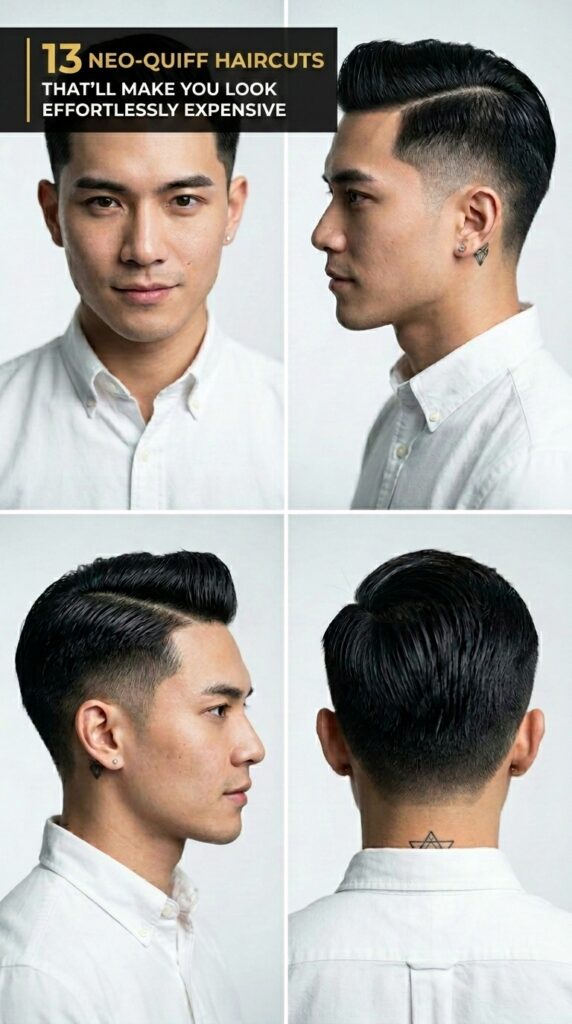
The Slick Side Quiff: Everything You Need to Know
The Slick Side Quiff is the sharpest, most controlled version of the neo-quiff family, built entirely around a razor-clean side part and a glass-smooth finish. Where the Modern Quiff Rebel leans textured and the Storm Quiff leans messy, this cut is precision-first — every strand accounted for.
Best Face Shapes for The Slick Side Quiff
Diamond and oval face shapes are the ideal match for The Slick Side Quiff, since the sharp part and controlled sweep add clean structure without overwhelming already-balanced proportions. Square faces also do well, as the vertical sweep softens a strong jawline. Round faces should ask for extra height at the crown to elongate the face, since a flatter finish here can emphasize width. This style is a tougher fit for heart-shaped faces, where a hard side part can draw unwanted attention to a broader forehead — a softer, less severe part is usually recommended for that face shape instead.
Grooming Kit You’ll Need
Clippers: Andis Master (Model 01557) for the fade blend. Trimmer/Outliner: Andis T-Outliner (Model 04710) for the crisp temple lineup. Finishing Tools: Kent 81T fine-tooth comb for the precise part line, a boar bristle brush for a final smoothing pass. Styling Product: Baxter of California Clay Pomade or American Crew Firm Hold Gel for a durable, high-shine finish. Maintenance: A light-hold finishing spray to lock the part in place through humidity. Apply a dime-sized amount of gel to damp hair and comb through immediately before it sets.
How Often to Maintain This Cut
This is a medium-maintenance, precision style. Book barbershop visits every 2-3 weeks since fine fade lines and sharp parts show growth quickly. The top length can stretch to 5-6 weeks between full trims. Morning styling takes about 5-7 minutes: comb through gel or pomade while damp, re-establish the part with a fine-tooth comb, and let it air-dry or use a cool blow-dry setting to set the shine. As it grows out, the part starts to soften and the crown loses its crisp lift — that’s the cue for a touch-up. Expect around $35-50 per month in maintenance costs. This is an intermediate-difficulty style for home upkeep, since maintaining the exact part precision takes some practice.
Exactly What to Say to Your Barber
Say this to your barber: “I want a Slick Side Quiff with a high skin fade starting above the ear. Take the top to 3 inches, kept blunt and dense rather than heavily textured, with a hard, defined side part. Blend the fade from skin at the hairline up to a #4 at the parietal ridge for a sharp gradient. Keep the sideburns pointed and precise. Finish with a razor-crisp lineup at the temples and a defined part line I can maintain at home with a comb.”
If this level of precision feels like more upkeep than your schedule allows, the next style trades the razor-sharp part for a wash-and-go crop that still delivers serious volume.
5 of 13 — The Undercut Quiff Blade
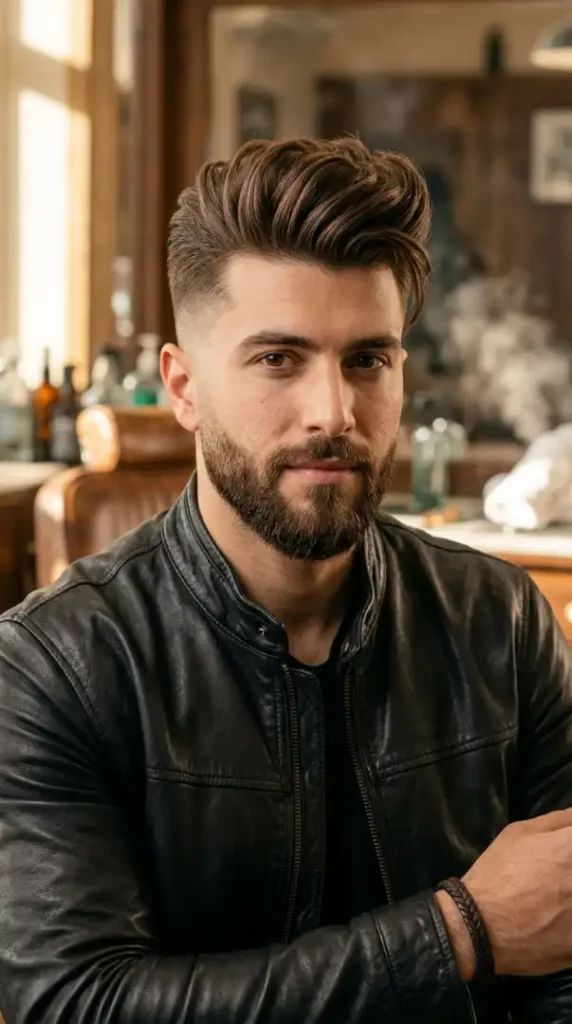
The Undercut Quiff Blade: Everything You Need to Know
The Undercut Quiff Blade is the boldest style in this collection, pairing a hard, disconnected undercut with a tall, blade-sharp swept-back top. It’s built for men who want maximum contrast and don’t mind a statement cut that demands attention.
Best Face Shapes for The Undercut Quiff Blade
Oblong and square faces handle this dramatic contrast the best, since the disconnected undercut removes visual width from the sides while the blade-like top adds intentional height that reads as styled rather than accidental. Diamond faces also work well given the strong structure. Round faces should proceed carefully — the tall crown can help elongate a round face, but the hard disconnection can look overly severe without enough length up top to balance it, so extra height should be requested. This style is generally not recommended for heart-shaped faces, since the sharp undercut can draw attention to a wider forehead; a softer, blended fade is usually the safer route there.
Grooming Kit You’ll Need
Clippers: Wahl Magic Clip (Model 5049-400) for the disconnected undercut. Trimmer/Outliner: Andis T-Outliner (Model 04710) for the hard disconnection line. Finishing Tools: A boar bristle brush and blow dryer for building height at the crown, a wide-tooth comb for beard detangling. Styling Product: Uppercut Deluxe Pomade (strong hold) for maximum lift and hold on the blade shape. Maintenance: Beard oil from Viking Revolution to keep the full beard soft and healthy. Use a generous dime-to-nickel-sized amount of strong-hold pomade, blow-dried in at the roots before combing into the final blade shape.
How Often to Maintain This Cut
This is a high-maintenance style. The disconnected undercut needs a barbershop touch-up every 2 weeks to keep the hard line crisp — this cut looks intentional only when the disconnection is fresh. The top can be left to grow for 6-8 weeks to maintain enough length for the blade shape. Daily styling takes 8-10 minutes, involving a blow-dry-and-lift step before applying strong-hold pomade. It’s a two-step routine: blow-dry first, then style. As it grows out, the disconnection softens into a regular fade look, which is when most men decide it’s time for a refresh. Budget around $40-60 per month for upkeep. This is an advanced-difficulty style to maintain at home — the blade shape typically requires practice or a barber’s help.
Exactly What to Say to Your Barber
Say this to your barber: “I want an Undercut Quiff Blade with a hard, disconnected undercut — clippers on a #1 guard around the sides and back, with a clean disconnection line rather than a blended fade. Take the top to 4 inches for maximum length to build the blade shape. Keep as much density and weight as possible at the crown — do not thin it. Taper my beard to connect cleanly at the jawline, keeping it around 8-10mm. Finish with a sharp, precise disconnection line at the temples and nape.”
If a bold disconnected undercut feels a little too dramatic for daily wear, the next style softens the silhouette into a timeless, preppy shape that’s easy to dress up or down.
6 of 13 — The Ivy League Quiff
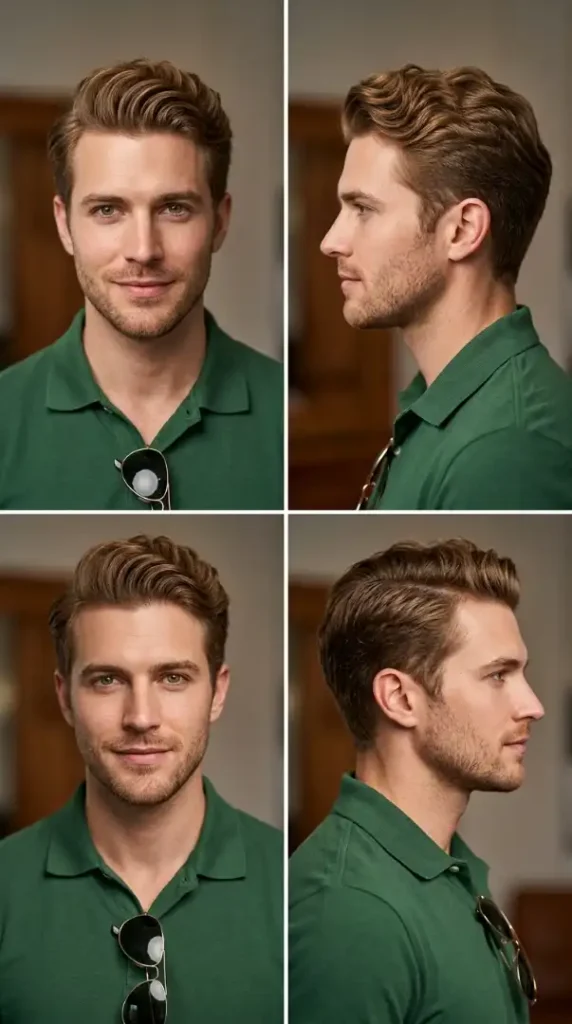
The Ivy League Quiff: Everything You Need to Know
The Ivy League Quiff softens the neo-quiff silhouette into a timeless, collegiate shape — longer, natural-moving hair on top with only a moderate fade on the sides. It’s the most versatile style in this list, equally at home at the office and on the weekend.
Best Face Shapes for The Ivy League Quiff
Heart and oval face shapes suit The Ivy League Quiff especially well, since the moderate volume balances a narrower chin without adding excess width elsewhere. Square faces also do nicely, as the softer side sweep takes an edge off strong jaw angles. Round faces should ask for slightly more lift at the crown to elongate the face. This style is a less natural fit for very oblong faces, where the additional length on top can stretch the face further — a shorter, denser crop generally reads better on that face shape.
Grooming Kit You’ll Need
Clippers: Wahl Magic Clip (Model 5049-400) for the moderate side taper. Trimmer/Outliner: Andis T-Outliner (Model 04710) for lineup work. Finishing Tools: A wide-tooth comb for wavy texture, a paddle brush for smoothing the sweep. Styling Product: Layrite Original Pomade (medium hold) for a natural, non-greasy finish. Maintenance: A lightweight leave-in conditioner to manage wave frizz. A dime-sized amount of pomade worked through damp hair is enough for the natural side-swept finish.
How Often to Maintain This Cut
This is a low-maintenance style, ideal for busy schedules. Barbershop visits every 4-5 weeks are sufficient since the moderate fade grows out gracefully. Daily styling takes about 4-6 minutes: comb through a small amount of pomade while hair is damp and let it air-dry into the natural side sweep. It’s a simple one-product routine. As it grows out, the style simply gets a little longer and softer rather than looking messy, making it very forgiving between cuts. Monthly maintenance typically costs $25-35. This is a beginner-friendly style, very easy to manage at home.
Exactly What to Say to Your Barber
Say this to your barber: “I want an Ivy League Quiff with a moderate taper fade starting mid-way up the side, nothing too aggressive. Take the top to about 3.5 inches, kept natural with light texturizing rather than a heavy blunt cut, styled with a soft side part. Blend the fade gradually from a #2 at the side up to a #5 at the parietal ridge for a subtle transition. Keep my stubble light and clean along the jawline. Finish with a soft, natural lineup — I want this to look effortlessly grown, not sharply carved.”
If this classic, low-maintenance shape feels a little too tame, the next style keeps that same wearable ease but adds serious edge with a shag-inspired layering technique.
7 of 13 — The Wolf Cut Quiff Fusion
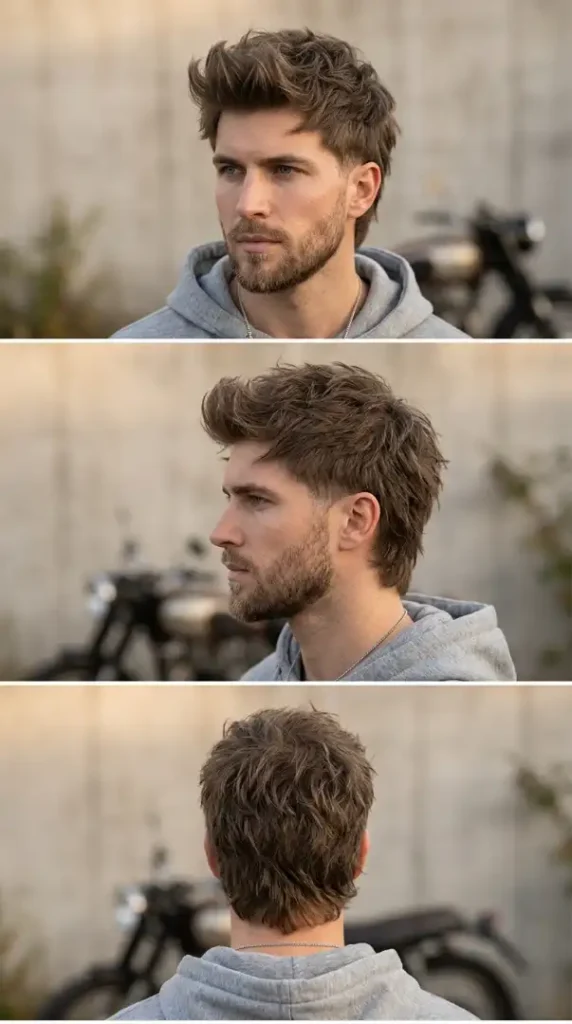
The Wolf Cut Quiff Fusion: Everything You Need to Know
The Wolf Cut Quiff Fusion blends the shaggy, heavily layered wolf cut trend with the lifted front volume of a neo-quiff. The result is a rebellious, rock-star silhouette with movement through the crown and nape that most other quiff variations don’t attempt.
Best Face Shapes for The Wolf Cut Quiff Fusion
Square and oval faces handle this heavily layered shape the best, since the fringe volume softens angular jaws while the shaggy layers add dimension without overwhelming balanced proportions. Round faces benefit from the height at the front, which elongates the face, though the sides should stay closer to the head rather than adding width. This is a challenging style for oblong faces, since the extra crown volume combined with longer layers can stretch the face even further — a lower-volume crop is a safer choice for that shape. Diamond faces should keep the layers slightly shorter around the cheekbones to avoid adding unwanted width at the mid-face.
Grooming Kit You’ll Need
Clippers: Wahl Magic Clip (Model 5049-400) for the side blend. Trimmer/Outliner: Andis T-Outliner (Model 04710) for beard-to-hair connection. Finishing Tools: Thinning shears (used by your barber) for the choppy layered texture, a wide-tooth comb for detangling. Styling Product: A texturizing sea salt spray such as Baxter of California Sea Spray, plus a small amount of matte clay like Uppercut Deluxe for hold without shine. Maintenance: A lightweight leave-in spray to control frizz in the longer layers. Apply the sea salt spray to damp hair first, then scrunch in a pea-sized amount of clay once mostly dry.
How Often to Maintain This Cut
This is a medium-maintenance style with a forgiving growth pattern. Barbershop visits every 5-6 weeks keep the layers fresh, since the whole point of this cut is intentional shagginess — a little growth actually improves the look. Daily styling takes about 5 minutes: scrunch in product and tousle by hand, no brush needed. It’s a two-product routine on days you want more definition. As it grows out, the layers simply blend further into a longer wolf cut, which many men let ride for months before a proper trim. Expect to spend around $30-45 per month. This is a beginner-friendly style to maintain at home since imperfection is part of the design.
Exactly What to Say to Your Barber
Say this to your barber: “I want a Wolf Cut Quiff Fusion with a low taper fade at the sides, blending into heavily layered length on top. Take the top to 4-5 inches with lots of texture — use thinning shears through the mid-lengths and crown for a choppy, shaggy finish, not a blunt cut. Keep the front fringe long enough to lift into a quiff shape. Blend the fade softly from a #2 at the side up into the layered length. Taper my beard lightly to connect with the sideburn. Finish with a natural, undone edge — no sharp lineup, I want this to look effortlessly shaggy.”
If this shaggy, high-movement shape feels like a lot to manage in curly hair, the next style shows exactly how to bring that same neo-quiff energy to naturally curly texture.
8 of 13 — The Curly Quiff Crown
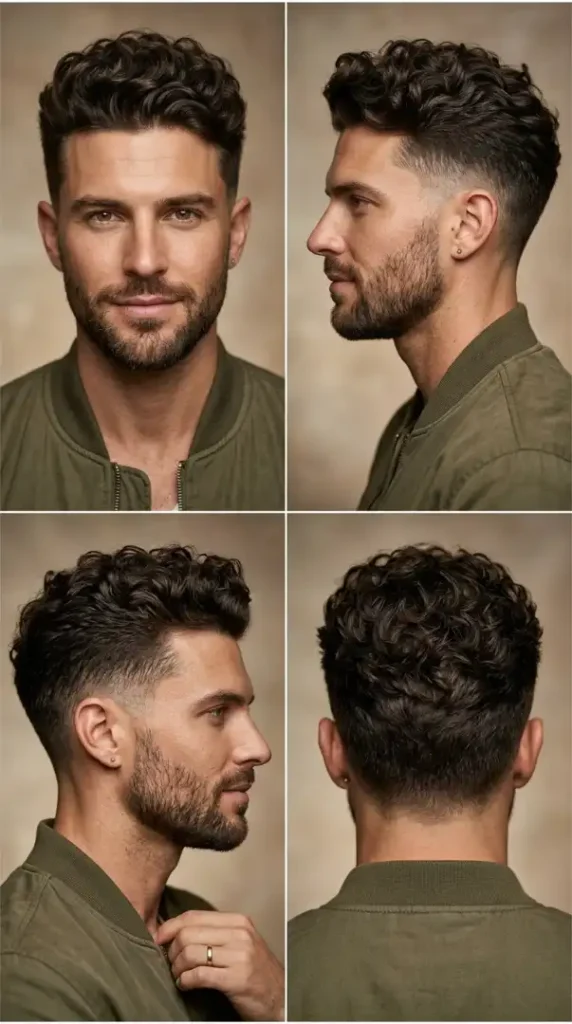
The Curly Quiff Crown: Everything You Need to Know
The Curly Quiff Crown is built specifically for naturally curly hair, proving that quiff volume isn’t limited to straight or wavy textures. Short, controlled sides give way to a rounded, bouncy crown of natural curls that reads as intentional and sculpted rather than just “grown out.”
Best Face Shapes for The Curly Quiff Crown
Oval and round faces both benefit from The Curly Quiff Crown — round faces gain the vertical lift needed to elongate the face, while oval faces simply get added texture and dimension without correcting anything. Square faces do well too, as the rounded curl silhouette softens angular jaw edges. Heart-shaped faces should keep the curls slightly more compact at the front rather than overly voluminous, to avoid adding extra width near the forehead. This style is naturally suited only to those with a genuine curl pattern — attempting to fake this shape on straight hair with heavy product will not replicate the same natural bounce and movement.
Grooming Kit You’ll Need
Clippers: Andis Master (Model 01557) for the side fade. Trimmer/Outliner: Andis T-Outliner (Model 04710) for the lineup. Finishing Tools: A wide-tooth comb or curl-specific detangling brush, never a standard fine-tooth comb which can disrupt curl clumping. Styling Product: A curl cream such as DevaCurl or Curls Blueprint, followed by a light-hold gel like Eco Style Gel to define and hold each curl. Maintenance: A leave-in conditioner to prevent dryness and frizz between wash days. Apply curl cream to soaking-wet hair, scrunch upward, then seal with gel using the same scrunching motion — never brush curls dry.
How Often to Maintain This Cut
This is a medium-maintenance style with a specific routine. Barbershop visits every 5-6 weeks keep the side fade fresh while preserving enough curl length on top for volume. Daily styling takes about 7-10 minutes, mostly spent on the wet-styling routine rather than dry styling — most curly-hair specialists recommend refreshing curls with a water-and-leave-in spray each morning rather than restyling from scratch. It’s a multi-step but low-effort routine once you learn it. As it grows out, the curls simply get bigger and looser, which many men enjoy as an evolving look between cuts. Expect to spend around $35-50 per month, factoring in curl-specific products. This is an intermediate-difficulty style, mainly due to the product routine rather than the cut itself.
Exactly What to Say to Your Barber
Say this to your barber: “I want a Curly Quiff Crown with a mid taper fade at the sides — please cut my curls with clippers or scissor-over-comb rather than a razor, to avoid disrupting the curl pattern. Take the top to 3-4 inches, keeping full curl length for volume at the crown. Blend the fade from a #2 at the side up to a #4 at the parietal ridge. Keep my beard length even and connected to the sideburn. Please cut my curls dry, not wet, so you can see the true curl pattern and shape it accordingly — this matters a lot for how it looks once it dries.”
If your hair doesn’t have the natural curl pattern for this crown-like volume, the next style shows a completely different route to street-ready height and edge.
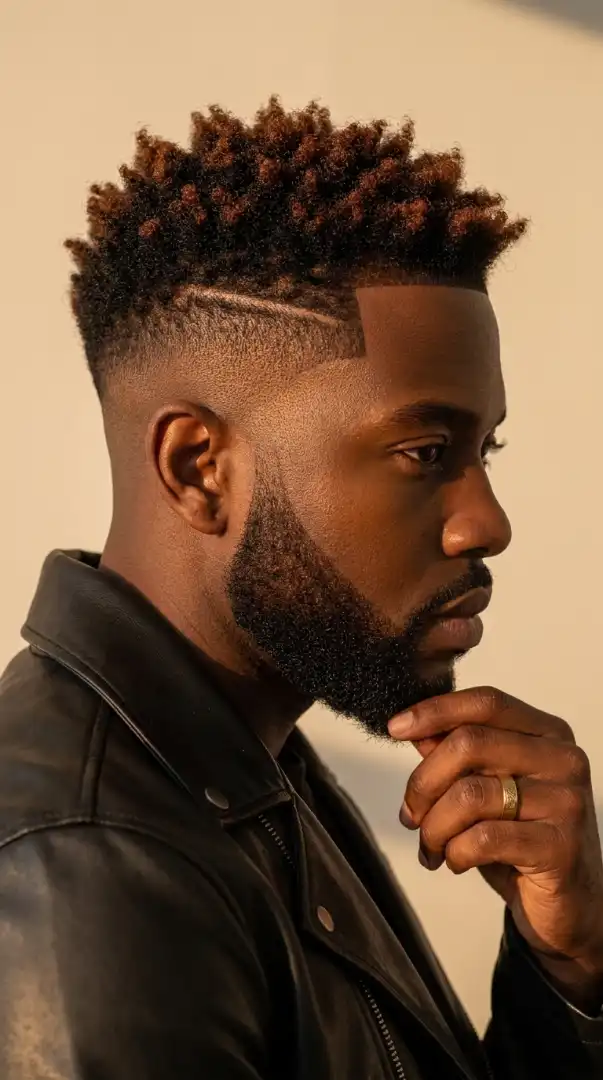
9 of 13 — The Street Quiff King
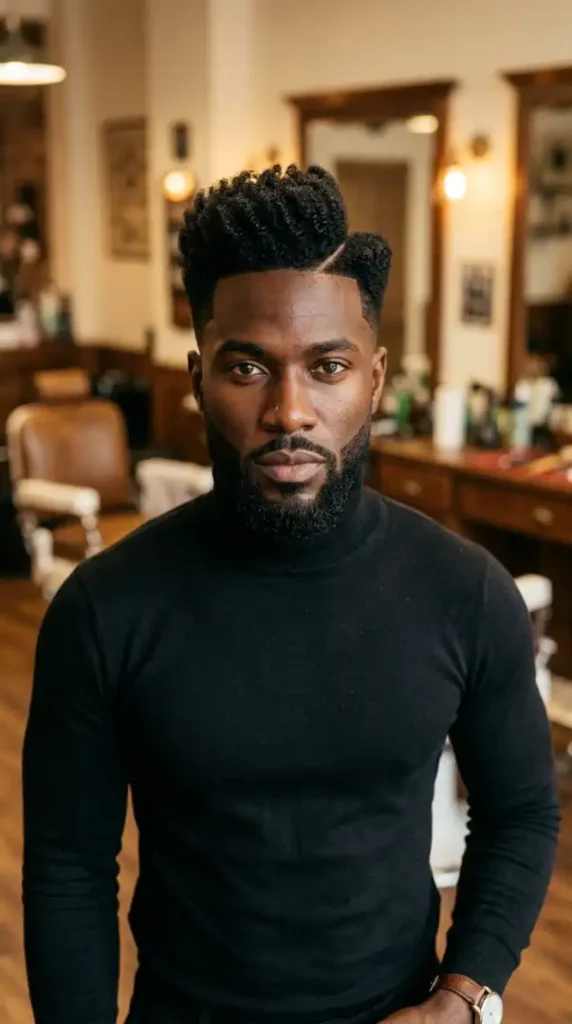
The Street Quiff King: Everything You Need to Know
The Street Quiff King is built for coily and kinky hair textures, using a carved part and sculpted crown to bring quiff-style height and structure to natural Afro texture. It’s a sharp, barbershop-precision look that leans street-smart and confident.
Best Face Shapes for The Street Quiff King
Round faces gain the most from The Street Quiff King, since the sculpted vertical rise at the crown elongates the face while the carved part adds a clean geometric line the face naturally lacks. Square and oval faces also carry this shape well without needing correction. Diamond faces should keep the volume centered rather than piled to one side, to avoid adding unwanted width at the cheekbones. This style requires enough length and density to sculpt properly, so it’s less suited to very fine or thinning hair, where a lower-profile crop with a simpler part is usually a better-looking, more durable option.
Grooming Kit You’ll Need
Clippers: Andis Master (Model 01557) for the fade blend, essential for coily texture control. Trimmer/Outliner: Andis T-Outliner (Model 04710) for the carved part and precise lineup. Finishing Tools: An edge control brush for laying down the part cleanly, a wide-tooth pick for lifting volume at the crown. Styling Product: Eco Style Gel (olive oil formula) or Murray’s Edgewax for the sculpted part and hold, plus a curl-defining cream underneath for texture control. Maintenance: A daily moisturizer such as Cantu Coconut Curling Cream to prevent dryness. Use a nickel-sized amount of gel along the part line only, keeping the crown lighter for natural volume.
How Often to Maintain This Cut
This is a medium-maintenance style. Barbershop touch-ups every 2-3 weeks keep the fade and part line sharp, since precise carved lines grow out visibly fast. The crown length can be maintained for 6-8 weeks before a full cut is needed. Daily styling takes about 6-8 minutes: apply moisturizer first, then sculpt the part and crown shape with gel using a brush. It’s a two-step routine most mornings. As it grows out, the carved part starts to close up and the fade softens, signaling it’s time for a refresh. Monthly cost typically runs $35-45. This is an intermediate-difficulty style to maintain at home, particularly for keeping the part line crisp between barbershop visits.
Exactly What to Say to Your Barber
Say this to your barber: “I want a Street Quiff King with a high fade starting above the ear. Take the top to about 2.5 inches, kept dense at the crown and sculpted upward into a quiff shape with a carved part on the left side. Blend the fade from skin at the hairline up to a #3 at the parietal ridge. Keep my beard lined sharply and connected to the fade at the jawline. Finish with a crisp, defined part line and a razor-sharp lineup at the hairline and temples.”
If a fully sculpted, carved-part look feels like a bit much for everyday wear, the next style brings a similar level of vintage barbershop polish with a softer, slicked finish instead.
10 of 13 — The Vintage Pomp Quiff

The Vintage Pomp Quiff: Everything You Need to Know
The Vintage Pomp Quiff brings old-school pompadour glamour into the neo-quiff category, using a glossy, wet-look finish and rounded volume rolled back off the face. It’s the most classic, retro-leaning silhouette in the collection.
Best Face Shapes for The Vintage Pomp Quiff
Diamond and oval face shapes suit The Vintage Pomp Quiff especially well, since the rolled volume balances a narrower jaw and forehead without adding unnecessary width. Square faces also work nicely, as the rounded curve softens strong jaw angles. Round faces should ask for a slightly higher roll to elongate the face rather than a low, wide pompadour, which can add unwanted width. This is not the best choice for oblong faces, since the added height stacked on an already-long face can look disproportionate; a flatter, close-cropped style typically reads better on that shape.
Grooming Kit You’ll Need
Clippers: Wahl Magic Clip (Model 5049-400) for the side taper. Trimmer/Outliner: Andis T-Outliner (Model 04710) for the sharp nape and hairline work. Finishing Tools: A vent brush and blow dryer for rolling the pompadour shape, Kent 81T fine-tooth comb for the underlying part. Styling Product: Layrite Deluxe Pomade (heavy hold, water-soluble) for the classic glossy finish. Maintenance: A shine spray to refresh the wet-look finish midday if needed. Use a nickel-sized amount of pomade, blow-dried in at the roots while rolling the hair back with a vent brush for lift.
How Often to Maintain This Cut
This is a medium-to-high maintenance style. Barbershop visits every 3 weeks keep the sides and back sharp, while the top can be left to grow for 6-8 weeks to maintain enough length for the roll. Daily styling takes about 8-10 minutes, involving a wet blow-dry-and-roll technique before applying pomade. It’s a structured, multi-step routine that takes practice to perfect. As it grows out, the roll loses its height and starts to flop forward, which is the clearest sign it’s time for a trim. Expect to spend around $35-50 per month. This is an intermediate-to-advanced style for home maintenance, as the rolling technique takes time to master.
Exactly What to Say to Your Barber
Say this to your barber: “I want a Vintage Pomp Quiff with a mid taper fade starting above the ear. Take the top to 4 inches, kept blunt and dense for weight so it holds a rolled shape. Blend the fade from a #2 at the side up to a #5 at the parietal ridge. Keep the nape squared off with sharp edge work. Finish with a crisp lineup at the temples and a clean, defined edge at the neck hairline — I’ll be rolling this back into a pompadour shape at home, so please keep maximum density on top.”
If this classic, high-shine roll feels like more daily effort than you want, the next style delivers a similarly disconnected, modern shape with a fraction of the styling time.
11 of 13 — The Disconnected Quiff Fade
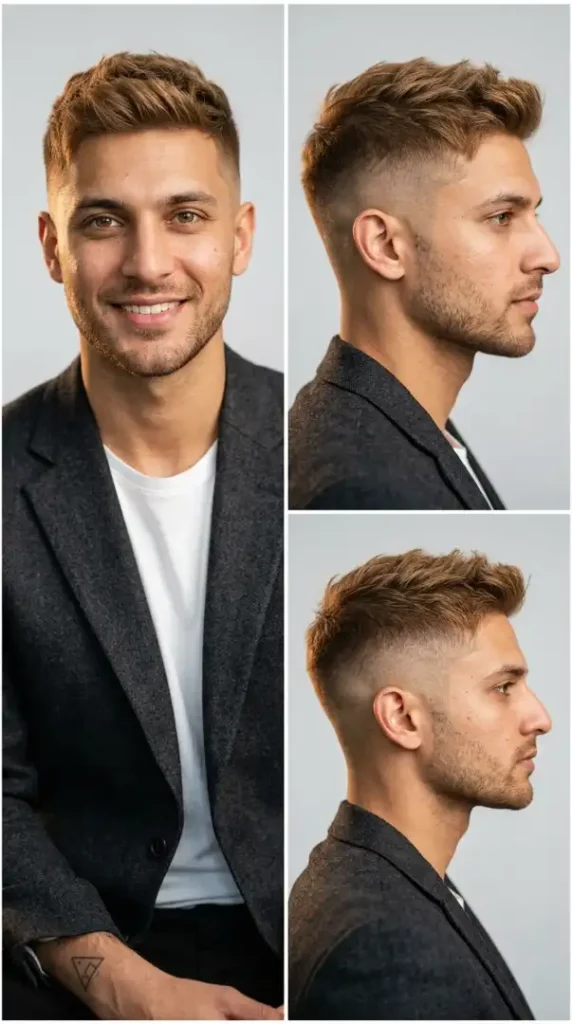
The Disconnected Quiff Fade: Everything You Need to Know
The Disconnected Quiff Fade is the low-maintenance answer to the neo-quiff trend, using an ultra-short crop on top with a hard disconnection to closely shaved sides. It delivers subtle lift and texture without needing daily styling tools.
Best Face Shapes for The Disconnected Quiff Fade
Oblong and square faces suit The Disconnected Quiff Fade well, since the short, cropped top doesn’t add excessive length while the hard disconnection creates clean geometric structure. Oval faces also carry it easily. Round faces should ask for slightly more fringe length at the front to build a touch of lift, since an overly short crop can emphasize roundness. This is generally not the best fit for heart-shaped faces, since the hard disconnection near the temples can draw the eye to a wider forehead; a softer, blended fade is usually a better-looking alternative there.
Grooming Kit You’ll Need
Clippers: Wahl Magic Clip (Model 5049-400) with a guard for the closely shaved sides. Trimmer/Outliner: Andis T-Outliner (Model 04710) for the sharp disconnection line. Finishing Tools: A small styling brush for directing the short fringe. Styling Product: A lightweight matte paste such as American Crew Fiber, used sparingly for texture rather than heavy hold. Maintenance: A daily moisturizing lotion to keep the closely shaved sides from feeling dry. A pea-sized amount of paste worked through with fingertips is enough — this cut doesn’t need much product.
How Often to Maintain This Cut
This is a low-maintenance style, one of the easiest in this collection. Barbershop visits every 2-3 weeks keep the disconnection sharp, since the whole style depends on that hard contrast staying crisp. Daily styling takes just 2-3 minutes: work a small amount of paste through damp or dry hair with fingertips. It’s essentially a no-product-required routine if you prefer the natural texture. As it grows out, the disconnection softens quickly since the sides are so short, meaning this style needs more frequent barbershop visits than most others on this list despite being low-effort day-to-day. Expect to spend around $30-40 per month. This is a beginner-friendly style for home upkeep.
Exactly What to Say to Your Barber
Say this to your barber: “I want a Disconnected Quiff Fade with the sides taken down to a #1 guard, no blending — I want a hard, visible disconnection rather than a smooth fade. Take the top to about 1.5-2 inches, cropped short and textured with point cutting for a piece-y finish. Keep the front slightly longer to brush forward for subtle lift. Please make the disconnection line clean and deliberate, not gradual. Finish with a sharp lineup at the temples and hairline.”
If a razor-short, low-effort crop like this fits your routine perfectly, the next style shows how the same principles look on mature, salt-and-pepper hair.
12 of 13 — The Silver Fox Quiff
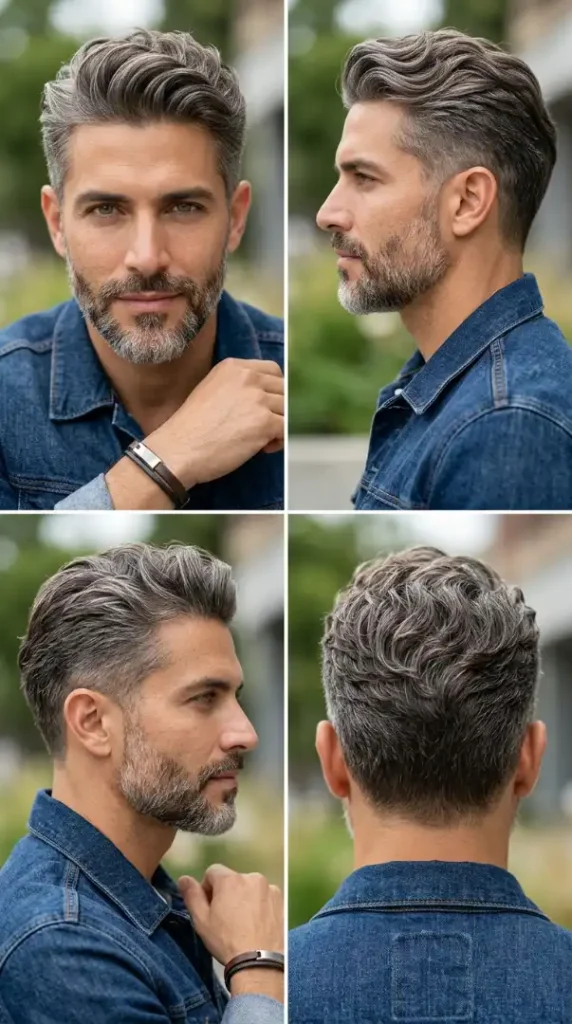
The Silver Fox Quiff: Everything You Need to Know
The Silver Fox Quiff proves the neo-quiff trend isn’t just for younger men. It embraces natural gray and silver strands within a relaxed, swept-back shape, turning a graying hairline into a distinguished, intentional style statement.
Best Face Shapes for The Silver Fox Quiff
Heart and oval face shapes suit The Silver Fox Quiff beautifully, since the relaxed volume balances a narrower jaw without overwhelming mature facial features. Square faces also do well, as the softer wave takes an edge off strong jaw angles that can look more pronounced with age. Round faces should ask for a touch more height at the crown to keep the face looking lifted and defined. This style is a tougher match for very oblong faces, where extra length on top can emphasize an already long face — a shorter, closer-cropped style is often more flattering there.
Grooming Kit You’ll Need
Clippers: Andis Master (Model 01557) for the side fade. Trimmer/Outliner: Andis T-Outliner (Model 04710) for beard and hairline detail. Finishing Tools: A wide-tooth comb for wavy texture, a boar bristle brush for a soft sweep-back finish. Styling Product: A lightweight, low-shine pomade such as Baxter of California Clay Pomade, which won’t make silver strands look greasy or overly slick. Maintenance: A silver-brightening shampoo such as Redken Color Extend Graydiant to keep silver tones bright rather than yellowed. A dime-sized amount of pomade combed through damp hair achieves the relaxed swept-back finish.
How Often to Maintain This Cut
This is a low-to-medium maintenance style. Barbershop visits every 4-5 weeks are sufficient to keep the fade tidy, since the relaxed shape is forgiving of growth. Daily styling takes about 5 minutes: comb through a small amount of pomade while damp and let it air-dry into the natural sweep. It’s a one-product routine most days. As it grows out, the sweep simply softens further, which many men find complements the mature, distinguished look. Expect to spend around $30-40 per month, plus the occasional cost of a silver-brightening shampoo. This is a beginner-friendly style to maintain at home.
Exactly What to Say to Your Barber
Say this to your barber: “I want a Silver Fox Quiff with a low taper fade starting just above the ear. Take the top to about 3 inches, kept natural with soft texturizing rather than a heavy blunt cut, swept back gently rather than styled with hard lines. Blend the fade from a #2 at the side up to a #5 at the parietal ridge for a subtle transition. Please don’t over-thin the crown — I want to keep the natural silver distribution visible and full. Finish with a soft, natural lineup at the temples.”
If embracing natural gray with a relaxed sweep isn’t quite your style yet, the final look on this list channels an entirely different, edgier energy for one last statement cut.
13 of 13 — The Quiff Mohawk Hybrid
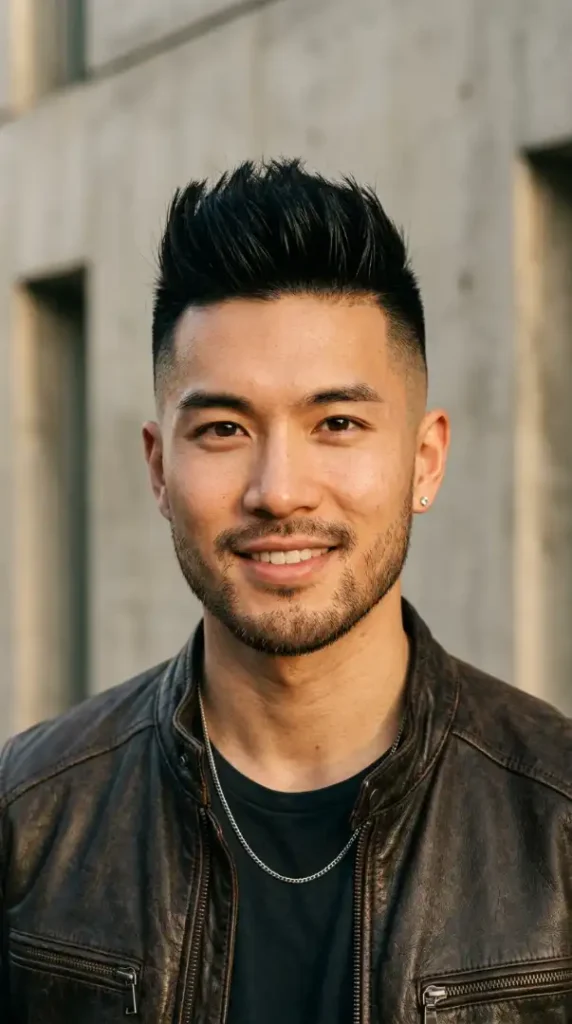
The Quiff Mohawk Hybrid: Everything You Need to Know
Closing out this list, The Quiff Mohawk Hybrid is the most daring neo-quiff of all — a near-shaved fade on the sides paired with a narrow ridge of spiked volume that rises sharply at the front before settling into a low mohawk line through the crown.
Best Face Shapes for The Quiff Mohawk Hybrid
Square and diamond face shapes handle this bold, narrow-ridge style the best, since the strong central line of volume adds height without adding width, complementing already-angular bone structure. Oval faces also wear it confidently. Round faces can use the vertical spike to elongate the face, though the sides should stay extremely close to avoid competing width. This is not a natural fit for oblong faces, since the height concentrated at the center can stretch an already-long face further — a flatter, low-volume crop is the safer choice for that face shape.
Grooming Kit You’ll Need
Clippers: Wahl Magic Clip (Model 5049-400) with a close guard for the near-shaved sides. Trimmer/Outliner: Andis T-Outliner (Model 04710) for the sharp ridge lineup. Finishing Tools: A small styling comb for lifting and directing the central spikes. Styling Product: A strong-hold styling wax such as Suavecito Firme (Strong) Hold Pomade to lock the spiked ridge in place through the day. Maintenance: A light hairspray to reinforce hold in humid weather. Use a pea-sized amount of wax, applied to slightly damp hair and worked upward in the direction of the ridge for maximum lift.
How Often to Maintain This Cut
This is a high-maintenance style. Barbershop visits every 2 weeks are necessary to keep the near-shaved sides and sharp ridge lineup crisp, since this bold silhouette only works when the contrast is fresh. The central ridge can be left slightly longer between full shape-ups. Daily styling takes 6-8 minutes: apply wax to damp hair and comb the ridge upward and back into the spiked shape. It’s a focused, one-product routine that takes a little practice to get consistent. As it grows out, the ridge starts to flop over and the sides lose their sharp contrast, at which point most men schedule an immediate touch-up. Expect to spend around $40-55 per month. This is an intermediate-difficulty style for home styling, though the initial cut should always be done by a skilled barber.
Exactly What to Say to Your Barber
Say this to your barber: “I want a Quiff Mohawk Hybrid with the sides taken down to a skin fade or a very tight #1 guard, extremely close on both sides. Leave a narrow strip about 2 inches wide running from the front hairline through the crown at around 3 inches long, tapering slightly shorter toward the back. Blend the fade tightly along the edges of that central strip. Keep my beard light and lined cleanly at the jaw. Finish with a razor-sharp lineup along both edges of the central strip and at the hairline.”
That wraps up all thirteen neo-quiff variations — from the boldest disconnected shapes to the most relaxed, low-maintenance crops, there’s a version here suited to every face shape, hair type, and daily routine.