
10 Fresh Cuts That Balance Style & Versatility
1 of 10 — The Mediterranean Wave Master

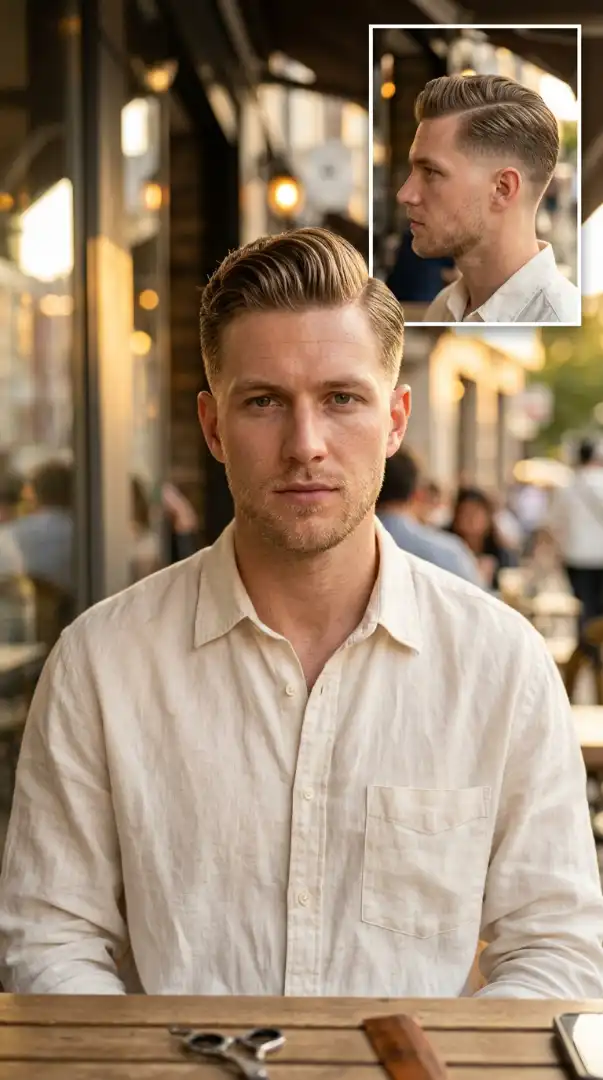
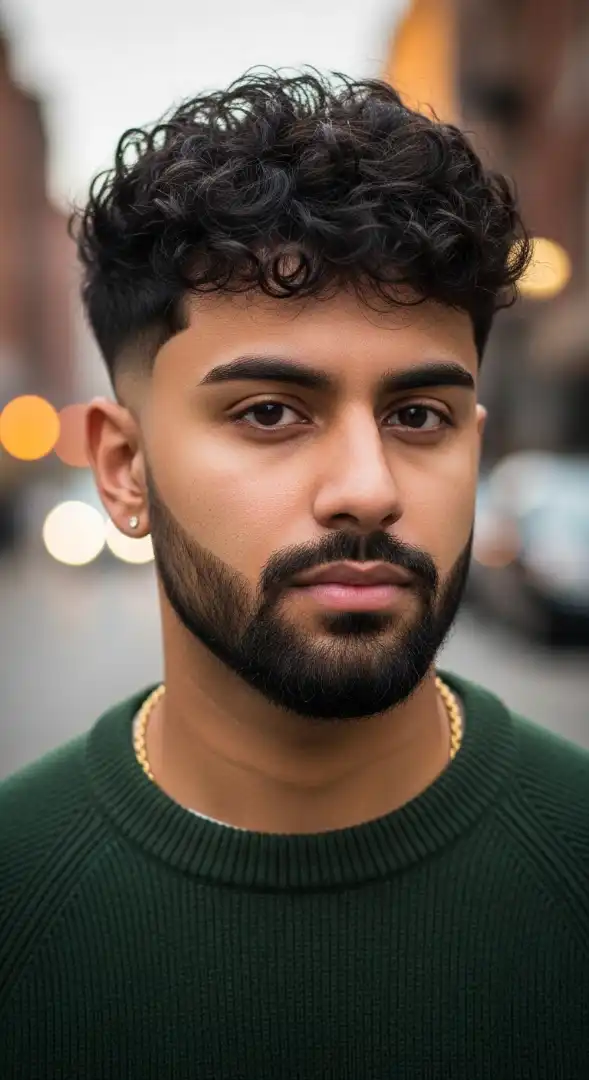
The Mediterranean Wave Master works exceptionally well for Oval and Oblong face shapes. The wavy texture adds horizontal volume across the sides, which balances the vertical length of an Oblong face by creating visual width. For Oval faces, this style enhances the natural balance by adding textured movement without overwhelming proportions. The side-swept fringe creates an asymmetrical line that draws attention to the eyes and cheekbones, making it ideal for faces that can handle added volume. Square face shapes benefit from the softness of the waves, which counteracts angular jawlines. However, Round faces should approach with caution — the horizontal volume can make the face appear wider. If you have a Round face, ask your barber to keep the sides shorter with a low fade to create vertical lines.
Essential Grooming Kit
Your daily styling arsenal needs to be specific. Start with the Andis Master Cordless Clipper for maintaining the fade every 2-3 weeks. For the wavy texture on top, you’ll need American Crew Fiber (medium hold, low shine) — use a dime-sized amount on damp hair. Finish with Layrite Natural Matte Cream to tame flyaways without weighing down the waves. For beard maintenance, the Wahl Peanut Trimmer keeps edges sharp, paired with Honest Amish Beard Oil (2-3 drops daily) to prevent dryness. You’ll also want a wide-tooth comb (Kent brand) for detangling when wet and a boar bristle brush for distributing natural oils. Sea salt spray like Baxter of California Texture Spray adds grip and enhances natural wave pattern — apply to towel-dried hair before styling.
Maintenance Reality Check
This is a Medium maintenance style. Expect salon visits every 3-4 weeks to maintain the fade and trim split ends on top. Daily styling takes 8-12 minutes: dampen hair, apply product, blow-dry with fingers to create volume, then finish with cream. The waves do most of the work naturally, so you’re not fighting against your hair texture. Morning routine: quick refresh with water spray and finger-comb takes 3 minutes. You’ll use product daily, but the natural texture means you’re not dependent on heat tools. If you travel frequently, this style works — just pack your fiber and a small comb. Not ideal for athletes who shower multiple times daily, as the style requires product to maintain structure.
The Barber Chair Script
Walk in and say this exactly: “I want a medium-length textured cut on top, about 3 to 3.5 inches, keeping my natural wave pattern. Give me a low fade on the sides starting at a 2 guard, blending up into the length. I want a deep side part on my left, and the fringe should sweep across naturally — don’t cut it too short. For the beard, line it up clean but keep the length at about 8-10mm, and blend it into the fade at the sideburns. I want to be able to style this with my hands and a bit of fiber, nothing too structured. Texture the ends so it moves naturally.” Show them the reference photo and emphasize you want movement, not a blocky cut.
The secret to this style’s versatility lies in the length — it’s long enough to style multiple ways but short enough to look professional in any setting.
Frequently Asked Questions
How do I maintain the Mediterranean Wave Master at home between cuts?
Maintain this style by washing with a moisturizing shampoo every 2-3 days to preserve natural oils that enhance waves. Apply sea salt spray to damp hair, scrunch with your hands, and let it air-dry 70% before adding fiber. Trim your own beard weekly with a Wahl Peanet trimmer at 8mm. Sleep on a silk pillowcase to prevent frizz and maintain wave definition overnight.
Which face shape suits the Mediterranean Wave Master best and why?
Oval and Oblong faces suit this style perfectly because the horizontal wave volume balances vertical facial length, creating visual width across the temples. The side-swept fringe draws attention to the eyes and cheekbones, which enhances naturally balanced proportions. Square faces benefit from the wave softness counteracting angular jawlines, while Round faces should pair this with shorter sides to avoid widening effects.
What is the difference between the Mediterranean Wave Master and a regular textured crop?
The Mediterranean Wave Master maintains 3-3.5 inches of length on top compared to a textured crop’s 1.5-2 inches, giving you styling versatility for swept-back, side-part, or messy looks. The wave pattern is preserved and enhanced rather than cut short, creating natural movement throughout the day. Crops are lower-maintenance but offer fewer styling options, while this medium-length style adapts to casual or formal settings.
What products do I need for the Mediterranean Wave Master daily routine?
You need four core products: American Crew Fiber for hold and texture (dime-sized on damp hair), Layrite Natural Matte Cream for flyaway control and finishing, Baxter of California Sea Salt Spray for wave enhancement, and Honest Amish Beard Oil for facial hair maintenance. Optional: heat protectant if you blow-dry regularly. Total investment: approximately $65-80 for products lasting 3-4 months with daily use.
2 of 10 — The Executive Side Part
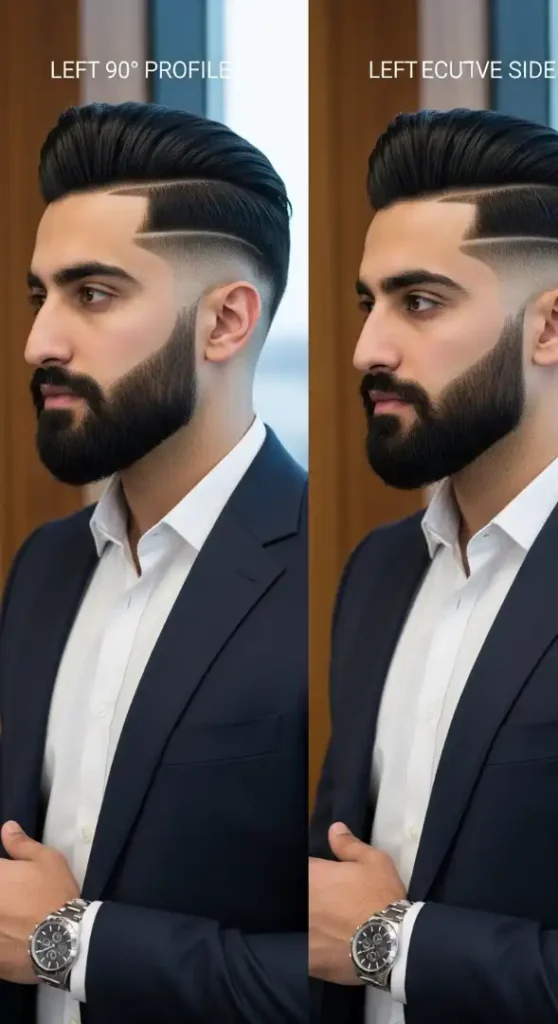
The Executive Side Part is engineered for Square and Diamond face shapes. The sharp side part creates a strong horizontal line that complements angular jawlines rather than fighting them. For Square faces, the swept volume on top adds height, creating vertical interest that balances wide jaw width. Diamond faces benefit from the fuller sides that this medium length provides — it adds width at the temples, balancing the narrow forehead and chin points characteristic of diamond shapes. The structured styling draws attention upward toward the eyes, emphasizing cheekbones. Oval faces can absolutely wear this, though the structure may feel unnecessary since Oval is naturally balanced. Round faces should avoid this unless paired with an aggressive high fade — the horizontal side-sweep can emphasize width. The key is the contrast: angular face needs angular styling to create harmony.
Essential Grooming Kit
Precision is everything here. You need the Wahl Magic Clip for home fade touch-ups — it’s the same clipper professional barbers use. For the part line, ask your barber to razor it in, but maintain it at home with the Andis T-Outliner trimmer for sharp edges. The styling product is non-negotiable: Suavecito Original Hold Pomade gives you the medium shine and strong hold required for all-day structure. Apply to damp hair after towel-drying. You’ll also want American Crew Grooming Cream for days when you need a more natural finish with less shine. For the beard, use the BaByliss Pro FX Trimmer at 4mm length, and apply Viking Revolution Beard Oil (3-4 drops) after every shower. Your comb matters — get the Kent 81T Fine Tooth Comb for creating that razor-sharp part line. Round brush for blow-drying if you want extra volume at the crown.
Maintenance Reality Check
This is High maintenance masquerading as effortless. You’re looking at barber visits every 2.5 weeks — the fade grows out fast, and the part line needs refreshing. Daily styling is 12-15 minutes: wash or dampen, towel-dry to 80%, apply pomade, blow-dry while brushing back, comb the part with precision, apply finishing cream to flyaways. If you skip a day, it shows. This style demands consistency. You’ll need to re-style if you wear a hat or get caught in wind. Morning refresh: 5 minutes with water spray and comb. Ideal for executives, lawyers, consultants — professionals who control their environment and have morning routine discipline. Not recommended for gym-goers who shower twice daily or anyone in outdoor labor. The polish is the point, but polish requires maintenance.
The Barber Chair Script
Here’s your exact script: “I want a clean executive side part cut. Leave 3 inches on top, textured but not choppy — I need to be able to comb it smoothly. Give me a high fade on the sides, starting with a 1 guard at the bottom and blending up into the length. I want a hard part line shaved in on my left side, about an inch above the fade line. The front should have slight volume when styled back, not flat. For the beard, keep it at 4-5mm, lined up sharp, especially the cheek line and neck. Blend the beard into the fade at the sideburns — no hard line there. I style this with pomade daily, so cut it knowing it’ll be combed back with a side part. No bulk at the sides — keep it tight.” Bring a photo and show the part line specifically.
This style tells people you’re serious before you even speak — it’s a visual handshake.
Frequently Asked Questions
How do I create a sharp side part at home without a barber?
Create a sharp side part by wetting your hair completely, then use a fine-tooth comb to draw a straight line from your front hairline backward about 3 inches, following the natural curve where your head rounds. Apply pomade to damp hair, then comb firmly away from the part on both sides. For extra definition, use an Andis T-Outliner trimmer to lightly shave the part line — one gentle pass, don’t dig in.
Which face shape suits the Executive Side Part best?
Square and Diamond face shapes suit this style best because the horizontal part line and swept styling complement angular features, creating visual harmony. The structured side volume adds width at the temples for Diamond faces, balancing narrow forehead and chin points. Square faces benefit from the added height on top, which creates vertical interest to balance the wide jaw. Round faces should pair this with a high fade to avoid emphasizing width.
What is the difference between the Executive Side Part and a classic pompadour?
The Executive Side Part maintains 3 inches of length styled horizontally to the side with medium height, while a pompadour pushes 4-5 inches of hair straight up and back with dramatic volume at the front. Side parts have a horizontal flow and professional polish, pompadours have vertical drama and vintage flair. Side parts work in corporate settings, pompadours make bold statements. Maintenance is similar, but pompadours require more product and blow-drying time.
How often should I get the Executive Side Part touched up?
Get touch-ups every 2.5 weeks maximum to maintain the fade sharpness and part line definition. The fade loses its gradient clarity after 3 weeks, making the style look grown-out rather than polished. If you extend to 4 weeks, the sides bush out and lose the contrast that makes this style work. The part line needs re-shaving every 2 weeks — ask your barber to razor it fresh each visit.
3 of 10 — The Textured Flow Mullet
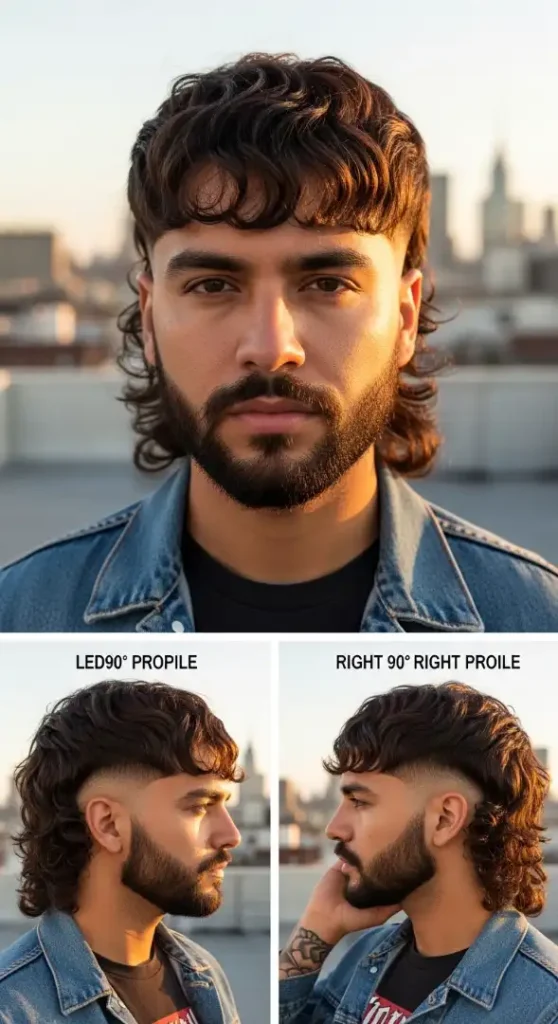
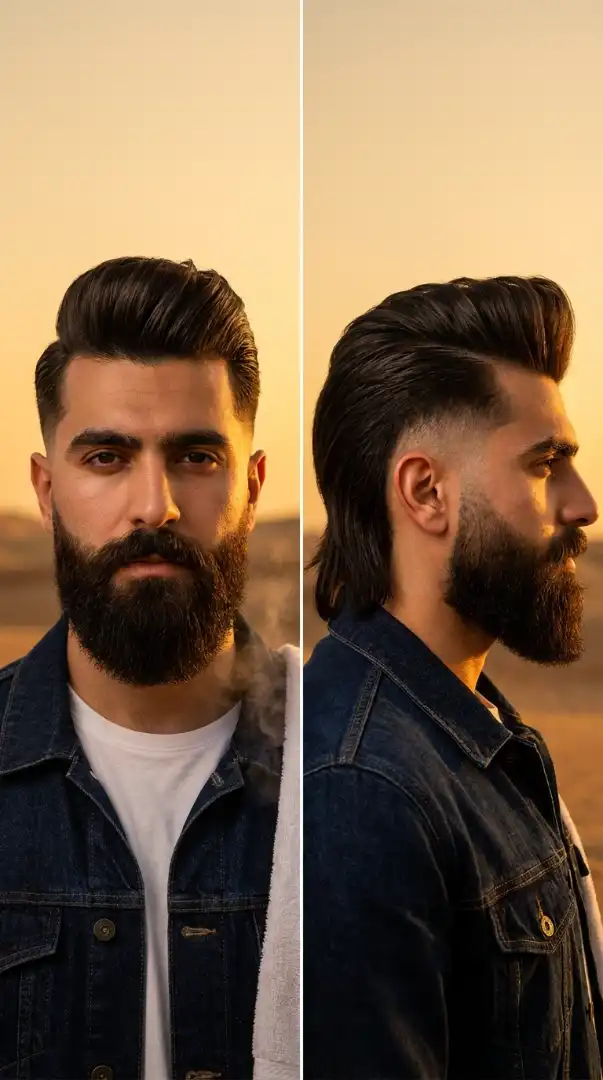
The Textured Flow Mullet thrives on Oval and Heart face shapes. For Oval faces, the added length at the back maintains balance without overwhelming the natural proportions — the textured front prevents the style from looking too bottom-heavy. Heart face shapes particularly benefit: the wider forehead and narrow chin are balanced by the volume distribution, with texture at the crown widening the top while the flow at the back adds visual weight to the lower face. Round faces should approach with confidence — the vertical flow created by the length actually elongates, and the textured, unstyled finish prevents the roundness from being emphasized. Square faces work if you keep the sides from getting too short; maintain some length through the taper to soften the jaw angles. Oblong faces should be cautious — the added vertical length can exaggerate facial length, so keep the top texture loose and horizontal rather than pushed up.
Essential Grooming Kit
The mullet requires specific tools to maintain the intentional “messy” look. Get the Oster Fast Feed Clipper for the taper maintenance — its powerful motor handles thick, wavy hair. For texture, you need Hanz de Fuko Claymation (strong hold, ultra-matte finish) — this is the secret to that lived-in texture without looking greasy. Apply to dry hair for maximum texture. Baxter of California Clay Pomade works as your secondary product for days you want slightly more shine. The back length requires conditioning: use Redken Brews Daily Conditioner every 2 days to prevent the ends from looking fried. For the beard, Wahl Designer Trimmer keeps the sculpted short beard at 3mm. You’ll want Honest Amish Beard Balm (not oil — balm holds shape). A wide-tooth comb is essential for detangling the back without destroying texture. Sea salt spray: Bumble & Bumble Surf Spray gives you that natural wave enhancement. Round brush for blow-drying if you want to add volume at the crown.
Maintenance Reality Check
Medium maintenance with a deceptive time commitment. Barber visits every 3-4 weeks — the mullet look intentionally has some grown-out aesthetic, so you have more flexibility than shorter cuts. The taper needs touching up at 3 weeks, but the back length can go 4-5 weeks before looking unkempt. Daily styling: 6-8 minutes. The beauty of this style is the “undone” finish — you’re not fighting for perfection. Dampen the hair, apply claymation while scrunching to enhance natural texture, maybe blow-dry with your fingers for 2 minutes to add volume, then you’re done. No combing required for the casual version. Morning routine for day-two hair: spray with water, scrunch, add a tiny bit more product. This style actually looks better on day two or three when the product has broken down slightly. Ideal for creatives, musicians, artists, or anyone in less formal environments. Not suitable for strict corporate dress codes, but perfect if your office skews casual or creative.
The Barber Chair Script
Say this verbatim: “I want a modern textured mullet — business in the front, party in the back, but make it 2025. On top, leave 3 inches with lots of texture and point-cutting — I want it to look lived-in and wavy, not structured. Give me a low taper on the sides, starting at a 2 guard and blending up gradually — not a dramatic fade, more of a soft taper that maintains some length. For the back, I want it to extend about 2 inches past my collar, with layers so it flows naturally and doesn’t look blocky. Don’t cut the back too blunt — I want movement. The fringe should fall naturally across my forehead, textured and choppy. For the beard, keep it short at 3mm, sculpted tight to my face, with a clean cheek line. I style this with matte clay for texture, so don’t over-thin it.” Show the reference and emphasize the texture.
This isn’t your dad’s mullet — it’s the rebellion haircut that went to design school.
Frequently Asked Questions
How do I maintain a textured mullet without it looking messy or unkempt?
Maintain the textured mullet by conditioning the back length every 2 days to prevent dryness and split ends — use Redken Brews Daily Conditioner on the back only. Apply Hanz de Fuko Claymation to dry hair by scrunching and separating sections with your fingers, creating intentional texture rather than chaos. Trim the back yourself every 4 weeks with scissors to remove split ends, cutting small sections at slight angles for natural layering.
Which face shape suits the Textured Flow Mullet best?
Oval and Heart face shapes suit this style best because the textured front volume balances the back length without overwhelming natural proportions. Heart faces particularly benefit — the wider forehead finds balance with crown texture while the flowing back adds visual weight to the narrow chin. Round faces work well too since the vertical flow from the length actually elongates, and the loose texture prevents roundness emphasis. Square faces need to maintain taper length to soften jaw angles.
What is the difference between a modern textured mullet and a classic 80s mullet?
The modern textured mullet maintains 2-3 inches of back length compared to the 80s version’s 4-6+ inches, creating subtle flow rather than dramatic contrast. Modern versions use low tapers and soft blends instead of hard disconnects, with heavily textured point-cut tops replacing the curly permed fronts. The modern style looks intentionally lived-in with matte products, while classic mullets used gel for shine and structured separation. Modern is versatile and professional-adjacent; classic is bold and costume-like.
How often should I get a textured mullet touched up?
Get the taper touched up every 3 weeks to maintain the blend sharpness, but the back length can extend to 4-5 weeks before trimming. The intentional grown-out aesthetic of modern mullets gives you flexibility — slightly overgrown actually enhances the style’s casual vibe. Touch up the top texture every 4 weeks to maintain movement and prevent blunt ends. If the back starts looking straggly or split, trim it yourself with sharp scissors between barber visits.
4 of 10 — The Crown Surge Fade
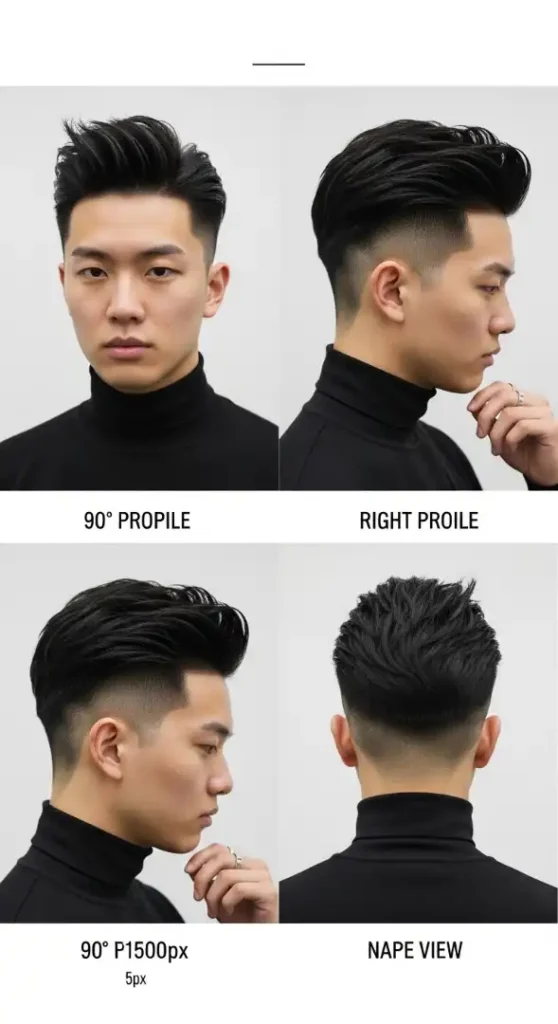
The Crown Surge Fade is specifically engineered for Round and Oval face shapes. Round faces benefit dramatically — the vertical height created by the surge adds inches of visual length, making the face appear narrower and more balanced. The aggressive high fade removes bulk from the sides, further emphasizing vertical lines. Oval faces wear this effortlessly because they can handle the dramatic height without throwing off proportions. Oblong faces should proceed with extreme caution — adding more vertical length to an already long face creates an imbalanced look unless you keep the surge moderate. Square faces work if you’re confident, but the height can make the jaw look more pronounced, so consider if you want that emphasis. Diamond faces are interesting here — the surge adds width at the top, which can balance the narrow forehead, but you need to ensure the overall effect doesn’t make the cheekbones look too prominent. The key with this style is confidence — it’s a statement cut that demands attention.
Essential Grooming Kit
This style is product-dependent. You absolutely need the Andis Master Cordless Clipper for maintaining that high fade at home — it’s an investment at $200, but essential for touch-ups every 10-12 days. The surge requires Uppercut Deluxe Featherweight (medium hold, low shine) applied to damp hair, then blow-dried with a round brush while directing hair up and back — this step is non-negotiable. For finishing, use Gatsby Moving Rubber Grunge Mat (gray container) — it’s a Japanese product that gives texture and hold without weight. You’ll need heat protectant spray since you’re blow-drying daily. The Dyson Supersonic or BaByliss Pro Nano Titanium Dryer is worth it — cheap dryers can’t generate enough power to style this much hair upward. For the clean-shaven face, use the Gillette Fusion5 ProGlide with Cremo Cooling Shave Cream. Keep your fade sharp with weekly touch-ups using the Andis T-Outliner. A vent brush for blow-drying is critical — it allows airflow while lifting hair.
Maintenance Reality Check
This is High maintenance, no question. The high fade needs touch-ups every 1.5-2 weeks to stay sharp — if you let it go 3 weeks, it loses the contrast that makes this style work. Daily styling is 15-20 minutes: wash, towel-dry to damp, apply Featherweight, blow-dry with round brush while pulling hair up and back, finish with Gatsby for texture and hold. You’ll reshampoo and restyle if you work out midday. This style doesn’t survive hats, wind, or rain without immediate attention. Morning refresh for day-two hair: dampen with spray bottle, reapply product, quick blow-dry for 5 minutes. Ideal for tech workers, creatives, fashion-forward professionals, or anyone who can control their environment and has time for morning routine. Not for construction workers, athletes, or anyone in unpredictable outdoor conditions. The payoff is heads turning everywhere you go — but only if you maintain it religiously.
The Barber Chair Script
Walk in and say this exactly: “I want a crown surge fade. Leave 3 inches on top with heavy texture using point-cutting — I need length and grip for styling upward. Give me a high skin fade starting at the temples, aggressive drop to nothing — I want maximum contrast. The front fringe should be slightly longer than the crown, about 3.5 inches, so I can style it back and up into a surge wave. Fade should be tight — use a 0.5 guard at the start and blend to skin. I want a sharp hairline all around, especially at the temples. For the nape, taper it clean to skin with a geometric neckline. I style this with pomade and blow-dry it upward daily, so cut it knowing I’ll have volume. No beard work needed — I’m clean-shaven. The key is texture on top and maximum fade contrast on the sides.” Show the reference photo and point to the high fade specifically.
This cut is the architectural statement of medium-length hairstyles — it defies gravity and turns heads.
Frequently Asked Questions
How do I style the Crown Surge Fade to get height without it falling flat?
Style the Crown Surge by applying Uppercut Deluxe Featherweight to 80% dry hair, then blow-dry with a round brush while pulling hair upward and backward in sections, starting from the front fringe. Use high heat and tension — hold each section with the brush for 5 seconds under heat. Once fully dry and shaped, let it cool for 30 seconds, then apply Gatsby Grunge Mat by rubbing between palms and working through with fingers, lifting at the roots for extra hold.
Which face shape suits the Crown Surge Fade best?
Round and Oval face shapes suit this style best because the dramatic vertical height created by the surge adds visual length, making Round faces appear narrower and more balanced. The aggressive high fade removes side bulk, emphasizing upward lines. Oval faces handle the height effortlessly without proportion issues. Oblong faces should avoid this — adding vertical length to already-long faces creates imbalance. Square faces work with confidence but prepare for emphasized jaw prominence.
What is the difference between the Crown Surge Fade and a pompadour?
The Crown Surge Fade pushes hair backward and upward with 3 inches of height across the entire crown area in a wave motion, while a pompadour stacks 4-5+ inches of hair primarily at the front with dramatic swept-back volume. Surges have distributed height, pompadours have front-loaded drama. Surges feel modern and technical, pompadours feel vintage and rockabilly. Both require blow-drying and product, but pompadours need more volume at the front specifically, while surges need overall lift.
How often should I get the Crown Surge Fade touched up?
Get the high fade touched up every 1.5-2 weeks maximum to maintain the sharp contrast that defines this style. After 2 weeks, the fade starts losing its aggressive gradient and the style appears grown-out rather than intentional. If you extend to 3 weeks, the sides bush out and eliminate the vertical emphasis. The top length can go 4 weeks before trimming to maintain texture and remove split ends. Consider learning to maintain your own fade with clippers.
5 of 10 — The Coastal Sweep Back
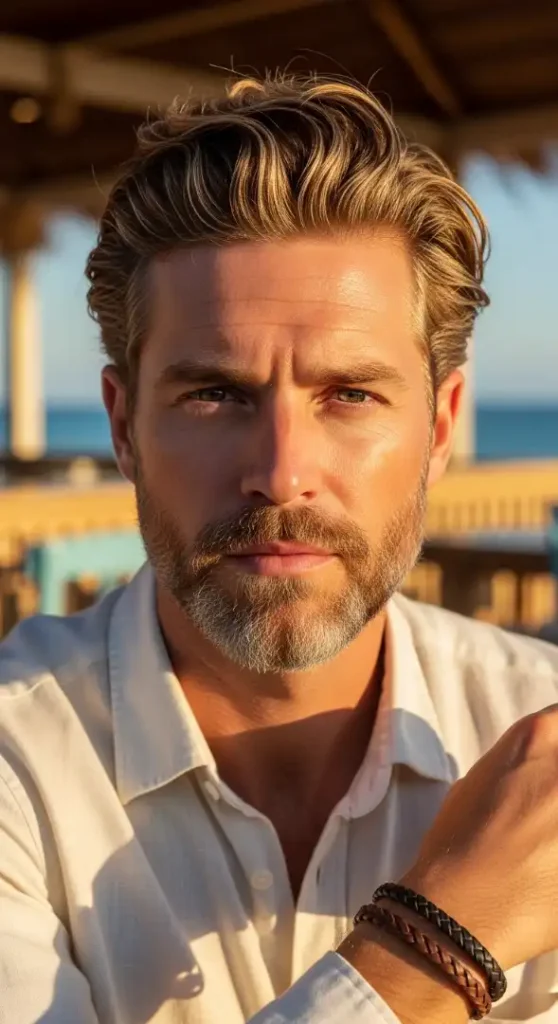
The Coastal Sweep Back is the democratic haircut — it works across nearly all face shapes with minor adjustments. Oval faces own this naturally; the swept-back style maintains the face’s inherent balance without adding or subtracting visual weight. Oblong faces benefit from the horizontal sweep direction, which creates width across the temples and prevents further lengthening. Round faces work well here because the backward flow creates vertical lines and the soft taper (not aggressive fade) doesn’t remove too much side volume, maintaining balance. Square faces should embrace this — the swept texture softens angular jawlines, and the natural wave prevents the severity that can come with more structured styles. Heart faces find this flattering because the fuller back sweep adds visual weight to balance the narrow chin. Diamond faces benefit from the temple volume created by the wave texture. The only face shape that should be cautious is extremely narrow faces — the swept-back look can make the face appear thinner, so keep more texture and volume at the sides.
Essential Grooming Kit
This is a low-product, high-quality approach. You need American Crew Forming Cream (medium hold, natural finish) — it’s the workhorse product for this style. Apply to damp hair after showering. For the wavy texture, Bumble & Bumble Surf Spray is essential on towel-dried hair before blow-drying — it enhances natural wave without crunch. You’ll want a blow dryer (doesn’t need to be premium — any decent wattage works) and your fingers as styling tools — no brush needed for this relaxed look. The Wahl Peanut Trimmer handles the low taper touch-ups at home between barber visits. For the beard, use Honest Amish Beard Oil (3-4 drops daily) to keep the salt-and-pepper looking distinguished rather than scraggly. Kent Comb for detangling when wet. Optional: dry shampoo for day-three refresh when you don’t wash. Product investment: around $75 total, lasting 4-5 months with daily use. The beauty of this style is that expensive products aren’t required — the natural texture does most of the work.
Maintenance Reality Check
Low maintenance disguised as effort. Barber visits every 4-5 weeks — this style actually looks better slightly grown out, so you have flexibility. The low taper doesn’t create stark contrast, meaning it fades gracefully rather than looking unkempt. Daily styling: 4-6 minutes. Shower, towel-dry hair to 70% dry, spray with surf spray, apply forming cream by running hands through hair backward, blow-dry with fingers (not a brush) for 2-3 minutes while tousling. That’s it. No precision required. The windswept texture is the goal, so imperfection is the point. Day-two hair: spray with water, add a tiny bit more cream, tousle with fingers for 1 minute. This style survives hats, wind, and rain better than any other medium-length cut because it’s designed to look natural and lived-in. Ideal for creative professionals, remote workers, weekend warriors, travelers, or anyone who values style without time commitment. Works in business casual environments, beach vacations, coffee shops, and first dates. Not suitable for strict corporate environments requiring high polish.
The Barber Chair Script
Say this to your barber: “I want a coastal sweep-back cut. Leave about 3.5 inches on top, with lots of texture and point-cutting so it moves naturally — I want wave and flow, not structure. Give me a low taper on the sides, starting with a 2 guard and blending up gradually. I don’t want an aggressive fade, just a soft taper that keeps some length on the sides. The back should blend naturally with the sides — no hard lines. I want to be able to sweep everything backward with my hands and have it look intentionally messy. Don’t over-thin it, I need body. For the beard, just clean up the neckline and shape the cheek line — keep the length at about 6-8mm. I style this with cream and sea salt spray, air-dry or quick blow-dry, so cut it knowing it’ll have natural texture.” Show the reference and emphasize you want movement, not precision.
This is the haircut for the guy who wants to look like he just came from the beach — even if he works in an office.
Frequently Asked Questions
How do I get the coastal swept-back look without my hair looking greasy?
Achieve the coastal look without greasiness by using matte or natural-finish products like American Crew Forming Cream, not shine pomades. Apply to 70% dry hair, not soaking wet, and use only a dime-sized amount — more product equals more grease perception. Blow-dry with your fingers while tousling to distribute product evenly and create texture. Use Bumble & Bumble Surf Spray before cream to add grip without shine. Wash your hair every 2 days maximum to maintain natural oils without buildup.
Which face shape suits the Coastal Sweep Back best?
All face shapes suit this style with minor adjustments — it’s the most versatile medium-length cut. Oval faces wear it perfectly as-is. Round faces benefit from the vertical lines created by the backward sweep. Square faces enjoy the softness the wave texture adds to angular jaws. Heart faces gain chin balance from the fuller back volume. Oblong faces appreciate the horizontal direction preventing further lengthening. Only extremely narrow faces should add more side volume to avoid appearing thinner.
What is the difference between the Coastal Sweep Back and a slicked-back undercut?
The Coastal Sweep Back maintains 3.5 inches with natural wavy texture, low tapers on the sides with gradual blends, and uses matte cream for a lived-in finish — styled in 5 minutes with fingers. Slicked-back undercuts have 4+ inches on top, dramatic disconnected undercuts, and use shine pomade for polished structure — requiring 10+ minutes with a comb. Coastal is casual and adaptable; slicked is formal and intentional. Coastal feels beachy; slicked feels boardroom.
How often should I wash hair with the Coastal Sweep Back style?
Wash your hair every 2-3 days to maintain the natural texture and wave pattern that makes this style work. Daily washing strips oils needed for the tousled look and makes hair harder to style with movement. Use dry shampoo on non-wash days if you feel oily. When you do wash, use a moisturizing shampoo and always condition to prevent the wave from becoming frizzy. Towel-dry to 70% before applying surf spray and cream.
6 of 10 — The Angular Fringe Drop
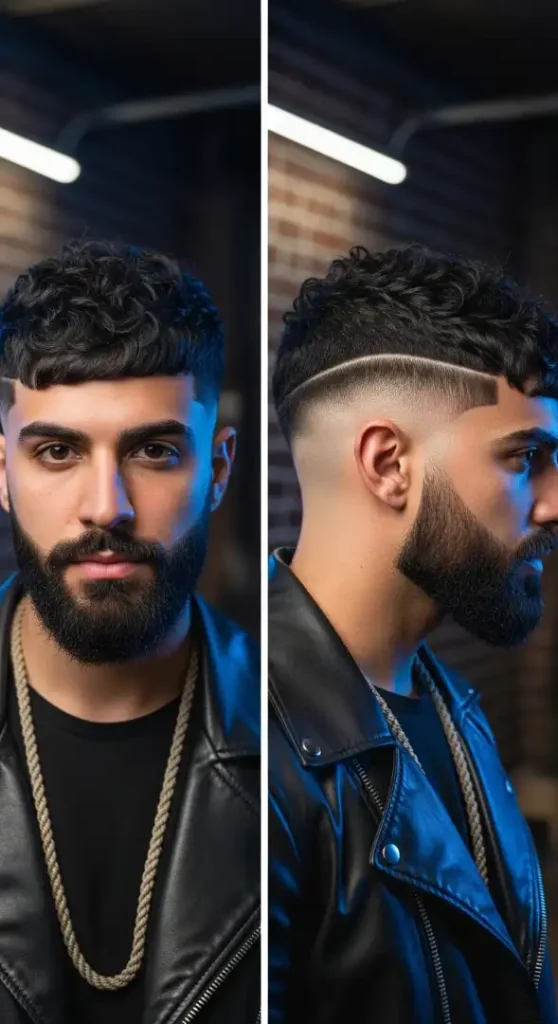
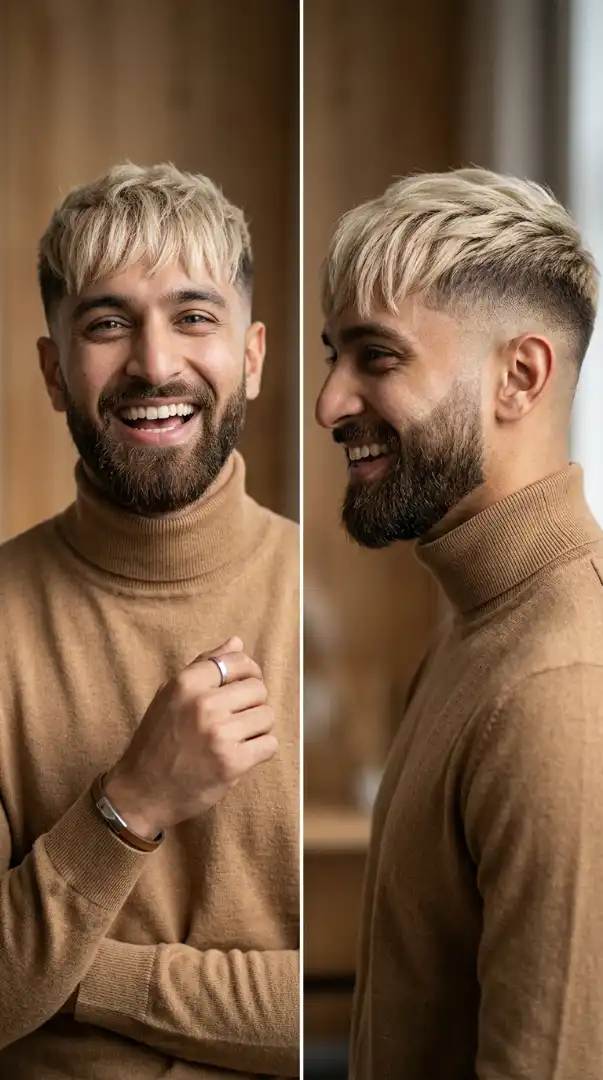
The Angular Fringe Drop is a geometry exercise — it’s built for Square and Diamond face shapes specifically. Square faces find their match here because the diagonal fringe line creates an asymmetrical counterpoint to the symmetrical jaw angles, adding visual intrigue and drawing the eye diagonally across the face rather than straight across the jaw. The drop fade follows the natural curve behind the ear, softening the face’s angular structure while maintaining edge. Diamond faces work brilliantly — the fringe adds width and visual weight to the narrow forehead, while the drop fade’s curved descent mirrors the diamond shape itself, creating harmony. Oval faces can wear this but it may feel like unnecessary drama since Ovals don’t need geometric correction. Round faces should approach cautiously — while the diagonal fringe creates an angular line that contrasts roundness, the overall style’s width can emphasize face width if the fade isn’t executed precisely. Heart faces work if the fringe isn’t too heavy — you want the diagonal to draw attention without overwhelming the narrow chin. Oblong faces benefit from the horizontal emphasis the fringe creates, shortening visual length.
Essential Grooming Kit
Coily hair requires specialized tools. You need the Andis Master Adjustable Blade Clipper — its adjustable blade handles coily texture better than fixed-blade clippers. For the drop fade, the Wahl Detailer is essential for lining up the curved fade and keeping it crisp at home. Product-wise, Shea Moisture Curl Enhancing Smoothie is non-negotiable for defining the coils without crunch — apply to damp hair. For hold, use Eco Styler Gel Black Castor & Flaxseed Oil (green jar) — it provides structure without flaking. You’ll need a pick comb for lifting coils at the root and creating volume. The angular fringe requires precision cutting, so invest in sharp barber scissors for home touch-ups on the fringe line between visits. For the beard, use the Bevel Trimmer (specifically designed for coarse hair and preventing ingrown hairs) at 6mm length. Beard butter like Scotch Porter Smoothing Beard Balm keeps the shaped beard soft and defined. A silk durag or wave cap at night preserves the style and prevents frizz.
Maintenance Reality Check
Medium-to-High maintenance, heavily dependent on hair texture. The drop fade needs touching up every 2 weeks — coily hair shows growth faster than straight hair, so the crisp fade line loses definition quickly. Barber visits every 2.5-3 weeks for the fade and fringe trim. Daily routine: 10-15 minutes. Dampen hair with water spray, apply Shea Moisture Smoothie section by section, use pick comb to lift and define coils, apply Eco Styler Gel to set the angular fringe line, let it air-dry for 15 minutes or use a diffuser attachment on low heat. The fringe angle requires some finger-shaping to maintain the diagonal. Morning refresh on day-two hair: spray with water, reapply small amount of gel to fringe area, pick out the roots for volume. Ideal for creatives, musicians, fashion-forward professionals, or anyone who appreciates the art of a precision cut. Not suitable for low-maintenance seekers or those without morning routine discipline. The drop fade’s curve is the statement, but only when it’s sharp.
The Barber Chair Script
Tell your barber this exactly: “I want an angular fringe drop fade. On top, leave 3 inches with my natural coil texture intact — don’t over-cut it or make it too short. I want an angular fringe cut diagonally across my forehead from my right temple down to the left side, creating an asymmetric line. Give me a drop fade starting at a 1 guard, curving down behind my ears following the natural head shape — I want the fade to drop, not stay level. The fade should be tight and clean, blending up into the coily texture on top. For the back, taper the neckline following the fade curve. For the beard, keep it full at 6mm, shape it tight to my face, clean the cheek line and neck, and make sure the beard blends smoothly into the drop fade at the sideburns — no hard disconnect. I use curl cream and gel to define coils, so cut knowing I’ll have defined texture.” Show the reference and point out the diagonal fringe angle specifically.
This is the cut that makes people do a double-take — the geometry is too precise to ignore.
Frequently Asked Questions
How do I maintain coily hair with the Angular Fringe Drop at home?
Maintain coily hair by applying Shea Moisture Curl Enhancing Smoothie to damp hair daily, working it through in sections to define each coil without frizz. Use a pick comb to lift coils at the root for volume without disturbing the curl pattern. Apply Eco Styler Gel to the angular fringe section only, shaping it with fingers to maintain the diagonal line. Sleep with a silk durag to preserve the style overnight and prevent frizz formation from cotton pillowcases.
Which face shape suits the Angular Fringe Drop best?
Square and Diamond face shapes suit this style best because the diagonal fringe creates an asymmetrical counterpoint to square jaw angles, adding visual intrigue and drawing the eye diagonally rather than horizontally across angular features. The curved drop fade mirrors diamond face proportions, creating geometric harmony. Diamond faces specifically benefit as the fringe adds forehead width to balance narrow upper face. Round faces should approach cautiously unless paired with precise fade execution to avoid width emphasis.
What is the difference between a drop fade and a regular fade?
A drop fade curves downward behind the ear following the natural head contour, creating a curved fade line from temple to nape, while a regular fade maintains a level horizontal line around the head. Drop fades emphasize the natural head shape and create a more contoured, sculptural look. Regular fades are simpler and more traditional. Drop fades require more barber skill to execute the curve smoothly and typically suit square and diamond faces better due to their angular geometry.
How often should I get the Angular Fringe Drop touched up?
Get the drop fade touched up every 2 weeks to maintain the crisp curved fade line — coily hair texture shows growth faster than straight hair, making the fade lose definition quickly. The angular fringe needs trimming every 3 weeks to keep the diagonal line sharp. If you extend past 2 weeks on the fade, the style loses its geometric precision and starts looking grown-out. Consider learning to line up your own fade at home with a Wahl Detailer between professional barber visits.
7 of 10 — The Messy Crop Taper
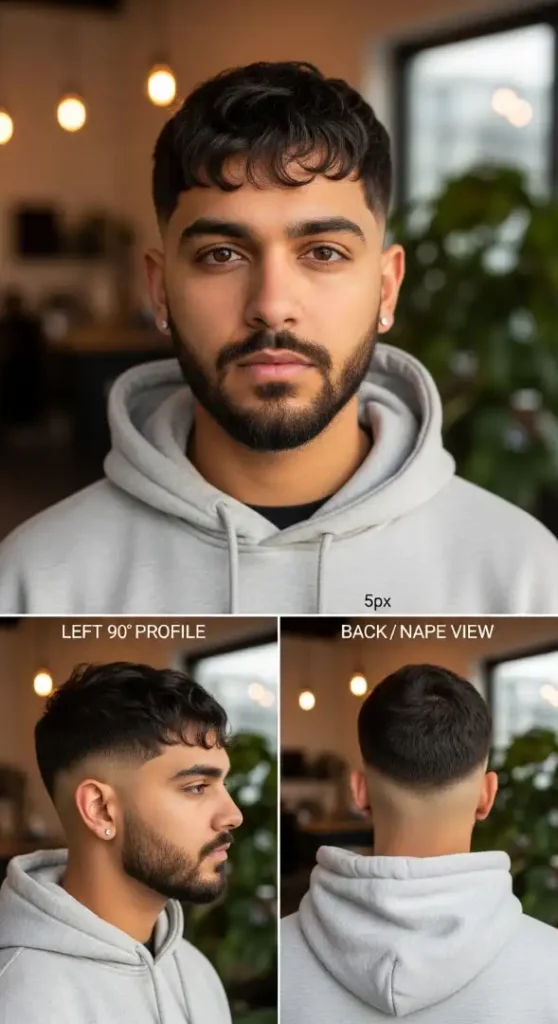
The Messy Crop Taper is the universal adapter — it works for nearly every face shape with smart tailoring. Oval faces wear this effortlessly since the balanced proportions don’t require correction. Round faces benefit significantly — the textured, forward-falling fringe creates vertical lines that elongate, while the taper (not aggressive fade) maintains enough side volume to prevent the face from looking wider. Square faces find the messy texture softens angular jaw lines, with the forward fringe drawing attention upward toward the eyes rather than the jaw. Heart faces work well — the crop adds volume and width at the forehead to balance the narrow chin, creating better proportions. Diamond faces should embrace this — the fuller crop adds width at the temples, addressing the diamond’s narrow forehead. Oblong faces are the one shape that needs caution — the forward fringe can add vertical length, so keep the fringe shorter and more horizontal to create width. The genius of this style is its adaptability — adjusting fringe length and taper height customizes it to any face.
Essential Grooming Kit
This is a product-light, texture-heavy approach. Your hero product is Hanz de Fuko Quicksand (strong hold, ultra-matte) — it creates that piecy, messy texture without making hair look wet. Apply to completely dry hair for maximum texture. Secondary product: American Crew Fiber for days you want slightly more control with a bit of shine. For the wave enhancement, Kevin Murphy Easy Rider (anti-frizz cream) applied to damp hair before air-drying maintains natural texture without crunch. You need the Andis Master Clipper for home taper touch-ups between barber visits. The beard requires the Philips Norelco OneBlade for quick trims at 3mm. Honest Amish Beard Oil (2 drops daily) keeps the short beard soft. A texture shear for at-home fringe trims if you want to maintain length between visits. Dry shampoo (Batiste Original) for day-three refresh extends time between washes. Total product investment: approximately $85, lasting 4-5 months.
Maintenance Reality Check
Low maintenance with a secret — it looks messy but requires intention. Barber visits every 4 weeks — the beauty of the crop is that it’s designed to look lived-in, so slight growth enhances rather than detracts. The medium taper is forgiving, maintaining shape for 3-4 weeks without looking overgrown. Daily styling: 3-5 minutes. Wash every 2-3 days (not daily), towel-dry to 90%, let it air-dry completely, then work Quicksand through dry hair by scrunching and separating pieces with your fingers. The messy texture is the goal, so there’s no “right way” — just create separation and movement. Day-two and day-three hair: spray with water if needed, add a tiny bit more product, tousle for 60 seconds. This style survives hats, wind, and even light rain because messy is the aesthetic. Ideal for students, creatives, tech workers, entrepreneurs, or anyone who wants low-effort style that still looks intentional. Works in business casual but not formal settings. Perfect for the guy who hits snooze twice and still needs to look good.
The Barber Chair Script
Walk in and say: “I want a messy textured crop. On top, leave about 2.5 to 3 inches, heavily point-cut and textured — I want it to look lived-in and piecy, not neat. The fringe should fall naturally forward onto my forehead, not pushed up or back. Give me a medium taper on the sides starting at a 2 guard mid-ear and blending up gradually into the length — not an aggressive fade, more of a soft taper. Keep the back natural, blending with the sides, and taper the neckline naturally — not geometric. I want texture throughout, so use thinning shears if needed to remove weight but keep density. For the beard, trim it to about 3mm, keep it short and shaped, with clean lines on the cheek and neck. This is meant to look easy and messy, so don’t make it too precise. I use matte clay on dry hair for texture.” Show the reference and emphasize lived-in texture.
This is the haircut for men who want style without trying — or looking like they’re trying.
Frequently Asked Questions
How do I style a messy crop to look intentionally messy, not just unkempt?
Style the messy crop by washing every 2-3 days and letting hair air-dry completely — damp styling makes it look wet, not textured. Once fully dry, work Hanz de Fuko Quicksand through by taking small sections and pinching/separating them with your fingers to create defined pieces. Focus on creating intentional disorder — some pieces forward, some to the side, varying heights. The key is separation and movement, not uniform distribution. Intentional messy has visible texture and direction; unkempt looks flat and neglected.
Which face shape suits the Messy Crop Taper best?
All face shapes suit this versatile style with adjustments. Round faces benefit from the vertical lines the forward fringe creates, elongating the face. Square faces enjoy texture softening angular jaws. Heart faces gain forehead width balance from the crop volume. Diamond faces get temple width from the fuller top. Oval faces wear it as-is with natural balance. Only Oblong faces need caution — keep the fringe shorter and more horizontal to avoid adding length. The crop adapts to nearly any face with smart customization.
What is the difference between a messy crop and a French crop?
A messy crop maintains 2.5-3 inches with heavy texturing and intentional disorder, styled with matte clay for piecy separation and lived-in movement. A French crop has a blunt, horizontal fringe cut straight across the forehead at 1.5-2 inches with minimal texture, styled more uniformly with less product. Messy crops look casual and adaptable; French crops look precise and structured. Messy is low-maintenance with intentional chaos; French is geometric with clean lines. Both have forward fringes but different textures and finish.
How often should I wash hair with the Messy Crop Taper?
Wash your hair every 2-3 days to maintain the natural texture and volume that makes the messy crop work. Daily washing removes oils needed for texture and makes hair harder to style with separation and movement. Use dry shampoo on non-wash days if scalp feels oily. The style actually looks better on day two or three when natural oils add grip and the matte clay has broken down slightly, creating even more textured separation.
8 of 10 — The Voluminous Quiff Fade
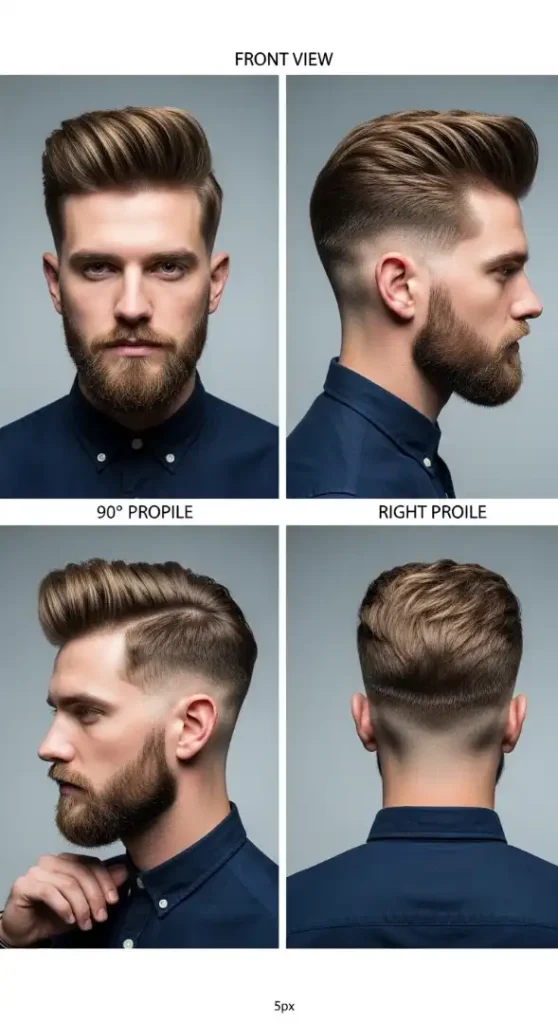
The Voluminous Quiff Fade is engineered for faces that can handle vertical drama. Round faces are the primary beneficiary — the upward and backward volume creates vertical lines that elongate the face, making it appear narrower and more balanced. The high fade removes side bulk, further emphasizing the vertical emphasis. Oval faces wear this naturally, as they can handle volume without throwing off proportions. Square faces work if you want to emphasize the strong jaw — the quiff draws attention upward but doesn’t soften angular features, so this is for men who want their jaw noticed. Heart faces benefit from the volume adding width at the forehead to balance the narrow chin. Oblong faces should avoid this unless you keep the quiff moderate — adding significant vertical height to an already-long face creates imbalance. Diamond faces need caution — the quiff adds forehead volume, which can over-emphasize the already-wide cheekbones unless the sides are kept very short. The quiff is confidence personified — it demands attention and suits men comfortable being noticed.
Essential Grooming Kit
The quiff is product-intensive and blow-dry dependent. Your anchor product is Layrite Superhold Pomade (strong hold, medium shine) — this is the backbone for all-day structure. Apply to damp hair before blow-drying. You’ll need a quality blow dryer — the Dyson Supersonic is worth the investment for the power and heat control, but the BaByliss Pro Nano Titanium at $100 works great too. A round brush (medium barrel, 2-inch diameter) is non-negotiable for creating the quiff’s upward lift while blow-drying. For finishing, use American Crew Pomade (lighter hold, more shine) to smooth flyaways and add polish. You need the Andis Master Clipper for home fade touch-ups every 10-12 days. For the beard, the Bevel Trimmer at 5mm maintains the medium length, paired with Honest Amish Beard Balm for hold and shaping. Heat protectant spray is essential since you’re blow-drying daily. Optional: hair dryer diffuser for days you want less directed heat.
Maintenance Reality Check
High maintenance with zero apology. The high fade needs touch-ups every 1.5-2 weeks maximum to maintain the sharp contrast that makes the quiff pop. Barber visits every 2.5-3 weeks for fade refresh and quiff trim. Daily styling: 15-20 minutes minimum. Wash, towel-dry to 80% damp, apply Superhold pomade throughout, section hair and blow-dry with the round brush, pulling upward and backward to create volume, finish with additional pomade for hold and polish. You’ll need to restyle if you wear a hat or get caught in weather. Morning refresh isn’t really an option — you’re starting from scratch each day or touching up with significant effort. This style demands consistency. Ideal for executives, creatives with time, models, performers, or anyone in professional environments where appearance is part of the job. Not for athletes, outdoor workers, or anyone with unpredictable schedules. The quiff is classic, timeless, and undeniably polished — but only when maintained.
The Barber Chair Script
Tell your barber exactly this: “I want a voluminous quiff with a high fade. Leave 3.5 inches on top, with the front slightly longer at 4 inches so I can style it upward and back with volume. I need lots of texture through point-cutting so the quiff has movement, not a solid blocky look. Give me a high fade starting at mid-temple, aggressive blend down to skin — I want maximum contrast between top and sides. The side part can be subtle, barely visible. The back should taper down following the fade, keeping some length at the crown for the quiff to transition naturally. For the beard, keep it at 5mm, shaped and clean with defined cheek and neck lines, blending smoothly into the fade at the sideburns. I blow-dry this daily with a round brush and use pomade for hold, so cut it knowing I’ll have structured volume.” Show reference and emphasize you want height at the front.
This is the haircut that makes people assume you have your life together — even if you hit snooze three times.
Frequently Asked Questions
How do I blow-dry a quiff to get maximum volume without it falling flat?
Blow-dry the quiff by applying Layrite Superhold Pomade to 80% damp hair, then section the front 2-3 inches and use a round brush to pull hair upward and backward while directing hot air from underneath the section. Hold each section under heat for 5-7 seconds with tension on the brush to set the shape. Work from front to back, always directing heat from below to create lift at the roots. Let hair cool for 30 seconds before touching — cooling sets the volume. Finish with additional pomade for hold.
Which face shape suits the Voluminous Quiff Fade best?
Round and Oval face shapes suit this style best because the upward volume creates vertical lines that elongate Round faces, making them appear narrower and more balanced. The high fade removes side bulk, emphasizing vertical emphasis. Oval faces handle the volume without proportion issues. Square faces work if you want jaw emphasis since the quiff draws attention upward without softening angular features. Oblong faces should avoid significant height as it exaggerates facial length. Diamond faces need moderate quiff height to avoid over-emphasizing cheekbones.
What is the difference between a quiff and a pompadour?
A quiff pushes hair upward and backward with 3-4 inches of height distributed across the front and crown, creating a wave-like volume that flows back, styled with medium-to-strong hold pomade. A pompadour stacks 4-6 inches of hair primarily at the front with dramatic vertical lift and minimal backward flow, requiring strong-hold product and more blow-drying time. Quiffs feel modern and adaptable; pompadours feel vintage and rockabilly. Quiffs blend volume across the head; pompadours concentrate it at the front.
How often should I get the Voluminous Quiff Fade touched up?
Get the high fade touched up every 1.5-2 weeks to maintain the sharp contrast that makes the quiff volume pop. After 2 weeks, the fade loses its aggressive gradient and the style looks grown-out rather than intentional. The quiff length on top can go 3 weeks before trimming to maintain texture and remove weight. If you let the fade grow past 2 weeks, the sides bush out and eliminate the clean separation between top and sides that defines this style.
9 of 10 — The Lived-In Shag

The Lived-In Shag is the bohemian’s answer to face shape flexibility — it adapts beautifully across nearly all structures. Oval faces are natural hosts since the shag’s organic layers maintain balance without manipulation. Heart faces particularly benefit — the longer layers around the face add width at the jawline and chin area, balancing the wider forehead characteristic of heart shapes. The shag’s hallmark is softness, so Square faces find the angular jaw significantly softened by the wispy, layered framing pieces that fall around the face. Round faces work if the layers are cut to create some vertical movement rather than horizontal width — ask your barber to keep the layers from adding too much side volume. Oblong faces should embrace this — the horizontal layers create width across the sides, balancing vertical length. Diamond faces find perfect harmony here — the shag adds temple width through layered volume while the face-framing pieces balance narrow chins. The only universal caution: if you have extremely thin hair, the shag’s layers might make it look too wispy and lack body.
Essential Grooming Kit
The shag is refreshingly low-product. Your hero product is Oribe Dry Texturizing Spray (premium but worth it — lasts 4-5 months) — spray on dry hair and scrunch to enhance natural texture and layers. For days you need more structure, Baxter of California Clay Pomade (matte finish, medium hold) applied to damp hair provides definition without weight. You want Kevin Murphy Easy Rider anti-frizz cream for wavy hair — apply to damp hair before air-drying to maintain wave pattern without crunch. The shag requires regular trimming to maintain the layered shape, so invest in professional hair scissors for dusting split ends at home between cuts. For the stubble, the Philips Norelco OneBlade maintains the 1-2mm length without irritation. You don’t need a blow dryer — the shag is designed to air-dry naturally. Optional: sea salt spray like Bumble & Bumble Surf Spray for extra wave definition. Boar bristle brush distributes natural oils without destroying texture.
Maintenance Reality Check
Low maintenance with the caveat that “low” means intentional neglect. Barber visits every 5-6 weeks — the shag actually improves slightly grown-out, so you have maximum flexibility. The key is maintaining the layered shape, so when you do go, emphasize you want the layers refreshed. Daily styling: 2-4 minutes maximum. Wash every 3-4 days (not more frequently — natural oils enhance the lived-in texture), towel-dry, apply Easy Rider to damp hair by scrunching, let air-dry while you get ready. Once dry, spray Oribe Dry Texturizing Spray and scrunch again for separation. That’s literally it. Day-two and day-three hair: spray with water to reactivate, maybe add tiny bit more texture spray. This style survives everything — hats, wind, rain, swimming — because disheveled is the aesthetic. Ideal for creatives, surfers, musicians, artists, remote workers, or anyone who rejects high-polish expectations. Not suitable for corporate environments requiring neat appearance, but perfect for casual-everything lifestyles. The shag is rebellion disguised as laziness.
The Barber Chair Script
Tell your barber this: “I want a lived-in shag cut. I’m looking for medium length, about 3 to 4 inches throughout with lots of layers creating movement and texture. Cut it with a razor or heavy point-cutting so it’s soft and piece-y, not blunt. I want longer pieces around my face for framing, and the layers should create natural volume without looking structured. Don’t give me a hard taper or fade on the sides — just blend the sides softly into the length, keeping some weight. The back should be layered following the same philosophy — I want it to fall naturally, not sit flat. I don’t blow-dry or use a lot of product, so cut knowing it’ll air-dry with natural wave. Keep my stubble at 1-2mm — barely there. The whole vibe is effortless and organic, like I just came from the beach.” Show the reference and emphasize layers and movement.
This is the haircut that says you have better things to do than obsess over your hair — but somehow it still looks great.
Frequently Asked Questions
How do I maintain the shag’s layered texture without it looking flat or stringy?
Maintain shag texture by washing only every 3-4 days to preserve natural oils that enhance wave and separation — overwashing makes it limp and flat. Apply Kevin Murphy Easy Rider to damp hair and scrunch while air-drying to maintain wave pattern. Once dry, use Oribe Dry Texturizing Spray and scrunch again to create separation and lift at the roots. Avoid brushing dry hair — use fingers to separate layers. Dust split ends every 3 weeks at home with scissors to prevent stringy look. The key is embracing slight imperfection.
Which face shape suits the Lived-In Shag best?
All face shapes except extremely narrow faces suit this adaptable style. Heart faces benefit most as longer layers add chin/jaw width to balance wider foreheads. Square faces enjoy angular jaw softening from wispy face-framing layers. Oval faces maintain natural balance with organic layers. Round faces work with layers cut to create vertical movement rather than horizontal width. Oblong faces appreciate horizontal layers creating width to balance length. Diamond faces find temple width and chin balance through layered volume. Only very thin hair should approach cautiously as layers might reduce body.
What is the difference between a shag and a messy crop?
A shag maintains 3-4 inches throughout with heavy layering, razor-cutting, and long face-framing pieces, air-dried with minimal product for organic texture. A messy crop has 2.5-3 inches with point-cut texture, forward-falling fringe, and tapered sides, styled with matte clay for piecy definition. Shags are longer, softer, and wave-friendly; crops are shorter, structured, and require product for texture. Shags feel bohemian and surfer-inspired; crops feel urban and modern. Both embrace intentional disorder but achieve it differently.
How often should I wash hair with the Lived-In Shag?
Wash your hair every 3-4 days to maintain the natural oils and texture that make the shag work. Daily washing strips oils needed for the lived-in wave pattern and makes hair look flat and lifeless. Use dry shampoo on non-wash days only if scalp feels oily — but the shag actually looks better with some natural oil creating separation and movement. When you do wash, always use conditioner to prevent the layered ends from becoming frizzy or dry.
10 of 10 — The Modern Side Swept Fade

The Modern Side Swept Fade is a strategic style — it works through asymmetry to balance proportions. Oval faces wear this effortlessly as the dramatic side sweep maintains natural balance while adding visual interest. Square faces are prime candidates — the side sweep creates a strong diagonal line across the forehead that contrasts angular jaw lines, while the swept volume softens overall angularity. Heart faces find this particularly flattering — the volume swept to one side adds visual weight to balance the narrow chin while the deep part draws attention diagonally rather than emphasizing forehead width. Round faces benefit from the vertical lines created by the upward-and-over sweep, which elongates the face and makes it appear less circular — the mid-fade removes bulk from the sides, further emphasizing vertical emphasis. Diamond faces work well as the side volume adds width at the temples without overwhelming the cheekbones. Oblong faces should approach with slight caution — keep the swept volume more horizontal than vertical to avoid adding length. The asymmetric nature of this style makes it universally more interesting than center-parted or uniform styles.
Essential Grooming Kit
This style bridges traditional and modern, requiring specific products. Your foundation is Suavecito Firme Hold Pomade (strong hold, high shine) — this is the workhorse for all-day structure and shine. Apply to damp hair before blow-drying. You’ll need a blow dryer and a paddle brush for creating the swept direction while drying — the paddle brush smooths hair in the sweep direction. For finishing, Layrite Supershine Cream adds extra gloss and tames flyaways without adding more hold. The Andis Master Clipper maintains the mid-fade at home every 2 weeks. For the precise beard, the Bevel Trimmer (designed to prevent ingrown hairs) keeps the full beard at 6-7mm with Andis T-Outliner for lining the cheek and neck. Honest Amish Beard Balm (not oil — balm provides hold) shapes the beard daily. You want a fine-tooth comb for creating the deep side part line and combing hair into place after blow-drying. Heat protectant spray is essential. Optional: hair spray (medium hold) for extra lock-in on windy days.
Maintenance Reality Check
Medium-to-High maintenance depending on your commitment. The mid-fade needs touch-ups every 2-2.5 weeks to stay sharp — letting it go 3 weeks makes the sides look bushy and eliminates the clean contrast. Barber visits every 3 weeks for fade refresh and length trim. Daily styling: 10-15 minutes. Wash, towel-dry to 80% damp, apply Firme Hold pomade throughout, create the deep side part with a comb, blow-dry with paddle brush while pulling hair to the right side, finish by combing into place and adding Supershine Cream for extra gloss. The beard requires 3 minutes daily: apply balm and brush into shape, line up edges weekly. This style doesn’t survive hats without restyling, and wind disrupts the swept direction. Morning refresh: dampen hair, reapply small amount of pomade, comb back into place. Ideal for professionals, creative directors, entrepreneurs, or anyone in client-facing roles where appearance influences perception. Works in business casual and formal settings. Not for athletes or outdoor workers due to styling demands.
The Barber Chair Script
Walk in and say this exactly: “I want a modern side swept fade. Leave 3.5 inches on top with some texture through point-cutting, but not too choppy — I want smooth flow when I comb it to the side. Give me a mid-fade starting just above my ears at a 1.5 guard, blending up smoothly into the length. I want a deep side part razor-shaved on my left side — sharp and visible. The hair should have enough length to sweep dramatically to the right with volume. For the back, blend it naturally with the mid-fade, keeping some length at the crown. For the beard, keep it full at 6-7mm, with clean sharp lines on the cheeks and neck — I want it precisely lined up. Make sure the beard blends smoothly into the fade at the sideburns. I style this with pomade and blow-dry it to the side daily, so cut knowing I’ll have structured side-swept volume.” Show reference and emphasize the dramatic side sweep.
This is the haircut that walks into meetings and automatically gets taken seriously — before you even speak.
Frequently Asked Questions
How do I create the dramatic side sweep without it falling flat throughout the day?
Create lasting side sweep by applying Suavecito Firme Hold Pomade to 80% damp hair, then blow-dry with a paddle brush while pulling hair firmly to the right side — use tension on the brush and direct heat from behind the sweep direction. Create the deep part first with a comb, then work in sections from the part outward. Once dry and styled, let hair cool for 30 seconds to set the direction, then apply Layrite Supershine Cream for finishing gloss and extra hold. The combination of strong-hold pomade plus blow-dry shaping creates structure that lasts 8-10 hours.
Which face shape suits the Modern Side Swept Fade best?
Square, Oval, and Heart face shapes suit this style best through strategic asymmetry. Square faces benefit from the diagonal sweep line contrasting angular jaws while adding softness. Heart faces gain chin balance as the swept volume adds visual weight while the deep part draws attention diagonally rather than emphasizing forehead width. Round faces benefit from vertical lines created by the upward-and-over sweep, elongating face appearance. Oval faces maintain balance with added visual interest. Diamond faces work with side volume adding temple width without overwhelming cheekbones.
What is the difference between a side swept fade and a side part?
A side swept fade features 3-4 inches of hair dramatically swept to one side with significant volume and movement, combined with a mid-fade or high fade for contrast — styled with strong-hold pomade and blow-dried for direction. A side part (traditional) has 2-3 inches combed neatly to the side with a clean part line, low taper or fade, and minimal volume — styled with lighter pomade for controlled neat appearance. Side sweeps are dramatic and modern; side parts are classic and conservative. Both work professionally but convey different levels of boldness.
How often should I get the Modern Side Swept Fade touched up?
Get the mid-fade touched up every 2-2.5 weeks to maintain the clean contrast between the swept top and the faded sides. After 2.5 weeks, the fade loses its smooth gradient and sides start bushing out, eliminating the sharp separation that makes the swept volume pop. The top length can go 3-4 weeks before trimming to maintain movement and texture. The deep part line needs re-shaving every 2 weeks. The beard should be professionally lined every 3 weeks, with weekly self-maintenance at home.