13 Sharp Richard Rios Hairstyles That Look Expensive But Take Minutes to Style
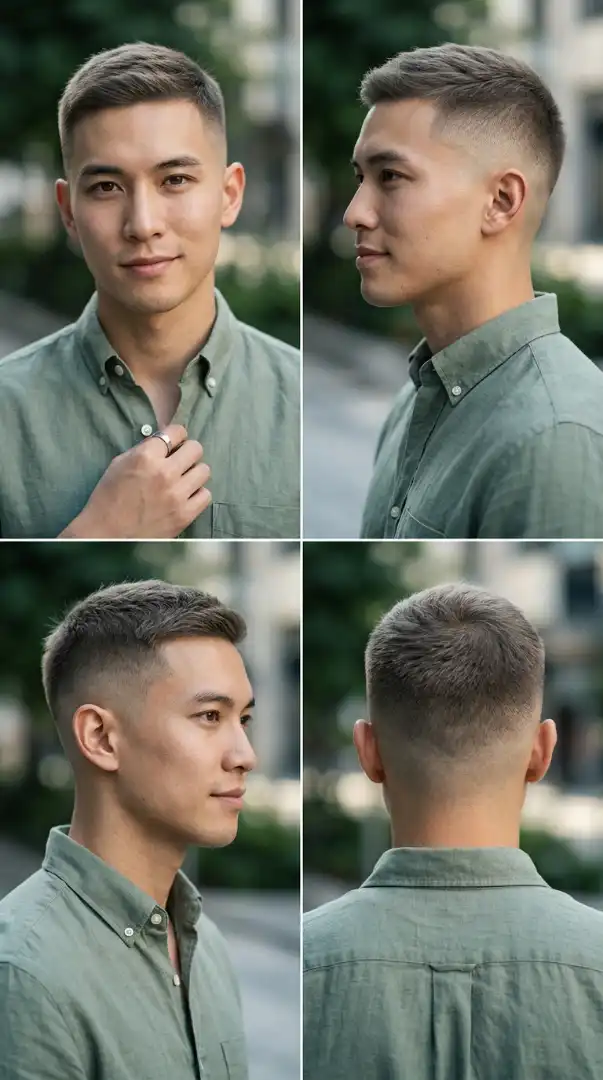
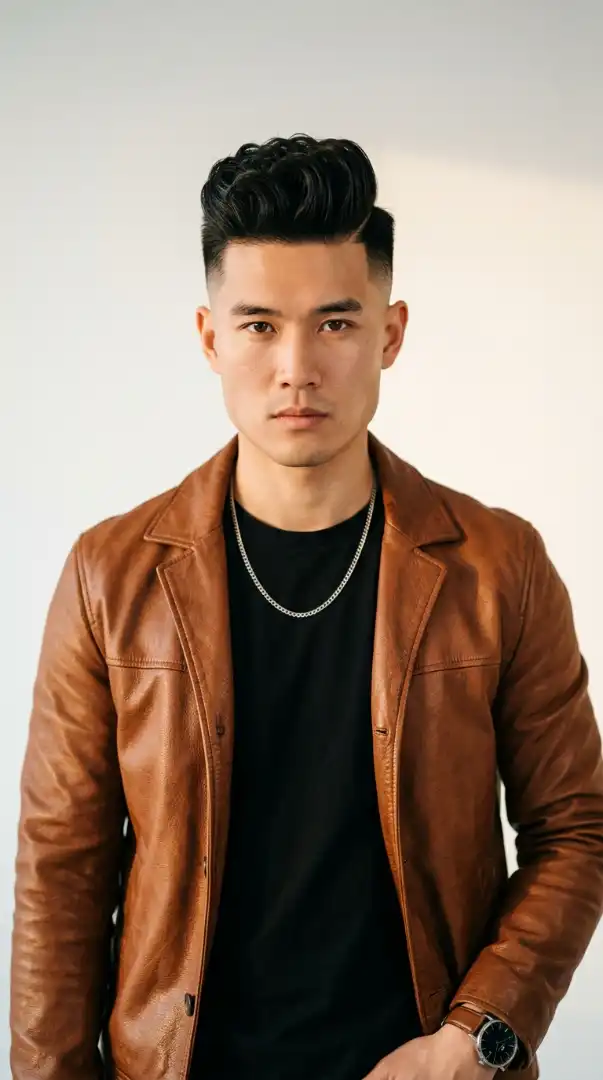
1 of 13 — The Playmaker Fade

Best Face Shape for The Playmaker Fade
The Playmaker Fade is engineered for Square and Oval face shapes because the tapered sides pull visual weight away from a strong jawline, while the textured top adds vertical lift that keeps the overall silhouette balanced rather than boxy. The skin fade acts like a contour line, following the natural curve of the skull and softening any hard angles at the temple. Round faces benefit too, since the fade removes width and elongates the profile, but should keep slightly more length on top to avoid flattening the crown. Oblong faces should avoid this cut in its purest form, since the added height can stretch an already long face — a mid fade with more side volume is the safer swap.
Grooming Kit You Need
- Clippers: Wahl Magic Clip (Model 5049-400) or Andis Master (Model 01557)
- Trimmer/Outliner: Andis T-Outliner (Model 04710) for edge work and lineup
- Finishing Tools: Kent 81T fine-tooth comb for parting precision, Denman boar bristle brush for polish
- Styling Product: Layrite Original Pomade (medium hold), dime-sized amount for texture and shine
- Maintenance: Honest Amish beard oil, 3-4 drops daily for stubble conditioning
How Often You Need a Touch-Up
Maintenance level: MEDIUM. You’ll need a barbershop visit every 2-3 weeks to keep the fade line crisp, since the gradient blur is the first thing to lose definition as hair grows out. The top can stretch to 5-6 weeks before a full cut is necessary. Daily styling takes about 4-5 minutes — work a dime-sized amount of pomade through damp hair and comb the crown into place. Home maintenance is Beginner-to-Intermediate friendly if you’re just cleaning up the neckline between visits, but the actual fade blending should stay with a barber. Estimated monthly cost: $60-$90 depending on region.
What to Say to Your Barber
“I want a Playmaker Fade with a mid skin fade starting at the temple line. Take the top to guard #4, textured with point cutting for movement. For the fade, blend from a #1 at the line up to a #3 at the parietal ridge. Keep my stubble as-is, just clean the neckline. Finish with a crisp lineup at the temples and a natural, undefined edge at the hairline — nothing too blocky.”
If this athletic, low-fuss shape feels right for your routine, the next style pushes the volume up top for a slightly sharper, more editorial finish.
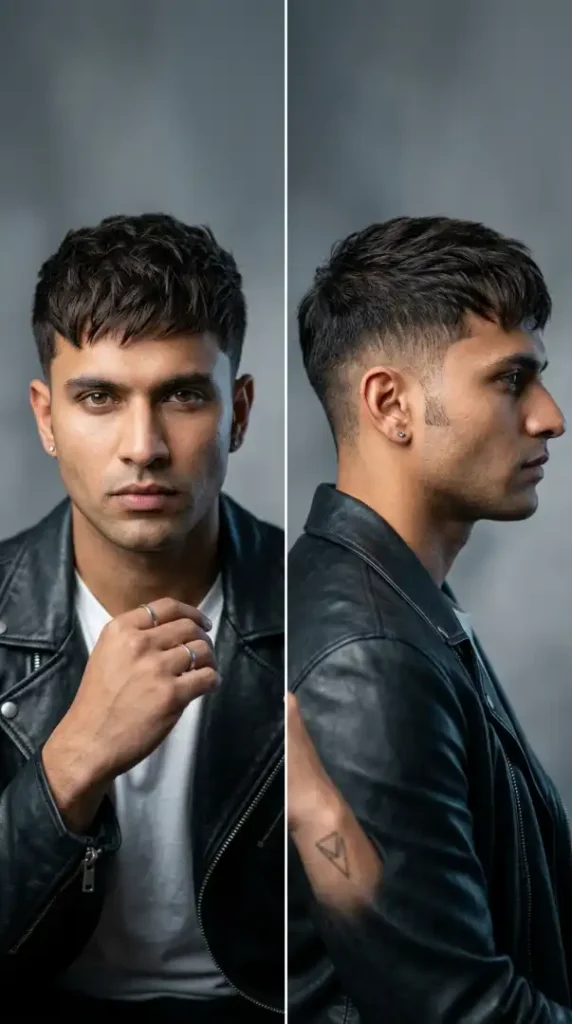
2 of 13 — The Midfield Maestro Crop
Best Face Shape for The Midfield Maestro Crop
Oval faces are the ideal match for The Midfield Maestro Crop since the cut’s natural proportions already suit the face’s balanced length-to-width ratio, requiring no major correction. Round faces benefit from the tight taper on the sides, which visually narrows the cheek area while the forward-swept fringe adds height. Diamond faces should ask for slightly more length at the temples to soften the cheekbone width. This crop is not recommended for very oblong faces, since the short, tight sides combined with a low fringe can make the face look narrower and longer than intended.
Grooming Kit You Need
- Clippers: Wahl Magic Clip (Model 5049-400)
- Trimmer/Outliner: Andis T-Outliner (Model 04710) for the taper and hairline
- Finishing Tools: Kent 81T fine-tooth comb, Denman boar bristle brush
- Styling Product: American Crew Fiber (matte finish, high hold), pea-sized portion
- Maintenance: Viking Revolution beard oil (for stubble regrowth days), 2-3 drops
How Often You Need a Touch-Up
Maintenance level: MEDIUM. Barbershop visits every 3 weeks keep the taper sharp; the top can go 6-8 weeks before it needs a proper trim. Daily styling takes 5-7 minutes — a pea-sized amount of fiber worked through damp hair, then pushed forward and slightly to the side with fingers. This is an Intermediate home-maintenance cut because the taper blend is easy to mess up without clippers experience. Estimated monthly cost: $50-$80.
What to Say to Your Barber
“I want a Midfield Maestro Crop with a low taper fade starting just above the ear. Take the top to guard #3, texture with point cutting so the fringe has movement. Blend from a #1 at the base up to a #2 near the crown. Keep the sideburns short and sharp. Finish with a natural, soft edge at the hairline — no hard blocky line.”
The next look trades this cropped fringe for something lower-maintenance if mornings are tight on time.
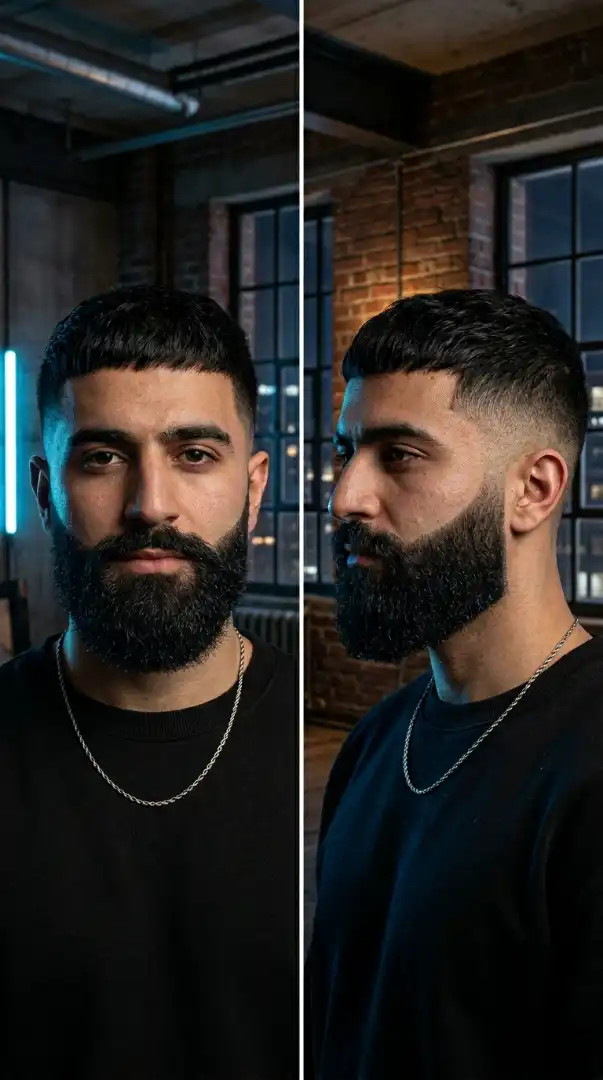
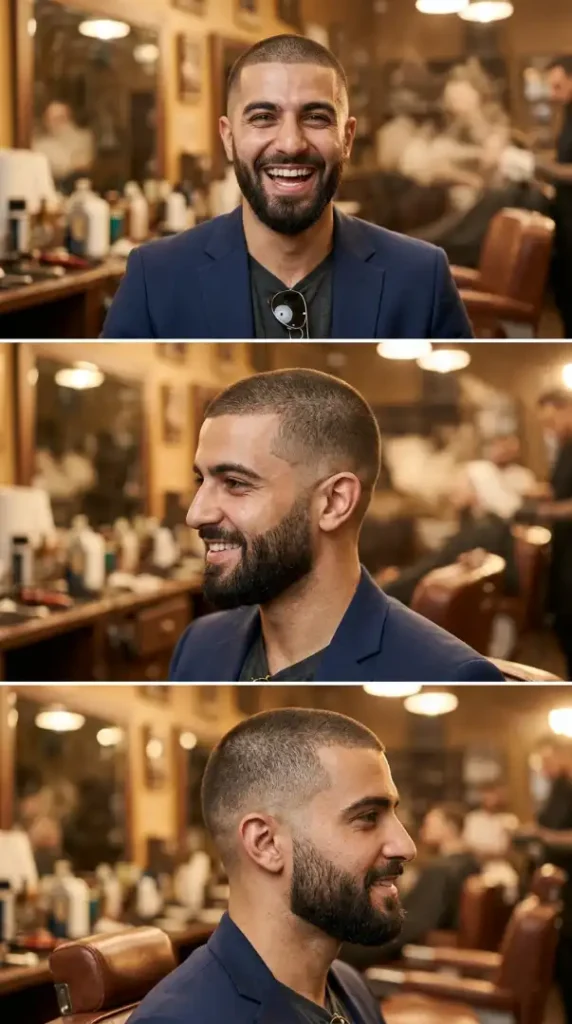
3 of 13 — The Number 8 Buzz
Best Face Shape for The Number 8 Buzz
Round faces gain the most from The Number 8 Buzz because the uniform short length removes bulk and volume that would otherwise round out the cheeks further, while the tapered sides create a subtle vertical line that adds the illusion of length. Square and Diamond faces also wear this cut well since the low-profile top doesn’t compete with an already strong jaw or cheekbones. Oblong and heart-shaped faces should be cautious — the buzz removes all the volume that typically balances a longer or narrower chin, so a slightly longer guard length on top is a safer request.
Grooming Kit You Need
- Clippers: Andis Master (Model 01557) with guard attachments #2 through #4
- Trimmer/Outliner: Andis T-Outliner (Model 04710) for the fade and beard line
- Finishing Tools: Kent 81T comb for beard shaping, boar bristle brush optional
- Styling Product: A light matte cream (optional, small pea-sized amount) — this cut often needs none
- Maintenance: Honest Amish beard oil, 3-4 drops daily to keep the beard soft and defined
How Often You Need a Touch-Up
Maintenance level: LOW. This is one of the lowest-effort cuts on the list — a touch-up every 3-4 weeks keeps the buzz uniform, and there’s virtually no daily styling required beyond a quick towel-dry. The beard needs trimming every 1-2 weeks to stay sharp against the fade. Difficulty rating: Beginner, since even home clippers can maintain the buzz length between barber visits. Estimated monthly cost: $40-$60.
What to Say to Your Barber
“I want a Number 8 Buzz with a guard #2 on top, blended into a low fade starting at a #1 near the ear. Keep the beard full but line it up cleanly along the cheek and neckline. Taper the beard into the fade at the jawline, keeping the length at about 5mm. Finish with a crisp lineup around the beard and a soft, natural edge at the hairline.”
If styling time is the priority, the next cut on this list keeps things just as low-maintenance with a bit more length up top.
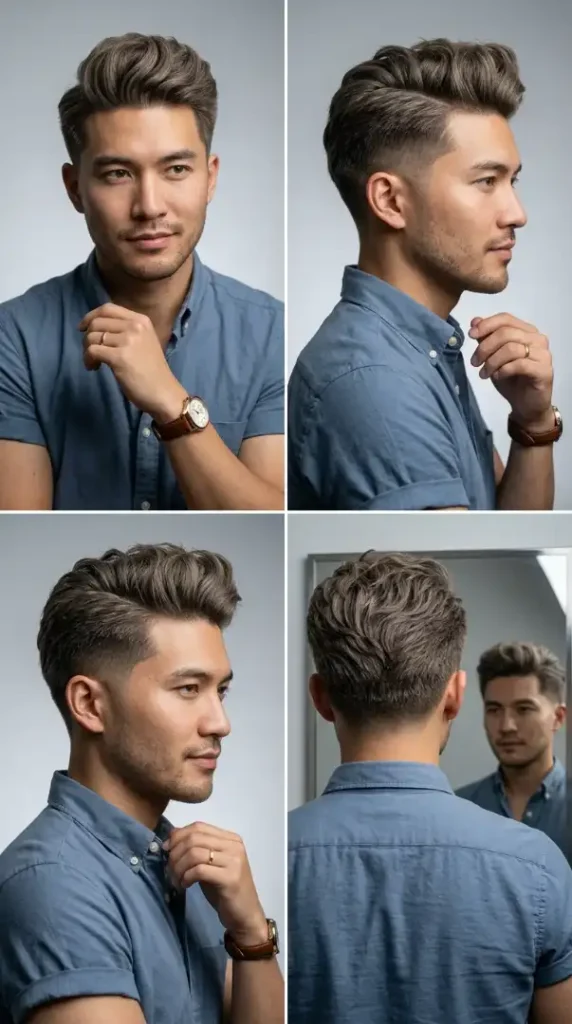
4 of 13 — The Captain’s Pompadour
Best Face Shape for The Captain’s Pompadour
Diamond and Oval faces suit The Captain’s Pompadour especially well because the height on top elongates a narrower forehead while the tapered sides keep the cheekbones from looking overly wide. Square faces also work nicely, since the swept-back volume softens the angularity of the jaw. Round faces should approach this cut carefully — the added height can help, but they should avoid excessive width on top, or the added volume will only make the face appear wider from the front. Oblong faces should generally avoid a tall pompadour, since it stacks length onto an already long face.
Grooming Kit You Need
- Clippers: Wahl Magic Clip (Model 5049-400) for the fade sides
- Trimmer/Outliner: Andis T-Outliner (Model 04710) for lineup and nape work
- Finishing Tools: Kent 81T comb for the pompadour part, boar bristle brush for polish
- Styling Product: Layrite Original Pomade (medium hold) or a stronger hold gel for height, dime-sized amount
- Maintenance: Beard oil for stubble upkeep, a few drops daily
How Often You Need a Touch-Up
Maintenance level: HIGH. The tapered sides need a touch-up every 2 weeks to hold their shape, while the top can stretch to 8-10 weeks since more length is the point. Daily styling takes 8-10 minutes — blow-drying the top upward with a round brush before applying pomade for hold and shine. This is an Advanced home-maintenance cut, since achieving consistent height and a clean part takes practice. Estimated monthly cost: $70-$100.
What to Say to Your Barber
“I want a Captain’s Pompadour with a high skin fade starting above the ear. Take the top to about 4 inches for height, blunt cut for weight so it holds its shape when swept back. Blend from a #1 at the fade line up to a #3 at the parietal ridge. Keep my stubble even and light. Finish with a crisp lineup at the temples and a defined side part.”
If a bold silhouette like this feels like too much upkeep, the next style keeps a classic slicked shape with far less daily effort.
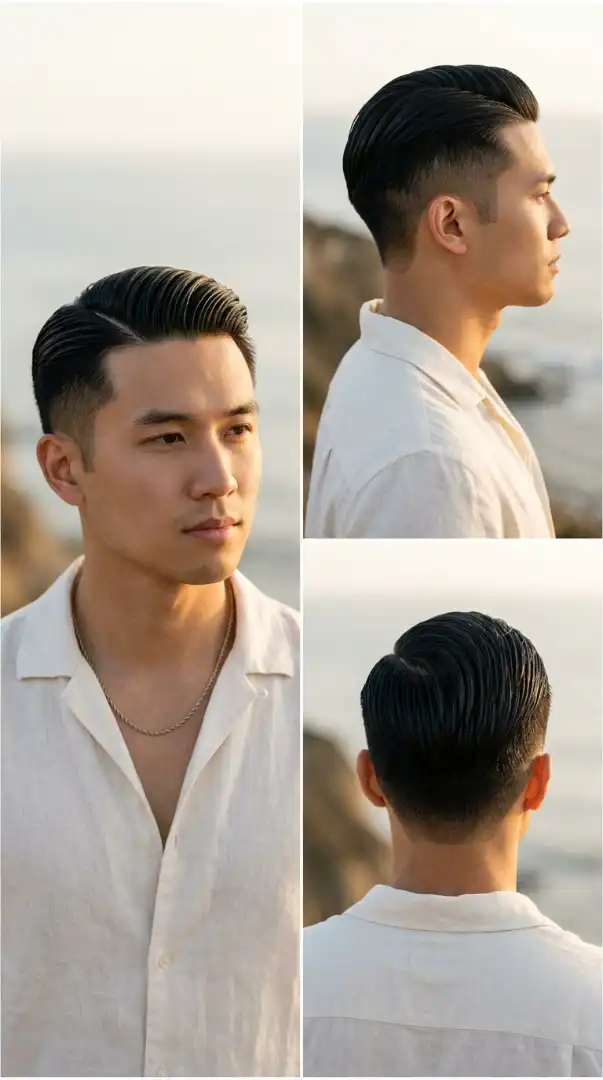
5 of 13 — The Set-Piece Slick Back

Best Face Shape for The Set-Piece Slick Back
Oblong faces actually benefit from this one when styled correctly — while a tall pompadour would over-elongate a long face, a flatter slick-back with a side part adds horizontal visual interest through the part line without adding height. Square and Diamond faces wear it well too, since the low taper keeps the sides clean without competing with strong bone structure. Round faces should ask for slightly more height near the crown to avoid the flat top making the face look wider.
Grooming Kit You Need
- Clippers: Andis Master (Model 01557) for the low taper
- Trimmer/Outliner: Andis T-Outliner (Model 04710) for the part line and hairline
- Finishing Tools: Kent 81T fine-tooth comb, essential for the slick-back part
- Styling Product: A strong-hold pomade or gel, dime-sized amount, applied to damp hair
- Maintenance: Light beard balm if keeping stubble, a few drops as needed
How Often You Need a Touch-Up
Maintenance level: MEDIUM. A touch-up every 3 weeks keeps the taper clean, while the top can go 6-7 weeks between full trims since the length is what makes the slick-back possible. Daily styling takes about 5 minutes — comb pomade through damp hair, working it straight back with a defined part. This is a Beginner-to-Intermediate home style once the initial cut and part line are established. Estimated monthly cost: $50-$75.
What to Say to Your Barber
“I want a Set-Piece Slick Back with a low fade starting just above the ear. Take the top to 3 inches, keep it blunt cut for weight so it slicks back cleanly. Blend from a #1 at the base up to a #2 near the crown. Keep my face clean-shaven with sharp edges. Finish with a defined side part and a soft, natural hairline — no hard block line.”
The next style trades this polished slick-back for a more relaxed, textured everyday option.
6 of 13 — The Box-to-Box Textured Crop
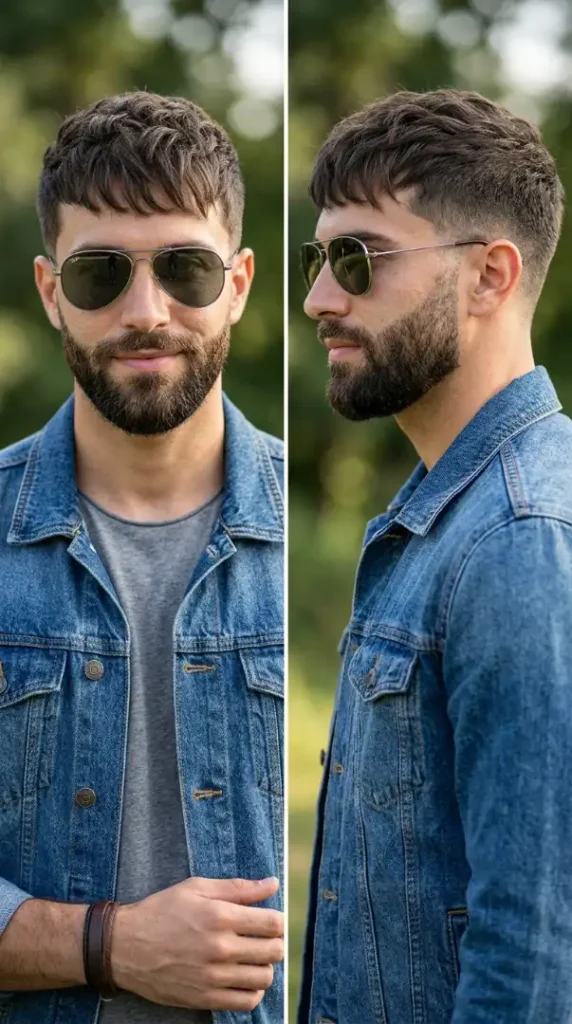
Best Face Shape for The Box-to-Box Textured Crop
Heart-shaped faces pair naturally with this crop because the textured fringe adds width at the forehead’s midpoint, balancing out a narrower chin, while the low taper keeps the jawline from looking swallowed by hair. Oval and Round faces also do well, gaining texture and movement without added height that could overwhelm the face. Long or Oblong faces should ask for a slightly longer fringe with more forward weight rather than a short crop, since a too-short top can emphasize length.
Grooming Kit You Need
- Clippers: Wahl Magic Clip (Model 5049-400)
- Trimmer/Outliner: Andis T-Outliner (Model 04710) for the taper and beard lineup
- Finishing Tools: Kent 81T comb, Denman boar bristle brush for the fringe
- Styling Product: American Crew Fiber (matte, high hold), pea-sized amount
- Maintenance: Honest Amish beard oil daily for the full beard
How Often You Need a Touch-Up
Maintenance level: MEDIUM. A trim every 3-4 weeks keeps the taper and beard lineup fresh, while the textured top can go 7-8 weeks since some growth actually improves the texture. Daily styling takes 5 minutes — scrunch a pea-sized amount of fiber through damp hair to encourage natural texture and forward movement. This is a Beginner-friendly home style since there’s no strict part or slick finish required. Estimated monthly cost: $55-$80.
What to Say to Your Barber
“I want a Box-to-Box Textured Crop with a low taper fade starting above the ear. Take the top to guard #3, texture it heavily with point cutting for a piece-y finish. Blend from a #1 at the base up to a #2 near the crown. Keep my beard full but line it up along the cheek and jaw. Finish with a natural, undefined edge at the hairline.”
If you liked this relaxed texture, the next style takes things in a slightly sharper, more deliberate direction.
7 of 13 — The Free-Kick Fringe
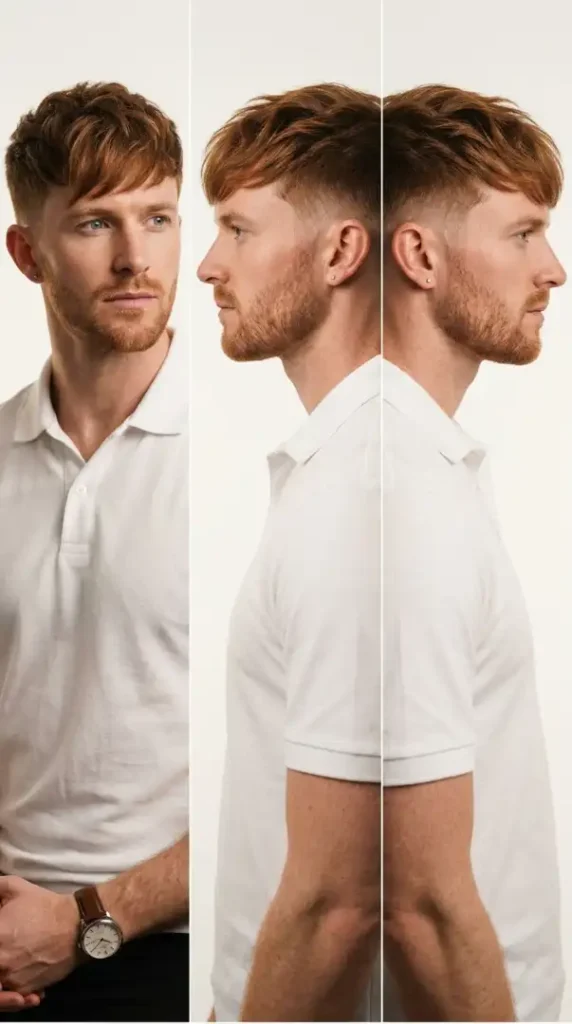
Best Face Shape for The Free-Kick Fringe
Square faces soften considerably with The Free-Kick Fringe, since the forward-falling hair breaks up the straight line of the forehead and takes visual weight away from a strong jaw. Oval and Diamond faces also suit this cut well, as the fringe adds proportion without adding unwanted width. Round faces should request a slightly shorter, less curtained fringe, since a heavy forward sweep can shorten the face further and emphasize roundness.
Grooming Kit You Need
- Clippers: Wahl Magic Clip (Model 5049-400) for the sides
- Trimmer/Outliner: Andis T-Outliner (Model 04710) for the lineup
- Finishing Tools: Kent 81T comb, Denman boar bristle brush for the fringe direction
- Styling Product: A light-hold matte cream, pea-sized amount, worked through damp hair
- Maintenance: Beard oil for the stubble, 2-3 drops daily
How Often You Need a Touch-Up
Maintenance level: MEDIUM. Barbershop visits every 3-4 weeks keep the taper defined, while the fringe itself can go 8-10 weeks since more length improves the forward fall. Daily styling takes 3-4 minutes — a small amount of cream combed through and pressed forward with fingers. This is a Beginner-friendly cut for home upkeep since there’s no strict part to maintain. Estimated monthly cost: $50-$70.
What to Say to Your Barber
“I want a Free-Kick Fringe with a mid taper fade starting above the ear. Take the top to about 3 inches at the front, leave it long enough to fall forward over the forehead. Blend from a #1 at the base up to a #2 near the crown. Keep my stubble even. Finish with a soft, natural edge at the hairline, no hard lineup at the front since the fringe should cover it.”
If you’re drawn to this softer silhouette, the next style keeps the same easy energy but ditches the fringe for a cleaner, shorter finish.
8 of 13 — The Overlap Undercut
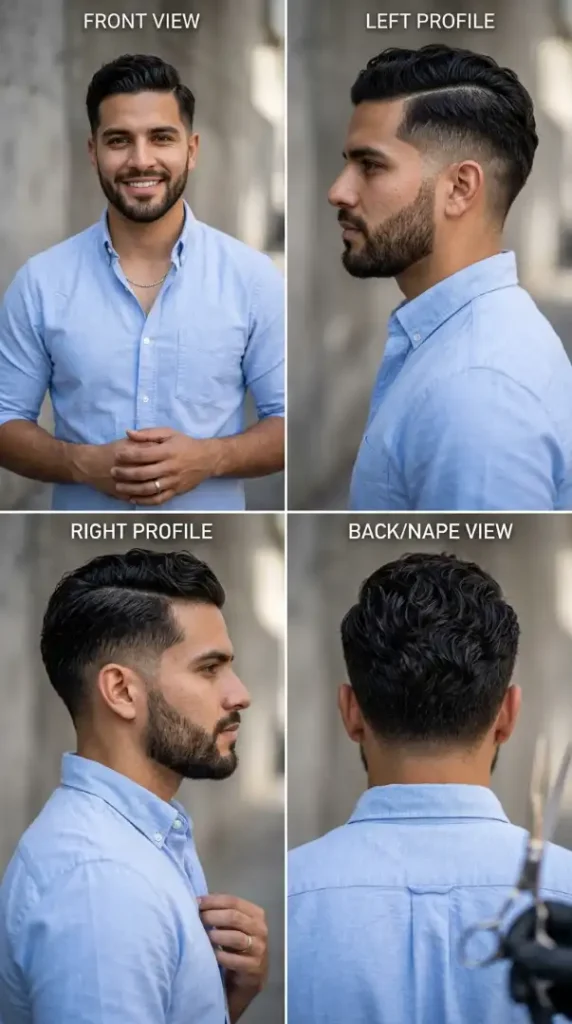
Best Face Shape for The Overlap Undercut
Oval faces are naturally suited to The Overlap Undercut since the disconnected sides and longer top create bold contrast without needing to correct much. Square and Diamond faces also benefit — the hard part and defined disconnection line add sharp geometric lines that complement angular bone structure. Round faces should ask for the disconnection line placed slightly higher to maximize the slimming effect. This cut isn’t ideal for very Oblong faces, since the height and length on top add further vertical stretch.
Grooming Kit You Need
- Clippers: Andis Master (Model 01557) for the undercut sides
- Trimmer/Outliner: Andis T-Outliner (Model 04710) for the disconnection line
- Finishing Tools: Kent 81T comb for the hard part, boar bristle brush for polish
- Styling Product: A strong-hold pomade, dime-sized amount, for the brushed-back finish
- Maintenance: Beard balm for the boxed beard shape, applied daily
How Often You Need a Touch-Up
Maintenance level: HIGH. The undercut sides need a touch-up every 2-3 weeks to keep the disconnection sharp, while the top can stretch to 8-10 weeks. Daily styling takes 6-8 minutes — blow-drying the top back before applying pomade to lock the brushed-back shape. This is an Intermediate-to-Advanced home cut, since the disconnection line requires clipper precision. Estimated monthly cost: $65-$95.
What to Say to Your Barber
“I want an Overlap Undercut with a disconnected undercut on the sides using a #0 blade, no gradual fade — a hard line, not a blend. Take the top to 3-4 inches, blunt cut for weight. Keep my beard boxed and short, about 8mm. Finish with a crisp lineup around the beard and a sharp, deliberate disconnection line at the temples.”
If a hard-edged look like this appeals to you, the next cut brings a similar boldness with a slightly more office-friendly finish.
9 of 13 — The Tactical Taper
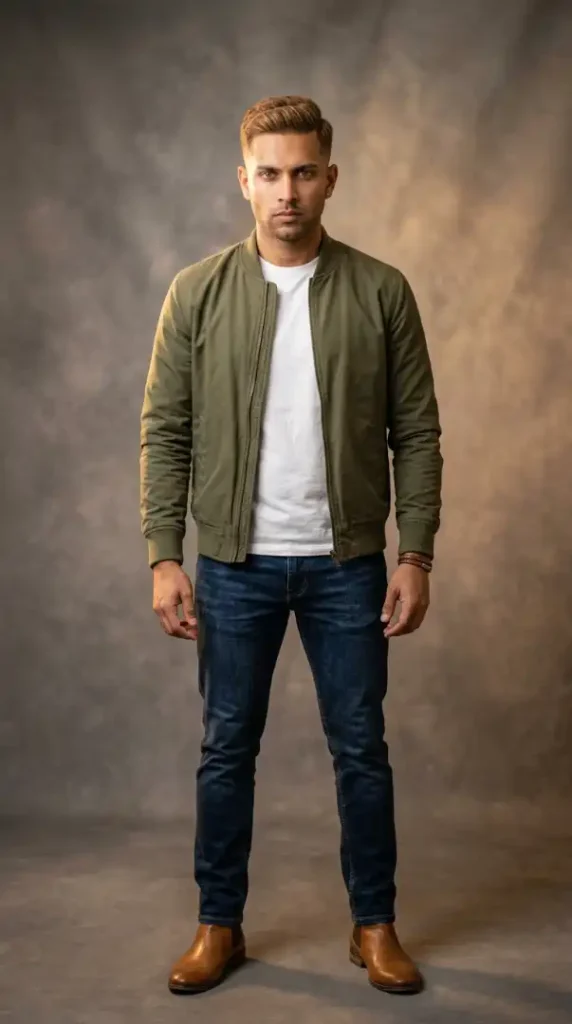
Best Face Shape for The Tactical Taper
Diamond faces benefit from The Tactical Taper’s subtle side part and short top, which add just enough structure at the crown to balance wider cheekbones without adding excess volume. Oval and Square faces also do very well since the cut’s clean, conservative lines complement rather than compete with defined features. Round faces can wear it too, but should ask for the part to sit slightly higher to maximize the visual lift. This isn’t the best pick for Oblong faces looking for a fuller silhouette, since the low profile keeps things flat on top.
Grooming Kit You Need
- Clippers: Wahl Magic Clip (Model 5049-400) for the taper
- Trimmer/Outliner: Andis T-Outliner (Model 04710) for the part and hairline
- Finishing Tools: Kent 81T fine-tooth comb for the part precision
- Styling Product: A light-hold cream, pea-sized amount, for a natural matte finish
- Maintenance: A light facial moisturizer with SPF for the clean-shaven look
How Often You Need a Touch-Up
Maintenance level: LOW. This conservative cut only needs a touch-up every 4 weeks, and the top rarely needs more than a light trim every 6-8 weeks. Daily styling takes just 3-4 minutes — comb a small amount of cream through and set the part. Difficulty rating: Beginner, since the cut is short and forgiving between visits. Estimated monthly cost: $45-$65.
What to Say to Your Barber
“I want a Tactical Taper with a low taper fade starting just above the ear. Take the top to guard #3, keep it neat with a subtle side part rather than a hard line. Blend from a #1 at the base up to a #2 near the crown. Keep my face clean-shaven. Finish with a soft, professional edge at the hairline — nothing too sharp or blocky.”
If this clean, office-ready look suits your lifestyle, the next style brings a bit more height while keeping things just as manageable.
10 of 13 — The Stadium Quiff
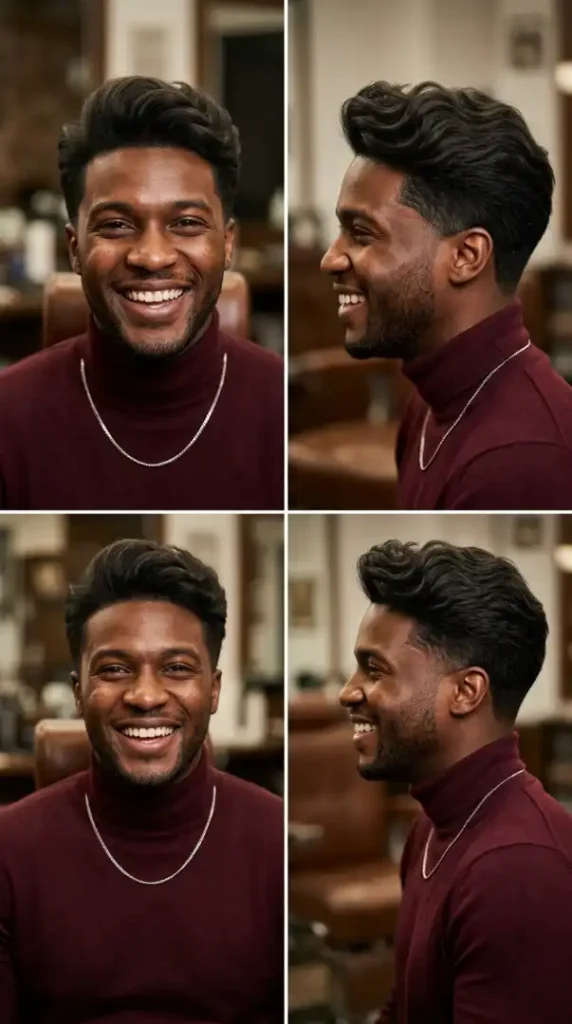
Best Face Shape for The Stadium Quiff
Heart-shaped faces gain great proportion balance from The Stadium Quiff, since the lifted volume at the front draws the eye upward and away from a narrower chin. Oval and Round faces also benefit — the height adds length to shorter or rounder faces without adding bulk on the sides thanks to the taper fade. Diamond faces should keep the quiff slightly lower and less dramatic to avoid overemphasizing the width at the cheekbones.
Grooming Kit You Need
- Clippers: Wahl Magic Clip (Model 5049-400) for the taper
- Trimmer/Outliner: Andis T-Outliner (Model 04710) for the hairline and beard edges
- Finishing Tools: A round brush and blow dryer for lifting the quiff, Kent comb for shaping
- Styling Product: A strong-hold pomade or wax, dime-sized amount, applied while blow-drying
- Maintenance: Beard oil, a few drops daily to keep facial hair soft
How Often You Need a Touch-Up
Maintenance level: HIGH. The sides need a touch-up every 2-3 weeks to keep the taper sharp, while the top can go 6-8 weeks since extra length supports the quiff’s lift. Daily styling takes 7-9 minutes — blow-drying the front section upward and back with a round brush, then locking it in with pomade. This is an Advanced home style, since achieving consistent lift takes technique. Estimated monthly cost: $65-$95.
What to Say to Your Barber
“I want a Stadium Quiff with a mid taper fade starting above the ear. Take the top to 3-4 inches at the front for lift, blunt cut for weight so it holds when brushed up. Blend from a #1 at the base up to a #2 near the crown. Keep my beard light and even. Finish with a crisp lineup at the temples and a soft edge at the hairline.”
If this lifted look feels like a fun weekend style, the next cut trades height for a super sharp, minimal edge finish.
11 of 13 — The Away-Kit Skin Fade
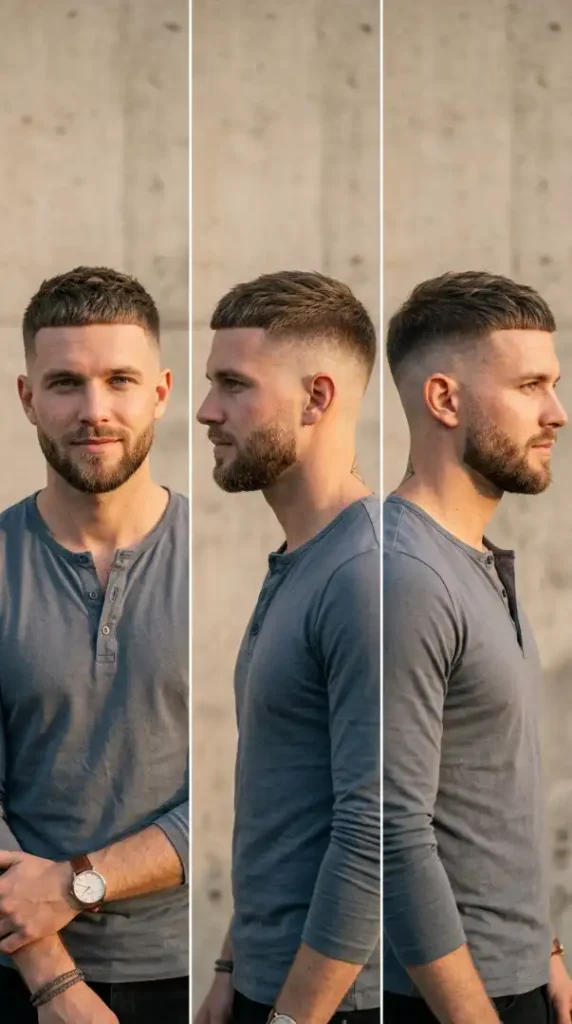
Best Face Shape for The Away-Kit Skin Fade
Square faces pair extremely well with The Away-Kit Skin Fade, since the sharp, high fade emphasizes the strong jawline while the short, textured top keeps proportions clean and modern. Oval and Diamond faces also work nicely, gaining definition without added bulk. Round faces benefit from the vertical line the high fade creates, though they should keep slightly more length on top for balance. This isn’t the ideal choice for Oblong faces, since the height of the fade adds further vertical stretch.
Grooming Kit You Need
- Clippers: Andis Master (Model 01557) for the skin fade
- Trimmer/Outliner: Andis T-Outliner (Model 04710) for the precise fade blend and beard line
- Finishing Tools: Kent 81T comb, boar bristle brush for the textured top
- Styling Product: Layrite Original Pomade (medium hold), dime-sized amount
- Maintenance: Beard oil, a few drops daily for the short beard
How Often You Need a Touch-Up
Maintenance level: HIGH. A skin fade needs the most frequent upkeep — plan on a touch-up every 2 weeks to keep the gradient razor-sharp, since skin fades grow out faster than they look. The top can stretch to 5-6 weeks. Daily styling takes 4-5 minutes — a dime-sized amount of pomade worked through damp hair for texture. This is an Advanced home-maintenance cut, since a true skin fade requires professional-level clipper work to maintain between visits. Estimated monthly cost: $70-$100.
What to Say to Your Barber
“I want an Away-Kit Skin Fade — a true skin fade down to bare skin starting at the temple. Take the top to guard #3, texture it for a piece-y, matte finish. Blend from skin at the line up to a #2 at the parietal ridge, nice and smooth with no visible lines in the transition. Taper my beard into the fade at the jawline, keeping the length around 4mm. Finish with a crisp, razor-sharp lineup at the temples.”
If a fade this sharp feels like a big commitment, the next style takes a softer, more relaxed approach with a lot less upkeep.
12 of 13 — The Derby Day Crew Cut
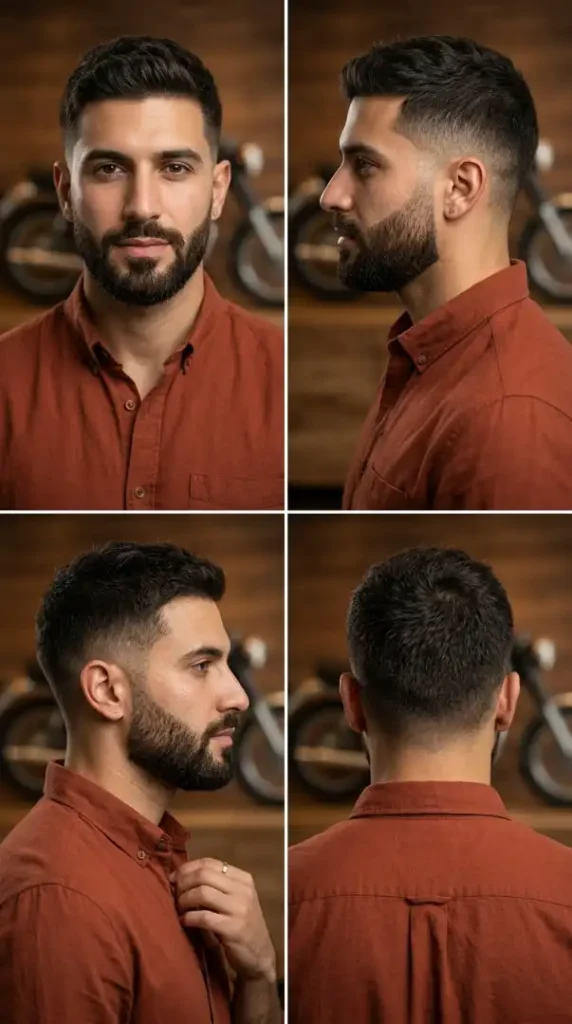
Best Face Shape for The Derby Day Crew Cut
Oval faces are a natural match for The Derby Day Crew Cut since the classic proportions of a crew cut suit balanced faces without needing correction. Square and Diamond faces also wear it well — the slightly longer front adds a touch of softness without hiding a strong jawline. Round faces should ask for the front kept a bit longer and more textured to add vertical interest. Oblong faces should avoid keeping the top too short, since a very tight crew cut can emphasize length.
Grooming Kit You Need
- Clippers: Wahl Magic Clip (Model 5049-400) for the crew length and taper
- Trimmer/Outliner: Andis T-Outliner (Model 04710) for the beard lineup and hairline
- Finishing Tools: Kent 81T comb, boar bristle brush for the front section
- Styling Product: A light matte cream, pea-sized amount, worked through damp hair
- Maintenance: Beard balm for shaping the full beard, applied daily
How Often You Need a Touch-Up
Maintenance level: LOW. This classic cut only needs a touch-up every 3-4 weeks, and the top itself can go 5-6 weeks. Daily styling takes 3-4 minutes — a light amount of cream combed through for texture and a slight forward push at the front. Difficulty rating: Beginner, since the crew length is short and forgiving. Estimated monthly cost: $45-$70.
What to Say to Your Barber
“I want a Derby Day Crew Cut with a low taper fade starting above the ear. Take the top to guard #4, slightly longer at the front for texture. Blend from a #1 at the base up to a #2 near the crown. Keep my beard full but neatly shaped along the cheek and jaw. Finish with a soft, natural edge at the hairline and a clean lineup around the beard.”
The final style on this list brings back some serious height for anyone who wants one bold, statement look to finish strong.
13 of 13 — The Trophy Lift Pompadour
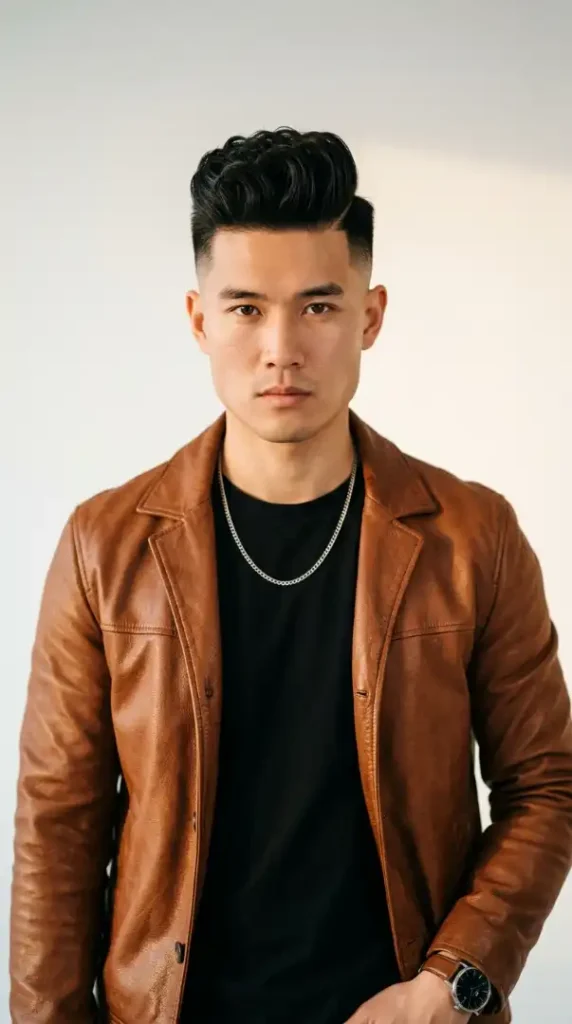
Best Face Shape for The Trophy Lift Pompadour
Square faces gain a striking, editorial edge from The Trophy Lift Pompadour, since the dramatic height contrasts beautifully with a strong jawline while the high skin fade keeps the sides razor clean. Oval and Diamond faces also carry this bold look well. Round faces should ask for slightly less width in the lift to avoid adding perceived width to the face. This is not the best pick for Oblong faces, since the dramatic height stacks additional length on top of an already long face.
Grooming Kit You Need
- Clippers: Andis Master (Model 01557) for the skin fade
- Trimmer/Outliner: Andis T-Outliner (Model 04710) for the precise lineup
- Finishing Tools: A round brush and blow dryer for the lift, Kent comb for the sharp part
- Styling Product: A strong-hold pomade or wax, dime-sized amount, for maximum hold and shine
- Maintenance: A light facial moisturizer with SPF for the clean-shaven finish
How Often You Need a Touch-Up
Maintenance level: HIGH. The skin fade needs a touch-up every 2 weeks to stay sharp, while the top can go 8-10 weeks since more length supports the dramatic lift. Daily styling takes 8-10 minutes — blow-drying the front section straight up and back before applying a strong-hold pomade to lock the shape. This is an Advanced home-maintenance style, since consistent height and a clean part require real technique. Estimated monthly cost: $75-$110.
What to Say to Your Barber
“I want a Trophy Lift Pompadour with a high skin fade starting above the ear. Take the top to 4-5 inches at the front for maximum lift, blunt cut for weight so it holds when brushed straight up. Blend from skin at the line up to a #3 at the parietal ridge, smooth with no visible lines. Keep my face clean-shaven. Finish with a crisp, sharp lineup at the temples and a defined side part.”
That wraps the full lineup — from the lowest-maintenance buzz to this bold, statement pompadour, there’s a cut here for every face shape and every morning routine.