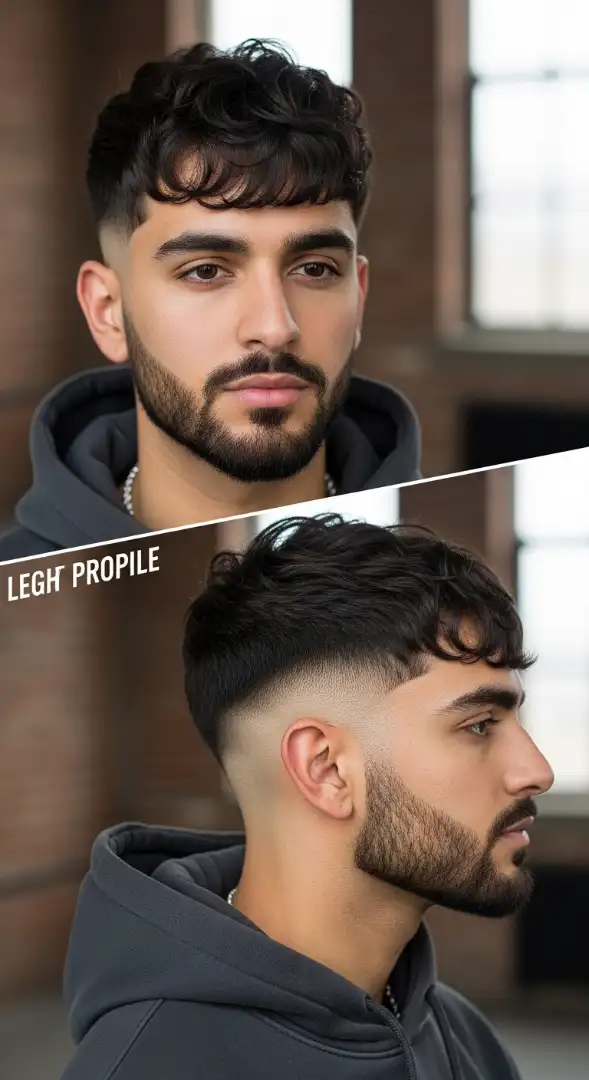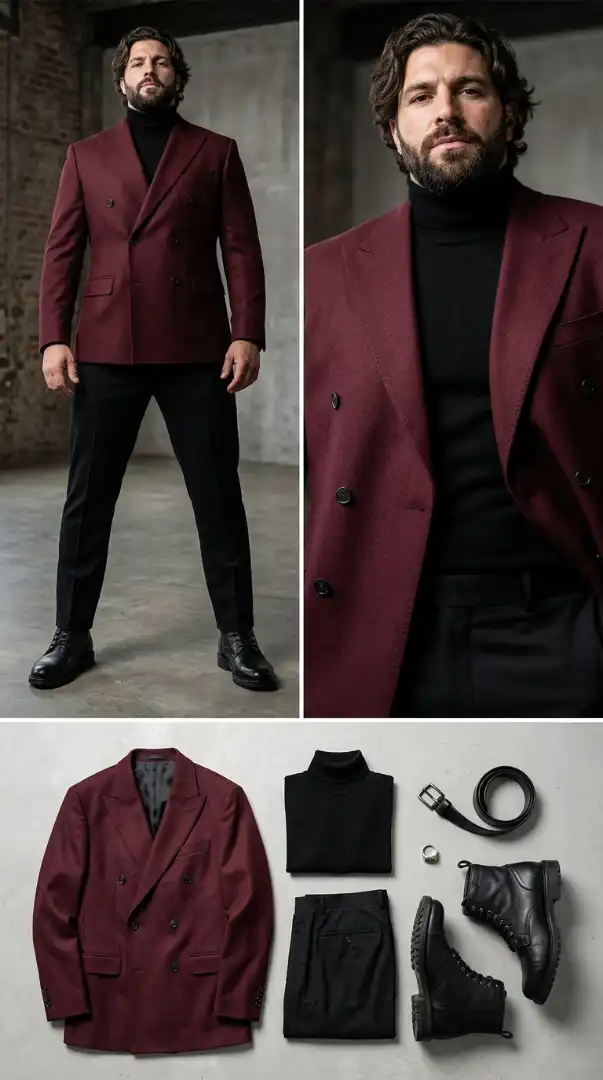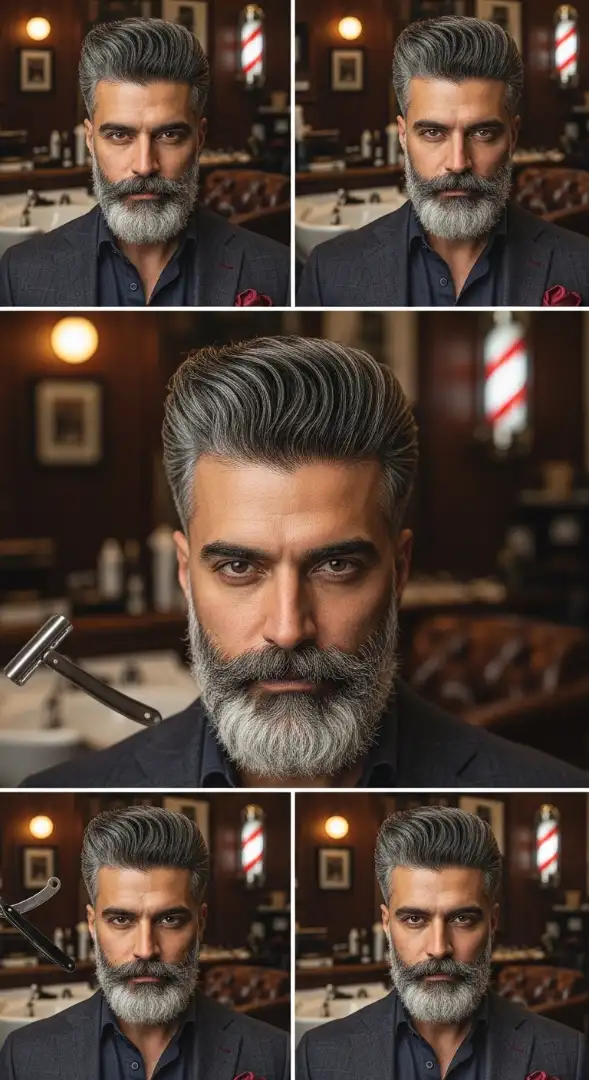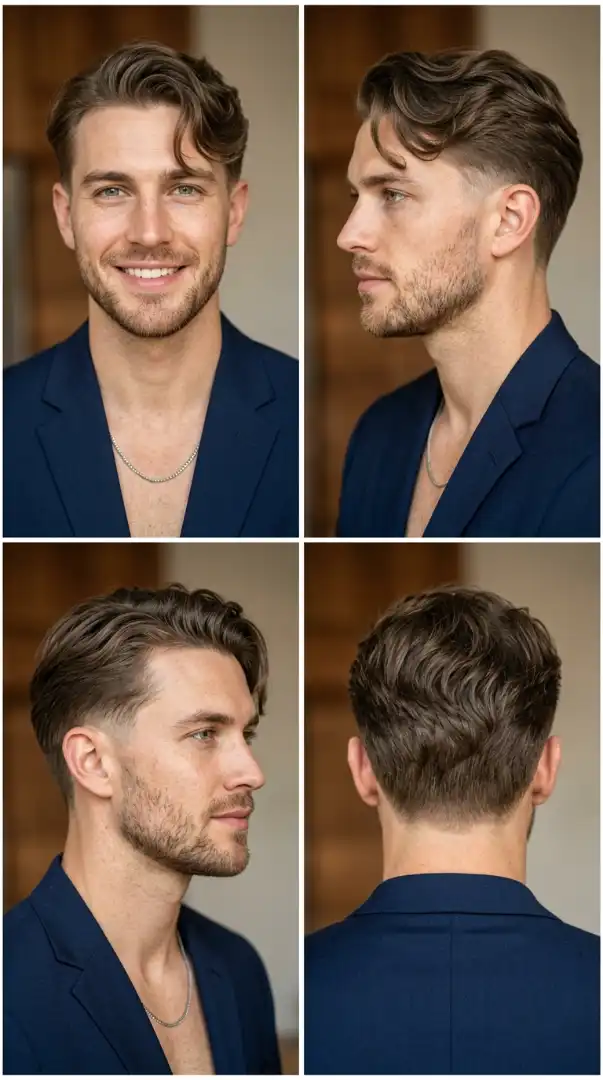
10 Fresh Twist Looks For Men This Season
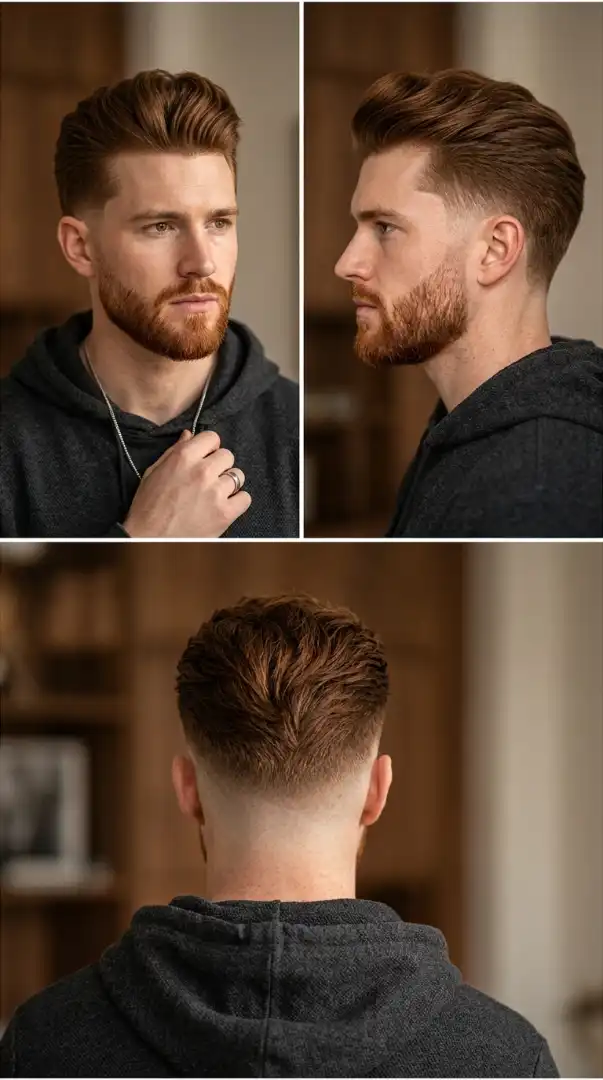
STYLE 1 OF 10 — The Textured Crown Elevation

Face Shape Compatibility & Anatomical Reasoning
The Textured Crown Elevation performs exceptionally well on square and oval face shapes, though it offers benefits across most head shapes when customized properly. Here’s the science: Square faces benefit from the vertical lift created by the textured crown, which draws the eye upward and away from a naturally wider jawline. The layered texture softens the angular transition between crown and sides, creating visual flow that reduces the perceived width across the lower face.
Oval faces gain from the added dimension at the crown, which prevents the proportions from appearing flat or one-dimensional. Round faces should request moderate crown height (around 2.5 inches) to avoid overemphasizing facial roundness, while maintaining the textured element which adds visual interest without bulk. Diamond faces work well with this style as the crown texture provides needed fullness at the top, counterbalancing a narrower forehead.
AVOID this style if: You have extremely fine, thin hair without natural density — the point-cut layering will expose scalp and appear sparse rather than textured. You prefer a completely wash-and-go approach without any styling whatsoever, as the texture requires 3-5 minutes of morning work.
Grooming Kit & Product Requirements
To achieve and maintain The Textured Crown Elevation, you’ll need specific tools and products:
Clippers: Wahl Magic Clip (Model 5049-400) or Andis Master (Model 01557) — both provide the precision needed for clean temple work without choppy lines
Trimmer/Outliner: Andis T-Outliner (Model 04710) for edge work and lineup — essential for crisp temple and nape definition
Finishing Tools: Kent 81T fine-tooth comb for parting precision and direction setting, Denman boar bristle brush for natural styling and polish
Styling Product: Layrite Original Pomade (medium hold) in a dime-sized amount works for a more structured finish, or American Crew Fiber (matte finish, high hold) in a pea-sized portion for a more natural textured appearance without shine
Beard Product: Honest Amish beard oil or Viking Revolution beard conditioner for maintaining facial hair softness and conditioning
Maintenance Level & Time Investment
Maintenance Rating: MEDIUM
Barber/Salon Visit Frequency: Every 3-4 weeks for crown texture refresh and temple cleanup. The actual shape lasts well, but the point-cut texture blunts out slightly and loses definition by week 4.
Daily Styling Time: 5-7 minutes in the morning. Wet the hair slightly with a spray bottle, apply styling product to damp hair, use your fingers to separate and direct the textured layers, then use a brush for final polishing.
Product Routine: Two-step process — apply beard oil to facial hair first (3-4 drops), then style crown with chosen product (dime or pea-sized amount depending on hold preference).
Growth Pattern Management: This style grows out gracefully for approximately 2 weeks, maintaining its textured character as hair lengthens slightly. By week 3-4, the points dull and lose separation, appearing less intentional.
Cost Consideration: Monthly maintenance costs approximately $40-60 per visit (standard barber shop pricing), meaning $120-180 monthly for optimal maintenance, or $80-120 if you stretch visits to 4-5 weeks.
Difficulty Rating: Intermediate for home maintenance. If you’re naturally handy with clipper work, maintaining the temples and nape is straightforward. The crown texture point-cutting is best left to a professional.
What to Tell Your Barber (The Exact Script)
Say this to your barber:
“I want The Textured Crown Elevation with textured point-cutting throughout the crown to create movement and separation. Take the top to 2.5 to 3 inches in length and use point-cutting technique — not blunt cutting — to create individual texture layers that air-dry naturally. The sides should be clean and tight with a mid-fade starting at the temple line, blending from a guard #1.5 at the skin up to guard #3 at the parietal ridge. Keep the temple area sharp with crisp lines at the sideburn area. For the beard, taper the lines at the cheek and keep length at 5mm, blending smoothly into the fade at the jawline. Finish with a sharp lineup at the temples, hairline, and around the ears using the outliner. I want clean definition, not softened or blended edges.”
STYLE 2 OF 10 — The Shadow Fade Luxe
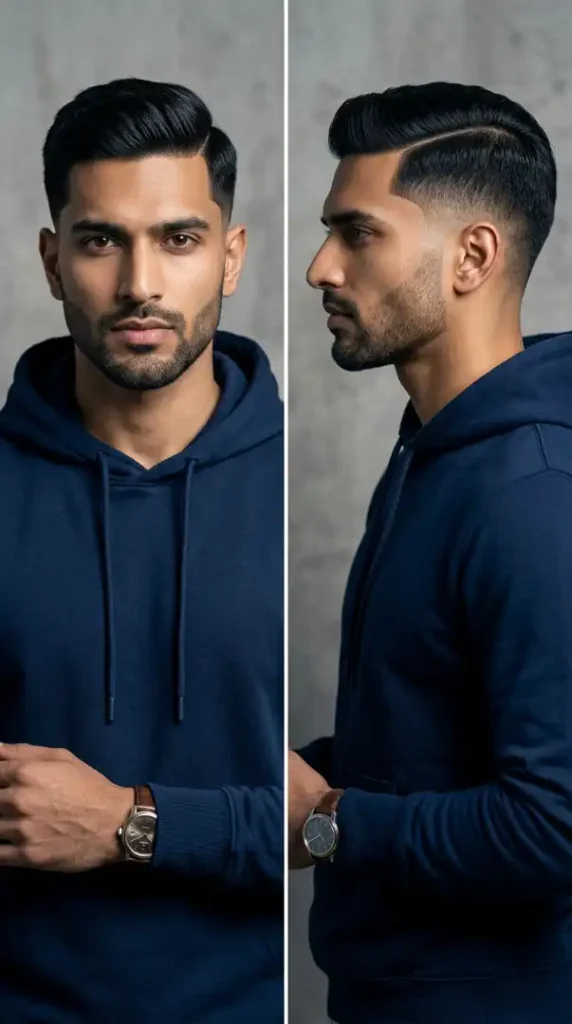
Face Shape Compatibility & Anatomical Reasoning
The Shadow Fade Luxe performs exceptionally on oval and square face shapes, though it offers benefits across most head structures. Here’s the technical explanation: Oval faces achieve perfect visual balance from the structured fade — the clean lines at the temples act as vertical anchors that enhance the face’s natural proportions. The shadow fade’s graduated nature creates a transition that doesn’t feel harsh, maintaining the soft aesthetic that oval faces naturally project.
Square faces benefit from the angular precision of the fade, which complements strong jawlines without competing with them. The shadow fade specifically avoids the heavy-hand aesthetic that can make square faces appear blocky, instead creating a nuanced gradient that appears intelligent and refined.
Round faces can wear this style effectively when the fade is extended slightly higher on the sides, creating vertical emphasis that counteracts facial roundness. Diamond faces gain from the structured side fades that frame the narrow forehead without adding volume where it’s not needed.
AVOID if: You prefer a style that requires minimal barber visits — shadow fades need touch-ups every 2 weeks to maintain the gradient’s integrity. You have extremely curly or textured hair where gradient fades blend less distinctly. You work in an ultra-casual environment where the precision of this cut might feel overdressed.
Grooming Kit & Product Requirements
Maintaining The Shadow Fade Luxe requires specific tools and products:
Clippers: Andis Master (Model 01557) or Wahl Magic Clip (Model 5049-400) — essential for the precise guard transitions needed in shadow fade work
Trimmer/Outliner: Andis T-Outliner (Model 04710) for clean edge definition and shadow fade blending work
Finishing Tools: Kent 81T fine-tooth comb for parting and gradient visualization, Denman boar bristle brush for final polish and smoothing
Styling Product: Layrite Original Pomade (medium hold) in a dime-sized amount for defined sleekness, or Baxter of California Hard Clay (natural finish, medium hold) in a pea-sized portion for texture without shine
Beard Product: For the shadow beard aesthetic, use a beard trimmer set to 2mm (Philips Norelco Series 7000 or Panasonic Arc5) every 2-3 days, then apply Honest Amish beard oil or Beardbrand Beard Oil daily to maintain softness
Maintenance Level & Time Investment
Maintenance Rating: MEDIUM-HIGH
Barber/Salon Visit Frequency: Every 2-3 weeks for shadow fade touch-up and edge refresh. The gradient blur increases noticeably by week 3, losing the sharp definition that defines this cut’s aesthetic.
Daily Styling Time: 3-4 minutes. The style requires minimal daily work — apply beard trimmer for shadow maintenance, then use a light product or no product depending on your preference. Many men wear this style completely product-free.
Product Routine: Two-step routine — maintain beard every 2-3 days using beard trimmer, apply beard oil daily to facial hair (3-4 drops), then style crown with product only if desired (optional step).
Growth Pattern Management: The shadow fade grows out relatively gracefully for the first 10 days, then the gradient becomes noticeably blurred by day 14. After day 21, the fade appearance diminishes significantly.
Cost Consideration: Monthly maintenance approximately $50-70 per visit (premium barber pricing for technical shadow fade work), meaning $100-140 monthly for optimal maintenance every 2 weeks.
Difficulty Rating: Advanced for home maintenance. Shadow fades require understanding of clipper guard transitions and blending technique. Recommend professional maintenance exclusively.
What to Tell Your Barber (The Exact Script)
Say this to your barber:
“I want The Shadow Fade Luxe with a graduated shadow fade on both sides, starting from a skin line at the temple and blending through a series of guard transitions — starting with 0.5mm, then 1, then 1.5, then 2, creating a smooth gradient that reaches full length by the parietal ridge. The top should be left long enough for texture — about 2 to 2.5 inches — so the contrast between the faded sides and textured top creates visual interest. I want a deep side part with clean separation. For the beard, I’m maintaining a shadow beard aesthetic, so I’ll be trimming it every 2-3 days myself at the 2mm setting — just clean up the cheek and neck lines today. The overall effect should look refined and expensive, not edgy. I want soft definition on the fade, not harsh contrast.”
STYLE 3 OF 10 — The Corporate Badboy
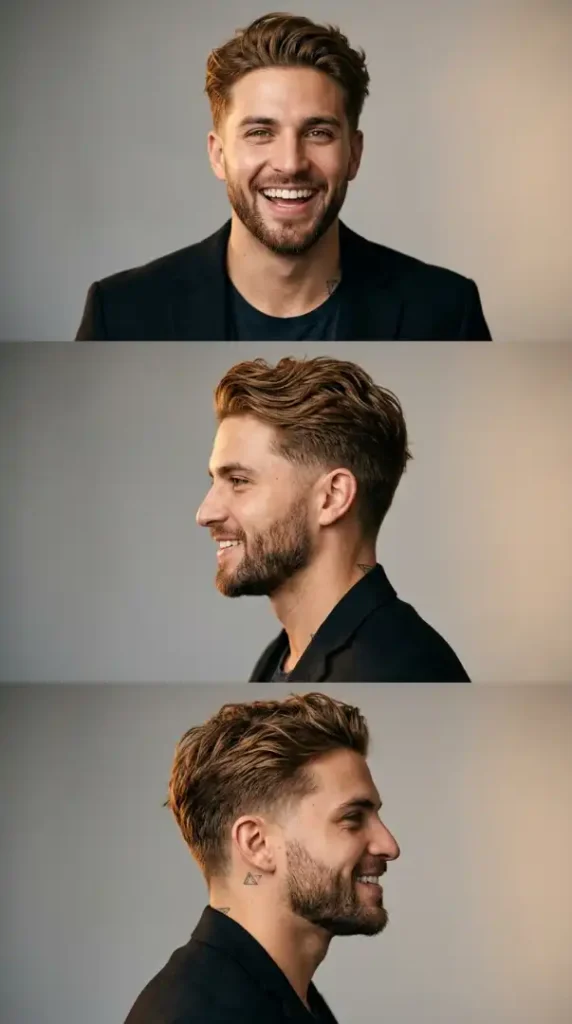
Face Shape Compatibility & Anatomical Reasoning
The Corporate Badboy performs exceptionally on diamond, oblong, and heart-shaped faces, though it offers unique benefits across most head structures. Here’s why: Diamond faces benefit significantly because the textured, full crown provides needed fullness at the top (where diamond faces narrow naturally), while the clean fades on the sides avoid adding width where it’s not wanted. The contrast between top and sides emphasizes the face’s natural structure rather than fighting it.
Oblong and heart-shaped faces gain from the balanced approach — the crown texture adds dimension without excessive height, while the clean fades prevent the overall effect from appearing too elongated. Square faces can wear this style but should request slightly more volume on the sides to prevent the strong jaw from appearing overly angular.
Round faces should approach this style cautiously — the textured crown can amplify roundness if not balanced with slightly extended fades that create vertical emphasis.
AVOID if: You work in an ultra-conservative professional environment where any intentional styling edge might read negatively. You have very fine or thin hair where texture becomes impossible to achieve. You prefer a completely wash-and-go style with zero styling commitment.
Grooming Kit & Product Requirements
Achieving The Corporate Badboy requires specific tools and products engineered for texture:
Clippers: Wahl Magic Clip (Model 5049-400) or Andis Master (Model 01557) — both allow for precise fade work
Trimmer/Outliner: Andis T-Outliner (Model 04710) for clean edge definition and beard detail work
Finishing Tools: Kent 81T fine-tooth comb for parting precision, Denman boar bristle brush for natural styling and texture separation
Styling Product: American Crew Fiber (matte finish, high hold) in a pea-sized portion for controlled texture without shine, or Layrite Original Pomade (medium hold) in a dime-sized amount for more defined styling
Beard Product: Viking Revolution beard oil (3-4 drops daily) or Honest Amish beard butter for maintaining 5mm beard length softness and appearance
Maintenance Level & Time Investment
Maintenance Rating: MEDIUM-HIGH
Barber/Salon Visit Frequency: Every 3 weeks for crown texture refresh and fade touch-up. The textured layers blur slightly after 2 weeks and lose intentional separation by week 3.
Daily Styling Time: 7-10 minutes — this style requires deliberate effort each morning. Dampen hair, apply styling product thoroughly, use fingers to separate and arrange texture, then use a brush for final styling.
Product Routine: Three-step process — dampen hair with spray bottle (1 minute), apply styling product to damp hair (1 minute), manually arrange texture and direction (4-6 minutes), brush for final polish (1-2 minutes).
Growth Pattern Management: The textured crown grows out gracefully for about 10 days, then loses its intentional character by day 14. After day 21, the fade blurs significantly and the overall effect becomes less “styled badboy” and more “I haven’t had a haircut in a while.”
Cost Consideration: Monthly maintenance approximately $45-60 per visit (standard barber pricing for textured cutting work), meaning $135-180 for optimal monthly maintenance.
Difficulty Rating: Intermediate-Advanced for home maintenance. The crown texture point-cutting is best left to professionals, but maintaining fades at home is possible with practice.
What to Tell Your Barber (The Exact Script)
Say this to your barber:
“I want The Corporate Badboy with textured point-cutting throughout the crown creating intentional separation and movement — not a fade or crop, but textured layers that look like controlled bedhead. Take the top to 2.5 to 3 inches and use point-cutting to create individual strands that separate naturally. The sides should have a clean mid-fade starting at the temple line, blending from guard 1.5 at the skin up to guard 3.5 at the parietal ridge. I want the contrast between the textured top and tight sides to be obvious and intentional. Keep the beard at 5mm length with crisp cheek lines and a tapered neck. The overall effect should look polished but not overly groomed — like I made an effort but I’m not trying too hard. Finish with sharp temple and hairline definition.”
STYLE 4 OF 10 — The Minimalist Skin Fade
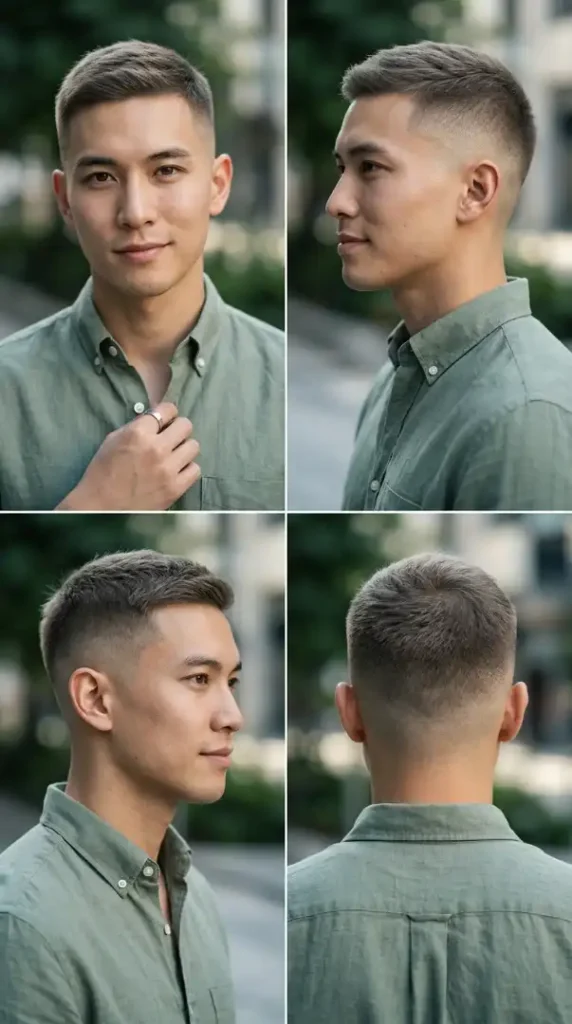
Face Shape Compatibility & Anatomical Reasoning
The Minimalist Skin Fade works exceptionally well on heart, diamond, and oblong face shapes, though it offers unique advantages across different structures. Here’s the technical explanation: Heart-shaped faces benefit dramatically because the skin fade removes visual weight from the sides (where heart faces widen naturally), while the minimal crown doesn’t add bulk where it’s not needed. The overall effect is slimming and flattering for faces with broader foreheads and narrower chins.
Diamond-shaped faces gain from the complete side minimalism — the fades eliminate any widening at the temples, while the short crown prevents top-heavy proportions. Oblong faces can wear this style effectively as the minimal length prevents over-elongation.
Square and round faces can wear this cut, but the results are less flattering — the complete simplicity emphasizes jaw and facial roundness rather than minimizing them. If you have a square or round face and prefer this aesthetic, request slightly more length on top (1.5 inches instead of 1 inch) to add vertical balance.
AVOID if: You prefer styling options and versatility — this cut has one look. You have extremely curly or textured hair where fade precision becomes technically challenging. You’re growing out a longer style — the dramatic contrast is jarring during transition periods.
Grooming Kit & Product Requirements
The Minimalist Skin Fade is deceptively simple but requires precise tools:
Clippers: Wahl Magic Clip (Model 5049-400) is ideal for skin fade precision work. The fine teeth allow for clean, smooth fades without stubble appearance.
Trimmer/Outliner: Andis T-Outliner (Model 04710) for absolutely crisp edge definition — this cut lives or dies on clean hairlines and neck lines
Finishing Tools: You literally don’t need much else — this cut requires no styling. A simple Kent brush for post-cut cleanup is optional.
Styling Product: NONE NEEDED. This is the entire appeal — the cut requires zero product and zero styling
Beard Product: For clean-shaven appearance maintenance, use a quality razor (safety or straight razor) for shaving, then apply Baxter of California After-Shave Balm for skin conditioning
Maintenance Level & Time Investment
Maintenance Rating: HIGH (visits) but LOW (daily effort)
Barber/Salon Visit Frequency: Every 10-14 days — this is the most maintenance-demanding cut in terms of frequency. Because there’s no texture or length to hide growth, even slight regrowth becomes visible. However, you can stretch to 3 weeks if you’re comfortable with slightly blurred fade lines.
Daily Styling Time: 0 minutes. This is the entire point — you shower, dry your hair with a towel, and you’re done. No products, no tools, no effort.
Product Routine: Zero steps. Shower and go.
Growth Pattern Management: Growth becomes visible almost immediately. After 5 days, the fade blur is noticeable. After 10 days, the cut’s precision is significantly diminished.
Cost Consideration: Monthly maintenance approximately $35-50 per visit (standard barber pricing, though some premium barbers charge more for skin fade precision work). With bi-weekly visits, expect $70-100 monthly. This is the most frequent maintenance schedule of all styles, but also the fastest appointment (10-15 minutes).
Difficulty Rating: Advanced for home maintenance. Skin fades require steady hands and practice — mistakes are immediately visible and impossible to hide.
What to Tell Your Barber (The Exact Script)
Say this to your barber:
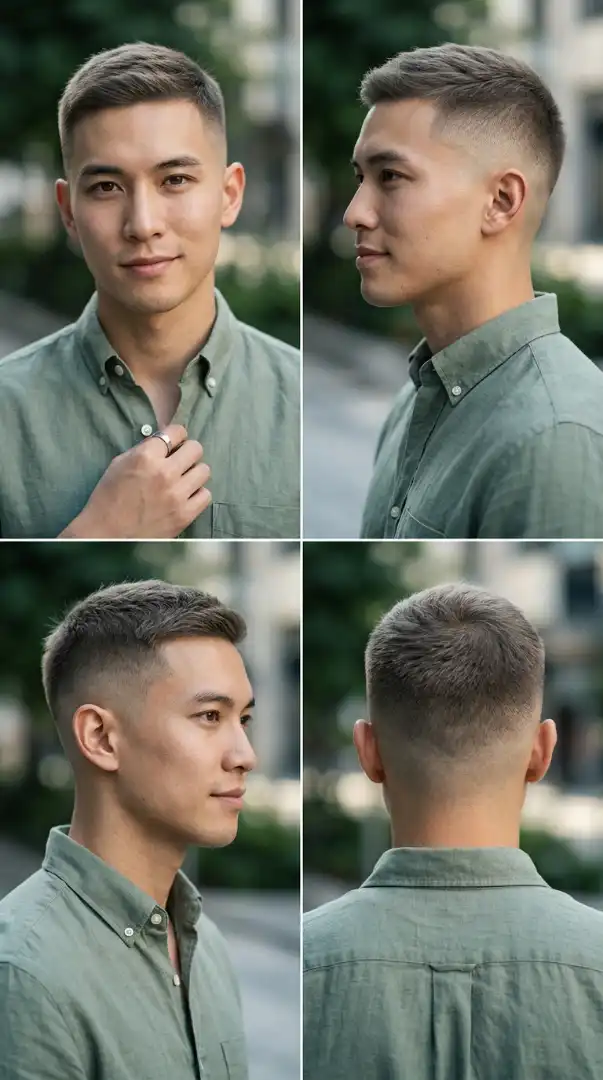
“I want The Minimalist Skin Fade with a complete skin fade on both sides and back — I’m talking zero clipper guard, clean skin from the temple line all the way down and around the back. The top should be left at approximately 1 inch in length, cut straight across with no texture or layering — just clean, simple lines. The contrast between the skin fade sides and the short top is the entire point. I want absolutely crisp edge definition on the hairline, temples, and neck area. This cut should require zero styling — just shower, dry, and go. Finish with a perfect lineup so clean it looks surgical.”
STYLE 5 OF 10 — The Street King
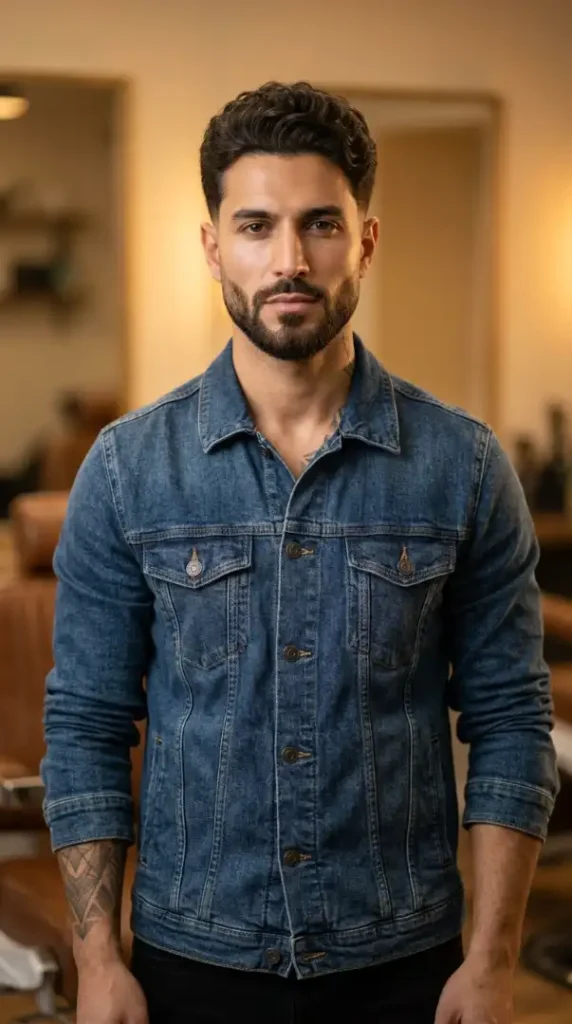
Face Shape Compatibility & Anatomical Reasoning
The Street King performs exceptionally well on round and square face shapes, though it offers strategic advantages across different structures. Here’s the reasoning: Round faces benefit significantly from the maximum crown height, which creates vertical emphasis that counteracts natural facial roundness. The high fade removes weight from the sides, further emphasizing the upward visual line that elongates round faces.
Square faces gain from the dramatic volume, which prevents the face from appearing too angular or blocky. The structured top provides confidence-building presence. Oblong and diamond faces can wear this style but should request moderate crown height (2.5-3 inches instead of 3.5 inches) to prevent over-elongation.
AVOID if: You prefer low-maintenance styling — this requires 10-15 minutes of daily styling work. You work in ultra-conservative professional environments where bold statements might read negatively. You have fine or thin hair that struggles to maintain volume.
Grooming Kit & Product Requirements
The Street King demands products engineered for high hold and volume:
Clippers: Wahl Magic Clip (Model 5049-400) for the precise high-fade work that defines this cut’s dramatic contrast
Trimmer/Outliner: Andis T-Outliner (Model 04710) for crisp edge definition, particularly important for the visible fade line in this style
Finishing Tools: Kent 81T fine-tooth comb for volume direction, Denman boar bristle brush for texture separation and polish
Styling Product: American Crew Forming Cream (medium hold, matte finish) in a dime-sized amount for controlled volume without shine, or Baxter of California Hard Clay (medium-high hold, natural finish) in a pea-sized portion for stronger hold with texture
Beard Product: Viking Revolution beard oil (3-4 drops daily) or Beardbrand Beard Oil for maintaining 5mm beard grooming and softness
Maintenance Level & Time Investment
Maintenance Rating: HIGH
Barber/Salon Visit Frequency: Every 2-3 weeks for fade touch-up and crown texture refresh. The high fade grows out noticeably by week 2, and the crown texture blurs by week 3.
Daily Styling Time: 10-15 minutes — this is a high-commitment style. Damp hair with spray bottle (1-2 minutes), apply product thoroughly (1-2 minutes), blow-dry for volume using fingers to direct (5-8 minutes), finish with brush for polish (2-3 minutes).
Product Routine: Four-step process — dampen hair, apply product, blow-dry directionally for volume, finish with brush for definition.
Growth Pattern Management: The high fade grows out visibly by week 10 days, losing its sharpness. The crown texture blurs by week 14 days. The style requires consistent maintenance to avoid looking unkempt.
Cost Consideration: Monthly maintenance approximately $50-70 per visit (premium pricing for high-fade technical work), meaning $100-140 monthly for optimal bi-weekly maintenance. Plus product costs ($15-25 monthly).
Difficulty Rating: Intermediate for home maintenance of the cut itself, but Advanced for daily styling execution.
What to Tell Your Barber (The Exact Script)
Say this to your barber:
“I want The Street King with maximum volume in the crown — take the top to 3 to 3.5 inches in length with textured point-cutting that creates separation and movement. I want intentional texture throughout, with fringe that falls across the forehead but separates naturally. The sides should have a high fade starting right at the temple line, blending from guard 0.5 at the skin all the way up to guard 3.5 at the parietal ridge. I want obvious, dramatic contrast between the voluminous top and the tight fade sides — that’s the entire point of this cut. For the beard, keep it at 5mm with crisp definition on the cheek and neck lines, blending into the fade at the jawline. Finish with a sharp, visible lineup at the temples, hairline, and around the ears. I want this cut to make a statement.”
STYLE 6 OF 10 — The Executive Taper
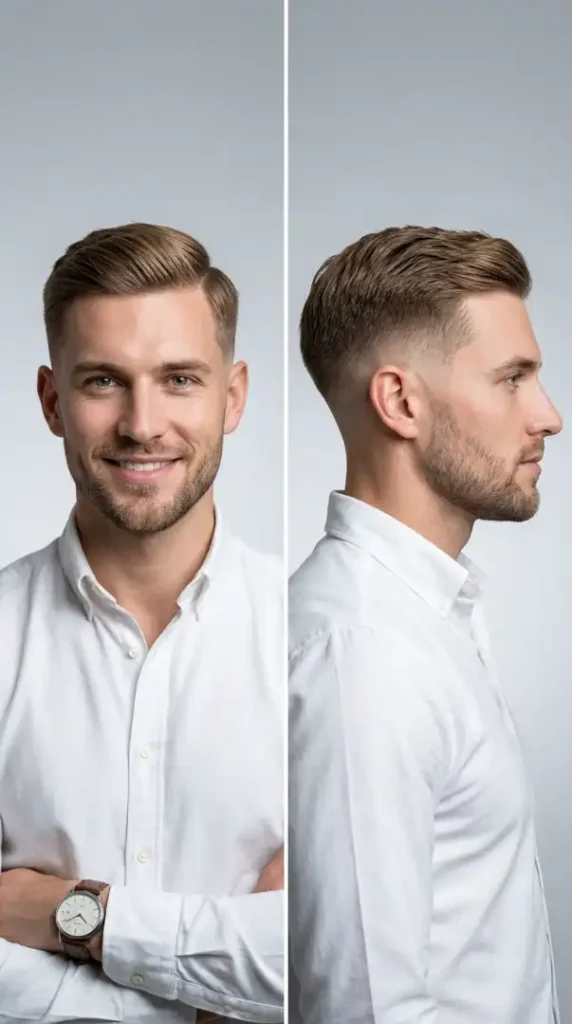
Face Shape Compatibility & Anatomical Reasoning
The Executive Taper performs exceptionally well on oval and square face shapes, though it works across most head structures with minor customization. Here’s the technical explanation: Oval faces achieve perfect balance with this cut — the proportional crown height and moderate fade create harmony without dramatic contrast. The side part adds structure that complements oval proportions.
Square faces benefit from the structured styling, which complements strong jawlines without competing. The mid-fade removes visual weight from the sides without going so tight that it creates too much angle. Round faces can wear this style effectively when the crown height is kept moderate (2 inches) to avoid amplifying roundness.
AVOID if: You prefer minimal styling — this requires 5-7 minutes of morning work. You work in ultra-casual environments where conservative grooming reads as overdressed. You have very fine or thin hair where maintaining height becomes challenging.
Grooming Kit & Product Requirements
The Executive Taper requires the same tools as many modern cuts, but with emphasis on precision:
Clippers: Andis Master (Model 01557) or Wahl Magic Clip (Model 5049-400) — both provide the precision needed for mid-fade work
Trimmer/Outliner: Andis T-Outliner (Model 04710) for crisp edge definition, essential for the professional appearance
Finishing Tools: Kent 81T fine-tooth comb for side part creation, Denman boar bristle brush for styling
Styling Product: Layrite Original Pomade (medium hold) in a dime-sized amount for controlled shine and definition, or Baxter of California Hard Clay (medium hold) in a pea-sized portion for more matte finish
Beard Product: Baxter of California Beard Oil or Beardbrand Beard Oil (3-4 drops daily) for maintaining shadow beard softness
Maintenance Level & Time Investment
Maintenance Rating: MEDIUM
Barber/Salon Visit Frequency: Every 3-4 weeks for fade touch-up and crown freshness. The mid-fade blurs noticeably by week 3, but the overall shape holds longer than higher fades.
Daily Styling Time: 5-7 minutes. Dampen hair, apply product, create side part, brush into position, done.
Product Routine: Two-step process — dampen hair, apply product, style with comb and brush.
Growth Pattern Management: The Executive Taper grows out relatively gracefully for approximately 2 weeks, maintaining its professional aesthetic. By week 3-4, the fade blurs and the cut loses some definition.
Cost Consideration: Monthly maintenance approximately $40-55 per visit (standard barber pricing), meaning $80-110 for monthly visits, or $120-165 for visits every 3-4 weeks.
Difficulty Rating: Intermediate for home maintenance. The mid-fade and side part are achievable with practice, though professional results require skill.
What to Tell Your Barber (The Exact Script)
Say this to your barber:
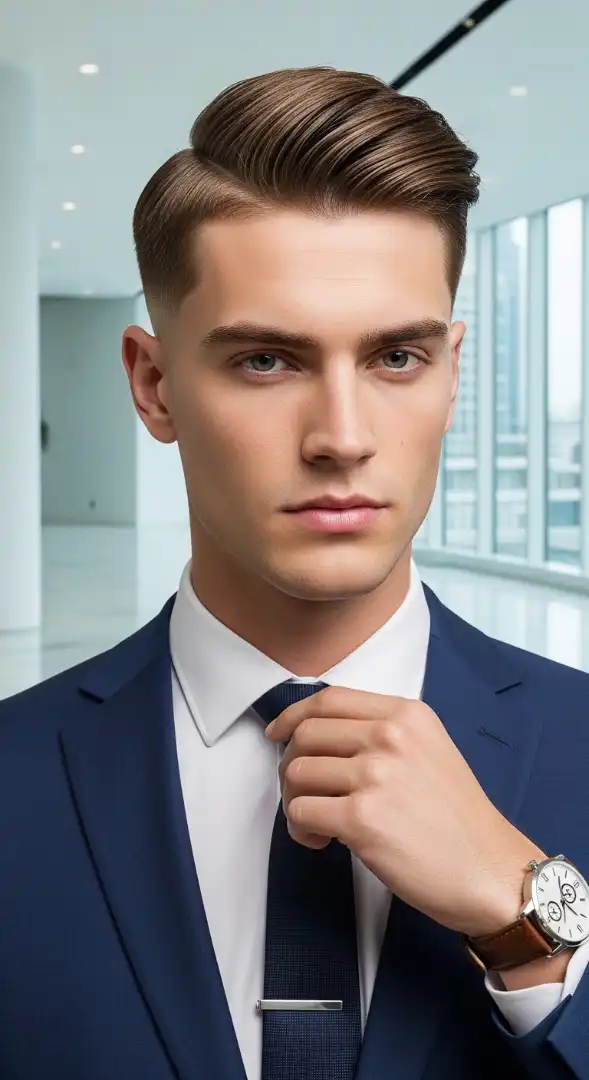
“I want The Executive Taper with a conservative crown — take the top to 2 to 2.5 inches in length and keep it clean with subtle texture or a blunt cut. I’m going for professional polish, not obvious styling. I want a side part with clean separation that creates structure. The sides should have a mid-fade starting at the temple line, blending from guard 1.5 at the skin up to guard 3 at the parietal ridge. I want the fade to be visible but not aggressive — this is a professional cut, not a street cut. For the beard, keep it at 3mm shadow length with crisp cheek and neck definition, blending smoothly into the fade at the jawline. Finish with a sharp lineup at the temples and hairline, but nothing too dramatic. I want to walk out looking like I have my life together.”
STYLE 7 OF 10 — The Jawline Sculptor
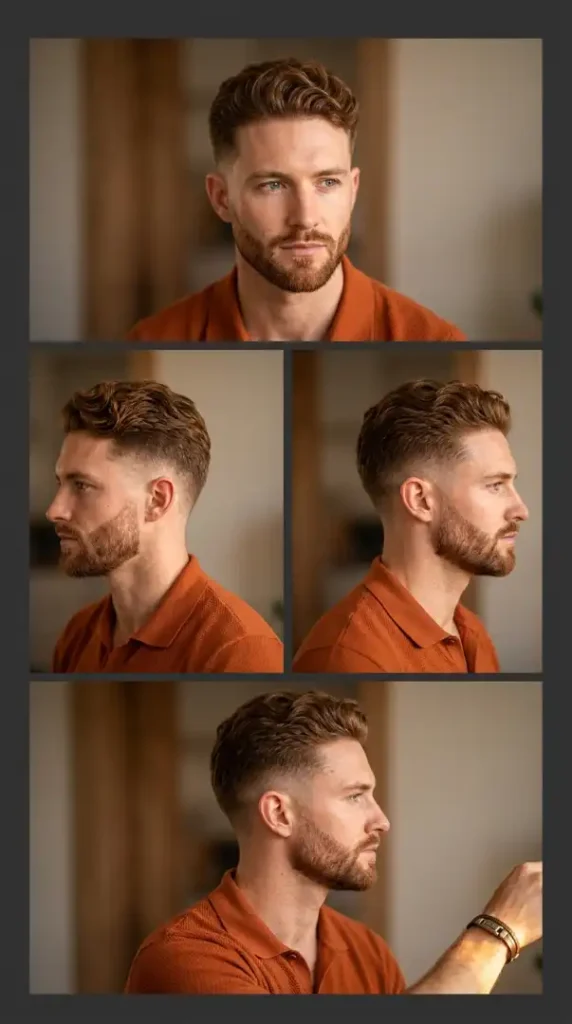
Face Shape Compatibility & Anatomical Reasoning
The Jawline Sculptor performs exceptionally well on square and oblong face shapes, though it offers strategic benefits across all structures. Here’s the reasoning: Square faces with strong jawlines benefit dramatically because the fade positioning acts as a visual frame that directs attention toward the jawline rather than away from it. The mid-fade doesn’t compete with strong jaw structure — instead, it accentuates it by providing clean contrast.
Oblong faces gain from the moderate crown height that prevents over-elongation, while the fade’s strategic positioning adds subtle width perception at the temples. Diamond faces benefit from the jaw-emphasizing positioning, which balances a naturally narrow chin. Round faces should approach this style cautiously — while the beard sculpting can help define roundness, the overall effect might emphasize facial width rather than minimizing it.
Heart-shaped faces gain from the beard coverage and sculpting, which adds definition to a narrower chin area.
AVOID if: You prefer a less ambitious styling approach — this requires daily effort and professional beard sculpting expertise. You’re uncomfortable with facial hair and prefer clean-shaven looks. You work in ultra-casual environments where the precision might read as overdressed.
Grooming Kit & Product Requirements
The Jawline Sculptor demands tools and products engineered for beard precision:
Clippers: Wahl Magic Clip (Model 5049-400) for mid-fade precision work that frames jawline effectively
Trimmer/Outliner: Andis T-Outliner (Model 04710) for absolutely crisp beard sculpting lines at cheek and neck — precision is non-negotiable here
Finishing Tools: Kent 81T fine-tooth comb for directional styling, Denman boar bristle brush for polish
Styling Product: Layrite Original Pomade (medium hold) in a dime-sized amount for controlled styling that complements beard presence, or American Crew Fiber (matte) in a pea-sized portion for more natural appearance
Beard Product: Viking Revolution Beard Butter or Honest Amish Beard Balm (applied 2-3 times weekly) for conditioning and subtle sculpting hold at cheek lines. Daily application of beard oil (3-4 drops) maintains softness.
Maintenance Level & Time Investment
Maintenance Rating: MEDIUM-HIGH
Barber/Salon Visit Frequency: Every 2.5-3 weeks for beard sculpting refresh and fade touch-up. The beard line definition blurs quickly — precision becomes visibly softer by day 10-12.
Daily Styling Time: 7-10 minutes. Apply beard oil, style crown with product, brush for finish, ensure beard lines remain sharp through daily grooming.
Product Routine: Three-step process — apply beard oil daily (1-2 minutes), style crown with product (4-5 minutes), brush and define (2-3 minutes). Weekly beard butter application (not daily).
Growth Pattern Management: The beard grows approximately 0.5mm every 2-3 days. The sculpted cheek and neck lines remain relatively crisp for 10 days, then require refreshing. The fade blurs by day 14.
Cost Consideration: Monthly maintenance approximately $55-75 per visit (premium pricing for beard sculpting work), meaning $110-150 monthly for optimal maintenance every 2-3 weeks. Plus product costs ($20-30 monthly).
Difficulty Rating: Advanced overall. The beard sculpting absolutely requires professional work — precision cheek and neck lines are nearly impossible to execute at home without a trimmer and steady hands.
What to Tell Your Barber (The Exact Script)
Say this to your barber:
“I want The Jawline Sculptor engineered to emphasize my jawline and facial structure. For the crown, take it to 2.5 inches with textured point-cutting that creates movement and separation — nothing too long. The sides should have a mid-fade starting at the temple line, blending from guard 1.5 at the skin to guard 3 at the parietal ridge. The key is the positioning of the fade — I want it framing my jawline rather than fighting it. For the beard, I’m going for a sculpted look at 6mm length with absolutely crisp cheek line definition that follows my natural cheekbone, and a tapered neck line that blends into the fade at the jawline. The beard sculpting is crucial — this isn’t just about length, it’s about architecture. Finish with a sharp lineup at the temples and hairline.”
STYLE 8 OF 10 — The Urban Nomad
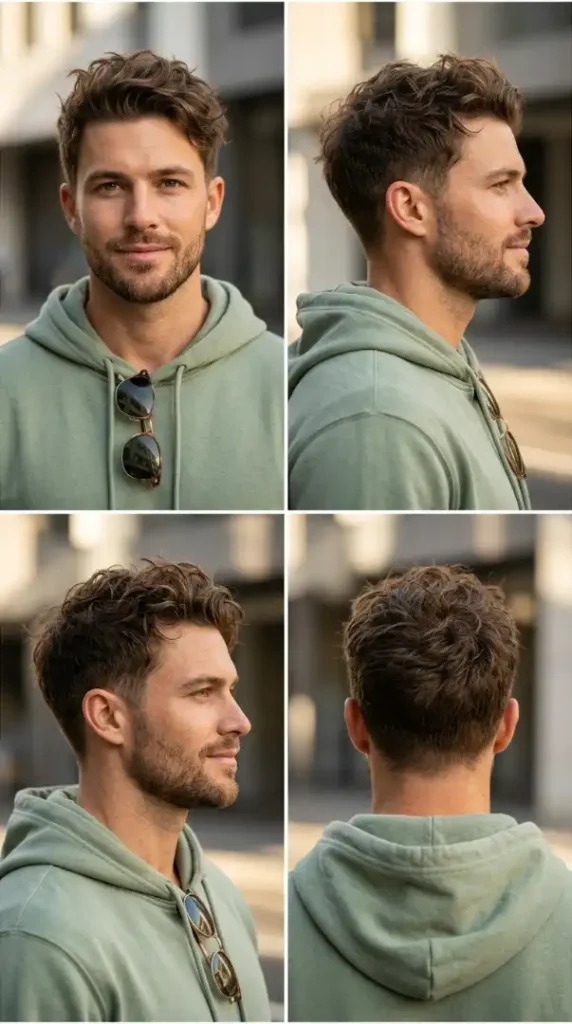
Face Shape Compatibility & Anatomical Reasoning
The Urban Nomad performs exceptionally well on diamond, heart, and oblong face shapes, though it works across most structures. Here’s the reasoning: Diamond faces benefit from the moderate crown texture that adds fullness at the top without excessive height, while the low fade removes weight from the sides. Heart-shaped faces gain from the casual aesthetic that avoids over-styling, while the textured crown adds needed fullness at the forehead.
Oblong faces can wear this style effectively as the moderate length prevents over-elongation. Square faces should approach cautiously — the tousled, undone aesthetic can read as less intentional than structured styling, which might undercut the strong jawline rather than emphasizing it.
Round faces actually work well with this cut if the texture is applied with some directional control that creates vertical emphasis rather than horizontal volume.
AVOID if: You prefer structured, obviously-styled looks — this cut is about looking like you didn’t try. You have fine or thin hair where tousled texture becomes impossible to achieve. You prefer complete wash-and-go approaches with zero styling.
Grooming Kit & Product Requirements
The Urban Nomad requires tools for creating intentional texture:
Clippers: Wahl Magic Clip (Model 5049-400) for the subtle low-fade precision work
Trimmer/Outliner: Andis T-Outliner (Model 04710) for clean edge definition and casual styling
Finishing Tools: Kent 81T fine-tooth comb optional (many men skip this for more tousled effect), Denman boar bristle brush for natural separation
Styling Product: Baxter of California Hard Clay (medium-high hold, natural finish) in a pea-sized portion for textured hold without shine. Or American Crew Forming Cream (medium hold, matte) for less defined but still tousled effect.
Beard Product: Simple beard oil (2-3 drops) applied to stubble every 2-3 days for conditioning — the casual stubble look needs just basic maintenance
Maintenance Level & Time Investment
Maintenance Rating: MEDIUM (visits) / MEDIUM (daily effort)
Barber/Salon Visit Frequency: Every 4-5 weeks for crown texture refresh and fade touch-up. Because the tousled aesthetic hides minor blade bluntness, the cut grows out more gracefully than more structured styles.
Daily Styling Time: 3-5 minutes. Wet hair with spray bottle, apply product throughout for texture, use fingers to tousle and create direction, done. No brush needed if you’re going full undone.
Product Routine: Two-step process — dampen hair, apply product, finger-tousle for texture.
Growth Pattern Management: This style grows out beautifully for approximately 2 weeks, maintaining its tousled character as hair lengthens. By week 3, the texture blurs slightly but still maintains casual appeal. The fade becomes noticeably softer by week 4.
Cost Consideration: Monthly maintenance approximately $40-55 per visit (standard barber pricing), with bi-weekly visits totaling $80-110 monthly, or less frequent visits (every 4-5 weeks) totaling $40-55 monthly depending on your tolerance for growth.
Difficulty Rating: Beginner-Intermediate overall. This is one of the most forgiving cuts to maintain. Even if you skip a week or two past optimal timing, the tousled aesthetic helps hide minor imperfections.
What to Tell Your Barber (The Exact Script)
Say this to your barber:
“I want The Urban Nomad with a tousled, textured crown — think intentional bedhead. Take the top to 2.5 to 3 inches with point-cutting that creates texture and movement. The key is that it should look like I just woke up and ran my fingers through it, but it’s actually styled. The sides should have a low fade starting above the ear, blending from guard 2 at the skin up to guard 3.5 at the parietal ridge. Keep the fade subtle — this isn’t about dramatic contrast, it’s about clean definition. For the beard, just leave the stubble — I’m maintaining 2mm casual growth, nothing more. Finish with a soft lineup at the hairline and around the ears, but nothing too crisp. I want this to look effortless.”
STYLE 9 OF 10 — The Textured Renaissance

Face Shape Compatibility & Anatomical Reasoning
The Textured Renaissance performs exceptionally well on round and oval face shapes, though it offers strategic benefits across different structures. Here’s the reasoning: Round faces benefit significantly from the generous crown volume, which creates vertical emphasis that elongates facial proportions and balances natural roundness. The medium fade provides definition without the harshness of high fades.
Oval faces gain from the additional dimension and personality that generous volume provides. Square faces can wear this style effectively when the texture is styled to create upward movement rather than side-to-side volume. Diamond faces benefit from the balanced approach of generous top volume and structured fade sides.
AVOID if: You prefer low-maintenance styling — this requires 10-15 minutes of daily commitment. You work in ultra-conservative professional environments where the bold styling might read as inappropriate. You have fine or thin hair that struggles to maintain volume.
Grooming Kit & Product Requirements
The Textured Renaissance requires quality tools for maintaining volume and texture:
Clippers: Wahl Magic Clip (Model 5049-400) for the medium-fade precision work
Trimmer/Outliner: Andis T-Outliner (Model 04710) for beard sculpting and edge definition
Finishing Tools: Kent 81T fine-tooth comb for texture direction, Denman boar bristle brush for polishing and volume enhancement
Styling Product: Layrite Original Pomade (medium hold) in a dime-sized amount for controlled volume with subtle shine, or American Crew Forming Cream (medium hold, matte) in a pea-sized portion for matte texture-focused styling
Beard Product: Beardbrand Beard Butter or Honest Amish Beard Balm (applied 3-4 times weekly) for conditioning 7mm beard length and maintaining shape. Daily beard oil (3-4 drops) ensures beard softness and appearance.
Maintenance Level & Time Investment
Maintenance Rating: HIGH
Barber/Salon Visit Frequency: Every 3-4 weeks for crown texture refresh and beard sculpting touch-up. The beard grows approximately 0.5mm every 2-3 days, requiring refresh visits to maintain 7mm precision.
Daily Styling Time: 10-15 minutes. Dampen hair with spray bottle (1-2 minutes), apply styling product to damp hair (1-2 minutes), blow-dry for volume using fingers to direct (5-8 minutes), finish with brush for polish (2-3 minutes).
Product Routine: Four-step process — dampen, product application, blow-dry for volume, finish with brush. Beard butter application 3-4 times weekly (1-2 minutes per application).
Growth Pattern Management: The beard grows noticeably by day 7-10, requiring trimming for length precision. The crown texture blurs by day 14-21 depending on hair type. The fade loses definition by week 3-4.
Cost Consideration: Monthly maintenance approximately $60-80 per visit (premium pricing for volume-focused styling and beard sculpting), meaning $120-160 monthly for bi-weekly to tri-weekly maintenance. Plus product costs ($25-40 monthly).
Difficulty Rating: Advanced overall. Both the crown styling technique and beard sculpting work are complex and best left to professionals.
What to Tell Your Barber (The Exact Script)
Say this to your barber:
“I want The Textured Renaissance with substantial crown volume — take the top to 3 inches in length and use point-cutting throughout to create texture and separation. I’m going for an educated, sophisticated aesthetic that communicates intention and cultural awareness. The crown should have excellent movement and direction. The sides should have a medium fade starting at the temple line, blending from guard 1.5 at the skin to guard 3.5 at the parietal ridge. Keep the fade clean but not aggressive — this is about balance, not drama. For the beard, I’m maintaining a full 7mm length with absolutely crisp cheek line definition and a tapered neck line. The beard is a significant part of this look, so precision sculpting is important. Finish with a sharp lineup at the temples, hairline, and around the ears.”
STYLE 10 OF 10 — The Minimal Modern
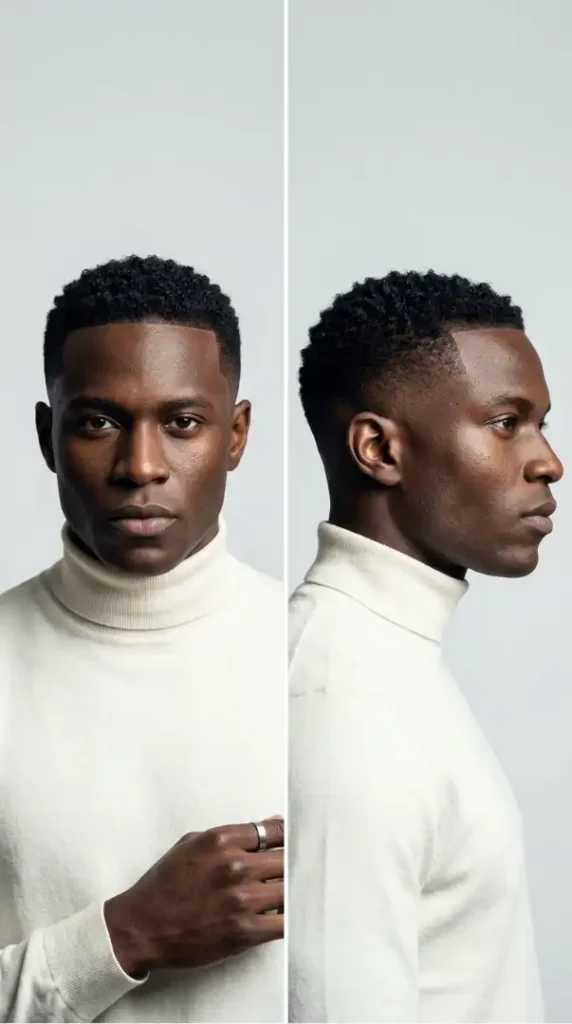
Face Shape Compatibility & Anatomical Reasoning
The Minimal Modern works exceptionally well on square and oblong face shapes, though it requires careful consideration for other structures. Here’s the reasoning: Square faces benefit from the emphasis the minimal cut places on facial geometry — there’s nowhere for attention to hide, so a strong jawline becomes the absolute focal point. The clean lines and architectural precision complement angular bone structure.
Oblong faces must request slightly longer crown (approximately 1 inch) to avoid excessive elongation, but the style can still work beautifully with this modification. Diamond and round faces should approach cautiously — the complete minimalism can amplify wideness or roundness rather than minimizing it. Heart-shaped faces work reasonably well as the minimal approach avoids adding bulk at the forehead.
AVOID if: You lack confidence in your facial geometry — this cut offers nowhere to hide. You have extremely curly or textured hair where precise fade lines become technically challenging. You prefer styles with versatility and styling options.
Grooming Kit & Product Requirements
The Minimal Modern requires precision tools but minimal product:
Clippers: Wahl Magic Clip (Model 5049-400) is ideal for clean, even-length cutting and precision fade work
Trimmer/Outliner: Andis T-Outliner (Model 04710) for absolutely surgical-precision edge definition — this cut’s entire aesthetic depends on clean lines
Finishing Tools: You literally don’t need much — a simple brush for post-cut cleanup is optional
Styling Product: NONE NEEDED. This is the entire appeal — the cut requires zero product and zero styling
Beard Product: For clean-shaven appearance, use a quality razor (safety or straight razor) for shaving. Apply basic aftershave balm (Baxter of California or similar) for skin conditioning.
Maintenance Level & Time Investment
Maintenance Rating: HIGHEST (visits) but LOWEST (daily effort)
Barber/Salon Visit Frequency: Every 7-10 days is optimal — this is the most frequently maintained style. Because there’s no texture or length to hide growth, regrowth becomes visible almost immediately. However, you can stretch to 2 weeks if you’re comfortable with slightly faded precision.
Daily Styling Time: 0 minutes. Shower, dry with towel, done. No products, no tools, zero styling whatsoever.
Product Routine: Zero steps.
Growth Pattern Management: Growth becomes noticeably visible by day 5-7. By day 10, the original cutting precision has significantly faded. After day 14, the cut’s defining geometric precision is substantially diminished.
Cost Consideration: Monthly maintenance approximately $30-45 per visit (standard barber pricing, though some premium barbers charge slightly more for precision work). With weekly visits, expect $120-180 monthly. This is the highest visit frequency but the lowest per-visit cost of most styles.
Difficulty Rating: Advanced for home maintenance. Achieving perfectly even, uniform length requires precision clipping skills. Mistakes are immediately visible and impossible to hide.
What to Tell Your Barber (The Exact Script)
Say this to your barber:
“I want The Minimal Modern — take the entire crown to approximately 0.5 to 1 inch in uniform length. No texture, no layering, just clean, even length throughout. The sides should have a complete fade from skin upward, creating clean geometric lines. I’m going for architectural precision here — this cut is all about clean lines and intentional simplicity. I want absolutely crisp edge definition on the hairline, temples, and neck area. This cut should require zero styling — I shower, dry, and that’s it. I’m also staying clean-shaven, so help me establish good shaving technique and skincare. The overall effect should look intentional, refined, and modern.”