
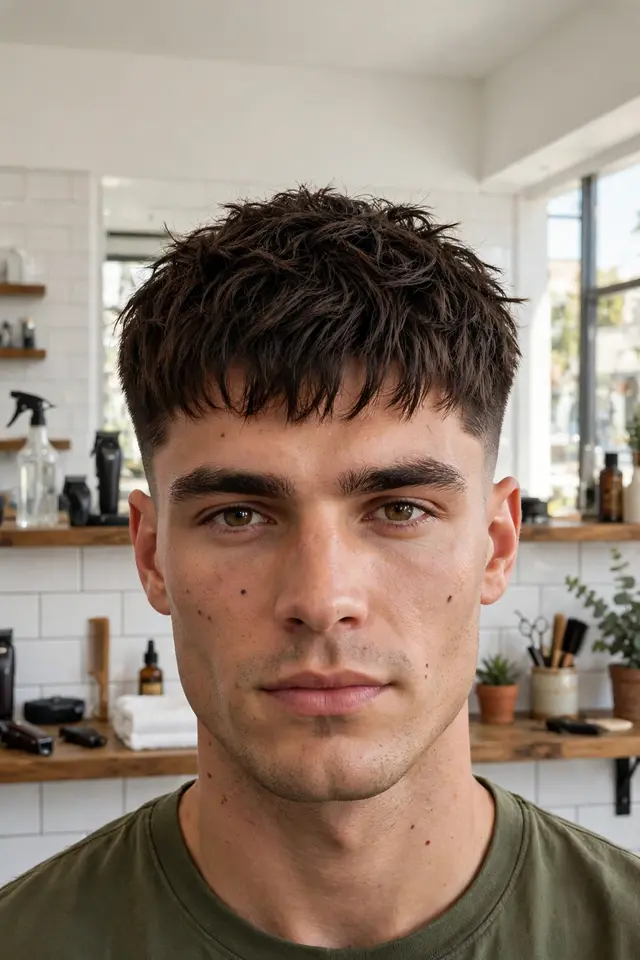
20 Textured Crop Hairstyles for Men: French Crops, Fringes & Fades
Every barber in 2026 will tell you the same thing: the crop is the cut men ask for by name. Textured crop hairstyles for men sit at the top of every Pinterest trend list and every barbershop request chart this year — short, choppy texture on top, a fringe pushed forward, and sides that run from a soft taper to a full skin fade. It is the rare haircut that looks deliberate with two minutes of styling and completely fine with none.
But “textured crop” is not one haircut. Change the fringe, change the fade, cut it for curls or for a receding hairline, and the same family produces twenty genuinely different looks. Below are the twenty that matter — from the classic French crop to the winter-proof crop that survives a beanie better than a quiff ever could.
Each style comes with the face shapes it flatters, the exact kit you need, the honest upkeep, and the precise words to say to your barber. If the buzz cut is the crop’s minimalist cousin, this guide is the full family reunion.
1 of 20 — The Textured Crop
What is a textured crop — and why is it the most requested cut of the year?
Because it asks almost nothing and gives almost everything. The Textured Crop keeps 1.5–2 inches on top, point-cut into choppy, separated pieces that fall slightly forward, with faded or tapered sides keeping the silhouette sharp. No height to build, no parts to comb — the texture itself is the style, which is exactly why Pinterest saves it more than any other short cut right now.
Face Shape: Works on nearly every face; the forward fringe shortens long faces and the texture widens narrow ones.
Grooming Kit: A pea of matte clay or fibre, and your fingers. A blow dryer is optional at this length.
Maintenance: Every 3 weeks to keep the fringe line honest; daily styling is a 60-second job.
Barber Script: “Textured crop — about 2 inches on top, point-cut for choppy texture, fringe falling forward, mid fade on the sides.”
The default setting of 2026 — texture does the talking.
Q: How do I style a textured crop in the morning?
A: Work a pea-sized amount of matte clay through completely dry hair, pushing everything forward and pinching the ends into pieces. Sixty seconds, no comb, no dryer. Texture powder works even faster on fine hair.
Q: Does a textured crop suit a professional workplace?
A: Completely. With tapered or low-faded sides it reads as a neat, conservative short cut — the texture only shows up close. It is one of the safest trending cuts you can wear into an office.
2 of 20 — The French Crop
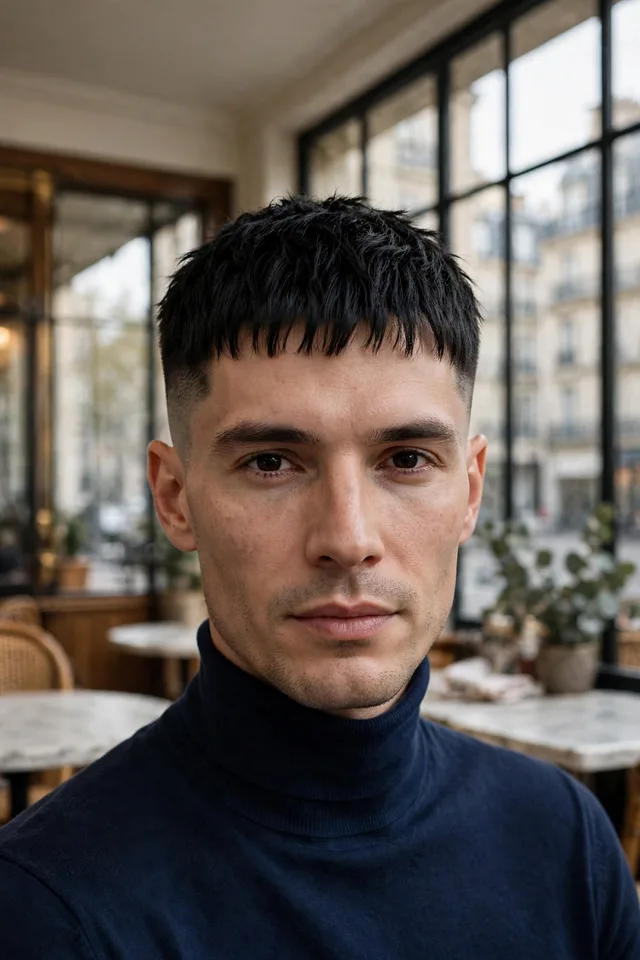
What is a French crop — the textured crop’s sharper cousin?
Precision. The French Crop takes the same short, forward shape but finishes the fringe with a straight, blunt line across the forehead and keeps the top more uniform — less chaos, more geometry. It is the continental original the textured crop evolved from, and in 2026 the sharp version is back: clean fringe, choppy top, tight sides.
Face Shape: Ideal for square and oval faces; the straight fringe shortens a long forehead beautifully.
Grooming Kit: Matte clay for separation, nothing shiny — the French crop’s lines should look dry and deliberate.
Maintenance: Every 2–3 weeks; that blunt fringe line is the first thing to blur as it grows.
Barber Script: “French crop — short textured top, straight blunt fringe sitting mid-forehead, faded sides, keep the fringe line clean.”
Paris geometry — the crop with a ruler-straight fringe.
Q: French crop vs textured crop — what is the actual difference?
A: The fringe and the finish. A French crop has a defined, straighter fringe line and a more uniform top; a textured crop is choppier and more broken-up throughout. Same family, different temperament.
Q: Is a French crop good for a big forehead?
A: It is one of the best cuts for it. The fringe sits across the mid-forehead and draws a new, lower horizontal line, so the forehead above it simply stops being the story.
3 of 20 — Textured Crop with a Mid Fade
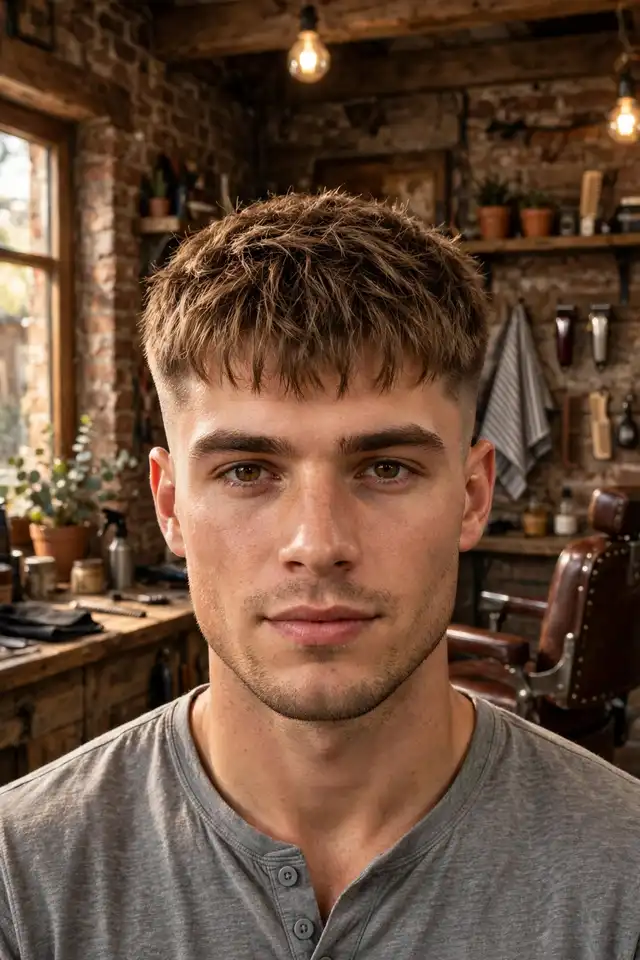
Why is the mid fade the crop’s perfect partner?
Balance. The Textured Crop with a Mid Fade starts the fade at the temples — high enough to sharpen the silhouette, low enough to keep some weight and shadow on the sides. It is the version barbers cut most often, because it flatters the widest range of head shapes and grows out without a harsh line.
Face Shape: Excellent on round faces — the faded temples remove width while the textured top adds a little height.
Grooming Kit: Matte clay or fibre for the top; the fade needs nothing but a brush.
Maintenance: Every 2–3 weeks; mid fades hold their shape a week longer than skin fades.
Barber Script: “Textured crop with a mid fade — choppy top falling forward, fade starting at the temples, fringe kept textured not blunt.”
The barber’s favourite — contrast, perfectly balanced.
Q: Mid fade or low fade with a textured crop?
A: The mid fade is sharper and slims round faces; the low fade is softer, more conservative and grows out gentler. If you are between chairs every two weeks, mid. If monthly, low.
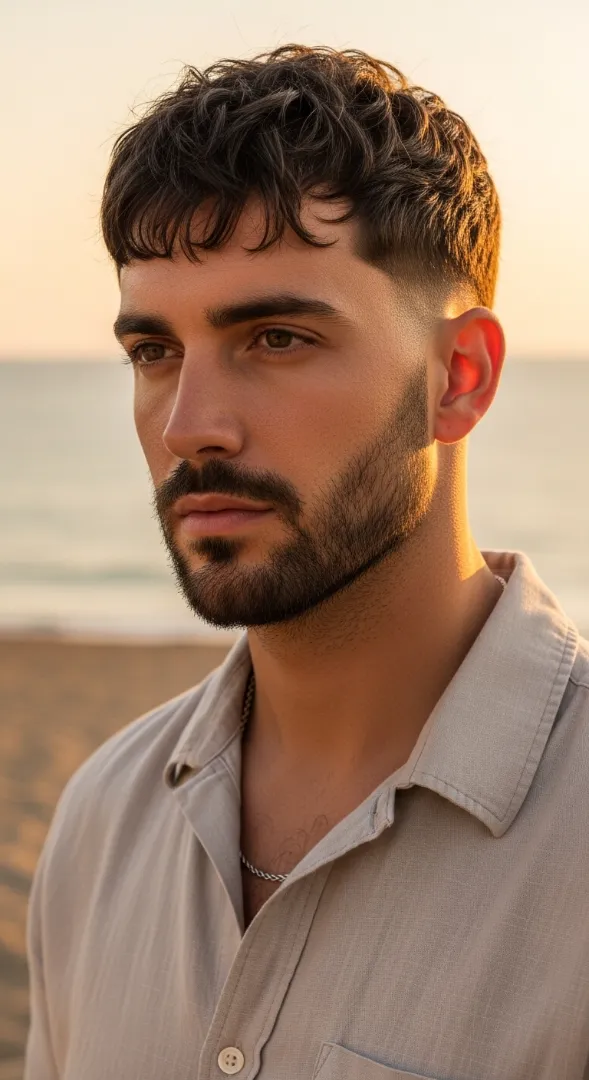
Q: Does the mid fade crop work with a beard?
A: Yes — ask the barber to blend the fade into the sideburns so the beard connects cleanly. A disconnected gap between a fresh fade and a full beard is the one thing that ruins this combination.
4 of 20 — The Skin Fade Crop
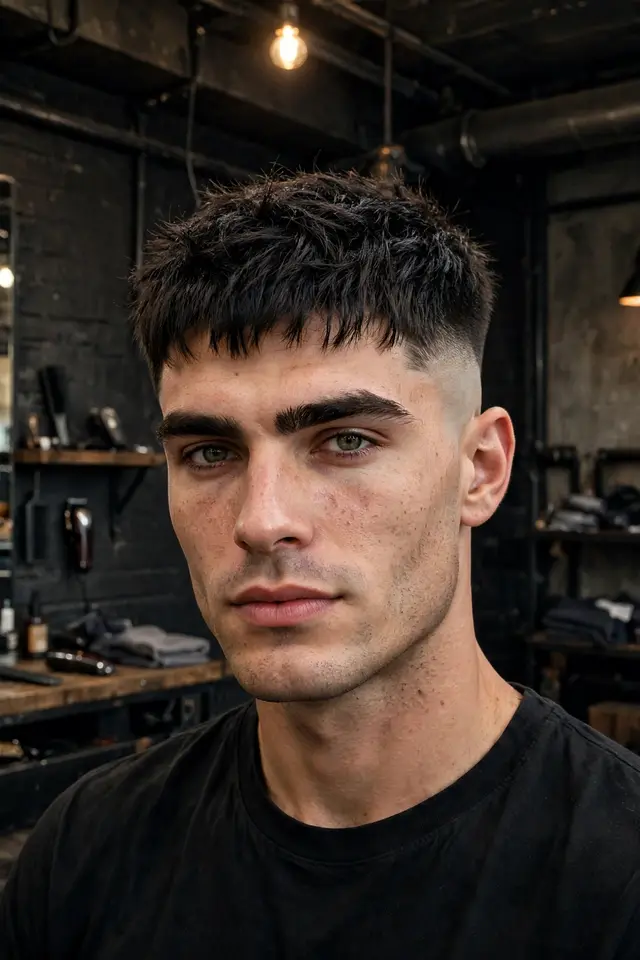
What does a skin fade do to a crop?
It turns the contrast all the way up. The Skin Fade Crop takes the sides down to bare skin and lets the gradient climb high, so the textured top sits like a cap of choppy hair above a clean, sharp fade. It is the boldest short version in this guide — and the one that photographs best, which is why it fills Pinterest boards.
Face Shape: Strong on square and diamond faces; the stripped sides sharpen every angle the face already has.
Grooming Kit: Matte clay for the top, and sunscreen for the faded sides in summer — fresh skin fades burn fast.
Maintenance: Every 2 weeks, non-negotiable. A skin fade’s gradient is only perfect for about ten days.
Barber Script: “Skin fade crop — textured top with a short forward fringe, sides faded right down to skin, blend high and tight.”
Maximum contrast — the crop at full volume.
Q: How fast does a skin fade crop grow out?
A: Noticeably within a week, visibly by two. The gradient softens from the bottom up, so by day fourteen it reads as a regular short fade. Fortnightly barber visits are the price of this one.
Q: Is a skin fade crop too much for an office?
A: In creative and casual workplaces, no. In conservative ones, the first week can read sharp rather than severe — but a mid fade crop gives you ninety percent of the look with none of the risk.
5 of 20 — The Low Taper Crop

Why choose a taper instead of a fade?
Longevity. The Low Taper Crop cleans up only the sideburns and neckline, leaving the sides scissored and full above them. The result is the softest, most grown-in-friendly crop in the guide — no gradient to blur, no line to lose, and a silhouette that still looks intentional a month after the cut.
Face Shape: Perfect for long and narrow faces; the fuller sides add the width those faces want.
Grooming Kit: A fingertip of matte paste; this crop is built to be styled with fingers, not tools.
Maintenance: Every 4 weeks comfortably — the longest interval of any crop here.
Barber Script: “Low taper crop — textured top with a forward fringe, scissor-cut sides kept full, taper just the sideburns and neckline.”
The slow crop — soft edges, monthly barber visits.
Q: Taper crop or fade crop — which grows out better?
A: The taper crop, and it is not close. A fade’s gradient turns fuzzy within two weeks, while a taper just gets slightly softer and still looks like a haircut at week four.
Q: Does a low taper crop look old-fashioned?
A: No — the modern version keeps the top choppy and the fringe forward, so it reads current. It only looks old-fashioned when the top is combed flat and neat, which is a styling choice, not the cut.
6 of 20 — The Caesar Crop
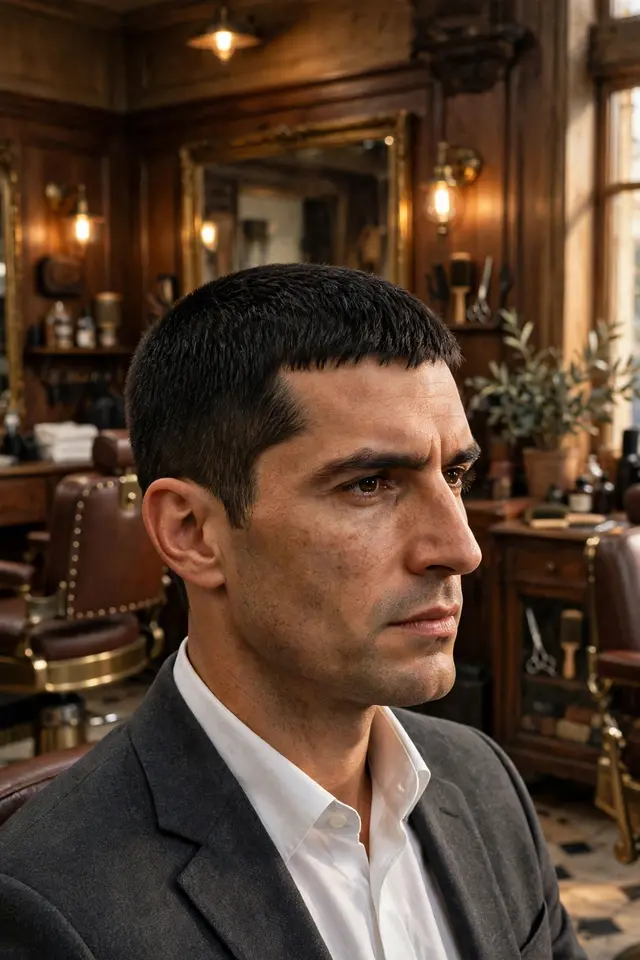
What is a Caesar crop — the original short fringe?
The ancestor. The Caesar Crop is a short, even cut with a short horizontal fringe at the front — the same length nearly all over, textured lightly, worn forward. Julius Caesar wore it, George Clooney revived it, and 2026 brought it back as the thinking man’s minimal crop: no fade theatrics, just clean, dark, forward texture.
Face Shape: Great for oval and oblong faces; the horizontal fringe cuts visual length from the face.
Grooming Kit: Almost nothing — a matte paste for texture on thicker hair, bare hands on fine hair.
Maintenance: Every 3 weeks; the all-over even length forgives growth evenly.
Barber Script: “Caesar crop — short all over, about an inch on top, short straight fringe at the front, tapered edges, everything worn forward.”
Two thousand years old and still on trend — the original.
Q: Caesar crop vs French crop — how do they differ?
A: Length and drama. The Caesar is shorter and more even all over with a subtle fringe; the French crop keeps more top length and a more defined, fashion-forward fringe line. Caesar is the quieter cut.
Q: Is the Caesar crop good for thinning hair?
A: Yes — the short, forward, even direction hides thinning at the temples better than almost any short cut. Keep the top matte and avoid wet-look products, which separate the hair and expose scalp.
7 of 20 — The Messy Textured Crop
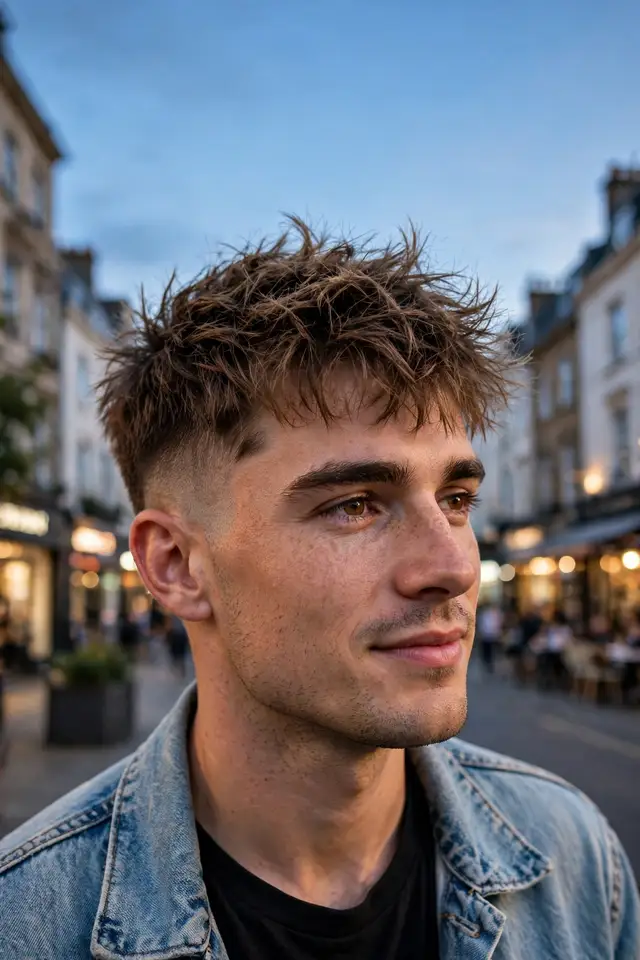
What is a messy textured crop — order or chaos?
Controlled chaos. The Messy Textured Crop keeps the crop’s short sides but cuts the top with heavy point-cutting and razor texture so it can be pushed in several directions at once — forward, sideways, tousled. It is the weekend version of the family, and the most forgiving crop for men whose hair refuses to sit in one direction.
Face Shape: Flatters angular faces — the disorder softens sharp features while the fringe keeps it grounded.
Grooming Kit: Sea salt spray and a dry matte clay. This crop is built on second-day hair logic.
Maintenance: Every 3–4 weeks; mess forgives growth better than any precise cut.
Barber Script: “Messy textured crop — heavy point-cut texture on top, choppy fringe, faded sides, I wear it tousled in different directions.”
Perfectly imperfect — the crop with its collar loosened.
Q: How do I make a messy crop look deliberate, not unwashed?
A: Keep the sides and fringe line clean and let only the top be messy. Fresh edges around a tousled top read as a decision; mess everywhere just reads as overdue for a haircut.
Q: What product works best on a messy crop?
A: Texture powder or dry clay on fully dry hair. Push the top around with your fingers until it looks like you didn’t — that is the entire technique. Stop the moment it looks arranged.
8 of 20 — The Short Textured Crop
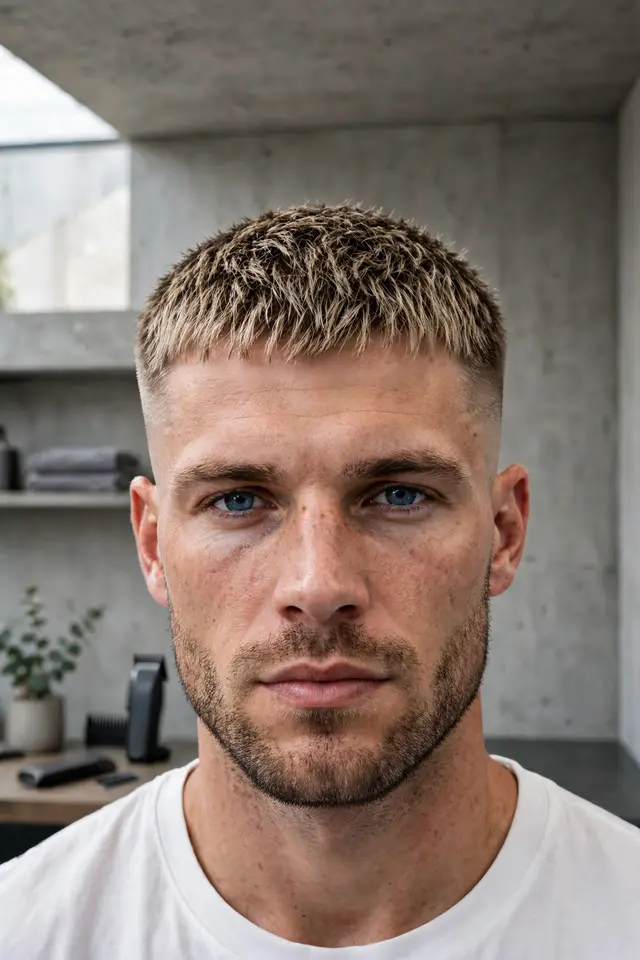
How short can a crop go?
Shorter than you think. The Short Textured Crop trims the top to around an inch, keeps just enough length for point-cut texture to show, and pairs it with a mid or high fade. It sits halfway between a crop and a buzz — the choice for men who want the crop’s shape with the buzz cut’s wash-and-go mornings.
Face Shape: Best on oval and square faces with strong features; very short tops put the face in charge.
Grooming Kit: Optional — a pinch of matte fibre on the days you want the texture to pop.
Maintenance: Every 2–3 weeks; short tops show growth fast, but styling is genuinely zero.
Barber Script: “Short textured crop — about an inch on top, point-cut, short forward fringe, mid fade on the sides, keep it tight.”
The crop, distilled — shape without the styling.
Q: Short crop or buzz cut — which should I choose?
A: If you want a fringe and visible texture, the short crop. If you want one length everywhere and zero decisions, the buzz. The crop reads as a hairstyle; the buzz reads as a statement.
Q: Does a short crop suit a receding hairline?
A: It can — the forward fringe covers the temples. But keep the top textured and matte; at an inch long, shiny products will separate the hair and show exactly what you are covering.
9 of 20 — The Blunt Fringe Crop
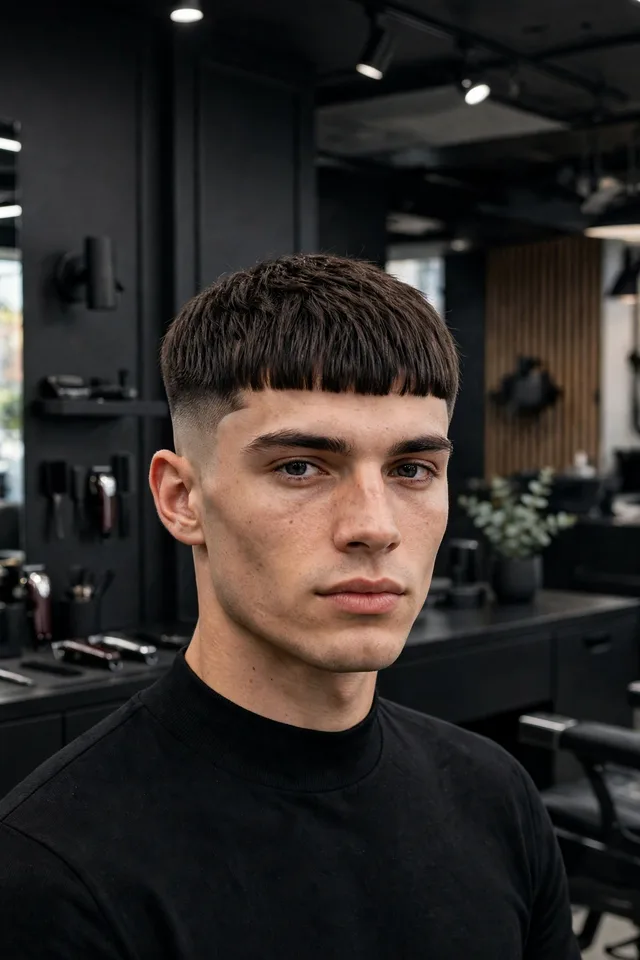
What makes a blunt fringe crop different?
The line. The Blunt Fringe Crop cuts the fringe in one straight, solid sweep across the forehead — no choppy ends, no broken pieces — while the top behind it stays textured. That single clean line gives the whole cut a fashion-editorial edge the softer crops don’t have, and it is all over the mod-inspired boards this winter.
Face Shape: Made for oval and long faces; the solid horizontal line shortens the face like a ruler.
Grooming Kit: A small amount of matte paste to keep the fringe sitting as one piece; a fine comb helps.
Maintenance: Every 2–3 weeks — the fringe line is the whole design, and it blurs first.
Barber Script: “Blunt fringe crop — textured top, fringe cut in one straight solid line across the forehead, faded sides, keep that line sharp.”
One straight line — the crop goes editorial.
Q: Blunt fringe or textured fringe — which is better?
A: The blunt fringe is bolder, sharper and more fashion-led; the textured fringe is softer and easier to live with. Blunt also demands straighter hair — waves will fight the line daily.
Q: Can a blunt fringe crop work with thick hair?
A: Yes, if the barber thins the fringe ends slightly from underneath. Thick hair cut blunt without weight removal sits like a shelf. Ask for the line straight but the weight managed.
10 of 20 — The Crop for a Receding Hairline
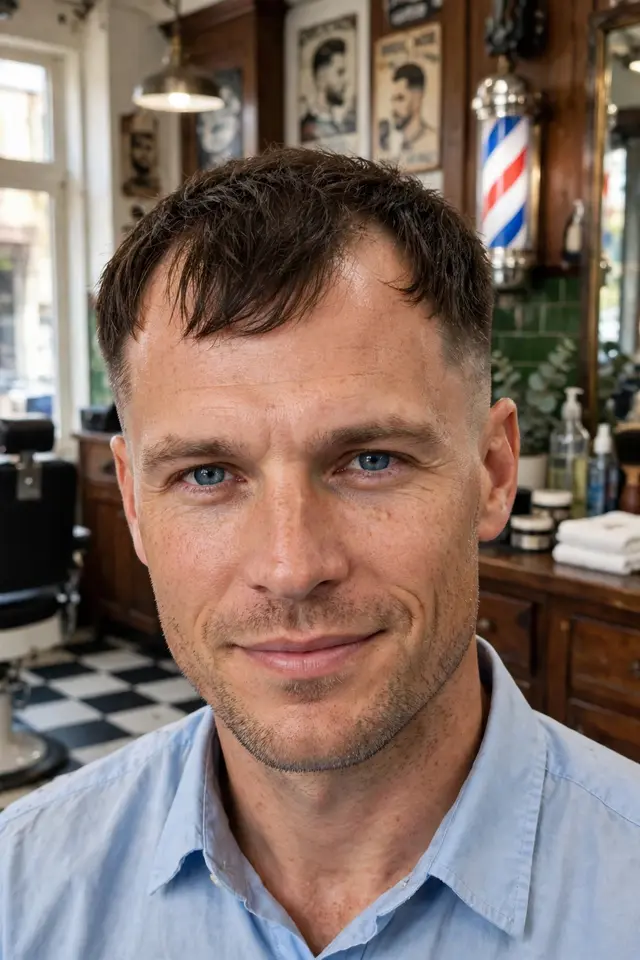
Can a crop really help a receding hairline?
It is the best short answer there is. The Receding Hairline Crop keeps the top short and textured, pushes everything forward so the fringe covers the temples, and never — ever — sweeps hair backward. Where a slick-back exposes the hairline’s shape, the forward crop simply removes it from the conversation. Smart geometry, nothing combed over.
Face Shape: Works on most faces; the forward direction softens a high forehead and balances proportions.
Grooming Kit: Matte clay or texture powder only. Shine is the enemy — it separates the fringe and shows the scalp beneath.
Maintenance: Every 3 weeks; keep the fringe fresh so it never grows long enough to look thin.
Barber Script: “Crop for my hairline — short textured top, everything forward over the temples, tapered or low faded sides, nothing swept back.”
Forward is the fix — the crop that works with your hairline.
Q: What length crop is best for a receding hairline?
A: Around 1.5 inches on top, heavily textured. Longer fringes separate and expose the temples; short, dense, forward texture creates coverage and makes the density you have look greater.
Q: What styling mistakes make a hairline look worse?
A: Sweeping hair back, growing the fringe long to ‘cover’ it, and glossy products. All three spotlight the hairline. Short, forward, matte and textured does the exact opposite.
11 of 20 — The Wavy Textured Crop
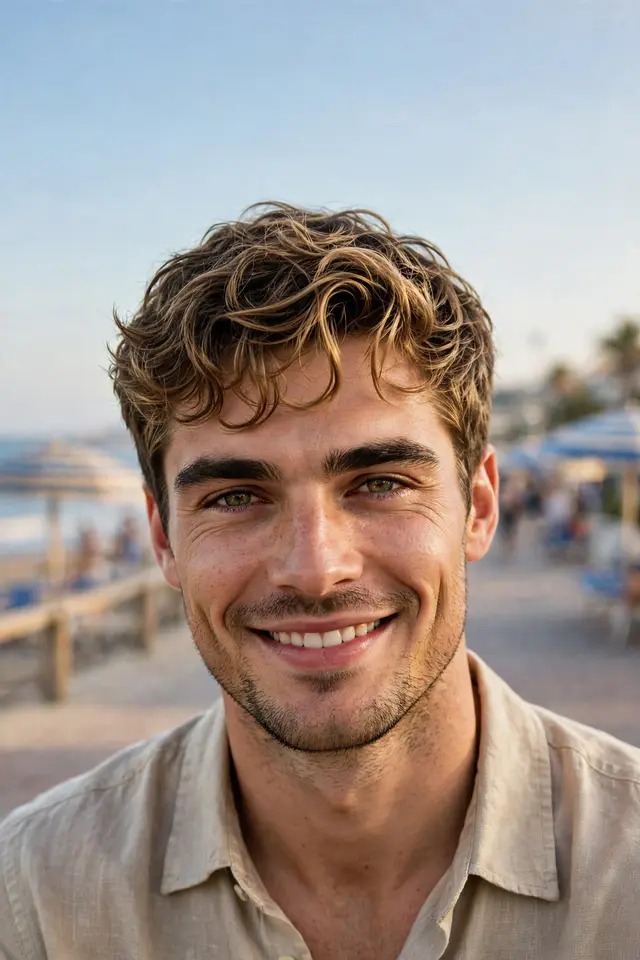
Why do waves love the crop?
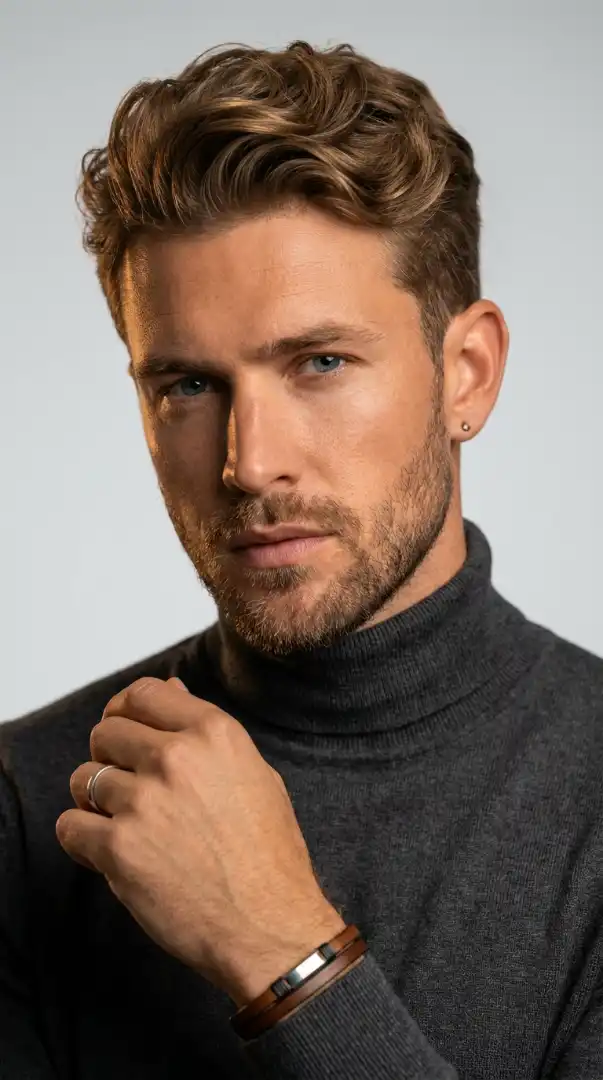
Because the crop finally stops fighting them. The Wavy Textured Crop keeps 2–3 inches on top so the natural S-bend shows as movement through the texture, cuts the fringe to sit where the wave wants to fall, and cleans the sides with a taper or low fade. It is the relaxed, coastal member of the family — the crop on holiday.
Face Shape: Flattering on almost everyone; the soft wave suits long faces that severe short cuts exaggerate.
Grooming Kit: Sea salt spray and a light cream. Heavy clay flattens the wave you are trying to show off.
Maintenance: Every 3–4 weeks; wavy hair forgives growth and looks better slightly lived-in.
Barber Script: “Wavy textured crop — leave 2 to 3 inches on top for the wave, textured fringe falling forward, soft taper on the sides.”
The wave does the work — texture, on holiday.
Q: How do I stop a wavy crop going frizzy?
A: Apply a light cream or sea salt spray to damp hair, push it forward, and then leave it completely alone while it dries. Every touch after that breaks the wave pattern and invites frizz.
Q: Wavy crop or curly crop — which do I have?
A: If your hair forms loose S-shapes, it is wavy and needs light products and moderate length. If it springs into ringlets or coils, it is curly and needs moisture, more length, and a dry cut.
12 of 20 — The Curly Textured Crop
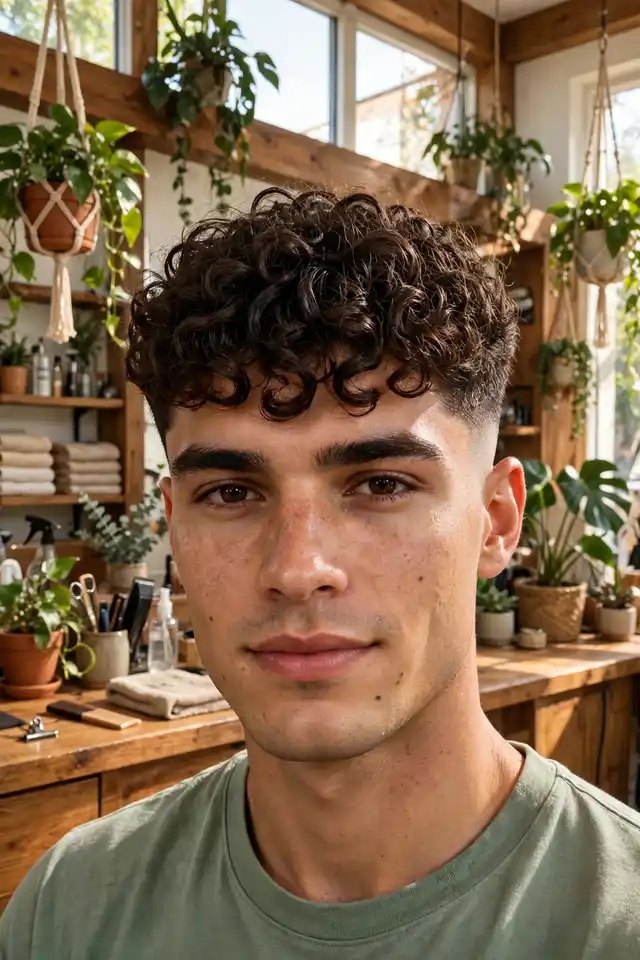
Can curly hair wear a crop?
It might wear it best of all. The Curly Textured Crop keeps the top long enough for curls to form their natural pattern — usually 2–3 inches — while faded or tapered sides keep the silhouette tight. The curls supply texture no scissors can fake, the same reason the looks in our curly hairstyles guide get saved so heavily.
Face Shape: Superb for square and angular faces; curly volume softens the top while clean sides keep it sharp.
Grooming Kit: A curl cream or light mousse and your fingers. Brushes and fine combs are banned from this cut.
Maintenance: Sides every 3 weeks; the top can run longer. Moisturise daily — curly crops drink product.
Barber Script: “Curly textured crop — leave the top long enough for the curls to form, cut it dry, fringe forward, fade the sides clean.”
Curls do the texture — the crop, amplified.
Q: Should a curly crop be cut wet or dry?
A: Dry, always. Curls shrink dramatically as they dry, so a wet-cut crop ends up far shorter than planned. A barber who knows curls shapes the fringe dry and checks the silhouette as they go.
Q: How short can a curly crop go?
A: About 1.5 inches is the floor — shorter than that, the curl pattern cannot form and the top just looks like tight fuzz. Two to three inches is where the curls actually become the texture.
13 of 20 — The Crop with a Hard Part
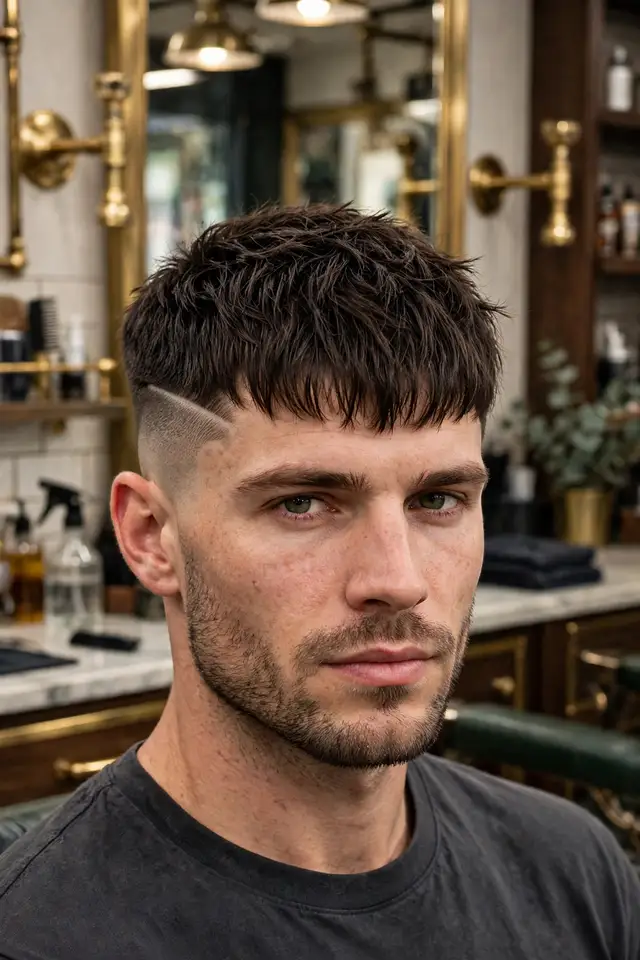
What does a hard part add to a crop?
A signature. The Crop with a Hard Part shaves a clean, defined line into one side of the crop where the parting sits, turning a simple short cut into something unmistakably deliberate. It is a small detail with outsized impact — the crop’s version of a signet ring — and barbers report it is the add-on clients ask for most after the fade itself.
Face Shape: Works on most faces; the shaved line draws the eye diagonally, which flatters round faces especially.
Grooming Kit: Matte clay for the top; the part itself needs nothing but a barber’s razor every few weeks.
Maintenance: The part blurs within 2–3 weeks and needs re-carving at each cut.
Barber Script: “Textured crop with a hard part — choppy top, forward fringe, mid fade, and shave a clean hard part on my natural side.”
One carved line — the crop, signed.
Q: Which side should the hard part go on?
A: On your natural part — where the hair already wants to split at the crown. A hard part carved against your growth direction grows out fighting itself and never sits as cleanly.
Q: Does a hard part suit a conservative workplace?
A: It is the boldest detail in this guide, so judge your office honestly. A short, subtle part reads as sharp grooming in most workplaces; a long, wide one reads as a statement.
14 of 20 — The Crop with a Beard
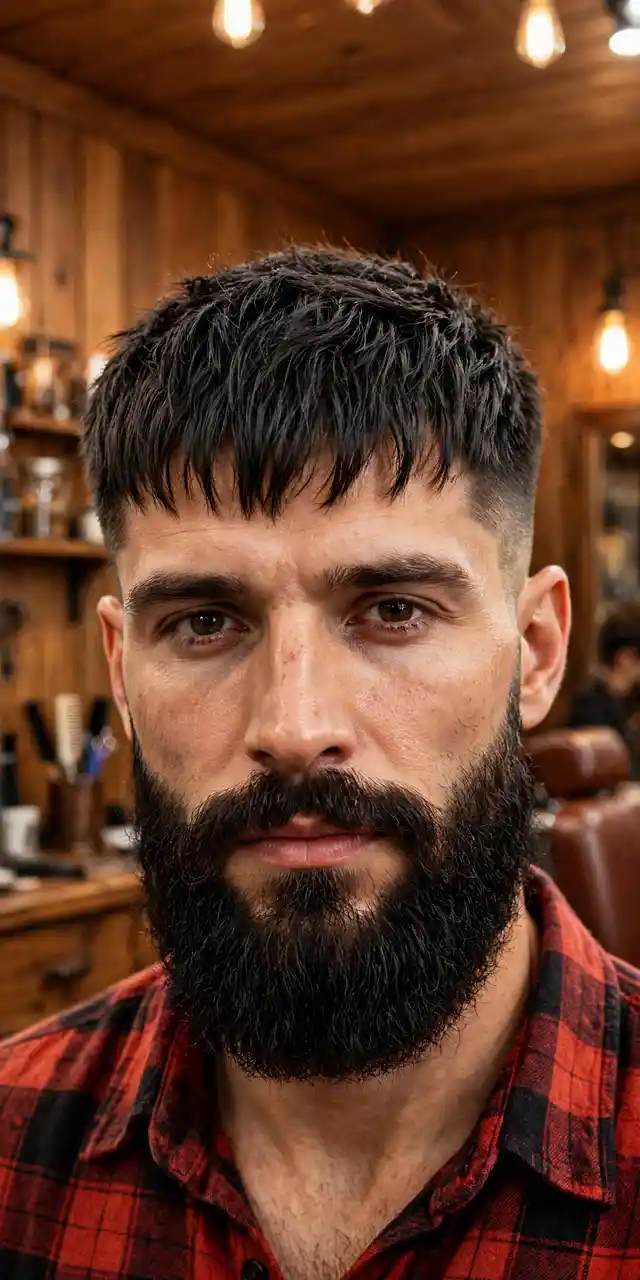
Why do a crop and a beard belong together?
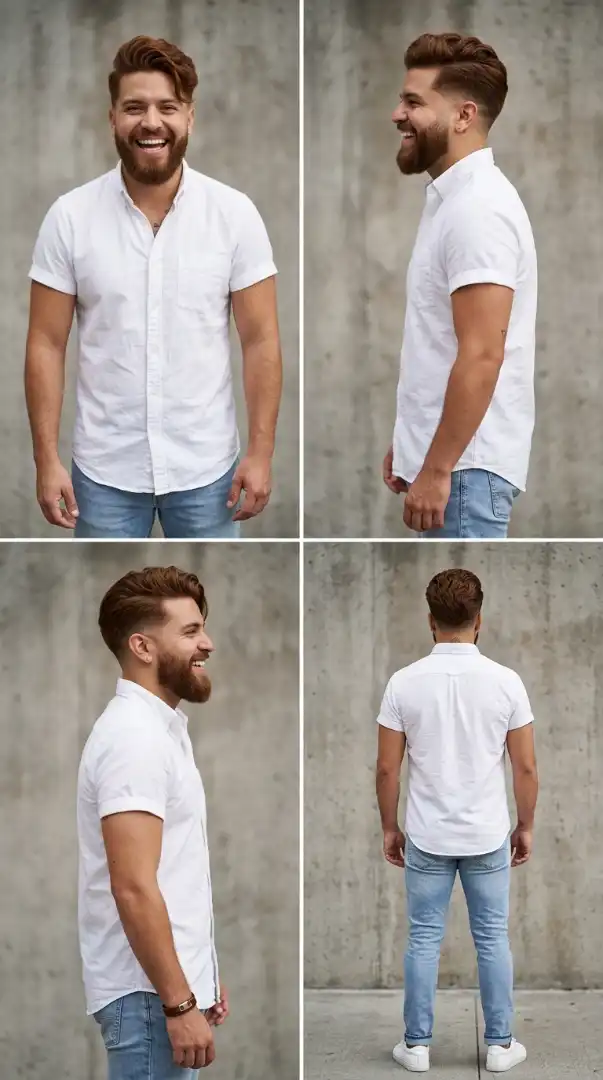
Contrast and balance. The crop keeps the top short and tight, so a shaped beard below it gets to carry the weight of the look — jaw, texture, presence. Together they make a short haircut read as a complete, deliberate silhouette instead of a default, and the fade-into-beard blend at the sideburn is where the craft shows.
Face Shape: The making of round faces — a tight top plus a shaped jaw narrows and lengthens the whole face.
Grooming Kit: Matte clay for the crop; beard oil, a boar brush and a trimmer for the beard’s lines.
Maintenance: Crop and beard shaped in the same visit every 2–3 weeks; oil the beard daily.
Barber Script: “Textured crop with a beard — short choppy top, mid fade blending into the beard at the sideburns, shape the beard full and clean.”
Short on top, strong below — the complete silhouette.
Q: What beard length suits a crop best?
A: Anything from heavy stubble to a full beard, as long as the lines are shaped. Because the crop is so neat, an untidy beard looks twice as untidy by contrast — keep the cheeks and neck clean.
Q: Should the fade blend into the beard?
A: Yes — that graduated sideburn is what makes the pairing look designed. Ask your barber to fade the sideburn area into the beard’s length rather than leaving a hard step between them.
15 of 20 — The Long Textured Crop
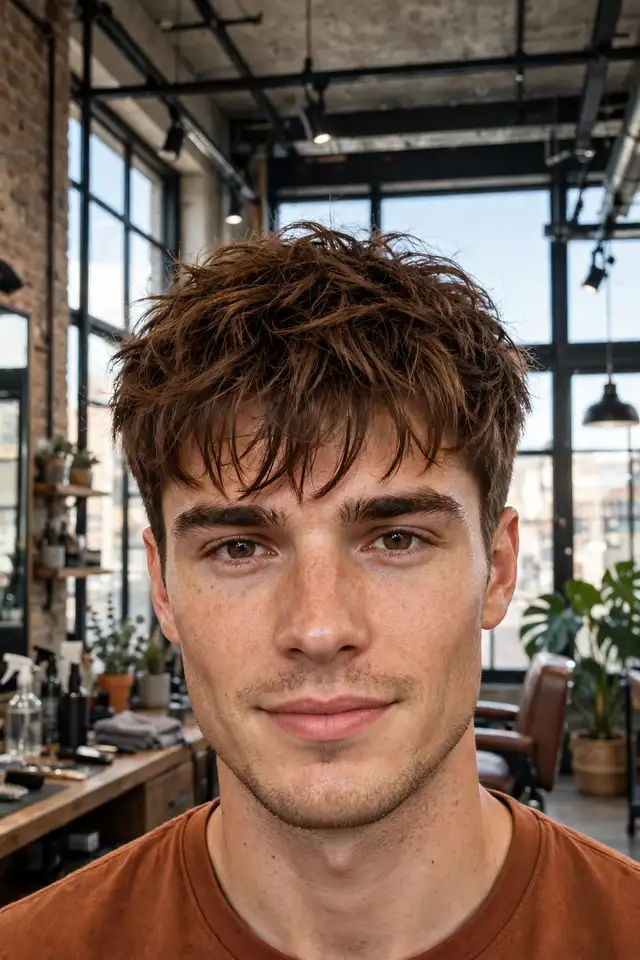
Who should grow the crop out?
The man who wants options. The Long Textured Crop keeps 3–4 inches on top — enough to push the fringe forward on crop days, sweep it sideways on smart days, or rough it back on weekends — while the sides stay faded or tapered. It is the bridge between the crop family and medium-length styles, and the easiest grow-out target if you are heading longer.
Face Shape: Best on oval and square faces; the extra top length can overwhelm very small or delicate features.
Grooming Kit: Sea salt spray, matte clay, and a blow dryer — at this length, a 2-minute dry makes the difference.
Maintenance: Every 4 weeks; the longer top forgives growth, and the sides set the appointment.
Barber Script: “Long textured crop — 3 to 4 inches on top, heavy texture, fringe that can fall forward or sweep aside, tapered sides.”
The crop with options — one cut, three hairstyles.
Q: How long does it take to grow a crop out to this length?
A: From a standard short crop, about 2–3 months of top growth with tidy-up trims on the sides only. Keeping the sides fresh while the top grows is what stops the in-between stage looking accidental.
Q: Long crop or short crop — which is easier?
A: The short crop, day to day — it needs almost no styling. The long crop wins on versatility and grow-out forgiveness. Choose by whether you value two saved minutes or three hairstyles.
16 of 20 — The Crop for Thick Hair
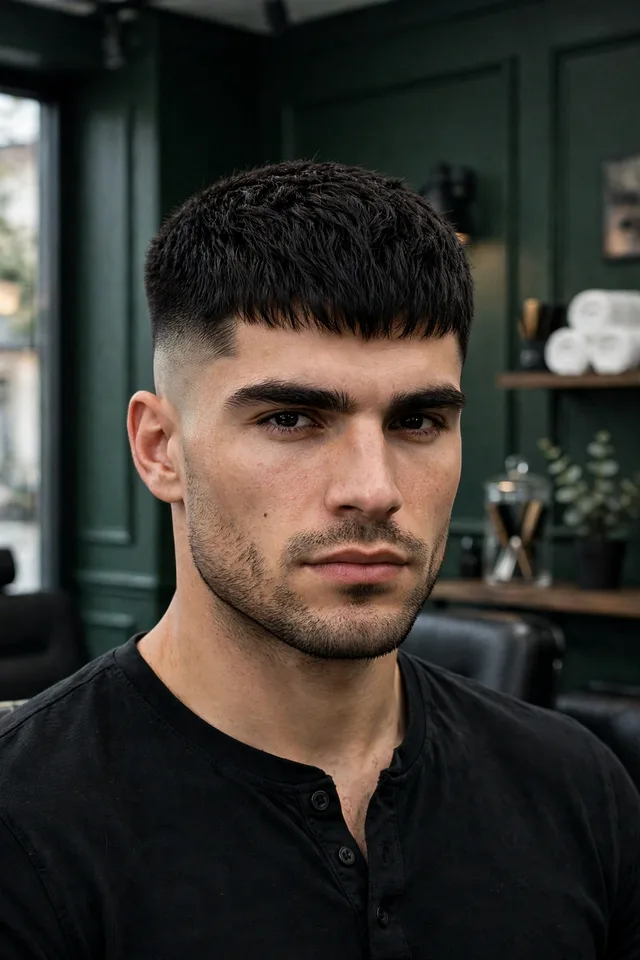
How do you stop a thick crop looking like a helmet?
Remove weight, not just length. The Crop for Thick Hair uses point-cutting, texturising and sometimes undercutting beneath the top layer so the hair sits down instead of puffing out. Paired with a mid or high fade to clear the sides, it turns the thick-haired man’s biggest problem — bulk — into the crop’s best texture.
Face Shape: Excellent on round and wide faces; removing the side bulk slims the whole head.
Grooming Kit: A strong matte clay or fibre with real grip; light products simply lose to thick hair.
Maintenance: Every 3 weeks; thick hair regains its bulk quickly, and the weight removal needs refreshing.
Barber Script: “Crop for thick hair — textured top with the weight taken out, point-cut and thinned underneath, mid to high fade, no bulk on the sides.”
Bulk, removed — thick hair’s best-behaved cut.
Q: Why does my thick crop puff out at the sides?
A: Because the sides were cut at one length and your hair’s density pushes them outward. The fixes are a higher fade, scissor work that removes weight, or both — mention ‘de-bulk the sides’ to your barber.
Q: What product actually holds thick cropped hair?
A: A high-hold matte clay or fibre, applied to completely dry hair in two small amounts rather than one big one. On damp hair, even strong products surrender to thick hair’s weight within the hour.
17 of 20 — The Crop for Fine Hair
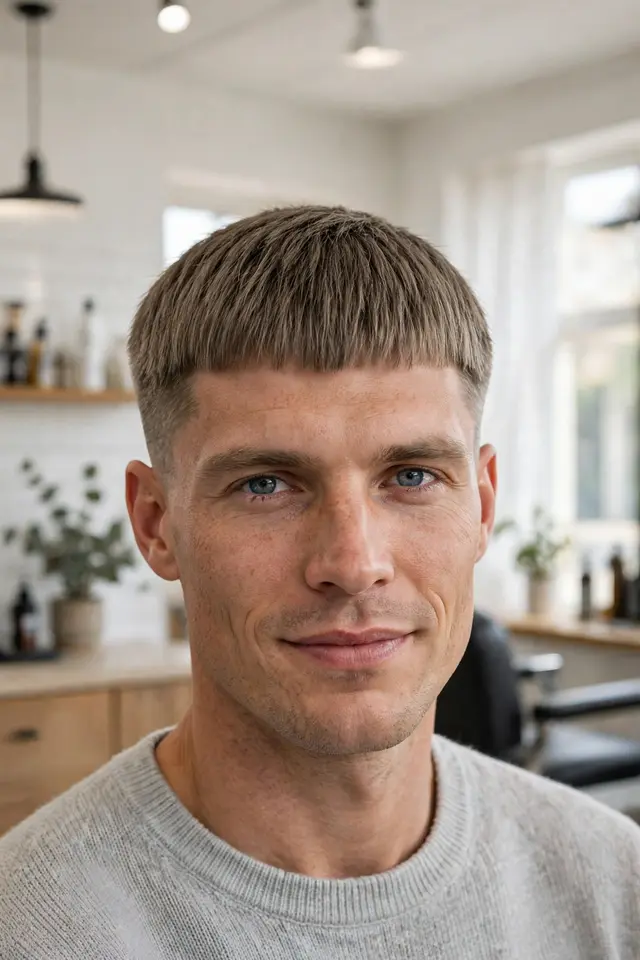
Can fine hair carry a crop?
Yes — the crop is fine hair’s best friend. The Crop for Fine Hair keeps the top short so strands never get long enough to look stringy, cuts the ends blunt-ish so each one looks thicker, and uses texture powder instead of creams to add grit and the illusion of density. Short, forward and matte is the whole strategy.
Face Shape: Suits most faces; the forward fringe and short sides keep the focus on the face, not the hair.
Grooming Kit: Texture powder is the hero. Matte clay in tiny amounts; never oils, gels or shine products.
Maintenance: Every 3 weeks; fine hair shows a fuzzy grow-out sooner than thick hair does.
Barber Script: “Crop for fine hair — short textured top, ends kept blunt for thickness, forward fringe, low to mid fade, nothing that weighs it down.”
Short, forward, matte — fine hair’s winning formula.
Q: What is the biggest mistake with fine hair crops?
A: Product overload. Heavy or shiny products separate fine strands and expose the scalp, making hair look thinner than it is. One light product, applied sparingly to dry hair, is the ceiling.
Q: Does texture powder really make fine hair look thicker?
A: Genuinely, yes. It coats each strand with grit, creates friction between them and lifts the roots slightly, so the top looks denser and holds its texture all day. It is the one product fine-haired men consistently rate.
18 of 20 — The Disconnected Crop
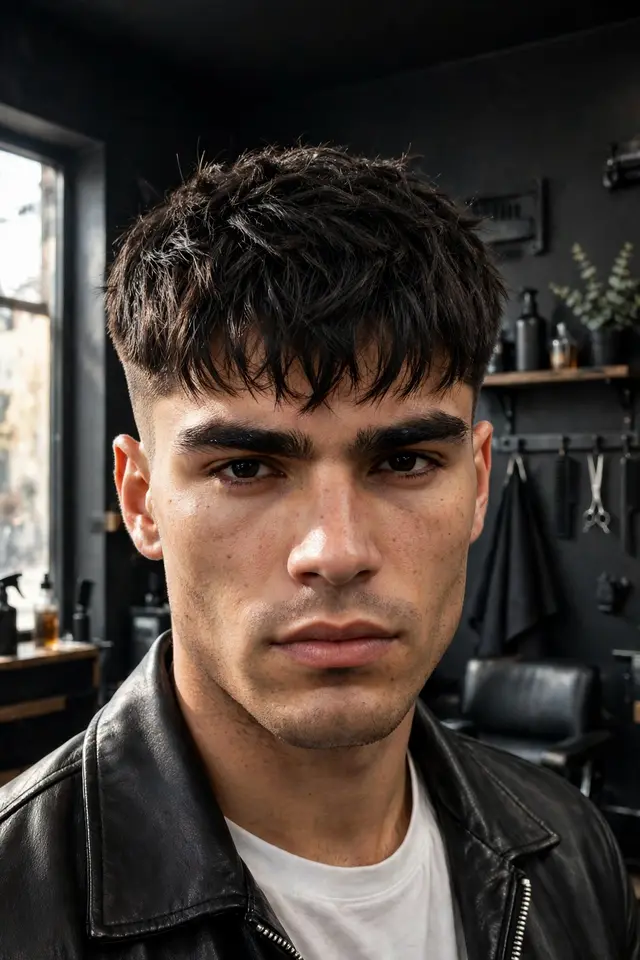
What is a disconnected crop?
A crop with the blend removed. The Disconnected Crop clips the sides in one short, uniform length and lets the longer textured top sit above a hard, visible line — no gradient, no fade, just contrast. It is the edgiest crop in the guide, borrowed from the undercut playbook, and it turns a simple crop into a fashion statement.
Face Shape: Strong on square and oval faces; the hard line sharpens everything beneath it.
Grooming Kit: Matte clay and a comb to keep the top lying over the disconnect cleanly.
Maintenance: Sides clipped every 2 weeks — the hard line blurs fast and blurring is fatal to this look.
Barber Script: “Disconnected crop — textured top left longer, sides clipped short in one length, hard disconnect with no blend, fringe forward.”
The hard line is the point — crop, disconnected.
Q: Disconnected crop or faded crop — which grows out better?
A: The faded crop, easily. A fade softens as it grows, while a disconnect’s hard line turns into an awkward shelf within two weeks. Choose the disconnect only if fortnightly barber visits suit your life.
Q: Is the disconnected crop still in style?
A: In its modern, softer form — shorter tops, matte finish, less extreme length difference — yes. The severe 2010s version reads as costume now; the moderated version reads as fashion.
19 of 20 — The Crop for a Round Face
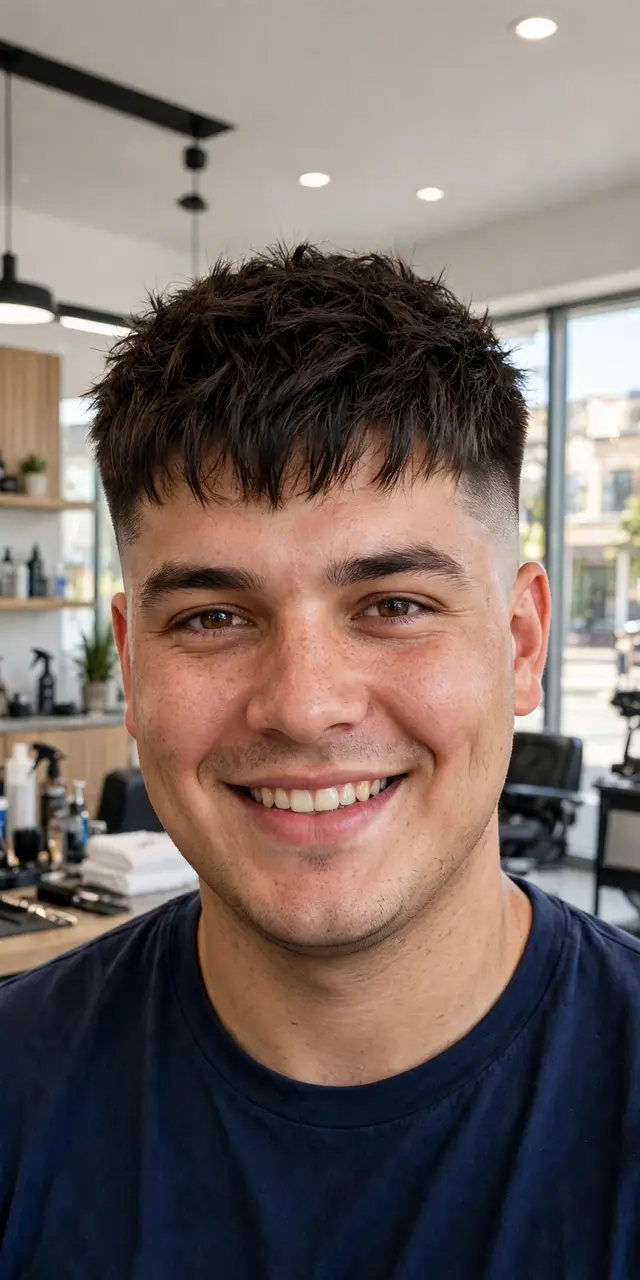
What is the best crop for a round face?
The one that adds angles and removes width. The Round Face Crop keeps the top textured with a fringe that sits slightly angular rather than straight, then uses a mid or high fade to strip the sides so nothing widens the temples. Every decision fights roundness: texture breaks curves, fades delete bulk, and the short fringe keeps the proportions honest.
Face Shape: Designed for round and fuller faces; also excellent on square faces that want softening.
Grooming Kit: Matte clay with real hold, and a dryer if your texture needs directing forward.
Maintenance: Every 2–3 weeks; as the sides grow, width creeps back at the temples and the slimming effect fades with it.
Barber Script: “Crop for a round face — textured top, slightly angular fringe, mid to high fade, no width left at the temples.”
Angles in, width out — the round face’s sharpest crop.
Q: Should a round face avoid a straight fringe?
A: A perfectly straight, blunt fringe can emphasise roundness by echoing the face’s curve. A textured, slightly angled fringe breaks the line and works far better. Texture is the round face’s best tool.
Q: High fade or mid fade for a round face?
A: The high fade slims more aggressively and suits very round faces; the mid fade is the safer all-rounder. If your barber visits are fortnightly, go high. If monthly, the mid fade’s grow-out will treat you better.
20 of 20 — The Winter Crop King

What is the best crop for winter?
This one — and winter is where the crop beats every rival. The Winter Crop King keeps a moderate textured top with a soft taper instead of a skin fade, so no bare skin meets the wind, and the forward fringe sits low enough to survive a beanie: take the hat off, push the fringe forward with one palm, and the haircut is back. No height to crush, no style to rebuild.
Face Shape: Suits every face — moderate texture, soft sides and a balanced silhouette are the most forgiving combination here.
Grooming Kit: Matte clay with flexible hold and a richer conditioner for winter dryness. Rigid products flake under hats.
Maintenance: Every 3 weeks; the taper forgives a skipped week, and the fringe forgives the hat.
Barber Script: “Winter crop — textured top, forward fringe, soft taper at the edges, nothing faded to skin. It has to survive a beanie.”
The crop winter would choose — flat-proof, hat-proof, done.
Q: How do I fix beanie hair on a crop?
A: Easier than on any other cut: warm your palms, push the top forward and pinch the fringe back into texture. A flexible-hold clay reactivates cleanly. Ten seconds, no mirror, no water needed.
Q: How do I stop a crop drying out in winter?
A: Condition twice a week, ease off daily shampooing, and switch to a creamier matte product in the cold months. Indoor heating dries hair faster than the weather outside does.
The Bottom Line
Textured crop hairstyles for men all run on one formula: short texture on top, a fringe that falls forward, and a decision on the sides. Choose the top for your hair — choppy for straight, longer for curly, weight-removed for thick, blunt-ended for fine — then choose the sides for your life: a low taper if you are monthly and conservative, a mid fade for the modern all-rounder, a skin fade if you want the contrast loud.
The non-negotiables are simple: keep it matte, keep it forward, and keep the fringe honest with regular trims. The crop asks for the least styling of any cut in this guide and gives back the most reliability — in the office, at the gym, and under a winter hat. Show your barber the photo, say the words from the script, and enjoy the two-minute mornings. For the natural next reads, see the fade haircuts guide for every side option in detail, and the quiff hairstyles guide for the day you want height instead.

One Comment