20 Quiff Hairstyles for Men: Textured, Modern & Classic Quiffs
Some haircuts whisper. The quiff talks. Quiff hairstyles for men are everywhere again — Pinterest’s trend lists, barbershop chairs and winter lookbooks — because no other cut gives you this much presence for this little length: volume swept up at the front, texture through the top, and sides that can run from a gentle taper to a full skin fade. It is the pompadour’s cooler younger brother and the fade’s favourite dance partner.
But a quiff is not one haircut either. Guard the front length, change the sides, add texture or a beard, and the same basic shape becomes a boardroom classic, a messy weekend crop or a full rockabilly statement. Below are the 20 versions that matter this season — from the soft modern textured quiff all the way to the winter-proof quiff that survives a beanie.
Each style comes with the face shapes it flatters, the exact kit you need, the upkeep (quiffs ask a little more than a buzz cut, and give a lot more back), and the precise words to say to your barber. Pick your height first, then pick your sides — that is the whole quiff formula.
1 of 20 — The Textured Quiff
What is a textured quiff — and why is it the most pinned quiff right now?
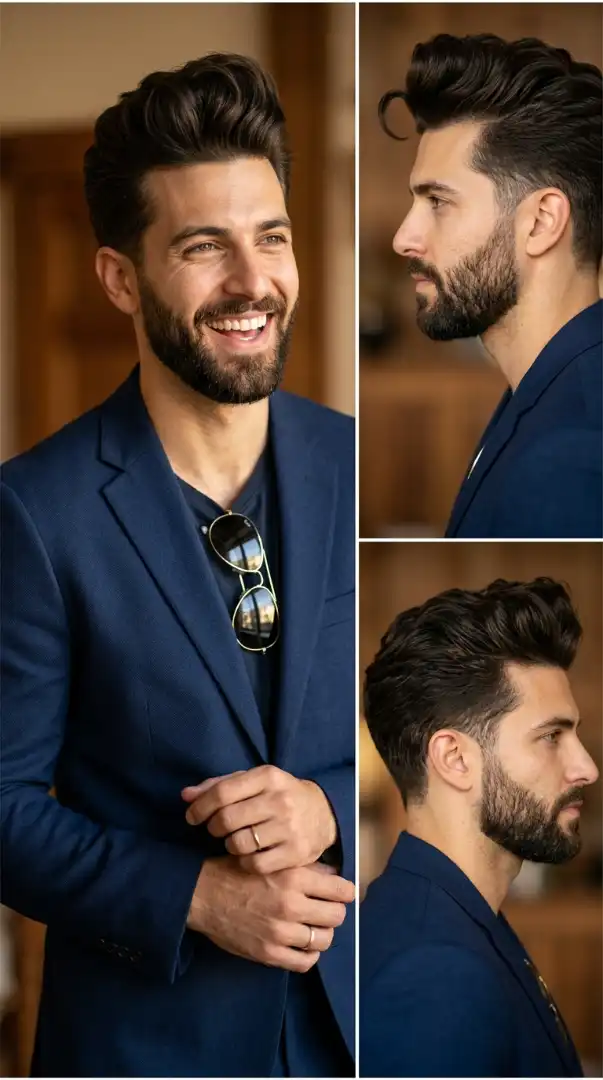
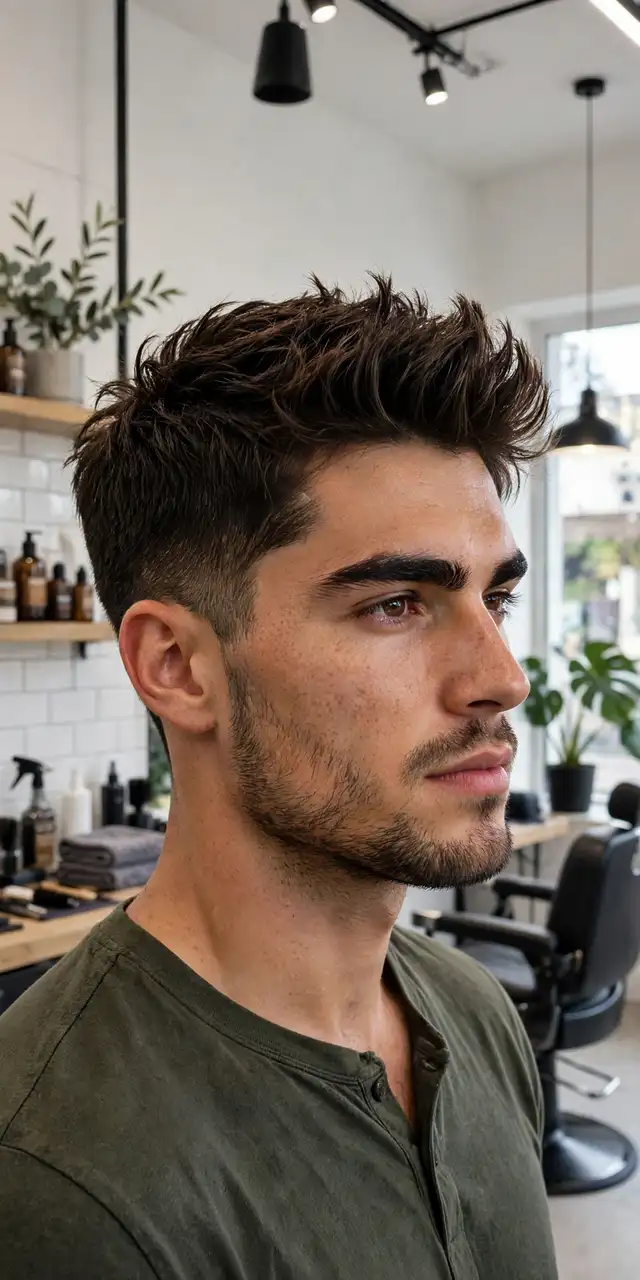
Because it looks styled without looking styled. The Textured Quiff keeps 3–4 inches on top, point-cut for choppy, separated pieces, then blow-dried up and slightly back so the front stands tall with a matte, touchable finish. It is the quiff Pinterest saves most: all the height of the classic, none of the helmet shine.
Face Shape: Brilliant for round and square faces — the height lengthens the face while the texture breaks up width.
Grooming Kit: A blow dryer (non-negotiable), a vent brush, matte clay or texture powder, and a pre-styler like sea salt spray.
Maintenance: Haircut every 3–4 weeks to keep the front length ahead of the back; styling takes 3 minutes once the blow-dry habit sticks.
Barber Script: “Textured quiff — leave 3 to 4 inches on top, point-cut for texture, shorter at the back of the top, tapered sides. I style it up and back, matte.”
Height with a heartbeat — the quiff, loosened up.
Q: How long does a textured quiff take to style each morning?
A: About three minutes with practice. Blow-dry the front upward on damp hair with a pre-styler, then work a pea of matte clay through the ends. The blow-dry does 80% of the work — product just locks it in.
Q: Does a textured quiff work on fine hair?
A: It is one of the best quiffs for fine hair. The point-cut texture and upward drying create the illusion of density, and texture powder adds grit and thickness without weighing fine strands down.
2 of 20 — The Classic Quiff
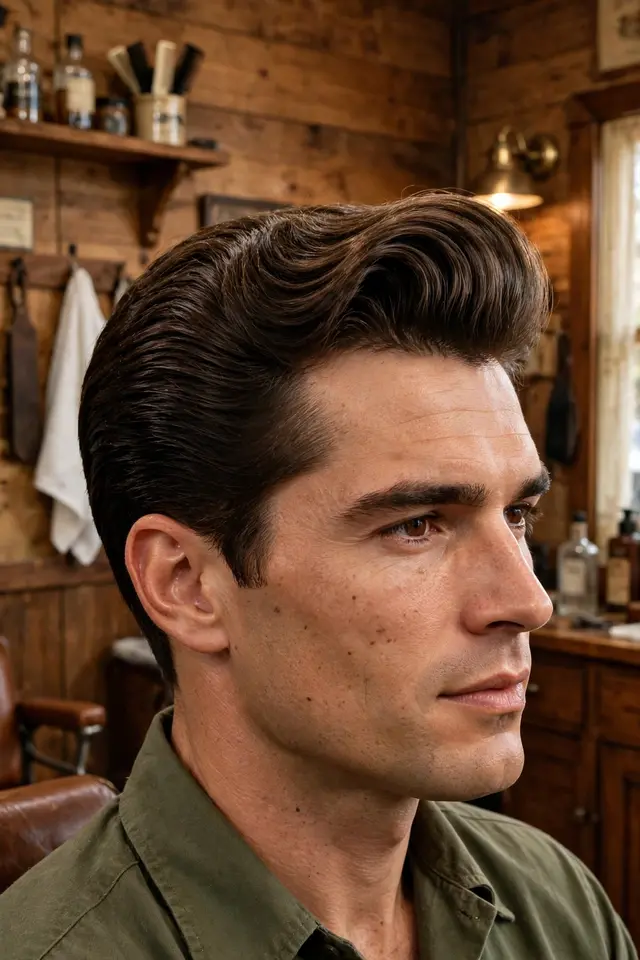
What is the classic quiff — the original 1950s shape?
The blueprint. The Classic Quiff wears the top long and brushed up and back in one smooth wave, with scissored, tapered sides — no fade, no disconnect, just the timeless silhouette that has survived every decade since the fifties. If the textured quiff is casual Friday, the classic is the tailored suit.
Face Shape: Best on oval and oblong faces; the smooth volume suits balanced features and a longer forehead.
Grooming Kit: A blow dryer, a round or vent brush, and a medium-shine pomade for that polished sweep.
Maintenance: Every 3–4 weeks; the classic shape forgives a few days of growth better than any faded version.
Barber Script: “Classic quiff — scissor cut all over, top long enough to sweep up and back, tapered sides, nothing clipped to skin.”
The original silhouette — seventy years young and still standing tall.
Q: Classic quiff vs pompadour — what is the difference?
A: A pompadour sweeps the whole top back in one rolled wave with the volume spread evenly. A quiff concentrates the height at the front hairline and lets the back sit flatter, often with more texture and a less formal finish.
Q: How much top length does a classic quiff need?
A: At least 3 inches at the front, ideally 4, so the hair can stand and fold back without springing flat. The back of the top can graduate shorter, which is what gives the quiff its wedge shape.
3 of 20 — The Modern Quiff

What makes a quiff “modern”?
Softer everything. The Modern Quiff keeps the classic height but drops the slick shine: natural matte finish, looser texture through the top, and sides that fade or taper instead of sitting in a neat scissor line. It is the quiff rebuilt for 2026 tastes — relaxed, touchable, and wearable with a t-shirt as easily as a blazer.
Face Shape: Suits almost every face; adjust the height — taller for round faces, softer for long ones.
Grooming Kit: Blow dryer, matte paste or clay, and a light pre-styler. Skip anything glossy.
Maintenance: Cut every 3 weeks; the modern finish survives a lazy styling day better than the classic because messy reads as intentional.
Barber Script: “Modern quiff — textured top around 3 inches, natural matte finish, mid taper or soft fade on the sides, keep it relaxed.”
The quiff, updated — same height, softer attitude.
Q: Is the modern quiff appropriate for the office?
A: Completely. Styled neatly with a taper rather than a skin fade, it reads as a polished, professional haircut. Dress it down at the weekend by pushing the texture messier with dry clay.
Q: What product gives the modern quiff its matte finish?
A: A matte clay or paste, applied to fully dry hair after blow-drying. Applying to damp hair kills the matte effect and most of the height — dry first, then style.
4 of 20 — The Quiff with a Mid Fade
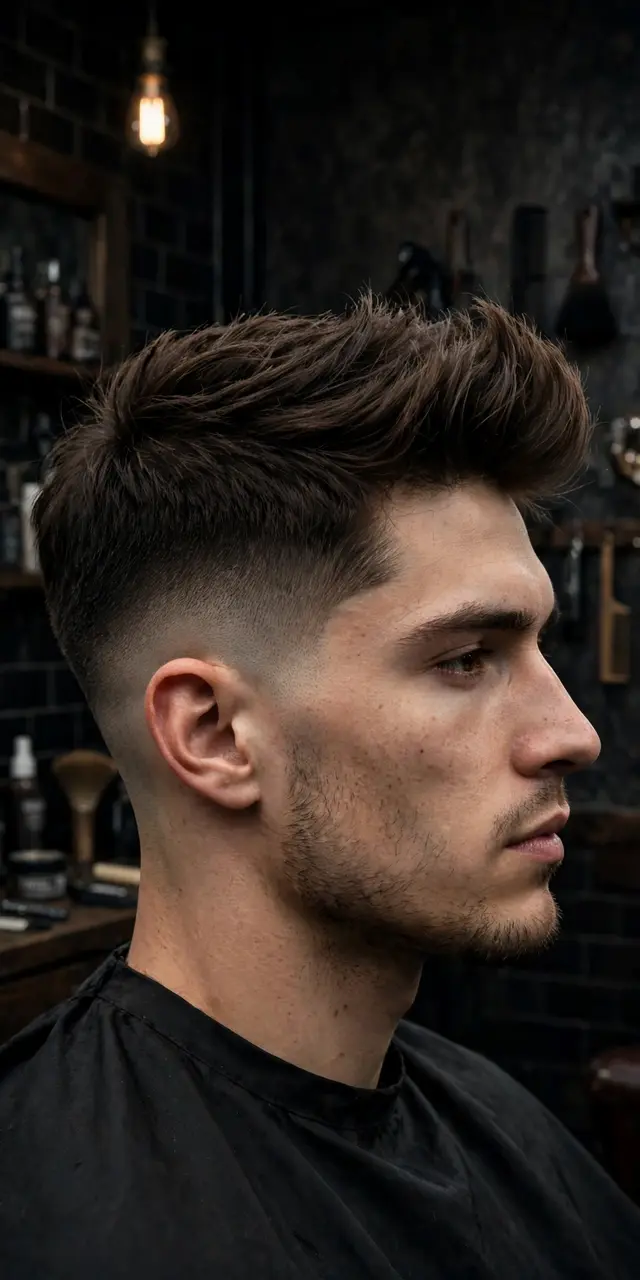
Why is the mid fade the quiff’s most popular partner?
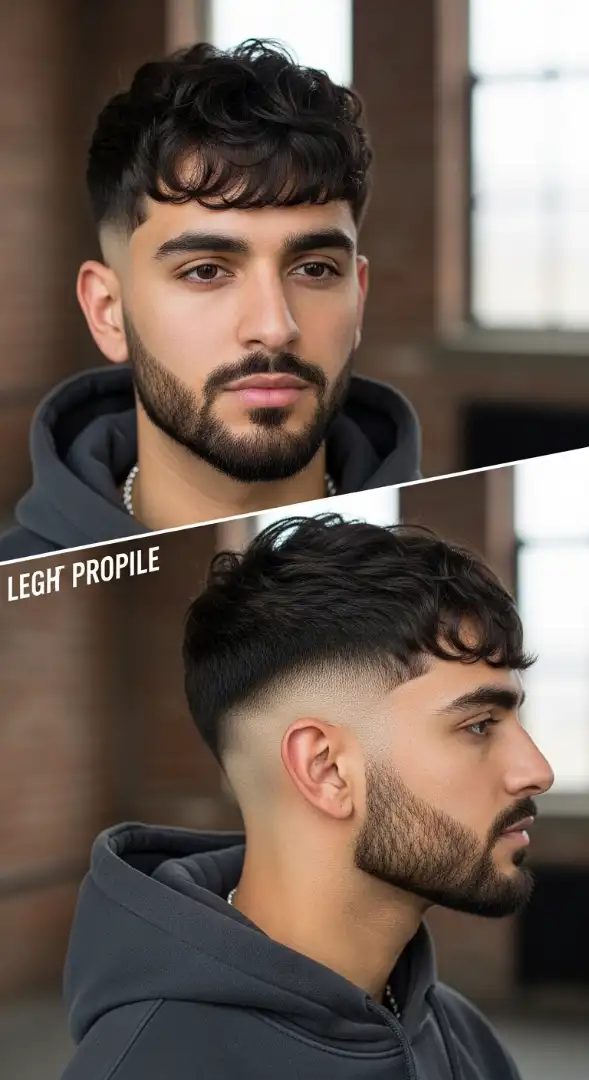
Balance. The Quiff with a Mid Fade starts the fade at temple height, so the tall textured top gets clean, modern sides without the extreme contrast of a high fade. It is the version barbers cut most: sharp enough for photos, safe enough for any job, and the perfect first faded quiff.
Face Shape: Excellent for round faces — the faded sides slim the silhouette while the quiff adds the height.
Grooming Kit: Blow dryer, vent brush, matte clay. The fade itself needs nothing but a barber.
Maintenance: Every 2–3 weeks; mid fades blur noticeably by week three, and the contrast is the point.
Barber Script: “Quiff with a mid fade — textured top left long at the front, mid fade on the sides starting at the temples, blend it smooth into the top.”
The crowd favourite — tall on top, clean at the temples.
Q: Mid fade or low fade with a quiff?
A: The mid fade looks sharper and more modern, and slims round faces better. The low fade is softer, more conservative, and grows out more gracefully. First faded quiff? Start mid — you can always soften it next time.
Q: How do I stop my quiff from falling flat by midday?
A: The fix is in the drying, not the product. Blow-dry the front straight up against its natural fall until fully dry, let it cool for 30 seconds, then apply clay. Hair styled warm and finished cold holds its shape for hours.
5 of 20 — The Low Fade Quiff
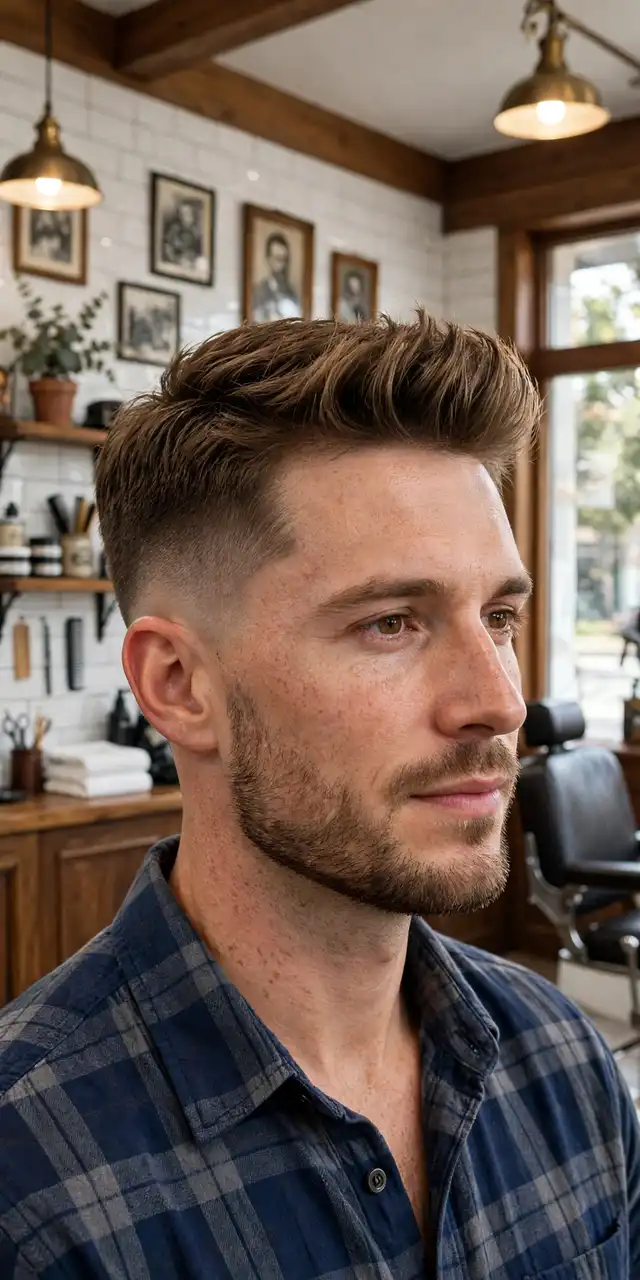
Who should choose a low fade quiff?
The man who wants the quiff’s height with a gentleman’s finish. The Low Fade Quiff keeps the fade hugging the hairline — just above the ears and neckline — so the sides stay fuller and the whole haircut reads classic rather than edgy. It is also the easiest faded quiff to grow out, and a close cousin of the low tapers in our fade guide.
Face Shape: Ideal for long and oval faces — fuller sides add width where long faces need it, and the fade stays subtle.
Grooming Kit: Blow dryer, brush, matte paste. Add a shine-free finish to keep the classic feel.
Maintenance: Every 3 weeks is plenty; low fades grow out softly with no harsh line.
Barber Script: “Low fade quiff — long textured top, low fade just around the ears and neckline, keep the sides full above the fade.”
Height with manners — the gentleman’s faded quiff.
Q: Does a low fade quiff suit a professional workplace?
A: It is the most office-safe faded quiff there is. The fade hides around the edges, the top reads as a classic short-back-and-sides with height, and nothing about it raises an eyebrow in a meeting.
Q: Can a low fade quiff work with wavy hair?
A: Yes — waves love this cut. The fuller sides let the natural wave show, and the quiff front can be dried upward to work with the wave rather than against it. Use a light cream instead of stiff clay.
6 of 20 — The High Fade Quiff
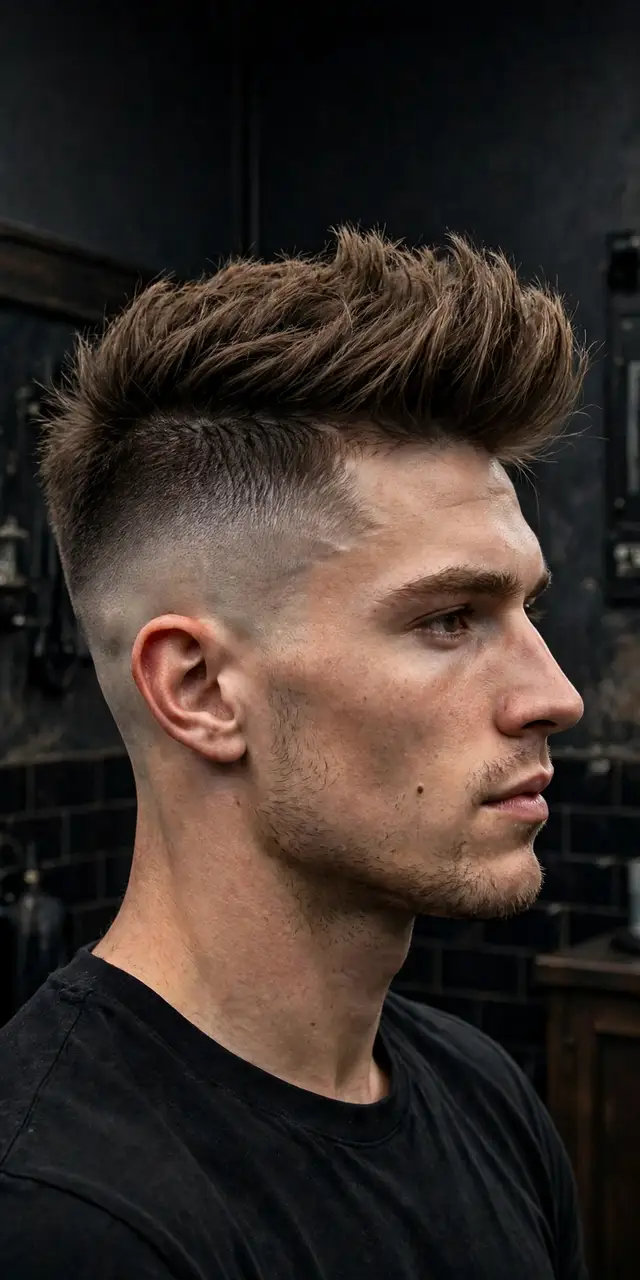
What does a high fade do to a quiff?
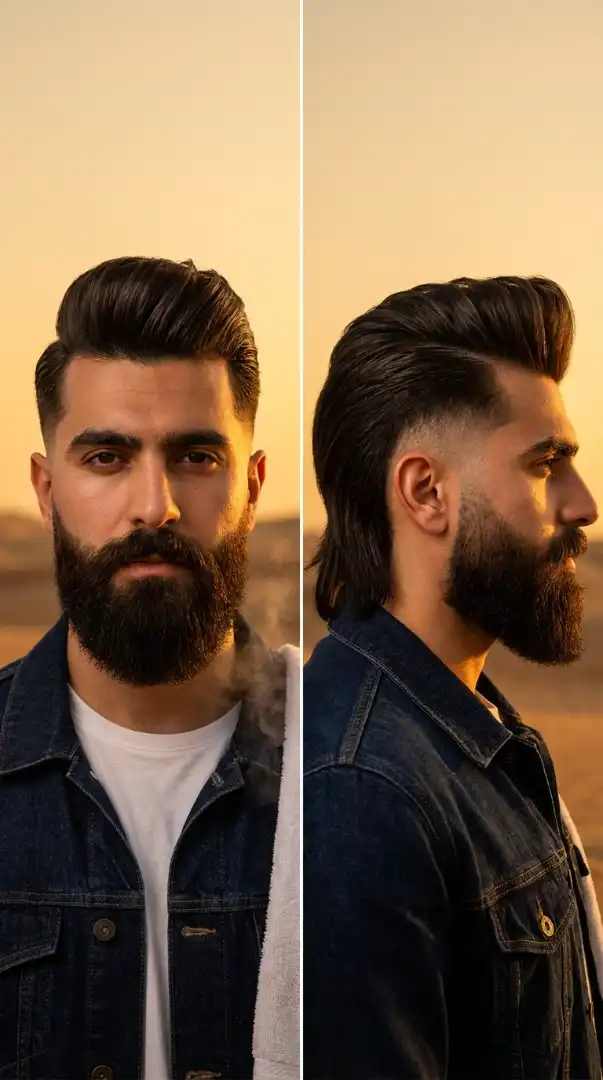
It turns the volume up — visually. The High Fade Quiff strips the sides high and tight so every millimetre of attention goes to the tall top standing above it. Maximum contrast, maximum sharpness; this is the quiff as a statement, worn by men who want the height unmissable.
Face Shape: Best for round and fuller faces; the stripped sides slim and the height stretches the silhouette.
Grooming Kit: Blow dryer, strong matte clay or fibre, and a brush — high-contrast cuts show sloppy styling fast.
Maintenance: Every 2 weeks, strictly. High fades lose their geometry fast, and geometry is the whole look.
Barber Script: “High fade quiff — keep the top long and textured, fade the sides high and tight, blend right up toward the crown.”
All eyes up — the quiff at maximum contrast.
Q: High fade quiff or mid fade quiff?
A: The high fade is bolder, sharper and better for round faces; the mid fade is more versatile and forgiving as it grows. If your workplace is conservative, mid wins. If you want the photo to pop, go high.
Q: Does a high fade quiff need more product?
A: Slightly — the top has to justify the drama below it. A strong-hold matte clay through the front keeps the height standing all day. The sides, of course, need nothing at all.
7 of 20 — The Undercut Quiff
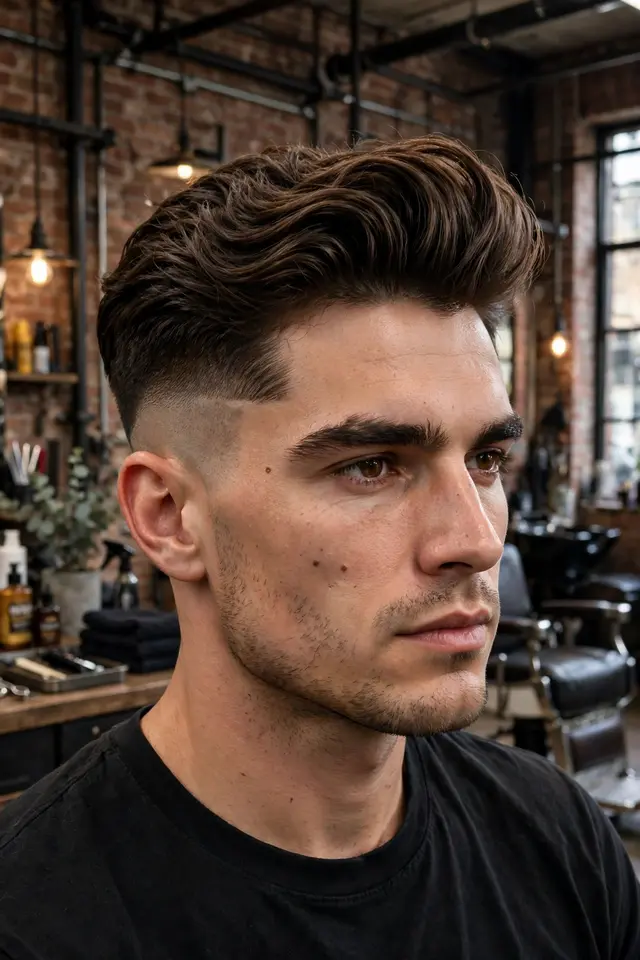
What is an undercut quiff — and why won’t it die?
Because the disconnect is the drama. The Undercut Quiff leaves the top long and sweeps it up while the sides are clipped short in one uniform length with a hard line between them — no blending at all. Born in the 1940s, huge in the 2010s, and still saved on Pinterest every single day.
Face Shape: Strong on square and oval faces; the hard disconnect sharpens everything it frames.
Grooming Kit: Blow dryer, pomade or clay, and a comb to keep the top sitting over the disconnect cleanly.
Maintenance: The sides need clipping every 2 weeks to keep the disconnect crisp; the top can run longer between cuts.
Barber Script: “Undercut quiff — top long, swept up and back, sides clipped short and disconnected, no blend between the top and sides.”
The hard line is the whole point — quiff, disconnected.
Q: Is the undercut quiff still in style?
A: Yes, in its softer modern form: slightly shorter tops, matte products, and a less severe disconnect than the 2010s version. Worn textured rather than slicked, it reads current instead of costume.
Q: Undercut quiff vs faded quiff — which grows out better?
A: The faded quiff, easily. A fade softens as it grows, while an undercut’s hard line blurs into an awkward shelf within two weeks. Choose the undercut only if you are happy visiting the barber fortnightly.
8 of 20 — The Short Quiff
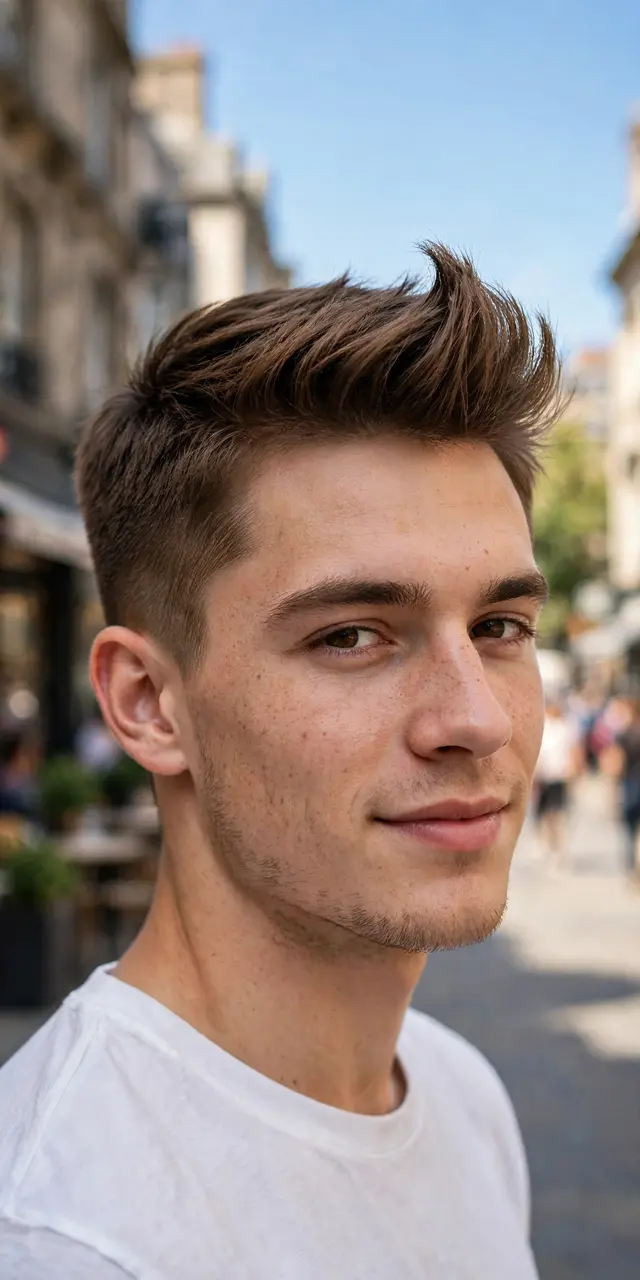
Can a quiff be short?
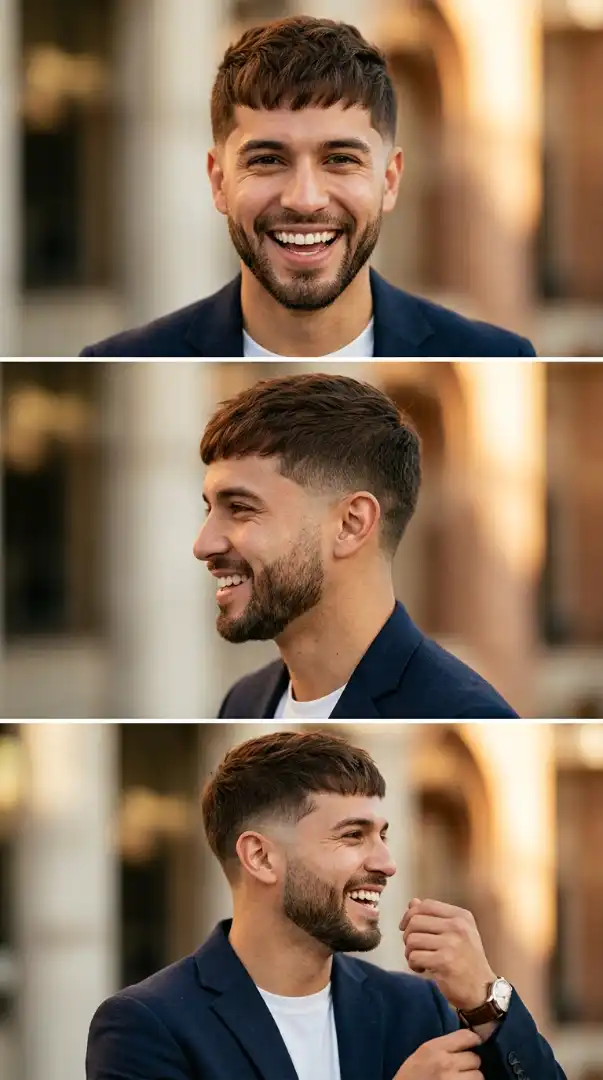
Yes — and it might be the smartest version of all. The Short Quiff keeps just 1.5–2 inches on top with the front flicked up, paired with tapered or faded sides. You get the quiff’s signature height and face-lengthening effect with a fraction of the styling time — the entry-level quiff for men testing the waters.
Face Shape: Works on nearly every face; the modest height flatters long faces that tall quiffs overwhelm.
Grooming Kit: A fingertip of matte paste and your fingers — a blow dryer helps but is optional at this length.
Maintenance: Every 3 weeks; the short top forgives growth, and styling is a 60-second job.
Barber Script: “Short quiff — about 2 inches on top, shorter at the back, front left to flick up, tapered sides kept neat.”
The starter quiff — signature height, sixty-second mornings.
Q: How short can a quiff be and still be a quiff?
A: Around 1.5 inches at the front is the minimum — enough hair to lift and direct upward. Any shorter and it becomes a textured crop or a crew cut, which are fine cuts but different ones.
Q: Is a short quiff good for thinning hair?
A: It is one of the better options. The short length keeps thin areas from looking stringy, and lifting the front draws the eye upward. Matte products only — shiny ones expose the scalp.
9 of 20 — The Long Quiff
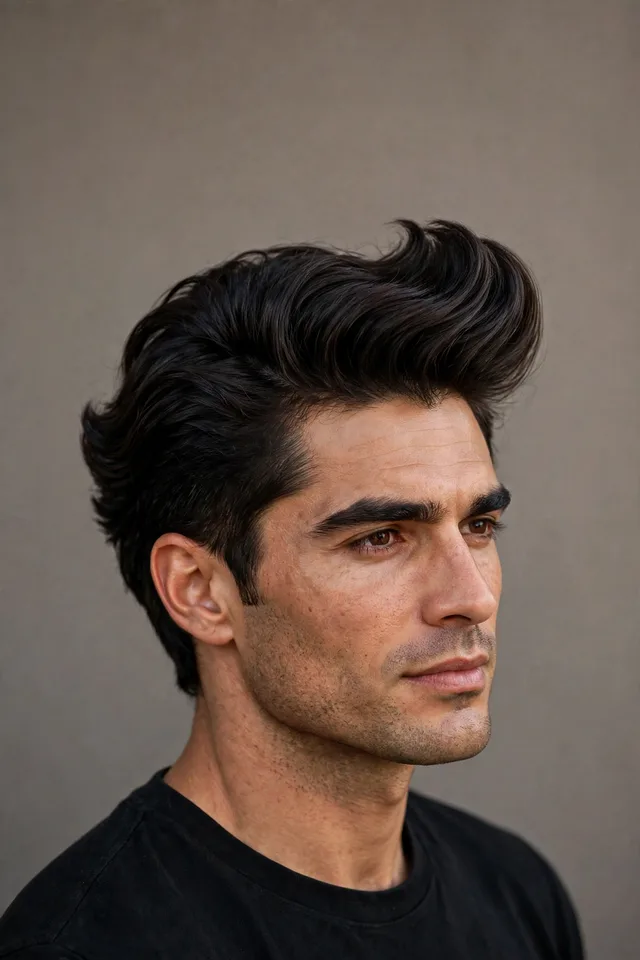
Who can pull off a long quiff?
The patient. The Long Quiff grows the top to 5 inches or more so the front sweeps up and falls back in a dramatic wave — the most theatrical member of the family, related to the flows in our long hairstyles guide. It asks for thick hair and real styling commitment, and pays back in pure presence.
Face Shape: Best on oval and square faces with strong features; the volume can swallow delicate features.
Grooming Kit: A proper blow dryer, a round brush, pre-styler, and a flexible-hold cream or clay — this quiff is built with heat, not hope.
Maintenance: Trims every 4–5 weeks to keep the shape; daily styling runs 5–10 minutes. There is no lazy version.
Barber Script: “Long quiff — leave the top 5 inches or more, front longest, sides tapered or softly faded, I sweep it up and back.”
The showpiece quiff — grown out, swept up, impossible to ignore.
Q: How long does a long quiff take to grow out?
A: From a short back and sides, expect 4–6 months to reach true long-quiff territory. The awkward middle stage is real — bridging with a modern quiff shape at each trim keeps it looking deliberate.
Q: What holds a long quiff up all day?
A: Structure, not glue. Blow-dry the roots upward with a round brush and a volumising pre-styler, let the hair cool in position, then finish with a light flexible clay. Heavy wax just weighs long hair down.
10 of 20 — The Messy Quiff

What is a messy quiff — controlled chaos?
Exactly that. The Messy Quiff takes the quiff’s height and roughs it up: point-cut texture, pieces pushed up and slightly forward, a finish that looks like you ran a hand through it — because you did, carefully. It is the weekend quiff, and the most forgiving version for men who hate precision styling.
Face Shape: Great for angular faces; the mess softens sharp features, and the height still lengthens round ones.
Grooming Kit: Sea salt spray and a matte texture powder or dry clay. A blow dryer on a low, quick pass — precision tools not required.
Maintenance: Cut every 3–4 weeks; daily styling is deliberately imprecise, so bad hair days barely exist.
Barber Script: “Messy quiff — choppy textured top, front left long to push up, tapered sides, I wear it rough and matte.”
Perfectly imperfect — the quiff with its collar loosened.
Q: How do I make a messy quiff look intentional, not unwashed?
A: Keep the sides clean and the mess only on top. Fresh fades or tidy tapers around a tousled top read as a deliberate contrast; mess everywhere just reads as overdue for a haircut.
Q: What product makes a messy quiff?
A: Texture powder or dry clay on completely dry hair. Scrunch it through the top with your fingers, push the front up, and stop — the moment it looks carefully arranged, it stops being messy.
11 of 20 — The Curly Quiff
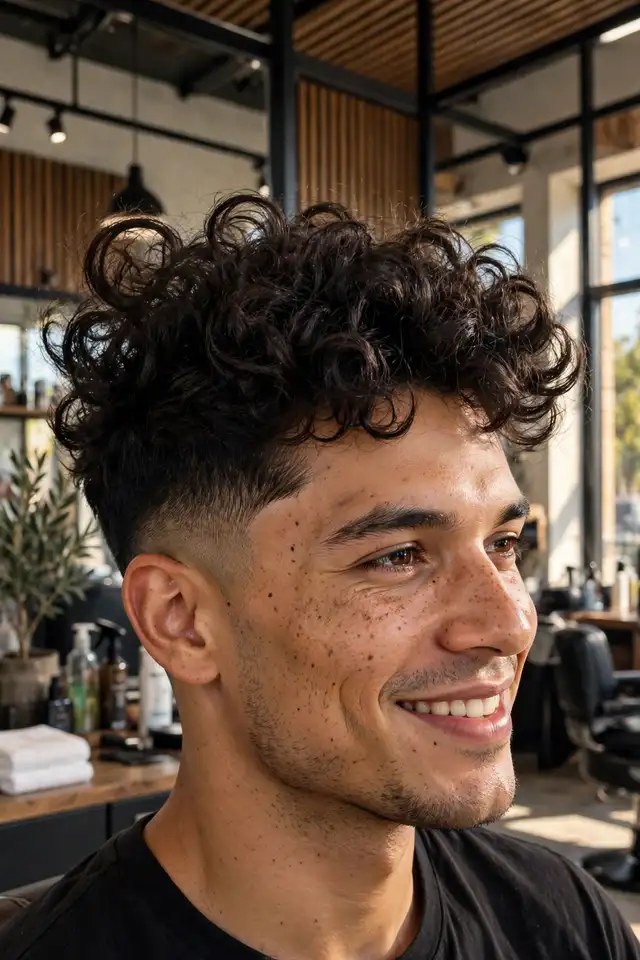
Can curly hair do a quiff?
Beautifully — the curls do half the styling for you. The Curly Quiff keeps the top long enough for the curls to stack into natural volume at the front, while the sides fade or taper to keep the silhouette clean. It is one of the most saved looks in the curly hair world: height, texture and character in one cut.
Face Shape: Superb for square and angular faces; the curly volume softens the top while faded sides keep it sharp.
Grooming Kit: A curl cream or light mousse, a diffuser attachment for your dryer, and your fingers — brushes are the enemy here.
Maintenance: Every 3 weeks for the sides; the top runs longer. Moisturise daily — curly quiffs drink product.
Barber Script: “Curly quiff — leave the top long for the curls to stack up at the front, fade the sides, cut it dry so the length is honest.”
Curls, stacked skyward — nature’s own volume.
Q: Should a curly quiff be cut wet or dry?
A: Dry, always. Curls shrink several inches as they dry, so a wet-cut quiff can end up far shorter than planned. A barber who knows curls will shape the front dry and check the height as they go.
Q: How do I stop a curly quiff from frizzing?
A: Style it once, then leave it alone. Apply curl cream to soaking-wet hair, diffuse until dry, and never touch it afterwards — every touch breaks the curl pattern and invites frizz.
12 of 20 — The Wavy Quiff

Why is the wavy quiff the easiest quiff to wear?
Because the wave is the style. The Wavy Quiff sweeps the top up and back so the natural S-bend of wavy hair forms a soft, rolling front — less height than a straight quiff, more movement than any of them. It is the relaxed, coastal member of the family, and the one that looks best slightly unstyled.
Face Shape: Flattering on almost everyone; the soft wave suits long faces that harsh vertical quiffs exaggerate.
Grooming Kit: Sea salt spray, a light cream, and a dryer used briefly — waves need encouragement, not force.
Maintenance: Every 3–4 weeks; wavy hair forgives growth, and the style improves a little lived-in.
Barber Script: “Wavy quiff — top long enough for the wave to form, swept up and back, soft taper on the sides, keep the movement natural.”
The wave does the work — the quiff, on holiday.
Q: How do I enhance the wave in a wavy quiff?
A: Scrunch sea salt spray into damp hair and let it air-dry or diffuse briefly, pushing the front up as it dries. Heat tools and heavy products flatten the wave you are trying to show off.
Q: Wavy quiff or curly quiff — which do I have?
A: If your hair forms loose S-shapes, it is wavy; if it springs into ringlets or tight coils, it is curly. Wavy hair needs light products and less length; curly hair needs moisture and more careful cutting.
13 of 20 — The Side Part Quiff
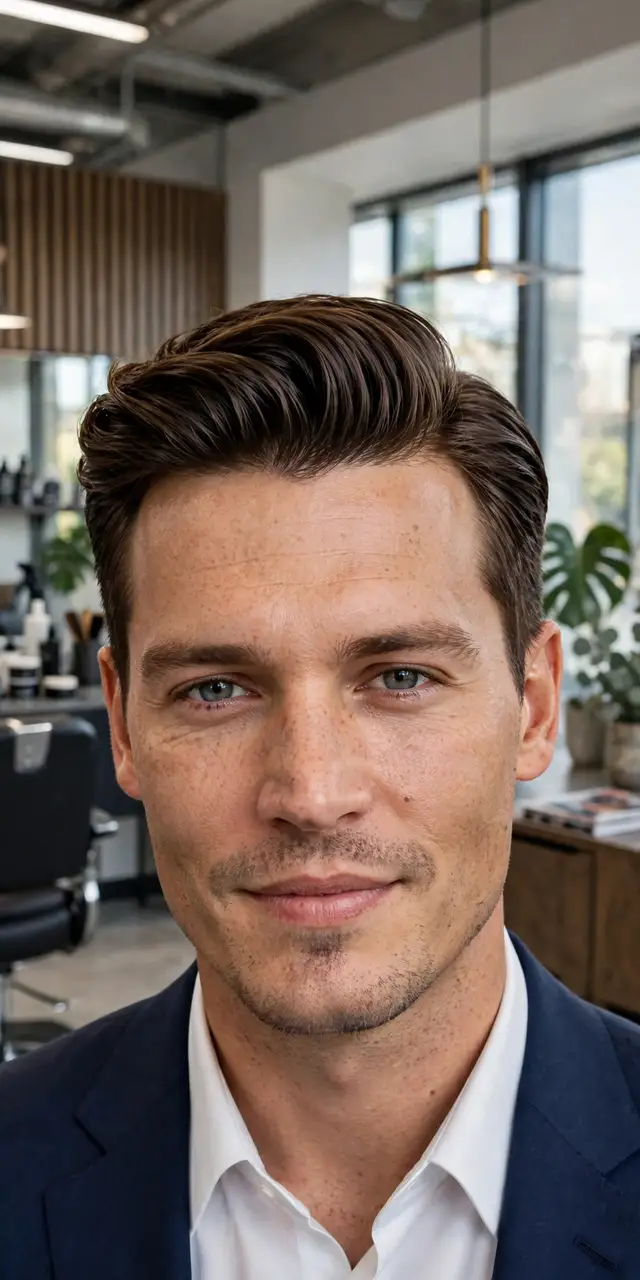
What happens when a quiff meets a side part?
Polish. The Side Part Quiff lifts the front like a quiff but sweeps it to one side along a defined parting, with tapered sides keeping the whole thing boardroom-clean. It is the professional’s quiff — the height and presence, finished with a comb instead of a shrug.
Face Shape: Ideal for oval and rectangular faces; the diagonal sweep adds interest without widening.
Grooming Kit: A comb (finally, a quiff that wants one), blow dryer, and a medium-hold, low-shine pomade or cream.
Maintenance: Every 3 weeks; the parting line may need re-defining by the barber as it grows.
Barber Script: “Side part quiff — top swept up and over to my natural part, tapered sides, define the part cleanly.”
Height, combed into order — the executive quiff.
Q: Which side should the part go on?
A: On your natural part — find the crown swirl and part where the hair wants to fall. A part forced against your growth direction will fight you daily and never sit as cleanly.
Q: Side part quiff or classic side part?
A: The classic side part lies flat and formal. The side part quiff keeps real height at the front before sweeping over, so it looks younger and fuller while staying just as tidy.
14 of 20 — The Quiff with a Beard
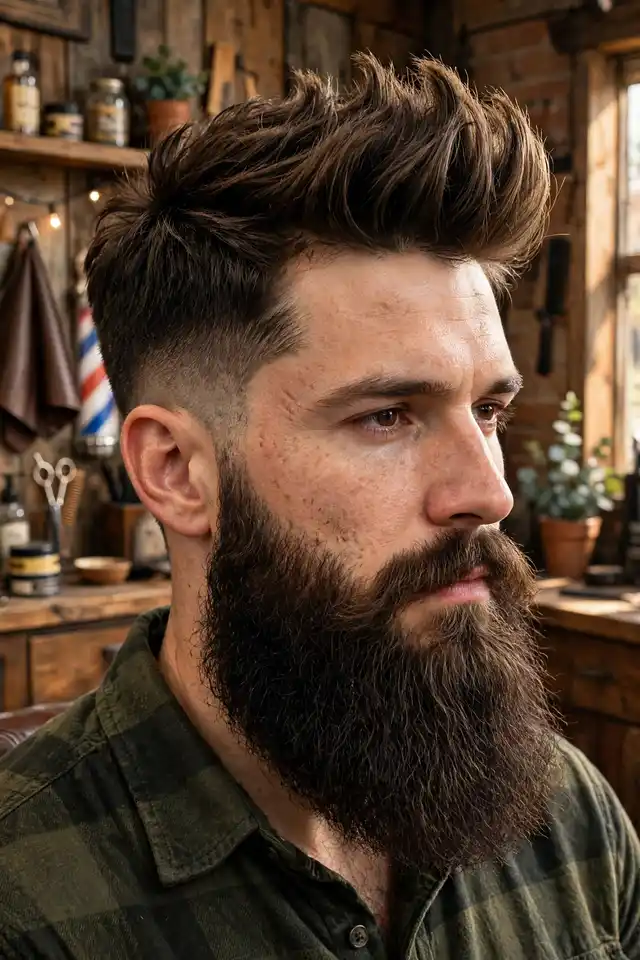
Why do a quiff and a beard belong together?
Proportion. The quiff stacks height on top of the head, and a shaped beard anchors the jaw below it — together they stretch and strengthen the whole face. The craft is the connection: the fade or taper should run cleanly into the sideburn so hair and beard read as one designed silhouette, the same principle as our beard styles guide.
Face Shape: The making of round faces — height above, jaw below, and the face lengthens at both ends.
Grooming Kit: Blow dryer and clay for the quiff; beard oil, a boar brush and a trimmer for the beard’s lines.
Maintenance: Quiff cut and beard shape in the same visit, every 2–3 weeks; oil the beard daily.
Barber Script: “Quiff with a beard — textured top with height, mid fade blending into the beard at the sideburns, shape the beard full and clean.”
Height above, jaw below — the complete silhouette.
Q: What beard length suits a quiff best?
A: Anything from heavy stubble to a full beard, as long as it is shaped. The taller and sharper the quiff, the tidier the beard should be — one wild element per head is the rule.
Q: Should the fade blend into the beard?
A: Yes — that blend is what makes the combination look designed rather than accidental. Ask your barber to fade the sideburn area so the haircut graduates smoothly into the beard’s length.
15 of 20 — The Quiff for a Receding Hairline
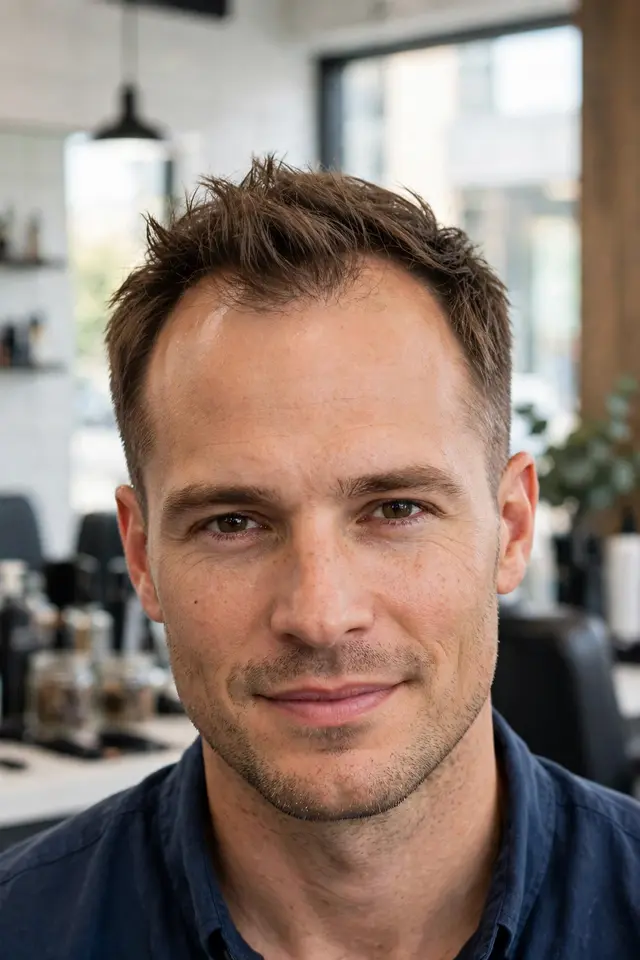
Is a quiff a good idea with a receding hairline?
Done right, it is one of the best ideas. The Receding Hairline Quiff keeps the front shorter and textured, sweeps it up and slightly forward rather than back, and avoids exposing the temples the way a slicked-back style does. The texture disguises the hairline’s shape while the lift keeps the look confident — nothing combed over, nothing hidden, just smart geometry.
Face Shape: Works on most faces; the forward-swept texture softens a high forehead and balances the proportions.
Grooming Kit: Matte texture powder or clay (never shine), a dryer, and a light touch — heavy products separate thin fronts and expose scalp.
Maintenance: Every 3 weeks; keep the front’s texture fresh so it never grows long enough to look thin.
Barber Script: “Quiff for my hairline — front shorter and textured, styled up and slightly forward, tapered sides, nothing swept straight back.”
Smart geometry — the quiff that works with your hairline, not against it.
Q: What quiff length is best for a receding hairline?
A: Shorter than you’d think — around 2 inches at the front, heavily textured. Long fronts separate and expose the temples; short textured fronts create coverage and make density look greater.
Q: What styling mistakes expose a receding hairline?
A: Slicking straight back, using glossy products, and growing the front long to “cover” it. All three draw the eye exactly where you don’t want it. Texture, matte finish and a slight forward direction do the opposite.
16 of 20 — The Quiff for a Round Face
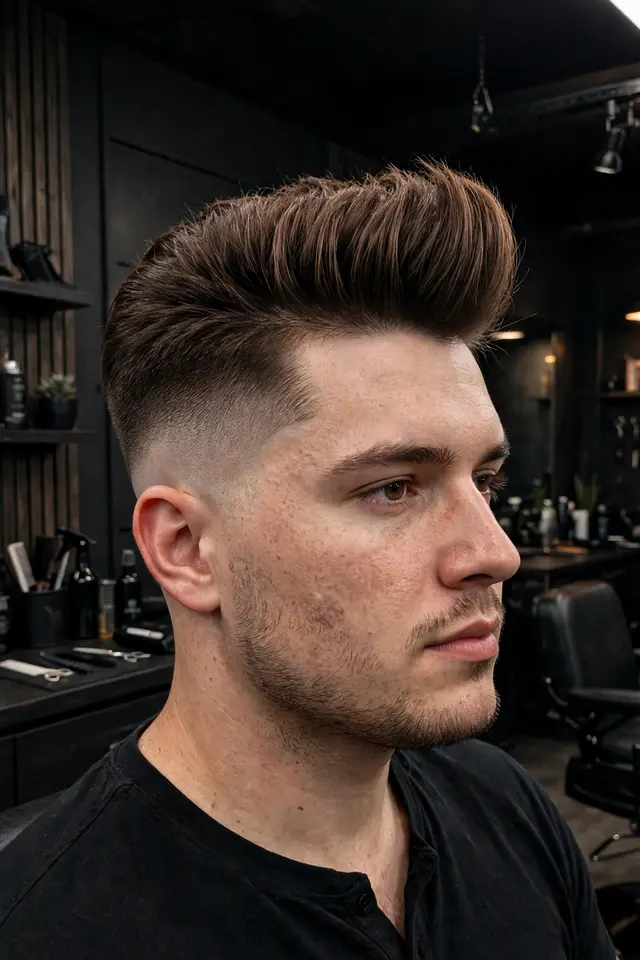
What is the best quiff for a round face?
The one built like a skyscraper, not a helmet. The Round Face Quiff maximises height at the front, keeps the top narrow rather than wide, and strips the sides with a mid or high fade so nothing adds width at the temples. Every design decision points the eye upward — which is precisely what a round face wants.
Face Shape: Designed for round and fuller faces; also excellent on square faces that want more length.
Grooming Kit: A strong blow dryer routine, vent brush, and matte clay with real hold — this quiff’s height is structural.
Maintenance: Every 2–3 weeks; as the sides grow, width creeps back at the temples and the slimming effect fades with it.
Barber Script: “Quiff for a round face — maximum height at the front, keep the top narrow, mid to high fade on the sides, no width at the temples.”
Built vertically — the round face’s best angle.
Q: How tall should a quiff be for a round face?
A: As tall as your hair will honestly hold — usually 3–4 inches styled upward. The rule is height over width: vertical lines lengthen the face, while volume spread sideways does the opposite.
Q: What quiff mistakes make a round face look rounder?
A: Wide, rounded tops, fringes that fall forward and low fades with full sides. Each adds horizontal bulk. Keep the silhouette narrow, the sides tight and the front tall and slightly angular.
17 of 20 — The Pompadour Quiff
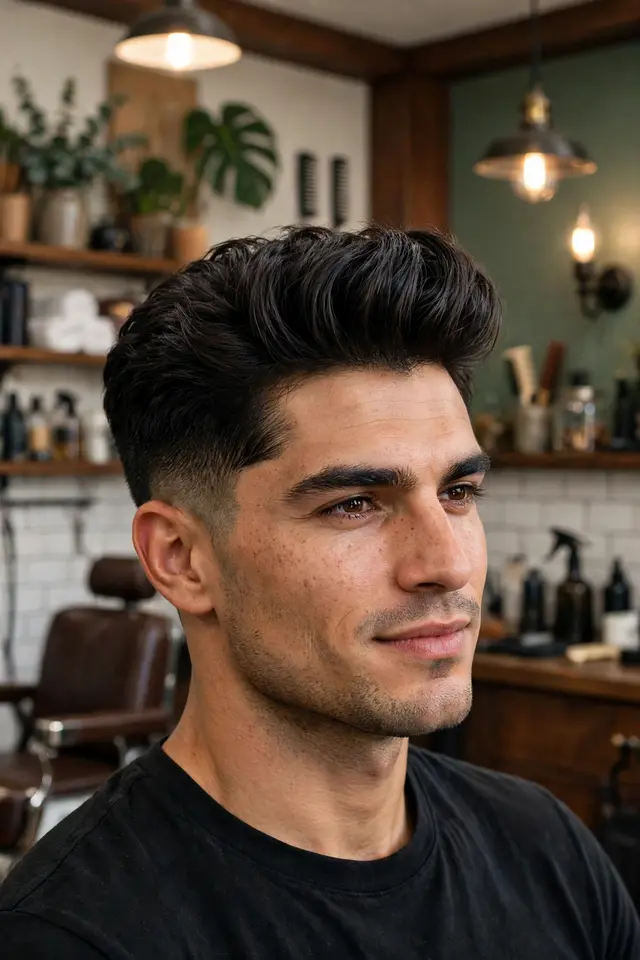
Quiff or pompadour — why not both?
The Pompadour Quiff is the hybrid: the front lifts and rolls back like a pompadour, but the finish keeps the quiff’s texture and edge instead of the pomp’s smooth formality. It is the biggest, boldest silhouette in this guide — retro bones, modern skin — and a natural bridge to the modern mullet’s love of volume.
Face Shape: Best on oval and oblong faces with the forehead to carry the roll; round faces should keep it textured, not smooth.
Grooming Kit: Round brush, powerful dryer, pre-styler and a medium-hold pomade or clay — this is the most equipment-heavy quiff here.
Maintenance: Every 3 weeks, plus a genuine 5-minute daily styling routine. The roll does not happen by accident.
Barber Script: “Pompadour quiff — top long, front longest to roll back, textured finish not slick, faded sides to keep it modern.”
Retro bones, modern skin — the hybrid with the biggest silhouette.
Q: How is a pompadour quiff different from a pompadour?
A: A true pompadour is smooth, rolled and uniform, usually with a formal shine. The pompadour quiff borrows the rolled front but finishes with separated texture and a matte product, so it reads younger and more relaxed.
Q: How do I get the roll at the front?
A: Blow-dry the front up and back over a round brush, curling the brush as you dry so the hair learns the curve. Cool-shot it in place, then tease the very front back lightly with your fingers and finish with clay.
18 of 20 — The Slicked-Back Quiff

What is a slicked-back quiff?
A quiff with a dress code. The Slicked-Back Quiff builds the height first, then combs the top back with a low-shine product so the silhouette stays tall but the surface goes smooth and formal. Old-money energy without the grease — the evening version of everything in this guide.
Face Shape: Strong on oval and square faces; the swept-back lines expose the forehead, so confidence helps.
Grooming Kit: A comb, dryer, and a low-shine pomade or grooming cream. Matte clay will fight the comb — leave it in the drawer.
Maintenance: Every 3 weeks; restyles in minutes, and a water rinse revives it for the evening.
Barber Script: “Slicked-back quiff — height at the front, top combed back smooth, tapered or low faded sides, keep the finish low-shine not wet.”
Tall, smooth, formal — the quiff after dark.
Q: Slicked-back quiff or classic slick back?
A: A classic slick back lies flat against the head. The slicked-back quiff dries the front upward first, so the profile keeps real height and structure — it is a slick back with a skyline.
Q: How do I avoid the greasy look?
A: Use a low-shine or natural-finish product, apply half what you think you need to dry hair, and skip the wet-look gels entirely. The modern version should look groomed, not glued.
19 of 20 — The Taper Quiff
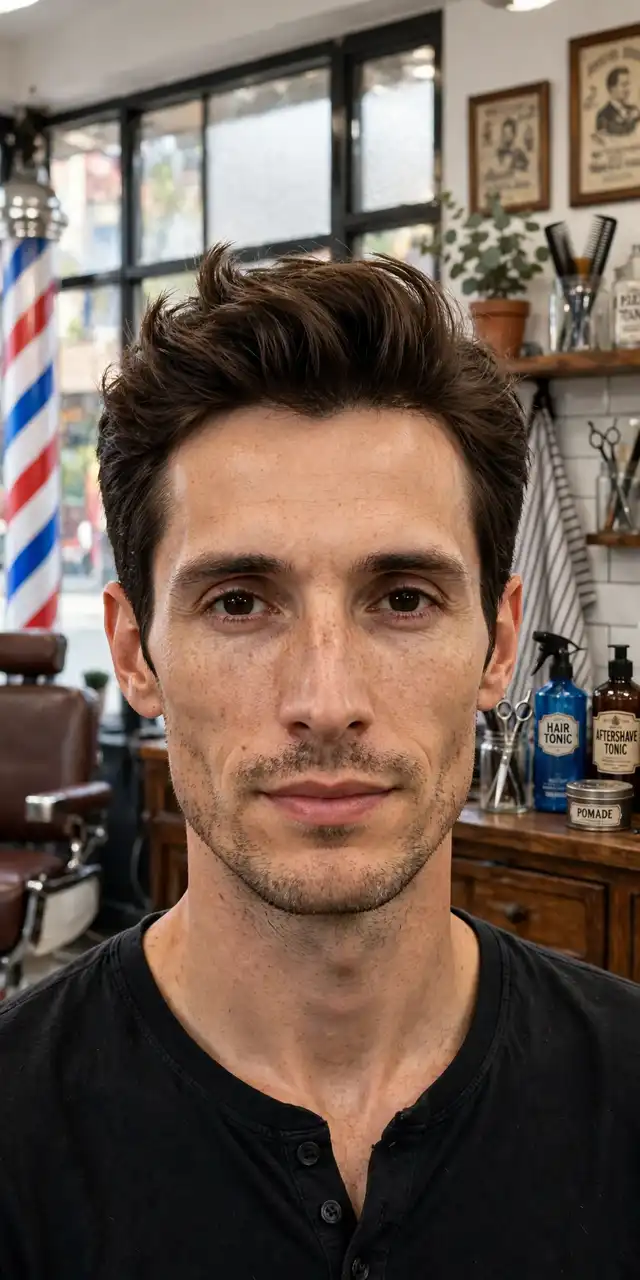
Why choose a taper instead of a fade?
Longevity and softness. The Taper Quiff cleans up only the sideburns and neckline, leaving the sides scissored and full — so the haircut grows out gracefully for weeks and suits conservative settings that fades don’t. It is the quiff for men who visit the barber monthly, not fortnightly.
Face Shape: Ideal for long and narrow faces; the fuller sides add the width those faces want.
Grooming Kit: Dryer, brush and a matte paste — the classic quiff kit, nothing clinical.
Maintenance: Every 4 weeks comfortably; the taper blurs so softly that a skipped week changes nothing.
Barber Script: “Taper quiff — textured top with height, scissor-cut sides kept full, taper just the sideburns and neckline clean.”
The slow-fade quiff — soft edges, monthly barber visits.
Q: Taper quiff vs low fade quiff — what is the difference?
A: A low fade still clips the edges down toward skin in a gradient. A taper only cleans the very edges — the sideburns and nape — and leaves the sides at scissor length. The taper looks softer and lasts longer between cuts.
Q: Does a taper quiff work in formal workplaces?
A: It is the safest quiff for them. No skin, no hard lines, just a classic short-back-and-sides silhouette with a taller front. It pairs with a suit as naturally as any haircut can.
20 of 20 — The Winter Quiff King

What is the best quiff for winter?
This one. The Winter Quiff King keeps the front at a beanie-survivable height — tall enough to read as a quiff, low enough to recover from a hat with one palm-sweep — uses a soft taper instead of a skin fade so no bare skin meets the wind, and finishes matte so dry winter air can’t turn it to straw. It walks out of a snowstorm, takes the hat off, and is back in ten seconds.
Face Shape: Suits every face — moderate height, soft sides and a balanced silhouette are the most forgiving combination in this guide.
Grooming Kit: A dryer, matte clay with flexible hold, and a richer conditioner for winter dryness. Flexible is the key word — rigid quiffs snap under hats.
Maintenance: Every 3 weeks; the taper forgives a skipped week in deep winter, and the height forgives a hat.
Barber Script: “Winter quiff — moderate height at the front, textured and matte, soft taper at the edges, nothing faded to skin. It has to survive a beanie.”
The quiff winter would choose — tall, soft and hat-proof.
Q: How do I fix hat hair on a quiff?
A: Warm your palms, run them upward through the front to reactivate the product, and re-lift the roots with your fingers. A flexible-hold clay revives cleanly; a rigid one flakes. Ten seconds, no mirror needed.
Q: How do I stop a quiff drying out in winter?
A: Condition twice a week, ease off daily shampooing, and switch to creamier styling products in the cold months. Indoor heating is the real enemy — the hair loses moisture indoors faster than it does in the snow.
The Bottom Line
Quiff hairstyles for men all run on one formula: length and height at the front, a decision on the sides. Choose the height for your face — taller for round faces, softer for long ones — then choose the sides for your life: a taper if you are monthly and conservative, a mid fade for the modern all-rounder, a high fade or undercut if you want the contrast loud.
The non-negotiables are the same at every height: the quiff is built with a blow dryer, not product — dry it up first, then finish with a fingertip of matte clay. Keep the front longest, keep the sides honest, and never let a shiny product near a modern quiff. Show your barber the photo, say the words from the script, and enjoy the extra two inches of presence. For the natural next reads, see the fade haircuts guide for every side option in detail, and the buzz cut guide for the day you want the opposite of all this.