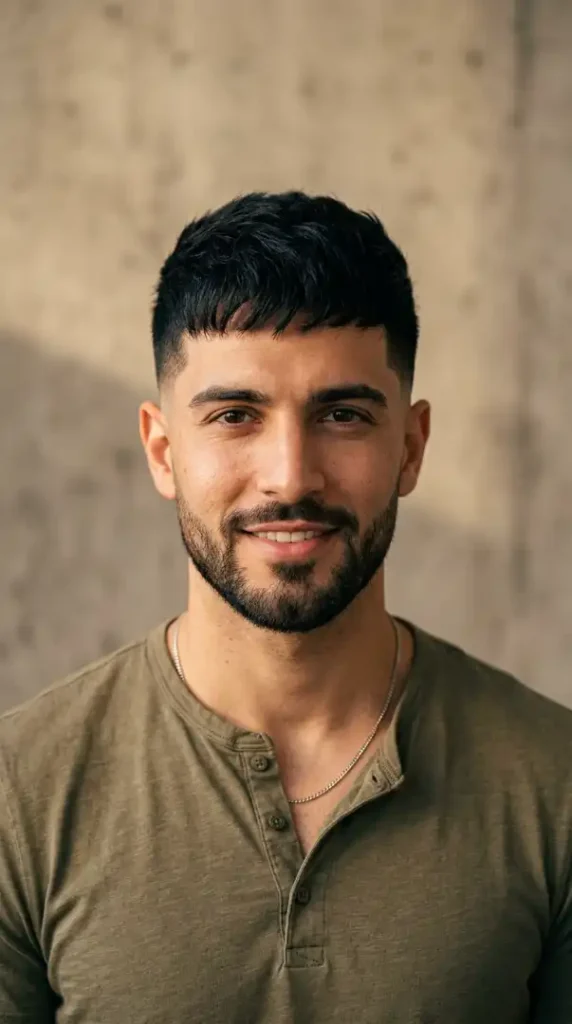
13 Street Hair Looks for Men Who Own Their Style Sharp Fades, Bold Textures & Barber-Approved Cuts for Every Face Shape
1 of 13 — The Shadow Fade Sculptor
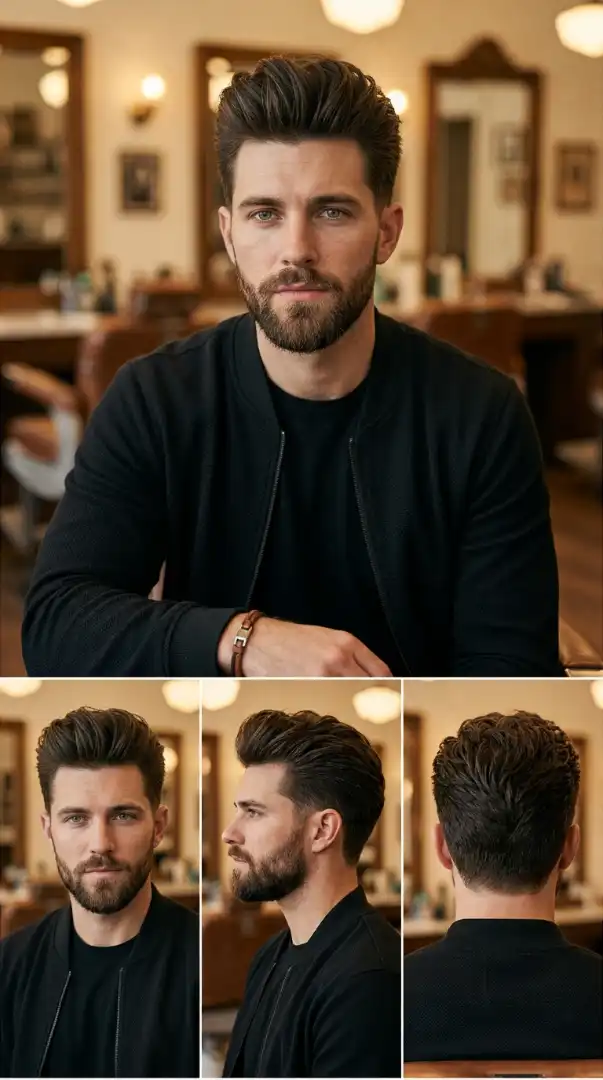
The Shadow Fade Sculptor
The Shadow Fade Sculptor earns its name from the soft, smoke-like gradient that dissolves into the skin rather than cutting off in a hard line. Unlike a traditional skin fade, the shadow fade leaves a whisper of length low on the sides, which makes it one of the most forgiving fade styles for men who want sharpness without looking overly severe.
Best Face Shapes for The Shadow Fade Sculptor
The Shadow Fade Sculptor works best on square and oval face shapes because the soft gradient doesn’t compete with an already strong jawline — it simply frames it. On a square face, the low-contrast fade avoids adding extra visual width at the sides, keeping the face balanced rather than boxy. Oval faces benefit because the textured top adds vertical volume that plays well with already-proportional features. Round faces should ask their barber to keep the fade slightly higher and tighter than shown here, since a low shadow fade can make a round face look wider. Diamond and oblong faces can wear it too, but should request a touch more volume at the crown to avoid elongating the face further.
Grooming Kit You’ll Need
Clippers: Wahl Magic Clip (Model 5049-400) or Andis Master (Model 01557) for the base cut. Trimmer/Outliner: Andis T-Outliner (Model 04710) for edge work and the hairline lineup. Finishing Tools: Kent 81T fine-tooth comb for parting precision, Denman boar bristle brush for polish and product distribution. Styling Product: Layrite Original Pomade (medium hold) for a natural matte-to-satin finish, or American Crew Fiber for a higher-hold matte look. Maintenance: A lightweight beard oil such as Honest Amish or Viking Revolution to keep the beard-to-fade blend looking groomed. Use a dime-sized amount of pomade, warmed between palms before application.
How Often You Need a Touch-Up
Maintenance level: Medium. Book a barber visit every 3 weeks to keep the shadow gradient crisp — this fade grows out more gracefully than a skin fade, so you have a little more flexibility, but past 3 weeks the blend starts to look muddy rather than deliberate. Daily styling takes about 5 minutes: apply a dime-sized amount of pomade to damp hair and comb the top forward and slightly to the side. Monthly maintenance cost typically runs $60–$90 depending on your city and barbershop tier. This is a beginner-to-intermediate home-maintenance cut — you can extend the fade a week or two with a trimmer at home, but the gradient blending itself should stay with a professional.
Exact Words to Say to Your Barber
Say this to your barber: “I want a Shadow Fade Sculptor with a low shadow fade starting about an inch above the ear. Take the top to guard #4, leave enough length to comb forward with texture. For the fade, blend from a guard #1 at the bottom up through a guard #3 near the parietal ridge — I don’t want a hard line, keep it soft and smoky. Taper my beard into the fade at the jawline, keeping the beard at about 5mm. Finish with a clean, natural hairline — no overly sharp lineup, I want it to look grown, not drawn on.”
If this smoky, low-contrast fade feels like the perfect entry point into fade culture, the next style takes the contrast dial all the way up for a boardroom-ready look that reads sharp from across the room.
2 of 13 — The Corporate Edge Taper
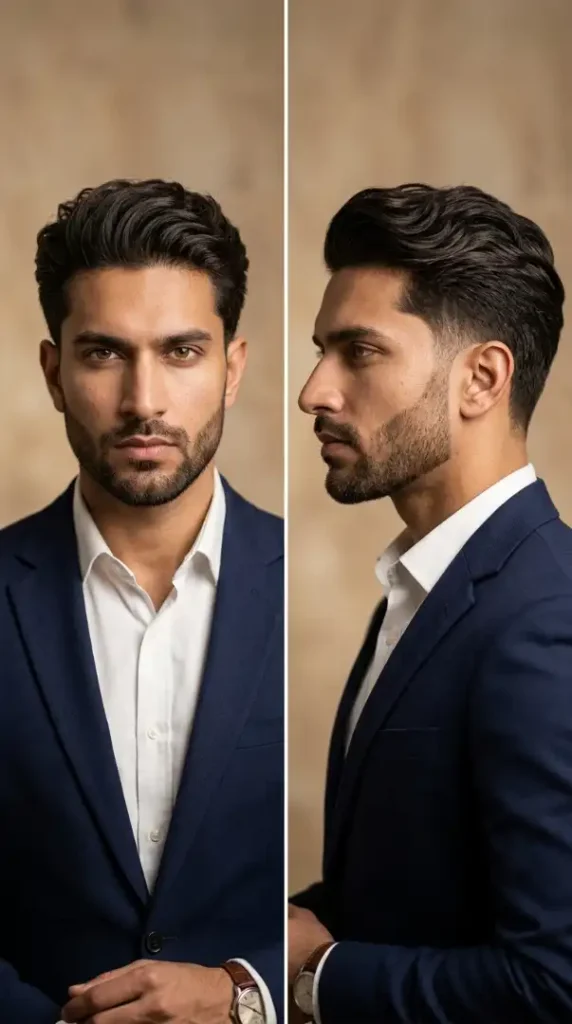
The Corporate Edge Taper
The Corporate Edge Taper is built for men who need sharpness that survives a 9-to-5 without looking like it belongs in a barbershop window. It keeps enough length on top for a genuine part and volume, while the sides stay disciplined and office-appropriate.
Best Face Shapes for The Corporate Edge Taper
Oval and oblong face shapes get the most out of The Corporate Edge Taper because the swept-back volume on top adds width at the crown, balancing out a naturally longer face. Square faces also do well since the tapered sides soften the jaw slightly without hiding it. Round faces should ask for a slightly higher taper start point to create more vertical lift and avoid adding width. Heart-shaped faces can wear this cut confidently but should keep the top volume moderate rather than voluminous, since too much height can emphasize a narrower chin.
Grooming Kit You’ll Need
Clippers: Oster Classic 76 or Wahl Senior for the taper base. Trimmer/Outliner: Andis T-Outliner (Model 04710) for the sharp sideburn point and hairline. Finishing Tools: A wide-tooth wooden comb for parting, plus a boar-bristle brush to smooth flyaways. Styling Product: Baxter of California Clay Pomade (strong hold, matte finish) for the swept-back top, or American Crew Forming Cream for a lighter, more natural hold. Maintenance: A lightweight matte finishing spray to control shine in office lighting. Use a pea-sized amount of clay worked through damp hair before combing back.
How Often You Need a Touch-Up
Maintenance level: Medium-High. Visit the barber every 2–3 weeks for the fade touch-up on the sides, since the taper’s precision fades faster than the top length. The top can stretch to 5–6 weeks between full cuts. Daily styling takes about 6–8 minutes with a blow-dry and comb-back routine. Monthly cost typically runs $70–$100. This is an intermediate home-maintenance style — the top styling is easy to manage daily, but the taper blend itself needs professional upkeep to avoid growing out unevenly.
Exact Words to Say to Your Barber
Say this to your barber: “I want a Corporate Edge Taper with a mid taper fade starting just above the ear. Take the top to about 3 inches at the front, tapering slightly shorter toward the crown. Blend the fade from a guard #1 at the bottom up to a guard #3 at the parietal ridge — keep it clean but not razor-sharp, this needs to read as professional, not street. Taper my beard tightly into the sideburn point. Finish with a crisp lineup at the temples only — no hard part line on top.”
If this polished, boardroom-ready taper feels a little too buttoned-up for your weekends, the next style trades structure for raw street energy and a laugh-out-loud amount of texture.
3 of 13 — The Street King Crop
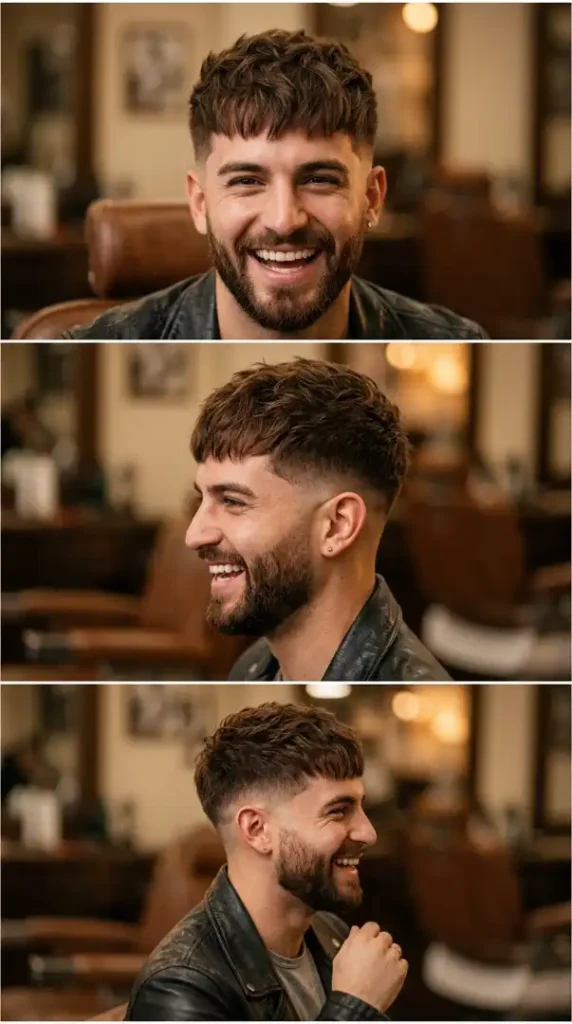
The Street King Crop
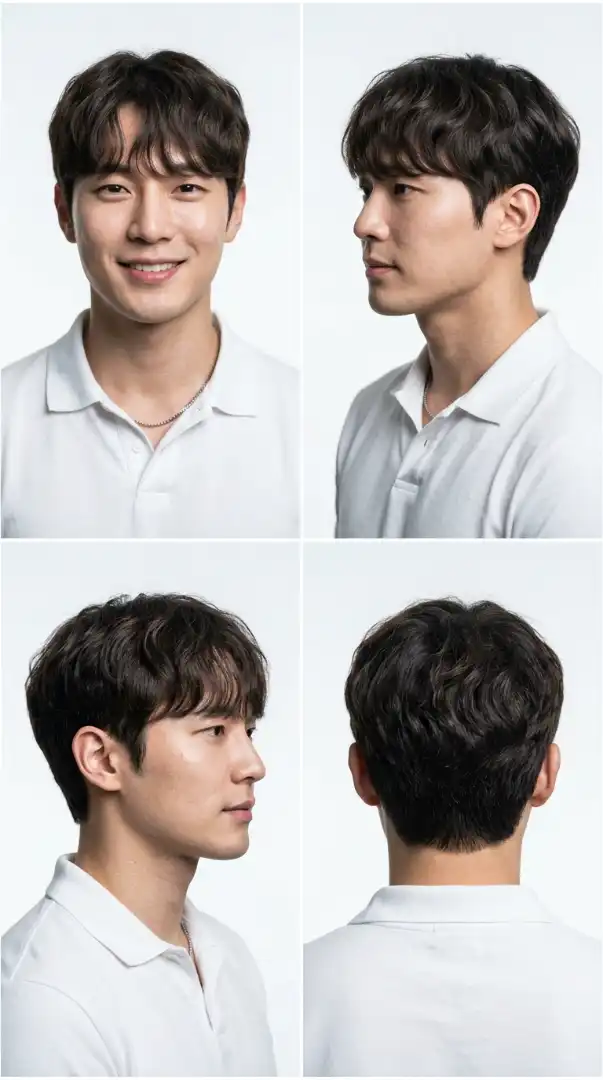
The Street King Crop is built around texture and volume rather than sharp lines, giving it a lived-in, effortlessly cool energy that reads as confident rather than fussy. It’s one of the most photogenic cuts for face-forward content because the fringe catches light and movement so well.
Best Face Shapes for The Street King Crop
Round faces benefit the most from The Street King Crop because the heavy top volume and short sides create vertical lift, visually lengthening the face and offsetting natural width. Square faces also wear it well, since the textured fringe softens a strong forehead line. Oblong and diamond faces should ask their barber to keep slightly more length on the sides to avoid over-elongating an already long face. Heart-shaped faces can pull this off but should keep the fringe a touch longer to balance a narrower chin.
Grooming Kit You’ll Need
Clippers: Andis Master (Model 01557) for the side fade. Trimmer/Outliner: Wahl Detailer (Model 8081) for crisp edge work around the ears. Finishing Tools: A wide-tooth comb for detangling texture, plus fingers rather than a brush for the tousled top. Styling Product: Uppercut Deluxe Matte Pomade for texture with low shine, or Reuzel Fiber Pomade for stronger hold with movement. Maintenance: A texturizing sea-salt spray to build grit before styling. Use a nickel-sized amount of pomade worked through towel-dried hair, then scrunch upward from the roots.
How Often You Need a Touch-Up
Maintenance level: Medium. Book a touch-up every 3–4 weeks — the fade on the sides grows out relatively gracefully because it starts lower, but the crop loses its shape once the fringe passes the eyebrows. Daily styling takes about 4–5 minutes with product and finger-styling. Monthly cost runs roughly $55–$85. This is a beginner-friendly home-maintenance cut since the styling itself is forgiving of imperfection — the texture is meant to look a little undone.
Exact Words to Say to Your Barber
Say this to your barber: “I want a Street King Crop with a low skin fade starting right above the ear. Take the top to about 2.5 inches, and texture it with point cutting rather than a blunt cut so it has natural movement. Blend the fade from skin at the bottom up to a guard #2 near the top. Keep the fringe long enough to fall just above my eyebrows. Taper the beard into the fade at the jaw. Finish with a natural, slightly undone lineup — I don’t want it looking too sharp or fresh.”
If this laid-back, textured energy is more your speed on weekends, the next style channels that same street confidence into a sharper, more angular silhouette built for face-shape correction.
4 of 13 — The Jawline Architect Cut
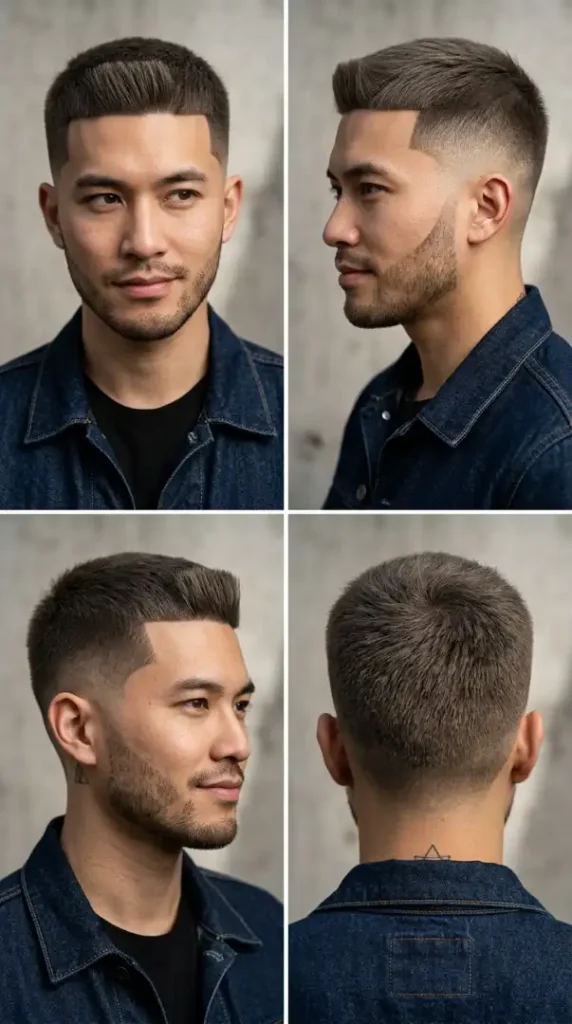
The Jawline Architect Cut
The Jawline Architect Cut is engineered around straight lines and hard angles, making it one of the most precision-dependent styles in modern men’s grooming. It’s less about volume and more about geometry — every fade line, part, and nape edge is deliberate.
Best Face Shapes for The Jawline Architect Cut
Diamond and oval face shapes see the most dramatic benefit because the sharp geometric fringe and skin fade add structure without overwhelming already-balanced proportions. Square faces can wear it too, since the hard fade lines echo the jaw’s natural angularity for a cohesive, intentional look. Round faces should avoid this cut, or ask for significantly softer, blurred fade lines — the hard-edged geometry tends to emphasize roundness rather than counteract it. Oblong faces should request a flatter top rather than height to avoid adding further length.
Grooming Kit You’ll Need
Clippers: Andis Master (Model 01557) paired with a zero-gapped blade for the skin fade. Trimmer/Outliner: Andis T-Outliner (Model 04710) for the razor-sharp fringe line and nape edge. Finishing Tools: A rat-tail comb for precise parting, plus a small styling brush for the flat-top structure. Styling Product: Suavecito Firme (Strong) Hold Pomade for maximum hold on the geometric top. Maintenance: A precision straight edge razor (professional use only) for the crispest possible lineup. Use a pea-sized amount of pomade, applied while hair is fully dry for maximum structural hold.
How Often You Need a Touch-Up
Maintenance level: High. This cut needs a barber visit every 2 weeks without exception — the hard-edged geometry is unforgiving of even a few millimeters of regrowth. Daily styling takes about 8–10 minutes to rebuild the flat, structured top each morning. Monthly cost typically runs $90–$130 given the visit frequency. This is an advanced home-maintenance style; the fade lines are extremely difficult to maintain solo and should stay with a skilled barber.
Exact Words to Say to Your Barber
Say this to your barber: “I want a Jawline Architect Cut with a skin fade starting right at the temple. Take the top to guard #4, kept blunt-cut for weight and structure rather than textured. Blend the fade from skin at the bottom straight up to guard #4 at the top — I want a visible, deliberate line, not a soft blend. Give me a hard part on the left side. Finish with a razor-sharp lineup at the temples and hairline, and a square nape with a crisp, defined edge at the back.”
If this level of daily upkeep sounds like more than you’re signing up for, the next style delivers a similarly bold silhouette with a fraction of the daily maintenance commitment.
5 of 13 — The Wolfcut Rebel

The Wolfcut Rebel
The Wolfcut Rebel borrows its shaggy, layered energy from 70s rock icons and reworks it for the modern street. It’s built on heavy layering rather than a fade, which makes it one of the few styles here that doesn’t rely on a barber’s clipper precision to look good.
Best Face Shapes for The Wolfcut Rebel
Oblong and square face shapes benefit most from The Wolfcut Rebel because the horizontal volume of the shaggy layers adds width at the sides, balancing out length. Round faces should be cautious with this style — the added width at ear-level can emphasize roundness — and should ask for layers concentrated more at the crown than the sides if attempting it. Oval faces have the most flexibility with this cut and can adjust fringe length freely without disrupting facial balance.
Grooming Kit You’ll Need
Clippers: Not required for this style — it’s primarily a scissor cut. Shears: Professional 6-inch barber shears for the layering, plus texturizing/thinning shears to remove bulk. Finishing Tools: A wide-tooth comb for detangling, fingers for styling rather than a brush to preserve texture. Styling Product: A light sea-salt spray such as Bumble and Bumble Surf Spray for beachy texture, or a matte clay for more defined separation. Maintenance: A leave-in conditioner to manage the layered ends, since longer hair is more prone to dryness. Use a spritz of salt spray on damp hair, then scrunch and air-dry or diffuse.
How Often You Need a Touch-Up
Maintenance level: Low. This is one of the lowest-maintenance cuts in the lineup — a trim every 6–8 weeks keeps the layers intentional rather than shapeless. Daily styling takes just 3–5 minutes: product, scrunch, done. Monthly cost is minimal, roughly $30–$50 averaged across the longer cutting cycle. This is a beginner-friendly home-maintenance style since there’s no fade line to lose precision on.
Exact Words to Say to Your Barber
Say this to your barber: “I want a Wolfcut Rebel — heavy layers throughout with the most volume concentrated at the crown. Keep the length around my ears and jaw, and cut the fringe to fall just above my eyebrows with a choppy, textured edge, not a blunt line. Use thinning shears throughout to remove bulk and keep it from looking heavy. No fade or tapered sides — I want the ends to move naturally when I run my hands through it.”
If low-maintenance shag energy is exactly your speed, the next style takes that same wash-and-go philosophy but trades the rock-star volume for a tighter, more polished silhouette.
6 of 13 — The Boardroom Buzz Fade
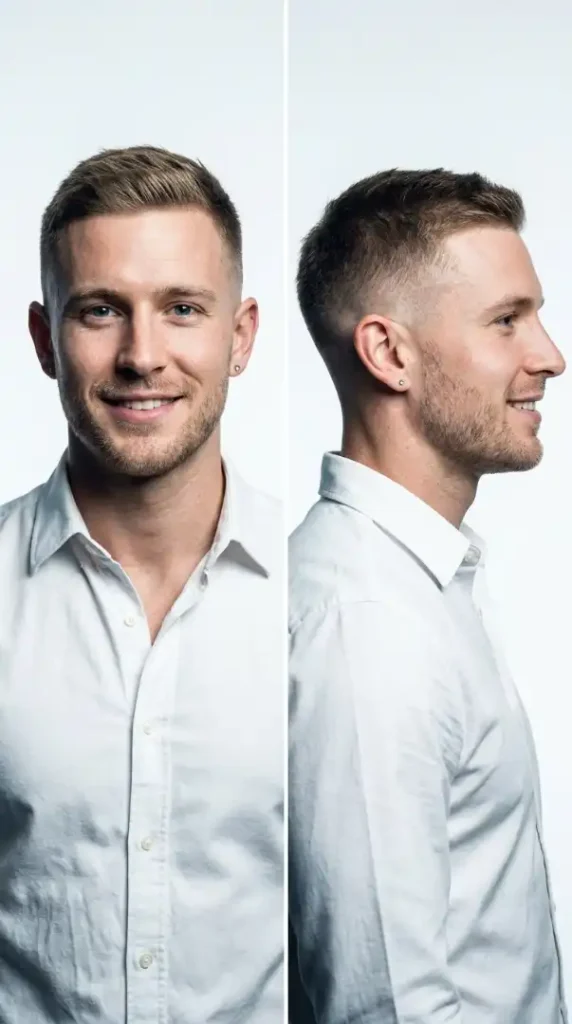
The Boardroom Buzz Fade
The Boardroom Buzz Fade strips styling down to its simplest, most efficient form — a uniform short length that still manages to look deliberate thanks to a precise fade at the sides. It’s the definition of wash-and-go.
Best Face Shapes for The Boardroom Buzz Fade
Heart and oval face shapes suit The Boardroom Buzz Fade especially well because the short, uniform top doesn’t add extra height, keeping proportions balanced against a narrower jaw or chin. Square faces also wear it confidently, since the buzz allows the jawline to be the focal point. Round faces should keep the top slightly longer than shown here and ensure the fade starts higher to create more vertical definition. Diamond faces should ask for a touch more length at the crown to soften otherwise angular cheekbones.
Grooming Kit You’ll Need
Clippers: Wahl Magic Clip (Model 5049-400) for the buzz length and fade in one session. Trimmer/Outliner: Andis T-Outliner (Model 04710) for the clean hairline. Finishing Tools: None required beyond a towel — this cut needs minimal tools by design. Styling Product: Optional light matte cream such as American Crew Fiber if you want the slightest texture on top; otherwise none needed. Maintenance: A daily moisturizing scalp lotion, since short buzzed hair exposes more scalp to dryness. If using product, a rice-grain-sized amount is enough.
How Often You Need a Touch-Up
Maintenance level: Low. Book a touch-up every 2–3 weeks to keep the buzz length and fade uniform — because it’s so short, growth is more noticeable, but the cut itself takes minutes to redo. Daily styling takes under 2 minutes, sometimes zero. Monthly cost typically runs $50–$80. This is the most beginner-friendly home-maintenance option on the list; many men maintain the buzz length themselves between professional fade touch-ups with a home clipper set.
Exact Words to Say to Your Barber
Say this to your barber: “I want a Boardroom Buzz Fade — take the top to a guard #3, uniform all over with no parting. Fade the sides starting above the ear, blending from skin at the bottom up to a guard #2 near the top so it connects cleanly into the buzz. Keep the front hairline natural, not overly squared off. Finish clean and simple — no heavy lineup, just a neat, professional edge.”
If this ultra-low-maintenance buzz is more practical than exciting, the next style keeps that same effortless spirit but adds enough texture on top to feel a little more personality-driven.
7 of 13 — The Textured Quiff Icon
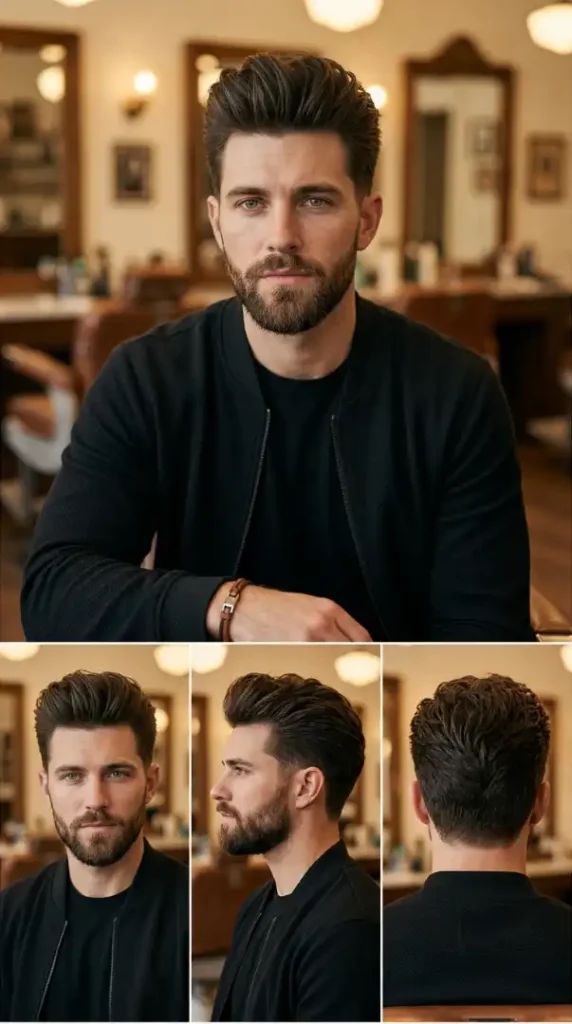
The Textured Quiff Icon
The Textured Quiff Icon takes the classic quiff silhouette and modernizes it with heavier texture and a lower-maintenance fade, giving it real height without requiring hairspray-heavy old-school styling.
Best Face Shapes for The Textured Quiff Icon
Square and round face shapes gain the most from The Textured Quiff Icon because the added height at the crown elongates the face and draws the eye upward, counteracting width. Oval faces also suit it well due to their natural balance handling the added volume easily. Long or oblong faces should avoid heavy height at the crown and instead ask for volume distributed more toward the front for a fuller, rounder silhouette that doesn’t add further length.
Grooming Kit You’ll Need
Clippers: Andis Master (Model 01557) for the side fade beneath the quiff. Trimmer/Outliner: Wahl Detailer (Model 8081) for sideburn precision. Finishing Tools: A round styling brush for root lift while blow-drying, plus a fine-tooth comb for the final shape. Styling Product: Layrite Superhold Pomade for maximum lift and hold, paired with a volumizing pre-styler like Redken Guts 10 spray for extra root lift. Maintenance: A heat-protectant spray if blow-drying daily. Use a dime-sized amount of pomade on towel-dried hair, blow-dry upward with a round brush, then set with a light comb-through.
How Often You Need a Touch-Up
Maintenance level: Medium-High. Visit the barber every 3 weeks for the fade touch-up, since the quiff itself can be restyled daily regardless of length. Daily styling takes 8–10 minutes due to the blow-dry and lift process. Monthly cost runs approximately $70–$100. This is an intermediate-to-advanced home-maintenance style — the styling technique takes practice to master consistently.
Exact Words to Say to Your Barber
Say this to your barber: “I want a Textured Quiff Icon with a fade starting at the temple and blending into the length on top. Take the top to about 3.5 inches at the front, keeping enough weight for volume. Texture the top with point cutting so it has movement, not a blunt cut. Blend the fade from a guard #1 at the bottom up to where the length begins on top. Give me a rounded, tapered nape at the back. Finish with a natural hairline — no hard lineup, I want to be able to push it back by hand.”
If daily blow-dry styling doesn’t fit your morning routine, the next style channels the same silhouette confidence but in a wash-and-go format that survives a hat and a rushed morning.
8 of 13 — The Skin Fade Maverick
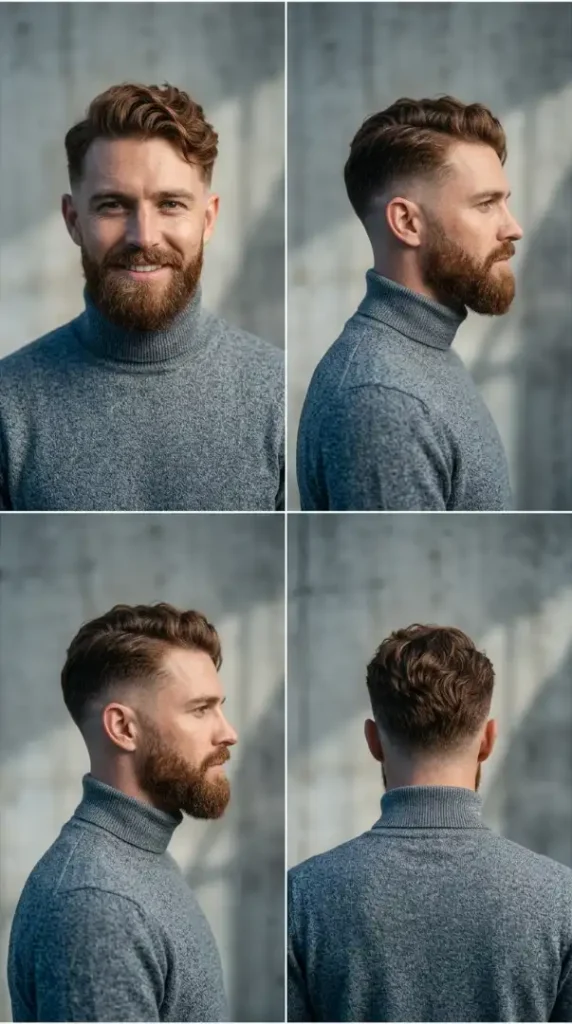
The Skin Fade Maverick
The Skin Fade Maverick pairs a razor-clean high skin fade with natural waves left long on top, creating maximum contrast between the disciplined sides and the relaxed, textured crown. It’s one of the most requested cuts for a reason — it photographs sharply from every single angle.
Best Face Shapes for The Skin Fade Maverick
Oval face shapes are the easiest match for The Skin Fade Maverick since the high contrast between short sides and long top works with almost any proportion. Round faces benefit strongly too, as the high fade removes visual width from the sides, creating a vertical line that elongates the face and draws the eye upward toward the textured top. Square faces do well since the wave pattern softens an angular jaw. Heart-shaped faces should keep slightly more length at the sides rather than going full skin-fade height, to avoid drawing too much attention to a narrower chin.
Grooming Kit You’ll Need
Clippers: Andis Master (Model 01557) with a zero-gapped blade for the true skin fade. Trimmer/Outliner: Andis T-Outliner (Model 04710) for the sharp fade line and edge work. Finishing Tools: A wide-tooth comb for detangling the waves, fingers for natural texture styling. Styling Product: Sea salt spray such as Bumble and Bumble Surf Spray to enhance the natural wave pattern, or a light curl cream for definition without weight. Maintenance: A leave-in conditioner to keep waves hydrated and defined. Apply salt spray to damp hair and scrunch upward, or let air-dry for natural texture.
How Often You Need a Touch-Up
Maintenance level: High. A true skin fade needs a barber visit every 2 weeks to stay sharp — this is the fastest-growing-out fade style due to how short the sides are cut. The top can stretch to 6–8 weeks between trims since length is desired. Daily styling takes 5–6 minutes with product and scrunching. Monthly cost typically runs $85–$120 given the frequent fade touch-ups. This is an intermediate home-maintenance cut — the top styling is easy, but the skin fade itself must stay with a professional.
Exact Words to Say to Your Barber
Say this to your barber: “I want a Skin Fade Maverick with a high skin fade starting at the parietal ridge. Take the top to about 3 inches, keep it unstructured and natural for the wave pattern to show. Blend the fade from skin all the way up to the top length — I want maximum contrast between the sides and the top, no gradual taper. Taper the beard tightly into the fade at the jaw. Finish with a natural, soft hairline — no hard lineup, since I want the wave texture to flow into it.”
If that high-contrast drama is exactly the energy you’re after, the next style keeps the boldness but swaps the waves for something that reads even bigger from across the room.
9 of 13 — The Crown Volume King

The Crown Volume King
The Crown Volume King is built around density and height, using natural coily texture to create dramatic volume at the top while keeping the sides tight and controlled. It’s a style that leans into natural hair texture rather than fighting it.
Best Face Shapes for The Crown Volume King
Round faces benefit the most from The Crown Volume King because the vertical height at the crown elongates the face and draws attention upward, directly counteracting width. Oval faces also carry the volume well thanks to naturally balanced proportions. Square faces should keep the sides slightly less tight to avoid over-emphasizing jaw width against the tall top. Long or oblong faces should avoid excessive crown height and instead ask for volume distributed more evenly front-to-back.
Grooming Kit You’ll Need
Clippers: Andis Master (Model 01557) for the tight side fade. Trimmer/Outliner: Wahl Detailer (Model 8081) for the crisp, defined hairline edge-up. Finishing Tools: A wide-tooth pick comb to lift and shape the coily volume, plus a soft-bristle brush for edge control. Styling Product: Eco Style Gel (Olive Oil formula) for edge control, paired with a curl-defining cream such as Cantu Coily Hair Cream for the top. Maintenance: A daily leave-in conditioner to prevent dryness in the tightly coiled texture. Use a nickel-sized amount of curl cream on damp hair, pick to lift, and let the volume settle naturally.
How Often You Need a Touch-Up
Maintenance level: Medium. Book a barbershop visit every 2–3 weeks for the fade touch-up and edge-up, since the sharp hairline is central to this style’s impact. Daily styling takes about 5 minutes: product application and a quick pick-out at the crown. Monthly cost typically runs $65–$95. This is an intermediate home-maintenance cut — the edge-up can be refreshed at home with a trimmer between visits, but the fade blend itself needs professional attention.
Exact Words to Say to Your Barber
Say this to your barber: “I want a Crown Volume King with a tight taper fade starting above the ear. Take the top to guard #6 or scissor-cut for maximum height at the crown, keeping the natural coily texture intact — don’t cut it too short. Blend the fade from a guard #1 at the bottom up to guard #3 near the top. Taper the beard cleanly into the fade at the jaw. Finish with a sharp, defined edge-up at the hairline and temples.”
If this bold, high-volume energy is your favorite so far, the next style takes a completely different approach — trading height for a razor-tight, minimalist silhouette that’s just as striking in its own quiet way.
10 of 13 — The Low Fade Minimalist
The Low Fade Minimalist
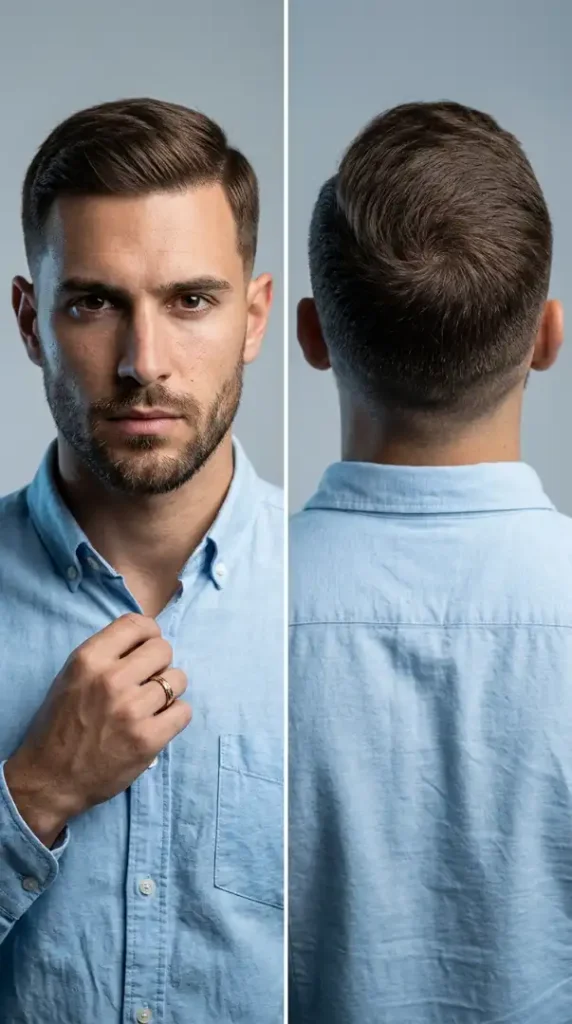
The Low Fade Minimalist strips away every unnecessary detail — no dramatic contrast, no heavy texture, just a clean, close-to-the-head silhouette that works in literally any setting, from a job interview to a first date.
Best Face Shapes for The Low Fade Minimalist
Diamond and oval face shapes are the strongest match for The Low Fade Minimalist because the understated top length doesn’t compete with already well-proportioned cheekbones and jawlines. Square faces also do well, letting the jaw remain the visual focal point. Round faces should ask for a slightly higher fade start point than shown here to introduce more vertical structure. Oblong faces can wear this cut safely since the low-key silhouette doesn’t add extra length.
Grooming Kit You’ll Need
Clippers: Wahl Senior or Oster Classic 76 for the low fade. Trimmer/Outliner: Andis T-Outliner (Model 04710) for the neckline and hairline. Finishing Tools: A fine-tooth comb for the subtle side part. Styling Product: A light, low-shine pomade such as American Crew Fiber, used sparingly for a natural finish rather than heavy hold. Maintenance: None beyond regular shampooing — this style doesn’t require heavy product upkeep. Use a pea-sized amount of pomade, if any, for a barely-there hold.
How Often You Need a Touch-Up
Maintenance level: Low. This cut can stretch to 4 weeks between visits since the low fade grows out subtly and doesn’t lose definition as quickly as a high or skin fade. Daily styling takes 2–3 minutes with a comb and minimal product. Monthly cost typically runs $50–$75. This is a beginner-friendly home-maintenance cut, ideal for men who want a reliably sharp look without a demanding routine.
Exact Words to Say to Your Barber
Say this to your barber: “I want a Low Fade Minimalist with the fade starting low, right above the ear. Take the top to guard #5, kept simple with a natural side part, no heavy texture. Blend the fade from a guard #1 at the bottom up to guard #4 near the part line — keep it subtle, not high-contrast. Finish with a clean, understated hairline and a rounded, tapered nape at the back — nothing flashy.”
If this understated approach is your ideal everyday cut, the next style dials the volume and curl definition back up for something with a lot more personality on top.
11 of 13 — The Curl Defined Commander
The Curl Defined Commander
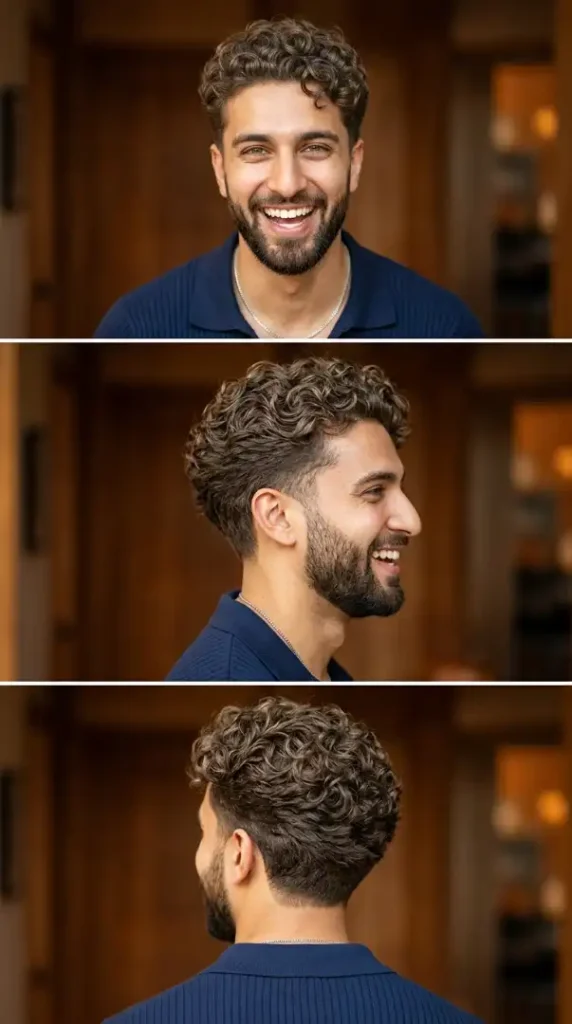
The Curl Defined Commander is designed specifically to work with natural curl pattern rather than force it into straight-hair styling techniques, giving curly-haired men a cut that actually complements their texture instead of fighting it.
Best Face Shapes for The Curl Defined Commander
Oblong and oval face shapes work beautifully with The Curl Defined Commander because the natural curl volume adds width at the sides without adding excessive height, keeping longer faces balanced. Round faces should ask for the curls to be kept slightly shorter and the fade higher to introduce more vertical structure. Square faces do well with this cut, as the soft curl texture balances an angular jawline nicely. Heart-shaped faces should keep some length at the sides rather than going too tight, to avoid emphasizing a narrower chin.
Grooming Kit You’ll Need
Clippers: Andis Master (Model 01557) for the low fade beneath the curls. Trimmer/Outliner: Wahl Detailer (Model 8081) for clean edge work at the temples. Finishing Tools: A wide-tooth detangling comb used only on soaking-wet hair, plus fingers for curl definition on dry or damp hair — never a brush, which disrupts curl pattern. Styling Product: A curl-defining cream such as DevaCurl SuperCream, layered with a light curl gel like Curls Blueberry Bliss for hold without crunch. Maintenance: A sulfate-free shampoo and regular deep conditioning to prevent frizz and dryness. Apply cream and gel to soaking-wet hair using the scrunch method, then air-dry or diffuse on low heat.
How Often You Need a Touch-Up
Maintenance level: Medium. Book a trim every 5–6 weeks — curly hair grows out differently than straight hair and tends to hold its shape longer between cuts. The low fade beneath needs a touch-up every 3 weeks to stay clean. Daily styling takes about 10 minutes due to the wet-styling method required for defined curls. Monthly cost runs roughly $75–$105. This is an intermediate home-maintenance style since curl styling technique takes practice, though the cut itself is barber-dependent only for the fade.
Exact Words to Say to Your Barber
Say this to your barber: “I want a Curl Defined Commander — please cut my curls dry first so you can see the natural shrinkage and pattern, then refine on damp hair. Keep the top long enough to maintain curl definition, roughly 3 to 4 inches of curl length. Add a low fade starting above the ear, blending from a guard #1 at the bottom up into the curl length. Don’t use thinning shears throughout, since that can create frizz — shape with point cutting only where needed.”
If working with natural curl texture feels like the missing piece in your routine, the next style takes an entirely different tack — trading texture for a vintage-inspired silhouette with serious old-school polish.
12 of 13 — The Vintage Pompadour Revival
The Vintage Pompadour Revival
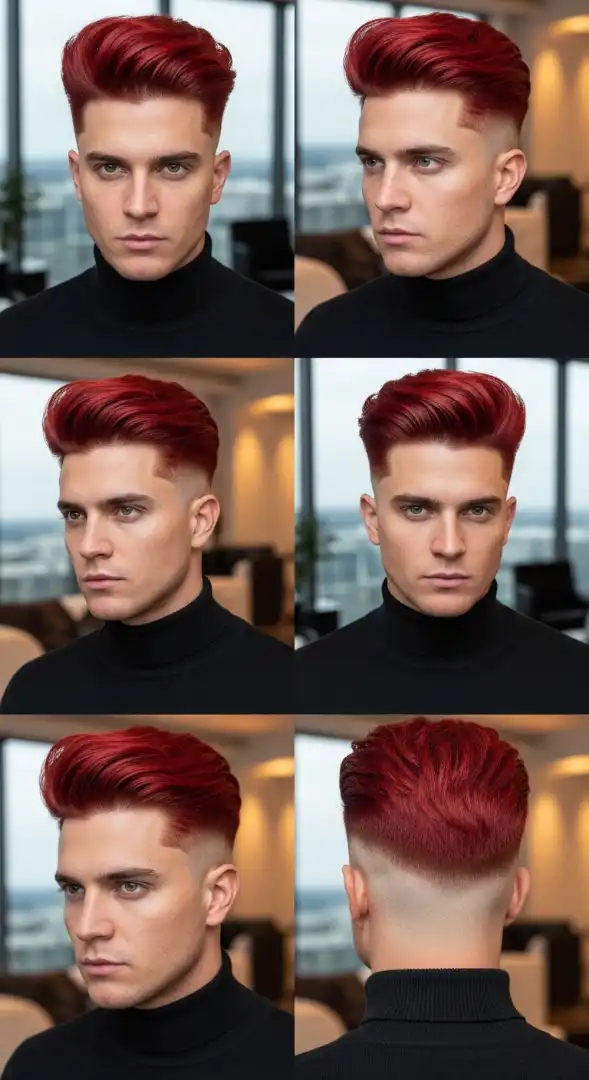
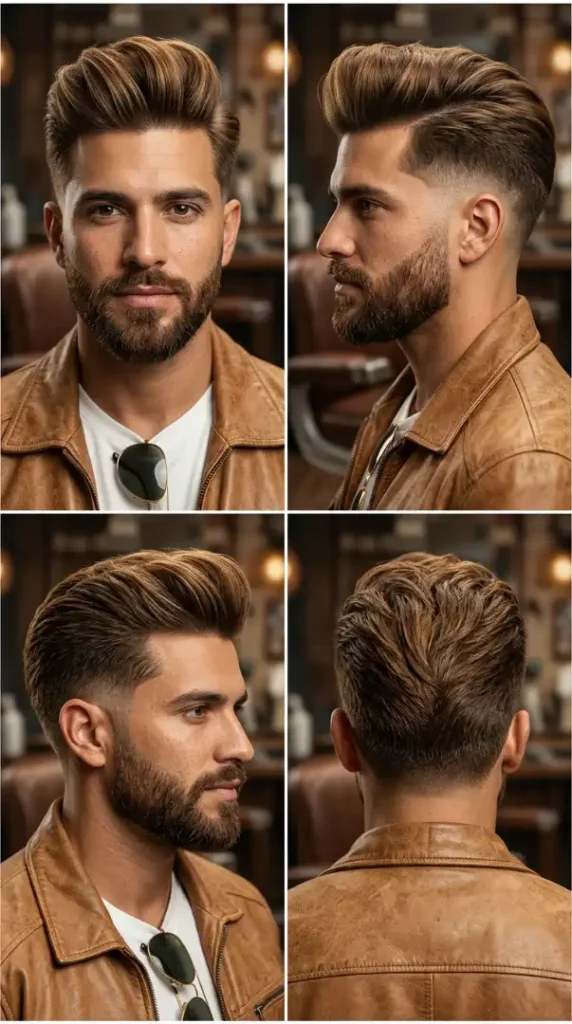
The Vintage Pompadour Revival brings back old-school height and structure with a modern high fade underneath, giving it enough contrast and edge to avoid looking dated or costume-like.
Best Face Shapes for The Vintage Pompadour Revival
Heart and round face shapes benefit most from The Vintage Pompadour Revival because the tall front volume elongates the face and shifts visual weight upward and away from a narrower chin or fuller cheeks. Oval faces carry the height with ease thanks to naturally balanced proportions. Long or oblong faces should avoid excessive height at the front and instead ask for a more moderate, rounded pompadour shape. Square faces should keep the sides slightly less tight to soften the contrast against the tall top.
Grooming Kit You’ll Need
Clippers: Andis Master (Model 01557) with a zero-gapped blade for the high fade. Trimmer/Outliner: Andis T-Outliner (Model 04710) for the crisp sideburn and hairline detail. Finishing Tools: A round boar-bristle brush for root lift while blow-drying, plus a fine-tooth pompadour comb for the final shape and part. Styling Product: Layrite Superhold Pomade or Suavecito Firme Hold for maximum structure and shine control. Maintenance: A volumizing pre-styling spray such as Redken Guts 10 for extra root lift before the pomade goes in. Use a dime-to-nickel-sized amount of pomade, blow-dry upward and back with a round brush, then comb into the final sweep.
How Often You Need a Touch-Up
Maintenance level: High. This cut requires a barber visit every 2–3 weeks to keep the high fade sharp beneath the pompadour’s height. Daily styling takes 10–12 minutes given the blow-dry, product, and comb-back process required to rebuild the structured shape each morning. Monthly cost typically runs $85–$115. This is an advanced home-maintenance style — the pompadour shaping technique takes real practice, and the fade underneath should stay with a professional barber.
Exact Words to Say to Your Barber
Say this to your barber: “I want a Vintage Pompadour Revival with a high fade starting at the parietal ridge. Take the top to about 4 inches at the front, tapering slightly toward the back for the sweep. Blend the fade from skin at the bottom up to the top length, keeping strong contrast. Give me a sharp, defined side part on the left. Taper the beard into the fade at the jaw. Finish with a crisp lineup at the temples and hairline, and a clean tapered nape at the back.”
If daily blow-drying and structured styling sounds like a bigger commitment than you’re ready for, the last style on this list wraps things up with the easiest, most forgiving cut in the entire lineup.
13 of 13 — The Effortless Messy Crop

The Effortless Messy Crop
The Effortless Messy Crop closes out this list because it’s the most forgiving, lowest-effort style of the bunch — a short, tousled cut that looks intentional even when you’ve done almost nothing to it.
Best Face Shapes for The Effortless Messy Crop
Square face shapes suit The Effortless Messy Crop particularly well since the light texture on top softens the forehead without hiding a strong jawline. Oval faces have full flexibility with this cut and can wear the fringe at almost any length. Round faces should ask for slightly shorter sides and more height at the crown to avoid adding width. Diamond faces do well too, since the soft, undone texture balances sharper cheekbones.
Grooming Kit You’ll Need
Clippers: Wahl Magic Clip (Model 5049-400) for a simple, low-contrast side taper. Trimmer/Outliner: Andis T-Outliner (Model 04710) for light cleanup around the ears only — no heavy lineup needed. Finishing Tools: None required beyond a towel and fingers; this cut avoids combs to preserve the tousled effect. Styling Product: A texturizing clay such as Baxter of California Clay Pomade, used sparingly for a matte, piecey finish. Maintenance: None beyond regular washing. Use a pea-sized amount of clay, rub between palms, and tousle through damp or dry hair with fingers only.
How Often You Need a Touch-Up
Maintenance level: Low. A trim every 4–5 weeks keeps the shape intentional without letting it get shapeless. Daily styling takes just 2–3 minutes: a touch of product, a quick tousle, done. Monthly cost runs roughly $45–$70. This is the most beginner-friendly home-maintenance style on the entire list, ideal for men who want a genuinely low-effort routine that still looks put-together.
Exact Words to Say to Your Barber
Say this to your barber: “I want an Effortless Messy Crop — keep the sides low-contrast with a soft taper, not a hard fade. Take the top to about 2 inches, texture it heavily with point cutting for a piecey, uneven finish. Cut the fringe short and choppy, not falling past my eyebrows. No hard lineup or defined hairline — I want it to look naturally undone, like I just towel-dried it and left.”
That wraps the full lineup — thirteen completely different silhouettes, from razor-sharp geometry to zero-effort texture, so there’s a version of “your look” here no matter how much time you’re willing to spend in front of the mirror each morning.