13 Trendy Highlight Ideas For Men That’ll Transform Your Look
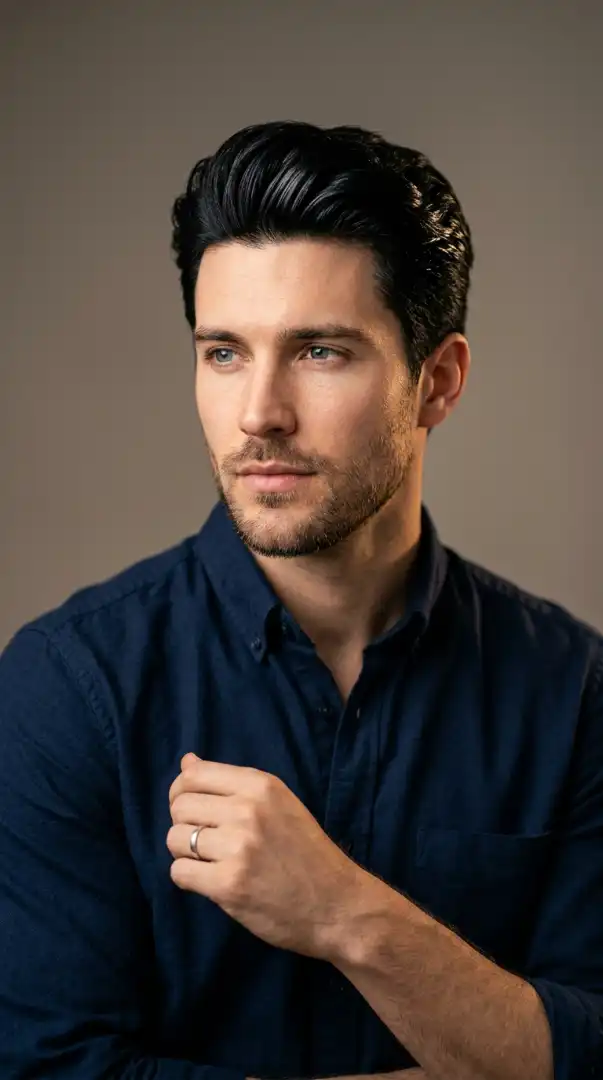
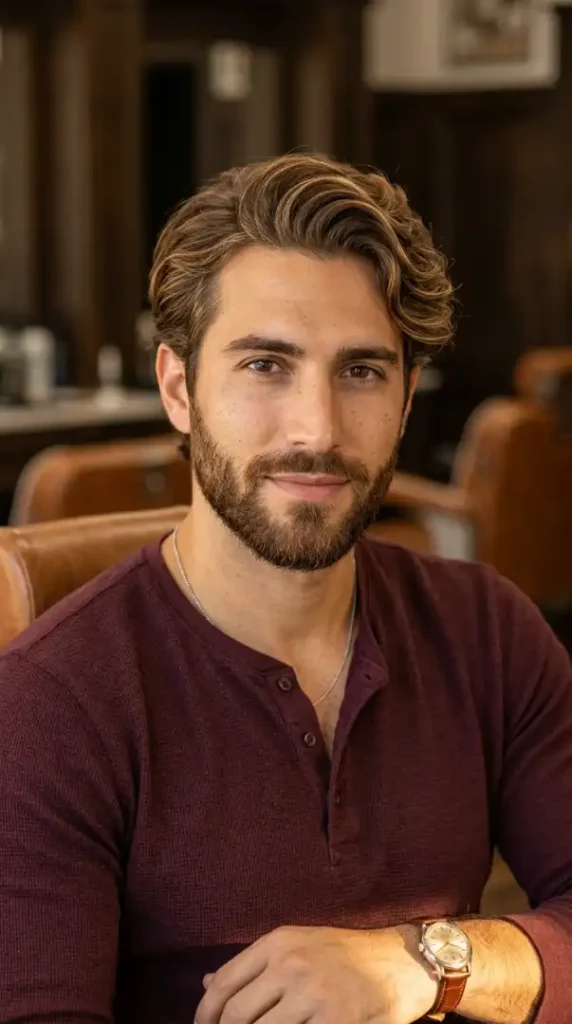
1 of 13 — The Honey Fusion Highlight
Face Shape Compatibility With Honey Fusion Highlights
Square and oval face shapes benefit most dramatically from honey fusion highlights because the warm blonde tones act as natural contour lines that draw attention upward and inward toward the face. The lighter highlights at the temples create visual width balance for longer faces, while the same placement on round faces adds angular definition. Heart-shaped faces gain proportion when honey tones are concentrated toward the chin area, creating a subtle lifting effect. Diamond faces see the most dramatic benefit from strategic placement along the cheekbones, as the warmth highlights your natural bone structure without adding visual width at the temples. Oblong faces should request highlights distributed throughout to break up vertical length, avoiding concentration at the temples only. The beauty of honey fusion is that your barber can customize placement specifically for your face shape.
Grooming Kit Requirements For Honey Fusion Maintenance
Maintaining honey fusion highlights requires a specific toolkit beyond standard hair care:
• Color-Safe Shampoo: Puracy Natural Shampoo or SheaMoisture Raw Shea Butter restorative shampoo (sulfate-free formulas that preserve color vibrancy) • Purple Toner Shampoo: Shimmer Lights Purple Shampoo (used weekly to neutralize any brassy undertones in blonde highlights) • Deep Conditioning Treatment: Olaplex No. 3 Hair Perfector or SheaMoisture intensive mask (apply weekly to restore moisture lost during highlighting process) • Heat Protectant Spray: TRESemmé TRES Two Mega Strengthening Heat Tamer Spray (essential before blow-drying or styling with heat tools) • Styling Product: Hanz de Fuko Quicksand (matte finish, high hold, works beautifully with highlighted texture) • Glossing Oil: Moroccan Argan Oil by Marc Anthony (dime-sized amount applied to damp hair before styling to enhance highlight shine) • Hair Clip Set: For sectioning during application or touch-ups (Elim & Elina professional non-slip clips)
Product amounts: One pump of purple shampoo per wash, pea-sized amount of styling product, thin stream of argan oil distributed through fingers.
Maintenance Level For Honey Fusion Highlights
Honey fusion highlights require a MEDIUM maintenance commitment that most men find manageable once they establish a routine.
Barber/salon visit frequency: Initial application takes 90-120 minutes with a skilled colorist. Touch-ups are required every 6-8 weeks to refresh faded highlights and maintain vibrancy as your hair grows. Root touch-ups are gentler than full applications and take 45-60 minutes.
Daily styling time: 5-8 minutes with heat tools. Blow-dry for volume and direction, style with matte product (dime-sized amount) worked through with fingers or a comb for texture.
Product routine: Three-step process each morning. Step one: purple shampoo wash (weekly), regular shampoo on other days. Step two: apply heat protectant spray before blow-drying. Step three: work styling product through damp hair and shape with fingers or brush.
Growth pattern management: Honey fusion looks fresh for approximately 4-6 weeks post-application. After week 4, you’ll notice the highlighted strands blending into your natural color as new growth emerges. By week 8, the demarcation line becomes noticeable at the roots.
Cost consideration: Initial application costs $150-300 depending on stylist location and experience. Touch-ups run $75-150 every 6-8 weeks. Monthly maintenance cost averages $60-100 including specialized products (purple shampoo, toner, conditioning treatments).
Difficulty rating: Beginner-friendly for home maintenance. The daily routine is simple once established. Touch-ups and re-applications should be done by a professional colorist.
Barber Talk: The Exact Script For Honey Fusion Highlights
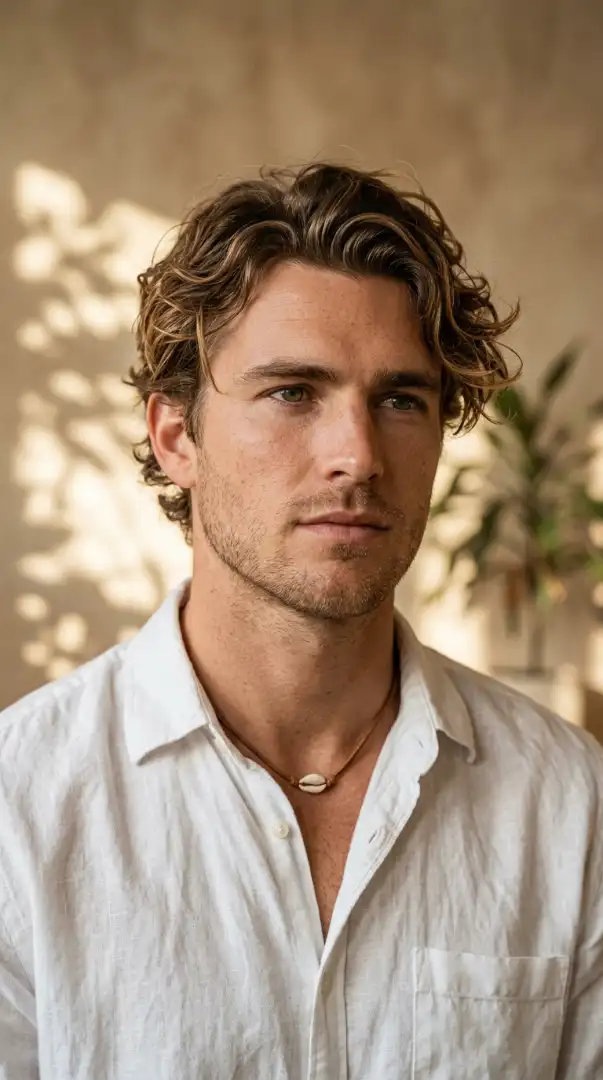
Say this to your barber or colorist: “I want honey fusion highlights added to my natural light brown hair. I’m looking for dimensional warmth without bleached-out blonde. Start with highlights around the temple area and throughout the crown where natural light would hit. Use a honey blonde shade that’s 2-3 shades lighter than my base color — something that blends seamlessly rather than contrasts sharply. I want the highlights distributed naturally, not chunky or striped. Apply the color using a balayage technique so the placement looks sun-kissed and organic. Add some subtle highlights through the beard area too if the beard is visible. Use a glossing treatment afterward to seal the color and add shine. I’ll commit to purple shampoo weekly to maintain vibrancy and prevent brass. Schedule me for a 6-week touch-up appointment.”
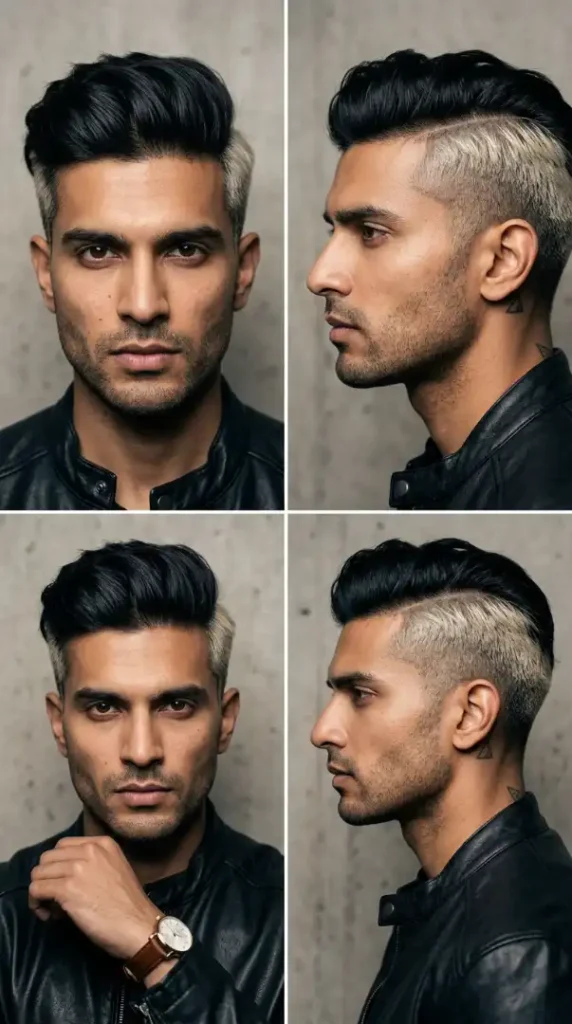
2 of 13 — The Platinum Edge Diptych
Face Shape Compatibility With Platinum Edge Undercuts
Oblong and rectangular face shapes see the most dramatic benefit from platinum edge undercuts because the high-contrast tones create visual interruption that breaks up excessive length. Square faces gain angular emphasis when platinum sections are placed strategically along the temples, amplifying the jawline’s natural strength. Oval faces are the most versatile canvas for this look — platinum can be positioned anywhere and maintain balance. Round faces benefit most when platinum is concentrated toward the crown and temples, avoiding concentration at the nape that might add width. Heart-shaped faces should request platinum highlights along the jawline and temples to balance a narrower chin. Diamond faces gain drama when highlights emphasize the cheekbones, creating a sculpted effect. Avoid platinum edges entirely on faces with wider jawlines — the stark contrast will over-emphasize width.
Grooming Kit Requirements For Platinum Edge Maintenance
Platinum sections require aggressive maintenance because bleaching causes cumulative damage and color fades rapidly:
• Professional-Grade Bleach: Wella Blondor or Schwarzkopf Igora with 20 or 30 volume developer (required for lifting jet black to platinum) • Color Depositing Shampoo: Wella T18 toner or Schwarzkopf Igora Vario Blonde (applied weekly to maintain platinum tone and prevent yellowing) • Strengthening Conditioner: Olaplex No. 3 Hair Perfector (application after every wash to rebuild bonds damaged by bleaching) • Bond-Building Treatment: K18 Leave-In Molecular Repair Hair Mask (daily use on platinum sections to prevent breakage) • Purple Toner: Shimmer Lights Purple Shampoo (used bi-weekly to neutralize brass in platinum strands) • Heat Protectant: Bumble and Bumble Thickening Full Form Mousse (essential before blow-drying bleached sections) • Styling Pomade: American Crew Fiber (medium hold, works with both jet black and platinum textures) • Leave-In Oil: Moroccan Argan Oil by Marc Anthony (thin application to platinum sections only to maintain shine)
Product amounts: Pea-sized amount of K18 treatment, thin stream of argan oil applied only to platinum sections, standard styling product amount.
Maintenance Level For Platinum Edge Undercuts
Platinum edge undercuts require HIGH maintenance commitment suitable for men who prioritize appearance and have budget flexibility.
Barber/salon visit frequency: Initial color application requires 120-150 minutes with an experienced colorist skilled in bleaching dark hair. Touch-ups are needed every 4-5 weeks because platinum fades noticeably and new black root growth becomes visible. Structural cuts between color applications can happen every 3 weeks to maintain undercut definition.
Daily styling time: 8-12 minutes with heat tools and precision styling. Blow-dry in direction of hair growth, use pomade for texture and definition, possibly use clippers to refresh undercut sections weekly.
Product routine: Five-step morning process. Step one: wash with color-depositing shampoo (3 times weekly). Step two: apply K18 treatment to damp platinum sections. Step three: apply heat protectant spray. Step four: blow-dry with directional control. Step five: work pomade through for final styling and shape.
Growth pattern management: Platinum remains visually fresh for 2-3 weeks post-application. By week 3, yellowing becomes apparent in platinum sections. By week 4, new black root growth at the scalp is noticeable. By week 5, the look deteriorates significantly and touch-up becomes necessary.
Cost consideration: Initial bleaching and toning appointment costs $200-350 depending on colorist expertise and location. Touch-up appointments every 4-5 weeks cost $100-175. Specialized products (K18, Olaplex, professional toners) add $40-60 monthly to maintenance costs. Total monthly investment: $130-250.
Difficulty rating: Advanced home maintenance. Bleaching black hair to platinum carries significant damage risk — this should only be attempted by professional colorists. Daily styling is intermediate level — requires practice to achieve the sharp, intentional look without appearing sloppy.
Barber Talk: The Exact Script For Platinum Edge Undercuts
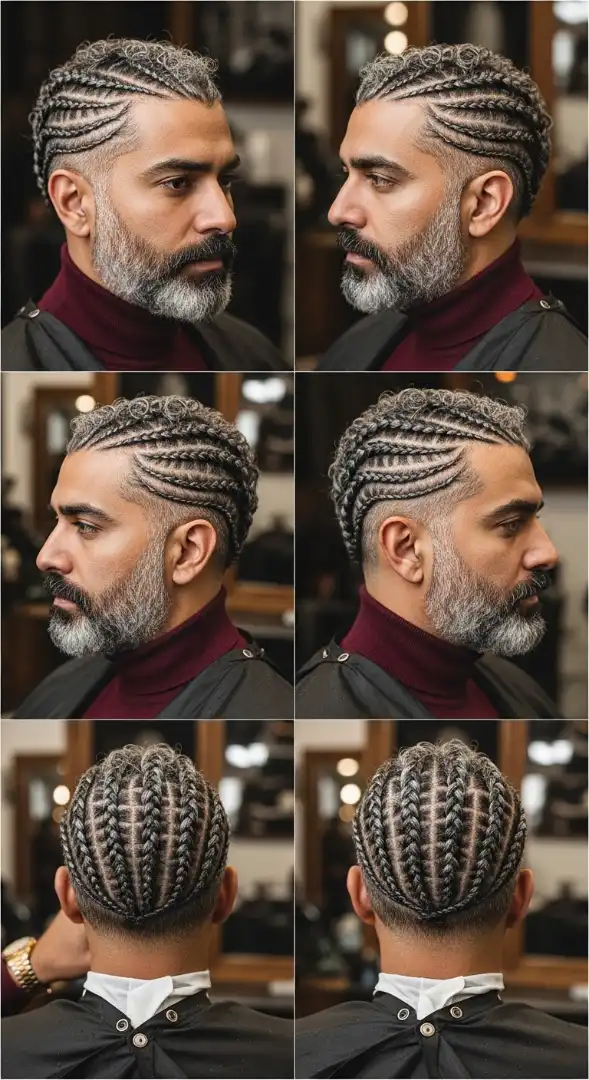
Say this to your colorist: “I want a high-contrast platinum blonde undercut against my natural jet black hair. Bleach the undercut sections completely — I want true platinum, not yellow-blonde. The undercut line should start at the temple and extend down the back, with at least 2-3 inches of platinum visible when my hair is styled back. After bleaching, tone with a platinum toner to neutralize any remaining warmth. Apply a glossing treatment to seal the color and add shine. I’ll commit to weekly color-depositing shampoo and K18 treatment to maintain vibrancy and prevent damage. Schedule me for touch-ups every 4 weeks before yellowing becomes noticeable.”
3 of 13 — The Rose Gold Blend Triptych
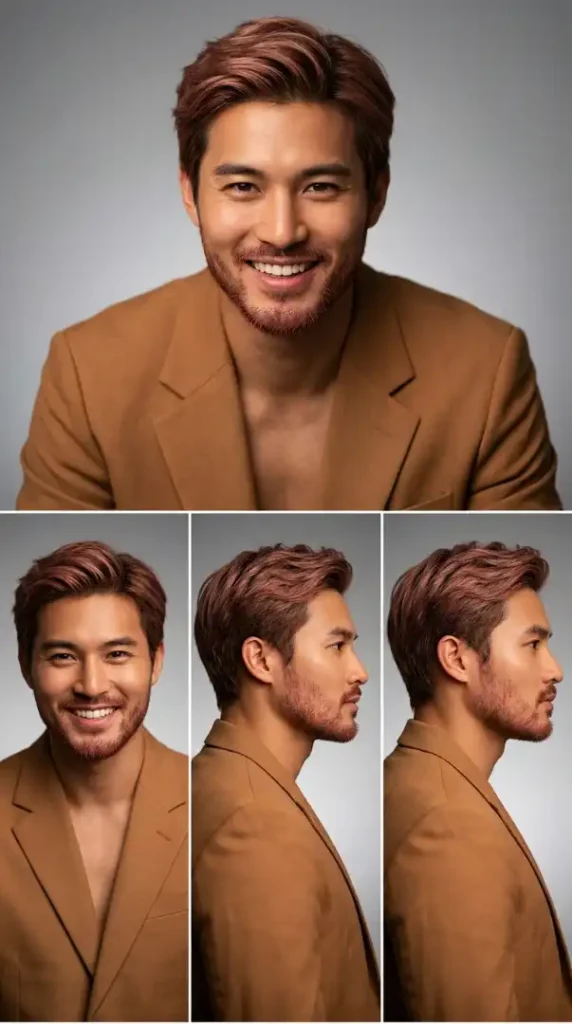
Face Shape Compatibility With Rose Gold Blends
Diamond and heart-shaped faces benefit most dramatically from rose gold because the warm tones naturally draw light toward the cheekbones and jaw, enhancing angular structure. Square faces gain warmth perception when rose gold is distributed throughout, softening the blockiness while maintaining strength. Oval faces are the most versatile canvas for rose gold — the warmth complements virtually any skin tone. Round faces gain definition when rose gold is concentrated at the temples and crown, creating visual height. Oblong faces benefit from rose gold distributed throughout to add visual width, avoiding concentration at the temples that might over-lengthen. Even warm-skinned men with traditionally “cool-toned” coloring see dramatic improvement from rose gold — the undertones work as a universal flattering warmer.
Grooming Kit Requirements For Rose Gold Blend Maintenance
Rose gold requires less aggressive maintenance than platinum but more targeted care than basic haircuts:
• Sulfate-Free Shampoo: SheaMoisture Raw Shea Butter restorative shampoo or Puracy Natural Shampoo (sulfate-free formulas preserve warm tones and don’t strip color) • Rose Gold Enhancing Conditioner: Wella Color Charm Demi-Permanent or SheaMoisture intensive moisture mask (deposits subtle rose undertones and seals color) • Warm-Tone Glossing Treatment: L’Oreal Casting Creme Gloss in Rose or Warm Brown (monthly application to refresh rose gold vibrancy) • Heat Protectant: TRESemmé TRES Two Mega Strengthening Heat Tamer (essential before blow-drying to prevent warm tones from fading) • Styling Product: Hanz de Fuko Quicksand or American Crew Fiber (matte finish works beautifully with rose gold dimension) • Argan Oil for Shine: Moroccan Argan Oil by Marc Anthony (dime-sized amount applied to slightly damp hair to enhance golden warm glow) • Wide-Tooth Comb: Denman boar bristle brush (gentle combing prevents damage to color-treated strands)
Product amounts: Standard shampoo and conditioner amounts, pea-sized styling product, thin stream of argan oil distributed through fingers.
Maintenance Level For Rose Gold Blends
Rose gold blends require MEDIUM maintenance suitable for men who want noticeable color without high-frequency salon visits.
Barber/salon visit frequency: Initial rose gold application takes 60-90 minutes with a skilled colorist. Touch-ups are required every 8-10 weeks to refresh faded warmth and maintain vibrancy. Rose gold fades more gracefully than platinum — it doesn’t turn brassy yellow but rather becomes more subtle and blends toward natural brown.
Daily styling time: 5-7 minutes with optional heat tools. Blow-dry for volume and direction, style with matte product (dime-sized amount) worked through with fingers for texture. Rose gold looks phenomenal even with minimal styling — the warmth adds dimension without requiring precise styling daily.
Product routine: Three-step simple process. Step one: wash with sulfate-free shampoo (4-5 times weekly). Step two: apply warm-tone conditioner (2-3 times weekly). Step three: apply heat protectant and style as desired.
Growth pattern management: Rose gold remains visually fresh and vibrant for 4-6 weeks post-application. After week 6, warmth gradually becomes more subtle as natural brown growth appears. By week 8-10, the rose gold effect fades noticeably but the overall result still looks intentional and expensive rather than grown-out.
Cost consideration: Initial application costs $120-220 depending on colorist location and experience. Touch-ups every 8-10 weeks run $60-120. Specialized products (rose gold conditioner, glossing treatment) add $25-40 monthly. Total monthly investment: $50-100.
Difficulty rating: Beginner-friendly home maintenance. The daily routine is simple once established. Glossing treatments and reapplication should be done by a professional colorist.
Barber Talk: The Exact Script For Rose Gold Blends
Say this to your colorist: “I want rose gold tones blended throughout my natural brown hair. I’m looking for warmth and dimension without aggressive color change — something that looks expensive and intentional rather than trendy. Use a demi-permanent rose gold formula that will deposit warm undertones gradually. Focus distribution on the mid-lengths and ends rather than roots, creating dimension from above. Add subtle rose to my facial hair if it’s visible — something that complements the hair color. I’ll commit to sulfate-free shampoo and warm-tone conditioner to maintain vibrancy. Schedule me for an 8-week touch-up appointment.”
4 of 13 — The Shadow Fade Power Cut (Full 2×2 Collag
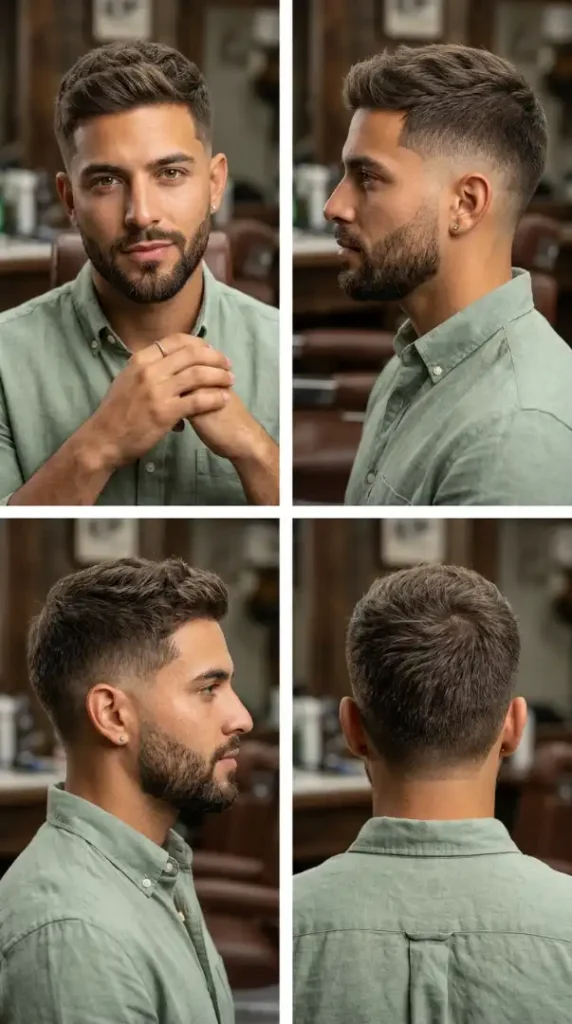
Face Shape Compatibility With Shadow Fade Power Cuts
Square and oblong face shapes gain optimal benefit from the Shadow Fade because the subtle gradient transitions avoid over-emphasizing angular features while the controlled length on top adds height and balance. Oval faces are universally compatible — the shadow fade’s understated elegance works on any proportions. Round faces benefit from the angular precision of the shadow fade, which creates definition without harsh contrast. Diamond and heart-shaped faces see dramatic improvement because the fade’s soft transitions avoid drawing attention to narrower chin areas. Rectangle faces should request slightly more volume on top to counter the lengthening effect of the sides. Even round faces with softer features gain angular definition from the precise fade lines without looking overly severe.
Grooming Kit Requirements For Shadow Fade Power Cuts
Shadow fade maintenance requires barbering-specific tools but significantly less product-heavy maintenance than color-treated styles:
• Clippers: Wahl Magic Clip (Model 5049-400) or Andis Master (Model 01557) for fade application with precision guards • Trimmer/Outliner: Andis T-Outliner (Model 04710) for edge work, lineup, and nape detailing • Guard Set: Full set of clipper guards (sizes 0.5mm through 25mm) for precise gradient control • Scissors: Barber scissors for point-cutting texture into top length, 6-inch length for control • Comb: Kent 81T fine-tooth comb for sectioning and parting precision, Denman boar bristle brush for styling • Styling Product: American Crew Fiber (matte finish, high hold) or Hanz de Fuko Quicksand for texture and definition • Beard Oil: Honest Amish beard oil or Viking Revolution for facial hair conditioning and definition • Beard Balm: Optional for fuller beard styling if facial hair is thick
Product amounts: Dime-sized amount of styling product worked through fingers, pea-sized amount of beard oil applied to damp beard.
Maintenance Level For Shadow Fade Power Cuts
Shadow fade power cuts require MEDIUM maintenance that most men find very manageable with proper barber visits.
Barber/salon visit frequency: Initial cut requires 45-60 minutes with a skilled barber experienced in shadow fade technique and beard grooming. Touch-ups are needed every 3 weeks to maintain fade line precision and shadow gradient clarity. The shadow fade deteriorates noticeably after 3 weeks as regrowth creates visual blur in the gradient transition.
Daily styling time: 5-7 minutes with optional heat tools. Blow-dry slightly damp hair if desired, work styling product through with fingers for texture and definition. The cut is designed to look intentional even with minimal styling — the structural precision handles much of the visual work.
Product routine: Three-step simple process. Step one: wash with regular shampoo 4-5 times weekly (no special color-safe products needed). Step two: apply beard oil to damp facial hair (if beard is visible). Step three: apply styling product to damp or dry hair and shape with fingers or comb.
Growth pattern management: Shadow fade remains visually fresh for 2-3 weeks. By week 2, the gradient blur becomes slightly noticeable but still looks intentional. By week 3, regrowth is visible and the fade needs attention. By week 4+, the look deteriorates and touch-up becomes necessary.
Cost consideration: Initial cut costs $40-75 depending on barbershop location and barber reputation. Touch-ups every 3 weeks run $25-50. Specialized products (styling product, beard oil) add $10-20 monthly. Total monthly investment: $45-80.
Difficulty rating: Beginner-friendly home maintenance. The daily routine is simple — styling product and finger-combing are all that’s required. The shadow fade application itself requires professional barber expertise and should not be attempted at home.
Barber Talk: The Exact Script For Shadow Fade Power Cuts
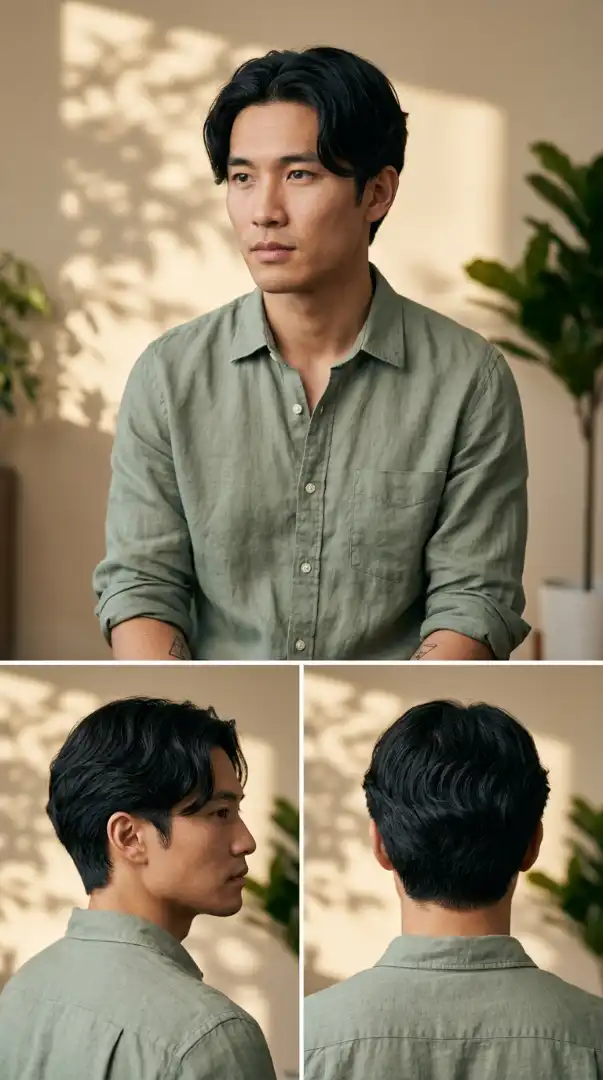
Say this to your barber: “I want a shadow fade power cut with a mid-starting point at the temporal area. Use a guard progression to create a smooth, gradual blend rather than a sharp line — I’m looking for subtle gradient transition. Keep the top length at 3 inches for styling versatility. Cut the top with point-cutting technique to add texture without bulk. Fade the sides and back using a progression that blends smoothly, aiming for a ‘shadow’ effect where the fade is visible but subtle. Shape the beard using the same fade technique to blend the beard into the neck — taper rather than line. Create a crisp lineup at the front hairline and temples, but keep the overall fade soft. Finish with a light beard oil for definition and moisture.”
5 of 13 — The Honey Ash Blend Single Pan
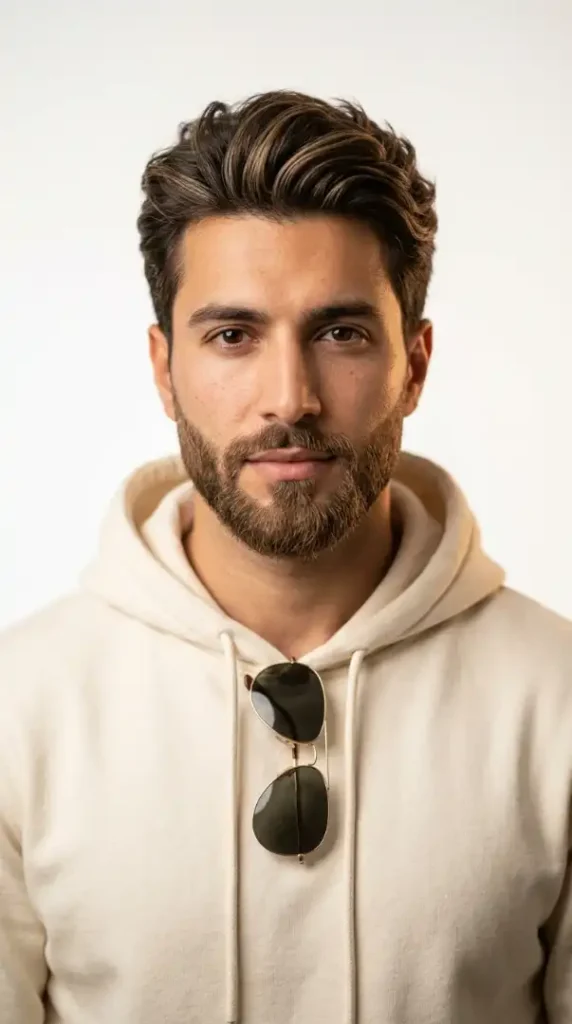
Face Shape Compatibility With Honey Ash Blends
Heart and diamond-shaped faces benefit most dramatically from honey ash because the warm neutral tones add depth perception that doesn’t overemphasize cheekbones or temples. Oval and square faces are universally compatible — the balanced warmth and neutral undertones work beautifully on any structure. Round faces gain dimension that counteracts visual width when honey ash is distributed throughout. Oblong faces see improvement from the subtle warmth that adds visual width perception. Even warm-skinned men with traditionally “challenging” face proportions find honey ash works because the color balance is intentionally designed to complement rather than contrast with natural features.
Grooming Kit Requirements For Honey Ash Blend Maintenance
Honey ash requires moderate product maintenance but significantly less intensive care than platinum coloring:
• Neutral-Tone Shampoo: SheaMoisture Raw Shea Butter restorative shampoo or Puracy Natural (sulfate-free formulas that don’t strip ash undertones) • Ash-Tone Conditioner: Wella Color Charm Demi-Permanent in Ash Blonde or Shimmer Lights Conditioning Shampoo (deposits subtle ash undertones weekly) • Color Depositing Treatment: L’Oreal Casting Creme Gloss in Ash Blonde or Cool Brown (monthly application to refresh honey ash vibrancy) • Heat Protectant: TRESemmé TRES Two Mega Strengthening Heat Tamer (essential before heat styling to prevent warm tones from fading) • Styling Product: Hanz de Fuko Quicksand or American Crew Fiber (matte finish complements honey ash dimension beautifully) • Beard Oil: Viking Revolution or Honest Amish beard oil (keeps facial hair soft and color-protected if beard is visible) • Leave-In Argan Oil: Moroccan Argan Oil (thin application to damp hair to enhance honey ash glow)
Product amounts: Standard shampoo and conditioner amounts, pea-sized styling product, thin stream of argan oil distributed through fingers.
Maintenance Level For Honey Ash Blends
Honey ash blends require MEDIUM maintenance suitable for men who want sophisticated color without platinum-level commitment.
Barber/salon visit frequency: Initial application takes 75-100 minutes with a skilled colorist. Touch-ups are required every 10-12 weeks to refresh faded warmth and maintain vibrancy. Honey ash fades more gracefully than other techniques — it becomes increasingly subtle rather than turning brassy or yellow.
Daily styling time: 5-7 minutes with optional heat tools. Blow-dry for volume, work styling product through for texture. Honey ash looks phenomenal with minimal styling — the color adds enough visual interest that precise styling isn’t required daily.
Product routine: Three-step simple process. Step one: wash with sulfate-free shampoo 4-5 times weekly. Step two: apply ash-tone conditioner twice weekly to maintain neutral undertones. Step three: apply heat protectant before blow-drying and style with matte product.
Growth pattern management: Honey ash remains visually fresh for 6-8 weeks post-application. After week 8, warmth becomes more subtle and blends toward natural brown. By week 10-12, the honey ash effect fades noticeably but still looks intentional rather than grown-out.
Cost consideration: Initial application costs $130-220 depending on colorist location and experience. Touch-ups every 10-12 weeks run $70-130. Specialized products (ash-tone conditioner, glossing treatment) add $30-50 monthly. Total monthly investment: $50-100.
Difficulty rating: Beginner-friendly home maintenance. The daily routine is simple once established. Glossing treatments and reapplication should be done by a professional colorist.
Barber Talk: The Exact Script For Honey Ash Blends
Say this to your colorist: “I want honey ash blend tones throughout my dark brown hair. I’m looking for warmth balanced with cool neutral undertones — something that looks expensive and sophisticated without being obviously colored. Use a demi-permanent formula that deposits both honey warmth and ash coolness. Focus application on mid-lengths and ends to create dimension. Add honey ash to my facial hair if visible — I want everything to coordinate. Apply a glossing treatment afterward to seal the color and add shine. I’ll commit to ash-tone conditioner twice weekly to maintain balance. Schedule me for a 10-week touch-up appointment.
6 of 13 — The Copper Sunrise Diptych
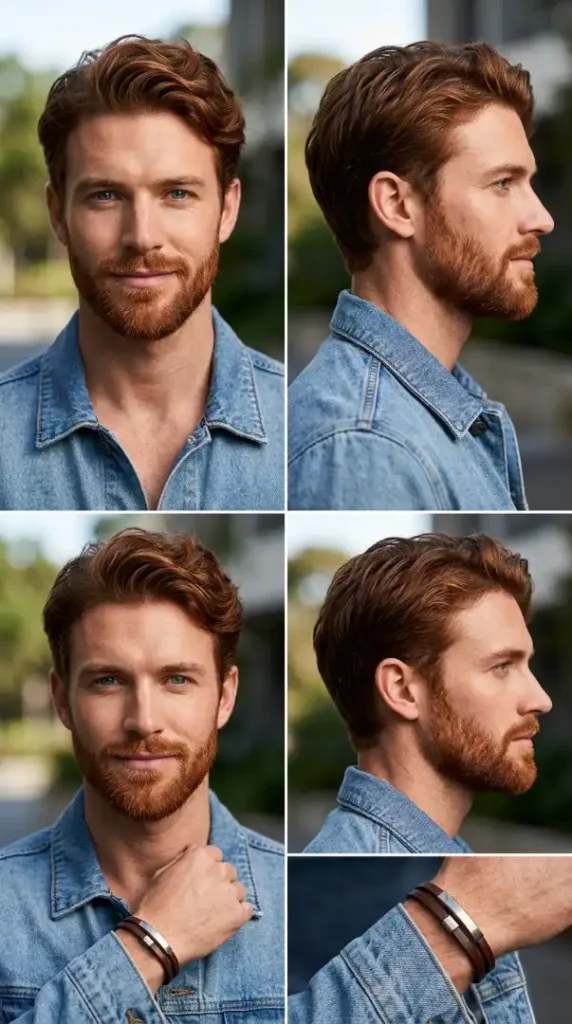
Face Shape Compatibility With Copper Sunrise Colors
Oval and fair-skinned face shapes benefit most dramatically from copper sunrise because the warm tones create luminosity and radiance that flatters lighter complexions. Square faces gain warmth perception when copper is distributed throughout, softening angular features while maintaining structure. Diamond faces see dramatic improvement because copper tones naturally draw light toward cheekbones and temples. Round faces benefit from copper distributed throughout, adding dimension that counteracts visual width. Heart-shaped faces gain proportion when copper is concentrated toward the jaw and temples, creating lifting effect. Oblong faces see improvement from warm copper that adds visual width perception. Fair-skinned men particularly benefit from copper sunrise — the warm tones create radiance against lighter complexions that honey or ash tones might wash out.
Grooming Kit Requirements For Copper Sunrise Maintenance
Copper sunrise requires warm-tone maintenance to prevent fading toward orange or brassy yellows:
• Sulfate-Free Shampoo: SheaMoisture Raw Shea Butter or Puracy Natural Shampoo (prevents copper stripping and preserves warmth) • Copper-Enhancing Conditioner: Wella Color Charm Demi-Permanent in Copper or Deep Auburn (deposits copper warmth and seals color weekly) • Color-Depositing Shampoo: L’Oreal Casting Creme Gloss in Copper or Auburn (bi-weekly application to refresh copper vibrancy) • Blue-Toner Treatment: Shimmer Lights Blue or Wella T-14 (monthly use to neutralize any brassy tendencies that copper can develop) • Heat Protectant: TRESemmé TRES Two Mega Strengthening Heat Tamer (essential before blow-drying to prevent copper fading) • Styling Product: Hanz de Fuko Quicksand or American Crew Fiber (matte finish complements copper dimension beautifully) • Shine-Enhancing Oil: Moroccan Argan Oil by Marc Anthony (thin application to damp hair to enhance copper glow) • Beard Oil: Beard oil with warm undertones for coordinating facial hair coloring if beard is visible
Product amounts: Standard shampoo and conditioner, pea-sized styling product, thin stream of argan oil.
Maintenance Level For Copper Sunrise Colors
Copper sunrise requires MEDIUM-HIGH maintenance suitable for men committed to vibrant color.
Barber/salon visit frequency: Initial copper sunrise application takes 90-120 minutes with a skilled colorist. Touch-ups are required every 6-8 weeks to refresh fading copper and maintain vibrancy. Copper is a warm tone that fades toward orange and yellow naturally, so touch-ups prevent brassy deterioration.
Daily styling time: 6-8 minutes with heat tools. Blow-dry for volume, work styling product through for texture. Copper tones benefit from heat styling — the warmth shows more dramatically when styled intentionally.
Product routine: Four-step process. Step one: wash with sulfate-free shampoo 4-5 times weekly. Step two: apply copper-enhancing conditioner 2-3 times weekly. Step three: apply heat protectant before blow-drying. Step four: work styling product through and shape with fingers or brush.
Growth pattern management: Copper sunrise remains peak vibrant for 3-4 weeks post-application. After week 4, copper begins fading toward orange. By week 6, the fading is noticeable and orange undertones become apparent. By week 8, brassy yellow tones emerge and touch-up becomes necessary.
Cost consideration: Initial copper sunrise application costs $150-280 depending on colorist expertise. Touch-ups every 6-8 weeks run $80-150. Specialized products (copper conditioner, color-depositing shampoo, blue-toner) add $40-65 monthly. Total monthly investment: $100-150.
Difficulty rating: Intermediate home maintenance. Styling product application is simple, but the conditioner routine is more involved than lighter tones. Copper requires consistent product use to maintain vibrancy. Touch-ups and reapplication should be done by professional colorist.
Barber Talk: The Exact Script For Copper Sunrise Colors
Say this to your colorist: “I want a copper sunrise color applied to my auburn brown hair. I’m looking for warm, sunset-inspired tones that look vibrant and energetic in sunlight. Apply copper throughout the hair, focusing on mid-lengths and ends to create dimension. The copper should feel warm and lively, not orange. Add copper tones to my facial hair too for coordination. Use a glossing treatment afterward to seal the color and add shine. I understand copper fades toward orange, so I’ll commit to bi-weekly copper conditioner and monthly blue-toner treatments to maintain warmth. Schedule me for a 6-week touch-up appointment.”
7 of 13 — The Chestnut Espresso Triptych
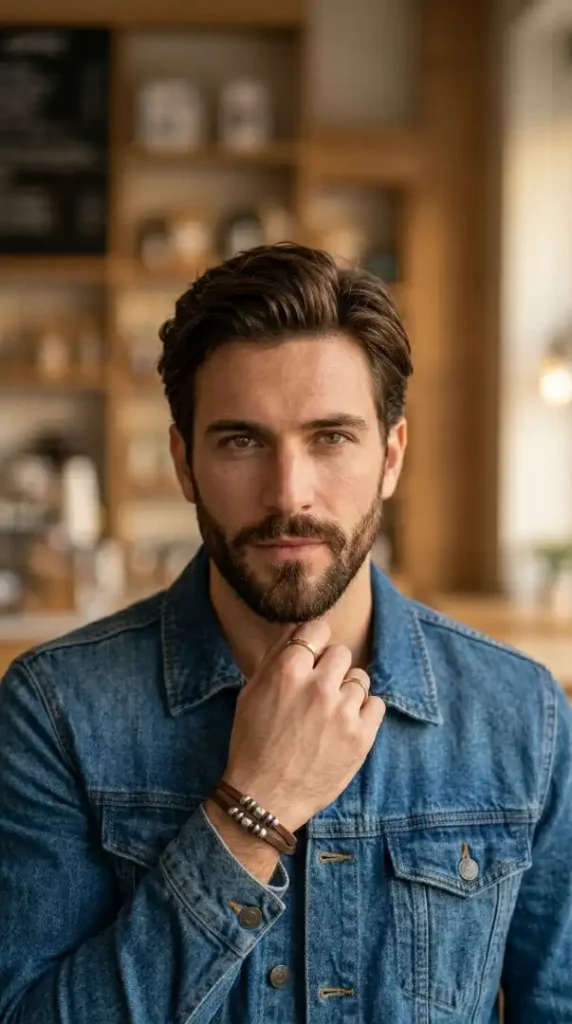
Face Shape Compatibility With Chestnut Espresso Colors
Oblong and rectangular face shapes benefit most dramatically from chestnut espresso because the warm, rich tones add dimension that doesn’t emphasize length. Square faces gain depth perception when espresso undertones are distributed throughout, adding visual interest while maintaining strength. Oval faces are universally compatible — chestnut espresso works beautifully on balanced proportions. Round faces benefit from the dark espresso undertones that add perceived dimension. Diamond faces gain sophisticated emphasis when espresso tones highlight cheekbones. Heart-shaped faces see improvement when espresso is concentrated toward jaw and temples. White and fair-skinned men particularly benefit from chestnut espresso — the warm undertones create richness against lighter complexions.
Grooming Kit Requirements For Chestnut Espresso Maintenance
Chestnut espresso requires warm-tone maintenance to preserve depth and prevent lightening toward basic brown:
• Sulfate-Free Shampoo: SheaMoisture Raw Shea Butter or Puracy Natural Shampoo (prevents espresso stripping and preserves dark undertones) • Espresso-Enhancing Conditioner: Wella Color Charm Demi-Permanent in Deep Brown or Dark Walnut (deposits espresso warmth and seals color) • Color-Depositing Shampoo: L’Oreal Casting Creme Gloss in Dark Brown or Espresso (monthly application to refresh espresso depth) • Heat Protectant: TRESemmé TRES Two Mega Strengthening Heat Tamer (essential before blow-drying to prevent warm tones from fading) • Styling Product: Hanz de Fuko Quicksand or American Crew Fiber (matte finish complements espresso richness beautifully) • Shine-Enhancing Oil: Moroccan Argan Oil by Marc Anthony (thin application to damp hair to enhance espresso depth and glow) • Beard Oil: Warm-toned beard oil for facial hair coordination if beard is visible
Product amounts: Standard shampoo and conditioner, pea-sized styling product, thin stream of argan oil.
Maintenance Level For Chestnut Espresso Colors
Chestnut espresso requires LOW-MEDIUM maintenance suitable for men wanting sophistication with realistic lifestyle fit.
Barber/salon visit frequency: Initial chestnut espresso application takes 60-90 minutes with a skilled colorist. Touch-ups are required every 10-12 weeks to refresh espresso depth. Chestnut espresso fades gracefully — it becomes lighter and less espresso-deep over time rather than turning brassy or yellow.
Daily styling time: 5-7 minutes with optional heat tools. Blow-dry for volume, work styling product through for texture. Chestnut espresso looks sophisticated with minimal styling — the depth adds visual richness without requiring precise daily styling.
Product routine: Three-step simple process. Step one: wash with sulfate-free shampoo 4-5 times weekly. Step two: apply espresso-enhancing conditioner twice weekly. Step three: apply heat protectant before blow-drying and style as desired.
Growth pattern management: Chestnut espresso remains visually fresh for 6-8 weeks post-application. After week 8, espresso depth gradually becomes more subtle and blends toward natural chestnut. By week 10-12, the espresso effect fades noticeably but the overall result still looks intentional rather than grown-out.
Cost consideration: Initial application costs $120-200 depending on colorist location and experience. Touch-ups every 10-12 weeks run $60-120. Specialized products (espresso conditioner, glossing treatment) add $25-35 monthly. Total monthly investment: $40-80.
Difficulty rating: Beginner-friendly home maintenance. The daily routine is simple once established. Espresso depth applications and reapplication should be done by professional colorist.
Barber Talk: The Exact Script For Chestnut Espresso Colors
Say this to your colorist: “I want chestnut espresso tones blended throughout my hair. I’m looking for rich, sophisticated depth without aggressive color change — something that looks expensive and intentional. Use a demi-permanent espresso formula that deposits warm dark undertones gradually. Apply throughout the hair, focusing on creating dimension rather than obvious color blocks. Add espresso warmth to my facial hair if visible — I want everything coordinated. Apply a glossing treatment afterward to seal the color and enhance shine. I’ll commit to sulfate-free shampoo and espresso-enhancing conditioner to maintain depth. Schedule me for a 10-week touch-up appointment.”
8 of 13 — The Jet Black Shine Single
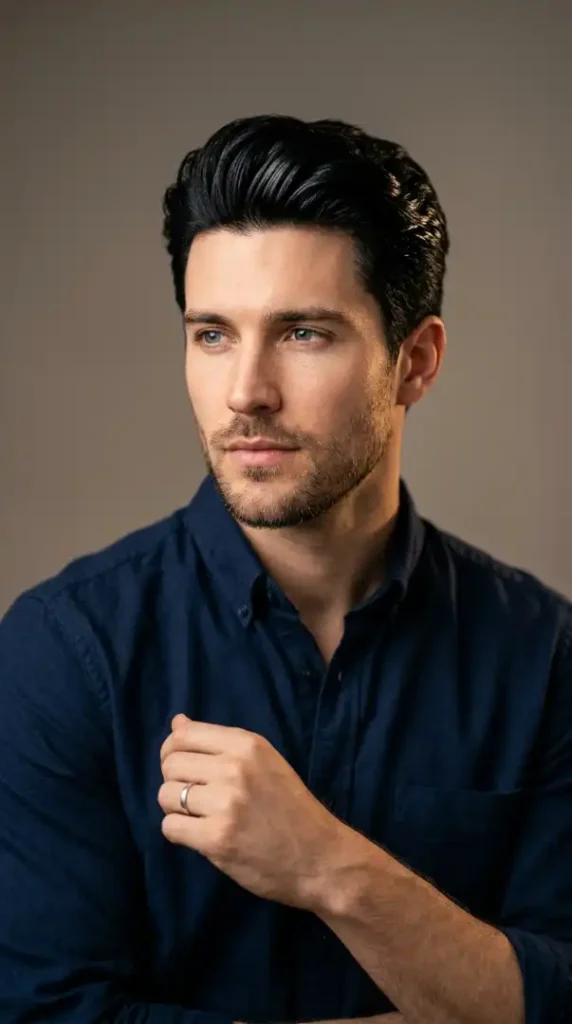
Face Shape Compatibility With Jet Black Shine
Round and square face shapes benefit most from jet black because the strong contrast emphasizes facial structure and creates angular definition. Fair-skinned men gain significant benefit — the contrast between pale skin and jet black creates striking visual impact that makes features appear sharper and more defined. Oblong faces see improvement when jet black is paired with slightly more volume on top to balance proportions. Oval faces are universally compatible with jet black — the balance works beautifully. Heart-shaped faces gain proportion when jet black is maintained with precision, avoiding visual weight concentration.
Grooming Kit Requirements For Jet Black Shine
Jet black maintenance requires shine-focused products rather than color-correction products:
• Clarifying Shampoo: Puracy Natural or SheaMoisture Raw Shea Butter (removes product buildup and enhances natural shine) • Shine-Enhancing Conditioner: SheaMoisture Raw Shea Butter intensive moisture mask or Olaplex No. 3 (seals hair cuticle for reflective shine) • Glossing Oil: Moroccan Argan Oil by Marc Anthony or Coconut Oil (dime-sized amount applied to damp hair creates mirror-like finish) • Heat Protectant: TRESemmé TRES Two Mega Strengthening Heat Tamer (essential before blow-drying to lock in shine) • Styling Product: Hanz de Fuko Quicksand or American Crew Fiber (matte finish for texture without dulling shine) • Shine Spray: CHI 44 Iron Guard or similar lightweight shine spray (optional final finishing step for enhanced reflectivity) • Beard Oil: Optional for facial hair coordination if beard is visible
Product amounts: Standard shampoo and conditioner, pea-sized styling product, thin stream of argan oil distributed through fingers.
Maintenance Level For Jet Black Shine
Jet black shine requires LOW maintenance suitable for men wanting polished appearance with minimal effort.
Barber/salon visit frequency: No color application required. Haircut visits every 3-4 weeks for precision and shape maintenance. Optional glossing treatments every 8-10 weeks if natural shine enhancement is desired (not required for jet black).
Daily styling time: 5-7 minutes with optional heat tools. Blow-dry slightly damp hair for maximum shine reflection, work styling product through with fingers for texture. Jet black shows shine beautifully with minimal styling — the natural reflectivity handles much of the visual work.
Product routine: Three-step simple process. Step one: wash with clarifying shampoo (weekly) or regular shampoo (other days). Step two: apply shine-enhancing conditioner (3-4 times weekly). Step three: apply glossing oil to damp hair and style with fingers or comb.
Growth pattern management: Jet black looks fresh indefinitely — there is no color fading because no color was applied. Shape and precision fade after 2-3 weeks as hair grows. By week 3, the cut needs a refresh but the color remains perfect.
Cost consideration: Haircuts every 3-4 weeks cost $30-60 per visit ($100-150 monthly). Optional glossing treatments every 8-10 weeks cost $30-50. Specialized products (glossing oil, shine spray) add $15-25 monthly. Total monthly investment: $45-100.
Difficulty rating: Beginner-friendly. The daily routine is extremely simple — conditioning and argan oil are straightforward. The barber handles all technical work. This is the lowest-maintenance option in terms of at-home care complexity.
Barber Talk: The Exact Script For Jet Black Shine
Say this to your barber: “I want a sharp, clean jet black cut with emphasis on precision and shine. Keep the style tight and polished — I’m going for sophisticated professional appearance. Fade the sides smoothly from temple to ear, keeping clean lines. Cut the top to approximately 3 inches with point-cutting technique for texture without bulk. Create a crisp lineup at the front hairline and temples. Finish with a light beard trim if my facial hair is visible — I want everything coordinated and sharp. I’ll maintain shine at home with argan oil and conditioning treatments. Schedule me for a 3-week maintenance cut.”
9 of 13 — The Platinum Silver Highlights Diptych
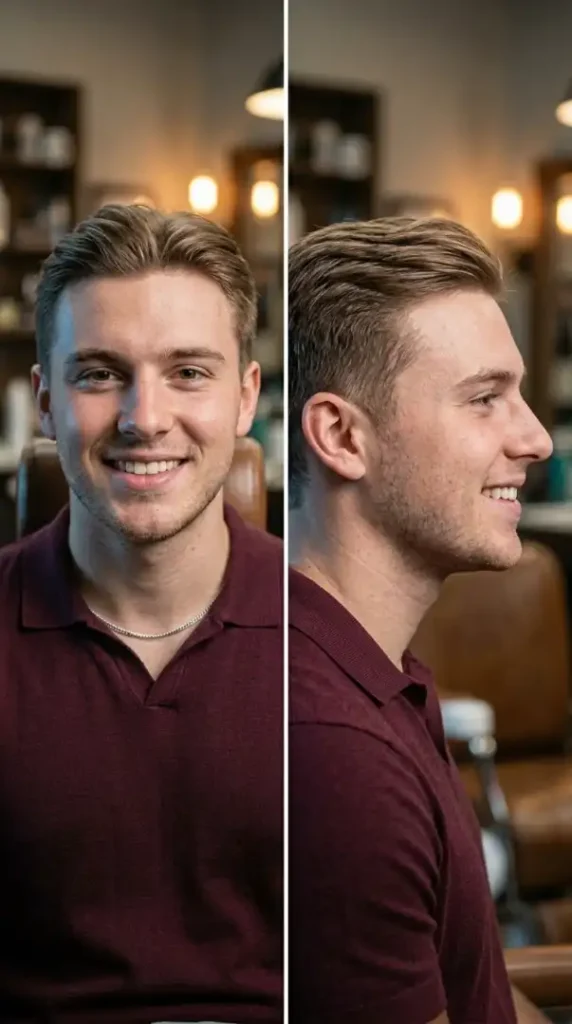
Face Shape Compatibility With Platinum Silver Highlights
Heart and diamond-shaped faces benefit most from platinum silver because the cool highlights add dimension without warm brassy undertones. Oblong and rectangular faces gain visual interest when platinum silver is distributed strategically. Square faces see improvement when highlights break up visual weight through temples and crown. Round faces gain definition when platinum silver is concentrated at crown and temples, avoiding concentration at sides. Deep-skinned men see particularly striking results — the platinum cool tones contrast beautifully against dark skin, creating premium visual impact that warm highlights cannot achieve.
Grooming Kit Requirements For Platinum Silver Maintenance
Platinum silver requires cool-tone maintenance to prevent brassy fading and maintain silver undertones:
• Professional-Grade Bleach: Wella Blondor or Schwarzkopf Igora with 20 or 30 volume developer (required for lifting dark hair to platinum) • Silver-Tone Shampoo: Wella T14 or Shimmer Lights Purple Shampoo (weekly application to maintain silver undertones and prevent yellowing) • Strengthening Conditioner: Olaplex No. 3 Hair Perfector (application after every wash to rebuild bonds damaged by bleaching) • Bond-Building Treatment: K18 Leave-In Molecular Repair Hair Mask (daily use on platinum sections to prevent breakage) • Blue Toner: Wella T-7 Blue or Schwarzkopf Igora Vario Blonde (bi-weekly use to maintain silver rather than warm yellow) • Heat Protectant: Bumble and Bumble Thickening Full Form Mousse (essential before blow-drying bleached sections) • Styling Pomade: American Crew Fiber (medium hold, works beautifully with platinum silver texture) • Leave-In Oil: Coconut oil or Moroccan Argan Oil (thin application to platinum sections only, carefully)
Product amounts: Pea-sized amount of K18 treatment, thin stream of oil applied only to platinum sections, standard styling product amount.
Maintenance Level For Platinum Silver Highlights
Platinum silver highlights require HIGH maintenance suitable for men who prioritize appearance and have budget flexibility.
Barber/salon visit frequency: Initial bleaching and silver-toning application requires 120-150 minutes with an experienced colorist. Touch-ups are needed every 4-5 weeks because platinum fades noticeably and new dark root growth becomes visible against bright silver. Structural cuts between color applications can happen every 3 weeks.
Daily styling time: 8-12 minutes with heat tools and precision styling. Blow-dry in direction of hair growth, use pomade for texture and definition, possibly use clippers to refresh highlighted sections weekly.
Product routine: Five-step morning process. Step one: wash with silver-tone shampoo (3 times weekly). Step two: apply K18 treatment to damp platinum sections. Step three: apply heat protectant spray. Step four: blow-dry with directional control. Step five: work pomade through for final styling and shape.
Growth pattern management: Platinum silver remains visually peak for 2-3 weeks post-application. By week 3, yellowing becomes apparent in silver sections. By week 4, new dark root growth at the scalp is noticeable. By week 5, the look deteriorates and touch-up becomes necessary.
Cost consideration: Initial bleaching and silver-toning appointment costs $200-350 depending on colorist expertise. Touch-up appointments every 4-5 weeks cost $100-175. Specialized products (K18, Olaplex, professional blue-toners, silver shampoo) add $45-70 monthly to maintenance costs. Total monthly investment: $140-260.
Difficulty rating: Advanced home maintenance. Bleaching dark hair to platinum carries significant damage risk — this should only be done by professional colorists. Daily styling is intermediate level. The blue-toner commitment is non-negotiable — skipping blue-toner results in brassy fading within days.
Barber Talk: The Exact Script For Platinum Silver Highlights
Say this to your colorist: “I want platinum silver highlights applied strategically to my jet black hair. Bleach specific sections completely — I want true platinum silver, not yellow-blonde. Position highlights to create high visual contrast and modern impact. After bleaching, tone with a silver-specific toner to achieve icy platinum with cool undertones rather than warm yellow. The goal is silver that complements deep skin tones, not brassy warmth. Apply a glossing treatment to seal the color. I’ll commit to weekly silver-tone shampoo and bi-weekly blue-toner application to maintain cool silver. I understand this requires 4-week touch-ups. Schedule me for my first touch-up 4 weeks out.”
10 of 13 — The Rose Gold Brunette Triptych
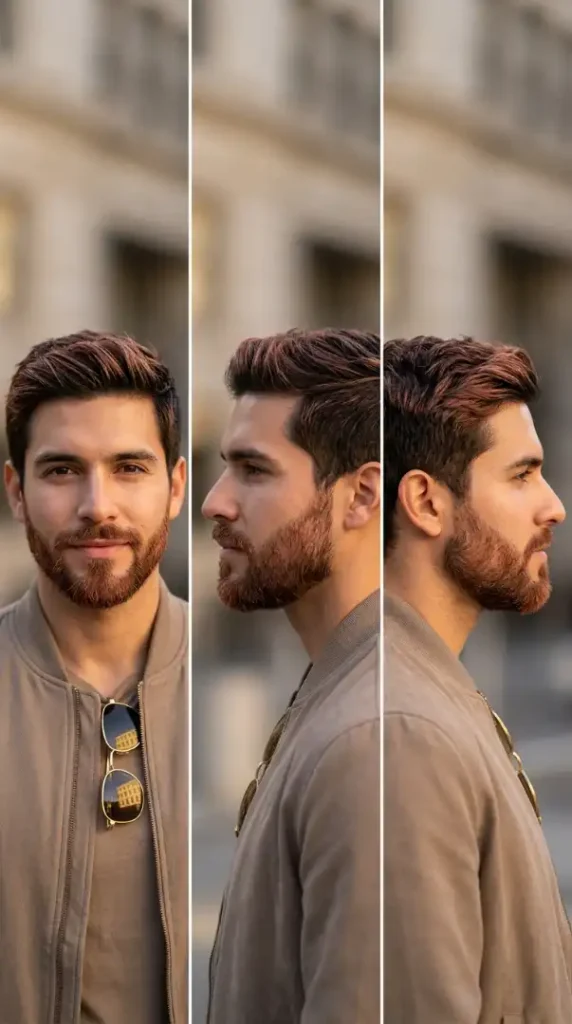
Face Shape Compatibility With Rose Gold Brunette
Diamond and heart-shaped faces benefit most from rose gold brunette because the warm tones naturally draw light toward cheekbones and jaw, enhancing angular structure. Oval faces are universally compatible — rose gold brunette works beautifully on balanced proportions. Square faces gain warmth perception when rose gold is distributed throughout, softening angular features while maintaining strength. Round faces benefit from rose gold distributed throughout, adding dimension that counteracts visual width. Oblong faces see improvement from warm rose gold that adds visual width perception. Men with warm skin tones see particularly dramatic benefit — the rose undertones create radiance and richness that amplify natural coloring.
Grooming Kit Requirements For Rose Gold Brunette Maintenance
Rose gold brunette requires warm-tone maintenance to preserve richness and prevent fading toward orange:
• Sulfate-Free Shampoo: SheaMoisture Raw Shea Butter or Puracy Natural Shampoo (sulfate-free preserves warm tones and doesn’t strip color) • Rose Gold Enhancing Conditioner: Wella Color Charm Demi-Permanent in Rose or Warm Brown (deposits warm rose undertones and seals color) • Warm-Tone Glossing Treatment: L’Oreal Casting Creme Gloss in Rose Brown or Auburn (monthly application to refresh rose gold vibrancy) • Heat Protectant: TRESemmé TRES Two Mega Strengthening Heat Tamer (essential before blow-drying to prevent warm tones from fading) • Styling Product: Hanz de Fuko Quicksand or American Crew Fiber (matte finish works beautifully with rose gold dimension) • Argan Oil for Richness: Moroccan Argan Oil by Marc Anthony (dime-sized amount applied to damp hair to enhance golden rose glow) • Beard Oil: Warm-toned beard oil for facial hair coordination if beard is visible
Product amounts: Standard shampoo and conditioner, pea-sized styling product, thin stream of argan oil.
Maintenance Level For Rose Gold Brunette
Rose gold brunette requires MEDIUM maintenance suitable for men wanting warmth and dimension with realistic lifestyle fit.
Barber/salon visit frequency: Initial rose gold brunette application takes 75-100 minutes with a skilled colorist. Touch-ups are required every 8-10 weeks to refresh faded warmth and maintain vibrancy. Rose gold brunette fades more gracefully than platinum — it becomes more subtle and blends toward natural brown rather than brassy yellow.
Daily styling time: 5-7 minutes with optional heat tools. Blow-dry for volume, work styling product through for texture. Rose gold brunette looks phenomenal with minimal styling — the warmth adds enough visual interest that precise styling isn’t required daily.
Product routine: Three-step simple process. Step one: wash with sulfate-free shampoo (4-5 times weekly). Step two: apply warm-tone conditioner (2-3 times weekly). Step three: apply heat protectant and style as desired.
Growth pattern management: Rose gold brunette remains visually fresh for 4-6 weeks post-application. After week 6, warmth gradually becomes more subtle. By week 8-10, the rose gold effect fades noticeably but the overall result still looks intentional and rich rather than grown-out.
Cost consideration: Initial application costs $120-220 depending on colorist location. Touch-ups every 8-10 weeks run $60-120. Specialized products (rose gold conditioner, glossing treatment) add $25-40 monthly. Total monthly investment: $50-100.
Difficulty rating: Beginner-friendly home maintenance. The daily routine is simple once established. Glossing treatments and reapplication should be done by professional colorist.
Barber Talk: The Exact Script For Rose Gold Brunette
Say this to your colorist: “I want rose gold tones blended throughout my dark brown hair. I’m looking for warmth and richness without aggressive color change — something that looks expensive and intentional rather than obviously dyed. Use a demi-permanent rose gold formula that deposits warm rose undertones gradually. Focus application on mid-lengths and ends to create dimension. Add subtle rose warmth to my facial hair too — I want everything coordinated. Apply a glossing treatment afterward to seal the color and add shine. I’ll commit to warm-tone conditioner and argan oil to maintain richness. Schedule me for an 8-week touch-up appointment.”
11 of 13 — The Walnut Mocha Full 2×2 Collage
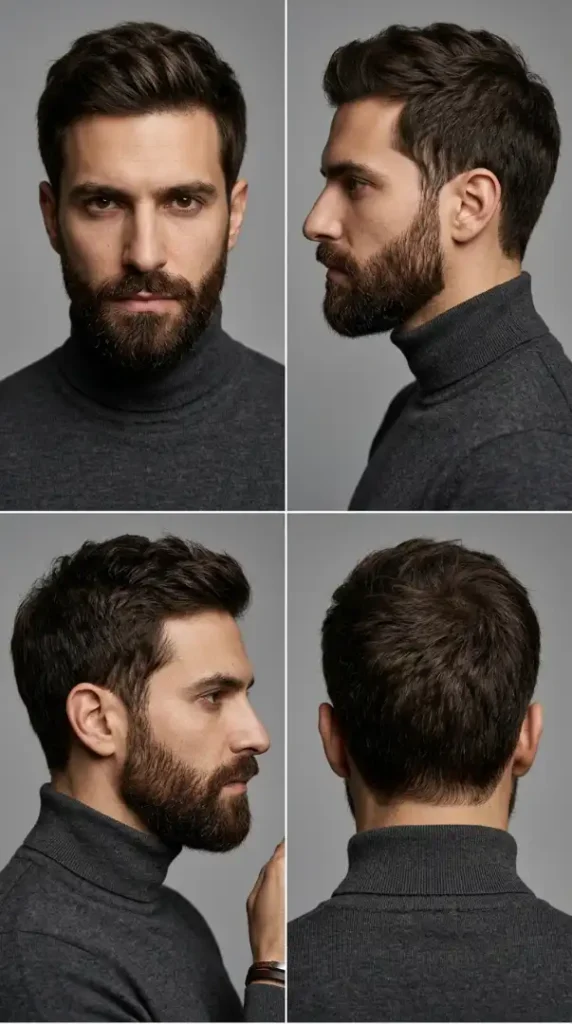
Face Shape Compatibility With Walnut Mocha
Oval and square face shapes benefit most from walnut mocha because the deep richness adds dimension that complements any facial structure. Heart-shaped faces gain proportion when walnut mocha is distributed throughout, adding depth without creating brassy tones. Diamond faces see dramatic improvement because the rich undertones naturally enhance cheekbones. Round faces benefit from mocha depth that adds perceived dimension. Oblong faces see improvement from the subtle richness that adds visual width perception without warming excessively. Mediterranean and olive-skinned men see particularly striking results — the mocha undertones complement warm undertones perfectly.
Grooming Kit Requirements For Walnut Mocha Maintenance
Walnut mocha requires warm-rich tone maintenance to preserve depth and prevent lightening:
• Sulfate-Free Shampoo: SheaMoisture Raw Shea Butter or Puracy Natural Shampoo (preserves mocha depth and prevents color stripping) • Mocha-Enhancing Conditioner: Wella Color Charm Demi-Permanent in Deep Brown or Mocha (deposits mocha richness and seals color) • Color-Depositing Shampoo: L’Oreal Casting Creme Gloss in Dark Brown or Chocolate (monthly application to refresh mocha vibrancy) • Heat Protectant: TRESemmé TRES Two Mega Strengthening Heat Tamer (essential before blow-drying to prevent richness from fading) • Styling Product: Hanz de Fuko Quicksand or American Crew Fiber (matte finish complements mocha depth beautifully) • Shine-Enhancing Oil: Moroccan Argan Oil by Marc Anthony (thin application to damp hair to enhance mocha glow) • Beard Oil: Warm-toned beard oil for facial hair coordination if beard is visible
Product amounts: Standard shampoo and conditioner, pea-sized styling product, thin stream of argan oil.
Maintenance Level For Walnut Mocha
Walnut mocha requires LOW-MEDIUM maintenance suitable for men wanting richness with realistic lifestyle fit.
Barber/salon visit frequency: Initial walnut mocha application takes 60-90 minutes with a skilled colorist. Touch-ups are required every 10-12 weeks to refresh mocha depth. Walnut mocha fades gracefully — it becomes lighter and less mocha-deep over time rather than brassy or yellow.
Daily styling time: 5-7 minutes with optional heat tools. Blow-dry for volume, work styling product through for texture. Walnut mocha looks sophisticated with minimal styling — the depth adds visual richness without requiring precision.
Product routine: Three-step simple process. Step one: wash with sulfate-free shampoo (4-5 times weekly). Step two: apply mocha-enhancing conditioner twice weekly. Step three: apply heat protectant before blow-drying and style as desired.
Growth pattern management: Walnut mocha remains visually fresh for 6-8 weeks. After week 8, mocha depth gradually becomes more subtle and blends toward natural brown. By week 10-12, the mocha effect fades noticeably but the overall result still looks intentional rather than grown-out.
Cost consideration: Initial application costs $120-200 depending on colorist location. Touch-ups every 10-12 weeks run $60-120. Specialized products (mocha conditioner, glossing treatment) add $25-35 monthly. Total monthly investment: $40-80.
Difficulty rating: Beginner-friendly home maintenance. The daily routine is simple. Mocha depth applications should be done by professional colorist.
Barber Talk: The Exact Script For Walnut Mocha
Say this to your colorist: “I want walnut mocha tones blended throughout my brown hair. I’m looking for deep richness without obvious color change — something that looks expensive and intentional. Use a demi-permanent mocha formula that deposits warm dark undertones gradually. Apply throughout the hair, focusing on creating depth and richness rather than obvious color blocks. Add mocha warmth to my facial hair if visible — I want everything coordinated. Apply a glossing treatment to seal and enhance shine. I’ll commit to sulfate-free shampoo and mocha-enhancing conditioner. Schedule me for a 10-week touch-up appointment.”
12 of 13 — The Caramel Dream Diptych
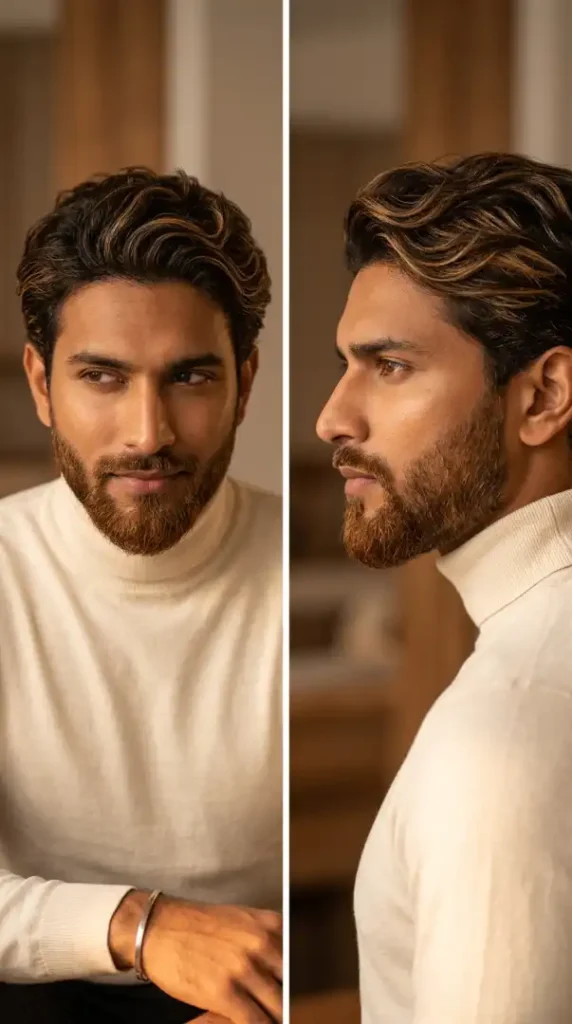
Face Shape Compatibility With Caramel Dream
Oblong and heart-shaped faces benefit most from caramel dream because the warm dimension adds visual width and balance while avoiding over-elongation. Oval faces are universally compatible with caramel — the warmth works beautifully on balanced proportions. Square faces gain softness when caramel is distributed throughout, maintaining strength while adding warmth. Diamond faces see dramatic improvement because caramel tones naturally enhance cheekbones. Round faces benefit from caramel distributed throughout, adding dimension that counteracts visual width. Warm-skinned men see particularly striking results — the caramel undertones create radiance and glow that amplify natural coloring.
Grooming Kit Requirements For Caramel Dream Maintenance
Caramel dream requires warm-blonde maintenance to prevent fading toward orange or brassy yellows:
• Sulfate-Free Shampoo: SheaMoisture Raw Shea Butter or Puracy Natural Shampoo (prevents caramel stripping and preserves warmth) • Caramel-Enhancing Conditioner: Wella Color Charm Demi-Permanent in Honey Blonde or Caramel (deposits caramel warmth and seals color weekly) • Color-Depositing Shampoo: L’Oreal Casting Creme Gloss in Caramel or Honey (bi-weekly application to refresh caramel vibrancy) • Brassy-Toner Treatment: Shimmer Lights Purple or Wella T-18 (weekly use to neutralize any brassy tendencies that warm caramel can develop) • Heat Protectant: TRESemmé TRES Two Mega Strengthening Heat Tamer (essential before blow-drying to prevent caramel fading) • Styling Product: Hanz de Fuko Quicksand or American Crew Fiber (matte finish complements caramel dimension beautifully) • Shine-Enhancing Oil: Moroccan Argan Oil by Marc Anthony (thin application to damp hair to enhance caramel glow) • Beard Oil: Warm-toned beard oil for coordinating facial hair if beard is visible
Product amounts: Standard shampoo and conditioner, pea-sized styling product, thin stream of argan oil.
Maintenance Level For Caramel Dream
Caramel dream requires MEDIUM-HIGH maintenance suitable for men committed to warm blonde dimension.
Barber/salon visit frequency: Initial caramel application takes 90-120 minutes with a skilled colorist. Touch-ups are required every 6-8 weeks to refresh fading caramel and maintain vibrancy. Caramel is warm and fades toward orange naturally, so touch-ups prevent brassy deterioration.
Daily styling time: 6-8 minutes with heat tools. Blow-dry for volume, work styling product through for texture. Caramel shows beautifully when styled intentionally — the warmth benefits from heat and directional styling.
Product routine: Four-step process. Step one: wash with sulfate-free shampoo (4-5 times weekly). Step two: apply caramel-enhancing conditioner (2-3 times weekly). Step three: apply heat protectant before blow-drying. Step four: work styling product through and shape.
Growth pattern management: Caramel dream remains peak vibrant for 3-4 weeks. After week 4, caramel begins fading toward orange. By week 6, fading is noticeable and orange undertones become apparent. By week 8, brassy yellow emerges and touch-up becomes necessary.
Cost consideration: Initial application costs $150-280 depending on colorist expertise. Touch-ups every 6-8 weeks run $80-150. Specialized products (caramel conditioner, color-depositing shampoo, brassy-toner) add $40-65 monthly. Total monthly investment: $100-150.
Difficulty rating: Intermediate home maintenance. The conditioner routine is more involved than lighter tones. Styling product application is simple. Caramel requires consistent product use to maintain vibrancy and prevent brassy fading.
Barber Talk: The Exact Script For Caramel Dream
Say this to your colorist: “I want caramel blonde dimension added to my dark brown hair. I’m looking for warm, dreamy tones that feel luxurious without harsh contrast. Apply caramel throughout the hair, focusing on mid-lengths and ends. The caramel should feel warm and glowing, not orange. Add caramel warmth to my facial hair too for coordination. Use a glossing treatment afterward to seal the color and add shine. I understand caramel fades toward orange, so I’ll commit to weekly brassy-toner treatment and bi-weekly caramel conditioner. Schedule me for a 6-week touch-up appointment.”
13 of 13 — The Chocolate Velvet Single
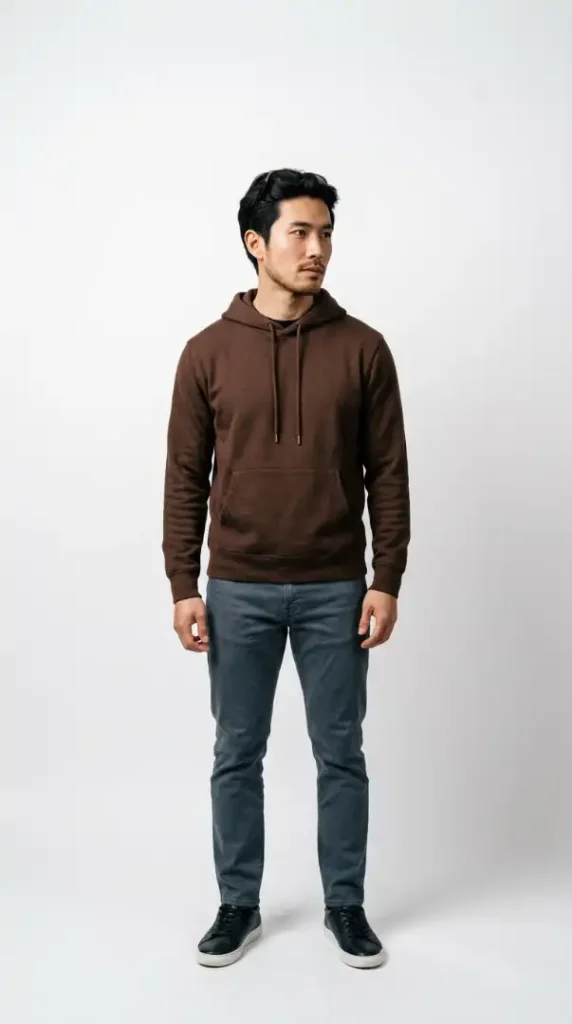
Face Shape Compatibility With Chocolate Velvet
Round and oval face shapes benefit most from chocolate velvet because the warm undertones add dimension that complements any facial structure. Square faces gain sophistication when chocolate warmth is distributed throughout, maintaining strength while adding visual richness. Diamond faces see dramatic improvement because the chocolate tones naturally enhance cheekbones with warm, refined depth. Heart-shaped faces gain proportion when chocolate undertones are balanced throughout. Oblong faces see improvement from subtle warmth that adds visual width perception without excessive brightening. Warm-skinned men see particularly striking results — the chocolate undertones create luxury and depth that suggest expensive grooming.
Grooming Kit Requirements For Chocolate Velvet Maintenance
Chocolate velvet requires subtle warmth maintenance to preserve depth and prevent fading:
• Sulfate-Free Shampoo: SheaMoisture Raw Shea Butter or Puracy Natural Shampoo (preserves chocolate depth and prevents color stripping) • Chocolate-Enhancing Conditioner: Wella Color Charm Demi-Permanent in Dark Brown or Mocha (deposits subtle chocolate warmth and seals color) • Optional Color-Depositing Shampoo: L’Oreal Casting Creme Gloss in Dark Brown (monthly application to refresh chocolate vibrancy — optional for subtle looks) • Heat Protectant: TRESemmé TRES Two Mega Strengthening Heat Tamer (essential before blow-drying to prevent richness from fading) • Styling Product: Hanz de Fuko Quicksand or American Crew Fiber (matte finish complements chocolate depth beautifully) • Shine-Enhancing Oil: Moroccan Argan Oil by Marc Anthony (thin application to damp hair to enhance chocolate glow) • Beard Oil: Warm-toned beard oil for facial hair coordination if beard is visible
Product amounts: Standard shampoo and conditioner, pea-sized styling product, thin stream of argan oil.
Maintenance Level For Chocolate Velvet
Chocolate velvet requires LOW maintenance suitable for men wanting subtle luxury with minimal lifestyle disruption.
Barber/salon visit frequency: No color application required initially (uses what your hair naturally has). Optional first glossing treatment (45 minutes, $40-60) adds initial chocolate depth. Touch-ups (if color was applied) every 12-14 weeks. Haircut visits every 3-4 weeks for precision and shape maintenance.
Daily styling time: 5-7 minutes with optional heat tools. Blow-dry for shine, work styling product through with fingers for texture. Chocolate velvet shows beautifully with minimal styling — the undertone richness handles much of the visual work.
Product routine: Three-step simple process. Step one: wash with sulfate-free shampoo (4-5 times weekly). Step two: apply chocolate-enhancing conditioner (2-3 times weekly). Step three: apply heat protectant before blow-drying and style as desired.
Growth pattern management: Chocolate velvet looks fresh indefinitely if using natural depth — there is no color fading. If glossing was applied, it remains visually fresh for 8-10 weeks before optional touch-up.
Cost consideration: Optional initial glossing treatment $40-60 one-time. Haircuts every 3-4 weeks cost $30-60 per visit ($100-150 monthly). Specialized products (chocolate conditioner) add $15-25 monthly. Total monthly investment: $30-75.
Difficulty rating: Beginner-friendly. The daily routine is extremely simple — conditioning and argan oil are straightforward. The barber handles all technical work. This is one of the lowest-maintenance options for achieving subtle luxury appearance.
Barber Talk: The Exact Script For Chocolate Velvet
Say this to your barber/colorist: “I want chocolate velvet depth added to my jet black hair if possible through subtle glossing, or I’m interested in learning how to enhance what I already have. I’m looking for premium, sophisticated appearance without dramatic color change. If glossing makes sense, apply a subtle dark brown toner to add warm chocolate undertones. Keep it minimal — I want enhancement, not obvious coloring. I’ll maintain shine at home with argan oil and conditioning treatments. Schedule me for a 3-4 week maintenance cut to keep the shape sharp and support the premium appearance.”