
15 Stylish Looks For Bald Men To Rock
1 of 15 — The Polished Executive

FACE SHAPE MATCH
The Polished Executive is specifically engineered for square and diamond face shapes. The clean bald aesthetic emphasizes your natural bone structure, while the full beard adds crucial vertical length that balances a strong jawline. For square faces, this style prevents the “box head” effect by creating visual flow from the smooth crown down through the structured beard. Diamond face shapes benefit because the beard width at the chin counterbalances narrow jaw angles, while the bald head draws attention to your cheekbones — your strongest feature.
GROOMING KIT
Your maintenance arsenal requires precision tools: Wahl Professional 5-Star Balding Clipper (the gold standard for achieving that 0.5mm shadow finish), Andis T-Outliner for razor-sharp beard lines and neck cleanup, Philips Norelco OneBlade for weekly scalp maintenance between professional shaves. For beard sculpting, invest in a Bevel Beard Trimmer with adjustable guards (1mm–10mm range). Finishing products: Jack Black Beard Oil (lightweight, non-greasy), Blind Barber Waterman’s Montauk Marine Layer Sea Salt Spray for adding texture to the beard without stiffness, and a boar bristle brush for daily beard training. Scalp care is non-negotiable: Kiehl’s Energizing Scalp Leave-In Treatment prevents shine from becoming greasiness.
MAINTENANCE LEVEL
Maintenance Level: High. This is a commitment look requiring professional barbershop visits every 10–12 days for blade shaves and beard sculpting ($40–$60 per visit in major cities). Daily home routine: 5–7 minutes each morning for beard oil application and line touch-ups with your T-Outliner. Every 2–3 days, run the balding clipper over your scalp to maintain that perfect stubble shadow — letting it grow beyond 1mm breaks the polished aesthetic. Weekend deep-clean: exfoliate scalp with a gentle scrub, condition beard, redefine cheek and neck lines. This style is not ideal if you travel frequently without access to your full grooming kit.
BARBER TALK (THE EXACT SCRIPT)
“I want a complete razor fade on top — take it down to skin with a hot towel shave. For the beard, keep the length at about 8mm on the chin and jaw, tapering to 4mm on the cheeks. Give me a sharp cheek line following my natural bone structure, and a defined neck line about one finger-width above my Adam’s apple. Blend the sideburn area into the beard with a 2mm guard — no hard line. Clean up the edges with a straight razor for that crisp finish. I’m going for that boardroom-ready polish.”
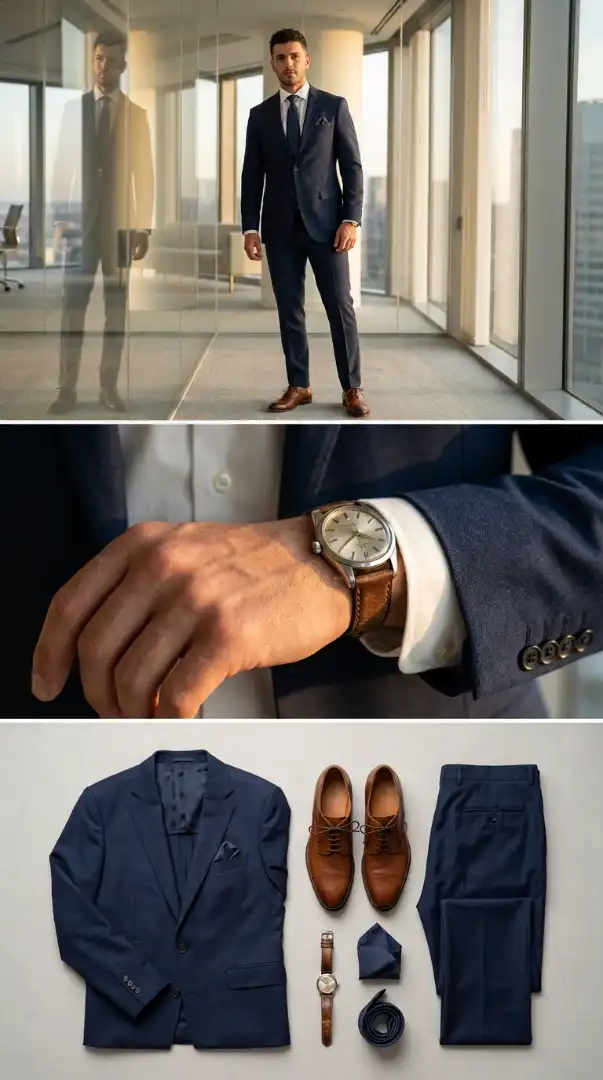
This look pairs perfectly with the structured elegance of a well-tailored suit, but don’t miss our upcoming breakdown of casual weekend styles that work with the bald-and-bearded aesthetic.
FAQs
Q: How do I maintain a bald head without daily shaving?
A: Use a Wahl Balding Clipper with no guard every 2–3 days to maintain a 0.5mm stubble shadow that looks intentional rather than neglected. This gives you the bald aesthetic without the 5 AM razor routine. Apply a mattifying scalp moisturizer like Lab Series Max LS Daily Renewing Cleanser to control shine and prevent dryness. For special occasions, upgrade to a professional hot towel razor shave every 10 days.
Q: What’s the difference between a clean shave and a balding clipper finish?
A: A clean razor shave removes all hair to skin level, creating a mirror-smooth finish that requires daily maintenance and is prone to razor bumps on sensitive scalps. A balding clipper leaves 0.5mm stubble, which appears bald from a distance but adds subtle texture up close, requires less frequent upkeep, and significantly reduces irritation. Most men find the clipper finish more sustainable long-term.
Q: Which face shape suits The Polished Executive best?
A: Square and diamond face shapes dominate this look because the bald head accentuates strong bone structure while the full beard adds necessary vertical length. Oval faces can pull it off with a slightly shorter beard to avoid over-lengthening. Round and heart-shaped faces should add more volume to the beard sides to create width and balance.
Q: How often should I get The Polished Executive professionally maintained?
A: Every 10–12 days for optimal results. Professional barbers use straight razors for neck and cheek line precision that’s difficult to replicate at home, plus they’ll catch uneven beard growth patterns you might miss. Between visits, maintain edges with an Andis T-Outliner every 2–3 days.
2 of 15 — The Shadow Fade Rebel

FACE SHAPE MATCH
The Shadow Fade Rebel is a geometric masterpiece for oval and oblong face shapes. The completely bald crown creates a smooth canvas that naturally shortens perceived face length, while the shadow fade at the sides adds subtle width at the temples — crucial for balancing elongated faces. Oval faces get the benefit of enhanced facial symmetry, as the fade draws attention to the eyes and cheekbones rather than hairline placement. This style actively works against round faces by emphasizing vertical lines, so round-faced men should pair this with a more substantial beard for width compensation.
GROOMING KIT
Essential tools for maintaining the Shadow Fade Rebel: Andis Master Cordless Clipper for the primary fade work (the adjustable blade goes down to 000 for that buttery-smooth transition), Wahl Detailer for ultra-precise edge work around the ears and nape, and a straight razor for weekly scalp shaves. For the beard stubble, a Philips Norelco Multigroom 7000 with a 3mm guard maintains that intentional “I woke up like this” texture. Products: Cremo Cooling Shave Cream for scalp shaves (prevents irritation on sensitive skin), Scotch Porter Smoothing Beard Serum for the stubble (adds shine without looking greasy), and Blu Atlas Moisturizing Face Lotion for scalp hydration. Keep a Kent handmade comb for beard direction control.
MAINTENANCE LEVEL
Maintenance Level: Medium. Barber visits every 14–16 days to keep that shadow fade crisp ($35–$50 per session). The beauty of this style is the forgiving grow-out period — unlike skin fades that look dated after a week, the shadow fade maintains its edge for two weeks before needing professional attention. Daily routine: 3–4 minutes for scalp moisturizer and beard oil. Every 4–5 days, touch up your scalp with a safety razor in the shower (takes 6–8 minutes with practice). The stubble beard self-maintains with a weekly 3mm trim at home. This style is ideal for men who want the bald aesthetic without the high-frequency barber dependency.
BARBER TALK (THE EXACT SCRIPT)
“I want to go completely bald on top — full razor shave on the crown. For the sides and back, give me a shadow fade starting with a 0 guard at the bottom, blending up to skin at the temple area. Keep the transition super smooth — I don’t want any lines. Fade should start about an inch above my ears. For the beard, just clean up the neck line and cheek line, but leave the length at 3mm — I’m going for that natural stubble look. Hit the edges with the liner to keep it sharp.”
Once you’ve mastered this urban-cool foundation, you’ll want to explore how to adapt the bald look for formal occasions without losing your edge.
FAQs
Q: How do I ask my barber for a shadow fade?
A: Tell your barber you want a “0 guard shadow fade starting one inch above the ears, blending to skin at the temples, with no visible lines.” The key word is “shadow” — this communicates you want the shortest fade possible while still showing subtle hair texture, not a skin fade. Show them a reference photo on your phone and specify you want the crown completely bald with a razor finish.
Q: What’s the difference between a shadow fade and a skin fade?
A: A shadow fade uses a 0 guard (1.5mm) as the shortest length, leaving barely visible stubble that creates a “shadow” effect on the scalp. A skin fade goes all the way down to bare skin using a razor or trimmer with no guard. Shadow fades are lower maintenance, less prone to irritation, and have a longer grow-out period before looking unkempt.
Q: How often should I shave my head completely bald at home?
A: Every 4–5 days with a quality safety razor or electric rotary shaver. Going longer risks razor bumps from cutting through thicker regrowth. Use Cremo shave cream and shave in the shower when hair is softened by steam. Follow immediately with an alcohol-free aftershave balm to prevent irritation.
Q: Can I maintain the Shadow Fade Rebel without frequent barber visits?
A: Partially. You can handle the scalp shaving and beard trimming at home, but the fade’s precision blend requires professional clipper work every 14–16 days. Attempting complex fade work at home usually results in uneven patches or visible lines. Invest in barber visits for the fade, DIY the rest.
3 of 15 — The Textured Crown Architect

FACE SHAPE MATCH
The Textured Crown Architect is specifically designed for round and heart-shaped faces seeking angular definition. The geometric line-up design carved into the hairline creates sharp horizontal and vertical lines that visually square off a round face, adding the illusion of cheekbone structure and jaw width. For heart-shaped faces with wider foreheads and narrow chins, this style is transformative — the bold line-up draws the eye to the upper face while the fuller beard balances the narrow chin. The stark contrast between the 1mm sides and bald crown adds vertical dimension that counters facial roundness. Square faces can wear this but should request softer line-up angles to avoid over-squaring.
GROOMING KIT
This is an artist’s style requiring professional-grade tools: Andis Master Adjustable Blade Clipper for the 1mm side work, Andis GTX T-Outliner (the absolute king of precision line work — non-negotiable for geometric designs), and a Wahl Detailer Li for fine detail cleanup. For at-home maintenance between barbershop visits, you’ll need a BaByliss Pro FX787 Skeleton Trimmer for beard length control (6mm guard). Finishing products: Shea Moisture Three Butters Pre-Shave Oil for scalp razor work, Honest Amish Beard Balm for the fuller beard (provides hold without crunch), and a two-sided applicator brush for working balm through coily beard texture. Scalp care: Cantu Men’s Post-Shave Soothing Serum prevents irritation on bald areas.
MAINTENANCE LEVEL
Maintenance Level: High. This is statement barbering that requires professional touch-ups every 7–10 days to maintain the crisp line-up geometry ($45–$65 per session with a skilled barber who specializes in design work — don’t cheap out here). The geometric patterns grow out faster than standard cuts, and even 3mm of growth makes lines look blurry. Daily routine: 4–5 minutes for beard balm application and edge touch-ups with your GTX trimmer (edges only, never attempt the design work yourself). Every other day, run the 1mm guard over your sides to keep contrast sharp. This style demands commitment and is not suited for inconsistent schedules or remote work situations where video calls don’t require sharp presentation.
BARBER TALK (THE EXACT SCRIPT)
“I want a bald crown with a completely clean razor shave on top. Take the sides down to a 1mm with the Master clipper — I want strong contrast. For the line-up, give me geometric angles at the temples — sharp horizontal lines with clean corners, nothing rounded. I want that architectural look. On the beard, keep it at 6mm overall, but taper the cheek line to follow my bone structure. Blend the sideburns into the beard at 3mm so there’s no gap. Clean up the neck line about two fingers above the Adam’s apple. Use the T-Outliner for all the detail work — I want those edges surgical.”
This bold artistic approach pairs perfectly with contemporary streetwear, and up next we’ll explore how to transition these design principles into more conservative professional environments.
FAQs
Q: How do I maintain geometric line-up designs between barber visits?
A: You don’t — attempting to recreate precision line work at home almost always results in uneven angles or over-cutting. Instead, use an Andis GTX T-Outliner to maintain the outer edges daily (the perimeter of the design, not the internal angles). Keep a steady hand and follow the existing lines without going deeper. Professional reshape every 7–10 days is mandatory.
Q: What’s the best way to prevent razor bumps on a bald head?
A: Shave in the direction of hair growth (with the grain) using a sharp, clean razor and pre-shave oil. Exfoliate your scalp 24 hours before shaving with a gentle scrub to lift ingrown hairs. After shaving, apply an alcohol-free post-shave balm with salicylic acid. If bumps persist, switch to a Wahl Balding Clipper for a 0.5mm finish instead of going fully razor-smooth.
Q: Which face shape suits The Textured Crown Architect best?
A: Round and heart-shaped faces benefit most because the geometric line-up creates angular definition that counteracts soft facial curves. The sharp horizontal lines add perceived width to narrow faces while the vertical contrast from sides to crown elongates round faces. Oval faces can wear this with softer line angles. Square faces should avoid overly angular designs.
Q: How much does a geometric line-up design typically cost?
A: Expect $45–$65 for the full service in urban areas, with skilled barbers specializing in design work charging premium rates. The line-up alone can add $15–$25 to a standard bald cut. Prices reflect the time investment (30–45 minutes) and artistic skill required. Budget barber chains rarely have the expertise for clean geometric work.
4 of 15 — The Minimalist Chrome Finish

FACE SHAPE MATCH
The Minimalist Chrome Finish is the most versatile bald style across all face shapes because it relies entirely on natural bone structure without distraction. Oval faces achieve timeless elegance — this is your default winning look. Square faces gain refined sophistication as the smooth scalp softens angular jaws without competing texture. Diamond face shapes should pair this with slight stubble to avoid over-emphasizing cheekbone width. Round faces can wear this successfully if they maintain facial hair (even 2–3 days of stubble growth) to add vertical dimension; the completely clean-shaven version on round faces can emphasize facial width unless balanced with strong eyebrow definition or glasses.
GROOMING KIT
The chrome finish requires premium shaving equipment: Merkur 34C Heavy Duty Double Edge Safety Razor (provides the closest shave with minimal irritation), Feather Hi-Stainless Platinum Double Edge Blades (sharper than drugstore cartridges, lasts 5–7 shaves), and a badger hair shaving brush for lathering. Pre-shave: Proraso Pre-Shave Cream with eucalyptus (softens hair and protects skin). Lather: Taylor of Old Bond Street Sandalwood Shaving Cream. Post-shave: Thayers Alcohol-Free Witch Hazel Toner followed by Nivea Men Sensitive Post Shave Balm. For maintenance between full shaves, Skull Shaver Pitbull Silver rotary shaver handles quick touch-ups in 3 minutes. Scalp health: CeraVe Moisturizing Cream (dermatologist-recommended, prevents dry scalp flaking).
MAINTENANCE LEVEL
Maintenance Level: High. The mirror-smooth finish requires full wet shaving every 2–3 days to avoid visible stubble that breaks the aesthetic. Each shave session takes 12–15 minutes when done properly: hot towel prep, pre-shave oil, lathering, two-pass shave (with grain, then across grain), cold water rinse, toner, and balm. Professional barbershop straight-razor shaves every 10–14 days ($35–$50) provide a deeper finish that extends the smooth period. Daily routine: apply scalp moisturizer in the morning (1 minute) and SPF 30+ sunscreen before sun exposure — bald scalps are highly vulnerable to UV damage and premature aging. This style is ideal for men who enjoy grooming rituals and have consistent morning routines.
BARBER TALK (THE EXACT SCRIPT)
“I want a complete straight razor wet shave — take it all the way down to smooth skin. Use a hot towel to open the pores first, and give me a two-pass shave: first with the grain, then across. I don’t need any design work or fades, just the cleanest possible finish. Pay special attention to the back of my head and nape area — I want zero stray hairs. Finish with a cold towel and apply a post-shave balm. For the face, clean shave all around, no beard. Just make sure the neck line is perfectly smooth.”
The ultra-clean aesthetic creates a foundation for exploring how accessories and personal style choices can define your look when hair isn’t part of the equation.
FAQs
Q: How do I get a mirror-smooth bald head at home?
A: Start with a hot shower to soften hair and open pores. Apply pre-shave oil, then shaving cream lathered with a brush. Use a sharp double-edge safety razor and shave in two passes: first with the grain (direction of hair growth), rinse, re-lather, then shave across the grain (perpendicular to growth). Never shave against the grain on your scalp — this causes severe irritation. Rinse with cold water, apply witch hazel, then a moisturizing balm.
Q: What’s the difference between a wet shave and using an electric shaver on my head?
A: Wet shaving with a razor removes hair at skin level, creating a completely smooth finish that lasts 2–3 days but requires 12–15 minutes and proper technique. Electric rotary shavers like the Skull Shaver leave 0.1mm stubble, take 3–4 minutes, and are gentler on sensitive scalps, but don’t achieve the true mirror finish. Electric is better for daily maintenance; wet shaving is for that premium smoothness.
Q: How do I prevent sun damage on a bald head?
A: Apply broad-spectrum SPF 30 or higher sunscreen to your entire scalp every morning, reapplying every 2 hours if outdoors. Use scalp-specific formulas like Supergoop Unseen Sunscreen that won’t leave white residue or greasiness. Wear hats when possible — UV damage on bald scalps leads to age spots, wrinkles, and increased skin cancer risk. Make SPF as routine as brushing teeth.
Q: How often should I get a professional head shave?
A: Every 10–14 days for the premium straight-razor experience that’s difficult to replicate at home. Barbers use professional-grade tools and techniques (multi-blade straight razors, heated lather, precision angles) that achieve a deeper, longer-lasting smoothness. Between professional shaves, maintain with at-home wet shaving or electric rotary shavers every 2–3 days.
5 of 15 — The Street King Buzz

FACE SHAPE MATCH
The Street King Buzz is engineered for square and oblong face shapes seeking a balanced, approachable aesthetic. The uniform 2mm length all around creates visual consistency that softens an overly square jawline without eliminating masculine structure — crucial for square faces that can look boxy with completely bald sides. For oblong faces, the slight texture from the buzz cut adds horizontal visual interest that counteracts excessive face length, while the fuller 8mm beard provides width at the chin to balance narrow jaws. Round faces should approach this cautiously: the uniform buzz can emphasize facial roundness, so pairing with a more angular beard shaping is essential. Oval faces wear this effortlessly as a low-commitment style.
GROOMING KIT
This is the minimalist’s dream toolkit: Oster Classic 76 Universal Motor Clipper with a #1 guard (2mm) for the buzz cut (the commercial-grade motor handles thick hair without bogging down), Wahl Peanut Clipper for neckline cleanup and precise detailing, and a Philips Norelco Beard Trimmer with an 8mm comb guard for beard maintenance. You don’t need scissors, combs, or complex attachments. Products: Jack Black Beard Lube (works as both beard conditioner and light styling cream), Honest Amish Beard Balm for taming wave texture, and a simple boar bristle brush for distributing natural oils through the beard. Scalp care: Neutrogena T/Sal Therapeutic Shampoo used twice weekly prevents dry scalp buildup common with ultra-short buzz cuts.
MAINTENANCE LEVEL
Maintenance Level: Low. This is the holy grail for time-starved men: barber visits every 3–4 weeks for professional edge cleanup ($25–$35 per visit), or skip the barber entirely if you’re comfortable running the Oster 76 over your own head every 10–12 days (takes 8 minutes with practice). The 2mm length is forgiving — it looks intentional from day 1 through week 3. Daily routine: 2 minutes for beard oil application and quick brush-through. The buzz cut requires zero styling products, blow-drying, or morning decision-making. Every 10 days, re-buzz your own head in front of a mirror (single pass all around), touch up the neckline with the Wahl Peanut, trim beard to 8mm. This style is perfect for athletes, outdoor enthusiasts, or anyone prioritizing function over high-maintenance grooming.
BARBER TALK (THE EXACT SCRIPT)
“Give me a 2mm buzz cut all over — same guard all around the entire head, no fading, no tapering. I want uniform length from front to back and top to bottom. Use a #1 guard. Clean up my neck line and around the ears, but keep everything else at 2mm. For the beard, trim it down to 8mm overall and shape the cheek line to follow my natural bone structure. Clean neck line two fingers above the Adam’s apple. Blend the sideburns into the beard so there’s no gap. That’s it — simple and clean.”
This low-effort foundation proves that sometimes the best style is the one you can maintain consistently, which leads perfectly into exploring adaptive styles for seasonal changes.
FAQs
Q: How do I maintain a buzz cut at home without a barber?
A: Invest in an Oster Classic 76 clipper with detachable blades. Every 10–12 days, run a #1 guard (2mm) over your entire head in multiple directions to ensure even coverage: front to back, back to front, side to side. Use a handheld mirror to check the back. For the neckline, use a Wahl Peanut trimmer or have someone help you create a natural rounded shape. Takes 8–10 minutes total once you’re comfortable with the technique.
Q: What’s the difference between a 2mm buzz cut and going completely bald?
A: A 2mm buzz cut leaves visible hair texture that provides subtle definition and framing to your face, while a bald head (wet shave or 0mm) shows bare skin. The buzz cut is significantly lower maintenance (no daily shaving), less prone to irritation, and offers a softer, more approachable look compared to the bold statement of complete baldness.
Q: Can I pull off The Street King Buzz with thinning hair on top?
A: Absolutely — this is one of the best solutions for thinning hair. The 2mm uniform length makes density differences far less noticeable than longer styles where bald patches show clearly. The short length also prevents the appearance of wispy, fine hair that looks defeated. Many men find this buzz cut liberating after years of fighting hair loss with longer styles.
Q: How often should I trim my beard when paired with a buzz cut?
A: Every 7–10 days with an 8mm guard to maintain the intended length and shape. Unlike the buzz cut which can go weeks between trims, beard hair grows faster and loses its shape more quickly. Use the same guard setting each time for consistency, and clean up neck and cheek lines every 3–4 days with a trimmer for crisp edges.
6 of 15 — The Platinum Fade Statement

FACE SHAPE MATCH
The Platinum Fade Statement works best for oval and diamond face shapes with strong bone structure that can handle bold visual contrasts. The platinum blonde sides draw intense attention to the temple and cheekbone area, so diamond faces with naturally prominent cheekbones get enhanced definition — this look amplifies your strongest features. Oval faces provide the balanced canvas where dramatic color choices won’t overwhelm proportions. The dark full beard anchors the look by adding visual weight to the lower face, essential for any face shape attempting this high-contrast style. Round and heart-shaped faces should avoid this unless willing to commit to a longer, more angular beard shape to balance the bold color work — the platinum sides can emphasize facial width if not carefully balanced.
GROOMING KIT
This is an advanced color and cutting combination requiring professional salon equipment: for the color work, you’ll need a professional bleach kit (Wella Blondor or Schwarzkopf BlondMe), 20-volume developer, purple toning shampoo (Fanola No Yellow), and a root touch-up kit for home maintenance between salon visits. For the fade: Andis Master Cordless Clipper, BaByliss Pro FX787 for fine detail work, and a professional straight razor for crown shaving. Beard maintenance: Brio Beardscape Trimmer with 10mm guard, Honest Amish Beard Balm for the fuller beard texture, and Mountaineer Brand Beard Oil. Color protection products are non-negotiable: sulfate-free shampoo (Pureology Strength Cure), leave-in conditioner, and weekly deep conditioning masks to prevent the blonde from turning brassy or damaged.
MAINTENANCE LEVEL
Maintenance Level: Very High. This is a commitment style requiring professional salon visits every 3–4 weeks for root touch-ups and toning ($80–$120 per color service plus $40–$50 for the cut and fade). Platinum blonde requires constant toning to prevent yellow/orange brassiness — you’ll use purple shampoo 2–3 times weekly (adds 3–4 minutes to shower routine). The fade grows out quickly, needing professional reshaping every 10–14 days. Daily routine: 6–8 minutes for toning shampoo application (must sit for 3 minutes), leave-in conditioner for the blonde sections, beard oil and balm for the full beard. At-home root touch-ups every 2 weeks add another 45–60 minutes to your routine. This style is for men with established grooming habits, disposable income for frequent salon visits, and professional environments that embrace bold self-expression.
BARBER TALK (THE EXACT SCRIPT)
“I want to keep the crown completely bald — full razor shave on top. For the sides and back, I need them pre-lightened to platinum blonde if they’re not already. Once the color is set, give me a high skin fade starting about two inches above my ears, blending the platinum sections down to skin. I want the fade tight and precise — the color contrast should be sharp. Keep my beard at 10mm overall, shape the cheek line to follow my bone structure, and define the neck line about two fingers above my Adam’s apple. The beard stays natural dark color — the contrast is the whole point. Use a straight razor for the bald crown and the final fade details.”
For the color service at the salon: “I want platinum blonde on my sides and back only — crown stays bald so no color there. Bleach to level 10, then tone with a cool ash toner to eliminate any yellow. I’ll be maintaining this with purple shampoo at home, so make sure the base is white-blonde.”
The color commitment opens doors to exploring how personal branding extends beyond traditional grooming into deliberate style statements that challenge conventional masculinity.
FAQs
Q: How do I maintain platinum blonde hair without it turning yellow?
A: Use purple toning shampoo (Fanola No Yellow or Joico Color Balance Purple) 2–3 times per week. Work it into damp hair, let it sit for 3–5 minutes, then rinse thoroughly. This neutralizes yellow and brassy tones. Between salon visits, use sulfate-free shampoo exclusively to prevent color stripping. Apply a weekly deep conditioning mask to prevent breakage from bleach damage.
Q: What’s the difference between a platinum fade and a regular fade with natural hair color?
A: The technique is identical — both use the same guard progression and blending. The difference is visual impact: platinum blonde creates extreme contrast against dark skin tones and beards, making the fade lines highly visible and turning the cut into a bold fashion statement rather than a subtle grooming choice. Platinum requires extensive upkeep (color maintenance, toning) that natural fades don’t.
Q: Can I achieve platinum blonde on dark hair in one session?
A: Rarely. Most dark hair requires 2–3 bleach sessions spaced 2–3 weeks apart to reach true platinum without severe damage. A skilled colorist can assess your hair’s condition and create a plan. Rushing the process leads to breakage, fried texture, and uneven color. Budget 4–6 weeks and $300–$500 total for the initial transformation from dark to platinum.
Q: How often should I get platinum hair professionally toned?
A: Every 3–4 weeks during your regular cut and color touch-up appointment. Professional toning uses stronger formulas than at-home purple shampoo, resetting your blonde to a cool, neutral base. Between appointments, purple shampoo maintains the tone, but it can’t fully correct severe brassiness that develops over time.
7 of 15 — The Sleek Professional

FACE SHAPE MATCH
The Sleek Professional is optimized for square and rectangular face shapes in corporate environments where power and precision communicate authority. The smooth bald head eliminates any casual texture, while the short boxed beard adds controlled structure that reinforces angular jawlines without softening them — essential for square faces projecting leadership presence. Rectangular faces benefit from the beard’s horizontal emphasis at the jaw, which visually shortens excessive face length while maintaining professional sharpness. The 5mm length hits the sweet spot: substantial enough to frame the face and add gravitas, short enough to remain conservative in traditional business settings. Oval faces wear this effortlessly as a default professional look. Round faces should extend beard length to 7–8mm for additional definition.
GROOMING KIT
Professional precision demands professional tools: Gillette Fusion5 ProGlide razor for scalp wet shaving (cartridge razors provide consistency and reduce learning curve compared to safety razors), Proraso Protective Pre-Shave Cream, and Cremo Original Shave Cream for irritation-free shaves. For the boxed beard: Brio Beardscape Ceramic Trimmer (maintains precise 5mm length with zero drift), Tweezerman G.E.A.R. Precision Scissors for mustache detail work, and a Kent Handmade Comb for daily grooming. Finishing products: Tom Ford Conditioning Beard Oil (luxe but non-greasy, appropriate for close-quarters meetings), Jack Black Intense Therapy Lip Balm with SPF (prevents chapped lips that undermine polished appearance), and Kiehl’s Facial Fuel Moisturizer for scalp and face hydration. Keep a Wahl Lithium Ion+ Trimmer in your desk drawer for emergency touch-ups before unexpected presentations.
MAINTENANCE LEVEL
Maintenance Level: Medium-High. Professional barbershop visits every 12–15 days for straight razor scalp shaves and precision beard shaping ($40–$55 per visit). The boxed beard’s sharp geometric lines are difficult to maintain at home without professional eye — small inconsistencies in cheek line angle or jaw definition become obvious in harsh office fluorescent lighting. Daily routine: 8–10 minutes for at-home scalp shaving (every 3 days using the Gillette ProGlide), beard trimming with the 5mm guard (every 5–6 days), and edge cleanup with scissors. Every morning: 3 minutes for beard oil application, scalp moisturizer, and visual inspection for stray hairs or uneven patches. This style works for executives, consultants, attorneys, and finance professionals where appearance directly correlates with credibility and six-figure grooming budgets are standard.
BARBER TALK (THE EXACT SCRIPT)
“I want a complete wet shave on my head — straight razor, hot towel prep, the full service. Make it as smooth as possible. For the beard, I’m going for a professional boxed shape: keep the overall length at 5mm using clippers. Give me sharp, geometric cheek lines — I want them angled and precise, not rounded. The jaw line should be clearly defined following my natural bone structure. Squared-off bottom edge, not tapered or rounded — this is a boardroom beard, not casual. Clean neck line about one finger-width above my Adam’s apple, hard line, no fade. Blend the sideburns into the beard at the same 5mm length with no visible transition line. Use a straight razor for all the edge work — I need surgical precision.”
This foundation of professional polish demonstrates that bald can mean business, setting the stage for exploring how grooming choices influence career trajectory and executive presence.
FAQs
Q: How do I maintain a boxed beard shape between barber visits?
A: Invest in a quality beard trimmer with a 5mm guard and use it every 5–6 days to maintain length. For the edges, use a Wahl Detailer to trace the existing cheek and neck lines your barber created — don’t try to reshape, just maintain the established lines. Keep a steady hand and work in good lighting. The key is following the template your barber sets; attempting to redesign the box shape at home usually results in asymmetry.
Q: What’s the difference between a boxed beard and a regular short beard?
A: A boxed beard has deliberately sharp, geometric lines at the cheeks (angled rather than natural curve), a squared-off bottom edge (rather than tapered or rounded), and a hard neck line (clear definition rather than soft fade). Regular short beards follow more natural contours and relaxed shapes. The boxed style projects intentionality and precision, while regular beards appear more casual.
Q: How do I prevent razor burn when wet-shaving my head frequently?
A: Always shave after a hot shower when hair is softened. Use pre-shave oil, quality shaving cream, and a sharp blade (replace cartridges every 5–7 shaves). Shave with the grain, never against it on your scalp. Rinse with cold water to close pores, apply alcohol-free aftershave balm, and moisturize 10 minutes later. If irritation persists, extend time between shaves to every 4 days instead of every 2–3.
Q: Which face shape suits The Sleek Professional best?
A: Square and rectangular face shapes because the boxed beard reinforces angular features that communicate authority in professional settings. The short beard length (5mm) provides structure without excessive length, and the sharp geometric lines complement naturally strong jawlines. Oval faces can pull this off universally. Round faces need longer beard length (7–8mm) to achieve the same definition.
8 of 15 — The Vintage Fade Classic

FACE SHAPE MATCH
The Vintage Fade Classic is a study in balance designed specifically for oblong and oval face shapes seeking to add horizontal visual weight through facial hair architecture. The handlebar mustache creates strong horizontal lines that effectively shorten perceived face length — critical for oblong faces that can appear disproportionately tall. The clean-shaven cheeks and chin prevent vertical extension, while the waxed mustache ends draw attention outward, widening the face visually. Oval faces achieve timeless distinction with this style, as their natural balance allows the bold mustache to become a defining feature without overwhelming proportions. Square faces can attempt this but should ensure the mustache is full enough to match jaw width, avoiding a top-heavy appearance. Round faces should skip this style — the horizontal mustache emphasis can make facial roundness more pronounced.
GROOMING KIT
This vintage aesthetic requires specialized mustache grooming tools: Kent Small Beard and Mustache Comb (handmade, saw-cut teeth prevent snagging), Tweezerman Moustache Scissors with curved blades for precision trimming, Wahl Lithium Ion+ Stainless Steel Trimmer for maintaining the 4mm sides, and a straight razor for clean-shaving the face and crown. Mustache styling products are crucial: Fisticuffs Strong Hold Mustache Wax (petroleum-free, firm hold for 8+ hours), Honest Amish Beard Oil for mustache conditioning before styling, and a small boar bristle brush for training mustache hairs to grow in the desired direction. For scalp maintenance: Merkur 34C Safety Razor with Feather blades for weekly wet shaves, and Proraso Green Pre-Shave Cream. Keep a pocket-sized tin of extra wax for mid-day touch-ups — handlebar mustaches lose shape in humidity or during meals.
MAINTENANCE LEVEL
Maintenance Level: High. Barber visits every 10–14 days for mid-fade reshaping, mustache trimming, and professional shaping of the handlebar curve ($40–$60 per visit — experienced barbers who understand vintage mustache styling command premium rates). The handlebar mustache is high-commitment: daily styling takes 5–8 minutes each morning (washing, drying, oil application, waxing, shaping, and setting the curl). The style requires constant awareness — eating, drinking, and weather exposure all affect the mustache’s shape throughout the day. Every 2–3 days: wet-shave your head and face (everywhere except the mustache area), which adds 10–12 minutes. This style is not suited for minimal-effort grooming or for professional environments requiring clean-shaven faces. It’s for men in creative industries, hospitality, craft beverage, or vintage-focused businesses where bold facial hair is a brand asset.
BARBER TALK (THE EXACT SCRIPT)
“Give me a full razor shave on my head — I want the crown completely smooth. For the sides and back, I want a mid-fade starting at about 4mm at the top of the fade zone, blending down to skin. Start the fade about one inch above my ears and blend it smooth — no hard lines. The back should taper naturally. For my face, I want everything clean-shaven except the mustache — shave the cheeks, chin, neck, and sideburn area down to skin with a straight razor. For the mustache itself, just trim it to keep the shape even on both sides, but leave enough length for me to style the handlebar curl at home. I’ll be waxing the ends, so make sure there’s at least an inch of length past the corners of my mouth on each side. Trim any stray hairs that won’t lie flat in the mustache.”
This commitment to vintage aesthetics opens conversations about how historical grooming trends inform modern self-expression and the cultural significance of deliberate style choices.
FAQs
Q: How do I train a handlebar mustache to curl properly?
A: Start with a mustache at least 1.5 inches long. Daily routine: after washing and drying, apply a small amount of beard oil, then work strong-hold mustache wax into the ends. Use your fingers to twist the ends upward and outward in small circular motions, creating the curl gradually. Use a small brush to train the center mustache hairs to part to the sides. This takes 5–8 minutes daily for the first 4–6 weeks until hairs learn to grow in the desired direction.
Q: What’s the difference between a mid-fade and a high fade on bald heads?
A: A mid-fade starts the transition from longer hair to skin at approximately ear-level, creating a balanced, classic look. A high fade starts the skin transition 2–3 inches above the ear, creating more dramatic contrast and a bolder, more contemporary aesthetic. Mid-fades are more versatile and professional; high fades are more fashion-forward and statement-making.
Q: How often should I trim my handlebar mustache?
A: Professional trimming every 10–14 days to maintain symmetry and remove split ends. At home, use small curved scissors to carefully trim stray hairs as needed (every 3–4 days), but avoid over-trimming — handlebar mustaches need length to hold their shape. Focus on removing hairs that stick out awkwardly rather than reducing overall length.
Q: Can I maintain The Vintage Fade Classic without daily mustache styling?
A: No. The handlebar mustache requires daily waxing and shaping to maintain its signature curl — skip styling and it droops into a regular mustache within hours. If you’re not prepared for 5–8 minutes of morning mustache maintenance, choose a different style. This is a commitment facial hair choice, not a low-effort option.
9 of 15 — The Athletic Buzz Pro

FACE SHAPE MATCH
The Athletic Buzz Pro is the universal face shape solution for active men who prioritize function over aesthetics nuance. This ultra-short 1mm cut works across all face shapes because it emphasizes natural bone structure and athletic physique rather than attempting to correct or enhance facial proportions through hair styling. Square faces get enhanced masculine definition as the minimal hair draws attention to strong jawlines and athletic features. Oval faces maintain their natural balance with this effortless style. Round faces actually benefit from the lack of hair volume — there’s no length to add width, and the athletic context (clean-shaven, fitness-focused) creates an overall lean appearance. Diamond and oblong faces wear this successfully when paired with the slight stubble that adds subtle definition without grooming complexity. This is the style where body composition and fitness level matter more than face shape geometry.
GROOMING KIT
Minimalist toolkit for maximum results: Wahl Professional 5-Star Magic Clip (cordless, powerful motor handles wet or dry cutting), a single #00000 blade attachment (1mm), and Philips Norelco OneBlade for quick stubble maintenance and edge cleanup. That’s it for cutting tools — no guards to lose, no complex attachments. For skin care: CeraVe Hydrating Facial Cleanser (use post-workout to prevent clogged pores from sweat), Neutrogena Sport Face SPF 70+ (sweat-resistant sunscreen is non-negotiable for outdoor athletes with minimal hair protection), and a simple moisturizer like Cetaphil Daily Facial Moisturizer. Keep baby wipes or face wipes in your gym bag for quick post-workout head and face cleanup before applying fresh sunscreen. No styling products needed — the 1mm length requires zero product, zero blow-drying, zero morning decision-making.
MAINTENANCE LEVEL
Maintenance Level: Very Low. This is the athlete’s holy grail: no barber visits required if you own a quality clipper. Every 7–10 days, run the Wahl Magic Clip with the 1mm attachment over your entire head in multiple directions (front to back, back to front, side to side) to ensure even coverage — total time 4–6 minutes. The beauty of the 1mm length: it looks identical from day 1 through day 14, so there’s no “I need a haircut” awkward phase. For stubble: run the OneBlade over your face every 2–3 days (2 minutes) for that intentional shadow, or every other day if you prefer closer to clean-shaven. Total monthly grooming time investment: approximately 45 minutes including head buzzing and stubble maintenance. This style is perfect for athletes, military personnel, outdoor enthusiasts, travelers, minimalists, and anyone who would rather spend time training than grooming.
BARBER TALK (THE EXACT SCRIPT)
You don’t need a barber for this style — it’s completely DIY-friendly. But if you want a professional to set the baseline:
“Give me a 1mm buzz cut all over — same guard all around the entire head, no fading, no design work, completely uniform. Use the shortest guard that still shows a shadow of hair texture. I want this simple enough that I can maintain it myself at home with clippers. For the face, just clean up the edges and neck line, but I’m keeping the stubble at about 1–2mm — I’m going for that athletic, low-maintenance look.”
This functional approach to grooming proves that peak performance and minimal maintenance can coexist, especially when style choices align with lifestyle priorities.
FAQs
Q: Can I maintain a 1mm buzz cut completely at home without a barber?
A: Absolutely — this is one of the most DIY-friendly cuts. Invest in a Wahl Magic Clip with a 1mm guard. Every 7–10 days, buzz your entire head in front of a mirror, running the clippers in multiple directions to catch all angles. Use a handheld mirror to check the back. The uniform length means there’s no fade to mess up and no design work to replicate. Total DIY time: 4–6 minutes every week or two.
Q: How do I prevent sunburn on a nearly-bald head during outdoor workouts?
A: Apply broad-spectrum SPF 50+ sunscreen to your entire scalp before outdoor activity. Use sport formulas designed for sweat resistance (Neutrogena Sport Face, Coppertone Sport). Reapply every 80 minutes during extended outdoor sessions. For prolonged sun exposure, wear a moisture-wicking athletic cap or visor. Sunburned scalps are painful and increase skin cancer risk significantly.
Q: What’s the difference between a 1mm buzz cut and going completely bald?
A: A 1mm buzz cut leaves barely-visible hair texture that creates a shadow effect on the scalp — you’re not shiny bald, but you’re nearly there. It requires clippers only (no shaving), has zero irritation risk, and maintains the masculine “I’m too busy training to fuss with hair” aesthetic. Complete baldness requires wet shaving, daily maintenance, and shows every scalp imperfection. The 1mm is the perfect middle ground for athletes.
Q: How often should I buzz my head to maintain the 1mm length?
A: Every 7–10 days for consistent appearance. The 1mm length is forgiving — even at day 10 it still looks intentional rather than overgrown. If you’re traveling or have a busy week, you can push to 14 days without looking unkempt. The key advantage of this length is flexibility: it never looks “too short” or “needs a cut.”
10 of 15 — The Distinguished Silver Crown

FACE SHAPE MATCH
The Distinguished Silver Crown is specifically designed for mature men (40+) with oval and rectangular face shapes who want to embrace natural aging with sophistication rather than fight it. The bald crown paired with silver sides creates a distinguished horseshoe pattern that’s been associated with wisdom and authority across cultures for centuries. Oval faces carry this style with natural elegance — the silver sides provide just enough frame without overwhelming facial proportions, while the fuller beard balances the bald crown. Rectangular faces benefit from the beard’s volume, which adds horizontal width to narrow jaws and prevents the face from appearing overly elongated. The 12mm beard length is crucial: substantial enough to project gravitas, groomed enough to remain professional. Square faces should request slightly shorter sides (4mm) to avoid widening an already broad face. This style deliberately avoids the “trying too young” trap — it owns maturity as a strength.
GROOMING KIT
Distinguished grooming requires refined tools that respect natural aging: Philips Norelco Series 9000 for sensitive scalp shaving (rotary heads prevent irritation on thinning skin), Panasonic ER-GB80-S for precise beard trimming at 12mm (linear motor maintains consistent power through thick, coarse gray hair), and a boar bristle beard brush for daily grooming and oil distribution. Products specifically for gray hair: Just For Men Control GX Gray Reducing Shampoo (gradually reduces gray over time if desired — completely optional), American Crew Gray Shampoo (purple-tinted to prevent yellowing in white/silver hair), Mountaineer Brand Beard Conditioning Oil (heavier formula for coarse gray beard texture), and Honest Amish Beard Balm Heavy for all-day hold without crunch. Scalp care for mature skin: La Roche-Posay Toleriane Double Repair Face Moisturizer (fragrance-free, ideal for sensitive aging skin) and EltaMD UV Clear Broad-Spectrum SPF 46 (critical for scalp protection).
MAINTENANCE LEVEL
Maintenance Level: Medium. Professional barber visits every 16–20 days for scalp shaving, side trimming to 6mm, and beard shaping ($40–$50 per session). The beauty of this style for mature men: it forgives slower hair growth and requires less frequent professional intervention than younger men’s high-fade styles. Gray hair grows more slowly than pigmented hair, extending the fresh-cut window. Daily routine: 4–5 minutes for beard oil and balm application, plus scalp moisturizer. Every 4–5 days: touch up scalp with the Norelco rotary shaver (5 minutes), and trim beard to maintain 12mm length (3 minutes). Weekly deep-conditioning treatment for the beard prevents the brittle texture common in gray facial hair (adds 10 minutes once per week). This style works for executives, professors, consultants, and professionals where age and experience are career assets rather than liabilities.
BARBER TALK (THE EXACT SCRIPT)
“I want to maintain the natural bald pattern on my crown — give me a clean shave on the top where I’m naturally bald. For the sides and back where I still have hair, trim it down to 6mm with clippers — I want to keep the silver color visible and textured, not buzzed too short. No fading or blending into the bald area — just clean it up where the natural hairline ends. For the beard, I want to keep it full at 12mm overall. Shape the cheek line to follow my bone structure naturally — nothing too geometric, I want this to look mature and distinguished, not overly styled. Define the neck line about two fingers above my Adam’s apple, and blend the sideburns into the beard at the same 12mm length. I’m embracing the salt-and-pepper — don’t try to make the gray disappear.”
This embrace of natural aging patterns demonstrates how grooming choices can communicate confidence and self-acceptance, rejecting ageist pressure to appear perpetually youthful.
FAQs
Q: Should I dye my gray beard to look younger?
A: That’s a personal choice, but consider this: distinguished salt-and-pepper beards signal experience, authority, and confidence — qualities valued in professional and social contexts for men over 40. Fully dyed beards often look artificial and can actually age you by appearing like you’re trying too hard. If you want to reduce gray gradually, use Just For Men Control GX Gray Reducing Shampoo which subtly darkens over weeks rather than instant-dye shock. Most style experts recommend embracing the gray.
Q: How do I prevent my gray beard from looking yellow or brassy?
A: Use a purple-toning beard shampoo like American Crew Gray Shampoo once or twice weekly. The purple pigment neutralizes yellow tones that develop from sun exposure, smoke, or certain foods. Apply it, let sit for 2–3 minutes, then rinse thoroughly. Between toning shampoos, use a standard beard wash. Avoid smoking and excessive coffee/tea which contribute to yellowing.
Q: What’s the best way to keep a bald crown looking polished on mature skin?
A: Use a rotary electric shaver like the Philips Norelco Series 9000 designed for sensitive skin — it’s gentler than blade shaving on aging skin which bruises and cuts more easily. Shave every 4–5 days to maintain smoothness without over-irritating. Apply moisturizer daily and SPF 30+ sunscreen before sun exposure. Mature scalp skin is thinner and more vulnerable to damage.
Q: Which face shape suits The Distinguished Silver Crown best?
A: Oval and rectangular face shapes because the silver sides provide balanced framing while the fuller beard adds horizontal width that prevents excessive face length. The bald crown emphasizes natural proportions rather than trying to correct them. Square faces can wear this with slightly shorter sides (4mm) to avoid over-widening.
11 of 15 — The Urban Skin Fade

FACE SHAPE MATCH
The Urban Skin Fade is precision-engineered for diamond and square face shapes seeking to amplify masculine angularity through contrast-driven styling. The high skin fade creates dramatic vertical lines at the temples that draw the eye upward, emphasizing cheekbones — diamond faces’ strongest asset. The completely bald crown provides a clean canvas that doesn’t compete with facial bone structure, while the 4mm beard adds subtle definition without overwhelming the face. Square faces gain refined edge as the skin fade softens the sides while maintaining strong masculine presence through the sharp fade work. The high starting point (fade begins high on the sides) adds vertical dimension that prevents square faces from appearing blocky. Oval faces wear this effortlessly as a bold fashion choice. Round faces should pair this with a slightly longer beard (6–7mm) to add angular definition that the round face lacks naturally.
GROOMING KIT
High-precision fading requires professional-caliber tools: Andis Master Cordless Clipper for the primary fade work (adjustable blade crucial for skin-close cutting), Wahl Magic Clip for blending the 3mm transition zone, and Andis Slimline Pro Li T-Blade Trimmer for ultra-crisp lining and detail work. For the crown shave: Merkur 34C Safety Razor with Astra Superior Platinum blades provides close shaves without irritation. Beard maintenance: Philips Norelco Multigroom 7000 with 4mm guard. Products: Bump Patrol Aftershave Treatment (prevents razor bumps on sensitive scalp and face), Jack Black Intense Therapy Lip Balm SPF 25, and Kiehl’s Facial Fuel Energizing Face Wash. For the skin fade to stay crisp, you’ll need Andis Cool Care Plus Spray for clipper blade maintenance between barber visits — dull blades create uneven fades.
MAINTENANCE LEVEL
Maintenance Level: Very High. Skin fades are the highest-maintenance cut in men’s grooming: professional barber visits every 6–8 days to maintain that surgical precision ($45–$60 per visit). Unlike shadow or mid-fades, skin fades show every millimeter of growth — by day 7, the fade line starts blurring and looking dated. The completely bald crown requires home wet-shaving every 3 days (8–10 minutes per session including prep and post-care). Daily routine: 4–5 minutes for beard trimming to 4mm every other day, edge cleanup with the T-Blade trimmer, and scalp/face moisturizer application. This style demands consistent barber appointments that can’t be postponed — missing one session by even 3 days makes the fade look unkempt. Perfect for image-conscious professionals in fashion, entertainment, tech startups, or creative industries where cutting-edge grooming is expected and frequent barber visits fit the lifestyle.
BARBER TALK (THE EXACT SCRIPT)
“Give me a full wet shave on the crown — I want it completely smooth with a straight razor. For the sides and back, I want a high skin fade starting at about 3mm at the top of the fade zone, blending all the way down to skin. Start the fade high — about two inches above my ears — and make the blend super tight and clean. I don’t want any visible lines in the fade; it should be seamless. Take it to skin at the bottom with a razor for that crisp finish. For the beard, keep it at 4mm all around and give me sharp lines on the cheeks and neck — use the T-Blade outliner for surgical edges. Blend the sideburns into the fade smoothly, no gap between the fade and beard.”
This commitment to weekly precision demonstrates how modern grooming has evolved into a form of regular self-care and personal branding that requires both investment and discipline.
FAQs
Q: How do I keep a skin fade looking fresh longer than a week?
A: You can’t — skin fades are designed to look perfect for 5–7 days, then they visibly grow out. The fade line starts showing around day 6–7, making the cut look less crisp. If you want lower maintenance, ask for a shadow fade or mid-fade instead, which last 10–14 days. Skin fades are for men who can commit to weekly barber appointments.
Q: What’s the difference between a high fade and a mid fade?
A: The starting point. A high fade begins the transition from longer hair to skin 2–3 inches above the ear, creating dramatic contrast and a bold, contemporary look. A mid fade starts at ear-level, offering a more balanced, classic appearance. High fades are more fashion-forward and require more frequent maintenance; mid fades are more versatile and forgiving.
Q: Can I do a skin fade at home?
A: Achieving a professional-quality skin fade at home is extremely difficult without training. The seamless blend requires precision clipper work, understanding of guard progressions (often using half-guards), and the ability to see all angles. Most DIY skin fade attempts result in visible lines or uneven patches. Invest in professional barber visits for skin fades; save DIY for simpler buzz cuts.
Q: How do I prevent razor bumps on my bald head?
A: Shave with the grain using a sharp, clean blade. Apply pre-shave oil before lathering. After shaving, rinse with cold water, apply witch hazel toner, then a post-shave balm with salicylic acid like Bump Patrol. If bumps persist, use an electric rotary shaver like the Philips Norelco instead of a blade razor — you’ll get 95% of the smoothness with 90% less irritation.
12 of 15 — The Rugged Stubble Crown

FACE SHAPE MATCH
The Rugged Stubble Crown works universally across face shapes because it relies on authentic masculine texture rather than geometric precision to create visual interest. Round faces benefit significantly: the stubbled crown adds subtle texture that prevents the “bowling ball” effect of a completely smooth bald head, while the fuller 9mm beard provides crucial vertical length and angular definition at the jawline. Square faces get enhanced rugged masculinity as the stubble emphasizes natural texture and the beard reinforces strong jaw structure. Oval faces achieve effortless balance with this low-effort style. Oblong and diamond faces pair this successfully with the fuller beard which adds horizontal width to narrow lower faces. This is the anti-precision style — it celebrates natural growth patterns and rejects the high-maintenance barber dependency of faded cuts.
GROOMING KIT
Minimal toolkit for maximum authenticity: Wahl Professional 5-Star Balding Clipper with no guard for initial stubble establishment (take the crown down to 0.5mm, then let it grow naturally for 2–3 days), Philips Norelco Beard Trimmer with 9mm guard for beard maintenance, and a Tweezerman Men’s Grooming Scissors for occasional mustache trimming. That’s the complete cutting arsenal. Products: Bulldog Original Beard Oil (natural ingredients, subtle woody scent appropriate for outdoor/rugged aesthetic), Duke Cannon Thick Body Wash (also works as beard wash, 3-in-1 efficiency), and a simple beard balm like Honest Amish Original for minimal shaping without eliminating natural texture. Scalp care: Neutrogena Men Invigorating Face Wash used on both face and scalp in the shower. No complicated serums or multi-step routines — this style celebrates simplicity.
MAINTENANCE LEVEL
Maintenance Level: Low. This is the sustainable bald style for men who reject high-maintenance grooming culture: barber visits every 4–5 weeks purely for beard shaping and neckline cleanup ($30–$40 per visit), or skip the barber entirely if comfortable doing your own beard trimming. The stubble crown requires zero daily maintenance — you literally let it grow naturally after an initial buzz-down with the Balding Clipper. Every 14–20 days, run the clipper over your crown with no guard to reset the stubble to 0.5mm, then let it grow back to the 2–3 day shadow (takes 5 minutes). For the beard: trim to 9mm every 10–12 days with the guard attachment (4 minutes), apply beard oil after showers (1 minute). This style is perfect for outdoor professionals, craftsmen, artists, engineers, and men who view grooming as functional rather than performative.
BARBER TALK (THE EXACT SCRIPT)
“I want to keep my head with intentional stubble — not a full wet shave, not completely bald. Buzz the crown down with a balding clipper, no guard, so I get that 0.5mm starting point. I’ll let it grow out naturally from there to about 2–3 days of stubble length and maintain that myself at home. For the beard, I want to keep it at 9mm overall — this is a natural, rugged look, not precision-lined. Just clean up the neckline to keep it from looking unkempt, and shape the cheek line to follow my natural growth pattern. I don’t want geometric edges or sharp lines — keep everything soft and authentic. Blend the sideburns into the beard naturally at the same 9mm length.”
This rejection of over-grooming demonstrates how style can communicate values — prioritizing authenticity and function over constant aesthetic maintenance.
FAQs
Q: How do I maintain intentional stubble on my head without it looking unkempt?
A: The key is consistent length. Every 14–20 days, buzz your crown with a Wahl Balding Clipper (no guard) to reset the stubble to 0.5mm. Let it grow naturally to 1–1.5mm over 2–3 days — this is the sweet spot where it looks intentional rather than “I forgot to shave.” Going beyond 4–5 days of growth starts looking inconsistent and patchy. The regular reset keeps it uniform.
Q: What’s the difference between stubble and a close buzz cut?
A: Stubble is 0.5–2mm of hair growth that appears as a shadow on the scalp — barely visible individually but creating overall texture. A buzz cut uses a guard (typically 3mm+) that leaves clearly visible hair strands and defined texture. Stubble is the middle ground between completely bald and buzzed hair — it’s minimal maintenance while still showing some masculine texture.
Q: Can I pull off The Rugged Stubble Crown in a professional office environment?
A: Depends on the office culture. Conservative corporate environments (law, finance, consulting) typically expect cleaner grooming — this style reads as casual/weekend aesthetic. Creative industries, tech, trades, outdoor recreation businesses, and modern startups embrace this rugged look. Pair it with well-fitted professional attire to elevate the overall presentation if your workplace is business-casual.
Q: How often should I trim my beard when paired with stubble crown?
A: Every 10–12 days with a 9mm guard to maintain the intended length and shape. The beard grows faster than scalp stubble and will lose its shape more quickly. Use the same guard setting consistently, and clean up neck and cheek lines every 5–6 days with a trimmer to prevent the “wild mountain man” look.
13 of 15 — The Clean Fade Scholar

FACE SHAPE MATCH
The Clean Fade Scholar is optimized for oval and heart-shaped faces in academic and intellectual professional contexts where understated sophistication outperforms bold fashion statements. The smooth bald crown paired with glasses creates instant intellectual credibility — the “professor” or “researcher” archetype that communicates expertise and thoughtfulness. Oval faces achieve timeless balance with this minimal style that doesn’t distract from facial features or eyewear. Heart-shaped faces benefit from the low fade’s subtle width at ear-level, which balances a wider forehead and narrow chin — the clean-shaven face prevents adding more visual weight to an already narrow lower face. The 5mm starting point for the fade is deliberately conservative: visible enough to show grooming attention, subtle enough to remain professional in traditional academic settings. Square faces can wear this but may appear softer without a beard; diamond faces pair this successfully with the glasses which draw attention to prominent cheekbones.
GROOMING KIT
Intellectual minimalism demands quality over quantity: Philips Norelco OneBlade for daily face shaving (gentle on sensitive skin, good for academic schedules with minimal grooming time), Oster Fast Feed Clipper for the 5mm fade maintenance, and a Merkur 23C Long Handle Safety Razor for weekly crown wet-shaves (the longer handle provides better control for self-shaving). Glasses care integrated into routine: microfiber cleaning cloths kept at desk and bedside, Zeiss Lens Wipes for quick cleaning between uses. Skincare for indoor professionals: CeraVe Foaming Facial Cleanser (simple, dermatologist-recommended), Neutrogena Hydro Boost Water Gel (lightweight, won’t fog glasses), and EltaMD UV Clear SPF 46 for scalp sun protection during outdoor campus walks. No beard oils or balms needed — the clean-shaven aesthetic keeps products minimal.
MAINTENANCE LEVEL
Maintenance Level: Medium. Professional barber visits every 14–18 days for low fade touch-ups and crown shaving ($35–$45 per visit). The low fade’s conservative starting point means it grows out gracefully — unlike high skin fades that look dated within a week, the low fade maintains professional appearance for two weeks before needing reshaping. Daily routine: 5–6 minutes for face shaving with the OneBlade (every morning for smooth presentation in lectures or meetings), scalp moisturizer application, glasses cleaning. Weekly crown wet-shave: 12–15 minutes on Sunday evening (hot towel prep, two-pass shave, aftershave routine) to maintain smooth finish through the workweek. This style is ideal for professors, researchers, librarians, writers, consultants, and knowledge workers where intellectual credibility matters more than fashion-forward aesthetics. The time investment fits academic schedules: predictable maintenance that doesn’t interfere with research deadlines or teaching commitments.
BARBER TALK (THE EXACT SCRIPT)
“I want a clean wet shave on my crown — take it down to completely smooth skin using a straight razor and hot towel prep. For the sides and back, give me a low fade starting at 5mm, beginning the fade right around ear-level and blending down to skin at the very bottom. Keep the fade subtle and professional — this is for an academic setting, not a fashion statement. The transition should be smooth with no visible hard lines. For my face, give me a close shave all around — I wear glasses so I need the clean-shaven look to keep my overall appearance sharp and professional. Clean up the neckline and make sure there are no stray hairs anywhere. Keep everything precise but understated.”
This fusion of intellectual identity and grooming choices demonstrates how personal presentation reinforces professional credibility in knowledge-based careers.
FAQs
Q: How do I prevent my glasses from slipping on a bald head?
A: Apply a thin layer of mattifying moisturizer or powder to your nose bridge and temples before wearing glasses — this increases friction. Consider glasses with adjustable nose pads for better grip. Some bald men prefer glasses with cable temples (curved ends that hook behind ears) for extra security. Anti-slip silicone ear hooks are available as accessories for existing frames.
Q: What’s the difference between a low fade and a mid fade?
A: A low fade starts the transition from longer hair to skin at ear-level or slightly below, creating a subtle, conservative look appropriate for professional environments. A mid fade starts at ear-level and extends higher, creating more visible contrast. Low fades are more traditional and understated; mid fades are slightly bolder and more contemporary.
Q: How do I keep a bald head looking professional in an academic environment?
A: Weekly wet shaves to maintain smoothness, daily moisturizer to prevent dry, flaky scalp (which looks unkempt), and SPF protection to prevent sun damage and uneven skin tone. Pair with well-maintained glasses, clean-shaven face, and professional attire. The key is consistency — a well-groomed bald head signals discipline and attention to detail, both valued in academic settings.
Q: Should I shave my head completely or maintain a low fade in professional academic settings?
A: Either works depending on your field and institution. STEM, humanities, and social sciences generally embrace both. Conservative business schools or law schools may prefer the low fade with some visible hair over completely bald. When in doubt, observe senior colleagues and department heads — their grooming choices signal what’s culturally accepted in your specific environment.
14 of 15 — The Textured Buzz Contrast

FACE SHAPE MATCH
The Textured Buzz Contrast is engineered for round and square face shapes with naturally coily or tightly-curled hair seeking to maintain texture while embracing partial baldness. The bald crown eliminates height (which can make round faces appear even rounder), while the textured 3mm sides add controlled width at ear-level that balances facial proportions. For round faces, the goatee provides crucial vertical extension from chin, visually lengthening the face to counteract natural roundness. Square faces benefit from the textured sides which soften angular jaw width while the goatee emphasizes the chin’s strong point. The 3mm length on coily hair is the sweet spot: long enough to show natural curl pattern and texture, short enough to remain neat and professional. Oval faces can wear this as a casual weekend style. Heart and diamond faces should pair this with a fuller beard instead of just a goatee to balance upper face width.
GROOMING KIT
Coily hair texture demands specific tools: Wahl Professional 5-Star Magic Clip (powerful motor cuts through dense, coily texture without pulling), with a #1.5 guard (3mm) for the sides, and Andis T-Outliner for crisp edge work and goatee shaping. For the crown: Merkur 34C Safety Razor with Feather blades for smooth wet-shaves. Products for textured hair: Shea Moisture Curl Enhancing Smoothie (defines coily texture without frizz on the 3mm sides — apply lightly to damp hair post-cut), Cantu Shea Butter Leave-In Conditioning Repair Cream for scalp moisture, and a spray bottle with water for daily hair reactivation. Goatee maintenance: Honest Amish Beard Balm for shaping the 6mm goatee, Kent Handmade Comb for daily grooming. Scalp care for bald crown: Kiehl’s Cactus Flower & Tibetan Ginseng Hydrating Mist.
MAINTENANCE LEVEL
Maintenance Level: Medium-Low. Barber visits every 15–18 days for edge shaping, goatee trimming, and side texture maintenance ($35–$45 per visit). The 3mm textured sides are forgiving — coily hair grows slower and maintains its shape longer than straight hair, so you get extended wear time before needing professional reshaping. Daily routine: 3–4 minutes for light water misting on textured sides to reactivate curl definition (especially important for coily hair which can look dry and ashy without moisture), goatee oil application, and scalp moisturizer on the bald crown. Every 4–5 days: wet-shave the crown (10 minutes including prep), and trim goatee to maintain 6mm length. This style works for creative professionals, artists, musicians, and men in industries that value natural texture and cultural authenticity over assimilationist grooming standards.
BARBER TALK (THE EXACT SCRIPT)
“Give me a full wet shave on my crown — I want it completely smooth on top where I’m naturally bald. For the sides and back where I still have hair, take it down to 3mm with a #1.5 guard. I have coily texture, so I want that natural curl pattern to show — don’t cut it so short that the texture disappears, but keep it neat and even. Clean up the edges around my ears and at the nape with the T-Outliner. For my facial hair, I only want a goatee — shave my cheeks completely clean, and keep the goatee at 6mm with a trimmer. Shape the goatee with defined edges so the mustache connects to the chin beard cleanly. Clean line at the neck under the chin. That’s it — simple, textured, and authentic.”
This celebration of natural hair texture within a bald aesthetic demonstrates how grooming choices can honor cultural identity and resist Eurocentric beauty standards.
FAQs
Q: How do I maintain natural curl definition on very short coily hair?
A: Keep a spray bottle of water and use it daily to lightly mist your sides — coily hair needs moisture to maintain definition and prevent looking dry. Apply a light leave-in conditioner or curl cream like Shea Moisture Curl Enhancing Smoothie to damp hair, scrunch gently, then let air dry. Avoid heavy products that weigh down 3mm hair. Re-mist and scrunch each morning to reactivate curls.
Q: What’s the difference between a goatee and a full beard?
A: A goatee covers only the chin and mustache area, with clean-shaven cheeks and sideburns. A full beard includes hair growth on the cheeks, jaw, sideburns, mustache, and chin — complete facial coverage. Goatees are lower maintenance, work well for patchy cheek growth, and create a more focused, refined look. Full beards provide more coverage and masculine presence.
Q: Can I maintain textured sides at home between barber visits?
A: Yes. Use a Wahl Magic Clip with a #1.5 guard and go over your sides every 12–14 days to maintain the 3mm length. For coily texture, clipper in multiple directions to ensure even cutting through the curl pattern. Use the T-Outliner to clean up edges around ears and nape. The key is maintaining consistent length — don’t try to reshape or redesign, just maintain what your barber established.
Q: Which face shape suits The Textured Buzz Contrast best?
A: Round and square face shapes because the textured sides add controlled width at ear-level while the goatee provides vertical extension. The bald crown prevents adding height that would elongate or widen the face further. The 3mm textured sides work best on men with naturally coily or tightly-curled hair texture — straight or wavy hair doesn’t create the same visual interest at this short length.
15 of 15 — The Heritage Horseshoe

FACE SHAPE MATCH
The Heritage Horseshoe is the most authentic bald style for mature men (50+) with natural male pattern baldness affecting oval, square, and rectangular face shapes. This is not about correcting or hiding — it’s about owning your natural hair pattern with dignity. Oval faces achieve timeless distinction as the horseshoe pattern provides balanced framing without artificial intervention. Square faces gain sage-like gravitas — the silver beard reinforces strong jaw structure while the natural hair pattern signals life experience and wisdom. Rectangular faces benefit from the fuller 15mm beard which adds horizontal width to balance elongated proportions. This style deliberately rejects the “comb-over” or aggressive shaving of remaining hair — the 8mm length maintains visibility of your natural silver hair, celebrating what remains rather than mourning what’s gone. Round faces can wear this with a slightly shorter beard (12mm) to add definition; heart-shaped faces pair this successfully with the fuller beard balancing narrow chins.
GROOMING KIT
Distinguished maturity requires refined, gentle tools: Philips Norelco Multigroom 7000 (gentler on mature scalp skin than professional barber clippers), with an 8mm guard for the horseshoe hair maintenance and a 15mm guard for the silver beard. A Kent Handmade Pocket Comb for daily beard grooming (saw-cut teeth prevent snagging in coarse gray hair), and Tweezerman Classic Beard and Mustache Scissors for detailed trimming. Products for silver hair: Purple shampoo (Joico Color Balance Purple or American Crew Gray Shampoo) used weekly to prevent yellowing of white/silver hair, Jack Black Beard Oil (lighter formula appropriate for sensitive mature skin), and Badger Beard Balm for styling the fuller beard without heaviness. Scalp care for the bald crown: Aveeno Daily Moisturizing Lotion (fragrance-free, ideal for sensitive mature skin) and EltaMD UV Clear SPF 46 for sun protection.
MAINTENANCE LEVEL
Maintenance Level: Low-Medium. Professional barber visits every 3–4 weeks for horseshoe trimming and beard shaping ($35–$45 per visit) — mature hair grows more slowly than younger men’s hair, extending time between cuts. The beauty of the natural horseshoe: it requires no daily styling, no fading maintenance, no line-ups or precision work. Home routine: every 14–18 days, trim the horseshoe hair to maintain 8mm length with the multigroom trimmer (5 minutes), and trim beard to 15mm (4 minutes). Daily routine: 3–4 minutes for beard oil application and combing, scalp moisturizer on the bald crown, purple shampoo once weekly to maintain silver color vibrancy. This style celebrates low-effort dignity — it’s for men who have nothing to prove and reject the anti-aging pressure to appear younger through aggressive grooming interventions.
BARBER TALK (THE EXACT SCRIPT)
“I want to maintain my natural hair pattern — I’m not trying to hide or reshape my baldness. For the horseshoe hair that I still have on the sides and back, trim it down to 8mm with clippers. Keep it even and neat, but leave the length visible — I want to show my silver hair with pride. Don’t try to fade it or blend it into the bald areas; just clean it up where my natural hairline is. For my beard, I want to keep it full at 15mm overall. Shape the cheek line naturally, and define the neck line about two fingers above my Adam’s apple. I’m not looking for geometric precision — this should look dignified and mature, not like I’m trying to compete with 30-year-olds. Just clean, natural, and age-appropriate.”
This final style embodies the ultimate confidence: complete self-acceptance and the rejection of societal pressure to appear younger, demonstrating how grooming can communicate wisdom, experience, and earned authority.
FAQs
Q: Should I shave off my horseshoe hair pattern completely to look younger?
A: That’s a personal choice, but consider: the natural horseshoe with well-maintained silver hair often looks more distinguished and mature in a positive way than attempting to appear younger by going completely bald. Owning your natural pattern signals confidence and self-acceptance. Many mature men find the horseshoe with a full beard creates the “wise elder” aesthetic that’s respected in professional and social contexts. Shaving it all communicates different energy — neither is wrong, but be intentional about what you’re communicating.
Q: How do I prevent silver hair from turning yellow?
A: Use purple-toning shampoo (Joico Color Balance Purple, American Crew Gray Shampoo) once weekly. The purple pigments neutralize yellow and brassy tones that develop from sun exposure, smoke, or mineral buildup in water. Apply it like regular shampoo, let it sit for 3–4 minutes, then rinse thoroughly. Between purple shampoos, use a gentle sulfate-free shampoo. Avoid smoking and excessive sun exposure which accelerate yellowing.
Q: What’s the ideal beard length to pair with natural horseshoe baldness?
A: 12–15mm provides the best balance — long enough to create presence and balance the bald crown, short enough to remain neat and professional. Longer beards can overwhelm the natural hair at the sides; shorter beards don’t provide enough visual weight to complement the horseshoe pattern. The fuller beard signals you’re intentionally groomed, not neglecting your appearance.
Q: Can I maintain The Heritage Horseshoe completely at home?
A: Yes, if you’re comfortable with DIY grooming. Use a multigroom trimmer with 8mm and 15mm guards. Every 14–18 days, trim the horseshoe hair to 8mm, trim the beard to 15mm, and clean up the neck and cheek lines with a detail trimmer. For best results, get a professional shaping every 3–4 months to reset the baseline, then maintain between visits yourself.