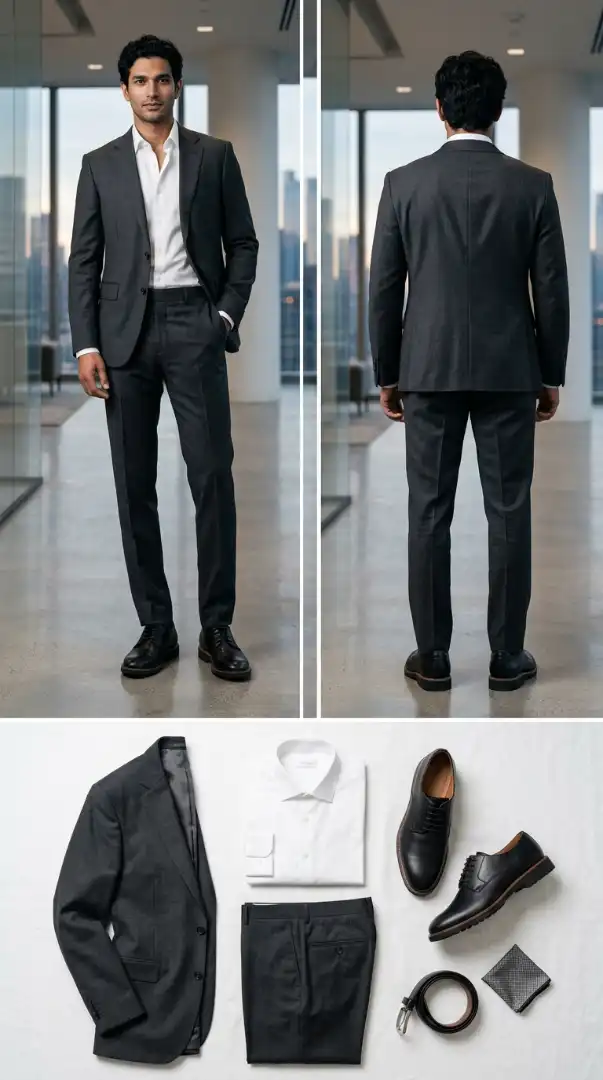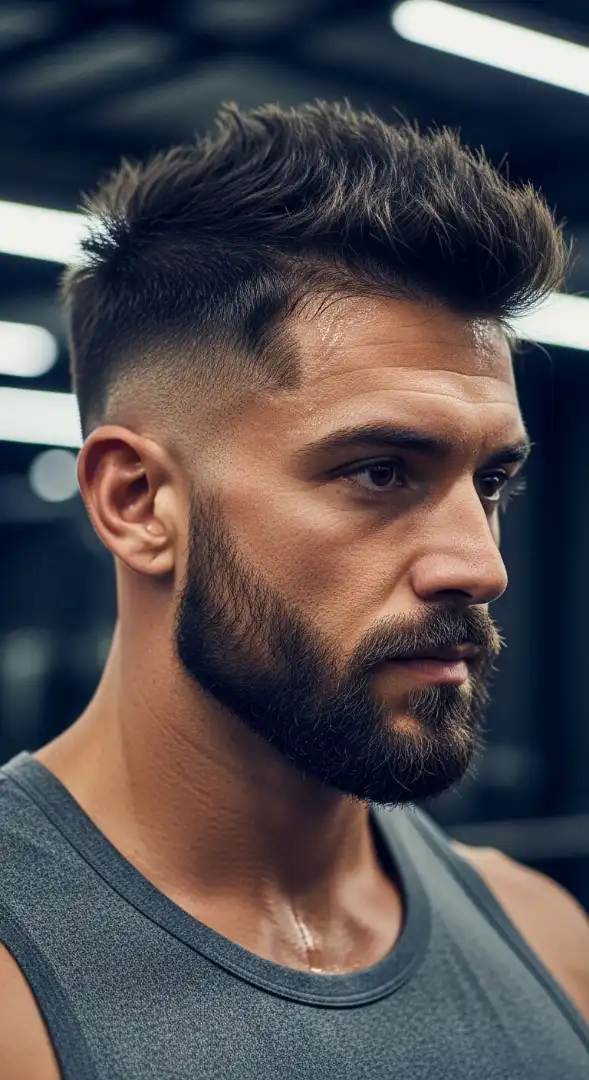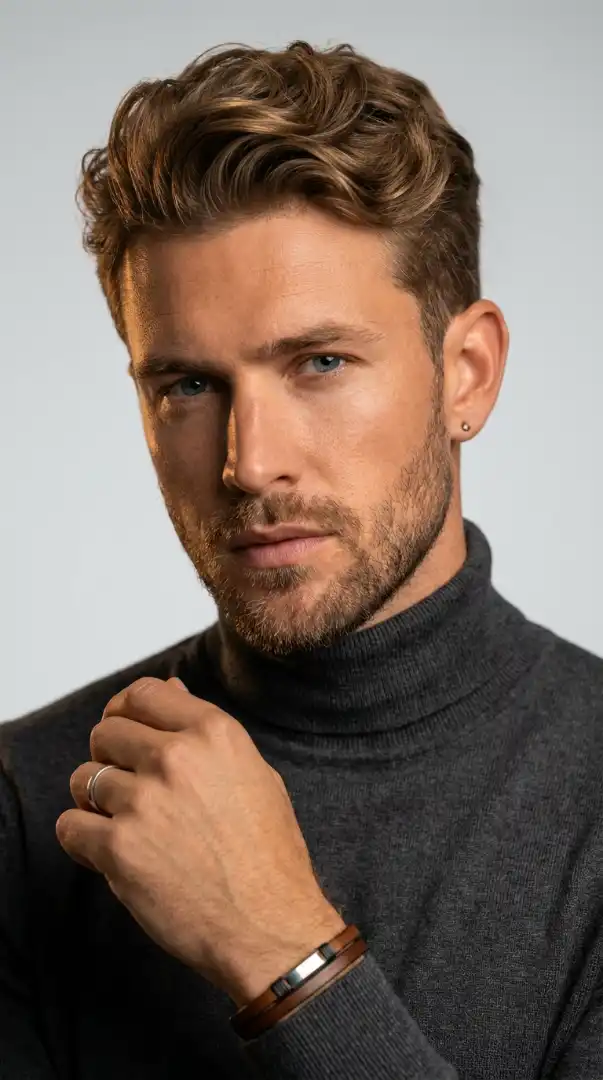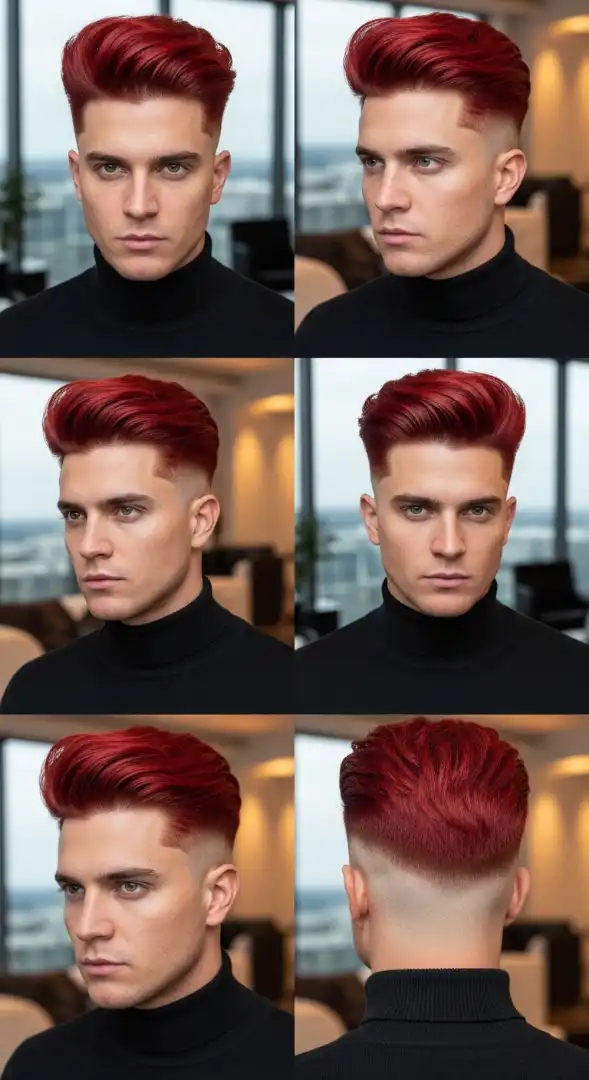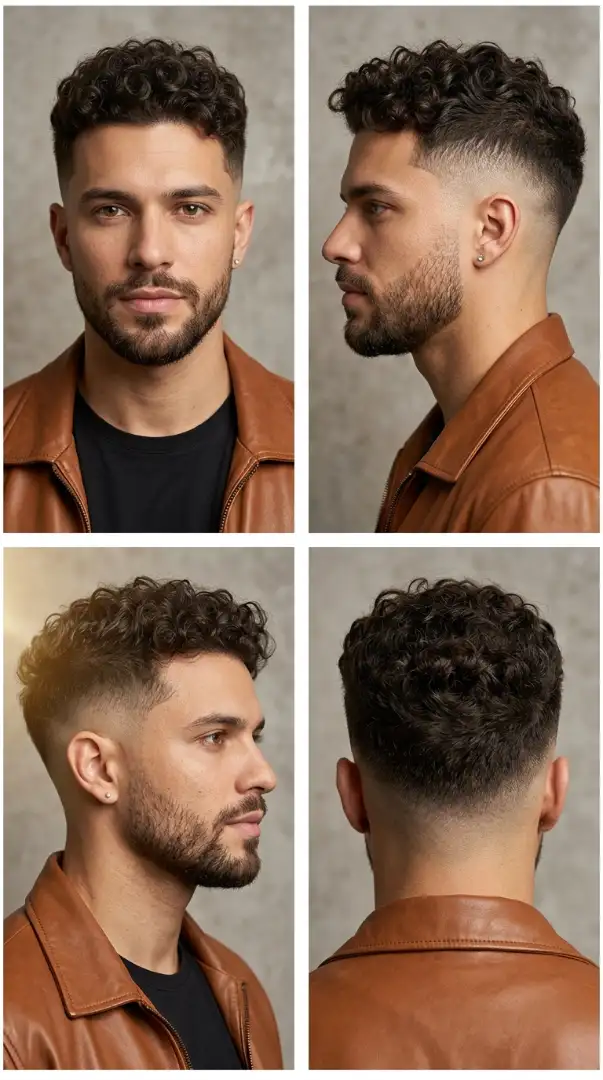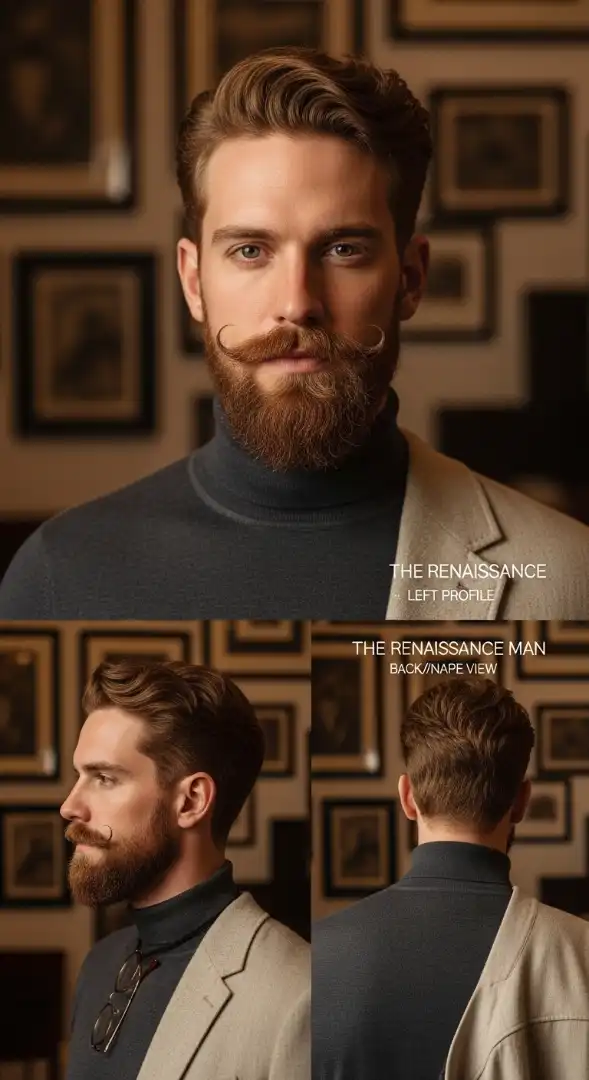
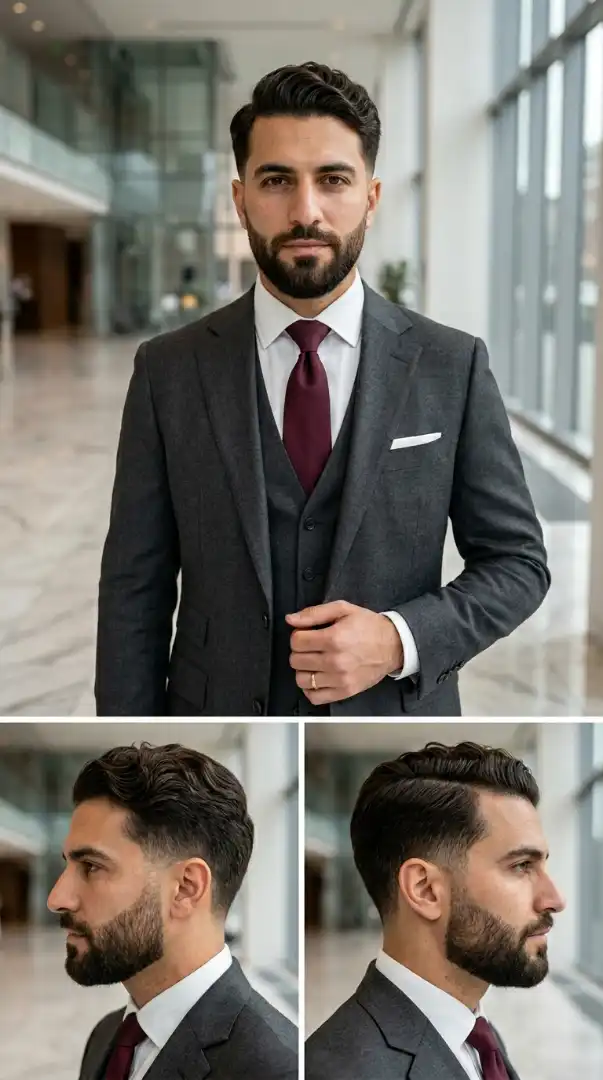
Stylish Comb Over Hairstyles For Every Occasion
STYLE 1 OF 15 — THE EXECUTIVE SHARP SIDE PART

The Executive Sharp Side Part is the boardroom power move disguised as a haircut. This style works best for Oval and Diamond face shapes because the diagonal sweep created by the deep side part adds width across the forehead while the slicked-over volume balances angular features. The sharp part line acts as a visual anchor, drawing the eye horizontally and creating facial symmetry. For Round faces, this cut provides crucial elongation — the height achieved at the crown combined with the tight sides removes visual width, making the face appear longer and more structured. Square faces benefit from the softening effect of the curved comb-over, which breaks up the hard jawline angles with smooth, flowing lines.
Your grooming kit must include precision tools. Start with the Wahl Magic Clip cordless for the tight taper on the sides — its taper blade creates seamless graduation without harsh lines. The Andis T-Outliner is essential for defining that razor-sharp side part and cleaning up the temples and neckline. Use a Kent 81T hand-made comb with fine teeth to create the part line daily — cheap combs will snag and disrupt the flow. For hold, Layrite Super Shine Cream pomade gives that executive boardroom gloss without the crunchy feel, and it rewashes easily. Keep a small boar bristle brush in your desk drawer for midday touch-ups. If you wear a beard, blend it with a few drops of Honest Amish Beard Oil to keep the transition from hair to facial hair looking intentional, not accidental.
Maintenance level is Medium-High. Expect barber visits every two weeks to maintain the taper sharpness and part line definition — this style shows every millimeter of growth on the sides. Daily styling takes six to eight minutes. Morning routine: towel-dry hair to about 70% dry, apply pomade to damp hair working from roots to ends, create the part with your fine-tooth comb using the same spot every single day for consistency, comb over with tension to smooth everything flat, finish with a light hairspray mist if you need all-day hold in humid climates. Before bed, sleep on a silk pillowcase to reduce friction and preserve the part overnight.
Walk into the barbershop and say this exactly: “I want a classic side part comb over. Take the sides down with a number two guard, low taper fade starting just above the ears, blend it smooth into a number four on top of the sides. Leave three to four inches of length on top. Cut the top with scissors, not clippers — I need length to comb over. Create a hard part on my left side about two inches from my natural part line, use the razor for a clean line. Taper the back into the neckline, keep it tight and professional. If I have a beard, blend the sideburns into the fade so there’s no disconnect.” Show them a reference photo of this exact style to eliminate guesswork.
The comb over isn’t just for executives — it’s also the foundation for more adventurous styles like the Modern Pompadour variation we’ll cover next, where height meets heritage in unexpected ways.
FAQS
Q: How do I maintain a sharp side part at home without it looking messy by noon?
A: Use a fine-tooth comb to re-create the exact same part line every morning in the same spot, apply pomade to slightly damp hair for maximum hold, and finish with a light-hold hairspray. The key is consistency — your hair will train itself to fall into that part naturally after two weeks of daily repetition. Carry a small comb and touch up in the bathroom after lunch if needed.
Q: Which face shape suits the classic comb over best?
A: Oval and Diamond face shapes benefit most because the diagonal sweep adds width to the forehead and balances angular features. Round faces also work well because the height at the crown and tight sides create vertical elongation. Square faces gain softness from the curved flow of the comb-over, which breaks up hard jawline angles naturally.
Q: What is the difference between a side part and a hard part comb over?
A: A side part is created naturally with a comb using your existing hairline, giving a softer, more classic look. A hard part is shaved into the scalp with a razor or trimmer, creating a sharp visible line that’s more modern and edgy. Hard parts require maintenance every seven to ten days as they grow out and blur.
Q: How often should I get a comb over touched up at the barbershop?
A: Every two weeks minimum to maintain the taper fade sharpness and part line definition. If you have a hard part shaved in, you’ll need touch-ups weekly or you can learn to maintain it yourself at home with a T-blade trimmer and steady hands.
STYLE 2 OF 15 — THE TEXTURED WAVE RIDER
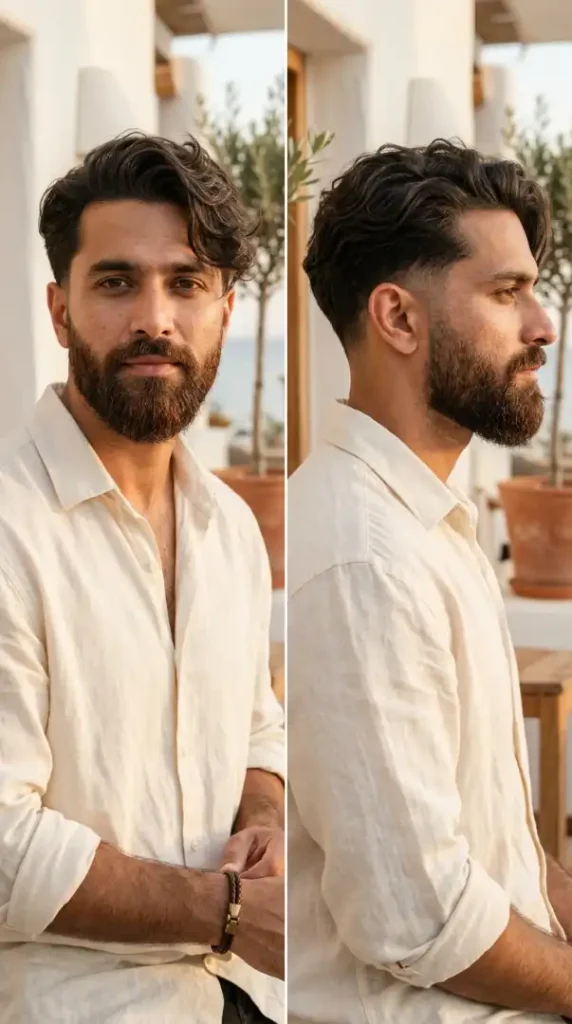
The Textured Wave Rider is built for men who want the polish of a comb over without looking like they stepped out of a 1950s ad. This works exceptionally well for Heart and Oval face shapes. Heart-shaped faces benefit because the textured volume on top balances a wider forehead with a narrow chin — the waves add visual weight at eye level, creating horizontal balance. Oval faces can pull off nearly anything, but this style specifically enhances natural proportions by adding casual volume without creating excess height. For Round faces, the swept-over texture creates diagonal movement that elongates, while Oblong faces should approach carefully — too much height on top can make the face appear even longer, so ask your barber to keep crown height moderate.
Your toolkit needs to embrace texture, not fight it. The Andis Master Adjustable Blade Clipper is perfect for the low skin fade because you can dial in the exact length without swapping guards constantly. For the beard, the BaByliss Pro FX Outliner keeps those cheek lines and necklines crisp without over-trimming. You need a wide-tooth comb, not a fine-tooth — the Baxter of California Large Comb works perfectly for wavy hair because it detangles without destroying the natural wave pattern. Product-wise, ditch the high-shine pomades. Go with American Crew Fiber for a matte textured finish that holds waves in place without that wet-slick look, or Suavecito Matte Pomade if you need stronger hold in humid weather. For the beard, use Honest Amish Beard Balm — it conditions while giving light hold to keep things shaped without looking greasy. If your waves are prone to frizz, a few drops of Argan oil worked through damp hair before styling will tame flyaways.
Maintenance level is Medium. Barber visits every three weeks work fine because the low fade is forgiving as it grows out, and the textured top actually looks better with a little length. Daily styling takes four to five minutes. After showering, towel-dry to about 60% dampness. Work a dime-sized amount of fiber through your hair, focusing on the roots for volume. Use your fingers to rake through and encourage the natural wave, don’t comb it flat. Create a loose side part with your wide-tooth comb by running it through once, then use your hands to push everything over to the desired side. Scrunch lightly to bring out wave definition. Let it air-dry or use a diffuser on low heat. The goal is controlled chaos, not perfection.
Your barber script: “Low skin fade on the sides, start the fade about one inch above my ears and blend it smooth. Leave about four to five inches on top, cut with scissors and use point-cutting technique to enhance my natural wave texture — don’t thin it out too much or I’ll lose volume. Create a soft side part, not a hard razor part, just use the comb to guide it. Taper the back into my neckline but keep it natural, not too tight. For my beard, clean up the cheek line and neckline, but leave the length — I’m keeping it full and natural.” Bring a photo of this style to show the wave texture you’re aiming for.
If you like the casual vibe but want something sharper for formal events, keep reading for The Urban Architect, which combines textured movement with clean structural lines.
FAQS
Q: How do I maintain natural waves in a comb over without them looking frizzy or messy?
A: Use a lightweight matte product like American Crew Fiber on damp hair, work it through with your fingers not a comb, and let your hair air-dry or use a diffuser on low heat. The key is working with your natural texture instead of forcing it flat — wavy hair looks best when it’s slightly undone, not slicked tight.
Q: Which face shape suits a textured comb over best?
A: Heart and Oval face shapes work best because the textured volume balances a wider forehead with a narrow chin, creating horizontal harmony. Round faces also benefit from the diagonal swept-over movement that elongates. Oblong faces should keep crown height moderate to avoid making the face appear even longer.
Q: What is the difference between a textured comb over and a slicked comb over?
A: A slicked comb over uses high-shine pomade to create a smooth, polished, wet-looking finish with all hairs laying flat in one direction — classic and formal. A textured comb over preserves natural wave or curl patterns with matte products, giving a casual, modern, undone finish — still styled but more relaxed and contemporary.
Q: How often should I get a textured comb over fade touched up?
A: Every three weeks is ideal for maintaining the fade sharpness while keeping the textured top at a workable length. If your waves grow fast, you can stretch it to four weeks, but the sides will start looking fuzzy and the shape will lose definition.
STYLE 3 OF 15 — THE URBAN ARCHITECT
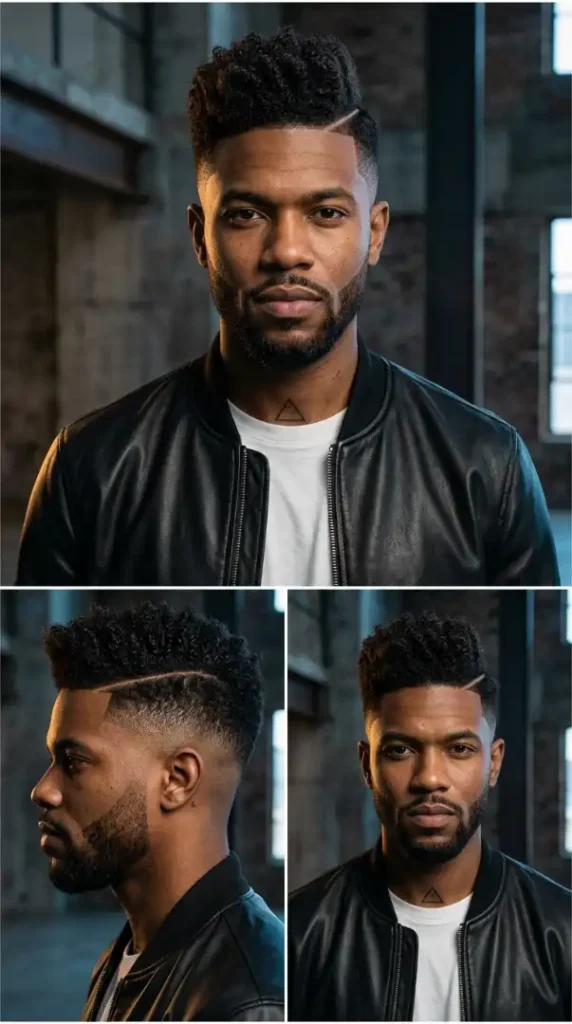
The Urban Architect is a statement piece for men with coily or tightly textured hair who want to prove that comb overs aren’t just for straight-haired guys. This style works best on Square and Diamond face shapes because the high-volume top creates vertical lift that balances a strong jawline — it literally draws the eye upward, elongating the face. The hard part adds a geometric element that complements angular features instead of competing with them. For Round faces, this is one of the most effective cuts available: the height at the crown combined with the skin-tight sides removes all lateral width, making the face appear significantly longer and more structured. Oval faces can pull this off but should be careful not to create too much height, which can throw off natural proportions. Oblong faces should avoid this entirely — adding more vertical length will make the face look stretched.
Your grooming arsenal needs precision blades and texture-specific products. The Wahl Professional 5-Star Magic Clip is essential for coily hair because its stagger-tooth blade cuts through dense texture without pulling. For the high skin fade and hard part, you need the Andis Slimline Pro Li T-Blade Trimmer — it’s the gold standard for sharp lines on textured hair. Never use a standard comb on coily hair; instead, grab the Diane Jumbo Rake Comb with wide-set teeth that won’t snag. For styling, you need moisture first, hold second. Start with Cantu Shea Butter Leave-In Conditioning Repair Cream on damp hair to hydrate and define coils, then layer SheaMoisture Three Butters Styling Souffle for hold without crunch. If you need extra definition on the coils, use the Denman D3 brush to create uniform curl clumps. For the beard, maintain it with Cremo Beard Oil to prevent dryness and keep the short tapered length looking intentional.
Maintenance level is High. Barber visits every seven to ten days are mandatory to keep the hard part sharp and the high fade from blurring. Coily hair shows length fast, and the architectural precision of this cut falls apart quickly without upkeep. Daily styling takes eight to twelve minutes. Start with damp hair — never bone dry. Apply leave-in conditioner liberally from roots to ends. Work styling souffle through with your fingers, focusing on the top section where you want definition. Use your rake comb or Denman brush to create the comb-over direction, pulling everything to one side with tension. The hard part will guide the separation naturally. Let it air-dry or use a hooded dryer on low heat if you’re in a hurry — avoid blow-dryers with concentrator nozzles, which can disrupt the coil pattern. Before bed, wrap your hair with a silk or satin durag to preserve the shape overnight and reduce morning styling time.
Walk in and say this: “High skin fade, start the fade at my temple and take it down to the skin, blend it smooth with no lines. Drop fade in the back following my head shape. Leave about three inches of length on top, keep my natural coil texture — don’t cut it too short or it won’t lay over properly. Create a hard part on my left side, use the razor or trimmer to shave a clean line about two inches from where my hair naturally wants to part. Taper the back tight into my neckline. For my beard, keep it short and tapered, line up the cheek and neck with the T-blade, make it sharp.” Show your barber this exact image with the coil texture visible so they understand you want texture, not a brushed-out finish.
If this high-maintenance precision isn’t your speed, stick around for The Low-Key Classic — same structure, half the upkeep.
FAQS
Q: How do I maintain a hard part on coily hair without it closing up between barber visits?
A: Use your T-blade trimmer at home to re-shave the hard part line every three to four days. Run the blade along the same path your barber created, moving in one direction only, and clean up any stray hairs with a handheld mirror to check the back angles. Apply a tiny amount of edge control or pomade along the part line to keep surrounding hairs flat and defined.
Q: Which face shape suits a high-volume comb over with coily texture best?
A: Square and Diamond face shapes benefit most because the vertical height balances a strong jawline and angular features. Round faces also work exceptionally well because the height combined with skin-tight sides removes lateral width and elongates the face. Oval faces work but should keep height moderate. Oblong faces should avoid this style entirely as it adds unwanted length.
Q: What is the difference between a high fade and a drop fade on a comb over?
A: A high fade starts near the temple and goes straight back horizontally, keeping the fade line parallel to the ground — creates a boxy, military-inspired look. A drop fade curves downward following the natural shape of the head behind the ear — creates a rounder, more natural-looking silhouette. Drop fades are more versatile for different head shapes.
Q: How often should I get a high skin fade with a hard part touched up?
A: Every seven to ten days to keep the hard part sharp and the skin fade from growing out into a shadow. Coily hair texture shows growth faster than straight hair, and the architectural precision of this cut requires frequent maintenance or the whole shape collapses visually.
STYLE 4 OF 15 — THE SALT & PEPPER STATESMAN
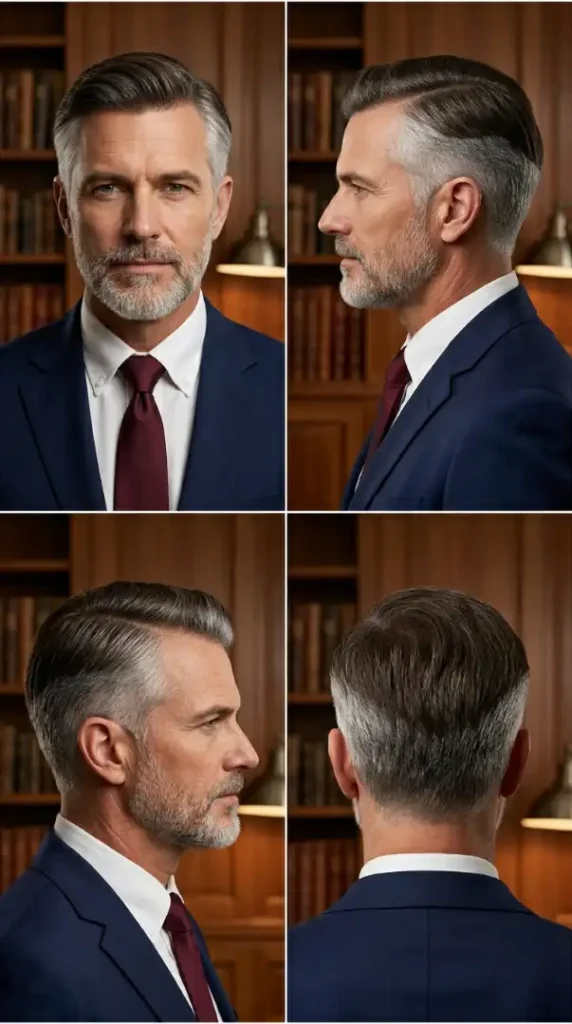
The Salt & Pepper Statesman proves that going gray doesn’t mean giving up on style — in fact, it’s your greatest asset if you know how to work it. This cut is specifically designed for mature men typically over forty who want to look distinguished without trying too hard. Face shape compatibility is broad: Oval faces get the most versatility because the clean side part and medium fade maintain natural balance. Square faces benefit from the soft comb-over flow which tempers a heavy jawline without feminizing it — the silver temples actually enhance masculine maturity rather than aging you. Diamond faces work well because the swept-over crown adds width at the forehead, balancing narrow temple zones. Round faces should opt for slightly more height at the crown to create vertical elongation, while Oblong faces should keep everything moderate to avoid stretching facial proportions.
Your grooming kit shifts toward maintenance and preservation of hair quality as you age. The Oster Fast Feed Clipper is excellent for mature hair because its powerful motor handles coarser gray texture without pulling — grays tend to be wiry and need a strong blade. For detailing, the Andis GTX T-Outliner keeps beard lines and temple edges crisp. You’ll need the Mason Pearson Popular Mixture Bristle Brush — it’s expensive but distributes natural oils through graying hair which tends to dry out faster than pigmented hair. Product selection matters more now: avoid heavy waxes that make gray hair look dirty. Go with Uppercut Deluxe Matte Pomade for a natural satin finish that doesn’t add shine, or Baxter of California Clay Pomade for texture without grease. If your beard is going gray, use Viking Revolution Beard Oil daily to keep it soft — gray facial hair gets coarse and wiry fast without conditioning. Add a silver-toning shampoo like Redken Brews Silver Charge once weekly to prevent yellowing if your gray has warm brassy tones you don’t like.
Maintenance level is Medium. Barber visits every three to four weeks work perfectly because the medium fade grows out gracefully and mature hair grows slower than younger hair. This isn’t the high-maintenance skin fade that shows every millimeter of growth. Daily styling takes five minutes maximum. After showering, towel-dry to about 70% dampness. Work a small amount of pomade through your hair, concentrating on the top section. Use your bristle brush to create the part and comb everything over smoothly in one direction. The brush is key — it smooths the hair cuticle and eliminates the frizz that gray hair develops. A light finishing spray optional if you’re in humid climates. The goal is polished but not plastered.
Tell your barber exactly this: “Medium taper fade on the sides, start the fade about mid-ear and blend it smooth — nothing aggressive, keep it professional. Leave about three inches on top, cut with scissors. Create a natural side part on my left, no hard razor line, just use the comb. Don’t try to hide my gray — I want it visible at the temples, that’s part of the look. Taper the back into my neckline naturally, no harsh lines. For my beard, keep it short and trim it close to my jawline, clean up the cheek and neck lines but leave some natural density — I don’t want it too thin or sculpted.” Bring this photo to show the salt-and-pepper color distribution you’re aiming for.
Mature style doesn’t stop here — next up is The Silver Fox Fade, which takes everything you just learned and adds modern edge for men who refuse to look their age.
FAQS
Q: How do I style salt-and-pepper hair without it looking dry or wiry?
A: Use a boar bristle brush daily to distribute natural oils from scalp to ends, apply a small amount of Uppercut Matte Pomade or similar low-shine product to damp hair, and condition your hair twice weekly with a moisturizing treatment. Gray hair loses natural oils faster than pigmented hair, so hydration and brushing are essential for a healthy shine.
Q: Which face shape suits a classic comb over with gray hair best?
A: Oval and Square faces work best. Oval maintains natural balance, while Square faces benefit from the soft flow that tempers a heavy jawline. Diamond faces also work well because the swept-over crown adds forehead width. Round faces should add crown height for elongation, and Oblong faces should keep everything moderate.
Q: What is the difference between a medium taper fade and a low fade on mature hair?
A: A medium taper fade starts blending around mid-ear and creates a balanced professional look ideal for business settings. A low fade starts much lower near the bottom of the ear and keeps more length on the sides, giving a more conservative classic appearance. Medium fades show more skin and feel more modern without being aggressive.
Q: How often should I get a salt-and-pepper comb over touched up at the barbershop?
A: Every three to four weeks is perfect for maintaining the medium fade shape and keeping top length workable. Mature hair grows slower than younger hair, and this fade style grows out gracefully, so you don’t need weekly touch-ups like high skin fades require.
STYLE 5 OF 15 — THE MODERN MINIMALIST
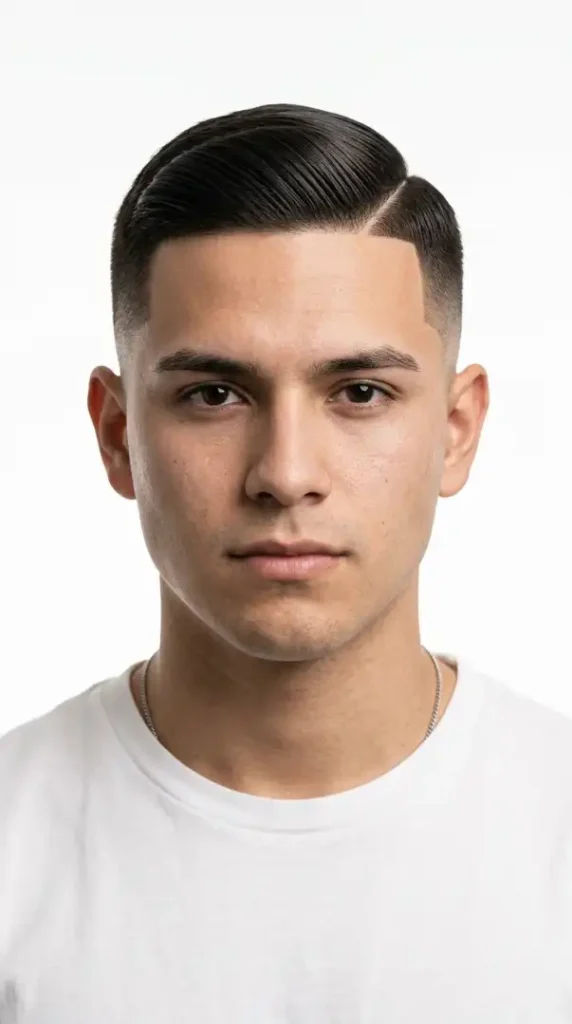
The Modern Minimalist is the anti-fuss cut for men who want style without the styling ritual. This works perfectly for men in their twenties and early thirties who need to look sharp for work but don’t want to spend fifteen minutes with a blow dryer every morning. Face shape analysis: Oval faces handle this effortlessly because the flat profile and minimal volume maintain natural proportions without adding or subtracting anything. Square faces should proceed with caution — the severe flatness can actually emphasize a boxy jaw, making the face look more angular than it is, so add a tiny bit of volume at the crown if your jaw is particularly strong. Round faces benefit enormously from this cut because the slicked-flat sides remove all lateral width while the high contrast between buzzed sides and longer top creates powerful vertical lines that elongate. Heart-shaped faces work well because the clean top adds visual weight at the forehead, balancing a narrow chin. Diamond faces should ask for slight texture at the crown to avoid making the temples look too narrow.
Your grooming setup is refreshingly simple because you’re not fighting texture or trying to create volume. The Wahl Professional 5-Star Senior for the sides works perfectly — its powerful motor cuts straight hair cleanly in one pass without multiple fade-blending steps. For maintaining the buzzed sides at home between cuts, grab the Andis Cordless T-Outliner for touching up your temple line and neckline. You need exactly one comb: the Carbon Fiber Anti-Static Comb from Cricket, which won’t create flyaways when you’re slicking everything down. Product-wise, skip the complicated routine. One product only: Suavecito Original Hold Pomade for that traditional wet-slick look, or if you prefer matte, use Hanz de Fuko Claymation which gives hold without shine. That’s it — one comb, one product, three minutes daily. For shaving, since you’re going completely clean-shaven, use a quality safety razor like the Merkur 34C Heavy Duty paired with Proraso Shaving Cream to prevent irritation, and finish with Nivea Men Sensitive Post Shave Balm.
Maintenance level is Low-Medium. Barber visits every two-and-a-half to three weeks to keep the contrast sharp between the buzzed sides and longer top. The beauty of this cut is that even as it grows out, it still looks intentional — it just transitions from “fresh cut” to “styled longer” without ever hitting that awkward in-between phase that high fades suffer through. Daily styling takes literally three minutes. Shower, towel dry to about 80% dry, work a dime-sized amount of pomade through your hair from roots to ends, create your side part with your comb by running it through once firmly, comb everything flat in the direction of the part, smooth it down with your hand to eliminate any bumps, done. If you go the matte route with clay, apply it to completely dry hair instead of damp.
Your barber script is dead simple: “Buzz the sides down to a number one or two guard, blend it into the top smoothly but keep it short — I want high contrast. Leave about two to three inches on top, cut it with scissors, keep it all one length, no layers. Create a clean side part on my left with the comb, no hard razor line. Taper the back into my neckline, keep it tight and professional. I’m staying clean-shaven so just line up my sideburns to match the fade.” Show the photo to demonstrate the flat, slicked profile you want — no volume, no texture, just clean lines.
If minimal effort with maximum impact sounds good but you want something with more personality, keep scrolling for The Street King, which adds urban edge to this same foundation.
FAQS
Q: How do I keep a comb over looking slicked and flat all day without it getting oily or heavy?
A: Use a water-based pomade like Suavecito Original instead of oil-based products — it provides strong hold and shine without the greasy buildup, and it washes out easily with just water. Apply to damp hair, comb it flat, and let it air-dry completely. Once dry, it sets firm and won’t move or get oily even in humid weather.
Q: Which face shape suits a flat minimal comb over best?
A: Oval and Round faces work best. Oval maintains natural balance with the flat profile, while Round faces benefit enormously from the slicked-flat sides that remove lateral width combined with the high contrast that creates vertical elongation. Square faces should add slight crown volume to avoid emphasizing a boxy jaw.
Q: What is the difference between a number one guard and a number two guard on the sides?
A: A number one guard leaves hair at one-eighth inch approximately 3mm, creating a very short almost-skin appearance with visible scalp showing through. A number two guard leaves hair at one-quarter inch approximately 6mm, providing slightly more coverage and a softer overall look. Number one creates more dramatic contrast with the top; number two is less aggressive and more office-friendly.
Q: How often should I get a minimal comb over touched up at the barbershop?
A: Every two-and-a-half to three weeks is ideal for maintaining the sharp contrast between buzzed sides and longer top. This cut grows out gracefully, so you can stretch it to four weeks if needed without looking unkempt — it just transitions from fresh to slightly grown which still looks styled.
STYLE 6 OF 15 — THE EDGY UNDERCUT SWEEP
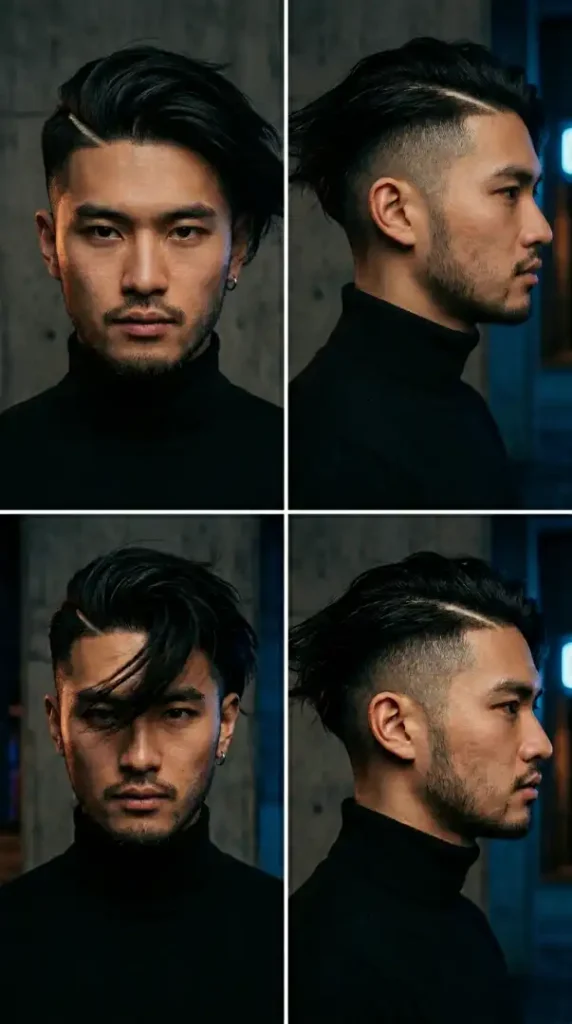
The Edgy Undercut Sweep is for men who want to make a statement without apologizing for it. This is not a safe corporate haircut — this is deliberate edge. Face shape compatibility is specific: Diamond faces benefit most because the long swept-over top adds width at the forehead and temples where Diamond faces are naturally narrow, creating better facial balance. The dramatic side movement also softens angular cheekbones. Oval faces can absolutely pull this off — the exaggerated sweep maintains the natural balanced proportions that Oval faces have. Heart-shaped faces work well because the volume on top counterbalances a narrow chin. Round faces should approach carefully: the long top can add too much lateral width if not styled with enough height, so make sure you’re sweeping UP and OVER, not just sideways. Square and Oblong faces should generally avoid this unless they’re intentionally going for an avant-garde look — the horizontal sweep can make Square jaws look even wider, and Oblong faces don’t need added length.
Your grooming arsenal needs to handle both precision and volume. The Oster Fast Feed is excellent for buzzing the sides to zero because its powerful blade cuts dense Asian hair cleanly without multiple passes. For the hard part and cleanup, the Andis Slimline Pro Li is the industry standard for creating that laser-sharp disconnect line. You need a blow dryer and you need a good one — the Dyson Supersonic if budget allows, or at minimum the Elchim 3900 Healthy Ionic, because you’re creating volume and direction that won’t happen with air-drying. Get a round brush, medium barrel size, the Olivia Garden Ceramic Ion series works perfectly for creating lift at the roots while directing the sweep. Product layering is key: start with a volumizing mousse like TRESemmé Flawless Curls Extra Hold Mousse on damp hair before blow-drying, then finish with a strong-hold pomade like Layrite Super Hold or Uppercut Deluxe Pomade to lock the sweep in place. If your hair is fine and won’t hold shape, add a texture powder like Hanz de Fuko Sponge Wax at the roots for grip.
Maintenance level is High. Barber visits every week to ten days maximum because the disconnect undercut shows growth immediately — unlike a blended fade that gradually looks softer, a disconnect just looks sloppy when the sides grow out even a little. The long top can go three to four weeks between trims. Daily styling takes ten to fifteen minutes because you’re blow-drying for volume and direction. Shower, apply mousse to soaking wet hair, blow-dry with the round brush pulling everything from left to right while lifting at the roots, focus on creating height first then direction, get it 95% dry, work pomade through with your fingers focusing on the top section, use the brush one more time to perfect the sweep, lock it with a finishing spray if you need it to survive wind or a long day. This is a high-effort style but the payoff is undeniable impact.
Walk in and tell your barber: “Disconnected undercut. Buzz the sides and back to zero guard, take it all the way to the skin, no fade, no blend — I want a hard line where the buzzed section meets the top. Leave five to six inches on top, don’t layer it, keep it all one length. Create a hard part on my left side with the trimmer, make it visible and sharp. The top should sweep dramatically from left to right when I style it, so cut it to encourage that movement. Clean up my neckline and edges with the T-blade. For my beard, keep the chin strap thin and connect it to a light mustache, clean up the cheek line.” Bring this exact photo showing the disconnect line and sweep direction.
If you like the drama but want something you can wear to a job interview, stick around for The Professional Polish, which tames this energy into something boardroom-appropriate.
FAQS
Q: How do I create volume in a disconnected undercut without it falling flat by afternoon?
A: Apply volumizing mousse to soaking wet hair before blow-drying, use a round brush to lift at the roots while directing the sweep, and finish with a strong-hold pomade plus a light finishing spray. The key is creating the shape during the blow-dry phase with heat and tension — pomade alone won’t hold volume if you skip the blow-dryer.
Q: Which face shape suits a dramatic swept undercut best?
A: Diamond and Oval faces work best. Diamond faces gain forehead width where they’re naturally narrow, while Oval faces maintain their balanced proportions with the exaggerated sweep. Heart-shaped faces also work because the top volume balances a narrow chin. Round faces need extra height to avoid looking wider. Square and Oblong should avoid unless going for avant-garde style.
Q: What is the difference between a disconnected undercut and a faded undercut?
A: A disconnected undercut has zero blending — the sides are buzzed to one short length (usually zero or one guard) and there’s a hard visible line where buzzed hair meets long hair on top, creating dramatic contrast. A faded undercut has gradual blending from skin to length, creating a softer more natural transition. Disconnected is more edgy and modern, faded is more versatile and professional.
Q: How often should I get a disconnected undercut touched up at the barbershop?
A: Every seven to ten days to keep the sides clean and the hard part sharp. The disconnect shows growth immediately unlike fades that blur gradually, so frequent maintenance is essential. The long top can go three to four weeks between trims, so you might alternate between full cuts and sides-only touch-ups.
STYLE 7 OF 15 — THE CORPORATE PRECISION
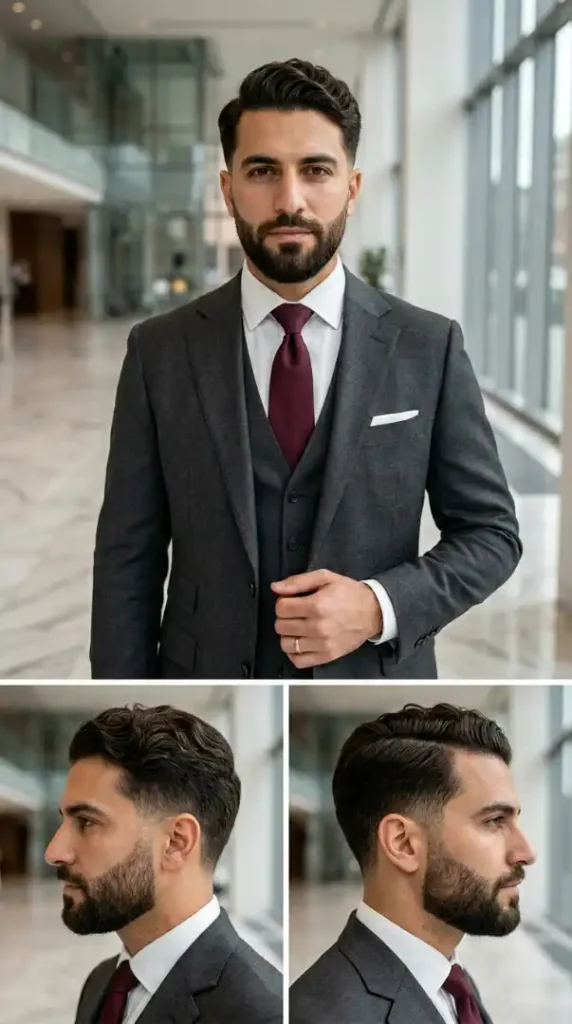
The Corporate Precision is the haircut for men who understand that in professional environments, your appearance is part of your performance. This isn’t about peacocking — it’s about projecting competence, reliability, and attention to detail. Face shape analysis: Oval faces are ideal because the balanced proportions and moderate volume work with natural symmetry without overcorrection. Square faces benefit from the soft wave texture which tempers hard angular jawlines, especially when paired with a full beard that adds vertical length to balance a wide jaw. Round faces should opt for this style with slightly more height at the crown to create elongating vertical lines — the low fade removes lateral width while the controlled top adds structure. Diamond faces work well because the moderate crown volume fills out narrow temple zones. Heart-shaped faces pair perfectly with the full beard which adds visual weight to a narrow chin, balancing a wider forehead. Oblong faces should keep crown height very moderate to avoid stretching facial proportions further.
Your grooming kit needs to balance precision and texture maintenance. The Wahl Magic Clip remains the gold standard for low taper fades on all hair textures, cutting cleanly with smooth blending capability. For beard maintenance, the Philips Norelco OneBlade Pro is excellent for daily touch-ups of cheek and neck lines without fully shaving — keeps edges sharp between barber visits. You need a quality comb for wavy hair: the Kent 81T or Mason Pearson Rake Comb with wider-set teeth that won’t destroy natural wave patterns. Product selection matters for professional settings — avoid anything with excessive shine that photographs badly under office lighting. American Crew Pomade offers medium hold with a natural finish that looks polished but not greasy. For wavy texture that tends toward frizz, mix in a small amount of Moroccan Oil Treatment before styling. Beard maintenance requires Honest Amish Beard Balm for conditioning plus light shaping hold, and a quality beard brush like the Kent BRD2 Small Beard Brush to distribute oils and train growth direction.
Maintenance level is Medium. Barber visits every two-and-a-half to three weeks maintain the low fade crispness and keep the top at ideal working length. The beard needs weekly edge cleanup which you can do at home with your OneBlade, or have the barber touch it up every visit. Daily styling takes six to eight minutes. Morning routine: shower, towel-dry hair to about 70% damp, apply a small amount of Moroccan Oil if your waves frizz, work pomade through hair from roots to ends, use your wide-tooth comb to create the part and direct everything over to one side, use your hands to encourage natural wave texture at the crown — don’t comb it completely flat, let it air-dry or blow-dry on low if you’re in a hurry. For the beard, after showering, towel-dry, apply beard balm, brush through with your beard brush to distribute and shape, trim any wild hairs with small scissors. Two to three minutes maximum on beard maintenance.
Barber script for this cut: “Low taper fade on the sides, start the fade just above my ears, blend it smooth into about three to four inches on top. Cut the top with scissors, preserve my natural wave texture, don’t thin it out excessively — I want controlled waves, not flat. Create a clean natural side part, no hard razor line. Taper the back into my neckline, keep it professional. For my beard, keep the length full following my jawline, clean up the cheek line and neckline with the trimmer, make the edges sharp but don’t over-sculpt — I want it to look natural, not drawn on.” Show your barber this photo to demonstrate the wave texture and beard fullness you’re maintaining.
Next up is The Weekend Casual, which takes this same structure and loosens it up for off-duty style that still shows you put in effort.
FAQS
Q: How do I maintain a professional comb over with wavy hair without it looking frizzy or messy by afternoon?
A: Use a wide-tooth comb to style when hair is damp, apply a pomade with natural hold like American Crew, and if you’re prone to frizz, add a few drops of Moroccan Oil before styling. The key is working with your wave pattern instead of fighting it — comb everything in one direction but let the natural texture show, don’t try to slick it completely flat.
Q: Which face shape suits a low taper fade comb over with a full beard best?
A: Oval and Square faces work best. Oval maintains natural balance, while Square faces benefit from the soft wave texture that tempers angular jawlines. The full beard adds vertical length to balance a wide jaw. Round faces should add crown height for elongation. Heart faces work well because the beard balances a narrow chin. Oblong should keep height moderate.
Q: What is the difference between a low taper fade and a mid fade on a professional cut?
A: A low taper fade starts blending just above the ear, keeping more length on the sides for a conservative professional look. A mid fade starts blending around mid-ear height, showing more skin and creating a slightly more modern appearance while still being office-appropriate. Low fades are more traditional and business-formal, mid fades are business-casual.
Q: How often should I get a low taper comb over touched up at the barbershop?
A: Every two-and-a-half to three weeks for the haircut to maintain fade crispness and top length. The beard needs weekly edge touch-ups for cheek and neck lines, which you can do at home with a quality trimmer between barber visits, or have your barber clean it up each time you come in for a full service.
STYLE 8 OF 15 — THE CLASSIC GENTLEMAN

The Classic Gentleman is heritage menswear translated into a haircut. This is for men who appreciate tradition, craftsmanship, and timeless style that doesn’t chase trends. Face shape compatibility is forgiving: Oval faces look effortlessly distinguished because the traditional proportions and balanced volume work with natural symmetry. Square faces benefit from the soft wave texture and high-shine finish which creates visual softness that tempers angular jawlines without the need for a beard. Round faces work if you add moderate height at the crown — the traditional taper keeps some length on the sides, so you need vertical compensation at the top to create elongation. Heart-shaped faces pair well because the mustache (without a full beard) adds subtle visual weight to the upper lip area without overwhelming a narrow chin. Diamond faces benefit from the wave volume at the crown which adds width to narrow temple zones. Oblong faces should keep crown height conservative to avoid further elongating proportions.
Your grooming kit requires old-school tools and products. The Oster Model 10 Classic Professional Clipper is the barber-shop standard for traditional tapers — it’s been used for decades and creates smooth gradual blending. For detailing, the Wahl Professional 5-Star Detailer handles mustache trimming and neckline cleanup precisely. You need a traditional fine-tooth comb — the Kent 81T or a vintage-style hard rubber comb like the Chicago Comb Model 1. Product selection is critical for achieving that classic high-shine look: Layrite Original Pomade gives authentic 1940s shine with strong hold and easy application, or Murray’s Superior Pomade if you want the real deal petroleum-based product that requires effort to wash out but holds like nothing else. For wavy hair, you’ll need a quality boar bristle brush like the Kent BRD4 to smooth and train the hair while distributing pomade evenly. Mustache maintenance requires dedicated tools: Kent Mustache Comb for daily grooming, Clubman Mustache Wax for shaping if you want traditional hold, and quality mustache scissors like Tweezerman Stainless Steel for precision trimming.
Maintenance level is Medium-High. Barber visits every two weeks for the traditional taper to stay sharp and the mustache to be professionally shaped. Between visits, you’ll need to trim your mustache every three to four days to prevent it from growing over your upper lip. Daily styling takes eight to ten minutes. After showering, towel-dry hair to about 70% damp. Work a generous amount of pomade through your hair from roots to ends — traditional pomades need more product than modern equivalents. Use your boar bristle brush to create the part and brush everything smooth in the direction of the comb-over. The brush is essential for distributing pomade and training wavy hair to lay flat with shine. Blow-dry on medium heat while brushing to set the shape and create maximum shine. For the mustache, comb it outward from the center, trim any hairs that extend past the corners of your mouth, apply a tiny amount of mustache wax if needed, and shape by combing and twisting the ends slightly.
Your barber script: “Traditional taper on the sides, start with a number two guard at the bottom and blend gradually into the top length — no skin showing, keep it conservative. Leave about three inches on top, cut with scissors, preserve my natural wave but keep it smooth. Create a clean side part on my left, use the comb to make it precise. Taper the back into my neckline naturally. For my mustache, trim it to follow my upper lip line naturally, don’t let it grow past the corners of my mouth, keep the thickness even across. I’m staying clean-shaven on my jaw, so just clean up my neckline and sideburns to blend with the taper.” Bring this vintage-inspired photo to show the shine level and wave control you want.
If classic style speaks to you but vintage isn’t your vibe, keep reading for The Contemporary Fade, which brings this same elegance into 2026 with modern edge.
FAQS
Q: How do I achieve that classic high-shine pompadour comb over finish without my hair looking greasy or wet all day?
A: Use a traditional water-based pomade like Layrite Original instead of petroleum-based products if you want shine without grease. Apply to damp hair, use a boar bristle brush to distribute and smooth, and blow-dry on medium heat while brushing to set the shine. Once dry, the product sets firm and won’t feel wet or transfer to your hands.
Q: Which face shape suits a traditional comb over with mustache best?
A: Oval and Square faces work best. Oval naturally balances traditional proportions, while Square benefits from the soft texture that tempers angular jaws. Round faces work with added crown height. Heart faces pair well with the mustache that adds subtle upper lip visual weight. Diamond benefits from crown volume. Oblong should keep height moderate.
Q: What is the difference between a traditional taper and a modern fade?
A: A traditional taper gradually reduces hair length from longer on top to shorter at the bottom using multiple guard lengths, but never goes to skin — it’s a conservative gradual blend. A modern fade blends all the way to skin creating more dramatic contrast and contemporary aesthetic. Tapers are classic and timeless, fades are modern and edgy.
Q: How often should I get a traditional comb over and mustache touched up at the barbershop?
A: Every two weeks for the taper to stay sharp and the mustache to be professionally shaped and trimmed. Between visits, maintain your mustache at home every three to four days by trimming hairs that extend past the lip corners and keeping the thickness even across.
STYLE 9 OF 15 — THE STREET KING
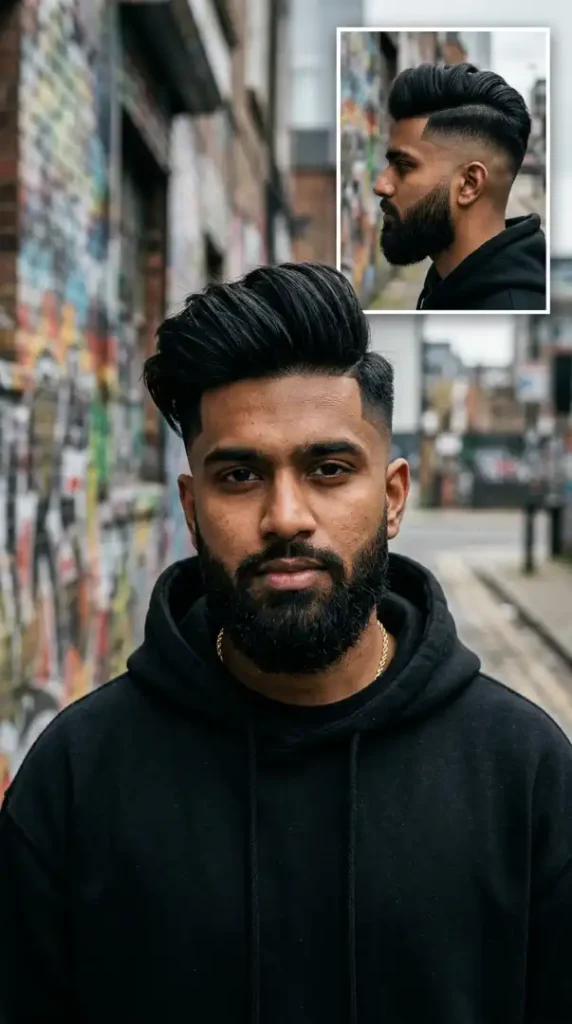
The Street King is unapologetic urban energy in haircut form. This isn’t polished corporate — this is raw, bold, confident street style that works in creative industries, music, fashion, and anywhere authenticity matters more than conformity. Face shape analysis: Square faces absolutely dominate this look because the aggressive height at the crown balances a strong jawline while the high skin fade creates clean angular lines that complement natural facial structure. Diamond faces benefit from the dramatic volume on top which fills out narrow temples and creates facial balance. Round faces should absolutely consider this — the high skin fade removes all lateral width while the extreme height creates powerful vertical elongation that can transform a round face into appearing oval. Oval faces can pull this off but risk looking top-heavy if too much volume is added, so keep height bold but not excessive. Heart-shaped faces work because the volume balances a narrow chin, especially when paired with a full beard. Oblong faces should avoid this — adding dramatic height will make the face look stretched beyond proportion.
Your grooming arsenal needs power and precision. The Andis Master Adjustable Blade Clipper is perfect for the high skin fade because you can dial in exact lengths without constantly swapping guards. For zero-gap fading and creating that razor-sharp fade line, the Wahl Professional 5-Star Magic Clip Cordless gives you freedom of movement and precision blade work. You absolutely need a quality blow dryer — the Babyliss Pro Nano Titanium or similar professional-grade dryer with concentrator nozzle attachment. Get a paddle brush for blow-drying thick straight hair — the Denman D83 works perfectly for directing hair while adding volume. Product layering is essential: start with sea salt spray like Bumble and Bumble Surf Spray on damp hair for pre-texture, blow-dry with the paddle brush pulling everything up and over while adding heat for volume, finish with a matte clay like Hanz de Fuko Claymation or Baxter of California Clay Pomade to lock in texture and height. For the beard, maintain fullness with Jack Black Beard Oil to prevent dryness and keep the length looking intentional not neglected.
Maintenance level is High. Barber visits every seven to ten days mandatory to keep the high skin fade crisp and the dramatic line sharp. The textured top can go two to three weeks but the sides show growth immediately. Daily styling takes ten to twelve minutes. Shower, towel-dry to about 60% damp. Spray sea salt spray liberally through hair. Blow-dry with paddle brush, pulling hair up and back while directing heat, focus on creating height at the crown and fringe area first, get it 90% dry. Work clay through dry hair with your fingers, focusing on the roots for lift and the ends for texture separation. Use your hands to push everything up and over to one side, creating that bold swept look. Finish with fingers to separate and define texture — you want controlled chaos, not smooth polish. Lock it with a light mist of hairspray if you need all-day hold.
Walk into the shop and say this: “High skin fade, start the fade at my temple and take it down to zero, skin-tight. Blend it aggressively — I want a sharp line, not a soft transition. Leave three to four inches on top, cut with scissors using point-cutting technique to enhance texture — I need it choppy, not smooth. Don’t layer it too much or I’ll lose volume. The front should sweep up and over to the right side when I style it. Taper the back tight into my neckline. For my beard, keep the length full and natural, clean up the cheek and neck lines with the trimmer, but don’t over-sculpt — I want natural density.” Show your barber this exact photo with the height and texture visible.
If you like the bold energy but need something that works in more conservative environments, The Refined Edge coming next splits the difference perfectly.
FAQS
Q: How do I create and maintain dramatic height in a high-volume comb over without it falling flat?
A: Use sea salt spray on damp hair before blow-drying to create pre-texture and grip, blow-dry with a paddle brush pulling upward while applying heat to set the shape, and finish with a strong-hold matte clay worked into roots for lift and ends for texture. The key is building volume during the blow-dry phase with heat and tension — clay alone won’t hold height.
Q: Which face shape suits a high-volume street-style comb over best?
A: Square and Diamond faces dominate this look. Square faces balance a strong jawline with crown height, while Diamond faces fill out narrow temples. Round faces benefit enormously from the high fade removing width and the height creating elongation. Oval works but risks looking top-heavy with too much volume. Heart works with a full beard. Oblong should avoid.
Q: What is the difference between a high skin fade and a mid fade on textured hair?
A: A high skin fade starts blending at temple height and goes all the way to skin, creating maximum contrast and dramatic modern edge. A mid fade starts around mid-ear and creates a less aggressive look while still being contemporary. High fades are bolder and show more skin, mid fades are more versatile and slightly less maintenance-intensive.
Q: How often should I get a high skin fade touched up at the barbershop?
A: Every seven to ten days to keep the skin fade crisp and the dramatic line sharp. High skin fades show growth immediately unlike lower fades that blur gradually, so frequent maintenance is essential. The textured top can go two to three weeks between trims, so you might alternate between full cuts and sides-only touch-ups.
STYLE 10 OF 15 — THE REFINED EDGE
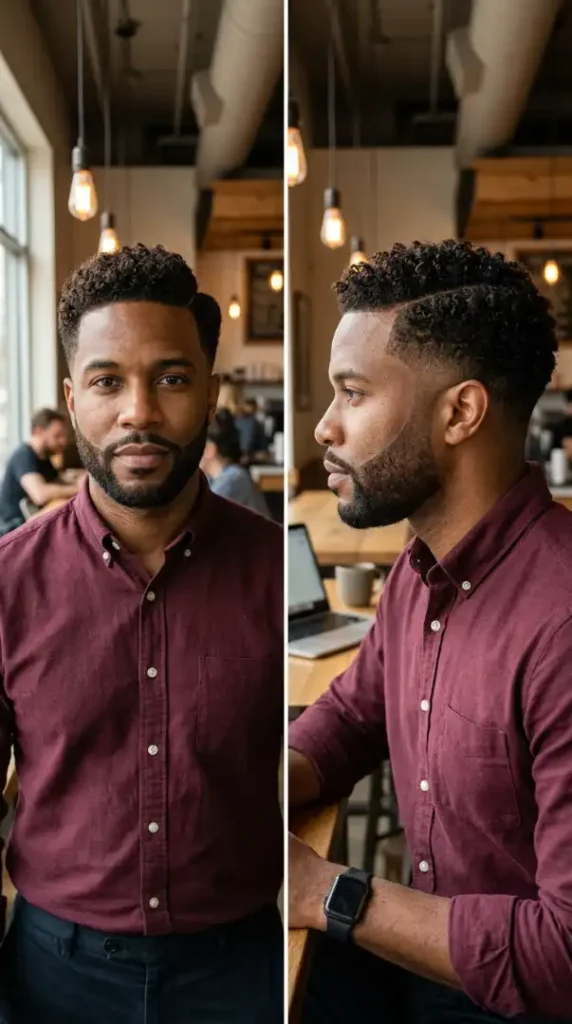
The Refined Edge proves that coily hair and professional polish aren’t mutually exclusive — in fact, when done right, texture becomes your signature. This cut is designed for men who work in environments that value both excellence and individuality: tech, creative agencies, consulting, entrepreneurship. Face shape compatibility: Oval faces look effortlessly refined because the moderate volume and clean lines work with natural proportions. Square faces benefit significantly from this cut because the mid-drop fade creates curved lines that soften a hard angular jawline, while the boxed beard adds vertical length that balances facial width. Round faces should absolutely embrace this — the mid-fade removes lateral width while the defined coil texture on top creates visual interest that draws the eye upward, creating elongation. Diamond faces work perfectly because the moderate top volume fills out narrow temple areas without becoming excessive. Heart-shaped faces pair well with the sharp boxed beard which adds weight to a narrow chin. Oblong faces work if crown height is kept moderate to avoid further elongating.
Your grooming toolkit requires understanding texture-specific needs. The Wahl Professional 5-Star Magic Clip remains essential for coily hair because its stagger-tooth blade handles dense texture without pulling or snagging. For the mid-drop fade and beard edges, the Andis Slimline Pro Li T-Blade creates razor-sharp lines that define the entire look. You need a wide-tooth comb or pick — the Diane Jumbo Rake Comb works for styling, but also grab an Afro pick with a metal pick end for creating lift and volume at roots. Product selection focuses on moisture and definition: start with Cantu Shea Butter Leave-In Conditioning Repair Cream on damp hair as your moisture base, layer SheaMoisture Curl Enhancing Smoothie for definition and hold, finish with a light oil like Argan Oil or Jojoba Oil on the surface for shine without grease. For the beard, use Cremo Beard Oil daily to keep it soft and maintain the sharp edges without dryness making the lines look ragged. Keep a quality beard trimmer like the Philips Norelco OneBlade Pro for maintaining cheek and neck lines between barber visits.
Maintenance level is Medium-High. Barber visits every ten to fourteen days to keep the mid-drop fade sharp and the beard edges crisp. Coily hair shows length and grows out into shape quickly, so staying on schedule is essential for maintaining the refined appearance. Daily styling takes six to eight minutes. Start with damp hair from the shower. Apply leave-in conditioner liberally from roots to ends, focusing on hydration. Work curl enhancing smoothie through with your fingers, encouraging natural coil definition. Use your wide-tooth comb or pick to lift at the roots and create the comb-over direction, pulling everything to one side gently without disturbing the coil pattern. Let it air-dry or use a hooded dryer on low heat — avoid blow-dryers with direct heat which can cause frizz. Once dry, apply a few drops of oil to your palms, rub them together, and smooth over the surface of your hair to add shine and seal in moisture. For the beard, after showering, towel-dry, apply beard oil, brush through, and trim any stray hairs that break the clean edge lines.
Tell your barber exactly this: “Mid-drop fade starting around mid-ear, curve it naturally following my head shape, blend it to skin smoothly. Leave about two to three inches on top, keep my natural coil texture — don’t cut it too short or try to brush it out. Cut with scissors respecting the texture. Create a clean defined part, and help me shape it to comb over to one side while keeping the coils visible. Taper the back following my head’s natural curve. For my beard, keep it boxed and shaped following my jawline, use the T-blade to create sharp edges on the cheek line and neck line, keep the length even and the density full — I want it sharp but natural.” Show this photo to demonstrate the coil definition and beard precision you’re maintaining.
Next up is The Silver Fox Fade for mature men who want this same level of sophistication with distinguished gray hair.
FAQS
Q: How do I maintain coil definition in a professional comb over without frizz or dryness?
A: Use a moisture-rich leave-in conditioner as your base, layer a curl enhancing product for definition, and finish with a light oil for shine and moisture seal. Style with a wide-tooth comb or pick on damp hair, let it air-dry or use a hooded dryer, and avoid direct heat from blow-dryers which causes frizz. Hydration is everything with coily hair.
Q: Which face shape suits a mid-drop fade comb over with coily texture best?
A: Oval and Square faces work exceptionally well. Oval maintains natural balance, while Square benefits from the curved fade lines that soften angular jaws. Round faces benefit from the fade removing width and the texture creating upward visual interest. Diamond fills out narrow temples with moderate volume. Heart pairs well with a boxed beard. Oblong works with moderate height.
Q: What is the difference between a mid-drop fade and a mid fade on coily hair?
A: A mid fade starts blending at mid-ear height and continues straight back horizontally, creating a more geometric boxy line. A mid-drop fade starts at the same point but curves downward following the natural shape of the head, creating a rounder more organic silhouette. Drop fades are more flattering on most head shapes and look more natural.
Q: How often should I get a mid-drop fade with coily hair touched up?
A: Every ten to fourteen days to keep the fade sharp and the overall shape intact. Coily hair grows into visible length quickly, and the refined professional appearance requires staying on a consistent maintenance schedule. The beard edges should be touched up weekly at home or every visit at the barber.
STYLE 11 OF 15 — THE SILVER FOX FADE

The Silver Fox Fade is power, experience, and confidence made visible. This is for mature men typically fifty-plus who have earned their gray and want to wear it with intention. Going gray is not giving up — it’s leveling up if you know how to work it. Face shape analysis: Oval faces look naturally distinguished because the balanced proportions and moderate volume maintain elegant symmetry that reads as refined maturity. Square faces benefit from the combination of soft wave texture which tempers a strong jawline, and the full silver beard which adds vertical length balancing facial width — the fade keeps it modern instead of aging the appearance. Round faces work beautifully if you add moderate crown height to create elongation — the fade removes lateral width while the textured top provides structure. Diamond faces are ideal because the wave volume at the crown fills narrow temples, and the silver color creates dimension that enhances angular cheekbones instead of competing with them. Heart-shaped faces pair perfectly with the full beard which adds visual weight to a narrow chin. Oblong faces should keep crown volume moderate to avoid excessive length.
Your grooming kit shifts focus to preserving hair quality and managing color tone. The Oster Fast Feed Clipper handles coarser gray hair texture with its powerful motor — gray hair tends to be wiry and needs strong blades. For fade work and detailing, the Andis GTX T-Outliner creates clean lines on mature skin and hair. You need the Mason Pearson Popular Mixture Bristle Brush to distribute natural oils through gray hair which dries out faster than pigmented hair. Product selection is critical: avoid heavy waxes that make gray hair look dirty or yellowed. Go with Baxter of California Clay Pomade for matte hold with natural finish, or Uppercut Deluxe Pomade for slight sheen without grease. Add a silver-toning shampoo like Redken Brews Silver Charge Purple Shampoo once or twice weekly to neutralize yellow or brassy tones that develop in white and gray hair — this keeps your silver looking clean and intentional. For the full beard, daily conditioning is essential: use Honest Amish Beard Balm to keep gray facial hair soft and manageable, as gray beards get coarse and wiry without moisture. Keep a quality trimmer like the Wahl Lithium Ion Stainless Steel Trimmer for maintaining beard length and shape between barber visits.
Maintenance level is Medium. Barber visits every three to four weeks for the low-to-mid fade which grows out gracefully, and for beard shaping and length maintenance. Gray hair grows slower than younger hair, and this fade style is forgiving as it grows. Daily styling takes five to seven minutes. After showering, towel-dry to about 70% damp. Work a small amount of pomade or clay through your hair, concentrating on the top section and working it through wave texture. Use your bristle brush to create the part and comb everything over smoothly, brushing with tension to smooth the cuticle and eliminate frizz that gray hair develops easily. The brush is essential — it distributes product evenly and trains the hair. Let it air-dry or use low heat from a blow-dryer if needed. For the beard, after showering, towel-dry, apply beard balm working it through from roots to ends, brush through with a beard brush to distribute and shape, trim any long stray hairs with small scissors. Use purple shampoo once or twice weekly in place of regular shampoo to maintain color tone.
Your barber script: “Low-to-mid fade on the sides, start blending just above my ears and take it smooth to skin — professional and clean, nothing aggressive. Leave about three to three-and-a-half inches on top, cut with scissors, preserve my natural wave texture. Create a clean natural side part, no hard razor line. Taper the back into my neckline naturally. Don’t try to hide my gray — I want the silver visible and looking intentional, that’s the whole point. For my beard, keep the length medium and full, trim it to follow my jawline naturally, clean up the cheek and neck lines but don’t over-sculpt — I want distinguished, not overly groomed.” Show your barber this photo with the full silver color and wave texture you’re maintaining.
If distinguished maturity is your vibe, the next style, The Continental Classic, takes everything you’ve just learned and adds European elegance.
FAQS
Q: How do I keep silver-gray hair from looking yellow or brassy?
A: Use a purple or silver-toning shampoo like Redken Brews Silver Charge once or twice weekly in place of your regular shampoo. The purple pigments neutralize yellow and brassy warm tones that develop naturally in white and gray hair. Apply it, let it sit for three to five minutes, then rinse thoroughly. This keeps your silver looking clean, cool-toned, and intentional.
Q: Which face shape suits a comb over with full gray hair and beard best?
A: Oval and Square faces work exceptionally well. Oval maintains natural distinguished balance, while Square benefits from soft wave texture and the full beard adds vertical length to balance jaw width. Round faces work with added crown height. Diamond is ideal because crown volume fills narrow temples. Heart pairs perfectly with a full beard. Oblong should keep height moderate.
Q: What is the difference between a low fade and a low-to-mid fade?
A: A low fade starts blending very low, near the bottom of the ear, keeping maximum length on the sides for a conservative traditional look. A low-to-mid fade starts blending just above the ear, showing slightly more skin while still being professional and office-appropriate. Low-to-mid is more modern and versatile while remaining distinguished.
Q: How often should I get a silver comb over touched up at the barbershop?
A: Every three to four weeks for both the fade and the beard. Gray hair grows slower than younger hair, and this fade style is designed to grow out gracefully without looking unkempt. Between visits, maintain your beard at home by trimming stray hairs and applying conditioning products daily to prevent coarseness.
STYLE 12 OF 15 — THE WEEKEND WARRIOR
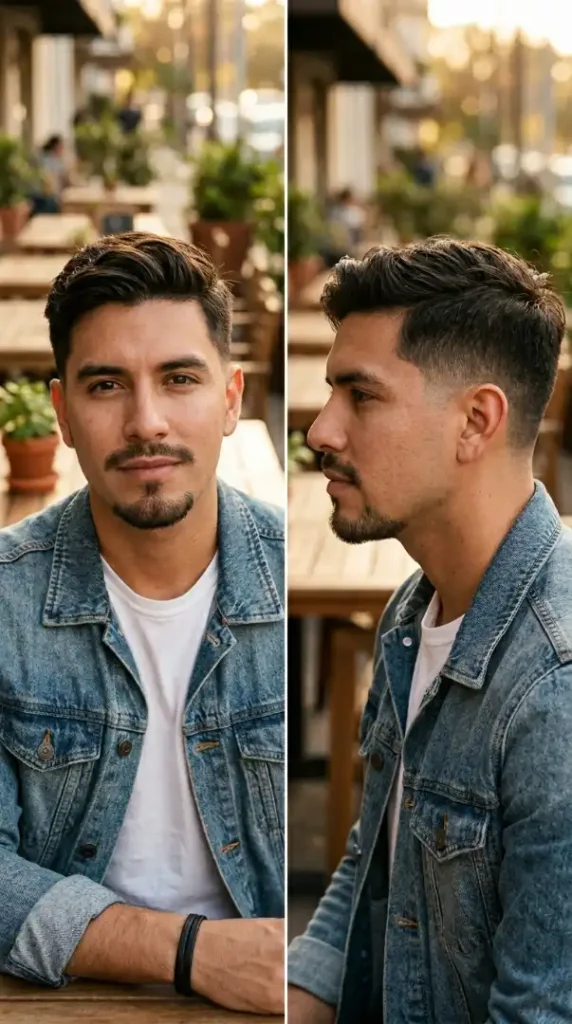
The Weekend Warrior is style without the stress. This is for men who clean up sharp Monday through Friday and want something that still looks good on Saturday but doesn’t require a styling ritual before coffee. Face shape compatibility is broad: Oval faces look naturally balanced because the moderate everything approach doesn’t overcorrect or add drama where none is needed. Square faces work perfectly with this relaxed style because the soft textured finish tempers angular jawlines without the need for excessive grooming — the goatee provides just enough chin definition without a full beard commitment. Round faces benefit if you add slight height at the crown during styling to create subtle elongation — the medium fade removes some lateral width while keeping enough length on sides to avoid harsh contrast. Diamond faces work well because the casual texture at the crown fills narrow temple zones without looking overly styled. Heart-shaped faces pair nicely with the goatee which adds visual weight to the chin area. Oblong faces should keep crown height minimal to avoid adding length.
Your grooming setup prioritizes versatility and efficiency. The Wahl Color Pro Cordless Clipper works great for medium fades because it’s powerful enough for clean cutting but forgiving enough for home touch-ups if you want to stretch time between barber visits. For the goatee and detail work, the Philips Norelco Multigroom 7000 gives you multiple length attachments for maintaining facial hair at home — essential for this style since the goatee needs regular shaping. You need a standard comb — the Cricket Static Free Comb works for both styling and general grooming. Product-wise, keep it simple: one versatile product is all you need. American Crew Fiber gives you matte texture that works styled messy or combed smooth depending on your mood and plans. If you want something even lower-effort, Hanz de Fuko Quicksand provides texture and hold with minimal product feel. For the goatee, a basic beard oil like ArtNaturals Beard Oil keeps it soft and prevents the itchiness that comes with maintaining a shorter facial hair length. That’s literally it — one clipper, one trimmer kit, one comb, one hair product, one beard oil. Maximum results, minimal gear.
Maintenance level is Low-Medium. Barber visits every three to four weeks for the medium fade and top trim. The beauty of this cut is its forgiveness — as it grows out, it just looks like you’re styling it longer, not like you’ve been skipping the barber. Between visits, you’ll maintain the goatee yourself every three to four days with your multi-trimmer, keeping the mustache from growing over your lip and the chin beard shaped. Daily styling takes three to four minutes maximum. After showering, towel-dry to about 70% damp. Work a small amount of fiber through your hair with your fingers — you can comb it for a cleaner look or just scrunch and separate with hands for texture. Create a loose side part or just push everything to one side casually. Let it air-dry. Done. For the goatee, after showering, apply a few drops of beard oil, work it through, comb it, and you’re finished.
Tell your barber: “Medium fade on the sides, start blending around mid-ear, nothing too aggressive — I want it casual and versatile. Leave about three inches on top, cut with scissors, give me some texture — I don’t want it too layered but I want movement. I’ll be styling it different ways depending on my mood, so keep the cut flexible. Create a loose side part area, no hard line. Taper the back naturally into my neckline. For my goatee, keep the mustache trimmed just above my upper lip, shape the chin beard to follow my chin, clean up the edges where it connects but keep it natural — no cheek beard, just mustache and chin.” Show the photo to demonstrate the relaxed texture and goatee shape.
If you like the low-effort vibe but want something with more personality, The Messy Artisan coming next adds creative edge while staying equally chill.
FAQS
Q: How do I style a comb over casually without it looking sloppy or unkempt?
A: Use a matte texture product like American Crew Fiber on damp hair, work it through with your fingers, create a loose side part or just push everything to one side, and let it air-dry. The key is having a good haircut as your foundation — when the shape is right, casual styling still looks intentional not neglected.
Q: Which face shape suits a relaxed textured comb over with goatee best?
A: Oval and Square faces work best. Oval looks naturally balanced with the moderate approach, while Square benefits from soft texture that tempers angular jaws. Round faces work with added crown height. Diamond fills narrow temples with casual texture. Heart pairs well with the goatee adding chin weight. Oblong should keep height minimal.
Q: What is the difference between a medium fade and a low fade on casual cuts?
A: A medium fade starts blending around mid-ear and creates a balanced modern look that’s versatile for both casual and semi-professional settings. A low fade starts much lower near the bottom of the ear, keeping more length on the sides for a more conservative traditional appearance. Medium fades are more contemporary and forgiving as they grow out.
Q: How often should I get a medium fade comb over touched up at the barbershop?
A: Every three to four weeks for the fade and top trim. This style is designed to grow out gracefully, so you can stretch it longer if needed without looking unkempt. Between visits, maintain your goatee at home every three to four days by trimming the mustache and shaping the chin beard.
STYLE 13 OF 15 — THE CREATIVE DIRECTOR
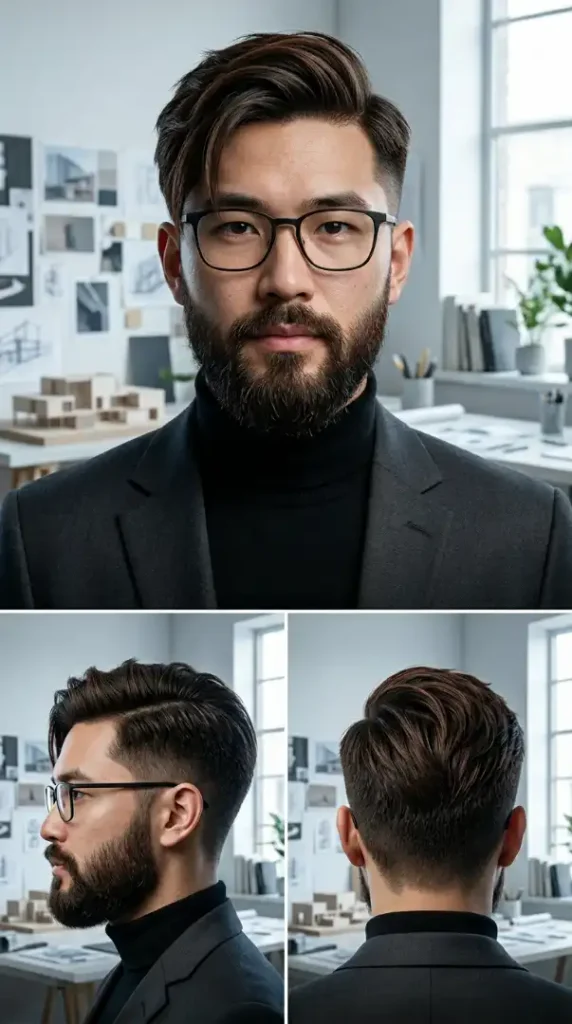
The Creative Director is the haircut for men who work in industries where looking generic is actually a liability — design, advertising, architecture, fashion, music, tech startups. This cut signals creativity and attention to detail without crossing into unprofessional territory. Face shape analysis: Oval faces handle this asymmetric approach effortlessly because natural balance can support intentional imbalance without looking off. Diamond faces are ideal for this style because the longer dramatic fringe adds width at the forehead where Diamond faces are naturally narrow, while the asymmetric sweep creates visual interest that complements angular cheekbones. Square faces work well because the soft textured blending and longer fringe soften hard jawline angles while the connected beard adds vertical dimension. Heart-shaped faces benefit from the asymmetric volume which balances a wider forehead with a narrow chin. Round faces should approach carefully — the horizontal sweep can add unwanted width, so make sure your stylist creates height as well as sweep to maintain vertical elongation. Oblong faces work if the fringe is kept from adding excessive height at the crown.
Your grooming toolkit needs to support creative styling and color maintenance if you’re adding highlights. The Wahl Professional 5-Star Legend Clipper is excellent for textured fading because its powerful motor and stagger-tooth blade create intentionally imperfect blending — you want artful, not sterile. For detailing and beard work, the Andis Slimline Pro Li T-Blade keeps lines sharp. You need a quality blow dryer — the Dyson Supersonic if budget allows for ultimate control, or the BaByliss Pro Nano Titanium at minimum. Get a round brush for directing the dramatic sweep — the YS Park G Series Round Brush works perfectly. For color maintenance if you have highlights, use a color-safe shampoo like Redken Color Extend Magnetics to prevent fading and brassiness. Product layering matters: start with a heat protectant like Oribe Royal Blowout Heat Styling Spray on damp hair before blow-drying, create the shape with heat and the round brush, finish with a flexible-hold product like Bumble and bumble Sumotech for texture that stays moveable not crunchy. For the connected beard, use Honest Amish Beard Balm for conditioning and light hold, and keep small grooming scissors like Tweezerman G.E.A.R. Scissors for trimming stray hairs that break the intentional shape.
Maintenance level is Medium-High. Barber visits every two-and-a-half to three weeks to maintain the asymmetric shape and the textured fade precision. If you have highlights, you’ll need color touch-ups every six to eight weeks at a salon. The creative intentional imperfection of this cut actually makes it more forgiving as it grows — it’s designed to look slightly undone. Daily styling takes eight to ten minutes. After showering, apply heat protectant to damp hair. Blow-dry with your round brush, pulling the long fringe section dramatically to one side while adding lift at the roots, create the asymmetric sweep by directing everything off-center. Focus on building shape with heat and tension. Once dry, work a small amount of flexible-hold product through with your fingers, focusing on the ends for texture and separation. Use your hands to refine the asymmetric placement — it should look intentional but not rigid. For the beard, after showering, apply beard balm, brush through, trim any hairs that extend past your intended shape.
Walk in and say this to your barber or stylist: “Low-to-mid fade on the sides with textured blending — I don’t want it too clean, give it some artistic edge in the fade work. Leave about four to five inches on top, longer in the fringe area, cut with scissors and point-cutting technique for texture. Create an off-center asymmetric part and cut the top so it sweeps dramatically to one side when I style it — I want creative visual interest, not a conservative business cut. Taper the back with texture, keep it modern not too tight. For my beard, keep it connected and full, medium-short length, clean up the lines but don’t over-sculpt — I want it to look intentional and groomed but not overly manicured.” Show the photo demonstrating the asymmetric sweep and textured fade you want.
If creative edge with professional polish is your target, the final two styles coming up dial the drama even higher and lower respectively, giving you the full spectrum.
FAQS
Q: How do I create and maintain dramatic asymmetric sweep in a creative comb over?
A: Use a round brush and blow dryer to build the shape while hair is damp, pulling everything dramatically to one side while adding lift at the roots. Apply heat protectant first, then finish with a flexible-hold product that stays moveable. The key is creating the shape during the blow-dry phase — product alone won’t create the dramatic sweep, it just locks it in.
Q: Which face shape suits an asymmetric creative comb over best?
A: Oval and Diamond faces are ideal. Oval handles intentional imbalance naturally, while Diamond benefits from forehead width created by the dramatic fringe. Square works well with the soft textured blending. Heart balances a wider forehead with asymmetric volume. Round should add height with the sweep. Oblong should keep crown height moderate.
Q: What is the difference between a textured fade and a clean fade on creative cuts?
A: A clean fade has perfect smooth blending with no visible texture or individual hairs — it’s surgical precision. A textured fade has intentional imperfection with slightly visible texture in the blending zones, creating an artful handmade aesthetic instead of sterile perfection. Textured fades suit creative personalities better and are more forgiving as they grow out.
Q: How often should I get an asymmetric comb over touched up at the barbershop?
A: Every two-and-a-half to three weeks to maintain the asymmetric shape integrity and the textured fade precision. If you have color highlights, you’ll need salon touch-ups for color every six to eight weeks. Between cuts, this style is designed to look slightly undone, so it’s more forgiving as it grows than rigid structured cuts.
STYLE 14 OF 15 — THE SUMMER WAVE
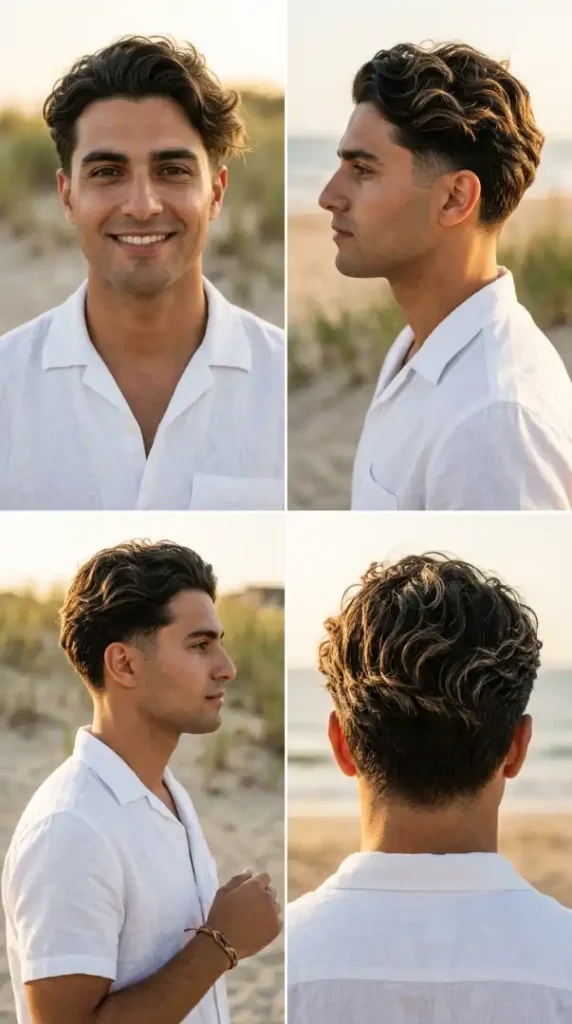
The Summer Wave is vacation hair that actually works back in real life. This is for men with natural wave texture who want to look good without fighting their hair’s natural movement. Face shape compatibility is generous: Oval faces look effortlessly casual because the natural wave texture and relaxed styling maintain balanced proportions without overcorrection. Heart-shaped faces work beautifully because the wavy volume on top adds visual weight that balances a narrow chin, especially without a beard. Round faces benefit if you create slight height at the crown while styling — the natural wave texture provides movement that draws the eye upward, creating elongation, while the low fade removes some lateral width. Square faces benefit from the soft wavy texture which creates organic curves that temper angular jawlines, and the clean-shaven look emphasizes natural bone structure. Diamond faces work well because the wave volume fills narrow temple areas. Oblong faces should keep crown volume moderate to avoid adding excessive length, but the side-to-side wave movement actually helps break up vertical length.
Your grooming kit focuses on enhancing and protecting natural texture. The Wahl Color Pro Cordless works well for low fades on wavy hair because it’s gentle enough not to create harsh lines in textured hair. For detailing, the Philips Norelco OneBlade Pro handles clean-shaven maintenance between full shaves. You need a wide-tooth comb specifically designed for wavy hair — the Baxter of California Large Comb detangles without destroying wave pattern. Product selection emphasizes texture and hydration: use a sea salt spray like Captain Blankenship Mermaid Sea Salt Hair Spray on damp hair to enhance natural waves and create beach texture, add a curl-enhancing cream like DevaCurl SuperCream for definition and frizz control if your waves tend toward frizz, finish with a light oil like Moroccan Oil Treatment for shine and moisture without weight. If you have sun-lightened ends or are considering adding subtle highlights, use a color-safe shampoo and conditioner like Pureology Hydrate to prevent fading and maintain the dimensional color. For maintaining clean-shaven face, use a quality razor like the Merkur 34C Safety Razor with shaving cream like Proraso Sensitive to prevent irritation.
Maintenance level is Low-Medium. Barber visits every three to four weeks for the low fade and overall shape maintenance. The wavy texture is forgiving as it grows, transitioning naturally from fresh-cut to slightly longer without an awkward in-between phase. Clean-shaven maintenance requires daily or every-other-day shaving depending on your facial hair growth rate. Daily styling takes three to five minutes. After showering, spray sea salt spray on soaking wet hair. Apply curl cream if you’re prone to frizz. Scrunch the hair with your hands while it’s wet to encourage wave formation — don’t comb it flat. Let it air-dry completely — blow-dryers disrupt the natural wave pattern unless you use a diffuser. Once dry, run a few drops of oil through your palms and smooth over the surface to add shine and tame any frizz. Use your fingers to separate and define a few waves for texture. Create a loose side part or just push everything to one side casually. The goal is effortless, not styled.
Tell your barber: “Low fade on the sides, start just above my ears and blend gradually — keep it relaxed, nothing aggressive. Leave about three to four inches on top, cut with scissors and preserve my natural wave texture — don’t thin it out too much or layer it excessively, I want the waves to have body. Create a soft natural part, no hard line. Taper the back naturally into my neckline. I’m staying clean-shaven, so just make sure the sideburns blend smoothly with the fade. If you see any sun-lightened ends or dimension in my color, leave that — I like the natural summer look.” Show the photo to demonstrate the wave texture and relaxed casual styling you want.
The final style coming next, The Polished Professional, takes us full circle — combining the best elements we’ve covered into one ultimate versatile comb over that works anywhere, anytime.
FAQS
Q: How do I enhance natural waves in a comb over without them looking frizzy or undefined?
A: Apply sea salt spray to soaking wet hair, add a curl cream if you’re prone to frizz, scrunch with your hands to encourage wave formation, and let it air-dry completely — avoid blow-drying unless using a diffuser. Once dry, smooth a few drops of oil over the surface for shine and frizz control. The key is working with your natural pattern instead of fighting it.
Q: Which face shape suits a wavy comb over with clean-shaven face best?
A: Oval and Heart faces work exceptionally well. Oval maintains natural casual balance, while Heart benefits from wavy volume that balances a narrow chin without a beard. Round faces work with added crown height. Square benefits from soft organic wave curves that temper angular jaws. Diamond fills narrow temples with wave volume. Oblong should keep height moderate.
Q: What is the difference between a low fade and a taper on wavy hair?
A: A low fade gradually blends from short length to skin starting low near the bottom of the ear, creating a modern clean look with visible skin showing. A traditional taper gradually reduces hair length but never goes to skin, creating a conservative classic profile. Fades are more contemporary, tapers are more traditional and office-conservative.
Q: How often should I get a wavy comb over touched up at the barbershop?
A: Every three to four weeks for the low fade and overall shape. Wavy texture is very forgiving as it grows, transitioning naturally from fresh to slightly longer without looking unkempt. If you maintain clean-shaven face, you’ll shave daily or every other day at home between barber visits.
STYLE 15 OF 15 — THE MODERN CLASSIC
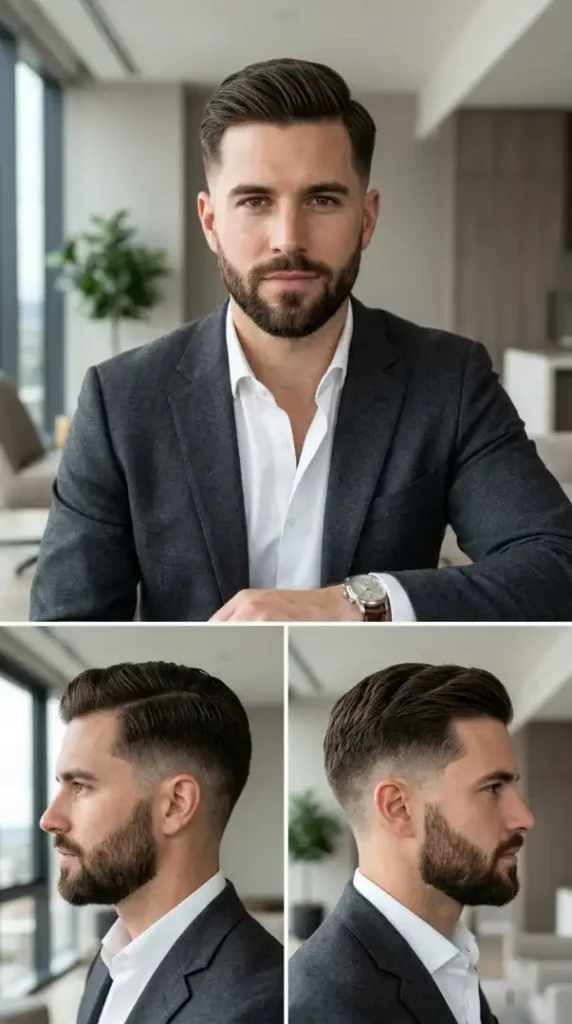
The Modern Classic is the ultimate versatile comb over — the cut you get when you need one hairstyle that works for job interviews, client meetings, weddings, first dates, and everything in between. This is strategic style that adapts to context without requiring multiple cuts. Face shape compatibility is universally forgiving: Oval faces look naturally polished because the balanced proportions and moderate volume work with inherent symmetry. Square faces benefit from the slight texture which softens angular jawlines while the well-groomed beard adds vertical dimension balancing facial width. Round faces work beautifully with this cut if you add slight crown height during styling — the mid fade removes lateral width while the controlled top adds structure creating elongation. Diamond faces are ideal because the moderate volume fills narrow temple zones without excess. Heart-shaped faces pair perfectly with the full beard which adds visual weight to a narrow chin balancing a wider forehead. Oblong faces work if crown height is kept moderate — the balanced proportions avoid adding unwanted length while the horizontal comb-over movement actually helps break up vertical lines.
Your grooming toolkit combines precision and versatility. The Wahl Magic Clip Cordless remains the gold standard for mid fades because its adjustable taper lever and cordless freedom give your barber maximum control for expert blending. For beard edges and detail work, the Andis Slimline Pro Li T-Blade creates the sharp defined lines that make this cut look intentionally groomed not accidentally neat. You need a quality all-purpose comb — the Kent 81T Fine-Tooth Comb works for both daily styling and precise parting. Product selection balances hold and natural finish: American Crew Pomade provides medium hold with slight shine that photographs well and works in professional settings, or Baxter of California Clay Pomade if you prefer matte finish with strong hold. For the beard, daily conditioning with Honest Amish Beard Balm keeps it soft while providing light shaping hold, and a beard brush like the Kent BRD2 distributes oils and trains growth direction. Keep a quality multi-blade razor like the Gillette Fusion5 or safety razor like the Merkur 34C for maintaining clean neck and cheek lines between barber visits.
Maintenance level is Medium. Barber visits every two-and-a-half to three weeks for the mid fade, top trim, and professional beard shaping. Between visits, you’ll touch up beard edges at home every three to four days to maintain the crisp defined lines. This schedule balances professional appearance with realistic time and budget constraints. Daily styling takes five to seven minutes. After showering, towel-dry to about 70% damp. Work a small amount of pomade through your hair from roots to ends, focusing on even distribution. Use your fine-tooth comb to create a clean precise part on your left, comb everything over smoothly in one direction with tension to ensure flat profile. If you want slight texture, use your fingers to add minimal separation at the crown after combing. Let it air-dry or blow-dry on medium heat if you’re in a hurry. For the beard, after showering, towel-dry, apply beard balm working from roots to ends, brush through with your beard brush to distribute and shape, trim any stray hairs with small scissors, touch up edges with your razor if needed.
Your barber script: “Mid fade on the sides, start blending around mid-ear, take it smooth to skin — I want clean professional blending, nothing textured or artistic. Leave about three inches on top, cut with scissors, give me slight texture for movement but keep it controlled — I need versatility to style it different ways. Create a clean natural side part on my left, no hard razor line but make it defined. Taper the back into my neckline smoothly. For my beard, keep it full and well-groomed, trim it to follow my jawline naturally, use the T-blade for sharp edges on the cheek and neck lines — I want it to look intentionally maintained, professional precision.” Show your barber this photo to demonstrate the balanced versatile aesthetic you’re targeting.
You’ve now seen fifteen distinct approaches to the comb over, from classic heritage to bold street style, from minimal maintenance to high-precision grooming. The throughline? Intentionality. Whether you’re combing over waves, coils, salt-and-pepper, or straight hair, whether you’re clean-shaven, bearded, or somewhere between — the comb over works when it’s tailored to your face shape, lifestyle, and personal style instead of copied blindly from a photo. Take these frameworks, these barber scripts, these product recommendations, and make them yours.
FAQS
Q: How do I choose between all these comb over variations for my specific needs?
A: Start with your face shape using the guidance provided in each style, then consider your daily time commitment for styling and frequency for barber visits. Match the style’s maintenance level to your realistic schedule — high-maintenance styles require weekly visits and ten-plus minutes daily, low-maintenance styles work with monthly cuts and under five minutes styling. Finally, consider your professional context: corporate environments favor Styles 1 4 7 8 11 15, creative industries suit Styles 3 6 9 13, casual lifestyle fits Styles 2 5 12 14.
Q: Which comb over style suits the widest range of face shapes and contexts?
A: Style 15 The Modern Classic is specifically designed for maximum versatility. It works on Oval Square Round Diamond Heart and Oblong faces with minor adjustments, translates across professional casual and formal settings, and balances easy maintenance with polished appearance. If you’re uncertain where to start, begin with The Modern Classic and adjust from there based on your experience.
Q: What is the single most important factor in making any comb over look good?
A: The fade or taper quality on the sides. Even the best top styling falls apart if the sides are blended poorly. The transition from skin to length must be smooth expert and appropriate to the style. This is why barber selection matters more than product selection — find a barber who consistently delivers clean fade work, and you’re 80% of the way to a great comb over regardless of which variation you choose.
Q: How often should I realistically expect to visit the barbershop for comb over maintenance?
A: It varies by style: High skin fades Styles 3 6 9 require weekly to ten-day visits. Mid fades Styles 7 10 13 15 work with two-and-a-half to three-week schedules. Low fades and traditional tapers Styles 1 2 4 8 11 14 can stretch to three to four weeks. The top length across all styles can generally go three to four weeks before needing a trim. Budget and plan accordingly based on which style you choose.