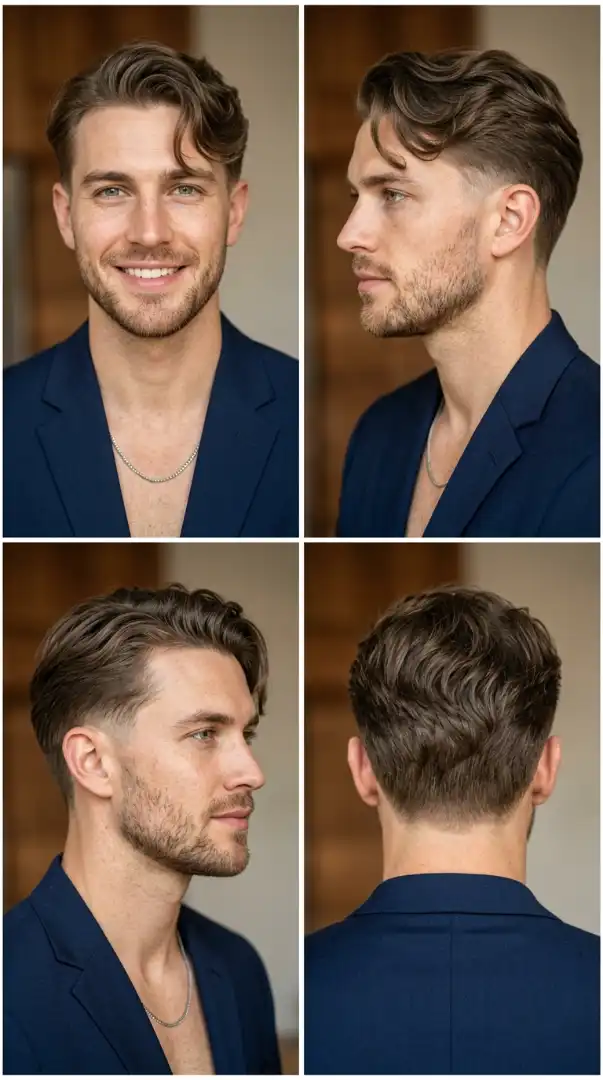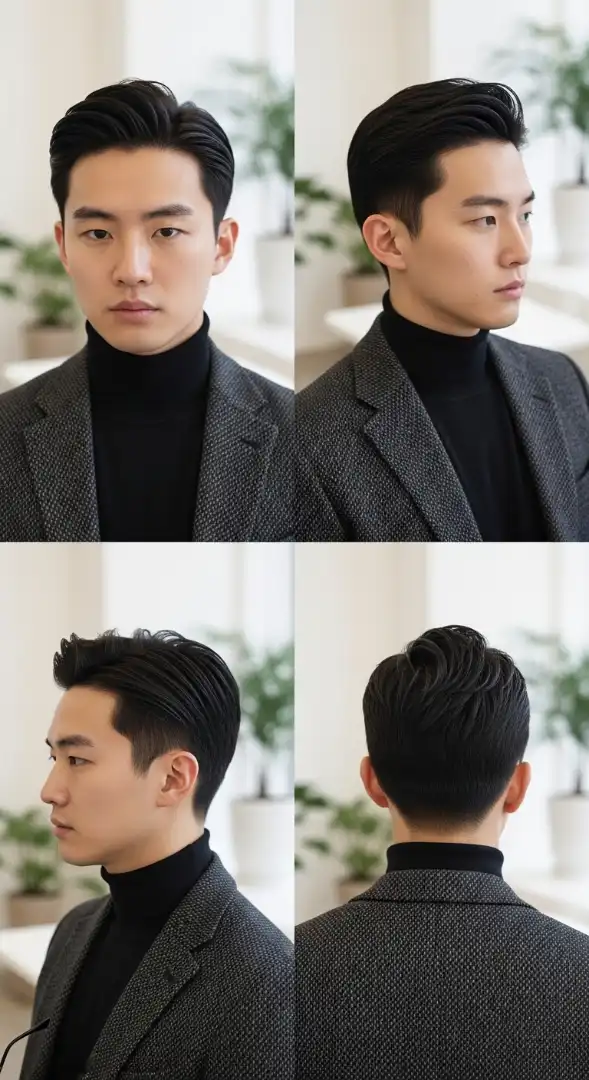
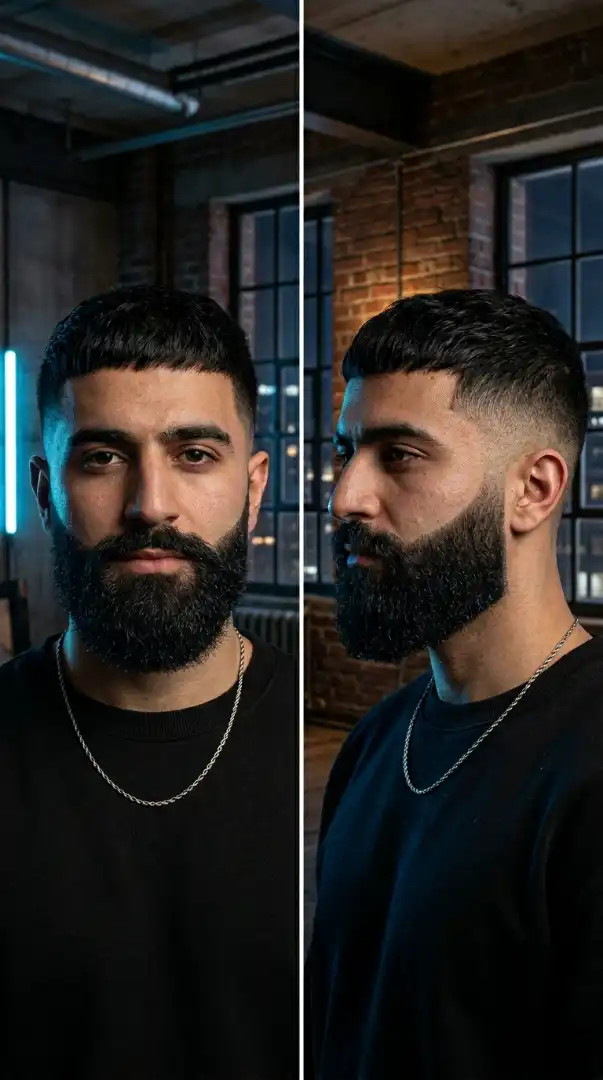
Goatee Beard Styles For Today’s Men To Must Try
1 of 11 — The Executive Anchor

The Executive Anchor is the gold standard for professionals who want facial hair that commands respect without crossing into casual territory. This style works exceptionally well for oval and square face shapes because the pointed chin extension creates vertical length while the angular cheek lines add definition to the jawline. For round faces, the inverted triangle silhouette becomes even more valuable — it literally sculpts the illusion of a more chiseled jaw by drawing the eye downward to a sharp focal point.
GROOMING KIT ESSENTIALS:
- Trimmer: Wahl Lithium Ion Stainless Steel for precision edge work
- Detailer: Andis Slimline Pro Li T-Blade for razor-sharp cheek and neck lines
- Maintenance: Tweezerman precision scissors for stray hair removal
- Product: Honest Amish Beard Balm (light hold, natural shine), Jack Black Beard Oil for daily conditioning, and a boar bristle brush to train growth direction
MAINTENANCE LEVEL: Medium-High This is not a “set it and forget it” style. Expect barber visits every 10-14 days to maintain the crisp geometry. Daily routine takes 5-7 minutes: apply beard oil to damp beard, brush downward to align the point, and check cheek lines with your detailer every 2-3 days. The precision is what makes this style powerful — let it get shaggy and you lose the executive edge entirely.
BARBER TALK — THE EXACT SCRIPT: “I want a classic anchor goatee with a connected mustache. Keep the soul patch but leave a 2mm gap on each side so it’s distinct. Cheek lines at 45 degrees from the mouth corners — I want sharp, not rounded. Taper the chin to a point about one inch below my jawline. Clean fade on the neck, and shave everything else to skin. I’ll maintain the edges at home, but I need you to set the template today.”
Want something with more coverage but the same professional vibe? The next style keeps the goatee principles but adds strategic fullness for colder months.
FAQs
Q: How do I maintain the sharp lines of an anchor goatee at home?
A: Use a precision trimmer with a T-blade (like the Andis Slimline Pro) every 48-72 hours to re-define your cheek and neck lines. Stretch your skin taut, work in good lighting, and follow the original template your barber created. Apply beard oil daily to keep hair soft and prevent the coarse texture that makes clean lines harder to achieve. The key is frequent small touch-ups rather than waiting until lines blur.
Q: Which face shape suits the Executive Anchor goatee best?
A: Oval and square faces wear this style most naturally because the pointed extension complements existing angular structure. However, round faces benefit dramatically — the vertical drop creates the illusion of a more defined jawline by pulling the eye downward. Avoid this style only if you have a very long or oblong face, as the additional length can overemphasize vertical proportions.
Q: What’s the difference between an anchor goatee and a Van Dyke?
A: An anchor goatee features a connected mustache and soul patch with a pointed chin extension, while a Van Dyke has a completely disconnected mustache floating above a separate chin tuft. The anchor offers a more cohesive, modern look suitable for professional settings, whereas the Van Dyke reads as more artistic or period-specific.
Q: How often should I get an anchor goatee professionally shaped?
A: Every 10-14 days for optimal crispness. Your barber will re-establish the cheek angle, refine the point, and ensure symmetry. You can stretch to 3 weeks if you’re diligent with home maintenance, but the geometric precision that makes this style “executive” degrades quickly without professional oversight.
2 of 11 — The Urban Shadow Box

The Urban Shadow Box redefines the classic full goatee for the modern minimalist. This style excels on square and diamond face shapes where the geometric precision amplifies existing angular structure. The box shape creates a visual anchor that balances broad foreheads or prominent cheekbones. For round faces, the strict horizontal and vertical lines add the architectural definition that soft curves lack — think of it as drawing a picture frame around your mouth that instantly matures your appearance.
GROOMING KIT ESSENTIALS:
- Clipper: Wahl Magic Clip (cordless) with #1.5 guard (5mm) for uniform length
- Trimmer: BaByliss Pro FXOne for the corner precision and cheek line definition
- Edge Tool: Andis T-Outliner with zero-gap blade for razor-sharp boundaries
- Product: Scotch Porter Beard Balm for coily hair texture, Honest Amish Beard Oil, and a firm bristle brush to maintain the box shape against natural growth patterns
MAINTENANCE LEVEL: Medium This is a low-fuss champion if you can commit to a simple routine. Barber visits every 14-21 days keep the box shape geometrically sound. Daily maintenance is 3-4 minutes: run your clipper with the #1.5 guard over the entire goatee area every 3-4 days to maintain uniform stubble length. Edge work with your trimmer every 2-3 days takes 90 seconds. The beauty of stubble-length facial hair is forgiveness — a day or two of missed maintenance won’t destroy the look.
BARBER TALK — THE EXACT SCRIPT: “I want a full box goatee — perfect square shape from my mustache to my chin. Keep it at 5mm stubble length throughout, no tapering or fading within the goatee itself. I need the corners at 90-degree angles, not rounded. Cheek lines should follow my natural smile line but stay crisp. Everything outside the box gets shaved to skin. Set my low fade on the sides at a half guard and taper the nape clean.”
If you want the box concept but with more length and texture, style 5 takes this foundation and adds vertical drama.
FAQs
Q: How do I keep a box goatee perfectly symmetrical at home?
A: Start by identifying your natural lip center and chin midpoint as reference anchors. Use a quality lighted mirror and mark (with white pencil or mentally note) equal distances on both sides before trimming. Work in small passes, checking symmetry after each side. The key mistake is trying to “fix” one side repeatedly — this creates a shrinking spiral. If you lose symmetry, let it grow 3-4 days and reset with your barber.
Q: What stubble length works best for the Urban Shadow Box style?
A: 5mm (#1.5 guard) is the sweet spot for this style. It’s long enough to show density and create visual weight but short enough to maintain crisp geometric edges. Going shorter (3mm) makes the box disappear on lighter beard growth, while longer (7mm+) requires more product and styling effort to prevent the “puffy” look that destroys the clean box aesthetic.
Q: Can I pull off a box goatee if I have patchy beard growth?
A: Yes, but strategic adaptation is required. Keep the stubble length at exactly 5mm — longer lengths expose patchiness, shorter lengths can look deliberately shadowed rather than incomplete. Focus the box area where your growth is densest (usually lower lip and chin center), and slightly narrow the width if your corners grow thin. A skilled barber can create the illusion of fullness through precise shaping.
3 of 11 — The Mediterranean Soul Stripe
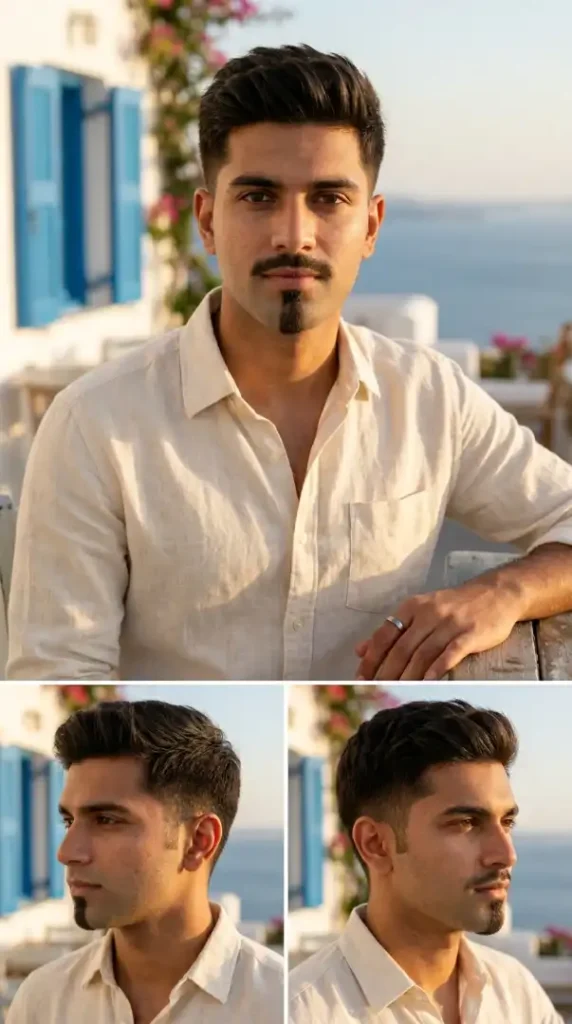
The Mediterranean Soul Stripe is the rebel minimalist’s answer to traditional goatees — maximum character with minimum coverage. This style performs brilliantly on oval and heart-shaped faces because the narrow vertical stripe creates a subtle elongating effect without overwhelming delicate features. For round faces, the soul stripe adds a focal point that breaks up horizontal width, though you’ll want to pair it with slight stubble shadow on the upper lip (as shown) rather than going completely clean-shaven, which can make round faces appear wider.
GROOMING KIT ESSENTIALS:
- Precision Trimmer: Philips Norelco OneBlade Pro for the narrow stripe edges — its unique blade design excels at tight spaces
- Detailer: Wahl Peanut for upper lip shadow maintenance (set to #0.5 guard for 2mm stubble)
- Finishing: Tweezerman precision scissors for any stray hairs outside the stripe
- Product: Beardbrand Utility Beard Oil in Tree Ranger scent (light, not overpowering for minimal coverage), small boar brush for daily grooming, optional clear beard wax for extra hold in humid climates
MAINTENANCE LEVEL: Low-Medium This is the “I’m stylish but not trying too hard” sweet spot. Barber visits every 3-4 weeks to re-establish the stripe width and placement. Daily maintenance is 2-3 minutes: apply 3-4 drops of beard oil, brush the stripe downward to train growth direction, and check the side gaps with your trimmer every 3-4 days. The upper lip shadow needs refreshing every 2-3 days with a #0.5 guard pass to maintain the deliberate stubble look. This style actually benefits from 1-2 days of skipped maintenance — it prevents the “too perfect” vibe.
BARBER TALK — THE EXACT SCRIPT: “I want a soul patch style, but I need it as a vertical stripe — about 12mm wide, starting just below my lower lip and extending down about 30mm. Keep it at 8mm length, and make sure there’s a clean 2mm gap on both sides so it’s completely disconnected. Give me a light shadow on my upper lip at about 2mm stubble, but keep my cheeks clean-shaven to skin. Everything else gets taken down smooth.”
Craving more coverage but love the disconnected vibe? Style 7 explores the extended Van Dyke territory with similar philosophy.
FAQs
Q: How do I prevent my soul patch from looking too narrow or too wide?
A: The ideal width is 12-15mm — measure from the center of your lower lip using your trimmer’s edge as a guide. Too narrow (under 10mm) looks accidental; too wide (over 18mm) loses the “stripe” aesthetic and becomes a mini chin beard. Your natural lip width is the reference: the soul patch should be roughly 1/3 the width of your lower lip for balanced proportions.
Q: Should I grow a mustache with a soul patch style?
A: For the Mediterranean Soul Stripe, keep the mustache as subtle shadow stubble (2mm) rather than full growth. A thick disconnected mustache creates too much competition for attention. The magic of this style is its restraint — one bold vertical element on an otherwise clean canvas. If you want a connected mustache, you’re moving into anchor goatee territory (see Style 1).
Q: What face shape works best with a soul patch?
A: Oval and heart-shaped faces wear this style most naturally because the vertical stripe complements existing proportions without adding bulk. Round faces can use it successfully if paired with upper lip stubble rather than going fully clean-shaven. Avoid this style if you have a very long or narrow face, as the vertical stripe emphasizes length rather than balancing it.
4 of 11 — The Boardroom Van Dyke

The Boardroom Van Dyke represents the pinnacle of refined facial hair — favored by architects, executives, and creatives who operate in formal environments but refuse to surrender their individuality. This style excels on oval, diamond, and oblong face shapes where the vertical emphasis of the chin tuft balances facial proportions. The disconnected elements create visual interest without the “lumberjack” density that can overwhelm professional settings. For square faces, this style works if you keep the chin tuft narrow (20mm base maximum) to avoid widening an already strong jawline.
GROOMING KIT ESSENTIALS:
- Precision Trimmer: Brio Beardscape with ceramic blade (runs cooler for detailed work) and #2 guard for 6mm length
- Mustache Scissors: Tweezerman Stainless Steel with ultra-fine tips for horizontal line perfection
- Detailer: Andis T-Outliner for the clean-shaven gap between mustache and chin
- Product: Grave Before Shave Bay Rum Beard Oil (sophisticated scent appropriate for boardrooms), Kent 81T mustache comb, Captain Fawcett’s Expedition Strength Mustache Wax for holding the horizontal line
MAINTENANCE LEVEL: High This is a commitment style. Barber visits every 7-10 days are non-negotiable to maintain the refined geometry — the disconnected elements need precise reshaping as growth blurs the intentional gaps. Daily maintenance is 6-8 minutes: trim the mustache and chin tuft with your #2 guard every 2-3 days to maintain 6mm length uniformly, use mustache scissors to keep the horizontal mustache line perfectly straight (this is the detail that separates amateur from refined), and detail the clean gaps every 2 days with your T-Outliner. Apply beard oil, comb mustache horizontally outward, and brush chin tuft downward.
BARBER TALK — THE EXACT SCRIPT: “I want a classic Van Dyke — completely disconnected mustache and chin tuft. The mustache should be thin and horizontal, sitting just above my lip line, refined not bushy. Leave about 25mm of clean space between the mustache and the chin tuft. The chin tuft should start at my lower lip center and taper to a point about 35mm down. Keep both at 6mm length. I need everything else — cheeks, the gap, my neck — shaved completely smooth to skin.”
If you love the Van Dyke concept but want something less maintenance-intensive, style 9 offers a more forgiving variation.
FAQs
Q: What’s the difference between a Van Dyke and a goatee?
A: A Van Dyke features a completely disconnected mustache and chin tuft with clean-shaven space between them, while a traditional goatee has the mustache connected to the chin coverage. The Van Dyke creates a more refined, deliberate appearance suitable for professional environments, whereas connected goatees tend to read as more casual or rugged.
Q: How do I keep my Van Dyke mustache perfectly horizontal?
A: Invest in quality mustache scissors and a fine-tooth comb. Daily, comb your mustache straight outward from the center, then trim any hairs that extend below your desired horizontal line. The key is trimming little and often (daily) rather than waiting for weekly major corrections. Use a light hold mustache wax to train the direction, and always trim with the comb held horizontally as your guide.
Q: Can I wear a Van Dyke in a corporate environment?
A: Absolutely, provided you maintain it impeccably. The Boardroom Van Dyke works in conservative settings because of its refined precision and historical pedigree. However, let it get scruffy or allow the gaps to blur, and it quickly reads as unkempt rather than intentional. This style demands discipline — if you can’t commit to the maintenance, choose a simpler goatee style.
Q: How often should I professionally trim a Van Dyke beard?
A: Every 7-10 days for the refined boardroom version. Your barber will re-establish the mustache line, reshape the chin tuft taper, and ensure the disconnected gaps remain crisp. You can extend to 14 days maximum if you’re highly skilled with home maintenance, but professional oversight keeps the geometric precision that makes this style powerful in formal settings.
5 of 11 — The Vertical Power Frame

The Vertical Power Frame takes the Urban Shadow Box concept from Style 2 and adds dramatic length and texture for men who want substantial facial hair without full beard coverage. This style dominates on oblong and rectangular face shapes where the vertical emphasis works with (rather than against) natural proportions. For round faces, this is transformative — the tall, narrow frame creates the illusion of significant length, visually slimming the face while the clean-shaven cheeks prevent added width. Diamond face shapes benefit from the consistent 35mm width that balances prominent cheekbones.
GROOMING KIT ESSENTIALS:
- Clipper: Oster Fast Feed with #1.25 guard (10mm) for maintaining length consistently
- Precision Trimmer: Wahl Detailer Li for the vertical side edges and cheek lines
- Comb: Wide-tooth carbon fiber comb for detangling before trimming
- Product: Honest Amish Heavy Duty Beard Balm (provides hold for the extended length), Beardbrand Utility Beard Wash (2-3 times weekly), boar bristle brush for daily shaping, optional heated beard brush for stubborn waves
MAINTENANCE LEVEL: Medium-High The length demands attention. Barber visits every 14-18 days to reshape the vertical edges and maintain the precise rectangular geometry. Daily routine is 7-9 minutes: wash every 2-3 days with beard-specific shampoo (regular shampoo strips natural oils at this length), apply beard balm to damp beard, brush downward to train vertical growth, and use your heated brush if dealing with unruly waves. Edge work with your precision trimmer every 2-3 days maintains the clean vertical sides. The soul patch bridge requires daily brushing to prevent the “disconnected” look.
BARBER TALK — THE EXACT SCRIPT: “I want an extended full goatee with strong vertical lines — think rectangular frame, not tapered. Connect my mustache all the way across and bridge it to the soul patch so there’s no gap. Keep the width consistent at about 35mm top to bottom with 90-degree corners. I need it to extend about 50mm below my jawline, and maintain everything at 10mm length. Make the vertical sides razor-sharp, and shave my cheeks completely clean to create maximum contrast.”
Want similar vertical drama but with even more coverage? Style 11 closes out our list with the ultimate statement goatee.
FAQs
Q: How do I maintain the sharp vertical edges of an extended goatee?
A: Use a quality lighted mirror and your precision trimmer daily. Stretch the skin on your cheek taut, place the trimmer edge vertically against your desired line, and work in short upward strokes. The key is maintaining a consistent vertical plane rather than following the natural curve of your face. Mark your template with a washable white pencil when your barber sets the initial shape, and follow that reference for the first week until muscle memory develops.
Q: What face shape benefits most from a vertical goatee style?
A: Round and square faces benefit most dramatically because the tall, narrow frame creates visual length that balances width. Oblong faces can wear this style if they’re comfortable emphasizing their natural length. Avoid this style only if you have a very long, narrow face where additional vertical emphasis would create disproportionate length.
Q: How long does it take to grow an extended goatee from scratch?
A: Plan for 8-12 weeks to reach the 50mm extension below your jawline at the average beard growth rate of 0.4mm per day. During weeks 4-8, the awkward transitional phase, visit your barber to shape the vertical edges even though you haven’t reached full length yet. This creates the architectural framework and prevents the “I’m just not shaving” appearance.
Q: What products prevent an extended goatee from looking dry or scraggly?
A: Use beard-specific products, not regular hair care. Apply 6-8 drops of quality beard oil daily to damp beard, focusing on the ends which dry fastest. Use beard balm (not wax) for hold and moisture — balm penetrates while wax just coats. Wash with beard shampoo only 2-3 times weekly; daily washing strips protective oils. Brush daily with boar bristles to distribute natural oils from root to tip.
6 of 11 — The Precision Chinstrap Circuit

The Precision Chinstrap Circuit represents the intersection of grooming and geometry — facial hair as architectural element. This style excels universally but performs particularly well on square, rectangular, and diamond face shapes where the thin jawline circuit amplifies existing angular bone structure. For round faces, this is a cheat code: the crisp line literally draws the illusion of a more defined jaw, creating structure where softness exists. The complete circuit (sideburn to sideburn) prevents the “floating goatee” effect and integrates facial hair with overall head shape.
GROOMING KIT ESSENTIALS:
- Detail Trimmer: Philips Norelco OneBlade Pro — the pivoting head follows jaw contours perfectly
- Edger: Andis T-Outliner Pro Li with zero-gap T-blade for the 4mm width precision
- Guard: Custom 3mm guard (#0.5 equivalent) for maintaining exact stubble height
- Product: Jack Black Beard Lube (transparent application lets you see your line work), Kiehl’s Facial Fuel Daily Energizing Moisture Treatment for clean-shaven areas, precision magnifying mirror (essential for home maintenance)
MAINTENANCE LEVEL: High This style lives or dies on precision. Barber visits every 7-10 days to re-establish the circuit path and ensure uniform width throughout. Daily maintenance is 5-7 minutes but requires steady hands and good lighting: run your 3mm guard along the entire circuit every 2-3 days, use your edger to redefine the 4mm width boundaries every 2 days (inner and outer edges of the chinstrap), keep upper lip and cheeks smooth with daily close shaves. The circuit must maintain consistent width ear-to-ear — any variation destroys the geometric precision.
BARBER TALK — THE EXACT SCRIPT: “I want a chinstrap circuit — a thin continuous line from sideburn to sideburn following my jawline exactly. Keep the width at 4mm throughout, no variation, and maintain it at 3mm stubble height with a #0.5 guard. Connect it to a small triangular soul patch at my chin — make the soul patch blend seamlessly into the chinstrap so it looks like one complete frame. Keep my upper lip completely clean-shaven and my cheeks smooth to skin. The circuit should follow my jawbone anatomy precisely.”
If you love the jawline-framing concept but want more fullness, style 8 offers the connected coverage alternative.
FAQs
Q: How do I keep a chinstrap goatee perfectly symmetrical?
A: Use your jawbone as the anatomical guide, not abstract measurement. Feel the ridge of your jawbone with your fingers and follow that natural line with your edger. Start from the center (soul patch) and work outward to each ear in matching sections — complete the left side fully, then mirror the process on the right. Check symmetry from dead center in the mirror every few passes. Asymmetry usually comes from trying to “fix” one side repeatedly; resist that temptation.
Q: What’s the ideal width for a chinstrap style?
A: 4-5mm is the professional sweet spot. Narrower (2-3mm) looks unintentional or sparse unless you have extremely dense growth; wider (6-8mm) starts reading as a thin beard rather than a defined chinstrap circuit. The goal is a crisp line that clearly frames your jaw without creating bulk. Width should remain absolutely consistent from sideburn to sideburn.
Q: Can I wear a chinstrap without a soul patch?
A: Yes, but the circuit becomes incomplete visually. Without the soul patch anchor, you have two separate jawline lines rather than one unified frame. This can work if you prefer the “dual parallel lines” aesthetic, but the connected circuit version (with soul patch) creates stronger visual impact and better defines your lower face structure.
Q: How often does a chinstrap circuit need professional maintenance?
A: Every 7-10 days for the precision version shown here. Your barber will re-establish the exact width throughout the circuit, ensure the line follows your jawbone correctly, and trim the soul patch integration. You can extend to 14 days if you’re meticulous with daily home edging, but the geometric crispness degrades noticeably after day 10 without professional oversight.
7 of 11 — The Classic Anchor Royale

The Classic Anchor Royale honors the golden age of men’s grooming while remaining completely relevant in contemporary style. This is the anchor goatee executed with refinement rather than aggression — softer curves instead of harsh angles, organic taper instead of geometric precision. This style performs beautifully on oval, oblong, and heart-shaped faces where the elongated point creates flattering vertical emphasis. Round faces benefit from the narrowing taper that visually slims the lower face, though the 40mm width at mid-chin prevents it from being quite as transformative as the narrower Executive Anchor from Style 1.
GROOMING KIT ESSENTIALS:
- Clipper: Wahl Senior with #1.5 guard (12mm) for maintaining distinguished length
- Trimmer: BaByliss Pro GoldFX Trimmer for curved cheek line definition
- Mustache Care: Kent 81T fine-tooth comb, Tweezerman mustache scissors for natural shaping
- Product: Mountaineer Brand Beard Oil in WV Timber scent (warm, classic fragrance), Honest Amish Original Beard Balm, heated beard straightener for taming waves if desired, vintage boar bristle brush
MAINTENANCE LEVEL: Medium This style embraces a bit of natural character, making it more forgiving than geometric precision styles. Barber visits every 14-21 days to refresh the taper and maintain the point refinement. Daily routine is 5-6 minutes: apply 6-8 drops of beard oil to damp beard and work through with fingers, brush downward to enhance the natural taper direction, comb mustache outward from center to maintain shape. Edge work on the curved cheek lines every 3-4 days with your trimmer — the organic curves are more forgiving than sharp angles. Trim the entire goatee with your #1.5 guard every 5-7 days to maintain 12mm length consistency.
BARBER TALK — THE EXACT SCRIPT: “I want a traditional anchor goatee with a classic refined look — nothing too sharp or modern. Connect my mustache fully and blend it down through the soul patch to the chin. Widen it to about 40mm at mid-chin, then taper it gracefully to a point about 45mm below my jaw. Keep the cheek lines curved and organic, not angular. Maintain everything at 12mm length so it has texture and presence. Clean-shaven cheeks and neck, but I want the curves soft, not razor-sharp edges.”
For those who love classic anchor aesthetics but prefer shorter, easier maintenance, revisit Style 1’s Executive Anchor for the modern precision version.
FAQs
Q: What’s the difference between a classic anchor and a modern anchor goatee?
A: A classic anchor features curved, organic cheek lines and a graceful taper to the point, often at longer length (10-15mm) for distinguished texture. A modern anchor (like Style 1’s Executive Anchor) uses sharp 45-degree angle cheek lines, shorter length (6-8mm), and geometric precision. The classic reads as refined and timeless; the modern reads as crisp and contemporary.
Q: How do I maintain the natural wave texture in a longer anchor goatee?
A: Embrace it rather than fighting it. Apply beard oil daily to enhance natural wave pattern and add healthy shine. Brush downward with boar bristles to train direction without removing texture. If waves become unruly, use a heated beard brush (not a flat iron) on low heat to gently relax them while preserving natural character. Never blow-dry on high heat, which creates frizz in wavy facial hair.
Q: What face shape suits a tapered anchor goatee best?
A: Oval and oblong faces wear this style most naturally because the tapered point complements existing proportions. Heart-shaped faces benefit from the added weight at the chin, balancing a wider forehead. Round faces can use this style successfully, though the 40mm mid-chin width provides less slimming effect than narrower anchor variations — pair with clean-shaven cheeks for maximum definition.
Q: How long does it take to grow a 45mm anchor point from clean-shaven?
A: Approximately 10-14 weeks at average beard growth rates (0.4mm per day). However, visit your barber at week 6-8 to establish the anchor shape and begin the taper even though you haven’t reached full length. This prevents the awkward “unkempt” phase and trains the growth pattern. The point refines gradually over the final 4-6 weeks.
8 of 11 — The Angular Goatee Fade
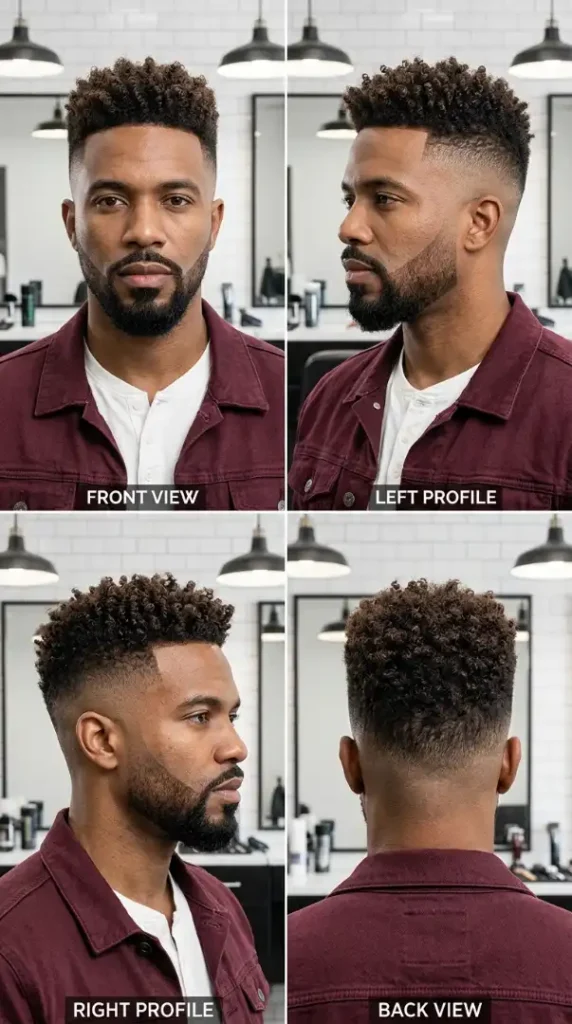
The Angular Goatee Fade represents next-generation barbering — the fusion of classic goatee structure with modern fade technique creating a seamless gradient from facial hair to skin. This style excels on round, square, and diamond face shapes where the angular fade line creates visual definition and the gradient prevents the harsh “floating goatee” effect that can make faces appear wider. The integrated fade softens the transition while maintaining the core goatee’s structural benefits. This is particularly transformative for men with coily hair texture where matching fade techniques in both hair and beard creates cohesive, polished aesthetics.
GROOMING KIT ESSENTIALS:
- Primary Clipper: Andis Master with guards #1.5 (10mm), #1 (6mm), #0.5 (3mm) for the fade progression
- Fade Trimmer: Wahl Magic Clip (cordless) for blending the gradient zones seamlessly
- Detail Work: Andis T-Outliner for defining the upper fade termination line at cheekbone
- Product: Cantu Shea Butter Beard Oil for coily texture, Wave Builder Brush for daily fade maintenance, Cremo Beard Balm for hold without stiffness, magnetic mirror for checking fade gradient symmetry
MAINTENANCE LEVEL: High This is a technical style requiring barber expertise. Professional visits every 7-10 days are essential — the fade loses its gradient precision quickly as growth blurs the distinct zones. Daily home maintenance is 4-5 minutes: apply beard oil focusing on the core goatee area, brush the fade zones with your wave brush to maintain direction and enhance the gradient visual, and use your detail trimmer every 2-3 days to refresh the upper termination line. The core goatee needs clipping with your #1.5 guard every 5-7 days, and the fade zones need progressive guard work (10mm → 6mm → 3mm) every 4-5 days to maintain distinct gradient.
BARBER TALK — THE EXACT SCRIPT: “I want a full goatee with an integrated beard fade — not clean-shaven cheeks. Keep my core goatee at 10mm with mustache connected to chin. Then fade my cheeks: 6mm on lower cheeks, 3mm higher up, then skin fade to zero at my cheekbones. I want the fade line angled from my ear to mouth corner at about 35 degrees. Blend all the zones seamlessly so there are no hard lines between the lengths. Match this beard fade with a high skin fade on my hair — I want parallel fade aesthetics top to bottom.”
If you love the fade concept but want a simpler version, Style 2’s Urban Shadow Box offers a lower-maintenance alternative.
FAQs
Q: How do I maintain a beard fade at home between barber visits?
A: You’ll need three guards (#1.5, #1, #0.5) and a fade clipper. Every 4-5 days, run the #1.5 over your core goatee, then the #1 over the lower cheek zone, then the #0.5 over the upper zone. Blend where zones meet using small overlapping passes with your fade clipper. The key is maintaining the distinct zones while keeping transitions smooth. This requires practice — expect your first few attempts to create visible lines until muscle memory develops.
Q: What’s the difference between a beard fade and a regular goatee with stubble?
A: A beard fade uses precise gradient zones (10mm → 6mm → 3mm → skin) that blend seamlessly, creating an intentional gradient from dense to transparent. Regular stubble is uniform length without progression. The fade is a technical barber skill creating smooth transition through multiple guard lengths; stubble is simply short uniform growth. The fade reads as sophisticated and deliberate; stubble can appear as “I forgot to shave.”
Q: Can I get a beard fade if I have patchy cheek growth?
A: Yes, and it’s actually ideal for this situation. The fade technique strategically uses shorter lengths in areas where growth is thinner (upper cheeks) while keeping density in areas of full growth (lower cheeks and jawline). The gradient visually disguises patchiness by making the transition appear intentional. Communicate your growth pattern to your barber so they can customize the fade zones to work with your natural density.
Q: How often does a goatee fade need professional maintenance?
A: Every 7-10 days for proper fade integrity. The gradient precision degrades noticeably after day 7 as growth blurs the distinct zones. You can extend to 14 days if you’re skilled with home fade maintenance using multiple guards, but professional oversight ensures the gradient remains technically sound and all zones transition seamlessly.
9 of 11 — The Minimalist Lip Line

The Minimalist Lip Line is facial hair as punctuation — the barely-there style for men who want refinement without statement. This ultra-subtle approach works universally across face shapes but shines particularly on oval and rectangular faces where the horizontal pencil mustache creates a balancing element without competing with natural proportions. For round faces, this style offers minimal slimming effect since there’s no jawline coverage, but the soul patch creates a subtle downward focal point. This is the choice for conservative professional environments, creative industries that value understated style, or men over 40 who want distinguished presence without the maintenance burden of fuller styles.
GROOMING KIT ESSENTIALS:
- Precision Trimmer: Panasonic ER-GB80-S with 2mm comb for ultra-narrow width control
- Detailer: Wahl Micro Groomsman for the crisp lip line definition
- Mustache Scissors: Tweezerman Ultra Precision with curved blades for following lip contour
- Product: Tom Ford Conditioning Beard Oil in Oud Wood (sophisticated scent appropriate for this refined style), Kent 81T fine-tooth mustache comb (smallest teeth for pencil mustache), small precision mirror
MAINTENANCE LEVEL: Medium The minimal coverage means minimal product and styling time, but the precision demands attention. Barber visits every 14-18 days to re-establish the exact 2mm width and ensure the mustache follows the natural lip border anatomy. Daily maintenance is 2-3 minutes: apply 2-3 drops of beard oil (more is wasteful at this coverage level), use your fine-tooth comb to align the mustache horizontally, and check the soul patch symmetry. Edge work every 2-3 days with your detailer maintains the crisp lip line border and removes any stray hairs above or below the 2mm strip. The tapered corner points require mustache scissors every 4-5 days.
BARBER TALK — THE EXACT SCRIPT: “I want a pencil mustache — ultra-thin, sitting exactly on my lip line where the skin meets the red of my lip. Keep it at 2mm width throughout and let it extend just 3mm past my mouth corners with tapered points. Maintain the length at 4mm so it has some texture. Add a small circular soul patch — about 8mm diameter — centered below my lower lip at the same 4mm length. Leave 20mm of clean space between the mustache and soul patch. Everything else — cheeks, chin, neck — shave completely smooth.”
Want minimal coverage but with a different aesthetic? Style 3’s Mediterranean Soul Stripe offers another low-key alternative.
FAQs (GOOGLE AI OVERVIEW TARGETING)
Q: How do I keep a pencil mustache perfectly straight and thin?
A: Your natural lip anatomy is the guide — the mustache should sit exactly where skin meets red lip tissue. Use your precision trimmer’s edge as a ruler, working in good natural light with a 5x magnifying mirror. Trim daily with your trimmer held horizontally to remove any hairs above or below the 2mm width. The mistake most men make is trying to create a straight line independent of their lip — follow your natural lip contour instead.
Q: Is a pencil mustache appropriate for professional environments?
A: In most industries, yes — provided you maintain it impeccably. The Minimalist Lip Line reads as refined and intentional when crisp, but quickly appears unkempt if edges blur or width expands beyond 2mm. Conservative fields (law, finance, corporate) accept this style more readily than fuller goatees because of its restraint. However, let it get scraggly and it reads as dated or careless rather than sophisticated.
Q: What’s the ideal length for a pencil mustache?
A: 4-5mm is the sweet spot for the modern pencil mustache. Shorter (2-3mm) lacks visual presence and can appear as stubble rather than intentional style; longer (6mm+) adds bulk that conflicts with the “pencil” aesthetic. At 4mm you get visible texture and distinguished appearance without the fullness that makes it read as a regular mustache.
Q: Should I add a soul patch with a pencil mustache?
A: It’s optional but recommended. The small circular soul patch (8-10mm diameter) adds a subtle second anchor point that prevents the pencil mustache from appearing lonely or incomplete. The key is keeping the soul patch small and circular (not triangular or extended) to match the minimal aesthetic. Without it, ensure your pencil mustache is especially refined to carry the entire look alone.
10 of 11 — The Connected Full Circle

The Connected Full Circle represents maximum coverage within the goatee category — technically still a goatee because the upper cheeks remain clean-shaven, but offering the density and presence of a short full beard. This style dominates on square, rectangular, and diamond face shapes where the circular coverage emphasizes strong bone structure and creates powerful masculine presence. For round faces, this is a strategic choice: the uniform 8mm length prevents added bulk (unlike longer beards), while the clean upper cheeks maintain facial definition. The connected circle creates visual cohesion that isolated goatees lack.
GROOMING KIT ESSENTIALS:
- Primary Clipper: Wahl Elite Pro with #1 guard (8mm) for maintaining uniform circle length
- Fade Trimmer: Andis Fade Master for blending sideburns into hair fade
- Edger: BaByliss Pro FXOne for defining the upper circle boundary at cheekbone level
- Product: Viking Revolution Beard Oil in Sandalwood scent, Grave Before Shave Beard Balm for all-day hold, wide-tooth detangling comb, round boar bristle brush for daily shaping, beard shampoo for 2-3x weekly washing
MAINTENANCE LEVEL: Medium The full coverage demands attention but the uniform length simplifies daily routine. Barber visits every 14-21 days to re-establish the circular boundary and ensure sideburn integration remains seamless. Daily maintenance is 5-7 minutes: apply 8-10 drops of beard oil (you’re covering significant area) working through damp beard with fingers, brush the entire circle in downward and outward direction to enhance the circular shape, and comb through to remove tangles. Edge work every 3-4 days with your edger maintains the clean cheek boundary. Run your #1 guard over the entire circle every 5-7 days to maintain uniform 8mm length — consistency is what makes this style work.
BARBER TALK — THE EXACT SCRIPT: “I want a connected full circle beard — complete coverage from my sideburns, along my entire jawline, across my chin and mustache, creating an unbroken circle. Maintain everything at 8mm length throughout the circle — uniform, no tapering or fading within the beard. My upper cheeks above the circle stay clean-shaven with the boundary at my cheekbone level. Blend my sideburns seamlessly into my mid fade so the transition from hair to beard is smooth. The goal is a perfect circle of consistent coverage.”
If you want even more coverage and length, Style 5’s Vertical Power Frame offers extended chin length within the goatee family.
FAQs
Q: What’s the difference between a full circle beard and a full beard?
A: A full circle beard (also called circle beard) keeps the upper cheeks clean-shaven while creating connected coverage from sideburns through jawline, chin, and mustache. A full beard extends coverage up the entire cheek to the lower eyelid level. The circle beard offers 70% of the coverage with significantly easier maintenance and a cleaner, more refined appearance suitable for professional settings where full beards may be too casual.
Q: How do I maintain a perfect circular boundary on my cheeks?
A: Use your natural cheekbone as the anatomical guide rather than trying to create an artificial line. The circle boundary should follow the contour where your cheekbone prominence ends and softer cheek tissue begins. Use your edger in good lighting, pulling your cheek taut and working in small upward strokes. Check both sides frequently in the mirror for symmetry. The “circle” doesn’t need to be geometrically perfect — it should follow your facial anatomy naturally.
Q: Can I wear a circle beard in a corporate office environment?
A: Yes, the Connected Full Circle is one of the most office-appropriate full-coverage styles because the clean upper cheeks maintain a groomed, intentional appearance. The key is keeping the 8mm length consistent (longer gets scruffy quickly) and maintaining crisp boundaries. This reads as significantly more professional than a full beard while offering similar coverage and masculine presence.
Q: How often should I wash a full circle beard?
A: 2-3 times weekly with beard-specific shampoo. Daily washing strips natural oils that keep facial hair healthy and soft. On non-wash days, rinse with water and apply beard oil to damp hair. The 8mm length is short enough that it won’t trap significant dirt or odors between washes, unlike longer beards that may require more frequent washing.
11 of 11 — The Statement Sculpted Spade

The Statement Sculpted Spade closes our collection with maximum drama — this is the goatee for men who view facial hair as personal architecture and aren’t afraid of attention. This bold style performs best on oblong, rectangular, and diamond face shapes where the dramatic vertical extension works with (not against) existing length and angular structure. For round faces, this is the most transformative option in our entire collection — the 60mm point extension combined with aggressive taper creates extreme vertical emphasis that visually slims and lengthens like no other style. Square faces can wear this successfully but should keep the width at the widest point to 40mm maximum (instead of 45mm) to avoid over-widening an already strong jaw.
GROOMING KIT ESSENTIALS:
- Clipper Set: Oster Fast Feed with multiple guards (#1.75 for 14mm, #1 for 8mm) for length graduation
- Precision Shaping: Brio Beardscape for the straight-edge taper from wide to point
- Detail Finisher: Andis T-Outliner Pro for the ultra-refined point tip and angular cheek lines
- Product: Mountaineer Brand Beard Oil in WV Timber (8-12 drops for this length), Honest Amish Heavy Duty Beard Balm for holding the spade shape against gravity, Kent Brushes large boar bristle for daily shaping, heated beard straightener for taming natural waves at this length
MAINTENANCE LEVEL: Very High This is the most demanding style in our collection. Professional barber visits every 7-10 days are essential — the architectural precision degrades quickly and only expert hands can maintain the perfect spade taper and ultra-refined point. Daily maintenance is 10-12 minutes: wash beard every 2-3 days with beard shampoo (this length traps more daily environmental particles), apply 10-12 drops of beard oil to damp beard working root to tip, apply beard balm and shape the spade carefully with your hands, use heated straightener on low setting if dealing with waves or curls that disrupt the clean taper lines, brush downward and inward to enhance the point. Edge work on cheek lines every 2 days with precision detailer. The graduated length (14mm to 8mm) requires careful clipper work every 5-7 days.
BARBER TALK — THE EXACT SCRIPT: “I want a dramatic spade goatee — bold statement piece. Connect my mustache fully and widen the goatee to 45mm at mid-chin. Then I need an aggressive taper to a refined point extending 60mm below my jaw — that’s the longest point I want. Keep the taper edges straight and architectural, not curved. Maintain 14mm length in the wide section but graduate it down to 8mm in the final 15mm of the point for crisp definition. Sharp angular cheek lines at 40 degrees. Shave my cheeks clean to create maximum contrast with the spade.”
Want to see the full spectrum? Revisit Style 1’s Executive Anchor for the professional precision version or Style 9’s Minimalist Lip Line for the opposite end of the coverage spectrum.
FAQs
Q: How do I maintain the straight tapered edges of a spade goatee?
A: This requires a steady hand, excellent lighting, and a quality lighted mirror. Mark the widest point (45mm) and the point tip location first. Using your precision trimmer edge as a straightedge ruler, connect the two points with straight vertical lines on each side. Work in small sections checking symmetry constantly. The natural tendency is to create curves — resist this by lifting the trimmer frequently and re-establishing the straight line. Practice makes perfect; expect your first attempts to show slight wobbles.
Q: What face shape benefits most from an elongated spade goatee?
A: Round faces benefit most dramatically — the 60mm extension creates extreme vertical emphasis that visually slims and lengthens the lower face. Oblong and rectangular faces can wear this style confidently if they’re comfortable emphasizing their natural length. Avoid this style only if you have an extremely long, narrow face where additional vertical length would create disproportionate appearance.
Q: How long does it take to grow a 60mm spade extension from clean-shaven?
A: Plan for 14-18 weeks at average beard growth rate (0.4mm per day). However, start shaping the spade taper at week 8-10 even though you haven’t reached full length. Your barber will establish the architectural framework, widening gradually at the top while maintaining the straight taper lines. This prevents the awkward “just growing randomly” phase and trains your growth pattern from the beginning.
Q: What products keep a long spade goatee from looking unkempt?
A: Quality beard oil (10-12 drops daily) is non-negotiable for length this dramatic — it prevents dry, wiry texture. Heavy duty beard balm provides hold so gravity doesn’t pull the spade into shapeless drooping. Beard-specific shampoo (not regular shampoo) 2-3x weekly keeps it clean without stripping oils. A heated beard straightener tames waves that disrupt the clean architectural lines. Finally, daily brushing with a large boar bristle brush distributes oils and maintains the spade’s downward shape.