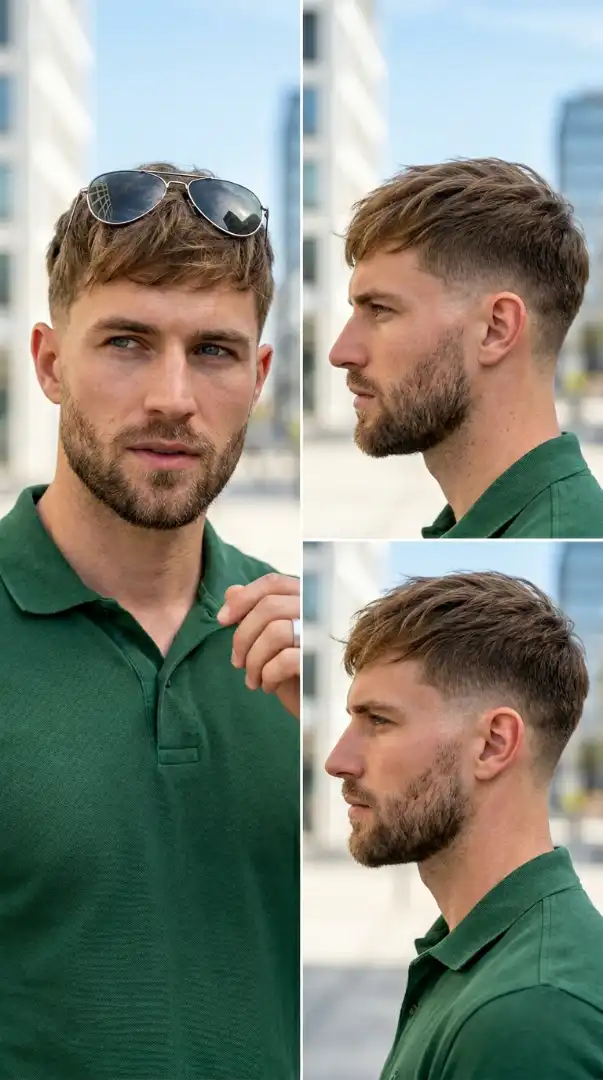
Trendy Mullet Hairstyles for Modern Men
1 of 12 — The Mediterranean Wave Master
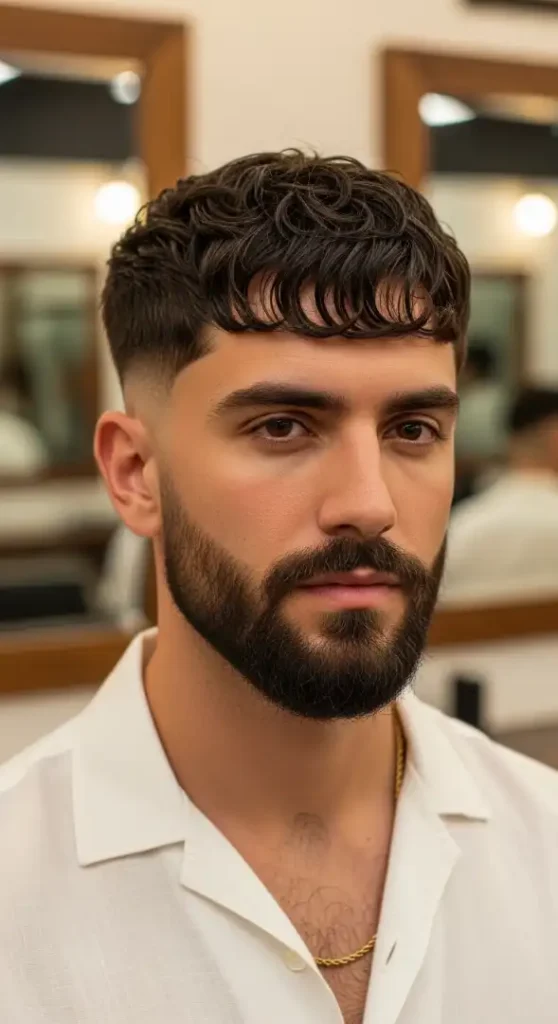
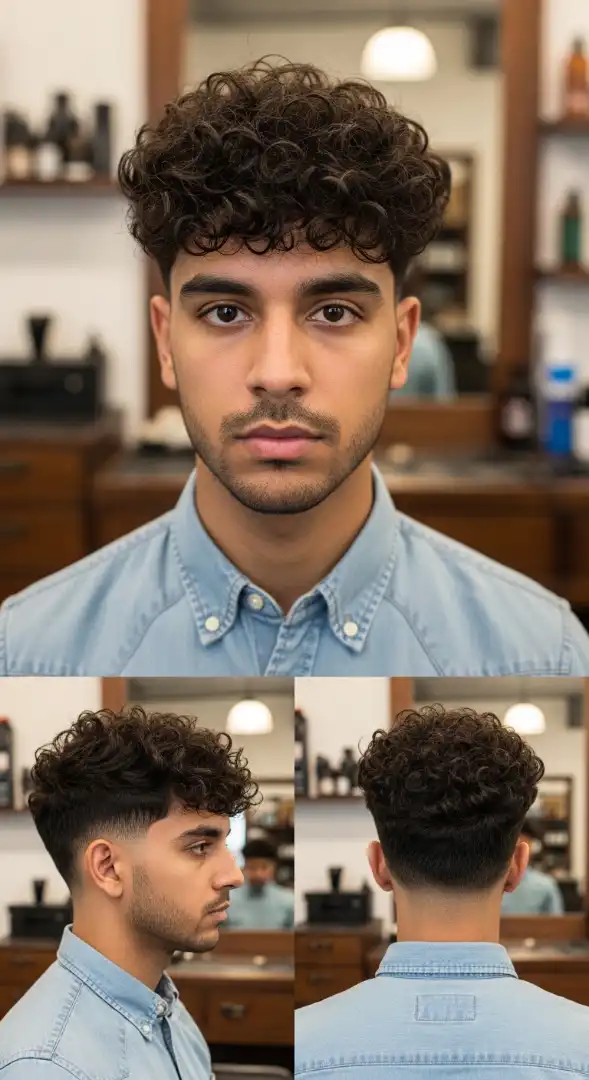
The Mediterranean Wave Master represents the perfect fusion of classic mullet architecture and contemporary wave-enhanced texture. This style works exceptionally well for Oval and Diamond face shapes because the graduated length from crown to nape creates vertical elongation while the wavy texture adds controlled width at the temples, balancing angular features. The deep side part draws attention away from a prominent forehead, making this particularly flattering for men with higher hairlines.
Face Shape Match Breakdown: If you have a Round face, the vertical flow of waves creates the illusion of length, pulling the eye downward and slimming the overall appearance. For Square faces, the soft wave pattern counterbalances sharp jawlines, introducing organic movement that prevents the style from looking too structured or severe.
Your Complete Grooming Kit:
- Clippers: Wahl Magic Clip (for blending the lower sections and maintaining the graduated taper at the nape)
- Trimmer: Andis T-Outliner (for crisp hairline definition and beard edging)
- Styling Tools: Denman D3 brush for wave enhancement, Kent 20T comb for parting precision
- Product Arsenal: Uppercut Deluxe Sea Salt Spray (for texture without stiffness), Layrite Natural Matte Cream (for hold with movement), Honest Amish Beard Oil (to keep facial hair soft and conditioned)
Maintenance Level: MEDIUM
Expect salon visits every 3-4 weeks to maintain the graduated length transition and keep the nape clean. Daily styling requires 8-12 minutes: dampen hair, apply sea salt spray to damp hair, blow-dry with medium heat while lifting at the roots with the Denman brush, finish with a quarter-sized amount of matte cream worked through the top and mid-lengths. The wave pattern does most of the heavy lifting, but you’ll need to refresh the part line each morning.
Barber Talk — Your Exact Script:
“I want a modern mullet with natural wave enhancement. Keep the top and crown at 4 inches with layered texturizing to bring out the wave pattern. Graduate the length from the crown to 6 inches at the nape — no hard line, just a smooth flow. Blend the sides with a #3 guard tapering to a #1 at the temples, but leave enough length to maintain wave texture. Deep side part on the left. For the beard, trim to 8mm and shape the jawline — keep it connected to the sideburns with no gaps. Finish with texturizing the ends for movement.”
What makes this style work: The wave pattern prevents the mullet from looking dated or costume-like. Modern mullets live or die by texture, and the Mediterranean Wave Master uses natural curl pattern as its foundation rather than fighting it. This isn’t your dad’s 1980s hockey player mullet — it’s refined, wearable, and surprisingly versatile for both casual and business-casual environments.
Curious about how this style adapts for tighter curl patterns? Style #3 breaks down the exact modifications for coily hair textures.
FAQs
Q: How do I maintain the wave pattern in The Mediterranean Wave Master at home?
A: Apply sea salt spray to damp (not wet) hair immediately after showering, scrunch sections upward to encourage wave formation, then blow-dry on medium heat using a diffuser attachment or your hands to lift at the roots — this takes 6-8 minutes and preserves natural texture without frizz. Skip shampooing daily; co-wash 3-4 times per week to maintain hair’s natural oils that enhance wave definition.
Q: Which face shape suits The Mediterranean Wave Master best?
A: Oval and Diamond faces benefit most because the graduated vertical length creates flattering proportions, while the wave texture at the temples adds strategic width to balance angular cheekbones. Round faces also work well since the downward flow of waves elongates the appearance, but avoid this style if you have an Oblong face as it will further lengthen your proportions.
Q: What’s the difference between The Mediterranean Wave Master and a traditional mullet?
A: Traditional mullets feature blunt, uniform length in the back with sharp contrast between short sides and long rear sections, creating a hockey-player aesthetic. The Mediterranean Wave Master uses graduated layering (smooth transition from 4 to 6 inches) and emphasizes natural wave texture rather than straight length, resulting in a refined, editorial look that works in professional settings.
Q: How often should I get The Mediterranean Wave Master touched up?
A: Book your barber every 3-4 weeks to maintain the graduated blend and keep the nape area clean — the taper at the temples grows out fastest and will look shaggy by week 4. Between cuts, use your Andis T-Outliner at home to clean up the hairline and beard edges weekly, which extends the professional appearance by 7-10 days.
2 of 12 — The Urban Shadow Sculptor
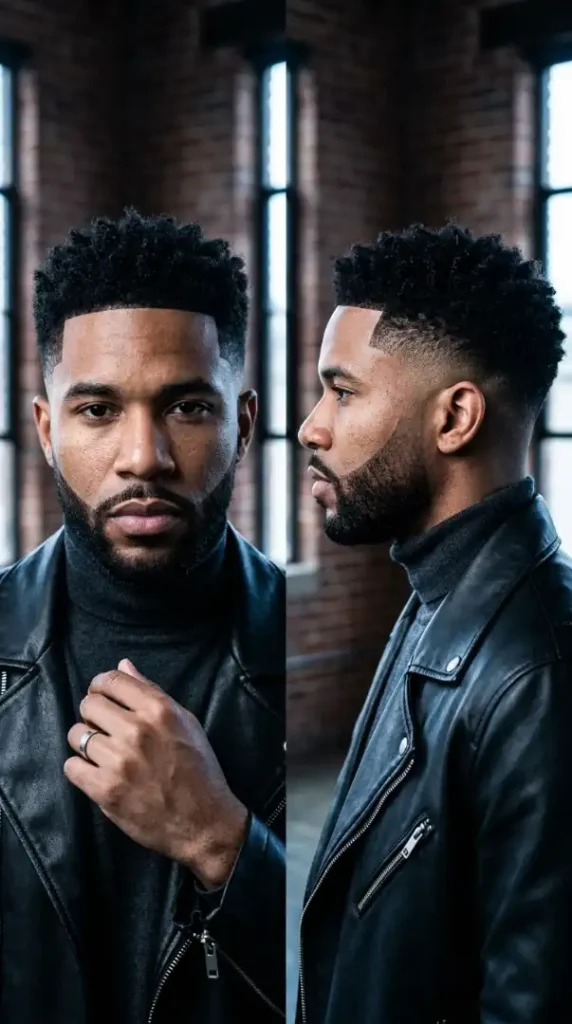
The Urban Shadow Sculptor redefines the mullet for the modern professional who refuses to compromise between edge and refinement. This high-skin fade mullet variation creates dramatic contrast through precision barbering, where tight coils at the crown meet surgical fade work at the temples. Square and Oblong face shapes dominate with this style because the vertical height at the crown (3 inches of lifted coils) balances a strong jawline, while the exposed temples created by the high fade prevent the face from appearing too long.
Face Shape Engineering: For Round faces, the upward styling and high fade work in tandem to create vertical lines that slim and elongate. The geometric temple points act as visual anchors that draw attention to the upper third of the face. If you have a Heart-shaped face, this style balances a wider forehead by creating volume at the crown while the clean fade removes bulk at the temples — but be cautious, as too much height can overemphasize forehead width.
Your Professional Arsenal:
- Clippers: Andis Master Cordless (the detachable blade system is essential for the ultra-tight skin fade progression)
- Trimmer: BaByliss Pro FX787 GoldFX Outliner (for razor-sharp temple geometry and beard lining)
- Finishing Tools: Soft boar bristle brush for coil definition, metal tail comb for part precision
- Product Stack: Cantu Shea Butter Wave & Curl Activator (for coil definition and moisture), Murray’s Black Beeswax (for hold on the shaped sections), Scotch Porter Beard Balm (to soften and condition facial hair)
Maintenance Level: HIGH
This is a commitment style. You’re looking at barber visits every 10-14 days to maintain the crisp fade and geometric hairline — skin fades grow out noticeably fast, especially on coily hair. Daily routine: 10-15 minutes. Morning refresh requires dampening the crown, working a dime-sized amount of wave activator through the coils, using your boar brush to lift and shape upward, then applying beeswax to the perimeter for hold. The beard needs daily oil application and weekly trimming to maintain the surgical line work.
Barber Talk — Your Exact Script:
“I want a high skin fade mullet with coil definition at the crown. Skin fade starting at the temple — use a #0.5 guard at the baseline and blend up to a #2 at the parietal ridge. Keep 3 inches of length at the crown and style it forward and upward. The back should graduate from the crown length down to 4 inches at the nape with texture layering to prevent a shelf. Cut geometric temple points — sharp angles, not rounded. For the beard, lineup at 1mm, shape the jawline following my natural bone structure, and connect cleanly to the sideburns with no gaps. Finish by defining individual coils at the top with twist-out technique.”
Why This Works for Professionals: The Urban Shadow Sculptor walks the line between corporate and creative. The clean fade and precise lines signal attention to detail and discipline — qualities that translate well in business environments. Meanwhile, the textured crown and modern mullet silhouette show personality and cultural awareness. It’s barbershop art meets boardroom presentation.
Wondering how to adapt this fade technique for straight hair? Style #5 demonstrates the modifications needed for non-coily textures.
FAQs
Q: How do I maintain the sharp fade in The Urban Shadow Sculptor between barber visits?
A: You cannot fully maintain a skin fade at home without professional tools, but extend its life by using your BaByliss trimmer to clean the hairline and temple edges every 3-4 days — focus only on the outline, never attempt to blend the fade yourself as this creates visible mistakes. Apply a hot towel to the fade area before trimming for cleaner lines, and moisturize daily with jojoba oil to prevent ashiness that makes grow-out more visible.
Q: Which face shape suits The Urban Shadow Sculptor best?
A: Square and Oblong faces benefit most because the crown height (3 inches of lifted coils) balances strong jawlines and creates horizontal visual breaks that prevent long faces from appearing stretched. Round faces also work well due to the slimming effect of the high fade and vertical styling, but avoid this if you have a Heart shape with a significantly wider forehead as the temple exposure can overemphasize width.
Q: What’s the difference between a high skin fade and a low fade on a mullet?
A: A high skin fade starts the bare skin transition at or above the temple line and blends upward to the parietal ridge, creating maximum contrast and a bold, modern look that exposes more of the head. A low fade begins the transition at or below the ear, preserving more hair coverage on the sides for a subtler, more conservative appearance — high fades require more frequent touch-ups but deliver greater visual impact.
Q: Can I style The Urban Shadow Sculptor without heat tools?
A: Yes, coily hair textures actually style better without direct heat which can cause damage and frizz. Use the dampening-and-activator method: wet your hands, shake excess water, apply wave activator to damp (not soaking) coils, brush upward with your boar bristle to shape, then air-dry for 15-20 minutes — the natural coil pattern provides structure without blow-drying, and you’ll get better definition with less breakage.
3 of 12 — The Pacific Flow Rebel
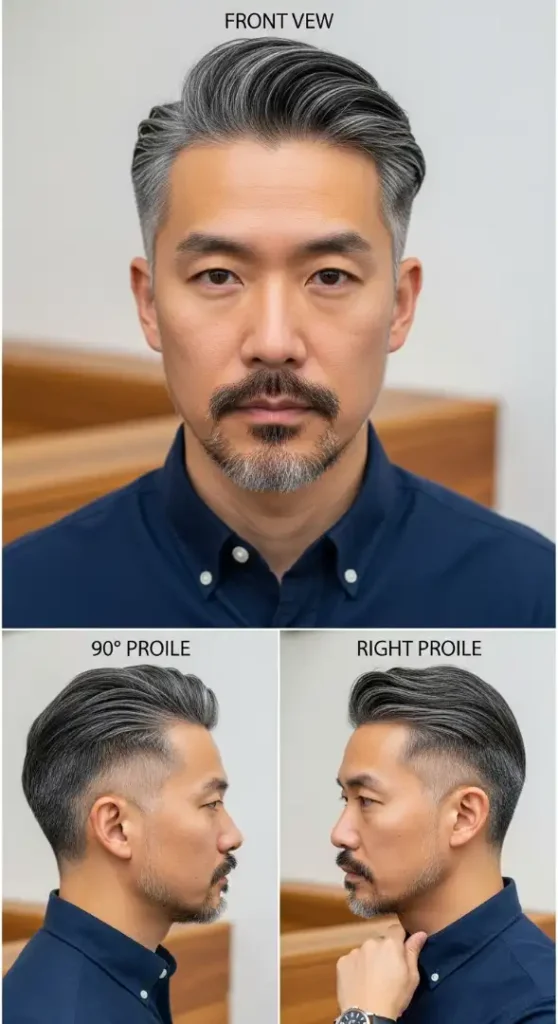
The Pacific Flow Rebel celebrates the natural aging process while maintaining youthful energy through modern structure. The salt and pepper progression through straight hair creates depth and dimension that single-tone color simply cannot match. This style is engineered specifically for Oval, Diamond, and Heart-shaped faces because the swept-back styling at the crown creates horizontal expansion that balances narrow temples, while the graduated back length adds visual weight to the lower third of the face.
Anatomical Face Matching: If you have an Oval face — the universal canvas — this style enhances your natural symmetry by adding interest without disrupting proportion. Diamond faces benefit from the crown volume which balances prominent cheekbones, while the flowing back length prevents the chin from appearing too pointed. For Heart shapes, the backward sweep at the temples counters a wider forehead, and the mid-fade prevents excessive bulk at the temporal region.
Essential Tool Kit:
- Clippers: Wahl Senior Cordless (the power and blade design handle straight Asian hair texture without pulling)
- Trimmer: Andis Slimline Pro Li (precision for goatee shaping and hairline refinement)
- Styling Implements: Mason Pearson Popular Bristle Brush (distributes natural oils and creates shine), wide-tooth cellulose acetate comb (prevents static in straight hair)
- Product Hierarchy: Baxter of California Clay Pomade (medium hold with natural finish for daytime styling), Uppercut Deluxe Featherweight (light texture spray for back-length movement), Cremo Beard Oil Mint Blend (cooling sensation, prevents goatee itch)
Maintenance Level: MEDIUM-HIGH
Barbershop appointments every 3 weeks maintain the mid-fade graduation and prevent the back from developing split ends — longer mullet lengths require regular trimming to preserve shape. Daily investment: 10-12 minutes. Your morning routine involves towel-drying after shower (don’t rough-dry straight hair), applying clay pomade to damp hair starting at the crown and working backward in the direction of growth, using the Mason Pearson brush to create backward sweep with 15-20 firm strokes, finishing with featherweight spray on the back length for separation. The goatee needs beard oil application twice daily and shaping every 4-5 days.
Barber Talk — Your Exact Script:
“I want a slicked-back modern mullet that honors my natural silver. Keep 2.5 inches at the crown with subtle layering for backward movement — don’t remove the weight. Mid fade on the sides starting with a #2 guard at the temple and blending up to a #4 at the rounded part of my head. The back should graduate smoothly from the crown down to collar length — I want it to fall just past my collar when styled. Don’t cut into the salt and pepper pattern; work with the natural color placement. Shape the goatee to 6mm, define the edges clean, and taper the sideburns to connect seamlessly. Finish with point-cutting the ends of the back section for movement, not bluntness.”
The Confidence Factor: This style isn’t trying to hide age — it weaponizes it. The salt and pepper coloring signals experience and authority, while the modern mullet structure shows you haven’t surrendered to conventional middle-age grooming expectations. It’s particularly powerful in creative industries and leadership positions where personal style is an asset rather than a liability.
Curious how this translates to auburn or lighter hair tones? Style #7 explores warm color palettes on similar structures.
FAQs
Q: How do I embrace the salt and pepper pattern in The Pacific Flow Rebel instead of dyeing it?
A: Use purple-toning shampoo once weekly (Redken Color Extend Graydiant works well for Asian hair) to neutralize any yellow tones in the silver sections, which keeps the contrast crisp and intentional rather than brassy. Between washes, apply argan oil to the silver areas specifically as gray hair tends to be coarser and benefits from extra moisture — this creates uniform texture between the dark and light sections.
Q: Which face shape suits The Pacific Flow Rebel best?
A: Oval faces showcase this style perfectly due to natural symmetry, while Diamond and Heart shapes benefit from the crown volume balancing angular cheekbones or wider foreheads respectively. Avoid this if you have a Round or Square face with significant width, as the horizontal backward sweep at the crown adds visual width that can make round faces appear fuller and square jaws seem even more pronounced.
Q: What’s the difference between a mid fade and a low fade for mullet styles?
A: A mid fade begins the transition around the temple to ear level and blends upward to the parietal ridge (rounded part of the head), creating moderate contrast suitable for professional environments. A low fade starts below the ear and blends more gradually, preserving more hair coverage for conservative settings — mid fades offer the best balance between modern edge and workplace appropriateness for most office environments.
Q: Can I style The Pacific Flow Rebel with a blow dryer for more volume?
A: Yes, straight Asian hair responds well to heat styling — towel-dry to 60% dampness, apply heat protectant spray, then blow-dry on medium heat using a round brush to lift at the roots while directing hair backward, angling the nozzle down the hair shaft to seal the cuticle and create shine. This adds 1-2 minutes to your routine but increases volume by approximately 40% and makes the style hold for 12-14 hours instead of 8-10.
4 of 12 — The Crimson Voltage
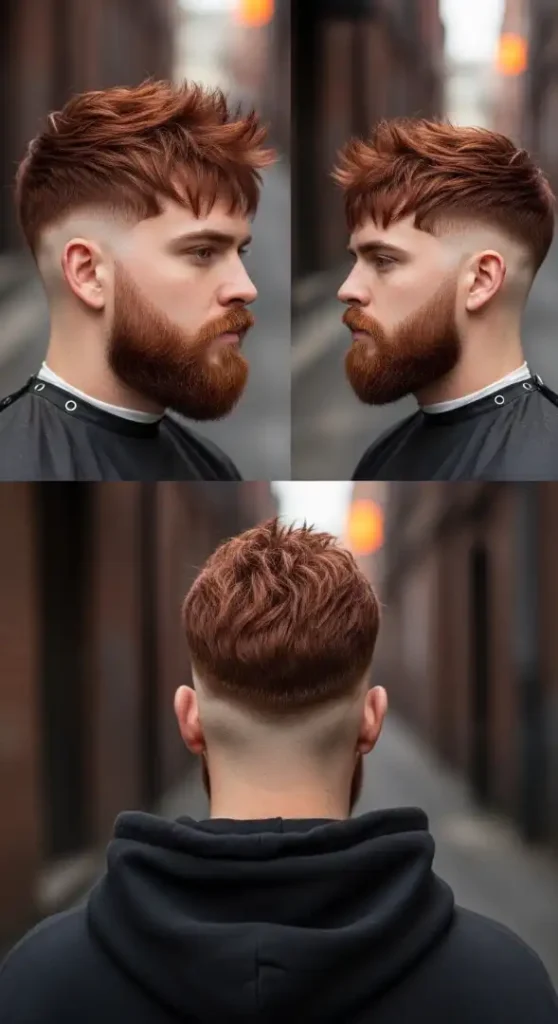
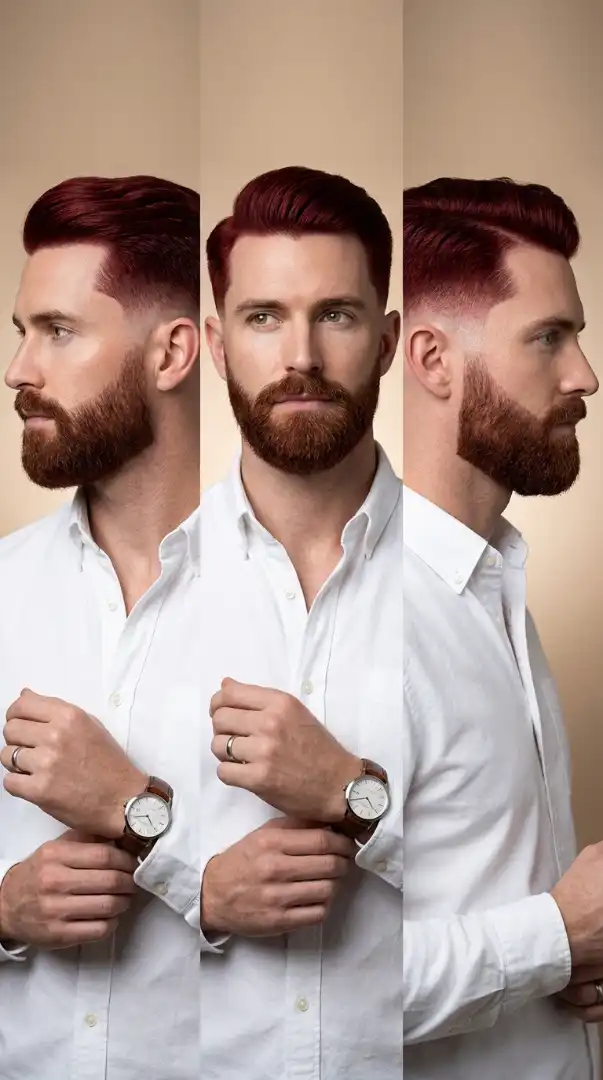
The Crimson Voltage represents maximum-impact barbering where color, texture, and architecture converge into a statement piece. The auburn-copper color palette isn’t subtle — it’s a declaration of confidence that pairs perfectly with the aggressive textured styling and bald fade execution. This cut works exceptionally well for Square, Round, and Oval face shapes because the extreme vertical height at the crown (3.5 inches of choppy texture styled upward) creates elongation that counterbalances width, while the bald fade removes all visual weight from the sides, further slimming the appearance.
Face Shape Architecture Breakdown: Square jaws benefit dramatically from this style because the upward texture draws attention away from angular jawlines toward the crown, while the full beard softens the lower face and creates harmony. For Round faces, the vertical styling combined with the aggressive bald fade creates the illusion of length and structure where softness exists. Oval faces can wear this without modification — their balanced proportions support extreme styling without distortion. Avoid if you have an Oblong or Diamond face, as the additional height will make your face appear excessively long or your cheekbones overly pronounced.
Complete Professional Arsenal:
- Clippers: Wahl Detailer Li (the precision T-blade is critical for bald fade execution and creating razor-sharp hairline definition)
- Trimmer: Andis Slimline Pro GTX (for beard detailing and maintaining the connection between facial hair and sideburns)
- Styling Tools: Conair Pro Ceramic-Tourmaline blow dryer with concentrator nozzle, Olivia Garden ceramic round brush (medium barrel for adding volume without excessive curl)
- Product Strategy: Kenra Platinum Texturizing Taffy #13 (for aggressive piecey texture with strong hold), Redken Brews Work Hard Molding Paste (for reworkable hold throughout the day), American Crew Precision Shave Gel (for beard edge definition), Honest Amish Heavy Duty Beard Balm (to tame and shape the full beard)
Maintenance Level: HIGH
This is not a low-maintenance style. Barbershop visits every 7-10 days are mandatory to keep the bald fade crisp — exposed skin shows growth immediately. Color touch-ups at a professional colorist every 4-6 weeks maintain the auburn vibrancy (home box dyes will not achieve this dimensional copper tone). Daily styling commitment: 15-18 minutes. Your routine begins with shampooing (textured styles need clean hair for product grip), towel-drying to 70% dampness, applying texturizing taffy to the crown section, blow-drying with the ceramic brush while lifting vertically at the roots and creating forward directional movement, then using molding paste to define individual pieces at the fringe. Beard maintenance requires daily balm application, brushing with a boar bristle, and edge cleanup with your trimmer every 2-3 days.
Barber Talk — Your Exact Script:
“I want an aggressive textured mullet with a bald fade. Keep 3.5 inches of length at the crown with heavy point-cutting and razor texturizing to create choppy, separated pieces. Bald fade starting with a #0 guard at the temple baseline — take it to skin if possible — and blend upward, keeping the fade tight and high ending around 2 inches above my ear. The front should have asymmetrical fringe pieces falling forward — not a straight line, I want broken, edgy texture. The back can graduate from the crown to about 3 inches at the nape, also heavily textured. For the beard, keep it full at 8-10mm length, shape it to follow my natural jawline, connect it seamlessly to the sideburns, and line the edges sharp. If you can tone my auburn color to bring out more copper highlights, do that too.”
Why This Works in Urban Environments: The Crimson Voltage doesn’t ask for permission or try to fit corporate molds. It’s designed for creative professionals, artists, musicians, and entrepreneurs who use personal style as brand identity. The auburn color creates instant memorability — people remember the guy with the crimson mullet. The bald fade signals technical skill and grooming discipline, preventing the style from reading as messy or unkempt despite its intentionally chaotic texture.
Want to see how this textured approach works on darker hair without color? Style #6 demonstrates the same technique with natural black tones.
FAQs
Q: How do I maintain auburn hair color in The Crimson Voltage between salon visits?
A: Use color-depositing shampoo and conditioner specifically formulated for red tones (Joico Color Infuse Red or Aveda Madder Root work well) 2-3 times per week to refresh vibrancy and prevent fading. Wash in lukewarm water — hot water opens the cuticle and accelerates color loss. Apply UV protection spray before sun exposure as auburn tones fade fastest under direct sunlight, losing approximately 20-30% of intensity in 2 weeks without protection.
Q: Which face shape suits The Crimson Voltage best?
A: Square, Round, and Oval faces benefit most because the extreme vertical height (3.5 inches at crown styled upward) creates elongation that balances width in Round faces and softens angularity in Square jaws. Oval faces handle the dramatic styling without proportion distortion. Avoid this style entirely if you have Oblong or Diamond faces as the added height will make your face appear excessively long or your cheekbones too prominent.
Q: What’s the difference between a bald fade and a skin fade?
A: The terms are interchangeable — both describe taking the hair down to bare skin at the baseline using a #0000 (foil) blade or traditional razor. “Bald fade” is the common American barbershop term while “skin fade” is often used internationally, but they reference the same technique: removing all visible hair at the lowest point of the fade for maximum contrast with longer sections above.
Q: How do I create the choppy texture in The Crimson Voltage at home without it looking messy?
A: The difference between intentional texture and messy chaos is precision product application — work texturizing taffy through small 1-inch sections of hair individually rather than coating your entire head at once, then use your fingers to twist and separate each section upward and forward creating defined pieces. Blow-dry each styled section for 3-5 seconds to set the shape, which prevents it from falling flat or clumping together into an unstructured mess.
5 of 12 — The Midnight Executive
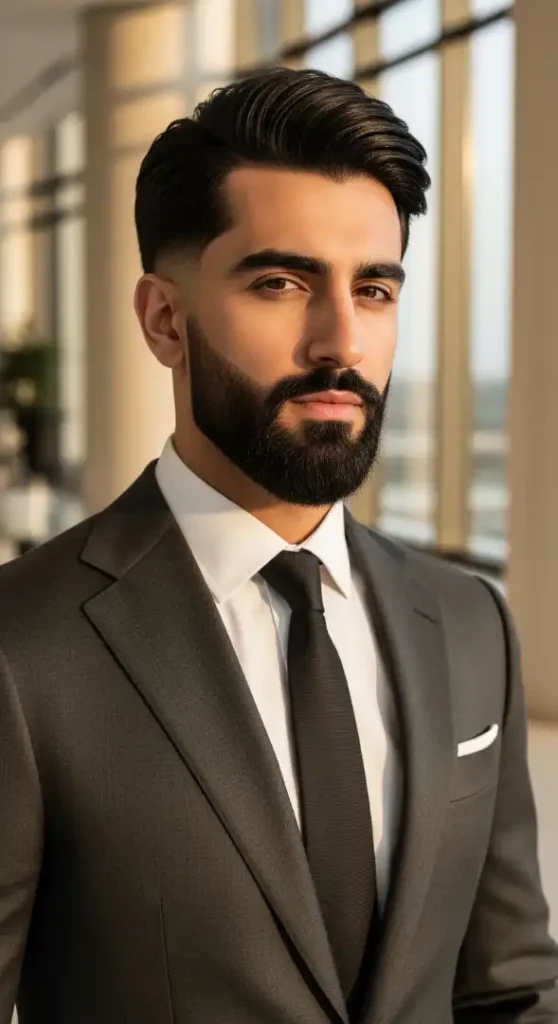
The Midnight Executive dissolves the false choice between professional polish and personal edge. This is the mullet for executives, attorneys, consultants, and corporate leaders who understand that conservative doesn’t mean boring. The subtle taper fade and controlled shine positioning make this style appropriate for boardrooms while maintaining the signature mullet length at the nape. Oval, Diamond, and Heart-shaped faces achieve optimal results because the side part and swept styling create asymmetry that adds interest to balanced proportions, while the subtle taper removes just enough width at the temples to elongate Diamond and Heart shapes without creating excessive narrowness.
Face Shape Precision Engineering: For Oval faces, this style enhances your natural versatility — the side part prevents monotony while the classic silhouette respects your inherent balance. Diamond faces benefit because the swept hair at the forehead softens prominent cheekbones and the nape length adds visual weight to a narrower chin. Heart shapes find equilibrium through the temple taper which reduces upper-face width while the boxed beard adds structure to a potentially pointed chin. This style does not suit Round or Square faces — the horizontal sweep adds width to Round faces, and the clean lines emphasize rather than soften strong Square jawlines.
Professional-Grade Tool Collection:
- Clippers: Oster Fast Feed (designed for straight hair, produces clean taper fades without pulling)
- Trimmer: Wahl Detailer (the T-blade creates surgical precision for beard geometric edges and hairline cleanup)
- Essential Implements: Kent 81T fine-tooth comb (for precise parting and distribution), Denman D4 brush (for blow-dry control and shine enhancement)
- Product Architecture: Baxter of California Hard Cream Pomade (high shine, strong hold for side-part integrity), Layrite Deluxe Pomade (water-based for easy evening restyling), Jack Black Beard Lube (dual-function conditioning for beard softness and shave prep), Kiehl’s Nourishing Beard Grooming Oil (lightweight, non-greasy formula suitable for professional environments)
Maintenance Level: MEDIUM
Strategic maintenance keeps this style boardroom-ready. Barber visits every 2.5-3 weeks maintain the taper fade crisp ness and prevent the nape from extending past your collar — corporate environments notice when grooming slides. Daily commitment: 8-10 minutes, less than most executive morning routines. Post-shower protocol: towel-dry to 80% dampness, create your deep side part with the Kent comb while hair is still damp, apply a nickel-sized amount of hard cream pomade working from the part outward and backward, blow-dry on medium heat using the Denman brush to direct hair across and back while creating shine through tension and heat, finish by running a small amount of pomade through the nape area to control flyaways. Beard protocol: apply conditioning oil morning and night, use the Wahl Detailer every 3-4 days to maintain the boxed geometric shape, professional beard trim every 2 weeks to preserve the 4mm length.
Barber Talk — Your Exact Script:
“I need a corporate-appropriate mullet with a clean taper fade. Deep side part on the right. Keep 3 inches at the crown with minimal layering — I want controlled movement, not wild texture. Subtle taper fade on the sides using a #2 guard at the temple fading up to a #4 at the parietal ridge. Nothing too aggressive — this needs to work in business meetings. The back should be long enough to touch my collar when down but not extend past it — probably 3.5 to 4 inches from the crown tapering slightly shorter at the very bottom. Clean lines at the hairline, sharp and defined. For the beard, box it at 4mm, geometric edges, follow my natural jaw angle, and make sure the corners at the chin are crisp 90-degree angles. Taper the sideburns to connect seamlessly with the fade.”
Corporate Viability Analysis: The Midnight Executive passes the “conference room test” — colleagues notice you’re well-groomed and stylish but can’t pinpoint why. The nape length stays hidden under suit collars in seated positions, revealing itself strategically when you stand or turn. The controlled shine signals attention to detail and self-investment, qualities that read positively in professional contexts. This isn’t rebellion disguised as conformity; it’s intentional style that respects context while refusing to be forgettable.
Curious about adapting this professional approach to wavy hair textures? Style #1 demonstrates compatible styling for Mediterranean wave patterns in business environments.
FAQs
Q: How do I maintain the side part in The Midnight Executive so it doesn’t disappear throughout the day?
A: Create the part on damp hair before any product application — the hair follicle direction sets while wet and holds better than parting dry hair. After applying pomade and blow-drying, run the fine-tooth edge of your Kent comb along the part line one final time, then apply a tiny additional amount of pomade directly along the part using your fingertip to seal it — this creates a “pomade anchor” that maintains definition for 12-14 hours even in active environments.
Q: Which face shape suits The Midnight Executive best?
A: Oval, Diamond, and Heart faces showcase this style optimally because the asymmetrical side part and swept styling add interest to balanced Oval proportions, while the temple taper elongates Diamond and Heart shapes by removing width at the upper face. Avoid this if you have Round or Square faces — the horizontal sweep at the forehead adds width that makes Round faces appear fuller, and the clean geometric lines emphasize strong Square jawlines rather than softening them.
Q: Can I wear The Midnight Executive in conservative industries like law or finance?
A: Yes, with intentional presentation — keep the nape length at or slightly below your collar line so it remains hidden when seated or wearing a suit jacket, maintain the taper fade crisp with weekly home trimmer touch-ups to signal discipline, and style with shine rather than matte products as shine reads as polished in conservative settings. The key is ensuring nothing about the cut appears unkempt or rebellious; it should simply look like exceptionally executed grooming.
Q: How often should I touch up the boxed beard shape at home versus at the barber?
A: Maintain geometric edges at home every 3-4 days using your Wahl Detailer with a steady hand and good lighting — focus only on the outline (neck, cheeks, corners), never attempt to thin or shorten the beard yourself as this creates uneven patches. Visit your barber every 2 weeks for professional trimming with scissors or clippers to maintain the 4mm uniform length across the entire beard and ensure symmetry — attempting full beard shaping at home risks overcorrection.
6 of 12 — The Shadow King
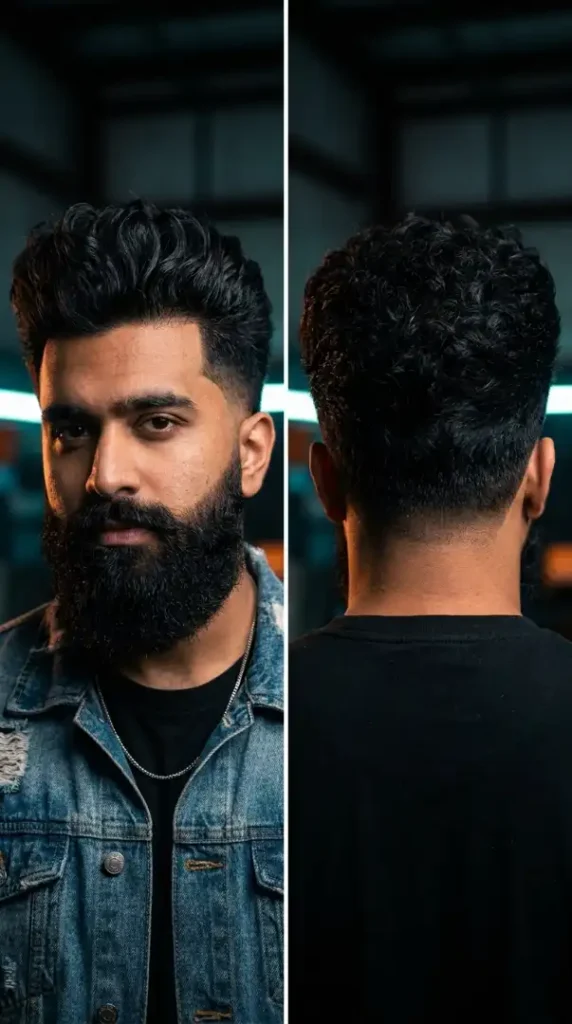
The Shadow King commands attention through pure architectural presence. This high-volume textured quiff mullet hybrid leverages natural coily-wavy hair texture to create dramatic height and density that cannot be replicated on straight hair. The style is engineered for Square, Oval, and Diamond face shapes because the aggressive upward and forward volume at the crown (4 inches of lifted texture) draws the eye vertically, elongating Square faces and balancing the width-to-length ratio. For Diamond shapes, the volume at the crown balances prominent cheekbones by adding visual weight to the upper third, while the thick full beard anchors the lower face preventing the chin from appearing too narrow.
Anatomical Face Engineering: Square faces transform with this style — the vertical quiff height breaks up the horizontal plane of a strong jawline, while the low fade removes bulk at the temples that would otherwise emphasize facial width. Oval faces can support the dramatic volume without proportion distortion. Diamond faces achieve harmony through strategic volume placement: crown height balances wide cheekbones, and the full beard adds width to a narrow chin creating overall proportion. Avoid if you have a Round or Heart face — this style adds too much upper-face volume, making Round faces appear wider and exaggerating forehead width on Heart shapes.
Professional Arsenal:
- Clippers: Andis Master (adjustable blade system handles dense coily-wavy texture without snagging)
- Trimmer: Wahl Peanut (compact design perfect for detailed hairline work and beard edge definition)
- Styling Tools: Wide-tooth shower comb for detangling, Denman D3 seven-row brush for coil definition and shaping
- Product Stack: Cantu Shea Butter Wave & Curl Activator (provides moisture and definition for coily sections), American Crew Grooming Cream (medium hold with natural finish for quiff structure), Honest Amish Heavy Duty Beard Balm (strong hold for thick beard shaping and taming), Tea Tree Beard Oil (prevents itch and moisturizes dense facial hair)
Maintenance Level: MEDIUM-HIGH
Barbershop frequency: every 2-3 weeks to maintain the low fade crispness and prevent the quiff from becoming unmanageably heavy. Daily styling investment: 12-15 minutes. Your morning protocol starts with dampening the hair (never soaking — coily hair holds too much water), applying wave activator to the damp crown section working in small circular motions to encourage coil definition, using the Denman brush to lift and shape the quiff forward and upward while blow-drying on low heat with a diffuser attachment to prevent frizz, finishing with grooming cream applied to dry hair for structure and hold. The thick beard requires twice-daily oil application to prevent dryness and itching, daily brushing with a boar bristle to distribute oils and train growth direction, and edge cleanup with your Wahl Peanut every 3-4 days.
Barber Talk — Your Exact Script:
“I want a high-volume textured quiff mullet that works with my natural coil pattern. Keep 4 inches of length at the front and crown with aggressive layering to create lift and separation — I want visible coil definition, not a smooth pompadour. Low fade on the sides starting just above my ear, blend with a #1 guard at the baseline fading to a #3 where it meets the longer top section. The back should maintain length from the crown down to about 4.5 inches at the nape — keep the texture chunky with point-cutting. For the beard, maintain full density at 12mm, shape it to follow my jawline with clean geometric edges, and make sure it connects seamlessly to the sideburns with no bald patches. Clean up my hairline but keep it natural — no hard corners.”
Why Coily Texture Dominates This Style: Straight or wavy hair cannot achieve the same architectural presence. Coily hair naturally wants to stand upward rather than lay flat, which means you’re working with your texture rather than fighting it. The individual coil definition creates micro-shadows and depth that give the style dimension and movement even when static. When properly moisturized and shaped, coily hair holds its structure for 10-12 hours without reapplication, whereas straight hair in a similar quiff would collapse by midday.
Want to see how this volume approach translates to straight Asian hair? Style #3 demonstrated the modifications needed for non-coily textures with similar height goals.
FAQs
Q: How do I maintain moisture in coily hair for The Shadow King without making it look greasy?
A: Apply leave-in conditioner immediately after showering while hair is still damp (not dripping), then layer wave activator on top — this sandwich method locks moisture into the hair shaft without surface greasiness. Use water-based products exclusively and avoid heavy oils during styling; save facial-grade oils like jojoba for nighttime moisture treatment when appearance doesn’t matter, then shampoo the next morning to remove residue before restyling.
Q: Which face shape suits The Shadow King best?
A: Square, Oval, and Diamond faces benefit most because the dramatic upward volume (4 inches at crown) creates vertical elongation that balances strong Square jawlines and wide Diamond cheekbones. Oval faces support the bold styling without distortion. Completely avoid this style if you have Round or Heart faces — the volume adds upper-face width that makes Round faces appear fuller and exaggerates forehead width on Heart shapes.
Q: What’s the difference between a low fade and a mid fade for this style?
A: A low fade begins the transition just above the ear and blends upward gradually, preserving more hair coverage on the sides for a subtler, more conservative appearance — ideal for this style as it prevents the quiff from appearing disconnected. A mid fade starts at temple level and creates more aggressive contrast but can make high-volume tops look unbalanced; low fades provide better proportion when working with 4+ inches of crown height.
Q: How do I prevent my thick beard from looking unkempt with The Shadow King?
A: Daily structure is non-negotiable — apply beard balm every morning while the beard is slightly damp (not wet), use a boar bristle brush to distribute product and train hairs downward following your jawline, then use your hands to shape the overall silhouette. The balm provides hold that lasts 8-10 hours; without it, thick beards naturally splay outward creating width rather than following the face’s contours, which makes groomed styles appear messy by midday.
7 of 12 — The Copper Crown
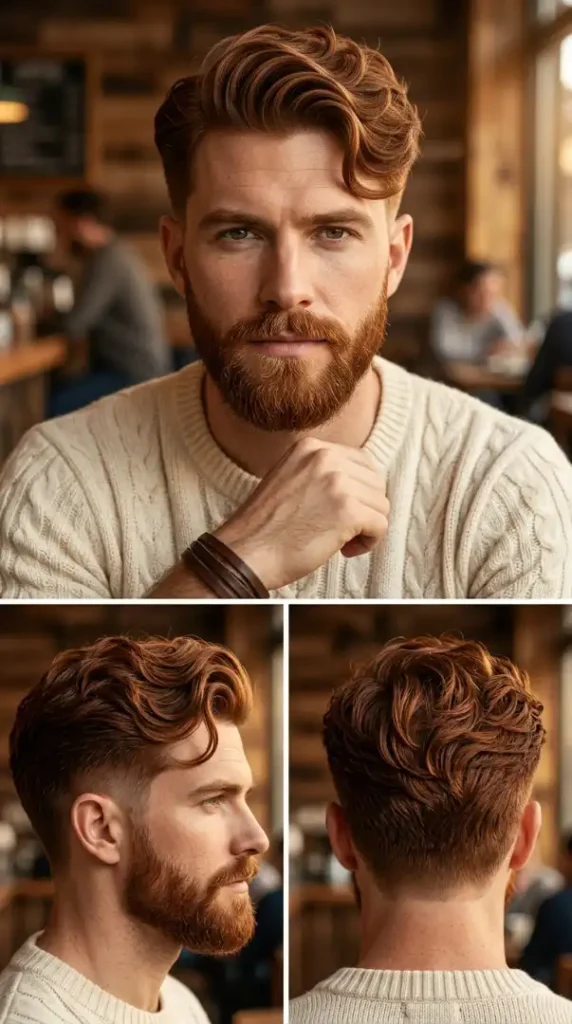
The Copper Crown celebrates natural warm tones while delivering sophisticated structure. This style proves that auburn and copper hair tones create depth and dimension that single-color palettes cannot match — each wave catches light differently, creating dynamic visual interest throughout the day. Oval, Heart, and Round face shapes achieve optimal results because the pronounced wave texture adds controlled width at the temples and crown that balances Heart-shaped foreheads, while the side part creates asymmetry that prevents Round faces from appearing too circular. For Oval faces, the waves add textural interest without disrupting natural proportion.
Face Shape Calibration: Heart-shaped faces benefit enormously from this style because the wave volume at the temples counterbalances a wider forehead, while the medium-length beard adds structure to a potentially pointed chin creating overall facial harmony. Round faces gain definition through the side part which creates diagonal lines that elongate, while the medium fade removes bulk at the sides that would otherwise emphasize width. Oval faces showcase the waves beautifully due to inherent balance. Avoid if you have Square or Oblong faces — the horizontal wave movement adds width that emphasizes Square jawlines, and the side volume creates lateral expansion that makes Oblong faces appear wider rather than providing needed vertical balance.
Complete Grooming Arsenal:
- Clippers: Wahl Magic Clip (the taper blade design excels at blending wavy hair textures smoothly)
- Trimmer: Andis Slimline Pro Li T-Blade (precision for beard shaping and hairline refinement)
- Styling Tools: Olivia Garden ceramic thermal round brush (medium barrel for wave enhancement), wide-tooth seamless comb for detangling
- Product Formula: Bumble and bumble Surf Spray (enhances natural wave without stiffness), Hanz de Fuko Claymation (strong hold with matte finish for natural texture), Jack Black Beard Oil (lightweight formula that doesn’t weigh down facial hair), Billy Jealousy Beard Control (light hold balm for beard styling)
Maintenance Level: MEDIUM
Barbershop cadence: every 3 weeks maintains the medium fade and prevents wave patterns from becoming too heavy and losing definition. Daily styling time: 10-12 minutes. Your routine begins with towel-drying to approximately 70% dampness (wavy hair needs some moisture for product distribution), spraying surf spray throughout the crown and mid-lengths while scrunching upward to encourage S-curve formation, creating your deep side part with the wide-tooth comb, applying a quarter-sized amount of claymation starting at the roots and working through with fingers to create separation and definition, blow-drying on medium heat using the round brush to enhance waves while adding volume, finishing by running your hands through to break up any overly-defined sections for a natural appearance. Beard maintenance requires oil application each morning after face washing, brushing with a small boar bristle to distribute and shape, and edge cleanup with your trimmer every 4 days.
Barber Talk — Your Exact Script:
“I want a textured wavy mullet with a medium fade that shows off my natural auburn tones. Deep side part on the left. Keep the crown at 3.5 inches with point-cutting to enhance the natural wave pattern — I want pronounced S-curves, not tight ringlets. Medium fade on the sides starting with a #2 guard at the temple and blending to a #4 at the curve of my head. The back should graduate from the crown down to about 4 inches at the nape with wave-enhancing layers — avoid cutting too much weight out or the waves will frizz. For the beard, trim to 10mm uniform length, shape it to follow my jaw, connect it cleanly to the sideburns, and style it with a slight upward brush at the chin for definition. Don’t fight my natural copper highlights — work with the color placement when cutting layers.”
Color Theory and Light: Auburn and copper tones perform differently in various lighting conditions. In natural daylight, the warm tones catch and reflect light creating luminosity and dimension. In indoor lighting, the deeper auburn base provides richness without appearing flat. This natural color variation means your hair looks different (but consistently good) throughout the day as lighting changes — it’s dynamic rather than static, which prevents the style from becoming boring or one-dimensional.
Interested in seeing this wave technique adapted for darker cool-toned hair? Style #2 demonstrated similar wave enhancement on jet black tones.
FAQs
Q: How do I enhance the wave pattern in The Copper Crown without creating frizz?
A: Apply products to damp hair (60-70% dry after towel), never bone-dry or soaking wet — the ideal moisture level allows product absorption without dilution. Use the scrunching method: spray surf spray, squeeze sections upward in your palm repeatedly to encourage S-curve formation, then blow-dry using a diffuser attachment on low heat while continuing to scrunch — this preserves natural wave structure while preventing the frizz that comes from rough-drying or brushing when dry.
Q: Which face shape suits The Copper Crown best?
A: Oval, Heart, and Round faces benefit most because the wave texture adds strategic width that balances Heart-shaped foreheads and prevents Round faces from appearing too circular through side-part asymmetry. Oval faces showcase waves naturally due to inherent proportion balance. Avoid this style if you have Square or Oblong faces as the horizontal wave movement emphasizes Square jawlines and creates unwanted lateral expansion on already-long Oblong faces.
Q: Should I color-treat auburn hair or keep it natural for The Copper Crown?
A: Natural auburn provides superior dimension because genuine auburn hair contains multiple tones (copper, gold, rust, brown) that create depth single-process color cannot replicate. If your natural auburn has faded or you want enhancement, use demi-permanent gloss treatments that add shine and enrich existing tones rather than permanent color that flattens dimension — glosses last 4-6 weeks and enhance rather than replace your natural color variation.
Q: How do I maintain the medium fade between barber visits?
A: You cannot recreate a professional fade at home, but you can extend its crisp appearance by using your Andis trimmer to clean the hairline perimeter and neck edge every 5-6 days — focus only on the outline where hair meets skin, never attempt to touch the actual fade blend as this creates visible lines and mistakes. Keep the fade area moisturized with light oil to prevent ashiness that makes grow-out more obvious.
8 of 12 — The Bronze Architect
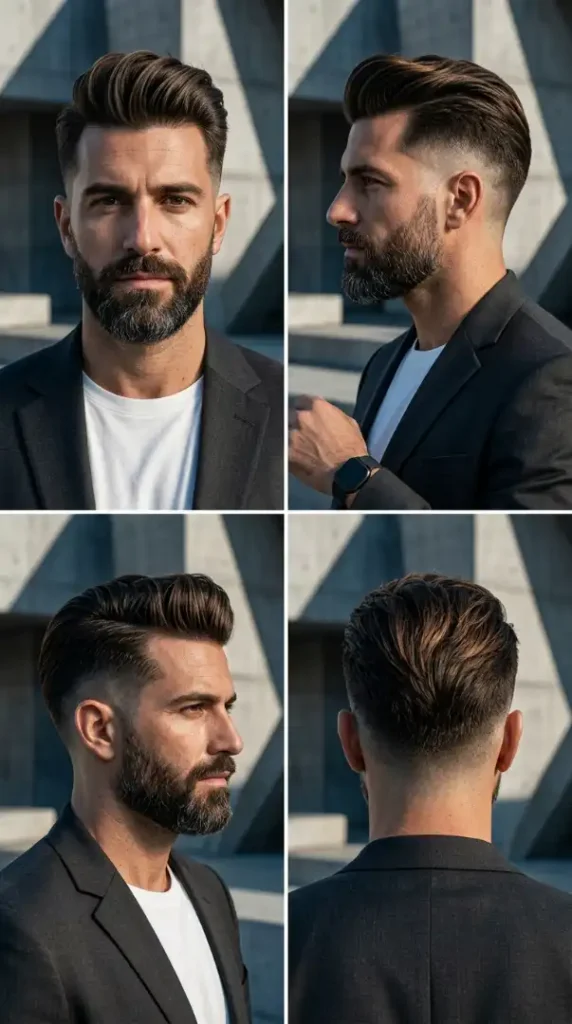
The Bronze Architect represents the intersection of classical grooming and contemporary edge. This pompadour-mullet hybrid with high fade demonstrates that traditional volume styling can coexist with modern mullet architecture when executed with precision. The distinguished gray streaking through the beard signals maturity and experience rather than attempting to hide age. Oval, Square, and Diamond face shapes dominate with this style because the pompadour volume (3 inches at front) creates vertical lift that elongates Square faces and balances their width, while the high fade removes lateral bulk making Diamond faces appear less angular. Oval faces showcase the style’s versatility through natural proportion.
Face Shape Engineering Science: Square faces benefit from dual mechanisms — the upward pompadour sweep draws attention away from the jawline toward the crown, while the high skin fade eliminates side bulk that would emphasize facial width. Diamond faces achieve balance through crown volume that counteracts prominent cheekbones, while the full beard adds width to a narrow chin creating harmonious proportions. Oval faces wear this style without modification due to inherent symmetry. Not recommended for Round or Heart shapes — pompadour volume adds upper-face width that makes Round faces appear fuller, and Heart shapes already have wider foreheads that don’t need additional top volume.
Professional Tool Collection:
- Clippers: Andis Master Cordless (the powerful rotary motor and adjustable blade handle straight hair fades without hesitation)
- Trimmer: Wahl Detailer (essential for skin fade precision and beard geometric edges)
- Styling Arsenal: GHD Air Professional Hair Dryer (powerful airflow for pompadour structure), Denman D4 nylon bristle brush (for smoothing and directing hair backward), fine-tooth metal comb (for precision parting)
- Product Architecture: Layrite Supershine Cream (high-shine pomade for classic pompadour finish), American Crew Firm Hold Styling Gel (for initial structure while blow-drying), Scotch Porter Beard Balm (medium hold for full beard shaping), Jack Black Beard Oil (lightweight conditioning without greasiness)
Maintenance Level: HIGH
This is a commitment style requiring barbershop visits every 10-12 days — high skin fades show stubble growth within a week, and pompadour shapes need regular trimming to maintain proportion. Daily investment: 15-18 minutes. Your morning protocol is methodical: shampoo and towel-dry to 80% dampness (pompadours need clean hair for maximum hold), apply firm hold gel to damp hair focusing on the crown section, create your side part with the metal comb, use the Denman brush while blow-drying on high heat to lift the front section upward and backward creating the pompadour shape (this takes 8-10 minutes of active styling), allow the style to cool for 2 minutes so the shape sets, finish with supershine cream applied to dry hair for gloss and additional hold, style the nape area with a small amount of cream for texture. Beard protocol requires twice-daily oil application, morning balm styling to shape and control the fullness, and edge cleanup with your Wahl Detailer every 3 days to maintain clean lines.
Barber Talk — Your Exact Script:
“I want a modern pompadour-mullet hybrid with a high skin fade. Front section needs 3 inches of length styled upward and backward — traditional pompadour volume. Clean side part on the right. High skin fade starting with foil or #0000 at the temple baseline and blending to a #3 guard at the parietal ridge — I want maximum contrast between the fade and the top. The back should maintain length from the crown down to 3.5 inches at the nape with subtle layering for movement. For the beard, keep it full at 8mm, don’t touch the gray streaks — they’re staying. Shape the beard to follow my jawline geometry, connect it perfectly to the sideburns, and give me clean edges. Taper the sideburns to integrate with the high fade seamlessly.”
The Gray Streaking Strategy: The slight gray at the chin and sideburns isn’t a flaw — it’s a feature. In a youth-obsessed culture, owning your natural aging process signals confidence and self-assurance. The contrast between the dark brown hair and gray beard creates visual interest and depth that single-tone coloring eliminates. It also provides instant credibility in professional environments where experience is valued — you’re not trying to look 25, you’re showcasing earned maturity while maintaining sharp contemporary style.
Curious about achieving similar pompadour volume with textured or curly hair? Style #6 demonstrated volume creation using natural coil texture instead of straight hair structure.
FAQs
Q: How do I get the pompadour in The Bronze Architect to hold its height all day?
A: Use a two-product system: apply firm hold gel to damp hair before blow-drying to create initial structure and heat-set the shape, then after the style cools for 2-3 minutes apply high-shine pomade to dry hair for additional hold and finish. The gel provides foundational structure that won’t collapse, while the pomade adds workability and shine — using pomade alone on damp hair creates too much slip and the style will fall within 3-4 hours.
Q: Which face shape suits The Bronze Architect best?
A: Oval, Square, and Diamond faces showcase this style optimally because the pompadour height (3 inches upward) creates vertical elongation that balances Square facial width and softens angular Diamond cheekbones. Oval faces support the dramatic styling without proportion issues. Avoid entirely if you have Round or Heart faces — the pompadour volume adds upper-face width that makes Round faces appear fuller and exaggerates already-wide Heart-shaped foreheads.
Q: Should I dye the gray streaks in my beard or embrace them for this style?
A: Embrace them completely — the gray creates visual contrast and depth that single-tone color cannot match, and it signals confidence in natural aging which reads as maturity and authority in professional contexts. If the gray appears brassy or yellow-toned, use a purple-toning beard wash weekly to neutralize unwanted warm tones while preserving the gray itself, which keeps the contrast crisp without dyeing.
Q: What’s the difference between a pompadour-mullet and a traditional mullet?
A: A traditional mullet features relatively flat top styling with length concentrated at the back creating the “business in front, party in back” silhouette. A pompadour-mullet adds significant upward volume at the front (3+ inches styled vertically) creating a dramatic height difference between the forehead and crown, resulting in more sophisticated architectural presence that works in professional environments while maintaining the signature mullet back length.
9 of 12 — The Street Legend
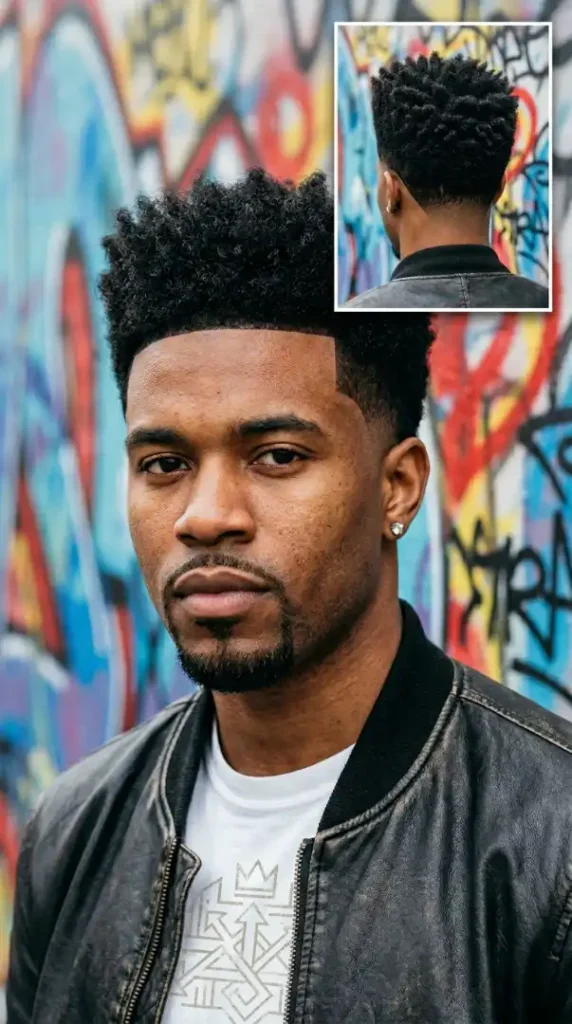
The Street Legend channels classic high-top fade energy into modern mullet architecture. This style pays homage to hip-hop’s golden era while pushing boundaries with contemporary drop fade execution and extended nape length. The dramatic height at the crown (4.5 inches of coily texture) creates instant visual impact that commands attention in any environment. Oval, Square, and Diamond face shapes achieve optimal results because the vertical height elongates Square faces by drawing the eye upward away from the jawline, balances Diamond cheekbones through proportional crown volume, and adds interest to Oval symmetry without disrupting natural balance.
Anatomical Face Architecture: Square faces transform dramatically — the 4.5-inch crown height creates such strong vertical emphasis that it visually narrows the face, while the drop fade removes all bulk at the sides eliminating width. Diamond faces find equilibrium through the crown volume that matches and balances prominent cheekbones, while the short lined goatee adds definition to the chin preventing it from appearing too narrow. Oval faces support the extreme height without proportion distortion. Not suitable for Round, Heart, or Oblong faces — Round faces cannot afford additional height that makes the face appear taller without width balance, Heart shapes already have upper-face dominance that this style exacerbates, and Oblong faces become excessively long with this much vertical emphasis.
Street-Level Tool Arsenal:
- Clippers: Wahl Cordless Senior (the workhorse of urban barbershops — reliable, powerful, handles dense coily hair)
- Trimmer: Andis T-Outliner (the gold standard for crisp lineups and geometric edge work)
- Essential Tools: Afro pick with metal teeth (for lifting and shaping coils upward), soft paddle brush for smoothing the perimeter
- Product System: Cantu Shea Butter Moisturizing Curl Activator Cream (defines coils while providing moisture), Murray’s Black Beeswax (strong hold for maintaining height and shape throughout the day), Scotch Porter Restore & Repair Beard Serum (lightweight oil that conditions the goatee without shine), Magic Shave Powder (for maintaining clean skin areas on the drop fade between barber visits)
Maintenance Level: HIGH
Urban barbershop culture demands crisp presentation — you’re looking at weekly visits to maintain the drop fade and lineup. The drop fade grows out noticeably in 5-7 days, and the geometric hairline requires constant attention. Daily time investment: 12-15 minutes. Morning routine protocol: dampen the crown section with water (don’t soak — coils hold moisture), apply curl activator working through small sections with your fingers using circular motions to encourage individual coil definition, use the metal afro pick to lift the coils upward from the roots creating height and shape, apply Murray’s beeswax to the perimeter edges for hold and definition smoothing with your palm, shape the overall silhouette into the high-top structure, brush the fade area with the paddle brush to ensure smooth integration between the fade and the textured crown. Goatee maintenance requires daily serum application and lineup touch-up with your T-Outliner every 2-3 days to keep the geometric edges sharp.
Barber Talk — Your Exact Script:
“Give me a high-top mullet with a drop fade. I want 4.5 inches of height at the crown — keep the coil definition visible, don’t brush it out smooth. Drop fade starting high at my temple and curving down behind my ear — take it to skin with the #0000. The back needs to graduate from the crown height down to about 3 inches at the nape so there’s still length back there — this is a mullet, not just a high-top. Sharp lineup all around — geometric temple points, clean forehead line, crisp edges. For the goatee, line it at 1mm, surgical edges, keep it short and tight following my natural chin shape. Make sure the fade and lineup are absolutely perfect — no room for sloppy work on this cut.”
Cultural Context and Street Credibility: The high-top fade is embedded in hip-hop culture and urban style legacy. When you wear this cut, you’re connecting to a lineage that includes Kid ‘n Play, Big Daddy Kane, and the Flatbush Brooklyn barbershop tradition. The mullet extension modernizes it, preventing the style from being purely nostalgic. In urban environments, grooming precision signals respect for the culture and attention to personal presentation — a sloppy fade or weak lineup undermines the entire aesthetic. This style isn’t costume or trend; it’s cultural expression through barbering excellence.
Want to see how this high-top approach adapts for non-coily hair textures? Unfortunately, it doesn’t — this style is specifically engineered for coily African-American hair and cannot be authentically replicated on straight or wavy textures.
FAQs
Q: How do I maintain the height in The Street Legend without it looking messy or uncontrolled?
A: Height maintenance requires a two-step product system: curl activator provides moisture and coil definition at the foundation, then Murray’s beeswax applied to the perimeter creates a structured frame that holds the shape. Use your afro pick to lift from the roots working in small sections rather than attacking the entire crown at once, which prevents disrupting coil definition while building height — the difference between controlled height and messy volume is whether coils remain individually defined.
Q: Which face shape suits The Street Legend best?
A: Oval, Square, and Diamond faces benefit most because the extreme crown height (4.5 inches) creates vertical elongation that balances Square facial width and provides proportional volume that matches Diamond cheekbones. Oval faces support dramatic styling naturally. Avoid completely if you have Round, Heart, or Oblong faces — the height makes Round faces appear disproportionately tall, exaggerates Heart-shape forehead width, and makes Oblong faces excessively long.
Q: What’s the difference between a drop fade and a regular high fade?
A: A drop fade starts at the temple like a high fade but then curves downward behind the ear following the natural head shape, creating an arc rather than a horizontal line — this adds visual interest and follows the skull’s contours. A regular high fade maintains a relatively straight horizontal line around the head. Drop fades require more advanced barbering skill and create more dynamic contrast, making them popular in urban barbershop culture.
Q: How often do I really need to get my lineup touched up for this style?
A: For maximum street credibility, every 5-7 days at the barbershop — geometric hairlines and sharp temple points grow out visibly fast. You can extend to 10 days maximum by doing home touch-ups with your Andis T-Outliner every 3-4 days focusing only on the hairline perimeter and goatee edges (never touch the fade blend yourself), but nothing replaces professional lineup work for truly crisp presentation.
10 of 12 — The Nordic Flow
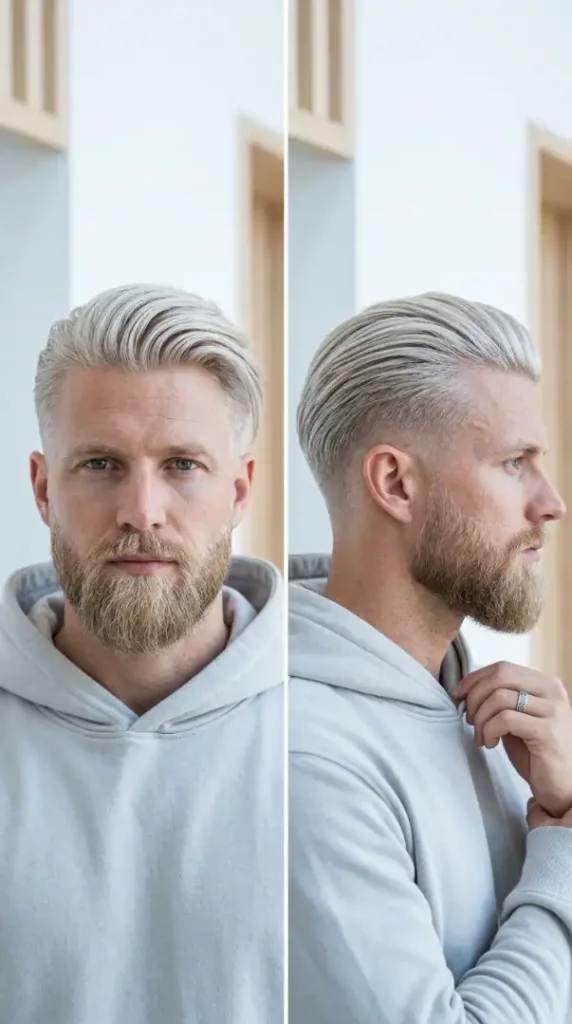
The Nordic Flow celebrates natural platinum blonde tones while delivering minimalist Scandinavian aesthetic through clean lines and understated structure. Platinum blonde hair presents unique styling opportunities — the light color creates maximum contrast against skin tones and allows fade work to appear more subtle and refined rather than harsh. Oval, Heart, and Diamond face shapes achieve premium results because the swept-back flow creates horizontal movement that balances Heart-shaped foreheads and adds width to narrow Diamond chins, while Oval faces showcase the clean styling through natural proportion. The low skin fade provides definition without aggressive contrast, maintaining the minimalist Nordic aesthetic.
Face Shape Precision Matching: Heart-shaped faces benefit from the swept-back horizontal flow which counterbalances a wider forehead by creating visual width at the crown and temples. Diamond faces gain harmony through the backward styling that doesn’t emphasize cheekbone prominence while the medium blonde beard adds structure to a pointed chin. Oval faces display this style ideally due to balanced proportions that support clean minimalist cuts. Not recommended for Square or Round faces — the horizontal backward flow adds width that emphasizes Square jawlines and makes Round faces appear wider rather than providing needed vertical elongation.
Scandinavian-Approved Tool Collection:
- Clippers: Wahl Cordless Legend (precision blade alignment perfect for subtle fades on light hair)
- Trimmer: Philips OneBlade Pro (European-engineered precision for beard shaping and edges)
- Styling Implements: Wide-tooth acetate comb (prevents static in fine straight hair), natural boar bristle brush (distributes scalp oils for platinum shine)
- Product Philosophy: Sachajuan Ocean Mist Volume Spray (Swedish-made lightweight texture), Uppercut Deluxe Matte Clay (natural finish without shine for Nordic minimalism), Beardbrand Tree Ranger Beard Oil (woodsy scent profile, lightweight formula for blonde beards), Triumph & Disaster Gameface Moisturizer (maintains skin hydration under beard)
Maintenance Level: MEDIUM
Barbershop schedule: every 3-4 weeks maintains the low fade and prevents platinum lengths from developing brassy tones or split ends. Daily investment: 8-10 minutes reflecting Nordic efficiency. Your streamlined routine: towel-dry to 75% dampness after showering (platinum hair is delicate — avoid rough handling), spray ocean mist throughout focusing on roots for volume and texture, comb backward creating the swept flow while hair is still damp establishing direction, allow to air-dry 70% of the way (approximately 6 minutes — platinum benefits from minimal heat), apply a small amount of matte clay to mostly-dry hair working from crown to nape reinforcing the backward sweep, use fingers to create natural separation and texture. Beard protocol: oil application each morning concentrating on the skin beneath to prevent dryness and flaking (blonde facial hair shows flakes more visibly), combing with the wide-tooth to distribute and direct growth following the jaw, edge cleanup with the OneBlade every 4-5 days maintaining clean lines.
Barber Talk — Your Exact Script:
“I want a clean swept-back mullet with a low skin fade that doesn’t fight my platinum color. Keep 3 inches at the crown with minimal layering — I want smooth backward flow, not choppy texture. Low skin fade on the sides starting with skin or #0000 at the temple baseline and blending up gradually — keep it subtle, nothing too aggressive. The back should graduate from the crown down to 3.5 inches at the nape with smooth weight distribution for natural fall. Clean lines at my hairline but keep it looking natural, not geometric. For the beard, trim to 9mm uniform length, shape it following my jaw without removing too much density, connect to sideburns seamlessly. If you notice any brassy tones in my platinum, tone it cool — I want pure silver-white, not yellow-tinged blonde.”
Color Maintenance for Platinum: Natural platinum blonde requires protection and toning to maintain its cool silver purity. Use purple-toning shampoo twice weekly to neutralize any yellow or warm tones that develop from sun exposure or mineral buildup — platinum hair oxidizes easily showing warmth within 10-14 days without toning. Avoid chlorinated water entirely (swimming pools turn platinum green) and protect hair with UV spray before sun exposure. The goal is maintaining that pure Nordic ice-blonde rather than letting it fade to butter-yellow blonde.
Curious about achieving similar clean minimal styles with darker hair tones? Style #5 demonstrated minimalist professional approaches on jet black straight hair.
FAQs
Q: How do I keep platinum blonde hair from turning brassy between salon visits?
A: Use purple-toning shampoo (Fanola No Yellow or Matrix So Silver) 2-3 times per week instead of regular shampoo to deposit cool violet pigments that neutralize warm yellow and orange tones. Between washes, protect from UV exposure with spray containing SPF as sunlight is the primary cause of brassiness in platinum hair — untreated platinum can develop noticeable warmth in as little as 7-10 days of sun exposure.
Q: Which face shape suits The Nordic Flow best?
A: Oval, Heart, and Diamond faces showcase this style optimally because the horizontal swept-back flow balances Heart-shaped foreheads and adds width to narrow Diamond chins, while Oval faces display clean minimalist styling naturally. Avoid if you have Square or Round faces as the backward horizontal movement adds width that emphasizes Square jawlines and makes Round faces appear wider rather than more elongated.
Q: Can I achieve The Nordic Flow if my natural hair isn’t blonde?
A: You can replicate the structure and styling but not the signature platinum aesthetic without professional bleaching — achieving true platinum requires lifting natural pigment to level 10 (lightest blonde) which takes multiple sessions and causes significant damage if not done correctly. If your natural hair is light brown or darker blonde you might consider it, but anything darker than level 6 requires extensive bleaching that risks severe damage and breakage.
Q: How do I style The Nordic Flow without it looking flat or lifeless?
A: Platinum fine straight hair lacks natural volume, so create lift at the roots during styling — spray ocean mist focusing on the scalp area, then blow-dry (if using heat) while lifting sections upward with your comb before directing backward, which creates root volume that lasts 8-10 hours. Apply matte clay only to the lengths and ends, never the roots, as product at the scalp weighs down fine hair causing immediate flatness.
11 of 12 — The Executive Edge

The Executive Edge represents the pinnacle of conservative mullet styling for C-suite professionals who refuse to sacrifice personal style for corporate conformity. The natural salt and pepper temples signal earned experience and leadership authority while the modern mullet structure demonstrates contemporary awareness. This is sophisticated rebellion — acknowledging corporate dress codes while maintaining individual identity through precision grooming. Oval, Diamond, and Heart-shaped faces achieve superior results because the side part creates asymmetry that adds interest to balanced Oval proportions, while the controlled volume at the crown balances Diamond cheekbones and counterbalances wider Heart-shaped foreheads through strategic styling direction.
Face Shape Executive Analysis: Oval faces showcase this conservative styling ideally through inherent symmetry that supports traditional grooming approaches. Diamond faces benefit from the side-swept crown volume which provides visual balance to prominent cheekbones without adding excessive width. Heart shapes find equilibrium through the angled side part that draws attention diagonally across the forehead reducing perceived width, while the short corporate beard adds structure to a potentially narrow chin. Not optimal for Round or Square faces — the horizontal side-swept styling adds width that makes Round faces appear fuller, and the conservative lines emphasize rather than soften strong Square jawlines.
C-Suite Grooming Arsenal:
- Clippers: Oster Fast Feed (professional-grade reliability for consistent mid-fade execution)
- Trimmer: Wahl Five Star Detailer (surgical precision for beard geometric shaping and hairline refinement)
- Executive Tools: Kent 81T finest comb (for precision parting that holds all day), Mason Pearson Popular Bristle Brush (creates shine through natural oil distribution)
- Product Portfolio: Baxter of California Clay Pomade (medium-high shine professional finish), American Crew Pomade (water-soluble for easy evening restyling before dinner meetings), Jack Black Industrial Strength Hand Healer (because executives shake hands constantly — grooming includes hands), Kiehl’s Ultimate Brushless Shave Cream White Eagle (luxury shaving for beard maintenance), Tom Ford Oud Wood Beard Oil (premium scent appropriate for boardrooms)
Maintenance Level: MEDIUM-HIGH
Executive presence demands impeccable grooming. Barbershop visits every 2.5-3 weeks maintain the mid-fade and prevent the conservative lengths from appearing unkempt. Daily investment: 10-12 minutes fits within typical executive morning routines. Your protocol: shower and shampoo (executives need fresh hair daily for multiple meetings), towel-dry to 75-80% dampness, create your side part with the Kent comb on damp hair setting the direction, apply clay pomade working from the part across and slightly backward creating controlled movement with shine, blow-dry on medium heat using the Mason Pearson brush to enhance shine and lock in direction, finish with a small amount of additional pomade on dry hair for polish and hold. The nape area receives minimal product — just enough to control flyaways without visible buildup. Beard protocol: oil application each morning after face washing (the Tom Ford scent lasts 4-6 hours without being overpowering), precision trimming with your Wahl Detailer every 3-4 days maintaining the 5mm length and geometric edges, professional beard shaping every 2 weeks to preserve symmetry.
Barber Talk — Your Exact Script:
“I need an executive-appropriate mullet that works in boardrooms. Side part on the left, clean and defined. Keep the crown at 2.5 inches with conservative layering — I want controlled movement with professional shine, nothing wild or textured. Mid fade on the sides with a #2 guard at the temple blending to a #4 at the curve — subtle and refined, not aggressive. The back should be long enough to show intentional style but short enough to look polished — probably 3 to 3.5 inches from crown to nape with minimal graduation. Don’t touch my natural gray at the temples — that stays. Clean hairline all around with natural edges, not geometric corners. For the beard, trim to 5mm, perfect geometric edges following my jawline, seamless connection to sideburns. This needs to pass the board meeting test.”
The Gray Temple Advantage: Natural gray at the temples is a strategic asset in corporate environments. It signals experience, wisdom, and leadership tenure — qualities valued in C-suite positions. Attempting to dye away gray reads as vanity or insecurity, while owning it demonstrates confidence in your accumulated expertise. The contrast between dark brown base color and gray temples also creates visual interest that prevents the style from appearing flat or one-dimensional. In executive contexts where everyone wears similar suits, distinguished grooming becomes a differentiation point.
Wondering how this executive approach adapts for fuller beards? Style #8 demonstrated similar corporate-appropriate styling with fuller facial hair length.
FAQs
Q: How do I maintain the side part in The Executive Edge throughout a full day of meetings?
A: Create the part on damp hair before any product, as wet hair sets follicle direction more permanently. After applying pomade and styling, use the fine-tooth edge of your Kent comb to trace the part line one final time, then apply a tiny amount of additional pomade directly along the part using your fingertip creating a “seal” — this anchor holds for 12-14 hours even through multiple climate-controlled office environments and outdoor transitions.
Q: Which face shape suits The Executive Edge best?
A: Oval, Diamond, and Heart faces showcase this conservative style optimally because the side part creates interest in Oval symmetry, balanced volume counteracts Diamond cheekbones, and diagonal styling reduces Heart-shape forehead width. Avoid if you have Round or Square faces — the horizontal side-swept direction adds width that makes Round faces fuller and emphasizes strong Square jawlines rather than softening them.
Q: Should I dye my gray temples for a younger appearance in The Executive Edge?
A: No — natural gray temples signal earned experience and leadership authority which are assets in C-suite environments where decision-making credibility matters more than appearing youthful. Dyed hair can appear flat and artificial under boardroom lighting, while natural salt-and-pepper creates dimension and depth. Executives succeeding through wisdom benefit more from distinguished appearance than youth mimicry.
Q: Can The Executive Edge work in conservative industries like finance and law?
A: Yes, when executed precisely — the key is keeping the nape length at or slightly below your collar line so it remains hidden when seated or wearing suit jackets, maintaining the mid-fade crisp with weekly home edge maintenance, and styling with professional shine rather than matte texture as shine signals polish in conservative settings. The mullet aspect becomes a subtle personal signature rather than an obvious statement, revealing itself only when you stand or turn.
12 of 12 — The Urban Artist
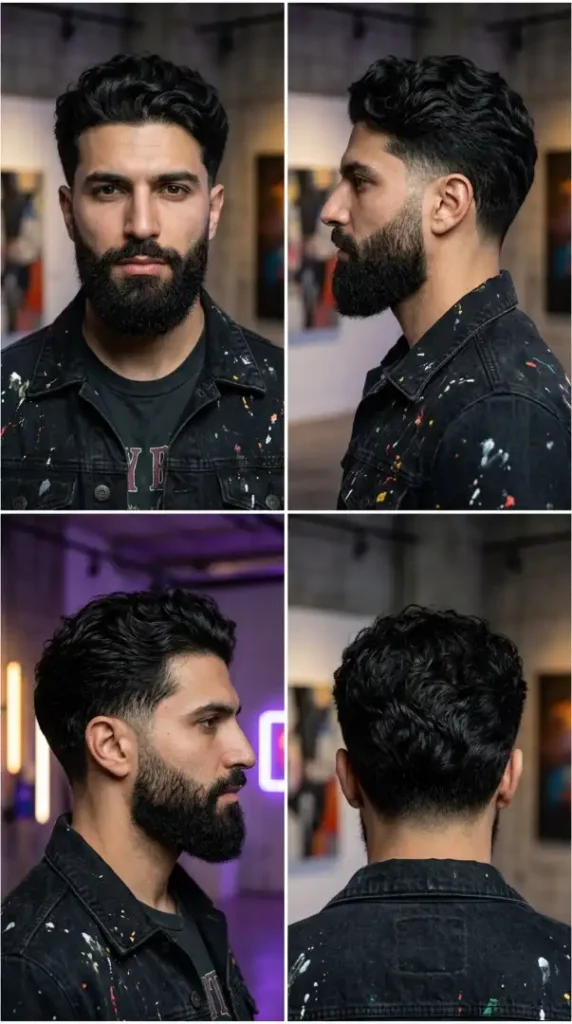
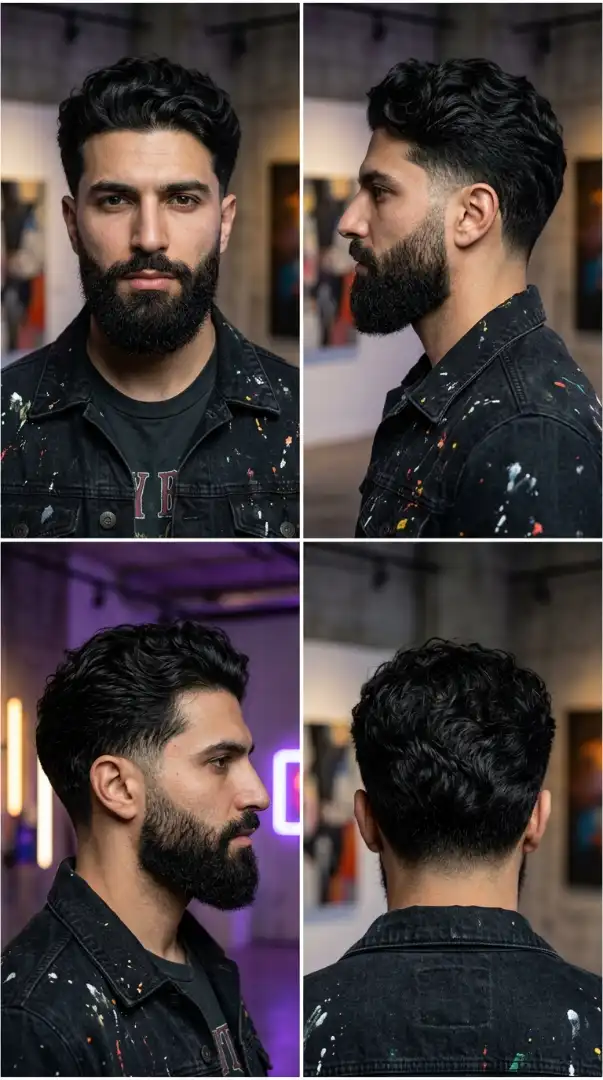
The Urban Artist celebrates creative expression through intentional imperfection. This style rejects corporate polish in favor of artistic authenticity — the messy volume, natural wave texture, and untamed full beard signal that you create for a living rather than manage spreadsheets. The wave pattern in jet black hair creates dramatic shadow play and depth that straight hair cannot replicate, while the full artistic beard frames the face with organic rather than geometric intention. Oval, Diamond, and Square face shapes achieve powerful results because the crown volume and full beard create vertical emphasis that balances Square width and Diamond angles, while Oval faces support bold artistic styling through natural proportion.
Face Shape Creative Engineering: Square faces benefit from the combination of crown volume drawing attention upward and the full untamed beard softening the angular jawline through organic texture rather than hard lines. Diamond faces achieve harmony through crown height that balances prominent cheekbones while the substantial beard adds width to a narrow chin creating overall proportion. Oval faces showcase artistic styling naturally due to balanced base proportions. Less suitable for Round or Heart faces — Round faces can become overwhelmed by the combination of volume and full beard creating excessive width, while Heart shapes may find the crown volume exaggerates forehead width, though the full beard does add needed lower-face structure.
Creative Professional Arsenal:
- Clippers: Wahl Cordless Magic Clip (versatile workhorse for low fade execution)
- Trimmer: Andis Slimline Pro (for artistic beard shaping without over-precision)
- Styling Tools: Hands (primary tool — artistic styles resist over-brushing), wide-tooth wood comb (for detangling only, not styling)
- Product Philosophy: Hanz de Fuko Quicksand (ultra-matte texture paste for messy volume), Uppercut Deluxe Sea Salt Spray (enhances natural wave without control), Honest Amish Beard Balm (organic ingredients, light hold for natural beard styling), Beard Octane Lumber Yard Oil (woodsy scent appropriate for creative environments)
Maintenance Level: LOW-MEDIUM
Artistic freedom includes grooming freedom. Barbershop visits every 4-5 weeks maintain the low fade and prevent the full beard from becoming unmanageable — intentional messiness still requires structural foundation. Daily investment: 5-8 minutes embracing efficiency over precision. Your minimal routine: towel-dry hair after shower creating natural texture through rough handling (don’t be gentle — artistic styles benefit from disruption), spray sea salt spray throughout while hair is still damp scrunching upward to encourage wave chaos, apply quicksand paste to mostly-dry hair using your hands to create messy volume working against the natural growth pattern for intentional disorder, allow to air-dry completely (no blow-drying — heat creates too much control). Beard routine: oil application 4-5 times per week (not daily — slight dryness adds texture), beard balm when you need light shape control for specific events, brushing 2-3 times weekly just to prevent tangling (not for styling precision), edge cleanup as needed when the natural growth extends too far beyond your desired outline (every 7-10 days with casual attention rather than surgical precision).
Barber Talk — Your Exact Script:
“I want an artistic mullet with natural messy texture. Keep 3.5 inches at the crown with aggressive point-cutting to create separation and movement — I don’t want smooth or controlled, I want intentional chaos. Low fade on the sides starting with a #1 guard and blending up gradually to preserve my natural wave pattern — don’t take it too high or tight. The back should flow from the crown down to about 4 inches at the nape with heavy texturizing for movement. For the beard, keep it full at 12-14mm, don’t over-shape it — I want natural artistic styling, not geometric corporate lines. Clean up the extreme edges where it gets too wild but preserve the organic feel. This is creative professional, not executive polish.”
The Artistic Authenticity Principle: The Urban Artist works in creative industries (design, photography, music, art direction, content creation) where personal style is part of professional brand identity rather than something hidden for workplace conformity. The messy styling and full beard aren’t rebellion against standards — they’re alignment with creative culture where authenticity and individual expression are valued over uniformity. This style signals you’re paid for creative thinking and original vision, not for following templates.
This completes our tour through 12 distinct mullet approaches. Each style serves different face shapes, hair textures, and lifestyle contexts — from boardrooms to art galleries, street corners to corner offices.
FAQs
Q: How do I maintain the messy textured look in The Urban Artist without it becoming actually unkempt?
A: The difference between intentional mess and actual sloppiness is structural foundation — maintain your low fade crisp with regular barber visits, keep your beard edges defined even if the interior is natural, and ensure your hair is clean (messy styling on dirty hair looks genuinely unkempt). The texture paste creates controlled chaos that holds shape for 8-10 hours; without product, “messy” becomes genuinely disheveled by midday.
Q: Which face shape suits The Urban Artist best?
A: Oval, Diamond, and Square faces showcase this bold artistic style best because the crown volume combined with full beard creates vertical emphasis that balances Square width and Diamond angles, while Oval faces support dramatic styling naturally. Round faces risk becoming overwhelmed by excessive width from volume plus full beard, though some can pull it off with confidence. Heart shapes may find crown volume exaggerates forehead width.
Q: Can I wear The Urban Artist in professional settings or is it too casual?
A: It depends entirely on your industry — this style thrives in creative professional environments (design agencies, tech startups, media production, galleries, music industry) where personal style is part of your professional brand. It absolutely does not work in conservative corporate sectors (finance, law, traditional business) where it would be perceived as unprofessional. Match your grooming to your industry’s cultural expectations.
Q: How do I prevent my full beard from looking scraggly or ungroomed in The Urban Artist?
A: Even artistic beards need structure — apply beard oil 4-5 times weekly to keep hair soft and prevent the wiry texture that makes beards appear scraggly, use beard balm when you need light hold to direct growth patterns, and get professional shaping every 4-5 weeks to maintain the overall silhouette even if the interior texture is natural. The beard should look intentionally styled in an artistic way, not neglected.