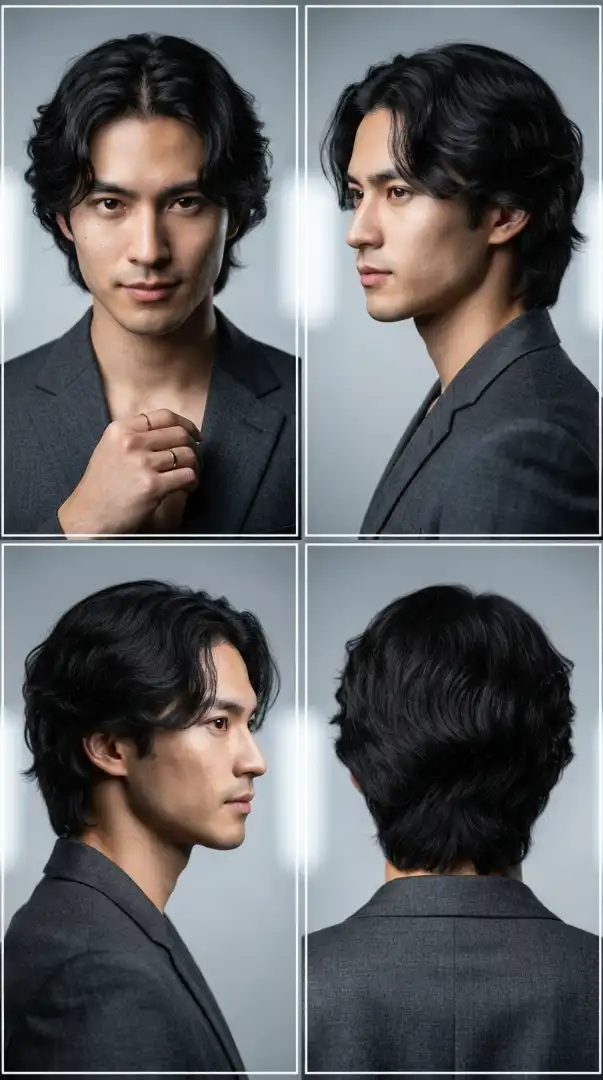
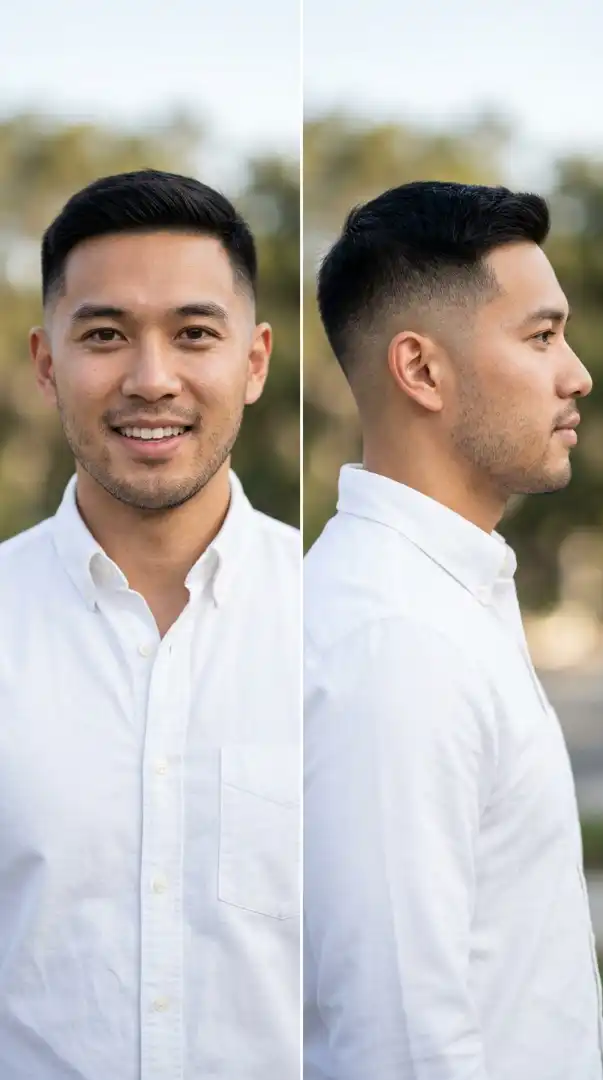
10 Short Basketball Hairstyles for a Clean, Athletic Look
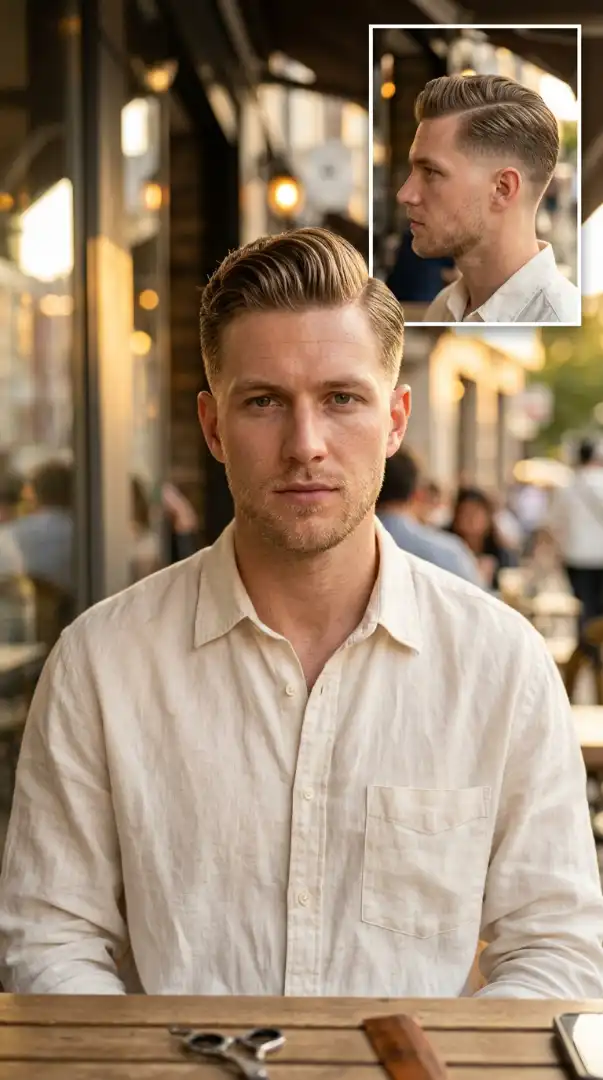
STYLE 1 OF 10 — The Court King Fade
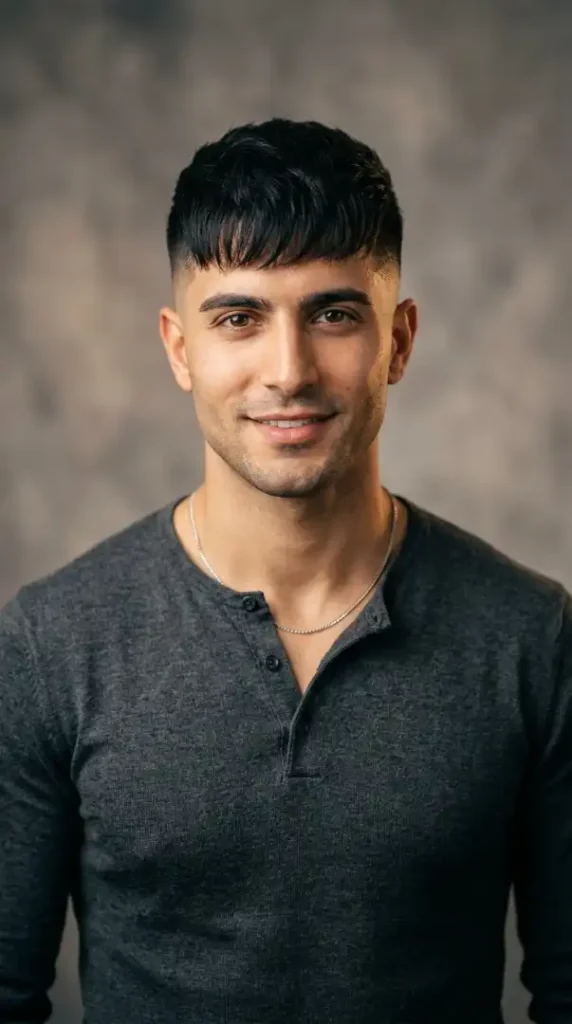
Face Shape Compatibility & Anatomical Reasoning
The Court King Fade performs exceptionally well on square and oblong face shapes because the sharp temple definition creates strong vertical lines that balance width across the jawline. For square faces, the high fade acts as a visual contour, drawing the eye upward toward the textured crown and elongating the overall perception of the face. The precise temple lines mirror clean architectural angles, which actually reinforces the natural angular structure square faces already possess, creating harmony rather than harsh contrast.
Oval faces benefit from the balanced proportions this cut naturally provides—the textured top adds height without overwhelming the face, while the tight fade sides maintain clean definition. Round face shapes see the most dramatic transformation from this style. The skin fade removes visual width from the sides by creating crisp vertical lines, effectively reshaping perceived face proportions through strategic negative space. The defined temple fade acts as a sculpting tool, mimicking the angular bone structure that round faces naturally lack.
However, diamond-shaped faces should request slightly more volume retention on the sides to avoid over-elongating an already-narrow lower face. Heart-shaped faces work well with this cut but benefit from keeping the fade slightly less aggressive to maintain some width at the temples, balancing a wider forehead. Avoid this style if you have a very oblong face without requesting adjustments—the contrast between a long top and super-tight fade can exaggerate length rather than balance it.
Grooming Kit & Required Tools
Maintaining The Court King Fade demands precision tools and a dedicated grooming routine. Professional-grade clippers are non-negotiable for home maintenance—specifically the Wahl Magic Clip (Model 5049-400) or Andis Master (Model 01557), both of which hold an edge and deliver consistent results on skin fades. The Magic Clip is lighter and quieter, while the Master offers slightly more power for dense hair types.
For detailed edge work and lineup precision, invest in the Andis T-Outliner (Model 04710)—this trimmer creates the crisp temple fades and sharp hairline definition that define this style. A Kent 81T fine-tooth comb is essential for parting precision and understanding your hair’s natural growth patterns. The Denman boar bristle brush polishes the textured top and helps distribute styling product evenly.
Styling products matter significantly for this cut. Layrite Original Pomade delivers medium hold with a natural finish, perfect for maintaining texture throughout the day without looking slicked-down. American Crew Fiber (matte finish, high hold) offers superior staying power for athletes who need hair to stay in place through sweat and movement. Use a dime-sized amount for the top—more product doesn’t equal better results and will weigh down the textured layers. For beard maintenance (if keeping even minimal facial hair), Honest Amish beard oil or Viking Revolution conditioning oil keeps facial hair soft and prevents that rough, scratchy feeling against your skin.
Maintenance Level & Growth Pattern Management
The Court King Fade demands HIGH maintenance commitment. This is not a wash-and-go hairstyle, though it definitely rewards clean, athletic grooming habits. Plan for a full touch-up at your barbershop every 2 weeks without exception. The fade is the critical element here—as hair grows, the gradient blur becomes visible, and within 14 days, the sharp definition that makes this style distinctive starts degrading. By week 3, you’ve essentially lost the fade’s impact.
Daily styling requires 5-7 minutes minimum. Shower, towel-dry your hair until it’s damp (not soaking), apply a pea-sized portion of pomade or fiber to your palm, work it through the top layers by running your fingers backward against your hair’s growth direction, then style upward and slightly back using a firm brush. The texture naturally wants to stand up, so you’re essentially directing growth rather than forcing a shape. On game days or high-pressure situations, apply a small amount of additional product to lock everything in place through warm-up drills and competition.
Growth pattern management is straightforward but requires vigilance. The top grows at approximately ½ inch per week on average, meaning by week 4, you’re operating with significantly more length than intended. The fade sides regrow faster than you’d expect—hair regrowth creates a visible shadow by day 10-12 as tiny whiskers emerge. This isn’t a flaw; it’s your signal that a touch-up is approaching. Monthly maintenance costs run approximately $15-25 per cut depending on your barber’s pricing structure, totaling roughly $60-100 monthly. Some barbers offer package discounts for athletes requiring weekly touch-ups—negotiate upfront.
The Exact Barber Script
Say this to your barber:
“I want The Court King Fade with a skin fade starting right at my temple line. Take the top to guard #4—that’s about a half inch—and I want it textured, not blunt. Use point cutting or thinning shears to create separation between the layers so it doesn’t look like one solid block. Fade from the #4 guard on top down to bare skin at the sides, and I want that transition smooth and gradual—no harsh lines. Keep the fade line clean and visible, starting at the peak of my temple and blending down past the ear. For the nape, blend into a crisp edge—I want that hairline sharp. If I’m keeping any beard, taper it into the fade at the jawline, keeping stubble length around 3mm. Finish everything with a crisp lineup at the temples and hairline using your trimmer. I need this to look fresh for at least 2 weeks.”
STYLE 2 OF 10 — The Athlete’s Texture Crop
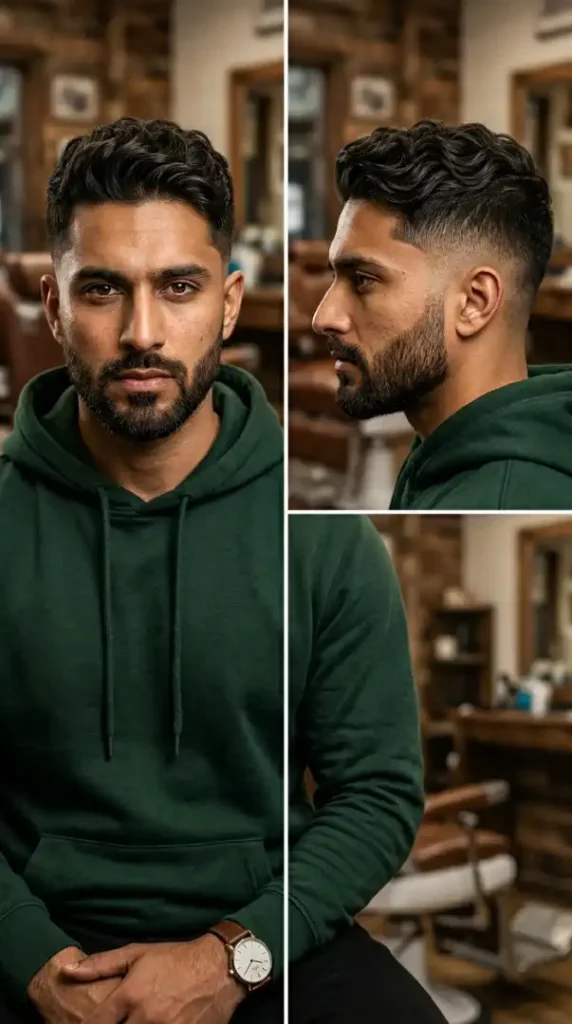
Face Shape Compatibility & Anatomical Reasoning
The Athlete’s Texture Crop performs exceptionally well on oval and oblong face shapes because the layered texture adds gentle width across the temple area without creating harsh angles. Oval faces gain the most benefit—the natural texture adds dimension without overwhelming features, and the balanced proportions of this cut work harmoniously with oval structure.
Round faces see substantial improvement with this style. The layered texture creates a stacked effect that visually elongates the face by drawing the eye upward through vertical lines created by individual waves. The temple fade removes width at the sides while texture adds height on top, effectively reshaping a round face’s proportions through strategic height and definition. The gentle wave pattern provides angular suggestion without the severe angular lines of a harder fade, making this cut sophisticated rather than overly aggressive.
Oblong and diamond faces work beautifully with this crop because texture adds width perception without needing bulky sides. The waves create horizontal visual interest at temple and crown level, which balances an oblong face’s vertical length. Heart-shaped faces benefit from the sideburn definition—the taper works with the beard to create jaw-level width, counteracting a naturally wider forehead.
Square faces should request slightly less texture and maintain medium-density sides to avoid the visual effect of stacked height, which can make a square face appear taller and more boxy. This isn’t a disqualifying factor, just a styling adjustment worth discussing with your barber upfront.
Grooming Kit & Required Tools
The Athlete’s Texture Crop demands tools that respect wave pattern and texture rather than flatten it. The Wahl Magic Clip (Model 5049-400) remains essential, but you’ll need specific attachment combs that work with texture—the standard guards don’t blend as smoothly through waves. Request guards specifically for blending or consider the Andis Master (Model 01557) with its superior gradient capacity.
The Andis T-Outliner (Model 04710) is again critical for precise edge work. However, texture cropping benefits significantly from thinning shears or point-cutting techniques—ask your barber to detail this specific technique so you understand what’s happening. A Denman boar bristle brush becomes your essential styling tool because it works the wave pattern and distributes product without flattening texture.
For styling, Layrite Original Pomade works well but consider American Crew Forming Cream (matte finish, light-to-medium hold) which provides control without the shine that can flatten waves. Use a pea-sized amount and work through damp hair with your fingers, encouraging wave direction upward and backward. The product should enhance texture, not coat it. For beard maintenance at 4mm, beard balm with light hold prevents that scraggly appearance while conditioning. Honest Amish Beard Balm or Beardbrand Premium Beard Oil work excellently.
Maintenance Level & Growth Pattern Management
The Athlete’s Texture Crop represents MEDIUM maintenance—genuinely more forgiving than the Court King Fade but requiring more attention than a basic short crop. Full trim every 3 weeks is ideal; you can extend to 4 weeks without completely losing the cut’s intention, but by week 4, the layered separation starts disappearing as length increases.
Daily styling requires 5-7 minutes but is genuinely enjoyable if you like working with texture. Shower, leave hair damp, apply pea-sized pomade or cream to palms, work through hair while encouraging wave direction upward and slightly back, use a brush to define texture lines, and you’re finished. The beauty of this cut is that slight imperfection in styling actually looks intentional rather than messy—waves don’t need military precision.
On high-sweat days (games, practice), textured hair handles moisture better than dense cuts. However, you’ll need a matte-finish product to prevent the wet-look that perspiration can create. Quick tip: keep a small pomade container in your locker—a quick touch-up after the first quarter takes 60 seconds and refreshes your look dramatically.
Monthly maintenance costs run approximately $20-30 per cut depending on regional pricing, totaling roughly $60-90 monthly. The extended interval between cuts compared to the Court King Fade provides marginal savings while maintaining 85% of the look’s impact throughout the growth cycle.
The Exact Barber Script
Say this to your barber:
“I want The Athlete’s Texture Crop with my natural wave pattern as the focus. Take the top to about 1.5 inches and use point cutting or thinning shears to create separation between layers—I want individual texture visible, not one solid block. Start a medium fade at my temple line and blend down gradually, nothing skin-tight but clean definition at the sides. Respect my wave direction and cut with the grain, not against it. For my beard, keep it at about 4mm and taper it into the fade at the jawline. I want sideburn definition but soft blending into the fade—nothing harsh. Sharp lineup at the temples and hairline when you’re finished. I want this to look textured and intentional, not just short hair.”
STYLE 3 OF 10 — The Sharp Lineup Artist
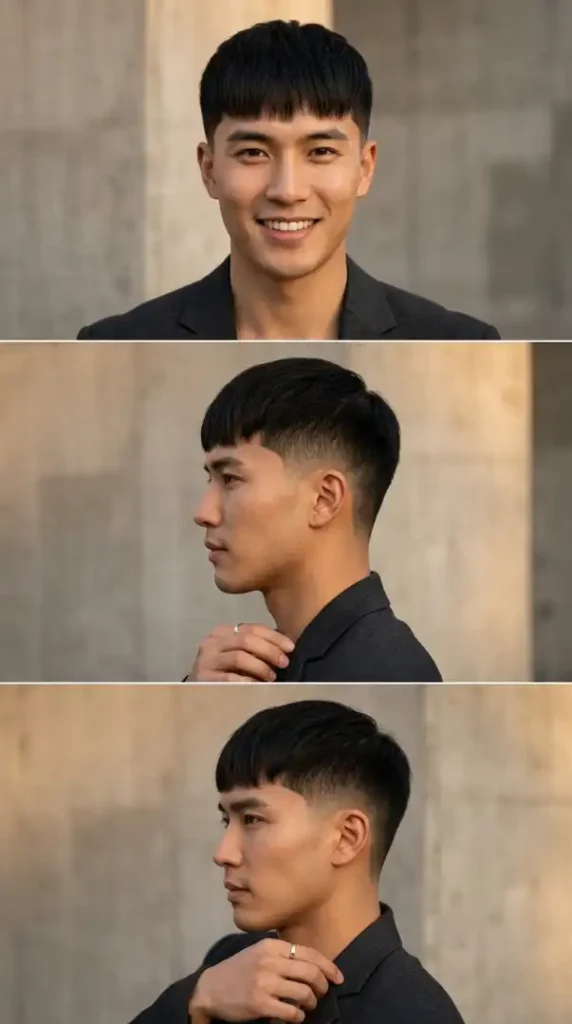
Face Shape Compatibility & Anatomical Reasoning
The Sharp Lineup Artist excels on square and oval face shapes because the angular elements mirror or balance natural face structure. Square faces gain from the reinforced angles—the sharp hairline and temple lines echo the square face’s natural geometry, creating visual coherence that actually enhances strong jawlines. The deliberate angularity works with square structure rather than against it, which is why this cut reads as intentional and sophisticated rather than severe.
Oval faces benefit from the balanced proportions and geometric clarity this cut provides. The defined lines add architectural interest without overwhelming softer facial contours. Round faces see meaningful improvement through the sharp lineups—the geometric lines create visual angles that the face itself lacks, effectively introducing angularity where nature provided curves. The sharp temple angles act as visual contour lines, reshaping perceived proportions by drawing the eye toward defined edges rather than soft curves.
Diamond-shaped faces work well with this style if you keep the fade relatively medium (not skin-tight at sides)—the sharp hairline and temple definition complement the natural narrow jawline without requiring cheekbone-width addition. Heart-shaped faces should request slightly softer temple angles rather than aggressive 90-degree corners; sharp angles at a wider forehead can feel overwhelming.
Oblong faces need caution with this style. The sharp angles and high hairline definition can emphasize vertical length without providing width balance. Request a modified version with slightly softer angles and slightly longer sides to prevent the face from appearing even more elongated than natural structure suggests.
Grooming Kit & Required Tools
The Sharp Lineup Artist demands precision tools because sharp lines don’t forgive imprecision. The Andis Master (Model 01557) edges out the Wahl Magic Clip for this particular style—the superior power and edge retention make line-work significantly easier and more precise. This isn’t optional; your barber likely uses a Master specifically for lineup detail work.
The Andis T-Outliner (Model 04710) becomes absolutely critical—this is the workhorse for crisp hairline angles and temple definition. Request your barber specify which blade they use (typically a #000 or #00000 blade for ultra-precise lines). A Kent 81T fine-tooth comb is essential for the sharp, clean lines you’ll achieve; the comb defines where lines live.
Styling products play a supporting role here—product is actually less important than cut precision. A light-hold American Crew Pomade or Layrite Original Pomade works perfectly, applied sparingly to direct the top layer forward and slightly back. The real work is done at the barber chair; your styling job is simply maintaining the shape you’ve paid for.
For beard-shaven aesthetics, this style benefits from a quality post-shave balm—Proraso Pre-Shave Cream and After-Shave Balm duo prevents irritation and keeps the shaved area looking healthy and sculpted for maximum sharp-line impact.
Maintenance Level & Growth Pattern Management
The Sharp Lineup Artist demands HIGH maintenance commitment specifically because sharp lines degrade almost immediately as hair grows. Full trim every 2 weeks is the target interval—the geometric elements that define this style begin losing precision by day 10. By week 3, your sharp 90-degree angles have transformed into 45-degree soft edges, which fundamentally changes the style’s personality.
Daily styling requires minimal time—3-5 minutes maximum. The cut does most of the work; your job is simply ensuring the top is clean and tidy. A light brushing with a standard comb and optional light pomade application is sufficient. The real time investment is the consistent barber visits.
Growth pattern management is straightforward: watch your temples and hairline. The hairline especially shows regrowth around day 8-10, creating a slightly blurred appearance at what should be crisp geometry. This is your signal that touch-up timing is approaching. The sides regrow slightly faster than the top due to thicker density in most cases, which means the fade blur appears before overall length becomes an issue.
Monthly maintenance costs run approximately $25-35 per cut depending on barber expertise—precision work commands premium pricing. At 2-week intervals, budget $100-140 monthly. Yes, it’s the highest cost of all basketball hairstyles, but the professional appearance justifies the investment for athletes who care about presentation.
The Exact Barber Script
Say this to your barber:
“I want The Sharp Lineup Artist with absolutely crisp angles. Take the top to about 1 inch with a blunt cut—I want clean lines, not point cutting or thinning. Start a mid fade at my temple line and blend down to the side, keeping it clean and sharp. I want a 90-degree angle at my temple peak and another at my hairline—these need to be geometric and precise, not soft or rounded. Use your trimmer to create crisp edges everywhere: hairline, temple lines, sideburn definition. Keep the sides at about a guard #1.5 or #2—not skin-tight but definitely defined. For my shave, make sure the lines are absolutely clean with no shadow or blur. I want this to look intentional and sculpted. Sharp lineup all around, and keep that shaved area smooth and healthy-looking.”
STYLE 4 OF 10 — The Volume Pompadour Court Special
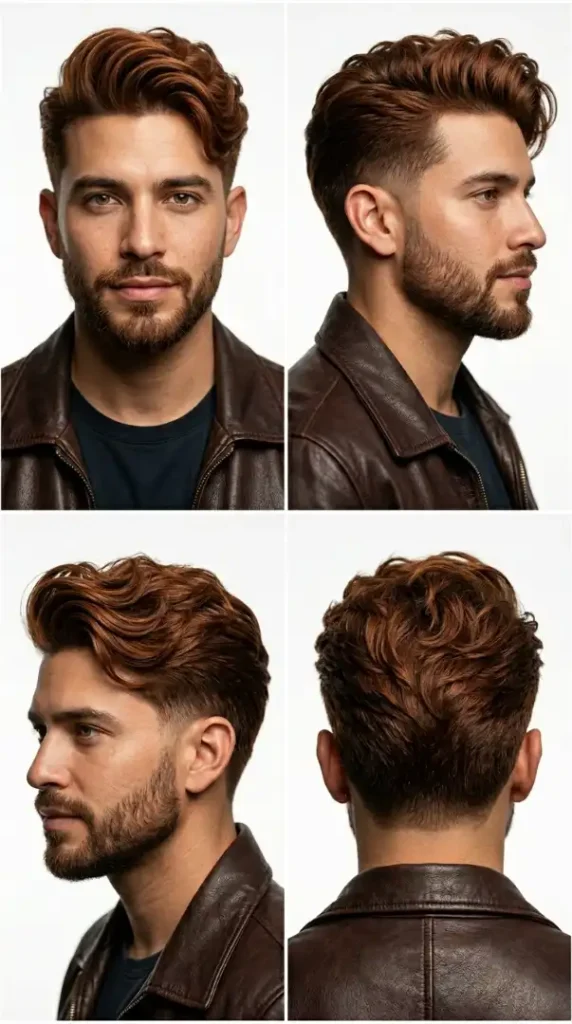
Face Shape Compatibility & Anatomical Reasoning
The Volume Pompadour Court Special performs exceptionally well on oval and diamond-shaped faces because the height adds visual proportion to face length. Oval faces gain elegant balance—the volume on top adds architectural interest to a naturally well-proportioned face shape, creating a more memorable visual impression without appearing overdone. The style enhances without overwhelming.
Diamond-shaped faces see substantial benefit from this cut. The volume on top shifts visual weight upward, counteracting the naturally narrow jawline that diamond faces possess. The swept-back direction draws attention to forehead and crown rather than emphasizing cheekbone prominence, effectively reshaping perceived proportions through strategic volume placement. The beard component (discussed in the barber script) becomes particularly important for diamond faces—it adds jawline width that the face naturally lacks.
Heart-shaped faces work excellently with this style because the voluminous top draws attention upward, away from the naturally wider forehead. The swept-back styling disguises forehead width by positioning hair upward rather than framing the face, which is exactly what heart-shaped faces need. The beard tapering into the fade adds the jawline definition and width that heart-shaped faces naturally lack.
Square faces can absolutely pull this style off, though the volume can sometimes emphasize jawline width. Request your barber add slightly more texture (point cutting rather than blunt cut) to break up what might otherwise feel heavy. Round faces should approach this style cautiously—the volume can emphasize roundness rather than elongate. If you have a round face and love this style, request your barber minimize side density and keep the swept direction extremely pronounced to create vertical lines rather than horizontal bulk.
Oblong faces need caution with this style. The combination of volume on top plus height from the swept-back direction can exaggerate vertical length. Request a modified version with slightly less top length (keep it to 2 inches rather than 2.5) and slightly more medium-density sides to provide width balance to a naturally longer face.
Grooming Kit & Required Tools
The Volume Pompadour Court Special demands tools designed for texture creation and sustainable hold. The Wahl Magic Clip (Model 5049-400) works perfectly for this style’s clipper work—you need clean, even grades rather than extreme precision work. An Andis Master (Model 01557) offers slightly more power if you’re maintaining denser hair, but either clipper works well.
The Andis T-Outliner (Model 04710) creates the necessary beard tapering and sideburn definition that integrate the beard into the overall fade system. A Denman boar bristle brush becomes your essential daily tool—this brush works textured hair and creates the wave separation that makes pompadour styling possible without requiring excess product.
Styling product becomes critical for this cut. Layrite Original Pomade (medium hold, natural shine) is the classic choice, creating enough hold for volume direction while maintaining the textured appearance rather than slicked perfection. American Crew Fiber (matte finish, high hold) works if you prefer a matte aesthetic. Use a nickel to dime-sized amount—too much product collapses the texture, defeating the purpose of the layered cut.
For beard styling at 5mm length, beard balm with light-to-medium hold provides control without the sticky feel of heavier products. Beardbrand Premium Beard Oil or Honest Amish Beard Balm both work excellently, applied sparingly to damp beard hair before blow-drying for maximum hold retention throughout the day.
Maintenance Level & Growth Pattern Management
The Volume Pompadour Court Special represents MEDIUM-to-HIGH maintenance. Full trims every 3 weeks keep the layers defined and the fade looking intentional. You can push to 4 weeks, but by week 4, the layers begin merging as length increases, which softens the textured appearance that makes this cut distinctive.
Daily styling requires 7-10 minutes. Shower, towel-dry hair to damp, blow-dry while brushing backward and to the right to set the swept direction, apply dime-sized pomade to palm, work through the top layers while encouraging upward and backward direction, style with your brush into final shape. The technique matters—you’re creating volume through directional blow-drying, not forcing the shape with excessive product.
Beard maintenance is part of the overall grooming routine. Keeping your beard shaped and tapered requires daily brushing to set direction and weekly trimming if you want maximum definition. The beard-to-fade integration is what elevates this style from basic pompadour to statement-making presentation.
Growth pattern management requires vigilance. The top grows approximately ½ inch per week, meaning by week 3, you’re working with 1.5 additional inches of length, which completely changes the style’s geometry. The layers that defined the style at day 1 become invisible by week 3 as length increases. Fade sides regrow predictably—you’ll notice shadow by day 12.
Monthly maintenance costs run approximately $20-30 per cut depending on regional pricing and barber expertise, totaling roughly $80-120 monthly including weekly beard touch-ups if you invest in professional grooming. If you maintain your beard yourself, budget approximately $80 monthly just for hair cuts.
The Exact Barber Script
Say this to your barber:
“I want The Volume Pompadour Court Special with maximum texture on top. Take the top to 2-2.5 inches and use point cutting to create separation between layers—I want visible texture, not one solid block. Cut it so it naturally falls back and to the right. Start a medium fade at my temple line and blend down to a guard #1.5 at the sides. Keep some density on the sides—I don’t want skin-tight. For my beard, keep it at 5mm and shape it to follow my jawline. Taper the beard sides into the fade at the temples so the whole look flows together. Make the sideburns clean and defined. Sharp lineup at the hairline and temple. I want this to have volume and personality while still looking intentional and clean.”
STYLE 5 OF 10 — The Minimalist Fade Finesse
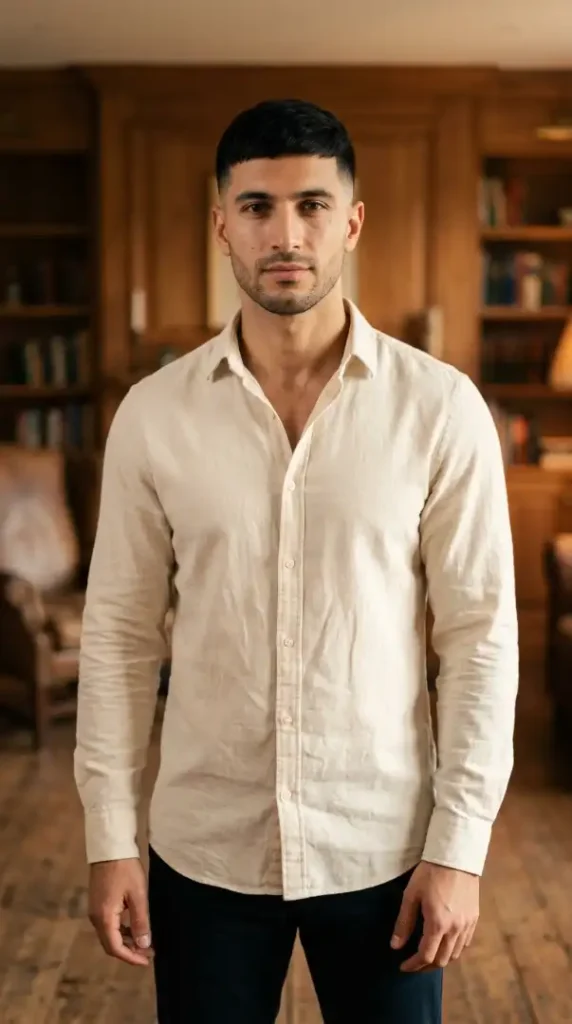
Face Shape Compatibility & Anatomical Reasoning
The Minimalist Fade Finesse performs excellently on square and diamond-shaped faces because the ultra-short top emphasizes jawline definition without distraction. Square faces gain maximum impact from this style—the short top removes visual weight, allowing the naturally strong jawline to become the focal point. The minimal styling direction showcases face structure rather than competing with it. This style essentially says: “My face is interesting enough without dramatic hair manipulation,” which reads as confidence rather than laziness.
Diamond-shaped faces see substantial benefit from the minimalist approach. The narrow jawline becomes visually supported by the light stubble (which adds perceived width at the jawline), while the ultra-short top avoids any top-heavy proportion issues. The parted direction draws attention to the upper face, balancing the naturally narrow lower face. This style is architectural in its simplicity—it works because it’s mathematically proportional.
Oval faces work beautifully with this minimalist approach because the balanced proportions of an oval face don’t need complex styling to look good. The ultra-short top enhances natural proportions rather than requiring correction. Round faces should consider this style carefully—without volume or length to provide vertical lines, the round face loses visual elongation. If you have a round face and love the minimalist aesthetic, request your barber keep slightly more length on top (¾ inch vs 1/2 inch) to create minimal vertical interest.
Heart-shaped faces work well with this style because the short top draws attention upward without emphasizing forehead width. The light stubble adds jawline width that heart-shaped faces naturally lack, creating better overall proportion. Oblong faces can absolutely pull this off, as the minimalist approach avoids the volume that could exaggerate length.
Grooming Kit & Required Tools
The Minimalist Fade Finesse actually demands high-quality tools despite the simple final appearance. The Wahl Magic Clip (Model 5049-400) is perfect for this style because the short, uniform cut demands consistent clipper grades. An Andis Master (Model 01557) also works well if you have dense hair requiring slightly more power.
The Andis T-Outliner (Model 04710) handles hairline definition and sideburn tapering. For this particular style, you need an incredibly sharp blade (typically #000 or #00000) because even minimal lines need crisp definition when the overall look is so streamlined.
Beard maintenance becomes surprisingly critical. A quality stubble trimmer (NOT a full beard trimmer) lets you maintain that perfect 2mm stubble length consistently. The Panasonic Precision Beard Trimmer (Model ES3831K) or Braun BeardTrimmer BT3241 both maintain precise stubble lengths without requiring daily manual shaving.
Styling products are genuinely minimal. A light water-based pomade like American Crew Forming Cream or simply blow-drying your hair forward as it naturally wants to fall is typically sufficient. The cut does 90% of the work; product is optional rather than essential.
Maintenance Level & Growth Pattern Management
The Minimalist Fade Finesse represents LOW-to-MEDIUM maintenance, primarily because you can extend cut intervals. Full trims every 4-6 weeks keep the overall look intentional. The ultra-short top means regrowth is less visually dramatic—even after 5 weeks, you’re not dealing with significantly longer hair, just slightly fuller coverage.
Daily styling requires under 3 minutes. Shower, wet your hair, rough-dry while brushing it forward, and you’re finished. Optional: apply a dime-sized pomade to add subtle shine or additional hold. The beauty of this cut is that even imperfect execution looks acceptable because the minimalist aesthetic actually benefits from casual dishevelment.
Stubble maintenance is the primary daily responsibility. If you maintain it yourself, you need a routine: shower in the morning, trim stubble to maintain 2mm consistency, and you’re done. This takes approximately 2 minutes. Alternatively, if you prefer to let stubble grow naturally, plan on shaving completely every 3 days to maintain the intentional 2mm appearance rather than looking unkempt.
Growth pattern management is straightforward because the short length means regrowth isn’t catastrophic. The top grows about ½ inch every 2 weeks, but since you’re starting at ¾ inch, you hit 1 inch by week 2 and 1.25 inches by week 4. It’s still “short” and the minimalist aesthetic survives reasonably well through a 5-week growth cycle before looking genuinely unkempt.
Monthly maintenance costs are the lowest of any hairstyle—approximately $12-18 per cut every 4-6 weeks, totaling roughly $24-54 monthly depending on interval and your barber’s pricing.
The Exact Barber Script
Say this to your barber:
“I want The Minimalist Fade Finesse—absolute simplicity. Take the top to about 3/4 inch and keep it uniform, not textured or layered. I want it parted naturally on the left side where my hair naturally wants to go. For the sides, keep them short but soft—I don’t want an aggressive fade. Use a guard #1.5 on the sides, maybe even a #2 if that’s more flattering for my face shape. Whisper-thin sideburns that follow my ear line naturally. Hairline should be clean but not dramatically defined—I’m going for effortless, not architectural. Don’t overthink it. I want this to look like minimal effort even though I know the precision work is there. Keep the back clean and the nape tapered smoothly.”
STYLE 6 OF 10 — The High-Density Textured Block
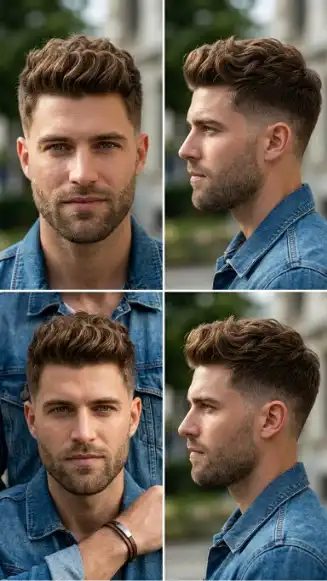
Face Shape Compatibility & Anatomical Reasoning
The High-Density Textured Block performs exceptionally well on round and oval face shapes because the height adds vertical lines that elongate perception. Round faces see the most dramatic benefit—the dense, voluminous top creates a stacked effect that draws the eye upward, effectively elongating the face by introducing vertical emphasis that round faces naturally lack. The combination of dense volume on top plus a thick beard (which is part of this style’s complete aesthetic) adds jawline definition and width at the lower face, reshaping perceived proportions through strategic density placement.
Oval faces gain sophistication from this style. The balanced proportions of an oval face are enhanced rather than requiring correction, and the dense texture adds visual interest that keeps the style from feeling plain or generic. Diamond-shaped faces work beautifully with this cut because the voluminous top widens the perception of the upper face, counteracting the naturally narrow forehead and cheekbone area. The dense beard adds significant jawline width and definition.
Square faces can absolutely pull this style, though the combination of volume plus thick beard can feel heavy on an already-angular face. Request your barber keep the top slightly less dense (use thinning shears to break up what might otherwise be overly solid-looking) to avoid feeling blocky. Heart-shaped faces benefit substantially from this style because the volume on top draws attention upward away from a naturally wider forehead, while the dense beard adds critical jawline width and definition.
Oblong faces need to approach this style carefully. The combination of significant top length plus top-to-bottom density can exaggerate vertical length without providing width balance. If you have an oblong face and love this style, request your barber use thinning shears to break up density and keep slightly more volume on the sides to provide horizontal width balance to a naturally longer face.
Grooming Kit & Required Tools
The High-Density Textured Block demands powerful tools that handle coarse or textured hair without struggle. The Andis Master (Model 01557) is essential for this style—it has the power necessary to cut through dense hair without pulling or tugging. The Wahl Magic Clip (Model 5049-400) can work if your hair isn’t extremely dense, but for thick textured hair, the Master is the superior choice.
The Andis T-Outliner (Model 04710) handles edge definition and beard tapering into the fade. For dense hair, request your barber use a fresh blade regularly—dulled blades pull rather than cut cleanly, creating an unkempt appearance even on well-maintained hair.
Styling tools matter significantly. The Denman boar bristle brush (particularly the paddle brush model) works textured hair effectively, separating curls or texture without flattening density. A wide-tooth comb helps detangle textured hair without creating frizz from tight-bristle tools.
Styling products should respect texture rather than try to suppress it. Layrite Original Pomade works well for light-to-medium control, though American Crew Forming Cream or Forming Cream (matte finish) respects texture better for a more natural appearance. Use minimal product—pea-sized amount maximum—because heavy product tends to separate texture in an uncontrolled way on dense hair. For beard care, beard balm with medium hold (Beardbrand or Honest Amish) conditions while maintaining the textured appearance.
Maintenance Level & Growth Pattern Management
The High-Density Textured Block represents MEDIUM maintenance. Full trims every 3-4 weeks keep the shape intentional and the fade looking fresh. Dense hair actually maintains shape reasonably well through growth cycles, so the 4-week mark is genuinely acceptable before the style starts degrading.
Daily styling requires 5-7 minutes. For textured/curly hair: apply leave-in conditioner to damp hair (approximately pea-sized amount), use a wide-tooth comb to define curl pattern or texture, apply dime-sized pomade or forming cream to encourage texture direction, style with your brush. The key is encouraging your hair’s natural texture rather than fighting it. For coarse/straight textured hair: towel-dry, apply product to create texture separation, and brush backward and upward.
Beard maintenance is part of the overall grooming routine, particularly if you’re maintaining the 6mm density that completes this style. Daily brushing to set direction (approximately 2 minutes) and weekly beard trimming (5-10 minutes) keeps the look intentional rather than overgrown.
Growth pattern management requires some monitoring. Dense hair’s regrowth is less visually dramatic than thin straight hair, which is actually an advantage for this style. The textured appearance looks decent through a 4-week cycle, though by week 4, the layers begin merging as length increases. Fade sides regrow predictably—visible shadow by day 12-14, but the mid-fade’s softer blending means regrowth is less visually jarring than it would be on a skin fade.
Monthly maintenance costs run approximately $22-32 per cut every 3-4 weeks depending on regional pricing and barber expertise, totaling roughly $66-128 monthly including occasional beard maintenance if you choose professional shaping.
The Exact Barber Script
Say this to your barber:
“I want The High-Density Textured Block with maximum density on top. Take the top to about 2 inches and use texturizing techniques—point cutting, thinning shears, or clipper-over-comb to create separation and movement while keeping density. I don’t want this to look thin or cut too short. Start a mid fade at my temple line—I want visible fade but nothing aggressive. Keep the sides at a guard #2 or #2.5 with density. For my beard, I want it thick and full at 6mm across the entire jaw and chin. Blend the beard into the fade at the temples so the whole look flows together. The goal is textured volume everywhere, not a thin or cropped look. Make sure the beard tapering is clean but gradual.”
STYLE 7 OF 10 — The Taper Blend Elegance
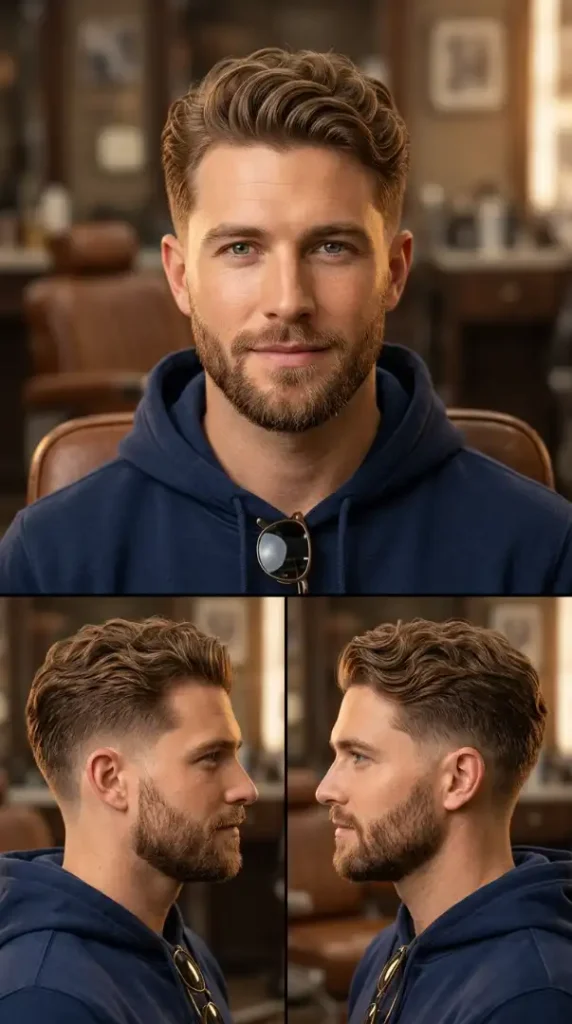
Face Shape Compatibility & Anatomical Reasoning
The Taper Blend Elegance works exceptionally well on oval and diamond-shaped faces because the smooth blending respects natural face structure without attempting aggressive reshaping. Oval faces benefit from the balanced proportions and elegant simplicity—the taper system enhances rather than competing with naturally well-proportioned features. Diamond-shaped faces see meaningful benefit from the smooth blending system. The gradual taper adds visual width at the temple and cheekbone area without harsh lines, effectively broadening the naturally narrower cheekbone zone.
Round faces gain elongation from the tapered top without the aggressive angles that some other cuts employ. The smooth blending creates subtle vertical lines that the eye follows upward, elongating perceived face proportions while remaining sophisticated rather than geometric. The integration of beard into the fade adds jawline width that round faces naturally lack.
Square faces work beautifully with this style because the smooth blending softens what might otherwise be harsh angles, creating a more approachable aesthetic than sharper geometric cuts. Heart-shaped faces benefit substantially—the tapered top draws attention upward, away from a naturally wider forehead, while the smooth-blended beard adds critical jawline width and definition.
Oblong faces absolutely love this style. The smooth blending creates subtle horizontal visual interest without creating width-adding bulk. The tapered system avoids both extremes (neither overly long nor overly short), maintaining proportional balance that oblong faces need.
Grooming Kit & Required Tools
The Taper Blend Elegance demands precise clippers and skilled technique, making this a style where barber expertise matters more than fancy tools. The Andis Master (Model 01557) or Wahl Magic Clip (Model 5049-400) both work—the key is using blending techniques that create gradual transitions rather than distinct lines.
The Andis T-Outliner (Model 04710) handles edge definition. Request your barber detail the specific blending technique they use—this might involve clipper-over-comb work, thinning shears, or specific angle choices that create gradual transitions rather than sudden changes.
Styling tools should include the Denman boar bristle brush for respecting natural wave pattern while maintaining shape definition. The Kent 81T fine-tooth comb helps manage the wavy top’s texture direction.
Styling products can be minimal. Layrite Original Pomade (light application for subtle hold) or American Crew Forming Cream respect the natural wave pattern while maintaining intentional styling. The taper system does most of the work; product is optional rather than essential. For beard care at 5mm, beard balm with light hold maintains the sculpted appearance without looking overly groomed.
Maintenance Level & Growth Pattern Management
The Taper Blend Elegance represents MEDIUM maintenance with excellent longevity. Full trims every 4-5 weeks keep the tapered system looking intentional. The beauty of smooth blending is that regrowth doesn’t create visible demarcation lines—the fade gradually becomes less dramatic rather than suddenly looking unkempt. You can stretch to 5-6 weeks without the style falling apart.
Daily styling requires 5-7 minutes. Shower, towel-dry hair to damp, blow-dry while brushing backward to set wave direction, apply pea-sized pomade or forming cream, style into final shape with brush. The wave pattern naturally supports the tapered top’s direction, making this genuinely effortless compared to straight-haired alternatives.
Beard maintenance is straightforward. Daily brushing to set direction (2 minutes) and weekly beard shaping (5-10 minutes) keeps the 5mm sculpted appearance intentional rather than overgrown. The beard-to-fade blend is what elevates this style, so investing in beard care is worthwhile.
Growth pattern management requires minimal attention because smooth blending actually improves with slight regrowth—the gradual blur of the fade as it regrows looks natural and intentional rather than unkempt. The top grows about ½ inch per week; by week 4, you’re working with 2 inches of length instead of 1.5, which is still acceptably tapered. By week 5, you’re approaching slightly longer territory but still within acceptable range for this style.
Monthly maintenance costs run approximately $18-28 per cut every 4-5 weeks depending on regional pricing and barber expertise, totaling roughly $72-140 monthly depending on how frequently you add professional beard shaping.
The Exact Barber Script
Say this to your barber:
“I want The Taper Blend Elegance with smooth transitions throughout. Take the top to about 1.5 inches and use your wave pattern to create natural texture—point cutting is good if you think it helps. Most importantly, I want the blend from top to sides to be completely smooth. No harsh lines, just gradual transition. Use clipper-over-comb or thinning shears to create soft blending—I want this to flow. Start a subtle fade at my temple line and blend down gradually. Keep the sides at a guard #2 or #2.5. For my beard, keep it at 5mm and sculpted—shape it to follow my jawline naturally, then blend it into the fade at the temples. The whole look should feel integrated and elegant, not multiple separate elements. Clean definition at the hairline but soft everywhere else.”
STYLE 8 OF 10 — The Athletic Crop Clean
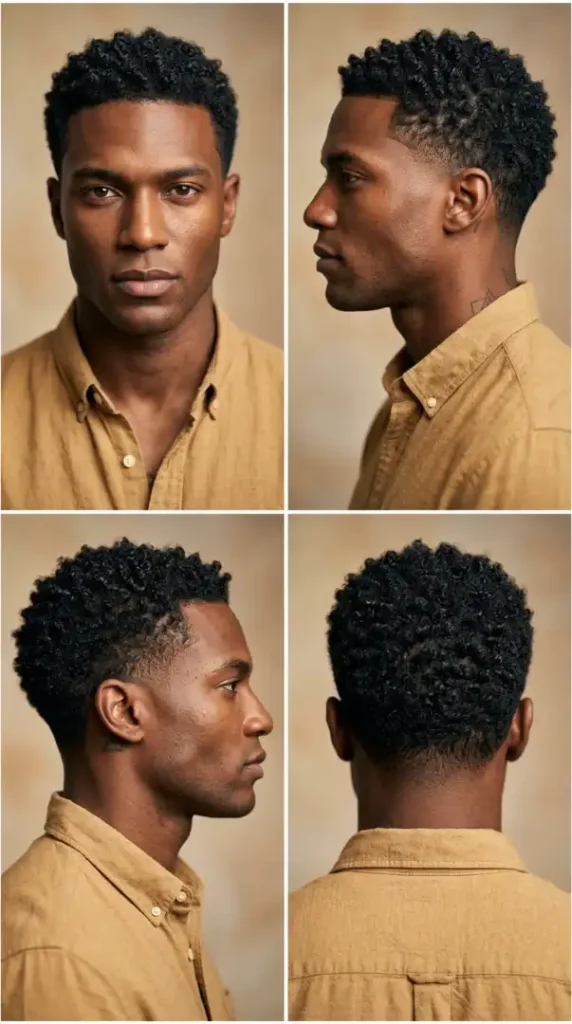
Face Shape Compatibility & Anatomical Reasoning
The Athletic Crop Clean performs exceptionally well on round and oval face shapes because the textured crop adds height and visual interest. Round faces gain significant elongation from the textured crop—the natural curl pattern creates vertical visual lines that the eye follows upward, elongating perceived face proportions. The soft blending system adds definition at the temples without harsh geometry, effectively reshaping round faces through subtle angular suggestion.
Oval faces benefit from the sophisticated simplicity and visual texture that this cut provides. The balanced proportions of an oval face are enhanced rather than requiring correction, and the textured crop adds visual interest that keeps styling from feeling plain.
Square faces work beautifully with this style because the textured crop softens what might otherwise be harsh angles. The natural curl pattern breaks up potential severity, creating a more approachable aesthetic. The soft blending system complements square structure without fighting it.
Diamond-shaped faces see meaningful benefit from the textured crop. The natural curl pattern adds visual width at the temple and cheekbone area without requiring harsh geometric lines, effectively broadening the naturally narrower cheekbone zone. Heart-shaped faces benefit from the upward-drawing visual focus of textured height—the crop draws attention upward, away from a naturally wider forehead.
Oblong faces need slight modification. The textured crop works, but request your barber keep slightly more density at the sides to provide width balance to a naturally longer face. The crop alone might emphasize vertical length without providing proportional width balance.
Grooming Kit & Required Tools
The Athletic Crop Clean demands tools specifically designed to work with textured hair without damage. The Andis Master (Model 01557) is essential—it has the power and precision necessary to cut textured hair cleanly without pulling or creating the frizz that dulled blades cause. The Wahl Magic Clip (Model 5049-400) can work if your curl pattern is relatively loose, but for tight coils, the Master is superior.
The Andis T-Outliner (Model 04710) handles cheek line definition and nape edge work with precision. Request your barber use a fresh blade—textured hair especially suffers from dulled blades that pull rather than cut cleanly.
Styling tools should include a wide-tooth comb (essential for textured hair) and a soft natural-bristle brush like the Denman brush. Tight-bristle tools create frizz in textured hair; wide-tooth tools respect the curl pattern.
Styling products should respect texture rather than suppress it. Curl creams or curl-defining creams (Cantu or Uncle Funky’s Daughter brands work excellently) enhance natural curl definition without requiring heavy hold. Use pea-sized amounts applied to damp hair. For cleaner, more sculpted looks, a light-hold pomade (Layrite or American Crew) applied sparingly after the curl cream provides subtle control without flattening texture.
Maintenance Level & Growth Pattern Management
The Athletic Crop Clean represents LOW-to-MEDIUM maintenance with excellent longevity. Full trims every 4-6 weeks keep the overall proportions intentional. The beauty of this cut is that textured hair maintains shape reasonably well through growth cycles—by week 6, you’re working with slightly longer texture, but the curl pattern maintains definition rather than looking unkempt.
Daily styling requires 3-5 minutes. Shower (hydration is critical for textured hair), apply curl cream or conditioner to damp hair, use wide-tooth comb to define curl pattern, optional light pomade application for sculpted look, and you’re finished. The curl pattern does most of the styling work; your job is simply encouraging it rather than forcing a shape.
Growth pattern management is straightforward because textured hair’s regrowth is visually less dramatic than straight hair. The curl pattern looks intentional and controlled even as length increases. Cheek line definition regrows gradually rather than suddenly looking blurred, which is an advantage for this style.
Monthly maintenance costs are the lowest of most hairstyles—approximately $15-25 per cut every 4-6 weeks depending on barber expertise with textured hair and regional pricing, totaling roughly $30-75 monthly.
The Exact Barber Script
Say this to your barber:
“I want The Athletic Crop Clean with my natural curl pattern as the focus. Take the entire head to about a half inch—I want even length throughout the crown and back, showing off my texture. Don’t thin out or manipulate my curls too much; respect the natural pattern. For the sides, graduate them soft and even—no harsh fade lines, just soft blending. Create a clean cheek line that follows my face contours naturally, not geometric or severe. Keep my sideburns very short and natural-looking. Edge work at the nape should be clean and precise. The goal is celebrating my texture while looking intentional and sharp. Clean shave with no shadow. I want this to look fresh and confident.”
STYLE 9 OF 10 — The Textured Undercut Statement
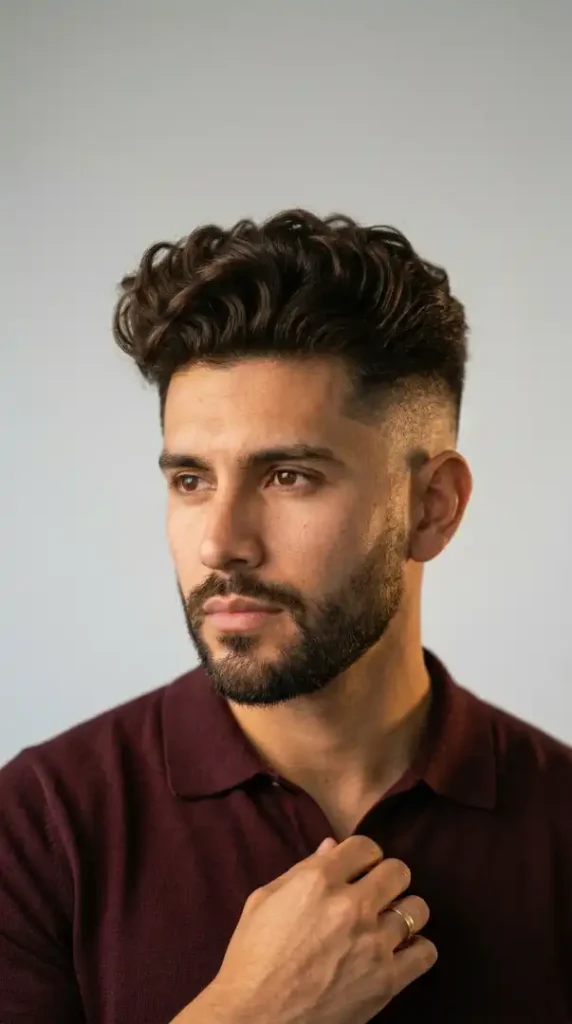
Face Shape Compatibility & Anatomical Reasoning
The Textured Undercut Statement works exceptionally well on oblong and square face shapes because the top’s height adds visual proportion. Oblong faces gain elongation prevention through the significant top volume—the height is concentrated upward rather than spreading horizontally, which actually helps oblong faces avoid the over-elongated appearance that top length can sometimes create. The skin-tight sides provide sharp definition at the temple, adding subtle angular structure that oblong faces benefit from.
Square faces absolutely shine with this style. The strong jawline is highlighted by the tight undercut sides, while the voluminous top adds visual interest and height that prevents the face from reading as overly blocky or severe. The contrast between textured fullness on top and severe emptiness on sides creates a dynamic aesthetic that square faces can carry with confidence.
Diamond-shaped faces see meaningful benefit from this style because the voluminous top adds perceived width at the crown and temple area, counteracting the naturally narrow cheekbone zone. The skin-tight sides don’t add width, but the fuller top compensates by shifting visual weight upward.
Round and oval faces should approach this style cautiously. The extreme top volume can emphasize roundness or make an already well-proportioned face feel unbalanced. If you have a round or oval face and love the undercut aesthetic, request your barber moderate the top length (2.5 inches instead of 3.5) and add slightly more density at the sides to provide width balance to the voluminous top.
Heart-shaped faces can pull this off beautifully because the upward-concentrated volume draws attention upward, away from a naturally wider forehead. The tight sides don’t add width, so the proportional balance remains acceptable.
Grooming Kit & Required Tools
The Textured Undercut Statement demands extremely sharp tools because the contrast between voluminous top and skin-tight sides depends entirely on precision execution. The Andis Master (Model 01557) is essential—you need maximum power and blade retention for creating skin-tight undercuts without pulling. The Wahl Magic Clip (Model 5049-400) can work but is less ideal for the precision undercut element.
The Andis T-Outliner (Model 04710) is absolutely critical for maintaining the clean undercut line separating the top from the sides. This is a high-maintenance element that defines the entire style’s character.
Styling tools should include the Denman boar bristle brush for managing the voluminous textured top, and a wide-tooth comb for detangling textured hair without creating frizz.
Styling products are essential. American Crew Forming Cream (matte finish, high hold) maintains the textured top’s position and definition throughout the day. Layrite Original Pomade works if you prefer a subtly shiny finish. Use a nickel to dime-sized amount applied to damp hair, worked through while blow-drying. For beard care at 5mm, beard balm with medium hold maintains the groomed appearance. The beard-to-undercut integration is part of the overall statement, so investing in beard shaping is worthwhile.
Maintenance Level & Growth Pattern Management
The Textured Undercut Statement demands HIGH maintenance because the undercut is the defining element, and undercuts lose their impact quickly as sides regrow. Plan for full touch-ups every 2-2.5 weeks without exception—the undercut blur that appears after 14 days fundamentally changes this style from dramatic to disheveled.
Daily styling requires 7-10 minutes. Shower, blow-dry while brushing upward and backward, apply dime-sized forming cream or pomade while hair is still slightly damp, use your brush to shape and define, and ensure the top stands with volume and texture. The undercut sides need no styling—they should literally be touchable bare skin (or very light fuzz at most). This daily attention is the commitment required for this statement-making style.
Beard maintenance is part of the overall routine. Keeping the beard shaped at 5mm requires daily brushing and weekly precision trimming. The beard-to-undercut integration is what makes this style cohesive rather than simply “mohawk with beard.”
Growth pattern management requires strict attention. The undercut sides regrow visibly by day 10-12 as light stubble appears. By day 14, you’re looking at visible shadow that blurs the definition. By week 3, the “skin-tight” element is completely gone, transforming the style’s entire character. The top’s growth (½ inch per week) also matters—by week 3, you’re working with 1.5 additional inches of length, which requires more product and styling effort to maintain shape.
Monthly maintenance costs run approximately $30-40 per cut every 2-2.5 weeks depending on barber expertise, totaling roughly $120-160 monthly. Yes, it’s the highest maintenance and highest cost option, but the visual impact justifies the investment for athletes building a personal brand.
The Exact Barber Script
Say this to your barber:
“I want The Textured Undercut Statement with maximum drama. On top, take it to about 3-3.5 inches and use texturizing techniques—point cutting, thinning shears, whatever creates separation and shows off the wave-curl pattern. I want volume and texture, not weight or density. For the sides, I want a skin-tight undercut—use a zero or 00000 blade or clipper with no guard. Create a clean, visible line separating the full top from the bare sides. The undercut line should be crisp and architectural. For my beard, keep it at 5mm and shaped to follow my jawline, then blend it into the undercut line at the temples so the look flows together. Everything needs to be sharp and intentional. I’m going for impact.”
STYLE 10 OF 10 — The Classic Fade Professional
Face Shape Compatibility & Anatomical Reasoning
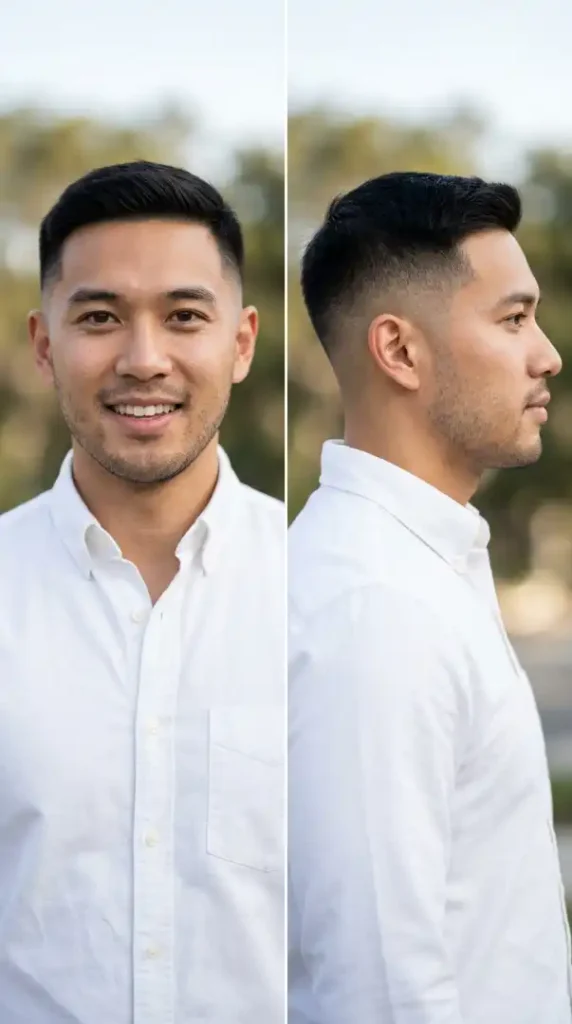
The Classic Fade Professional works exceptionally well on virtually every face shape because the fundamentals are scalable to any proportions. Oval faces gain the most benefit—the balanced proportions of an oval face are enhanced by this cut without requiring specific modifications. The mid-fade respects natural face structure while adding subtle definition.
Round faces see meaningful elongation from the visible fade line and the clean hairline definition. The mid-fade starting at the temple creates subtle vertical lines that the eye follows upward, elongating perceived face proportions. The 1-inch top length avoids adding width without providing sufficient height for dramatic elongation.
Square faces work beautifully with this style because the clean fade lines add definition without fighting the naturally strong jawline. The mid-fade respects angular face structure while the clean top allows the face’s best features to remain focal points rather than competing elements.
Diamond-shaped faces benefit from the mid-fade’s temple definition—the fade starting at the natural temple line adds subtle width perception at the cheekbone area without requiring aggressive styling or additional product. Heart-shaped faces gain from the upward-drawing quality of the crisp hairline and fade—attention is drawn upward, away from a naturally wider forehead.
Oblong faces receive proportional balance from the relatively short top (1 inch) and visible fade gradient. The fade avoids extreme shortness at the sides while the moderate top length prevents over-elongation. The result is a proportionally balanced cut that works with the face’s natural structure rather than attempting aggressive reshaping.
Grooming Kit & Required Tools
The Classic Fade Professional requires reliable, consistent tools because this style depends on quality execution across every element. The Wahl Magic Clip (Model 5049-400) is perfect—it delivers consistent grades and smooth fading without excessive power demands. The Andis Master (Model 01557) also works excellently if you prefer slightly more power or have denser hair.
The Andis T-Outliner (Model 04710) handles hairline definition and stubble maintenance with precision. For the light 2mm stubble maintenance, a dedicated stubble trimmer (Panasonic Precision Beard Trimmer Model ES3831K or similar) keeps the precise 2mm length consistent without requiring daily manual shaving.
Styling tools are minimal—the Kent 81T fine-tooth comb for managing the clean top and any necessary parting or direction. Styling products are actually optional for this cut. The blunt top styling naturally falls forward and can be left as-is, or light pomade application (pea-sized amount) can add subtle control if preferred.
Maintenance Level & Growth Pattern Management
The Classic Fade Professional represents MEDIUM maintenance with good longevity. Full trims every 3-4 weeks keep the fade looking intentional. By week 4, the fade becomes slightly blurred and less dramatic, but the overall cut remains acceptable without looking genuinely unkempt. You can stretch to 5 weeks if necessary, though the ideal interval is the 3-4 week range.
Daily styling requires 2-3 minutes maximum. Shower, rough-dry your hair forward, optional light pomade application if you prefer subtle control, and you’re finished. This cut’s beauty is the minimal styling requirement—even slightly imperfect execution looks acceptable because the precision lies in the cut itself, not in daily styling effort.
Stubble maintenance is the primary daily requirement. If you maintain the 2mm look yourself, trim daily or every other day to keep consistency. This takes 1-2 minutes. Alternatively, plan on completely shaving every 2-3 days if you prefer to let stubble grow naturally rather than maintaining precise 2mm length.
Growth pattern management is straightforward. The top grows approximately ½ inch every 2 weeks, but since you’re starting at 1 inch, even at week 4 you’re only at 1.5 inches, which is still acceptably “classic short.” The fade blur is less visually dramatic than on skin fades—you’re looking at slightly softer definition rather than complete transformation. Fade sides regrow with visible shadow by day 12-14, but the mid-fade’s gentle blending means regrowth is less jarring than it would be on a high or skin fade.
Monthly maintenance costs run approximately $15-22 per cut every 3-4 weeks depending on regional pricing and barber expertise, totaling roughly $45-88 monthly—among the most affordable hairstyle options.
The Exact Barber Script
Say this to your barber:
“I want The Classic Fade Professional—clean, sharp, and timeless. Take the top to about 1 inch with a blunt cut for weight and precision. Start a mid fade at my temple line and blend down gradually to the sides. Keep the sides at about a guard #1.5 or #2—I want a visible fade but nothing aggressive. Create a clean, visible hairline at the front but not dramatically sculpted or geometric. Keep my sideburns natural and tapered into the fade. Everything should feel intentional and sharp but also effortless and approachable. If I’m keeping stubble, I want it light and clean at about 2mm evenly distributed. No beard—just the stubble for that sharp, polished look. Clean definition at the nape and overall precision throughout.”