
12 Light Brown Hairstyle Ideas For Men
STYLE 1 OF 12 — The Honey Glow Textured Crop

The Honey Glow Textured Crop
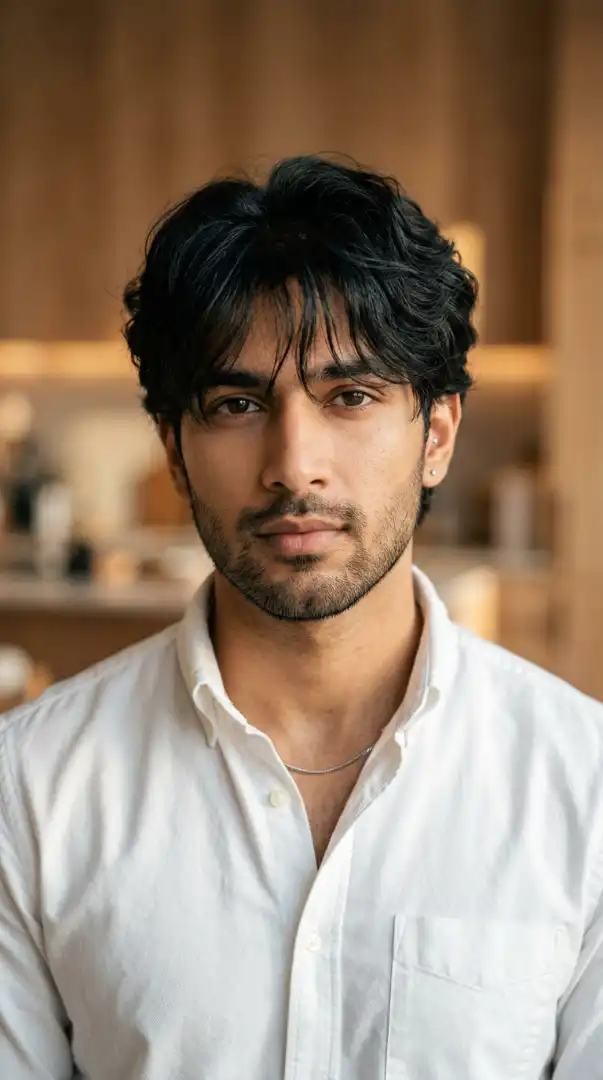
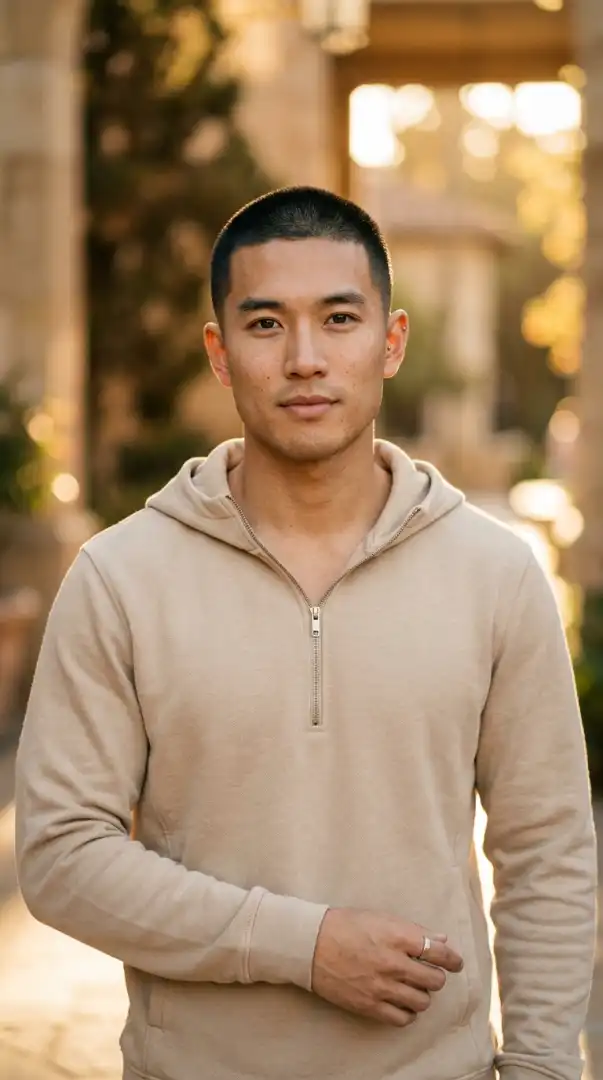
The Honey Glow Textured Crop is a modern interpretation of the classic textured crop that prioritizes natural movement and effortless appeal. This style features substantial volume on top — typically 2-3 inches in length — with carefully crafted texture through point cutting rather than blunt lines. The sides taper smoothly from mid-length hair down to a clean, fade-free outline. The fringe naturally falls forward without looking forced, creating a casual sophistication that works across multiple settings. This is the type of cut that photographs exceptionally well, which is why it performs so strongly on social media platforms where polished yet approachable aesthetics dominate.
What makes The Honey Glow Textured Crop particularly effective is how it works with natural hair texture rather than fighting against it. If your hair has natural wave or slight curl, this cut enhances those qualities instead of trying to eliminate them. The styling process is straightforward — minimal product needed, 4-5 minutes maximum in the morning, and the cut actually looks better as it grows slightly over the first week, creating that “just left the barbershop” appeal that lasts longer than precision fades.
Which Face Shapes Benefit Most From This Style
Oval and square face shapes see the most dramatic benefit from The Honey Glow Textured Crop because the substantial top volume draws the eye upward, elongating the face and adding height to the overall silhouette. For square faces specifically, the textured, slightly tousled fringe softens the hard angles of the forehead and temples, creating a more approachable appearance while maintaining masculine structure.
Round faces gain remarkable definition from this style because the increased vertical dimension created by the top volume effectively counteracts the widest point of the face. The contrast between substantial top length and tapered sides creates natural contouring lines that make a round face appear more angular and defined. The fringe positioning helps frame the face by adding depth to the forehead area.
Oblong faces should request slightly more width on the sides — ask your barber to keep the sides at 1-1.5 inches rather than tapering too short — to avoid over-elongating an already long face shape. Diamond faces work beautifully with this cut because the width at the temples (created by the tapered sides ending slightly lower) balances the angular cheekbones and narrower chin.
Heart-shaped faces can absolutely pull off this style, but should keep the top length at 2 inches rather than pushing to 3 inches, maintaining better proportion with the narrower jawline. The Honey Glow Textured Crop is actually one of the best options for heart shapes because the tapered sides show off the strong cheekbone structure while the top volume adds balance.
Essential Tools and Products for Maintenance
Your grooming kit needs to be dialed in for this style because the success depends on proper execution and product application:
Clippers for Initial Cut: Wahl Magic Clip (Model 5049-400) or Andis Master (Model 01557) — both handle texture work cleanly without dragging.
Scissors for Point Cutting: Kamisori 6-inch offset scissors or Jaguar scissors in the 5.5-inch range — essential for creating that texture rather than blunt lines. Your barber MUST use scissors, not just clippers, for the top section to achieve proper texture.
Trimmer/Outliner: Andis T-Outliner (Model 04710) for edge work and the hairline lineup — critical for keeping that defined outline crisp.
Finishing Comb: Kent 81T fine-tooth comb for style work and parting precision, plus a boar bristle brush for direction training.
Styling Product: Layrite Original Pomade (medium hold, natural finish) or American Crew Fiber (matte finish, high hold). For this style specifically, you want something that doesn’t look shiny or plasticky. A pea-sized amount worked between your palms and fingertips through damp hair creates that textured, barely-styled appearance.
Daily Styling Routine: Damp hair + pea-sized pomade applied through your fingers + light finger-combing to set the fringe direction = 4-5 minutes total. That’s the entire morning routine for this cut.
Maintenance Schedule and Growth Pattern
Rate this style as MEDIUM maintenance. You need visits to your barber every 2.5-3 weeks for fade touch-ups and texture work on the top. The great news: the cut grows out gracefully. Around week 1-2 after the cut, the style actually looks fresher because the hair has settled and the texture shows more personality.
The critical point is week 3-4 when the fade line gets blurry and the top starts looking shaggy rather than textured. At that point, a quick trim maintains the style. Daily styling time is only 4-5 minutes — dampening the hair, applying product, and directing the fringe. This is genuinely one of the lower-commitment textured cuts because you’re not dealing with high-fade lines that blur quickly or complicated styling procedures.
Growth pattern management: As the cut grows, the sides thicken and the top gets longer. This actually works in your favor for the first 10 days. By day 14-18, you’ll notice the sides need attention. Monthly cost is approximately $35-50 depending on your barber ($14-17 per visit × 2-3 visits monthly).
The Exact Words to Say to Your Barber
Say this to your barber:
“I want The Honey Glow Textured Crop with a clean outline, no fade. Take the top to 2.5 inches and create texture through point cutting — I want it to look tousled and natural, not blunt. Keep the sides at mid-length, about 1.5 inches, tapering down smoothly to the skin at the temples and nape area. Use scissors for the top work to create that textured movement. The fringe should fall forward naturally without looking forced — cut it slightly longer so it works with my hair’s natural wave. Create a clean, sharp hairline around the temples and across the forehead, nothing overly faded. Finish with a precise outline around the nape and ears. I want this to have that ‘effortlessly styled’ appearance that still looks sharp.”
STYLE 2 OF 12 — The Urban Shadow Blend
The Urban Shadow Blend
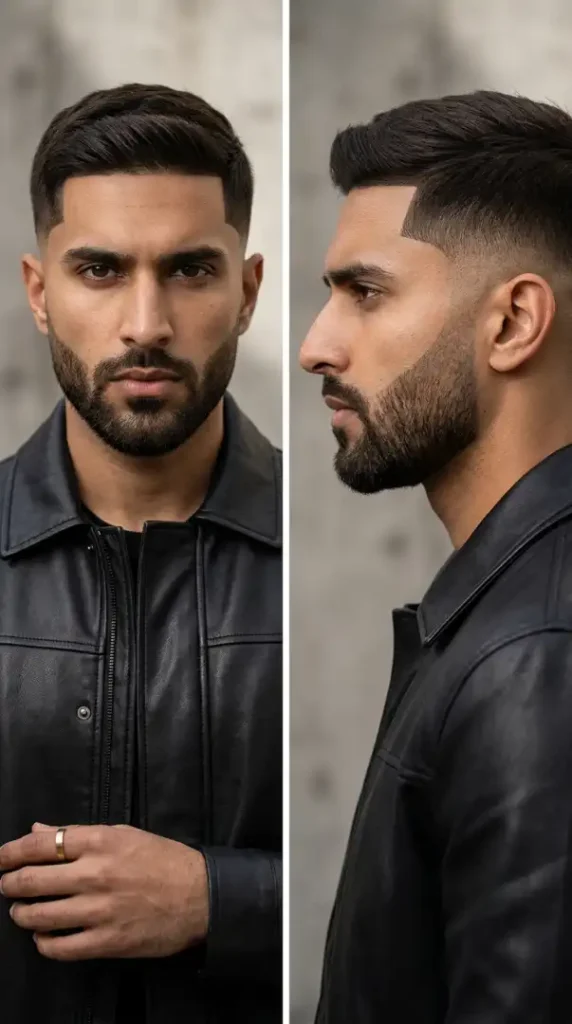
The Urban Shadow Blend represents a significant shift in strategy from the textured, soft approach of Style 1. This cut emphasizes sharp contrast and architectural precision. The defining characteristic is a low skin fade that begins right at the temple line — meaning the side of your head transitions directly from full hair length to exposed skin, creating dramatic visual definition. The top maintains solid length, typically guard #3 or #4 (roughly 3/4 to 1 inch), creating maximum contrast with the faded sides.
What makes this cut particularly appealing to men across different professional settings is the balance it achieves. The substantial fade makes it edgy and contemporary — appropriate for creative industries, tech, design, and younger professional environments. Simultaneously, the conservative top length keeps it professional enough for corporate settings where more extreme styles wouldn’t work. The “shadow” in the name refers to the visual shadow created by the fade line itself, which draws attention to the temple area and creates structural definition.
This is the style that performs exceptionally well when you’re starting from longer hair and want maximum transformation. The contrast between top and sides is so pronounced that the haircut works from across a room — it reads as intentional and sculpted before anyone gets close enough to see the detail work on the fade line.
Face Shape Compatibility and Structural Balance
Square faces absolutely dominate in The Urban Shadow Blend because the low fade creates aggressive vertical lines on the sides that complement the horizontal strength of a square face. The fade essentially adds height to the face’s proportions and emphasizes the jaw’s natural angles.
Oval faces benefit tremendously from this cut because the fade emphasizes the already-balanced face shape, and the contrast draws attention to the center of the face (eyes, nose, mouth) rather than the sides. For oval faces, this style is practically a cheat code — it flatters almost universally.
Round faces gain dramatic definition from The Urban Shadow Blend. The low fade creates visual vertical lines that pull the eye upward and away from the widest part of the face. The contrast between faded sides and substantial top adds artificial angularity that a round face naturally lacks. This might be the single best choice for round faces seeking maximum transformation.
Oblong faces need to be cautious with this style — the aggressive fade can over-emphasize height. Instead, request a mid-fade (starting at the sideburn line but not going all the way to skin) and ask for slightly more weight on the sides. This tones down the vertical emphasis.
Diamond and heart-shaped faces should request a high fade (starting above the ear) rather than a low fade to avoid making the face appear too narrow at the temples. The high fade placement balances width across the face better.
Complete Grooming Tool Requirements
The Urban Shadow Blend demands precision tooling because the fade line is the star element — if it’s not sharp, the entire cut fails:
Clippers for Fade Creation: Wahl Senior (Model 8504) or Andis Master (Model 01557) — both provide the control needed for smooth gradient work.
Fade Blending Clippers: Wahl Magic Clip (Model 5049-400) for the actual fade blending. The Magic Clip’s floating head creates gradual, smooth transitions between guard sizes.
Outliner for Line Work: Andis T-Outliner (Model 04710) for the fade line definition and crisp edges around temples and nape — this is critical for The Urban Shadow Blend because the line itself is the focal point.
Top Work Scissors: Kamisori or Jaguar 5.5-6 inch scissors for any blending needed on the top section.
Finishing Tools: Kent 81T comb for precision work, boar bristle brush for final styling.
Styling Product: American Crew Fiber (matte, high hold) or Blumaan Original Forming Cream (matte, medium hold). You want something that doesn’t shine and gives you workable texture. A pea-sized amount for the top is sufficient.
Beard Maintenance: If you’re growing the beard, invest in a beard trimmer like the Panasonic ER-GB80-S for precise maintenance, and beard oil (Honest Amish or Viking Revolution) for conditioning.
Maintenance Schedule and Time Commitment
Rate this style as MEDIUM to MEDIUM-HIGH maintenance. The fade line requires attention every 2 weeks because fades blur quickly as hair grows. By week 3, the low fade loses its sharp definition and starts looking fuzzy rather than clean.
Daily styling time is minimal — 3-4 minutes maximum. You’re essentially just applying a small amount of product to the top and directing it with your fingers or a light brush. The cut does most of the heavy lifting because of the dramatic contrast.
The critical timeline: Week 1 looks perfect. Week 2 still looks sharp. By day 14-16, the fade starts losing definition. By day 18-20, you’ll notice the blur. At day 21, book your barber appointment.
Monthly cost is approximately $40-60 depending on your barber ($16-20 per visit × 2-3 visits monthly). The Urban Shadow Blend is more expensive to maintain than textured styles because you need consistent fade work.
Growth pattern: As the cut grows, the contrast diminishes and the sides thicken. The top grows out into a longer crop style. This is actually not a bad look for 2-3 weeks, but it’s no longer The Urban Shadow Blend.
What to Tell Your Barber Exactly
Say this to your barber:
“I want The Urban Shadow Blend with a low skin fade starting right at my temple line. Take the fade all the way down to skin by the nape and behind my ears. On top, I want clean length — keep it at a guard #3 or #4 depending on my hair thickness, but I need clear contrast between top and sides. Use guard transitions — go guard #3, then #2, then #1, then fade to skin — to create a smooth gradient, not choppy steps. The fade line itself should be sharp and defined, not blurry. Create a crisp, geometric lineup at my temples, across my forehead, and around my nape. Work the beard into the fade at my jawline if I’m growing it — I want the beard to taper as it approaches the fade line so it blends seamlessly. Finish with clean edges everywhere and make sure the top has texture, not one uniform length.”
STYLE 3 OF 12 — The Chestnut Wave Layered Authority

The Chestnut Wave Layered Authority
The Chestnut Wave Layered Authority represents a sophisticated evolution in cut design. Rather than relying on fades for visual interest, this style creates dimension entirely through strategic layering. The cut maintains medium length throughout — roughly 2-2.5 inches — but incorporates multiple layers at different lengths that create separation and texture. This approach is particularly effective for men with naturally wavy hair because the layers enhance the natural wave pattern rather than fighting against it.
What makes this style uniquely appealing is how it bridges casual and polished aesthetics simultaneously. The layered texture reads as effortlessly styled and contemporary, yet the medium length and overall structure remain appropriate for professional settings. The wave motion created by the layers gives the cut visual movement and depth that flat-cut hair simply cannot achieve.
This cut performs remarkably well on social media because the dimension translates beautifully in photographs. The layering creates visual depth that translates across screen sizes, and the natural wave gives the cut organic, human appeal. This is the style that looks professional in a corporate meeting yet contemporary enough for creative industries.
Which Face Shapes Pair Best With This Style
Diamond faces are the ideal candidate for The Chestnut Wave Layered Authority because the layering creates width through the cheekbone area while the medium length keeps the face from appearing too elongated. The horizontal movement created by the layers complements the angles of a diamond face.
Oblong faces gain significant benefit from this style because the wave movement and layering add perceived width to a naturally long face shape. The medium length also avoids the over-elongation that longer styles create.
Oval faces work beautifully with this cut because the balanced face shape allows the styling to take center stage. The layering emphasizes the face’s natural proportions without needing to compensate for structural imbalances.
Square faces benefit from the softening effect of the wave and layers. The structured jawline remains visible, but the texture adds approachability and reduces the perception of hardness that sometimes accompanies square faces.
Round faces should request slightly more length through the top (pushing toward 2.5-3 inches) to increase vertical emphasis. Round faces benefit from the vertical elongation that slightly longer layered styles provide.
Heart-shaped faces need to be careful not to add too much volume on top. Request that your barber keep the top density moderate and focus layering on adding width through the sides rather than height on top. This maintains better proportion with the narrower jawline.
Tools and Products Essential for Success
The Chestnut Wave Layered Authority requires precision tooling that respects the wave texture rather than fighting it:
Scissors for Layer Creation: Kamisori 6-inch offset scissors or Jaguar 5.5-inch scissors — essential for creating clean layers. This cut absolutely requires scissors work; clippers alone cannot create proper layering.
Texturizing Shears: Kamisori or Jaguar texturizing shears for point cutting and texture enhancement, particularly important if your hair is thick or naturally straight.
Clippers for General Outline: Wahl Magic Clip (Model 5049-400) or Andis Master (Model 01557) for outline and side work. The sides don’t have a fade, so you’re using clippers just for defining the perimeter, not for blending.
Trimmer/Outliner: Andis T-Outliner (Model 04710) for crisp edge work around the temples, sideburns, and nape.
Combs: Kent 81T fine-tooth comb for parting work and precision. A wide-tooth comb for working with wet hair and the wave pattern.
Boar Bristle Brush: Essential for training the wave direction and final styling.
Styling Product: For wavy hair specifically, use a medium-hold product that doesn’t feel sticky. Blumaan Original Forming Cream (matte, medium hold) or Baxter of California Clay Pomade work exceptionally well. The cream aspect helps define wave without making hair look heavy.
Wave Training: If you have naturally wavy hair, use a spray bottle to dampen your hair slightly before styling, then use the brush to train the wave direction.
Maintenance Timeline and Effort Investment
Rate this style as MEDIUM maintenance. Unlike fades that blur quickly, layered cuts grow out more gracefully. You can comfortably go 3.5-4 weeks between cuts before the style noticeably degrades.
Daily styling time is approximately 5-7 minutes: dampen hair with spray bottle, apply a pea-sized amount of forming cream or clay pomade, use the brush to direct the wave, finger-comb to finish. The wave does significant work for you — you’re just directing it rather than creating it from scratch.
The growth pattern is favorable: Week 1 looks perfect. Weeks 2-3 still look sharp as the layers are fresh. By week 4, you’ll notice the top getting slightly longer and the definition between layers softening. By week 5, the cut is moving toward a longer, less defined look. Optimal timing for your next appointment is 3-4 weeks.
Monthly cost is approximately $30-45 per visit ($30-45 per month if you’re going 4 weeks between cuts). This is one of the more economical styles to maintain because visits are less frequent.
Exact Barber Script for Perfect Execution
Say this to your barber:
“I want The Chestnut Wave Layered Authority with clean, strategic layering throughout. I’m aiming for medium length — roughly 2.5 inches on top and graduated down to about 2 inches at the sides. Create layers at different lengths so I have texture and separation, not one uniform length. Use scissors, not clippers, for the top work so the layers are crisp and defined. Work with my natural wave — use layers to enhance the wave movement, not fight against it. On the sides, I want a textured taper, not a fade. Blend the sides smoothly down but keep hair on the sides, maybe 1.5 inches graduating to 1 inch at the sideburns. Create a clean outline around my temples and sideburns, and finish the nape neatly. The overall vibe should be effortlessly styled and textured, not blunt. If my hair is thick, use some texturizing shears to reduce weight and enhance the separation between layers.”
STYLE 4 OF 12 — The Jet Black Executive Precision Fade
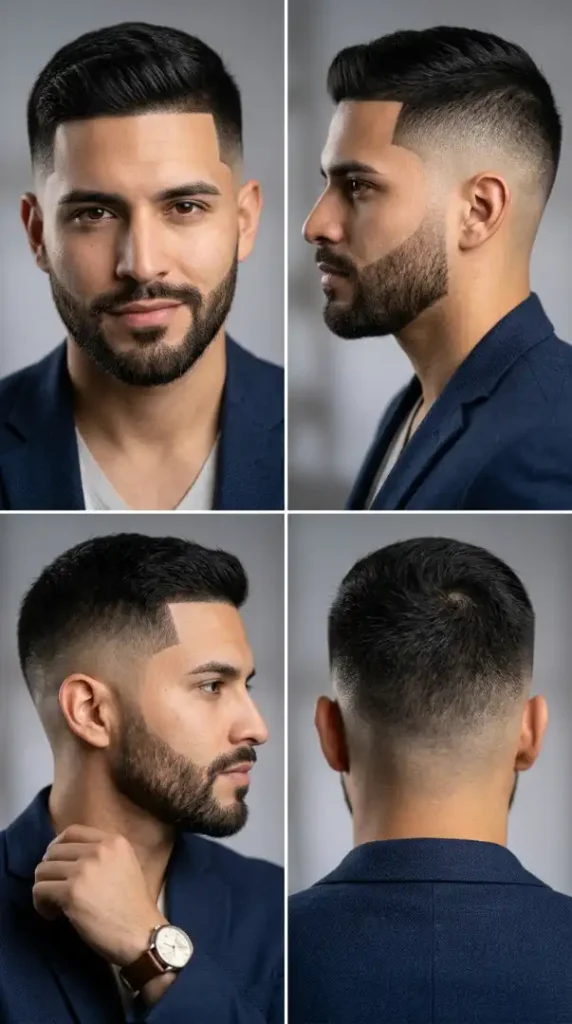
The Jet Black Executive Precision Fade
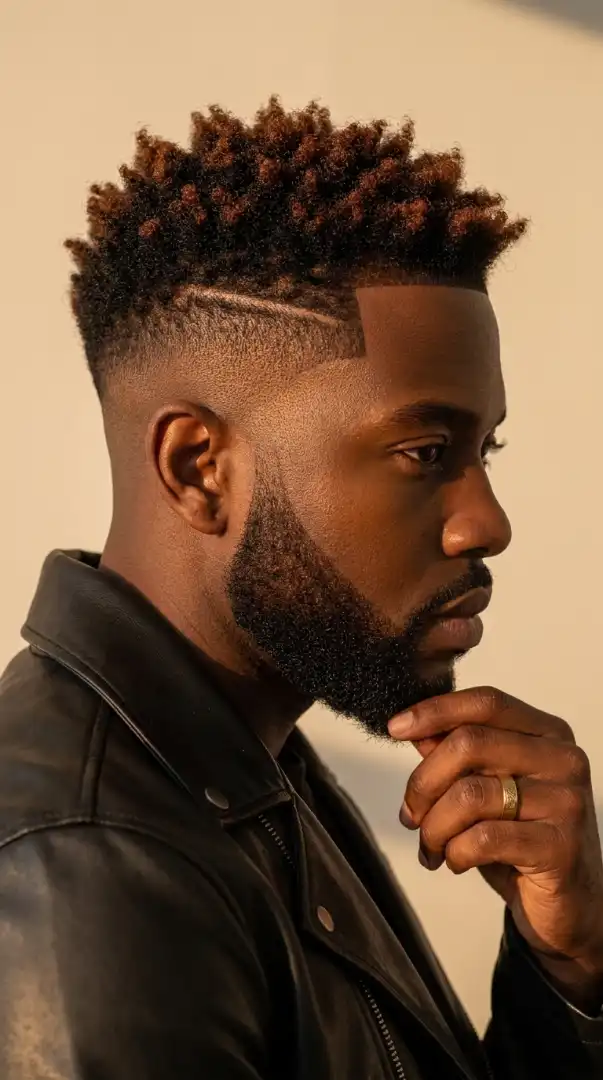
The Jet Black Executive Precision Fade represents the pinnacle of professional barbering execution. This cut is characterized by absolute precision in every element: a high skin fade with perfectly graduated transitions, an architectural hairline, a sculpted beard line that integrates seamlessly with the fade, and substantial length on top that maintains presence and style.
What distinguishes The Jet Black Executive Precision Fade from other fade styles is the emphasis on integration rather than contrast. Rather than creating drama through stark differences between top and sides, this cut creates authority through refined precision and seamless transitions. The high fade means the sides remain relatively short but transition to skin so smoothly that there are no harsh lines — just gradient perfection. The top length (roughly 4/5 to 1 inch) is conservative enough for corporate boardrooms but substantial enough to maintain style and personality.
This is the cut that broadcasts competence, attention to detail, and professional mastery. It performs exceptionally well in corporate settings, leadership positions, and environments where personal presentation signals capability. Simultaneously, it’s contemporary enough for creative industries where precision and refinement are valued aesthetically.
Face Shape Considerations and Ideal Matches
Oblong faces are the ideal candidate for The Jet Black Executive Precision Fade because the conservative top length avoids over-elongating an already-long face. The high fade keeps the sides visible (preventing them from disappearing into the face’s proportions) while the tapered length maintains balance.
Square faces benefit dramatically from the high fade because it emphasizes the vertical lines of the face while the shorter sides create a clean frame that complements strong jawlines. The precise hairline work enhances rather than softens the angular structure.
Oval faces work beautifully because the balanced face shape allows the cut’s precision and refinement to take center stage. The conservative styling doesn’t compete with the face; it complements it.
Round faces need to be strategic: request slightly more length on top (pushing the top length to 1 inch instead of 3/4 inch) to emphasize vertical dimension. Round faces benefit when the top has slightly more presence to counteract the face’s natural width.
Diamond and heart-shaped faces should request a mid-fade (starting above the ear) rather than a high fade to avoid making the face appear too narrow. The mid-fade placement maintains better width balance through the cheekbones.
Essential Tools for Executive-Level Precision
The Jet Black Executive Precision Fade demands the absolute best tools because precision is the entire point:
Clippers for Fade Mastery: Wahl Senior (Model 8504) or Andis Master (Model 01557) — both provide exceptional control for smooth gradient work. These are professional-grade clippers with precise floating heads.
Fade Blending Clippers: Wahl Magic Clip (Model 5049-400) for the actual fade transitions. The floating head creates the smooth, gradient transitions that define professional fade work.
Outliner for Hairline Precision: Andis T-Outliner (Model 04710) with fresh blades — essential for creating that architectural hairline and beard line that define this cut.
Straight Razor for Beard Sculpting: A straight razor like a Dovo or Feather for precision beard line work and defining edges. This is critical for executive-level styling.
Combs: Kent 81T fine-tooth comb for precision work, a wide-tooth comb for blending.
Brush Work: Boar bristle brush for final styling and direction.
Styling Product: Blumaan Original Forming Cream (matte, medium hold) or Pomade shop products work exceptionally well for conservative top styling. A dime-sized amount on dry hair, fingertip application, creates clean direction without shine.
Beard Maintenance: High-quality beard oil (Beardbrand or Baxter of California) for daily conditioning, and a quality beard trimmer for maintenance between cuts.
Maintenance Requirements and Timeline
Rate this style as MEDIUM-HIGH maintenance. The high fade requires touch-ups every 2-2.5 weeks because the fade line blurs as hair grows. The hairline work also needs regular maintenance. However, the conservative top length doesn’t require as frequent styling adjustments as longer styles.
Daily styling time is minimal: 3-4 minutes. Damp the hair slightly, apply a small amount of forming cream, use your fingers to set the direction, and you’re done. The cut does most of the heavy lifting.
Growth pattern: Week 1 looks absolutely perfect. Week 2 still looks sharp. By day 14-16, the fade starts losing definition. By day 18-20, it’s noticeably softer. At day 21, you should book your next appointment.
Monthly cost is approximately $45-65 per visit ($15-22 per visit × 2-3 visits monthly). This is one of the more expensive styles to maintain due to the precision required, but the investment pays dividends in professional presentation.
The Precise Script for Your Barber
Say this to your barber:
“I want The Jet Black Executive Precision Fade. Start the fade high — above my ear line. I want a high skin fade that transitions smoothly from full length at the temple down to exposed skin at the nape. Use precise guard transitions to create a gradient, not steps. On top, I want conservative length — a guard #4 or maybe #5 depending on my hair thickness. Keep it all one uniform length on top, blunt and clean, not textured. Create a sharp, architectural hairline across my forehead and down my sideburns. Work my beard into the fade seamlessly — I want the beard line to follow my jaw and blend smoothly where the beard meets the fade. Use a straight razor for the beard line definition. Finish with crisp edges everywhere: sideburns, hairline, nape. The overall impression should be refined precision, not casual styling. Everything needs to be sharp and intentional.”
STYLE 5 OF 12 — The Ash Brown Wave Tousled Casual
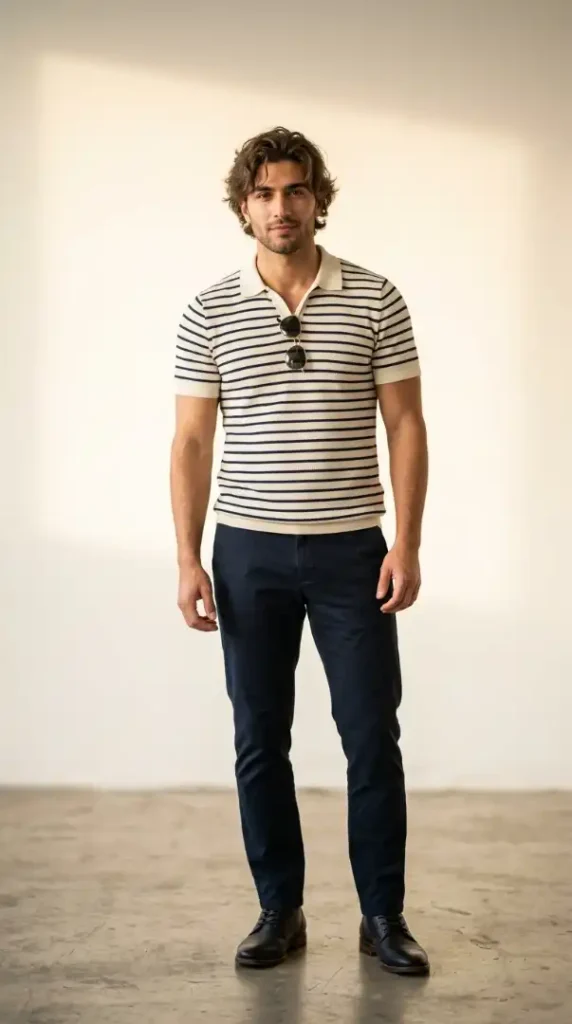
The Ash Brown Wave Tousled Casual
The Ash Brown Wave Tousled Casual represents a significant departure from precision-based cuts. This style celebrates imperfection, intentional undone styling, and natural texture. Rather than creating visual impact through fades or architectural precision, this cut relies on wave direction, medium length, and that effortlessly-styled aesthetic that suggests you just woke up looking fantastic.
The defining characteristic is the approach to styling: the hair is cut to fall naturally in the direction of your wave pattern, then deliberately tousled to enhance that natural movement. This is the style where bedhead is actually a feature, not a flaw. The cut is deceptively simple — medium length throughout with subtle layering — but the execution requires understanding your hair’s natural growth patterns and wave direction.
What makes this style remarkably effective is psychological appeal. The tousled, undone aesthetic reads as confident and authentic. It suggests someone comfortable enough in their own skin to embrace imperfection rather than obsessing over precision. Simultaneously, it’s modern and contemporary — this is a style that photographs beautifully in candid settings and performs exceptionally well on Instagram and lifestyle content.
Perfect Face Shape Matches
Heart-shaped faces are ideal for The Ash Brown Wave Tousled Casual because the medium length and casual tousling soften the wide forehead area without adding unnecessary height to the crown. The wave direction can be trained to add width through the cheekbones, balancing the narrower jawline.
Round faces benefit from the medium length which adds subtle vertical emphasis. The tousled texture prevents the style from looking heavy or compressing the face, which can happen with short cuts.
Oblong faces need to ensure the top length doesn’t exceed 2.5 inches, as longer lengths over-emphasize face length. Request that your barber focus the tousle and wave direction toward the sides to create perceived width.
Diamond faces work beautifully because the medium length and wave direction can be trained to add width through the cheekbone area. The tousling adds movement that balances the strong angles of a diamond face.
Square and oval faces work well because the balanced face structures allow the styling to take center stage.
Tools Required for Natural-Seeming Styling
The Ash Brown Wave Tousled Casual requires less specialized equipment than precision-based cuts, but what you do need must work specifically with wave patterns:
Scissors for Layer Creation: Kamisori 6-inch offset scissors or Jaguar scissors for creating the subtle layers that enhance wave pattern without being obvious.
Clippers for Outline: Wahl Magic Clip (Model 5049-400) for defining the perimeter and sides. You’re not using clippers for precision here — just for clean edges.
Trimmer/Outliner: Andis T-Outliner (Model 04710) for hairline and sideburn definition.
Wide-Tooth Comb: Essential for working with wet hair and understanding how your wave naturally falls.
Boar Bristle Brush: Critical for training wave direction and final styling. This brush doesn’t disturb the wave; it enhances it.
Spray Bottle: For dampening hair before styling — water is your most important tool for this style.
Styling Product: Sea salt spray (like Oribe Sea Spray or Bumble and bumble Surf Spray) creates natural texture without looking product-heavy. Use sparingly — the goal is to enhance natural wave, not create artificial texture. You can also use a light-hold pomade or texturizing paste, but the sea salt spray is ideal for this aesthetic.
Optional: Hair dryer with low heat and diffuser attachment if you want to speed up the process.
Maintenance Schedule and Lifestyle Fit
Rate this style as LOW to MEDIUM maintenance. The wave-based styling is forgiving because the style actually improves as it grows slightly (more movement, more texture). You can comfortably go 4-5 weeks between cuts before the style noticeably degrades.
Daily styling time is 5-10 minutes depending on your hair’s natural wave strength: dampen hair with spray bottle, apply a small amount of sea salt spray or light product, finger-comb or brush to train the wave direction, tousle with your hands, and you’re done. The undone aesthetic means precise styling isn’t necessary.
Growth pattern is favorable: Week 1 looks perfect. Weeks 2-4 continue looking great as the added length adds more movement. By week 4-5, the top starts getting shaggier and the sides need attention. By week 6, you’re transitioning toward a longer, less intentional look. Optimal trim timing is 4-5 weeks.
Monthly cost is approximately $25-40 per visit ($25-40 per month if going 4-5 weeks between cuts). This is one of the more economical styles to maintain.
Exact Barber Script for Wave-Friendly Execution
Say this to your barber:
“I want The Ash Brown Wave Tousled Casual. I’m aiming for medium length — roughly 2.5 inches on top, graduating down to 2 inches at the sides. I have a natural wave, so I want you to work with that, not against it. Create subtle layers throughout to enhance my wave movement, but I don’t want dramatic, obvious layers. Use scissors for the top work. The goal is for this to look effortlessly styled and slightly tousled, like I just woke up with great hair. On the sides, I want a textured taper, not a fade — blend down gradually but keep hair on the sides. Create a clean outline, but nothing too precise or architectural. The overall vibe should be casual, natural, and undone — very different from precision styling. If you can, angle the cut so the hair naturally falls in the direction of my wave pattern.”
STYLE 6 OF 12 — The Honey Brown Modern Burst Fade
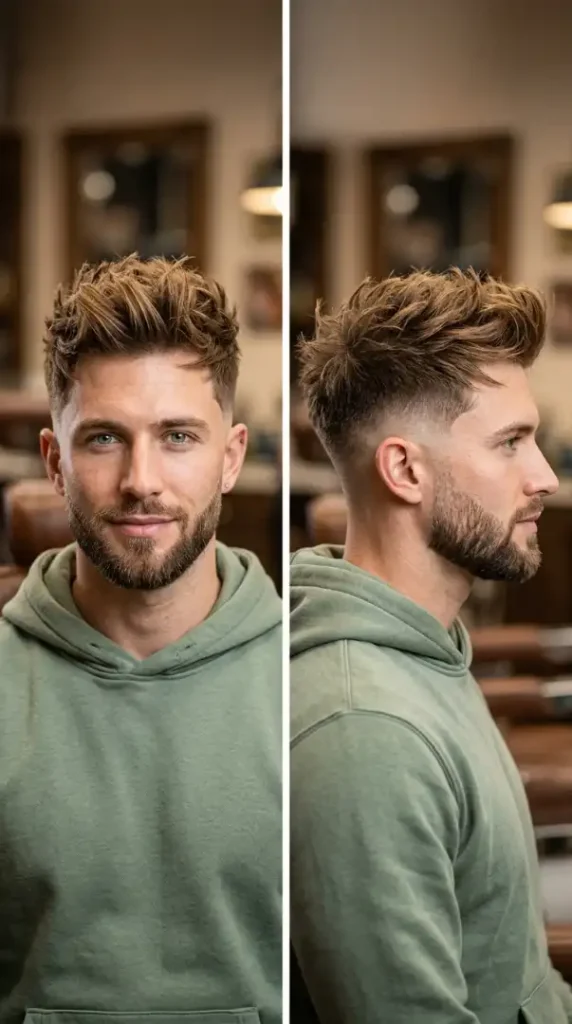
The Honey Brown Modern Burst Fade
The Honey Brown Modern Burst Fade represents the modern evolution of textured styling combined with fade precision. The defining characteristic is the “burst” — maximum volume at the crown that radiates outward and upward, created through strategic textured cutting that encourages hair to stand away from the scalp. This is combined with a mid-skin fade that provides contrast without being as extreme as full skin fades.
The top length is substantial — roughly 4/5 to 1 inch — and cut entirely with scissors using point cutting and texturizing techniques. The goal is individual strand separation and texture, not blunt length. This creates the illusion of even more volume than the actual length suggests. The fade starts at the temple line and transitions gradually to skin by the ear and nape, creating a balanced contrast that’s neither too subtle nor too dramatic.
What makes this style extraordinarily appealing is the combination of approachability and presence. The textured top and outward volume create visual impact and personality. Simultaneously, the fade and contemporary grooming keep it polished and intentional rather than chaotic. This is the style for men who want their hair to be a defining feature without sacrificing professionalism.
Ideal Face Shapes for This Dynamic Style
Round faces are perfect candidates for The Honey Brown Modern Burst Fade because the upward and outward volume on top directly counteracts the widest point of a round face. The burst volume creates vertical elongation that a round face naturally lacks. This might be the single best style choice for round faces seeking maximum transformation.
Square faces benefit from the textured, slightly softer aesthetic that the burst provides. The dramatic volume softens the hard angles of the forehead while the fade maintains clean sides that complement strong jawlines.
Oval faces work beautifully because the balanced face shape allows the cut’s presence to take center stage. The burst volume doesn’t overwhelm an already-balanced face.
Diamond and heart-shaped faces need to be strategic: request that your barber focus the burst volume toward the back and slightly to the sides rather than straight up. This adds width through the cheekbone area without over-emphasizing the narrow areas.
Oblong faces should limit top length to 4/5 inch (not pushing to 1 inch) to avoid over-emphasizing face length. The side fade also needs to maintain some visible hair length to avoid making the face appear too narrow.
Complete Grooming System for Burst Control
The Honey Brown Modern Burst Fade requires specialized tools for creating and maintaining the textured burst effect:
Scissors for Texture Creation: Kamisori 6-inch offset scissors or Jagur 5.5-inch scissors — absolutely essential. This cut cannot be created with clippers alone. You need scissors for point cutting.
Texturizing Shears: Kamisori or Jaguar texturizing shears for point cutting and texture enhancement throughout the top. These are critical for achieving the burst effect.
Clippers for Fade Creation: Wahl Senior (Model 8504) or Andis Master (Model 01557) for fade work and outline.
Fade Blending Clippers: Wahl Magic Clip (Model 5049-400) for smooth gradient transitions.
Outliner: Andis T-Outliner (Model 04710) for crisp edge work.
Finishing Tools: Kent 81T comb for precision, boar bristle brush for training burst direction.
Styling Product: Texturizing paste or clay pomade is essential for this style. Blumaan Original Forming Cream (matte, medium-high hold) or Baxter of California Clay Pomade work excellently. These products provide hold without looking shiny and allow you to manipulate individual strands. Use a dime-sized amount for the top.
Blow Dryer: Optional but helpful. A blow dryer with low heat and no nozzle attachment allows you to dry the hair upward and outward, training the burst direction.
Maintenance Timeline and Effort Requirements
Rate this style as MEDIUM-HIGH maintenance. The textured burst requires regular attention to maintain its shape and definition. The fade also needs touch-ups every 2-2.5 weeks.
Daily styling time is 6-10 minutes: dampen hair, apply texturizing product to the crown and work outward, blow dry on low heat if using a dryer (optional — air drying works too), and finger-comb or brush to train the burst direction and individual strand separation.
Growth pattern: Week 1 looks perfect. Week 2 still looks sharp. By week 3, the fade loses definition. By week 3-4, the top begins looking less textured and more just “longer.” The burst begins losing its definition as hair weight increases. By week 4, you should book your next trim.
Monthly cost is approximately $45-65 per visit ($15-22 per visit × 2-3 visits monthly). This is one of the more expensive styles to maintain due to the texturizing work required.
The Exact Barber Conversation Script
Say this to your barber:
“I want The Honey Brown Modern Burst Fade with maximum textured volume on top. I’m aiming for a guard #5 or #4 length on top — roughly 4/5 to 1 inch — but I need this cut entirely with scissors using point cutting and texturizing techniques. The goal is individual strand separation and texture, not blunt uniform length. Create a burst effect where the hair radiates outward and upward from the crown. Use texturizing shears throughout the top section to achieve that separation. On the sides, I want a mid-skin fade starting at the temple line — not a full skin fade, but definitely faded. Blend the fade smoothly using guard transitions. Keep the fade gradual and professional. The beard should integrate into the fade at the jawline with sharp edge work. Create a clean outline everywhere: temples, sideburns, hairline, nape. The overall goal is textured volume on top combined with a clean, faded appearance on the sides. This needs to look intentional and sculpted, not accidental or chaotic.”
STYLE 7 OF 12 — The Auburn Textured Edge Fade
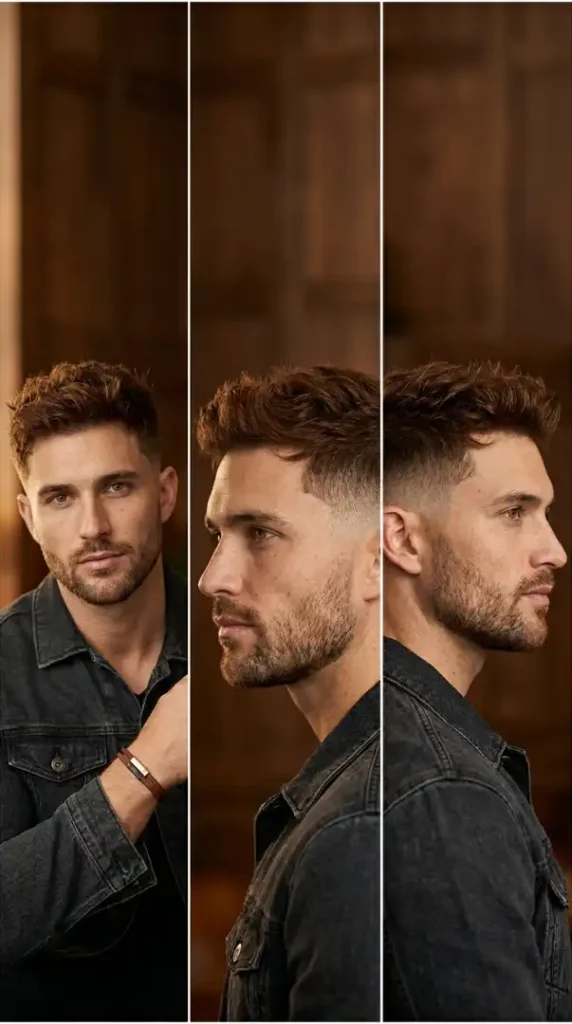
The Auburn Textured Edge Fade
The Auburn Textured Edge Fade combines substantial texture throughout with a dramatic low fade, creating a style that reads as simultaneously casual and intentional. The top maintains medium length — roughly 2-2.5 inches — but is cut entirely with scissors using point cutting and texturizing to create individual strand separation. This texture sits atop a low skin fade that starts near the temples, creating maximum contrast.
What distinguishes this style from other textured fades is the philosophy: rather than using the fade purely for visual contrast, the fade actually frames and emphasizes the textured top. The fade acts as a clean stage for the texture to perform. This creates visual depth and dimension that reads powerfully in photographs.
The style is versatile across multiple contexts. The substantial top texture and medium length give it contemporary edge appropriate for creative industries and casual settings. Simultaneously, the controlled fade and sharp edge work keep it polished enough for business-casual and even some business professional environments. This is the style that broadcasts confidence and intentionality without demanding extreme professionalism.
Which Face Shapes Excel With This Combination
Oblong faces are ideal for The Auburn Textured Edge Fade because the medium length and texture prevent the face from appearing over-elongated. The low fade keeps the sides visible, maintaining width balance. The texture adds perceived width that a naturally narrow oblong face benefits from.
Diamond faces gain substantial benefit because the textured top can be directed to add width through the cheekbone area while the low fade keeps the narrow temples and jawline visible without looking skeletal.
Square and round faces both work well with this style. Square faces gain texture softness that balances angular structure. Round faces gain vertical emphasis from the medium-length texture.
Heart-shaped faces need to be strategic: request that the barber focus the texture and density toward the sides and back rather than straight up on top. This avoids over-emphasizing the wide forehead area.
Oval faces work beautifully because the balanced face shape allows the cut’s texture and fade to take center stage.
Complete Tool and Product Arsenal
The Auburn Textured Edge Fade requires the full texturizing toolkit:
Scissors for Texture Creation: Kamisori 6-inch offset scissors or Jaguar 5.5-inch scissors for point cutting and layer creation.
Texturizing Shears: Kamisori or Jaguar texturizing shears for point cutting throughout to create strand separation and texture.
Clippers for Fade: Wahl Senior (Model 8504) or Andis Master (Model 01557) for fade creation.
Fade Blending Clippers: Wahl Magic Clip (Model 5049-400) for smooth gradient transitions.
Outliner: Andis T-Outliner (Model 04710) for crisp edge work.
Finishing Tools: Kent 81T comb for precision work, boar bristle brush for training texture direction.
Styling Product: Texturizing paste (Blumaan Original Forming Cream) or clay pomade (Baxter of California) works excellently. These allow manipulation of individual strands. Use a dime-sized amount for the top, applied to damp hair and worked through with fingers.
Optional Blow Dryer: Low heat, no nozzle attachment, for drying upward and outward to enhance texture.
Maintenance Schedule and Commitment Level
Rate this style as MEDIUM to MEDIUM-HIGH maintenance. The fade requires touch-ups every 2-2.5 weeks because the fade line blurs quickly. The textured top remains defined longer but eventually needs re-texturizing around week 3.5-4.
Daily styling time is approximately 7-8 minutes: dampen hair, apply texturizing product, work through with fingers emphasizing the texture and natural direction, optional blow dry, finger-comb to finish.
Growth pattern: Week 1 looks perfect. Week 2 still looks sharp. By day 14-16, the fade starts losing definition. By day 18-21, the textured top is growing out and the texture becomes less defined. By week 4, you should book your next appointment.
Monthly cost is approximately $45-65 per visit ($15-22 per visit × 2-3 visits monthly).
Exact Barber Script for Textured Fade Success
Say this to your barber:
“I want The Auburn Textured Edge Fade with substantial texture throughout the top and a low skin fade on the sides. On top, I’m aiming for medium length — roughly 2.5 inches — and I need this cut entirely with scissors using point cutting and texturizing. Create lots of separation and texture throughout so the hair has individual strand definition, not one uniform length. The goal is textured movement and dimension. On the sides, I want a low skin fade starting near my temple line — not a mid-fade, but a genuine low fade that goes all the way to skin by my ear and nape. Use guard transitions to create a smooth gradient. The contrast between the textured top and the faded sides should be dramatic and intentional. Create a sharp fade line and crisp edge work everywhere: temples, sideburns, hairline, nape. The overall aesthetic should be textured on top, clean on the sides, intentional and sculpted throughout.”
STYLE 8 OF 12 — The Dark Brown Polished Pompadour Fade
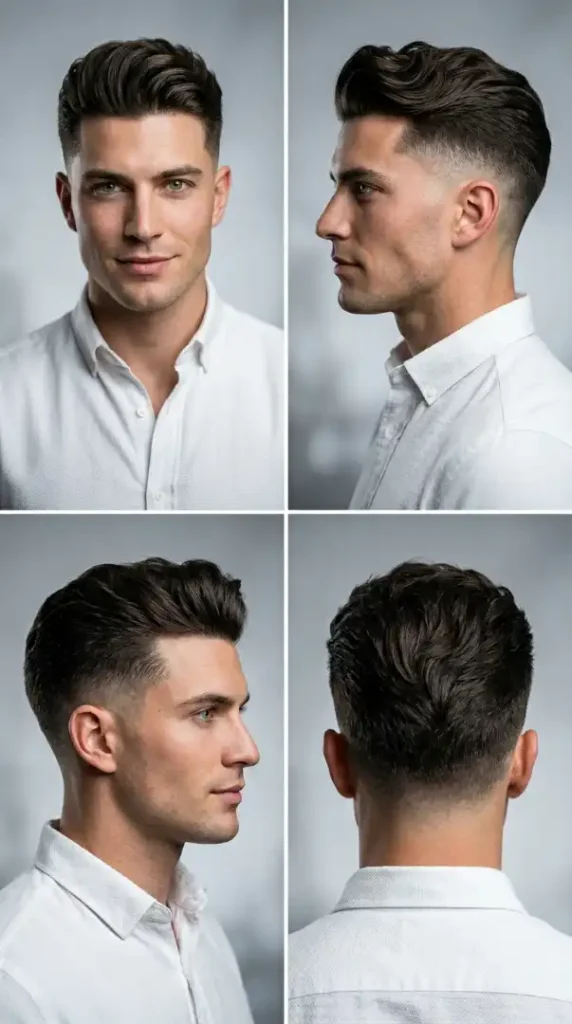
The Dark Brown Polished Pompadour Fade
The Dark Brown Polished Pompadour Fade brings the vintage pompadour aesthetic into the modern era through the combination of substantial top volume with a contemporary high skin fade. The pompadour traditionally refers to a style where hair is brushed up and back, creating height and volume at the crown. This modern iteration maintains that aesthetic while incorporating a high fade that keeps the sides contemporary rather than long and slicked.
The top length is substantial — roughly 3 inches at the crown — and features wave texture that’s enhanced rather than created through styling. The styling requires intentionality: the hair is typically slicked or smoothed back and to the side using pomade, creating a polished, refined appearance. The high fade starts above the ear and transitions smoothly to skin, creating a clean, modern frame for the substantial top.
What makes this style exceptionally appealing is the combination of classic aesthetic appeal with contemporary execution. The pompadour brings vintage sophistication and timeless style. The high fade and clean lines bring modern sensibility. The result reads as refined, intentional, and confident — the style of someone who understands classic menswear and grooming.
Perfect Face Shape Matches
Square faces are ideal for The Dark Brown Polished Pompadour Fade because the upward and backward sweep of the pompadour creates vertical elongation that balances a wide face. The high fade emphasizes the strong jawline while the swept-back styling shows off cheekbones and angular features.
Oblong faces benefit from the pompadour’s volume creating perceived width, especially if the barber sweeps the hair slightly to the side rather than straight back. The high fade maintains visible sides that help balance a naturally long face.
Oval faces work beautifully because the balanced face shape doesn’t need structural correction — the pompadour’s sophistication can take center stage.
Round faces gain substantial benefit from the upward and backward sweep that adds vertical dimension. The height created by the pompadour directly counteracts the face’s natural width.
Heart and diamond-shaped faces should request that the barber sweep the pompadour slightly to the sides rather than straight back, adding perceived width through the upper face area.
Complete Grooming Toolkit for Pompadour Mastery
The Dark Brown Polished Pompadour Fade requires tools specifically for creating volume and maintaining polished styling:
Clippers for Fade Creation: Wahl Senior (Model 8504) or Andis Master (Model 01557) for the high fade work.
Fade Blending Clippers: Wahl Magic Clip (Model 5049-400) for smooth gradient transitions.
Scissors for Top Work: Kamisori 6-inch offset scissors or Jaguar 5.5-inch scissors for blending the longer top and creating wave texture if needed.
Outliner: Andis T-Outliner (Model 04710) for crisp hairline and edge definition.
Grooming Combs: Kent 81T fine-tooth comb for parting and direction, wide-tooth comb for blending.
Brush Work: Boar bristle brush for styling direction and training.
Blow Dryer: Essential for this style. A blow dryer with moderate heat and a concentrator nozzle helps create height and volume at the crown.
Pomade Product: This is critical for the pomadour aesthetic. Layrite Original Pomade (medium hold, slight shine) or Pomade Shop Original (medium hold, shine) are excellent choices. The shine is part of the polished aesthetic. Apply to damp hair and blow dry with the dryer positioned to push hair upward and back.
Alternative: Forming Cream: If you prefer less shine, Blumaan Original Forming Cream (matte, medium hold) works as a more modern interpretation of the pompadour.
Maintenance Schedule and Effort Requirements
Rate this style as MEDIUM-HIGH maintenance. The high fade requires touch-ups every 2-2.5 weeks. The pompadour top requires daily styling and product application.
Daily styling time is 8-12 minutes: damp hair (use a spray bottle), apply pomade or forming cream, blow dry using a concentrator nozzle with the dryer pointed upward to create height, style the sweep direction with your fingers or brush, finish with precision.
Growth pattern: Week 1 looks perfect. Week 2 still looks sharp. By week 3, the fade starts losing definition. By week 3.5, the top is noticeably longer and the pompadour shape becomes harder to maintain precisely. By week 4, you should book your next appointment.
Monthly cost is approximately $50-70 per visit ($16-23 per visit × 2-3 visits monthly). The pompadour requires consistency and precision, making professional maintenance important.
The Exact Barber Script for Classic-to-Modern Pompadour
Say this to your barber:
“I want The Dark Brown Polished Pompadour Fade. On top, I need substantial length — roughly 3 inches at the crown — and I want it blended smoothly down the back and sides without dramatic steps. Keep the back and sides at 2-2.5 inches, blending from the full length at the crown. On the sides, I want a high skin fade starting above my ears — I want visible skin at the temples and sides, but the fade should be smooth and blended, not harsh. Use precise guard transitions for a gradient effect. Create a sharp, architectural hairline across my forehead and down to my sideburns. The overall goal is to have substantial length on top that I can sweep back and to the side using pomade. The sides should be clean and modern through the fade. Finish with crisp edges everywhere.”
STYLE 9 OF 12 — The Light Brown Modern Spike Texture
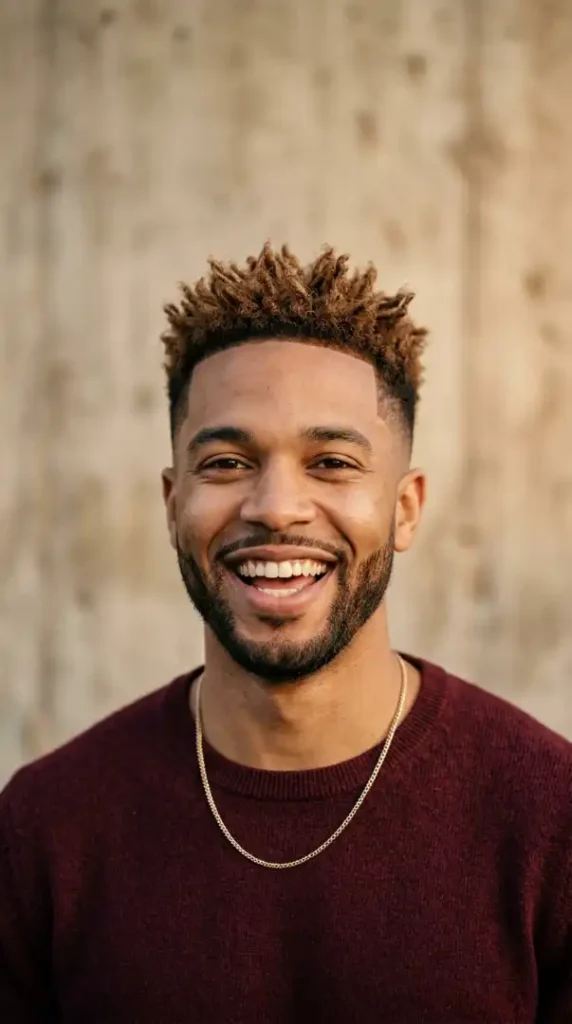
The Light Brown Modern Spike Texture
The Light Brown Modern Spike Texture brings textured energy and dynamic movement to the fade aesthetic. This style features medium-short length — roughly 1 to 1.5 inches — with intentional texturing throughout that creates individual spike definition. The texture is cut to stand away from the scalp in all directions, creating a three-dimensional, almost explosive appearance. A low skin fade frames the textured top, creating visual contrast and keeping the style grounded and intentional.
What makes this style particularly compelling is the combination of edginess and approachability. The spike texture reads as contemporary and full of personality. Simultaneously, the fade and sharp edge work prevent it from looking chaotic or unkempt. This is the style that broadcasts confidence and doesn’t apologize for being bold.
The modern spike differs from 1990s-style spikes in execution. Rather than using product to create artificial spikes, modern spike texture is created through the cut itself — the texture is baked in, and product simply enhances what’s already there. This creates a more natural, authentic appearance that actually improves throughout the day as the hair moves and settles.
Face Shape Considerations and Strategic Fits
Round faces benefit substantially from The Light Brown Modern Spike Texture because the upward and outward spike texture creates vertical and lateral dimension that directly addresses the face’s widest point. The texture adds perceived angularity that a round face lacks. This is actually one of the best style choices for round faces.
Square faces gain softening from the texture while maintaining the angular aesthetic. The spikes prevent the style from looking harsh or overly structured.
Oval faces work beautifully because the balanced face shape allows the texture’s personality to take center stage without needing structural compensation.
Oblong faces need to ensure the spikes don’t extend too high (request slightly lower overall height on the spikes) to avoid over-emphasizing face length. The sides should maintain more weight to create lateral dimension.
Diamond and heart-shaped faces benefit from the texture creating width perception through the temple area.
Complete Grooming Equipment for Spike Success
The Light Brown Modern Spike Texture requires specialized texturizing tools:
Clippers for Fade: Wahl Senior (Model 8504) or Andis Master (Model 01557) for fade creation.
Fade Blending Clippers: Wahl Magic Clip (Model 5049-400) for smooth gradient transitions.
Scissors for Texturizing: Kamisori 6-inch offset scissors for point cutting and creating the spike texture definition.
Texturizing Shears: Kamisori or Jaguar texturizing shears for creating separation and spike definition throughout.
Outliner: Andis T-Outliner (Model 04710) for crisp edge work and hairline definition.
Finishing Tools: Kent 81T comb for precision, boar bristle brush for training spike direction.
Styling Product: Texturizing paste or spiking paste is essential. Blumaan Original Forming Cream (matte, high hold) or Baxter of California Clay Pomade both work excellently. These products allow you to manipulate individual spikes without looking shiny or plastic. Use a pea-sized amount for the top.
Optional Blow Dryer: Low-to-moderate heat, no nozzle attachment, helps dry the hair upward and outward to enhance the spike effect.
Maintenance Timeline and Effort Investment
Rate this style as MEDIUM maintenance. The fade requires touch-ups every 2-2.5 weeks. The textured spikes remain relatively defined throughout the growth cycle because the shorter length doesn’t change as dramatically.
Daily styling time is approximately 5-8 minutes: dampen hair, apply texturizing paste to the crown and work outward with your fingers, manipulating individual spikes upward and outward, optional light blow dry to set, finger-comb to finish.
Growth pattern: Week 1 looks perfect. Week 2 still looks sharp. By week 3, the fade loses definition and the overall length increases noticeably. By week 4, the spikes are merging more together and losing individual definition. By week 4-5, you should book your next appointment.
Monthly cost is approximately $45-65 per visit ($15-22 per visit × 2-3 visits monthly).
The Exact Barber Script for Spike Texture Perfection
Say this to your barber:
“I want The Light Brown Modern Spike Texture with medium-short length on top and a low skin fade on the sides. On top, I’m aiming for roughly 1.5 inches, and I need this cut entirely with scissors using point cutting and texturizing shears. Create lots of texture and separation so each strand stands individually — I want explosive, three-dimensional spikes, not one uniform length. On the sides, I want a low skin fade that goes all the way down to skin by my ears and nape. Use guard transitions to create a smooth gradient from the longer top down to skin. The fade line should be sharp and defined. Create crisp, geometric edge work everywhere: temples, sideburns, hairline, nape. The overall aesthetic should be textured and dimensional on top, clean and faded on the sides. If you think texturizing shears would help create better separation, absolutely use them liberally.”
STYLE 10 OF 12 — The Chestnut High Fade Sharp Lin
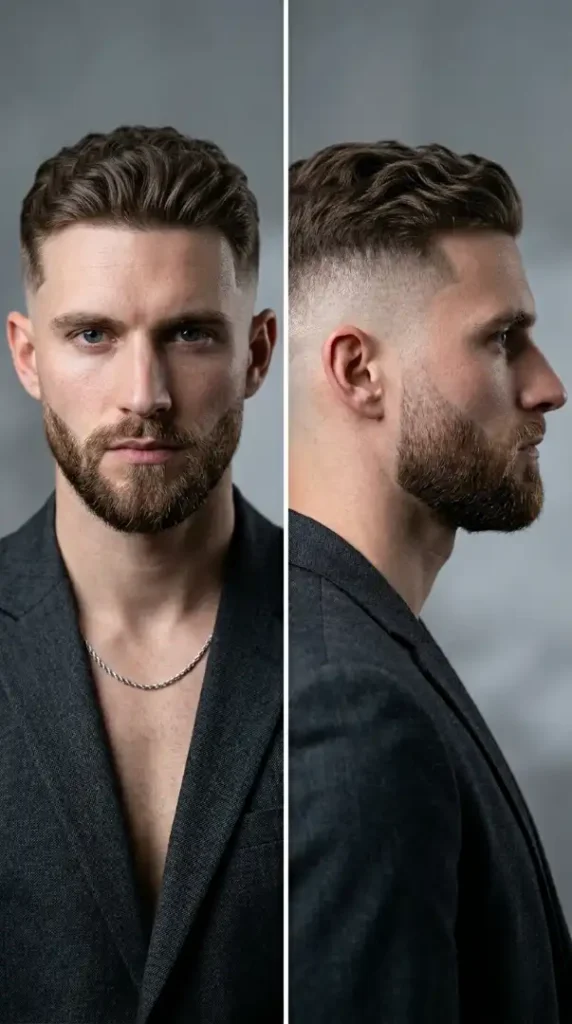
The Chestnut High Fade Sharp Line
The Chestnut High Fade Sharp Line is a study in precision and refined execution. This style features substantial length on top — roughly 3 to 3.5 inches — cut blunt and straight across, creating a strong visual presence. The top length is maintained uniformly, emphasizing the clean line rather than texture or movement. This substantial top is combined with a high skin fade that starts above the ear, creating dramatic contrast and visual impact.
What makes this style distinctive is the emphasis on the sharp line itself. Rather than using fades for soft blending or textures for movement, this cut lets the fade line be the star. The sharp transition from full-length top to skin creates an almost architectural quality. This appeals to men who appreciate geometric precision and clean lines.
The style is exceptionally versatile across professional contexts. The conservative high fade and sharp edge work keep it appropriate for corporate and executive settings. Simultaneously, the substantial top length and bold fade make it contemporary and intentional-looking. This is the style that communicates “I pay attention to details” through the precision alone.
Ideal Face Shape Matches for Sharp-Line Aesthetics
Diamond faces are perfect for The Chestnut High Fade Sharp Line because the high fade emphasizes the width through the cheekbones while the substantial top length avoids over-emphasizing the narrower forehead and chin. The sharp line creates angular definition that complements a diamond face’s natural structure.
Square faces benefit dramatically because the high fade emphasizes the jawline’s strength while the substantial top balances the face’s proportions. The sharp line creates the clean edges that square faces naturally have.
Oval faces work beautifully because the balanced structure allows the cut’s precision and strong lines to take center stage.
Round faces need more top length (push toward 3.5 inches) to create stronger vertical elongation. The high fade helps visually lengthen the face, but the top needs sufficient height to be most effective.
Oblong faces should keep the top length at 3 inches or slightly less to avoid over-emphasizing face length. The high fade maintains visible sides that help balance an already-long face.
Heart-shaped faces benefit from the high fade which creates width perception through the upper face area. The substantial top also adds balance to a narrower jawline.
Complete Tool Requirements for Precision Fade Work
The Chestnut High Fade Sharp Line requires tools specifically for clean, precise fade execution:
Clippers for Precision Fade: Wahl Senior (Model 8504) or Andis Master (Model 01557) — both provide exceptional control for smooth gradient work. The senior is particularly good for precise fade lines.
Fade Blending Clippers: Wahl Magic Clip (Model 5049-400) for smooth gradient transitions and precise blending.
Top Work Clippers: Andis Master (Model 01557) for the blunt top cut. You want a clipper that can cut straight, uniform lines without dragging.
Outliner for Line Definition: Andis T-Outliner (Model 04710) with fresh blades for crisp fade line work and hairline precision.
Straight Razor for Beard: Essential for sculpting the beard line and defining edges with precision. Dovo or Feather straight razors are excellent choices.
Finishing Tools: Kent 81T fine-tooth comb for precise work, boar bristle brush for final direction setting.
Styling Product: For the blunt top, minimal product is actually ideal. If using product, a light-hold pomade like Baxter of California or Layrite works well — just a dime-sized amount for shine and slight hold, allowing the clean line to be the focus.
Beard Maintenance: High-quality beard oil (Beardbrand or Baxter of California) and a quality beard trimmer like Panasonic ER-GB80-S for maintaining the precise 9-10mm length between cuts.
Maintenance Schedule and Consistency Requirements
Rate this style as MEDIUM-HIGH maintenance. The high fade requires touch-ups every 2 weeks because the fade line is the focal point — even slight blur becomes noticeable. The substantial top length also needs regular maintenance to keep the blunt line crisp and defined.
Daily styling time is minimal: 3-4 minutes. The blunt top doesn’t need styling — you’re just grooming it and perhaps applying a light pomade for shine. The clean line does the styling work.
Growth pattern: Week 1 looks perfect. Week 2 still looks sharp with the fade and top line crisp. By day 14-16, the fade starts losing definition. By day 18-21, the blur becomes noticeable and the overall look softens. The top length grows out and the blunt line becomes less distinct. By week 3, you should book your next appointment.
Monthly cost is approximately $45-65 per visit ($15-22 per visit × 2-3 visits monthly). The precision required makes regular professional maintenance important.
The Precise Barber Script for Line-Perfect Execution
Say this to your barber:
“I want The Chestnut High Fade Sharp Line with a blunt top and high skin fade. On top, I want substantial length — roughly 3.5 inches — cut uniformly blunt across. I’m not looking for texture or movement; I want the clean line to be the focus. Keep the length consistent throughout the top. On the sides, I want a high skin fade starting above my ears. Use precise guard transitions to create a smooth gradient, not choppy steps. The fade line should be sharp and defined — this is the focal point of the cut. Create a crisp, geometric hairline across my forehead and into my sideburns. Work my beard line into the fade perfectly — I want the beard to follow my jawline and integrate seamlessly with the fade using precise edge work. Finish with sharp edges everywhere: temples, sideburns, hairline, nape. Everything should look intentional and sculpted.”
STYLE 11 OF 12 — The Ash Brown Wave Textured Long Fade
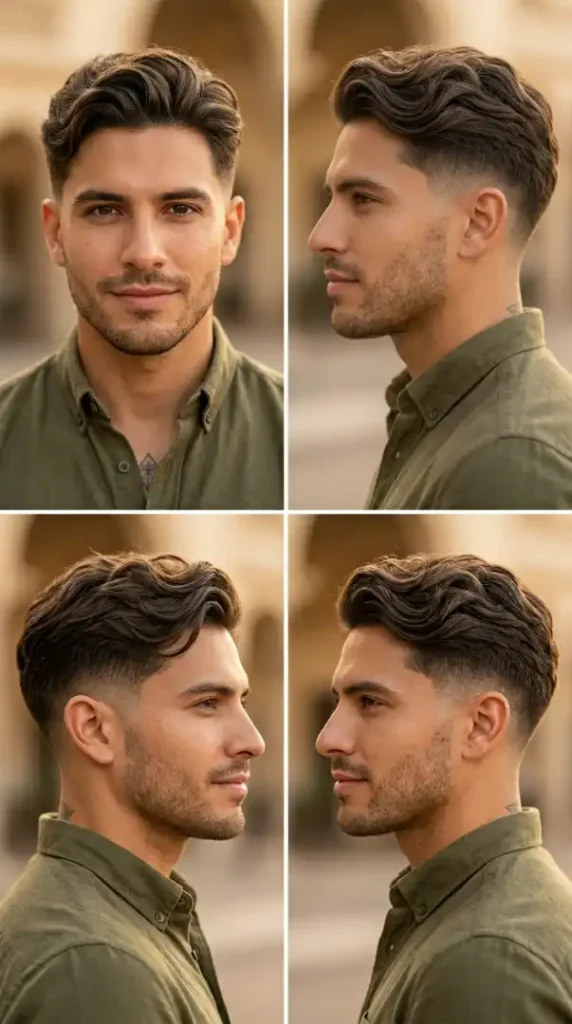
The Ash Brown Wave Textured Long Fade
The Ash Brown Wave Textured Long Fade combines substantial length with natural wave enhancement through strategic layering and a mid-skin fade that creates balance without drama. The top length is generous — roughly 3 to 3.5 inches — featuring multiple layers at different lengths that enhance the natural wave pattern. This creates dimension and movement throughout the top.
The defining characteristic is the balance this cut achieves. The substantial length gives the cut presence and personality. The natural wave and layering create organic movement that looks lived-in and effortless. The mid-skin fade adds just enough contrast to frame the textured top without creating the dramatic impact of a low fade. The result reads as refined, intentional, yet approachable.
This is the style for men comfortable with their hair being a defining feature while maintaining the appearance of effortlessness. The wave pattern does significant work — the cut simply enhances what’s naturally there. This is the style that performs exceptionally well in lifestyle content and candid photography because the wave creates authentic, natural-looking movement.
Face Shape Compatibility and Strategic Considerations
Square faces benefit from the substantial length and wave texture that softens the angular structure while the mid-fade maintains clean sides that complement strong jawlines. The layers add movement that prevents the style from looking too structured.
Round faces gain significant benefit from the vertical elongation created by the length and upward wave direction. The mid-fade maintains visible sides that help balance the face’s width. The layers add dimension that a rounder face can use for definition.
Oblong faces should request slightly more width emphasis — ask the barber to train some of the wave direction toward the sides rather than entirely upward to create lateral dimension on a naturally narrow face.
Oval faces work beautifully because the balanced structure allows the cut’s texture and movement to take center stage.
Diamond and heart-shaped faces benefit from the layers creating width perception through the upper face area.
Complete Grooming System for Wave Enhancement
The Ash Brown Wave Textured Long Fade requires tools specifically for enhancing wave patterns:
Scissors for Layer Creation: Kamisori 6-inch offset scissors or Jaguar 5.5-inch scissors for creating strategic layers that enhance natural wave.
Texturizing Shears: Kamisori or Jaguar texturizing shears for point cutting and texture work, particularly important if hair is thick.
Clippers for Fade: Wahl Magic Clip (Model 5049-400) or Andis Master (Model 01557) for mid-fade creation.
Fade Blending Clippers: Wahl Magic Clip (Model 5049-400) for smooth gradient transitions on sides.
Outliner: Andis T-Outliner (Model 04710) for crisp edge work around temples, sideburns, and nape.
Finishing Tools: Kent 81T fine-tooth comb for parting precision, wide-tooth comb for working with wet hair and understanding wave patterns, boar bristle brush for training wave direction.
Styling Product: For wave-based cuts, light-hold products work best. Blumaan Original Forming Cream (matte, medium hold) or sea salt spray (like Oribe Sea Spray) allow natural wave to show without looking overly product-heavy. Use minimal product — the wave does most of the work.
Wave Training: Sea salt spray or light leave-in conditioner on damp hair helps enhance and define wave patterns. Apply, finger-comb to set direction, and let air dry or use a blow dryer with a diffuser.
Maintenance Schedule and Growth Compatibility
Rate this style as MEDIUM maintenance. The layers remain defined through the growth cycle, and the mid-fade is less critical than low fades (touches-ups every 3 weeks rather than 2). This is actually one of the more forgiving substantial-length styles.
Daily styling time is 5-10 minutes depending on blow dryer usage: dampen hair with spray bottle or sea salt spray, finger-comb or brush to train wave direction, optional blow dry with diffuser to enhance wave, finger-comb to finish.
Growth pattern: Week 1 looks perfect. Weeks 2-4 actually continue looking good as the added length adds more movement. By week 4-5, the fade needs attention and the top starts getting slightly shaggy. By week 5-6, you should book your next trim.
Monthly cost is approximately $35-50 per visit ($35-50 per month if going 4-5 weeks between cuts). This is one of the more economical styles to maintain due to less frequent fade touch-ups.
The Exact Barber Script for Wave-Integrated Sophistication
Say this to your barber:
“I want The Ash Brown Wave Textured Long Fade with substantial length enhanced by my natural wave. I’m aiming for roughly 3.5 inches on top with strategic layering throughout to enhance my wave pattern. Use scissors for the top work — create layers at different lengths so the hair flows with my natural wave, not against it. The goal is natural movement and dimension created by layering, not texture or obvious cut lines. On the sides, I want a mid-skin fade starting at the sideburn line — not a full skin fade, but definitely faded. Blend smoothly using guard transitions. The fade should frame the length on top without being overly dramatic. Create a clean outline: temples, sideburns, hairline, nape. The overall aesthetic should be refined, layered, and wave-enhanced. This needs to look like I just woke up with naturally great hair, even though the cut was intentionally designed.”
STYLE 12 OF 12 — The Honey Brown Textured Skin Fade Pro
The Honey Brown Textured Skin Fade Pro
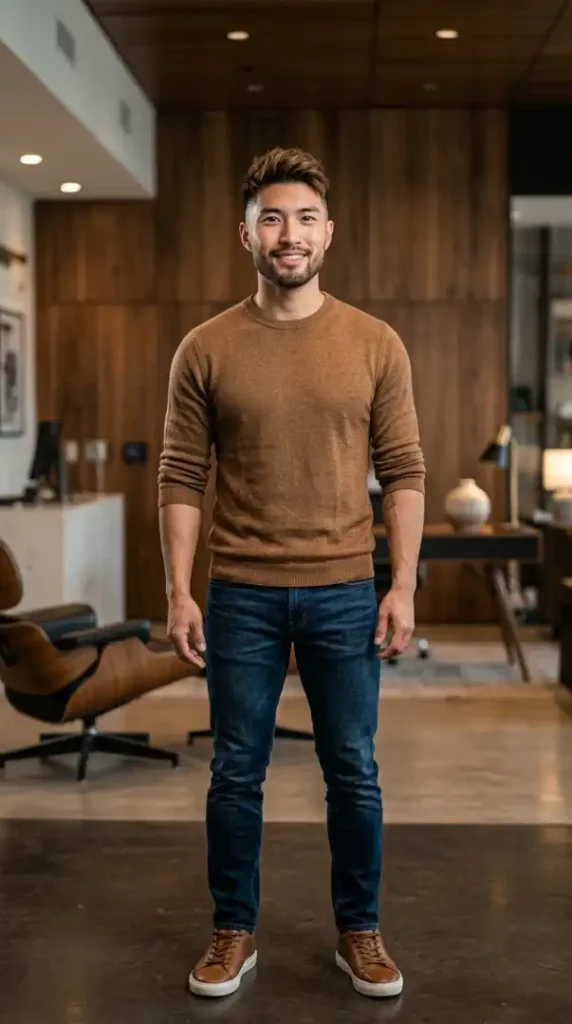
The Honey Brown Textured Skin Fade Pro brings our complete exploration full circle, combining the most effective elements from styles throughout the article into one sophisticated, production-ready aesthetic. This cut features medium length — roughly 2 to 2.5 inches — with substantial texture throughout created via point cutting and texturizing shears. The texture creates explosion and dimension that radiates in all directions.
The skin fade component is the framing mechanism: it starts at the temple line and transitions to skin by the ear and nape, creating dramatic contrast that emphasizes the textured top. This is the professional version of fade-based styling — refined, intentional, and executed to the absolute highest standard.
What makes The Honey Brown Textured Skin Fade Pro the ideal conclusion to our article is how it synthesizes the key principles we’ve explored: substantial top texture for personality, a fade for contemporary contrast, beard integration for sophistication, and sharp edge work that communicates attention to detail. This is the style that works across professional contexts while maintaining contemporary edge.
Universal Face Shape Appeal and Strategic Application
This style actually works well across all face shapes due to the balance it achieves. The substantial texture provides dimension and personality. The skin fade creates visual interest without being as extreme as higher fades. The beard integration adds sophistication.
Round faces benefit from the slightly taller top and texture that adds vertical dimension. The skin fade maintains visible sides for width balance.
Square faces gain softening from the texture while maintaining the angular aesthetic. The fade complements strong jawlines.
Oval faces use this as a foundation style that works beautifully without requiring shape-specific modifications.
Oblong faces should request slightly less top height (keep it toward 2 inches rather than 2.5 inches) to avoid over-elongation. The sides should maintain slight weight.
Heart and diamond-shaped faces benefit from the skin fade creating width perception through the upper face area.
Complete Professional Grooming Arsenal
The Honey Brown Textured Skin Fade Pro demands the full professional toolkit:
Scissors for Texturizing: Kamisori 6-inch offset scissors or Jaguar 5.5-inch scissors for point cutting and layer creation.
Texturizing Shears: Kamisori or Jaguar texturizing shears for creating pronounced separation throughout. These are essential for the texture quality.
Clippers for Fade: Wahl Senior (Model 8504) or Andis Master (Model 01557) for fade creation.
Fade Blending Clippers: Wahl Magic Clip (Model 5049-400) for smooth gradient transitions.
Outliner: Andis T-Outliner (Model 04710) for crisp edge work and line definition.
Straight Razor: For beard line precision and edge definition. Dovo or Feather straight razors provide exceptional control.
Finishing Tools: Kent 81T fine-tooth comb for precision work, boar bristle brush for training texture direction and final styling.
Styling Product: Texturizing paste (Blumaan Original Forming Cream) or clay pomade (Baxter of California Clay Pomade) work excellently for this style. These allow manipulation of individual texture strands. Use a pea-sized amount for the top.
Blow Dryer: Optional but helpful. Low heat, no nozzle attachment, allows drying the texture upward and outward for enhanced dimension.
Beard Maintenance: High-quality beard oil (Beardbrand, Baxter of California, or Honest Amish) for daily conditioning and maintaining the 7-8mm length. A quality beard trimmer like Panasonic ER-GB80-S for precision maintenance.
Maintenance Schedule and Professional Commitment
Rate this style as MEDIUM-HIGH maintenance. The skin fade requires touch-ups every 2 to 2.5 weeks because the fade line is the focal point. The textured top needs re-texturizing around the same interval to maintain the explosive quality.
Daily styling time is 6-10 minutes: dampen hair, apply texturizing product to crown and work outward with fingers, optional blow dry to enhance texture, finger-comb to finish and manipulate individual texture strands.
Growth pattern: Week 1 looks absolutely perfect. Week 2 still looks sharp. By day 14-16, the fade starts losing definition. By day 18-21, the texture is growing out and losing definition. By week 3-4, you should book your next appointment.
Monthly cost is approximately $50-75 per visit ($16-25 per visit × 3 visits monthly). The professional-grade maintenance keeps this style at its best.
The Precise Professional Barber Script
Say this to your barber:
“I want The Honey Brown Textured Skin Fade Pro with professional-grade execution throughout. On top, I’m aiming for medium length — roughly 2.5 inches — and I need this cut entirely with scissors using point cutting and texturizing shears. Create explosive texture throughout with individual strand separation visible from all angles. The goal is professional-grade texture that radiates dimension. On the sides, I want a skin fade starting at the temple line — I want it to transition smoothly to exposed skin by my ear and nape. Use precise guard transitions to create a gradient effect. The fade line should be sharp and defined. Create a sculptural beard line where the beard integrates seamlessly into the fade using precise edge work and straight razor finishing. Create crisp edges everywhere: temples, sideburns, hairline, nape. The overall aesthetic should be textured, sophisticated, professional, and intentional. This is the style for someone who takes grooming seriously.”