20 Beard Styles for Men: Boxed Beards, Stubble & Full Beards for Winter
Winter is beard season, and the searches prove it. Beard styles for men hit their peak every year as the cold sets in — a beard insulates the face, hides the winter pallor and turns a plain haircut into a complete look. This year’s direction is clear from what men are actually booking: the short boxed beard is the single most-searched style in barbershops right now, heavy stubble keeps winning “most attractive” in study after study, and the beardstache has arrived as the statement look of the moment. Classics are back too — the goatee family is having a full revival, and long beards are going wider and more natural instead of sculpted.
Below are the 20 beard styles for men worth your grow-out time this winter, from five-day stubble to a full Garibaldi. Every style comes with the face shapes it flatters, the kit it needs, the upkeep it honestly takes and the exact words to say to your barber — plus the haircut that pairs with it, because a beard never lives alone. New to growing? Start with the low-commitment styles at the top. Already bearded? The long and statement styles are further down. If you are building a complete winter look, pair these with our 20 winter haircuts for men and the curly hairstyles for men guide. For Black men growing through the cold months, our hairstyles for Black men article covers winter protection in depth.
One honest rule before the list: a beard only looks good when the skin under it is healthy and the edges are deliberate. Winter air dries both out faster than any other season — oil daily, wash gently, and trim on a schedule. Now, the 20 styles.
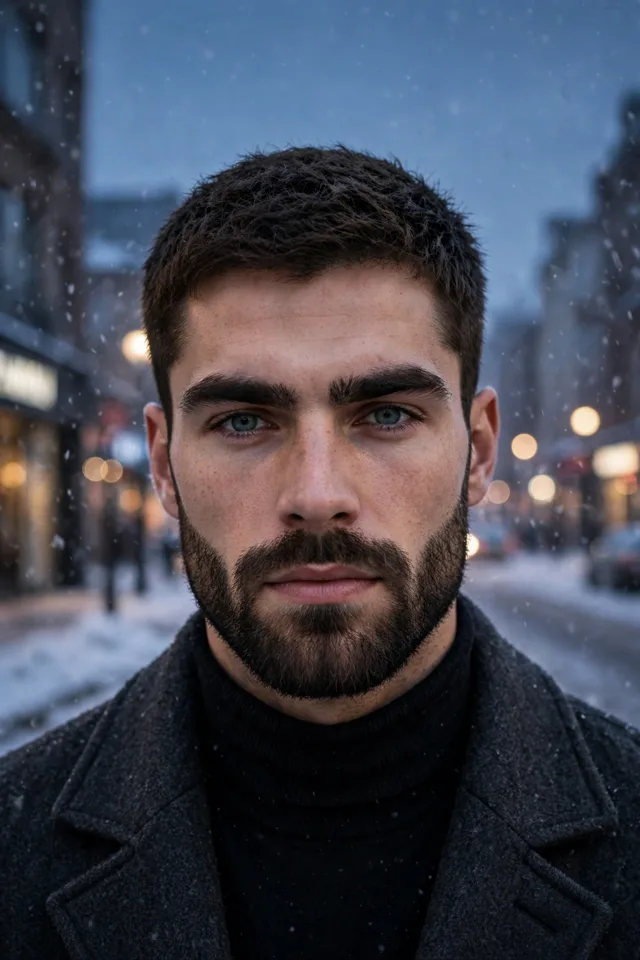
1 of 20 — The Short Boxed Beard
Why is the short boxed beard the most-searched of all beard styles for men?
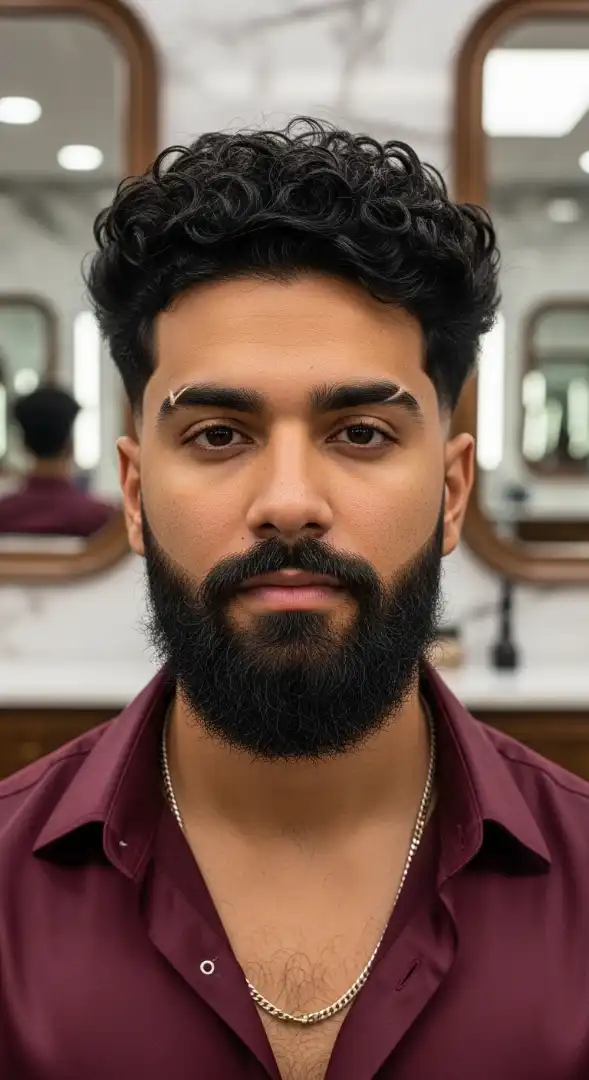
Because it threads the needle perfectly: full coverage like a real beard, sharp geometry like a fresh haircut. The short boxed beard is kept to an even short-to-medium length with razor-straight cheek lines and a squared, clean neckline — substantial enough to read masculine, tidy enough for any office. It is the most-booked of all beard styles for men right now for exactly that reason. Pair it with a textured crop or a short side part.
Face Shape: Best on oval, round and heart faces — the straight lines add structure and angles where the face is soft.
Grooming Kit: A trimmer with length guards, a clear shave gel for the lines, a razor for edges, beard oil and a boar brush.
Maintenance: Trim the length every 4–5 days, re-cut the cheek and neck lines twice a week, oil daily against winter dryness.
Barber Script: “Short boxed beard, even length all over, straight cheek lines, squared neckline — keep the corners sharp.”
Q: How long does a short boxed beard take to grow?
A: From clean-shaven, expect three to five weeks to reach full boxed density. Grow everything out untouched first, then let your barber cut the lines in once — lines cut too early end up too low.
Q: Does the short boxed beard suit a patchy beard?
A: It is one of the better options, because the even short length hides thin spots better than long styles. If the cheeks are very sparse, drop the cheek line slightly lower to keep the box inside your natural density.
The most-searched beard on earth right now — neat geometry, real presence.
2 of 20 — Heavy Stubble
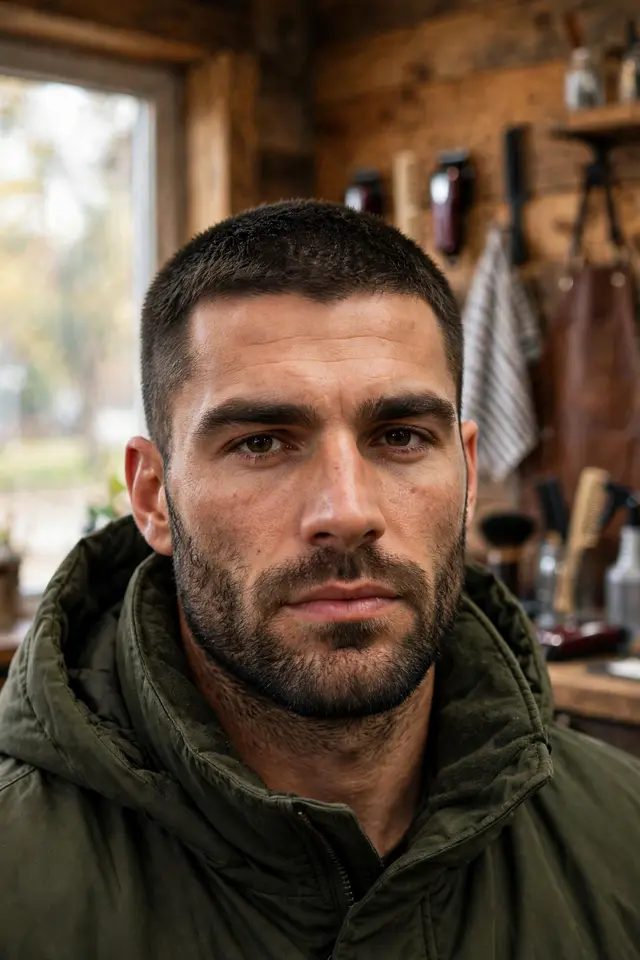
Why does heavy stubble keep winning “most attractive” of all short beard styles?
Study after study lands on the same answer: heavy stubble — five to ten millimetres of even growth — is rated the most attractive facial hair a man can wear. It sharpens the jaw, adds shadow and structure, and asks for almost nothing in return. Of all short beard styles it is the lowest-commitment way to change your face in ten days. Pair it with a crew cut or a buzz with a taper.
Face Shape: Universal — it flatters every face shape, and it is the fastest fix for a weak chin or a soft jawline.
Grooming Kit: A trimmer with a 5–10mm guard, a gentle exfoliator for the skin underneath, and a light, non-greasy beard oil.
Maintenance: Trim back to your chosen length every 3–4 days, clean the neckline weekly, exfoliate once a week to stop ingrown hairs.
Barber Script: “Heavy stubble at eight millimetres, even all over, soft natural cheek line, clean up just the neck.”
Q: What length is heavy stubble exactly?
A: Between 5mm and 10mm — roughly ten to fourteen days of growth. Below 5mm reads as a shadow; above 10mm you are into short beard territory and the edges start needing real lines.
Q: How do I stop heavy stubble itching in winter?
A: The itch is dry skin, not the hair. Wash with a gentle cleanser, moisturise the skin under the stubble daily, and use two drops of beard oil worked down to the skin, not just the hair.
Ten days of growth, a stronger jaw — the easiest upgrade on this list.
3 of 20 — The Beardstache
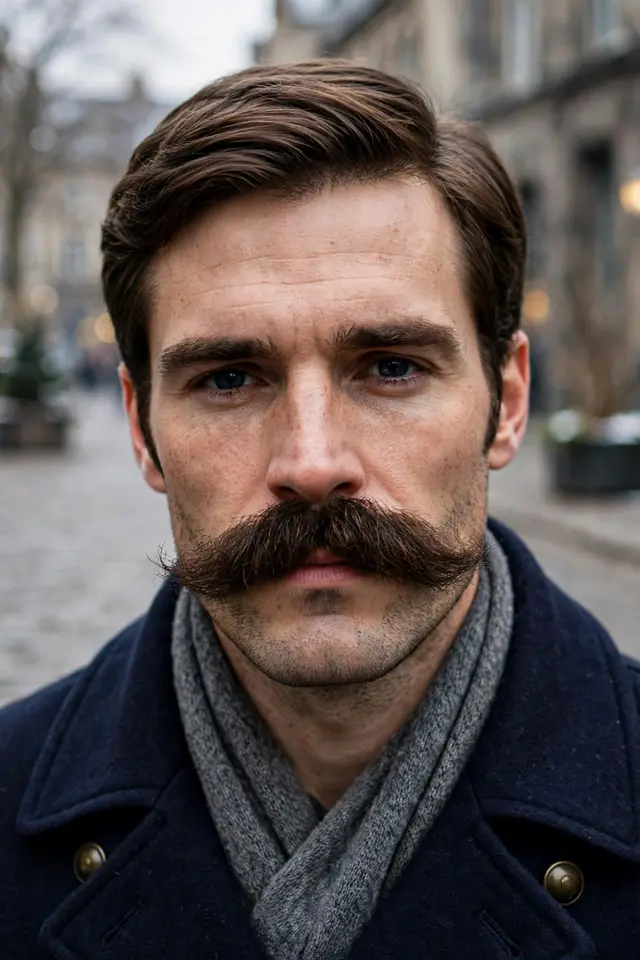
What makes the beardstache the statement pick among beard styles for men?
The beardstache flips the usual balance: the moustache is the star — grown thick, full and long — while the chin and jaw wear only short stubble. It is bold, a little retro and completely deliberate, the beard equivalent of a statement coat. It has surged this year as men look for beard styles for men that stand out in a sea of identical full beards. Pair it with a classic side part or slicked-back hair to match the vintage energy.
Face Shape: Best on oval and square faces with a strong nose and a full natural moustache; the stubble keeps the jaw defined.
Grooming Kit: A small moustache comb, moustache wax for shape, a precision trimmer for the stubble, and scissors for stray moustache hairs.
Maintenance: Trim the stubble every 3 days, comb and wax the moustache daily, and trim the lip line weekly so it never creeps over the mouth.
Barber Script: “Beardstache — grow the moustache full and long, keep the rest at short stubble, clean the lip line.”
Q: How long does the moustache take to fill out?
A: Give it six to eight weeks minimum. The moustache grows slower than the beard and looks thin before it looks bold — comb it to the sides as it grows instead of trimming it back.
Q: Can I wear a beardstache with a patchy beard?
A: Yes — it is one of the smartest beard styles for patchy growth, because the beard part is only stubble. All the density you need is above the lip, where most men grow thickest.
All the drama above the lip — the beard that gets remembered.
4 of 20 — The Faded Beard
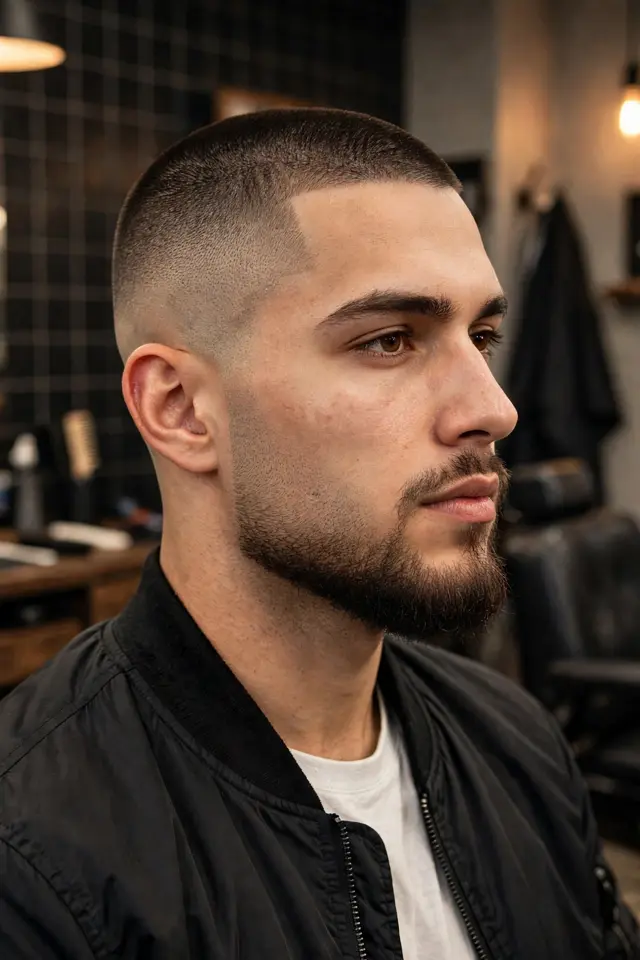
How does a faded beard blend into your haircut?
The faded beard is graduated: shortest at the sideburns, where it melts out of your skin fade, and gradually fuller toward the chin. Done well, haircut and beard become one continuous gradient with no visible seam — the most polished finish in modern barbering, and the natural partner to the fade-heavy styles dominating winter. It works with any fade height, though mid and high fades show the blend best.
Face Shape: Suits most faces; the graduation slims wider faces and the full chin adds weight to narrower ones.
Grooming Kit: Honestly, this one is barber-maintained — at home you need beard oil, a brush and a trimmer only for the cheek line.
Maintenance: The blend needs re-cutting every 7–10 days with your fade, oil daily, and keep the cheek line crisp between visits.
Barber Script: “Fade the beard in from the sideburns, shortest at the top, fullest at the chin, clean cheek line — blend it into my skin fade.”
Q: Can a faded beard work with a low fade or taper?
A: Yes — the graduation is just softer and starts lower. Ask your barber to keep more length through the sideburn area so the beard and the taper meet gradually instead of in one step.
Q: How do I maintain the blend at home between cuts?
A: Don’t chase it with a trimmer — one wrong pass breaks the gradient. Just oil, brush downward daily, and tidy only the cheek line and stray hairs above it with a razor.
One seamless gradient from hairline to chin — barbering at its cleanest.
5 of 20 — The Corporate Beard

What is the corporate beard, and why do professionals choose it?
The corporate beard is a full beard disciplined for the boardroom: short-to-medium even length, precise cheek and neck lines, not a hair out of place. It keeps the authority and maturity of a real beard while reading as groomed as a pressed shirt — which is why it has become the default among beard styles for men in client-facing jobs. Pair it with a classic taper, a side part or neat scissor-cut hair.
Face Shape: Works on nearly every face; the controlled volume is especially good for round faces that long beards would widen further.
Grooming Kit: A quality trimmer, a straight razor or detailer for lines, beard oil, a boar brush and a suit-friendly unscented balm.
Maintenance: Trim weekly to hold the length, shave the lines every second day, brush and oil every morning before work.
Barber Script: “Corporate beard — even medium length, precise cheek and neck lines, everything tidy, nothing bushy.”
Q: How long can a corporate beard be before it stops looking corporate?
A: Around two to three inches is the ceiling, and only if the lines stay perfect. Most men should hold it at one to two inches — the tidiness matters far more than the exact length.
Q: What if my workplace is conservative about beards?
A: Start with the shortest version and immaculate lines. A short boxed or short corporate beard with sharp edges reads as grooming, not rebellion — it is the safest way to introduce a beard at work.
Boardroom polish, real beard — the professional’s full stop.
6 of 20 — The Classic Full Beard
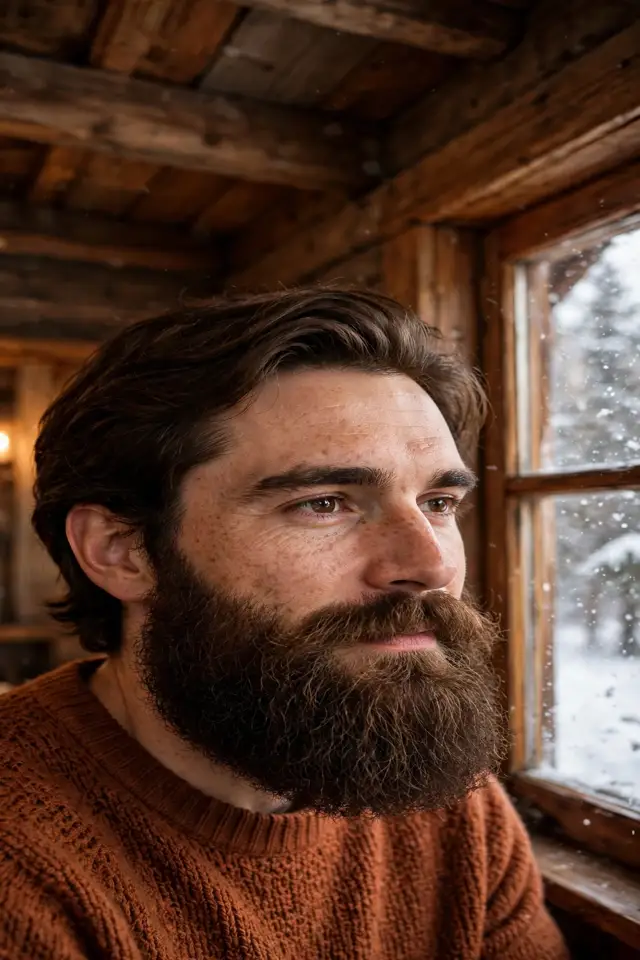
Why does the classic full beard never leave the list of beard styles for men?
Because it is the blueprint everything else edits. The classic full beard grows the cheeks, jaw, chin and moustache together to a medium length — around three inches — then shapes the bottom into a soft natural curve. No gimmicks, no geometry tricks: just density, health and proportion. In winter it earns its keep twice over, insulating the face against wind and cold. Pair it with swept-back medium hair or a grown-out flow.
Face Shape: Best on oval and rectangular faces; on round faces keep the sides tighter and the chin longer to avoid adding width.
Grooming Kit: Beard wash, a good beard oil, a boar brush, a wooden comb and barber scissors for the bottom line.
Maintenance: Wash two to three times a week, oil daily in winter, brush daily, and trim the shape every two weeks.
Barber Script: “Classic full beard, keep the length, shape the bottom soft and natural, tidy the cheeks only.”
Q: How long does a full beard take to grow properly?
A: Four to six months for the full effect. The awkward phase hits around week six — push through it with oil and brushing instead of trimming, and let a barber shape it once at month three.
Q: How do I stop a full beard looking scruffy in winter?
A: Dryness is the enemy: heated indoor air and cold wind strip it fast. Oil daily, use a leave-in conditioner on long beards, and brush before bed so the shape sets overnight.
The blueprint beard — density, health and proportion, nothing else needed.
7 of 20 — The Garibaldi
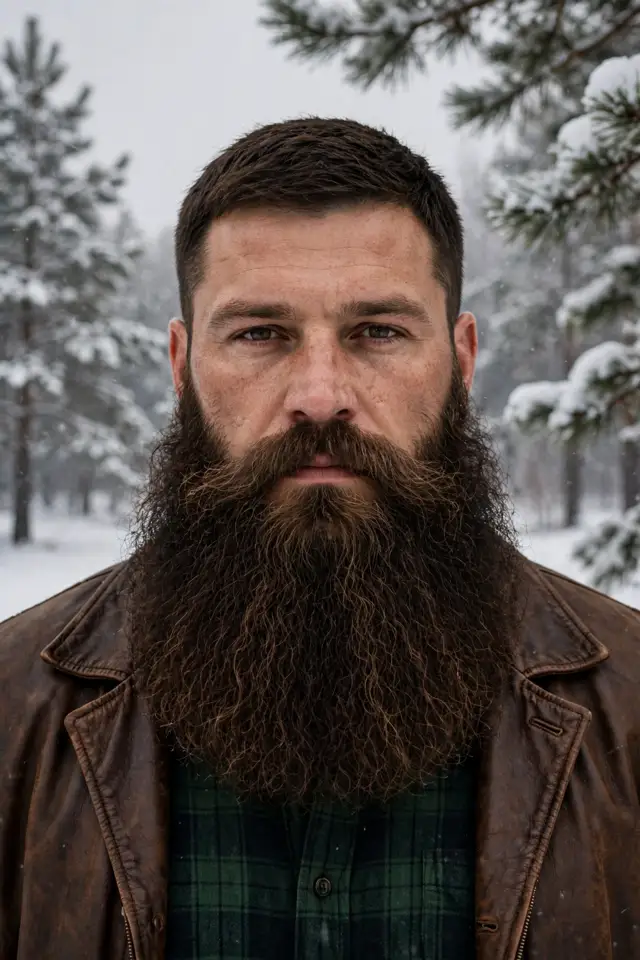
What is a Garibaldi, the widest of all full beard styles?
The Garibaldi is the full beard set free: wide, long — five to six inches or more — with a distinctly rounded bottom and natural wavy texture. Where the corporate beard is discipline, the Garibaldi is presence; it is one of the full beard styles built for men with serious density who want maximum impact with surprisingly little daily styling. Pair it with short simple hair so the beard takes the whole stage.
Face Shape: Best on oval, square and long faces; the width and round bottom can overwhelm short or very round faces.
Grooming Kit: A wide-tooth comb, beard oil in generous amounts, a soft brush, scissors, and a leave-in conditioner for the ends.
Maintenance: Comb and oil daily, wash twice a week, trim split ends monthly, and have the round bottom re-shaped every month or two.
Barber Script: “Garibaldi — keep all the length and width, round the bottom, just clean the split ends and strays.”
Q: Do I need thick growth for a Garibaldi?
A: Yes — this is the one style where density is non-negotiable. The wide rounded silhouette needs full cheeks. If your cheeks are thin, the classic full beard or ducktail will serve you better.
Q: How do I keep a long Garibaldi from tangling in a scarf and coat?
A: Oil before you dress, comb the beard up under the chin rather than letting it bunch, and choose smooth-lined scarves. A quick brush-out when you arrive restores the shape in seconds.
Maximum beard, rounded and proud — for men with the density to carry it.
8 of 20 — The Extended Goatee
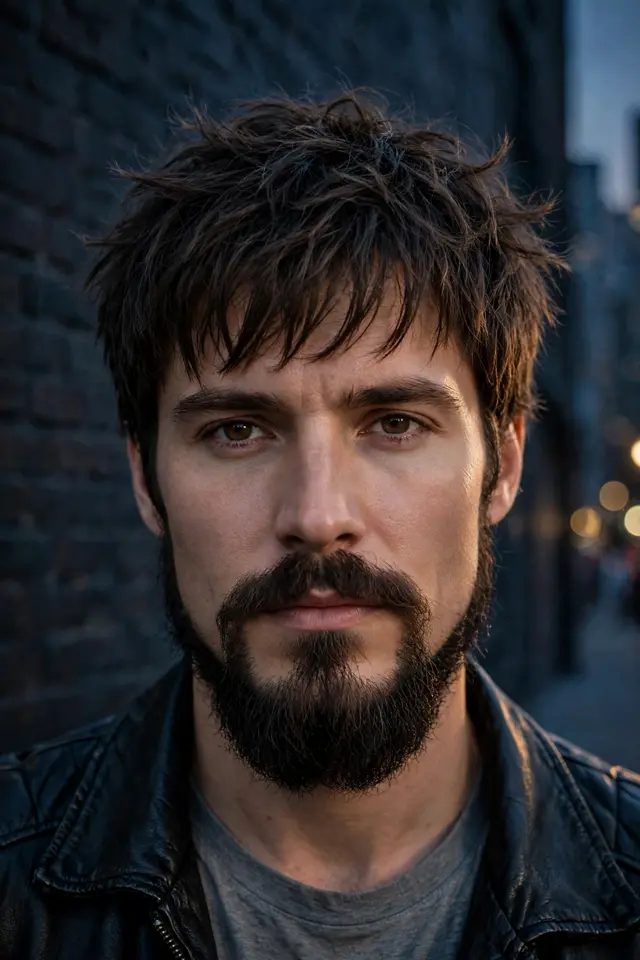
Why is the extended goatee the comeback pick among goatee styles men are booking?
The goatee family is having a genuine revival, and the extended goatee leads it: wider than the classic, growing out from the chin along the jaw corners, connected to the moustache, with both cheeks clean-shaven. It puts all the weight exactly where it strengthens a face — the chin — while the bare cheeks keep it sharp and modern. It is also the smartest of the goatee styles men with patchy cheeks can choose. Pair it with a messy fringe or textured crop.
Face Shape: Excellent for round faces (the chin weight lengthens) and for men whose cheek growth is thin or patchy.
Grooming Kit: A precision trimmer, a razor for the cheeks, a small comb, and oil for the goatee itself.
Maintenance: Shave the cheeks every second day to keep the contrast, trim the goatee weekly, oil the chin hair daily.
Barber Script: “Extended goatee — wide, connected to the moustache, out to the jaw corners, cheeks completely clean.”
Q: What is the difference between a classic and an extended goatee?
A: Width. The classic sits narrowly on the chin; the extended version spreads wider and reaches toward the jaw corners, giving a stronger, more modern frame to the mouth and chin.
Q: Will an extended goatee suit a weak chin?
A: It is one of the best styles for it — the concentrated growth adds visual mass and length to the chin without needing any cheek density at all.
All the strength on the chin, none of the patchiness on show.
9 of 20 — The Balbo
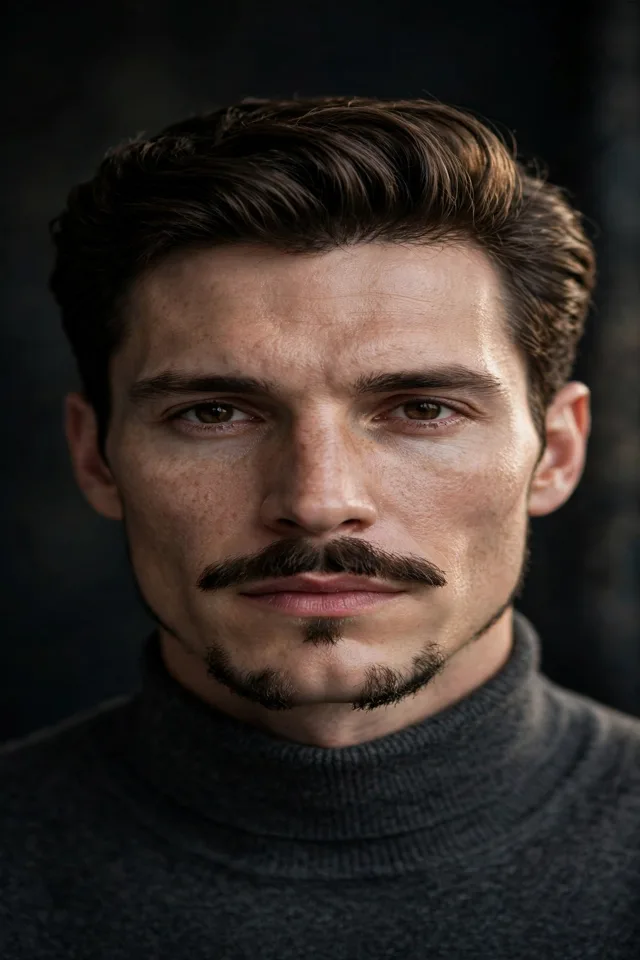
What is a Balbo beard, the three-piece pick of goatee styles men wear?
The Balbo is beard architecture in three separate pieces: a floating moustache that never touches the chin beard, a small soul patch, and beard hair on the outer edges of the chin — with cheeks and jawline completely clean. It frames the mouth and chin like punctuation, which is why it photographs so well and why it keeps resurfacing among goatee styles men choose for a deliberate, designed look. Pair it with a neat quiff or a classic taper.
Face Shape: Best on oval, square and diamond faces; the separated pieces add interest without width.
Grooming Kit: A precision trimmer, a detail razor, a small comb and a steady hand — this style is all edges.
Maintenance: Shave the cheeks and jaw every second day, re-define the gaps between the pieces twice a week, trim weekly.
Barber Script: “Balbo — floating moustache, soul patch, chin edges only, keep the gaps between the pieces clean.”
Q: Is the Balbo high maintenance?
A: Honestly, yes — it is the most edge-dependent style on this list. The whole effect lives in the clean gaps, so expect a razor in your hand every second day. The payoff is a beard nobody else at the table is wearing.
Q: Does the Balbo suit patchy cheeks?
A: Perfectly — the cheeks are supposed to be bare. As long as your chin edges and moustache grow reasonably full, patchy cheeks never enter the picture.
Three clean pieces, one sharp frame — beard architecture.
10 of 20 — The Van Dyke
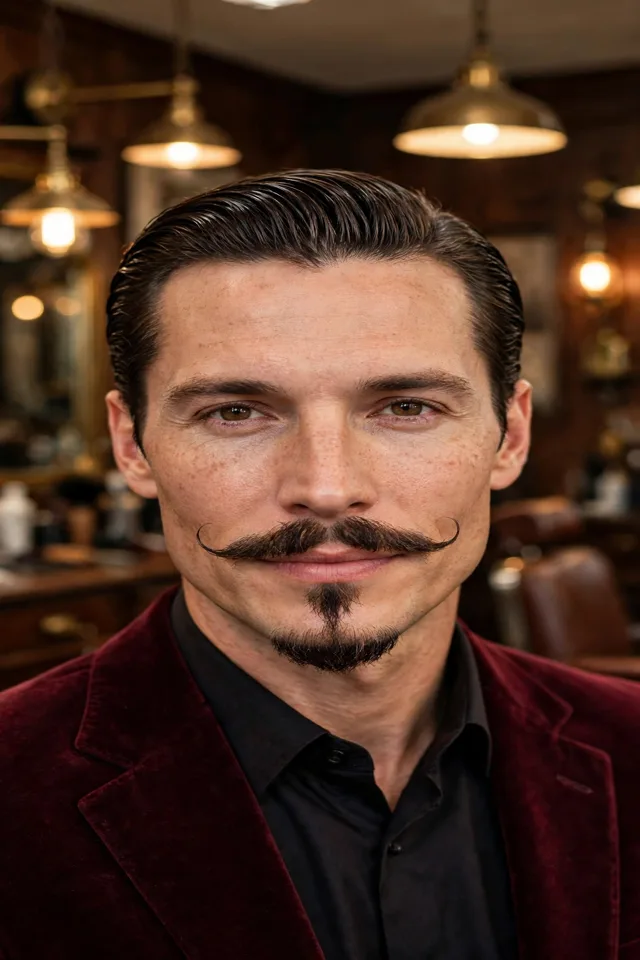
Why does the Van Dyke remain the most artistic of beard styles for men?
Named for the Flemish painter, the Van Dyke pairs a pointed chin goatee with a detached, styled moustache — often with the ends swept or curled — over completely clean cheeks. It is the most theatrical of beard styles for men, equal parts vintage portrait and modern statement, and it is firmly back as classic styles return with contemporary twists. Pair it with slicked-back hair to complete the period elegance.
Face Shape: Best on oval and heart faces, and kind to smaller chins — the point adds length and focus.
Grooming Kit: Moustache wax, a small comb, a precision trimmer, scissors, and a razor for the cheeks.
Maintenance: Shave the cheeks every second day, wax and shape the moustache daily, keep the goatee point trimmed weekly.
Barber Script: “Van Dyke — pointed goatee, detached moustache with the ends swept up, cheeks fully clean.”
Q: How do I get the moustache ends to sweep like that?
A: Grow the moustache longer than feels natural — eight weeks or more — then train it sideways with a comb daily. A pea of strong wax, warmed between the fingers, holds the sweep; the curl comes with length and patience.
Q: Is the Van Dyke too much for everyday wear?
A: The modern version keeps the proportions smaller — a modest point, a gentle sweep rather than a full curl. Worn that way it reads as sharp vintage, not costume.
Pointed, polished, unmistakably deliberate — the artist’s beard.
11 of 20 — The Ducktail
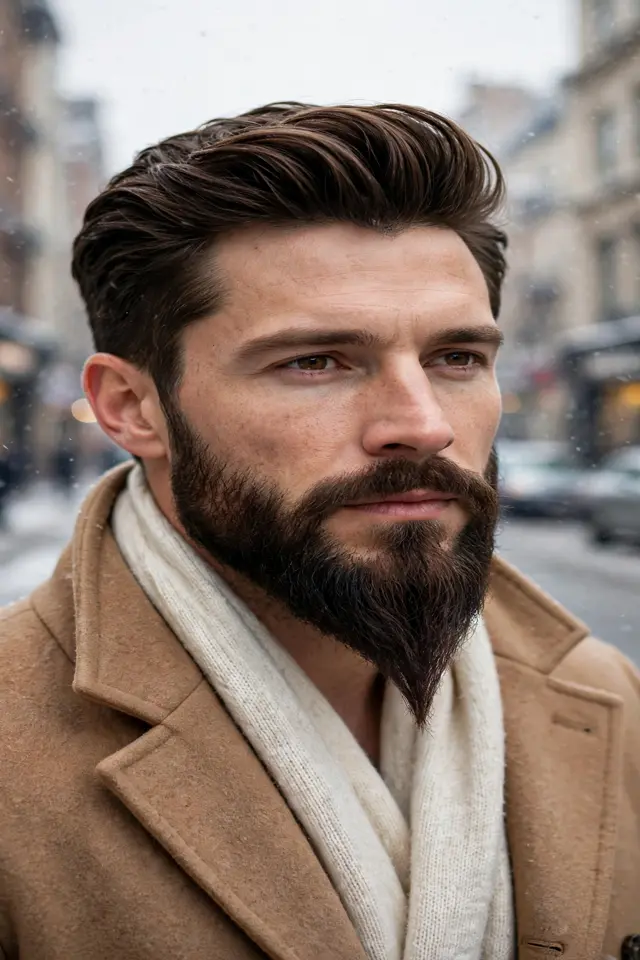
What is a ducktail beard, the tailored point among full beard styles?
The ducktail keeps the sides of a full beard shorter and neat while the chin grows long and is shaped into a clean central point — like the tail it is named after. It is one of the smartest full beard styles for men who want length without bulk: the point lengthens the face, the tidy sides keep it office-survivable, and the silhouette is unmistakable from across the street. Pair it with a pompadour or a swept-back quiff.
Face Shape: Excellent for round and square faces — the point adds length and draws the eye down the centre.
Grooming Kit: Barber scissors, a comb, beard oil, a brush, and a barber you trust with the point.
Maintenance: Oil and comb daily, wash twice a week, and have the point re-shaped every two to three weeks — never freehand it yourself at first.
Barber Script: “Ducktail — keep the sides short and neat, grow the chin into a clean point, longest at the centre.”
Q: How long does the chin need to be for a ducktail?
A: Around two to three inches of chin growth gives a clear point. The shape comes from cutting, not just length — a barber carves the point once the bulk is there.
Q: Ducktail or Garibaldi — which should I choose?
A: Choose the ducktail if you want length with control and a sharper, more tailored read. Choose the Garibaldi if you want maximum natural volume. The ducktail also suits round faces better, thanks to the point.
A full beard with a tailored point — length, minus the bulk.
12 of 20 — The Circular Beard

What is a circular beard, the friendliest of the goatee styles men grow?
The circular beard joins the moustache to the chin beard in one continuous ring of hair framing the mouth — a rounded, tidy circle with both cheeks clean-shaven. It is the most approachable of the goatee styles men try first: softer than the Van Dyke, easier than the Balbo, and neat enough for any workplace. Pair it with a Caesar crop, a buzz or short tidy hair.
Face Shape: Kind to most faces, especially oval and long faces — the ring concentrates attention on the mouth and chin.
Grooming Kit: A trimmer with guards, a razor for the cheeks, a small comb and oil.
Maintenance: Shave the cheeks every second day, trim the ring to an even length weekly, keep the lip line clean.
Barber Script: “Circular beard — moustache connected to the chin in one even ring, cheeks completely clean.”
Q: Is a circular beard the same as a goatee?
A: It is a type of goatee — the version where the moustache and chin beard connect into a full ring around the mouth. A classic goatee can sit on the chin alone without the connection.
Q: Will a circular beard suit a thin moustache?
A: The ring needs the moustache to connect visibly, so give it eight weeks of growth before judging. If the connection stays wispy, an extended goatee worn unconnected will look stronger.
One neat ring around the mouth — the goatee at its friendliest.
13 of 20 — The Anchor Beard
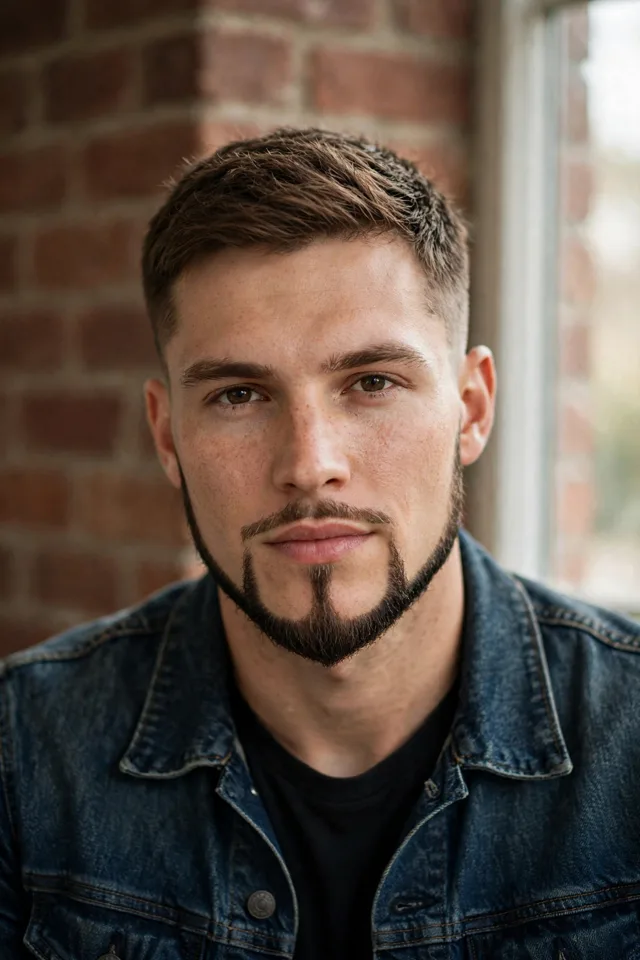
What makes the anchor beard the sharpest outline among beard styles for men?
The anchor beard draws its shape on the jaw: a pointed chin beard extends along the jawline on both sides like the arms of a ship’s anchor, finished with a thin pencil moustache that stays completely detached, and no sideburns at all. It is pure outline — one of the most graphic beard styles for men, and a favourite on men with strong jaws they want to underline. Pair it with a short crop or low taper so nothing competes with the line.
Face Shape: Best on square and oval faces with a naturally strong jaw; the traced line needs a good jaw to follow.
Grooming Kit: A detail trimmer, a straight razor for the outline, clear shave gel so you can see the line, and a small comb.
Maintenance: This is daily-line work: re-trace the outline every second day and keep the moustache pencil-thin with weekly trims.
Barber Script: “Anchor beard — pointed chin, line running along the jaw both sides, pencil moustache detached, no sideburns.”
Q: How steady a hand does the anchor beard need at home?
A: Steadier than most styles — the symmetry is the whole look. Have your barber cut the outline first, then only ever shave up to his line, using clear gel so you can see exactly where the edge sits.
Q: Does the anchor beard work with a weaker jaw?
A: It can actually help: a well-placed anchor line draws a stronger jaw than the one underneath. Keep the chin point fuller and the jaw lines slightly thicker for more visual weight.
A jawline drawn in ink — the most graphic beard on the list.
14 of 20 — The Chin Strap and Stubble
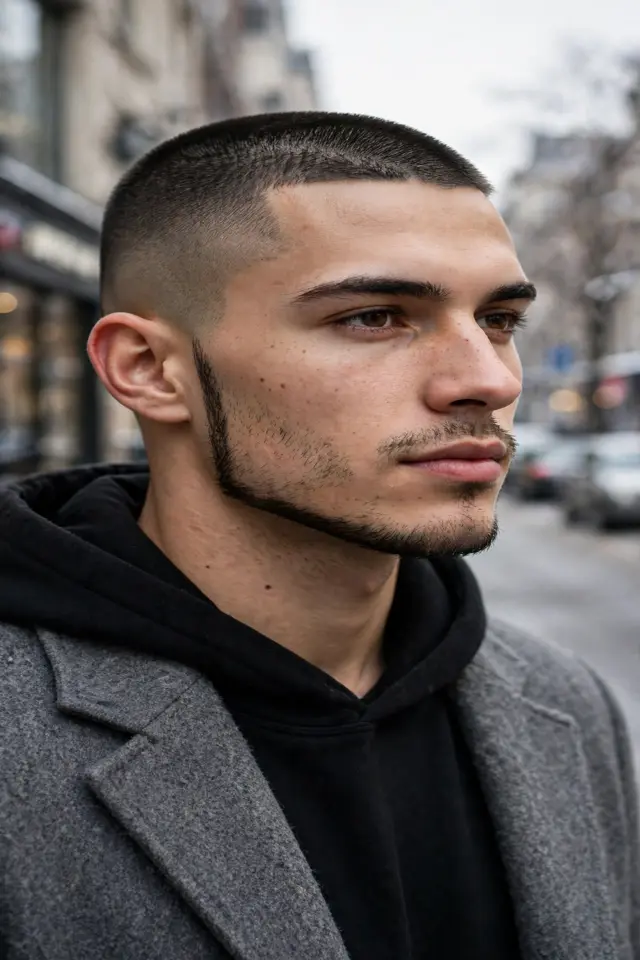
Why is the chin strap back among short beard styles?
The modern chin strap is not the pencil line of the 2000s — it is a defined strap of beard tracing the jaw’s edge, worn with light stubble across the cheeks and chin so the strap reads as emphasis, not costume. It frames the jaw like the outline on a drawing, which is why it keeps resurfacing among short beard styles on younger men with sharp lineups and buzz cuts. Pair it with exactly that: a buzz, a lineup, or a skin fade.
Face Shape: Best on oval and square faces with a defined jaw; on round faces keep the strap slightly wider so it does not look drawn on.
Grooming Kit: A detailer trimmer, a razor, clear shave gel, and a steady mirror setup with good light.
Maintenance: Re-cut the strap edges every second day, trim the stubble every three days, and check symmetry in daylight weekly.
Barber Script: “Chin strap along the jaw edge, medium width, light stubble everywhere else, lineup sharp.”
Q: How wide should a chin strap be?
A: Roughly one to two centimetres for the modern version. Hairline-thin straps date the look instantly; a slightly wider strap with stubble around it reads current and intentional.
Q: Can I grow a chin strap if my beard is patchy on the cheeks?
A: Yes — the strap lives on the jaw edge where growth is usually strongest, and the cheeks only carry stubble. Patchy cheeks barely matter in this style.
The jaw, underlined — a sharp frame with stubble for shading.
15 of 20 — The Verdi
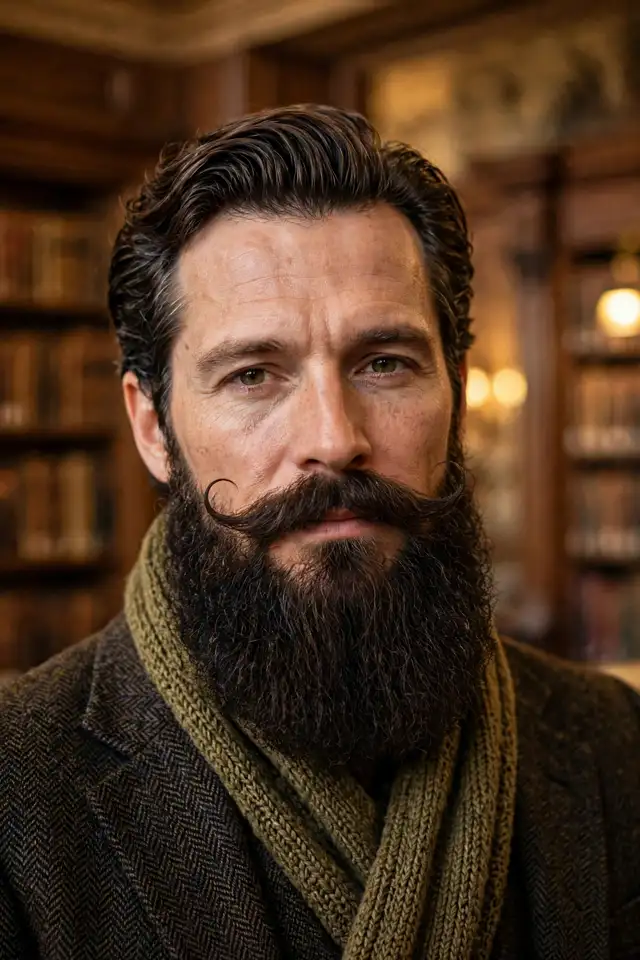
What is the Verdi, the grandest of the full beard styles?
Named after the composer, the Verdi is a full, long beard with a rounded bottom worn with a large, deliberately styled moustache — often waxed with the ends lifted or curled. It takes the Garibaldi’s volume and adds ceremony: this is one of the full beard styles for men who treat the beard as the centrepiece of their whole appearance. Pair it with swept-back hair with volume; short hair makes the beard look costume-heavy.
Face Shape: Best on oval, rectangular and diamond faces; the scale of it needs a longer face to balance.
Grooming Kit: Moustache wax, a heated or boar brush, a wide comb, beard oil, and scissors for the bottom curve.
Maintenance: Wax the moustache daily, oil and brush the beard daily, wash twice weekly, reshape the bottom monthly at the barber.
Barber Script: “Verdi — full long beard, rounded bottom, keep the moustache big and styled, ends lifted.”
Q: How is the Verdi different from the Garibaldi?
A: The moustache. A Garibaldi’s moustache is left natural and blends in; a Verdi’s moustache is a styled feature in its own right — bigger, shaped, and usually waxed with lifted or curled ends.
Q: How long does a Verdi take to grow?
A: Plan on eight to twelve months. The beard needs Garibaldi-level length and the moustache needs its own extra months to reach styling size. It is a commitment style, not a winter experiment.
Volume with ceremony — the beard as a centrepiece, moustache and all.
16 of 20 — The Natural Tapered Beard

What is the natural tapered beard, the “eco-beard” among beard styles for men?
The natural tapered beard is the backlash against razor geometry: a full, healthy beard with soft edges everywhere — the cheeks fade out gradually into the skin instead of ending in a cut line, and the bottom is full but lightly tapered. It looks grown rather than sculpted, which is exactly the point of the eco-beard movement inside beard styles for men right now: health and density over decoration. Pair it with grown-out, natural hair — a flow or soft layers.
Face Shape: Universally flattering; the soft graduation suits faces that sharp boxed lines make look severe.
Grooming Kit: Beard oil, a soft brush, a gentle beard wash and scissors — notably, no razor lines to maintain.
Maintenance: The easiest full beard here: oil daily, brush daily, tidy only true strays with scissors every week or two.
Barber Script: “Natural tapered beard — keep it full, soften the cheek fade, no hard lines anywhere, taper the bottom lightly.”
Q: How do I get the soft cheek fade instead of a hard line?
A: Ask the barber to graduate the cheek with clippers over a comb rather than edging it with a razor. At home, never shave a line into the cheek — just remove stray hairs well above the natural growth line, one by one.
Q: Does a natural beard still need trimming in winter?
A: Lightly — the shape holds for four to six weeks between barber visits. Winter care matters more than cutting: oil daily, because dry heated air is what makes a natural beard look rough instead of relaxed.
Grown, not sculpted — the healthiest-looking beard on the list.
17 of 20 — Modern Mutton Chops
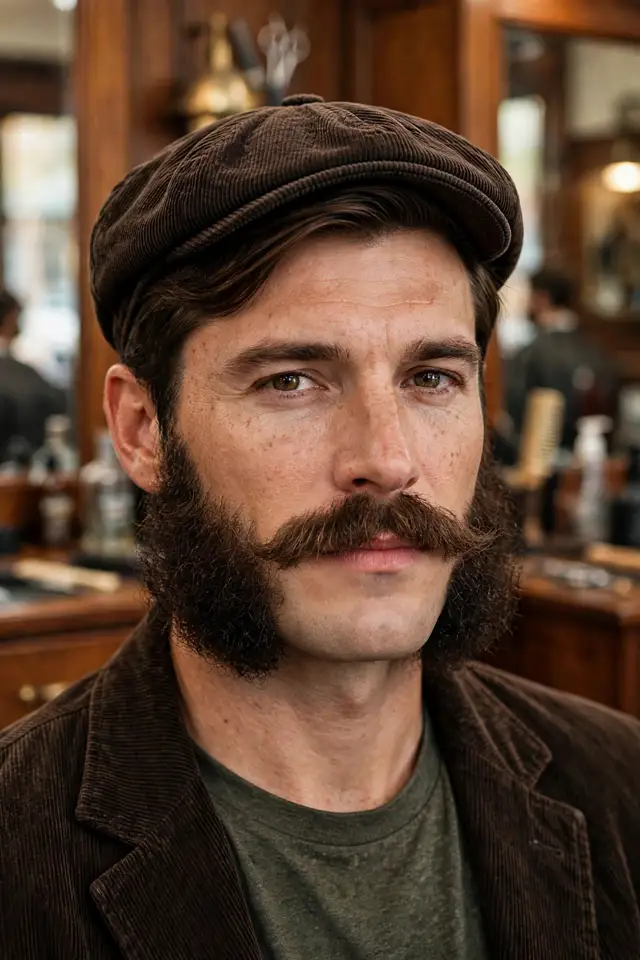
Why are mutton chops the boldest revival among beard styles for men?
Mutton chops are the beard with the chin removed: huge, full sideburns grow wide down both sides of the face to the jaw corners, usually joined to a moustache, while the chin stays completely bare. Vintage to the bone and impossible to ignore, chops have come back as the anti-minimal pick among beard styles for men — worn with a grin and total confidence. Pair them with a side sweep or a flat cap for the full character.
Face Shape: Best on long and oval faces; the cheek width can swamp a round face, and the bare chin lengthens shorter faces.
Grooming Kit: A comb, scissors, a razor for the chin and centre, and oil for the chop volume.
Maintenance: Shave the chin and keep the centre clean every second day, comb the chops daily, trim the outline weekly.
Barber Script: “Mutton chops — full and wide down to the jaw corners, moustache connected, chin completely bare.”
Q: Are mutton chops actually wearable, or just a costume?
A: The modern version trims the volume down from the Victorian extreme — full but shaped, with neat edges. Worn with current clothes and a good haircut it reads as a confident vintage statement, not fancy dress.
Q: How long do chops take to grow?
A: The sideburn area needs eight to twelve weeks to reach real chop density. Grow the full beard first, then have your barber carve the chops and bare the chin in one sitting.
All beard, no chin — the loudest revival on the list.
18 of 20 — The Short Beard and Skin Fade Combo
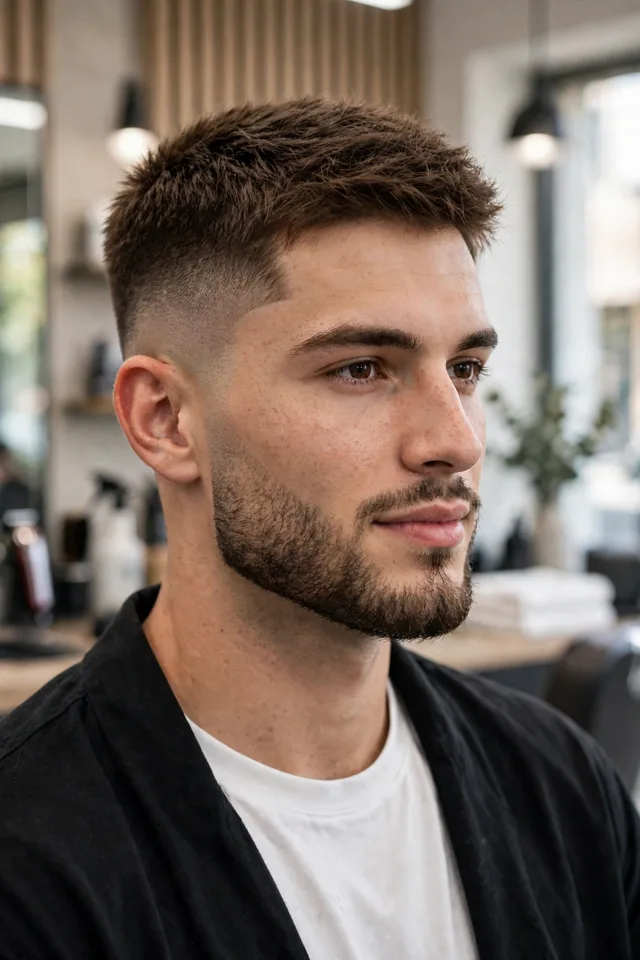
Why is the short beard with a skin fade the most-booked combo among short beard styles?
Because it is two sharp things fused into one: a high skin fade on the head, a short even beard below, and a seamless blend at the sideburns where the two meet with no visible line. It is the combo that fills barbershop chairs every weekend — among short beard styles it is the most requested complete look, because the whole head reads as one designed piece. Keep the top short and textured so the fade stays the feature.
Face Shape: Suits most faces; the high fade lengthens round faces and the short beard keeps square jaws strong without bulk.
Grooming Kit: At home just oil, a brush and a trimmer for strays — the fade and blend belong to your barber.
Maintenance: Barber visit every 7–10 days to hold the fade and blend, oil daily, cheek line tidy-ups between visits only.
Barber Script: “High skin fade, short beard, blend the sideburns so there’s no line where the fade meets the beard.”
Q: How short should the beard be in this combo?
A: Short — roughly 5 to 10 millimetres, even all over. The beard supports the fade rather than competing with it. If the beard gets long, the seamless illusion breaks.
Q: Can this combo work with a receding hairline?
A: Very well — the high fade takes the sides to skin, which minimises the contrast at the temples, and the defined beard pulls attention to the jaw. It is one of the most flattering combos for early recession.
Hair and beard as one piece — the weekend barbershop’s bestseller.
19 of 20 — The Salt-and-Pepper Full Beard
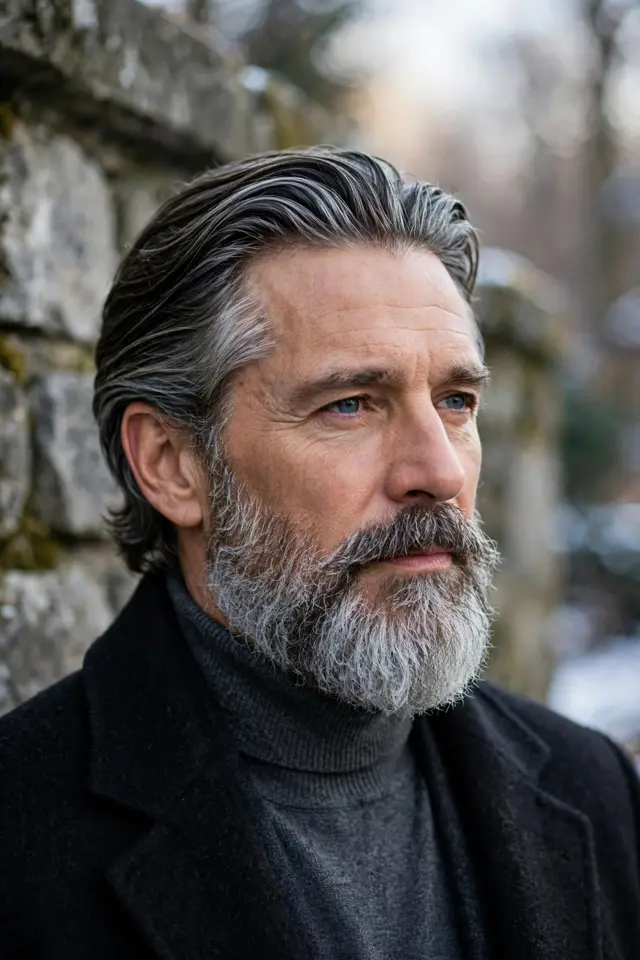
Why is the salt-and-pepper beard the most distinguished of all full beard styles?
Because it turns the thing men try to hide into the whole point. A full, well-shaped beard with natural silver threaded through the dark — heaviest at the chin — reads as experience, not age. Of all full beard styles it carries the most authority, and it has become a genuine trend as more men skip the dye and groom the grey instead. Pair it with swept-back hair that shows its own silver with the same confidence.
Face Shape: Works on every face; the lighter chin naturally lengthens, and the mixed tones soften strong features kindly.
Grooming Kit: A purple-toned beard wash to keep the silver bright, beard oil, a boar brush and scissors.
Maintenance: Wash with the brightening wash weekly, oil daily (grey hair is drier and wirier), trim the shape every two weeks.
Barber Script: “Salt-and-pepper full beard — keep the silver, shape it neat, medium length, nothing dyed.”
Q: How do I stop the grey in my beard going yellow?
A: Sun, smoke and hard water yellow silver hair. A purple-toned wash once a week neutralises the brassiness, and daily oil keeps the coarse grey hairs lying flat instead of wiry.
Q: Should I dye a salt-and-pepper beard to look younger?
A: Groomed grey beats dyed dark almost every time — dye grows out in an obvious line and usually reads older. Trim it sharp, keep it conditioned, and the silver becomes the most complimented part of the look.
The silver is the feature, not the flaw — authority, grown naturally.
20 of 20 — The Finale: The Winter Beard King
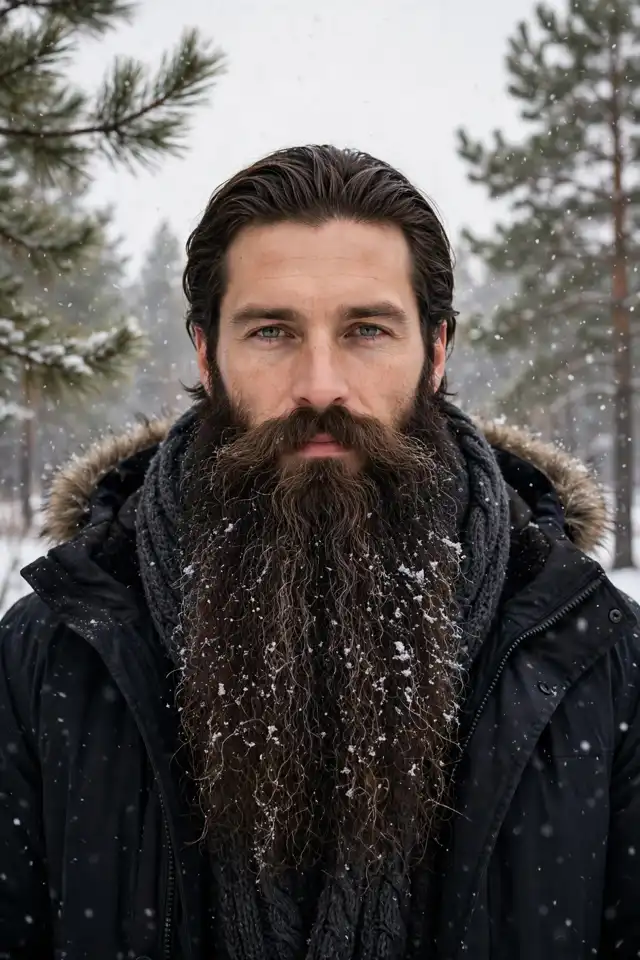
What makes the Winter Beard King the ultimate of all beard styles for men?
The finale is everything winter rewards: a long, dense, full beard grown through the whole season — thick from the cheeks, strong through the jaw, finished with a shaped, powerful bottom — worn with medium swept-back hair and total commitment. It is the endgame of beard styles for men: maximum insulation against the cold, maximum presence in every room, and a silhouette no short style can imitate. This is the beard the other 19 are growing toward.
Face Shape: Best on oval, square and long faces with the density to fill it; keep the sides slightly tighter on round faces.
Grooming Kit: The full arsenal — beard wash, generous oil, a leave-in conditioner, a wide comb, a boar brush and barber scissors.
Maintenance: Oil twice daily in deep winter, comb morning and night, wash two to three times a week, professional reshaping every month.
Barber Script: “Winter Beard King — keep all the length and density, shape the bottom strong, tidy only the strays.”
Q: How many winters does a beard like this take?
A: One full season of committed growth gets you most of the way — four to six months — but the truly majestic versions are second-winter beards. Year-round care, not speed, is the secret.
Q: How do I keep a very long beard healthy through winter?
A: Treat it like the wool coat it resembles: wash gently and less often, condition every wash, oil daily and re-oil after coming in from the cold, and comb out scarf tangles with your fingers first, never by force.
The endgame beard — a full season of growth, worn like a crown.
The Bottom Line
The best beard styles for men this winter share one secret: none of them is an accident. The boxed beard is lines, the Garibaldi is patience, the beardstache is nerve — pick the one that matches your face, your density and your honest maintenance budget, then grow it properly: four weeks untouched before any shaping, oil every single day against the winter dryness, and a barber who shapes rather than guesses. Start with heavy stubble or the boxed beard if you are new; grow toward the ducktail, the Verdi or the Winter Beard King if you are not.
Whichever you choose, complete the look: match your beard to one of our 20 winter haircuts for men, grow it out under the medium-length winter hairstyles, or sharpen it against the short haircuts for men. And if your hair is curly, the curly hairstyles for men guide will keep the top half at the same standard as the beard. Winter is short — grow accordingly.