20 Edgar Cut Hairstyles for Men: Blunt Fringes, Fades & Fluffy Edgars
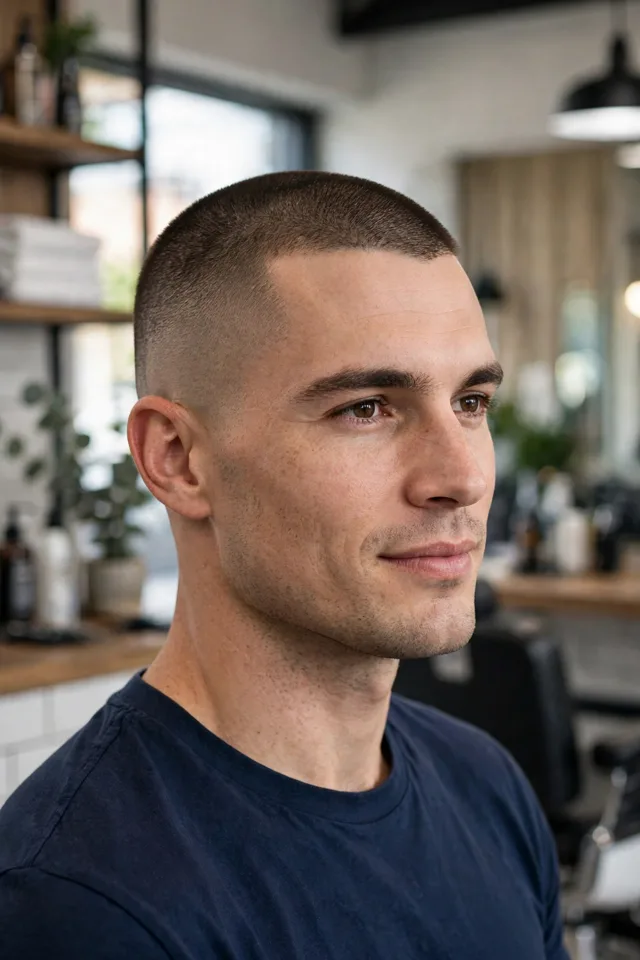
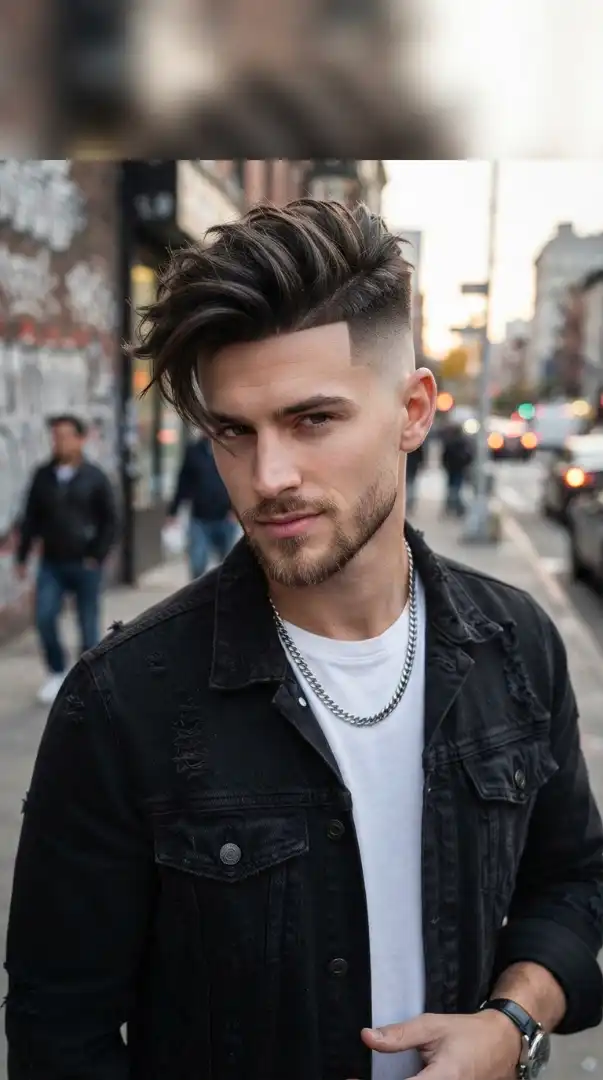
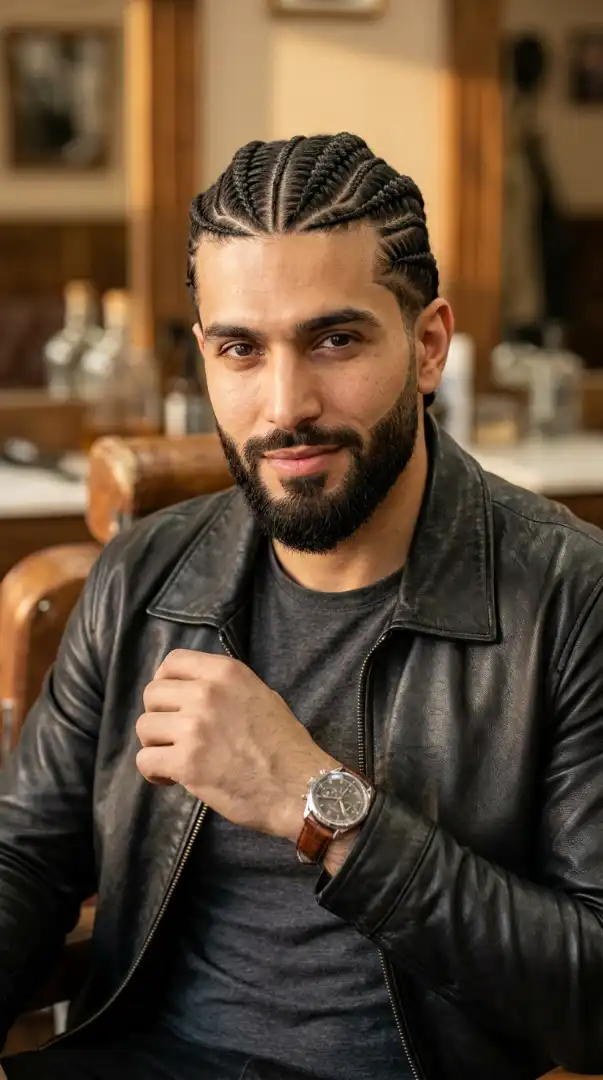
No haircut owns young men’s feeds right now like the Edgar. Born in Latino barbershop culture and pushed global by TikTok and Pinterest, the Edgar cut pairs a straight, blunt fringe with a textured top and faded sides — sharp from the front, clean from every angle, and unmistakable in a crowd. Barbers rank it among the most requested cuts of 2026 for younger men, and the searches keep climbing because the look photographs like nothing else in the barbershop.
This guide covers 20 Edgar cut hairstyles for men — the classic Edgar, the fluffy version all over your feed, every fade height, curly and wavy Edgars, Edgars with line-ups, beards and designs, and a winter-proof finale. Every style comes with the face shapes it flatters, the grooming kit it needs, its upkeep rhythm and the exact words to say to your barber.
New to fringe-forward cuts? Start with our textured crop hairstyles guide for the softer cousin, and see the fade haircuts guide for every side option in detail. The Edgar is what happens when both go bolder.
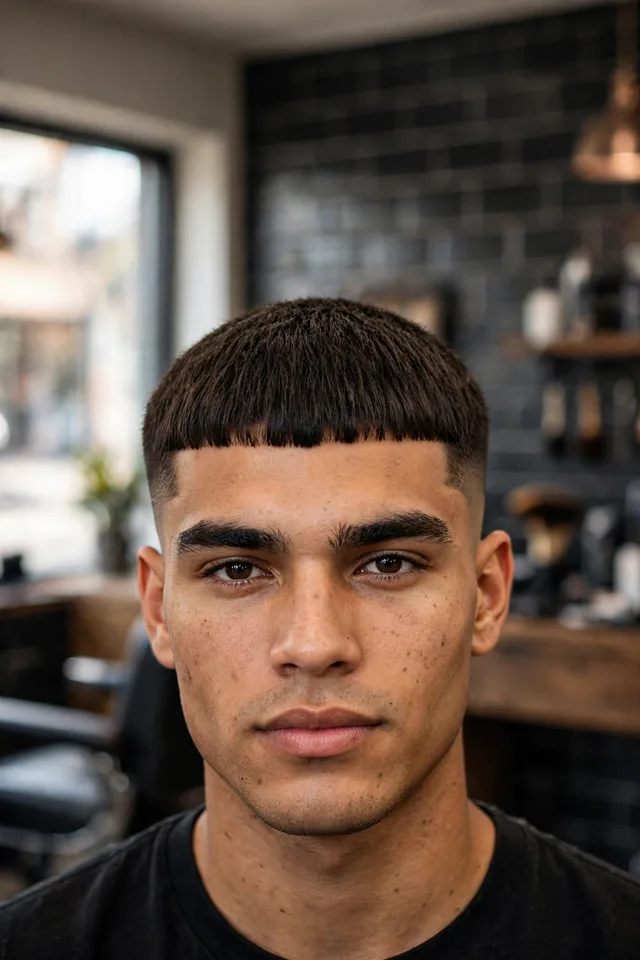
1 of 20 — The Classic Edgar Cut
What is a classic Edgar cut?
It is the blueprint: a straight, blunt fringe cut in one clean line across the forehead, a short textured top, and sides faded — usually high — so the fringe becomes the whole statement. The Classic Edgar is deliberately geometric, almost architectural, and that precision is exactly why it reads so strong in photos and in person.
Face Shape: Best on oval and square faces; the straight fringe line sharpens everything beneath it.
Grooming Kit: A matte clay for the top and a soft brush. The fringe itself should sit flat and natural, never glued.
Maintenance: Every 2–3 weeks — the fringe line and the fade both blur fast, and blur is fatal to this cut.
Barber Script: “Classic Edgar — blunt straight fringe, short textured top, high fade, clean sharp edges all round.”
The blueprint — fringe first, everything else follows.
Q: How long is the fringe on a classic Edgar?
A: It sits high on the forehead, well above the eyebrows — that short, straight line is the Edgar’s signature. If the fringe touches your brows, it has drifted into crop territory and lost the Edgar’s edge.
Q: Edgar cut or French crop — what is the difference?
A: The fringe and the fade. A French crop’s fringe is textured and softer with gentler sides; the Edgar’s fringe is blunt and straight with a higher, harder fade. Same family — the Edgar is simply the bolder brother.
2 of 20 — The Fluffy Edgar
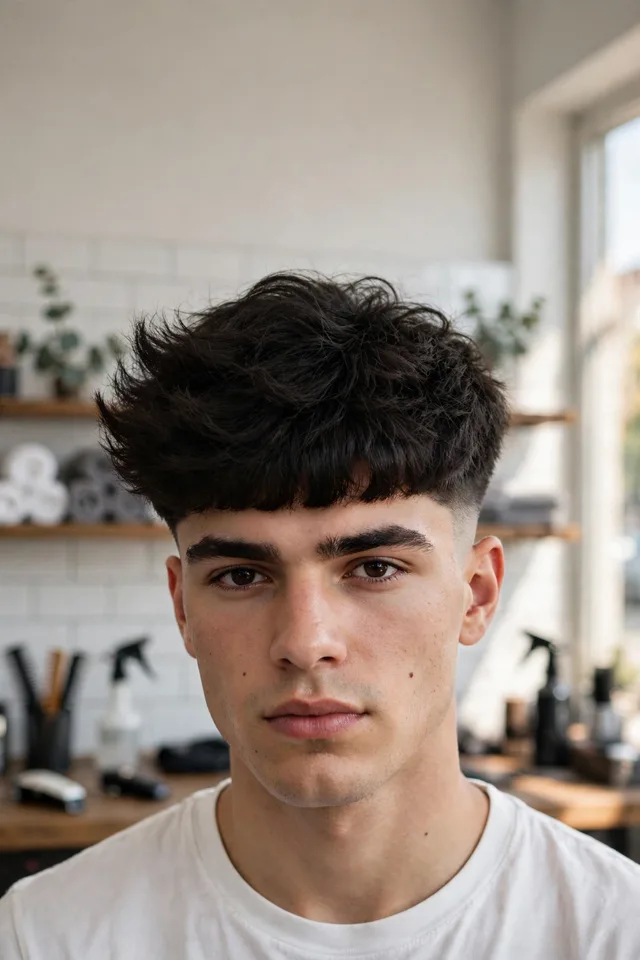
What is a fluffy Edgar?
The version your feed is full of. The Fluffy Edgar keeps the Edgar’s blunt fringe and faded sides but leaves the top longer and fuller — thick, forward-swept volume that sits soft and touchable instead of cropped tight. It is the most saved Edgar on Pinterest because it balances the cut’s sharp outline with hair that actually moves.
Face Shape: Great on oval, square and longer faces; the volume on top balances strong features.
Grooming Kit: Sea salt spray or a light mousse and your fingers. Heavy clay kills the fluff — volume is the whole point.
Maintenance: Sides every 2–3 weeks; the fluffy top can run a week longer between shaping.
Barber Script: “Fluffy Edgar — blunt fringe, top left long and full with forward volume, high or mid fade, keep the top soft.”
Sharp outline, soft top — the feed’s favourite Edgar.
Q: How do I get the fluffy Edgar volume?
A: Blow-dry the top forward and slightly up with a sea salt spray in damp hair, then finish with fingertips only. The fluff comes from air and light product — the moment you comb it flat or load it with clay, it is gone.
Q: Fluffy Edgar or classic Edgar — which suits thick hair?
A: The fluffy, without contest. Thick hair supplies the volume this style is named after, while the classic Edgar’s tight top wastes it. Fine hair should reverse the choice and take the classic instead.
3 of 20 — The Edgar Cut with a High Fade
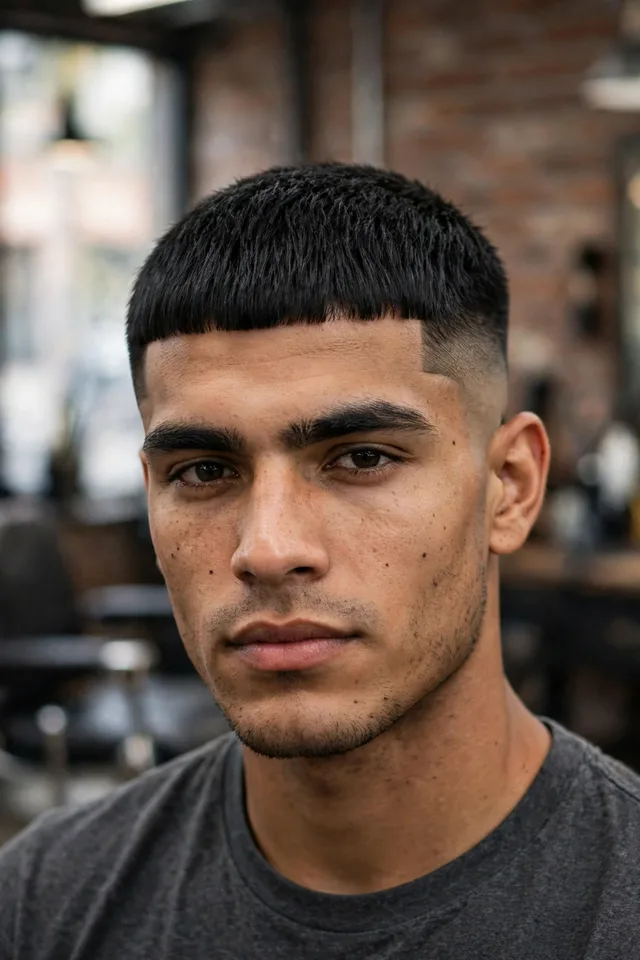
Why do most Edgars wear a high fade?
Because contrast is the cut’s engine. The High Fade Edgar takes the sides up high and tight, so the blunt fringe and textured top sit above a dramatic gradient — the version most barbers cut when a client just says “Edgar” with no other instructions. It is the sharpest, most athletic read of the family.
Face Shape: Strong on square and oval faces; the high sides slim wider faces noticeably.
Grooming Kit: Matte clay for the top; the fade asks only for regular appointments.
Maintenance: Every 2 weeks to stay crisp — high fades announce regrowth first.
Barber Script: “Edgar with a high fade — blunt fringe, textured top, sides faded high and tight, sharp line-up.”
Maximum contrast — the default Edgar, turned up.
Q: High fade or mid fade on an Edgar?
A: The high fade is the classic Edgar pairing and reads boldest; the mid fade softens it for school or office settings. The fringe stays identical — you are only choosing how loud the sides speak.
Q: Does a high fade Edgar suit a round face?
A: Yes — it is actually the round face’s best Edgar. Stripping the sides high removes width at the temples while the fringe’s straight line adds structure. Pair it with the classic or textured top.
4 of 20 — The Mid Fade Edgar
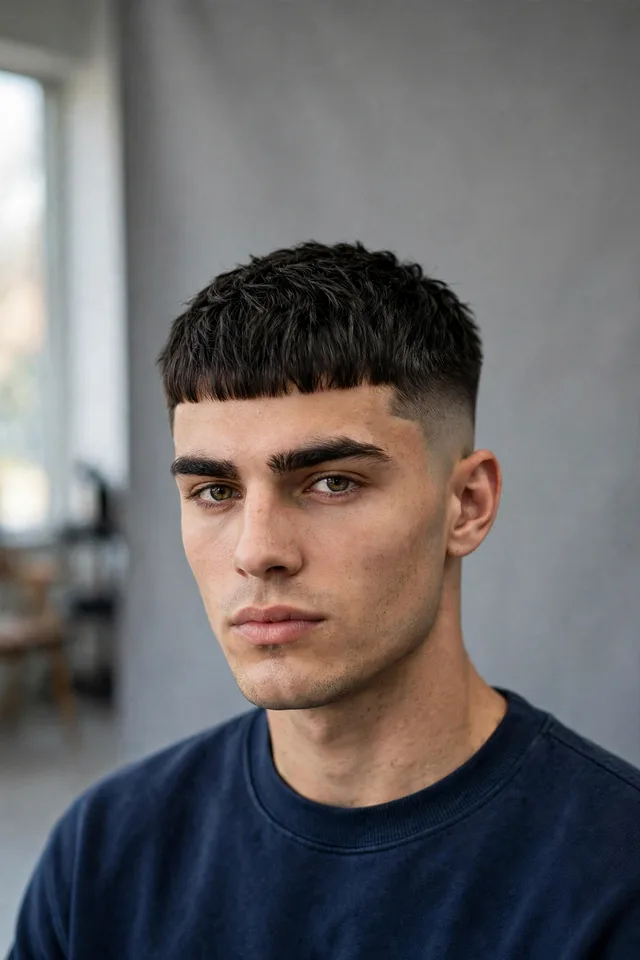
Who should soften the Edgar with a mid fade?
The man who wants the look at work or school without the full shout. The Mid Fade Edgar keeps the blunt fringe and textured top but graduates the sides at the middle height — still clean, still unmistakably an Edgar, just blended enough to sit comfortably in more conservative rooms.
Face Shape: The all-rounder — suits oval, round and square faces without adjustment.
Grooming Kit: Matte paste; a mid fade needs no edge products, just its appointments.
Maintenance: Every 2–3 weeks; the mid gradient forgives a few extra days over the high fade.
Barber Script: “Mid fade Edgar — blunt fringe, textured top, mid fade blended clean, natural edges.”
The Edgar, moderated — same fringe, softer sides.
Q: Is a mid fade Edgar still recognisably an Edgar?
A: Completely. The Edgar is defined by its blunt fringe and forward top — the fade height is just the volume knob. A mid fade version photographs slightly softer but nobody mistakes it for anything else.
Q: Mid fade Edgar or low taper Edgar for a first Edgar?
A: The mid fade. It gives the true Edgar contrast while you learn whether the fringe suits you; the low taper is the graduation for men who already know they want the softest possible version.
5 of 20 — The Low Taper Edgar
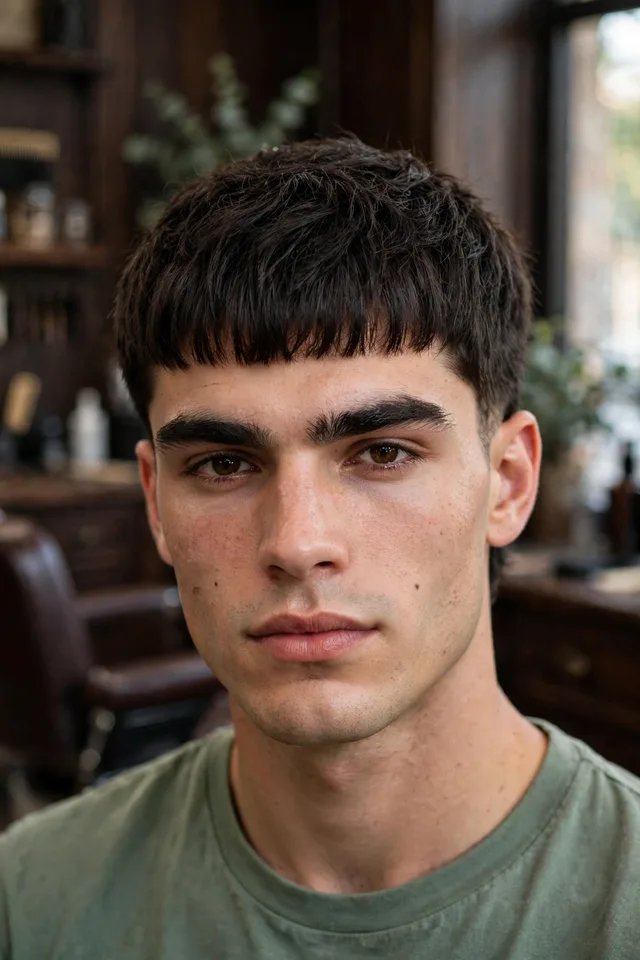
What is the softest Edgar you can wear?
This one. The Low Taper Edgar keeps the fringe but trades the hard fade for full scissor-cut sides that only taper at the sideburns and neckline. The result reads as a groomed, almost classic haircut from the side — and pure Edgar from the front. It is the longest-lasting version here by weeks.
Face Shape: Flattering on long and narrow faces, where the fuller sides restore balance.
Grooming Kit: A light cream or a whisper of matte paste to keep the fringe sitting straight.
Maintenance: Every 3–4 weeks — the taper’s soft edges forgive a skipped week completely.
Barber Script: “Low taper Edgar — blunt fringe, textured top, scissor-cut sides with a low taper only at the edges.”
The quiet Edgar — all fringe, no hard lines.
Q: Does a low taper Edgar grow out well?
A: Better than any other version. With no hard gradient to blur, growth just lengthens it into a soft fringe haircut. If your barber visits are monthly, this is the Edgar that respects your calendar.
Q: Low taper Edgar or classic Edgar for thick hair?
A: Thick hair can carry either, but the taper keeps more of its natural body at the sides, which suits very dense hair that puffs under high fades. Fine hair should take the classic’s contrast instead.
6 of 20 — The Skin Fade Edgar
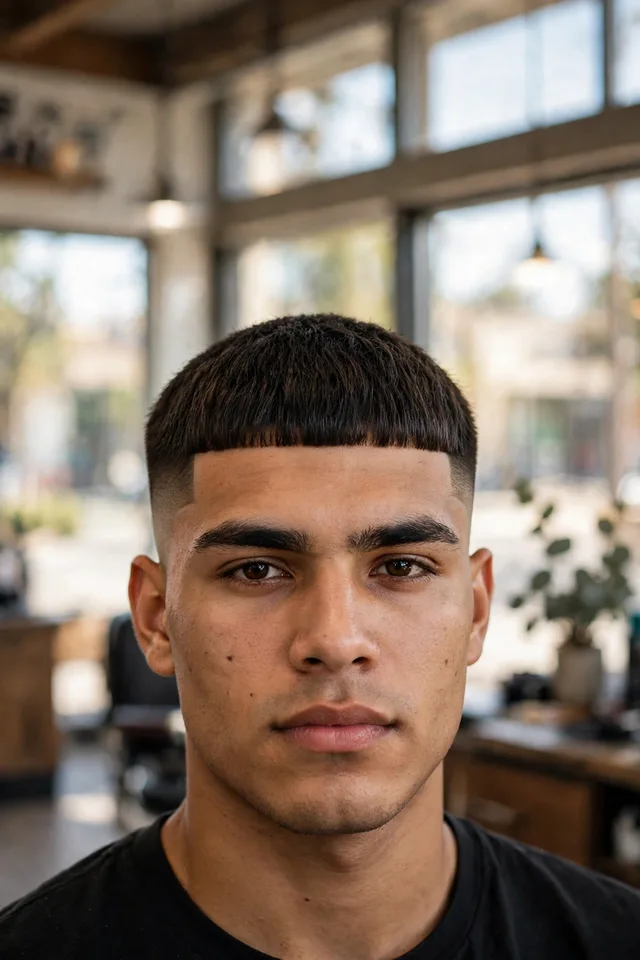
Who takes the Edgar down to skin?
The man who wants the sharpest possible frame for the fringe. The Skin Fade Edgar fades the sides and back to bare skin, so the blunt fringe floats above a hard white-to-dark gradient. It is the cleanest-looking Edgar for about ten days — and the one that demands the most of your calendar.
Face Shape: Best on oval and square faces with strong features; the stark sides spotlight the jaw.
Grooming Kit: Matte clay for the top; sunscreen for fresh skin fades in summer.
Maintenance: Every 2 weeks, no exceptions — skin fades show regrowth fastest of all.
Barber Script: “Skin fade Edgar — blunt fringe, short textured top, sides and back to skin, razor-sharp edges.”
The sharpest frame — the fringe, spotlit.
Q: How fast does a skin fade Edgar grow out?
A: Noticeably within 10–14 days as the skin-level sides fill in and the gradient softens into a regular high fade. Fortnightly appointments keep it at its peak; monthly men should choose the taper instead.
Q: Skin fade or high fade on an Edgar?
A: The skin fade is crisper for the first week; the high fade keeps its look a week longer. Choose by your barber rhythm, not the mirror on day one — both read as classic Edgars in photos.
7 of 20 — The Burst Fade Edgar
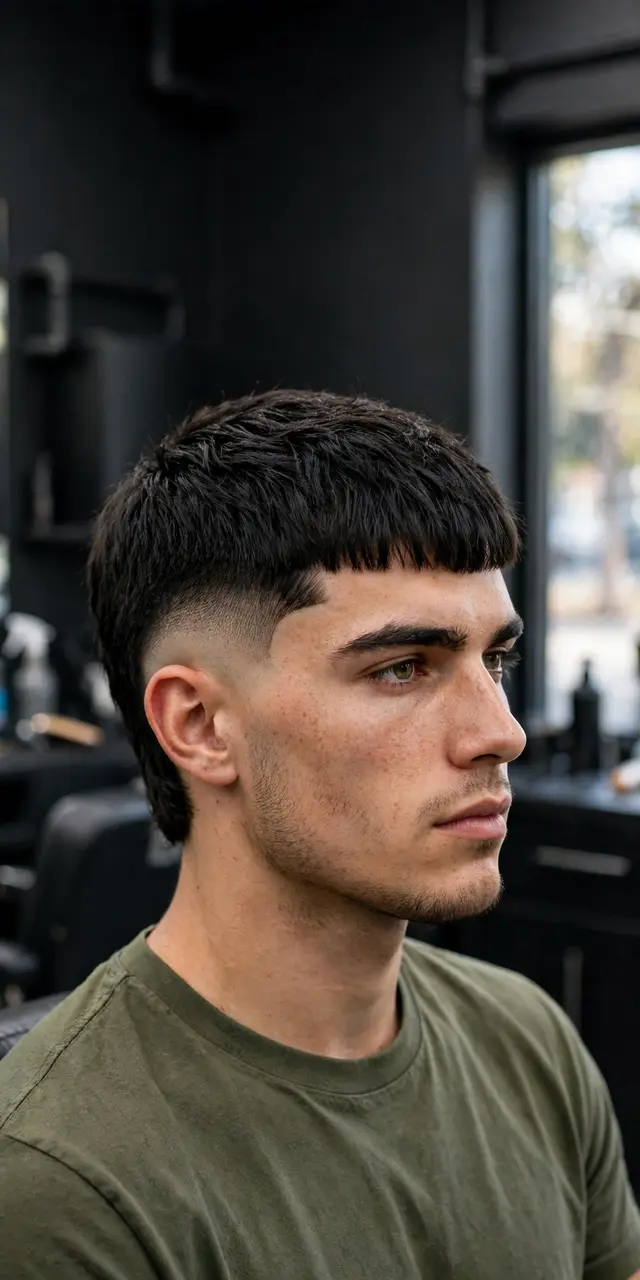
What does a burst fade do to an Edgar?
It curves the contrast. The Burst Fade Edgar wraps the fade in a semicircle around the ear, leaving a touch more length at the back — a rounded, almost mohawk-adjacent silhouette that has become the barbershop’s favourite modern twist on the cut, especially on textured and curly tops.
Face Shape: Excellent on round faces; the curved fade and kept-back length slim and lengthen together.
Grooming Kit: Matte clay or a curl cream depending on your top; the burst itself needs only its appointments.
Maintenance: Every 2–3 weeks — the burst’s curve is the first thing growth distorts.
Barber Script: “Burst fade Edgar — blunt fringe, textured top, burst fade curved around the ears, length kept at the back.”
The curved Edgar — contrast, rounded.
Q: Burst fade Edgar or high fade Edgar — which is more modern?
A: The burst fade is the newer barbershop favourite and suits textured, wavy and curly tops best. The high fade is the timeless original. If your top has movement, burst; if it is straight and sleek, high.
Q: Does the burst fade Edgar suit straight hair?
A: It works, but it shines on hair with texture — the curve of the fade echoes curls and waves beautifully. On poker-straight hair the classic high fade usually reads cleaner. Ask your barber to judge your top honestly.
8 of 20 — The Curly Edgar Cut
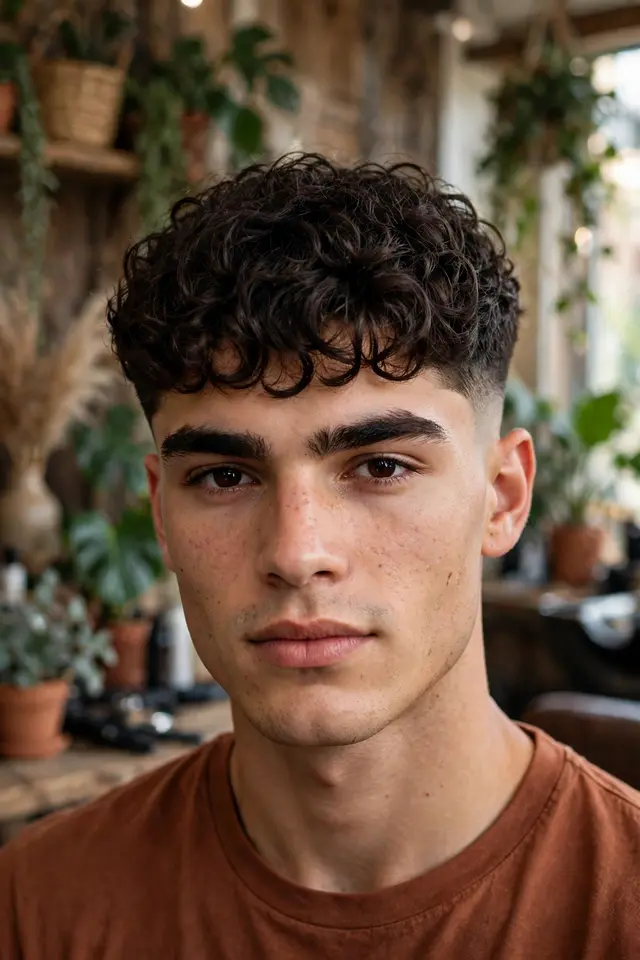
Can curly hair wear an Edgar?
It wears it brilliantly. The Curly Edgar keeps the top long enough for curls to form — usually 2 or more inches — while the fringe is cut to sit where the curls naturally fall, and faded sides keep the silhouette tight. The fringe reads softer than the classic’s ruler line, and that softness is the charm.
Face Shape: Superb on square and angular faces; curly volume softens what the fringe sharpens.
Grooming Kit: Curl cream and your fingers. Combs stay away from this cut entirely.
Maintenance: Sides every 2–3 weeks; moisturise the top daily — curly Edgars drink product.
Barber Script: “Curly Edgar — fringe cut dry where the curls fall, top left long enough to curl, mid or burst fade on the sides.”
Curls meet the fringe — the Edgar, softened by nature.
Q: Should a curly Edgar be cut wet or dry?
A: Dry, always. Curls shrink as they dry, so a wet-cut fringe ends up far shorter than planned — and a too-short fringe is the one Edgar mistake that cannot be styled away. Insist on a dry fringe cut.
Q: How long does a curly Edgar’s top need to be?
A: At least 2 inches for the curl pattern to show and the fringe to fall properly. Tighter curls need a little more. Below that length the top reads as a curly crop instead — a fine cut, but not this one.
9 of 20 — The Wavy Edgar
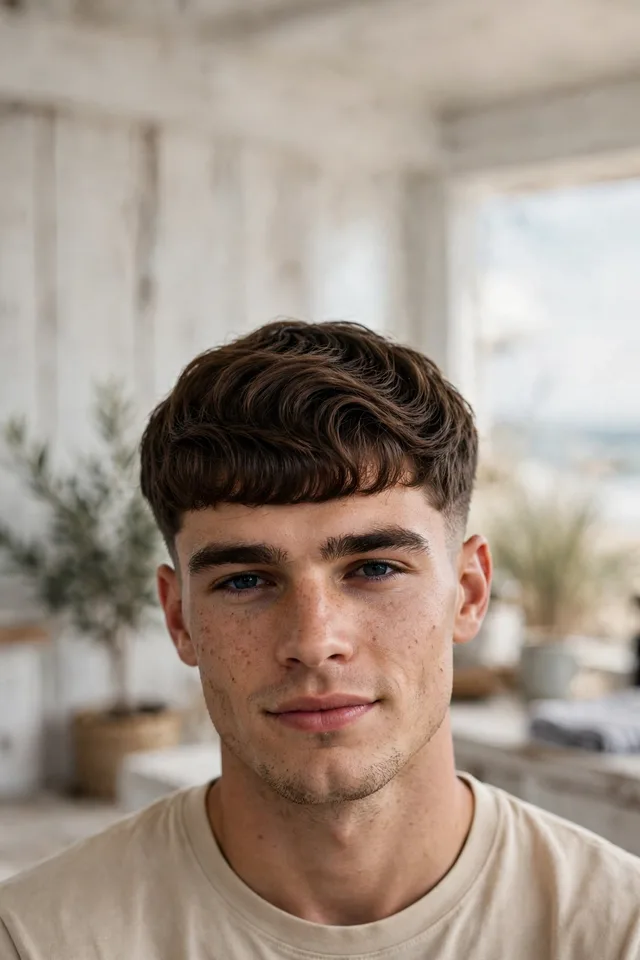
What do waves add to an Edgar?
Movement inside the geometry. The Wavy Edgar keeps the blunt fringe line but lets the top’s natural S-bend sweep through it, so the cut reads sharp from the front and relaxed from above. It is the coastal member of the family — the Edgar with its collar open.
Face Shape: Flattering on long faces especially; the soft wave offsets the fringe’s severity.
Grooming Kit: Sea salt spray and a light cream. Heavy products flatten the wave you kept the length for.
Maintenance: Every 3 weeks; wavy hair hides growth better than straight hair does.
Barber Script: “Wavy Edgar — fringe line kept straight, top left long enough for the wave, soft taper or mid fade sides.”
Geometry on top, ocean underneath — the relaxed Edgar.
Q: How do I stop a wavy Edgar going frizzy?
A: Apply light cream to damp hair, push everything forward, then leave it completely alone while it dries. Touching it mid-dry breaks the wave pattern and invites frizz — hands off is the whole technique.
Q: Wavy Edgar or fluffy Edgar — which do I have?
A: If your top forms loose S-shapes, it is wavy and needs light products and the fringe worn flatter. If it is straight but full and forward-swept with volume, it is the fluffy. Your hair type decides, not the photo.
10 of 20 — The Edgar for a Receding Hairline
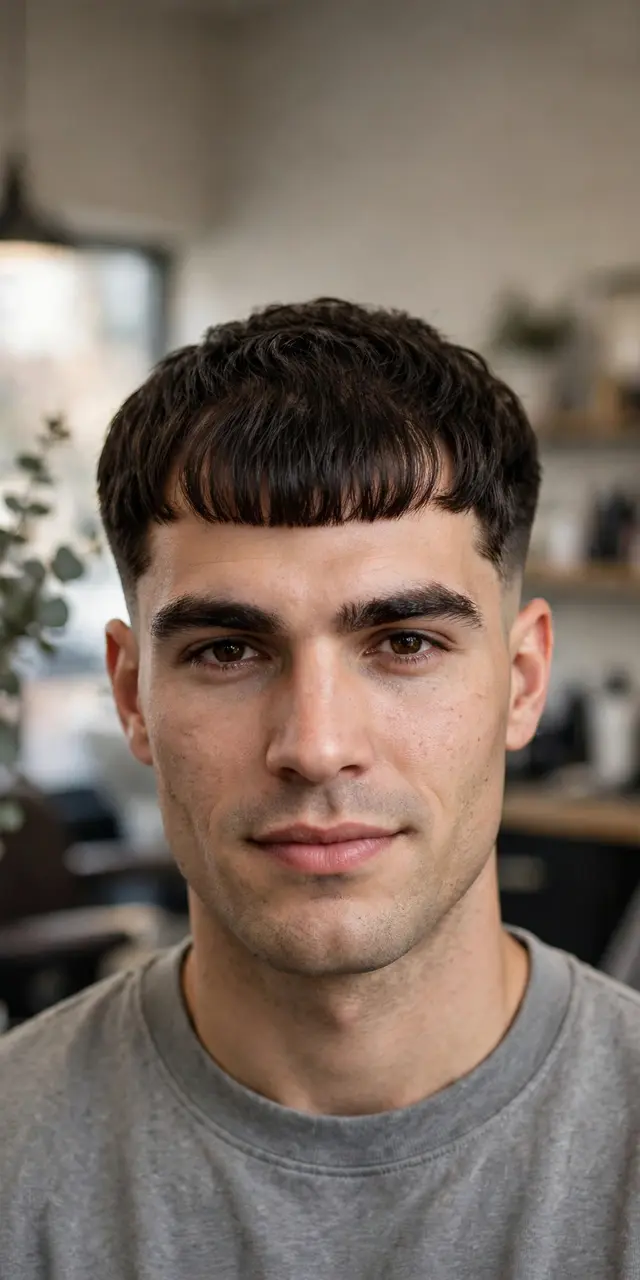
Can a receding hairline wear an Edgar?
Carefully — and it can work beautifully. The Edgar for a Receding Hairline uses the blunt fringe as cover: worn forward, it disguises thinning temples better than almost any short cut, provided the fringe is kept textured at the corners rather than ruler-straight, and the top stays short enough that no contrast builds between fringe and crown.
Face Shape: Works on most faces; the forward fringe keeps attention low and central.
Grooming Kit: Texture powder for grit at the fringe; matte products only, used sparingly.
Maintenance: Every 2–3 weeks; the fringe’s cover only works while its length is disciplined.
Barber Script: “Edgar for a receding hairline — forward fringe with textured corners, short top, mid fade, nothing that exposes the temples.”
The fringe as cover — recession, disguised.
Q: What makes an Edgar fail on a receding hairline?
A: A ruler-straight, heavy fringe. It draws a hard line exactly where the hair is thinnest and spotlights the corners. Texturing the fringe’s edges and keeping it light is what makes the cover believable.
Q: Edgar or buzz cut for a receding hairline?
A: The Edgar hides early recession at the temples; the buzz is the reset when thinning reaches the crown. Many men wear the Edgar through the early years, then buzz later — both beat sweeping long hair over it.
11 of 20 — The Textured Edgar Cut
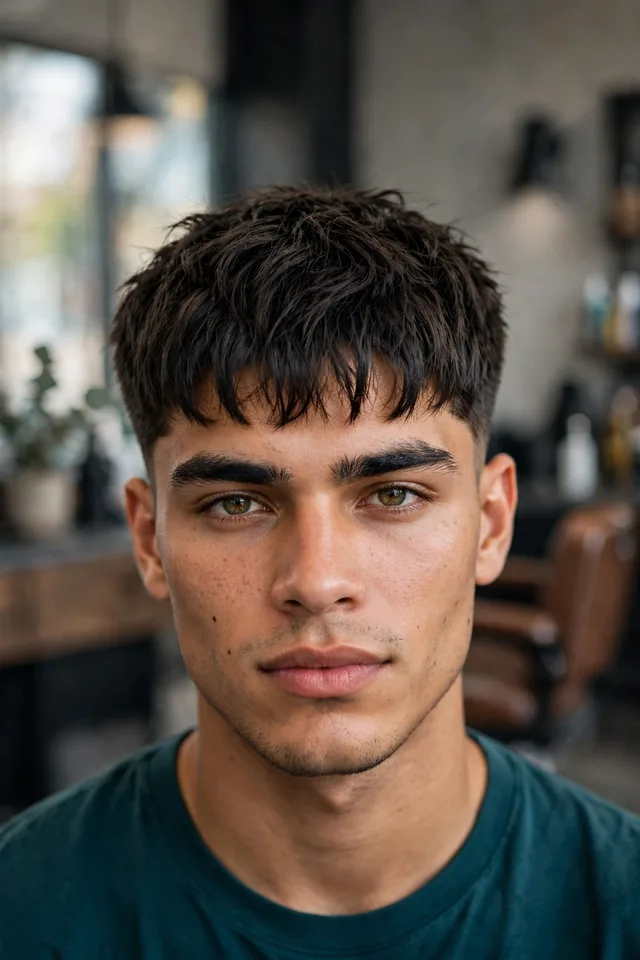
What does texture change on an Edgar?
It trades the ruler for scissors. The Textured Edgar point-cuts the fringe and top so the lines break up into piecey, touchable segments — still unmistakably an Edgar in silhouette, but softer, more forgiving, and far easier to live with as it grows. For many men this is the best first Edgar.
Face Shape: Good on almost everyone; the broken lines forgive what the classic’s precision exposes.
Grooming Kit: Matte clay, worked through with fingertips to keep the pieces separated.
Maintenance: Every 3 weeks; texture disguises grow-out better than any straight line.
Barber Script: “Textured Edgar — point-cut fringe and top, piecey finish, mid or high fade, nothing ruler-straight.”
The forgiving Edgar — same silhouette, softer edges.
Q: Textured Edgar or classic Edgar for a first timer?
A: The textured, almost always. It grows out gracefully, hides a fringe cut slightly off, and styles in seconds. Graduate to the classic’s hard lines once you know the fringe suits your face.
Q: How do I style a textured Edgar in the morning?
A: Sixty seconds: a pea of matte clay raked through dry hair, everything pushed forward, then pinch the fringe into pieces. The texture is the style — if it looks too neat, rough it up more.
12 of 20 — The Messy Edgar
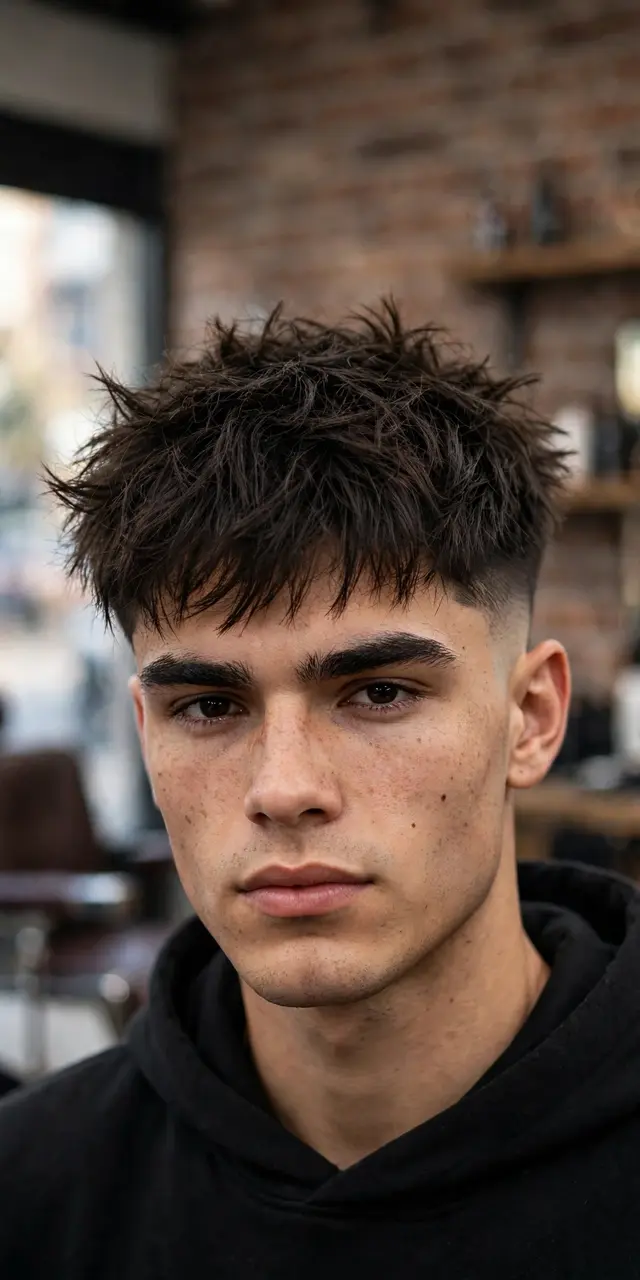
How messy can an Edgar get?
Deliberately messy — on top. The Messy Edgar keeps the faded sides crisp but wears the top and fringe roughed-up and piecey, pushed in mixed directions for a just-woke-up energy. It is the street-style Edgar: the outline says barber-fresh, the top says you did not try — that tension is the whole look.
Face Shape: Strong on oval and square faces; the disorder softens heavy features.
Grooming Kit: Texture powder is the hero. Clay only if your hair refuses to hold direction.
Maintenance: Sides every 2 weeks; the messy top itself forgives almost anything.
Barber Script: “Messy Edgar — fringe and top heavily point-cut, worn roughed up, high fade kept crisp, edges clean.”
Clean sides, chaos on top — the street Edgar.
Q: How do I keep a messy Edgar looking styled, not sloppy?
A: Neat edges, messy middle. The fade, hairline and neckline must stay barber-fresh; only the top gets the disorder. The moment the sides blur too, the look tips from intentional to overdue.
Q: Messy Edgar or messy crop — what is the difference?
A: The fringe line and the fade height. The messy Edgar keeps a recognisably straighter, higher fringe and harder sides; the messy crop is softer everywhere. Your barber can show you both silhouettes in the mirror before cutting.
13 of 20 — The Edgar with a Line Up
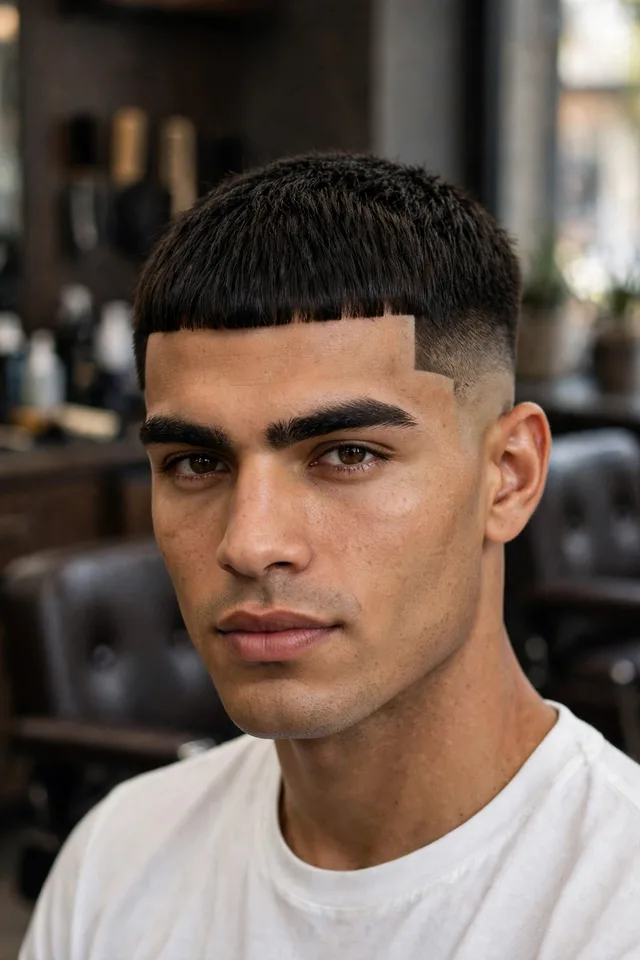
What does a line-up add to an Edgar?
Jewellery-level precision. The Edgar with a Line Up razors the hairline, temples and fringe edge into perfect straight lines and sharp corners. On a cut already built from geometry, the line-up is the finishing cut of the gem — the detail that makes strangers ask who your barber is.
Face Shape: Best on square and oval faces with strong hairlines; the razor lines amplify bone structure.
Grooming Kit: Nothing for the lines themselves — just a barber you trust every fortnight.
Maintenance: The lines soften within 2 weeks; this Edgar lives on a strict schedule.
Barber Script: “Edgar with a line up — blunt fringe, textured top, high fade, razor the hairline, temples and fringe edge perfectly straight.”
Geometry, polished — the Edgar at full precision.
Q: How long does a line-up stay sharp?
A: About 10–14 days before regrowth softens the razor lines. Men who wear line-ups book fortnightly without thinking about it — if that rhythm does not suit your life, skip the line-up, not the appointments.
Q: Does a line-up suit a receding hairline?
A: A light one can tidy the edges, but a hard geometric line-up on a receded hairline usually exaggerates it. The textured-corner Edgar in this guide is the safer design for thinning temples.
14 of 20 — The Edgar with a Beard
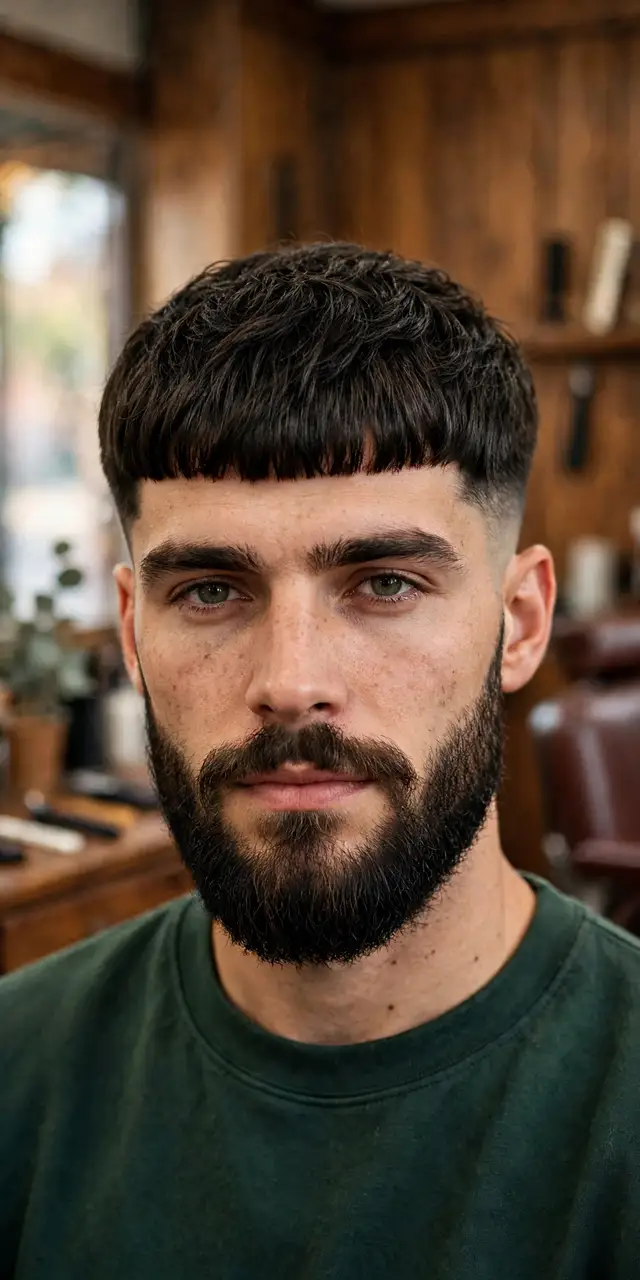
Why pair an Edgar with a beard?
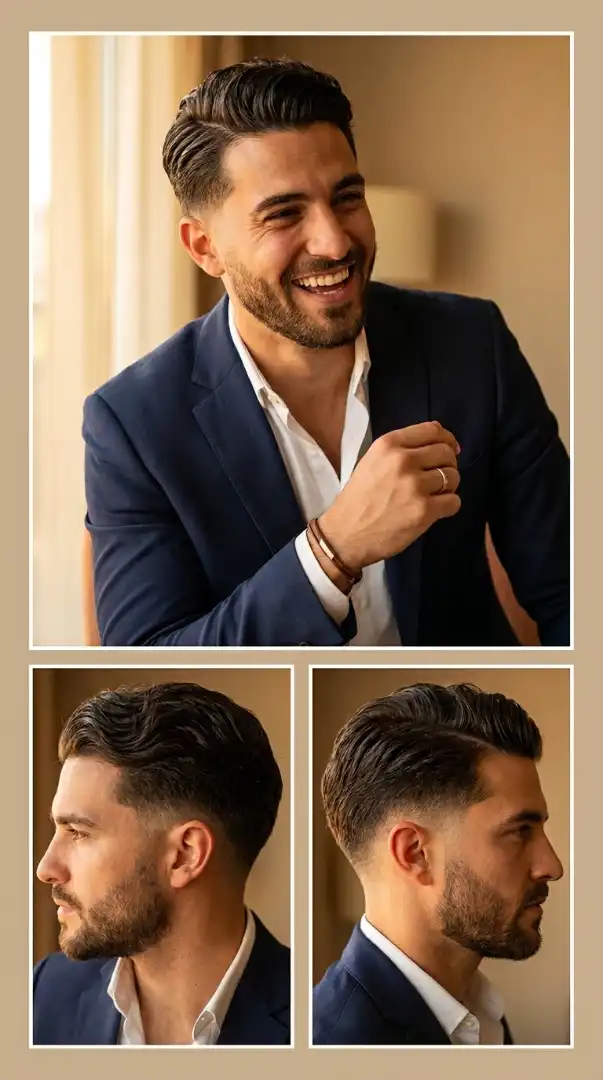
Balance. The Edgar’s fringe and fade are all angles on top, so a shaped beard below adds weight and maturity — it takes the cut from youthful statement to complete look, and the fade-into-beard blend at the sideburn is where the craft shows.
Face Shape: The making of round faces — sharp top plus a structured jaw slims everything between.
Grooming Kit: Matte clay for the top; beard oil, a boar brush and a trimmer below.
Maintenance: Edgar and beard shaped in the same visit every 2–3 weeks; oil daily.
Barber Script: “Edgar with a beard — blunt fringe, textured top, fade blending into the beard at the sideburns, beard shaped clean.”
Angles above, anchor below — the complete Edgar.
Q: What beard length suits an Edgar best?
A: Heavy stubble to a medium beard reads best — the Edgar is a strong frame, and a very long beard competes with it. Whatever the length, keep the cheek and neck lines razor-clean to match the cut’s precision.
Q: Should the fade blend into the beard?
A: Yes — the graduated sideburn is what makes the pairing look designed rather than accidental. A hard step between fade and beard breaks the silhouette; a blend makes the whole head one shape.
15 of 20 — The Long Edgar Cut
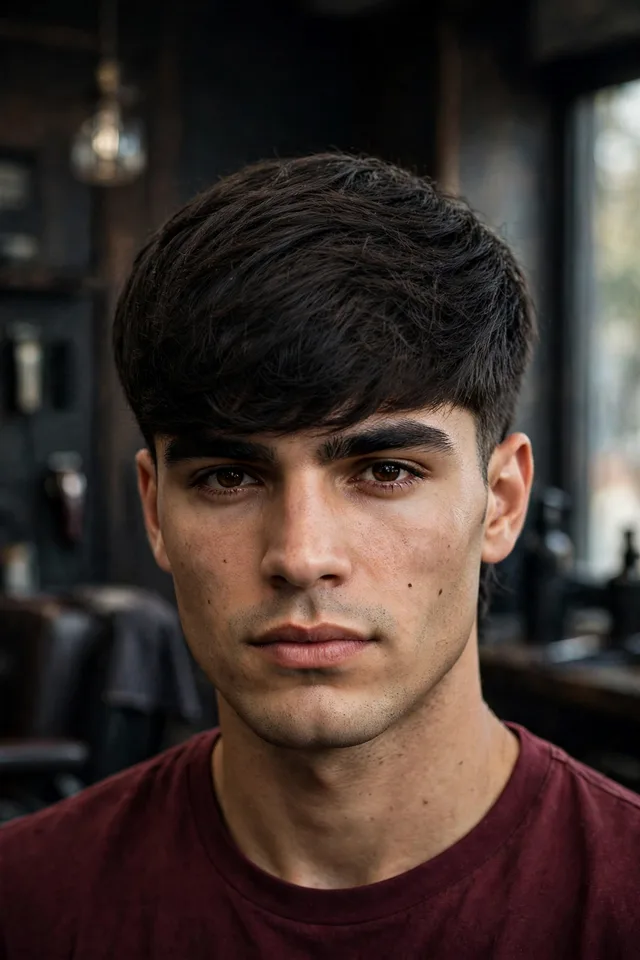
Who should grow the Edgar out?
The man who wants the fringe with real length behind it. The Long Edgar keeps 3 or more inches on top — enough for a fuller, heavier forward sweep — while the fringe stays blunt and the sides stay faded. It is the most dramatic silhouette here, and the natural grow-out target from a fluffy Edgar.
Face Shape: Best on oval and long faces; the extra top weight can overwhelm small features.
Grooming Kit: Sea salt spray, light clay, and a blow dryer — at this length, two minutes of drying decides the day.
Maintenance: Every 3 weeks; the sides set the appointment while the top keeps growing.
Barber Script: “Long Edgar — fringe kept blunt, top 3-plus inches left full and forward, mid fade, texture through the ends.”
The fringe, amplified — the Edgar at full length.
Q: How long does it take to grow into a long Edgar?
A: From a classic Edgar, roughly 2–3 months of top growth with the sides kept faded on schedule. Maintaining the fade while the top grows is what keeps the in-between stage looking deliberate.
Q: Long Edgar or fluffy Edgar — what is the difference?
A: Length and weight. The fluffy sits around 2 inches with airy volume; the long Edgar runs 3-plus inches and sweeps heavier and flatter. Choose fluffy for bounce, long for drama.
16 of 20 — The Edgar for Thick Hair
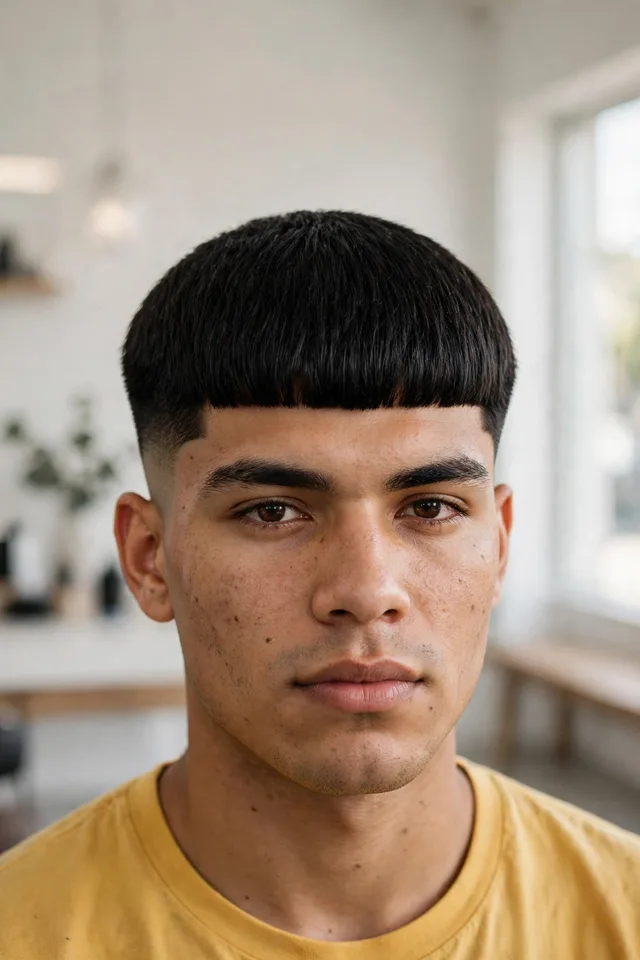
Why is thick hair the Edgar’s natural home?
Because the Edgar was designed by it. Thick, straight hair holds the blunt fringe line perfectly, fills the top without product, and takes a fade like a carving. The only management needed is weight removal underneath so the top sits flat instead of puffing — a good barber does it without being asked.
Face Shape: Excellent on round and wide faces; the high fade clears the side bulk thick hair adds.
Grooming Kit: A strong matte clay in small amounts for formal days; most days, nothing.
Maintenance: Every 2–3 weeks; thick hair regains its bulk quickly at the sides.
Barber Script: “Edgar for thick hair — blunt fringe, weight texturised out underneath, high fade, no puff at the temples.”
Built by thick hair — the fringe at its straightest.
Q: Why does my thick Edgar puff out at the sides?
A: Density pushing one-length hair outward. The cure is a higher fade plus weight removal at the temples — tell your barber the sides feel helmet-like and he will know exactly what to carve out.
Q: What product holds a thick Edgar’s fringe straight?
A: Usually none — thick straight hair holds the line itself. On humid days a pea of high-hold matte clay pressed through the fringe with fingertips is enough. Avoid gels; shine cheapens this cut.
17 of 20 — The Short Edgar Cut
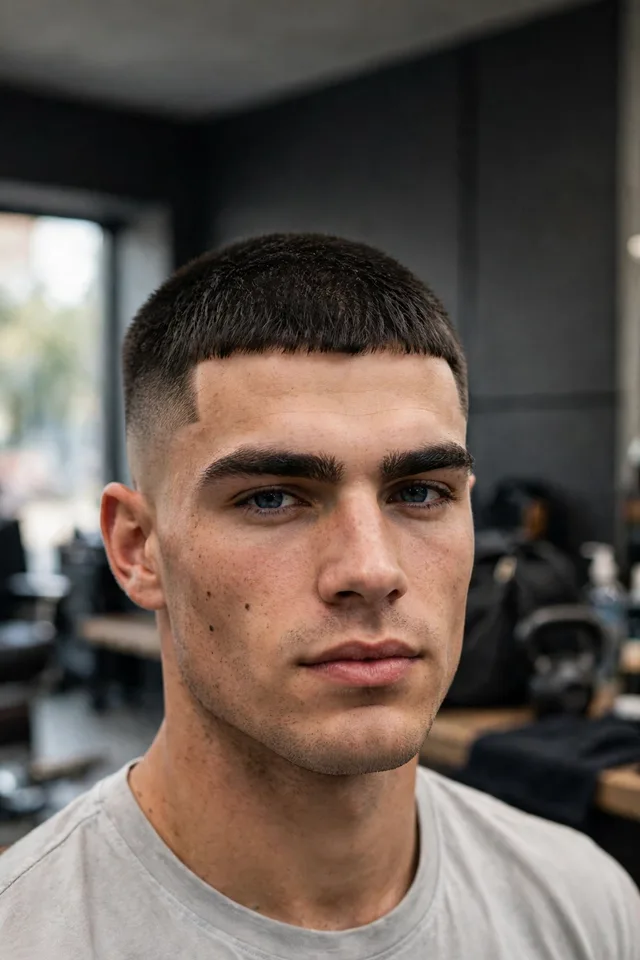
How short can an Edgar go?
Almost to crop length. The Short Edgar trims the top right down and keeps the fringe tight and close — the lowest-maintenance Edgar there is, and the one that grows out into a classic Edgar without an awkward phase. It is the athlete’s version: shower, towel, done.
Face Shape: Kindest to well-proportioned heads and strong jaws; very short fringes hide nothing.
Grooming Kit: Honestly, none beyond shampoo. A soft brush for morning direction.
Maintenance: Every 2–3 weeks to keep the fringe line honest.
Barber Script: “Short Edgar — top cropped close, fringe kept short and straight, high fade, clean edges.”
The minimal Edgar — fringe, fade, finished.
Q: Short Edgar or classic Edgar — which is easier?
A: The short, by minutes every morning — there is almost nothing to style. The classic keeps a touch more presence on top. Both share the same fringe discipline at the barber; only the styling differs.
Q: Can I maintain a short Edgar at home?
A: The sides, no — the fade needs a barber. But the short Edgar forgives a stretched appointment better than any other version because its grow-out target is simply the classic Edgar. Every other cut can be a home trim if needed.
18 of 20 — The Edgar with a Design
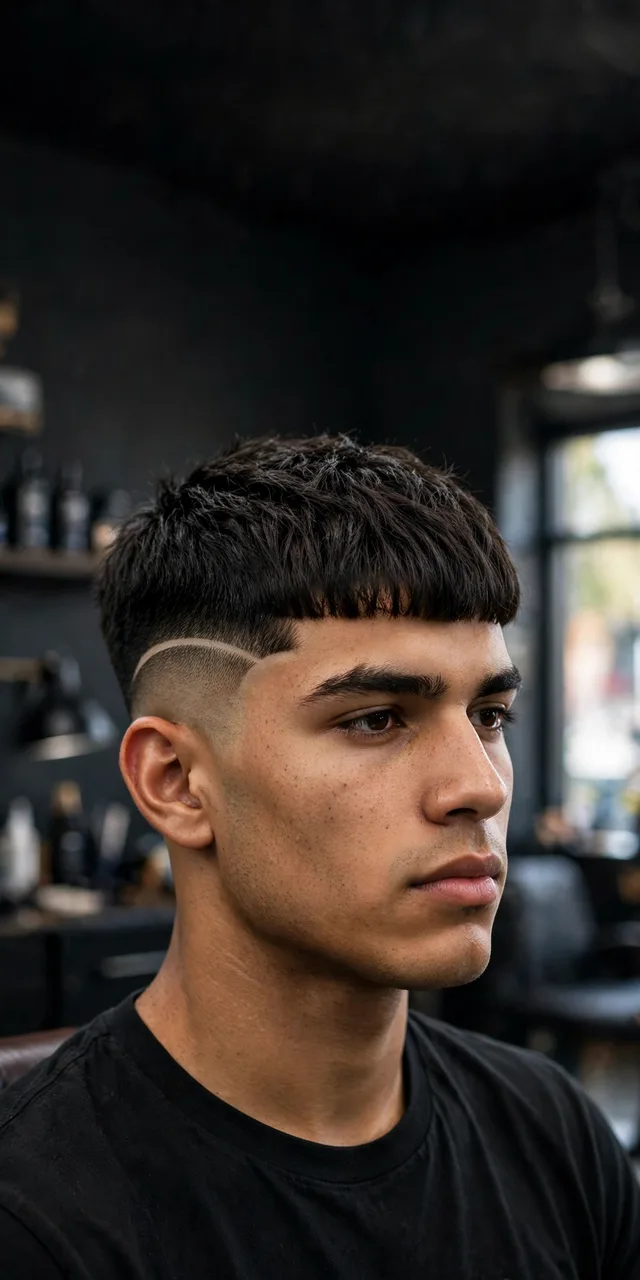
What is an Edgar with a design?
The canvas version. The Edgar with a Design shaves a line, curve, freestyle pattern or small artwork into the faded sides — the high fade becomes a gallery wall under the fringe. It is the most personal Edgar in the guide and the one teenagers request most after the classic.
Face Shape: Suits most faces; the design draws the eye sideways, which flatters long faces.
Grooming Kit: Nothing — the design lives and dies by the barber’s razor, not your shelf.
Maintenance: Designs blur within 2 weeks; plan fortnightly visits or treat it as a one-event look.
Barber Script: “Edgar with a design — blunt fringe, textured top, high skin fade, shave a clean design into the side.”
The fade as canvas — the personal Edgar.
Q: What design should a first-timer choose?
A: One clean line or a simple curve above the ear. It reads sharp, grows out gracefully, and suits every setting. Save the freestyle artwork for once you know you enjoy the fortnightly upkeep it demands.
Q: How do I find a barber who can do designs?
A: Look at their posted work, not their chair price — designs are a portfolio skill. Any barber whose feed shows clean line work on fades can execute a simple design well. Show the exact photo you want copied in spirit.
19 of 20 — The Edgar for a Round Face
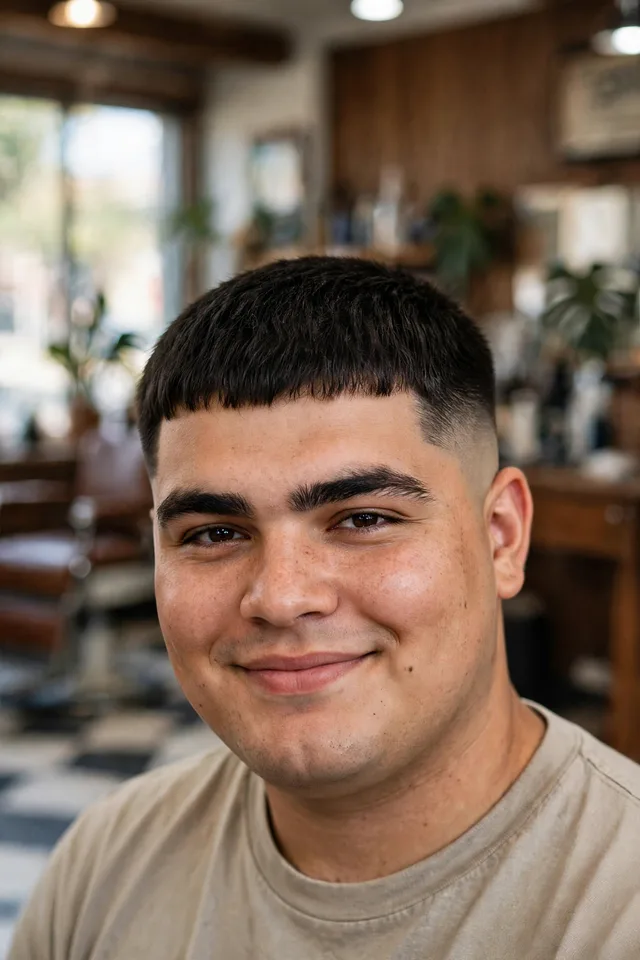
What makes an Edgar slim a round face?
Angles against curves. The Round Face Edgar keeps the fringe straight but slightly textured, the top compact, and the fade high — every line in the cut fights roundness: the fringe’s edge adds structure, the high sides delete temple width, and nothing soft is left to echo the face’s shape.
Face Shape: Designed for round and fuller faces; also sharp on square faces wanting an edgier read.
Grooming Kit: Matte clay with real hold to keep the fringe line where the barber put it.
Maintenance: Every 2 weeks — as the sides grow, the width creeps back with them.
Barber Script: “Edgar for a round face — straight textured fringe, compact top, high fade, zero width at the temples.”
Angles in, curves out — the round face’s sharpest fringe.
Q: High fade or burst fade for a round face Edgar?
A: The high fade slims hardest and most predictably. The burst fade’s kept length at the back can add visual width from some angles — save it for when the face has leaned out or for oval faces.
Q: Should a round face avoid the fluffy Edgar?
A: Mostly, yes — the fluffy’s width and volume on top can widen a round face further. The textured or classic Edgar gives the same fringe identity with a far more slimming silhouette.
20 of 20 — The Winter Edgar King
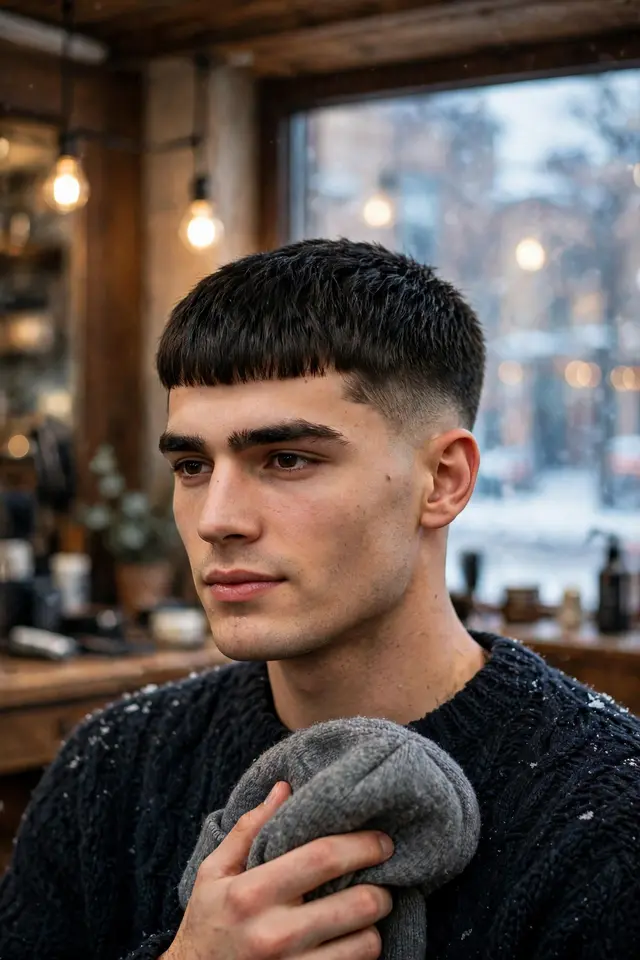
What is the best Edgar for winter?
The one with no skin showing. The Winter Edgar King swaps the skin fade for a mid fade or low taper, so no bare skin meets the wind, and keeps the fringe at a length that survives a beanie: hat off, push the fringe back into line with one palm, and the cut is restored — no height to rebuild, nothing to re-style.
Face Shape: Suits every face — the moderate fade and classic fringe are the most forgiving combination here.
Grooming Kit: Matte clay with flexible hold and a richer conditioner for winter dryness.
Maintenance: Every 3 weeks; the taper forgives a skipped week through the holidays.
Barber Script: “Winter Edgar — blunt fringe, textured top, mid fade or low taper, nothing to skin. It has to survive a beanie.”
The Edgar winter would choose — fringe intact, hat-proof.
Q: How do I fix beanie hair on an Edgar?
A: Warm your palms, press the fringe back down into its line and pinch the top’s texture back. Flexible-hold clay reactivates cleanly — ten seconds, no mirror, no water. The fringe forgives hats better than any tall style does.
Q: How do I stop an Edgar drying out in winter?
A: Condition twice a week, shampoo less, and switch to a creamier matte product in the cold months. Indoor heating dries the fringe’s ends first — a tiny amount of leave-in conditioner keeps the line looking cut, not frayed.
The Bottom Line
Edgar cut hairstyles for men all run on one formula: a blunt fringe that makes the statement, a textured top that carries it, and a fade chosen for your life. Choose the top for your hair — fluffy for thick and straight, longer for drama, textured or messy for forgiveness, curly and wavy left natural — then choose the sides for your setting: a low taper for school and office, a mid fade for the all-rounder, high or skin when you want the contrast loud.
The non-negotiables are simple: the fringe stays straight, the edges stay clean, and the appointments stay close — every two to three weeks is the price of this silhouette. Show your barber the photo, say the script out loud, and enjoy the sharpest fringe in the barbershop. For the natural next reads, see the fade haircuts guide for every side option in detail, and the textured crop hairstyles guide for the Edgar’s softer cousin.