10 Long Hairstyles for Men
1 of 10 — The Flowing Mediterranean Mane

Perfect Face Shapes for This Style
The Flowing Mediterranean Mane works exceptionally well for oval and oblong face shapes. The shoulder-length hair with natural layers creates horizontal volume that adds width to elongated faces, balancing the proportions. For oval faces — already considered the most versatile shape — this style enhances natural symmetry while the center part draws attention to balanced facial features. Men with diamond face shapes also benefit as the hair’s volume at cheekbone level softens angular features. However, round face shapes should approach this cautiously; the added width can make the face appear fuller unless paired with strategic layering that frames rather than widens.
Essential Grooming Arsenal
Building this long hairstyle requires investment in quality tools. Start with the Dyson Supersonic Hair Dryer with diffuser attachment for controlling wave pattern without frizz. For cutting and maintenance, book appointments with shears-specialist barbers, but keep Fromm Shear Artisan Series scissors at home for trimming split ends between visits. Daily styling demands Mason Pearson Boar Bristle Brush to distribute natural oils and Kent Wide-Tooth Comb for detangling without breakage. Product-wise, rotate between Oribe Gold Lust Nourishing Hair Oil for pre-styling moisture, Bumble and Bumble Surf Spray for enhancing natural texture, and Uppercut Deluxe Sea Salt Spray for days requiring more definition. Beard maintenance uses Honest Amish Beard Oil and Viking Revolution Beard Balm to keep facial hair synchronized with the head’s natural flow.
Maintenance Commitment Level
HIGH MAINTENANCE — This is not a wash-and-go style. Expect professional salon visits every 6-8 weeks for layer reshaping and split-end removal, with each session running $60-120 depending on your city. Daily routine consumes 15-20 minutes: wash every 2-3 days with sulfate-free shampoo to preserve natural oils, condition thoroughly each wash, apply leave-in treatment while damp, air-dry or diffuse on low heat, then style with sea salt spray or light oil depending on desired finish. Weekly deep conditioning treatments are non-negotiable to prevent dryness. The beard requires daily oiling and combing, plus weekly shaping with trimmer. This style demands discipline — skip the routine and you’ll look unkempt rather than intentionally styled. Not ideal for men who travel frequently without access to proper products.
Barber Communication Script
Walk into the salon and say: “I’m growing out my hair to shoulder length with a layered cut that maintains natural movement. I want long layers throughout — start the first layer around chin length and graduate to full shoulder length. Keep the layers chunky, not feathered — I need weight for the waves to hold their shape. Add face-framing layers starting at cheekbone level to avoid overwhelming my features. Preserve length at the back — I want it touching my collar when down. For the beard, trim it to 15-20mm length using guards, shape the cheek line naturally, and blend it into the sideburns so there’s no harsh line between hair and facial hair. Don’t thin out the bulk — I want fullness. Skip the blow-dry styling — I prefer air-drying to maintain the natural texture.”
This Mediterranean-inspired flow pairs perfectly with relaxed linen wardrobes and sun-soaked confidence, but mastering it requires commitment to the long game — literally.
FAQ
Q: How long does it take to grow hair to shoulder length from a short cut?
A: Expect 18-24 months minimum to reach shoulder length from a standard short men’s cut, as hair grows approximately half an inch per month. The journey requires navigating awkward middle stages around months 6-12 when hair sits at ear-to-chin length and tends to stick out rather than fall naturally. Regular trims every 8 weeks during growth prevent split ends from traveling up the shaft and forcing you to cut off length later. Stay patient, maintain scalp health with proper products, and resist the urge to cut during frustrating phases.
Q: What’s the best way to prevent long hair from looking greasy or flat?
A: Overwashing strips natural oils and causes rebound oil production, creating a vicious cycle of greasiness. Wash only 2-3 times weekly using sulfate-free shampoo, focusing on the scalp not the lengths, and always condition from mid-shaft down. Between washes, use dry shampoo at roots to absorb oil and add volume — Batiste Original or Living Proof Perfect Hair Day work exceptionally well. Avoid touching your hair constantly throughout the day, as hands transfer oils. Sleep on silk or satin pillowcases to reduce oil transfer and hair breakage.
Q: Can I style long hair professionally for corporate environments?
A: Absolutely — the key is polished restraint. Pull hair into a low ponytail or man bun positioned at the nape rather than the crown for a refined rather than casual look. Use American Crew Grooming Cream to smooth flyaways and ensure a clean finish. Alternatively, slick hair straight back with Uppercut Deluxe Pomade for high-stakes meetings. Keep facial hair meticulously groomed — unkempt beard plus long hair reads bohemian, while a sharp beard plus styled long hair reads intentional. Pair with tailored clothing to signal professionalism.
Q: What products prevent long hair from getting tangled and knotty?
A: Leave-in conditioners and detangling sprays are non-negotiable. Apply It’s a 10 Miracle Leave-In Product to damp hair after every wash to create a protective barrier against tangling. Before bed, loosely braid hair or tie it in a low ponytail using soft silk scrunchies — never tight elastics that cause breakage. Always detangle from ends upward using a wide-tooth comb, never brushing from roots down which forces knots tighter. Weekly hair masks like Olaplex No. 3 rebuild bonds and reduce friction between strands.
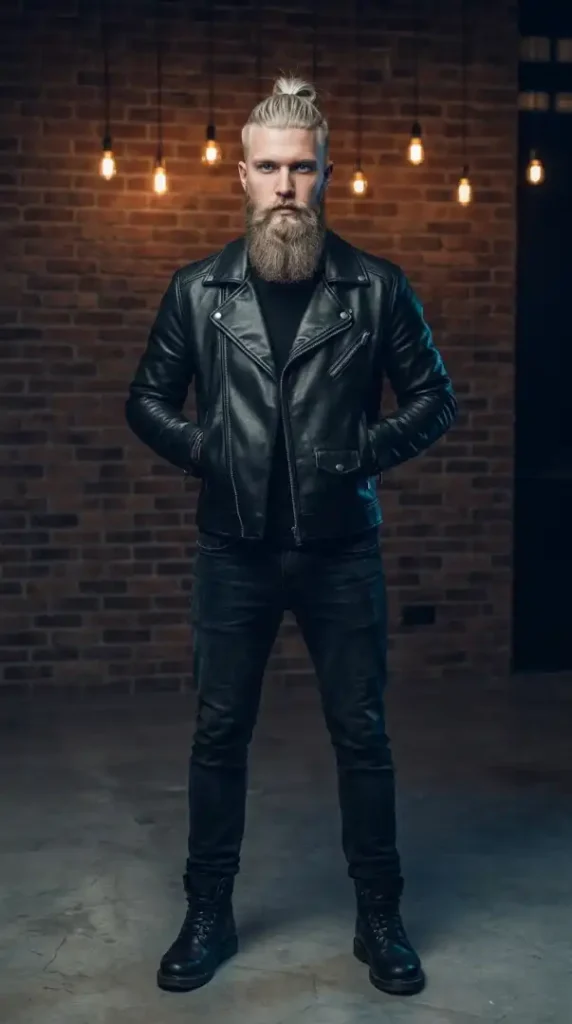
2 of 10 — The Scandinavian Viking Knot
Optimal Face Shapes for Maximum Impact
The Scandinavian Viking Knot excels on men with square and diamond face shapes. The high man bun positioned at the crown creates vertical length, elongating the face and counterbalancing the width of a strong jawline. For square faces, this vertical emphasis softens the angular jaw by drawing the eye upward toward the structured bun. Diamond faces benefit enormously — the clean undercut sides remove bulk from the widest point at cheekbones, while the beard adds needed width at the chin, creating overall balance. Heart-shaped faces work moderately well as the bun adds volume where the face naturally narrows at the top. Round faces should avoid this style unless paired with a very precise beard shape that elongates; the high bun can emphasize facial roundness rather than counteract it.
Professional Tool Kit Essentials
Achieving and maintaining this Nordic-inspired look demands specific equipment. For the undercut maintenance, invest in Wahl Professional 5-Star Magic Clip for home touch-ups between barber visits, paired with Andis T-Outliner for detailed edge work around the ears and neckline. Hair tie selection matters critically — use only Invisibobble Power or Kitsch Satin Sleep Scrunchies to prevent breakage and creasing; cheap elastics will snap long hair. Daily styling requires Denman D3 Brush for smoothing hair back into the bun without frizz and Mason Pearson Pocket Comb for perfecting the pulled-back section. Product arsenal includes Viking Revolution Beard Oil in Sandalwood scent for the beard, Uppercut Deluxe Matt Clay for flyaway control at the hairline, and Redken Brews Thickening Shampoo to maintain hair density as it grows. For the undercut, keep Andis Outliner Blade Oil to maintain clipper sharpness.
Time and Cost Investment Reality
HIGH MAINTENANCE — This dual-texture style requires significant commitment. Professional barber appointments every 3-4 weeks are mandatory to maintain the crisp undercut fade, with each session costing $40-70. Between visits, home maintenance with clippers adds 20 minutes weekly. Daily styling consumes 10-12 minutes: brush hair thoroughly to remove tangles, apply lightweight styling cream to damp hair, pull back tightly but not painfully, secure with proper hair tie, adjust bun positioning, and smooth any bumps or flyaways with fingers and product. Beard maintenance adds another 5 minutes daily for oiling and combing, plus 10 minutes weekly for trimming to maintain even length. Hair washing occurs 2-3 times weekly with focus on scalp health. Total weekly time investment: approximately 2.5-3 hours including salon visits. This is not beginner-friendly — requires minimum 12-14 months of hair growth from short cut to achieve sufficient length for a substantial bun.
Precision Barber Instructions
Tell your barber exactly this: “I want a disconnected undercut on the sides and back — use a 0.5 guard from the bottom edge at the nape and temple, and fade it to skin using the 0 guard in the very bottom inch. Stop the undercut at the parietal ridge — that’s the natural line where my head starts to curve at the top. Keep everything above that line long with no cutting except for split ends. The undercut should be sharp and defined, not blended into the top — I want the contrast visible. For length on top, trim only quarter-inch off the ends to remove damage but preserve length. I’m growing this to mid-back length. Don’t touch the front sections at all — no fringe cutting. For the beard, use the 7 guard for overall length at 25mm, shape a natural cheek line following my bone structure, and blend the beard into the undercut area at the sideburns — no harsh line. Square off the bottom of the beard slightly, don’t round it.”
This powerful Viking aesthetic channels ancient warrior energy into modern street style, perfect for men ready to commit to the long-hair lifestyle with zero apologies.
FAQ
Q: How do I tie a man bun that stays secure all day without damaging my hair?
A: Start with second-day hair that has natural texture — freshly washed hair is too slippery and won’t hold. Brush all hair straight back from the hairline toward your crown using firm strokes to eliminate bumps. Gather hair at your desired bun position with one hand, then wrap a fabric hair tie around the base twice — never three times as this creates excessive tension and breakage. On the second wrap, pull the hair only halfway through to create the bun shape rather than a full ponytail. Secure loose ends by tucking them under the base or letting them fan out naturally. Never position buns at the exact same spot daily; rotate placement slightly to prevent traction alopecia.
Q: What’s the difference between a man bun and a top knot?
A: Position and hair distribution define the difference. A man bun sits at the crown or slightly back toward the occipital bone, gathering all hair from every direction into one central point — requires minimum 8-10 inches of length throughout the head. A top knot sits higher at the very apex of the skull, often leaving sides and back down or undercut short, requiring length only on the top section — achievable with just 6-7 inches of top hair. Man buns create a fuller, rounder shape; top knots tend toward smaller, tighter knots. Choose based on your hair distribution and desired aesthetic.
Q: Can I maintain an undercut at home or do I need professional barber visits?
A: Home maintenance is possible but risky without experience. If attempting it, invest in quality clippers with sharp blades — Wahl Magic Clip or Oster Fast Feed — and practice on the lowest-risk areas first. Use a double mirror setup to see the back clearly, work slowly with guards initially before attempting freehand fading, and remember that clipper guards cut longer than their number suggests when going against hair growth. That said, professional barbers achieve cleaner lines, better fade transitions, and symmetric results. Compromise solution: visit barber every 4 weeks for full service, touch up the most visible growth areas at home in week 2 using guards only, never attempting detailed edge work yourself.
Q: How do I prevent the undercut from growing out awkwardly between cuts?
A: The undercut will always show growth — that’s unavoidable — but you can minimize awkwardness. Maintain the shortest bottom section most frequently, either with home clippers or quick barber visits, as the skin/0.5 guard area shows growth most dramatically. Apply American Crew Grooming Cream or Uppercut Deluxe Matt Pomade to freshly grown areas to make hair lay flatter against the head, creating smoother appearance. Style the long top hair to partially cover the undercut when needed for formal settings. Accept that week 3-4 between cuts will look slightly grown regardless — build this into your grooming schedule.
3 of 10 — The Italian Romantic Flow

Ideal Face Shape Compatibility
The Italian Romantic Flow flatters oval, heart, and oblong face shapes most effectively. Oval faces — the universal ideal — gain enhanced sophistication as the center-parted waves emphasize natural facial symmetry and draw attention to balanced proportions. Heart-shaped faces benefit significantly because the hair’s volume at shoulder level balances the wider forehead and narrower chin, creating visual equilibrium. Oblong faces see dramatic improvement as the horizontal volume of waves cutting across at cheekbone and jaw level adds necessary width, counteracting excessive length. The center part works because it creates dual frames on either side rather than emphasizing any single feature. Square faces with very prominent jaws should approach cautiously — the soft romantic waves may lack the structure needed to balance strong angular features, though pairing with a sharply defined beard helps compensate. Round faces should avoid this unless the waves are kept very loose and the part slightly off-center to prevent adding width.
Complete Styling Product Ecosystem
Building this Mediterranean aesthetic requires curated products specifically for wavy hair texture. Start with Moroccanoil Hydrating Shampoo and Conditioner to maintain moisture without weighing down waves. Post-shower, apply Bumble and Bumble Hairdresser’s Invisible Oil to damp hair before any heat styling. For defining waves, choose between Ouai Wave Spray for lighter texture or Not Your Mother’s Beach Babe Texturizing Sea Salt Spray for more grip. Air-drying produces the most natural results, but when using heat, the Dyson Supersonic with Diffuser Attachment preserves wave pattern without frizz. Daily maintenance requires Baxter of California Clay Pomade applied to dry hair for light hold and natural sheen, never gel which creates crunch. Beard care utilizes Honest Amish Beard Balm for shaping the boxed edges and Jack Black Beard Oil in natural scent to keep facial hair soft without overwhelming fragrance. Keep Tangle Teezer Thick & Curly for detangling without disrupting wave formation.
Realistic Maintenance Expectations
MEDIUM-HIGH MAINTENANCE — This style requires consistent effort but rewards discipline with effortless elegance. Professional haircuts every 8-10 weeks maintain the layering structure that creates movement; expect $70-100 per visit at salons experienced with long men’s hair. Between appointments, trim split ends yourself using professional shears approximately every 4 weeks. Daily routine takes 12-15 minutes: wash hair every 3-4 days to preserve natural oils that enhance wave definition, deep condition weekly with Olaplex No. 8 Moisture Mask, apply wave-enhancing products to damp hair, scrunch gently, then air-dry for 45-60 minutes or diffuse on low for 20 minutes. The beard demands daily attention — 5 minutes for washing, oiling, and edge trimming with Brio Beardscape Trimmer to maintain the sharp boxed shape. Plan for 15-minute blow-dry sessions when rushed, though air-drying produces superior results. The center part requires training — sleep with hair loosely braided to maintain the part placement overnight. Total weekly time investment: approximately 2 hours excluding drying time.
Exact Salon Communication Strategy
Communicate precisely with your stylist: “I want to maintain shoulder-length hair with long layers cut to enhance my natural wave pattern. The goal is romantic Italian flow, not beachy texture. Start the first layer at chin length and graduate to full length at the shoulders — I need at least four distinct layer levels for proper movement. Cut with hair completely dry so you can see how the waves naturally fall; cutting wet will remove too much length when it dries and shrinks. Create a center part from crown to forehead and work the layers symmetrically on both sides. Keep the front sections long enough to tuck behind ears — nothing shorter than jawline at the front. For the ends, use point-cutting technique rather than blunt cutting to prevent the bottom from looking heavy or mushroom-shaped. Don’t thin the hair excessively; I want to keep density and body. For the beard, create a sharp boxed shape — trim to 8-10mm using the 3 guard, define a high straight cheek line using trimmer without guard, and edge the bottom into a gentle square rather than rounding. Blend the sideburns into the beard with no gap.”
This timeless Italian aesthetic pairs perfectly with tailored clothing and continental confidence, turning everyday moments into cinematic scenes worth remembering.
FAQ
Q: How do I maintain a center part in long wavy hair without it shifting throughout the day?
A: Train the part over several weeks using consistent technique. After washing, immediately create the part while hair is wet using a fine-tooth comb, dragging it from crown to forehead in a perfectly straight line. Apply a small amount of American Crew Grooming Cream directly along the part line to set it. As hair dries, periodically reset the part with your fingers, reinforcing the placement. Sleep with hair in a loose braid following the center part line to maintain it overnight. Use Got2b Glued Blasting Freeze Spray sparingly along the part in the morning for all-day hold. After 2-3 weeks of consistent training, the hair will naturally fall into the center part position even without products.
Q: What’s the difference between wavy hair and curly hair in terms of long hairstyles?
A: Wave pattern creates different styling needs and final appearance. Wavy hair (Type 2 on the hair classification scale) forms loose S-shaped patterns and responds well to enhancement products that add definition without creating tight ringlets — it maintains flow and movement. Curly hair (Type 3) forms spiral or corkscrew patterns requiring moisture-intensive products, diffusing rather than air-drying, and specialized cutting techniques like DevaCut to prevent pyramid shape. Wavy hair can be straightened more easily and holds styles longer; curly hair resists straightening and requires curl-specific techniques. For long styles, wavy hair creates romantic, flowing looks while curly hair creates more voluminous, textured appearances.
Q: Can I grow long hair if I have a receding hairline or thinning at the crown?
A: Yes, but strategic styling is essential. Avoid center parts which expose thinning — instead use a deep side part that covers recession areas. Keep the top layers slightly shorter to create volume that camouflages sparse spots rather than letting thin hair hang limp. Use Toppik Hair Building Fibers or Nanogen Keratin Hair Fibers in matching color to fill visible scalp at the part line. Consult a dermatologist about minoxidil (Rogaine) to slow progression or finasteride if you’re willing to commit to daily medication. Consider that long hair draws attention to hair health — if thinning is advanced, shorter styles or buzz cuts often read as more confident than struggling to maintain length that emphasizes loss.
Q: How do I prevent long wavy hair from becoming a frizzy mess in humid weather?
A: Humidity is wavy hair’s nemesis — moisture in the air causes the hair cuticle to swell and create frizz. Combat this with anti-humidity products: Living Proof No Frizz Nourishing Styling Cream creates a barrier against moisture penetration. Apply to damp hair before drying, then seal with Moroccanoil Treatment Light on dry hair. Avoid touching hair throughout the day as friction opens the cuticle. On extremely humid days, embrace the texture rather than fighting it — use Oribe Dry Texturizing Spray to create intentional textured waves instead of trying for sleek perfection. Silk or satin pillowcases prevent overnight frizz. Keep a small bottle of John Frieda Frizz Ease Extra Strength Serum in your bag for emergency smoothing.
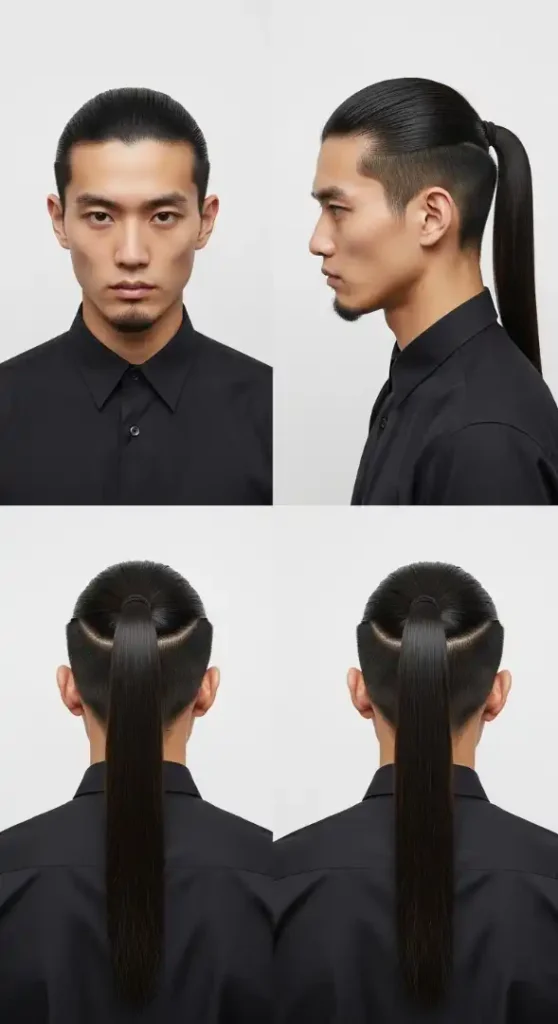
4 of 10 — The Tokyo Street Samurai
Face Shape Optimization Strategy
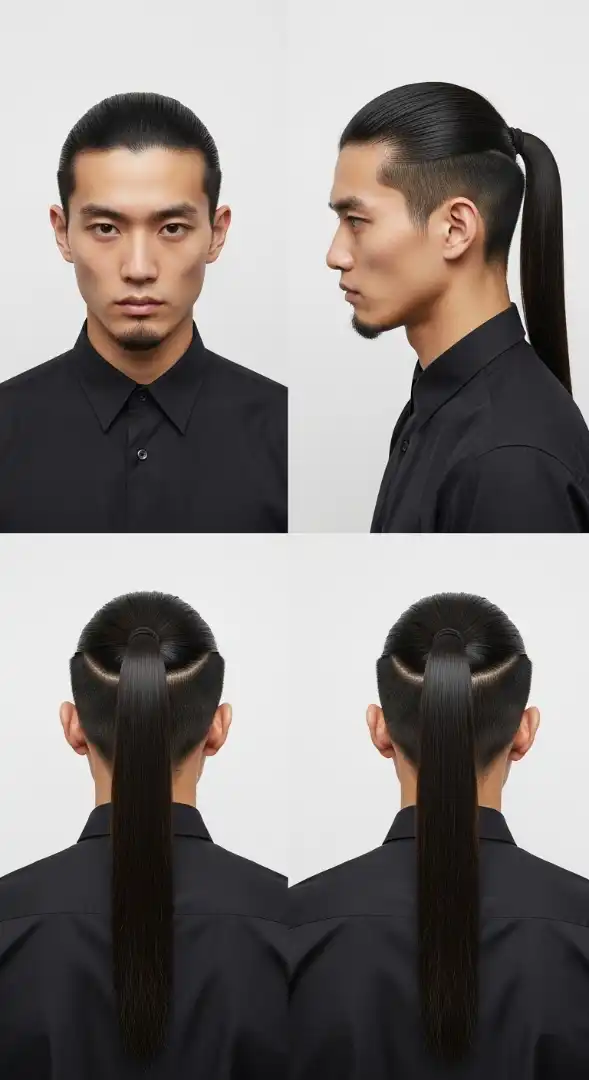
The Tokyo Street Samurai ponytail works best for men with square, diamond, and rectangular face shapes. Square faces benefit tremendously because pulling hair back eliminates any softening frame, fully exposing the strong jawline and creating an unapologetically masculine silhouette — the sharp angles become the entire focal point rather than being hidden. Diamond faces see excellent results as the slicked-back style emphasizes the cheekbone width which is this shape’s strongest feature, while the clean temples draw attention to bone structure. Rectangular and oblong faces gain proportion improvement because the high ponytail positioning adds vertical interest at the crown, but be cautious not to make the face appear even longer — position the ponytail at crown level rather than higher. Round and oval faces should approach carefully; removing the framing effect of hair can make round faces appear wider, while oval faces lose the enhancement hair typically provides. If you have weak jawline definition or double chin concerns, this style will expose rather than conceal those features.
Precision Grooming Equipment Required
This Japanese-inspired aesthetic demands flawless execution tools. Hair straightening requires GHD Platinum+ Professional Styler for creating mirror-smooth finish without heat damage, or Dyson Corrale Straightener for the ultimate in precision. Secure the ponytail using only Slip Silk Large Scrunchies in black to prevent any breakage or creasing. Daily slicking requires Uppercut Deluxe Pomade for strong hold with high shine or Baxter of California Hard Cream Pomade for slightly more matte finish with equal control. Fine-tune stray hairs using Got2b Glued Spiking Glue applied with fingertips and smoothed with Kent 12T Fine Tooth Comb in horn material. For maintaining the blunt cut at ponytail ends, own Equinox Professional Razor Edge Series Shears or book appointments with precision-cutting specialists. Clean-shaven face maintenance uses Braun Series 9 Pro Electric Shaver for daily touch-ups and The Art of Shaving Sandalwood Shaving Cream with Merkur 34C Safety Razor for weekly detail shaves. Keep Kiehl’s Facial Fuel Energizing Moisture Treatment for post-shave skincare.
Daily Commitment Requirements
HIGH MAINTENANCE — This style is unforgiving and demands near-perfect execution daily. Professional haircuts every 10-12 weeks to maintain the blunt horizontal cut at ponytail ends and ensure even length growth; sessions cost $50-80. Daily styling routine consumes 20-25 minutes and cannot be shortened: wash hair every 2-3 days with Shu Uemura Cleansing Oil Shampoo, blow-dry completely straight using round brush technique, section hair and straighten in quarter-inch sections with flat iron at 365°F, apply pomade section by section starting at roots, brush everything straight back with firm pressure, collect at crown into ponytail, secure tightly with silk tie, smooth any bumps with additional pomade and fine-tooth comb, finish with light mist of Kenra Professional Humidity Spray 25 to prevent frizz. Clean-shaving adds 10 minutes daily. The hair cannot be slept on carelessly — braid the ponytail before bed or sleep on satin pillowcase to prevent bends. Weekly deep conditioning with Olaplex No. 3 is mandatory to counter heat styling damage. Total weekly time: approximately 3.5 hours including barbering. Not suitable for men who travel frequently without access to electrical outlets for heat tools.
Barber Shop Script For Perfect Results
Deliver these exact instructions: “I’m maintaining pin-straight hair at upper-back length secured in a high ponytail. The current length works, so I only need precision work on the ends and maintenance. First, secure my hair in the ponytail exactly where I wear it daily — I’ll show you the positioning. Once tied, measure the ponytail and trim exactly half an inch off the bottom using sharp shears, cutting straight across horizontally so all hairs end at the same level — this is a blunt cut, not layered, not point-cut. After cutting, release the ponytail and check for any uneven pieces when hair is down, trimming only stragglers. Do not add any layering or texturizing; I want absolute uniformity. Clean up my nape and around the ears with the outliner trimmer — skin-close but not shaved, just very short and tidy. I maintain a clean-shaven face daily, so skip beard work. The goal is precision maintenance only — preserve the length and create that perfect blunt ponytail ending.”
This warrior-aesthetic bridges ancient samurai tradition with hypermodern Tokyo street style, perfect for men who view grooming as discipline, not chore.
FAQ
Q: How do I slick back long hair without it looking greasy or wet all day?
A: The product type determines the finish. For high-shine sleek look that intentionally appears “wet,” use water-based pomades like Suavecito Firme Hold or Uppercut Deluxe Pomade applied to damp hair, then blow-dry straight back while brushing. For slicked appearance without excessive shine, switch to American Crew Fiber or Hanz de Fuko Claymation applied to completely dry hair after straightening — these provide strong hold with matte to natural finish. Avoid using too much product; start with dime-sized amount, work through hair, assess, then add more only if needed. Apply from mid-shaft to roots, not saturating ends which shows product buildup. Set with light hairspray like Oribe Superfine Strong Hairspray for lasting hold without crunch.
Q: What’s the best way to prevent ponytails from causing hair breakage and traction alopecia?
A: Vary ponytail positioning daily — never secure at identical spot which creates repeated stress on the same hair follicles. Rotate between high crown, mid-crown, and low nape positions throughout the week. Use only fabric-covered hair ties, spiral hair ties, or silk scrunchies — never traditional rubber bands which snag and break hair. Ensure ponytails aren’t painfully tight; you should feel secure hold but zero pulling sensation or headache. Give hair complete breaks from ponytails on weekends, wearing it down or in loose braids instead. If you notice thinning at hairline or temples, immediately stop wearing pulled-back styles for several months and consult a dermatologist about treatment options before permanent loss occurs.
Q: Can I achieve stick-straight hair naturally if my hair has slight wave or texture?
A: Slight wave can be straightened semi-permanently, but tight natural curl requires ongoing heat styling commitment. For naturally wavy hair, get a Japanese thermal straightening treatment or Brazilian Blowout at a professional salon — these chemically alter hair structure for 3-6 months of stick-straight results, costing $200-500 depending on hair length and location. Between treatments or if avoiding chemicals, daily flat ironing is necessary using ceramic or titanium plates at 350-385°F after applying TRESemmé Thermal Creations Heat Tamer Spray. Always blow-dry completely straight first as flat ironing damp hair causes severe damage. Accept that humidity will cause reversion, requiring touch-ups throughout the day in humid climates.
Q: How long does it take to grow hair from short to ponytail length?
A: Hair grows approximately 6 inches per year on average, meaning you need roughly 12-18 months to reach basic ponytail length from a short cut (3-4 inches) and 24-30 months to reach the upper-back length shown in this style. Growth rate varies by genetics, age, diet, and overall health. Maximize growth by maintaining excellent scalp health with Nioxin System Kit if thinning-prone, eating protein-rich diet, taking biotin supplements (5000mcg daily), avoiding excessive heat damage, and trimming only split ends rather than excessive length. The most frustrating phase is months 6-12 when hair hits the awkward shoulder-grazing length — persist through it by using headbands, beanies, or short ponytails to manage.
5 of 10 — The Californian Surfer Cascade

Face Shape Recommendations
The Californian Surfer Cascade complements almost every face shape due to its versatile layering and natural volume distribution. Oval faces wear this effortlessly as the loose waves and layers enhance already-balanced proportions without requiring strategic placement. Square faces benefit from the softening effect — the textured waves counterbalance angular jawlines, creating harmony between strong bone structure and flowing hair. Round faces gain elongation from the vertical fall of hair and the slightly off-center part which prevents emphasizing width. Heart-shaped faces see excellent results because the mid-chest length creates volume at the narrower chin area, balancing the wider forehead. Even oblong faces work well if the layers start relatively high (at chin level) to add horizontal width. The only caution applies to very narrow or thin faces where excessive hair volume can overwhelm delicate features — in those cases, request lighter, less voluminous layers.
Complete Product Lineup
Achieving authentic surfer texture without ocean water requires specific products designed for beachy waves. Foundation care uses Ouai Thick Hair Shampoo every 3-4 days and Christophe Robin Cleansing Purifying Scrub with Sea Salt weekly to remove product buildup without stripping natural oils. Post-shower treatment includes Bumble and Bumble Surf Infusion applied to damp hair for instant texture and Sun Bum Beach Formula Spray for additional grit and hold. Air-drying produces the most authentic results, but when using heat, the T3 AireLuxe Hair Dryer with diffuser attachment preserves natural wave pattern. For definition without crunch, apply Captain Blankenship Mermaid Sea Salt Hair Spray to dry hair and scrunch gently. The beard requires Honest Amish Beard Oil in Classic scent for daily conditioning and Zeus Beard Balm for shaping without looking styled. Weekly intensive conditioning uses Olaplex No. 8 Bond Intense Moisture Mask to repair sun and salt damage. Keep Moroccan Oil Treatment Light for taming frizz on humid days without weighing down the texture.
Upkeep Reality Check
MEDIUM MAINTENANCE — This deceptively effortless look requires strategic upkeep disguised as casual neglect. Professional cuts every 10-14 weeks maintain the layering structure that prevents hair from looking bottom-heavy or stringy; expect $60-90 per session with stylists experienced in long men’s hair. The magic is in the cut, not daily styling. Morning routine takes only 8-10 minutes: if hair was slept on, mist lightly with water-filled spray bottle, scrunch in texture spray, shake head to create volume, and air-dry. Total hands-off time. Wash hair 2-3 times weekly with focus on scalp cleansing rather than lathering all length. Weekly deep conditioning maintains moisture balance damaged by sun exposure. Beard maintenance adds 5 minutes daily for oiling and shaping, plus 10 minutes weekly for trimming to maintain even length using Philips Norelco Beard Trimmer Series 7200 at 40mm setting. The key time commitment is actually waiting for hair to grow — reaching chest length from short hair requires 24-30 months minimum. Total weekly styling time: approximately 1 hour excluding drying. This style suits active lifestyles and men who want impressive hair without prissy maintenance.
Stylist Communication Blueprint
Sit in the chair and explain: “I want to create classic surfer hair — long layers that look effortless and lived-in, not styled or precise. The overall length should reach mid-chest when down, but I need significant layering to prevent it from looking heavy. Start the first face-framing layer at chin length and graduate to full chest length in the back — create at least 5-6 distinct layer levels throughout. Cut everything with hair completely dry using point-cutting and razor techniques, not scissors straight across, because I want soft textured ends not blunt lines. Add extra layering around the face and crown to create movement and volume when hair is worn down. Don’t thin the hair aggressively; I need enough density to support the waves. I wear a slightly off-center middle part, so balance the layers to work with that asymmetry. For the beard, I want natural growth trimmed to even length around 40mm using guards — no defined lines, no shaping of cheeks or bottom, just healthy full growth tidied up. Keep the mustache long enough to blend into the beard; don’t separate or trim it short. The whole vibe is ‘I just came from the beach and look this good naturally’ even though we both know it’s strategic cutting.”
This West Coast classic embodies carefree confidence and connection to ocean lifestyle, whether you actually surf or just appreciate the aesthetic of sun, salt, and endless summer.
FAQ
Q: How do I get natural beachy waves in my hair without going to the actual beach?
A: Recreate ocean texture using salt spray formulations that mimic seawater’s mineral content. After washing, spray Not Your Mother’s Beach Babe Texturizing Spray generously onto damp hair from roots to ends. Scrunch hair upward in sections using your hands, encouraging natural wave formation. For tighter waves, braid damp hair into 2-4 sections and leave until completely dry, then release and scrunch with texture spray. Alternatively, twist random sections of hair and spray with salt spray, blow-dry the twists on low heat using diffuser, then release. Avoid brushing — finger-comb only to preserve texture. Layer Bumble and Bumble Surf Foam Wash Spray for additional grit. The key ingredient in all beach sprays is magnesium sulfate (Epsom salt) which creates texture and volume.
Q: What’s the difference between surfer hair and just unkempt long hair?
A: Strategic layering and intentional texture separate surfer aesthetic from neglect. Surfer hair features carefully cut layers that create movement and prevent stringy appearance, is clean and conditioned (never oily or dirty), has sun-lightened multi-tonal color adding dimension, and incorporates deliberate texture products for enhanced waves. Unkempt hair typically has no layering structure, appears limp or greasy from irregular washing, is one uniform dark color showing no sun exposure, and has damaged split ends from complete neglect. The surfer look requires investment in quality cuts, proper hair health maintenance, and using products that enhance rather than style. It’s cultivated effortlessness, not actual carelessness.
Q: Can I achieve sun-bleached blonde highlights artificially without beach exposure?
A: Yes, through professional balayage or at-home lightening, though replicating natural sun-lightening requires skill. Professional route: book balayage highlighting with a colorist experienced in men’s hair, requesting “natural sun-kissed surfer tones” focused on the top layers and ends rather than uniform allover color — expect $150-300 every 3-4 months. At-home option: use Sun In Hair Lightener Spray or John Frieda Sheer Blonde Go Blonder Lightening Spray applied to damp hair before sun exposure or heat styling, which gradually lightens over several applications. For more dramatic results, carefully apply Manic Panic Flash Lightning Hair Bleach Kit focusing on face-framing pieces and ends. However, artificial bleaching damages hair more than natural sun-lightening, requiring intensive conditioning treatments weekly.
Q: How do I maintain healthy long hair when exposed to sun, salt water, and chlorine regularly?
A: Pre-exposure protection prevents most damage. Before swimming, saturate hair completely with fresh water or apply Ouai Hair Oil — wet hair absorbs less salt/chlorine than dry hair, and oil creates a protective barrier. After ocean or pool exposure, rinse immediately with fresh water, then cleanse with Malibu C Swimmers Wellness Shampoo to remove mineral and chemical buildup. Use Olaplex No. 3 Hair Perfector weekly as a pre-shampoo treatment to rebuild bonds damaged by environmental exposure. Wear hair in loose braids or covered with hat during peak sun hours to prevent UV damage and over-drying. Deep condition every 4-5 days with Briogeo Don’t Despair Repair Deep Conditioning Mask. Trim ends every 10 weeks to remove salt-damaged split ends before they travel up the hair shaft.
6 of 10 — The Parisian Intellectual Sweep

Face Shape Styling Guidelines
The Parisian Intellectual Sweep flatters oval, diamond, and heart-shaped faces with particular excellence. Oval faces benefit from the asymmetric deep side part which creates visual interest while maintaining the face’s natural balance — the swept volume adds sophistication without competing with inherently proportional features. Diamond faces see dramatic improvement because the swept section adds width at the forehead level, balancing the naturally wider cheekbones and narrower forehead-chin axis characteristic of this shape. Heart-shaped faces gain significant advantage as the voluminous sweep at the forehead balances the wider upper face with the narrower chin. The asymmetry prevents the hairstyle from emphasizing the already-wide forehead. Round faces should approach cautiously — the swept volume can add horizontal width unless the part is positioned extremely deep and the styling very controlled. Square and rectangular faces work moderately well; ensure the beard adds softness to counterbalance any hard angles the swept hair might emphasize.
Sophisticated Product Arsenal
Creating this polished European aesthetic requires premium products that provide hold without appearing overworked. Start with Kérastase Densifique Bain Densité Shampoo for men experiencing early thinning or wanting fuller appearance, followed by Aveda Men Pure-Formance Conditioner focusing on mid-lengths and ends. Post-shower preparation uses Bumble and Bumble Thickening Spray on damp hair to create foundation volume. The critical styling product is Baxter of California Clay Pomade applied to damp hair before blow-drying — provides medium hold with natural finish that doesn’t look product-heavy. Shape the deep side part using Kent 20T Fine Tooth Comb in genuine horn, then blow-dry the swept section using T3 Cura Luxe Hair Dryer with concentrator nozzle while directing hair across forehead. Finish with Uppercut Deluxe Matt Clay applied to dry hair for final positioning and texture. Beard maintenance requires Tom Ford Beard Oil in Oud Wood scent for sophisticated fragrance and The Art of Shaving Beard Balm for shaping. Keep Kiehl’s Grooming Solutions Nourishing Beard Grooming Oil for evening application to maintain softness and enhance grey strands’ appearance.
Maintenance Expectation Framework
MEDIUM-HIGH MAINTENANCE — This refined look demands consistent attention to detail and regular professional maintenance. Haircuts every 8-10 weeks preserve the layering that allows proper sweeping and volume; sessions with experienced stylists cost $70-110 in metropolitan areas. The deep side part requires training — use the same part placement daily for 2-3 weeks to establish the hair’s natural fall pattern. Daily styling routine consumes 15-18 minutes: wash every 2-3 days, blow-dry using round brush or paddle brush while directing hair in desired sweep direction, apply finishing products to dry hair, perfect the part placement with comb, ensure hair is properly positioned behind ears bilaterally, smooth any flyaways. Beard demands daily care — 7 minutes for washing with Scotch Porter Beard Wash, applying oil, combing through with Viking Revolution Beard Comb, and checking edge definition. Weekly beard trimming to maintain 12mm length using Philips Norelco Series 9000 with precision settings adds 10 minutes. Monthly professional beard shaping recommended for maintaining sharp cheek lines. Total weekly time investment: 2.5 hours including salon visits. This style suits professional environments and men who view grooming as part of personal presentation, not vanity.
Salon Communication Protocol
Articulate your vision clearly: “I want to create a sophisticated side-swept style that works with my natural wave texture, inspired by classic European intellectuals. Cut the hair to collarbone length with subtle long layers — nothing choppy or heavily textured, just enough layering to prevent weight from pulling it flat. The layers should start around mouth level and graduate to full length. I want to style this with a deep side part approximately 3 inches left of center, so cut it to work with that asymmetric distribution. The larger section will sweep across my forehead and behind my right ear; the smaller section will slick back tightly behind my left ear. Create slight graduation in length from the left side (which can be a bit shorter for easier slicking) to the right side (which needs more length for the dramatic sweep). Cut the front at a slight angle to support the sweep direction — nothing blunt or even. For the beard, maintain it at 12mm throughout using the 4-5 guard, create a sharp high cheek line that’s geometric not natural, and define the bottom with slight squaring. I’m embracing my grey growth, so don’t suggest covering it — the distinguished look is intentional. Shape the mustache to blend naturally into the beard at even length.”
This Parisian-inspired aesthetic channels old-world sophistication into contemporary styling, perfect for creative professionals, academics, and men who appreciate that elegance requires effort disguised as effortlessness.
FAQ
Q: How do I create and maintain a defined deep side part in longer hair?
A: Establishing a strong side part requires consistent training and proper technique. Immediately after washing while hair is wet, use a fine-tooth comb to drag a precise line from crown to forehead at your desired part placement — mark the spot with your finger to maintain consistency. Apply lightweight pomade along the part line, then blow-dry each section away from the part using directional heat and a paddle brush, reinforcing the separation. For stubborn hair that resists parting, apply Got2b Glued Spiking Gel directly along the part line before drying. Sleep with hair in a low ponytail or braid that follows the part direction to maintain it overnight. After 2-3 weeks of daily reinforcement, the hair will naturally separate at this location even without product. Use American Crew Grooming Cream to smooth any hairs that cross the part line.
Q: Can I make my natural hair color appear more distinguished with grey without fully dyeing it?
A: Yes, through strategic silvering techniques rather than full color. Professional option: request a “grey blending” or “silvering balayage” where colorist hand-paints grey/silver tones into your natural dark hair, concentrating at temples, beard, and through crown — creates natural salt-and-pepper appearance and costs $100-180 every 8-10 weeks. At-home option: use temporary grey hair wax like Schwarzkopf Got2b Metallics Temporary Hair Color in Silver applied to damp hair in targeted areas, washed out completely with shampoo. For beard, Just For Men Control GX Grey Reducing Shampoo gradually reduces grey over time, or conversely, Redken Color Camo Medium Ash for beard can blend without fully covering. If naturally greying, embrace it by using purple-toning products like Fanola No Yellow Shampoo to prevent grey from looking brassy and instead achieve cool sophisticated silver.
Q: What’s the best way to style longer hair for professional business environments?
A: The key is polished restraint and impeccable grooming. Always ensure hair is freshly washed and completely dry — damp hair reads as unkempt in formal settings. Style hair completely off the face using either a slicked-back technique with American Crew Forming Cream or this deep side-swept style with hair behind both ears. Keep facial hair meticulously groomed with sharp defined lines — zero stray hairs or uneven length. Avoid strong fragrance in products as many professional environments are scent-sensitive. For ultra-conservative settings, pull hair into a low ponytail at the nape using matching-colored elastic, ensuring zero flyaways with Tresemmé Compressed Micro Mist Hairspray. Pair with tailored clothing in conservative colors to signal professionalism. If you receive feedback that long hair is “unprofessional,” politely acknowledge, maintain your grooming standards, and let your work performance speak — many industries have evolved past appearance-based discrimination, but some traditional sectors lag.
Q: How do I prevent longer hair from looking greasy when using styling products?
A: Product type, amount, and application method determine whether hair looks styled or greasy. Use styling products with matte to natural finish rather than high-shine formulas — Hanz de Fuko Claymation, Baxter of California Clay Pomade, or American Crew Fiber provide hold without gloss. Apply to completely dry hair, not damp, as wet application can look oily once hair dries. Start with pea-sized amount, emulsify thoroughly between palms, then apply from mid-lengths to ends — never start at roots which makes hair look oily. Add more only if needed. Avoid heavy oils and serums on fine hair types. If hair becomes greasy-looking during the day, use dry shampoo like Batiste Bare Dry Shampoo at roots to absorb oil and restore volume. Wash hair before it becomes visibly oily; pushing to day 4-5 without washing guarantees greasy appearance regardless of products used.
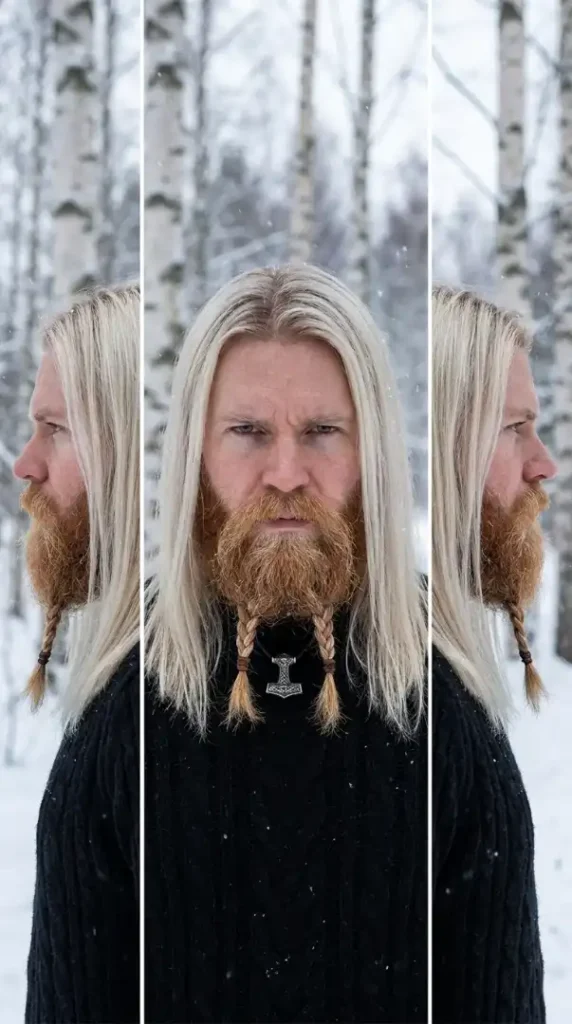
7 of 10 — The Nordic Winter Warrior
Face Shape Warrior Wisdom
The Nordic Winter Warrior hairstyle delivers maximum impact for men with square, rectangular, and diamond face shapes. Square faces gain incredible dimension because the straight-hanging hair creates vertical lines that elongate the face, while the full thick beard adds horizontal balance at the jaw — transforming a potentially overly-angular appearance into commanding presence. Rectangular and oblong faces benefit from the beard’s volume which adds necessary width at the chin level, preventing the face from appearing excessively long. The center part works because it creates symmetry that emphasizes strong bone structure rather than hiding it. Diamond faces see excellent results as the beard fills out the narrower chin area while the shoulder-length hair balances the wider cheekbones. Round and oval faces should approach thoughtfully — round faces may appear wider with center-parted straight hair unless paired with a very precisely shaped beard that creates vertical length, while oval faces risk overwhelming their naturally balanced proportions with such dramatic hair and beard volume. Heart-shaped faces work moderately well if the beard is substantial enough to balance the wider forehead.
Viking Arsenal Tool Kit
Achieving this ancient-modern fusion requires specialized equipment and commitment to authenticity. Hair maintenance starts with Redken Frizz Dismiss Shampoo and Conditioner designed for straight hair to maintain sleek texture without adding unwanted volume. For preserving platinum blonde tone and preventing yellow brassiness, use Fanola No Yellow Shampoo weekly. Heat protection before straightening employs Oribe Royal Blowout Heat Styling Spray, followed by precision straightening using GHD Platinum+ Professional Styler with ceramic plates. Daily detangling requires Tangle Teezer The Ultimate Detangler for preventing breakage in long straight hair. Beard care demands Honest Amish Beard Oil in Unscented formula for conditioning without fragrance interference, Grave Before Shave Beard Balm in Viking Blend for shaping, and Zeus Boar Bristle Beard Brush for daily grooming. The Viking braids require ultra-thin Scunci No Damage Hair Elastics in blonde or clear, or authentic leather braiding cords purchased from leatherworking suppliers. Professional trimming maintains blunt ends using Yasaka Offset Shears or salon appointments every 10-12 weeks. Keep Wahl Stainless Steel Beard Trimmer for maintaining beard length consistency.
Daily Ritual Demands
HIGH MAINTENANCE — This is warrior-level commitment disguised as natural appearance. Professional haircuts every 10-12 weeks to maintain the precise blunt cut at shoulder blade level where all hairs terminate at identical length; expect $70-100 per session with stylists experienced in long straight hair. Daily routine consumes 25-30 minutes: wash hair every 2-3 days with purple-toning products, blow-dry completely straight using paddle brush technique to ensure zero wave formation, section and straighten if any bends appear from sleeping, apply lightweight oil to ends for shine, center-part with comb precision. Beard maintenance adds 15 minutes daily: wash with beard shampoo, apply oil while damp, comb thoroughly to prevent tangling, create or maintain the two small braids at chin (each braid takes 2-3 minutes to form cleanly, secure with leather cord or mini elastic). Weekly deep conditioning for both hair and beard using Olaplex No. 8 prevents dryness. Monthly professional beard shaping to maintain fullness and even length at 50-60mm. The Viking braids must be redone every 2-3 days as they loosen — this is non-negotiable for clean appearance. Total weekly time investment: approximately 3.5 hours including salon visits. This style demands Nordic-level discipline and suits men who view grooming as a practice of honor, not obligation.
Berserker Barber Briefing
Enter the shop with authority and state: “I’m maintaining shoulder-blade-length straight hair with a precise blunt cut — all hairs must end at exactly the same level creating a sharp horizontal line when viewed from behind. Check the current length and trim only what’s necessary to remove damage and create that clean blunt edge — I’m talking quarter-inch maximum, not a full inch. This is a precision cut, not layering; use sharp shears and cut straight across. The hair is naturally platinum blonde so it shows every imperfection — the blunt line must be perfect. Create a center part from crown to forehead using a comb, and ensure the cut is balanced symmetrically on both sides. For the beard, I want substantial full growth maintained at 50-60mm — use the 18-20mm guard setting and trim to even length throughout, keeping it thick and full. Don’t shape the cheeks into a defined line; I want natural growth just tidied. The beard has blonde and red tones that I’m keeping natural — no color work. Help me section out two small areas on each side of my chin where I’ll braid — mark approximately 1-inch wide vertical sections about 2 inches in from each side of the chin point. Don’t trim those sections differently, just point them out so I can braid them at home. The mustache grows into the beard at natural length — no trimming it separate or shorter.”
This Norse-inspired aesthetic bridges ancient Viking heritage with contemporary edge, perfect for men who carry warrior spirit whether they battle spreadsheets or actual combat.
FAQ
Q: How do I braid beard hair that’s shorter than head hair without it coming undone?
A: Short beard braids require specific technique and conditioning preparation. Start with clean, conditioned beard — apply Honest Amish Beard Balm to the section you’ll braid for grip and manageability. Section out a vertical column of beard approximately 1-inch wide at the desired location (typically 2 inches in from chin point on each side). The beard must be minimum 2 inches long at that spot to hold a braid. Divide into three equal mini-strands and create a tight standard three-strand braid pulling firmly with each cross — loose braiding unravels immediately in beard hair. Braid down to approximately half-inch from the ends, then secure with ultra-small clear elastic or thin leather cord wrapped multiple times. Apply tiny amount of Got2b Glued Spiking Glue to the braid after completion for all-day hold. Re-braid every 2-3 days as beard growth and natural movement loosens the structure.
Q: How do I maintain platinum blonde hair color without it turning yellow or brassy?
A: Preventing brassiness requires weekly maintenance and proper product selection. Use Fanola No Yellow Shampoo once weekly, leaving it on hair for 3-5 minutes before rinsing — the intense purple pigment neutralizes yellow tones. Between purple shampoo treatments, use Redken Color Extend Blondage Shampoo which is gentler for daily washing. Avoid exposing hair to chlorine, hard water minerals, or excessive sun which all cause yellowing — wear a swim cap in pools and install a shower filter like Aquasana AQ-4100 Deluxe Shower Water Filter System. Every 6-8 weeks, do an in-salon Olaplex treatment or apply Olaplex No. 3 at home before shampooing to maintain hair health and tone. If severe yellowing occurs, visit a professional colorist for toning rather than attempting box dye corrections which damage severely.
Q: Can I achieve this Viking aesthetic if my beard grows in patchy or has bald spots?
A: Patchiness limits but doesn’t eliminate Viking beard potential — work with what you have while exploring growth support. First, give beard minimum 6 months of uninterrupted growth before assessing true density — many men assume patchiness at 8 weeks that would fill completely by month 6. During growth, apply Rogaine (Minoxidil) 5% to patchy areas twice daily after consulting a dermatologist — clinical evidence supports facial hair growth stimulation, though results vary individually. Use biotin supplements (5000mcg daily) and maintain excellent nutrition with adequate protein. Style strategically: if patches are at cheeks, keep a lower cheek line; if patches are under chin, avoid braiding there and instead do one center braid if thickness allows. Full Viking beard isn’t achievable for every man — genetics determine beard density ultimately. If patchiness is severe, consider alternative styles that work with your natural growth pattern rather than fighting it.
Q: What’s the best way to prevent and remove tangles in very long straight hair?
A: Prevention beats removal — establish a detangling routine that stops knots before formation. Before bed, loosely braid hair into one or two sections to prevent overnight tangling from tossing. Sleep on silk or satin pillowcase which reduces friction. Never sleep with wet hair. Apply It’s a 10 Miracle Leave-In Product after every wash while hair is damp — creates protective coating that prevents strand-to-strand friction. When knots occur, never rip through them — spray the knotted section with detangling spray or plain water, then work from the bottom up using Tangle Teezer brush, holding hair above the knot to prevent root pulling. Separate the knot gently with fingers first if severe, then brush. For very stubborn knots, apply a small amount of Moroccan Oil Treatment to add slip, wait one minute, then carefully work the knot apart. Weekly deep conditioning prevents dry, friction-prone hair that tangles easily.
8 of 10 — The Miami Tropical Fade Flow

Face Shape Fade Strategy
The Miami Tropical Fade Flow excels on men with round, square, and oval face shapes. Round faces benefit enormously because the high volume at the crown creates vertical height that elongates the face, while the temple fade removes width at the sides — transforming roundness into balanced proportion. Square faces gain dimension as the voluminous curly top softens the angular jawline while the precise fade and geometric beard shaping maintain masculine edge — creating perfect harmony between soft and sharp. Oval faces maintain their natural balance while adding personality through the dramatic contrast between faded sides and textured top. Diamond faces work moderately well if the beard is substantial enough at the chin to balance the cheekbone width. Rectangular and oblong faces should approach cautiously — the added height from curly volume can make the face appear even longer unless paired with a full beard that adds horizontal width at jaw level. Heart-shaped faces may find the voluminous top emphasizes the already-wider forehead, though strategic curl styling can mitigate this.
Tropical Grooming Arsenal
Maintaining curly texture with precision fades requires specialized products for both hair types. For the curls, start with SheaMoisture Coconut & Hibiscus Curl & Shine Shampoo and Conditioner formulated for Type 3 curls. Post-shower curl definition uses Cantu Shea Butter Natural Hair Curl Activator Cream applied to soaking-wet hair, followed by DevaCurl Ultra Defining Gel for hold without crunch. Air-dry or use Dyson Supersonic with Diffuser Attachment on low heat and airflow to preserve curl pattern. For refresh between washes, use Aunt Jackie’s Quench Leave-In Conditioner spray and scrunch. The fade maintenance demands Andis Master Cordless Clipper for home touch-ups between barber visits, plus Andis Slimline Pro Li T-Blade Trimmer for detailed edge work. Beard care employs Scotch Porter Smoothing Beard Serum for softening curly facial hair and Honest Amish Beard Balm for shaping the geometric lines. Keep Shea Moisture Three Butters Styling Mousse for defining curls on styled days and Mielle Organics Pomegranate & Honey Leave-In Conditioner for daily moisture maintenance.
Upkeep Investment Reality
HIGH MAINTENANCE — This dual-texture style requires weekly barber commitment and daily curl care. Professional fade maintenance every 7-10 days is non-negotiable to keep the crisp contrast between faded sides and curly top; sessions cost $40-60 and take 45 minutes. Between appointments, home touch-ups on the outline and bottom of fade add 15 minutes every 3-4 days using clippers and trimmer. Daily curl routine consumes 15-20 minutes: refresh curls with water spray and leave-in conditioner, apply curl cream, scrunch to encourage definition, air-dry or diffuse for 20 minutes. Washing occurs 1-2 times weekly — curly hair dries out with overwashing — with deep conditioning using SheaMoisture Manuka Honey & Mafura Oil Intensive Hydration Hair Masque every 4-5 days. Beard maintenance adds 5 minutes daily for washing with Beardbrand Beard Wash, oil application, and combing with Kent Beard Comb to prevent facial hair from curling wildly. Weekly beard shaping to maintain the geometric chinstrap and cheek lines using precision trimmer adds 10 minutes. Total weekly time investment: approximately 3-4 hours including barber visits. This style suits active lifestyles in warm climates and men who value street credibility and barbershop culture.
Barbershop Communication Masterclass
Sit in the chair and communicate: “I want a temple fade — start at skin with zero guard at the very bottom around the ears and nape, then blend up through 0.5, 1, 1.5 guards, ending the fade at the parietal ridge. Above the parietal ridge, leave all the length on top — don’t touch it except to clean up any split ends. I want a high-contrast fade, not a gradual taper — the transition should be noticeable and sharp. Use the clipper-over-comb technique in the blend zone to make the fade seamless with no lines. For the top, I’m maintaining my natural curl pattern — just trim any damaged ends but preserve the length. When stretched, the hair reaches chin length, but with natural shrinkage it sits at ear level. For the beard, I want a thin chinstrap design — trim the chin and jaw area to 8mm using the 2.5 guard for fullness, then create a thin connecting line from the chin up to the sideburns at 3mm using the 1 guard. The cheeks should be clean-shaven with a sharp high cheek line — use the trimmer without guard to create that geometric edge. Keep the mustache at medium thickness blending into the beard. Edge up everything with precision — hairline, sideburns, chinstrap, beard bottom. I want that crisp, fresh-from-the-shop look.”
This Miami-born aesthetic fuses Afro-Latino heritage with modern urban barbering excellence, perfect for men who treat their weekly fade like a religious practice and their curls like a crown.
FAQ
Q: How do I maintain defined curls in humid tropical climates without frizz taking over?
A: Humidity is curly hair’s challenge — moisture in the air causes frizz by penetrating the hair cuticle. Combat this with anti-humidity products and proper technique. After washing, apply Ouidad Advanced Climate Control Heat & Humidity Gel to soaking-wet hair, then use prayer hands method to smooth it over curls rather than scrunching which creates frizz. Let air-dry completely or diffuse on cool setting — heat opens cuticle inviting humidity. Once dry, do not touch hair with hands as friction creates frizz. Use Moroccan Oil Frizz Control as a finishing touch. On extremely humid days, embrace slight frizz as texture rather than fighting it — tight-control products in 90% humidity create crunch. Refresh daily by misting with water and Kinky-Curly Knot Today Leave-In without rewashing. Sleep on satin bonnet or pillowcase to prevent overnight frizz.
Q: How often do I really need to get a fade touched up to keep it looking fresh?
A: Fade frequency depends on your hair growth rate and desired crispness level. Fast-growing hair requires touch-ups every 5-7 days to maintain that fresh sharp look — any longer and the blend begins appearing grown-out. Average growth allows 10-14 days between full fades. If you’re budgeting or have slower growth, go 2-3 weeks but accept that week 2-3 won’t look fresh-cut. Between full fades, do home maintenance on the outline and bottom using clippers at days 3-4 to extend the crisp look. Consider: a fresh fade is barbershop culture’s signature — if you’re serious about the aesthetic, weekly or bi-weekly is non-negotiable. Some barbers offer “edge-up only” services for $15-25 between full cuts that extend freshness.
Q: Can I achieve this style if my hair is looser curls or waves instead of tight coils?
A: Yes, but the overall appearance changes with different curl patterns. This style was demonstrated with 3B-3C curls (tight spirals), but works with 2C-3A (loose waves to loose curls) by adjusting expectations. Looser curl patterns create more flow and less height — you’ll get movement rather than volume at the crown. Use DevaCurl Wave Maker or Bumble and Bumble Surf Foam Wash for enhancing looser textures. The fade portion works identically regardless of curl type. Straight or very loose wavy hair (Type 1-2A) won’t achieve this specific aesthetic — consider different styles that complement straighter texture. Know your curl type (use the Andre Walker Hair Typing System as reference), then choose products and expectations accordingly.
Q: What’s the difference between a temple fade and a regular fade?
A: Temple fade (also called temp fade or Brooklyn fade) is a specific fade style concentrated at the temples and sometimes extending around to the back. It creates a sharp line above the ears where the fade ends and longer hair begins, typically following the natural temple recession curve. Regular fades (low, mid, high) wrap continuously around the entire head with gradual transitions. Temple fades create more dramatic contrast and geometric appearance — often preferred in urban barbershop culture. They’re also called “blow out fades” when paired with highly textured tops. Request specifically “temple fade” or your barber might default to regular all-around fade. If you want the temple fade to connect around the back, specify “temple fade with taper in back” to avoid disconnection.
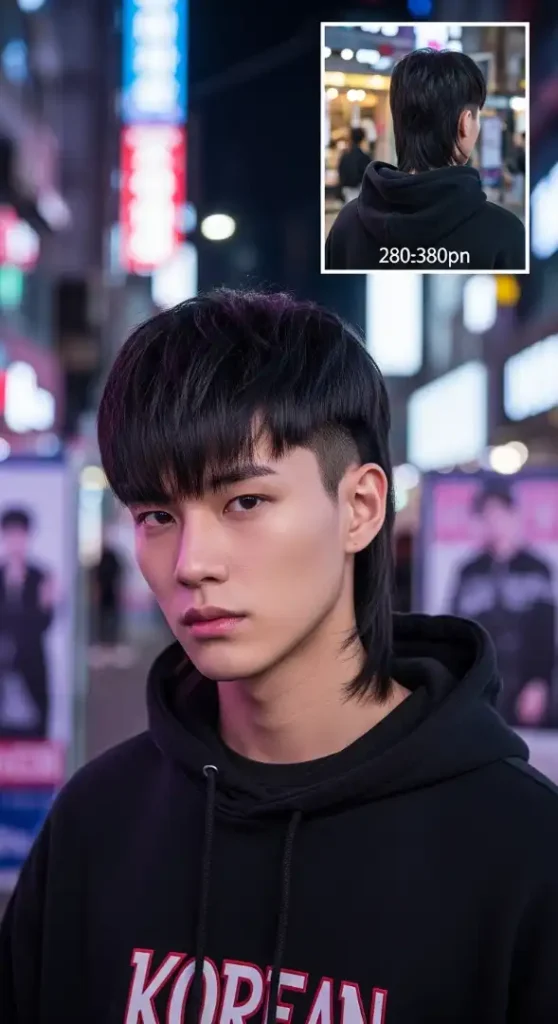
9 of 10 — The Seoul Street Mullet Flow
Face Shape Compatibility Analysis
The Seoul Street Mullet Flow delivers exceptional results for men with oval, diamond, and heart-shaped faces. Oval faces benefit from the curtain bangs which add horizontal interest while maintaining the face’s natural balance — the center-parted framing draws attention to symmetrical features without overwhelming them. Diamond faces see dramatic improvement because the curtain bangs add volume at forehead level, balancing the prominent cheekbones, while the clean-shaven jawline allows the bone structure to shine. Heart-shaped faces gain significant advantage as the curtain bangs balance the wider forehead with the narrower chin, creating visual harmony. Round faces should approach thoughtfully — the curtain bangs can add width unless cut with strategic layering that creates vertical lines, and the overall mullet length should be worn with confidence to add elongation. Square faces work moderately well if the bangs are kept longer and softer to counterbalance angular jaw; avoid cutting bangs too short or blunt which emphasizes squareness. Oblong faces risk appearing longer with this style unless the side sections are kept with substantial length to add horizontal balance.
K-Pop Styling Product Stack
Achieving authentic Korean street style requires specific products popular in Seoul’s competitive grooming culture. Foundation care uses LADOR Tea Tree Scalp Clinic Hair Pack for scalp health and Mise en Scene Perfect Serum for instant shine without greasiness. Styling straight Korean hair demands Gatsby Moving Rubber Grunge Mat for piecey texture or Reuzel Grooming Tonic for sleeker finish with hold. Create curtain bang separation using Amorepacific Moisture Bound Vitalizing Masque applied to damp bangs then blow-dried forward with round brush. For the textured top, Hanz de Fuko Claymation provides matte finish with strong hold allowing reshaping throughout the day. The longer back section uses Moroccanoil Treatment Light to prevent dryness and add shine without weighing down straight hair. Heat styling employs Dyson Corrale Straightener for precision bang shaping and GHD Platinum+ Styler for adding slight bend to ends. Keep Mise en Scene Perfect Repair Hair Oil for daily smoothing and Innisfree My Hair Recipe Loss Care Shampoo to combat hair loss concerns common in Korean male grooming culture. Edge detailing uses Gatsby Perfect Hold Hair Spray for all-day lock without crunch.
Maintenance Time Commitment
MEDIUM-HIGH MAINTENANCE — This trend-forward style requires consistent professional maintenance and daily styling discipline. Haircuts every 5-6 weeks are essential to maintain the specific mullet proportions and textured layers that prevent the style from looking outdated or unkempt; expect $60-90 at salons experienced with Asian hair texture and contemporary Korean cuts. Daily styling routine consumes 12-15 minutes: wash every other day with emphasis on scalp cleansing, towel-dry thoroughly, blow-dry bangs forward using round brush while creating center part, apply styling product to damp hair working through all sections, use fingers to create piecey separation and texture in top layers, straighten or add slight bend to bangs ends using flat iron for refined finish, smooth the longer back section with lightweight oil. The clean-shaven face requires daily maintenance — 8 minutes for electric shaving or 12 minutes for wet shaving with proper prep. Weekly deep conditioning with Kerasys Salon Care maintains hair health and shine. Total weekly time investment: approximately 2.5 hours including haircuts. This style suits fashion-conscious men who follow K-pop and Korean street fashion trends and want to bring Seoul energy to their personal aesthetic.
Salon Script for Precision Mullet
Communicate your vision clearly: “I want a modern Korean-style mullet with curtain bangs — this is not a 1980s hockey mullet, it’s contemporary and textured. For the bangs, create a center part and cut curtain bangs that fall to eyebrow level when dry, with the center slightly shorter and the outer sections slightly longer so they frame my face. Cut them with point-cutting technique for soft edges, not blunt straight across. The sides should be cut relatively short, just touching the tops of my ears, with a slight undercut at the temple area for clean lines. The top section needs choppy textured layers at 4-5 inches length — use razor cutting or point-cutting to create movement and piecey texture, never one blunt length. The key is the back — I want significant length at the nape reaching upper-shoulder blade level, but only the center back section should be long. Taper the sides of the back shorter so the length is concentrated in the middle creating that waterfall effect from behind. Cut everything with hair dry so you can see the natural fall and texture. I style this with texture and separation, not slicked smooth, so build that into the cut. I’m clean-shaven so skip beard work completely.”
This Seoul-born aesthetic brings K-pop idol energy and Korean street fashion credibility to everyday style, perfect for men who view hair as fashion statement and aren’t afraid to turn heads.
FAQ
Q: What’s the difference between a modern mullet and a traditional 80s mullet?
A: Execution, texture, and proportion separate modern interpretation from retro original. 1980s mullets featured very short buzzed sides, longer feathered top with volume, and extremely long permed or curled back often reaching mid-back — the infamous “business in the front, party in the back” with stark contrast. Modern mullets feature textured choppy layers throughout, shorter more controlled back length (typically shoulder or upper-shoulder rather than mid-back), integrated fading or tapering on sides rather than buzzed disconnect, and deliberate styling with matte products rather than permed volume and hairspray. Contemporary versions embrace curtain bangs, shaggy texture, and natural movement. Korean and Australian modern mullets lead the trend with specific regional aesthetics. If you want modern, specify “textured modern mullet” and show photos; otherwise you risk getting a retro interpretation.
Q: How do I style curtain bangs to stay parted and frame my face naturally?
A: Training and proper blow-dry technique create lasting curtain bang shape. After washing, immediately create the center part using a fine-tooth comb while hair is wet. Apply Bumble and Bumble Thickening Spray to damp bangs for hold foundation. Using a small round brush or paddle brush, blow-dry each side of the bangs away from the center part — left side brushed toward left, right side brushed toward right — while directing heat from above and using low to medium heat setting. When 90% dry, finish with cool shot to set the style. Apply tiny amount of American Crew Fiber to fingertips and run through bangs to create piecey separation. If bangs resist parting, use Got2b Glued Spiking Glue along the part line before drying. Sleep with hair loosely pulled back or wear a headband positioned behind the bangs to prevent overnight smashing.
Q: Can I pull off a mullet if I work in a conservative professional environment?
A: Mullets push boundaries in traditional corporate settings — assess your industry’s culture honestly. Creative fields (design, media, tech, fashion, music) increasingly accept modern mullets as they’ve become mainstream through K-pop and celebrity influence. Conservative industries (law, finance, government, healthcare administration) may view mullets as unprofessional regardless of how well-executed. Compromise options: keep the back length more conservative (just touching collar rather than shoulder-length), maintain impeccable grooming with sharp edges and clean styling, pair with professional attire to offset the bold hair, or save the mullet for career stages where you have enough credibility that hair won’t impact advancement. Some men compartmentalize — professional shorter cut for career-building years, then transition to bolder styles once established. Don’t let hair trends jeopardize career goals in industries that haven’t evolved past appearance bias.
Q: How do I grow out a mullet from a regular short haircut?
A: Strategic selective trimming during growth creates mullet proportions without awkward phases. Starting from short all-around cut: immediately stop cutting the back section entirely — let it grow untouched for 6-8 months minimum while you maintain the front and sides. Every 4-6 weeks during growth, visit barber for “front and sides only” cuts — trim the top and sides to your desired short length but point to the back and say “do not touch.” This creates the length differential that defines mullet structure. Around month 6-8, you’ll have sufficient back length (4-6 inches) to start shaping the actual mullet cut with layers and texturing. The awkward phase hits months 3-5 when back is too long to look neat but too short to look intentionally styled — push through with hats, beanies, or headbands. Total growth time to full modern mullet: 12-14 months from short cut.
10 of 10 — The Renaissance Artisan Locks

Face Shape Artistic Guidance
The Renaissance Artisan Locks enhances oval, oblong, and diamond face shapes with particular artistry. Oval faces achieve timeless elegance as the natural wave and volume frame the face’s balanced proportions without competing with inherent symmetry — the off-center part adds subtle interest while the substantial beard grounds the overall look. Oblong faces gain essential horizontal balance from the wave pattern which creates width at cheekbone and jaw level, counteracting the face’s natural length, while the full beard adds needed mass at the chin preventing an overly narrow appearance. Diamond faces benefit because the hair’s volume at the temples and the beard’s fullness at the chin balance the prominent cheekbones, creating overall harmony. Heart-shaped faces work moderately well if the beard is substantial — the hair frames the wider forehead while the beard fills the narrower chin. Round faces should approach with caution as the romantic waves can add unwanted width unless very strategically layered; a precisely shaped beard that creates vertical lines helps mitigate this. Square faces may find the soft romantic texture conflicts with angular jaw unless they want deliberate contrast between soft hair and sharp structure.
Artisan Product Collection
Creating this Old Master aesthetic requires premium natural-based products that enhance rather than artificially style. Foundation care uses Rahua Classic Shampoo with Amazonian oils for gentle cleansing and Aveda Botanical Repair Intensive Strengthening Masque weekly for maintaining wave integrity in long hair. Auburn color vibrancy maintains with Christophe Robin Shade Variation Care Color Shield Shampoo which prevents fading without harsh sulfates. Post-wash treatment includes Oribe Gold Lust Nourishing Hair Oil applied to damp hair for conditioning and shine. Wave enhancement uses Ouai Wave Spray for loose texture or R+Co Sail Soft Wave Spray for more defined movement — both create natural wave without stiffness. Beard care emphasizes natural conditioning with Badger Navigator Class Beard Oil in Classic scent and Mountaineer Brand Beard Butter for shaping without appearing styled. Heat styling when necessary employs T3 Lucea Professional Hair Dryer with diffuser to enhance waves without frizz. Keep Shu Uemura Essence Absolue Nourishing Oil for adding Old Master painting-like sheen to both hair and beard, and John Masters Organics Lavender & Rosemary Detangler for managing length without silicones.
Creative Maintenance Philosophy
MEDIUM MAINTENANCE — This artistic aesthetic embraces natural texture and healthy hair over daily manipulation. Professional cuts every 10-12 weeks maintain the subtle layering that creates movement while preserving length and preventing the bottom from looking blunt-cut or heavy; expect $80-120 at salons experienced with long natural waves on men. Daily routine is remarkably simple at 8-10 minutes: finger-comb through hair to remove tangles (never brush dry wavy hair as this creates frizz), mist with water if needed to refresh waves, scrunch with small amount of wave spray for definition, let air-dry completely — zero heat styling required on most days. Washing occurs 2-3 times weekly with focus on scalp health; overwashing strips the natural oils that give auburn hair its golden sheen. Beard maintenance adds 5 minutes daily for oiling and combing with Kent Beard Comb, plus 10 minutes weekly for trimming to maintain 30-35mm even length using Brio Beardscape Trimmer with precision guards. Monthly deep conditioning with Olaplex No. 8 prevents dryness and maintains color vibrancy. Total weekly time investment: approximately 1.5 hours excluding haircuts. This style suits creative professionals, artists, writers, and men who prefer authentic natural aesthetics over heavily styled appearances — the Renaissance philosophy of beauty through nature, not artifice.
Studio Session Stylist Script
Sit with your stylist and communicate: “I want to create long romantic waves inspired by Renaissance paintings — think Pre-Raphaelite artistry, not beach surfer. The length should reach mid-back when down with enough subtle layering to create natural movement and prevent weight from pulling the waves straight, but not so much layering that it reduces density or looks choppy. Start layers around chin-to-shoulder level and graduate to full length. Cut everything dry so you can see how my natural wave pattern falls and work with it rather than against it. I have natural auburn color with copper and golden highlights that I want to preserve — no additional color needed, just maintain vibrancy. Create a very slight off-center part, about 2 inches left of center crown, to add organic asymmetry — nothing precise or geometric. For the beard, I want substantial natural growth maintained at 30-35mm — use guards to trim to even length but keep it full and dense. Shape it into a rounded natural form, no sharp lines or geometric edges. I want it to look like organic growth that’s cared-for, not sculpted. Blend the mustache naturally into the beard at the same length. The whole aesthetic is artistic, creative, authentic — Old Master painting come to life, not modern Instagram styling.”
This Renaissance-inspired aesthetic channels artistic heritage and creative soul into contemporary men’s styling, perfect for those who view grooming as extension of personal artistry and refuse to conform to cookie-cutter trends.
FAQ
Q: How do I enhance and maintain natural auburn or copper hair color without artificial dye?
A: Maximize your natural auburn tones through products and technique that bring out existing pigment. Use Christophe Robin Shade Variation Care Ash Brown (despite the name, it intensifies red and copper undertones in brown hair) once weekly to deposit subtle color-enhancing pigments without permanent dye. Rinse with cool water which seals the cuticle and reflects more light, making color appear richer. Apply Shea Moisture Argan Oil & Almond Milk Smooth & Tame Shampoo formulated for color protection. Get regular sun exposure — UV naturally lightens auburn hair creating golden highlights (but always use Aveda Sun Care Protective Hair Veil to prevent damage). Avoid chlorine and hard water which dull auburn tones; install shower filter. For temporary enhancement, use Overtone Ginger Daily Conditioner which deposits warm tones that wash out gradually.
Q: What’s the best way to manage very long wavy hair while sleeping to prevent tangles and maintain waves?
A: Pre-sleep preparation prevents morning chaos and preserves wave definition. Never sleep with wet hair — always completely dry before bed to avoid creating bends and weird wave patterns. Apply a small amount of leave-in conditioner like It’s a 10 Miracle Leave-In Product before bed for overnight conditioning and tangle prevention. Choose one method: (1) Loose braid — create one or two very loose braids down the back, secure with soft scrunchies, resulting in gentle waves in morning; (2) Loose bun — gather hair into very loose low bun at nape, secure gently, creates slight wave refresh; (3) Pineapple method — gather all hair loosely on top of head in high ponytail, allows free-flowing sections to maintain waves. Sleep on satin or silk pillowcase which reduces friction. In morning, release hair, mist lightly with water, scrunch with wave product, let air-dry or diffuse.
Q: Can I achieve this romantic wave texture if my hair is naturally straight?
A: Yes, but requires daily heat styling or semi-permanent treatments rather than being wash-and-wear. For daily waves: wash and apply Bumble and Bumble Surf Foam Wash Spray, blow-dry with diffuser while scrunching, then use T3 Whirl Trio Interchangeable Clip Barrel Styling Iron with 1.25-inch barrel to create loose waves through 1-inch sections, finish with Oribe Après Beach Wave and Shine Spray. Takes 30-40 minutes daily. Semi-permanent option: get a beach wave perm or digital perm at professional salon specializing in natural-looking perms for men — creates lasting waves for 3-6 months, costs $150-300 depending on hair length. At-home wave products like Curlformers can create overnight waves but require nightly commitment. Embrace your natural texture — straight hair has its own aesthetic value.
Q: How do I keep a long natural beard from looking scraggly or unkempt?
A: Daily grooming and proper trimming separate natural fullness from wild neglect. Every morning: wash beard with Scotch Porter Beard Wash to remove overnight oils and bedhead, apply Honest Amish Beard Oil while beard is damp (not soaking), comb thoroughly with Viking Revolution Beard Comb from roots to ends to distribute oil and detangle, shape the overall form with your hands encouraging desired direction. Weekly: trim to even length using Philips Norelco Series 9000 Beard Trimmer with appropriate guard, use trimmer without guard to clean edges at cheeks and neckline (even “natural” beards need defined perimeters), trim any wild outlier hairs individually with small scissors. Monthly: visit professional barber for shaping if you struggle with symmetry. The difference between natural and unkempt is grooming discipline — natural shaped beard looks intentionally full; scraggly beard looks accidentally neglected.