10 Brad Pitt Hairstyles for You to Try
1 of 10 — The Troy Warrior Mane

Which Face Shapes Work Best
The Troy Warrior Mane is perfectly suited for oval and oblong face shapes. The shoulder-length layers create horizontal volume that balances the vertical length of an oblong face, preventing it from appearing too elongated. For oval faces — the most versatile shape — this style maintains natural proportions while adding masculine edge through textured layers. Square faces can also wear this look successfully, as the longer length softens strong angular jawlines. However, round faces should approach with caution; without strategic layering to add vertical dimension, the horizontal volume can widen the appearance further.
Essential Grooming Kit
Clippers & Tools:
- Wahl Professional 5-Star Magic Clip (for maintaining length consistency)
- Andis Slimline Pro Li T-Blade Trimmer (neckline cleanup)
- Wide-tooth wooden comb by Kent (detangling without breakage)
- Mason Pearson boar bristle brush (natural oil distribution)
Styling Products:
- Oribe Gold Lust Nourishing Hair Oil (heat protection and shine)
- Bumble and bumble Surf Spray (natural texture and movement)
- American Crew Light Hold Texture Lotion (definition without weight)
- Uppercut Deluxe Sea Salt Spray (Matt finish with volume)
- Moroccan Oil Treatment (conditioning and frizz control)
Beard Maintenance:
- Honest Amish Beard Oil (for light scruff conditioning)
- Scotch Porter Beard Balm (shaping light stubble)
Maintenance Requirements
Level: High
This is a commitment style requiring significant daily investment. Expect salon visits every 6-8 weeks for shape maintenance and layer adjustments to prevent the dreaded mullet effect. Daily styling demands 15-20 minutes minimum — shampooing only 2-3 times weekly to preserve natural oils, but conditioning daily is non-negotiable. The morning routine involves damp-styling with sea salt spray, rough-drying with fingers to 80%, then applying texture lotion while scrunching. Air-drying the final 20% prevents heat damage. Weekly deep conditioning treatments are essential to maintain that sun-kissed, healthy blonde that made Brad iconic in Troy. This isn’t a wash-and-go style; it’s a lifestyle choice that rewards those willing to invest the time.
Barber Script: What to Ask For
Walk into the barbershop with confidence and say exactly this: “I want shoulder-length hair inspired by Brad Pitt in Troy. Keep the length touching my shoulders at the back, but add textured layers starting at cheekbone level to create movement. I need a soft center part that falls naturally — no hard line. Around the face, frame with subtle face-framing layers that start at the jawline. For the beard, maintain a consistent 3-4mm stubble using a number 2 guard — I want that rugged look but kept neat. Blend the sideburns naturally into the beard without hard lines. Thin out the bulk if my hair is thick, but keep enough density to look full and healthy. Finish by texturizing the ends with a razor for that windswept, lived-in look.”
Want a more modern take on long hair? Style #3 updates this classic with contemporary barbering techniques.
Frequently Asked Questions
How do I maintain Brad Pitt’s Troy hairstyle at home?
Wash only 2-3 times weekly with sulfate-free shampoo, condition daily focusing on mid-lengths to ends, and apply sea salt spray to damp hair before air-drying to 80%. Use a wide-tooth comb when wet to prevent breakage, scrunch in texture lotion for definition, and get layers trimmed every 6-8 weeks to maintain the shape and prevent split ends from traveling up the hair shaft.
Which face shape suits long textured hair best?
Oval and oblong face shapes benefit most from shoulder-length textured styles because the horizontal volume balances vertical length. Square faces are softened by the longer layers around the jawline. Round faces should request more layering and vertical styling to avoid widening the face further, while diamond faces should keep volume at the cheekbones to balance narrower foreheads and chins.
What is the difference between Troy-length hair and a classic long style?
Troy-length hair specifically features strategic layering starting at cheekbone level with face-framing pieces, creating movement and preventing a flat, heavy look. Classic long styles often maintain a single length or minimal layering. The Troy look requires texturizing at the ends for that windswept warrior aesthetic, while traditional long hair focuses on sleek, healthy shine without intentional texture or piece-y definition.
How often should I get the Troy Warrior Mane trimmed?
Book salon appointments every 6-8 weeks minimum to maintain the layered shape and prevent split ends from creating damage. If you’re growing it out from shorter length, visit every 4-5 weeks initially for shape maintenance while encouraging healthy growth. The layers need consistent attention — neglecting trims for 12+ weeks will result in an uneven, scraggly appearance that loses the intentional structure.
2 of 10 — The Fight Club Disheveled Rebel
Best Face Shape Compatibility
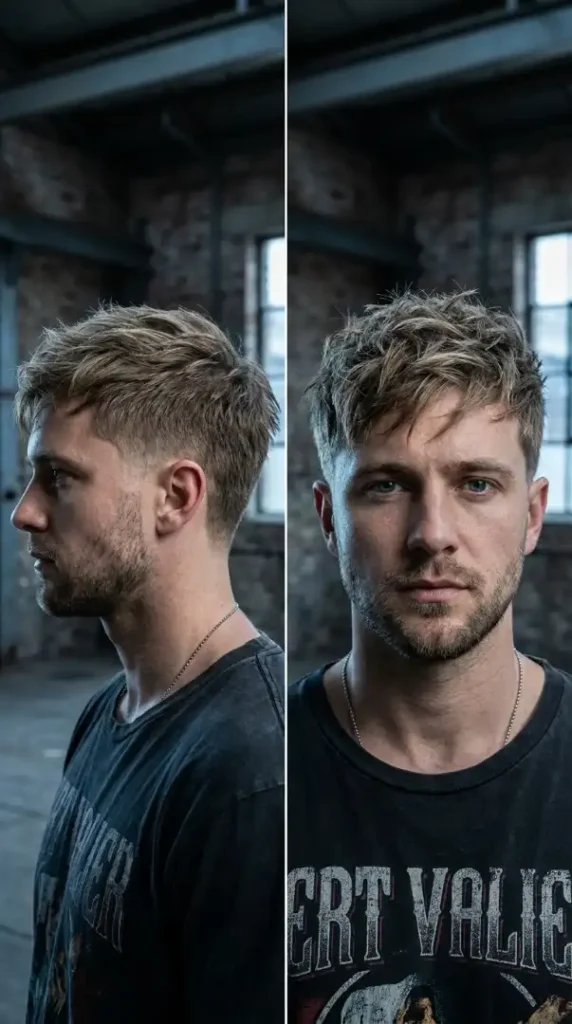
The Fight Club Disheveled Rebel thrives on square and diamond face shapes where strong angular features are enhanced rather than softened. The choppy, forward-pushed texture draws attention to defined cheekbones and jawlines, creating that rebellious masculine edge Brad Pitt perfected. Round faces can absolutely pull this off with proper styling — the vertical texture and piece-y layers add height, elongating the face and creating definition. Oval faces have universal compatibility, but the styling must maintain intentional messiness rather than falling flat. Heart-shaped faces should request slightly more length at the sides to balance a wider forehead. The key is strategic chaos, not actual neglect.
Professional Grooming Arsenal
Cutting Tools:
- Wahl Professional 5-Star Magic Clip (primary clipper for graduated sides)
- Andis Master Adjustable Blade Clipper (precision fade work)
- Professional texturizing shears (creating choppy layers)
- Feather Styling Razor (adding piece-y separation)
Daily Styling Products:
- Baxter of California Clay Pomade (matte finish, strong hold)
- American Crew Fiber (piece-y texture without shine)
- Hanz de Fuko Claymation (extreme hold for disheveled look)
- Layrite Natural Matte Cream (lightweight control)
- Sea salt spray by Bumble and bumble (pre-styling texture base)
Beard Products:
- Jack Black Beard Oil (maintaining healthy stubble)
- Bulldog Skincare Beard Shampoo (2-3 times weekly)
- Honest Amish Beard Balm (light shaping)
Maintenance Commitment
Level: Medium
This style walks the line between low-effort and intentionally styled chaos. Barber visits every 3-4 weeks are essential to maintain the choppy layers and fade integrity — this isn’t a style you can let grow out gracefully. Daily styling requires 8-12 minutes: towel-dry to about 70% moisture, work clay pomade through damp hair using fingers (never a comb), push forward and create piece-y separation, then rough-dry with hands while scrunching and pulling texture in random directions. The disheveled look is carefully constructed, not accidental. Washing 3-4 times weekly maintains natural oils that give this style its signature slightly-dirty texture. Skip one day between washes for best results. The stubble requires electric trimmer maintenance every 2-3 days at the 3mm setting to prevent crossing into full beard territory.
Exact Barber Instructions
Say this to your barber: “I want the Brad Pitt Fight Club cut. Use a #2 guard starting at the temples and fade up to 2-3 inches on top. Graduate the fade smoothly without harsh lines — I need that lived-in look. On top, use texturizing shears to create choppy, piece-y layers with varying lengths between 2 and 3 inches. Cut into the hair vertically, not straight across — I want intentional irregularity. Push the texture forward toward my forehead with no defined side part. For the fringe, keep it between eyebrow and mid-forehead length, heavily textured so it can be styled messy. Point-cut the ends throughout for separation. The sides should have enough length to show texture, not buzzed clean. For the beard, trim to 3mm stubble using a #1.5 guard all over, but leave it slightly uneven — not a perfectly manicured look. Blend the sideburns naturally into the beard with no hard line.”
If you prefer more structure than chaos, check Style #8 for a refined alternative with similar Brad Pitt edge.
Frequently Asked Questions
How do I maintain the Fight Club disheveled look at home?
Apply clay pomade to damp (not wet) hair, work through with fingers only, push forward randomly without creating a part, and rough-dry with your hands while pulling and scrunching sections in different directions. The key is controlled chaos — each morning should look intentionally different. Wash 3-4 times weekly and maintain stubble at 3mm every 2-3 days for authentic Tyler Durden energy.
Which face shape suits the disheveled rebel cut best?
Square and diamond face shapes excel with this cut because the choppy forward texture emphasizes strong jawlines and cheekbones. Round faces benefit from the vertical piece-y layers that elongate, while oval faces maintain natural balance. Heart-shaped faces should keep slightly more length at the sides to avoid emphasizing forehead width — the texture provides natural balancing volume.
What is the difference between Fight Club messy and actually unkempt hair?
Fight Club disheveled is strategically constructed using texturizing products and intentional styling — it’s controlled chaos with piece-y separation and directional movement. Unkempt hair lacks shape, has no texture variation, and falls flat without structure. The rebel cut requires fresh layers every 3-4 weeks and daily product application, while unkempt hair is genuine neglect with no professional maintenance.
How often should I get the Fight Club cut trimmed?
Book appointments every 3-4 weeks to maintain the choppy layers and fade graduation. The piece-y texture depends on varying lengths — once those grow out evenly, you lose the disheveled effect and end up with standard medium-length hair. Stubble requires home maintenance every 2-3 days with an electric trimmer at 3mm to stay in the Tyler Durden sweet spot.
3 of 10 — The Ocean’s Slick Casino King
Optimal Face Shape Analysis
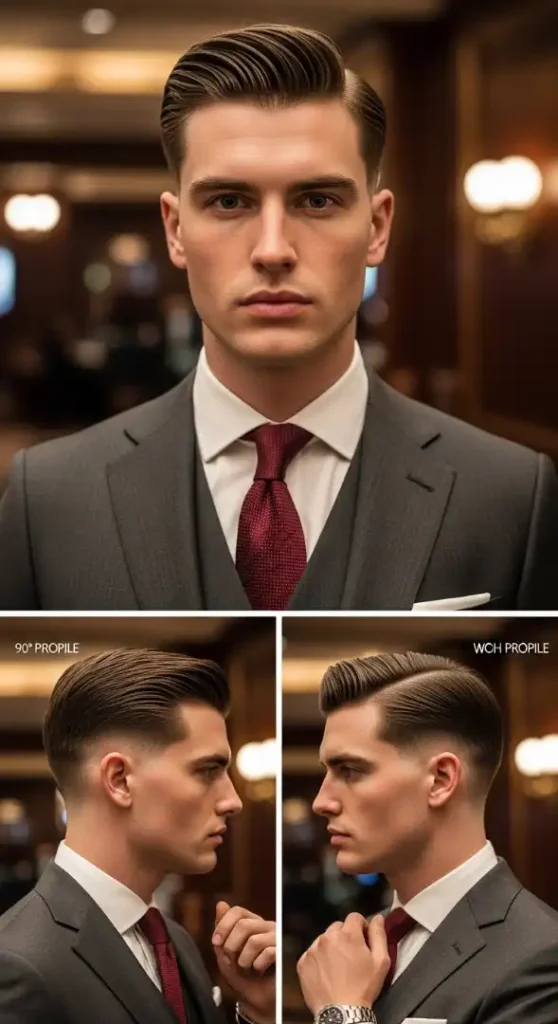
The Ocean’s Slick Casino King demands oval or oblong faces where the horizontal swept volume creates perfect proportion without overwhelming features. The hard side part and slicked styling add width, making this ideal for longer face shapes that need horizontal balance. Square faces work beautifully — the smooth pomade finish and clean lines complement angular jaws without competing for attention. Round faces should approach cautiously; request your barber to add height at the crown to create vertical elongation, otherwise the swept-over style can emphasize roundness. Diamond faces benefit from the volume at the top balancing narrower foreheads. This is a precision cut requiring facial symmetry to truly shine — Brad Pitt’s bone structure did heavy lifting here.
Complete Grooming Toolkit
Professional Equipment:
- Oster Fast Feed Clipper (primary cutting tool)
- Wahl Detailer for razor-sharp part lines
- Professional straight razor for part precision
- Fine-tooth barber comb in metal or acetate
- Denman Classic Styling Brush (smoothing during blow-dry)
High-End Styling Products:
- Suavecito Original Hold Pomade (medium shine, firm hold)
- Layrite Supershine Cream (high-gloss finish)
- Uppercut Deluxe Pomade (water-based, re-stylable)
- American Crew Grooming Cream (pre-styling primer)
- Gatsby Moving Rubber Grunge Mat (alternative matte version)
Maintenance Products:
- Clarisonic Alpha Fit cleansing brush (daily face care)
- Jack Black Supreme Cream Triple Cushion Shave Lather
- The Art of Shaving After-Shave Balm
- Weekly clarifying shampoo to remove pomade buildup
Maintenance Investment Level
Level: Medium-High
The Casino King requires consistent professional attention every 2.5-3 weeks to maintain razor-sharp part lines and taper fade precision. This is not a forgiving style — even one week past due creates visible sloppiness that undermines the entire aesthetic. Daily styling demands 12-18 minutes of commitment. The routine: shampoo every other day with clarifying formula to combat pomade buildup, always condition to maintain healthy shine. Blow-dry with a round brush pulling hair back and to the side, creating volume at the root. Apply pomade to completely dry hair (never damp), work through with fine-tooth comb, create the part with precision, then finish with additional pomade for high-gloss coating. The clean-shaven face requires daily maintenance — budget 8-10 minutes for proper wet shaving with quality products. This is corporate America’s highest-maintenance haircut disguised as effortless elegance.
Professional Barber Communication
Walk in and communicate precisely: “I want the Brad Pitt Ocean’s Eleven slick side part. Create a hard part on my left side using a straight razor — make it crisp and visible. High taper fade starting at the temple, graduating from skin to half an inch over the ear, then blending smoothly into 1.5 inches on top. I need the top long enough to sweep over with pomade — about 1.5 inches maximum length. Cut the top at a slight angle so there’s more length toward the front for sweep-over volume. Taper the back gradually without creating a shelf or hard line. Both sideburns end cleanly at mid-ear height, razor-trimmed for perfection. For the front hairline, keep it natural but clean — no hard edge, but no ragged fringe either. Finish by texturizing very lightly with thinning shears if my hair is thick — I need enough density to hold the slicked shape. Clean shave afterward with hot towel service.”
For a modern twist on this classic, Style #6 offers contemporary alternatives while maintaining that polished Brad Pitt sophistication.
Frequently Asked Questions
How do I maintain the slick side part Casino King style at home?
Blow-dry completely using a round brush to pull hair back and create root volume, apply medium-hold pomade to dry hair working from roots to ends with a fine-tooth comb, create the part with precision using the comb’s tail, then apply a second layer of high-shine pomade to seal the look. Wash every other day with clarifying shampoo to prevent buildup, and book barber appointments every 2.5-3 weeks for part line and fade maintenance.
Which face shape suits the slicked Casino King cut best?
Oval and oblong face shapes benefit most because the horizontal swept volume balances vertical length. Square faces complement the clean lines and smooth finish. Round faces need added crown height to elongate — request this specifically to avoid emphasizing roundness. Diamond faces balance well with top volume, while heart-shaped faces should ensure adequate side length to offset wider foreheads.
What is the difference between Ocean’s slick styling and a traditional pompadour?
Ocean’s slick features a side part with hair swept horizontally across and back, maintaining relatively even height (1.5 inches max) without dramatic pompadour volume. Traditional pompadours create significant vertical height at the front (3-4 inches) and sweep straight back without side parts. The Casino King is corporate-appropriate and subtle, while pompadours make intentional bold statements with height and volume.
How often should I get the Ocean’s Casino cut trimmed?
Book appointments every 2.5-3 weeks to maintain the razor-sharp part line and high taper fade precision. The part line especially requires professional attention — attempting to maintain it yourself risks uneven results. Between visits, maintain the clean-shaven look daily and use clarifying shampoo twice weekly to prevent pomade buildup that can make hair appear greasy rather than intentionally glossy.
4 of 10 — The Fury Buzz Cut Commander
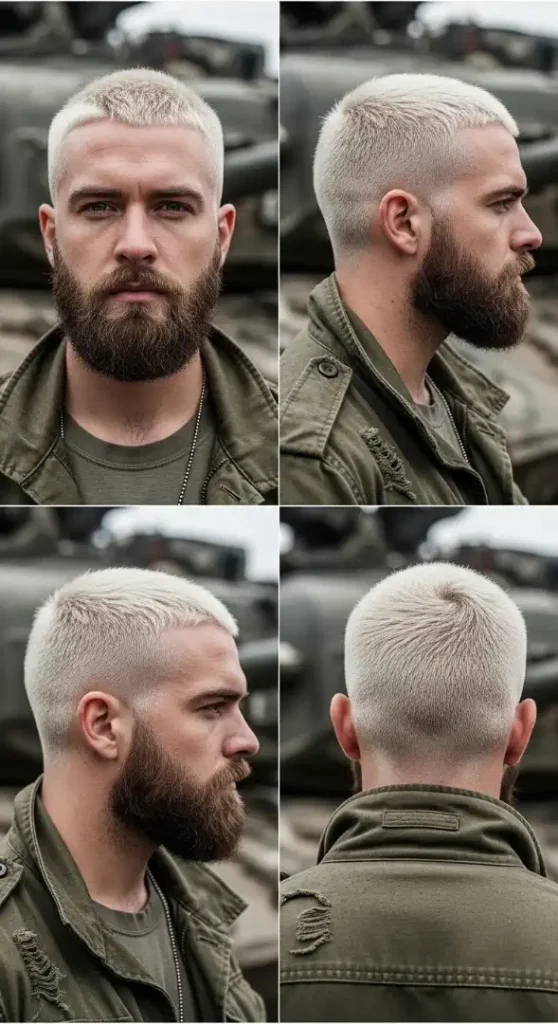
Face Shape Suitability Assessment
The Fury Buzz Cut Commander is the universal equalizer — it works across ALL face shapes when paired with the right beard strategy. Square faces are enhanced by the rugged 5mm beard that emphasizes already-strong jawlines, creating ultimate masculine presence. Round faces benefit massively from the full beard which adds vertical length and definition where the buzz cut removes horizontal volume from the head. Oval faces maintain their natural balance while gaining edge and intensity. Oblong faces should keep the beard fuller to add width and prevent excessive vertical elongation. Diamond faces excel with this combination as the buzz cut showcases strong cheekbones while the beard grounds the lower face. The key variable is beard length — adjust between 3mm and 8mm based on face shape needs.
Essential Grooming Equipment
Cutting Tools:
- Wahl Professional 5-Star Balding Clipper (primary buzz tool)
- Oster Fast Feed for initial length reduction
- Andis T-Outliner for nape and sideburn detailing
- Professional straight razor for clean neck line
- Wahl Peanut Clipper for touch-ups between cuts
Beard Maintenance:
- Philips Norelco OneBlade Pro for beard length control
- Brio Beardscape Ceramic Blade Trimmer (precise 5mm setting)
- Kent Handmade Beard Comb in fine/medium
- Boar bristle beard brush for oil distribution
Styling Products:
- Honest Amish Beard Balm (hold and conditioning)
- Grave Before Shave Beard Oil in Bay Rum (conditioning and scent)
- Jack Black Beard Wash (deep cleansing 3x weekly)
- Scotch Porter Beard Conditioner (daily use)
- Bulldog Original Moisturizer for scalp (prevents dry skin under short hair)
Maintenance Requirements
Level: Low
This is the ultimate low-maintenance Brad Pitt transformation. Home buzz cuts every 10-14 days maintain the uniform #2 length — invest in quality clippers and learn the technique, or visit a barber every 2-3 weeks for professional precision. The buzz takes 10 minutes to cut yourself or 15 minutes in a barber chair. Daily maintenance is minimal: 5 minutes maximum for beard grooming. Trim beard to consistent 5mm every 4-5 days, apply beard oil daily after showering (2 minutes), brush through for distribution, done. Washing routine is simple — shampoo the scalp 3-4 times weekly to prevent buildup and dry skin, condition beard daily while showering. The platinum blonde color requires monthly toner application if maintaining that specific Fury aesthetic, adding 20 minutes monthly. Otherwise, this is wash-and-go masculinity perfected.
Barber Instructions Script
Tell your barber exactly this: “I want the Brad Pitt Fury buzz cut. Use a #2 guard across my entire head — front, top, sides, and back — creating uniform 6mm length everywhere. Don’t leave the top longer; I want military precision consistency. At the temples and around the ears, blend cleanly without creating hard fade lines. At the nape, use a #1 guard to create a subtle taper at the natural hairline, then clean the neck below with a straight razor for definition. For my beard, trim everything to 5mm using an adjustable guard — I want rugged full coverage from sideburns to neck, not sculpted cheek lines. Keep it natural looking with just enough shape to prevent wildness. Blend the sideburns seamlessly into the beard without separation. Clean the neck line about one finger-width above my Adam’s apple with a straight razor, following my natural jaw curve. If I’m going platinum blonde, apply toner to level 10 lift — ash blonde, not yellow.”
Prefer more texture? Style #7 offers a longer buzz variation with modern fade elements while maintaining military-inspired aesthetics.
Frequently Asked Questions
How do I maintain the Fury buzz cut at home?
Invest in Wahl 5-Star Balding Clippers and buzz your entire head with a #2 guard every 10-14 days, moving against hair growth direction for even coverage. Trim your beard to 5mm every 4-5 days with an adjustable trimmer, apply beard oil daily after showering, and brush through with a boar bristle brush for distribution. Shampoo your scalp 3-4 times weekly to prevent dry skin and irritation common with ultra-short cuts.
Which face shape suits the buzz cut commander style best?
All face shapes work with the buzz cut when paired with appropriate beard length. Square faces are enhanced by the 5mm beard emphasizing strong jaws. Round faces benefit from beard-added vertical length and definition. Oval faces maintain natural balance while gaining masculine edge. Oblong faces should keep beards fuller for width, and diamond faces showcase cheekbones while the beard grounds the lower face.
What is the difference between a military buzz and a standard crew cut?
A military buzz uses the same guard length (typically #2 or 6mm) across the entire head for uniform coverage, while a crew cut graduates from longer on top (1-2 inches) to shorter at sides and back. Buzz cuts show scalp visibility and require no styling products, while crew cuts need pomade or cream for front texture. The Fury buzz is zero-maintenance; crew cuts demand daily styling.
How often should I get the Fury Commander buzz trimmed?
Self-maintain every 10-14 days with home clippers for consistent length, or visit a barber every 2-3 weeks if you prefer professional precision. Beard trimming to 5mm should happen every 4-5 days to prevent excessive growth. If maintaining platinum blonde color, apply toner monthly to counteract brassiness. Between cuts, keep the neck line clean with weekly straight razor touch-ups.
5 of 10 — The Legends Swept Pompadour Flow

Face Shape Compatibility Guide
The Legends Swept Pompadour Flow is specifically engineered for oblong and rectangular face shapes where the swept-back volume with height creates horizontal balance against vertical length. The volume at the front third adds width perception while the backward flow prevents additional elongation. Oval faces universally excel with this style, maintaining natural proportions while adding masculine edge and maturity. Square faces can wear this successfully — the textured movement softens angular jaws without feminizing the overall aesthetic. Round faces should approach with strategic modifications: request your barber to add more height at the crown and less forward volume to create vertical elongation rather than horizontal emphasis. Heart-shaped faces benefit from keeping adequate length at the sides to balance wider foreheads with the swept-back top.
Professional Grooming Setup
Cutting & Styling Tools:
- Andis Master Clipper (fade and blend work)
- BaByliss Pro FX Skeleton Trimmer (beard precision)
- Wide-tooth detangling comb by Cricket
- Round boar bristle brush for blow-dry volume
- Professional hair dryer with concentrator nozzle (CHI or Dyson)
Daily Styling Products:
- Uppercut Deluxe Pomade (medium hold, natural shine)
- Hanz de Fuko Sponge Wax (pre-styling texture base)
- American Crew Forming Cream (flexible hold with movement)
- Baxter of California Hard Cream Pomade (matte finish option)
- Heat protectant spray by Tresemmé (blow-dry protection)
Beard & Hair Care:
- Viking Revolution Beard Oil (4mm stubble conditioning)
- Tea Tree Special Shampoo by Paul Mitchell (scalp health)
- Redken Brews Mint Shampoo (refreshing daily wash)
- Honest Amish Beard Balm (light stubble shaping)
Maintenance Level Breakdown
Level: Medium-High
The Legends Pompadour Flow demands commitment but rewards with timeless versatility. Barber visits every 3.5-4 weeks maintain the layered length and prevent the dreaded mullet creep at the back. Daily styling requires 15-20 minutes of focused effort. Morning routine: wet hair completely in shower, towel-dry to 60% moisture, apply heat protectant, work pre-styling product (Sponge Wax) through damp hair, blow-dry using round brush to create volume pulling back and slightly up, apply finishing pomade to completely dry hair working from back to front, then use fingers to create piece-y texture and directional flow. The medium stubble beard needs trimmer maintenance every 3 days at the 4mm setting to prevent crossing into full beard territory. Washing schedule: shampoo 3-4 times weekly to maintain natural oils that give this style its lived-in texture without greasiness. This isn’t a wake-up-and-go style; it’s a deliberate daily construction of effortless-looking masculinity.
Barber Chair Communication
Communicate exactly: “I want the Brad Pitt Legends swept pompadour flow. Keep the top between 3 and 4 inches, cut with texturizing techniques to create movement and piece-y separation — no blunt cuts across. Create subtle layering starting at the crown and graduating shorter toward the front, but I still need enough front length to sweep back with volume. The sides should taper gradually from 2 inches at the top blend zone down to 0.5 inches at the mid-ear level. I don’t want a hard fade — keep it graduated and natural looking. At the back, maintain 2.5 to 3 inches and blend smoothly into the sides without creating a shelf. For styling direction, everything flows backward from the forehead with a slight volume lift at the front third — no side part, just natural backward sweep. Point-cut the ends throughout for texture. For my beard, trim to consistent 4mm stubble from sideburns through jaw and neck, keeping natural fullness without sculpted lines. Blend sideburns seamlessly into the beard. Clean the neck line with a straight razor one finger-width above the Adam’s apple.”
Looking for less styling commitment? Style #2 offers a shorter textured alternative that captures similar Brad Pitt energy with half the morning time investment.
Frequently Asked Questions
How do I maintain the swept pompadour flow at home?
Blow-dry damp hair using a round boar bristle brush to create volume, pulling backward and slightly upward at the front. Apply medium-hold pomade to completely dry hair, working from back to front with fingers to create directional flow and piece-y texture. Wash 3-4 times weekly and trim beard stubble to 4mm every 3 days. Book barber appointments every 3.5-4 weeks to maintain layered length and prevent mullet formation at the back.
Which face shape suits the Legends pompadour best?
Oblong and rectangular faces benefit most from the horizontal volume balancing vertical length. Oval faces maintain natural proportions with added masculine maturity. Square faces soften angular jaws through textured movement. Round faces need more crown height and less forward volume to create vertical elongation — request this modification specifically. Heart-shaped faces should keep adequate side length to balance wider foreheads.
What is the difference between this swept pompadour and a traditional rockabilly pomp?
The Legends swept pompadour flows naturally backward with piece-y texture and movement, using medium-hold products that allow re-styling throughout the day. Traditional rockabilly pompadours create dramatic vertical height (4-6 inches) with heavy pomade, forming a solid sculptural shape that doesn’t move. Legends styling looks effortlessly textured; rockabilly intentionally structured and frozen. This is Brad Pitt western cool; that’s 1950s greaser rebellion.
How often should I get the Legends Flow trimmed?
Book appointments every 3.5-4 weeks to maintain the layered texture and prevent the back from extending into mullet territory. The piece-y separation depends on texturizing cuts that grow out unevenly — professional maintenance preserves the intentional flow direction. Beard stubble requires home trimming every 3 days at 4mm, while the neck line needs straight razor cleaning weekly between barber visits.
6 of 10 — The Once Upon Hollywood Retro Shag
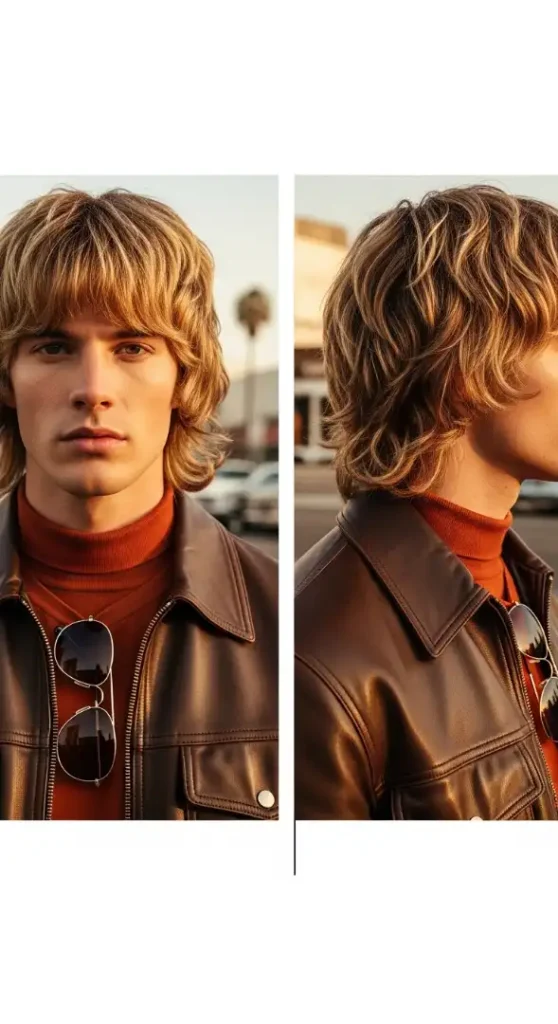
Face Shape Analysis
The Once Upon Hollywood Retro Shag works brilliantly on oval faces where the natural balance accommodates volume without overwhelming proportions. The heavy layering and full-coverage sides add horizontal width, making this ideal for oblong and rectangular faces that need to counterbalance vertical length. Square faces can wear this successfully — the shaggy texture and fringe soften angular jawlines while maintaining masculine presence. Round faces should approach carefully; the horizontal volume can emphasize roundness unless paired with strategic styling that adds height at the crown. Request longer layers at the top with more vertical lift during blow-drying. Heart-shaped faces work well as the side volume balances wider foreheads naturally. The thick fringe is crucial — without it, this becomes generic shaggy hair rather than the iconic Cliff Booth aesthetic.
Complete Grooming Arsenal
Cutting Tools:
- Wahl Professional Magic Clip (primary cutting and layering)
- Professional texturizing shears (creating 70s shag layers)
- Razor for point-cutting and fringe texturing
- Fine-tooth cutting comb for precision layering
- Thinning shears (removing bulk for movement)
Daily Styling Products:
- Baxter of California Clay Effect (matte texture without stiffness)
- American Crew Boost Powder (root volume for blow-dry)
- Uppercut Deluxe Matte Pomade (piece-y separation)
- Hanz de Fuko Quicksand (extreme matte finish, workable hold)
- Sea salt spray by Bumble and bumble (pre-styling texture base)
Hair Health Products:
- Olaplex No. 3 Hair Perfector (weekly bond repair treatment)
- Paul Mitchell Tea Tree Lavender Mint Shampoo (daily gentle cleanse)
- Redken All Soft Conditioner (moisture without weight)
- Leave-in conditioning spray for detangling
Maintenance Commitment
Level: Medium
The Retro Shag requires regular professional maintenance every 4-5 weeks to preserve the layered structure and prevent the shag from morphing into an overgrown mullet mess. The heavily layered cut grows out unevenly by design, but past five weeks it loses intentional shape. Daily styling demands 12-15 minutes of focused effort. Morning routine: wet hair completely, apply volumizing powder to roots while still damp, rough-dry with hands to 70% while lifting at the roots for volume, apply matte clay to nearly-dry hair working from back to front with fingers, create piece-y separation by pulling small sections outward, finish with sea salt spray for additional texture if needed. The fringe requires specific attention — blow-dry it forward and slightly to the side, never straight down. Washing schedule: 3-4 times weekly with gentle sulfate-free shampoo maintains natural oils that give blonde hair its healthy sheen without greasiness. Weekly deep conditioning prevents damage to lighter-colored processed hair.
Barber Communication Script
Tell your barber precisely: “I want the Brad Pitt Once Upon A Time In Hollywood shag cut. This is a heavily layered retro 70s style. Keep the overall length at 3 to 4 inches throughout — top, sides, and back all similar length with no taper or fade. Create extensive layering starting from the crown and working through to the ends — I need movement and texture, not bulk. Point-cut all the layers to create piece-y separation. For the fringe, bring it to eyebrow length and texture heavily so it falls naturally across my forehead with separation. I want a natural center part that creates volume on both sides. The sides should be full coverage with no skin showing — layer them to reduce bulk but maintain thickness. At the back, the nape should be textured and layered to sit naturally without creating a shelf. Use texturizing shears throughout to remove internal weight while keeping surface length. The overall silhouette should be round and full, very 1970s. Don’t use any clippers — this is all scissor work. I’m going for Cliff Booth from Once Upon A Time.”
Want the shag vibe with less retro commitment? Style #9 offers a modern textured variation that captures similar movement with contemporary edge.
Frequently Asked Questions
How do I maintain the Once Upon Hollywood shag at home?
Wet hair completely, apply volumizing powder to roots while damp, rough-dry to 70% with hands while lifting for volume, work matte clay through nearly-dry hair from back to front creating piece-y texture, blow-dry fringe forward and slightly sideways. Wash 3-4 times weekly with sulfate-free shampoo, deep condition weekly, and book barber appointments every 4-5 weeks to maintain the heavily layered structure that defines this cut.
Which face shape suits the retro shag cut best?
Oval faces accommodate the volume perfectly with natural balance. Oblong and rectangular faces benefit from horizontal volume counterbalancing vertical length. Square faces soften through shaggy texture and fringe. Round faces need modified styling with more crown height and less side volume to avoid emphasis on roundness — request longer top layers specifically. Heart-shaped faces balance wider foreheads naturally with the side volume.
What is the difference between a retro shag and a modern textured crop?
Retro shags feature heavy layering throughout with 3-4 inches of length everywhere including sides and back, creating full-coverage 70s silhouette with no fade or taper. Modern textured crops use shorter sides (tapered or faded) with longer textured tops (2-3 inches), creating contemporary contrast. Shags are all-over length; crops are short-sides-long-top. Shags need matte products for movement; crops use varied products based on desired finish.
How often should I get the Hollywood Shag trimmed?
Book appointments every 4-5 weeks to maintain the layered structure and prevent shaggy overgrowth from losing intentional shape. The heavily layered cut depends on varying lengths — once those grow out evenly past five weeks, you have generic long hair rather than a retro shag. Between visits, maintain the fringe with home trimming if it extends past eyebrows, but leave layer work to professionals.
7 of 10 — The Inglourious Refined Undercut
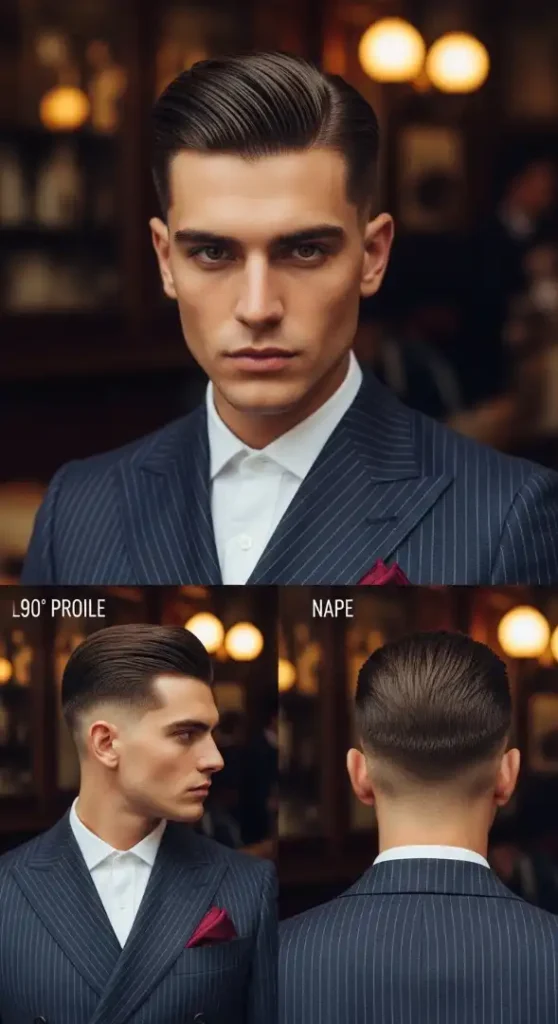
Face Shape Optimization
The Inglourious Refined Undercut is specifically designed for square and rectangular face shapes where the slicked-back volume and exposed sides create dramatic masculine presence without softening strong angular features. The disconnected undercut emphasizes jawline definition and cheekbone structure — perfect for faces with natural angularity. Oval faces maintain their universal versatility with this style, gaining sophisticated edge and period authenticity. Oblong faces should request less backward slick and more upward volume at the crown to avoid excessive vertical elongation. Round faces need to approach strategically: the exposed sides can actually work in your favor by creating vertical lines that elongate, but demand significant top volume lifted upward rather than slicked flat backward. Diamond faces showcase their narrow foreheads and strong cheekbones beautifully with this high-contrast cut. The key is the disconnection — it’s intentionally dramatic, not subtle.
Essential Professional Equipment
Cutting & Detailing Tools:
- Wahl Professional 5-Star Senior Clipper (undercut sides precision)
- Andis Master Adjustable for fade detail work
- Professional straight razor (hard part line creation)
- Fine-tooth metal cutting comb (top scissor work)
- Oster T-Finisher (nape taper and detail cleanup)
Styling Products:
- Suavecito Firme Hold Pomade (maximum hold, high shine)
- Murray’s Superior Hair Dressing Pomade (traditional petroleum-based extreme hold)
- Layrite Super Hold Pomade (water-based, re-stylable throughout day)
- American Crew Grooming Cream (pre-styling base for slick)
- Got2b Glued Spiking Wax (emergency hold reinforcement)
Maintenance Products:
- Clarifying shampoo by Paul Mitchell (weekly pomade removal)
- Tea Tree oil scalp treatment (preventing buildup irritation)
- Shaving cream and aftershave balm (daily clean-shave maintenance)
- Witch hazel toner (soothing freshly buzzed sides)
Maintenance Requirements
Level: High
The Refined Undercut is the most demanding Brad Pitt transformation in this collection. Barber visits every 2-3 weeks are non-negotiable to maintain the disconnected undercut’s crisp perimeter and the razor-sharp hard part line. Skip even one appointment and the entire aesthetic collapses into overgrown chaos. Daily styling requires 15-22 minutes of precision work. Morning routine: shampoo thoroughly if previous day’s pomade hasn’t been removed, towel-dry to barely damp, apply grooming cream as base layer, blow-dry the top section completely straight back using a paddle brush and high heat creating smoothness, apply heavy-hold pomade to bone-dry hair working from back to front with fine-tooth comb, create the part with comb precision, apply second layer of pomade for mirror-finish shine, comb through repeatedly until absolutely smooth. The clean-shaven face demands daily wet shaving with proper prep — budget 8-12 minutes using hot towel, quality cream, sharp blade, and aftershave routine. Weekly clarifying shampoo sessions remove accumulated pomade buildup that regular shampoo can’t touch. This is corporate precision disguised as vintage rebellion.
Precise Barber Instructions
Communicate exactly: “I want the Brad Pitt Inglourious Basterds refined undercut. This is a disconnected undercut with dramatic contrast. Buzz the sides and back uniformly with a #1 guard — that’s 3mm all over, no fade or graduation on the sides themselves. At the natural perimeter where the buzzed section meets the longer top, create a hard disconnected line with clippers — I want clear separation, not a blend. The top section should be 3.5 to 4 inches, cut to all one length for maximum slicking potential. On my left side, create a razor-defined hard part starting at the front hairline and extending about 3 inches back. At the nape, taper from the #1 guard down to #0.5 and then to skin at my natural hairline — this is the only area with graduation. Keep my sideburns short, ending at the top of my ear, buzzed at the same #1 length. The top needs to be cut blunt, not textured — I’m slicking it back with pomade, so I need weight and density, not piece-y layers. Clean shave afterward with straight razor and hot towel.”
Prefer modern undercut variations? Style #10 updates this classic with contemporary fade techniques while maintaining that sophisticated edge.
Frequently Asked Questions
How do I maintain the Inglourious refined undercut at home?
Blow-dry the top section completely straight back with a paddle brush on high heat for smoothness, apply heavy-hold pomade to bone-dry hair working from back to front with a fine-tooth comb, create the hard part with precision, apply a second pomade layer for mirror shine, and comb repeatedly until glass-smooth. Use clarifying shampoo weekly to remove pomade buildup. Book barber appointments every 2-3 weeks to maintain the disconnected perimeter and razor part line.
Which face shape suits the refined undercut best?
Square and rectangular faces excel with the dramatic exposed sides emphasizing angular jaws and cheekbones. Oval faces maintain natural balance with sophisticated edge. Oblong faces need more upward volume and less backward slick to avoid excessive elongation. Round faces can work this style with significant top volume lifted upward rather than slicked flat — the exposed sides create vertical lines that elongate when styled correctly.
What is the difference between a disconnected undercut and a traditional fade?
Disconnected undercuts create an intentional hard line where buzzed sides meet the longer top section with zero blending — dramatic high-contrast separation. Traditional fades gradually blend from skin or very short at the bottom to longer at the top with smooth transitions and no visible line. Disconnected cuts are bold 1940s-inspired statements; fades are contemporary smooth graduations. Inglourious uses disconnection for period authenticity.
How often should I get the Inglourious Undercut trimmed?
Book appointments every 2-3 weeks to maintain the disconnected perimeter line and razor-defined hard part. The buzzed sides grow quickly — by week three, the contrast ratio starts disappearing and the style loses its dramatic impact. Weekly clarifying shampoo removes pomade buildup between cuts, and daily wet shaving maintains the clean-shaven complement to this precision haircut.
8 of 10 — The Interview Corporate Textured Taper
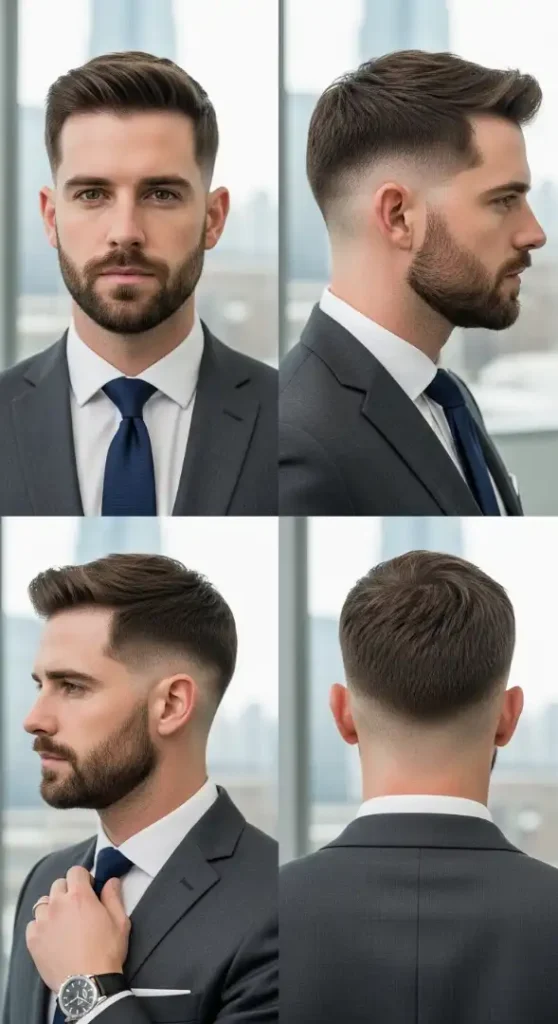
Face Shape Versatility
The Interview Corporate Textured Taper is the most universally flattering Brad Pitt style in this collection — it works across ALL face shapes with minor styling adjustments. Oval faces maintain perfect balance with this modern classic. Square faces are enhanced by the textured top softening angular jaws while the high taper creates clean lines that complement rather than compete. Round faces benefit significantly — the high taper removes horizontal bulk from the sides while the textured top with forward piece-y styling adds vertical dimension and definition. Oblong faces work beautifully; keep the top styled with less height and more forward direction to avoid excessive elongation. Diamond faces showcase their cheekbones while the taper balances the narrower forehead and chin. Heart-shaped faces should ensure adequate length at the sides during the fade to prevent emphasizing forehead width. The professional 2mm stubble universally adds masculine definition across all face shapes.
Professional Grooming System
Cutting Equipment:
- Wahl Professional 5-Star Magic Clip (primary taper work)
- Andis Master for detailed fade execution
- Professional texturizing shears (creating piece-y top layers)
- BaByliss Pro Metal Double Foil Shaver (skin fade detail)
- Fine-tooth barber comb for precise graduation
Daily Styling Arsenal:
- American Crew Fiber (matte texture, flexible hold)
- Uppercut Deluxe Matte Clay (piece-y separation)
- Baxter of California Hard Cream Pomade (structured hold option)
- Hanz de Fuko Claymation (extreme texture for thick hair)
- Sea salt spray for pre-styling volume foundation
Beard & Maintenance:
- Philips Norelco OneBlade (precise 2mm stubble maintenance)
- Jack Black Beard Lube (conditioning clear shave cream)
- Kiehl’s Facial Fuel Moisturizer (daily skin care)
- Honest Amish Beard Oil (stubble conditioning 2x weekly)
Maintenance Investment
Level: Medium
The Corporate Textured Taper balances professional polish with manageable maintenance. Barber visits every 3 weeks maintain the high taper fade precision and textured top shape — this style doesn’t tolerate overgrowth well in corporate environments where appearance matters. Daily styling requires 8-12 minutes of focused routine. Morning process: shampoo 3-4 times weekly maintaining natural scalp oils, towel-dry to 70% dampness, apply small amount of matte clay or fiber to damp hair working through with fingers from back to front, create piece-y texture by pulling small sections forward and slightly sideways, air-dry or low-heat blow-dry while scrunching for added texture. The professional stubble demands electric trimmer maintenance every 2-3 days at the 2mm setting to stay in that corporate-appropriate zone between clean-shaven and full beard. This is the sweet spot: polished enough for executive meetings while maintaining masculine edge and modern style. Weekly deep cleansing prevents product buildup that can make textured styles appear greasy.
Barber Chair Script
Say exactly this: “I want the Brad Pitt Interview corporate textured taper. High taper fade starting at my temple level — graduate from 2 inches at the top blend zone down to 0.5 inches at mid-ear, then fade to skin at the sideburn and around the ear. I want smooth, seamless blending with no visible lines or shelves. On top, keep it between 1.5 and 2 inches, and use texturizing shears to create piece-y layers with varying lengths for natural movement. Don’t cut it all one length — I need that textured, lived-in look, not a blocky crew cut. Style it with a natural side fall to the right, no hard part. At the back, continue the taper graduation smoothly through the nape area, fading to skin at my natural hairline. The overall shape should be business-appropriate but modern — not a 1950s classic cut. For my facial hair, maintain consistent 2mm stubble from sideburns through jaw and neck using a trimmer guard. Blend sideburns naturally into the beard. Clean the neck line with a trimmer or razor at one finger-width above the Adam’s apple. The final look should say ‘executive who’s in touch with current trends,’ not ‘senior manager stuck in the past.'”
Looking for even lower maintenance corporate options? Check Style #4 for the ultra-short buzz variation that requires minimal daily styling while maintaining professional presence.
Frequently Asked Questions
How do I maintain the corporate textured taper at home?
Apply matte clay or fiber to damp (70% dry) hair, work through with fingers from back to front creating piece-y texture, pull small sections forward and slightly sideways for natural movement, then air-dry or low-heat blow-dry while scrunching. Trim stubble to 2mm every 2-3 days and shampoo 3-4 times weekly. Book barber visits every 3 weeks to maintain taper fade precision and textured top shape.
Which face shape suits the Interview taper cut best?
All face shapes work with appropriate styling modifications. Oval faces maintain perfect balance. Square faces soften with textured tops. Round faces add vertical dimension through the high taper and forward styling. Oblong faces keep less height and more forward direction. Diamond faces showcase cheekbones naturally. Heart-shaped faces need adequate fade length to avoid emphasizing forehead width. The 2mm stubble universally adds masculine definition.
What is the difference between this textured taper and a traditional businessman’s cut?
The Interview taper features modern piece-y texture on top styled with matte products for natural movement, while traditional cuts use pomade for slicked or combed-over smooth finishes. This style has a high taper fade (skin at sides), whereas classic cuts often use longer tapered sides (never to skin). The aesthetic is contemporary corporate cool versus 1950s executive formal. Both are professional, but this signals current style awareness.
How often should I get the Corporate Taper trimmed?
Book appointments every 3 weeks to maintain the high taper fade precision and textured top layers. Corporate environments demand crisp appearance — by week four, the fade loses its sharp definition and the top extends past the ideal 2-inch textured length. Stubble requires home trimming every 2-3 days at 2mm to stay in professional territory between clean-shaven and full beard.
9 of 10 — The Moneyball Textured Side Part
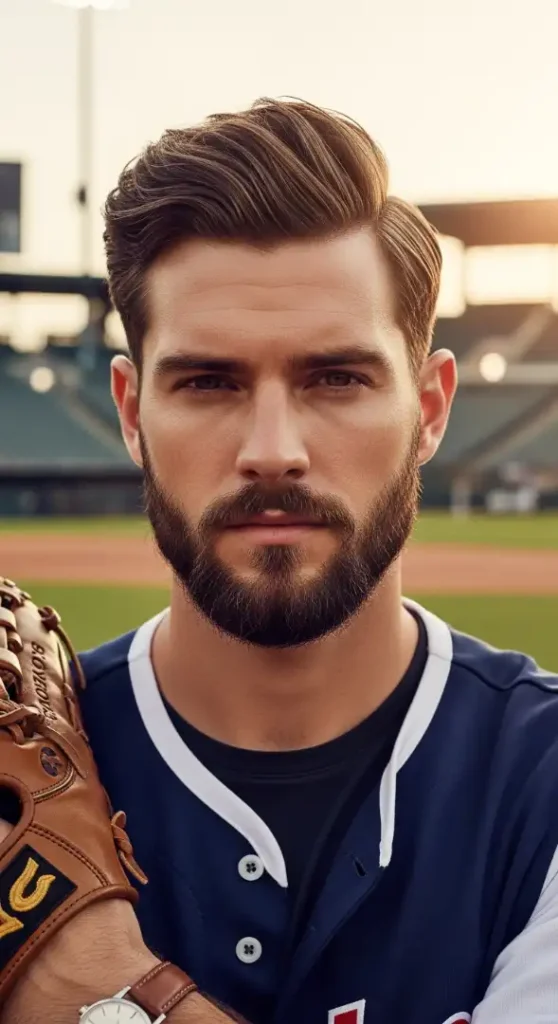
Face Shape Compatibility
The Moneyball Textured Side Part excels on oval and square face shapes where the balanced proportions and defined part create sophisticated masculine presence. Square faces particularly benefit — the textured styling softens angular features while the professional beard emphasizes strong jawlines without harsh competition. Oval faces maintain their universal advantage, gaining mature executive edge through the structured side part and fuller beard. Round faces can absolutely work this style with strategic adjustments: request your barber to add height at the crown and keep the sides slightly shorter to create vertical elongation. The beard is crucial for round faces — the 6-8mm length adds definition and structure to the lower face. Oblong faces should avoid excessive top height; style with more horizontal texture and less vertical lift. Diamond faces showcase their cheekbones beautifully while the fuller beard balances the narrower chin area. The key differentiator from similar styles is the combination of textured top (not slicked) with professional beard (not stubble).
Complete Grooming Toolkit
Professional Cutting Tools:
- Wahl Professional 5-Star Legend Clipper (fade and taper work)
- Andis Master Adjustable (detailed beard shaping)
- Professional point-cutting shears (texture creation)
- Straight razor for part line definition
- Kent handmade cutting comb for precision
Daily Styling Products:
- American Crew Forming Cream (flexible hold, natural finish)
- Uppercut Deluxe Matte Pomade (textured separation)
- Baxter of California Clay Effect (workable hold)
- Hanz de Fuko Hybridized Wax (hybrid matte-shine finish)
- Pre-styling sea salt spray for texture foundation
Beard Maintenance System:
- Brio Beardscape Trimmer (precision 6-8mm settings)
- Honest Amish Beard Balm (shaping and hold)
- Grave Before Shave Beard Oil (conditioning and scent)
- Kent Beard Comb in fine teeth
- Scotch Porter Beard Wash (2-3 times weekly)
Maintenance Requirements
Level: Medium-High
The Moneyball Textured Side Part demands consistent professional attention every 3 weeks to maintain the side part definition, textured layers, and professional beard shape. This is executive-level grooming that doesn’t tolerate neglect. Daily styling requires 12-18 minutes of focused routine. Morning process: shampoo every other day maintaining natural oils, towel-dry to 70%, work forming cream through damp hair focusing on the roots for volume, blow-dry with round brush creating the side part and pulling texture slightly upward for lift, apply matte pomade to dry hair working from back to front with fingers to create piece-y separation, use comb to reinforce the part line, finish by breaking up any overly-structured sections for natural texture. The professional beard at 6-8mm requires dedicated maintenance every 3-4 days: trim to consistent length using quality adjustable trimmer, shape the cheek line and neck line with precision (not too high, not too low), apply beard oil daily after showering for conditioning and healthy appearance, brush through with fine comb for distribution and shaping. This isn’t wash-and-go simplicity; it’s calculated professional polish that appears effortless.
Barber Communication
Communicate precisely: “I want the Brad Pitt Moneyball textured side part. Keep the top at 2 to 2.5 inches and use point-cutting and texturizing techniques to create piece-y layers with movement — not a blunt solid cut. Create a defined side part on my left using a comb or razor for precision. The sides should be tapered gradually — start at about 1.5 inches at the top blend zone and graduate down to 0.75 inches at mid-ear, then taper shorter toward the bottom but don’t go to skin. I want a professional taper, not a high fade. At the back, blend smoothly and taper the nape naturally. For styling direction, the part creates volume on the right side with hair styled slightly upward and textured, not slicked flat. For my beard, shape it professionally at 6 to 8mm length — that’s fuller than stubble but not long beard territory. Define my cheek line naturally following my facial structure, not overly sculpted. Clean the neck line at one finger-width above my Adam’s apple with gradual fade from the beard length to skin. Blend my sideburns seamlessly into the beard. The overall aesthetic is ‘successful executive who still plays pickup basketball on weekends’ — polished but not stuffy.”
Want the side part aesthetic with less beard commitment? Style #3 offers clean-shaven alternatives while maintaining similar top texture and professional presence.
Frequently Asked Questions
How do I maintain the Moneyball textured side part at home?
Work forming cream through damp hair focusing on roots, blow-dry with a round brush creating the side part and lifting texture upward, apply matte pomade to dry hair creating piece-y separation with fingers, use a comb to reinforce the part line. Trim beard to 6-8mm every 3-4 days, apply beard oil daily after showering, and book barber appointments every 3 weeks for part definition and textured layer maintenance.
Which face shape suits the Moneyball side part best?
Oval and square faces excel with the balanced proportions and defined structure. Round faces need added crown height and slightly shorter sides for vertical elongation — the 6-8mm beard is crucial for adding lower-face definition. Oblong faces should avoid excessive top height and style with more horizontal texture. Diamond faces showcase cheekbones while the fuller beard balances narrower chins. The beard is essential to this style’s success.
What is the difference between this textured side part and a slicked side part?
Moneyball textured side parts use matte forming cream or clay to create piece-y separation and natural movement with visible texture, while slicked versions use high-shine pomade for smooth, glass-like finish with no texture. Textured versions appear modern and approachable; slicked versions read as formal and traditional. This style has a fuller professional beard (6-8mm); many slicked versions pair with stubble or clean-shaven looks.
How often should I get the Textured Side Part trimmed?
Book appointments every 3 weeks to maintain the textured layers and defined part line. The piece-y separation depends on varying lengths from texturizing cuts — once those grow out past three weeks, you lose the intentional movement and end up with standard combed hair. Beard maintenance at home every 3-4 days keeps the 6-8mm length professional, with barber shaping the cheek and neck lines every three weeks.
10 of 10 — The Allied High Skin Fade Authority
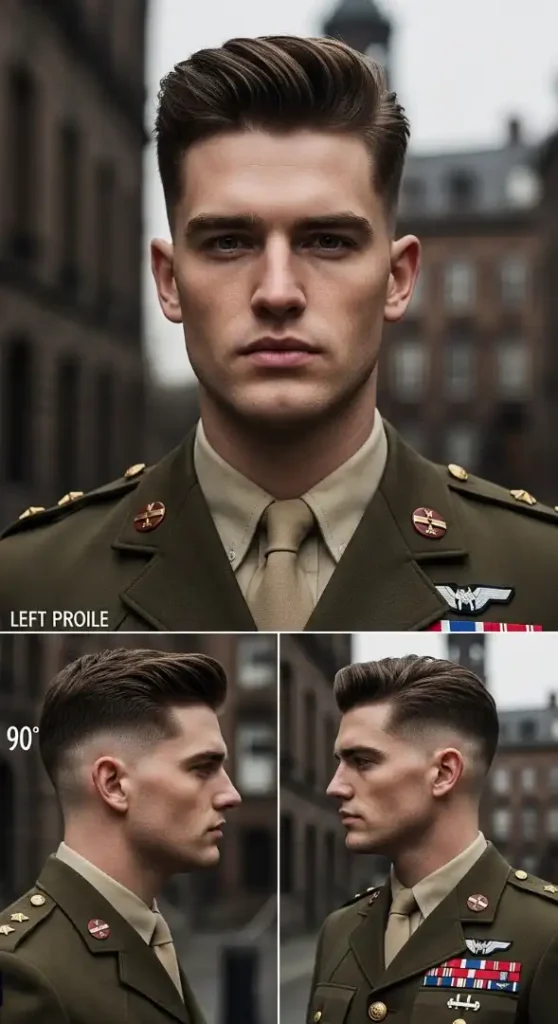
Face Shape Analysis
The Allied High Skin Fade Authority is designed for square and oval face shapes where the dramatic high fade and clean-shaven aesthetic create sharp, authoritative masculine presence. Square faces are enhanced by the high contrast between textured top and skin-faded sides, emphasizing angular jawlines without additional beard bulk. The clean shave requirement makes the jaw structure the star of the show. Oval faces maintain their universal compatibility while gaining military precision and contemporary edge. Round faces can work this style successfully with specific modifications: request maximum texture and height on top styled upward to create vertical elongation, while the high skin fade removes horizontal bulk from the sides. The clean shave is crucial for round faces — adding beard would emphasize roundness further. Oblong faces should keep moderate top height and style forward rather than upward to avoid excessive vertical extension. Diamond faces showcase their strong cheekbones beautifully, though the lack of beard means the narrow chin is fully visible — ensure your facial structure supports this before committing.
Essential Professional Equipment
Cutting & Fading Tools:
- Wahl Professional 5-Star Magic Clip (primary fade work)
- Andis Master with adjustable blade (detailed skin fade)
- BaByliss Pro Metal Double Foil Shaver (clean skin finish)
- Professional texturizing shears (top texture creation)
- Oster Fast Feed for bulk removal before fading
Styling Arsenal:
- American Crew Fiber (matte texture, medium hold)
- Uppercut Deluxe Matt Clay (piece-y forward styling)
- Hanz de Fuko Claymation (maximum texture for thick hair)
- Baxter of California Clay Pomade (workable hold option)
- Heat protectant spray for blow-dry styling foundation
Shaving System:
- High-quality safety razor or straight razor
- Proraso Shaving Cream (green for refreshing finish)
- Proraso Pre-Shave Cream (protective barrier)
- Nivea Men Sensitive After Shave Balm
- Hot towel for pre-shave prep
Maintenance Level
Level: High
The Allied High Skin Fade Authority is the highest-maintenance style in this collection due to the precision skin fade and clean-shaven requirement. Barber visits every 1.5-2 weeks are mandatory to maintain the high skin fade’s dramatic definition — skin fades grow out visibly faster than standard tapers, losing their sharp contrast by week three. Daily styling requires 10-15 minutes. Morning routine: wet hair in shower, towel-dry to 70%, apply matte clay or fiber to damp hair working through with fingers, style forward with piece-y texture using upward motion at the roots for lift, blow-dry briefly on low heat to set if needed. The clean-shaven face demands daily wet shaving ritual: 8-12 minutes every single morning using proper hot towel prep, quality shaving cream, sharp blade with gentle technique, and aftershave balm for skin protection. This is military-level grooming discipline. Missing even one day’s shave or extending barber visits past two weeks destroys the authoritative aesthetic. Budget 20-25 minutes total for complete morning grooming. This style doesn’t tolerate casual maintenance; it demands consistent excellence.
Barber Communication Script
Say exactly: “I want the Brad Pitt Allied high skin fade. High skin fade starting just above my temple level — fade from 1.5 inches on top down to complete skin by mid-ear using smooth, seamless graduation. I want to see the skin clearly at the sides with no shadow showing. The top should be maximum 1.5 inches, cut with texturizing shears to create piece-y layers for forward styling — not a blunt military crew cut. Style direction is forward with texture, not slicked to the side. At the back, continue the high fade through the sides and taper the nape to skin at my natural hairline. The overall shape when viewed from above should show clear contrast between the textured top section and the skin-faded sides. For my face, give me a clean wet shave with hot towel service — I want absolutely no facial hair. Shave my neck clean as well below the jawline. The final look is 1940s military officer precision updated with modern texturizing techniques — authoritative and sharp.”
For lower-maintenance military alternatives, Style #4 offers the Fury buzz cut with similar masculine energy but simpler daily routine and less frequent barber visits.
Frequently Asked Questions
How do I maintain the Allied high skin fade at home?
Apply matte clay to damp hair working through with fingers, style forward with piece-y texture using upward motion for lift, blow-dry briefly on low heat to set. Wet shave daily using hot towel prep, quality cream, sharp blade, and aftershave balm. Book barber appointments every 1.5-2 weeks to maintain the high skin fade’s sharp definition before it grows out and loses dramatic contrast.
Which face shape suits the high skin fade best?
Square and oval faces excel with the sharp contrast and clean-shaven aesthetic emphasizing jaw structure. Round faces work with maximum top texture styled upward for vertical elongation — the high fade removes side bulk while clean shave keeps focus on added height. Oblong faces need moderate top height styled forward to avoid excessive vertical extension. Diamond faces showcase cheekbones beautifully but ensure facial structure supports the beardless look.
What is the difference between a high skin fade and a low taper?
High skin fades start just above temple level and aggressively graduate to complete visible skin at mid-ear or higher, creating dramatic contrast with stark exposure. Low tapers begin their graduation much lower (near the ear bottom) and fade to very short hair rather than skin, offering subtle professional appearance. High skin fades are bold contemporary statements requiring frequent maintenance; low tapers are conservative options with longer intervals between cuts.
How often should I get the Allied Skin Fade trimmed?
Book appointments every 1.5-2 weeks maximum to maintain the high skin fade definition. Skin fades grow out faster than any other style because the dramatic contrast from skin to length becomes visible quickly — by week three, the sides show shadow and the sharp military precision is gone. Daily wet shaving is non-negotiable for the clean-shaven aesthetic that completes this authoritative look.