10 Low Fade Haircut Ideas for Men’s Styles
1 of 10 — The Clean Gentleman
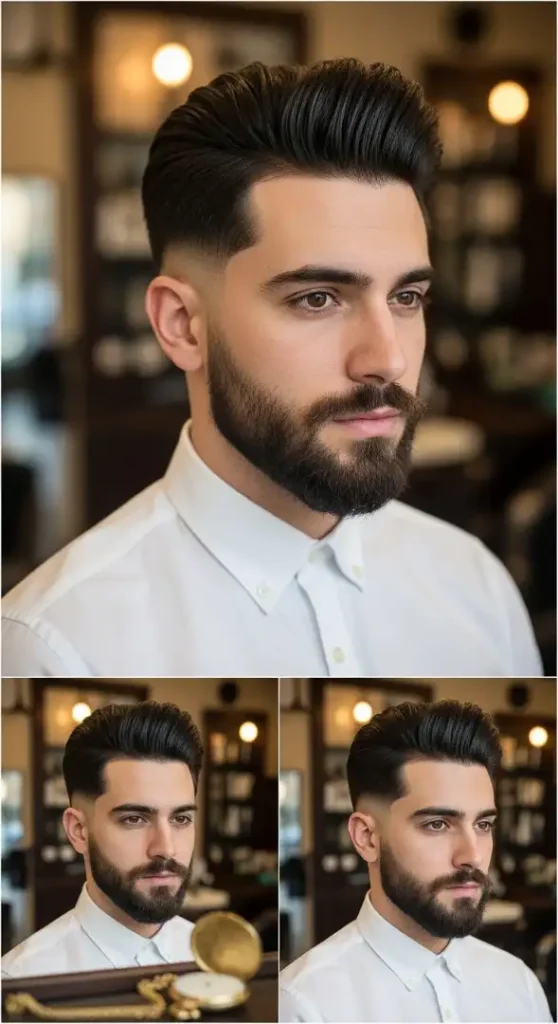
Best Face Shapes for This Style
The low fade with a slicked-back top is an exceptional choice for men with Square and Oblong face shapes. The square face benefits because the low fade preserves width through the sides while the upward visual line of the combed-back hair adds perceived height — creating a balanced rectangular proportion that photographers and stylists chase. For Oblong faces, the dense top volume gives the illusion of width without the fade cutting too sharply at the temples. This style is NOT ideal for men with Heart-shaped faces, as the wide forehead combined with a tight side fade can over-emphasize the upper head — a medium fade would serve them better.
Grooming Kit
Clippers: Wahl Magic Clip Cordless for body work; Andis Master for precision fade blending.
Trimmer/Outliner: Andis T-Outliner for hairline cleanup and detail work around the ears.
Finishing: Kent Handmade comb (model 20T) for daily slick-backs; Denman D3 brush for initial styling.
Product: Layrite Superhold Pomade — apply a dime-sized amount to damp hair, comb straight back. For a matte finish alternative, Suavecito Matte Pomade gives control without mirror-shine. Refresh mid-day with two sprays of Davines Sea Salt Spray at the roots.
Maintenance Level
MEDIUM. This style requires a barber visit every 3–4 weeks to keep the low fade crisp and the neckline shaped. Daily styling takes approximately 4–6 minutes: apply product to towel-dried hair, comb back, use a medium-heat blow-dryer on low speed for 90 seconds to set the direction, finish with a fine-tooth comb pass. No complex routine — but skipping product leaves the top looking flat and undefined.
Barber Talk — The Exact Script
Say this word-for-word in the chair:
“I want a low fade starting just above the ear — fade it down to a zero at the skin, nothing higher than the temple. Keep the top at about two and a half inches, combed back, no hard part. Use a number three on the sides just above the fade zone. Clean up the neckline with a straight line — no rounded neckline. If I have any beard growth, blend the sideburns into the fade with a one guard so there’s no harsh line. Finish with a scissor-over-comb pass on the top to remove any bulk.”
If you think The Clean Gentleman suits your style, wait until you see what Style 2 does with a two-angle view and a low fade taken to a completely different personality.
What is a low fade haircut and how is it different from a high fade?
A low fade haircut begins tapering at the lowest point of the head — just above the ear and at the natural hairline near the neck. A high fade starts much higher, often at the temples or above. The low fade gives a cleaner, more subtle look that works in both professional and casual settings, while a high fade is more dramatic and bold.
Which face shape suits a low fade haircut best?
A low fade suits Square, Oval, and Oblong face shapes best. The subtle taper preserves natural width at the sides, which prevents the exaggerated length effect a high fade creates. Men with Round faces should pair a low fade with added height on top — like a quiff or comb-back — to elongate their face shape.
How often should I get a low fade touched up at the barber?
A low fade needs a touch-up every 3 to 4 weeks to stay looking sharp. Because the fade sits lower, hair regrowth is less dramatic than with a high or skin fade — meaning you get an extra few days before it visibly grows out. If you keep your sides very tight (zero or skin), visit every 2–3 weeks.
What products work best for styling a low fade with a combed-back top?
Layrite Superhold Pomade or American Crew Forming Cream are the top picks. Apply to damp hair, comb straight back, and blow-dry on a low setting. For a natural matte finish, Suavecito Matte Pomade holds well without greasiness. Avoid heavy waxes on fine hair — they weigh the top down and create a flat, lifeless look.
2 of 10 — The Urban Texturist
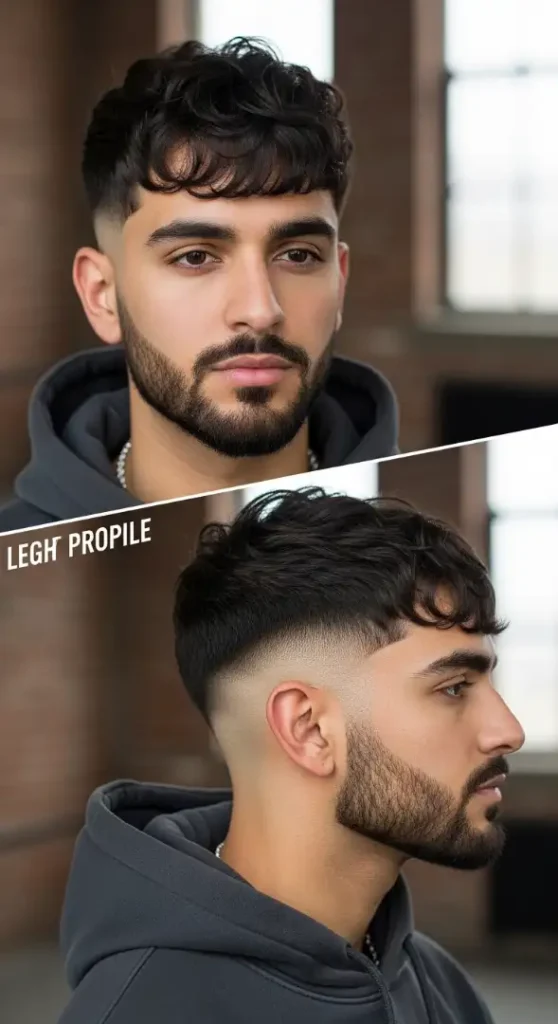
Best Face Shapes for This Style
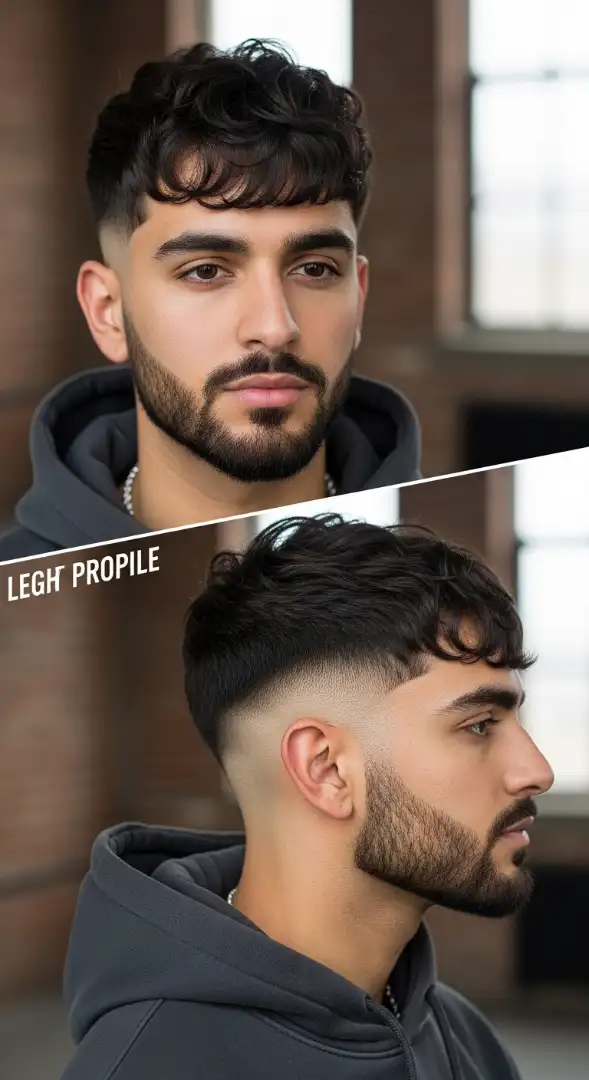
The textured crop with a low fade is ideally designed for men with Oval and Diamond face shapes. The Oval face benefits from this cut universally — the balanced proportions of an oval allow nearly any texture and fade height to work harmoniously. The Diamond face, with its wide cheekbones and narrower forehead and jaw, gains visual balance from the textured irregular fringe, which adds perceived width to the upper face while the low fade keeps the sides sleek. Men with Round faces can absolutely wear this style but should request the barber to keep extra length on the fringe and push it slightly upward or forward — creating vertical visual interest. This style is NOT recommended for men with very fine, thin hair who want full-looking texture; without natural wave or density, the crop top can look sparse and flat, making a textured quiff or comb-over a stronger choice.
Grooming Kit
Clippers: Wahl Senior Cordless with a #1.5 attachment for the fade zone; Oster Fast Feed for side blending.
Trimmer/Outliner: BaByliss Pro FX787 for cheek line definition and ear outline cleanup.
Finishing: Denman D14 styling brush for pushing the fringe into shape while blow-drying; a wide-tooth Kent comb for detangling wet hair before styling.
Product: American Crew Fiber — apply a pea-sized amount to towel-dried hair, work through fingertips, push the fringe forward and squeeze upward at the crown for texture. For extra separation, follow with a light mist of Got2b Volumaniac spray from underneath the fringe. Beard maintenance: Beardbrand Tree Ranger Beard Oil — 3 drops massaged into the cheek line and chin area daily to keep definition sharp and skin healthy.
Maintenance Level
MEDIUM. Barber visit every 3 weeks is ideal for keeping the fade crisp and the crop shape defined. The textured top, however, is genuinely low-maintenance day-to-day — daily styling takes 3–4 minutes: run American Crew Fiber through damp hair, use fingers to push and separate, quick blast of low-heat air and done. Men who travel or work in humidity will appreciate that this style bounces back even if it gets slightly dishevelled — the wavy texture naturally re-forms. If you skip product entirely, the crop still reads as intentional because of the natural wave. One real constraint: if you go beyond 4 weeks without a trim, the sides lose the fade definition and the whole look becomes overgrown.
Barber Talk — The Exact Script
Say this in the chair:
“I want a textured crop with a low fade. Fade starts just above the ear — take it down to zero at the skin at the bottom, blend it up with a one and then a two guard before hitting natural length at the temple. On the top, keep it at about two inches in length — I want it choppy and textured, not blunt cut. Use scissor-over-comb or a texturizing razor on the top to break up the weight. For the fringe, cut it forward and slightly irregular — no straight-across fringe. My beard needs a defined cheek line at forty-five degrees and a clean neckline. Blend the sideburns into the fade with a half-guard so there’s no hard stop.”
If The Urban Texturist is giving you the energy you need, you’ll want to see Style 3 next — a three-angle breakdown of a low fade carried into a completely different aesthetic universe.
FAQs
What is a textured crop with a low fade?
A textured crop with a low fade combines a short, choppy top — where the hair is cut with intentional irregularity to create texture and movement — with a low fade on the sides that tapers cleanly from just above the ear down to the skin. It’s one of the most popular men’s haircuts globally because it works on nearly every hair texture from wavy to coily.
How do I style a textured crop with wavy hair at home?
Apply a fingertip-sized amount of American Crew Fiber or a light matte clay to damp hair. Work it through with your hands, separating sections and pushing the fringe forward or upward. Blow-dry with a diffuser or low-heat air from underneath for 60 seconds to set the wave and lift the root. Avoid combs — fingers give this style its signature organic texture.
Does a low fade textured crop look good on men with thick hair?
Yes — thick hair is actually ideal for a textured crop because natural density creates the volume and separation the style requires. The barber will use a razor or texturizing scissors to remove bulk from the top while keeping length, preventing the mushroom-top effect that thick hair can create. Request a point-cut or slide-cut technique specifically.
How long does a textured crop with a low fade last before it needs a trim?
Expect 3 weeks of sharp, well-defined appearance before the fade grows noticeably. By week 4, the sides begin to lose their tapered clarity. The top can last 4–5 weeks before the shape blurs. If you keep tight to a 3-week schedule, you’ll always look freshly cut.
3 of 10 — The Executive Edge
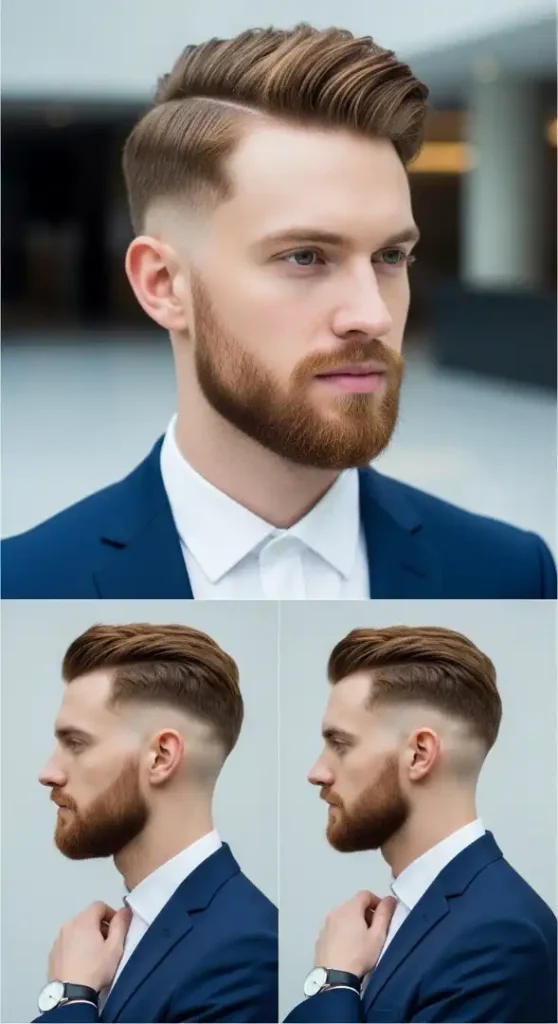
Best Face Shapes for This Style
The hard side part with a low skin fade is one of the most face-shape-specific cuts in the portfolio of classic men’s haircuts. It is best suited for Diamond and Oval faces. The Diamond face — widest at the cheekbones, narrower at the forehead and jaw — benefits from the side part because it visually redistributes perceived width: the swept-over top creates a new dominant diagonal line across the face, drawing attention away from the cheekbone width. The Oval face simply pairs well with everything, and the hard part adds structured elegance that elevates this naturally balanced shape. This style actively works AGAINST men with Round faces — the side part’s strong horizontal line at the temple echoes and reinforces roundness rather than combating it. Men with Round faces should opt for a centre part or a natural pushed-back style instead.
Grooming Kit
Clippers: Andis Master (corded) for precision on the hard part and skin fade — this clipper’s close-cutting blade has no peer for detail work. Wahl Senior for side blending.
Trimmer/Outliner: Andis Slimline Pro Li for hard part cutting and sideburn shaping with surgical precision.
Finishing: Kent Handmade 20T fine-tooth comb — essential for the hard part; a Mason Pearson boar bristle brush for smoothing the comb-over into position.
Product: Layrite Superhold Pomade for a high-gloss professional finish — apply a nickel-sized amount to dry hair, comb straight into position, reinforce the part with the fine-tooth comb. For boardroom-appropriate matte finish, Hanz de Fuko Claymation holds all day without reflecting under fluorescent office light.
Maintenance Level
HIGH. This is genuinely a high-maintenance style for professional environments. Barber visits every 2–3 weeks are non-negotiable — the skin fade grows in quickly and within 10 days begins to show shadow, and the hard part loses its sharpness. Daily styling takes 5–7 minutes: apply product to dry hair (NOT damp — damp hair will soften the part line), use a fine-tooth comb to establish the part precisely, brush the comb-over into place, finish with a light mist of strong-hold hairspray like L’Oreal Elnett Satin to lock the part line through a full workday. This style is NOT ideal for men who travel frequently without their full grooming kit or who work in environments where water exposure is regular.
Barber Talk — The Exact Script
Say this exactly:
“I want a low skin fade on the sides — take it down to zero at the bottom, starting just above the ear. Fade it up through a half and a one guard to natural density at the temple. I want a hard part on the left side — use the outliner to cut a clean parting line. On top, keep the length at around two and a half inches, comb it over to the right with a natural lay — no pomp, I want it flat and clean. Taper the neckline into a straight line and clean up the sideburn definition. The right side should mirror the fade of the left.”
Style 3 delivered the boardroom look — Style 4’s four-angle breakdown takes the low fade in a direction that’s anything but corporate.
FAQs
What is a hard part haircut with a low fade?
A hard part is a sharply cut parting line in the hair — created with an outliner or trimmer rather than just a comb — that divides the top from the side or creates a precise parting through the styled section. Combined with a low fade, it gives a highly structured, professional look. The hard part lasts longer than a natural part because it’s literally cut into the hair.
Is a low skin fade appropriate for a professional office environment?
Yes — a low skin fade is one of the most workplace-appropriate fade styles available. Because the taper starts low (just above the ear rather than at the temple), the overall silhouette remains conservative and polished. It avoids the aggressive visual of a high fade while still demonstrating grooming precision. Law offices, finance roles, and corporate settings all suit the low skin fade.
How do I stop my hard part from disappearing after a few days?
The hard part fades as hair grows back into the shaved line — this is natural. To extend it at home, use an outliner trimmer (Andis T-Outliner or BaByliss Pro FX787) and re-cut the part every 5–6 days, following the natural direction of the original cut. Apply a small amount of pomade along the part before re-cutting to make the line clearly visible.
What is the best pomade for a side part low fade?
Layrite Superhold Pomade is the industry standard for high-gloss side parts — it gives a firm all-day hold with a water-soluble formula that washes out easily. For a matte, natural finish, Hanz de Fuko Claymation is the barber community’s favourite: medium-high hold, zero shine, and reshapeable throughout the day. Avoid wax-based products for hard parts as they create a heavy, muddy appearance.
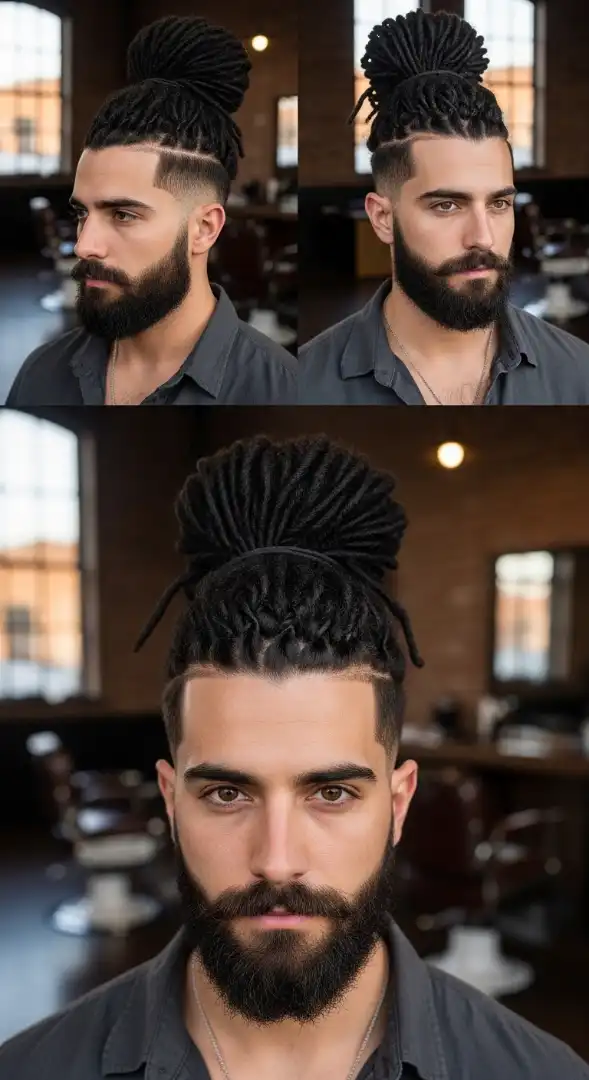
4 of 10 — The Street Sovereign
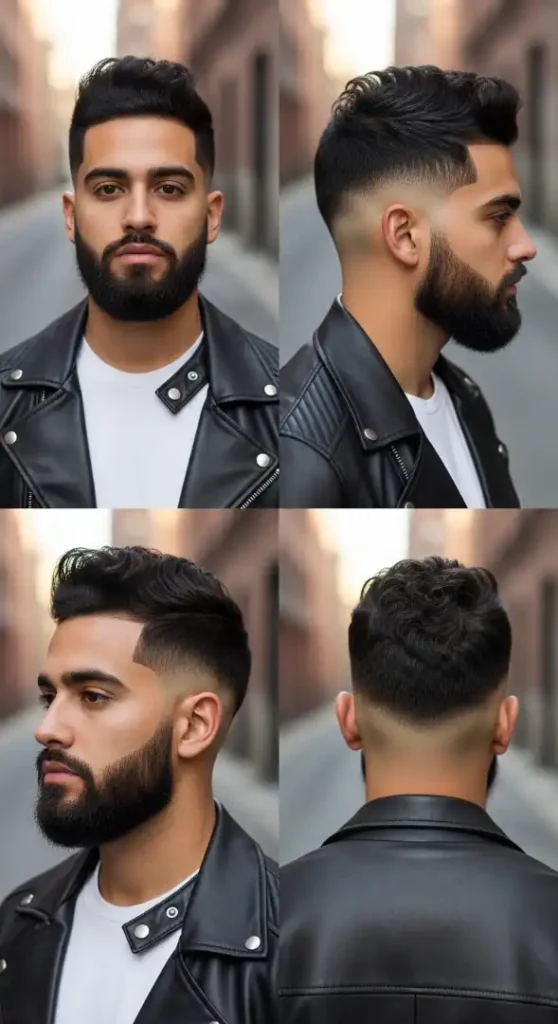
Best Face Shapes for This Style
The low fade with a full beard is one of the most powerful face-shaping tools available in men’s grooming — but it must be matched to the correct face shape to reach its potential. For Round faces, this combination is transformative: the low fade removes bulk from the sides while the full beard adds vertical length to the lower face, effectively creating the appearance of an Oval face. This is precisely why so many barbers recommend beard growth to round-faced clients before recommending a high skin fade. Diamond faces benefit because the beard softens the strong angularity of the lower face while the fade preserves the naturally striking cheekbone width. Oval faces are universally suited. The one shape where care is needed is Heart: a full beard on a heart face can create a bottom-heavy appearance, so the beard should be kept shorter at the chin and fuller at the sides if worn with a low fade.
Grooming Kit
Clippers: Wahl Magic Clip Cordless for fade blending; Andis Master corded for crisp beard outlines and neckline.
Trimmer/Outliner: Andis T-Outliner (industry gold standard) for beard cheek line definition, mustache shaping, and skin fade cleanup.
Finishing: Boar bristle beard brush (Zeus brand Firm Natural Boar Bristle Brush) for training beard direction and distributing beard oil; a wide-tooth comb for the top coily section.
Product (Hair): SheaMoisture Curl Enhancing Smoothie — apply to damp coily hair, scrunch upward, air dry for natural definition, or diffuse for 3 minutes for lift at the crown. Product (Beard): Beardbrand Utility Balm for shaping and hold; Jack Black Beard Oil (3 drops, warmed in palms) daily to prevent dry skin beneath the beard and maintain natural beard gloss without greasiness.
Maintenance Level
HIGH. This is a high-investment style. The fade requires a barber visit every 2–3 weeks because coily hair texture grows and expands more visibly than straight hair — within 2 weeks the sides show significant growth. The beard requires daily management: morning application of beard oil, nightly brush, and a weekly outline cleanup with an outliner trimmer at home. Total daily grooming: 6–8 minutes. If you skip beard oil for 3+ days with coily beard hair, the beard begins to look dry and unshapely — the investment in a quality beard oil routine is non-negotiable for this style. This look is NOT recommended for men who want something truly maintenance-free.
Barber Talk — The Exact Script
Use these exact words:
“I want a low fade — start the fade just above the ear and take it down to zero at the skin at the bottom. Use a one guard to blend up, then a two, then natural. I have coily hair on top so I want you to keep the top at about two to two and a half inches — natural coily shape, just shape it to remove any bulk that’s pushing out to the sides. Do NOT pick the top out, just shape it. For the beard, define the cheek line clean at about forty-five degrees from the sideburn down to the mustache corner. Keep the neckline of the beard at one finger-width above the Adam’s apple — round line, not squared. Blend the sideburn fade into the beard so there’s no hard stop between the skin fade and where the beard starts.”
Style 4 brought urban power — Style 5 shifts to a single-panel statement with a completely different energy and model aesthetic.
FAQs
How do you blend a low fade into a beard?
Blending a low fade into a beard requires the barber to use decreasing guard sizes as they move from the beard hair toward the faded area. Typically: the natural beard density starts at the cheek, transitions through a 2 and 1.5 guard, then a 1, then a half guard, then zero as it meets the skin fade below the ear. The goal is a shadow-free, seamless gradient from full beard to skin — no hard line.
What is the best low fade style for men with coily or natural hair?
For coily or natural hair, a low taper fade (rather than a skin fade) often produces the cleanest result because it respects the natural hair texture and avoids the jarring contrast of skin against tight coils. A low drop fade is another excellent option — it follows the head’s natural curve behind the ear, giving a clean outline while keeping the sides looking full rather than shaved-in.
Does a full beard make a round face look longer?
Yes — a full beard on a Round face is one of the most effective optical illusions in men’s grooming. By adding vertical density to the chin and lower face, the beard draws the eye downward, elongating the face’s perceived shape. Pairing this with a low to mid fade on the sides further reduces perceived width, amplifying the lengthening effect.
How often should I trim my beard when wearing a low fade?
The beard outline — cheek line and neckline — should be touched up every 5–7 days to stay sharp. The body of the beard can go 10–14 days between trims depending on growth speed. If you’re maintaining this at home between barber visits, invest in an Andis T-Outliner and practice the cheek-line angle — once you’ve mapped your natural best angle, it takes under 3 minutes to maintain.
5 of 10 — The Roman Caesar
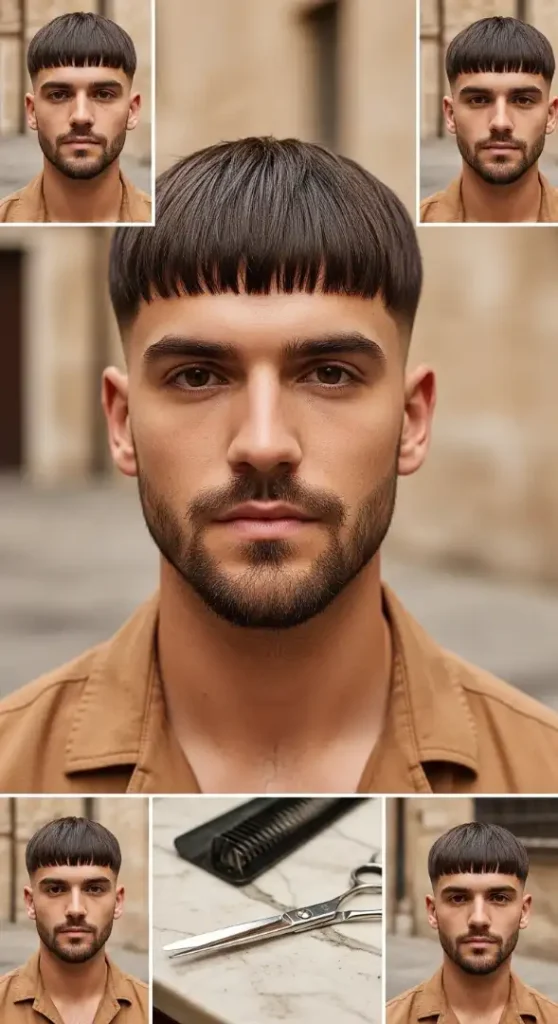
Best Face Shapes for This Style
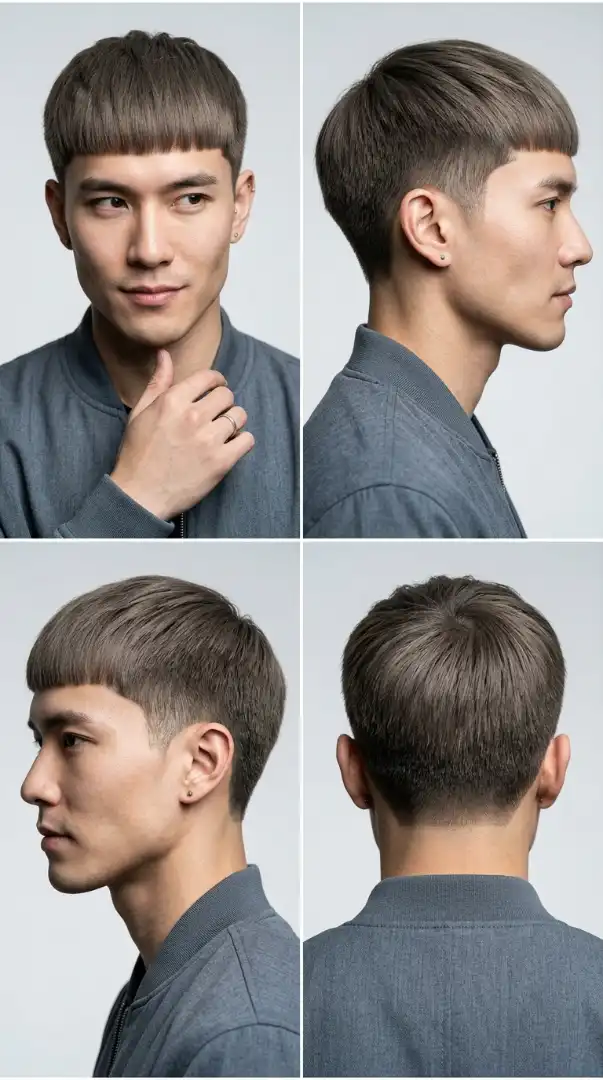
The Caesar cut with a low fade is a genuinely face-shape-specific haircut — it performs best on Oval and Round faces. For Oval faces, the horizontal fringe adds a classic structured frame to an already balanced face. The fringe lands across the forehead and draws a clean visual horizon, adding a sense of intentional style without requiring extreme side-taking from the fade. For Round faces, the Caesar fringe is surprisingly effective: the horizontal line of the fringe creates a visual emphasis on the forehead’s width, but when paired with a low-to-mid fade that reduces side bulk, the overall effect is a more elongated, structured face. What makes this work for Round faces is the contrast — the controlled horizontal fringe at the top counterbalances the curved jaw below. This style is generally NOT recommended for men with Heart-shaped faces — the wide forehead plus a strong horizontal fringe creates an even heavier top-heavy appearance.
Grooming Kit
Clippers: Wahl Professional 5-Star Series Magic Clip for body work and fade blending. The consistency of this clipper on dense straight hair is exceptional.
Trimmer/Outliner: BaByliss Pro FX Boost+ for the neckline and fringe base cleanup.
Finishing: Denman D4 paddle brush for straightening the fringe during blow-drying — this gets the horizontal lay perfectly flat. Kent fine-tooth comb for the fringe line.
Product: American Crew Pomade (medium hold, high shine) — apply a small amount to dry hair, comb straight forward, blow-dry the fringe downward with a flat brush simultaneously pressing the fringe flat against the forehead. This creates the dense, flat Caesar fringe effect. For a less shiny finish, Bumble and Bumble Sumo Tech gives the same hold with a matte appearance that works better in daylight settings.
Maintenance Level
MEDIUM. The Caesar fringe requires a barber’s precision scissors to maintain the horizontal line — at-home trimming risks an uneven, choppy fringe that looks unprofessional. Barber visits every 3 weeks are needed. The fringe grows forward and downward simultaneously, so after week 3 it begins to creep below the eyebrows and loses its clean horizontal edge. Daily styling takes 4–5 minutes: apply product, comb forward, 60-second blow-dry pass. Because the fringe is the focal point, a day without product leaves it looking lank and flat in an unflattering way. This is NOT a wash-and-go style despite its apparently simple shape.
Barber Talk — The Exact Script
Say this word-for-word:
“I want a Caesar fringe — cut the top straight across in a horizontal fringe that lands halfway between my hairline and my eyebrows. I don’t want it right at the brow — keep it higher, around two finger-widths above the brow. The fringe should be dense and slightly layered — not blunt-cut straight, but close to straight with a little softness at the very edge. On the sides I want a low fade starting just above the ear, down to a zero at the skin. Leave the top length around one and a half to two inches — just enough to comb forward. Clean up the neckline and define the goatee outline if you can.”
The Roman Caesar brings old-world elegance — Style 6 goes completely the other direction with a two-panel cinematic dark editorial that’s all attitude.
FAQs
What is a Caesar haircut with a low fade?
A Caesar haircut features a short, horizontally cut fringe that lies flat across the forehead — named after Julius Caesar’s iconic style. Combined with a low fade, where the sides taper down cleanly from just above the ear, the result is a structured, clean-looking cut with a distinctly modern Italian or European aesthetic. It suits dense, straight-to-wavy hair best.
Is a Caesar cut with a low fade professional enough for an office?
Yes — the Caesar with a low fade is one of the more conservative modern cuts. The fringe is short and controlled, the sides are neatly faded, and the overall silhouette is clean and intentional. It avoids the visual drama of high fades or extreme styles, making it appropriate for professional environments including office roles, client-facing positions, and formal events.
How do I keep a Caesar fringe lying flat?
Apply a medium-hold pomade or cream to dry hair, comb the fringe straight forward, then blow-dry with a flat brush pressing the fringe flat against the forehead. The heat sets the direction. A light finishing spray locks it in place. Avoid applying product to wet hair — it reduces hold and allows the fringe to lift as it dries. American Crew Pomade or Kevin Murphy Easy Rider are ideal.
How is a Caesar cut different from a French crop?
Both feature a short fringe, but the Caesar fringe lies completely flat and horizontal — no movement or texture. The French crop has a textured, slightly disconnected fringe that may be pushed forward or swept to a subtle angle. The French crop is a more modern, casual style; the Caesar is more classic and structured. Both pair well with low fades.
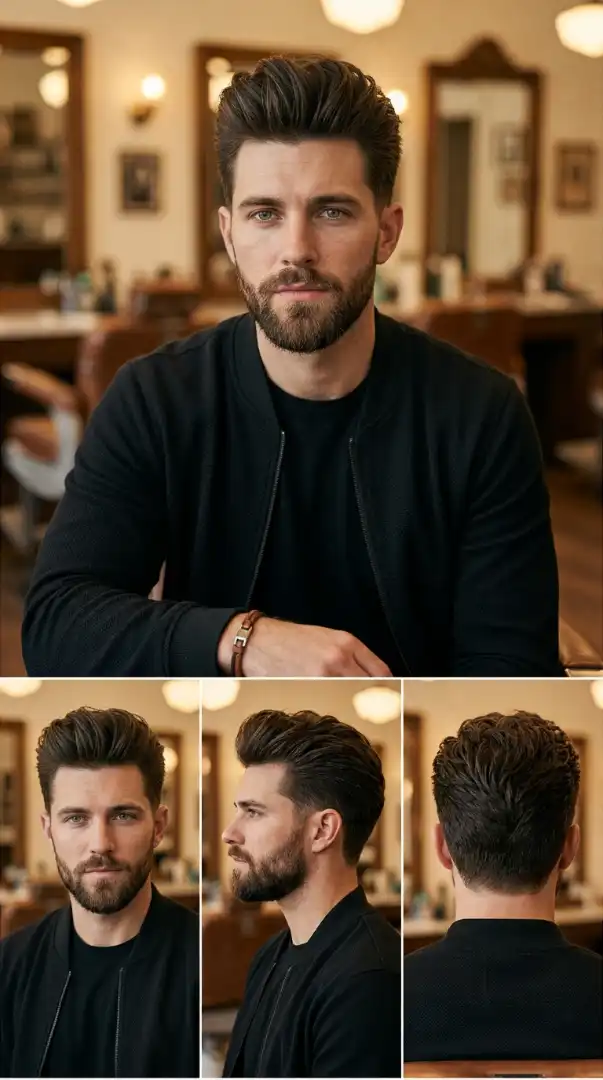
6 of 10 — The Coastal Quiff
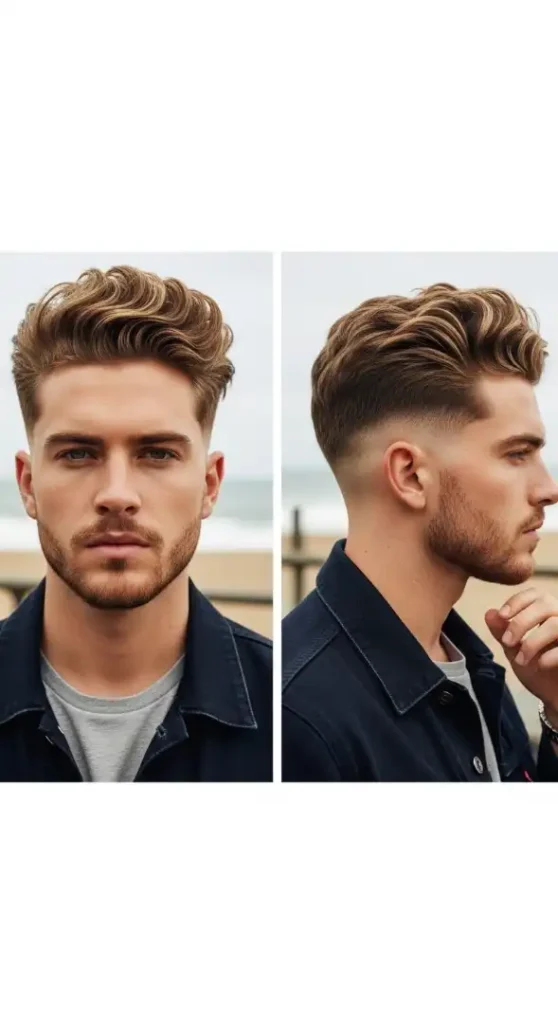
Best Face Shapes for This Style
The quiff with a low fade is specifically engineered for Oblong and Heart face shapes and delivers exceptional results. For the Oblong face — defined by its longer vertical dimension and relatively consistent width from forehead to jaw — the quiff’s volume at the crown can seem counterintuitive. However, the key is HOW the quiff is styled: a forward-swept quiff on an Oblong face actually adds perceived width at the front of the crown, visually shortening the overall face. The low fade reinforces this by removing bulk from the sides without exaggerating the face’s length the way a high fade would. For Heart faces, the quiff draws attention upward to the wider forehead area, which is the strong feature, while the clean sides of the low fade slim the lower face. Square faces also suit this well when the quiff is kept loose and wave-forward rather than aggressively lifted. This style should be avoided by men with very fine hair on top who cannot generate the volume the quiff requires without heavy product, which creates a stiff, artificial appearance.
Grooming Kit
Clippers: Wahl Magic Clip Cordless — the go-to for fade blending across all hair textures, including the light, fine Caucasian hair types most associated with this style.
Trimmer/Outliner: BaByliss Pro FX Boost+ for neckline definition and sideburn cleanup.
Finishing: Mason Pearson Handy Bristle & Nylon brush — the combination of boar bristle and nylon pulls the quiff forward and upward simultaneously. Widely considered the best brush for quiff shaping.
Product: Reuzel Blue Pomade (water-based, medium hold, medium shine) — apply a nickel-sized amount to damp hair, push from the back forward and upward, blow-dry with a medium round brush lifting the quiff section while applying heat. For a matte finish with stronger hold, Layrite Matte Cream is excellent for coastal or humid environments where regular pomade can soften and lose hold by midday.
Maintenance Level
MEDIUM-HIGH. The quiff’s volume is its defining feature — and volume requires daily effort. Barber visits every 3–4 weeks for fade maintenance. Daily styling: 5–7 minutes. The technique matters: apply product to towel-dried hair, not soaking wet hair (excess moisture reduces hold). Use a round brush while blow-drying, constantly pulling the quiff forward and upward in an arching motion. Without blow-drying, the quiff collapses flat. This is not a wake-and-go style. Men in humid or coastal environments should use a medium-hold wax or cream-pomade blend rather than water-based pomade, which can dissolve in humidity. A light finishing spray like Paul Mitchell Extra Body locks the volume in place.
Barber Talk — The Exact Script
Say exactly:
“I want a low fade — starts just above the ear, takes it down to zero skin, blends up through a one and two to natural. On the top I want the quiff shape preserved — keep the length at around two to two and a half inches, maybe a bit longer at the front piece for the quiff lift. Texturize the top with scissors or a razor to remove bulk without reducing length — I want movement, not weight. The fringe should fall forward naturally with a slight right lean when I push it. The neckline should be tapered — not a squared box, a clean tapered line that follows my natural neck shape. Leave the sideburns defined, about mid-ear length.”
The Coastal Quiff brings relaxed European confidence — Style 7’s three angles take the low fade into dark cinematic territory with a completely different mood and model.
FAQs
What is a low fade quiff haircut?
A low fade quiff combines the classic quiff — a voluminous, forward-swept top section — with a low fade on the sides that begins just above the ear and tapers to the skin. The result is a balanced style: lift and drama on top, clean precision on the sides. It’s one of the most versatile men’s haircut combinations, working across casual, smart-casual, and even business-casual environments.
How do I get volume in a quiff with fine hair?
Volume in a quiff with fine hair requires the right product and technique, not more hair. Apply Reuzel Blue Pomade or Kenra Platinum Silkening Mist to damp hair, then blow-dry with a round brush, pulling the front section upward and forward. The heat and directional airflow create temporary structure that holds the quiff up. Finish with a light-hold hairspray from underneath the quiff for lasting lift.
What is the difference between a quiff and a pompadour?
A quiff sweeps forward over the forehead — the hair is pushed toward the face with upward volume at the front. A pompadour pushes backward — the hair sweeps up and over toward the crown, away from the face. The quiff tends to be more modern and relaxed; the pompadour is more retro and structured. Both pair excellently with low fades.
How often should I get a quiff with a low fade trimmed?
Every 3–4 weeks for the fade to remain clean. The quiff’s top section can go 4–5 weeks before losing shape, but the sides’ low fade will start looking grown-out by week 3–4. If your priority is always-sharp sides, visit every 2.5 weeks. If the top shape is your main focus, every 3.5 weeks is the natural maintenance cycle.
7 of 10 — The Phantom Taper
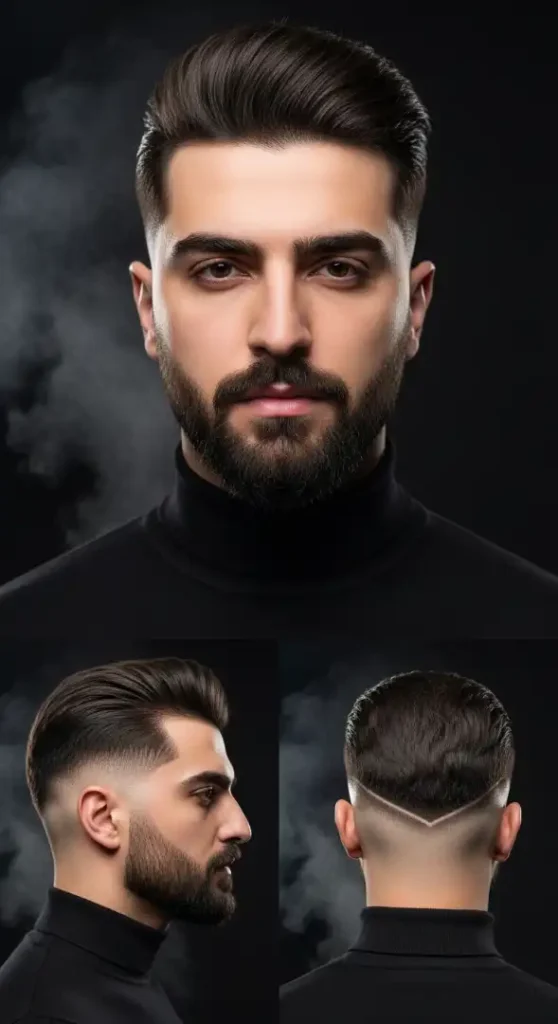
Best Face Shapes for This Style
The swept-back style with a low fade is one of the most powerful choices for Heart-shaped and Square-faced men. For Heart faces — where the forehead is wider and the jaw tapers to a narrower point — sweeping the hair back and away from the forehead is strategically sound: it removes volume from the top of the head, reducing the perceived width of the forehead and creating a visual balance that draws the eye toward the jaw. The low fade reinforces this by keeping the sides neat without adding the aggressive narrowing effect of a high fade, which could make a heart face appear triangular. Square faces benefit because the swept-back top gives a naturally strong, masculine framing to the jaw’s angular lines — the clean backward direction channels attention to the jaw rather than the forehead. Oval faces are universally compatible. This style is NOT advised for Oblong faces — sweeping the hair back on an already-long face amplifies vertical length and creates an unbalanced, stretched appearance.
Grooming Kit
Clippers: Wahl Professional 5-Star Cordless Magic Clip — consistent, reliable performance on dense straight hair. Fade blending with this clipper on Turkish/Middle Eastern hair textures (typically dense and straight) is smooth and even.
Trimmer/Outliner: Andis T-Outliner — essential for the angular cheek line definition and neckline shaping.
Finishing: Kent Handmade rectangular comb 20T for setting the back direction; a natural boar bristle brush from ZilberHaar for smoothing and polishing the swept surface.
Product: Hanz de Fuko Quicksand for the back-swept style — this product creates textured, natural-looking hold without stiffness or shine. For a higher-gloss, more controlled finish, Murray’s Pomade (small amount, applied to dry hands rubbed together) is a barber classic for dense straight hair — gives control and sheen that works perfectly with the angular aesthetic of this style.
Maintenance Level
MEDIUM. The swept-back style requires less daily product manipulation than a quiff or fringe style, but requires precision at the barbershop. Barber visits every 3 weeks. Daily styling: 3–4 minutes. Apply product to damp or slightly towel-dried hair, push straight back from the front hairline with the palms, use a comb to smooth the surface, optional blow-dry for 45 seconds backward to reinforce direction. The angular beard cheek line requires a home trimmer touch-up every 5–6 days to stay precise. This is a genuinely manageable style for men with moderate time for grooming.
Barber Talk — The Exact Script
Say exactly this:
“I want a low fade — fade starts just above the ear, goes down to zero skin at the bottom. Blend it up through a half guard, then a one, then a one and a half before hitting natural. On the top I want a classic swept-back style — comb it all back, no part, no fringe. Keep the length at about two to two and a half inches on top. Use scissors to take out any weight that’s making it push upward — I want it to sit flat going back. For the beard, I want a clean angular cheek line — sharp forty-five degree angle from below the ear down to the mouth corner. Neckline square, one finger above the Adam’s apple. Blend the sideburn into the low fade so there’s no break between the beard and the faded section.”
Style 7’s intensity was built for the darkness — Style 8 brings a completely different energy with four panels and a warm editorial palette that feels like a luxury magazine spread.
FAQs
How do I style swept-back hair with a low fade?
Apply a medium-hold pomade or cream to damp hair, then use your palms to push hair straight backward from the front hairline. Use a comb to smooth the surface and remove any wayward direction. Blow-dry on medium heat aiming backward for 60 seconds to lock the direction. Finish with a light hold spray if needed. The key is to start at the hairline and push backward — not from the crown forward.
What face shape does a swept-back low fade suit best?
Swept-back low fades suit Heart and Square face shapes best. For Heart faces, pushing hair back reduces the visual width of the forehead. For Square faces, the backward sweep amplifies the jaw’s natural angularity and gives a confident, structured appearance. Oval faces suit this universally. Oblong faces should avoid swept-back styles as they increase perceived vertical length.
Is a swept-back hairstyle the same as a slicked-back hairstyle?
Not exactly. A slicked-back style typically implies high shine and a wet look — achieved with heavy pomades, gel, or wet-look products pressed flat to the skull. A swept-back style can range from high-gloss to matte and natural, with the hair pushed back but not necessarily pressed flat. Swept-back styles often have more natural texture and movement than a true slick-back.
Can I wear a swept-back low fade with a beard?
Absolutely — in fact, the combination is one of the most popular in men’s grooming currently. The swept-back top creates a clean, uninterrupted view of the face from the hairline down, which showcases a well-groomed beard beautifully. The low fade acts as the natural transition between the swept-back hair and the beard, creating a cohesive, fully-designed look from top to jaw.
8 of 10 — The Velvet Drop
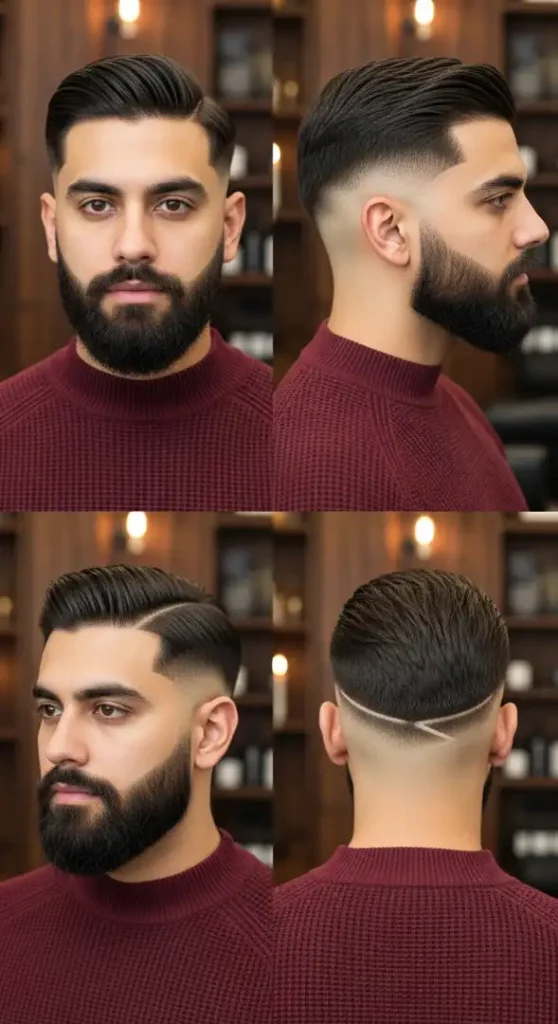
Best Face Shapes for This Style
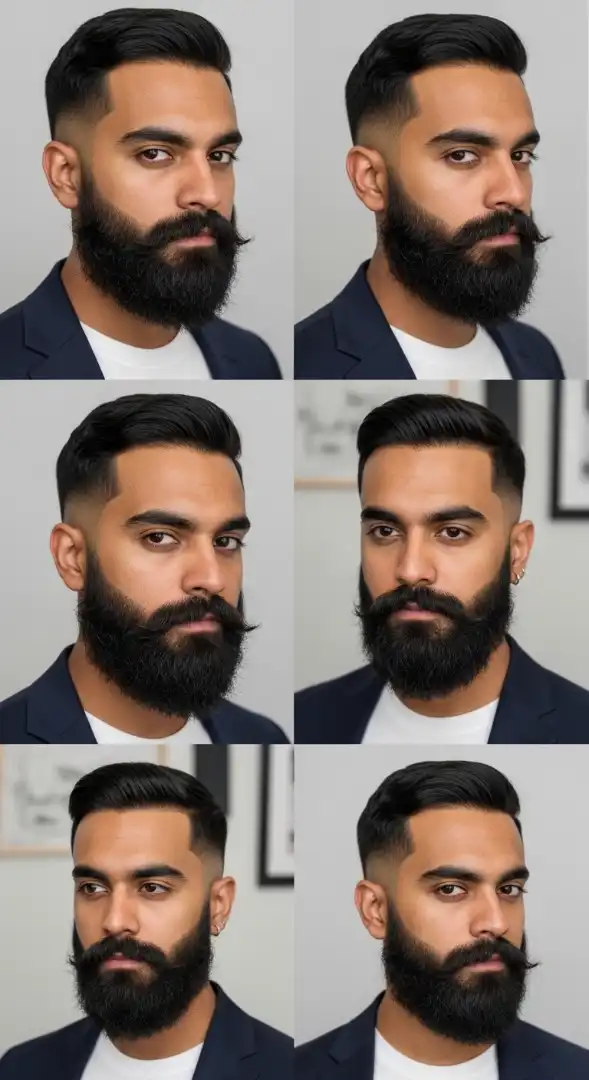
The drop fade is one of the most anatomically intelligent fade variations because it follows the natural curve of the skull rather than running in a straight line. This makes it universally more flattering than a standard low fade for most face shapes — but it particularly excels on Square and Oval faces. For Square faces, the drop fade’s curved arc softens the hard right angles of the jaw and cheekbones: the fade curves behind the ear and downward, creating a flowing line that contrasts with and therefore softens the square jaw rather than paralleling it. The side part adds structure and formality that complements the strong bone structure of a square face without looking overpowering. For Oval faces, the drop fade simply enhances an already harmonious shape. The one face shape where a drop fade needs careful execution is Round: the curved fade can reinforce the perception of roundness if taken too low — the barber should execute the drop fade as a low-drop, not a mid-drop, to avoid creating a full circle silhouette around a round face.
Grooming Kit
Clippers: Wahl Senior Cordless for the curved drop fade line — the Senior’s power and consistent blade speed handles the curved section behind the ear without pulling or skipping.
Trimmer/Outliner: BaByliss Pro FX Boost+ for neckline squared definition and beard cheek line.
Finishing: Denman D4 paddle brush for straightening the side part area during styling; Kent medium-tooth comb for the parting line.
Product: Layrite Superhold Pomade for the side part’s control and shine — apply to slightly damp hair, part with a fine-tooth Kent comb, push the dominant side over, blow-dry for 2 minutes in direction. Beard: Jack Henry Tame Beard Balm — provides light hold for shaping the medium beard into its defined outline, with a clean non-greasy finish that works well with South Asian beard textures which can trend toward coarse with a wiry edge.
Maintenance Level
MEDIUM-HIGH. The drop fade’s curved arc requires a skilled barber to execute correctly — the curve behind the ear is the key technical element and it must be symmetrical. Barber visits every 2–3 weeks are necessary. The curve behind the ear grows in faster than the rest of the fade because of the density of hair in the occipital region. Daily styling: 4–6 minutes for the side part. Beard maintenance: 5 minutes every other day for oil application and weekly outline cleanup with home trimmer. This is a well-rounded grooming commitment — not excessive, but not minimal either.
Barber Talk — The Exact Script
Use these exact words:
“I want a drop fade, not a standard straight low fade. The fade should start just above the ear on the sides and then DROP behind the ear — it should curve downward following the natural line of the head before rising back to natural density at the nape. Take the lowest point down to a zero skin. Blend through a half, a one, then a two before hitting natural. On the top I want a clean side part on the left side — not a hard part, a natural part. Keep the length at around two inches, flat and controlled. For the beard, medium length at the chin — define the cheek line at a forty-five degree angle and clean the neckline at one finger above the Adam’s apple. Blend the sideburn into the drop fade so the connection is seamless.”
The Velvet Drop brought refined warmth — Style 9 goes full street energy with a single dominant panel that stops the scroll.
FAQs
What is a drop fade haircut?
A drop fade is a variation of the standard fade where the fade line curves or drops behind the ear rather than running in a straight horizontal line across the sides of the head. This creates a more natural, flowing arc that follows the skull’s natural curvature. It’s considered a softer, more organic-looking fade compared to the straight-line low fade and tends to be more flattering on most face shapes.
What is the difference between a low fade and a drop fade?
A low fade means the fade begins at a low point on the head — just above the ear — but the line runs relatively horizontally around the sides. A drop fade describes the SHAPE of the fade line: it drops (curves downward) behind the ear before rising toward the nape. These two concepts can overlap — a low drop fade combines both, starting low AND curving behind the ear.
Is a drop fade hard to maintain?
The drop fade requires a precise barber visit every 2–3 weeks to maintain the symmetrical curve. At home, the drop fade grows in relatively evenly and doesn’t require daily touch-ups. The key maintenance is keeping the barber appointment — because the curved line is technical, home clipper touch-ups risk ruining the arc, so most men with this style leave maintenance entirely to the barber.
What hair type suits a drop fade best?
The drop fade works on all hair textures but is most visually striking on dense, straight to slightly wavy hair. For coily hair, the natural texture can soften the visual sharpness of the curved fade line — which some men prefer for a more natural look. For straight hair, the drop fade’s curve is crisp and defined. South Asian, Mediterranean, and Middle Eastern hair textures (typically dense and straight to wavy) produce some of the cleanest drop fade results.
9 of 10 — The Silver Screen
Best Face Shapes for This Style
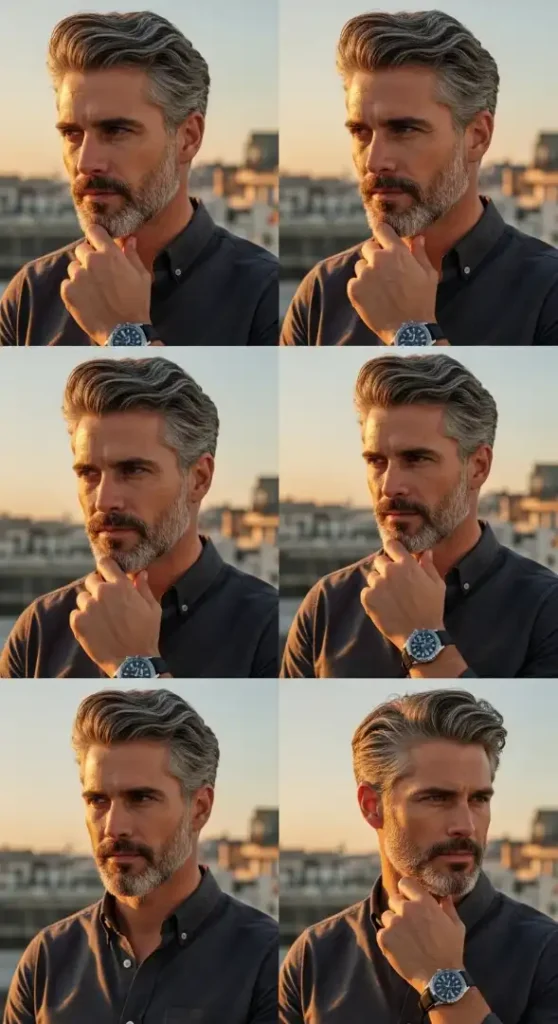
Salt-and-pepper hair with a low fade is a sophisticated, age-appropriate style that serves Oblong and Oval face shapes with particular distinction. For Oblong faces — which are longer and narrower — the natural wave and volume of the salt-and-pepper top adds visible width at the crown, addressing the face’s tendency toward vertical elongation. The low fade keeps the sides neat without reducing the side density so aggressively that the face looks even longer. The natural grey tones in the hair actually benefit Oblong faces because they scatter light and create the impression of volume across the sides — softening the narrow silhouette. Oval faces are universally compatible. Men with Round faces can wear this style but should ask the barber to build slightly more height on the top to counterbalance the face’s width. This style should be avoided if someone is attempting to create a very sharp, aggressive fade look — the nature of salt-and-pepper and grey hair is that the fade graduation appears softer and more organic because the lighter hair tones reduce the visual contrast of the fade.
Grooming Kit
Clippers: Andis Master Cordless for precision work — the Andis Master is the preferred clipper for grey and salt-and-pepper hair, which can be coarser and more wiry than pigmented hair; the precise blade alignment prevents pulling.
Trimmer/Outliner: Andis Slimline Pro Li for stubble line definition and sideburn cleanup.
Finishing: A medium-tooth comb (Kent Handmade 5T) and a natural boar bristle brush for distributing natural oils through the salt-and-pepper hair — grey hair tends to be drier due to reduced sebum production.
Product: Hanz de Fuko Quicksand — this product grips grey and coarse hair textures well, giving natural-looking texture and light hold without the waxy buildup that some pomades leave on grey hair. For high-gloss: Suavecito Original Hold gives beautiful shine that makes silver hair look striking in photographs and professional settings. Stubble care: Bevel Beard Balm — specifically formulated for coarser stubble that tends to accompany salt-and-pepper hair, preventing the dry, scratchy appearance.
Maintenance Level
MEDIUM. Grey and salt-and-pepper hair grows at the same rate as pigmented hair but requires a more attentive product routine because of its tendency to dryness. Barber visits every 3–4 weeks for fade maintenance — the silver contrast actually makes the fade look relatively acceptable even at week 4 because the light-coloured hair diffuses the grow-in contrast. Daily styling: 4–5 minutes. The wave texture in this style is naturally semi-self-managing — on humid days, the natural salt-and-pepper wave looks especially distinguished without product. A single-step daily routine of Hanz de Fuko Quicksand through dry hair is sufficient for most days.
Barber Talk — The Exact Script
Say this exactly:
“I have salt-and-pepper wavy hair and I want a low fade. Take the fade down to a zero skin just above the ear — but because of the grey, be careful with the gradient: I want a slow blend, not an aggressive one. Use a one guard very lightly through the blend zone so the salt-and-pepper texture isn’t cut too abruptly. On the top keep the natural wave — keep the length at around two to two and a half inches. Don’t straighten it or cut against the wave. Just shape it to remove bulk at the sides where it’s pushing out. Stubble cleanup: define the cheek line cleanly without going too angular — I want it defined but natural, following my actual beard growth line. Clean the neckline.”
The Silver Screen delivers distinguished maturity — Style 10 closes this collection with four angles and a premium dark glass panel overlay that brings the whole article to a standout finish.
FAQs
Do low fades work on salt and pepper or grey hair?
Yes — low fades look exceptional on salt-and-pepper and grey hair. The natural lighter tones in grey hair create a softer, more organic fade gradient that many barbers consider more sophisticated than the stark contrast of dark hair against skin. The key is requesting a graduated blend rather than an aggressive skin fade — grey hair’s natural tone variation creates a beautiful diffused taper.
What is the best hairstyle for men with salt and pepper hair?
Salt-and-pepper hair suits natural, slightly textured styles best — the wave and movement of grey hair is part of its appeal and should be embraced rather than forced flat. A low fade with a natural wavy top, a classic side part with medium hold product, or a loosely swept-back style all complement the distinguished quality of salt-and-pepper hair. Avoid extremely tight, structured styles that fight the hair’s natural wave.
Should older men with grey hair get a fade?
Absolutely — a low fade on salt-and-pepper or grey hair looks sharp, modern, and distinguished. The fade communicates active grooming attention and modern awareness, which prevents a mature man’s style from looking neglected or dated. Low fades are particularly appropriate because they’re subtle enough to suit professional and formal environments while still looking clearly intentional and current.
What products work best on grey or salt and pepper hair?
Grey hair benefits from lightweight hold products that don’t create buildup. Hanz de Fuko Quicksand, Kevin Murphy Night Rider, and Reuzel Blue Pomade are widely praised for grey hair. Avoid heavy waxes and pomades that leave residue — grey hair’s lighter colour makes product buildup more visible. Argan oil or a lightweight hair serum applied before styling helps address the natural dryness of grey hair.
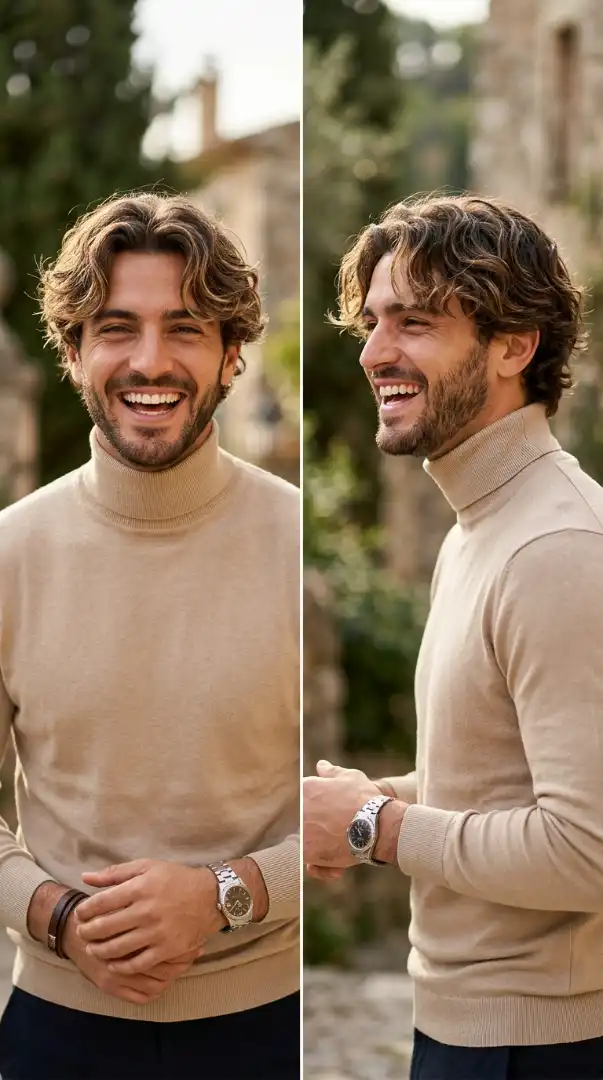
10 of 10 — The Continental Drop
Best Face Shapes for This Style
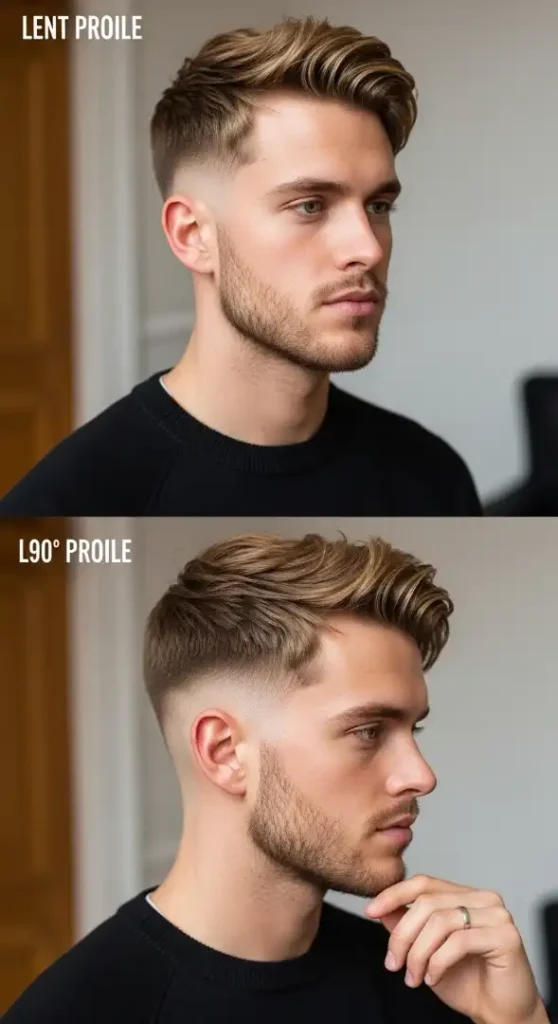
The natural wavy top with a low fade is one of the most universally flattering combinations in the entire spectrum of men’s haircuts — and it performs best when the styling is intentionally relaxed rather than over-engineered. For Oval faces (as modelled here), the natural wave and easy swept direction simply enhances the balanced proportions of the face without requiring any compensatory face-shaping work from the fade. The low fade frames the oval face cleanly from the temples down, creating a neat boundary that accentuates the face’s natural symmetry. For Square faces, this relaxed wavy style softens the jaw’s angularity — the organic wave movement contrasts with the structural face shape in a flattering way. Diamond faces benefit because the casual styling removes aggressive visual lines and replaces them with soft movement that complements the strong cheekbone width. The one note of caution is for Heart faces: the natural pushed-back direction on a heart face can create a wind-swept, slightly unbalanced appearance — heart faces typically benefit from more deliberate fringe direction or a slight forward push.
Grooming Kit
Clippers: Wahl Magic Clip Cordless — universally reliable, and particularly effective on Caucasian wavy hair which has a medium density that the Magic Clip handles flawlessly.
Trimmer/Outliner: Andis Slimline Pro Li for sideburn definition and neckline cleanup.
Finishing: A wide-tooth Tangle Teezer for detangling wavy hair when damp (prevents frizz and breakage during styling); a natural boar bristle Mason Pearson brush for finishing.
Product: Kevin Murphy Easy Rider is the go-to product for this specific look — it provides a medium-hold, low-shine finish that allows the natural wave to dominate while preventing frizz. Apply a 20-cent piece amount to damp hair, scrunch through, allow to air-dry 80%, then briefly blow-dry to shape the direction. For quick morning styling in 2 minutes: Hanz de Fuko Quicksand applied to dry hair, pushed back loosely — the texture and low-shine finish perfectly captures the effortless European quality of this style.
Maintenance Level
LOW-MEDIUM. This is genuinely one of the more relaxed styles in this collection from a daily maintenance perspective. The natural wave requires minimal manipulation and the casual direction means a slightly imperfect styling day still looks intentional. Barber visits every 3–4 weeks for the fade. Daily styling: 2–4 minutes depending on whether you air-dry or use a brief blow-dry. The natural wave does the work — your product simply needs to control frizz and add light hold to prevent the wave from going in random directions. This style is ideal for men who want to look well-groomed without a significant time investment. It IS worth noting that in high-humidity environments, wavy hair will tend to curl tighter — a light anti-humidity spray like Moroccanoil Frizz Control keeps the wave pattern consistent.
Barber Talk — The Exact Script
Say these exact words:
“I want a low fade on the sides — starts just above the ear, takes it down to zero at the skin at the bottom, blends up through a one and two to natural. Keep the transition gradual — I don’t want a hard contrast. On the top, keep the natural wave — don’t try to straighten it or cut too much length. I want two to two and a half inches on the top, and when you cut, cut with the wave direction not against it. Use point-cutting or slide-cutting to remove bulk from underneath the wave without reducing the length on top. No hard part — just let the natural wave find its direction. Neckline tapered, not a squared box. Clean up the sideburns just below mid-ear. That’s all.”
FAQs
What is the easiest low fade haircut to maintain at home?
A natural wavy top with a low fade is one of the easiest low fade styles to maintain between barber visits. The natural wave texture means daily styling requires only 2–4 minutes: apply a light hold product like Kevin Murphy Easy Rider or Hanz de Fuko Quicksand, push loosely in the preferred direction, and let the wave do the rest. The fade itself doesn’t require home maintenance — just keep your barber appointment every 3–4 weeks.
Do low fade haircuts work on wavy hair?
Yes — wavy hair and low fades are a highly compatible combination. The wave texture on the top creates natural volume and movement that makes the transition from faded sides to full top appear more organic and less stark than with straight hair. The challenge with wavy hair is controlling frizz in the top section — use anti-humidity or frizz-control products to keep the wave pattern consistent.
What is a low fade without a beard called?
A low fade without a beard is often called a clean low fade or a regular low fade. The “clean” descriptor refers to the absence of beard growth that would otherwise blend into the fade at the sideburn. Clean low fades show the full definition of the fade graduation without the visual interruption of facial hair — this makes the fade’s technical precision more visible and tends to have a slightly more polished, European-aesthetic appearance.
What is a low fade vs a taper fade?
A low fade and a taper fade are related but different techniques. A low fade starts close to the ear and graduates to zero skin — the entire area below the fade line is shaved clean. A taper fade maintains natural hair length throughout, simply decreasing in length gradually from top to sides to nape — the skin is not exposed. Tapers are more conservative and traditional; skin fades (including low skin fades) are more modern and dramatic.