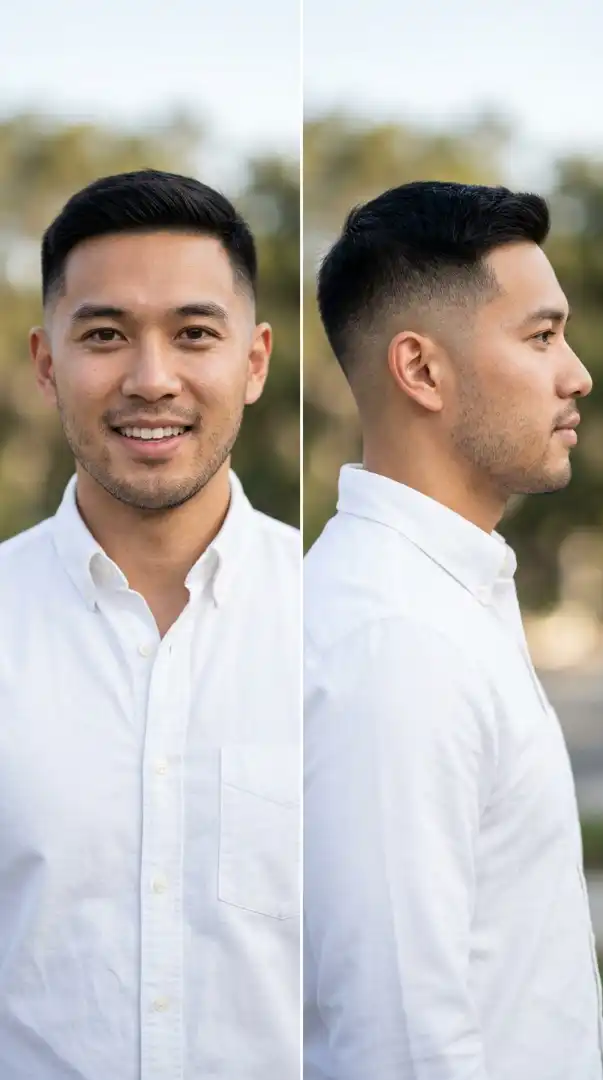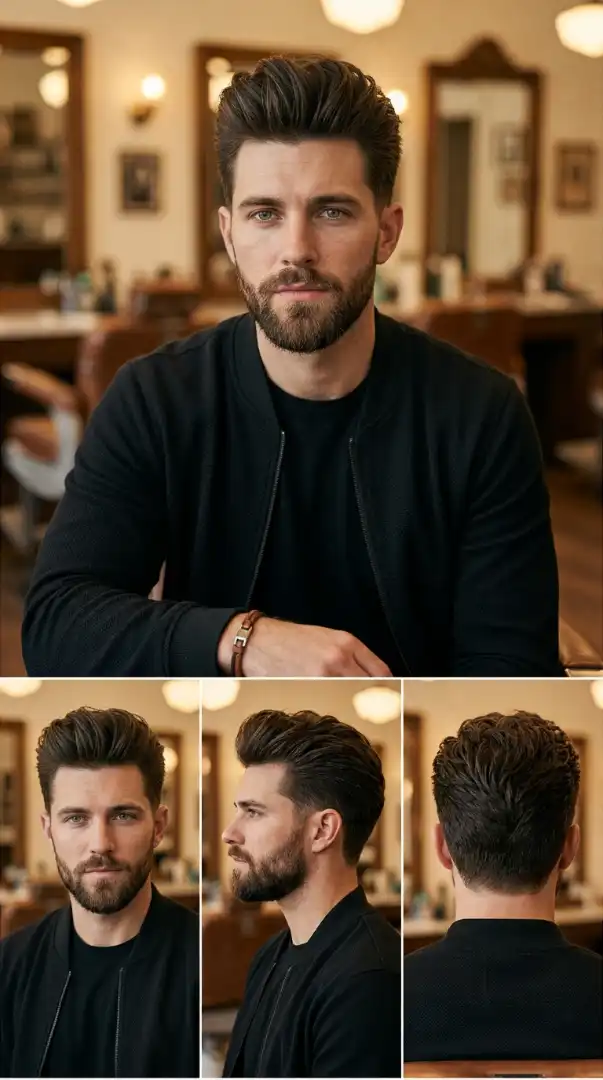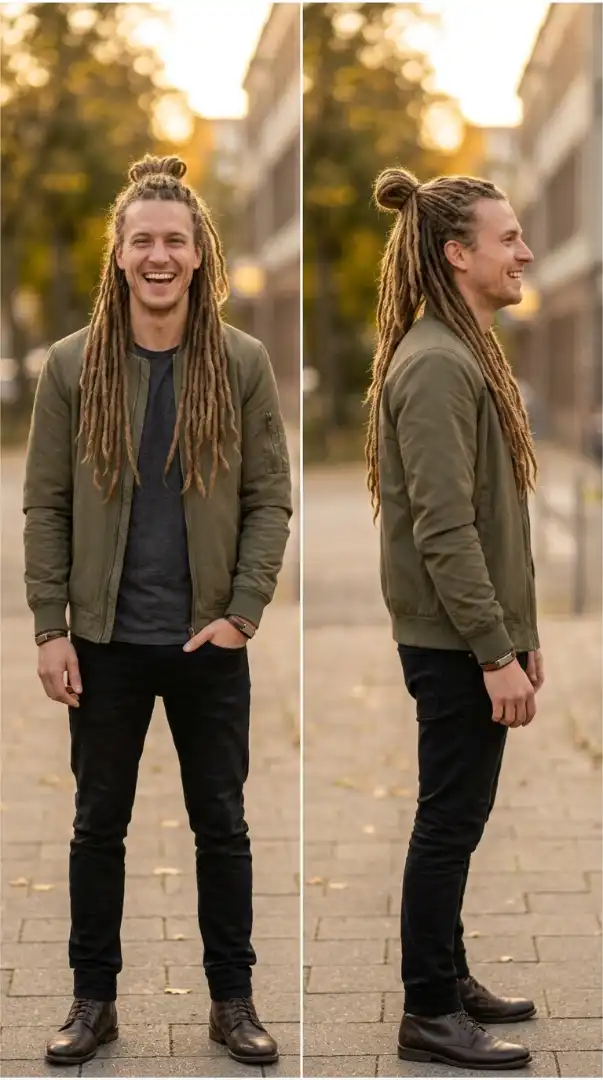
10 Trendy Taper Fade Haircuts For Men This Summer
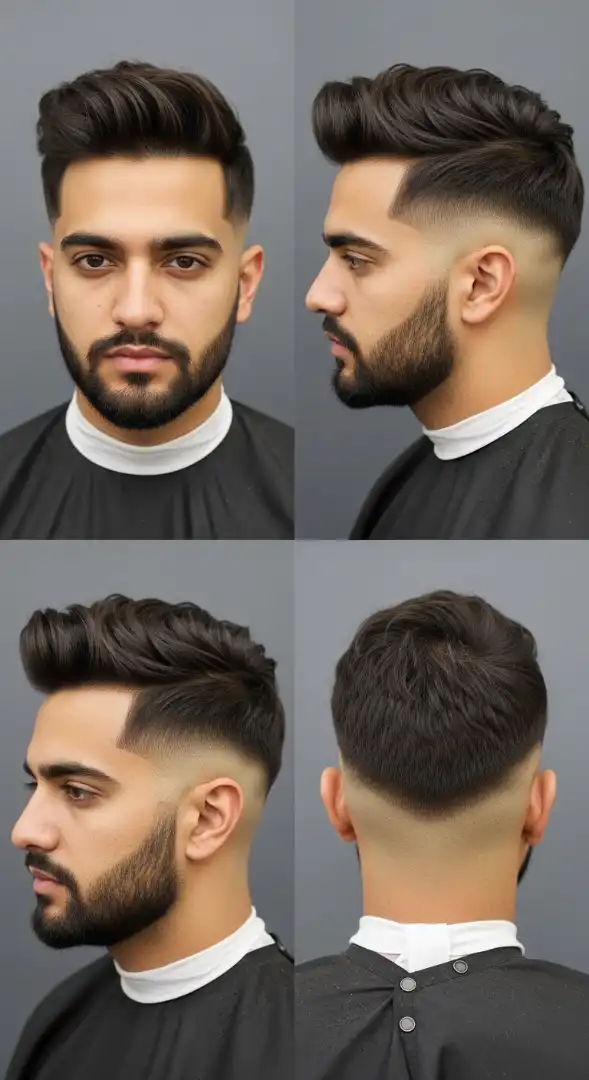
1 of 10 — The Mediterranean Sun King
FACE SHAPE MATCH
The Mediterranean Sun King was engineered for Square and Oval face shapes — the two most versatile and rewarding canvases for this cut. On a square face, the low skin fade strategically removes bulk from the widest point of the skull, just above the ears, while the volume swept backward and upward on top elongates the overall silhouette. The result is a face that reads as more oval-shaped — the ideal proportional target in men’s grooming. The swept-back wave top draws the eye vertically, which adds perceived height without adding horizontal width.
For oval-faced men, this cut simply amplifies what they already have — natural symmetry and proportion. The textured wave top adds character and movement, preventing the look from becoming too polished or flat. Round-faced men should be cautious: while a high fade would serve them better, the low fade on this cut doesn’t offer enough height contrast to significantly elongate a very round face. Oblong faces benefit most when the wave is styled with slight side volume rather than being entirely swept back, which can over-emphasize face length.
GROOMING KIT
- Clippers: Wahl Magic Clip Cordless (primary fade work, whisper-quiet motor, exceptional graduation control)
- Outliner: Andis T-Outliner (neckline shape, hairline edge-up, detail work around the ear)
- Finishing Comb: Kent 20T Handmade Comb (for distributing product through the wave top)
- Brush: Mason Pearson Boar Bristle Brush (for activating natural wave pattern without disruption)
- Styling Product: American Crew Pomade (medium hold, natural shine — apply 2 dime-sized amounts to damp hair, work through from roots to ends, then blow-dry backward using a round brush)
- Beard Product: Beardbrand Tree Ranger Beard Oil (3 drops massaged into the stubble after showering, prevents flaking and adds a subtle herbal scent)
MAINTENANCE LEVEL: Medium
- Barber visit frequency: Every 3 weeks to maintain fade crispness. The low skin fade grows out quickly and becomes a mid fade within 2-3 weeks — still wearable, but loses its precision edge.
- Daily styling time: 6-8 minutes. Shower, towel-dry to 80%, apply pomade, blow-dry with round brush for 4 minutes, finish by hand for final shape.
- Product routine: Pomade on damp hair + blow-dry = optimal wave definition. Avoid applying to completely dry hair — the wave will stiffen rather than flow.
This high-maintenance look is not ideal if you travel frequently without access to styling tools, as the wave top without a blow-dry will look flat and undefined.
THE EXACT BARBER SCRIPT
Sit down, look your barber in the eye, and say:
“I want a low skin fade — start bald at the skin, blend up with a 0.5 guard, then a 1 guard, then a 1.5 guard over about an inch and a half. Keep the fade line low, just above the natural ear crease. On top, I want about 3 inches of length — leave it long enough to sweep back. I want to keep my natural wave texture, so don’t thin it out too much. Connect the sideburns into my stubble beard naturally — no harsh disconnection line. Square the back at the nape with a straight razor, and give me a clean edge-up on the hairline. I’ll style it swept-back at home with a pomade and a blow-dryer.”
If the clean Mediterranean wave has your attention, wait until you see Style #2 — it takes the skin fade concept into darker, more urban territory with a completely unexpected twist on the nape.
FAQs
Q: What is a low skin fade and how is it different from a regular taper?
A: A low skin fade starts at the skin (zero guard) right at the hairline level — just above the ear — and blends upward into longer hair over a short distance. A regular taper keeps some hair at the lowest point rather than going to bare skin. The skin fade gives a sharper, higher-contrast look, while a taper is more subtle and conservative.
Q: Which face shape suits a low skin fade with swept-back waves?
A: A low skin fade with swept-back waves suits square and oval face shapes best. The fade removes side bulk while the backward sweep adds vertical length, which softens angular square jawlines and enhances the natural balance of oval faces. Round-faced men should opt for a higher fade to maximize the lengthening effect.
Q: How do I maintain wavy texture on top between barber visits?
A: Apply a medium-hold pomade or styling cream to damp hair — never dry — and use a boar bristle brush or round brush with a blow-dryer to shape the wave. The heat activates the product and sets the movement. On lazy days, simply run damp hands through the hair and let it air-dry for a relaxed, natural wave.
Q: How often should I get a low skin fade touched up?
A: Every 2 to 3 weeks. Skin fades lose their crisp definition faster than any other fade type because there’s no buffer of short hair — as soon as new growth appears, the contrast shifts noticeably. If you’re willing to stretch to 4 weeks, ask your barber to blend the initial fade slightly higher to give it more growing room.
2 of 10 — The Street Sculptor
FACE SHAPE MATCH
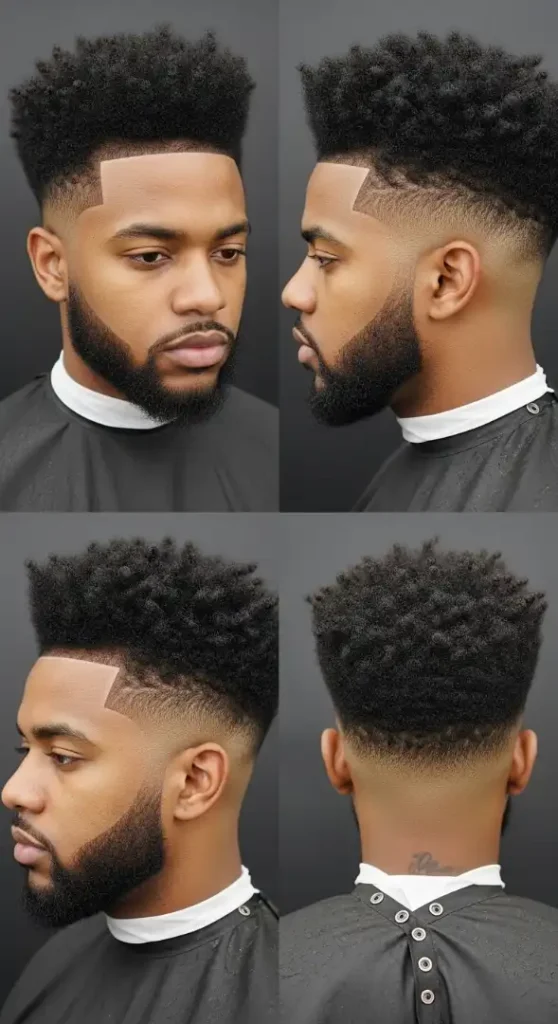
The Street Sculptor is a surgical tool for Round and Square face shapes — the two shapes that benefit most dramatically from the height-adding, width-subtracting geometry of a high bald fade. On a Round face, the physics are straightforward: removing hair from the widest point (sides) and stacking height on top creates an elongated oval illusion. The razor-sharp edge-up adds linear definition at the forehead — horizontal lines that interrupt the circular face shape and impose structure. For a Square face, the coily volume at the crown softens the angular corners of the jaw by pulling attention upward and away.
Diamond-faced men — narrow at the forehead and chin, wide at the cheekbones — should exercise caution: a high bald fade can over-emphasize the cheekbone width by contrast. If you have a diamond face and love this aesthetic, ask your barber to leave a slightly softer transition at the widest temple point rather than going all the way to skin. For Oblong faces, the height added by the coily top can over-elongate — consider a mid fade instead, which keeps more side volume to balance the length.
GROOMING KIT
- Clippers: Andis Master Cordless (the industry gold standard for high bald fades — zero-gap precision at the skin line, unmatched blade consistency)
- Outliner/Edger: BaByliss Pro FX787G Gold Outliner (for the razor-edge lineup — the small blade allows millimeter-level precision on the hairline corners)
- Straight Razor: Feather Artist Club SS Straight Razor with Feather blades (for the neckline and any touch-up detailing)
- Pick/Afro Comb: Denman D3 Original Styler (for shaping and lifting the coily top before and after product application)
- Product: Cantu Shea Butter Twist & Lock Gel (for defining coils on top without crunch — apply to damp hair, section by section) plus Mielle Organics Pomegranate & Honey Leave-In Conditioner (for moisture base under the gel)
- Beard: Bevel Beard Balm (for shaping the beard definition and adding a light hold to the cheek and jaw line)
MAINTENANCE LEVEL: High
- Barber visit frequency: Every 1.5 to 2 weeks. The high bald fade and precision edge-up have zero tolerance for growth — even 5 days of new growth visibly softens the sharpness that defines this look.
- Daily styling time: 10-15 minutes. The coily top needs moisture and definition daily — a spray bottle of water to re-activate curls, followed by product application and shaping.
- Product routine: Morning hydration spray → leave-in conditioner → curl-defining gel → pick for shape → beard balm for beard definition.
Be honest: this is a high-commitment cut. If your lifestyle doesn’t allow for regular barber visits and a daily product routine, the Street Sculptor will look less like art and more like an abandoned construction site within 10 days.
THE EXACT BARBER SCRIPT
Say this, word for word:
“I want a high bald fade — go to zero right at the temple, no guard. Blend up with a 0.5 for maybe half an inch, then let it grow into my natural top. I want the top length kept as-is — just shape the perimeter of the coils, no thinning. Give me a razor-sharp edge-up at the hairline — I want 90-degree corners, perfectly horizontal across the front. Use the outliner on the hairline, not clippers. For the beard, keep the cheekline defined with a hard, clean line — I don’t want a soft fade into the beard, I want a clear border. Square the nape with a straight razor and clean up the neckline. No taper on the beard — keep the length at about 8mm uniform.”
If The Street Sculptor’s precision edge-up energy speaks to you, Style #3 takes that same architectural discipline and packages it inside a world where first impressions cost six figures.
FAQs
Q: What is a high bald fade and how high does it actually go?
A: A high bald fade starts at the skin (zero guard) at the temple level — roughly level with the top of the ear or slightly above — and blends upward into the natural hair. “High” refers to where the fade begins, not how much hair is removed. The higher the fade start point, the more dramatic the contrast between bare skin and the hair on top.
Q: How do I keep my edge-up sharp between barber visits?
A: Use a T-outliner trimmer at home every 5-7 days to maintain the edge-up line. Follow your existing hairline exactly — don’t try to redesign it. For the corners, hold the trimmer vertically and cut a clean vertical line, then a horizontal line, meeting at a 90-degree angle. Use a hand mirror to check the back edge-up against a wall mirror.
Q: Does a high fade work for all hair types?
A: A high bald fade works across all hair types, but it looks most dramatic on Type 3C to 4C coily hair because the contrast between bare skin and dense coils is maximum. Straight or fine hair can still carry a high fade, but the top must have enough density and styling to balance the starkness of the sides.
Q: How do I moisturize coily hair under a bald fade without looking greasy?
A: The key is lightweight, water-based products applied to damp hair. Start with a leave-in conditioner spray, follow with a curl-defining gel (not pomade or grease), and use a diffuser or air-dry. Avoid heavy petroleum-based products — they weigh down coils and create an oily scalp appearance, especially around the fade line.
3 of 10 — The Corporate Phantom
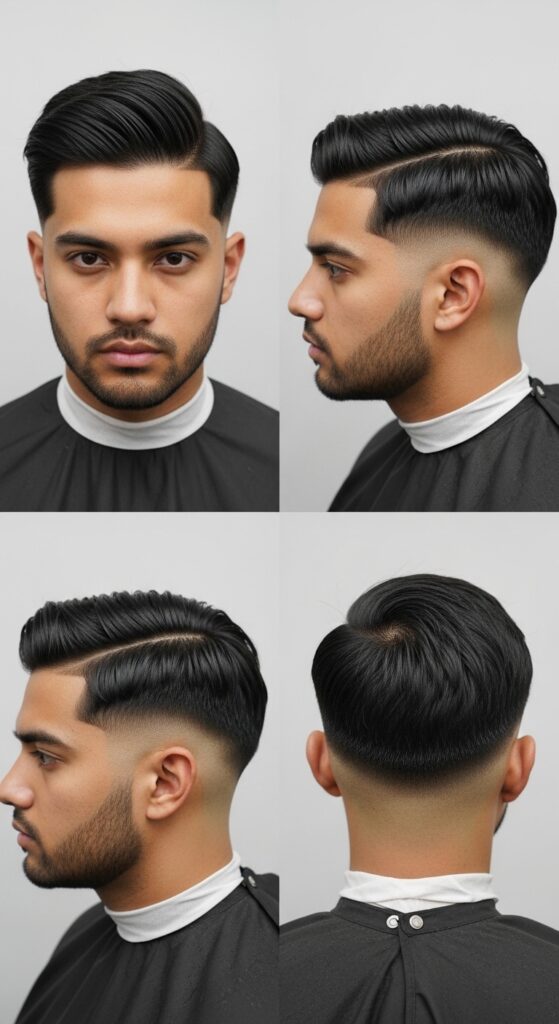
FACE SHAPE MATCH
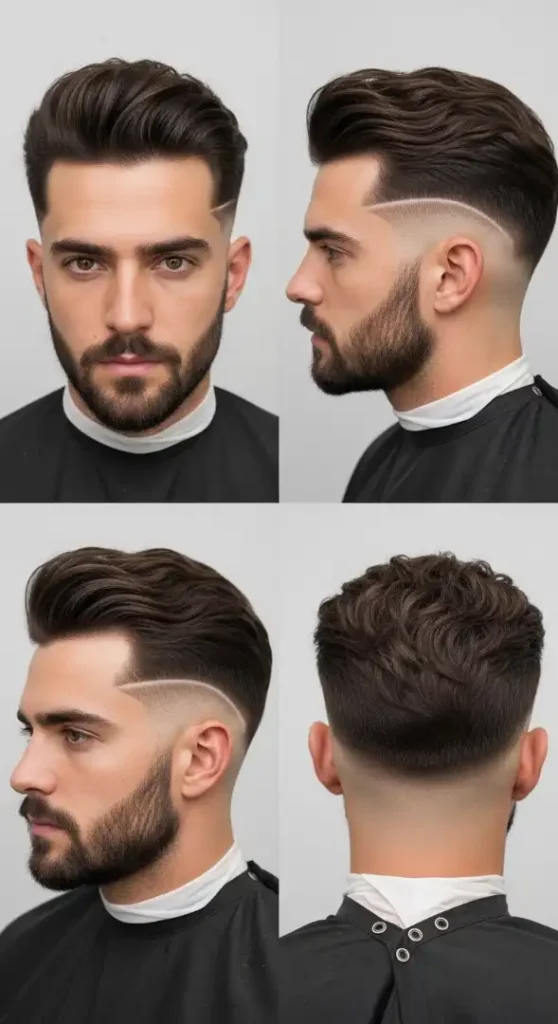
The Corporate Phantom is designed for Oval and Oblong face shapes — both of which thrive with the controlled, symmetry-focused geometry of a side-parted low fade. On an oval face, the hard part adds visual interest and directional energy without disrupting the natural proportional harmony. The low fade keeps the sides clean without aggressively removing width, which would over-elongate an already-long face.
For Oblong faces specifically, the side part is one of the most effective width-creating tools in men’s grooming: it draws the eye horizontally across the face rather than vertically down it, which visually shortens perceived face length. The hair swept to one side also adds a sense of horizontal weight that counterbalances the vertical length of an oblong face. Heart-shaped faces — wider at the forehead, narrower at the chin — can also work beautifully here because the low fade adds minimal visual width to the jaw while the swept top keeps things proportional. Round-faced men should avoid this style as the flat, side-swept top offers no height and the minimal fade does nothing to reduce side width.
GROOMING KIT
- Clippers: Wahl Senior Clipper (timeless professional low-fade tool — consistent motor, reliable blade alignment for tight tapers)
- Outliner: Andis T-Outliner G (for the neckline squaring and sideburn detailing — the original gold standard)
- Hard Part Tool: Andis Slimline Pro Li Trimmer (razor-thin blade ideal for cutting the precise hard part line)
- Straight Razor: Dovo Bismarck Straight Razor (neckline squaring — one clean pass with a fresh blade)
- Comb: Kent SPC Handmade Comb (for distributing pomade and laying the hair flat in the parted direction)
- Product: Suavecito Pomade Firme Hold (strong hold, medium shine — the definitive side-part product. Apply a dime-sized amount to dry hair, work through with a Kent comb, then re-comb for precision)
- Shine Enhancer: American Crew Grooming Spray (light mist over the finished style to add that mirror-finish sheen without weight)
MAINTENANCE LEVEL: Low-Medium
- Barber visit frequency: Every 3-4 weeks. The low fade grows out more gracefully than a high or bald fade — after 3 weeks it becomes a soft taper, which still reads professional. This is the most office-friendly fade in terms of grow-out appearance.
- Daily styling time: 4-6 minutes. Wash, towel-dry to 80%, apply firm-hold pomade, comb into the parted position, let air-dry or blow-dry with a comb attachment for 2 minutes.
- Product routine: Pomade → comb through → hard part re-defined with a fine-tooth comb → done. No elaborate multi-step process.
THE EXACT BARBER SCRIPT
Say exactly this:
“I want a low taper fade — go to zero at the skin, starting just above the natural sideburn. Blend up with a 0.5, then a 1 guard, then a 2 guard over about two inches. I want a hard part on the left side — use the outliner to cut a clean line from my hairline back to the crown. On top, trim to about 2.5 to 3 inches — just clean up any split ends, keep the length for a side-swept look. I want to wear it parted to the left, swept over and lying flat. Square the nape with a straight razor — clean corners, tight horizontal line. Edge up the hairline but keep it natural — don’t over-design it. Clean-shave my neck below the neckline.”
If the quiet authority of the Corporate Phantom appeals to you, Style #4 throws the rulebook out the window — same precision, completely different energy, built for the man who refuses to be categorized.
FAQs
Q: What is a hard part in a haircut and how do I ask for it?
A: A hard part is a shaved or clipper-cut line through the hair that creates a razor-sharp, defined part — as opposed to a natural combed part which can shift. To ask for it, tell your barber: “Give me a hard part on the left side, cut with the outliner from my hairline back to the crown.” It lasts until your hair grows over it, typically 2-3 weeks.
Q: What pomade should I use for a classic side-part look?
A: For a classic side-part, use a firm-hold pomade with medium to high shine — Suavecito Firme Hold or Layrite Super Hold are both excellent choices. Apply a dime-sized amount to slightly damp hair (not wet), comb through in the direction of your part, and let it set. Avoid matte clays for this style — you want the slick, polished finish that reads as intentional and professional.
Q: Is a side-part taper fade appropriate for formal work environments?
A: Absolutely — the low taper fade with a side part is one of the most office-appropriate haircuts in men’s grooming. The low fade is subtle enough to read conservative in traditional industries (law, finance, corporate), while the hard part and clean styling signal attention to detail. It’s the haircut equivalent of a well-fitted suit.
Q: How do I keep my side part looking sharp throughout the day?
A: Use a firm-hold pomade rather than a styling cream or wax — cream-based products soften during the day, which causes the part to migrate. Carry a pocket comb (Kent 20T) for midday touch-ups. If your hair is particularly stubborn, a light spray of hairspray over the finished style adds all-day lock without visible residue.
4 of 10 — The Diamond Edge
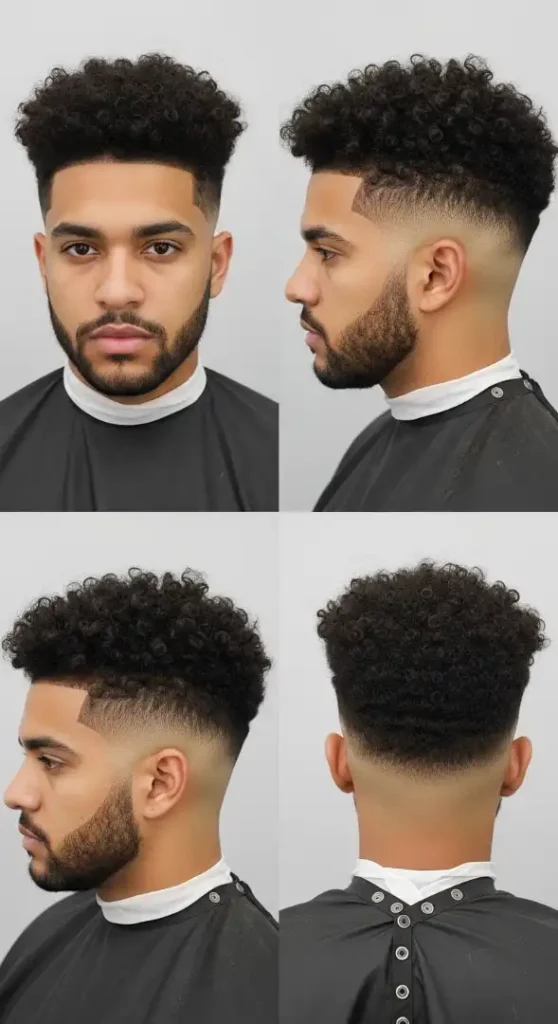
FACE SHAPE MATCH
The Diamond Edge is almost tailor-made for — unsurprisingly — the Diamond face shape. The diamond face’s defining characteristic is wide, prominent cheekbones with a narrower forehead and chin. Most barbers get this wrong by recommending styles that add more width at the cheekbones. The correct approach with the Diamond Edge is counterintuitive: the mid skin fade removes hair at the widest point of the skull, reducing visual width there, while the voluminous curly top adds dimension at the crown — adding forehead width by association. The tapered beard adds chin width, balancing the narrow jaw point. The result is a face that reads as less dramatically diamond-shaped and closer to oval.
Square-faced men also benefit significantly — the curly volume on top adds height and breaks the boxy geometry of a square face. The mid fade’s contrast line draws the eye vertically, not horizontally. Round-faced men can wear this successfully when the top volume is kept tight and cylindrical rather than wide and cloud-like — a tighter curl cluster arrangement prevents adding horizontal width to an already-wide face.
GROOMING KIT
- Clippers: Andis Master Cordless (for the mid fade — the blade gap adjustment allows precise graduation from zero through multiple guard sizes)
- Outliner: BaByliss Pro FX787G (for the edge-up arc — this outliner’s corner precision is unmatched for the slightly arched hairline this style requires)
- Curl Product: SheaMoisture Coconut & Hibiscus Curl Enhancing Smoothie (apply generously to soaking wet hair in sections, scrunch upward, air-dry or diffuse — provides frizz control and definition without stiffness)
- Hold Layer: Eco Style Olive Oil Gel (light layer over the smoothie for extra hold — apply sparingly, scrunch in)
- Diffuser: Conair InfinitiPRO Diffuser Attachment (for blow-drying curls without frizz — essential tool for this style)
- Beard: Cremo Beard & Scruff Cream (for the tapered beard — lightweight, non-greasy, softens without over-conditioning the taper shape)
MAINTENANCE LEVEL: Medium
- Barber visit frequency: Every 2-3 weeks. The mid fade grows out relatively gracefully — by week 3 it reads as a soft high-fade, still presentable. The curly top actually looks better with 1-2 weeks of additional length.
- Daily styling time: 8-12 minutes on wash days, 3-5 minutes on non-wash days. The key investment is wash-day product layering — it determines how good the curls look for the next 2-3 days.
- Product routine: Wash with sulfate-free shampoo → deep condition → curl smoothie on soaking wet hair → scrunch → diffuse or air-dry → break the gel cast by scrunching dry.
THE EXACT BARBER SCRIPT
Tell your barber:
“I want a mid skin fade — start at zero right at the upper temple, blend up with a 0.5 guard, then a 1, then a 2 over about an inch. The fade line should sit mid-temple, not low and not high. On top, keep about 2.5 inches — I want my natural curl to spring out, so leave enough length for it to coil properly. Don’t use a razor on top — use scissors only, and cut dry if possible so you can see how the curls fall. Give me a clean arc edge-up at the hairline — slightly rounded, not perfectly straight across. For the beard, fade the cheeks to skin and leave 5mm at the chin, with a defined mustache. Square the nape but keep it soft — a slight V rather than hard corners.”
Style #5 takes everything you know about structured fades and rebuilds it from an entirely different cultural blueprint — cleaner, cooler, and unlike anything you’ve seen in Western barbershops.
FAQs
Q: What is a mid skin fade and how does it differ from a high or low fade?
A: A mid skin fade starts at zero (bare skin) at the midpoint of the head — roughly level with the top of the ear or slightly above. A low fade starts lower, nearer the natural hairline, and a high fade starts near the temple or above. The mid fade is the most versatile option — bold enough to look intentional but not as aggressive as a high fade.
Q: How do I define curls on a taper fade without making them look crunchy or stiff?
A: Apply your curl-defining product (cream or gel) to soaking wet hair — the wetter the hair, the more the product distributes evenly. Scrunch upward rather than smoothing down. Air-dry or use a diffuser on low heat. Once fully dry, “scrunch out the crunch” by gently breaking the gel cast with your palms. This releases the curl definition while eliminating the stiff texture.
Q: Which face shape suits a mid skin fade with a curly top best?
A: Diamond and square face shapes benefit most from a mid fade with a curly top. The fade reduces side bulk at the widest skull point while the curly top adds vertical height, improving face shape proportions toward a more oval appearance. Round-faced men can also wear this style with a tighter, more cylindrical curl arrangement on top.
Q: How often should I wash my hair to maintain curls on a taper fade?
A: Wash curly hair 2-3 times per week maximum — over-washing strips the natural oils that define and hydrate curls, causing frizz. Between wash days, use a spray bottle of water to re-activate curl definition, then scrunch in a tiny amount of leave-in conditioner. The first day after wash day is typically the best curl day.
5 of 10 — The Tokyo Drift
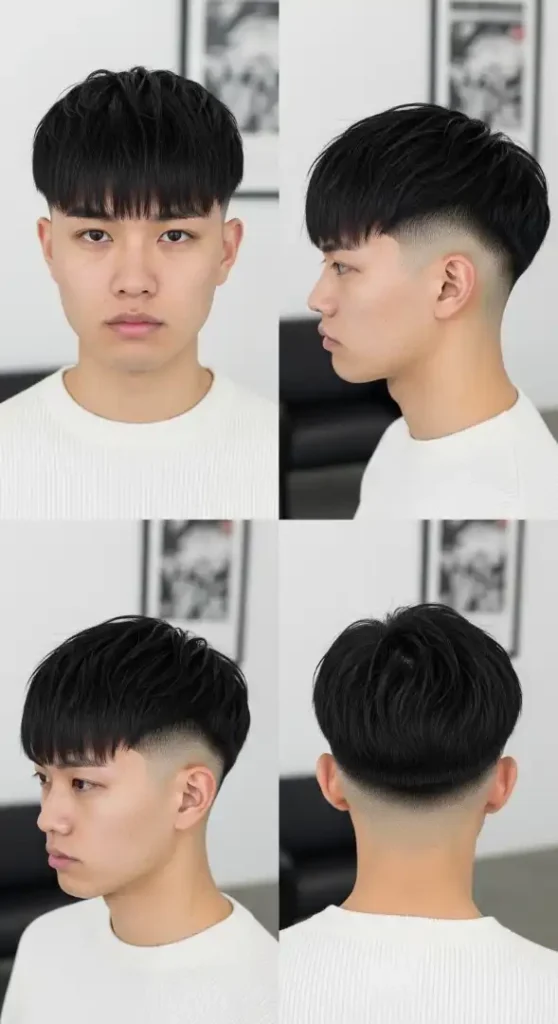
FACE SHAPE MATCH
The Tokyo Drift is optimally engineered for Oblong and Heart face shapes — and it’s worth explaining the anatomical reasoning carefully, because this cut is frequently misunderstood. On an Oblong face, the heavy blunt fringe is performing critical work: it occupies vertical forehead space, effectively shortening the visible face length. The horizontal edge of the fringe introduces a powerful horizontal visual line that interrupts the long vertical axis of an oblong face. The low-mid fade then slims the sides, maintaining the shortened appearance without adding width.
For Heart faces — wide at the forehead, narrow at the chin — the heavy fringe actually redistributes visual weight downward, away from the wide forehead. The clean, minimal fade keeps the sides from adding additional width to an already top-heavy face shape. Square and oval faces can also wear this cut effectively, though oval men have the luxury of styling the fringe in multiple directions. Round-faced men should be cautious: the side-to-side heaviness of a full fringe can visually widen an already wide face — consider a slightly swept or texturized fringe rather than the full blunt-cut version.
GROOMING KIT
- Clippers: Wahl Magic Clip Cordless (for the low-mid fade precision — essential for the clean disconnect line)
- Scissors: Kamisori Shear X-5 6-Inch (for the blunt fringe cut — the weight of this shear produces a clean, heavy cut that falls naturally)
- Outliner: Andis Slimline Pro Li (for the disconnect line and neckline — the thin blade allows a razor-precise separation)
- Product: Layrite Matte Pomade (applied to dry hair for the textured fringe — matte finish prevents the flat, plastered look that ruins this style. Apply a pea-sized amount, work between palms, then rake fingers through the fringe forward)
- Alternative Product: American Crew Fiber (for men who want slightly more hold and a rougher texture — excellent for thick, straight Asian hair that can be stubborn to hold)
- Fringe Comb: Denman D1 Pocket Styler (small enough for fringe-only styling — carry in a jacket pocket for midday touch-ups)
MAINTENANCE LEVEL: Low-Medium
- Barber visit frequency: Every 3-4 weeks. The disconnect undercut grows out more visibly than a blended fade, but the top length gives you extra weeks before it looks overgrown. The fringe is the first thing to lose shape.
- Daily styling time: 3-5 minutes. Apply matte clay to dry hair, rake fringe forward, push slightly to one side for texture, done. No blow-dryer required for straight hair in this style.
- Product routine: One product (matte clay or fiber), applied to dry hair, finger-styled. The simplest routine in this entire article.
THE EXACT BARBER SCRIPT
Say this:
“I want a disconnected undercut taper fade — cut a clean, hard disconnect line on the sides, about 2 to 2.5 inches above the ear. Below the disconnect line, fade to zero skin — low to mid. Above the disconnect, leave the top long — about 3 to 3.5 inches at the front so it can fall into a heavy fringe. Cut the fringe blunt and straight across, landing just above the eyebrow. On the back, taper the nape naturally — no harsh squaring, just a clean arch. I’ll style the fringe forward with a matte clay at home. No product in the cut today — I want to see the natural fall.”
Style #6 takes everything eastern and modern about the Tokyo Drift and explodes it outward — into a cut that’s wilder, warmer, and built for a completely different kind of man.
FAQs
Q: What is a disconnected undercut and how is it different from a regular fade?
A: A disconnected undercut has a sharp, defined line — like a ledge — separating the longer top hair from the shorter sides, with no gradual blending between them. A regular fade blends seamlessly from short to long. The disconnected undercut creates a bolder, more graphic look that’s popular in Korean and Japanese men’s hair culture.
Q: How do I style a heavy blunt fringe without it looking flat or helmet-like?
A: Apply a matte clay or fiber product to completely dry hair — never damp, as water weighs straight hair flat. Work the product between your palms until almost invisible, then rake fingers through the fringe forward. Use your fingers to push sections slightly sideways for texture — you want to see individual strand groups, not a solid panel of hair. Avoid combs for this finish; fingers give the natural separation.
Q: Does a blunt fringe suit all face shapes?
A: No — a full, heavy blunt fringe suits oblong, heart, and oval face shapes best. It shortens the visible forehead, which is a benefit for long or top-heavy faces. Round-faced men should avoid a full blunt fringe as it can widen the face further. If you have a round face and want a fringe, ask your barber for a textured, side-swept version instead.
Q: How often should I trim my fringe at home between barber visits?
A: Trim your fringe every 2 weeks at home using small, sharp scissors. Comb it flat against your forehead, hold the ends between your index and middle fingers, and make small horizontal cuts — never more than 2-3mm at a time. It’s far better to under-trim and return to the mirror than to cut too much and wait for it to grow back.
6 of 10 — The Celtic Rebel
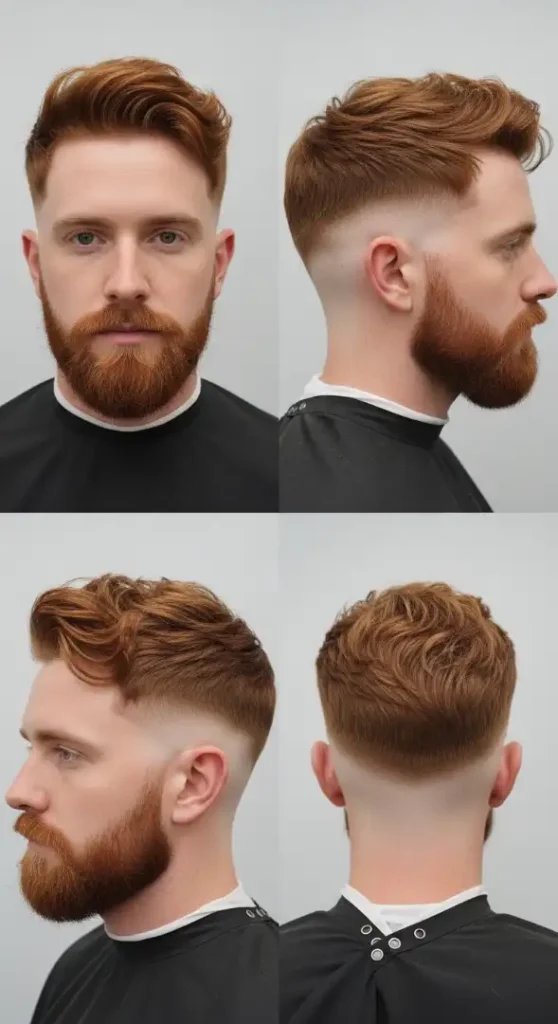
FACE SHAPE MATCH
The Celtic Rebel is specifically calibrated for the Heart face shape — wider at the forehead, tapering to a narrower chin — and the anatomy of this pairing deserves proper explanation. The Heart face’s most common styling problem is the top-heavy appearance: lots of visual width at the forehead, insufficient width at the jaw. The Celtic Rebel solves this with a two-part strategy. First, the mid skin fade removes visual width from the sides of the upper skull, preventing the forehead area from reading even wider. Second — and this is the key move — the full, natural beard adds physical width at the jaw, visually expanding the chin area and bringing the face into oval balance.
The swept-back, backward-flowing top further helps by directing attention vertically and backward rather than forward and outward at the forehead. Square-faced men can wear the Celtic Rebel beautifully when the beard is slightly trimmed to a rounder shape — avoiding the angular beard styling that would double-emphasize the square jaw. Oval faces are universal recipients of this style. Round faces are the least optimal fit — the mid fade without a higher starting point fails to adequately narrow the wide side-profile of a round face.
GROOMING KIT
- Clippers: Wahl Magic Clip Cordless (mid fade creation — the self-sharpening blades handle thick, coarse auburn hair without stalling)
- Outliner: Andis T-Outliner G (neckline definition and cheekline cleanup on the beard)
- Scissors: Kamisori Diamond Series 6.5-Inch (for point-cutting the wave top to add texture and movement rather than flat, lifeless bulk)
- Brush: Mason Pearson Junior Bristle & Nylon (for distributing product through the wave top and activating natural wave shape)
- Product: Suavecito Matte Clay (medium hold, zero shine — the ideal product for an intentionally lived-in wave aesthetic. Apply fingertip-sized amount to damp hair, work through by hand, blow-dry briefly backward)
- Beard: Honest Amish Classic Beard Balm (the industry’s most trusted natural beard balm — beeswax and shea butter base softens coarse auburn beard hair dramatically. Apply pea-sized amount, work in with fingertips)
- Beard Oil: Jack Black Beard Oil (3-4 drops after the balm for shine and scent — cedar and rosemary notes complement the rugged aesthetic)
MAINTENANCE LEVEL: Medium
- Barber visit frequency: Every 3 weeks. The mid fade grows out visibly by week 2-3, but the natural, lived-in aesthetic of this style gives it more grace period than a high bald fade. The beard needs home trimming weekly to maintain shape.
- Daily styling time: 6-8 minutes for hair, 3-4 minutes for beard. Total: under 12 minutes.
- Product routine: Matte clay on damp hair → rough blow-dry backward → hand-shape → beard oil → beard balm → light comb through the beard.
THE EXACT BARBER SCRIPT
Tell your barber:
“I want a mid skin fade — zero at the skin from the upper temple down, blend up with a 0.5, then a 1.5 guard over about an inch. The top should stay long — 2.5 to 3 inches, and I want it point-cut for texture, not blunt-cut. I want movement and wave definition, not a flat shelf of hair. Don’t thin it out — just use scissors and point-cut the ends. On the beard, clean up the cheekline and neckline — keep the beard natural shape, not architectural. Leave the length at about 15mm — just trim for shape, not for shortness. Clean the neckline with a trimmer, not a razor — I don’t want a sharp line on the neck, keep it soft. Round the nape taper — no square finish.”
Style #7 takes the warmth and rugged energy of the Celtic Rebel and channels it into something more refined, more deliberate, and architecturally precise — a cut built for the desert, the boardroom, and everywhere in between.
FAQs
Q: How do I style wavy auburn hair for a natural, lived-in look?
A: Apply a matte clay or texture cream to damp — not wet — hair. Work it through with your fingers from roots to ends, then blow-dry quickly on medium heat while pushing the hair backward with your palm. Don’t over-dry — stop when it’s 90% dry and let it air-finish. The result is wave definition with movement and a matte, natural-looking finish rather than a set, styled appearance.
Q: What beard style works best with a mid skin fade?
A: A natural, fuller beard (10-20mm) works best with a mid skin fade because it adds visual weight at the jaw area — balancing the dramatic reduction of hair on the sides. The beard should be cleaned up at the cheekline and neckline but kept in a natural shape rather than trimmed into geometric precision. This contrast between the precise fade and the organic beard creates the lived-in tension that defines the style.
Q: How do I prevent auburn or red hair from looking brassy under styling products?
A: Avoid pomades and waxes with yellow or amber oil bases — these can shift warm hair tones toward an orange brassiness under studio or indoor lighting. Use water-based matte clays or cream texturizers instead. For color maintenance, use a color-depositing shampoo formulated for red or auburn tones (Christophe Robin Color Fixator Shampoo in Red is excellent) once every two weeks.
Q: Does a full beard work with all fade types?
A: A full beard pairs most naturally with mid and low fades, where the transition from skin to beard happens over a longer distance — allowing a more gradual, natural connection. A high bald fade with a full beard creates an extreme contrast that can look intentional and editorial or disconnected and mismatched, depending on face shape. Generally, the fuller the beard, the lower the ideal fade.
7 of 10 — The Desert Prince
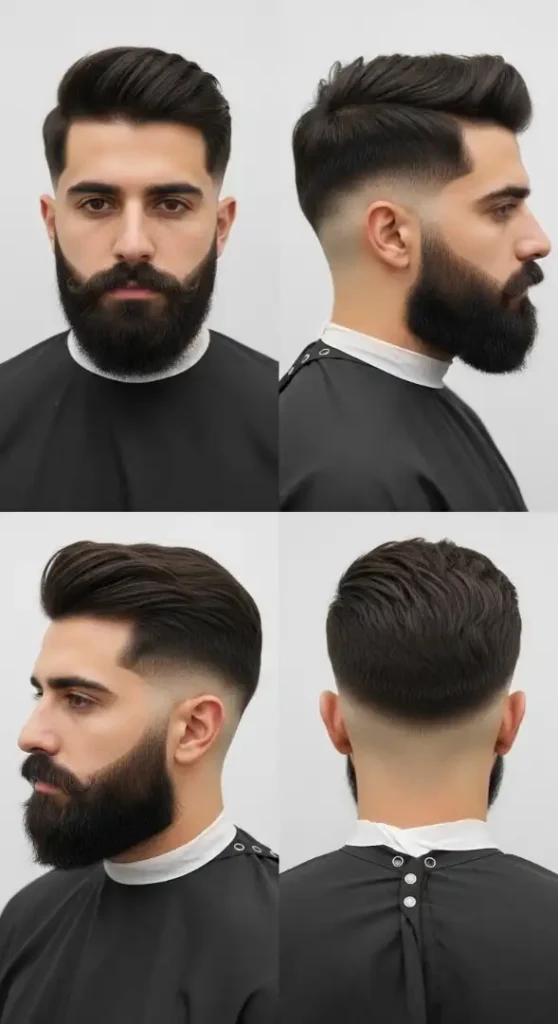
FACE SHAPE MATCH
The Desert Prince was architecturally designed for the Square face shape — the strongest, most defined facial structure in men’s grooming, and the one that responds most dramatically to the right haircut. Square faces have equal width and length with a defined, angular jaw — the goal is to introduce softening and vertical elongation without eliminating the inherent masculinity of the structure.
The low bald fade achieves this by removing hair at the widest skull points without aggressively starting the process too high — keeping some side presence prevents the face from looking over-narrow. The swept-to-one-side top adds directional movement and diagonal visual energy that interrupts the rigidly horizontal and vertical geometry of the square face. The full, sculpted beard — when shaped with a slight roundness rather than hard geometric corners at the jaw — softens the angular jaw line while maintaining density and masculinity.
Oval-faced men can wear this cut with any beard length — their balanced proportions make almost every combination work. Diamond faces benefit from the beard’s chin-widening effect. Round faces should replace the low fade with a mid or high fade to add more visible height contrast.
GROOMING KIT
- Clippers: Wahl Senior Professional (for the low bald fade — the consistent motor and blade alignment handle dense, straight Middle Eastern hair texture effectively)
- Beard Trimmer: Philips Norelco OneBlade Pro 360 (for beard shaping and length maintenance — the pivoting head handles the contoured jaw area exceptionally well)
- Straight Razor: Dovo Merkur 34C Heavy Duty Safety Razor (for cheekline definition — a safety razor gives controlled, precise cheekline shaping with zero skin irritation risk)
- Beard Comb: Kent Handmade Beard Comb OC (for distribution of beard oil and styling)
- Hair Product: Layrite Natural Matte Cream (for the swept-top finish — medium hold, natural look, no shine. Apply to damp hair, comb into position, air-dry)
- Beard Oil: Beardbrand Spiced Cedar Beard Oil (5 drops, post-shower, massaged in — the cedar and spice scent profile complements the overall masculine aesthetic)
- Beard Balm: Honest Amish Beard Balm (for shape maintenance — applied after oil, worked through the beard with a comb to set the cheekline and mustache into position)
MAINTENANCE LEVEL: Medium
- Barber visit frequency: Every 3 weeks for the fade. Beard shaping every 2 weeks at a barber, or self-maintained with weekly home trimming.
- Daily styling time: 8-10 minutes total. Hair: 4 minutes. Beard: 4-6 minutes.
- Product routine: Morning shower → towel-dry hair → matte cream through hair → comb into swept position → beard oil → beard balm → beard comb for final shape.
THE EXACT BARBER SCRIPT
Say this:
“I want a low bald fade — start at the skin right above the natural sideburn, blend up with a 0.5, then a 1, then a 2 guard over about two inches. On top, keep 2.5 inches — just trim for shape, no heavy texturizing. I want to wear it swept to the right, so consider that when you’re shaping the top. For the beard, keep the length at 20 to 22mm — use a 6 guard for the length. Give me a precise cheekline — I want a clean, slightly curved line from my sideburn down to the mustache corner. No fading on the cheekline — I want a defined border. Clean the neckline at the natural neckline, one guard below the beard length. Square the nape with a straight razor. Apply a light beard balm before I leave.”
Style #8 is a complete tonal inversion of the Desert Prince — where this cut is dark, controlled, and warm, the next is silver, dynamic, and commanding in an entirely different way.
FAQs
Q: How do I shape my beard cheekline at home?
A: Before trimming, comb your beard upward to see its natural boundary. Use a single-blade safety razor or precision trimmer to draw your desired cheekline — start from the sideburn and trace a slightly curved line (not perfectly straight) toward the corner of the mustache. Shave below this line with the razor. Less is more: it’s easier to lower a cheekline than to grow it back.
Q: What is the difference between a low bald fade and a low taper fade?
A: A low bald fade goes all the way to zero (bare skin) at the lowest point, starting just above the natural hairline. A low taper fade maintains some minimal hair length at the lowest point — it never reaches completely bare skin. The bald fade is sharper and more high-contrast; the taper is softer and more conservative. For formal environments, the taper is slightly more traditional.
Q: How do I keep my beard smelling good throughout the day?
A: Use a quality beard oil with a long-lasting scent profile — cedar, sandalwood, and spice-based oils tend to have the best longevity. Apply 4-5 drops to clean, slightly damp beard hair (post-shower), massage from skin to tips. The oil seals in moisture, which helps the scent last longer. Avoid cologne directly on the beard — alcohol-based fragrances dry out beard hair dramatically.
Q: Which direction should I sweep my hair if I have a square face?
A: For a square face, sweep your hair diagonally — to one side and slightly backward rather than straight back. This diagonal movement interrupts the geometric horizontal and vertical lines of a square face, adding a sense of dynamic energy. Sweeping to the side also creates an asymmetry that softens the rigid symmetry of square facial features.
8 of 10 — The Silver Shadow
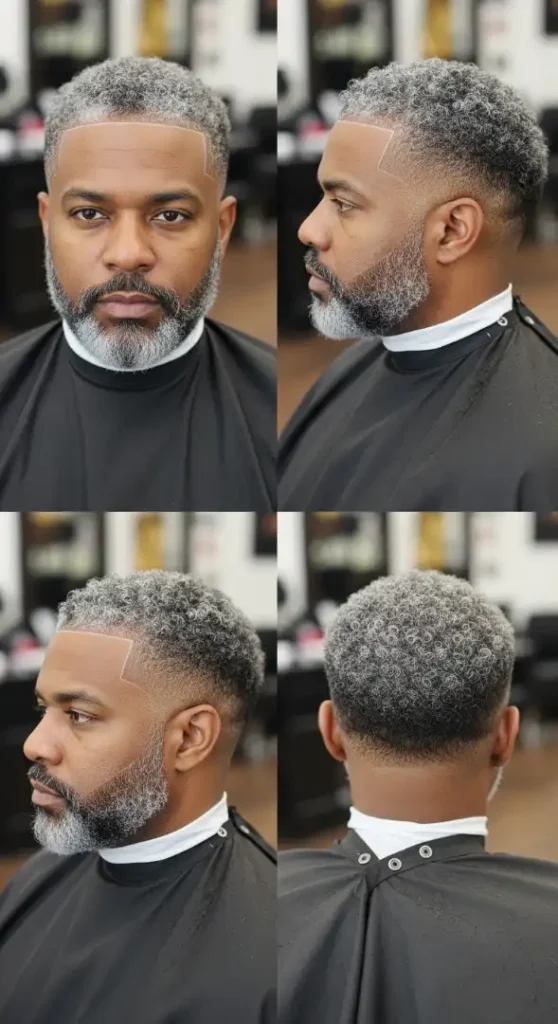
FACE SHAPE MATCH
The Silver Shadow was designed for the Oval face shape — the most harmonious canvas for a high bald fade because oval’s inherent symmetry and balanced proportions allow the dramatic side contrast to read as elegant rather than aggressive. The high fade’s side reduction combined with the coily top’s modest volume keep the proportions precisely in the oval target zone — not over-elongated, not over-widened.
However, this style particularly shines on Diamond faces in the mature man demographic. As men age, the diamond face’s prominent cheekbones soften slightly due to natural facial volume changes. The high bald fade at the temple specifically targets the temple region — the exact point where a diamond face is widest — removing visual width there while the beard adds chin definition. The result is a face that reads as more oval with age rather than less so. Square faces also benefit strongly — the high fade and coily top add significant height, and the sculpted beard with soft, round-edged shaping prevents a double-angular effect. Round-faced men should request the barber to keep the coily top slightly taller and more cylindrical to maximize the height-adding effect.
GROOMING KIT
- Clippers: Andis Master Cordless (the go-to for high bald fades on dense, coily salt-and-pepper hair — handles mixed texture hair without pulling)
- Outliner: BaByliss Pro FX787G (edge-up on the hairline — critical for keeping the grey hairline clean and defined)
- Beard Trimmer: Wahl Stainless Steel Lithium Ion+ (for the full beard — the adjustable guide comb system maintains precise length across the full beard surface)
- Pick: Maximal Power Afro Pick (for shaping the coily top post-product)
- Hair Product: Cantu Shea Butter Men’s Texturizer Cream (for defining salt-and-pepper coils — enhances natural pattern without heavy product buildup)
- Beard Oil: Detroit Grooming Co. Grand River Beard Oil (specifically formulated for coarser beard textures — the argan oil base deeply conditions wiry salt-and-pepper beard hair)
- Beard Balm: Wild Willies Beard Butter (for maintaining beard shape — particularly effective for the full beard with mixed-texture coils)
- Scalp Care: SheaMoisture African Black Soap Dandruff Control Shampoo (for coily hair scalp maintenance — the high bald fade makes the scalp visible, so scalp health is non-negotiable)
MAINTENANCE LEVEL: High
- Barber visit frequency: Every 10-14 days. At this age and with a high bald fade, growth is very visible very quickly. The salt-and-pepper colour also makes regrowth contrast particularly noticeable — grey new growth against a fresh bald fade stands out within a week.
- Daily styling time: 10-15 minutes total. Hair: 5 minutes. Beard: 5-8 minutes.
- Product routine: Daily beard oil → beard butter massage → comb through. Every wash day: scalp and hair moisture routine → curl cream on top → pick for shape.
THE EXACT BARBER SCRIPT
Tell your barber, confidently:
“I want a high bald fade — zero at the skin starting right at the upper temple. Bring the blend up fast — 0.5 for half an inch, then 1 guard, let it grow into the top. On top, keep 1.5 to 2 inches — just shape the perimeter and clean up any irregular areas. I want to maintain my natural coil pattern, so no heavy product today — just shape it dry. Give me a clean, sharp edge-up at the hairline — I want precise corners. For the beard, trim to 12mm uniform — use a 4 guard. Define the cheekline with the outliner — a clean, slightly curved line. Define the mustache with the outliner. Square the nape with a straight razor. And please — give me a light scalp massage with oil after the cut.”
Style #9 brings the baton back to the streets with an explosive Latin energy that takes everything distinguished about the Silver Shadow and rebuilds it from the ground up, younger, louder, and unapologetically bold.
FAQs
Q: Does a high bald fade look good on older men?
A: Absolutely — a high bald fade can be one of the most powerful tools for mature men, particularly with grey or salt-and-pepper hair. The sharp contrast between bare skin and distinguished silver hair reads as confident and intentional rather than age-denying. It communicates that a man owns his appearance at every stage. The key is pairing it with a well-groomed beard for maximum impact.
Q: How do I manage coily salt-and-pepper hair to prevent dryness?
A: Salt-and-pepper and fully grey coily hair tends to be significantly drier than darker hair because greying strips melanin and often reduces the hair’s natural moisture retention. Prioritize a moisture-rich leave-in conditioner daily, a deep-conditioning treatment weekly, and a natural oil (argan, jojoba, or Jamaican black castor oil) sealed on top. Avoid any products with high alcohol content — they accelerate dryness in grey coils.
Q: Should I dye my salt-and-pepper hair or embrace it?
A: From a purely grooming and aesthetic perspective, well-maintained salt-and-pepper or fully silver hair on a man with a sharp haircut and groomed beard is consistently rated as highly attractive. Dyeing it can sometimes look unnatural when the roots grow in rapidly, especially with coily hair. The market has shifted dramatically toward embracing natural grey — particularly when it’s paired with a precise fade and beard.
Q: How do I keep my high bald fade looking fresh between barber visits?
A: Keep a good trimmer at home (Wahl Stainless Steel Lithium Ion+) and clean up the edge-up every 5-7 days using your existing hairline as a guide. For the fade itself, don’t attempt home blending — that requires professional technique. Instead, keep the top moisturized and shaped, and accept that the fade will graduate naturally into a softer mid-fade by the end of week 2, which still looks polished.
9 of 10 — The Barrio Boss
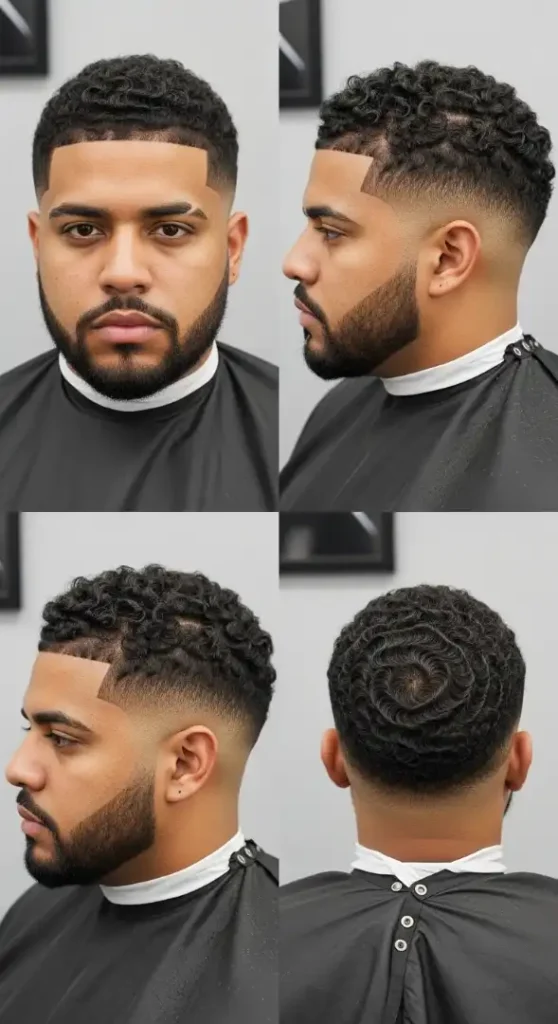
FACE SHAPE MATCH
The Barrio Boss is perhaps the most transformative cut in this entire collection when it comes to Round faces — and it achieves its results through a masterclass in geometric distraction. The 360° wave pattern creates a horizontal visual rhythm across the top of the head, which works against the round face’s natural circular energy by imposing a series of linear, directional wave forms. The high bald fade dramatically slims the sides, removing the bulk that gives a round face its width. The razor-sharp edge-up’s horizontal line at the forehead creates a clean visual divider between face and hair, breaking the continuous curved silhouette of a round face. Together, these three elements elongate the visual face shape toward oval territory.
Square-faced men benefit from the wave pattern’s softening effect — the concentric, flowing curves of the waves introduce organic movement that counters the rigid angularity of a square face. For an Oblong face, the horizontal wave pattern is actually a risk — it emphasizes horizontal visual lines, which is the last thing an already-long face needs. Oblong men who love waves should style them in a forward-flowing direction rather than 360° to avoid the over-lengthening effect.
GROOMING KIT
This section has a crucial distinction: 360° waves are a process, not just a haircut. Building waves requires patience, consistent technique, and the right arsenal.
- Clippers: Wahl Magic Clip Cordless (for the wave cut — the blades need to follow the natural wave grain direction when trimming)
- Wave Brush: Diane 100% Boar Soft Wave Brush (for the early stages of wave training when hair is long enough)
- Hard Wave Brush: Annie Hard Boar Wave Brush (for when the wave pattern is established — the harder bristles press waves into compression)
- Wave Cap/Du-Rag: Wavebuilder Velvet Durag (worn during sleep — essential for protecting and compressing the wave pattern overnight)
- Wave Pomade: Murray’s Superior Hair Dressing Pomade (the original — applied sparingly, worked into damp hair, then brushed in the wave direction)
- Alternative: SoftSheen-Carson Wave Nouveau Coiffure (for softer, more manageable waves — less grease than Murray’s)
- Outliner: Andis T-Outliner G (for the edge-up — no substitute exists for this specific task)
- Goatee: BaByliss Pro FX787G (for defining the goatee outline — the small blade allows millimeter precision)
MAINTENANCE LEVEL: Very High
This is the most maintenance-intensive cut in this article — and it’s important to be transparent about that.
- Barber visit frequency: Every 1-2 weeks. The edge-up and high bald fade are unforgiving of growth.
- Wave maintenance: Daily. Every single day. Morning brush session (5-10 minutes of brushing in wave direction with hard boar brush) + durag overnight. Miss 3-4 days and the wave pattern begins to break down.
- Daily routine: Shower (avoid washing waves daily — 2-3x per week max) → light pomade on damp hair → brush in wave direction → durag while getting dressed → remove durag 10 minutes before leaving the house.
The Barrio Boss is not recommended for men who travel frequently, work in environments without time for morning routines, or are unwilling to sleep in a durag nightly. The waves are a lifestyle commitment, not just a haircut.
THE EXACT BARBER SCRIPT
Sit down and say:
“I want a high bald fade — zero at the skin, starting at the upper temple. Keep the blend tight — 0.5 for a quarter inch, then 1 guard, transition fast. I want to preserve my wave pattern, so cut with the grain when you’re doing the top — don’t go against the wave direction. Keep the top at about half an inch — just enough to see the full wave depth. Cut the top dry so you can see the wave pattern clearly. Give me a razor-sharp edge-up — perfectly horizontal at the front, 90-degree corners. Use the outliner, not clippers, for the edge-up. For the goatee, I want a precise outline — use the outliner to define the mustache and chin patch border. Goatee length at about 10mm. Square the nape with a straight razor.”
Style #10 closes this collection with the most globally versatile, trend-proof taper fade of the summer — the cut that works everywhere, on anyone, and looks better every single day you wear it.
FAQs
Q: How long does it take to grow 360° waves from scratch?
A: Building 360° waves from scratch typically takes 4-12 weeks of consistent daily brushing, depending on your natural hair texture and how well you maintain the routine. Type 3A-3C hair tends to wave more quickly; Type 4A-4C takes longer. The essential factors are: daily brushing in the wave direction (morning and evening), sleeping in a durag every night, and using a wave-enhancing pomade consistently.
Q: What is a durag and why is it essential for waves?
A: A durag is a head wrap — typically satin, silk, or velvet — worn over wave-trained hair to compress and protect the wave pattern during sleep and throughout the day. Without a durag, waves break down overnight as the hair returns to its natural pattern from pillow friction. Velvet durags are considered superior for compression; silky satin durags are preferred for moisture retention and smooth texture.
Q: How do I get a razor-sharp edge-up at home between barber visits?
A: Use a BaByliss Pro FX787G or Andis T-Outliner to trace your existing hairline — always follow your natural line rather than redesigning it. Go slowly, check frequently in the mirror, and make small corrections. For the corners, use the corner of the trimmer blade to create a 90-degree angle junction. Practice on one side, then mirror on the other.
Q: Does the high bald fade work with 360° waves?
A: Yes — the high bald fade is one of the most popular pairings with 360° waves. The stark contrast between the bare skin of the high fade and the textured, defined wave pattern on top creates a dramatic visual impact. The fade must be done very carefully to preserve the wave pattern at the perimeter — a skilled barber will cut with the grain of the waves to avoid disrupting the pattern.
10 of 10 — The Monsoon Maven
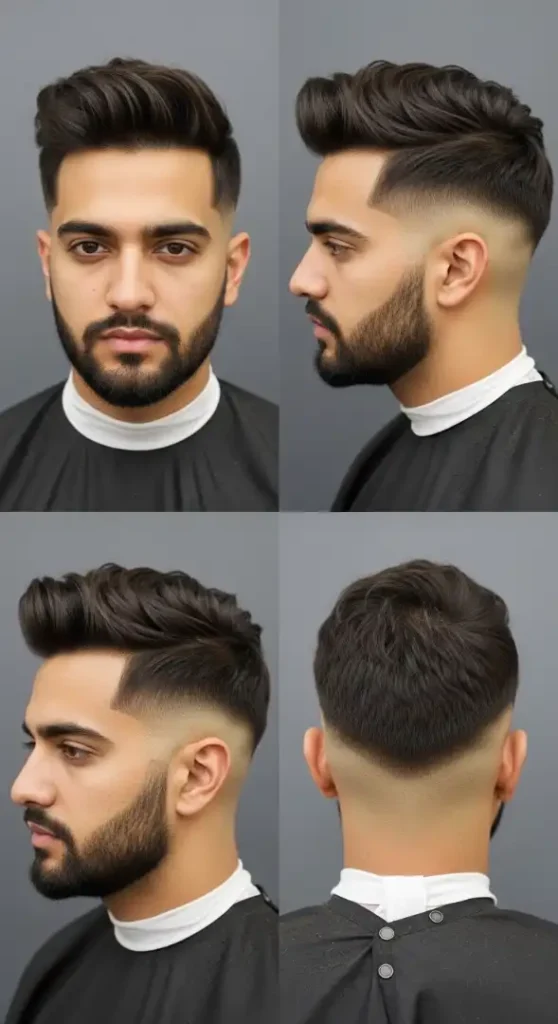
FACE SHAPE MATCH
The Monsoon Maven’s low taper fade with a swept-back quiff is one of the most universally flattering haircut structures in men’s grooming — and it earns that universality through intelligent proportional design. For Diamond faces — the primary target — the quiff’s lifted, forward-rising structure adds width at the forehead level (visually filling the narrow upper face), while the low taper’s conservative approach preserves side width around the cheekbones rather than removing it. The result is a face that reads as more proportionally balanced. The short stubble beard adds chin width, addressing the diamond face’s narrow lower third.
For Oval faces, this cut is essentially a guaranteed win — the quiff adds personality and height, the low fade keeps things clean, and the stubble adds masculine definition without commitment. For Square-faced men, the quiff’s height and the wave’s movement soften the angular jaw by pulling attention upward. The low taper (rather than a high fade) prevents over-slimming the sides, which would make a square face appear too long. Round-faced men are the only demographic who need to make adjustments: the low fade offers insufficient width reduction — a mid fade would serve a round face better, and the quiff should be styled taller and more vertical rather than wide and sweeping.
GROOMING KIT
- Clippers: Wahl Magic Clip Cordless (for the low taper — the gradual, nuanced blending this requires needs a reliable motor and consistent blade gap)
- Scissors: Kamisori Shear X-5 6-Inch (for shaping the quiff top and point-cutting the wave texture)
- Round Brush: Diane 100% Boar Round Brush, 1-inch (for blow-drying the quiff into its lifted, swept-back form — roll the brush through the front section while directing heat backward and upward)
- Product: Layrite Pomade Original Hold (medium hold, medium shine — the perfect quiff product. Apply a dime-sized amount to damp hair, work through from roots to ends, blow-dry with round brush, then hand-finish the quiff shape)
- Secondary Product: American Crew Forming Cream (for the wave sections behind the quiff — slightly less hold than the pomade, allowing the natural wave to show while still being defined)
- Beard: Proraso Pre-Shave Cream + Gillette Fusion ProGlide (for the cheekline definition cleanup — the pre-shave cream prevents irritation on the clean areas outside the stubble boundary)
- Beard Conditioner: Every Man Jack Beard Conditioner (daily use on the stubble — keeps 5-6mm stubble soft to the touch rather than rough and scratchy)
MAINTENANCE LEVEL: Medium
- Barber visit frequency: Every 3-4 weeks. The low taper grows out gracefully — by week 3-4 it becomes a natural taper that still reads polished. The quiff top benefits from a quarterly scissor trim to maintain shape.
- Daily styling time: 6-9 minutes. The quiff requires a blow-dry with a round brush for best results — this is the primary time investment. Skip the blow-dry and the quiff goes flat.
- Product routine: Damp hair → pomade → round brush blow-dry (3-4 minutes) → hand-finish quiff → beard oil → done. A two-product routine.
This style is among the most versatile in this article: it works for job interviews, weddings, first dates, and casual weekends — which makes the grooming investment highly efficient per occasion.
THE EXACT BARBER SCRIPT
Close the article with the most universally usable script:
“I want a low taper fade — start at the skin just above my natural sideburn, fade up with a 0.5 guard, then a 1, then a 2 guard over about two and a half inches. Keep the fade conservative — I don’t want it to be obvious, just clean. On top, keep about 3 inches at the front — I want enough length to build a quiff. Use scissors only on top, point-cut for texture. Don’t thin too much — I have natural wave and I want to keep it. Clean up the back with scissors, natural taper at the nape — no square finish, keep it soft. For the beard, just clean up the cheekline with the outliner — soft fade into the skin, not a hard border. Keep the stubble length at 5mm — just use a 2 guard, one pass across the full beard. Edge up the hairline — natural shape, no redesigning. Use a straight razor for the neckline below the beard. And please — finish with a hot towel on the neck.”
You’ve just seen all 10 of the most powerful taper fade haircuts for men this summer. If you saved even one of these pins, head to MENXSTYLE for the complete beard guides, product reviews, and barbershop directories that make these cuts a reality.
FAQs
Q: What is a quiff hairstyle and how is it different from a pompadour?
A: A quiff is hair that’s lifted and swept backward at the front, creating a wave or crest above the forehead. A pompadour is swept upward and backward with more volume and height, typically requiring more product and blow-drying effort. The quiff is more relaxed and modern; the pompadour is more dramatic and vintage-influenced. Both pair well with fade haircuts, but the quiff is generally more versatile across face shapes.
Q: What’s the best product for styling a wavy quiff?
A: For a wavy quiff, use a medium-hold pomade with medium shine — Layrite Original Pomade or American Crew Pomade are both ideal. Apply to damp hair, then blow-dry with a round brush, directing the heat backward and upward at the front. The heat sets the wave pattern into the quiff shape. Avoid heavy, stiff-hold pomades — they over-set the natural wave and create a helmet appearance.
Q: How do I know if a low taper fade is right for me?
A: A low taper fade suits almost every man and every professional environment. It’s the most conservative fade option, making it appropriate for corporate environments, formal occasions, and any setting where an aggressive bald fade might be too casual. If you’re new to fade haircuts and want to test the style before committing to something more dramatic, a low taper is the perfect starting point.
Q: How do I maintain a 5mm stubble beard at home?
A: Use a beard trimmer with a 2 guard (each guard number typically equals 3mm, so a 2 guard = 6mm — adjust based on your specific trimmer brand) set to your desired length and pass it uniformly across your entire beard, going against the direction of growth for even coverage. Trim once every 2-3 days to maintain the 5-6mm zone — stubble grows approximately 0.5-1mm per day. Clean the cheekline and neckline with the trimmer’s edging blade weekly.