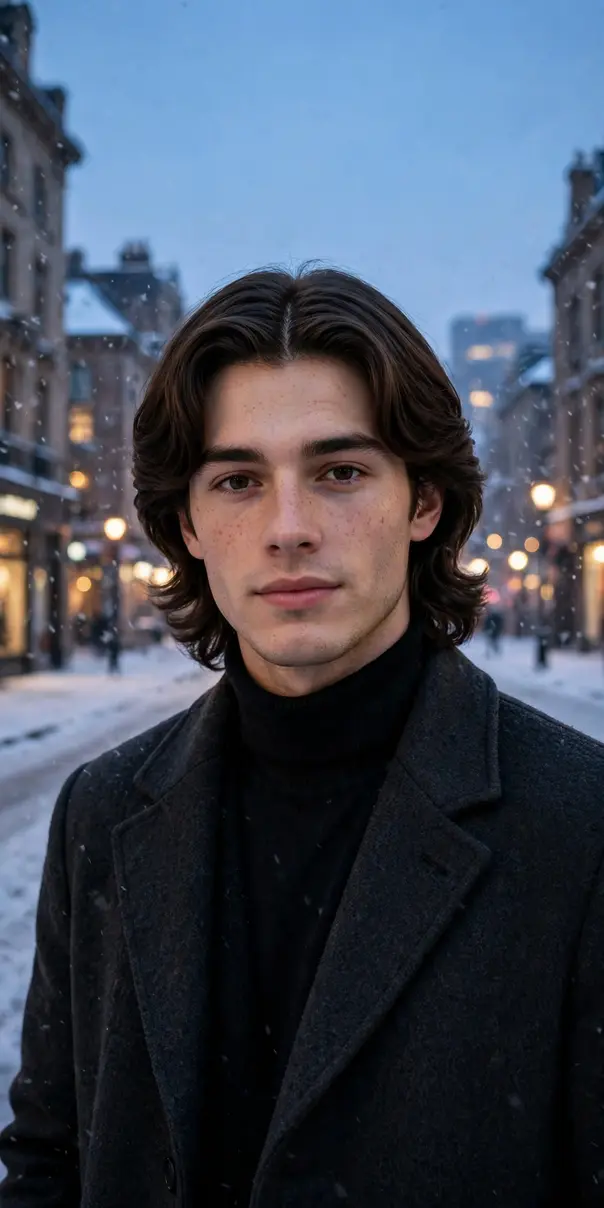
20 Curtain Hairstyles for Men: Middle Part, Curtain Bangs & Eboy Cuts for Winter
If one haircut owns the Pinterest boards this winter, it is the curtain. Curtain hairstyles for men are the season’s breakout search — the 90s revival has fully landed, and the middle part is the look men keep saving, screenshotting and taking to their barbers. The reason is practical as much as fashionable: a curtain frames the face when everything below it is wrapped in coats, scarves and hoodies, it sits flat under a beanie without a fight, and it grows out gracefully between cuts — exactly what you want when barber visits slip in the cold months.
Below are the 20 curtain hairstyles for men worth booking this winter, from the classic curtain haircut to the eboy cut, curtain fades, long flows and the finale king. Every style comes with the face shapes it flatters, the kit it needs, the upkeep it honestly takes and the exact words to say to your barber. Short or long, straight or curly, there is a parting here for your hair type — and if the middle part is new to you, the softer versions near the top are the easiest entry. Building a complete winter look? Our 20 Korean hairstyles for men covers the two block family the curtain blends with, the curly hairstyles for men guide handles the textured versions in depth, and our 20 mens hairstyles for winter rounds out the season.
One honest rule before the list: a curtain lives or dies on two things — a trained parting and enough length at the front. The part will fight you for the first week or two, and a fringe cut too short simply will not fall. Train the part daily, keep the product light, and let the front grow past the cheekbones before you judge it. Now, the 20 styles.
1 of 20 — The Classic Curtain Haircut
What is the classic curtain haircut, the original of all curtain hairstyles for men?
It is the blueprint every other style on this list edits: a clean centre part, fringe grown long enough to fall in two panels either side of the face — like the curtains it is named after — and the sides kept neat with scissors or a soft taper. The classic curtain haircut is the most-booked of all curtain hairstyles for men because it flatters almost everyone and asks for almost nothing in the morning. In winter the longer front earns its keep twice over, framing the face above a coat collar and lying flat under a beanie instead of springing up.
Face Shape: Best on oval, square and heart faces — the falling panels soften a strong jaw and balance a wider forehead.
Grooming Kit: A fine-tooth comb for the parting, a light styling cream, a blow dryer and a small round brush for the front.
Maintenance: Train the parting daily for the first two weeks, trim every 4–5 weeks to hold the length, wash the fringe more often than the rest — it sits on the forehead.
Barber Script: “Classic curtain haircut, centre part, fringe long enough to tuck behind the ears, sides scissor-cut and neat, nothing disconnected.”
Q: How long does the front need to be for a classic curtain?
A: The fringe should reach at least the cheekbones, ideally long enough to tuck behind your ears. Shorter than that, the panels will not fall either side of the face — they just stick forward like a fringe.
Q: Will a curtain haircut suit fine hair?
A: Yes, if you keep it honest: fine hair needs the lighter, scissor-cut version with less length, otherwise the panels separate and look stringy. A matte styling cream adds body without the weight that collapses fine hair.
The blueprint curtain — two clean panels, one centre part, zero effort in the morning.
2 of 20 — Middle Part Flow
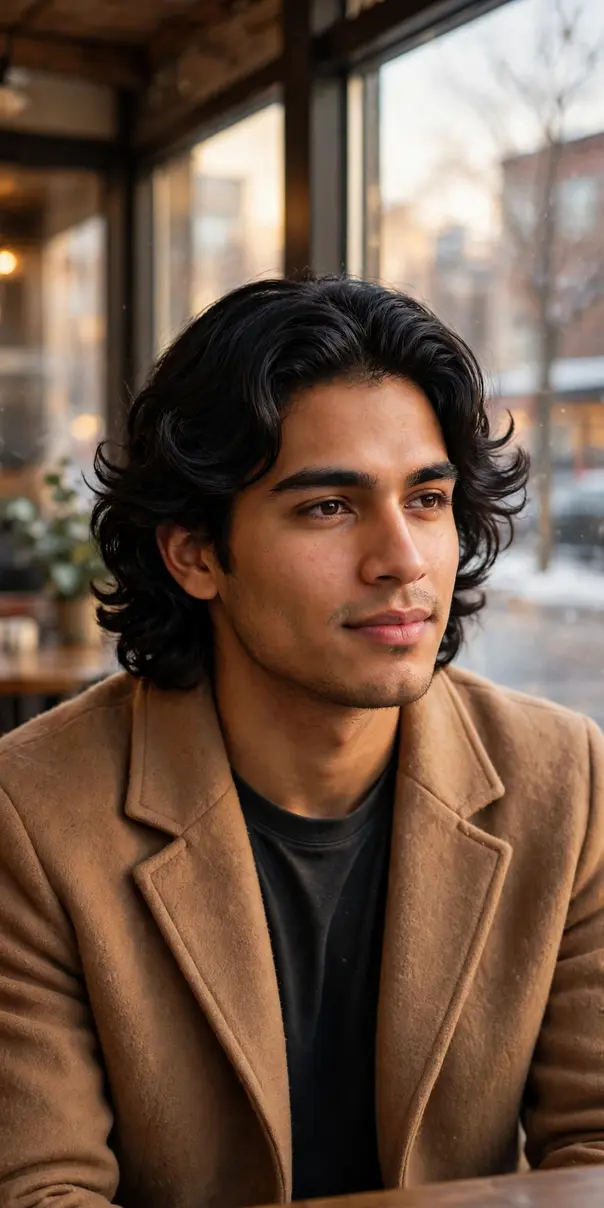
What makes the middle part flow the grown-out king of the middle part hairstyle family?
The middle part flow takes the curtain and lets it grow: longer on top, longer at the sides, everything swept back and to the sides with natural movement instead of neat panels. This is the middle part hairstyle for men who want the relaxed, expensive look — hair that moves when you walk and gets tucked behind the ears rather than styled into place. It is a true middle part flow: the parting stays, but the finish is loose, touchable and a little undone. In winter it pairs perfectly with knitwear and longer coats, and it forgives a missed barber appointment better than any cut here.
Face Shape: Best on oval and longer faces; the side volume can widen a round face, so keep the sides slimmer if yours is round.
Grooming Kit: A wide comb, a sea-salt spray for texture, a light leave-in conditioner and a blow dryer for direction.
Maintenance: This is a grow-out project — trims every 6–8 weeks to clean the ends only, condition regularly, and re-train the parting after every wash.
Barber Script: “Middle part flow — keep all the length, layers for movement, clean the ends only, no thinning on top.”
Q: How long does a middle part flow take to grow?
A: From a short cut, plan on four to six months before it truly flows. The awkward stage around month three — when it is too long to sit and too short to tuck — is where most men quit; a beanie and patience get you through it.
Q: How do I stop the flow looking flat by midday?
A: Apply sea-salt spray to damp hair and blow-dry the front up and back before letting it fall into the part. Product on dry hair at midday only weighs it down — a quick water mist and finger-raking revives it better.
The curtain, grown up and let loose — movement is the whole point.
3 of 20 — Curtain Bangs with Low Taper Fade
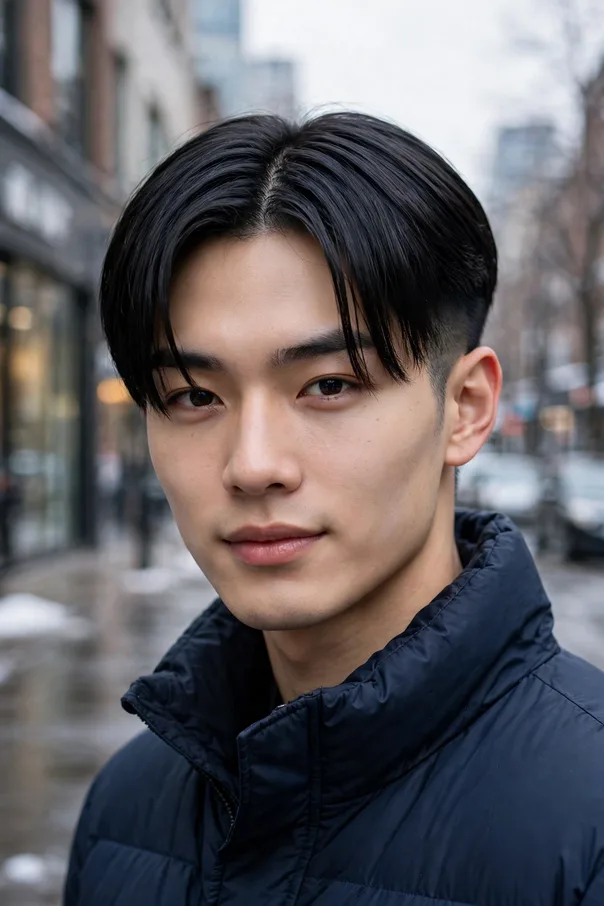
How do curtain bangs work with a low taper fade?
This is the cleanest way into the curtain: proper curtain bangs at the front — two panels splitting at the centre — with the sides and back taken down in a low taper fade so the edges stay sharp. The curtain haircut fade contrast is gentle at this height: the top keeps its length and softness while the taper tidies the hairline and neckline. It is the version office men book when they want the trend without the grown-out look, and in winter the tidy sides sit neatly under hats while the bangs do the framing. The easiest curtain to maintain on this whole list.
Face Shape: Suits almost everyone; the low taper keeps width off the sides, which flatters round and square faces especially.
Grooming Kit: A fine-tooth comb, a light matte cream, a blow dryer, and a trimmer only for stray neckline hairs between visits.
Maintenance: The taper needs a tidy every 2–3 weeks, the bangs a trim every 4–5, and daily parting training for the first fortnight.
Barber Script: “Curtain bangs at the front, centre part, low taper fade on the sides and back, keep the top long and soft.”
Q: Are curtain bangs the same as a regular fringe?
A: No — a fringe falls straight down across the forehead; curtain bangs are parted in the centre and fall to both sides, opening the face up. The same hair can be worn both ways once it is long enough, which makes this a flexible first cut.
Q: Will a low taper fade grow out badly with a curtain?
A: Low tapers grow out the softest of any fade — the edges blur gradually rather than showing a hard line. You will want the neckline cleaned around week three, but the shape holds its dignity far longer than a high fade would.
Sharp edges, soft front — the office-safe way into the curtain.
4 of 20 — The Eboy Curtain Cut
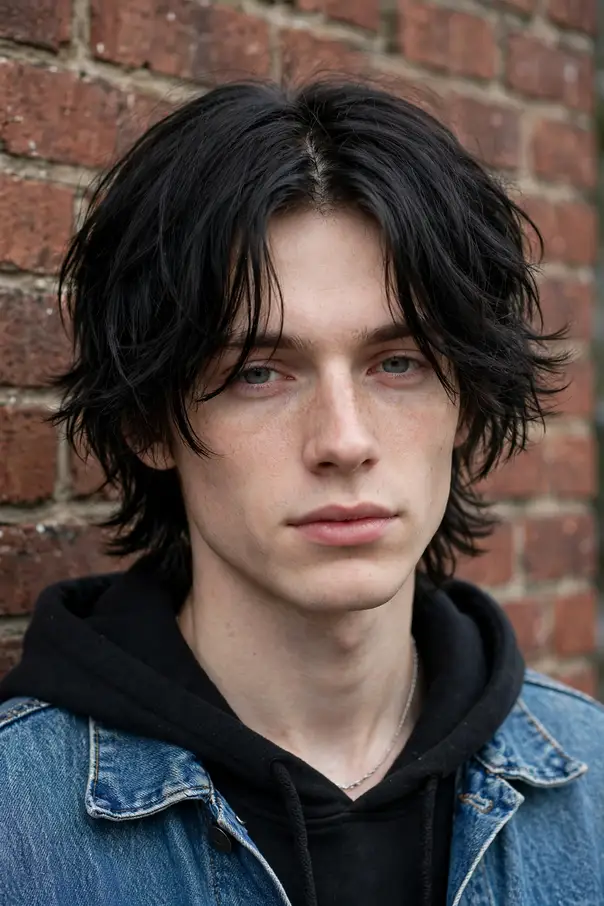
What is the eboy haircut, and how is it different from a classic curtain?
The eboy haircut is the curtain cut re-edited by the internet: the front strands are left longer and choppier, hanging down either side of the face and often into the eyes, the parting is less polished, and the whole thing is deliberately messier than the classic curtain. Where the classic is neat, the eboy cut is attitude — it is the most-screenshotted of all curtain hairstyles for men among younger men, usually worn with straighter hair that can hang in those front pieces. In winter it thrives under beanies and hoods, the two side strands escaping at the front like a signature.
Face Shape: Best on oval, heart and slimmer faces; the hanging strands lengthen the face, which can overwhelm a short face.
Grooming Kit: A matte texture powder or paste, a fine comb, and a blow dryer — the mess is made deliberately, not by accident.
Maintenance: Trim every 4 weeks to keep the chop in the right places, wash the front sections often, and expect daily restyling — controlled mess takes minutes, not seconds.
Barber Script: “Eboy curtain cut — centre part, front strands long and choppy, hanging past the cheekbones, textured ends, sides kept medium.”
Q: Do I need straight hair for an eboy haircut?
A: It works best on straight to slightly wavy hair, because the look depends on those front strands hanging down. Wavy hair can wear a softer version; very curly hair will spring up too much and reads as a curly curtain instead — a different style on this list.
Q: Is the eboy cut too young for the office?
A: The full version, with strands in the eyes, is a statement. For work, ask for the same cut with the front a touch shorter and the sides tapered — you keep the centre part and the texture, lose the distraction, and it reads as a normal curtain.
The curtain with the polish knocked off — two strands down, all attitude.
5 of 20 — Long Curtain Hairstyle

Why is the long curtain hairstyle the boldest version of the middle part?
Because it commits fully: the long curtain hairstyle grows the curtain out past the ears, often to the chin or jaw, with the centre part running through the whole length. It is the most striking of all curtain hairstyles for men — the panels frame the entire face like the original 90s heartthrob cuts, and the movement when you turn your head is the whole effect. Long hair is also a genuine winter asset, adding warmth around the ears and neck that short cuts cannot. The trade-off is honest: this is the highest-maintenance curtain here, and thin hair will not carry it.
Face Shape: Best on oval, square and long faces with strong features; the length can swamp a small or short face.
Grooming Kit: A wide-tooth comb, a leave-in conditioner, a light hair oil for the ends, and a blow dryer with a diffuser for gentle drying.
Maintenance: Condition every wash and oil the ends daily in winter, trim split ends every 8 weeks, and expect a proper morning routine — this length shows neglect fast.
Barber Script: “Long curtain hairstyle — centre part all the way through, keep the length, light layers for movement, clean the ends only.”
Q: How long does it take to grow a long curtain hairstyle?
A: Hair grows roughly half an inch a month, so from a short back and sides you are looking at a year or more to reach chin length. From an existing medium curtain, six months of patience and end-trims usually gets you there.
Q: Does the long curtain work with thin hair?
A: Honestly, it is the hardest version for thin hair — length separates and shows the scalp through the parting. If your hair is fine rather than thinning, keep it at the shorter medium curtain instead, where the panels still read full.
Full-length panels, full commitment — the curtain at maximum drama.
6 of 20 — Wavy Curtain Hairstyle
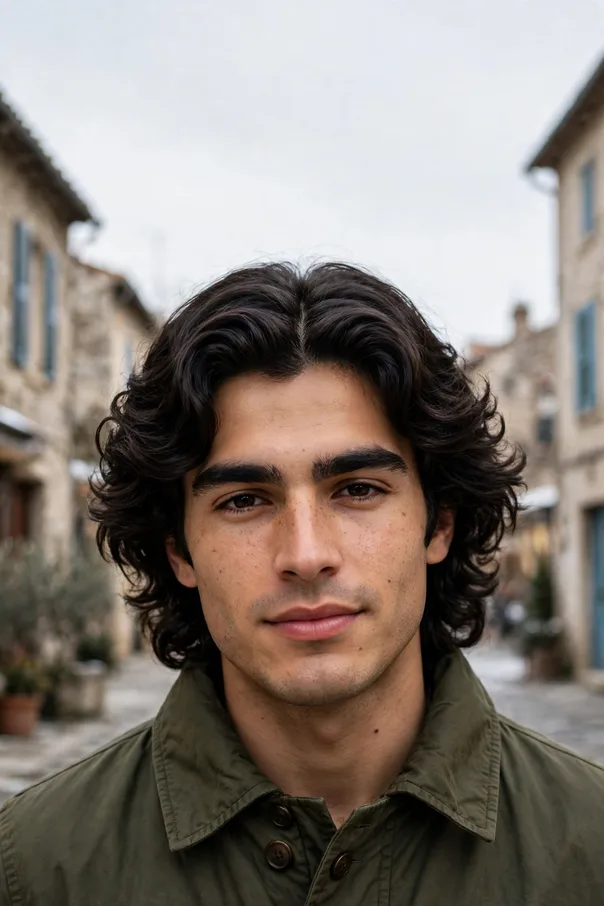
Why does wavy hair make the best natural curtain hairstyle for men?
Because the wave does the styling for you. On wavy hair, a middle part hairstyle falls into two soft panels with built-in movement and volume that straight hair needs product and a blow dryer to fake. The wavy curtain is the most forgiving of all curtain hairstyles for men: it looks better slightly messy, hides an imperfect parting, and the texture keeps the panels from lying flat and dull through a winter day. Scarves and coat collars ruffle it; a finger-rake restores it. If your hair has any natural bend, this is the version your barber will talk you into — rightly.
Face Shape: Universally flattering; the soft volume balances both narrow faces and strong jaws without harsh lines.
Grooming Kit: A curl-friendly cream or light mousse, a wide comb, a diffuser attachment, and a sea-salt spray for second-day revival.
Maintenance: Trim every 5–6 weeks, never brush it dry (that is where frizz comes from), and refresh with a water mist and scrunch rather than rewashing.
Barber Script: “Wavy curtain — centre part, keep the natural wave, layers to help it fall either side, no thinning shears on top.”
Q: How do I stop a wavy curtain going frizzy in winter?
A: Frizz is dry hair reaching for moisture in the air. Use a cream on damp hair, dry with a diffuser or air-dry, and never touch it while it dries. Heated indoor air is the real culprit — a leave-in conditioner is your winter insurance.
Q: Should I straighten the front to make the panels neater?
A: No — the wave is the texture that makes this version work. Straightened front pieces against wavy sides looks accidental. If one side waves harder than the other, your barber can balance it with layering, not heat.
Nature does the styling — the wave is the texture, not the problem.
7 of 20 — Curly Curtain Hairstyle
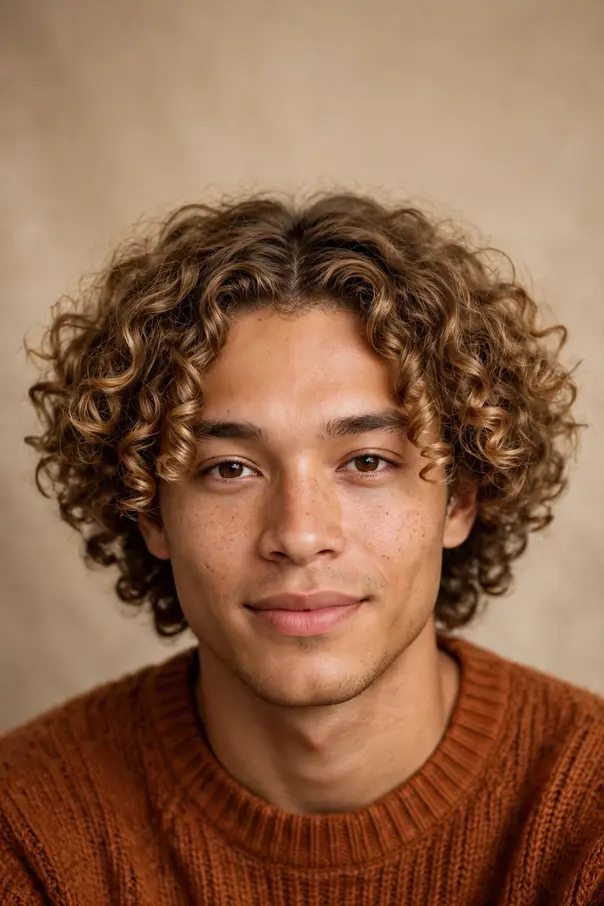
Can you wear a curtain haircut with curly hair?
Yes — and on curly hair the curtain becomes something of its own: a centre part with curls falling in two defined panels either side of the face, full of volume straight hair cannot buy. The curly curtain haircut works because curls give the front instant body, and the parted shape tames what can otherwise be a shapeless mass. The rules differ from the straight version, though: the front needs more length than you think, because curls spring up several inches when dry, and the cut must be done dry so the barber sees the true fall. A winter gift, too — the volume insulates.
Face Shape: Best on oval, square and diamond faces; the side volume widens narrow faces kindly and softens a hard jaw.
Grooming Kit: A curl cream, a leave-in conditioner, a wide-tooth comb for wet hair only, and a diffuser.
Maintenance: Cut dry every 6 weeks, condition generously in winter, refresh curls with water and cream rather than daily washing, and never let a barber use thinning shears on it.
Barber Script: “Curly curtain — centre part, cut it dry, front longer than it looks, sides shaped not faded to nothing, keep the curl pattern intact.”
Q: How long should the front be on a curly curtain?
A: Longer than your instinct says — curls can shrink a third of their length as they dry. Ask for the front to sit at chin length when stretched, which usually lands around the cheekbones once it springs back into curl.
Q: How do I get the parting to stay in curly hair?
A: Part it wet, straight out of the shower, apply cream, and let it dry in position — curls take a set as they dry. Fighting a dry curly part into place never works; you are re-training the dry shape every single day.
Curls give the curtain free volume — cut it dry, part it wet.
8 of 20 — Curtain with Undercut
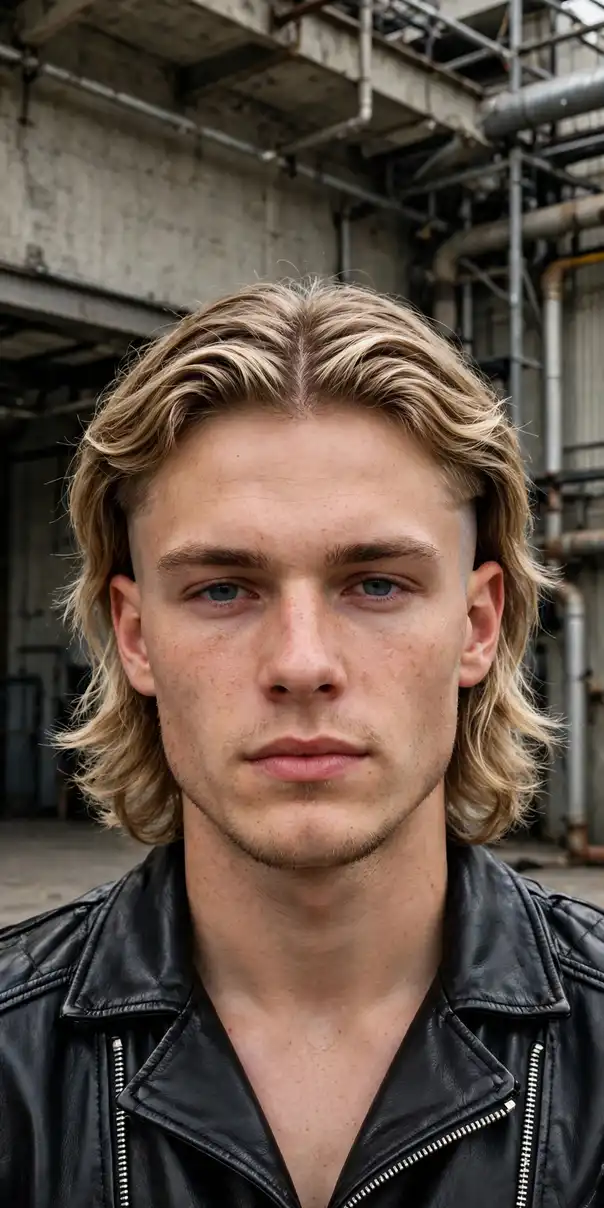
What does an undercut add to a curtain haircut?
Contrast. The curtain with undercut keeps the long, parted top exactly as the classic — then disconnects it completely from sides clipped short and tight, with no blend in between. The long panels fall over the clipped sides, and the line where they meet is the statement. It is the sharpest, most deliberate of all curtain hairstyles for men, and the most modern: all the romance of the curtain on top, all the edge of the undercut underneath. Thick hair loves it, because the undercut removes the bulk that makes a full curtain look heavy. It also grows a clear grow-out line — book accordingly.
Face Shape: Best on oval and square faces; the disconnection adds width at the sides of the top, which suits narrower faces well.
Grooming Kit: A comb, a medium-hold cream, a blow dryer to direct the panels, and clippers only if you self-maintain the undercut — most men should not.
Maintenance: The undercut needs re-clipping every 2–3 weeks or the disconnection goes scruffy, and the top trims every 5–6 weeks.
Barber Script: “Curtain with undercut — centre part on top, keep the length, sides undercut to a two or three with no blend, disconnected.”
Q: Does the undercut make the curtain easier or harder to grow out?
A: Harder, honestly. When you grow an undercut out, the sides pass through an awkward sticking-out stage under the long top. Most men grow the top shorter first, or commit to regular tapers during the transition.
Q: Can I wear the curtain undercut hair tied up?
A: Yes — the long top ties into a small knot or ponytail and the undercut underneath looks sharp doing it. That versatility is half the appeal: curtain down for the classic look, tied up when you want it off your face.
Romance on top, edge underneath — the curtain with a hard line.
9 of 20 — Textured Curtain Fringe
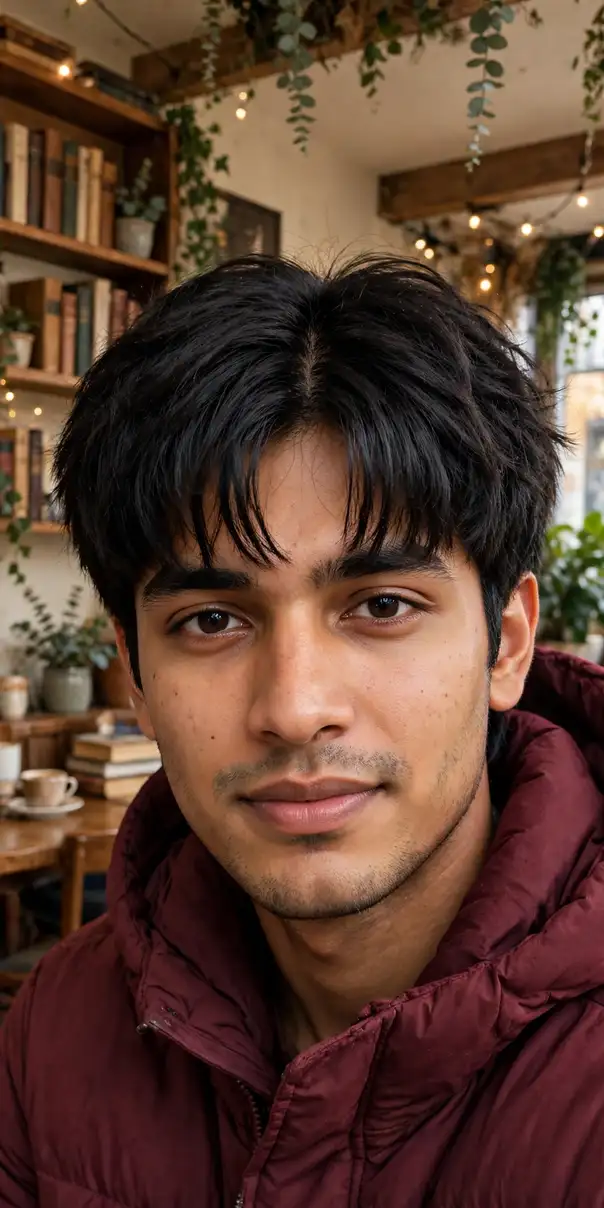
What is a textured curtain fringe, and who should book it?
The textured curtain fringe takes the curtain and chops into it: the ends are point-cut, the layers are uneven, and the panels fall in separated pieces rather than two smooth curtains. This curtain fringe is the answer for men whose hair is too thick and straight for the classic — where smooth panels look like a helmet, texture breaks the front into movement. It is also the most forgiving curtain for a slightly uneven hairline, because no clean edge is ever on show. Worn messy with matte product, it reads effortless; it is the curtain for men who hate looking styled.
Face Shape: Suits most faces; the broken front softens square jaws and the piecey texture adds interest to longer faces.
Grooming Kit: A matte paste or texture powder, fingers rather than a comb, and a blow dryer for rough-drying only.
Maintenance: The texture needs re-cutting every 4 weeks — as it grows, the chop softens back into a plain curtain; rough-dry and paste daily.
Barber Script: “Textured curtain fringe — centre part, point-cut the ends, lots of texture through the front, keep it piecey not smooth.”
Q: What is the difference between a curtain fringe and a classic curtain?
A: The finish. A classic curtain falls in two smooth, clean panels; the curtain fringe is cut with point-cutting and layers so the front separates into textured pieces. Same parting, same idea — one is polished, one is deliberately rough.
Q: Will a textured curtain suit thin hair?
A: Texture is a double-edged sword on thin hair: a little point-cutting adds the look of movement, but heavy texturising removes weight the hair cannot spare. Ask your barber for surface texture only, and keep the perimeter full.
The polished curtain, roughened up — texture instead of smoothness.
10 of 20 — Curtain with Mid Fade
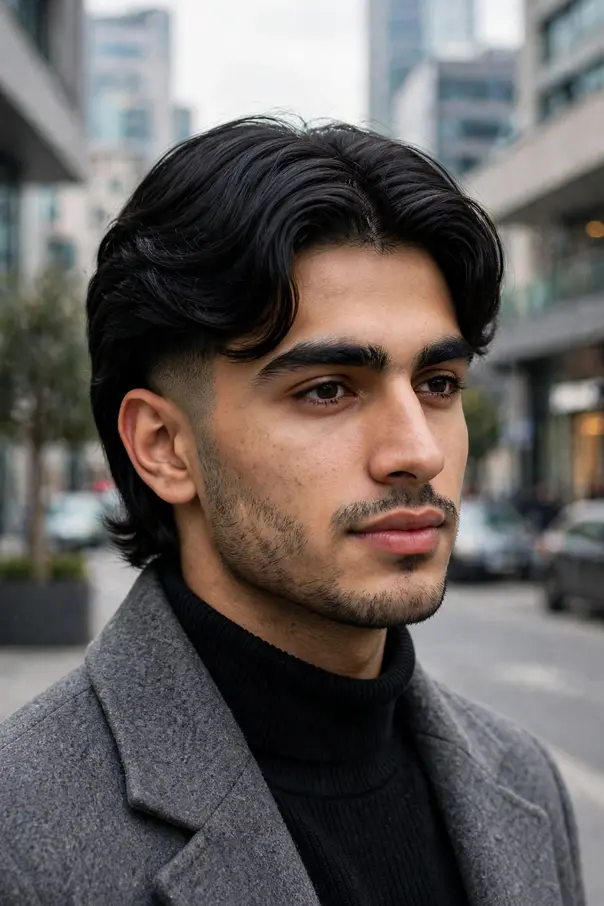
Why is the curtain with a mid fade the balanced curtain haircut fade?
Because the mid fade is the middle road: higher and sharper than the low taper, softer than the disconnected undercut. The curtain haircut fade at mid height cleans the sides down to skin around the ear level while the parted top keeps all its length and softness, so the contrast is real but never severe. It is the most barbershop-current of all curtain hairstyles for men — the version that fills weekend chairs — because it photographs sharp from every angle. In winter it keeps the sides tidy under beanies while the curtain front still frames the face over a collar.
Face Shape: Best on oval, round and square faces; the faded sides slim the silhouette, which helps wider faces most.
Grooming Kit: A fine-tooth comb, a light matte cream, a blow dryer — and no home clipper work; the fade is barber territory.
Maintenance: Fades are a commitment: re-cut every 2 weeks to keep the gradient clean, top trimmed every 5, parting trained daily.
Barber Script: “Curtain with mid fade — centre part, top long, mid skin fade on the sides, blend it softly into the top.”
Q: Mid fade or low taper with a curtain — which should I pick?
A: Pick the mid fade if you want visible sharpness and a more current barbershop read, and you can visit every two weeks. Pick the low taper if you want it softer, longer-lasting between cuts and safer for a conservative workplace.
Q: Does a fade kill the winter benefit of a curtain?
A: Partly — you lose the warmth around the ears that longer sides give. The front still frames the face the same, so the look survives; you will just feel the beanie doing more of the work on cold days.
Sharp sides, soft front — the weekend barbershop’s favourite curtain.
11 of 20 — Short Curtain Haircut
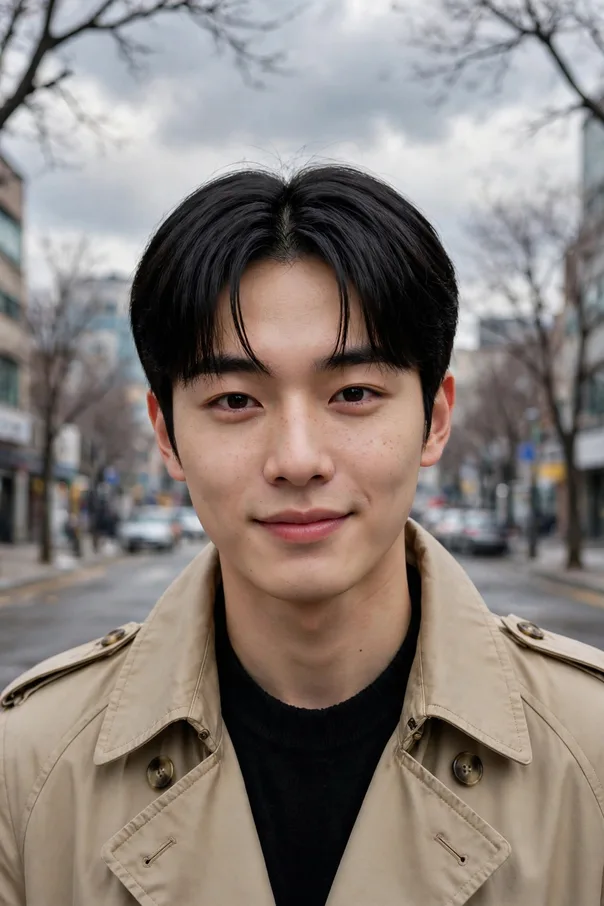
Is a short curtain haircut possible, or do curtains need length?
Possible — and for many men it is the smartest place to start. The short curtain haircut keeps the front just long enough to part in the centre and fall a few inches either side, with the sides in a neat taper or scissor cut. It reads as a tidy, classic centre part hairstyle rather than the full romantic curtain, which makes it the easiest version to wear to a conservative job, and the lowest-maintenance curtain on this list. It is also the perfect test drive: grow from here into the classic over a few months if the parting suits you.
Face Shape: Works on nearly every face; the shorter panels are kind to smaller faces that long curtains would swamp.
Grooming Kit: A small comb, a light cream or a pea of matte paste, and nothing else — this version needs almost no kit.
Maintenance: Trim every 3–4 weeks to hold the short shape, part it fresh from the shower daily, and the rest is wash and go.
Barber Script: “Short curtain haircut — centre part, front just long enough to split and fall, sides tapered neat, keep it tidy.”
Q: How short can the front be before it stops being a curtain?
A: Once the front cannot part and fall to both sides — roughly below three inches — it stops reading as a curtain and becomes a short fringe with a parting. Three to four inches at the front is the working minimum for the split to show.
Q: Is the short curtain a good grow-out starting point?
A: It is the best one. You learn whether your hair trains into a centre part and whether the look suits your face at short length, where mistakes are cheap — then simply skip trims at the front and let it grow into the classic.
The curtain in miniature — the cheap, tidy way to test the parting.
12 of 20 — The 90s Curtain

What makes the 90s curtain the definitive centre part hairstyle?
This is the original the revival is copying: the centre part hairstyle worn feathered and full, with the panels swept slightly back off the face, the sides left medium and natural, and not a fade in sight. The 90s curtain is softer and more romantic than the modern versions — the hair moves as one curtain of shine rather than sitting in cut pieces, and the whole thing depends on healthy, well-conditioned hair rather than barbering tricks. Worn with winter knitwear it lands exactly like the films that made it famous. If you want the authentic reference rather than the remix, book this one.
Face Shape: Best on oval and heart faces with good cheekbones — the swept-back panels put the whole face on show.
Grooming Kit: A shine-finish cream, a wide comb, a blow dryer with a round brush, and a good conditioner — this style is hair health first.
Maintenance: Trim every 5–6 weeks, condition religiously through winter, and blow-dry the panels back with a brush to get the feathered sweep.
Barber Script: “90s curtain — centre part, feathered panels swept back, sides medium and natural, no fade, keep the shine.”
Q: How is the 90s curtain different from the classic curtain today?
A: Movement and finish. The modern classic is often paired with tapers and matte product for a tidy read; the 90s version keeps the sides full, uses a brush to feather the panels back, and wears a healthier shine. It is the same parting with a softer hand.
Q: What hair type wears the 90s curtain best?
A: Straight to wavy hair with medium thickness is ideal — it needs to lie in smooth panels and move as one piece. Very thick hair gets bulky without layering, and tight curl follows its own version of the curtain instead.
The original heartthrob cut — feathered, shining, zero fade.
13 of 20 — Curtain with Beard
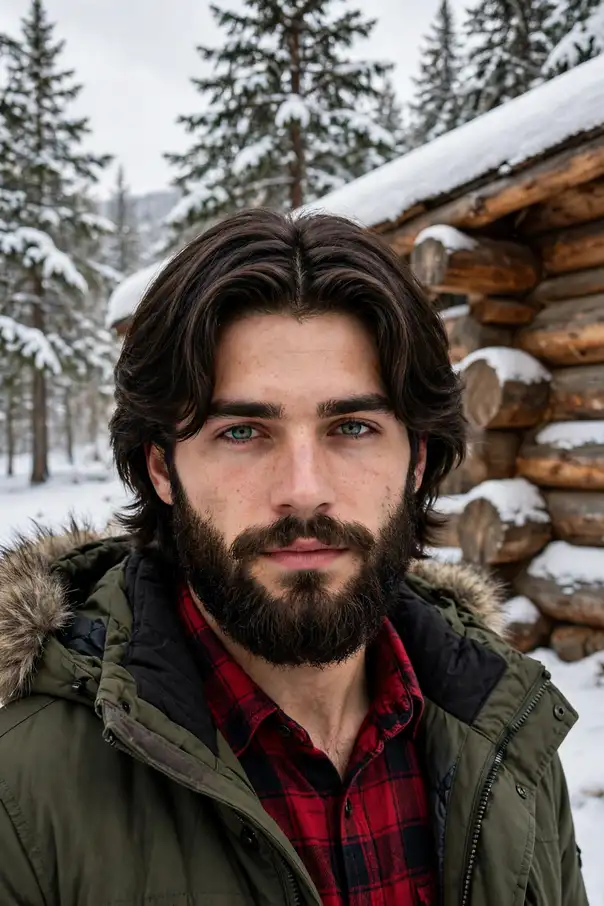
How do you balance a curtain hairstyle with a beard?
By treating the two as one silhouette. A curtain adds softness and length around the top of the face; a beard adds weight at the bottom — balanced well, a curtain with beard is the most complete-looking of all curtain hairstyles for men, and the pairing is everywhere this winter because the beard also does the cold-weather work the curtain cannot. The rules are simple: the longer the curtain, the shorter and tidier the beard should stay, so the face never disappears between two masses of hair. Keep the beard’s lines clean and let the curtain provide the softness.
Face Shape: The beard can be tuned to the face — longer on the chin for round faces, fuller at the sides for long faces, always balanced against the panels.
Grooming Kit: The curtain kit plus the beard kit: a comb and light cream up top, beard oil, a boar brush and a trimmer below.
Maintenance: Beard trimmed weekly and oiled daily against winter dryness, curtain trims every 4–5 weeks, and a monthly check that the two lengths still balance.
Barber Script: “Curtain on top as usual — and balance the beard to it: keep the beard short and tidy so the long front stays the feature.”
Q: What beard length works best with a classic curtain?
A: Short to medium — a short boxed beard or neat stubble-to-short length. The curtain is soft and loose, so the beard reads best with clean lines; a huge beard under a long curtain swallows the face between them.
Q: Should the beard have a fade blended into the curtain sides?
A: If your curtain has tapered or faded sides, yes — a faded beard that melts into the side is the polished finish. With scissor-cut natural sides, keep the beard’s top edge soft instead, so the two organic shapes agree.
Soft panels above, clean lines below — one silhouette, two crafts.
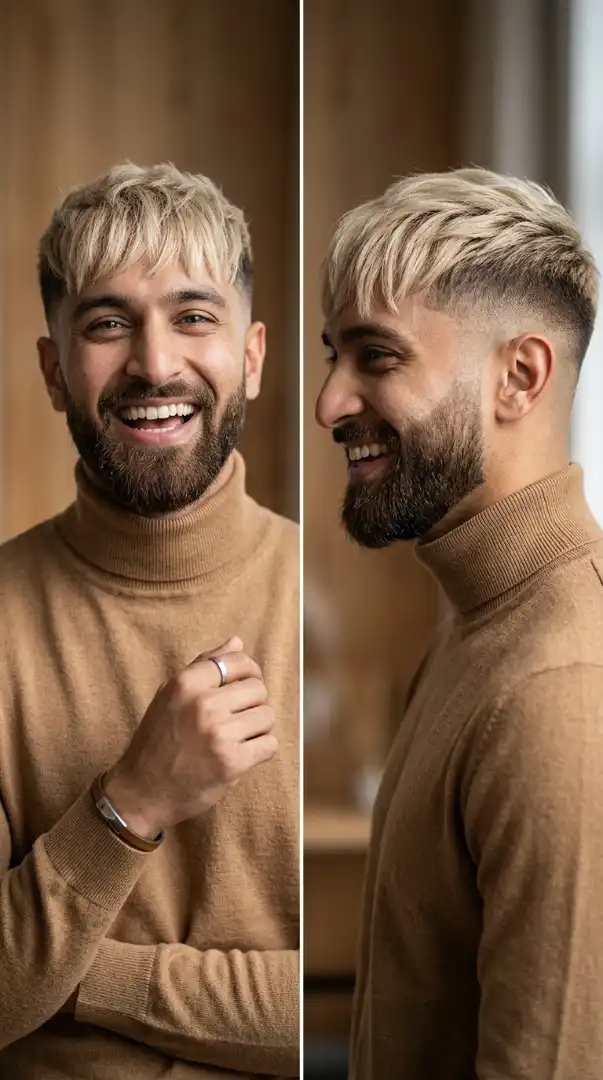
14 of 20 — Blonde Curtain Hairstyle

Why does a blonde curtain hairstyle hit differently?
Colour turns the curtain’s structure into the feature: on blonde hair the two panels read lighter, softer and more separated, and the parting catches the light, which is why the blonde curtain hairstyle is the one that keeps going viral among curtain hairstyles for men. Done well it is rarely one flat colour — the best versions keep slightly deeper roots and brighter pieces through the front panels, so the curtain has dimension as it moves. It is also a winter trick: blonde lifts a face that the cold months have left pale. The price is upkeep — coloured hair needs care.
Face Shape: Suits most faces; the lightness opens the face up, which flatters heart and oval shapes especially.
Grooming Kit: A purple-toned shampoo to keep the blonde clean, a deep conditioner, a light cream, and a heat protectant if you blow-dry.
Maintenance: Toner or purple shampoo weekly against brassiness, deep-condition through winter, root touch-ups every 6–8 weeks depending on the grow-out you can accept.
Barber Script: “Blonde curtain — centre part, and for the colour: brighter pieces through the front panels, keep the roots a shade deeper for dimension.”
Q: Do I need to bleach my whole head for a blonde curtain?
A: Not necessarily. If your hair is already light brown, highlights through the top and front panels often give the full effect with less damage and softer grow-out. Full bleach is only needed for the pale, icy versions — and it is the highest-maintenance route.
Q: How do I stop blonde hair going brassy or dry in winter?
A: Purple shampoo once a week neutralises the yellow tones, and conditioner becomes non-negotiable — bleached hair plus heated indoor air is a dryness trap. A weekly mask and light oil on the ends keeps the panels lying smooth.
The curtain in high definition — colour does half the styling.
15 of 20 — Two Block Curtain
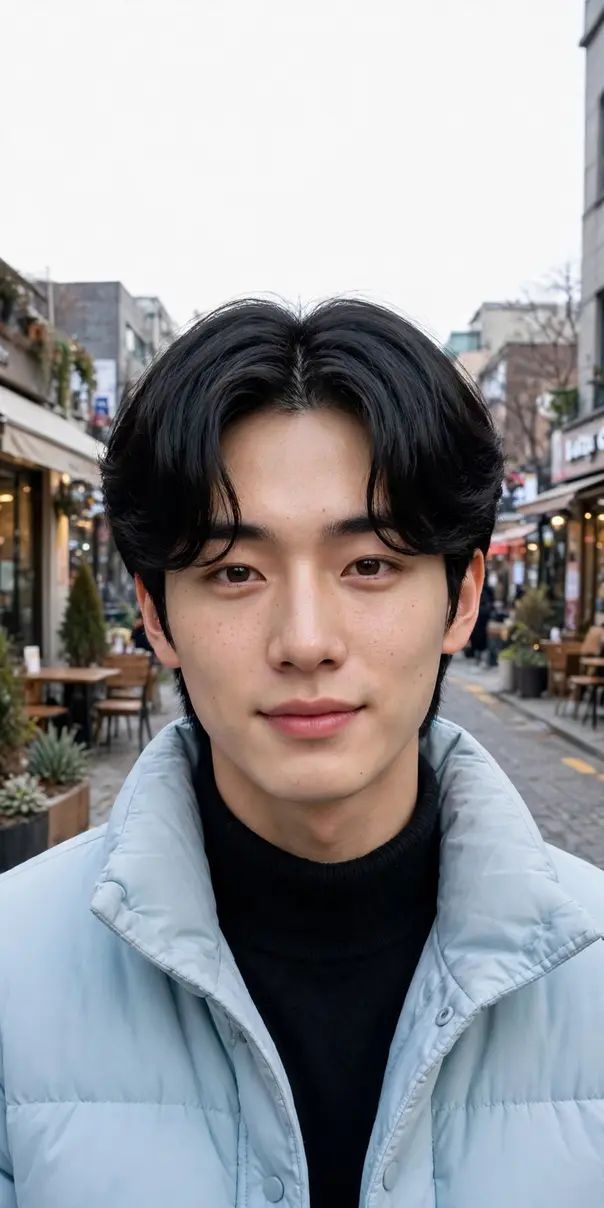
What is a two block curtain, the Korean edit of the curtain haircut?
The two block curtain is the Korean barbering system applied to the middle part: the hair is cut in two distinct blocks — a long, layered top block that carries the curtain, and a short, tapered under-block at the sides and back, disconnected where they meet. The top block is where the curtain lives, usually cut with soft layers so the panels fall light and feathery in the K-drama manner rather than heavy and solid. Of all curtain hairstyles for men, this is the most precisely engineered: every length is deliberate. It suits the neater dresser, and it is the natural crossover from the Korean cuts trending alongside it.
Face Shape: Best on oval, heart and round faces — the airy top adds height while the tight under-block keeps the sides slim.
Grooming Kit: A light styling essence or cream, a fine comb, and a blow dryer — Korean styling is about direction, not hold.
Maintenance: The under-block needs attention every 3 weeks, the top block every 5–6, and daily blow-drying to keep the panels feathering the right way.
Barber Script: “Two block curtain — long layered top block with a centre part, short tapered under-block, soft disconnection between them.”
Q: How is a two block curtain different from a curtain with undercut?
A: The under-block is tapered and graduated rather than clipped to one short length, and the disconnection is softer — the top feathers over it instead of ending in one hard line. The result reads neater and more polished, less raw.
Q: Does the two block curtain need daily styling?
A: More than the classic, yes. The feathered fall of the top block comes from blow-drying the panels down and slightly back after washing. It takes three minutes, but skip it and the top sits heavy and flat instead of layered.
Engineered in two blocks — the curtain at its most precise and feathery.
16 of 20 — Curtain Quiff Hybrid
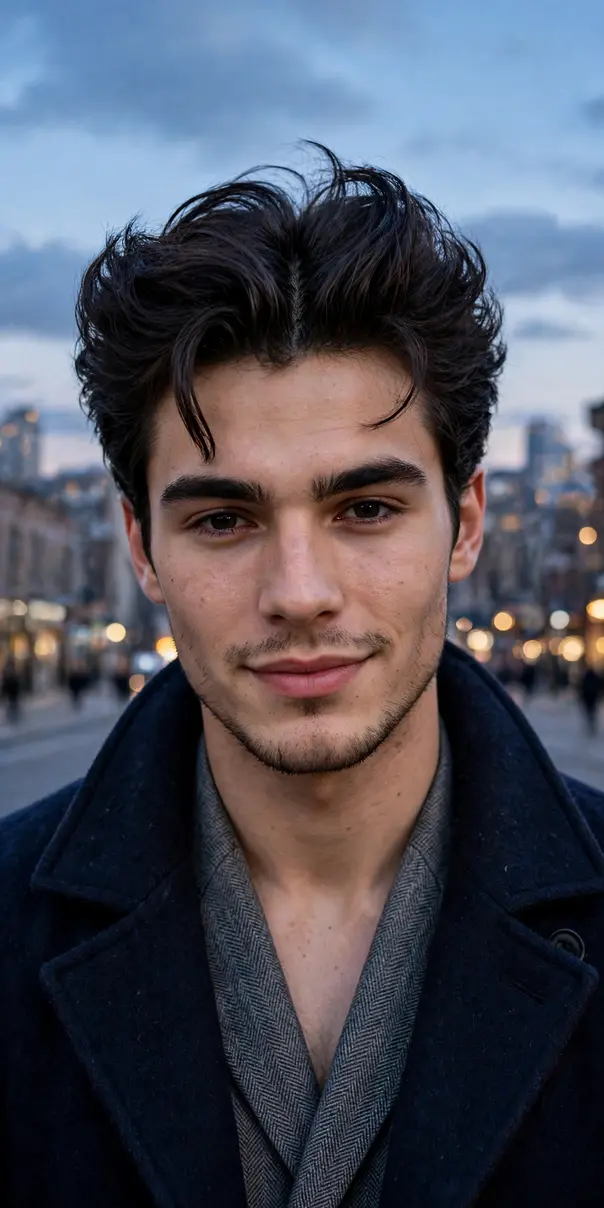
What is a curtain quiff, the hybrid of the middle part and the quiff?
The curtain quiff hybrid refuses to choose: it keeps the centre part and the two panels, but the front is cut and styled with lift, so the panels sweep up and back with quiff volume instead of hanging down. It is the middle part hairstyle for men who find the classic curtain too flat or too soft — the raised front adds height, sharpness and a more styled read while the parting keeps it current. Shorter faces love it, because the lift lengthens. In winter it holds its own under the season’s taller styling, though a beanie will flatten it — restyle after, not before.
Face Shape: Excellent for round and shorter faces, where the front lift adds length; on long faces keep the lift modest.
Grooming Kit: A blow dryer (non-negotiable for the lift), a round brush, a pre-styling spray and a medium-hold matte paste.
Maintenance: Styled daily — this is the highest-effort front on the list; trims every 4 weeks to keep the front length that the lift depends on.
Barber Script: “Curtain quiff hybrid — centre part, front long enough to lift and sweep back, keep volume at the front, sides tapered.”
Q: How do I get the front to lift instead of falling flat?
A: Blow-dry the front up and back with a round brush while it is damp, with pre-styler in it — the lift is set while drying, not added after. Paste goes in last, just to hold the shape the dryer already made.
Q: Does the curtain quiff suit thinning hair at the front?
A: It can actually help in early stages: the lift and sweep-back create the impression of density at the front. If the hairline itself has receded significantly, the receding-hairline curtain further down this list is the cleverer design.
The parting, with lift — a curtain that stands up instead of hanging down.
17 of 20 — Messy Curtain
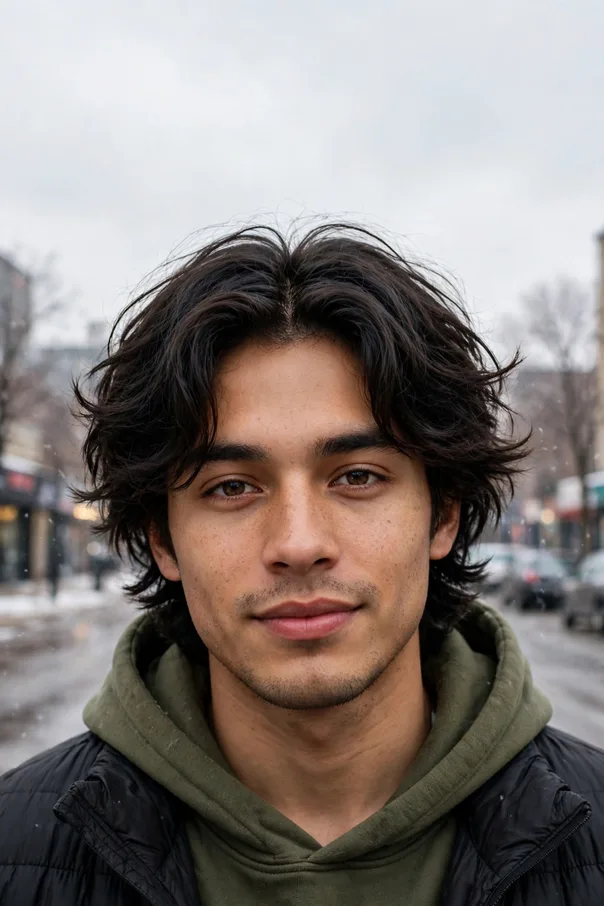
Why is the messy curtain the easiest curtain hairstyle for men to live with?
Because it removes the pressure. The messy curtain keeps the centre part and the length, then deliberately breaks every rule of neatness: the parting is approximate, the panels are tousled and piecey, and stray strands are part of the design. Among curtain hairstyles for men it is the lowest-effort daily wear — rough-dry it, push it roughly into place with matte paste, and the less perfect it looks, the more right it is. It suits men whose hair will not lie flat anyway; instead of fighting cowlicks and waves, the messy curtain hires them. Winter hats only improve it.
Face Shape: Suits most faces; the irregular front softens strong features and hides an uneven hairline better than any neat version.
Grooming Kit: A matte paste or texture powder, a sea-salt spray, and your fingers — a comb defeats the purpose.
Maintenance: Trim every 4–5 weeks to keep the shape inside the mess, and restyle by rough-drying daily; second-day hair often looks better than wash-day.
Barber Script: “Messy curtain — centre part, textured and layered so it falls tousled, nothing blunt, keep it deliberately undone.”
Q: How messy is too messy with this cut?
A: The line is the silhouette: the overall shape should still read as a parted curtain of even length. If one side is wildly longer, or the back sticks out while the front lies flat, that is a cut problem, not a styling choice — get the shape reset.
Q: Can I wear a messy curtain to a smart job?
A: The tidy end of messy, yes — same cut, styled with a comb and a little cream for work, fingers and paste at the weekend. It is one of the few styles here that genuinely dresses both ways without a re-cut.
Perfectly imperfect — the curtain that hats and cowlicks only improve.
18 of 20 — Curtain for a Receding Hairline
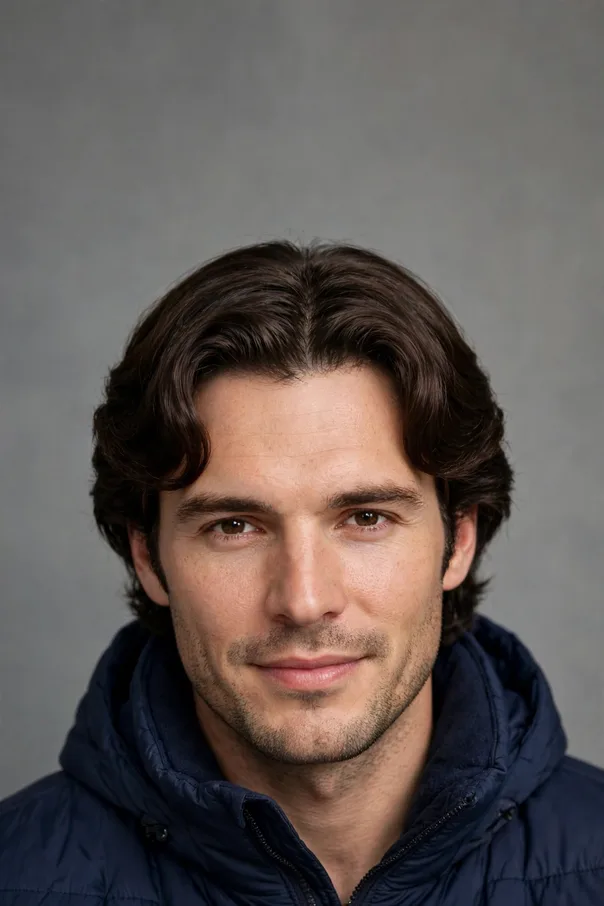
Can a curtain haircut work with a receding hairline?
Yes — designed properly, it is one of the cleverest cuts for early recession, because the curtain’s mechanics work in your favour: the fringe grows forward and parts in the centre, so the panels fall across the temples exactly where recession shows first. The key is honesty about the design — the front must be kept a little shorter and lighter than the classic, the parting sits where the hair is still strong, and the temples get coverage from hair falling diagonally, never from a long strand combed desperately sideways. Of all curtain hairstyles for men, this one most needs a barber who will tell you the truth.
Face Shape: Works on most faces; the temple coverage matters more than face shape here, and the panels soften the forehead’s width.
Grooming Kit: A matte, non-shiny styling cream (shine shows the scalp), a fine comb, and a blow dryer to set the diagonal fall.
Maintenance: Trim every 3–4 weeks — this design has the least margin for overgrowth, because extra length weighs the temple panels down and thins their coverage.
Barber Script: “Curtain for my hairline — centre part where the hair is strong, front shorter and light, panels falling diagonally across the temples, nothing combed over.”
Q: Won’t a middle part expose a receding hairline more?
A: A parting placed wrong will — which is why the part is set slightly off the weakest point and the panels are trained forward and diagonally, covering the temples rather than framing them. Done this way, the curtain hides early recession better than a swept fringe that lifts in the wind.
Q: When does a curtain stop working for a receding hairline?
A: When the recession reaches the point where the front cannot grow a panel at all, or the centre itself thins. At that stage a short crop or a buzz with a beard will look stronger and more confident. A good barber will say when you are approaching that line.
The fringe falls exactly where recession shows — coverage by design, not denial.
19 of 20 — Swept-Back Curtain

What is a swept-back curtain, the formal version of the middle part?
The swept-back curtain is the curtain grown up for the evening: the centre part stays, but instead of hanging, both panels are brushed back and slightly up off the face, flowing into swept-back sides for one continuous, polished movement. It is the sharpest middle part hairstyle on this list — the version that works with a suit, a wedding outfit and winter formalwear, because the face is fully open while the parting still gives it structure. It is also the natural grown-out destination of the classic curtain: the same hair, a different direction. The trade-off is product and a brush, daily.
Face Shape: Best on oval, square and heart faces with the features to carry a fully open face; it hides nothing, kindly or otherwise.
Grooming Kit: A round brush, a blow dryer, a medium-hold cream or light pomade with a natural shine, and a wide comb.
Maintenance: Styled daily with heat and a brush, trims every 4–5 weeks, and the sides need keeping as disciplined as the top.
Barber Script: “Swept-back curtain — centre part, panels long enough to brush back off the face, sides swept back too, no hard fade.”
Q: How do I stop swept-back panels falling forward during the day?
A: Set them while damp: blow-dry back with a round brush first, then apply product to dry hair to lock the direction. Product on wet hair alone slides; the dryer’s set is what actually holds the sweep until evening.
Q: Can I switch between a hanging curtain and the swept-back version?
A: Yes — they are the same cut worn two ways, which is this style’s real value. Hang it on casual days, brush it back when you need polish. Once the front reaches ear length, both directions are on the menu every morning.
The same curtain, brushed for the evening — polish without losing the part.
20 of 20 — The Finale: The Winter Curtain King
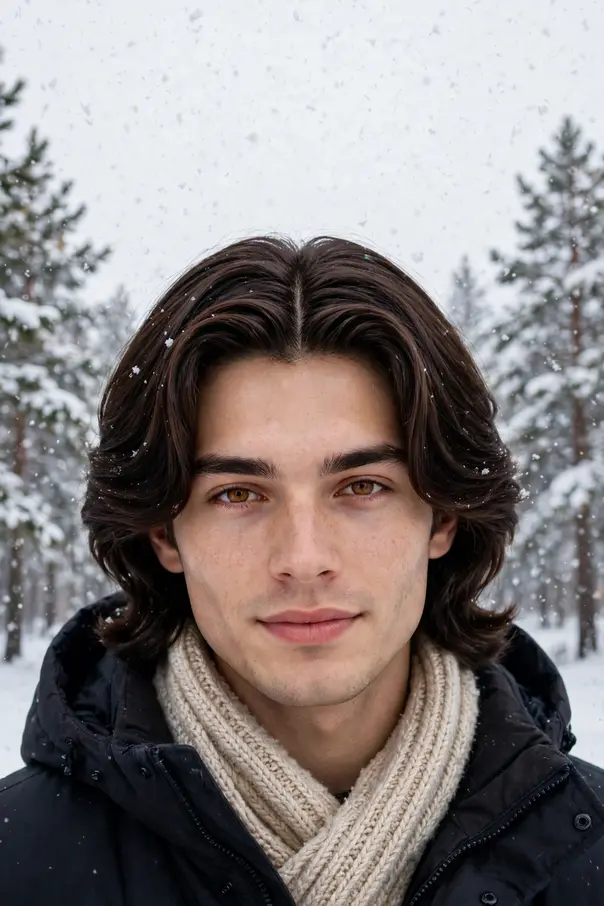
What makes the Winter Curtain King the ultimate of all curtain hairstyles for men?
The finale is everything this list builds toward: the most voluminous, polished middle-part curtain a man can wear — a full centre part running through thick, healthy length, the panels falling in two deep, shining curtains past the cheekbones, the sides full and flowing rather than faded, and every inch of it conditioned, directed and deliberate. It is the endgame of curtain hairstyles for men: maximum frame for the face in the season of coats and collars, maximum movement, and a silhouette no short style can imitate. This is the curtain the other 19 are growing toward.
Face Shape: Best on oval, square and longer faces with the density to fill it; keep the panels slightly shorter on smaller faces so the volume does not swamp them.
Grooming Kit: The full arsenal — a quality conditioner, a leave-in treatment, a round brush, a blow dryer, a shine cream and a wide comb.
Maintenance: Condition every wash and treat weekly through winter, blow-dry the panels into place daily, professional reshaping every 5–6 weeks.
Barber Script: “Winter Curtain King — keep all the length and volume, centre part polished, panels deep and clean, tidy only the ends.”
Q: How long does it take to grow the Winter Curtain King?
A: From a classic curtain, one committed season of growth — four to six months of end-only trims — gets you most of the way. From short hair, think of it as a two-stage project: the classic first, then the king. The polish, not just the length, is what takes the time.
Q: How do I keep long curtain panels healthy through winter?
A: Treat them like the wool coat they resemble: wash gently and less often, condition every single wash, keep heated indoor air from drying them out with a leave-in treatment, and comb out beanie and scarf tangles with your fingers first, never by force.
The endgame curtain — a full season of growth, worn like a crown.
The Bottom Line
The best curtain hairstyles for men this winter share one secret: none of them is an accident. The classic is patience, the eboy is nerve, the mid fade is discipline — pick the one that matches your hair type, your face and your honest maintenance budget, then grow it properly: train the parting daily for the first fortnight, let the front reach the cheekbones before you judge it, keep the product lighter than you think, and use a barber who cuts for the fall of your hair rather than against it. Start with the short curtain or the low taper version if you are new to the middle part; grow toward the flow, the 90s original or the Winter Curtain King if you are not.
Whichever you choose, complete the look: sharpen the curtain’s softness against the volume of our wolf cut hairstyles for men guide, or match it with one of our 20 winter haircuts for men. Winter is short — part it in the middle and grow accordingly.