Mid Taper Fade Haircuts You Need To Try
1 of 11 — The Coastal Commander
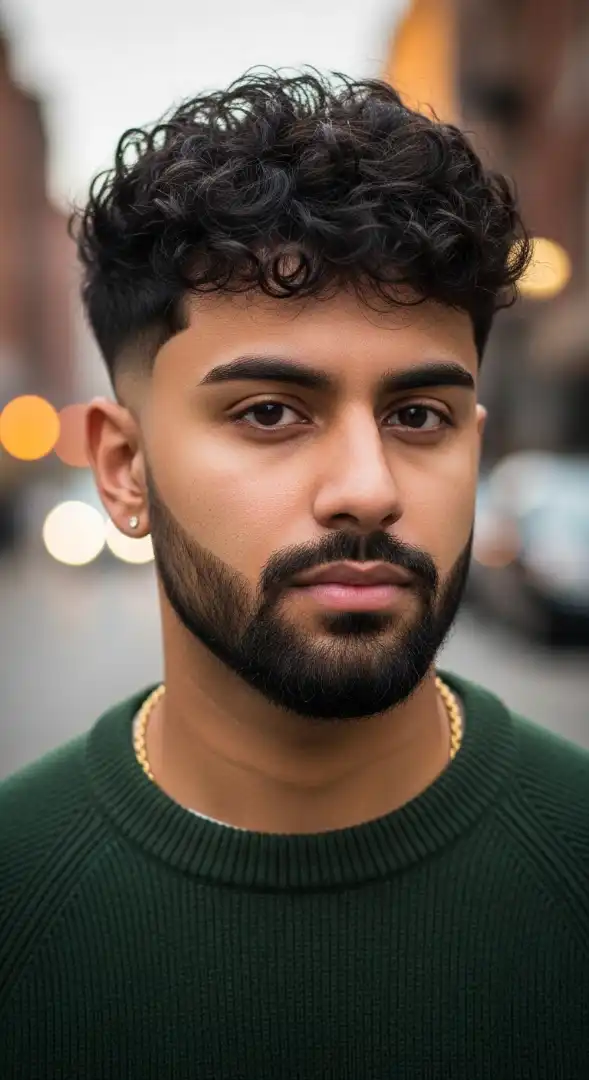
FACE SHAPE MATCH The Coastal Commander is architect-built for the Square face. Square faces carry equal width at the jaw and the forehead with defined angular corners — and a mid taper fade is the precision tool that sharpens this geometry without fighting it. The fade begins at the mid-ear line, meaning the sides are blended but not aggressively removed. This preserves a horizontal visual weight at the mid-face level that reinforces the jaw’s natural strength rather than softening it. The 2.5-inch textured top adds vertical height that elongates the face proportionally, pulling the eye upward and making the overall shape feel more balanced — neither too boxy nor too angular. Men with Round or Heart faces should approach this exact configuration with caution: the preserved mid-section volume can add unwanted width to already wide cheekbones.
GROOMING KIT
- Clippers: Wahl Magic Clip Cordless — industry gold standard for mid fade blending; the zero-overlap blade setting handles the seamless mid-taper transition without harsh lines
- Trimmer/Outliner: Andis T-Outliner (GTX edition) — for the hairline crisp-up and beard cheek-line definition
- Finishing: Kent 20T Wide-Tooth Comb for detangling the top section after washing; boar bristle brush (Denman B200) for smoothing before styling
- Styling Product: Uppercut Deluxe Pomade (medium hold, high shine) — 2 fingertips’ worth, applied to damp hair, combed through, then shaped by hand for that effortless coastal finish
- Beard Product: Jack Black Beard Oil (10ml daily) — applied post-shower to soften the full beard and reduce patchiness in the cheek area
MAINTENANCE LEVEL: Medium
- Barber visit frequency: Every 3 weeks to keep the mid fade crisp; at week 4 the blend line becomes visibly heavy
- Daily styling time: 4–6 minutes — towel-dry, apply pomade to damp hair, shape with a comb, done
- Product routine: Wash every 2 days with sulfate-free shampoo to preserve natural oil; condition daily at the ends to reduce frizz; beard oil every morning post-face wash
BARBER TALK (Exact Script) “I want a mid taper fade on the sides and back — start with a skin fade or a zero at the base, blend into a one at the temple, then up to a two at the parietal ridge, merging cleanly into the natural hair. Keep the top about two to two-and-a-half inches — I want the weight to fall forward, not pushed back. Leave the fringe long enough to lie naturally. Square off the neckline. For the beard, just tighten the cheek line and bring the fade on the sides down into the beard — don’t disconnect it. Clean the neck below the jaw completely. Finish it with a razor on the hairline.”
If you thought The Coastal Commander turned heads, wait until you see what a high-density coily texture does to a mid taper — Style 3 is about to reframe everything you know about fade versatility.
FAQs
Q: What exactly is a mid taper fade? A: A mid taper fade starts blending the hair at the mid-ear level — halfway between a low fade (just above the ear) and a high fade (at the temples). The hair gradually decreases in length from the mid-ear down to the skin or near-skin at the nape, creating a clean, structured silhouette that suits most face shapes and professional environments.
Q: How often do I need to get a mid taper fade touched up? A: Every 3 weeks is the sweet spot for a mid taper fade. At 2 weeks the cut still looks sharp, but by week 4 the blend line begins to look grown-out and heavy. If you can only visit the barber once a month, ask for a slightly lower fade — it grows out more gracefully than a skin fade.
Q: Is a mid taper fade suitable for fine hair? A: Yes — a mid taper fade is actually ideal for fine hair. The graduated reduction on the sides creates visual contrast that makes the top section look denser than it is. Pair it with a texture-adding product like sea salt spray or matte clay to amplify the appearance of fullness without weighing fine strands down.
Q: What’s the difference between a mid taper fade and a mid skin fade? A: A mid taper fade blends the hair down to a short length (usually a #0.5 or #1 guard) at the mid-ear starting point — the skin may or may not be fully exposed. A mid skin fade takes the blend all the way to bare skin at that same starting point. The skin fade looks sharper and more defined; the taper fade looks slightly more natural and grows out more softly.
2 of 11 — The Shadow Elite
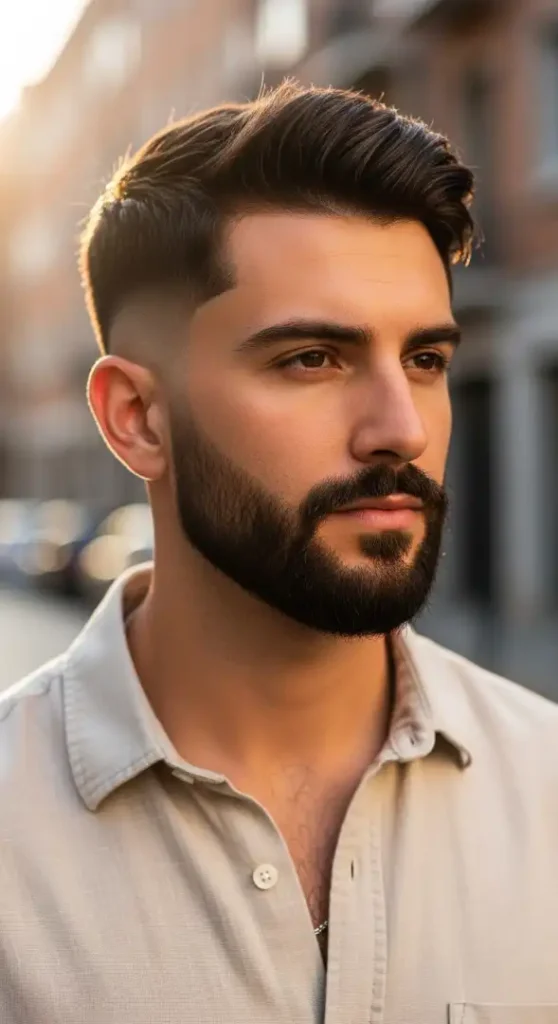
FACE SHAPE MATCH The Shadow Elite was engineered around the Oval face — the universally proportionate face shape where the forehead is marginally wider than the jaw and the face length is approximately 1.5× its width. The Oval face’s gift is that it can carry almost any haircut, but the mid taper fade specifically flatters it by maintaining the natural horizontal symmetry that already exists. The 3-inch wavy top adds vertical height without exaggerating length (which would suit an Oblong face more). The precise fade from mid-ear preserves a balanced frame around the cheekbones. For men with Oblong faces, this same cut can be adjusted — reduce the top length to 2 inches to prevent elongation. For Diamond faces, the mid taper is a near-perfect match due to the narrow forehead and jaw width being equalized by the side reduction.
GROOMING KIT
- Clippers: Andis Master Cordless (MLC) — the premium choice for fade work on South Asian hair, which tends to have high density and can resist blending; the magnetic motor holds consistent RPM under load
- Trimmer/Outliner: BaByliss Pro FX Skeleton Outliner — ultra-thin blade for hairline arc and sideburn fade precision
- Finishing: Wide-tooth detangling comb (Tangle Teezer Men) followed by a boar-bristle paddle brush to define the natural wave pattern before product
- Styling Product: Suavecito Matte Clay (approximately 1.5 fingertips) — worked through damp hair and then air-dried to set the wave texture naturally; matte finish so the High Contrast editorial color grade reads cleanly
- Beard Product: Bevel Beard Balm — specifically formulated for coarser South Asian beard textures; 2 pea-sized amounts morning and evening
MAINTENANCE LEVEL: Medium
- Barber visit frequency: Every 3 weeks — wavy hair grown out in the fade zone can look disheveled quickly as the wave pattern breaks the fade line visually
- Daily styling time: 5–7 minutes — the natural wave requires damp-styling; never fully dry before applying product
- Product routine: Clarifying shampoo once a week; co-wash (conditioner-only wash) mid-week to preserve wave integrity; matte clay daily; beard balm morning and evening
BARBER TALK (Exact Script) “I want a mid taper fade — start with a bald or skin fade at the base, blend to a #1 at the arch, then into a #2 or #2.5 just above the ear — let it melt into the natural hair above. Keep the top about three inches, and don’t touch the wave pattern — just point-cut the ends to remove bulk without killing the wave. Beard: fade the stubble into the sides, 3 to 5mm throughout. Clean the cheek line — keep it natural, not too high. Taper the neck. Line up the forehead — I want a soft arc, not a harsh straight line.”
The Shadow Elite keeps the texture natural and the fade clean — but if you want to see what happens when coily texture meets a mid taper, Style 3 takes the crown in every sense.
FAQs
Q: Does a mid taper fade work on wavy or curly hair? A: Absolutely — wavy and curly hair arguably look their best in a mid taper fade. The fade provides clean structure at the sides while letting the natural texture do the styling work on top. The key is asking your barber to point-cut the top (not blunt-cut) to preserve the wave pattern and remove bulk without eliminating the curl definition.
Q: How do I style a wavy mid taper fade at home? A: Apply a matte clay or curl-enhancing cream to damp (not soaking wet) hair immediately after toweling off. Work the product through with your fingers rather than a comb to preserve the wave pattern. Let it air dry or diffuse on low heat. Avoid touching your hair while it dries — heat from your hands straightens waves. Total time: 5–7 minutes.
Q: What’s the best beard length to pair with a mid taper fade? A: 3–5mm stubble or a short beard (under 1 inch) pairs most naturally with a mid taper fade. The barber can fade the stubble into the sides of the fade for a seamless connection. Full beards also work — request a “beard fade” where the beard gradually gets shorter as it approaches the fade line, eliminating any hard edge between the beard and the fade.
Q: Can I get a mid taper fade with thick South Asian or Middle Eastern hair? A: Yes, but tell your barber upfront. Dense, coarse hair is more resistant to blending and the barber may need to scissor-over-comb on the blend zone before finishing with clippers. The Andis Master Cordless is the tool of choice for thick hair — its magnetic motor handles the resistance without bogging down. Expect the cut to take 5–10 minutes longer than average.
3 of 11 — The Crown Blueprint
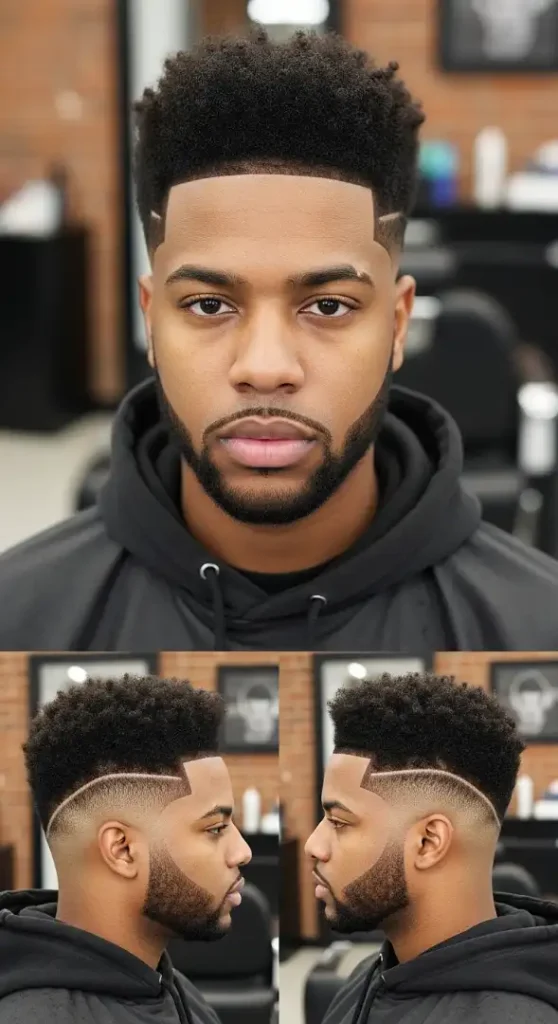
FACE SHAPE MATCH The Crown Blueprint was designed specifically for the Round face — and the solution it delivers is architectural. Round faces feature nearly equal width and length with soft, curved jawlines and minimal angular definition. The risk with any fade on a Round face is that it can accentuate width if the top doesn’t provide compensating height. The Crown Blueprint solves this by building a rounded-yet-elevated coily top that adds 2.5 to 3 inches of upward visual height. The mid taper fade (as opposed to a low fade) narrows the apparent width from the mid-ear down, while preserving some presence at cheek level — this prevents the face from looking too gaunt (which an extreme high fade can cause on Round faces). The result: the face reads as oval from a distance. For men with Oblong faces, this precise cut should be avoided unless the top volume is significantly reduced — adding vertical height to an already-long face exaggerates the length.
GROOMING KIT
- Clippers: Wahl Senior Cordless — preferred over the Magic Clip for coily/4C hair due to its wider blade and higher blade speed; handles the density of natural hair without snagging
- Trimmer/Outliner: Andis GTX-EXO Cordless Trimmer — zero-gap blade for razor-sharp coily hairline definition and beard line shaping
- Pick/Comb: The Denman D3 brush to stretch and define the coily top before cutting; wooden afro pick for final fluffing and crown shaping
- Finishing: Cantu Shea Butter Leave-In Conditioning Repair Cream — applied to the top section daily to maintain moisture in coily hair and prevent shrinkage that distorts the cut shape
- Beard Product: SheaMoisture Beard Conditioning Oil (Maracuja Oil + Shea Butter formula) — 8–10 drops morning and evening to prevent coily beard hair from ingrown issues at the fade line
MAINTENANCE LEVEL: Medium-High
- Barber visit frequency: Every 2–2.5 weeks — coily hair shrinks significantly as it grows, and the mid taper fade line can look distorted within 2 weeks if the top section shrinks unevenly
- Daily styling time: 6–8 minutes — daily moisturizing is non-negotiable for coily hair; styling the pick-out top takes 2–3 minutes after the leave-in is applied
- Product routine: Co-wash 2–3× per week (avoid sulphate shampoo daily); leave-in conditioner daily; light oil or butter sealant to retain moisture; beard oil morning and evening
BARBER TALK (Exact Script) “I want a mid taper fade — skin or bald at the temple base, blend to a zero-point-five at the bottom arch, into a one at the mid-arch, then a one-and-a-half or two blending into the natural hair. Start the fade at the mid-ear line — I don’t want it going high. Shape the top into a rounded crown — keep the height, pick it out and shape it clean, don’t cut too much off. I want about two-and-a-half inches at the crown. Line up the hairline — razor-sharp temples, keep my natural hairline peak. Beard: trim to about 5mm, line up the cheek at a natural angle, fade the bottom of the sideburn into the beard. Clean the neck.”
The Crown Blueprint proves coily hair and a mid taper are a legendary pairing — but Style 4 takes the fade into a boardroom-ready territory with a look that means serious business.
FAQs
Q: Is a mid taper fade good for natural coily or 4C hair? A: Yes — a mid taper fade is one of the best fade options for natural coily (4C) hair. The fade begins at mid-ear, which preserves the coily texture on top while creating a clean, structured silhouette at the sides. The key is moisturizing the top section daily — coily hair shrinks when dry, which can make the cut look uneven. Keep it moisturized and the shape holds beautifully.
Q: How often should Black men get a mid taper fade touched up? A: Every 2 to 2.5 weeks is ideal for maintaining a mid taper fade on coily hair. Coily hair has more visual growth per millimeter due to shrinkage — what looks like a quarter-inch of growth on straight hair can look like a half-inch on 4C hair. Waiting beyond 3 weeks usually means the fade line blurs and the silhouette loses its definition.
Q: What products help maintain a coily top section between barber visits? A: Daily moisture is the priority. Use a water-based leave-in conditioner (Cantu Shea Butter Repair Cream or SheaMoisture Curl Enhancing Smoothie) applied to damp hair each morning. Seal with a light oil (jojoba or argan). Sleep with a satin duroc or bonnet to prevent shrinkage and friction. This routine keeps the top section defined and prevents the shrinkage that distorts the cut shape.
Q: What’s the difference between a mid taper fade and a temple fade on Black hair? A: A mid taper fade starts blending at the mid-ear level and fades the entire side and back uniformly. A temple fade (also called a Brooklyn fade) only fades the temple area — the sides behind the ear are typically left fuller or squared. The mid taper gives a cleaner, more consistent silhouette all the way around; the temple fade is a more stylized, specific look.
4 of 11 — The Executive Phantom
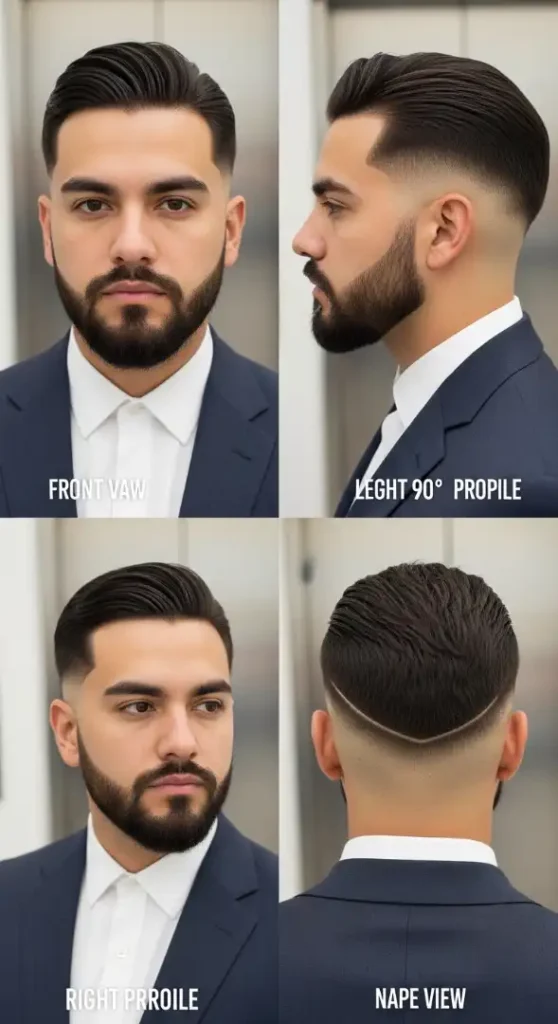
FACE SHAPE MATCH The Executive Phantom was sculpted for the Diamond face — arguably the most architecturally complex face shape, defined by a narrow forehead, wide cheekbones, and a narrow, pointed chin. The challenge with a Diamond face is managing the visual width at the cheekbones while adding presence to both the forehead and the chin. A mid taper fade solves this elegantly: the side reduction beginning at mid-ear softens the cheekbone width without eliminating it, while the flat, slicked-back top adds a modest horizontal presence at the forehead. The taper-back styling (as opposed to a voluminous top) ensures the crown doesn’t add unwanted height that would visually narrow the forehead further. The squared neckline also broadens the visual baseline of the jaw, balancing the narrow chin. For Square faces, this exact cut works too — but a Heart-shaped face should request more top volume to balance a narrower jaw.
GROOMING KIT
- Clippers: Wahl Magic Clip Cordless — the zero-gap setting provides the skin-clean fade at the temple base needed for the professional crisp look
- Trimmer/Outliner: Andis Slimline Pro Li T-Blade Trimmer — for razor-line precision on the hairline arc and the squared neckline
- Finishing: Wide-tooth comb (Kent SPC70) followed by a natural boar-bristle club brush to slick the top flat and smooth without creating rigidity
- Styling Product: Layrite Natural Matte Cream (1 fingertip, applied to slightly damp hair) — provides the medium hold that keeps the slick-back flat through an 8-hour workday without turning crunchy or shiny in fluorescent office lighting
- Beard Product: Beardbrand Utility Balm — for the short, shaped corporate beard; provides conditioning and light hold to keep the beard line defined between barber visits
MAINTENANCE LEVEL: Medium
- Barber visit frequency: Every 3 weeks — straight hair holds the taper-back shape well through 3 weeks; at week 4 the sides soften and the slick-back begins to lose its flat profile as the sides grow in
- Daily styling time: 4–5 minutes — apply matte cream to slightly damp hair, pull straight back with a wide-tooth comb, then smooth with a boar-bristle brush; set with a light spritz of hairspray if needed for long days
- Product routine: Clarifying shampoo 2× per week to prevent pomade/cream buildup; conditioner daily at the ends; no beard conditioner needed if beard is under 5mm
BARBER TALK (Exact Script) “I want a mid taper fade — skin fade at the base, blend into a one at the lower arch, two above the ear, and melt it into the natural hair. Start the fade at mid-ear. Keep the top about two inches — slick it back with a straight part, flat profile, not pushed up. Square off the neckline in the back — clean razor line. Beard: keep it short, about 3 to 4mm, straight cheek line at a natural angle, fade the sides into the bottom of the fade. Razor-clean the neck under the jaw completely. I want zero hair below the jawline.”
The Executive Phantom is built for the boardroom — but Style 5 takes precision to the streets with a minimalist East Asian cut that proves restraint is the sharpest edge of all.
FAQs
Q: Can a mid taper fade look professional enough for a corporate environment? A: Absolutely — a mid taper fade is one of the most office-appropriate fade styles. Unlike a high skin fade or a bald fade that can read as edgy in conservative workplaces, the mid taper starts at the ear line and blends gradually, creating a clean, structured appearance that suits business casual and formal dress codes equally. Pair it with a slick-back or side-part top styling to amplify the professional effect.
Q: What is the difference between a taper fade and a regular taper? A: A regular taper simply reduces hair length gradually from the top of the sides down to the neckline without the hair reaching skin. A taper fade takes the blend all the way down to bare skin (or near-skin) at the base — creating a more defined, high-contrast graduation. The taper fade looks sharper and more intentional; the regular taper looks more conservative and grows out more gradually.
Q: What top style works best with a mid taper fade for professional settings? A: A slick-back, side part, or low side sweep are the three most boardroom-appropriate top styles for a mid taper fade. All three create a flat, controlled profile that reads as polished in corporate environments. Avoid messy texture or high-volume styles for formal offices — save those for the weekend. Use a matte cream (never a shiny pomade) under bright office lighting.
Q: How do I keep a mid taper fade looking sharp between barber visits? A: The two maintenance moves between visits are: (1) use a precision trimmer to clean up the hairline every 10–12 days — just the edge, not the fade itself; (2) keep the neckline clean with a home trimmer on the neck below the taper. Do NOT attempt to touch the fade blend itself at home — that requires a barber. With these two steps, a mid taper fade can look sharp for 3.5 to 4 weeks.
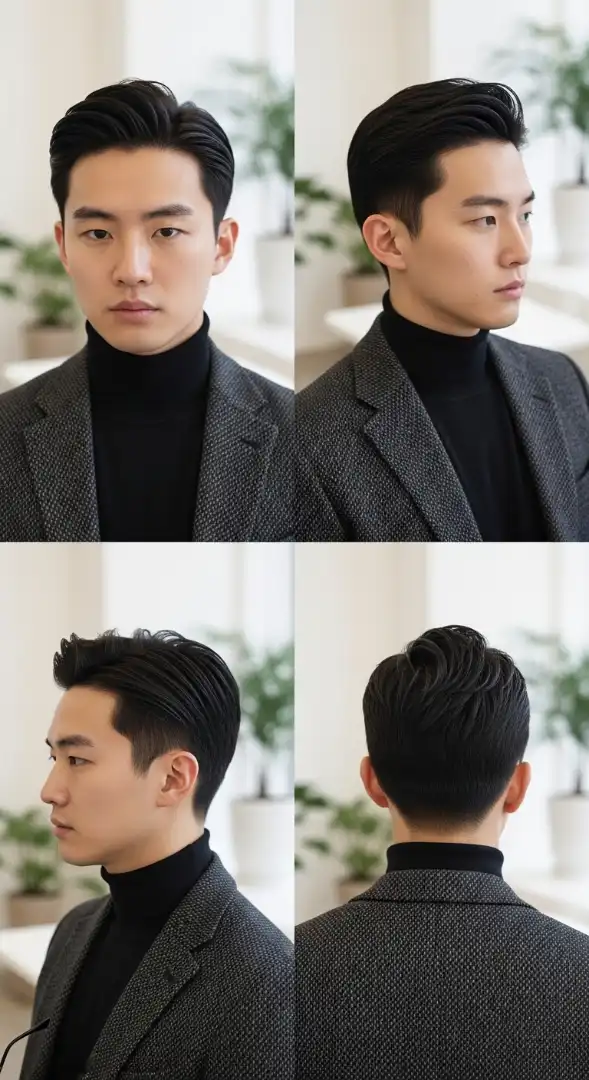
5 of 11 — The Steel Precision
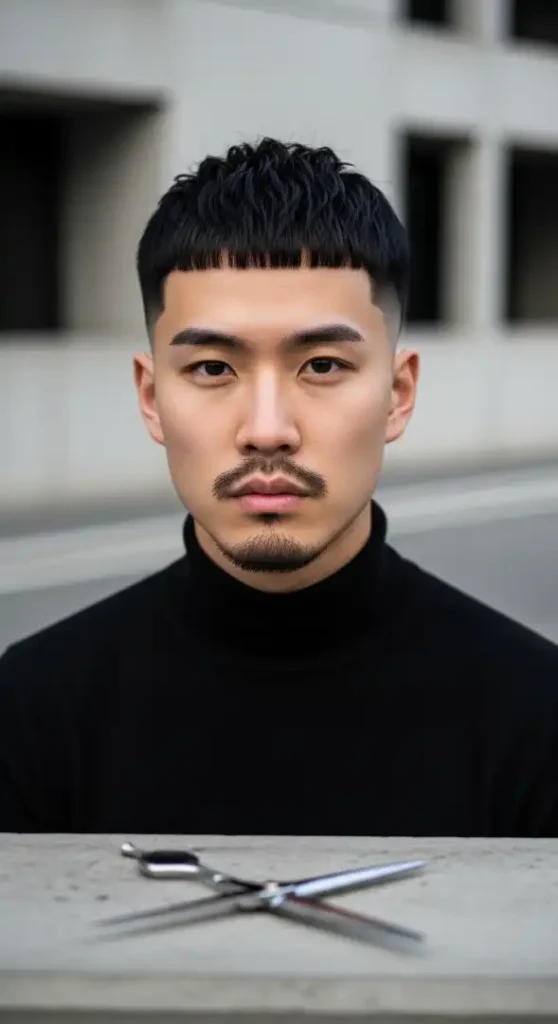
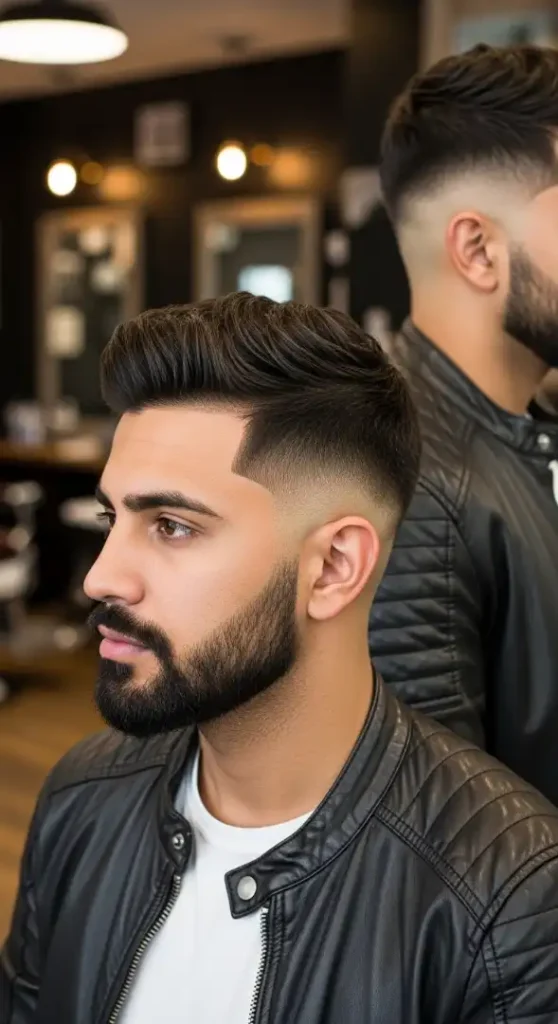
FACE SHAPE MATCH The Steel Precision was engineered for the Oblong face — the face shape characterized by greater length than width, with a narrow forehead and jaw that are roughly equal, and elongated cheeks. The Oblong face’s primary need is horizontal visual weight — anything that creates breadth rather than height. The French crop top achieves this perfectly: the blunt horizontal fringe adds a strong horizontal line directly across the upper face, visually widening the forehead and shortening the apparent face length. The mid taper fade from the mid-ear preserves side volume at cheek level without exaggerating the face’s natural narrowness (which a high fade would). The overall result is a face that reads as oval rather than elongated. Conversely, this cut should be used with caution on Heart faces — the flat fringe and retained side presence can over-broaden a heart shape’s already-wide forehead. This is also not the cut for heavy travelers who don’t carry styling products — the French crop requires daily product application to hold the fringe flat.
GROOMING KIT
- Clippers: Andis Master Cordless MLC — ideal for fine, straight East Asian hair which is highly resistant to conventional fading; the adjustable blade gives zero-gap control for the crisp temple skin fade
- Trimmer/Outliner: BaByliss Pro FX Skeleton Outliner — essential for the straight geometric fringe line and temple definition
- Finishing: Denman D4 Medium Styling Brush — used to sweep the fringe into its clean horizontal line before product application; ideal for straight fine hair
- Styling Product: American Crew Fiber (matte) — half a fingertip applied to dry hair; worked through with fingertips using a “pulling apart” motion to create texture separation in the fringe without clumping; the matte finish reads beautifully in High Contrast editorial lighting
- Beard Product: Every Man Jack Beard Oil (fragrance-free) — for 2mm stubble maintenance; prevents patchy, dry stubble without making the face look oily
MAINTENANCE LEVEL: Low-Medium
- Barber visit frequency: Every 3.5–4 weeks — fine straight hair grows without altering the cut’s structural integrity as quickly as coarser textures; the French crop grows gracefully
- Daily styling time: 3–4 minutes — apply a small amount of matte fiber to dry hair, pull fringe forward with fingers, press flat into position; done
- Product routine: Shampoo 3× per week (fine hair tends to get oily faster — more frequent washing necessary); conditioner at the ends only (never at the roots — it weighs fine hair flat); matte fiber daily
BARBER TALK (Exact Script) “I want a mid taper fade — skin at the base, blend to a zero-point-five then to a one-and-a-half just above the ear. Fade starts at mid-ear. Keep the top about two inches. I want a French crop — cut the fringe into a clean horizontal line just above the eyebrow, and point-cut or texturize the ends of the top section so it has movement and separation, not a block shape. Keep the weight line in the fringe. Beard: 2mm all over, clean cheek line, fade into the bottom of the side fade. Razor the neck.”
The Steel Precision is as minimal as it gets — but if you want to see a mid taper fade with personality woven into every detail, Style 6 brings desert-heat energy that stops the scroll.
FAQs
Q: What is a French crop mid taper fade? A: A French crop mid taper fade combines a textured crop top — where the fringe is cut in a blunt or lightly texturized horizontal line just above the eyebrow — with a mid taper fade on the sides starting at the mid-ear level. The fringe creates a strong horizontal visual line that suits Oblong faces by adding apparent width. The mid taper provides clean structure at the sides without the aggression of a high fade.
Q: Does a mid taper fade work on fine, straight hair? A: Fine straight hair is one of the best hair types for a mid taper fade — the blade glides smoothly, the blend lines are crisp, and the graduation looks flawless. The challenge is on top: fine hair lacks volume, so pair this fade with a textured crop or French crop that works with gravity rather than against it. Use a matte fiber product (not pomade — too heavy) and apply to dry hair only.
Q: How do I add texture to a flat French crop? A: Work a pea-sized amount of matte fiber (American Crew Fiber or Schwarzkopf OSIS+ Mess Up) between your palms and apply to completely dry hair using a “pulling-apart” motion — not a combing motion. This separates the strands and creates textured definition. Never apply to wet hair; wet application flattens fine hair into a paste-like finish with no texture.
Q: Is a French crop mid taper fade high maintenance? A: It’s one of the lower-maintenance fade styles. The French crop grows out gracefully — unlike a pompadour or quiff that loses its shape quickly. The mid taper fade needs a touch-up every 3.5 to 4 weeks. Daily styling takes 3–4 minutes maximum. One product (a small amount of matte fiber) is all you need.
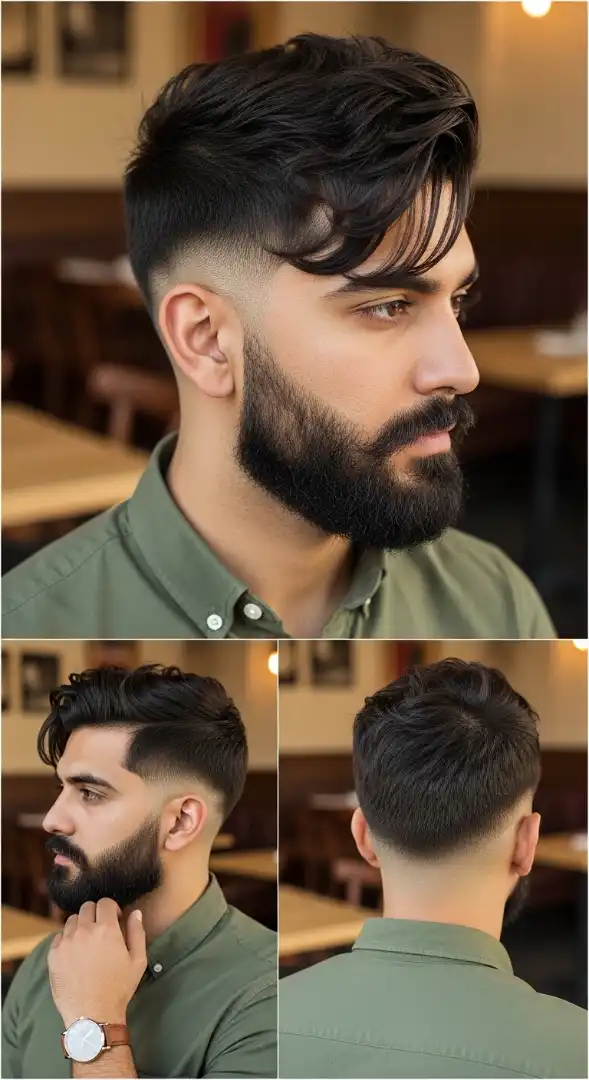
6 of 11 — The Desert Prince
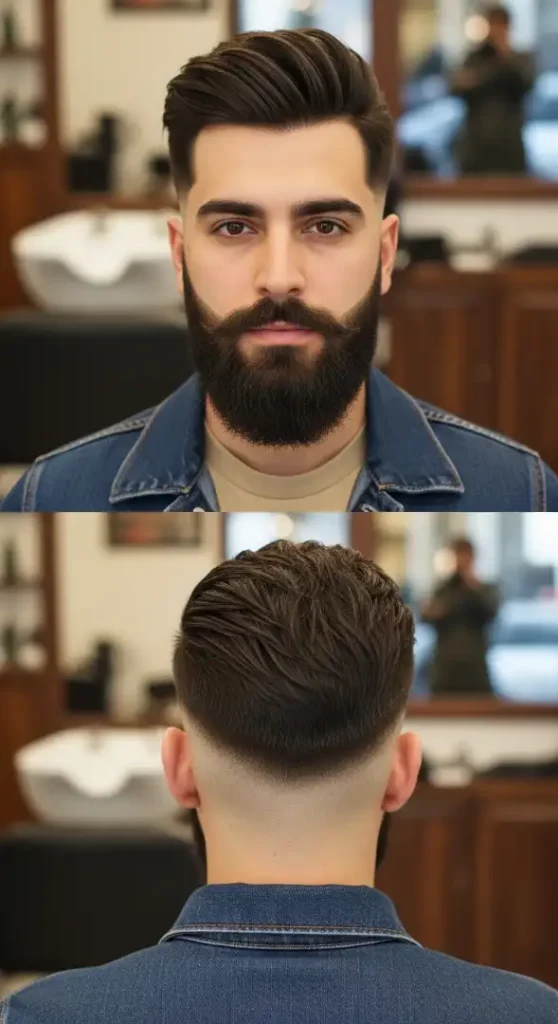
FACE SHAPE MATCH The Desert Prince is the definitive cut for the Heart face shape — a face defined by a broad forehead, prominent cheekbones, and a narrow, pointed chin. The Heart face’s challenge is building visual width at the jaw to balance the forehead’s dominance. The full beard is the architectural solution here: at 1.5 inches of length, it adds substantial visual mass at the jaw, creating the horizontal width the face shape needs at the bottom. The mid taper fade prevents the sides from getting too wide in the cheekbone zone (which would exaggerate the Heart’s inherent wideness at the temples). The side-part top adds horizontal presence at the crown without going above the forehead’s width. This is a harmonizing cut — every element counterbalances the Heart face’s natural tendencies. Men with Round faces should avoid the full beard option on this cut — it adds too much volume in the lower face zone.
GROOMING KIT
- Clippers: Wahl Senior Cordless — handles the wavy-to-dense Middle Eastern hair texture efficiently; the heavy-duty motor is suited to high-density fades without heat buildup
- Trimmer/Outliner: Andis T-Outliner GTX — non-negotiable for the beard cheek line definition and the razor-arc hairline at the front; the T-blade geometry is ideal for curved cheek-line shaping
- Finishing: Denman D14 Rake Comb for detangling the full beard; Kent comb (tooth-fine, 7228) for the side-part definition on the top section
- Styling Product: Suavecito Original Hold Pomade (water-based) — one fingertip to damp hair; combed to the side using the Kent comb, then natural movement is allowed; provides the hold without blocking the wave texture
- Beard Product: Mountaineer Brand Beard Oil (Cedar + Citrus) — 12 drops daily post-shower into the full beard; work through from roots to tips with a boar-bristle beard brush for even distribution
MAINTENANCE LEVEL: Medium-High
- Barber visit frequency: Every 2.5–3 weeks — the full beard, not the fade, is the maintenance driver here; the beard’s cheek line and neckline begin to blur within 2 weeks and the overall look loses its structure
- Daily styling time: 8–10 minutes — the majority is beard care (brush, oil, shape); the hair top takes 3–4 minutes with a comb and light pomade
- Product routine: Shampoo hair 3× per week; beard shampoo once a week; beard oil daily; beard brush morning and evening; side-part needs a fresh comb-through daily
Barber Talk (Exact Script) “Mid taper fade on the sides and back — skin fade at the base, blend into a one, then a one-and-a-half going up, merge into the natural at the top. Fade starts at mid-ear. Keep the top about two-and-a-half inches, side part — sweep it to the right, don’t cut the wave movement out. Leave the fringe long enough to fall. Rounded neckline in the back. For the beard — keep the length, trim to tidy the shape. Cheek line: natural arc, not too high. Fade the cheek line into the bottom of the side fade — no disconnect. Neckline: razor-clean arc above the Adam’s apple. Beard oil and a hot towel at the end.”
The Desert Prince brings warmth and structure together in a single cut — Style 7 shifts the atmosphere entirely with an auburn wave that straddles the line between rebel and refined.
FAQs
Q: Can I get a mid taper fade with a full beard? A: Yes — a mid taper fade with a full beard is one of the most popular combinations in contemporary men’s grooming. The key is the “beard fade” technique where the barber blends the short sides of the fade gradually into the longer beard, eliminating the visible hard line where the fade meets the beard. Ask specifically for a “connected beard fade” — this seamless transition is what separates a polished look from an unfinished one.
Q: How do I maintain a full beard with a mid taper fade at home? A: Daily beard oil application (8–12 drops, worked in with your hands and then distributed with a boar-bristle beard brush) is the non-negotiable first step. The cheek line and neckline need to be trimmed every 7–10 days with a precision trimmer — these lines deteriorate faster than the fade. Trim the beard length monthly to maintain shape. Don’t over-wash the beard — once a week with beard shampoo is ideal; daily washing strips the natural oils.
Q: What face shape suits a mid taper fade with a full beard? A: Heart, Diamond, and Oval face shapes benefit most from a mid taper fade paired with a full beard. The beard adds chin and jaw width that Heart and Diamond faces need for balance. Oval faces can carry almost any beard length. Round and Square faces should keep the beard shorter (under 1 inch) with this fade to avoid adding too much volume to an already-wide jawline zone.
Q: How do I blend a beard into a mid taper fade? A: The blend point is where the beard’s short cheek zone meets the side fade. Ask your barber to fade the stubble at the base of the cheek line into the skin using the same clippers and guard system used for the head fade — typically a #0.5 to #1 guard through the cheekbone transition zone. The goal is a continuous gradient from skin at the temple, through stubble at the cheek, into full beard at the jaw — no visible line between the two.
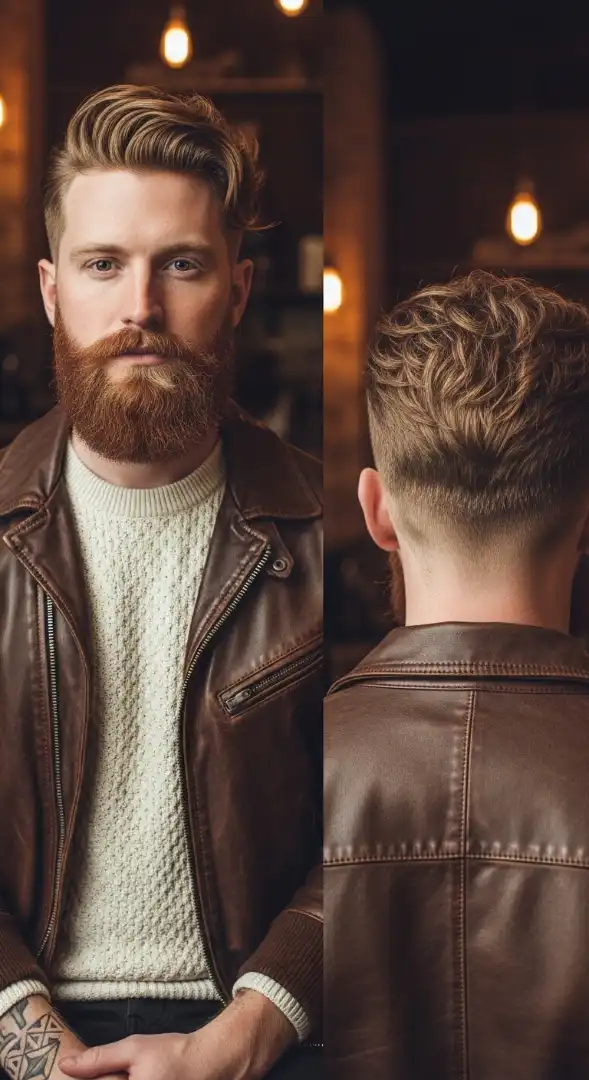
7 of 11 — The Refined Outlaw
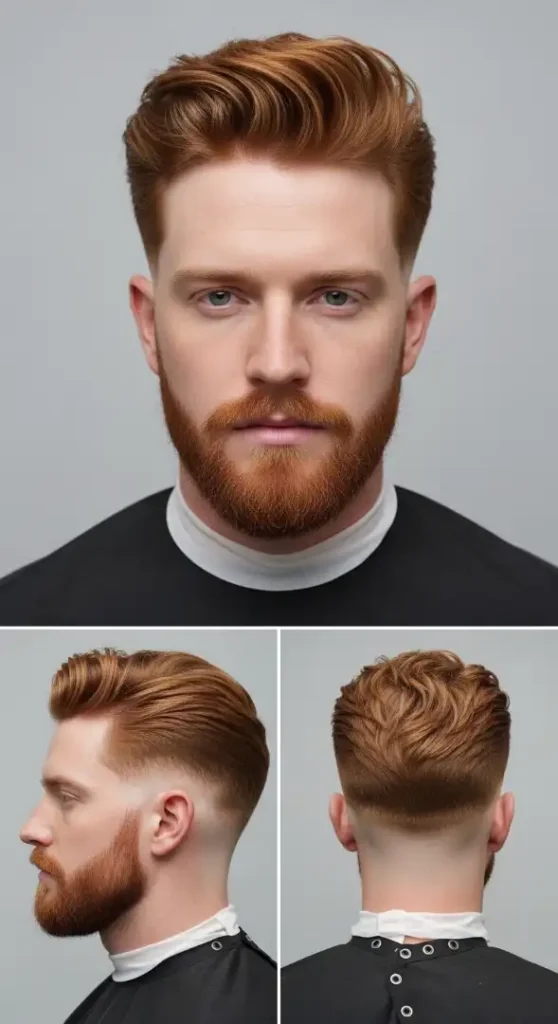
FACE SHAPE MATCH The Refined Outlaw is the most versatile cut in this article — it flatters the Square face through textural contrast rather than geometric opposition. A Square face’s defining feature is the jaw’s angular width matching the forehead’s width. A tousled 3-inch wavy top doesn’t fight the jaw’s angularity — it softens it. The loose wave movement creates organic asymmetry that visually relaxes the jaw’s rigidity, making the Square face look effortlessly confident rather than aggressively structured. The mid taper fade from mid-ear preserves the jaw’s visual weight while reducing side volume enough to stop the face from looking too wide. The short beard at 8mm reinforces the jaw without adding mass, keeping the face sharp but livable. Men with Round faces will benefit from the same tousled top, but should opt for a higher fade to compensate for the round jaw’s natural softness.
GROOMING KIT
- Clippers: Wahl Magic Clip (corded for professional-grade consistency) — its adjustable taper lever makes blending auburn wavy hair smooth across the mid-ear transition without creating harsh lines in the wave texture
- Trimmer/Outliner: Andis Slimline Pro Li — for the crisp neckline edge and sideburn definition where the wavy texture meets the clean beard line
- Finishing: Mason Pearson Pocket Bristle Brush — the gold standard for wavy auburn hair; distributes product evenly through the wave without disrupting the natural texture; an heirloom tool worth the investment
- Styling Product: R+Co Motorcycle Flexible Paste (matte, strong hold) — a half-teaspoon worked into damp hair with scrunching motions enhances the natural wave pattern; the matte finish avoids the “wet look” that can make tousled wavy cuts look greasy under editorial lighting
- Beard Product: Bulldog Original Beard Balm — for auburn beard maintenance; the neutral formula doesn’t alter the natural auburn color; 1 pea-sized amount morning and evening
MAINTENANCE LEVEL: Low-Medium
- Barber visit frequency: Every 3.5–4 weeks — wavy hair grows gracefully with this cut; the tousled top forgives 1–2 weeks of extra growth better than a slick-back
- Daily styling time: 4–5 minutes — the tousled effect actually gets easier to achieve as the hair grows slightly; apply matte paste to damp hair, scrunch, and air dry or diffuse briefly
- Product routine: Shampoo 3× per week; condition every wash (wavy hair dries out faster than straight); matte paste daily; beard balm morning and evening; no heat styling needed
Barber Talk (Exact Script) “Mid taper fade on the sides — skin at the base, blend to a one, then a two above the ear. Fade starts at mid-ear level. Keep the top about three inches — leave the waves, don’t flat-cut the top; point-cut the ends and take the bulk out with thinning shears if needed. I want it to look tousled, not styled. Squared neckline with a slight natural arc. Beard: 8mm throughout, cheek line at a natural arc — no straight line across. Fade the cheek stubble into the bottom of the taper. Razor the neck below the jaw. Keep the beard looking like it belongs to the haircut — seamless connection.”
The Refined Outlaw is the cut that lives between two worlds — but Style 8 commits fully to the salt-and-pepper silver side of masculinity with a look that makes aging look like an upgrade.
FAQs
Q: Does a mid taper fade work with auburn or red hair? A: Auburn and red hair actually look exceptional with a mid taper fade. The color contrast between the natural skin tone and the vibrant auburn creates a striking visual gradient at the fade line. The key is ensuring the barber uses a #0 or skin fade at the base — a higher starting guard can make auburn hair look patchy at the transition. Request point-cutting on top to preserve the auburn wave movement.
Q: How do I prevent my wavy mid taper fade from looking frizzy? A: Frizz in wavy hair is a moisture issue, not a styling issue. Replace sulphate shampoos with a moisturizing formula (Dove Men+Care Anti-Dandruff is a widely available option). Apply a leave-in conditioner or light cream to damp hair before any other product. Never brush wavy hair when dry — only comb or finger-detangle when wet or damp. Sleeping on a silk pillowcase reduces friction frizz overnight by up to 40%.
Q: What is the “tousled” technique for wavy top sections? A: Tousled styling means deliberately working against clean structure to create intentional dishevelment. Apply a matte flexible paste to 80% dry hair — not fully wet, not fully dry. Scrunch the hair upward from the ends toward the scalp repeatedly with your fingers. Do NOT comb. Do NOT blow-dry straight. Let it air dry or diffuse for 60 seconds on low heat. The result is wave separation and movement that looks effortless. The common mistake is applying product to soaking wet hair — this dilutes the product and leaves the hair flat.
Q: Can an Oxford shirt be too casual or too formal for a mid taper fade? A: The Oxford shirt is the ideal mid-point for a mid taper fade — it bridges boardroom and street seamlessly. A tucked, fully buttoned Oxford reads as business casual. Untucked with two buttons open reads as smart casual or evening wear. The mid taper fade’s structured-but-not-severe nature matches the Oxford’s fabric exactly — neither is a maximum-effort look, both communicate intentional style.
8 of 11 — The Silver Standard
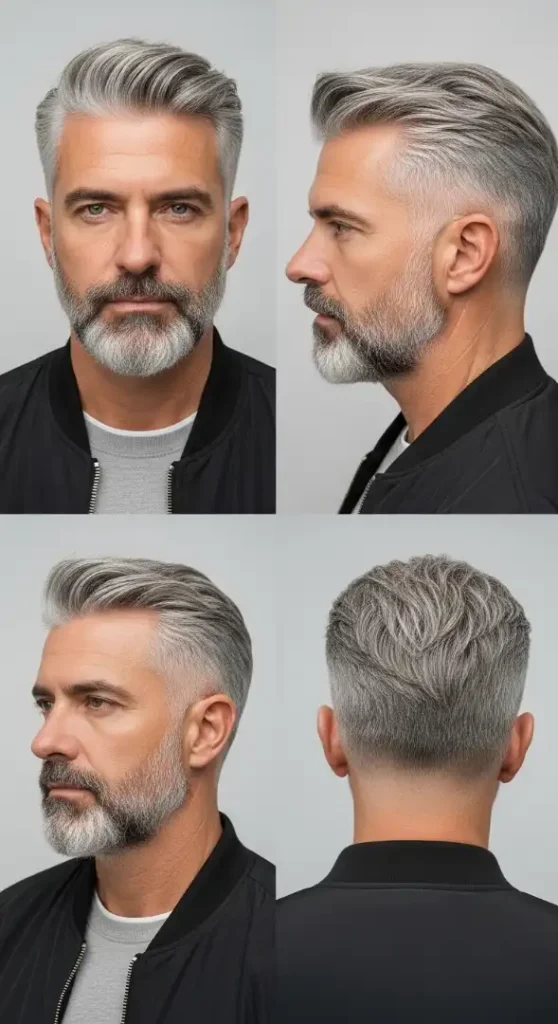
FACE SHAPE MATCH The Silver Standard is built for the Oval face — and specifically for the mature Oval face where the jawline has softened slightly with age. The mid taper fade’s clean graduation at the temple region is the anti-aging mechanism: it removes the grey “shadow” effect that occurs when salt-and-pepper hair grows untapered along the sides, which ages the face visually by adding heaviness at the temples and cheekbones. By fading the silver hair at mid-ear, the cut creates a crisp, fresh visual frame around the face that draws attention to the eyes rather than the hairline’s natural greying. The side-part styling with a modest 2-inch top adds horizontal elegance without the height that would look overcorrected on a distinguished older face. This cut is genuinely anti-aging through structure — not through hiding the grey, but through managing its visual distribution.
GROOMING KIT
- Clippers: Andis Master Cordless MLC — the premium choice for silver/grey hair which has different structural properties than pigmented hair (coarser, more wiry); the powerful magnetic motor handles the density without pulling
- Trimmer/Outliner: Wahl Detailer Li (cordless) — for the mature hairline where a razor can sometimes cause irritation; the precision blade gets close without blade-contact sensitivity
- Finishing: Kent Classic Comb (7228 fine-tooth) for the side-part definition; Mason Pearson Bristle Brush for distributing the pomade cleanly through straight silver hair
- Styling Product: American Crew Classic Pomade (water-based, medium hold, high shine) — silver/grey hair has a naturally matte appearance that benefits from a slight shine product to add vitality; 1 fingertip applied to damp hair, combed into a side part
- Beard Product: Every Man Jack Beard Oil + Beard Balm dual system — the oil conditions the coarser silver beard strands; the balm provides light shaping hold for the 10mm length; applied in that order post-shower
MAINTENANCE LEVEL: Low-Medium
- Barber visit frequency: Every 3.5–4 weeks — straight silver hair holds the shape cleanly; the side-part grows gracefully; the major tell is the fade line softening at the temples, which is the trigger for a visit
- Daily styling time: 4–5 minutes — side-part with the Kent comb, light pomade application, beard oil; the entire routine
- Product routine: Sulphate-free shampoo 2–3× per week (silver hair is more fragile and dries out faster; sulphates accelerate yellowing in white/silver strands); purple toning conditioner once a week to prevent brassiness; pomade daily; beard oil morning and evening
Barber Talk (Exact Script) “Mid taper fade on the sides and back — skin fade at the base, blend into a one at the lower arch, one-and-a-half or two going up. Fade starts at mid-ear. Keep the top about two inches — side part, no volume, just clean and flat. Don’t go against the natural hairline — my temples are greying, keep the transition looking natural, not forced. Tapered neckline in the back — soft V-taper, not a hard squared edge. Beard: 10mm throughout, natural cheek line, fade the bottom of the sideburn into the beard — no gap. Razor-clean below the jaw. Keep it distinguished — not edgy.”
The Silver Standard shows that maturity handled with intention is the sharpest look in the room — Style 9 brings youthful energy back with a street-smart fade that hits from every angle.
FAQs
Q: Does a mid taper fade look good on men with grey or salt-and-pepper hair? A: A mid taper fade is one of the best cuts for grey and salt-and-pepper hair. It removes the heavy, aged appearance caused by untapered grey sides and creates a crisp, structured frame around the face. Rather than hiding the grey, the mid taper fade distributes it strategically — letting the silver at the top remain while the sides graduate cleanly to skin, which is a modern, distinguished look rather than an aging one.
Q: How do I keep grey hair from looking yellow or brassy? A: Use a sulphate-free purple toning shampoo (Purple Rain by Not Your Mother’s or Shimmer Lights by Clairol) once a week. Avoid harsh sulphate shampoos that strip natural oils and accelerate brassiness in white and silver hair. Daily purple conditioner is not necessary — weekly is sufficient. Also avoid drying your grey hair with high heat; grey hair is more structurally fragile and heat increases porosity, which speeds up yellowing.
Q: What hairstyle makes a man look younger? A: Structured, well-faded cuts with a defined hairline are the most effective anti-aging haircuts. A mid taper fade with a clean side part removes the heavy, grown-out appearance that makes grey hair look aged. The fade creates a visual freshness at the temples and the clean hairline definition refocuses attention on the eyes and cheekbones rather than the hair’s colour. Adding a subtle pomade shine to grey hair also restores the “vitality” that matte, dry grey hair lacks.
Q: Is a skin fade appropriate for grey or thinning hair? A: Yes — a skin fade at the base can actually benefit men with thinning hair at the temples, since the fade creates a deliberate graduation that makes thinning look intentional rather than accidental. For very fine grey hair, a #0.5 or clipper-over-comb at the base (rather than fully bare skin) can soften the contrast, which looks more natural on skin with less melanin.
9 of 11 — The Urban Oracle
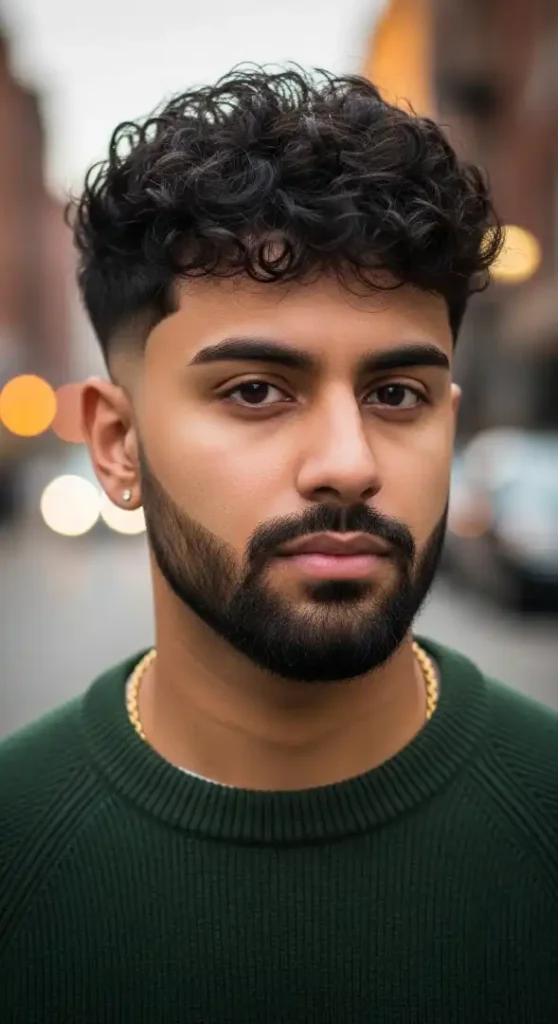
FACE SHAPE MATCH The Urban Oracle addresses the Round face for the second time in this series — but through a completely different strategy than Style 3. Where Style 3 used vertical height through coily volume, the Urban Oracle uses curl definition to create texture-based height that’s more restrained. The defined 2C/3A curl pattern on top creates visual interest and height without the dramatic dome silhouette — it’s a subtler elongation effect suited for men who want the Round face correction without the boldness of a full-height natural. The key is the mid taper fade starting at mid-ear: it keeps the sides modest while the defined curl texture on top creates the upward visual movement the Round face needs. Men with Oblong faces should avoid this style — the added curl height on top works against the elongated face’s need for width, not more length.
GROOMING KIT
- Clippers: Wahl Magic Clip Cordless with a zero-gap adjustment for the skin fade at the temple — the key tool for blending a mid taper into the curl/wave transition zone without disrupting the curl pattern
- Trimmer/Outliner: Andis GTX-EXO Cordless — for the sharp hairline arc and the beard cheek line definition on South Asian skin, which tends to have strong beard shadow that makes precision edges critical
- Finishing: Denman D3 Medium Styling Brush — this is the curl definer of choice; use it on wet hair with conditioner to define the 2C/3A curl pattern before product application
- Styling Product: Cantu Men’s Leave-In Conditioner (as a styling base, 2 pumps) + SheaMoisture Curl Enhancing Smoothie (as the hold product, 1 fingertip) — applied to wet hair in that order; the combination defines curls, provides light hold, and prevents frizz without stiffness
- Beard Product: Bevel All-In-One Beard Hydrator — designed specifically for coarser South Asian beard textures; prevents ingrowns that form frequently in the fade-to-beard transition zone
MAINTENANCE LEVEL: Medium
- Barber visit frequency: Every 2.5–3 weeks — the curl pattern creates the impression of faster growth and the fade line blurs more quickly due to the texture creating visual heaviness
- Daily styling time: 6–8 minutes — curl definition requires damp styling; the full routine is: shower, towel-dry 70%, apply leave-in, define with Denman brush, apply curl cream, air dry
- Product routine: Co-wash 3× per week; sulphate shampoo once a week; curl cream or leave-in daily; beard hydrator every morning; never heat-style curls
Barber Talk (Exact Script) “Mid taper fade — skin at the base, blend to a one, one-and-a-half above the ear. Fade starts at mid-ear. Keep the top about two-and-a-half inches — don’t cut into the curl pattern, just take the ends off and reduce the bulk. I want to keep the curl definition, not straighten it. Soft shape on the top — rounded, not angular. Beard: 5mm throughout, natural cheek line — not too high. Line up the forehead — crisp arc, keep my natural peak. Fade the sideburn into the beard. Razor the neck. Be careful with the blend going into the curl — I don’t want a shelf.”
The Urban Oracle proves curly and wavy South Asian hair has never looked sharper in a mid taper — Style 10 takes it back to coily territory with the boldest contrast cut in this entire collection.
FAQs
Q: How do I define curls in a mid taper fade on top? A: Curl definition in a mid taper fade’s top section requires a damp-styling routine. After showering, towel-dry to 70% dryness, then apply a water-based leave-in conditioner as a base layer. Use a Denman brush (or your fingers in a “praying hands” motion) to rake through and define the curl clusters. Apply a curl cream or smoothie on top and either air dry or diffuse on low heat. The key is never brushing dry — this creates frizz and separates the curl definition immediately.
Q: What mid taper fade suits a 2C or 3A curl pattern? A: A mid taper fade with a #0 skin base blending into a #1.5 at the arch works beautifully for 2C/3A curls. The fade provides clean structure that contrasts sharply with the defined curl texture on top. Avoid asking the barber to “cut the top shorter” to manage curls — instead ask them to reduce bulk with point-cutting or thinning shears while leaving the curl length. Shorter curls on this curl type spring up tightly and can look uneven.
Q: Is a mid taper fade suitable for men with a beard? A: Yes — one of the most versatile aspects of a mid taper fade is its compatibility with virtually any beard length. For 5mm stubble (as in this style), the fade connects naturally into the beard’s lower edge without needing complex blending. For longer beards, a “beard taper” technique blends the short sides into the beard’s fuller length. For clean-shaven men, the fade stands alone as a complete structural statement. All three work.
Q: How do I prevent the fade line from looking blurry as the hair grows? A: The blur happens when the guard-size transition zone grows out and the individual guard steps become visible. The best prevention is a 2–3 week barber visit schedule. Between visits, you can extend the life of the fade by using a #1 guard to lightly clean the base of the fade (below the ear, in front of the natural hairline) but only the very base — never attempt to blend the fade zone itself at home.
10 of 11 — The Obsidian Architect
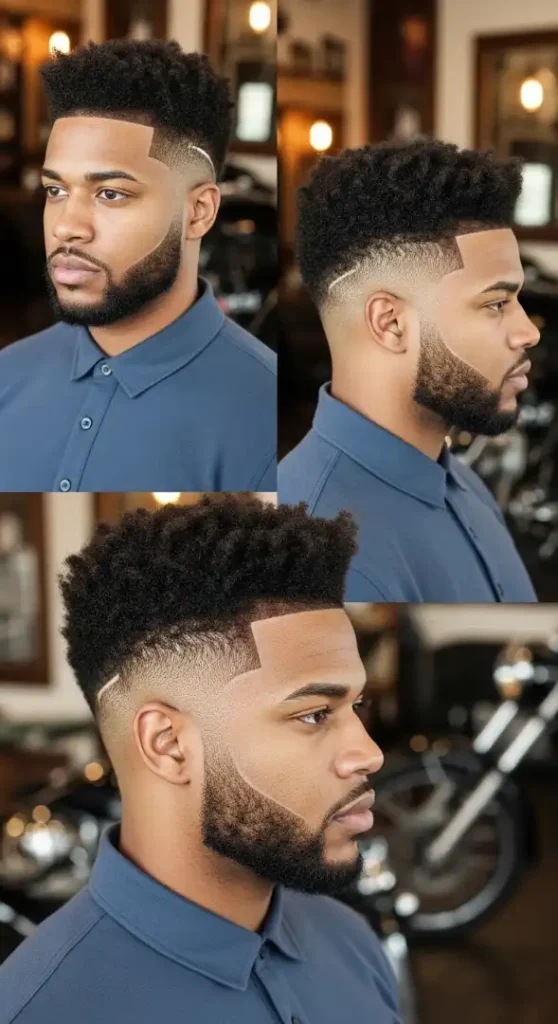
FACE SHAPE MATCH The Obsidian Architect is the definitive Diamond face solution in this article — where Style 4 used a slick-back to manage the Diamond’s narrow forehead, this cut uses the geometry of coily texture to tackle the same problem from a completely different angle. The Diamond face’s wide cheekbones and narrow forehead and chin need structural width at the crown and jaw simultaneously. The 2-inch geometric coily top adds architectural breadth at the crown level — visually widening the narrow forehead. The close-cropped 3–4mm beard adds definition at the jawline, providing visual weight at the face’s narrow bottom. The mid taper fade keeps the cheekbone zone controlled without eliminating it. The result is a Diamond face that looks balanced and symmetrical from all three viewing angles. Round faces should approach this cut with caution — the geometric flat-top adds height that can over-elongate an already-short Round face if not adjusted.
GROOMING KIT
- Clippers: Wahl Senior Cordless — the widest blade in the Wahl lineup, essential for shaping the geometric coily top efficiently; paired with guards #1 through #3 for the top section shape-up
- Trimmer/Outliner: Andis GTX-EXO Zero Gap — zero-gap is non-negotiable for the geometric edge work on 4A coily hair; the razor-sharp outline defines the temple corners and the beard line to a precision impossible with a standard trimmer
- Pick: Afro pick (wide-tine, with an Andis Easy Lift Comb) — for picking the coily top to the desired height and shape before the barber carves the geometric edge
- Styling Product: Murray’s Beeswax (1 fingertip) — the traditional choice for the 4A coily top; provides strong hold that keeps the geometric shape from collapsing while maintaining the natural coily definition without crunchiness
- Beard Product: Bevel Beard Trimmer (electric) + Bevel Pre-Shave Oil — for maintaining the close-cropped geometric beard between barber visits; the pre-shave oil prevents ingrowns on 4A-type beard hair at the cheek and neck line
MAINTENANCE LEVEL: High
- Barber visit frequency: Every 1.5–2 weeks — the geometric edges are the defining element of this cut and they soften into rounded coily growth within 10 days; this cut does not forgive late barber visits
- Daily styling time: 5–6 minutes — morning pick-out to restore the coily top shape, light wax application to hold it; beard check for the cheek line
- Product routine: Moisturize the coily top daily (LOC method: liquid — water spritz; oil — jojoba; cream — leave-in conditioner); beard close-crop maintenance at home every 5–7 days with a trimmer; weekly co-wash to maintain coily moisture
Barber Talk (Exact Script) “Mid taper fade — bald at the base, blend to a half, then a one above the arch. Fade starts at mid-ear. Shape-up the top — I want a geometric edge, clean temple corners. Pick it out and shape it to about two inches, flat at the top edge, not domed. Razor-defined hairline — temple corners squared. Beard: close-crop, 3 to 4mm, geometric cheek line — clean, straight arc. Zero gap on the line-up — I need that edge sharp. Fade the sideburn into the beard. Neck: razor-clean below the jaw. This is a precision cut — take your time on the edges.”
The Obsidian Architect pushes coily geometry to its maximum — and to close this collection, Style 11 brings it back to movement with a Latin cut that proves elegance is always the final word.
FAQs
Q: What is a geometric top with a mid taper fade? A: A geometric top with a mid taper fade refers to a style where the top section — typically coily or textured hair — is shaped into precise angular edges (flat top edge, squared temples, defined geometric silhouette) using a trimmer or razor, combined with a mid taper fade on the sides starting at the mid-ear. The geometric edge creates an architectural, intentional contrast against the organic coily texture of the hair itself.
Q: How do I maintain the sharp edges of a coily top between barber visits? A: The cheek line, temple corners, and forehead arc are the three edge zones that need maintenance every 5–7 days at home. Use a zero-gap trimmer (Andis GTX-EXO or Babyliss FX) with no guard for the edge lines only. Do NOT attempt to re-fade or re-blend the sides — that’s the barber’s job. Maintaining only the edges extends the life of the cut by an additional 5–7 days before a full barber visit is needed.
Q: What is the best product to hold a coily top in a shaped style? A: Murray’s Beeswax is the classic professional choice for holding a shaped 4A/4B coily top — it provides strong hold without the crunch of gel and doesn’t shrink the hair the way some water-based products do. Apply a fingertip amount to dry hair after picking it to the desired shape. For a lighter option, Cantu Men’s Pomade offers a medium hold with less weight. Avoid water-based gels — they cause coily hair to shrink significantly as they dry.
Q: Is a mid taper fade with a geometric top appropriate for formal environments? A: Yes — in contemporary professional culture, particularly in creative industries, media, and progressive corporate environments, a geometric coily top with a mid taper fade reads as intentional, well-groomed, and culturally confident. For more conservative industries (law, finance), keep the top height modest (under 2 inches) and ensure the geometric edges are absolutely razor-sharp — precision is what communicates professionalism regardless of the style chosen.
11 of 11 — The Latin Kingmaker
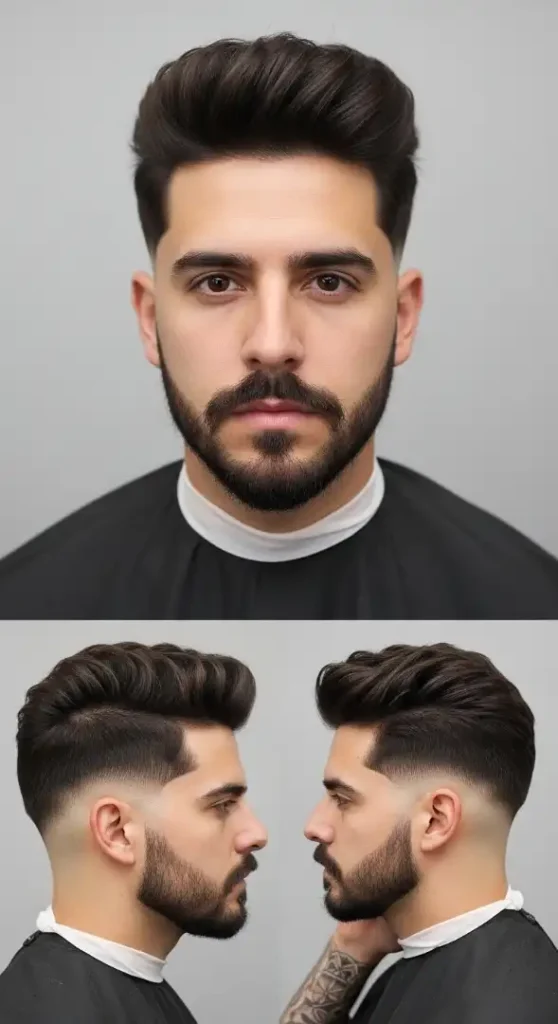
FACE SHAPE MATCH The Latin Kingmaker is the closing cut of this article — and it’s the definitive style for the Oblong face that leads with presence rather than subtlety. Where Style 5 (The Steel Precision) corrected the Oblong face through a flat French crop, The Latin Kingmaker takes the opposite approach: the textured quiff challenges the conventional “avoid height on an Oblong face” rule by using forward projection rather than upward projection. The quiff is swept forward and outward — not straight up — which adds apparent forehead breadth (horizontal line) rather than pure height (vertical line). The mid taper from mid-ear keeps the sides controlled and prevents the lateral width that an Oblong face doesn’t need. The 7mm contoured beard adds jaw width and definition at the face’s narrow base. This combination — forward quiff, controlled mid taper, contoured beard — creates an Oblong face that appears closer to Oval than elongated. This is not a suitable cut for men who travel frequently without styling products — the quiff requires daily rebuilding.
GROOMING KIT
- Clippers: Andis Master Cordless MLC — for precise mid taper blending on straight medium-density Latino hair; the adjustable taper lever delivers fine graduation control through the critical mid-ear blend zone
- Trimmer/Outliner: BaByliss Pro FX Skeleton Outliner — for the razor-defined hairline arc and the contoured beard cheek line; its ultra-thin blade is ideal for the precision cheek contouring this style requires
- Finishing: Boar-bristle paddle brush (Kent PF08) for smoothing the quiff base before product; a wide-tooth comb for initial detangling
- Styling Product: Uppercut Deluxe Monster Hold Pomade (water-based, maximum hold) — the quiff at 3–3.5 inches of straight hair requires maximum hold; apply 2 fingertips to damp hair, blow-dry upward with a round brush while lifting the quiff shape, finish by hand; water-based so it washes out cleanly
- Beard Product: Jack Black Beard Lube Conditioning Shave + Beardbrand Utility Balm — the Beard Lube conditions the 7mm beard in the shower; the Balm is applied post-drying for light hold and shape to the contoured beard line
MAINTENANCE LEVEL: High
- Barber visit frequency: Every 2.5–3 weeks — the quiff is volume-dependent; as the top grows past 4 inches, the weight of the extra length collapses the lift and the quiff loses its definition; the fade also needs to be addressed by 2.5 weeks
- Daily styling time: 8–10 minutes — the quiff requires blow-drying with a round brush and hands for structure; cannot be air-dried into shape the way curl-textured cuts can
- Product routine: Shampoo every 2–3 days (straight medium-density hair holds product well and doesn’t need daily washing); condition the top section daily; blow-dry styling daily; beard balm morning
Barber Talk (Exact Script) “Mid taper fade on the sides and back — skin at the base, blend to a one, then a two above the ear. Fade starts at mid-ear. Keep the top about three to three-and-a-half inches — I want a textured quiff: leave enough length at the front to pull it forward and upward. Point-cut the top to add texture and movement — don’t blunt-cut it. I’ll blow-dry it into shape myself. Square-ish neckline in the back. Beard: 7mm throughout, contoured cheek line — follow the natural jaw arc, don’t go straight. Fade the sideburn into the beard at the bottom of the taper. Clean the neck. The cheek line is the most important part — take your time.”
And there it is — The Latin Kingmaker closes the collection. Eleven cuts, eleven faces, eleven distinct expressions of what the mid taper fade can be. If you’ve saved even one of these, your next barber appointment is already going to be your best one.
FAQs
Q: What is a textured quiff mid taper fade? A: A textured quiff mid taper fade combines a lifted, forward-swept top section — where the hair is styled upward and outward from the forehead to create a quiff structure — with a mid taper fade on the sides beginning at the mid-ear. The “textured” qualifier means the quiff has visible strand separation and movement rather than a smooth, glued-back profile. It’s a modern, dynamic take on the classic quiff shape.
Q: How do I blow-dry a quiff into shape at home? A: Apply a maximum-hold water-based pomade to 80% dry hair. Point your blow-dryer at the front section and use a round brush to sweep the hair upward and forward simultaneously — lift from the roots while directing the brush forward at the hairline. Work in 30-second passes, building the quiff shape section by section. Finish by hand — press the quiff into its final shape and hit it with cool air (most blow-dryers have a cool-shot button) to lock the style in place. Total time: 4–5 minutes.
Q: What is the difference between a quiff and a pompadour mid taper fade? A: A pompadour sweeps all the hair straight back with maximum height and volume — it’s the classic 1950s silhouette. A quiff is typically shorter, swept more forward than backward, and has a more textured, modern finish. For a mid taper fade, the quiff is the more versatile everyday option; the pompadour is a statement look best suited for specific occasions. The quiff is also more forgiving on Oblong faces where the pompadour’s backward sweep adds too much apparent height.
Q: Is a quiff mid taper fade suitable for fine straight hair? A: It works, but requires maximum-hold product and blow-drying — fine straight hair lacks the natural density to hold a quiff shape with a light product or air-drying alone. Use Uppercut Monster Hold or Schwarzkopf Osis+ Mighty Matte (both maximum hold, water-based) and blow-dry from the roots upward. The quiff will hold through the day. Fine-haired men should keep the quiff at 2.5 inches or less to prevent the weight from collapsing the lift during the day.