High Fade Haircuts – Balanced Hairstyles for Modern Men
1 of 12 — The Executive Edge
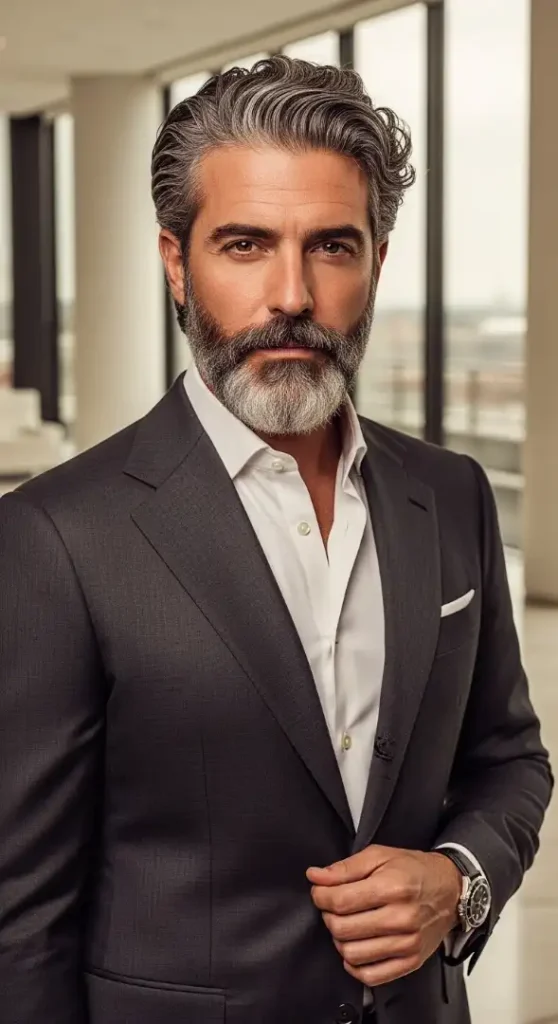
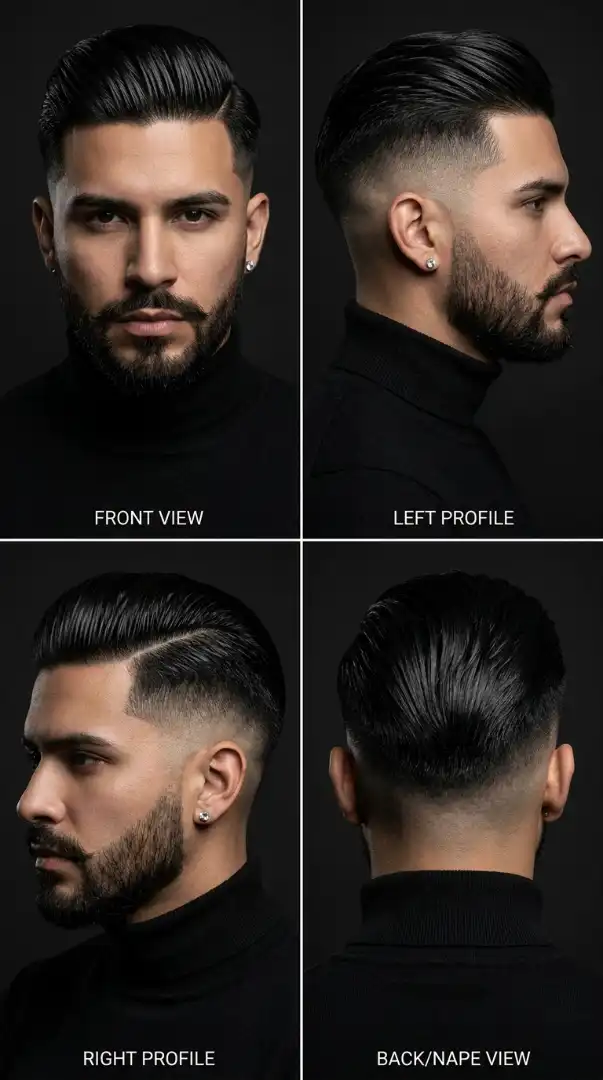
The Executive Edge represents the pinnacle of professional grooming—a high fade that starts approximately 2 inches above the ear, creating dramatic contrast with the swept-back top while maintaining boardroom credibility. This isn’t your weekend barbershop fade; it’s architectural precision engineered for the corner office.
FACE SHAPE MATCH: This style excels on Square and Oblong face shapes because the high fade removes visual weight from the lower jaw and temples, elongating the entire facial structure. The swept-back top adds 1-2 inches of perceived height, which balances an Oblong face beautifully. Round faces should approach cautiously—the dramatic side reduction can over-emphasize facial width unless paired with a strong beard to add vertical dimension.
GROOMING KIT: Your barber needs Wahl Magic Clip cordless clippers for the fade foundation, paired with Andis T-Outliner trimmers for surgical temple work and neckline definition. At home, maintain this with a Kent 81T handmade comb for daily styling, Mason Pearson boar bristle brush for natural shine, and Layrite Superhold Pomade (nickel-sized amount) for all-day structure. Beard maintenance requires Honest Amish Beard Oil applied to damp facial hair every morning.
MAINTENANCE LEVEL: HIGH. Expect barbershop visits every 10-12 days to preserve the dramatic fade line—anything longer and you’ll see visible growth disrupting the clean transition. Daily styling commitment: 8-10 minutes including blow-drying the top backward with medium heat, working pomade through damp hair with fingers, then finishing with the boar brush for polish. This style demands product discipline; skip a day and the swept-back structure collapses into shapeless volume.
BARBER TALK (The Exact Script): “I want a high skin fade starting two inches above my ear, blended to bare skin with a #0.5 guard at the bottom. Keep 3 inches on top, cut with point-cutting technique to maintain texture. Sweep everything back off my forehead—no fringe. Square off my neckline, clean. For the beard, take the Van Dyke down to 6mm, sharp line at the cheekbones, connect the fade into the sideburn area seamlessly.”
The next style shows how to modernize this corporate classic with textured movement for creative professionals who need versatility.
FAQs
Q: How often should I get a high fade touched up?
A: High fades require maintenance every 10-14 days to preserve the dramatic transition line. The fade grows out visibly faster than traditional cuts because the contrast between short sides and longer top becomes less defined as hair grows uniformly. Professional settings demand tighter maintenance schedules—every 10 days keeps it boardroom-sharp, while 14 days works for creative environments where slight growth is acceptable.
Q: What’s the difference between a high fade and a mid fade?
A: A high fade begins 2+ inches above the ear, creating maximum contrast and exposing more scalp, while a mid fade starts at the temple line (roughly 1 inch above ear). High fades deliver bold, attention-commanding style suited for confident personalities and oval/square faces. Mid fades offer subtlety and work better for round faces that need less side removal.
Q: Can I style a high fade without heat tools?
A: Air-drying works only if you have naturally cooperative hair texture—wavy or straight hair that falls backward naturally. Apply pomade to towel-dried hair, comb backward immediately, then let it set for 20 minutes while getting dressed. However, blow-drying backward with a round brush creates superior volume and all-day hold that air-drying cannot match.
Q: Which face shapes suit The Executive Edge best?
A: Square and Oblong faces achieve the best results because the high fade reduces jaw width while the swept-back top adds balancing height. Oval faces (already balanced) look excellent. Round and Heart-shaped faces should add a strong beard to create vertical dimension—without it, the dramatic side reduction can over-emphasize facial roundness.
2 of 12 — The Urban Sculptor
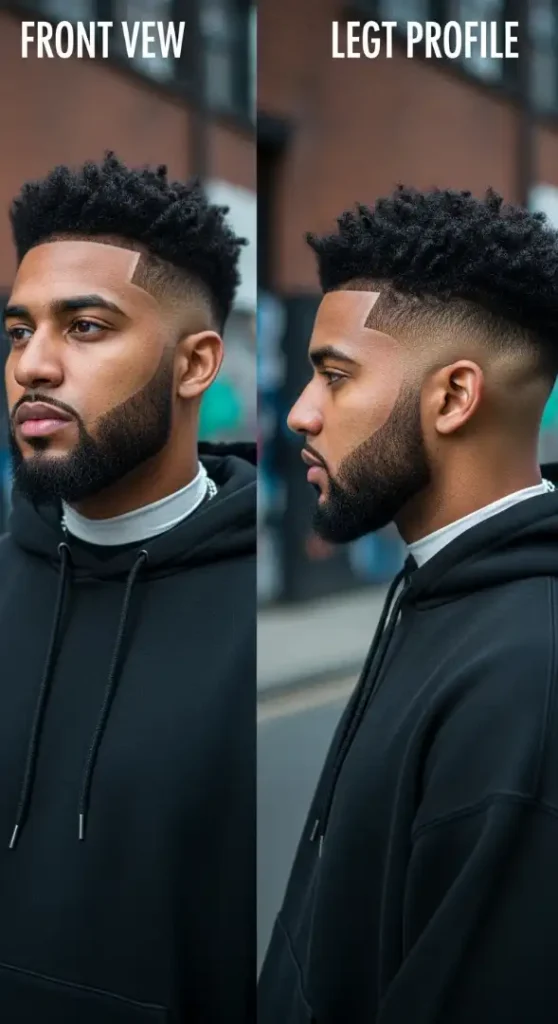
The Urban Sculptor transforms the high fade into street-art precision—engineered specifically for coily and tightly-curled hair textures that demand geometric sharpness. This cut celebrates natural texture while delivering the clean lines that make heads turn on city streets.
FACE SHAPE MATCH: Diamond and Square face shapes absolutely dominate with this style because the dramatic high fade (starting 2.5 inches above ear) reduces temple width while the textured coily top adds balancing volume at the crown. The sharp line-up creates horizontal emphasis that broadens a narrow forehead on Diamond faces. Round faces can wear this successfully but require the geometric beard line-up to add vertical structure—without it, the volume on top can emphasize roundness rather than sculpt it.
GROOMING KIT: Essential tools start with Andis Master cordless clippers featuring magnetic guards for precision fade work on coily hair. Your barber absolutely needs BaByliss Pro FX787 Gold Outliner for those razor-sharp edge-ups and geometric temple work—this trimmer delivers surgical precision on tight curl patterns. Home maintenance requires a Diane Torino Pro 9-row brush for wave training, wide-tooth seamless comb for detangling when damp, and Cantu Moisturizing Curl Activator Cream (dime-sized amount) applied to damp hair daily. Add Murray’s Edgewax for maintaining that crisp hairline between barbershop visits.
MAINTENANCE LEVEL: MEDIUM-HIGH. Barber visits every 7-10 days are non-negotiable for coily hair—the geometric line-up loses definition faster than wavy textures, and the high fade shows growth within a week. Daily routine: 5-7 minutes including applying curl activator to damp hair, brushing forward with the 9-row brush for 3-4 minutes to encourage wave pattern, then defining the edges with a small amount of edgewax on your fingertips. Night maintenance requires a durag or wave cap to preserve the pattern while sleeping.
BARBER TALK (The Exact Script): “Give me a high skin fade starting 2.5 inches above my ear—take it to bare skin at the bottom with a #0 guard. Keep the top at 2.5 inches, maintain the natural coily texture, don’t thin it out. Push the fringe slightly forward and right. I need a sharp line-up—90-degree angles at the temples, straight across the forehead, clean geometric edges. For the beard, line it up sharp at the cheekbones, keep it at 3mm length, connect the fade smoothly into the sideburn area so there’s no gap.”
Discover how adding length to the top creates the next variation—perfect for guys who want more styling versatility.
FAQs
Q: How do I maintain sharp edges on a high fade with coily hair?
A: Apply Murray’s Edgewax or comparable edge control product daily along your hairline using a small brush or fingertips, then smooth with a soft-bristle brush in downward motions. Coily hair naturally shrinks away from the edge, so daily edge work is essential between barber visits every 7-10 days. Sleep with a durag to prevent the line from getting fuzzy overnight.
Q: What guard numbers create a proper high fade on Black hair?
A: A classic high fade on coily hair uses a #0.5 or #1 guard as the baseline (where the fade meets skin), blending upward through #1.5 and #2 guards before transitioning into the longer top section at 2-3 inches. The fade should start 2+ inches above the ear and blend over approximately 1.5 inches of vertical space for smooth graduation.
Q: Can I get waves with a high fade haircut?
A: Absolutely—the textured top section at 2-3 inches provides perfect length for 360 waves. Brush forward, backward, and from crown to hairline for 5-7 minutes twice daily using a medium-firm wave brush, apply wave pomade or curl activator, then wear a durag for 30+ minutes. The high fade actually enhances wave visibility by creating clean contrast.
Q: Why does my high fade look grown out after just one week?
A: Coily hair texture shows growth more visibly than straight hair because the contrast between the faded sides and textured top becomes less dramatic quickly. Additionally, the geometric line-up loses precision as hair pushes past the defined edge. This is normal—maintain sharp appearance with barbershop visits every 7-10 days rather than the 14-day schedule for other textures.
3 of 12 — The Mediterranean Wave
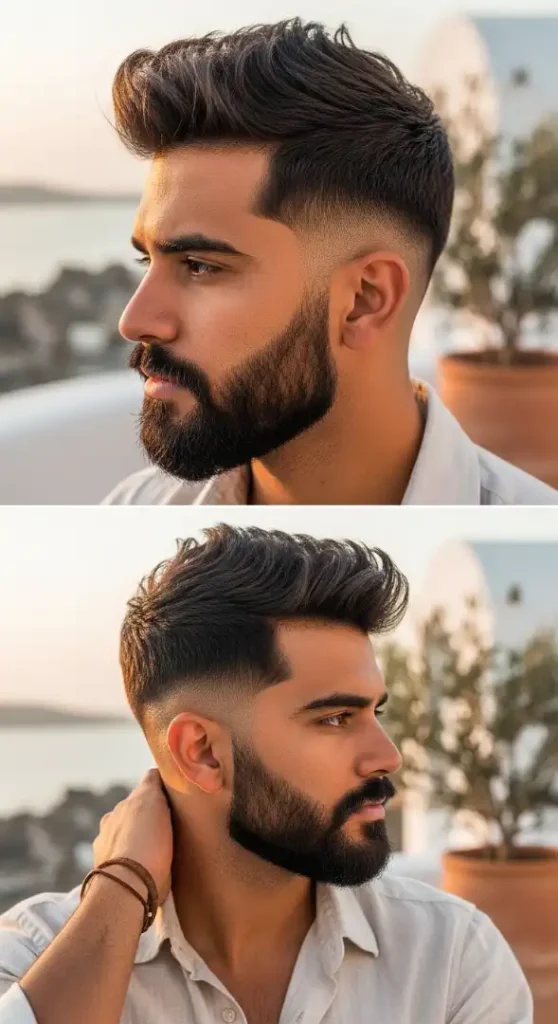
The Mediterranean Wave celebrates thick, wavy hair at its natural best—a high fade that removes weight from the sides while preserving 4 inches of textured movement on top. This style is engineered for men whose hair has natural body that fights against sleek, controlled looks.
FACE SHAPE MATCH: Oval faces achieve absolute perfection with this style because the voluminous wavy top and clean sides maintain natural balance without over-correction. Heart-shaped faces benefit enormously—the width at the crown balances a narrow chin beautifully, while the high fade prevents the sides from adding competing width at cheekbone level. Square faces work well if the waves are styled with forward movement to soften the angular jawline. Round faces should proceed cautiously; this much top volume can emphasize roundness unless paired with a structured beard that adds vertical dimension.
GROOMING KIT: Your barber uses Oster Fast Feed clippers for the initial fade work—the powerful motor handles thick wavy hair without pulling. Wahl Detailer for the fine edge work and temple definition. At home, success requires a Denman D3 7-row styling brush for defining wave pattern while blow-drying, a wide-tooth Kent comb for detangling when wet, and Hanz de Fuko Claymation (pea-sized amount) worked through damp hair for natural texture without crunch. Sea salt spray (Kevin Murphy Hair Resort) adds grit and enhances the wave pattern—two spritzes on damp hair before styling. For the beard, Honest Amish beard oil keeps the 8mm length soft and manageable.
MAINTENANCE LEVEL: MEDIUM. Barbershop visits every 14-16 days maintain the fade while allowing the wavy top to develop character between cuts. Daily styling: 6-8 minutes including rough-drying hair with fingers to 80% dry, applying claymation to slightly damp hair, then using the Denman brush to direct waves leftward while blow-drying on medium heat. The natural texture does most of the work; you’re enhancing, not fighting it. This style actually looks better on day two after sleeping on it—the waves settle into a more natural, lived-in pattern.
BARBER TALK (The Exact Script): “I want a high fade starting at my temple corner, about 2 inches above the ear. Blend it from a #2 guard down to skin over about 2 inches of graduation—I want it smooth, not choppy. Keep 4 inches on top, cut with point-cutting to maintain the natural wave texture, don’t thin it out. Sweep everything to the left with natural movement. Leave the hairline soft, not blocked—I want it to look natural. For my beard, take it down to 8mm uniform length, round it out at the bottom, blend the sideburns into the fade seamlessly.”
The next style shows you how to take this Mediterranean texture and add structured styling for formal events.
FAQs
Q: How do I style wavy hair with a high fade without it looking messy?
A: Apply a pea-sized amount of matte clay or paste to damp (not wet) hair, then blow-dry while directing waves in your desired direction using a Denman brush or your fingers. The key is working with the natural wave pattern rather than against it—enhance the S-curve by following its direction. Finish with light sea salt spray for texture definition and avoid heavy products that weigh waves down.
Q: What’s the best product for thick wavy hair on a high fade?
A: Matte clay or paste products work best because they provide hold without the shine that makes wavy hair look greasy. Hanz de Fuko Claymation, Baxter of California Clay Pomade, or American Crew Fiber all deliver strong hold with natural finish. Apply to damp hair before blow-drying for best results—never on dry hair, which creates clumpy, uneven texture.
Q: How often should I wash wavy hair with a high fade?
A: Wash every 2-3 days maximum to preserve natural oils that enhance wave definition and prevent frizz. The high fade sides can be rinsed daily with water only, but shampooing the wavy top daily strips essential moisture. Use sulfate-free shampoo when you do wash, and always follow with a lightweight conditioner focused on the ends.
Q: Can I sleep on wavy hair without ruining the style?
A: Wavy hair on a high fade actually benefits from sleep—it settles into a more natural, effortless pattern overnight. To minimize frizz, sleep on a silk or satin pillowcase which reduces friction. In the morning, spritz with water, apply a tiny amount of product, and reshape with your fingers. The “day-two wave” often looks better than fresh styling.
4 of 12 — The Precision Power Cut
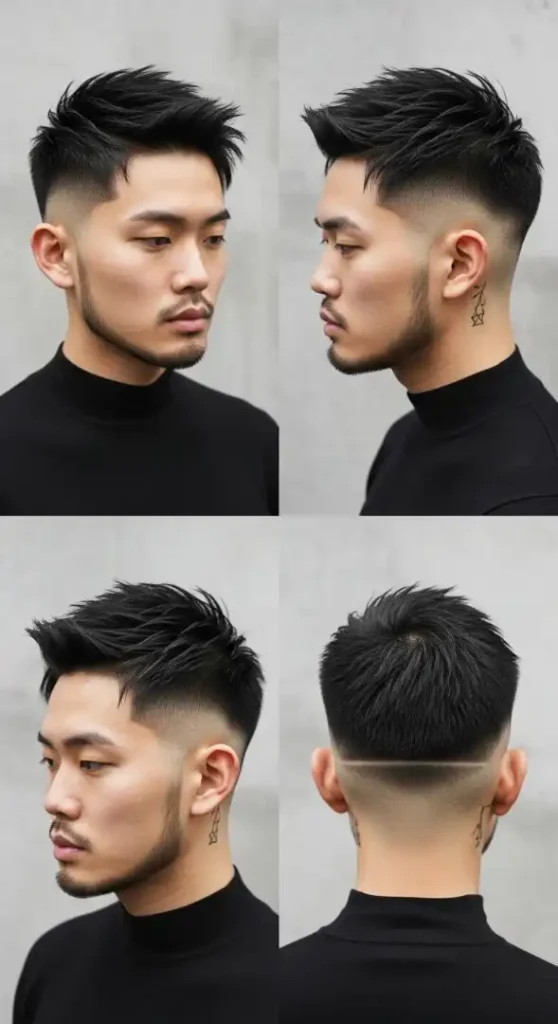
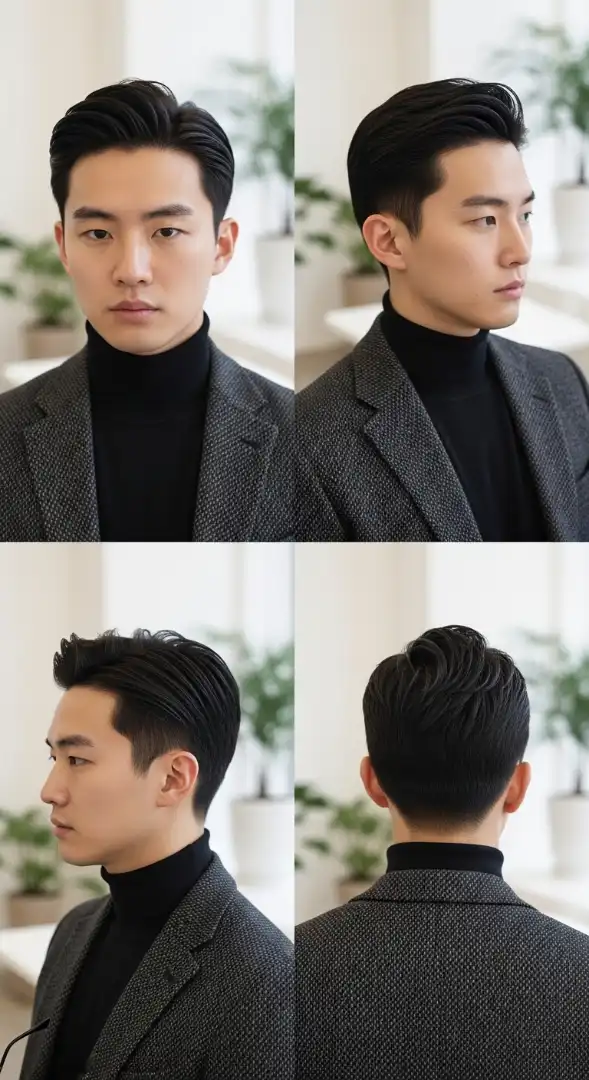
The Precision Power Cut delivers military discipline meets modern minimalism—an ultra-high fade that starts 3 inches above the ear paired with a brush cut top that stands at attention. This is maximum impact with zero styling time required.
FACE SHAPE MATCH: Square faces absolutely dominate this style because the vertical brush cut adds height without width, while the ultra-high fade removes bulk from the sides, creating a perfectly balanced rectangular silhouette. Oblong faces work well too—the standing texture on top adds fullness at the crown that balances facial length. Diamond faces benefit from the temple emphasis this creates. However, Round and Heart-shaped faces should approach with caution; this style offers zero softening elements, and the geometric precision can emphasize facial roundness or make a pointed chin look more pronounced. Grow a beard to add balancing structure if you have these face shapes.
GROOMING KIT: This cut demands Andis Master clippers with a powerful electromagnetic motor for the ultra-tight fade work. Your barber needs Wahl 5-Star Detailer for the neckline precision and temple corners—nothing else delivers this level of geometric sharpness. At home, you need exactly two tools: a firm-bristle flat-top brush (Diane 8119 9-Row Brush) and American Crew Grooming Cream. That’s it. Morning routine is 90 seconds: wet hair under the shower, towel-dry roughly, apply dime-sized amount of grooming cream, brush top straight up until hair stands vertical, walk out the door. No blow dryer needed—straight Asian hair texture stands naturally.
MAINTENANCE LEVEL: MEDIUM. The ultra-high fade shows growth quickly because there’s so much scalp exposure, requiring barbershop visits every 8-10 days to maintain the dramatic clean look. However, daily styling is effortless—this is the lowest-maintenance high fade style in terms of morning routine. 90 seconds maximum including product application. The trade-off: you save time daily but visit the barber more frequently. Ideal for disciplined professionals who value morning efficiency over barbershop frequency.
BARBER TALK (The Exact Script): “I want an ultra-high skin fade starting 3 inches above my ear—basically starting near the top of my head. Take it down to completely bare skin at the bottom with a #0 guard, blend over about 1 inch of vertical space for sharp transition. On top, cut to 1.5 inches uniform length all over the crown, use clippers over comb technique to keep it dense and even. I want it to stand straight up—brush cut style. Sharpen my front corners into 90-degree angles. Square off my neckline and taper it to a point. Make everything geometric and precise—this is a power cut, not a soft look.”
Next up: how to soften this precision with side-swept texture for versatile day-to-night styling.
FAQs
Q: How do I make my hair stand straight up in a brush cut style?
A: Apply grooming cream or light pomade to damp hair immediately after showering, then use a firm-bristle flat-top brush to brush hair straight upward from all directions toward the center crown. The product provides hold while the damp hair sets in the vertical position as it air-dries. Straight hair textures (especially Asian hair) naturally stand vertical and hold this style easily.
Q: What’s the difference between a high fade and an ultra-high fade?
A: A high fade starts 2 inches above the ear, while an ultra-high fade begins 3+ inches above the ear, sometimes starting near the crown. Ultra-high fades expose maximum scalp and create the most dramatic contrast with the top section. They require more frequent maintenance (every 8-10 days vs. 12-14 days) but deliver bold, attention-commanding impact.
Q: Can wavy or curly hair work with a brush cut fade?
A: Not effectively. Brush cuts require straight hair that naturally stands vertical when cut short. Wavy and curly hair will fight the vertical position and create uneven texture rather than the clean, uniform brush appearance. If you have curly hair and want a similar clean aesthetic, ask for a short textured crop with a high fade instead.
Q: How often do I need to maintain an ultra-high fade?
A: Every 8-10 days maximum to preserve the dramatic clean look. Ultra-high fades show growth more visibly than standard high fades because there’s more scalp exposure—even half an inch of growth disrupts the sharp geometric line. Professional settings demand the tighter 8-day schedule; creative environments can stretch to 10 days.
5 of 12 — The Vintage Gentleman
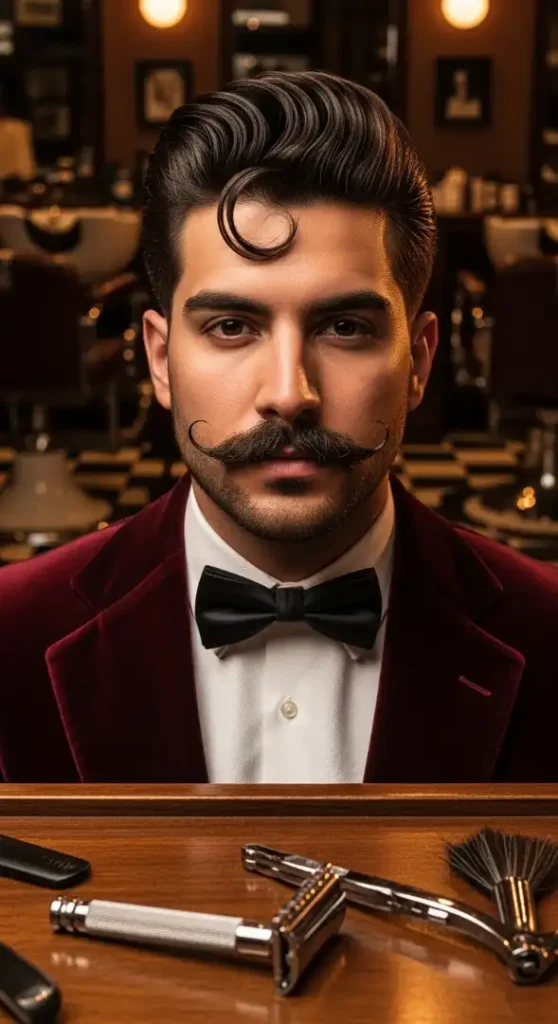
The Vintage Gentleman resurrects 1950s elegance with modern precision—a high fade foundation topped with a sculptural pompadour that commands attention in boardrooms and speakeasies alike. This is timeless masculinity executed with contemporary barber technique.
FACE SHAPE MATCH: Oval and Oblong faces achieve absolute perfection because the vertical pompadour height (4 inches at front) adds balancing fullness at the top while the high fade removes weight from the sides. This creates ideal facial proportions. Heart-shaped faces benefit enormously—the volume on top balances a narrow chin beautifully. Square faces work well if styled with slight backward sweep to soften angular features. Round faces must proceed cautiously; this much height can emphasize facial roundness unless paired with a structured beard or at minimum the chevron mustache and soul patch shown here, which adds vertical lines that elongate.
GROOMING KIT: Your barber needs Oster Classic 76 clippers for the fade foundation—the workhorse of vintage-style barbering. Andis T-Outliner for sharp part definition and temple work. At home, success demands a Kent OG1 handmade comb (wide-tooth section for application, fine-tooth for finishing), Denman D4 paddle brush for blow-drying volume, and Layrite Super Shine Pomade (quarter-sized amount for this length and density). Critical technique: apply pomade to damp hair, blow-dry upward and backward with the paddle brush on high heat, then finish with the fine-tooth comb to create visible comb lines in the shine. For the mustache and soul patch: Honest Amish Beard Balm for hold and conditioning, small mustache comb for daily grooming.
MAINTENANCE LEVEL: HIGH. This is old-school high-maintenance grooming that demands commitment. Barbershop visits every 12-14 days to maintain the fade and keep the pompadour length optimal (too long and it becomes unmanageable). Daily styling: 10-12 minutes including blow-drying the pompadour into shape, working pomade through with fingers and comb, sculpting the front height, and grooming the facial hair. Evening routine: gentle brushing to remove product buildup. This style makes a statement but requires dedication—not for rushed mornings or guys who hate product in their hair.
BARBER TALK (The Exact Script): “I want a classic high fade starting 2 inches above my ear, blended from #2 guard to skin with smooth graduation. On top, keep 4-5 inches of length—I’m styling it as a pompadour so I need that length for height. Cut a deep side part on my left side with your clippers—make it sharp and visible. Don’t thin the top out at all; I need density for the pomp. For facial hair, shape my chevron mustache to follow my upper lip line exactly, keep the soul patch tight and centered. Clean everything else to skin—no beard, just the mustache and soul patch.”
The next variation shows how to modernize this classic with matte texture instead of shine—same structure, contemporary finish.
FAQs
Q: How do I style a pompadour with a high fade without it falling flat?
A: The key is applying pomade to damp (not dry) hair, then blow-drying upward and backward with a paddle brush on high heat to set the shape before the pomade cools. Use a high-shine pomade like Layrite or Suavecito for hold that locks the structure in place. Once dry, finish with a comb to refine the shape. The pomade must be water-based so heat activates it during blow-drying.
Q: What’s the best pomade for a vintage-style pompadour?
A: Traditional oil-based pomades (Murray’s, Royal Crown) provide the authentic high shine and all-day hold that vintage styling demands. However, water-based pomades (Layrite Super Shine, Suavecito Original Hold) wash out easier and are better for beginners. For this 4-inch pompadour height, use a firm-hold water-based pomade with high shine—Layrite Super Shine or Uppercut Deluxe Pomade work perfectly.
Q: How often should I wash a pompadour hairstyle?
A: Every 2-3 days maximum. Daily washing strips the natural oils that actually help the pomade work better and add to the vintage aesthetic. Many vintage styling enthusiasts wash only twice weekly, using the “second-day pomp” where yesterday’s pomade adds to today’s application for even stronger hold. When you do wash, use a clarifying shampoo to fully remove pomade buildup.
Q: Can I create a pompadour with thin or fine hair?
A: Yes, but it requires strategic cutting and product selection. Ask your barber to preserve maximum length and density on top—no thinning at all. Use a volumizing mousse before blow-drying, then apply a medium-hold pomade (not heavy-hold which weighs fine hair down). Fine hair actually holds pompadour shape well once styled because there’s less weight fighting the structure.
6 of 12 — The Athletic Edge
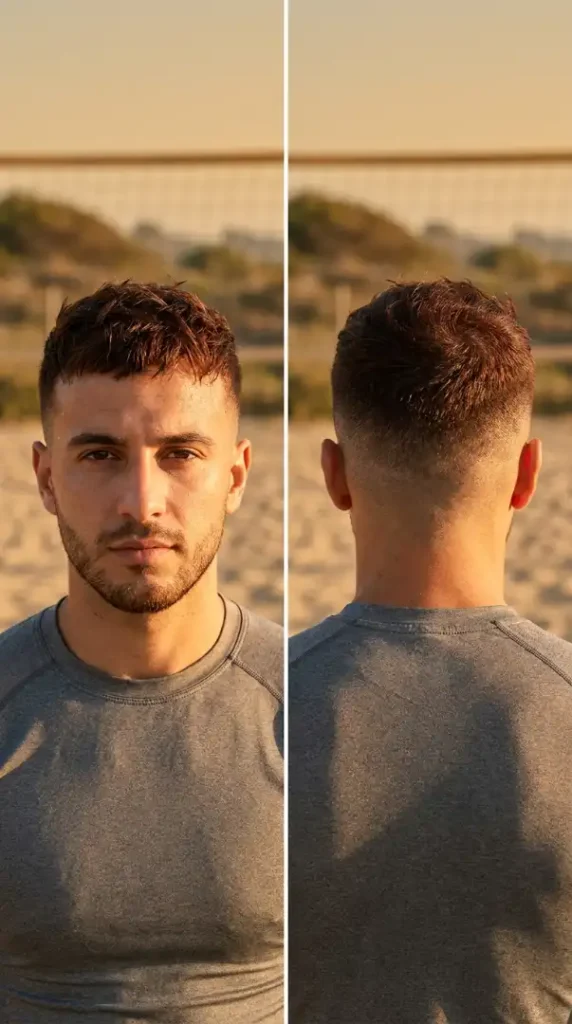
The Athletic Edge combines function with style—a high fade paired with a short textured crop engineered for active lifestyles. This cut looks sharp at the gym and polished in client meetings, requiring minimal styling time and surviving intense workouts.
FACE SHAPE MATCH: Square and Diamond face shapes absolutely dominate this style because the forward-pushed texture adds slight width at the forehead while the high fade removes bulk from the sides, creating balanced proportions. The short length and choppy layers soften angular features beautifully. Round faces work extremely well here—the vertical texture and height on top elongates facial roundness, while the high fade prevents the sides from adding competing width. Oval faces look great as always. Heart-shaped faces should add slightly more length on top (2.5-3 inches) to balance a narrow chin; this 2-inch version might emphasize the pointed chin.
GROOMING KIT: This cut demands Andis Master clippers for the fade work and Wahl 5-Star Magic Clip for texture work on top. Your barber uses point-cutting and razor techniques to create the choppy layers. At home, you need a pre-styler and a finishing product: Hanz de Fuko Quicksand (pre-styler applied to damp hair for grit and volume), then after rough-drying with your hands, add American Crew Fiber (pea-sized amount) worked through with fingers to create piece-y separation. No comb or brush needed—this is finger-styled texture. Total product investment: $35 for both products that last 3-4 months with daily use. For the stubble beard: simple electric trimmer at #1 guard every 3 days.
MAINTENANCE LEVEL: LOW-MEDIUM. The beauty of this cut is the low daily styling commitment (3-5 minutes) paired with reasonable barbershop frequency (every 14-16 days). The textured crop grows out gracefully; even at 3 weeks it still looks intentional, just slightly longer. Morning routine: towel-dry hair roughly, apply Quicksand to damp hair, rough-dry with fingers (no blow dryer needed for this short length), add Fiber and push forward with fingertips creating separation, walk out. This style survives gym sessions, swimming, and outdoor activities better than any styled cut—the texture actually looks better slightly disheveled.
BARBER TALK (The Exact Script): “Give me a high fade starting about 2 inches above my ear, blend from #1.5 guard to skin with smooth graduation. On top, cut to 2 inches using point-cutting technique—I want choppy layers and texture, not clean lines. Push everything forward with no side part. Keep the front slightly longer, maybe 2.5 inches for some height. Round off my neckline naturally, not blocked. For facial hair, I’m keeping light stubble at #1 guard length all over—just clean up the cheek line and neckline edges.”
Next: see how adding more length on top creates styling versatility for guys who want options.
FAQs
Q: What’s the best low-maintenance haircut for men who work out daily?
A: A short textured crop with a high fade (2-3 inches on top) provides maximum durability through workouts while still looking styled. The choppy texture actually benefits from slight dishevelment—post-workout hair looks intentionally messy rather than ruined. Use matte products like clay or fiber that don’t sweat out as easily as pomades or gels.
Q: How do I style a textured crop without it looking messy?
A: Apply pre-styler (like sea salt spray or texturizing powder) to damp hair, rough-dry with your fingers creating upward and forward movement, then add a small amount of matte clay or fiber to create controlled separation. The key is “controlled chaos”—piece-y texture with intentional direction, not random clumps. Practice pushing hair forward and slightly to one side for a refined athletic look.
Q: Can I swim with a high fade textured crop?
A: Absolutely—this is one of the most pool-friendly cuts. After swimming, simply rinse with fresh water, rough-dry with a towel, apply a tiny amount of product, and push forward with your fingers. The short length and high fade mean no complicated styling is ruined. Avoid heavy pomades that create buildup; stick with matte clays or fiber products that rinse clean.
Q: How often should I trim a textured crop?
A: Every 14-16 days maintains optimal shape and texture definition. The textured layers grow out gracefully, so you can stretch to 3 weeks if needed without looking unkempt. However, the high fade will show visible growth by day 14, so maintenance frequency depends on whether you prioritize the fade sharpness or can tolerate slight growth.
7 of 12 — The Creative Rebel
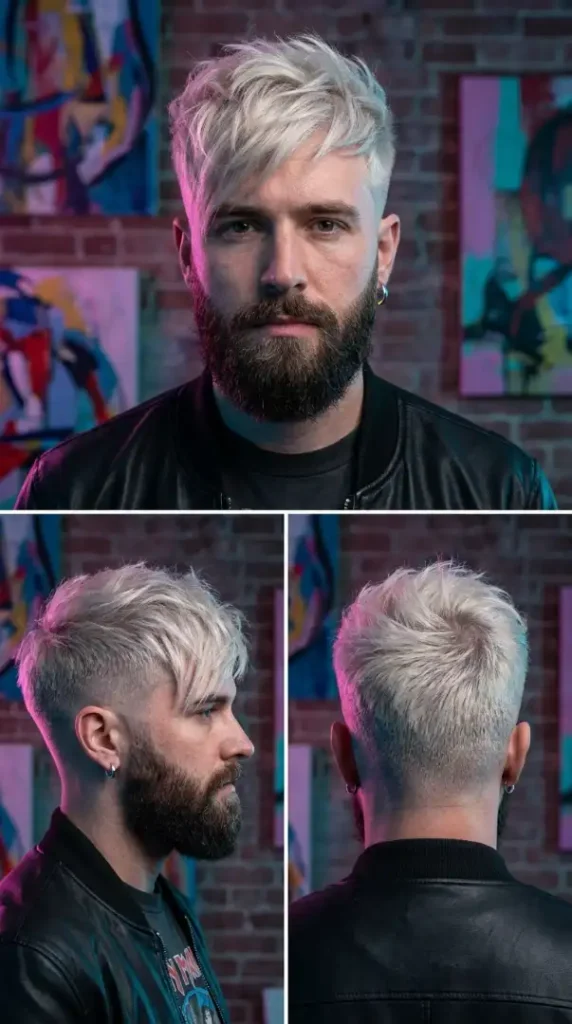
The Creative Rebel pairs high-contrast platinum blonde color with substantial length on top—5 inches of textured movement that makes a statement in creative industries while the high fade keeps it grounded in professional precision. This is artistry meets architecture.
PILLAR A — FACE SHAPE MATCH: Oval faces achieve perfection with this style because the substantial top volume and side-swept movement maintain natural facial balance without over-correction. Long/Oblong faces work beautifully—the horizontal movement of the fringe and the volume throughout create width that balances facial length. Square faces benefit from the soft, messy texture that counteracts angular features; the longer fringe sweeping to the side softens a strong jawline. Round faces should approach cautiously with this much volume on top; pair it with the connected full beard shown here to add vertical dimension, otherwise the volume can emphasize roundness.
PILLAR B — GROOMING KIT: Color maintenance is critical: you need purple shampoo (Fanola No Yellow twice weekly) to prevent platinum from turning brassy, and deep conditioning treatment (Olaplex No.3) once weekly to maintain hair health after bleaching. Your barber uses Wahl Senior clippers for the fade and texturizing shears for the long top layers. At home styling requires Hanz de Fuko Sponge Wax (excellent for platinum hair, doesn’t yellow), sea salt spray for pre-styling texture, and a blow dryer with diffuser attachment. Beard maintenance: quality beard oil (Honest Amish) daily, boar bristle beard brush for distribution, electric trimmer with 12mm guard for length maintenance every 5-7 days.
PILLAR C — MAINTENANCE LEVEL: HIGH. Color maintenance alone makes this demanding: salon visits every 4-6 weeks for root touch-ups and toning to maintain platinum brightness ($150-250 per session). The high fade requires barbershop visits every 12-14 days. Daily styling: 8-10 minutes including applying sea salt spray to damp hair, blow-drying with diffuser while scrunching to enhance texture, then working Sponge Wax through with fingers for piece-y definition. Beard care adds 3-4 minutes daily. This style demands commitment to both color maintenance and daily styling—not for minimalists.
PILLAR D — BARBER TALK (The Exact Script): “I want a high fade starting at my upper temple, about 2.5 inches above my ear. Blend from #2 guard to skin with smooth graduation. On top, keep 5 inches of length—use point-cutting and texturizing shears to create choppy layers and remove weight without losing length. I style it swept to the right with messy texture. Leave my fringe longest, around 6 inches. Square off my neckline with defined corners. For my beard, trim everything to 12mm uniform length, keep it full and connected to my sideburns, blend the fade area into the beard seamlessly with no gaps.”
The next style shows a more subtle color approach with natural dimension instead of full platinum.
FAQs (GOOGLE AI OVERVIEW TARGETING)
Q: How do I maintain platinum blonde hair with a high fade?
A: Use purple shampoo every 2-3 washes to neutralize yellow/brassy tones that naturally develop in bleached hair. Apply deep conditioning treatment (Olaplex or similar) weekly to prevent breakage and maintain hair health. Book salon appointments every 4-6 weeks for root touch-ups and professional toning. Avoid hot tools above 350°F and always use heat protectant spray.
Q: What products work best for textured platinum hair?
A: Matte finish products that won’t yellow platinum hair are essential. Hanz de Fuko Sponge Wax, Baxter of California Clay Pomade, or O’Douds Matte Paste all work excellently. Avoid oil-based pomades or products with heavy pigments that can discolor blonde hair. Sea salt spray is perfect for pre-styling texture without color interference.
Q: How much does it cost to maintain platinum blonde hair?
A: Initial bleaching: $200-400 depending on starting hair color and length. Maintenance appointments every 4-6 weeks: $150-250 for root touch-up and toning. Add $50-80 monthly for purple shampoo, deep conditioner, and color-safe styling products. Total annual cost: approximately $2,500-3,500 including initial bleaching, 8-10 maintenance appointments, and product replacement.
Q: Can I achieve platinum blonde if I have dark hair?
A: Yes, but it requires multiple bleaching sessions (2-4) spaced 2-3 weeks apart to prevent severe damage, especially if starting with black or dark brown hair. Never attempt this at home—professional colorist expertise is essential to minimize breakage and achieve even platinum tone. Expect 2-3 months of transition appointments before reaching true platinum if starting with very dark hair.
PINTEREST PIN PACK
📌 PIN TITLE: “12 Bold High Fade Haircuts for Creative Professionals — Stand Out With Style”
📝 PIN DESCRIPTION: Break the mold with these statement-making high fade variations engineered for the creative industry. From platinum color to textured movement, these 12 cuts command attention while maintaining professional polish. Includes color maintenance guides and styling techniques. Save your favorite and bring it to your next salon appointment. #CreativeHair #PlatinumBlonde #HighFade
#️⃣ HASHTAGS: #MensHaircut #FadeHaircut #MensStyle #Barbershop #HighFade #PlatinumBlonde #MensGrooming #BarberLife #HairstyleIdeas #CreativeHaircut #MensFade #BarberWork #HairInspo #BoldHair #ColoredHair #MENXSTYLE #TheCreativeRebel #MenXStyleBlog #ArtisticHair
⚡ CTA LINE: “Pin this now—creative style that means business.”
8 of 12 — The Distinguished Professional
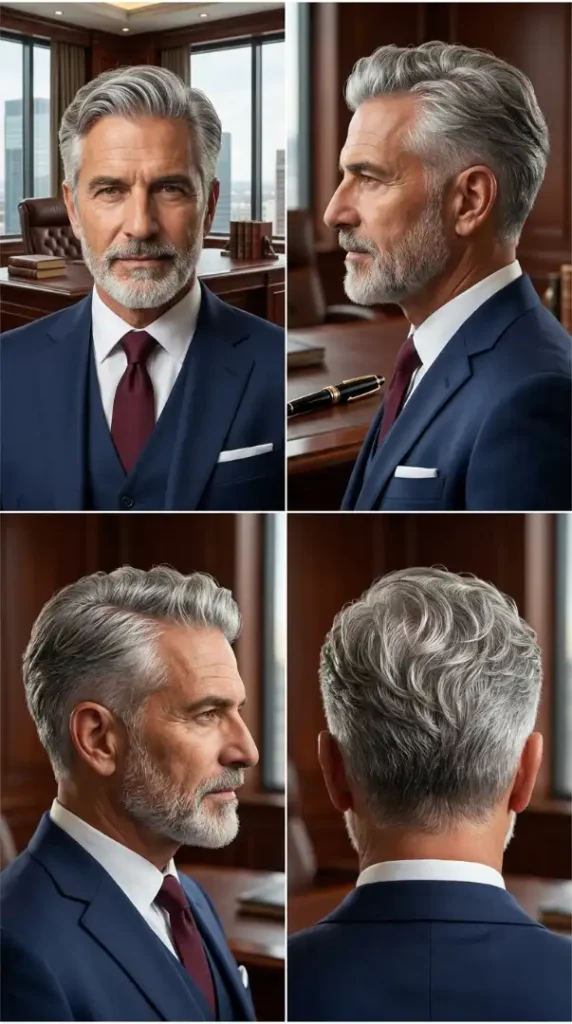
The Distinguished Professional celebrates natural grey hair as a power move—a sophisticated high fade paired with wavy silver hair that commands respect in any boardroom. This style transforms “going grey” from aging concern into executive asset.
FACE SHAPE MATCH: Oval and Oblong faces achieve exceptional results because the wavy textured top adds balancing volume while maintaining the natural elegance that grey hair provides. The high fade removes weight from the sides without being too aggressive, preserving mature sophistication. Square faces look distinguished—the natural wave movement softens angular features while the grey color adds gravitas. Round faces work well with this length (3.5 inches) because the waves create vertical movement that elongates; pair with the trimmed beard as shown to add further vertical structure. Heart-shaped faces benefit from the volume distributed throughout the top, balancing a narrow chin.
GROOMING KIT: Grey hair requires specific products to prevent yellowing and maintain vibrant silver tone. Essential arsenal: purple shampoo (Aveda Blue Malva once weekly) to neutralize yellow undertones that develop in grey hair, quality leave-in conditioner (Living Proof Restore) because grey hair tends toward coarseness and requires extra moisture, and Layrite Natural Matte Cream for styling with subtle shine that enhances silver without looking wet. Your barber needs Wahl Magic Clip for the fade work and texturizing shears for the wavy top layers. Beard care: Scotch Porter Beard Conditioner applied daily to the 6mm grey beard, boar bristle brush for natural shine.
MAINTENANCE LEVEL: MEDIUM-HIGH. This style demands executive-level grooming discipline. Barbershop visits every 14-16 days maintain the fade precision and keep the wavy top at optimal length. Daily styling: 7-9 minutes including washing with color-enhancing shampoo (3x weekly), applying leave-in conditioner to damp hair, blow-drying with a paddle brush to enhance natural wave while directing the side part, then working matte cream through with fingers for texture definition. The grey color actually simplifies life—no root touch-ups or coloring appointments—but requires specific product maintenance to keep it vibrant rather than dull or yellowed.
BARBER TALK (The Exact Script): “I want a classic high fade starting at temple level, about 2 inches above my ear. Blend from #1.5 guard to clean-shaven skin with smooth graduation—keep it professional, not aggressive. On top, preserve 3.5 inches of length and cut with point-cutting to maintain my natural wave texture. Create a side part on my right side with your clippers—subtle but defined. Don’t thin the top out; I need the density for executive presence. Natural rounded nape, not blocked. For my grey beard, trim to 6mm uniform length, keep it full, blend seamlessly into the sideburn and fade area. Everything should look polished and distinguished, not edgy.”
Next up: a longer variation that adds versatility for guys who want multiple styling options.
FAQs
Q: How do I keep grey hair looking silver instead of yellow?
A: Use purple or blue-tinted shampoo (Aveda Blue Malva, Fanola No Yellow) once weekly to neutralize brassy yellow tones that naturally develop in grey hair. Grey hair lacks pigment and absorbs environmental pollutants that cause yellowing, so regular toning is essential. Avoid smoking exposure and chlorinated pools, which accelerate yellowing. Professional toner application every 8-10 weeks maintains optimal silver brightness.
Q: Should I embrace grey hair or dye it?
A: Grey hair projects confidence, experience, and leadership when properly maintained with modern styling—especially with a sharp high fade that signals you’re current, not outdated. Distinguished grey (sometimes called “silver fox”) is increasingly valued in professional settings. However, if grey makes you feel older than you want to appear, professional coloring is perfectly acceptable. The key is intentionality: either embrace it fully with excellent grooming or color it professionally—half-grey roots look neither distinguished nor youthful.
Q: What’s the best haircut for grey wavy hair?
A: A high fade with 3-4 inches on top showcases grey’s natural texture while maintaining professional polish. The fade provides modern edge that prevents grey hair from reading as “old fashioned,” while the length on top allows natural wave movement that adds dimension to silver color. Avoid buzz cuts (too severe) and overly long styles (can look unkempt in grey)—this medium length hits the sweet spot.
Q: Does grey hair require different products than pigmented hair?
A: Yes. Grey hair is typically coarser and drier because pigment-producing melanocytes also contribute to hair’s moisture retention. Use moisturizing shampoos/conditioners formulated for grey hair, leave-in treatments to combat dryness, and products that enhance shine without heaviness. Avoid products with yellow or orange tints that will discolor silver. Purple-tinted products are your friend for maintaining cool silver tones.
9 of 12 — The Street King

The Street King represents the pinnacle of 360 wave culture—a high fade foundation paired with deep, perfectly trained waves that flow in circular patterns from the crown. This style is cultural heritage meets modern barbering precision, demanding dedication that separates casual attempts from true wave masters.
FACE SHAPE MATCH: Diamond and Square face shapes achieve exceptional results because the circular wave pattern creates horizontal visual interest that balances angular features while the high fade removes side bulk. The geometric line-up with sharp temple corners adds structure that complements these face shapes’ natural angularity. Oval faces look great as expected. Round faces can absolutely work this style successfully—the key is maintaining the sharp line-up and pairing with the lined beard shown here to add vertical structure; without the beard, waves alone might emphasize roundness. Heart-shaped faces should ensure the waves have good crown density to balance a narrow chin.
GROOMING KIT: Wave culture demands specific tools and religious consistency. Essential kit: Torino Pro Wave Brush #350 (medium curve for 360 pattern) for primary brushing sessions, Annie Soft Wave Cap or Premium Silky Durag for compression during wave training (wear minimum 30 minutes after each brush session, ideally overnight), and Cold Label Wave Grease or Murray’s Pomade for hold and shine. Your barber needs Andis Master clippers for the high fade and BaByliss FX787 Outliner for the razor-sharp line-up that’s non-negotiable for wave culture. For daily maintenance: wide-tooth comb for detangling when washing (weekly), and small brush for edge work along the hairline.
MAINTENANCE LEVEL: VERY HIGH. Wave culture is a lifestyle, not a haircut. Daily commitment: 15-20 minutes total brushing time split into 2-3 sessions (morning, evening, pre-bed), applying wave pomade before each session, then compressing with durag for 30+ minutes. Barbershop visits every 7-10 days for line-up maintenance and fade touch-ups—the sharp edges are essential to the aesthetic and lose precision quickly. Weekly washing with wave-specific shampoo (careful not to disrupt pattern), immediate re-brushing after washing to restore definition. This isn’t for casual commitment; waves demand discipline but deliver cultural respect and head-turning results.
BARBER TALK (The Exact Script): “I need a high fade starting 2 inches above my ear, take it to skin at the bottom with a #0 guard. Keep my waves on top at 2 inches—don’t cut too low or I lose my pattern depth. I need a sharp line-up with 90-degree temple corners, straight across my forehead, no curved edges. Hit me with the razor for extra sharpness on the line. For my beard, line it up at the cheek bones, keep it at 4mm length, make sure it connects to my sideburns with no gaps. The whole look needs to be geometric and precise—this is wave culture, everything matters.”
The next style shows how to take this wave foundation and add more length for guys who want versatility.
FAQs
Q: How do I get 360 waves with a high fade?
A: Start with 2-3 inches of hair cut evenly across the crown, apply wave pomade or grease, then brush in the direction your hair naturally grows (forward from crown, then outward to create circular pattern) for 10-15 minutes twice daily. Compress hair with a durag for 30+ minutes after each session. Consistency is critical—expect 4-8 weeks of daily brushing before seeing defined wave pattern. Maintain with weekly barbershop visits for shape-ups.
Q: What’s the best brush for 360 waves?
A: Medium-curve wave brushes (Torino Pro #350, Diane 8114) work best for most head shapes and hair textures. Soft brushes for the training phase when building waves, medium brushes for daily maintenance once pattern is established, and hard brushes for adding depth and definition to mature waves. You need 2-3 brushes at different firmness levels as your waves progress.
Q: How often should I wash my hair if I’m training waves?
A: Once per week maximum during active wave training. Daily washing strips the natural oils and pomade/grease that help form and hold the wave pattern. When you do wash, use a wave-specific shampoo, wash in circular motions following your wave pattern, then immediately apply pomade and brush to restore definition. Many wave experts wash only every 10-14 days for maximum pattern preservation.
Q: Can I get 360 waves if I don’t have Black hair?
A: 360 waves are specifically designed for and work best with coily/kinky hair textures (Type 4A-4C) that naturally form tight curl patterns. Wavy hair (Type 2) and looser curls (Type 3) won’t create the same defined 360 pattern—the hair texture simply won’t hold the circular formation. However, these textures can achieve other wave styles; consult your barber about textured crops or pompadours that work with your natural hair type.
PINTEREST PIN PACK
📌 PIN TITLE: “12 Perfect 360 Wave Fades — Master The Culture With These Expert Tips”
📝 PIN DESCRIPTION: Wave culture demands dedication, and these 12 high fade variations show you exactly how to achieve and maintain those perfect 360 spinning waves. From brush techniques to product recommendations to exact barber scripts—everything you need for wave mastery. Save this and commit to the wave life. #360Waves #WaveCulture #HighFade
#️⃣ HASHTAGS: #MensHaircut #FadeHaircut #MensStyle #Barbershop #HighFade #360Waves #WaveCulture #MensGrooming #BarberLife #HairstyleIdeas #Waves #MensFade #BarberWork #HairInspo #BlackMensHair #MENXSTYLE #TheStreetKing #MenXStyleBlog #WaveCheck
⚡ CTA LINE: “Save this—your wave journey starts now.”
10 of 12 — The Modern Minimalist
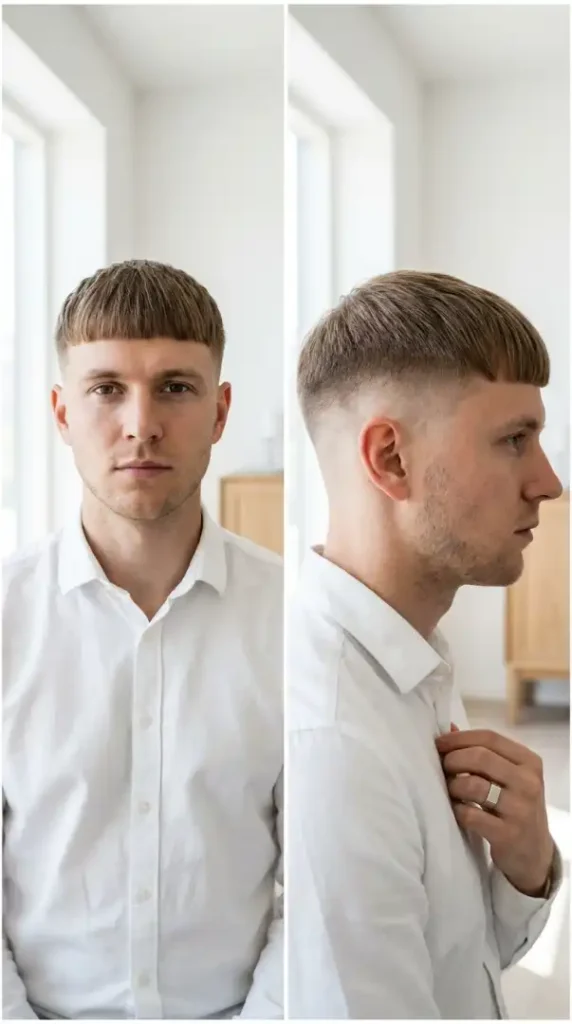
The Modern Minimalist strips away everything unnecessary—a precise French crop with blunt horizontal fringe paired with a high fade, styled with zero product for effortless Scandinavian simplicity. This is intentional understatement that makes a quiet but confident statement.
FACE SHAPE MATCH: Oval faces achieve perfection with this minimalist approach because the horizontal fringe creates subtle width balance while the clean lines complement naturally balanced proportions. Square faces work beautifully—the blunt fringe softens angular features while the geometric precision of the cut acknowledges and works with facial structure rather than fighting it. Heart-shaped faces benefit from the horizontal fringe adding width at forehead level to balance a narrow chin. Round and Oblong faces should approach cautiously; Round faces might find the horizontal fringe adds unwanted width (consider diagonal fringe instead), while Oblong faces might want slightly more height on top to balance facial length rather than this flat, horizontal approach.
GROOMING KIT: The beauty of this cut is its minimalist maintenance. Your barber needs Wahl Magic Clip for the fade precision and sharp shears for the blunt fringe cut—this isn’t point-cut texture, it’s a clean horizontal line that must be executed perfectly. At home, you need exactly one product (or none): if your hair has natural texture or cowlicks, a tiny amount of American Crew Light Hold Texture Lotion (size of a grain of rice) worked through damp hair provides subtle hold without visible product. Many guys with straight hair wear this completely product-free, relying on the cut’s precision alone. A basic comb for post-shower shaping, nothing more. This is anti-product philosophy—if you need more than 30 seconds of styling, the cut isn’t right.
MAINTENANCE LEVEL: MEDIUM. The minimalist aesthetic demands precision that shows growth quickly. Barbershop visits every 10-12 days maintain the blunt fringe line and clean fade—this cut doesn’t “grow out gracefully” because it’s built on geometric precision, not forgiving texture. However, daily styling is essentially zero: shower, towel-dry, comb forward, air-dry while getting dressed, walk out. Total morning hair time: 45-60 seconds. The trade-off is classic: more frequent barber visits for zero daily styling effort. Ideal for minimalists who value morning efficiency and appreciate clean lines.
BARBER TALK (The Exact Script): “I want a French crop with a high fade. Start the fade at my temple, about 2 inches above my ear, blend from #1 guard to skin with smooth graduation. On top, cut to 1.5 inches uniform length—keep it short and clean. For the fringe, cut it blunt and horizontal across my forehead, just above my eyebrows. No texture cutting, no point-cutting—I want a clean line. Keep my hairline natural and soft, don’t square it off. Natural rounded nape. Everything should look precise and minimal—I’m not using any styling products, so the cut needs to do all the work.”
The next style demonstrates how to add movement and texture for guys who want less rigidity.
FAQs
Q: What’s the difference between a French crop and a Caesar cut?
A: Both feature short horizontal fringes, but a French crop has a disconnected fade on the sides while a Caesar has connected, uniform length all around. A French crop’s fringe is cut bluntly and horizontally, while a Caesar’s fringe often has texture. French crops pair with modern high fades for contemporary style; Caesars have a more retro 90s aesthetic with tapered sides.
Q: Can I style a French crop without product?
A: Yes—this is the entire point of a well-executed French crop. The blunt horizontal fringe and short uniform top are designed to fall naturally into place when air-dried. Straight hair textures work best product-free. Wavy or textured hair may need a tiny amount of light-hold product (grain-of-rice size) for control, but if you need significant product, the cut wasn’t executed properly.
Q: How often do I need to cut a French crop fringe?
A: Every 10-12 days to maintain the precise blunt line. The horizontal fringe grows into your eyes quickly, and once it passes eyebrow level it loses the clean geometric aesthetic. Some guys stretch to 14 days but the last few days look overgrown. The fade also shows growth visibly by day 10. This cut demands commitment to regular maintenance.
Q: What face shapes suit a horizontal fringe?
A: Oval and Square faces work best because the horizontal line complements balanced or angular features. Heart-shaped faces benefit from the width the fringe adds at forehead level. Avoid horizontal fringes if you have a Round face (adds width) or significantly Oblong face (horizontal line can emphasize length rather than balance it)—diagonal or side-swept fringes work better for these shapes.
11 of 12 — The Textured Flow
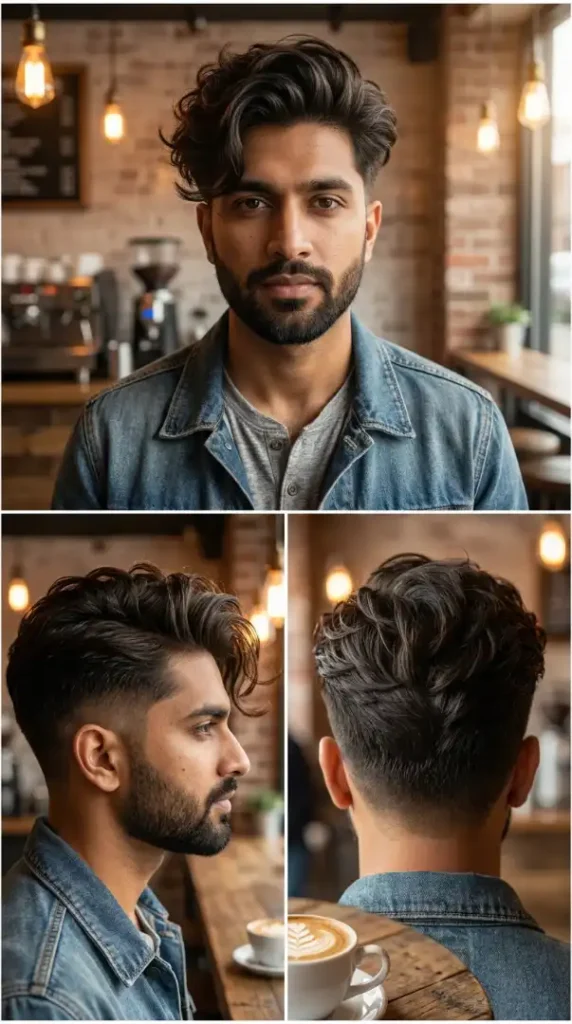
The Textured Flow maximizes natural movement—4.5 inches of wavy textured hair that flows with effortless confidence, grounded by a high fade that keeps it polished rather than bohemian. This style bridges creative freedom with professional credibility.
FACE SHAPE MATCH: This longer, flowing style works exceptionally well for Oval faces because it maintains natural balance while adding personality and movement. Heart-shaped faces achieve excellent results—the volume and width throughout the top balance a narrow chin perfectly, while the flowing movement softens the entire look. Oblong/Long faces benefit from the horizontal flow and movement that creates width perception, balancing facial length. Square faces work well if styled with the natural flow and movement shown here, which softens angular jawlines. Round faces should approach cautiously with this much volume and length; pair with the boxed beard to add vertical structure, and ensure the hair flows with clear direction rather than sitting as shapeless volume.
GROOMING KIT: This style demands quality tools and products for the textured movement. Your barber needs texturizing shears and slide-cutting technique to create the internal layering that enables flow. At home, you need a pre-styler and finishing product: Ouai Wave Spray or Kevin Murphy Hair Resort (sea salt spray) applied to damp hair for initial grit and texture, then Hanz de Fuko Claymation or Baxter of California Clay Pomade (pea-sized amount) worked through 80% dry hair for definition and hold. Denman D3 brush for directing flow while blow-drying. For thick wavy hair like this, a medium-hold hairspray (Oribe Dry Texturizing Spray) adds lasting hold without stiffness—two spritzes after styling.
MAINTENANCE LEVEL: MEDIUM. Barbershop visits every 14-18 days maintain the fade and prevent the top from becoming unmanageable—at 6 weeks it crosses from “flowing” into “shaggy.” Daily styling: 6-8 minutes including applying sea salt spray to damp hair, rough-drying to 80% with fingers directing flow leftward, applying clay product and working through with fingers, then using the Denman brush for final directional shaping. The beauty of this cut: day-two hair often looks better than fresh styling because the texture settles into more natural movement. This style rewards guys who embrace slight imperfection rather than demanding rigid precision.
BARBER TALK (The Exact Script): “I want a high fade starting at my upper temple, about 2.5 inches above my ear. Blend from #2 guard to skin with smooth graduation. On top, keep 4.5 to 5 inches of length—I need that for the flow and movement. Use texturizing shears and slide-cutting to create internal layers and remove weight without losing length. I style it swept to the left with natural wave movement. Don’t thin it out too much; I want body and volume. Natural rounded nape. For my beard, keep the boxed shape, 5mm uniform length, clean cheek line and neckline but keep it full.”
The final style shows how to transform this flow into structured styling for formal occasions.
FAQs
Q: How do I create textured flow in medium-length hair?
A: Apply sea salt spray to damp hair for initial grit, blow-dry to 80% while directing hair with your fingers in the desired flow direction, then work a pea-sized amount of matte clay through hair with your fingers creating piece-y separation. Avoid combs or brushes after product application—finger-styling creates natural, flowing texture. The key is creating directional movement (not random chaos) while maintaining soft separation.
Q: What’s the best product for flowing textured hair?
A: Matte clay or paste products (Hanz de Fuko Claymation, Baxter Clay Pomade, Uppercut Deluxe Matt Clay) provide the hold needed for all-day flow without the shine that weighs hair down or makes it look greasy. For wavy hair specifically, combine sea salt spray (pre-styler) with clay (finisher) for maximum texture and natural movement.
Q: How often should I wash medium-length textured hair?
A: Every 2-3 days maximum for wavy/textured hair. Daily washing strips natural oils that enhance texture and control frizz. Use dry shampoo on non-wash days to absorb oil at the roots while preserving the natural texture. When you do wash, use sulfate-free shampoo and lightweight conditioner focused on ends only.
Q: Can I achieve this flowing texture with straight hair?
A: Straight hair can achieve similar movement and flow but won’t have the natural wave texture shown here. Use sea salt spray and blow-dry while lifting and directing hair with your fingers to create bend and movement. Straight hair actually holds directional flow well once styled; the difference is you’re creating movement artificially rather than enhancing natural waves.
12 of 12 — The Bold Statement
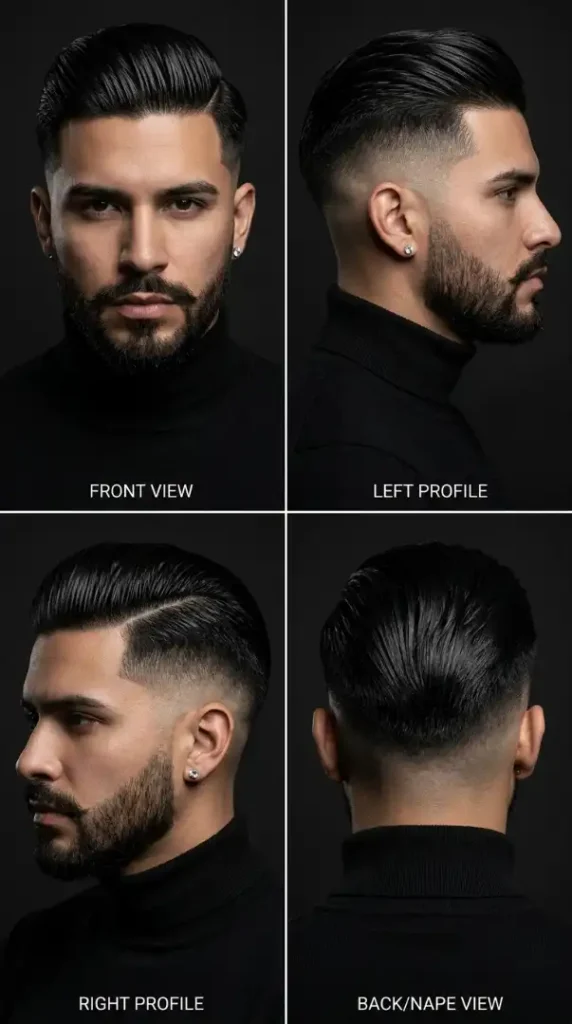
The Bold Statement makes no apologies—a dramatic disconnected undercut with 6 inches of slicked-back length on top, creating maximum contrast between skin-bald sides and glossy styled volume. This style commands attention in creative industries and fashion-forward environments where bold personal branding is valued.
FACE SHAPE MATCH: Square and Diamond face shapes achieve powerful results because the disconnected sides dramatically reduce width while the substantial backward volume adds balancing length, creating strong masculine proportions. The bold aesthetic complements angular features beautifully. Oval faces look excellent as expected with this dramatic style. Heart-shaped faces benefit from the volume on top balancing a narrow chin, while the full shaped beard shown here adds necessary lower-face structure. Round and Oblong faces should proceed thoughtfully: Round faces need the full beard to add vertical lines (without beard, this much side removal can emphasize roundness), while Oblong faces might want slightly less backward volume to avoid over-elongating.
GROOMING KIT: This high-shine slicked style demands specific products and technique. Your barber needs professional clippers for the skin-bald disconnect and precision shears for the substantial top length. At home, success requires Uppercut Deluxe Pomade or Layrite Super Shine (quarter-sized amount for this length and density) for maximum shine and all-day hold, a fine-tooth Kent comb for creating the sharp side part and sleek finish, and a blow dryer for pre-styling volume. Technique: apply pomade to damp hair, blow-dry backward with a paddle brush on medium heat creating volume, then finish with the fine-tooth comb to smooth everything backward and create the glossy polished finish. For the 10mm full beard: daily beard oil application (Honest Amish), boar bristle beard brush for shaping, and electric trimmer for weekly length maintenance.
MAINTENANCE LEVEL: VERY HIGH. This is maximum-commitment grooming for men who view their appearance as part of their personal brand. Barbershop visits every 7-10 days are essential—the disconnected sides show any growth immediately (even 3-4 days creates visible stubble that disrupts the dramatic bald appearance), and the side part needs re-etching weekly to maintain sharpness. Daily styling: 12-15 minutes including applying pomade to damp hair, blow-drying backward with volume, combing everything into precise place, and grooming the full beard. Evening product removal recommended to prevent buildup. This style makes a powerful statement but demands discipline and time investment.
BARBER TALK (The Exact Script): “I want a disconnected undercut—ultra-high and dramatic. Shave the sides and back completely to skin starting 3.5 inches above my ear. No fade, no blending—I want a hard line disconnect. On top, keep 6 inches of length so I can slick it back with volume. Cut a sharp side part on my left with your clippers—make it visible and clean. Don’t thin the top at all; I need maximum density for the slicked-back look. Shave my nape to skin matching the sides. For my beard, shape the mustache with defined edges, keep everything at 10mm full density, clean cheek line and neckline but keep it bold and full.”
You’ve now explored 12 distinct high fade variations—from corporate polish to creative rebellion, athletic simplicity to vintage sophistication. Each style offers a unique approach to the timeless high fade foundation, engineered for different face shapes, lifestyles, and personal brands.
FAQs
Q: What’s the difference between a disconnected undercut and a high fade?
A: A disconnected undercut features a hard line separation between the long top and skin-bald sides with zero blending, creating dramatic contrast. A high fade has gradual blending from long to short to skin over 1-2 inches of vertical space. Disconnected undercuts make bolder statements and require more frequent maintenance (weekly to keep sides bald), while high fades offer subtler transitions and grow out more gracefully.
Q: How do I slick back long hair without it falling forward?
A: Apply high-hold pomade (Uppercut Deluxe, Layrite Super Shine) to damp hair, blow-dry backward with a paddle brush on medium heat to set the direction and create volume, then finish by combing everything backward with a fine-tooth comb while the pomade is still slightly warm and pliable. The blow-drying step is critical—it sets the backward structure before the pomade cools and hardens. Use enough product (quarter-sized amount for 6-inch length).
Q: How often do I need to shave disconnected undercut sides?
A: Every 5-7 days minimum to maintain the dramatic skin-bald appearance. By day 3-4, visible stubble begins emerging that disrupts the clean contrast. Many guys with disconnected undercuts visit their barber weekly for side maintenance while keeping the top length for 3-4 weeks between top cuts. Some maintain sides at home with clippers set to #0 guard.
Q: Can I wear a disconnected undercut in a professional office?
A: It depends on your industry and company culture. Creative industries (advertising, design, tech startups, fashion) generally embrace bold styles like disconnected undercuts. Traditional corporate environments (law, finance, consulting) typically prefer more conservative high fades with blended transitions. When in doubt, opt for a high fade over a disconnected undercut for professional settings—you get modern edge with less dramatic contrast.