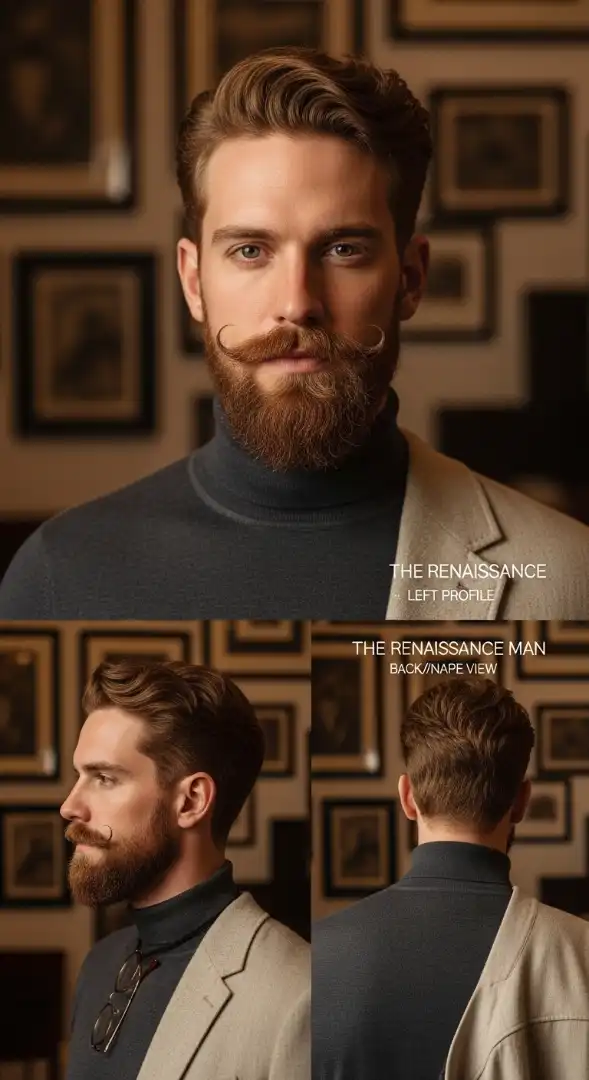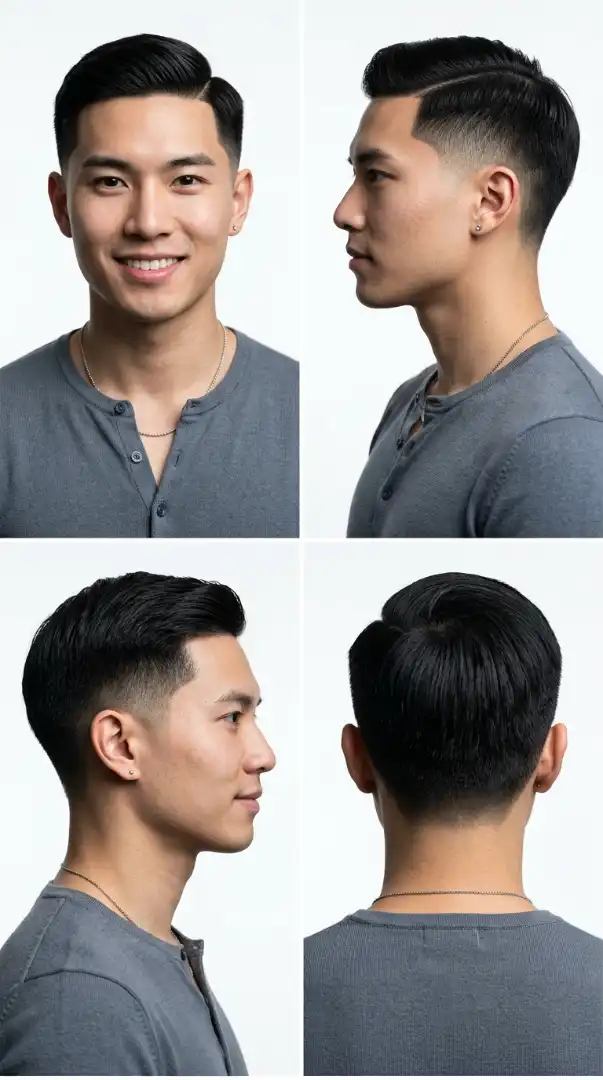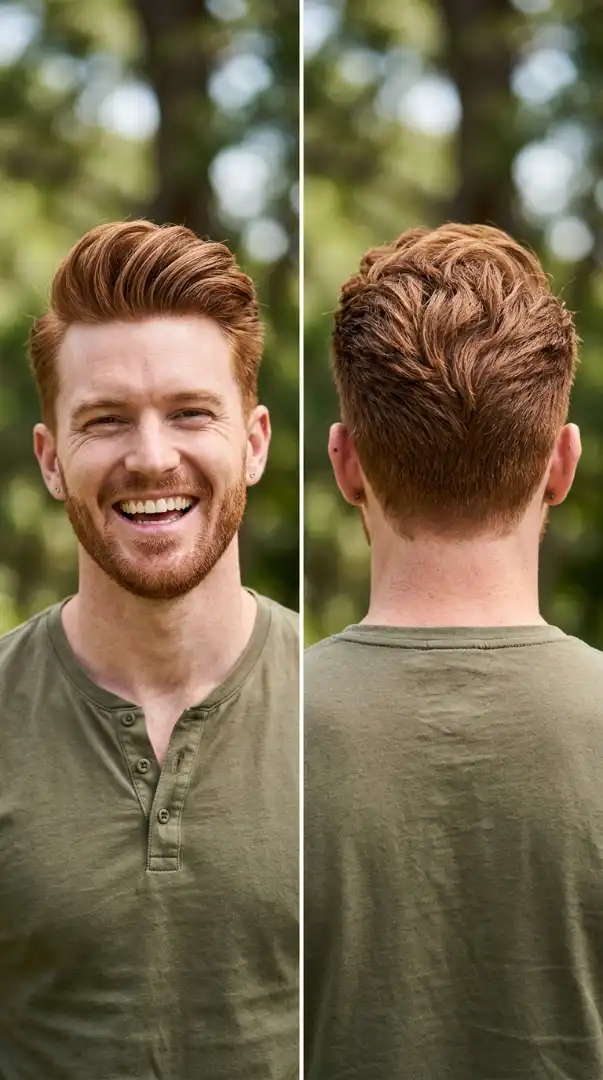
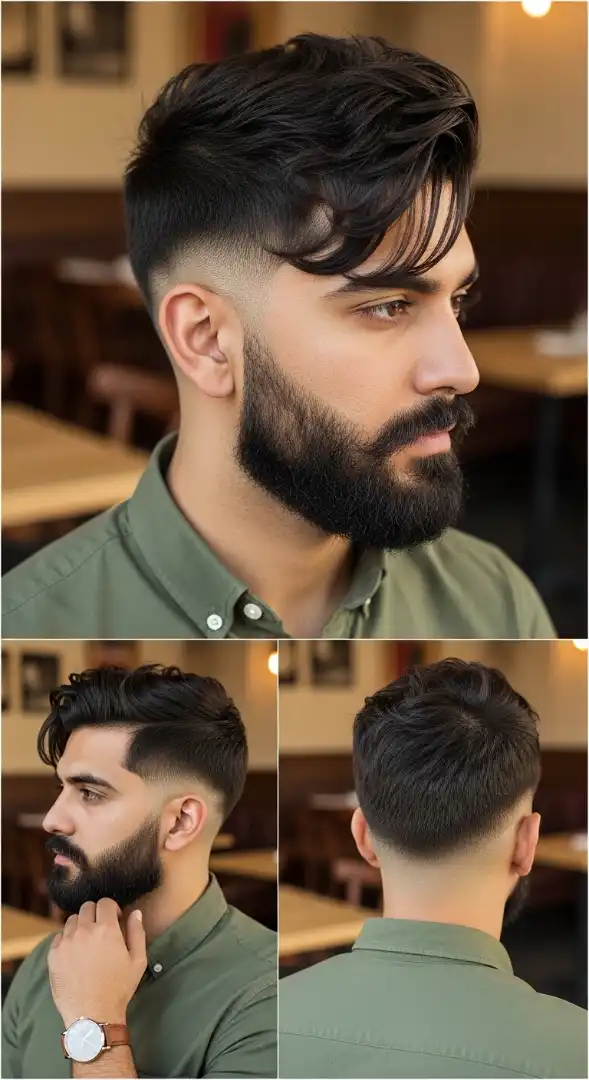
13 Mullet Hairstyle for Men: Stand out in Style
1 of 13 — The Modern Rockstar Mullet
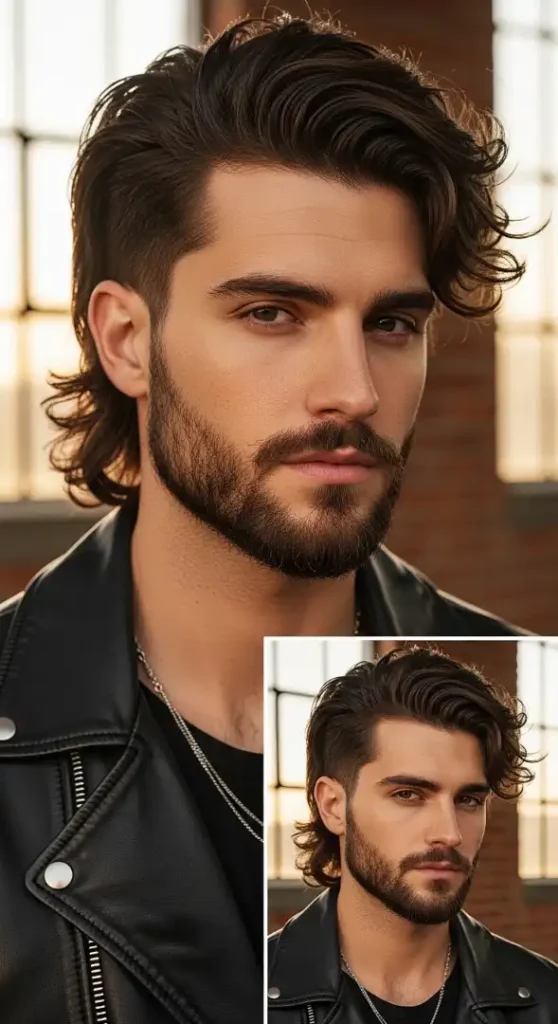
The Modern Rockstar Mullet brings together the rebellious spirit of classic 1980s glam rock with today’s refined grooming standards. This cut features substantial length at the back while maintaining controlled volume on top, creating a silhouette that commands attention without crossing into costume territory. The key differentiator is the graduated transition zone — where older mullets featured harsh demarcation lines, this version flows naturally from crown to nape.
Which Face Shapes Work Best With This Cut
Square and oval face shapes benefit most from The Modern Rockstar Mullet because the longer back length adds vertical dimension while the textured top creates width at the crown. For square faces specifically, the extended nape length softens the strong jawline by drawing the eye downward and creating movement. Round faces should approach this style cautiously — request your barber to maintain significant height at the crown to elongate the face, preventing the back length from making the face appear wider. Diamond face shapes can wear this cut successfully if the sides are kept close to the head at the temple area, preventing excess width at the cheekbone level.
The Exact Tools You Need For This Look
Professional clipper: Wahl Magic Clip or Andis Master for the temple fade and side blending. Precision trimmer: Andis T-Outliner for sharp edge work at the neckline and sideburns. Texturizing shears: Kasho or Mizutani offset shears for the interior layering that prevents the back from looking heavy or triangular. Round thermal brush: Olivia Garden Ceramic + Ion 2-inch barrel for blow-drying volume into the crown. Styling product rotation: Layrite Original Pomade for high-shine finish days, American Crew Fiber for matte texture on casual days, and Suavecito Matte Clay when you need hold without weight. Finishing spray: Kenra Volume Spray 25 to lock everything in place without stiffness.
How Much Maintenance This Style Demands
This is a high-maintenance cut requiring barbershop visits every three weeks to maintain the clean fade at the temples and prevent the back from developing a mushroom shape as it grows out. Daily styling time runs 12-15 minutes: blow-dry the top forward and up to build volume, apply product to damp hair working from roots to ends, use your fingers to create separation and texture, then finish with a light mist of holding spray. The back length requires shampooing and conditioning every two days to prevent oil buildup — mullets collect more natural oils due to the extended hair touching the neck throughout the day. Budget 4-5 minutes each morning for back-length styling with a small amount of leave-in conditioner to prevent frizz.
What To Tell Your Barber — The Exact Script
Walk into your barbershop and say this: “I want a modern mullet with a low fade starting at a 1.5 guard at the temple, blending up to scissor-over-comb work on the sides. Leave 4-5 inches of length on top with internal layering for texture — I need to be able to push it back or sweep it to the side. At the crown, start transitioning to longer lengths, and I want the back to hit about 2 inches past my collar with point-cutting to remove bulk. The neckline should be rounded, not blocked. Blend my beard into the sideburns at a natural line — no hard edges. I’m styling this with pomade most days, so cut it knowing I’ll have product adding weight.” This level of detail ensures your barber understands you want refinement, not a costume.
The next style takes this rebellious energy and channels it through a cleaner, corporate-friendly lens that works in professional settings.
Frequently Asked Questions
How do I maintain the Modern Rockstar Mullet at home between barbershop visits?
Maintain your Modern Rockstar Mullet by trimming the very ends of the back length every 10 days with hair-cutting scissors to prevent split ends, using a handheld mirror to check the neckline shape weekly and touching up any stray hairs with your precision trimmer. Invest in a quality leave-in conditioner like It’s a 10 Miracle Leave-In and apply it daily to the back length to keep the hair healthy and prevent the dry, damaged look that ruins this style’s rock-and-roll sophistication.
What’s the difference between a modern mullet and a classic 1980s mullet?
The modern mullet differs from its 1980s predecessor through refined transition zones, intentional layering that prevents bulk at the crown, and professional fade work at the temples that didn’t exist in the original era. Classic mullets featured blunt, shelf-like demarcation between short and long sections, while modern versions use point-cutting and slide-cutting techniques to create seamless gradation. The styling also diverges — vintage mullets relied on perms and maximum volume, while today’s versions embrace natural texture and controlled height that reads as intentional rather than accidental.
Can I wear a Modern Rockstar Mullet in a corporate office environment?
You can wear a Modern Rockstar Mullet in corporate settings if you adapt the styling approach for professional contexts: slick the top back with a high-shine pomade like Suavecito Original to create a polished, refined appearance, keep the back length neatly combed and conditioned to avoid a messy or unkempt look, and ask your barber to keep the fade exceptionally clean at the temples. The key is contrast — the more polished your styling execution, the more acceptable the unconventional cut becomes in conservative environments.
2 of 13 — The Business Mullet Paradox
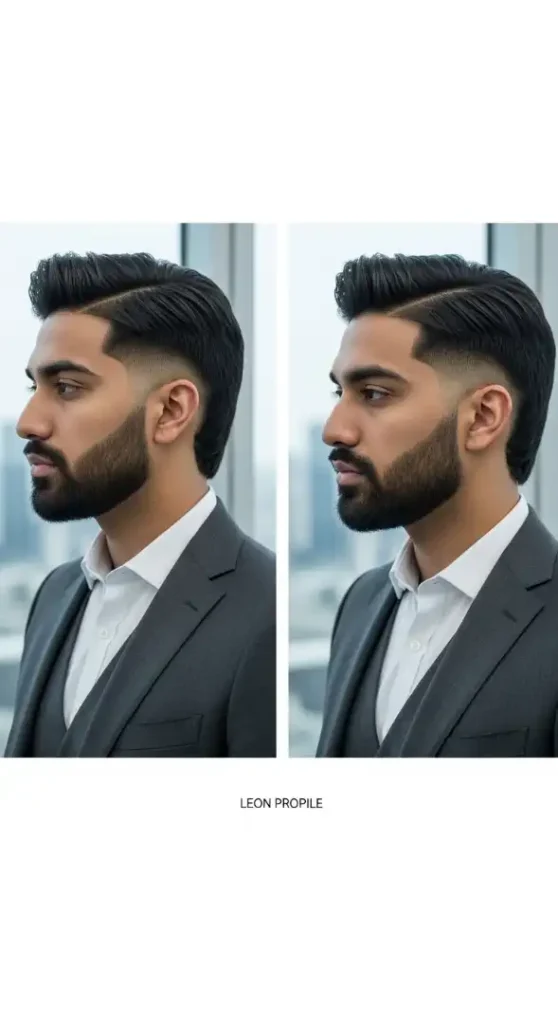
The Business Mullet Paradox solves the impossible equation: how do you wear an inherently rebellious hairstyle in environments that demand conformity? This cut achieves the balance through strategic restraint — the top and sides maintain corporate-appropriate lengths and clean fade work that would pass any dress code inspection, while the back extends just far enough past the collar to signal personality without triggering HR conversations. The style’s genius lies in its context-switching capability: from the front in a meeting, you present as conservatively groomed, but the moment you turn around, the extended nape length reveals your refusal to fully submit to corporate blandness.
Which Face Shapes Work Best With This Cut
Oval and oblong face shapes dominate this style because the controlled top volume and clean side fade create horizontal balance that prevents the face from appearing too elongated, while the back length adds just enough vertical dimension to maintain proportion. Square-jawed faces benefit from the softening effect of the longer nape length — the hair movement at the back draws attention away from angular jaw corners. Round faces should skip this cut entirely or request significant height at the crown to create vertical lines that slim the face, as the conservative side length offers no width-reducing benefits. Heart-shaped faces can wear this successfully if the back length stays above the collar to avoid emphasizing narrow chin width.
The Exact Tools You Need For This Look
Professional clipper: Andis Master Cordless for the medium fade execution that defines this cut’s corporate-friendly appearance. Detailing trimmer: BaByliss Pro FX787 for the razor-sharp edge work at temples and neckline that separates professional from sloppy. Cutting shears: Kamisori Black Diamond 6-inch shears for the top and back length cutting with precision. Blow dryer: ghd Helios for fast drying without frizz — essential for morning styling efficiency. Product arsenal: Uppercut Deluxe Pomade for high-shine office days, Baxter of California Clay Pomade for matte professional finish, and American Crew Grooming Cream as a leave-in for back length manageability. Beard maintenance: Even clean-shaven faces need Gillette SkinGuard Razor for daily shaving that prevents irritation and keeps the corporate aesthetic sharp.
How Much Maintenance This Style Demands
Medium-maintenance territory at three to four weeks between barber appointments to keep the fade crisp and prevent the back from extending beyond acceptable corporate length. Daily styling requires 8-10 minutes: shower and towel-dry thoroughly, blow-dry the top back and slightly to the side while using a paddle brush to create smoothness, work a dime-sized amount of pomade through the top and sides for hold and shine, run your fingers through the back length with a tiny amount of grooming cream to prevent cowlicks and maintain neatness. The back length needs washing every other day to prevent the office environment’s air conditioning and recycled air from drying it out. Friday afternoons or Monday mornings require an extra 3 minutes to ensure the back is perfectly combed and presentable for the work week.
What To Tell Your Barber — The Exact Script
Sit in the chair and deliver this: “I need a business-appropriate mullet — which means it has to look completely professional from the front and sides. Give me a medium fade starting with a 2 guard at the temple, blending to scissor work on the sides. The top should be 3 to 3.5 inches, side-parted left, with enough length to comb over or push back depending on the day. At the occipital bone, start transitioning to longer lengths. I want the back to extend about 1 inch past my collar at its longest point, with layering to prevent it from looking bulky or triangular when I’m wearing dress shirts. Keep the neckline rounded and clean — this has to pass corporate dress code from every angle except directly behind me. No beard blend needed, I stay clean-shaven.” This script signals you understand the cut’s professional constraints.
The third style in our collection abandons corporate compromise entirely and leans into maximum texture and movement.
Frequently Asked Questions
How do I style the Business Mullet Paradox for important client meetings?
Style your Business Mullet Paradox for high-stakes meetings by applying Uppercut Deluxe Pomade to damp hair and blow-drying the top completely back with a round brush to create maximum polish and minimize any casual texture, using a fine-tooth comb to create a razor-sharp side part that communicates attention to detail, and applying a small amount of grooming cream to the back length then combing it straight down to ensure zero flyaways or messy ends. The goal is controlled perfection — any visual disorder undermines the cut’s professional credibility.
Can I grow the back longer without losing the corporate-appropriate look?
You can extend the back length up to 2 inches past your collar while maintaining corporate appropriateness if you increase your maintenance commitment proportionally: the longer the back, the more critical daily styling becomes, requiring you to straighten or blow-dry the back smooth every morning and trim the ends every week to prevent split ends that make the length look neglected. Beyond 2 inches, you’ve crossed into territory where most corporate environments will consider the style inappropriate regardless of how well you maintain it.
What face shape should avoid the Business Mullet Paradox?
Round face shapes should avoid the Business Mullet Paradox because the controlled top volume and moderate side fade provide zero width reduction where round faces need it most — at the temple and cheek level. The back length adds vertical dimension that round faces benefit from, but the trade-off isn’t worth it when the front view does nothing to slim the face. If you have a round face and want a mullet, choose a style with more dramatic top height and tighter side fades.
3 of 13 — The Textured Flow Mullet
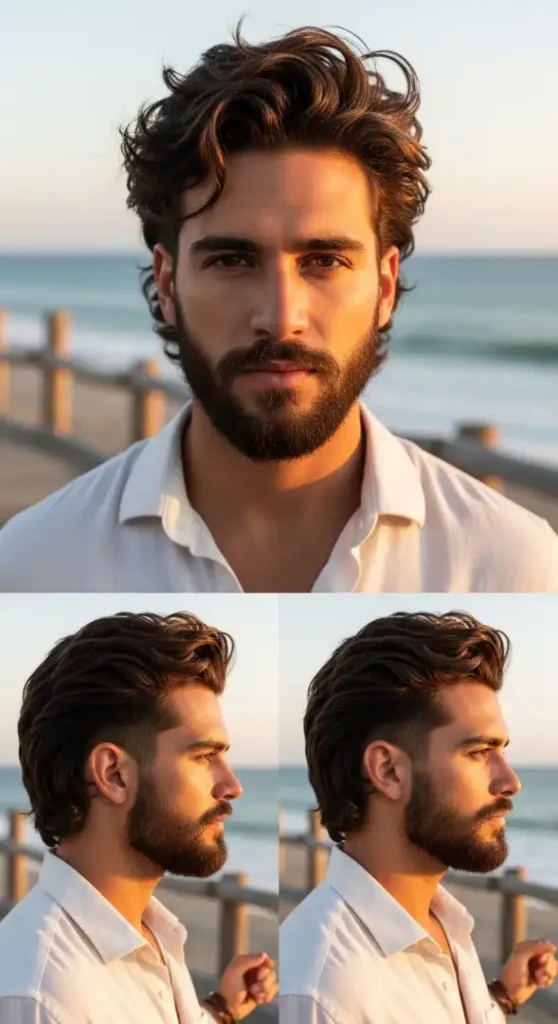
The Textured Flow Mullet embraces natural hair movement instead of fighting it, creating a style that looks intentionally undone rather than messy. This cut works specifically for men with natural wave or curl patterns — attempting this on straight hair results in limpness rather than the desired flowing texture. The defining characteristic is the lack of structure: no hard part lines, no pompadour shaping, no slicked-back formality. Instead, the cut relies on internal layering techniques that encourage the hair to fall into natural separation, creating dimension and movement that catches light from every angle.
Which Face Shapes Work Best With This Cut
Oval and diamond face shapes excel with The Textured Flow Mullet because the loose, flowing top adds width at the crown and temple area, balancing narrower foreheads and chin points that define diamond shapes. Oval faces, being naturally balanced, can handle the visual weight of the textured top without distortion. Heart-shaped faces benefit from this style’s ability to add width at the jawline through the longer back length while the full top balances a wider forehead. Round faces should avoid this cut — the soft, flowing texture adds horizontal width that round faces cannot afford, making the face appear wider and fuller. Square faces can attempt this style but must request significant height at the crown to prevent the top’s horizontal movement from emphasizing jaw width.
The Exact Tools You Need For This Look
Professional clipper: Wahl Senior for the high fade execution and bulk removal on the sides. Texturizing shears: Ichiro Model K offset shears with 30-tooth thinning blade for the interior texturizing that makes this cut work — without proper thinning, wavy hair becomes bulky rather than flowing. Point-cutting shears: Standard 6-inch Hikari shears for the ends work that creates the piecey texture at the tips. Sea salt spray: Bumble and bumble Surf Spray for the beachy texture enhancement that makes waves pop. Curl cream: Ouai Wave Spray for wavy hair or Shea Moisture Curl Enhancing Smoothie for curlier textures to define pattern without crunch. Diffuser attachment: Universal diffuser that fits your blow dryer to dry wavy/curly hair without destroying the natural pattern. Beard oil: Honest Amish Beard Oil to keep the full beard soft and prevent the wiry texture that clashes with the flowing hair aesthetic.
How Much Maintenance This Style Demands
Low-to-medium maintenance with barbershop visits every four weeks, as the intentionally messy texture disguises growth better than structured cuts. Daily styling is minimal at 5-7 minutes: shower and don’t fully towel-dry, apply sea salt spray to damp hair and scrunch upward to encourage wave formation, either air-dry for maximum natural texture or diffuse-dry on low heat while scrunching, then work a small amount of curl cream through the mid-lengths and ends for definition. The key to this style is accepting imperfection — trying to create identical looks each day undermines the entire aesthetic. The back length needs conditioning every wash day to prevent the dry, straw-like texture that makes flowing lengths look damaged. Beard maintenance adds 3 minutes daily: oil application after showering, combing through to distribute, and occasional trimming to maintain length proportion with the hair.
What To Tell Your Barber — The Exact Script
Enter the shop and say: “I want a textured flow mullet that embraces my natural wave pattern — don’t try to cut it straight or remove the texture. Give me a high fade starting at skin level, blending up to about 2 inches above my ear, then transition to scissor work. On top, I need 4-5 inches of length with heavy point-cutting and texturizing throughout to remove bulk and encourage separation — I want piecey movement, not solid mass. At the back, transition from the crown to longer lengths and I want it hitting mid-neck, about 3-4 inches past the collar, with significant layering so it flows instead of sitting heavy. Don’t thin the very ends or they’ll look wispy — keep some weight at the tips. For my beard, blend it naturally into the sideburns with no hard line, and I’m maintaining it at about 1 inch length all around.” This script ensures your barber understands texture is the priority, not precision.
Our next style takes this textured approach and amplifies the volume dramatically for maximum visual impact.
Frequently Asked Questions
How do I enhance the wave pattern in a Textured Flow Mullet?
Enhance your wave pattern by applying sea salt spray to soaking wet hair immediately after showering while the hair is still dripping, then scrunching sections upward from ends to roots repeatedly to encourage curl formation as it dries, and either air-drying completely for maximum natural texture or diffusing on low heat while continuing to scrunch every few minutes. For tighter curl definition, add a curl cream like Ouai Wave Spray after the salt spray, working it through in sections and twisting small pieces around your finger to create more defined waves.
Can I wear the Textured Flow Mullet if I have straight hair?
You cannot achieve the authentic Textured Flow Mullet with naturally straight hair because the style’s entire aesthetic depends on natural wave or curl movement that straight hair doesn’t possess. Attempting this cut with straight hair results in flat, limp lengths at the back and no dimension at the top. If you have straight hair and want a mullet, choose styles that work with straightness like The Modern Rockstar or Business Mullet that create structure through styling products rather than relying on natural texture.
How long does the back need to be for this style to work?
The back needs minimum 3 inches of length past the occipital bone to create the flowing effect that defines this cut, with ideal length sitting at 4-5 inches past the collar. Shorter than 3 inches and you don’t have enough length to showcase the wave pattern and movement. Longer than 6 inches and the weight pulls the waves straighter, reducing the textured flow aesthetic and creating hair that looks more like a neglected long hairstyle than an intentional mullet.
4 of 13 — The Executive Fade Mullet
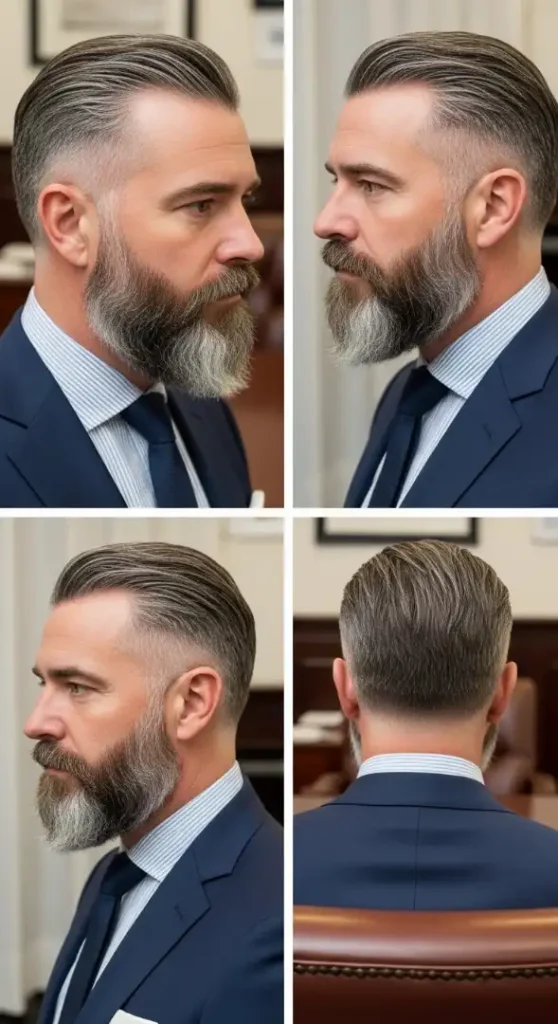
The Executive Fade Mullet represents the ultimate convergence of authority and individuality, designed specifically for men in leadership positions who refuse to sacrifice personal style for corporate expectations. This cut features a dramatic bald fade that communicates precision and attention to detail — qualities that executives must project — while the extended back length signals confidence and the power to make unconventional choices. The salt-and-pepper coloring isn’t a limitation but an asset, as the mature gray tones add gravitas that younger men cannot replicate. The key technical element is the fade’s perfection: any imperfection in the blend undermines the entire style’s credibility in high-stakes business environments.
Which Face Shapes Work Best With This Cut
Square and oblong face shapes achieve optimal results with The Executive Fade Mullet because the bald fade removes width at the temple area where square faces carry excess mass, while the controlled top volume prevents oblong faces from appearing too elongated. Oval faces handle this cut well due to natural balance, allowing the dramatic fade to create visual interest without distorting proportion. Diamond faces should approach cautiously, requesting the fade start slightly higher to avoid emphasizing cheekbone width. Round faces need significant top height to create vertical lines that counteract facial roundness, making this a high-risk choice requiring expert barber execution. Heart-shaped faces can wear this cut successfully, as the back length adds dimension at the jawline to balance wider foreheads.
The Exact Tools You Need For This Look
Professional clipper system: Andis Master combined with Wahl Balding Clipper for the bald fade foundation. The Balding Clipper’s zero-gap blade creates skin-level results that standard clippers cannot match. Detailing trimmer: Andis Slimline Pro Li for the surgical precision required at the fade line and neck outline. Cutting shears: Yasaka YS Park precision shears for the top and back length work that demands accuracy. Comb: Kent 81T hard rubber comb for the side-part creation and styling. Product lineup: Layrite Superhold Pomade for all-day hold without reapplication, Suavecito Premium Blends Matte Pomade for shine-free professional days, and Jack Black Beard Oil to keep the corporate beard soft and manageable. Finishing tool: Andis Foil Shaver for the ultra-smooth skin finish at the fade line that elevates this from good to exceptional.
How Much Maintenance This Style Demands
This is unequivocally high-maintenance, requiring barbershop visits every two weeks to maintain the bald fade’s perfection — visible stubble at the fade line destroys the executive aesthetic completely. Daily styling demands 10-12 minutes: shower and towel-dry thoroughly, blow-dry the top back using a paddle brush to create the smooth, controlled appearance, apply pomade to slightly damp hair working from roots to ends with emphasis on the side-part line, use the Kent comb to create razor-sharp part definition, then run remaining product through the back length. The beard requires daily maintenance: trim any strays with precision scissors, apply beard oil after morning shower, and comb through to distribute. Every three days, use the foil shaver at home to touch up the fade line and maintain the clean edge between skin and hair.
What To Tell Your Barber — The Exact Script
Command the chair with this directive: “I need an executive-level bald fade mullet that projects authority. Start with a true skin fade using your balding clippers, taking it to zero at the temple and below the ear. The fade needs to be flawless — blend it up gradually over 2 inches, transitioning to scissor-over-comb work, then into the top length. On top, leave 3.5 to 4 inches with a defined left side-part, cutting it to lay flat when combed — no choppy texture, I need smooth executive styling. At the crown, transition to longer lengths and I want the back hitting about 1.5 inches past the collar with conservative layering to prevent bulk. The neckline should be rounded and ultra-clean — use the foil shaver for the finished edge. My beard stays at quarter-inch length all around, blended seamlessly into the sideburns. This cut needs to survive 14-hour workdays and client dinners without losing shape.” This level of specificity communicates you understand the cut’s demands.
The next style abandons all corporate pretense and channels pure street culture energy.
Frequently Asked Questions
How often do I need to visit the barber to maintain an Executive Fade Mullet?
Maintain your Executive Fade Mullet with barbershop visits every two weeks without exception, as the bald fade shows visible stubble growth within 7-10 days that destroys the polished executive appearance. Between visits, use a foil shaver at home on days 7 and 11 to clean up the fade line and extend the professional look, and trim any stray hairs at the neckline with precision scissors. This two-week schedule is non-negotiable if you’re in client-facing executive roles where appearance directly impacts credibility.
Can younger professionals wear the Executive Fade Mullet without the gray hair?
Younger professionals can wear the Executive Fade Mullet structure successfully but sacrifice the distinguished gravitas that natural gray provides, resulting in a cut that reads more fashion-forward than authority-projecting. If you’re under 35 without gray and want this cut, compensate by increasing the styling precision dramatically — perfect side-part lines, flawless fade execution, and ultra-clean beard grooming become mandatory to communicate the seriousness that gray hair conveys naturally.
What’s the difference between a bald fade and a skin fade in this style?
Bald fade and skin fade are identical terms describing a fade that goes down to bare skin with no hair visible, but in barbershop language, “bald fade” emphasizes the smooth, polished finish achieved by using a foil shaver after clipper work, while “skin fade” focuses on the clipper technique of removing guard attachments completely. For The Executive Fade Mullet, specify “bald fade finished with foil shaver” to ensure your barber delivers the ultra-smooth result this style demands.
5 of 13 — The Disconnected Wolf Cut Mullet
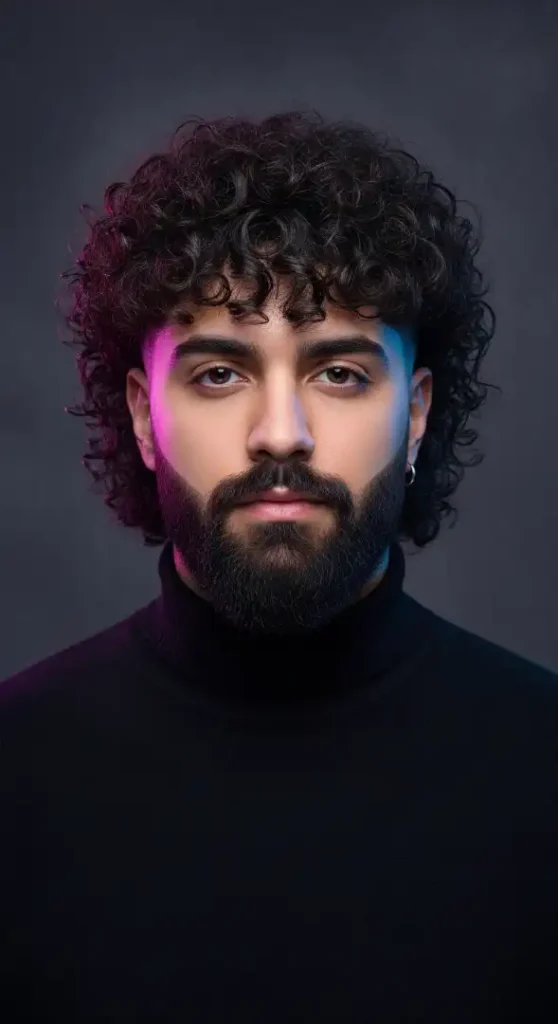
The Disconnected Wolf Cut Mullet explodes with volume and texture, designed specifically for men with coily or highly textured hair who want to showcase their natural hair pattern at maximum impact. The “disconnected” element refers to the intentional lack of blend between the closely cropped sides and the massive volume on top — creating a stark contrast that emphasizes the texture and height. This isn’t a subtle cut; it’s a statement that demands confidence to wear. The wolf cut influence comes from the heavy layering throughout the top and back that creates shaggy, choppy ends rather than blunt cutting, giving the style movement and preventing the coily hair from forming a solid, helmet-like shape.
Which Face Shapes Work Best With This Cut
Oblong and rectangular face shapes thrive with The Disconnected Wolf Cut Mullet because the massive horizontal volume at the top and sides counteracts the vertical length of these face shapes, creating visual balance that prevents the face from appearing too elongated. Oval faces can wear this cut successfully but should request the barber to control the width slightly to avoid overwhelming the natural facial balance. Square faces benefit from the volume’s softening effect on angular jaw corners. Diamond faces should avoid this cut entirely — the width at the temples and cheekbones that the massive top creates emphasizes the already-wide midface that diamond shapes need to minimize. Round faces must skip this style, as the horizontal volume adds width that round faces cannot afford.
The Exact Tools You Need For This Look
Professional clipper: Wahl Magic Clip for the tight sides and clean disconnection line. Texturizing shears: Joewell Texture Plus 30-tooth shears for the massive interior texturizing this style demands. Point-cutting shears: Shark Fin 6.5-inch shears for the choppy end work that creates the wolf cut texture. Wide-tooth comb: Mason Pearson Detangling Comb for working through coily hair without destroying curl pattern. Moisturizing products: Shea Moisture Curl & Shine Conditioner as leave-in for coil definition, Cantu Coconut Curling Cream for hold and moisture, and Jamaican Black Castor Oil for the back length to prevent dryness. Edge control: Murray’s Edge Wax for cleaning up the disconnection line between the sides and top. Beard products: Honest Amish Beard Balm for the thick beard maintenance and control.
How Much Maintenance This Style Demands
Medium-to-high maintenance requiring barbershop visits every three weeks to maintain the sharp disconnection line and prevent the sides from growing into the top, destroying the stark contrast that defines this cut. Daily styling takes 12-15 minutes: wet hair completely in the shower or with a spray bottle, apply generous leave-in conditioner while hair is soaking wet to lock in moisture, work curling cream through the top and back in sections using the wide-tooth comb, then either diffuse-dry on low heat while scrunching to enhance coil definition or air-dry for maximum natural volume. The disconnection line requires edge control application every morning to keep it crisp and defined. The thick beard demands daily oil application and combing to maintain softness and prevent the wiry texture that creates visual chaos against the structured haircut.
What To Tell Your Barber — The Exact Script
Step into the shop and declare: “I want a disconnected wolf cut mullet that maximizes my natural coil texture. Give me a hard disconnection — use a 1 guard or lower on the sides and back, taking it tight with a defined line about 2 inches above my ear where it meets the top volume. Above that line, don’t touch the sides with clippers — leave all the length. On top, I need 5-6 inches of length with aggressive point-cutting and texturizing throughout to create choppy, piecey texture and remove bulk so my coils can spread out instead of clumping together. At the back, transition from the crown to longer lengths and I want it hitting about 4 inches past the collar with wolf cut-style layering — lots of choppy layers that create movement. Don’t try to blend the disconnection — I want the contrast visible and dramatic. For my beard, I’m maintaining this at 1.5 inches full coverage, just clean up the cheek line and neck line.” This script ensures your barber understands the disconnection is intentional, not a mistake to fix.
The sixth style brings this same energy but channels it through a cleaner, more controlled aesthetic.
Frequently Asked Questions
How do I maintain coil definition in a Disconnected Wolf Cut Mullet between wash days?
Maintain coil definition between wash days by refreshing your hair each morning with a spray bottle of water mixed with a small amount of leave-in conditioner, spraying sections until damp but not soaking, then applying a small amount of curling cream to damp sections and scrunching upward to reactivate the curl pattern. On day three or four, if the coils start looking dry or frizzy, apply Jamaican Black Castor Oil to the ends only to restore shine and moisture without making the roots greasy. Never brush or comb dry coily hair in this style — it destroys the coil definition and creates frizz.
Can I wear a Disconnected Wolf Cut if I have wavy hair instead of coily hair?
You cannot achieve the authentic Disconnected Wolf Cut aesthetic with wavy hair because the style’s entire visual impact depends on the volume and texture that coily or highly curly hair naturally provides. Wavy hair lacks the spring and structure to create the massive volume and defined coil pattern this cut showcases. If you have wavy hair and want a disconnected mullet, request a different texture approach focused on slicked-back or messy styling rather than trying to replicate coil volume.
Why is the disconnection line important in this style?
The disconnection line is critical because it creates the stark visual contrast between the tight sides and massive top volume that makes this cut distinctive and prevents it from reading as an overgrown, neglected haircut. Without a sharp, defined disconnection, the style loses its intentional structure and appears messy rather than edgy. The disconnection line should be maintained with edge control daily and redefined by your barber every three weeks to preserve the cut’s impact.
6 of 13 — The Sharp Temple Taper Mullet
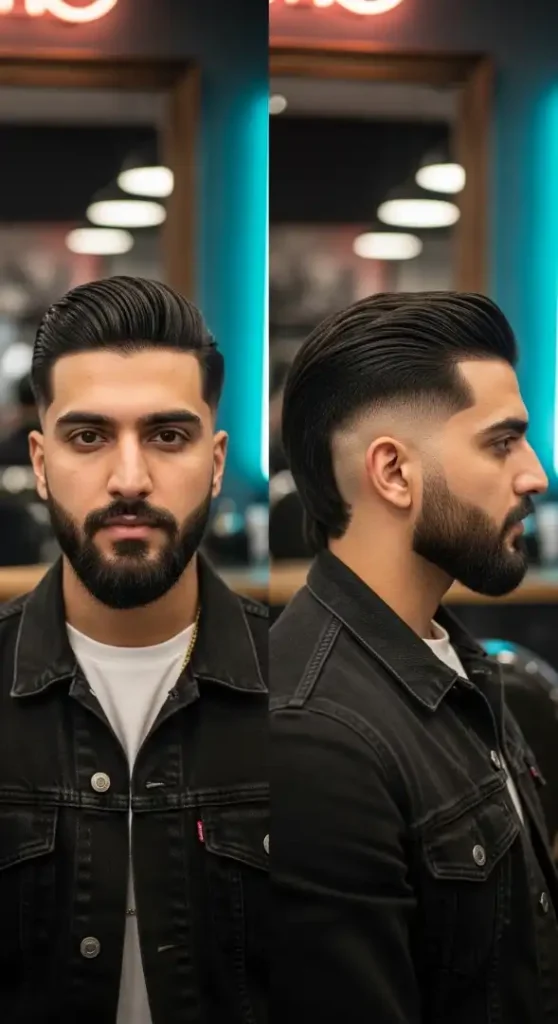
The Sharp Temple Taper Mullet reinterprets the classic mullet through precision barbering, where geometric temple points and surgical fade work elevate the style from rebellious to refined. This cut is defined by the temple taper — a fade technique that creates sharp angular lines from the sideburn up toward the temporal bone, emphasizing facial structure and creating a frame that draws attention to the eyes and cheekbones. The slicked-back top adds a sophisticated element that makes this cut appropriate for nightlife, creative professional environments, and anywhere confidence matters more than conservative dress codes. The back length remains present but controlled, never extending beyond mid-neck to maintain the balance between edgy and employable.
Which Face Shapes Work Best With This Cut
Square and diamond face shapes dominate this style because the sharp temple angles echo and enhance existing angular bone structure, creating harmonious repetition that makes strong features appear intentional rather than harsh. Oval faces wear this cut successfully due to natural balance, with the temple taper adding visual interest without distortion. Oblong faces should request less height at the crown and more width at the temples to prevent further elongation. Round faces need significant top height to create vertical lines, but the temple taper’s horizontal angles work against this goal, making this a challenging choice requiring expert execution. Heart-shaped faces can wear this style if the back length is kept shorter to avoid emphasizing narrow chin width.
The Exact Tools You Need For This Look
Professional clipper: Wahl Detailer for the temple taper’s precision angles and sharp lineup work. Fade clipper: Andis Master for the smooth gradient that connects the temple taper to the top length. Straight razor: Dovo Solingen straight razor or Feather Artist Club for the razor-sharp edge work that defines this cut’s geometric precision. Styling products: Layrite Super Shine Cream for the slicked-back high-gloss finish, Suavecito Firme Hold Pomade for maximum all-day hold, and American Crew Grooming Spray as a heat protectant during blow-drying. Blow dryer: BaByliss Pro Nano Titanium for the high heat needed to set the slicked-back style. Comb: YS Park 335 fine-tooth carbon comb for creating the perfect back-slick with no stray hairs. Beard tools: Andis T-Outliner for beard edge work and neck cleanup.
How Much Maintenance This Style Demands
High maintenance demanding barbershop visits every two weeks to maintain the temple taper’s sharp angles and prevent the fade from looking grown-out and sloppy. Daily styling requires 8-10 minutes: shower and towel-dry completely, apply pomade to slightly damp hair while hair is still warm from the shower, blow-dry hair straight back using the YS Park comb to direct every strand backward, apply additional pomade if needed to lock in the shine, and finish with a light mist of grooming spray. The slicked-back style exposes the entire forehead and face, meaning any skin issues or uneven beard grooming becomes immediately visible — budget an extra 5 minutes daily for face care and beard edge maintenance. Temple taper requires home touch-ups every 5-7 days using a detailer trimmer to maintain the sharp angles between barbershop visits.
What To Tell Your Barber — The Exact Script
Sit down and communicate this: “I want a sharp temple taper mullet with geometric precision at the temples. Give me a temple fade starting at skin level, creating sharp angular points that follow my temporal bone line upward — I want visible angles, not soft curves. Fade it up using the taper technique over about 1.5 inches, then blend into scissor work on the sides. The top needs to be 3.5 to 4 inches, all one length with no layering — I’m slicking it straight back with high-shine pomade. At the crown, transition to longer lengths and I want the back hitting just past mid-neck, about 2 inches beyond the collar, with minimal layering to keep it sleek when styled. Use your straight razor to define the temple points and edge up the entire hairline — I want surgical sharpness. My beard connects to the sideburns at a clean angle, no blending — keep the line defined. Finish the whole cut with the razor to ensure every edge is perfect.” This level of detail signals you expect precision, not approximation.
The seventh style takes this sharp aesthetic and multiplies the complexity with additional angles and visual interest.
Frequently Asked Questions
How do I create the slicked-back look without making my hair look greasy?
Create a slicked-back look without grease by using a pre-styler like American Crew Grooming Spray on damp hair before applying pomade, which provides hold without excess oil, then applying only a dime-sized amount of pomade rather than overloading your hair, working it from roots to ends, and blow-drying your hair completely backward so the heat sets the style before adding any additional product. If your hair still looks too shiny or oily, switch from oil-based pomades to water-based formulas like Suavecito Original that provide shine without the heavy grease texture, and consider finishing with a matte paste on just the very top surface to reduce overall shine while maintaining hold.
What’s a temple taper and how is it different from a regular fade?
A temple taper is a specialized fade technique that creates sharp, geometric angles at the temple area rather than a smooth curved blend, starting at skin level near the sideburn and fading up toward the temporal bone in straight diagonal lines that emphasize facial structure. This differs from a regular fade, which typically follows the natural head shape with curved blending that creates smooth gradients. The temple taper requires significantly more precision and straight-razor work to maintain the angular definition, making it higher-maintenance than standard fades.
Can I wear this style if I have a receding hairline?
You can wear The Sharp Temple Taper Mullet with a receding hairline if you embrace the slicked-back style that exposes the hairline rather than trying to hide it, which projects confidence that makes the receding hairline appear intentional rather than problematic. However, if your hairline has receded significantly past the mid-crown area, the slicked-back styling will emphasize the extent of hair loss, making a forward-styled cut or different style choice more visually balanced.
7 of 13 — The Asymmetric Flow Mullet
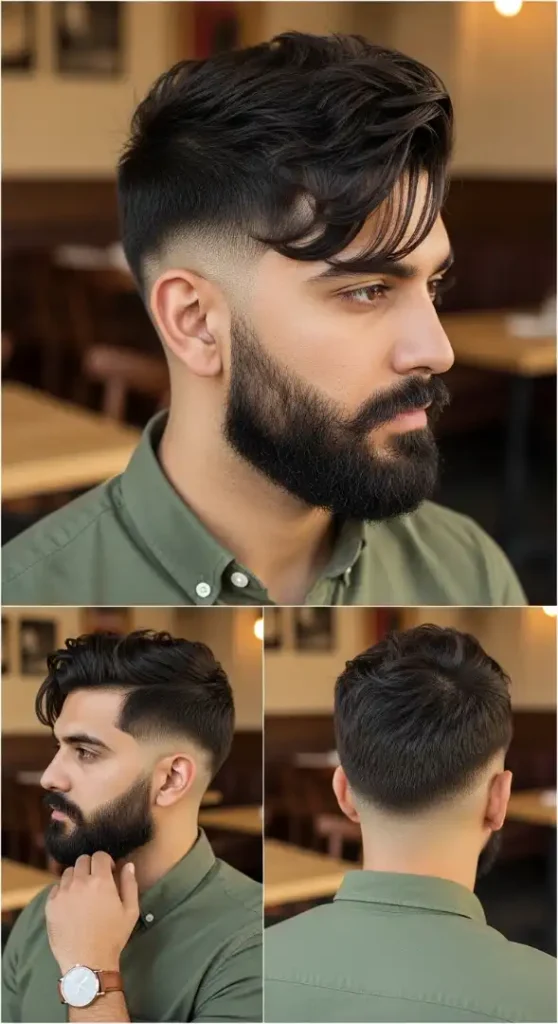
The Asymmetric Flow Mullet abandons traditional haircutting’s obsession with mirror-image balance, instead embracing intentional asymmetry that creates movement and visual intrigue from every angle. This cut features dramatically different lengths on the left and right sides of both the top and back, with the deep side part creating a sweep that covers one side of the forehead while exposing the other. The asymmetry isn’t random chaos — it’s calculated imbalance engineered to work with natural head movement, so when you turn your head or walk, the hair flows in different directions creating dynamic motion that static photography cannot fully capture. This style demands confidence because the imbalance is immediately obvious and will prompt questions from everyone who sees it.
Which Face Shapes Work Best With This Cut
Oval face shapes handle The Asymmetric Flow Mullet optimally because natural facial balance prevents the intentional hair asymmetry from creating visual confusion or making the face appear uneven. Diamond faces benefit from this cut’s ability to add width at different points on each side, with the swept fringe balancing the wider right side and the exposed forehead on the left drawing attention to the cheekbone definition. Square faces can wear this style successfully, as the asymmetric flow softens angular jaw corners through diagonal movement lines. Round and heart-shaped faces should avoid this cut — round faces lack the structure to anchor the asymmetric chaos, while heart-shaped faces will find the varied lengths emphasize forehead width and chin narrowness in unflattering ways. Oblong faces need the sweep to stay relatively horizontal to avoid adding vertical length.
The Exact Tools You Need For This Look
Professional clipper: Oster Fast Feed for the mid fade work on both sides at different starting points. Cutting shears: Yasaka offset shears 6-inch for the asymmetric length cutting that requires precision. Thinning shears: Jaguar Pre Style Ergo 6-inch with 28 teeth for texturizing the longer right side without removing necessary weight. Razor: Feather Plier Razor for the soft undercutting on the shorter left side. Styling products: Bumble and bumble Thickening Spray for wave enhancement, American Crew Fiber for matte texture and definition, and Kevin Murphy Easy Rider for flexible hold that allows movement. Blow dryer: Dyson Supersonic for controlled drying that maintains the wave pattern. Comb: Wide-tooth seamless comb for detangling wavy hair without destroying curl pattern. Beard care: Jack Black Beard Lube for daily beard conditioning and softness.
How Much Maintenance This Style Demands
Medium maintenance requiring barbershop visits every four weeks, as the asymmetric cut actually disguises growth better than symmetric cuts — the intentional imbalance makes new growth look like part of the original design rather than neglect. Daily styling takes 10-12 minutes: shower and squeeze excess water from hair without rubbing, apply thickening spray to damp hair focusing on the roots, blow-dry using your fingers to direct the right side forward and the left side back while scrunching to enhance waves, work fiber through the mid-lengths and ends to create separation and definition, then finish by using your fingers to emphasize the asymmetric part line and ensure the swept fringe sits correctly. The longer right side requires more attention — condition it every wash day to prevent dryness at the ends. Beard maintenance adds 3-4 minutes daily for oil application and combing.
What To Tell Your Barber — The Exact Script
Walk in and explain: “I want an asymmetric flow mullet that embraces intentional imbalance. Create a deep side part on the left, about 2 inches from center. On the right side of the part, leave 5-6 inches of length that will sweep forward and to the right, covering my right eyebrow. On the left side of the part, cut it shorter to about 3-4 inches so it can be pushed back exposing the left forehead. Give me a mid fade on both sides but start the fade lower on the right, about 1 inch above the ear, and higher on the left at 1.5 inches above the ear — this creates asymmetric fade balance. At the back, I want dramatic asymmetry — the right side should extend about 4 inches past the collar while the left side hits only 2 inches past, creating a diagonal line when viewed from behind. Use point-cutting and texturizing throughout to enhance my natural wave pattern. Blend my beard into the sideburns naturally with no hard edges.” This script ensures your barber understands the asymmetry is the design, not an error to correct.
The eighth style maintains visual interest through a completely different technique: color contrast and layering.
Frequently Asked Questions
How do I maintain the asymmetric look as my hair grows?
Maintain the asymmetric look between haircuts by trimming the longer right side yourself every two weeks using hair-cutting scissors to remove just the very ends and prevent split ends that make the length look messy, while leaving the shorter left side completely untouched so both sides grow at the same rate, preserving the length differential. Focus your styling efforts on emphasizing the side part and ensuring the swept direction remains pronounced — reapply product at midday if needed to maintain the dramatic sweep that defines the asymmetry.
Can I switch the direction of the asymmetry to the opposite side?
You can switch the asymmetry direction by asking your barber to recut the style with a right-side part instead of left-side, making the left side longer and the right shorter, but understand this requires completely recutting the entire style and waiting for the shorter side to grow out — you cannot simply re-part your hair to the other side with the current cut. Most men choose their asymmetry direction based on their natural part line and facial features they want to emphasize, so switching directions may not be as flattering as the original design.
What’s the difference between asymmetric and disconnected cuts?
Asymmetric cuts feature intentionally different lengths on left and right sides while still maintaining blend and flow throughout the style, creating diagonal lines and dynamic movement. Disconnected cuts feature abrupt length changes between sections with no blend or gradation, creating stark contrast between areas. The Asymmetric Flow Mullet uses asymmetry — graduated different lengths — not disconnection, so the entire cut flows and connects even though the sides are unequal.
8 of 13 — The Vintage Pompadour Mullet
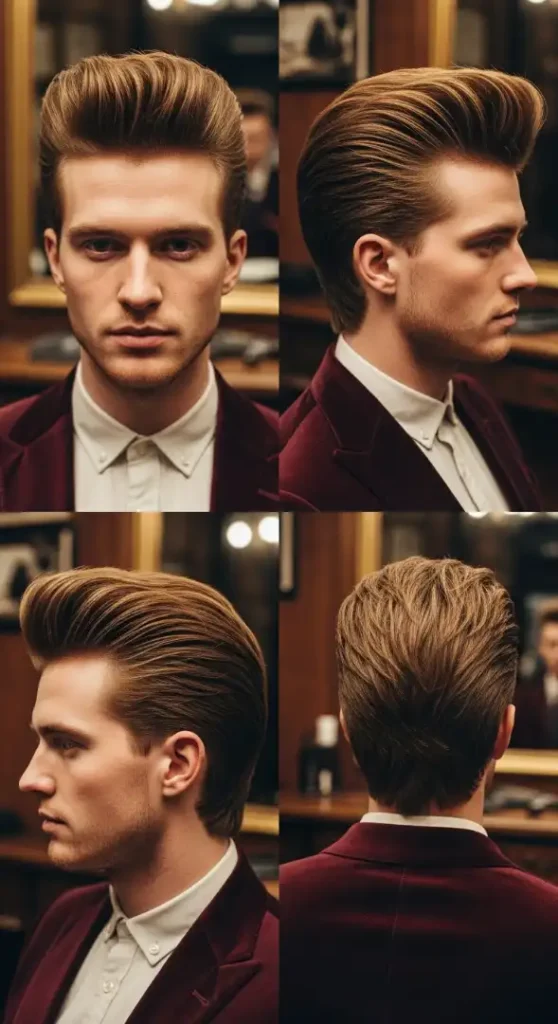
The Vintage Pompadour Mullet resurrects 1950s rock-and-roll styling and fuses it with extended back length, creating a time-traveling aesthetic that honors greaser culture while incorporating modern fade techniques and grooming precision. This cut is characterized by the towering pompadour at the front — a sculptural volume that defies gravity through careful blow-drying and heavy pomade application — combined with the classic mullet’s extended nape length shaped into a ducktail formation. The ducktail refers to the center-parted back that creates a V-shaped point, mimicking the tail feathers of a duck. This isn’t a style for minimalists; it demands daily styling commitment and products that create hold and shine simultaneously.
Which Face Shapes Work Best With This Cut
Oval and oblong face shapes excel with The Vintage Pompadour Mullet because the vertical pompadour height adds dimension that oval faces can handle without distortion, while oblong faces benefit from the horizontal volume the pompadour creates at the forehead, counteracting excessive facial length. Diamond faces should request moderate pompadour height to avoid emphasizing cheekbone width through excessive top volume. Round faces struggle with this cut unless the pompadour is built to extreme heights that elongate the face — half-hearted pompadour attempts on round faces make the face appear wider. Square faces wear this style successfully, as the pompadour’s curved shape softens angular jaw corners. Heart-shaped faces can attempt this cut but should keep the back length conservative to avoid emphasizing narrow chin width through excessive contrast between wide pompadour and narrow back.
The Exact Tools You Need For This Look
Professional clipper: Oster Classic 76 for the low fade foundation work. Detailing trimmer: Andis T-Outliner for the ducktail shaping and neckline definition. Round brush: Denman D3 Original Styler 7-row brush for building the pompadour volume during blow-drying. Blow dryer: Elchim 3900 Healthy Ionic for the high heat required to set pompadour structure. Pomade arsenal: Murray’s Superior Pomade for maximum hold and classic shine, Uppercut Deluxe Pomade for slightly lighter hold with excellent shine, and Royal Crown Hair Dressing as a finishing gloss layer. Fine-tooth comb: Kent 20T for creating the smooth pompadour roll and slicking the sides. Tail comb: Diane Ionic Anti-Static Rattail Comb for creating the precise center part in the ducktail. Finishing spray: Got2b Glued Blasting Freeze Spray to lock everything in place for all-day hold.
How Much Maintenance This Style Demands
This is unequivocally high-maintenance, requiring barbershop visits every three weeks to maintain the low fade and keep the ducktail shape from growing into a shapeless blob. Daily styling is intensive at 15-20 minutes: shower and towel-dry thoroughly, apply heat protectant to damp hair, section the top and blow-dry it upward and back using the round brush to build volume at the roots while directing the mid-lengths and ends backward, work a generous amount of Murray’s Pomade through the pompadour while it’s still warm from the blow dryer to set the shape, slick the sides flat against the head with additional pomade, create the ducktail center part at the back using the tail comb and smooth pomade through the back length, finish with freeze spray to prevent the pompadour from falling throughout the day. The high shine finish shows every fingerprint and smudge, requiring midday touch-ups with a comb to maintain perfection.
What To Tell Your Barber — The Exact Script
Command the chair with this: “I want a vintage pompadour mullet with a ducktail back and classic greaser aesthetic. Give me a low fade starting with a 1 guard at the temple, taking it to skin at the very bottom, and blend it up gradually over 2 inches into scissor work. The top needs to be 5-6 inches at the front tapering to 4 inches at the crown — I need length to build a high pompadour that stays up all day. Cut it with slight layering to prevent excess weight at the front. The sides should be short enough to slick flat against my head with no volume. At the back, I want a ducktail shape — create a center part and cut the back into a V-shape that points down at the nape, with the center extending about 2.5 inches past the collar and the sides shorter. I stay clean-shaven but maintain stubble, so keep the fade work crisp. This cut needs to channel 1950s greaser energy with modern precision.” This script signals you understand the historical reference and modern execution requirements.
The next style abandons vintage refinement for contemporary street culture aggression.
Frequently Asked Questions
How do I build and maintain a pompadour that stays up all day?
Build an all-day pompadour by blow-drying your hair completely dry on high heat while using a round brush to create volume at the roots and direct the hair upward and backward, applying Murray’s Superior Pomade to still-warm hair immediately after blow-drying so the heat helps distribute and set the product, working the pomade from roots to ends with emphasis on the roots where structure matters most, then using a fine-tooth comb to roll the front upward and back while smoothing the sides flat, finishing with Got2b Freeze Spray to lock everything in place. Midday touch-ups require carrying a comb to re-smooth any fallen sections and reestablish the roll at the front.
What’s a ducktail and how is it different from regular mullet back length?
A ducktail is a specific back length shaping technique where the hair is cut with a center part creating a V-shaped point that resembles a duck’s tail feathers when viewed from behind, requiring the center to be longest and the sides gradually shorter as they move away from the center line. This differs from regular mullet back length, which typically falls straight across with minimal shaping or subtle rounding. The ducktail requires precise cutting skill to create the symmetrical V-shape and regular maintenance to prevent it from growing into an undefined blob.
Can I wear a Vintage Pompadour Mullet in a professional corporate environment?
You cannot wear an authentic Vintage Pompadour Mullet with full ducktail and dramatic height in most corporate environments, as the style’s visual impact and cultural associations with 1950s rebellion work directly against conservative professional norms. If you work in creative industries or less formal business settings, you might adapt the style by reducing pompadour height to more moderate levels and keeping the ducktail length conservative, but understand you’re compromising the style’s core aesthetic for employability.
9 of 13 — The Urban Street Mullet
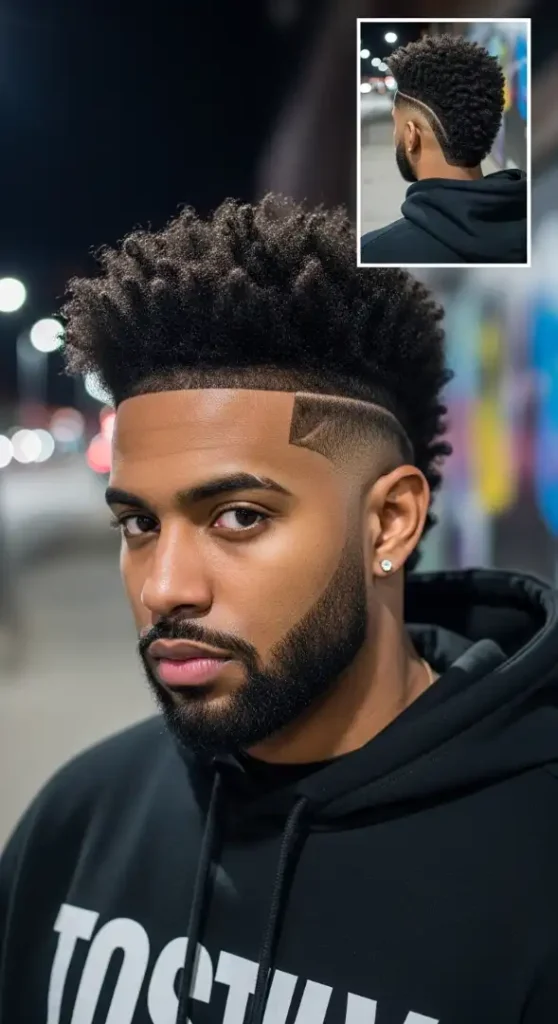
The Urban Street Mullet fuses hip-hop fade culture with extended back length, creating a style that dominates city streets and music video aesthetics. This cut is defined by the high-top fade foundation — a dramatic burst fade or drop fade that creates skin-level sides while maintaining significant height and volume at the crown through natural coil texture. The extended back length adds an unexpected element to what appears from the front to be a standard high-top, revealing personality and individuality when viewed from behind. The sharp edge-up is non-negotiable, as the geometric precision of the hairline communicates the barbering skill and personal grooming standards that street culture demands.
Which Face Shapes Work Best With This Cut
Round and oval face shapes achieve optimal results with The Urban Street Mullet because the dramatic vertical height of the high-top elongates round faces by drawing the eye upward and creating length that counteracts facial width, while oval faces handle the extreme proportions without distortion due to natural balance. Square faces benefit from the height’s softening effect on angular jaw corners, though the sharp edge-up emphasizes the strong jawline in a complementary way. Oblong faces should request moderate top height to avoid making the face appear excessively long — extreme high-tops on already-long faces create cartoon proportions. Diamond and heart-shaped faces work with this cut if the high-top width is controlled to avoid emphasizing cheekbone or forehead width.
The Exact Tools You Need For This Look
Professional clipper: Wahl Magic Clip for the burst fade or drop fade foundation work. Balding clipper: Andis Pro Foil Lithium Shaver for the skin-level fade finish and edge-up work. Detailing trimmer: Andis Slimline Pro Li T-Blade for the geometric edge-up and beard lineup. Texturizing tool: Wide-tooth pick comb for lifting and shaping the high-top coils without destroying curl pattern. Moisturizing products: Cantu Shea Butter Leave-In Conditioning Repair Cream for coil moisture, Carol’s Daughter Black Vanilla Moisture & Shine Hair Smoothie for definition, and Jamaican Mango & Lime Black Castor Oil for the back length. Edge control: Murray’s Edgewax Extreme Hold for maintaining the sharp lineup throughout the day. Beard products: Shea Moisture Beard Conditioning Oil and boar bristle beard brush for full beard maintenance.
How Much Maintenance This Style Demands
High maintenance requiring barbershop visits every 10-14 days to maintain the sharp edge-up and prevent the fade from growing out and losing the dramatic skin-to-height contrast that defines this cut. Daily maintenance takes 8-10 minutes: wet the high-top completely with water or spray bottle, apply leave-in conditioner to soaking wet coils, work curl-defining product through from roots to ends, use the pick comb to lift the coils upward creating height and shape, then either air-dry or diffuse on low heat while continuing to shape with the pick. The edge-up requires daily attention — apply edge control along the hairline each morning and use a small brush to smooth baby hairs into the defined line. The back length needs moisture every day to prevent the dry, brittle look that ruins this style’s street credibility. Beard lineup demands daily edge control and weekly trimming to maintain the geometric precision that complements the haircut.
What To Tell Your Barber — The Exact Script
Step up and say: “I want an urban street mullet with a high-top fade foundation. Give me a burst fade or drop fade starting at true skin level, curving around my ear, and creating dramatic contrast up to the top section. The top needs to stay at its natural coil length — about 4-5 inches of spring height — with no cutting on top except removing any damaged ends. Shape it into a flat-top profile but let the natural coil texture show, don’t try to make it perfectly level. Give me a razor-sharp edge-up across my entire hairline — I want geometric precision that could cut paper. At the back, transition from the fade into extended coily length and I want it hitting about 3 inches past my collar with some shaping to prevent triangle formation, but maintain the coil pattern. My beard gets a full lineup — sharp cheek line, defined neck line, everything geometric and intentional. Use your foil shaver for the finished skin fade and edge-up.” This script communicates you understand both the technical fade work and the cultural aesthetic.
The tenth style takes this street energy and channels it through more refined, versatile styling.
Frequently Asked Questions
How do I maintain the sharp edge-up between barber visits?
Maintain your sharp edge-up by applying Murray’s Edgewax or similar edge control product to your hairline every morning while hair is slightly damp, using a small edge brush or toothbrush to smooth down baby hairs and define the line, and touching up the actual edge every 5-6 days at home using a detailing trimmer like the Andis Slimline on any hair that grows beyond the defined line. Focus on the temple points and forehead hairline where growth shows fastest, and resist the temptation to trim too far back or you’ll damage the shape your barber created.
What’s the difference between a burst fade and a drop fade?
A burst fade creates a semicircular fade pattern that “bursts” around the ear, starting at skin level at the ear and curving upward and backward toward the occipital bone while maintaining a rounded shape that follows the ear’s contour. A drop fade also starts at skin level at the ear but drops down behind the ear toward the nape, creating an abrupt downward angle rather than a circular burst, then rises up toward the crown. Both work with The Urban Street Mullet, but burst fades create softer, rounder aesthetics while drop fades offer more aggressive, angular contrast.
Can I wear the Urban Street Mullet if I have wavy or straight hair instead of coily hair?
You cannot achieve the authentic Urban Street Mullet aesthetic with wavy or straight hair because the style’s entire visual foundation depends on the vertical spring and natural volume that coily hair provides — straight or wavy hair will flop down and lose the high-top structure that defines this cut. If you have straight or wavy hair and want a mullet with fade work, choose styles engineered for your hair texture like The Modern Rockstar or Sharp Temple Taper.
10 of 13 — The Modern Shag Mullet
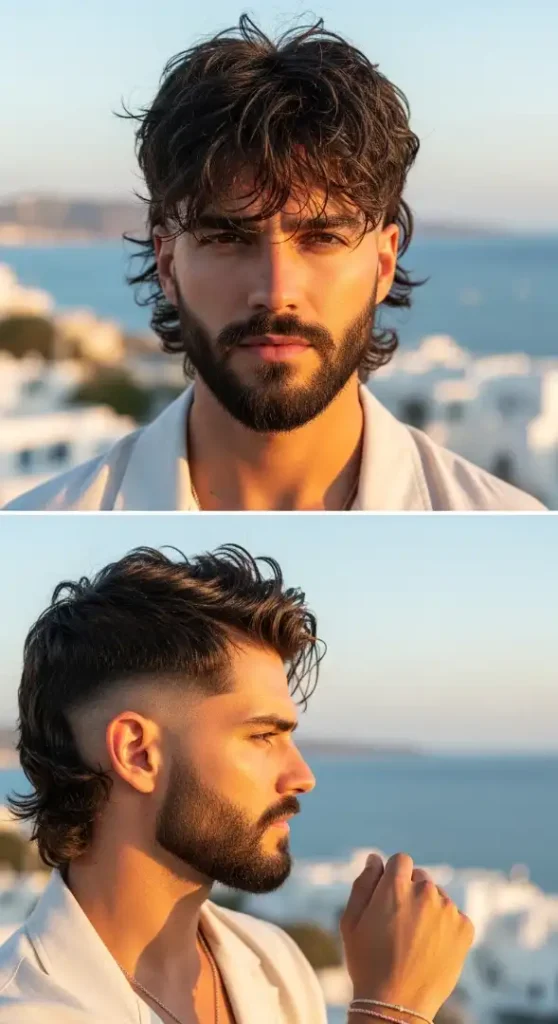
The Modern Shag Mullet reinterprets 1970s shag layering through a contemporary lens, creating a style that prioritizes effortless movement and natural texture over precise structure and high-maintenance styling. This cut features aggressive layering throughout the entire head — from the curtain bangs at the front through the crown and into the extended back length — creating multiple length zones that generate dimension and prevent any section from sitting heavy or flat. The curtain bangs are critical to the aesthetic: center-parted fringe that falls forward over the forehead and can be pushed aside or left hanging depending on mood and context. This isn’t a polished cut; it’s designed to look like you woke up with great hair through calculated cutting technique rather than extensive styling.
Which Face Shapes Work Best With This Cut
Oval and heart-shaped faces excel with The Modern Shag Mullet because the curtain bangs add width and softness at the forehead level that balances the natural proportion of these shapes, while the layered volume throughout creates horizontal dimension that prevents oval faces from appearing too long. Round faces should approach cautiously, requesting significant height at the crown through layering to create vertical lines that elongate the face — without height, the curtain bangs and soft layering add horizontal width that round faces cannot afford. Square faces benefit from the softening effect of the piecey layers and curtain bangs that diffuse angular jaw corners through texture and movement. Diamond and oblong faces can wear this cut successfully if the layering is balanced to avoid emphasizing existing width or length extremes.
The Exact Tools You Need For This Look
Professional clipper: Andis Master for the medium fade foundation on the sides. Cutting shears: Mizutani Acro Type Z 6-inch for the precision layering work throughout. Texturizing shears: Kasho KXP 30-tooth offset for aggressive texture creation without removing necessary volume. Point-cutting shears: Joewell Supreme 5.5-inch for the choppy end work on curtain bangs and back length. Styling products: Oribe Dry Texturizing Spray for post-styling volume and separation, Bumble and bumble Surf Spray for wave enhancement, and Hanz de Fuko Claymation for lightweight hold without weight. Blow dryer: T3 Cura Luxe for controlled drying that maintains wave pattern. Diffuser: Universal diffuser attachment for enhancing natural texture. Sea salt spray: R+Co Sail Soft Wave Spray as a leave-in for beachy texture.
How Much Maintenance This Style Demands
Low maintenance at four to five weeks between barbershop visits, as the layered cut actually looks better slightly grown out — fresh cuts can appear too choppy while two-week growth softens into the intended effortless aesthetic. Daily styling is minimal at 5-8 minutes: shower and squeeze water from hair without aggressive towel-drying, apply sea salt spray to damp hair and scrunch to enhance waves, either air-dry completely for maximum natural texture or diffuse-dry on low heat while scrunching periodically, then finish with dry texturizing spray through the mid-lengths and ends for separation and volume. The curtain bangs require occasional finger-combing to maintain center part but intentionally look best when slightly messy. The back length benefits from leave-in conditioner every few days to prevent dryness without adding weight that destroys the shaggy texture.
What To Tell Your Barber — The Exact Script
Sit down and communicate: “I want a modern shag mullet with curtain bangs and aggressive layering throughout. Start with a medium fade on the sides beginning about 1 inch above my ear, blending up into scissor work. The top needs to be 4-5 inches with curtain bangs at the front that hit just below my eyebrows when dry — cut them with a center part so they frame my face. Throughout the entire top and crown, I want heavy point-cutting and texturizing to create choppy, piecey layers that remove bulk and generate movement. At the back, transition from the crown to longer lengths and I want the back hitting about 3 inches past the collar with shag-style layering — multiple length zones that create dimension, not one blunt length. The entire cut should feel messy and textured, not precise or structured. My beard stays short and designer-shaped with clean lines.” This script ensures your barber understands the layering is essential, not optional.
The eleventh style maintains the textured approach but adds geometric structure for more visual impact.
Frequently Asked Questions
How do I style curtain bangs so they actually stay parted in the center?
Style curtain bangs to maintain center part by blow-drying them forward first while they’re damp using a round brush to create volume at the roots, then once mostly dry using your fingers to create the center part and pushing each side outward away from the center, applying a small amount of sea salt spray or light styling cream to the parted sections to hold them in place, and allowing the bangs to air-dry in the separated position. If they persistently fall together, use small bobby pins or hair clips to hold each side in place for 10 minutes after styling to train the part direction.
What’s the difference between a shag cut and regular layering?
A shag cut features aggressive, choppy layering throughout the entire head with significant length variation between layers and point-cut or razor-cut ends that create piecey texture and movement, resulting in an intentionally messy, rock-and-roll aesthetic. Regular layering uses more subtle length graduation with blunt-cut or slightly textured ends that create smooth blending and controlled volume. Shag cuts are distinctly choppy and textured while regular layering appears refined and polished.
Can I wear a Modern Shag Mullet if I have straight hair?
You can wear a Modern Shag Mullet structure with straight hair but sacrifice the natural texture and beachy wave aesthetic that makes this cut effortless — straight hair will require more active styling with sea salt spray and texturizing products to create the piecey movement the cut depends on. Without natural wave, expect to spend more time creating artificial texture through product application and scrunching rather than simply enhancing what’s naturally there.
11 of 13 — The Clean Corporate Mullet
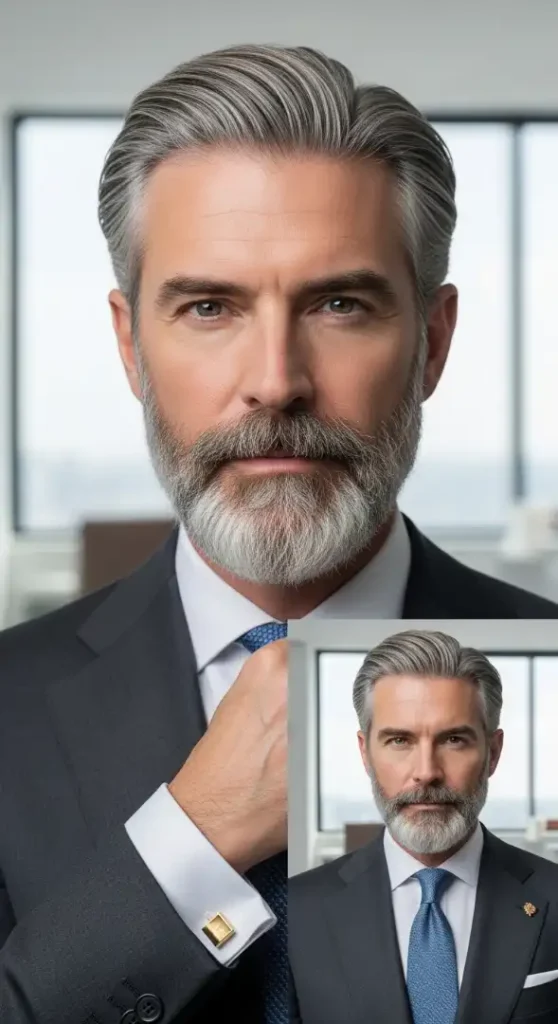
The Clean Corporate Mullet represents the most conservative interpretation of the mullet philosophy, engineered specifically for professionals in traditional corporate environments who want personality without career suicide. This cut maintains impeccable grooming standards from every angle that matters in business — the front view presents as a standard executive haircut with precise side-part, controlled volume, and professional length, while the back extends just enough past the collar to signal individuality without triggering HR policy violations. The salt-and-pepper coloring is a strategic advantage rather than a limitation, as the mature gray tones communicate experience and gravitas that younger men cannot replicate, making this style particularly powerful for executives over 40.
Which Face Shapes Work Best With This Cut
Oval and square face shapes achieve optimal results with The Clean Corporate Mullet because the conservative top styling and precise side-part create structure that oval faces handle without distortion, while square faces benefit from the slight softening effect of the back length that draws attention away from angular jaw corners without compromising professional appearance. Oblong faces should request moderate top volume to avoid adding vertical length through height, focusing instead on horizontal balance through controlled side styling. Round faces struggle with this cut unless significant height is built at the crown to create elongation, though this increased volume can appear less professional. Diamond faces wear this style successfully if the conservative top length prevents emphasis on cheekbone width. Heart-shaped faces can attempt this cut but should keep back length minimal to avoid emphasizing narrow chin width.
The Exact Tools You Need For This Look
Professional clipper: Wahl Senior for the conservative mid-fade on the sides. Cutting shears: Kasho KXP 6-inch for precise top and back length cutting that demands accuracy. Detail trimmer: Andis T-Outliner for neckline cleanup and beard edge work. Comb: Kent 81T hard rubber comb for side-part creation and daily styling. Styling products: American Crew Pomade for professional shine and hold, Layrite Natural Matte Cream for shine-free corporate days, and Uppercut Deluxe Beard Oil for short beard maintenance. Blow dryer: BaByliss Pro Rapido for quick morning styling without frizz. Beard trimmer: Wahl Peanut for maintaining the short corporate beard at consistent length. Finishing tool: Andis Foil Shaver for ultra-smooth skin at the mid-fade line and neck cleanup.
How Much Maintenance This Style Demands
Medium-to-high maintenance requiring barbershop visits every three weeks to maintain the precise side-part line, prevent the mid-fade from appearing grown-out, and keep the back length from extending beyond acceptable corporate standards. Daily styling demands 8-10 minutes: shower and towel-dry completely, apply styling product to slightly damp hair focusing on the top and side-part area, blow-dry the top using the Kent comb to create the precise side-part and smooth the hair in the styled direction, work additional product through the back length to ensure it lays flat and neat against the collar, and finish by checking the side-part line for perfection and fixing any stray hairs. The corporate beard requires daily trimming attention to maintain consistent quarter-inch length and sharp edge lines that complement the haircut’s precision. The salt-and-pepper coloring requires no special maintenance but benefits from quality shampoo that doesn’t yellow the gray tones.
What To Tell Your Barber — The Exact Script
Command professional attention with this: “I need a clean corporate mullet that passes every professional dress code while maintaining personality. Give me a mid fade starting with a 2 guard at the temple, blending up gradually over 2 inches into scissor work. The top should be 3 to 3.5 inches with a left side-part, cut precisely to lay flat when combed over — no texture or choppy cutting, I need smooth professional styling. At the crown, transition gradually to longer lengths and I want the back hitting just at the collar line, maximum 1 inch past, with conservative layering to prevent bulk but maintain neatness when I’m wearing dress shirts and suit jackets. The neckline must be perfectly rounded and ultra-clean — use your foil shaver for the finished edge. My beard stays at quarter-inch length with sharp cheek and neck lines that create geometric precision. This cut needs to project executive authority while signaling I’m not completely conventional.” This script communicates the non-negotiable professional requirements.
The twelfth style abandons all corporate constraint and channels maximum creative expression.
Frequently Asked Questions
How long can the back length be while still remaining corporate-appropriate?
The back length can extend maximum 1 to 1.5 inches past the collar line while maintaining corporate appropriateness in most traditional business environments, with the critical factors being how neatly the length is maintained and whether it stays tucked inside suit jackets and dress shirts during important meetings. Beyond 1.5 inches, most HR departments and conservative corporate cultures consider the style inappropriately casual regardless of how well-maintained it is. The key is ensuring the back length looks intentional and professional rather than neglected or overgrown.
Should I embrace or hide my salt-and-pepper hair in this style?
You should embrace your salt-and-pepper hair in The Clean Corporate Mullet because the mature gray tones add distinguished authority that enhances professional credibility rather than undermining it, especially for executives and senior professionals where experience and gravitas are valued assets. Attempting to hide or color the gray contradicts the style’s core concept of confident individualism within professional constraints. The salt-and-pepper look projects that you’re secure enough to age naturally while maintaining impeccable grooming standards.
Can younger professionals wear this cut without the gray hair?
Younger professionals can wear The Clean Corporate Mullet structure successfully but lack the distinguished authority that natural gray provides, requiring them to compensate through exceptionally precise grooming, impeccable daily styling, and ultra-clean fade maintenance to communicate the professional seriousness that gray hair conveys automatically. If you’re under 35 and want this cut, understand you’re choosing a higher difficulty level where execution quality directly determines whether the style reads as professional individuality versus youthful rebellion.
12 of 13 — The Artistic Undercut Mullet
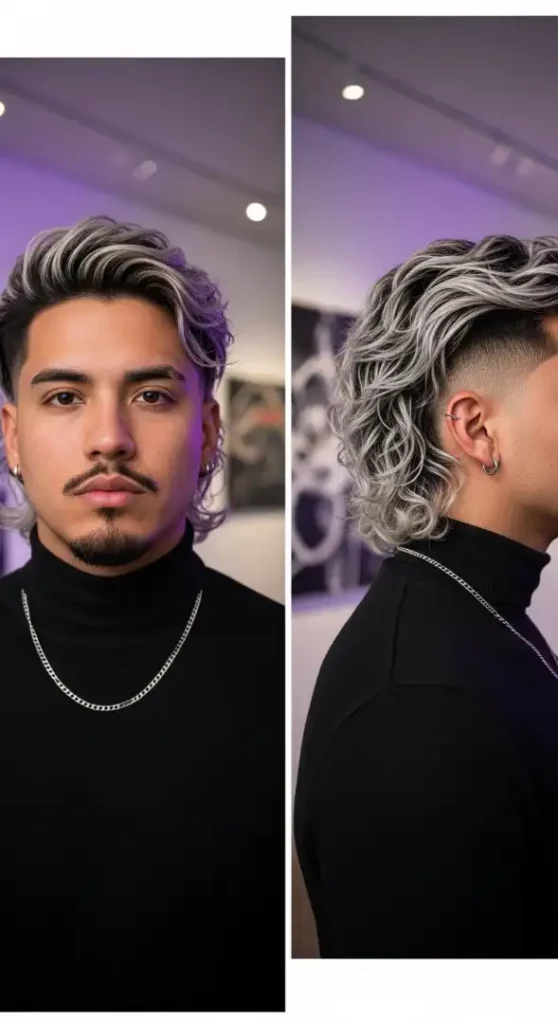
The Artistic Undercut Mullet pushes creative boundaries through aggressive contrast and color experimentation, designed for men in creative industries or those who prioritize self-expression over social convention. This cut features a hard undercut — a disconnected line where the sides go from full top length to skin level with zero fade or blend creating stark visual separation. The platinum blonde highlights woven through the dark brown base add dimensional complexity that catches light from every angle, while the extended back length creates the classic mullet silhouette with contemporary edge. This isn’t a subtle cut; it’s a statement that announces you work in fashion, music, art, or any field where individuality is currency.
Which Face Shapes Work Best With This Cut
Oval and diamond face shapes dominate this style because the dramatic top volume and hard undercut contrast create horizontal dimension that oval faces can handle without distortion, while diamond faces benefit from the width the undercut removes at the temple area, preventing emphasis on already-prominent cheekbones. Square faces can wear this cut successfully if they embrace the aggressive aesthetic, as the undercut’s sharp angles echo strong jawlines rather than softening them. Round faces should avoid this cut entirely — the hard undercut removes width at the exact temple and cheek level where round faces need slimming, while the top volume adds horizontal dimension that makes round faces appear wider. Oblong and heart-shaped faces need moderate top height to avoid making the face appear too elongated or emphasizing forehead width.
The Exact Tools You Need For This Look
Professional clipper: Wahl Balding Clipper for the skin-level undercut execution. Detailing trimmer: Andis Slimline Pro Li for maintaining the hard disconnection line with precision. Cutting shears: Joewell FX 6-inch for the top length and back cutting. Texturizing shears: Mizutani Sword 35-tooth for aggressive texturizing that creates the messy artistic styling. Color supplies: Wella Freelights for the platinum blonde highlight application (professional colorist required). Styling products: Hanz de Fuko Quicksand for matte texture and separation, American Crew Fiber for definition without shine, and Purple shampoo (Fanola No Yellow) to maintain the platinum tone and prevent yellowing. Heat tools: ghd Platinum+ Straightener for occasional straightening the back length for different looks.
How Much Maintenance This Style Demands
High maintenance requiring barbershop visits every two to three weeks to maintain the hard undercut line and prevent the sides from growing into the top, destroying the dramatic disconnection that defines this cut. Color maintenance demands salon visits every six to eight weeks for highlight touch-ups and toning to keep the platinum from yellowing. Daily styling takes 10-12 minutes: apply texturizing product to slightly damp hair, work it through from roots to ends with emphasis on creating separation and piece-y texture, use your fingers to push the top to the right side and create intentional messy styling, let air-dry or rough-dry with blow dryer on low heat, then finish with additional fiber worked through the ends for definition. The platinum highlights require purple shampoo twice weekly to maintain cool tones and prevent brassy yellow tones that cheapen the look.
What To Tell Your Barber — The Exact Script
Step in and declare: “I want an artistic undercut mullet with hard disconnection and no blend. Give me a skin-level undercut all around the sides and back, taking it to zero with your balding clippers — I want a visible hard line where the undercut meets the top length, no fade or gradation. On top, leave 5-6 inches of length with heavy texturizing and point-cutting throughout to create messy, artistic styling capability. At the back above the undercut line, transition to extended length and I want the back hitting about 3-4 inches past the collar with layering for movement. I have platinum blonde highlights throughout — don’t cut them out, preserve the color placement. My goatee stays trimmed at about half-inch length with defined edges. This cut needs to look intentionally aggressive and artistic, not safe or conventional.” This script signals you want maximum impact, not restraint. Before getting highlights, consult a professional colorist who can assess whether your hair can handle the bleaching process without excessive damage.
The final style in our collection channels pure rebellion through maximum length and zero corporate compromise.
Frequently Asked Questions
How do I maintain platinum blonde highlights without damaging my hair?
Maintain platinum blonde highlights by using purple shampoo like Fanola No Yellow twice weekly to neutralize brassy tones, deep-conditioning your hair weekly with Olaplex No. 3 or similar bond-building treatment to repair bleach damage, minimizing heat styling and always using heat protectant when you do style, and scheduling salon toning appointments every 6-8 weeks to refresh the platinum color before it yellows significantly. The highlights will always be more fragile than natural hair, requiring gentler handling and more intensive moisture treatments.
What’s the difference between an undercut and a fade?
An undercut features a hard disconnection where the hair goes from full length to skin level with no gradual blend, creating a visible line of separation between the undercut section and the top length. A fade creates smooth gradation from skin level up to longer lengths through graduated cutting that blends seamlessly with no visible demarcation line. Undercuts are more aggressive and require more precise maintenance, while fades are softer and grow out more gracefully.
Can I wear an Artistic Undercut Mullet in any professional setting?
You cannot wear an Artistic Undercut Mullet with platinum highlights in traditional corporate, legal, financial, or conservative professional environments where the dramatic aesthetic and color work conflict with dress codes and professional norms. This cut is engineered for creative industries (fashion, music, art, design, entertainment, tech startups) where individuality is valued over conformity. If you work in conservative fields and want this style, understand you’re likely choosing between the haircut and employment advancement.
13 of 13 — The Maximum Length Rebel Mullet
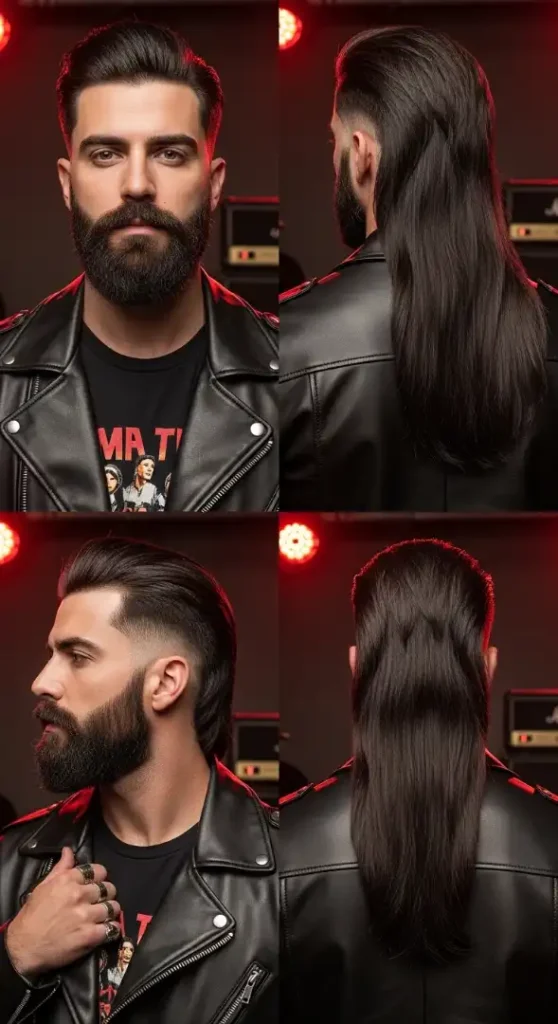
The Maximum Length Rebel Mullet represents the absolute extreme of the mullet philosophy: business in the front is reduced to bare minimum conservatism while the party in the back extends to maximum possible length before crossing into impractical territory. This cut features back length that hits mid-shoulder blade area, creating dramatic visual impact that cannot be ignored or dismissed. The style channels pure rock-and-roll rebellion, motorcycle culture, and the original 1980s mullet spirit without modern apologetics or corporate compromise. This is not a cut for men seeking approval or social acceptance — it’s a declaration that you answer to nobody’s aesthetic standards but your own.
Which Face Shapes Work Best With This Cut
Oval face shapes handle The Maximum Length Rebel Mullet optimally because natural facial balance prevents the extreme back length from creating proportion distortion, allowing the dramatic silhouette to create impact without making the face appear misshapen. Square and oblong faces can wear this style successfully if they’re confident enough to embrace the aggressive aesthetic, with square faces benefiting from the softening effect of the flowing back length on angular features. Round faces should skip this cut entirely — the conservative front length offers zero face-slimming benefits while the extreme back creates visual chaos that emphasizes facial roundness rather than minimizing it. Diamond faces risk emphasizing cheekbone width through the contrast between short sides and dramatic back length. Heart-shaped faces will find the extreme back length emphasizes narrow chin width through excessive contrast with the forehead area.
The Exact Tools You Need For This Look
Professional clipper: Wahl Magic Clip for the low fade side work. Cutting shears: High-quality 7-inch or 8-inch shears like Kamisori Diablo for the extended back length cutting that demands precision over greater distances. Thinning shears: Yasaka Y1 35-tooth for the back length texturizing that prevents the extreme length from appearing heavy or triangular. Blow dryer: Dyson Supersonic for fast drying of the extensive back length without heat damage. Styling products: Light leave-in conditioner like It’s a 10 Miracle Leave-In for back length manageability, American Crew Forming Cream for slight hold on the top without weight, and Argan oil for the back ends to prevent split ends and maintain shine. Wide-tooth comb: For detangling the back length without causing breakage. Beard oil: Honest Amish Heavy Duty for the full rock-and-roll beard maintenance.
How Much Maintenance This Style Demands
Medium maintenance requiring barbershop visits every four weeks to maintain the low fade and trim the back length ends to prevent split ends that make extreme length look damaged rather than intentional. Daily styling is moderate at 10-12 minutes: wash and condition the back length thoroughly every other day to prevent oil buildup and tangles, apply leave-in conditioner to the back while still damp to prevent frizz and maintain manageability, blow-dry or air-dry the back length — air-drying takes longer but prevents heat damage, work a small amount of forming cream through the top and push it back casually, and apply argan oil to just the very ends of the back length to seal moisture and add shine. The extreme back length catches on jacket collars, car headrests, and backpack straps — budget extra time dealing with tangles caused by daily friction. The full beard requires daily oil application and weekly trimming to maintain shape and prevent the wiry texture that clashes with the flowing hair.
What To Tell Your Barber — The Exact Script
Walk in and own it: “I want a maximum length rebel mullet with extreme back length and zero compromise. Give me a low fade on the sides starting with a 1.5 guard at the temple, blending up gradually to scissor work. The top should be 3-4 inches with minimal styling requirements — I’m pushing it back casually, not building structure or creating parts. At the back, this is non-negotiable: I want the length hitting mid-shoulder blade area, approximately 6-7 inches past my collar at the longest point. Layer the back significantly to prevent triangle shape and remove bulk, but keep substantial weight at the ends so the length is visible and makes impact. I don’t want wispy thin ends — I want length that people notice. The nape area should be rounded with clean outlining. My beard is full rock-and-roll style, keep it at 1-1.5 inches all around with natural shape, no geometric precision needed. This cut is about maximum impact, not social acceptance.” This script ensures your barber understands you’re committed to the extreme aesthetic.
This final style completes our collection by demonstrating that the mullet’s spirit of rebellion can be channeled at any scale from corporate-minimal to absolute maximum.
Frequently Asked Questions
How do I prevent extreme back length from getting tangled throughout the day?
Prevent tangles in extreme back length by always applying leave-in conditioner to damp hair after washing to create slip that allows hair to move without catching on itself, braiding or ponytailing the back length when wearing jackets or backpacks that create friction against the hair, carrying a wide-tooth comb for detangling breaks throughout the day, and sleeping with hair in a loose braid or on a silk pillowcase to minimize overnight tangles. Check for tangles every 2-3 hours and address them immediately before they worsen into knots that require cutting.
At what length does a mullet become impractical for daily life?
A mullet becomes impractical when the back length extends beyond mid-shoulder blade area (approximately 7-8 inches past the collar), as length beyond this point catches constantly on car headrests, jacket collars, backpack straps, and requires braiding or ponytailing during most activities to prevent tangling and damage. The Maximum Length Rebel Mullet at 6-7 inches past collar represents the functional limit where the style remains wearable for daily activities without constant hair management.
Can I grow my mullet to this extreme length if I’m starting from a short haircut?
You can grow from a short haircut to this extreme length but budget 12-18 months of growth time for the back to reach mid-shoulder blade area, requiring regular barbershop visits every 4-6 weeks during the grow-out phase to maintain the fade on the sides and clean up the top while leaving the back untouched. The awkward middle stages between months 6-12 will test your commitment, as the back length won’t yet be dramatic enough to look intentional but will be long enough to look potentially unkempt without meticulous daily styling.