
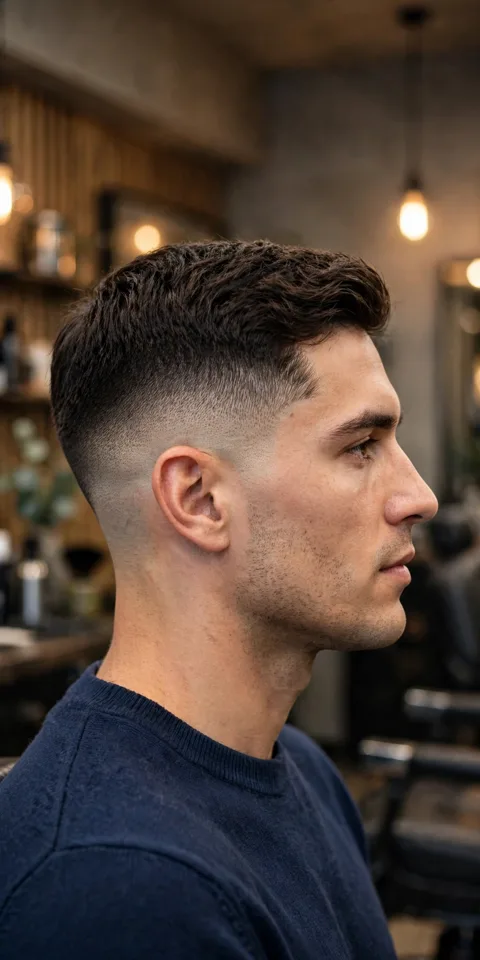
20 Fade Haircuts for Men: Low Tapers, Mid, High, Skin & Burst Fades
There is a reason the fade never leaves the barber's chair. Fade haircuts for men are the most requested cuts in barbershops right now — barbers report fade requests up more than 60% — because one good fade makes almost any top look sharper, cleaner and more deliberate. But "a fade" is not one haircut. Where the fade sits, how low it drops to the skin, and what you pair it with on top changes everything.
This winter, the direction is clear: soft beats harsh. Low tapers and gentle low fades are taking over from aggressive high skin fades, because more hair on the sides means more warmth — and a softer blend grows out far more gracefully between appointments. Whether you want the quiet polish of a low taper with a side part or the full drama of a burst fade, this guide covers all 20 — with face shapes, kits, upkeep and the exact words to say to your barber.
Pair your fade with the right top: a textured crop for low effort, natural curls for volume, or a full beard blended into the sideburns for the full winter look. Pick your fade height first — low, mid or high — then pick your top.
1 of 20 — The Classic Low Fade
Why is the classic low fade the safest of all fade haircuts for men?
Because it never argues with anything. The Classic Low Fade keeps the blend low — just above the ear and around the neckline — so the sides stay clean without ever looking severe. It is the fade that works in the boardroom, at a wedding and in the gym, and it grows out so softly that nobody can tell when you are a week overdue.
Face Shape: Suits almost everyone; the low blend keeps width on the sides, which balances long and narrow faces beautifully.
Grooming Kit: Clippers with guards 1–3, a soft brush, and a light matte paste for the top.
Maintenance: A tidy-up every 2–3 weeks keeps the neckline honest; the soft grow-out forgives a missed week.
Barber Script: "Low fade, starting just above the ear, blended up to a natural top I can style with my fingers. Keep the edges soft."
The fade that never has a bad day — start here if you have never faded before.
Q: How long does a low fade take to grow out?
A: The low fade grows out the most gracefully of all fades. Because the blend starts low and soft, it still looks tidy at three weeks and simply becomes a natural taper by week four or five.
Q: Is a low fade good for a first fade?
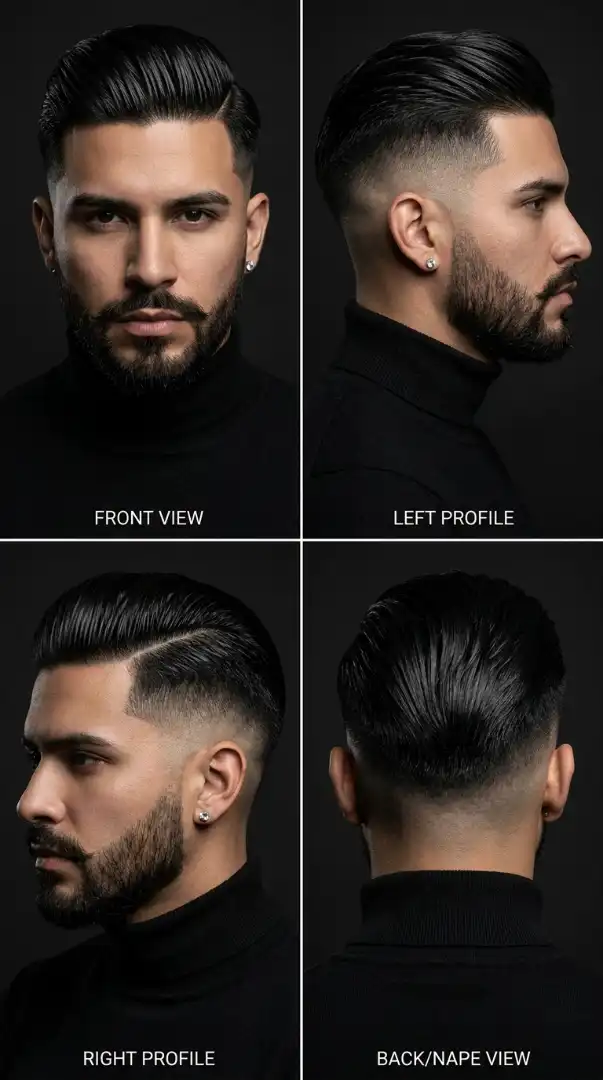
A: It is the best first fade there is. The change is visible but gentle, it suits every dress code, and if you decide fades are not for you, it grows back into a regular short back and sides within weeks.
2 of 20 — The Low Taper Fade
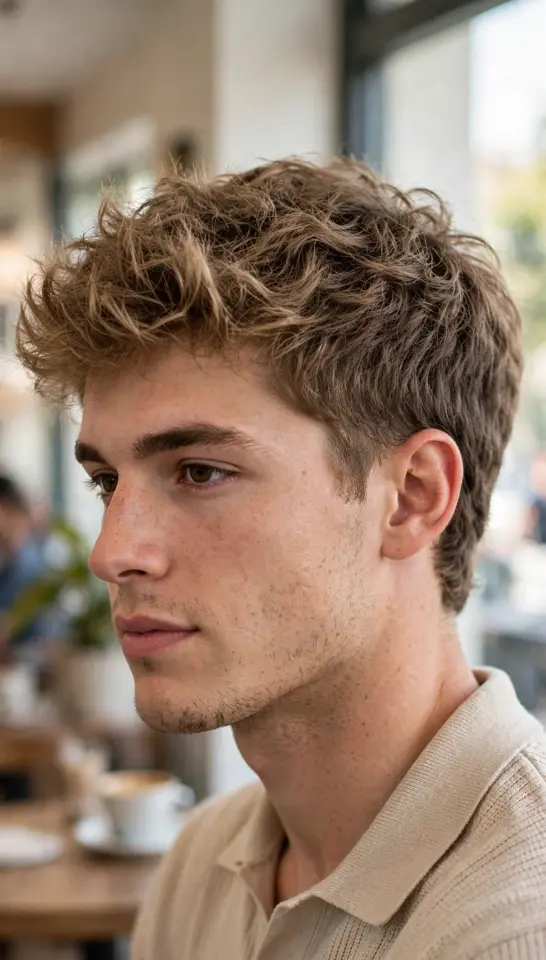
Why is the low taper fade the most searched fade of the year?
Because it is the fade for men who do not want to look "faded". The Low Taper Fade cleans up only the edges — the sideburns and the neckline — while the sides keep their full, natural weight. Search data puts the low taper at the very top of fade requests this winter, and barbers call it their most-booked cut: quiet, warm and endlessly wearable.
Face Shape: Excellent for round and square faces; the fuller sides add structure without the severity of a skin fade.
Grooming Kit: A trimmer for edge-ups, a boar brush, and a light cream or sea-salt spray for the fluffy top.
Maintenance: The easiest fade to keep — edges every 2 weeks, full cut every 3–4. A line-up at home stretches it further.
Barber Script: "Low taper fade — only the sideburns and neckline tapered, keep the sides full and natural, textured length left on top."
The fade that whispers — this winter's number one request for a reason.
Q: What is the difference between a low fade and a low taper fade?
A: A low fade blends a larger area above the ear up into the top. A low taper fade only tapers the very edges — sideburns and nape — leaving the sides fuller and more natural-looking overall.
Q: Does a low taper fade suit thick hair?
A: It is one of the best cuts for thick hair. Keeping weight on the sides stops thick hair from puffing out, and the tapered edges keep the silhouette clean without constant clipper work.
3 of 20 — The Mid Fade
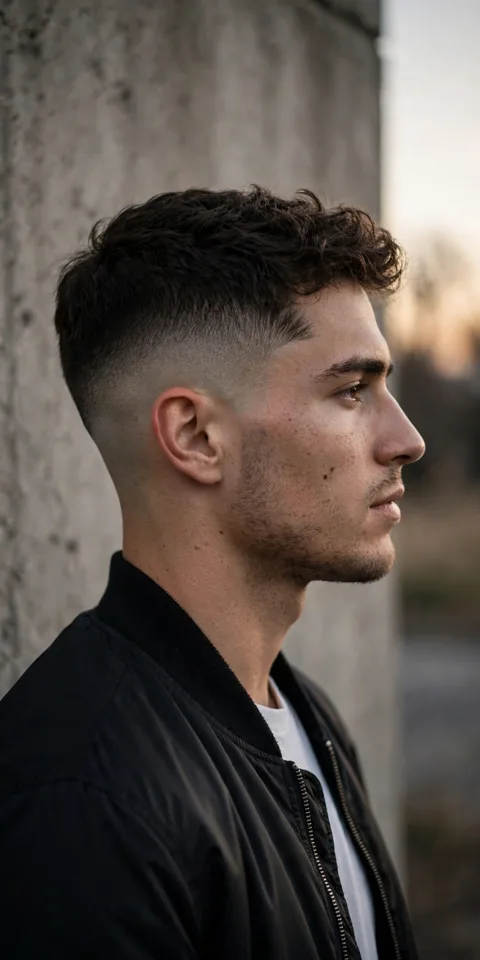
Why do barbers call the mid fade haircut the perfect middle ground?
Because it sits exactly where the name says — the fade line starts halfway up the side of the head, giving you real contrast without the full commitment of a high fade. The Mid Fade is the most versatile fade haircut for men who want the fade to be seen: sharp from every angle, but still professional.
Face Shape: Great for oval and heart-shaped faces; the mid line adds definition at the temples and sharpens softer jawlines.
Grooming Kit: Clippers, a fine comb, and a medium-hold pomade or paste to keep the top controlled against the clean sides.
Maintenance: Every 2 weeks is ideal. The mid line is visible when it grows, so it rewards a regular slot with your barber.
Barber Script: "Mid fade — start the blend at temple height, keep it clean and balanced, with textured length on top to style forward or up."
Not too quiet, not too loud — the mid fade is the fade in perfect balance.
Q: Is a mid fade professional enough for an office?
A: Yes. The mid fade is sharp without being extreme, and it pairs with suits as easily as with streetwear. Keep the top neat rather than messy and it reads as polished in any workplace.
Q: Mid fade or low fade — which should I choose?
A: Choose the mid fade if you want the fade itself to be a feature with clear contrast. Choose the low fade if you want a softer, subtler clean-up that grows out more forgivingly between cuts.
4 of 20 — The High Fade
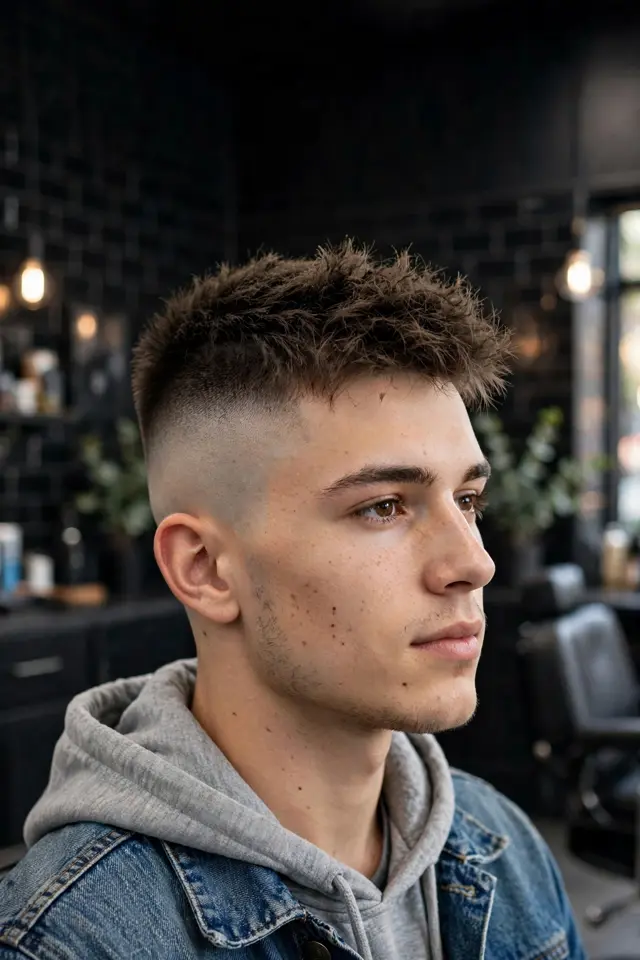
Who should wear the high fade haircut?
The man who wants maximum contrast. The High Fade climbs almost to the crown, stripping the sides right down so the top stands alone like a sculpture. It is bold, athletic and unapologetic — the fade that turns a simple short top into a statement, and the one that photographs best from every angle.
Face Shape: Best on round and fuller faces — the bare sides slim the silhouette and the height on top lengthens the face.
Grooming Kit: A strong-hold product for the top, a soft brush, and sunscreen for the exposed sides in summer months.
Maintenance: The highest upkeep on this list — every 1–2 weeks. A high fade that grows out loses its punch fast.
Barber Script: "High fade, taken up close to the crown, maximum contrast, with the top left textured and disconnected enough to style up."
Full drama, zero apology — the high fade is for men who like being noticed.
Q: Does a high fade suit a receding hairline?
A: It can work very well. Blending the sides high reduces the contrast between thick and thinning areas, which makes a receding hairline far less noticeable than a longer, heavier style would.
Q: How fast does a high fade grow out?
A: Quickly — the sharp line starts softening within a week and looks untidy by week two. If you cannot commit to fortnightly barber visits, a mid or low fade will serve you better.
5 of 20 — The Skin Fade
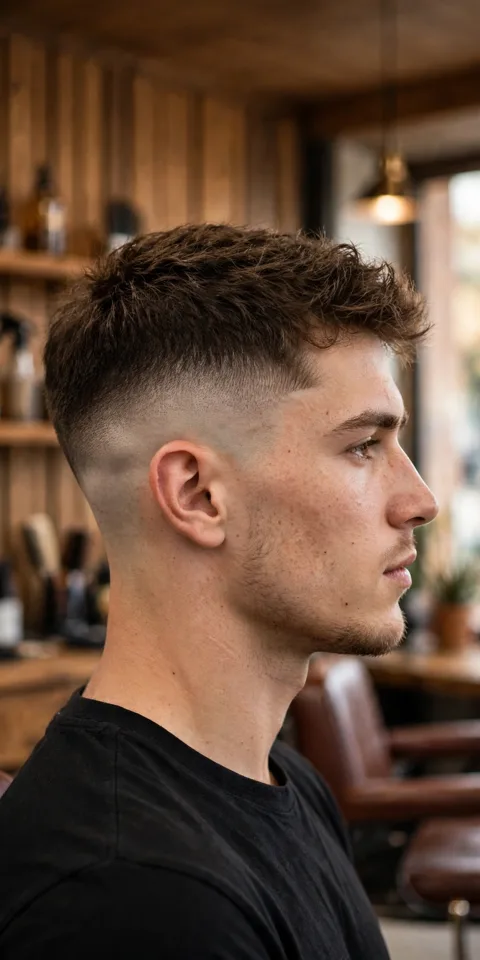
What makes the skin fade the sharpest cut in the shop?
The finish: the fade drops all the way to bare skin, so the blend runs from nothing to full hair in one seamless gradient. The Skin Fade is the crispest, cleanest look a clipper can make — razor-sharp on day one, and the base under half the styles in this guide, from buzz cuts to French crops.
Face Shape: Suits strong, defined features; the bare sides throw all the attention onto the jaw and brow.
Grooming Kit: A foil shaver or trimmer for at-home neckline touch-ups, plus a soothing aftershave balm for the faded skin.
Maintenance: Every 1–2 weeks, no exceptions — skin fades show regrowth faster than any other cut on this list.
Barber Script: "Skin fade, zero at the bottom blended seamlessly up, natural top with texture. Finish the edges with the razor."
Zero at the bottom, flawless at the top — nothing in the shop is cleaner.
Q: Does a skin fade irritate the skin?
A: It can if your skin is sensitive or the clippers are dull. Ask for a foil finish instead of a razor if you react easily, moisturise daily, and avoid getting a skin fade the day before an important event.
Q: Skin fade vs bald fade — are they the same?
A: Yes, they are two names for the same cut. Both mean the fade blends down to bare skin at the bottom, whether the barber finishes with clippers, a foil shaver or a straight razor.
6 of 20 — The Drop Fade
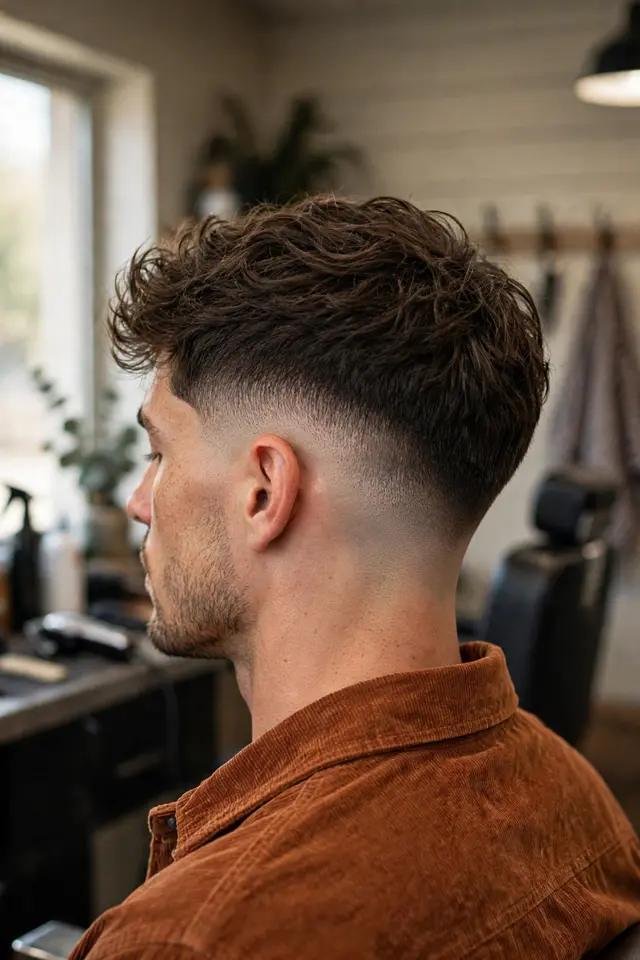
Why does the drop fade follow your head better than a straight fade?
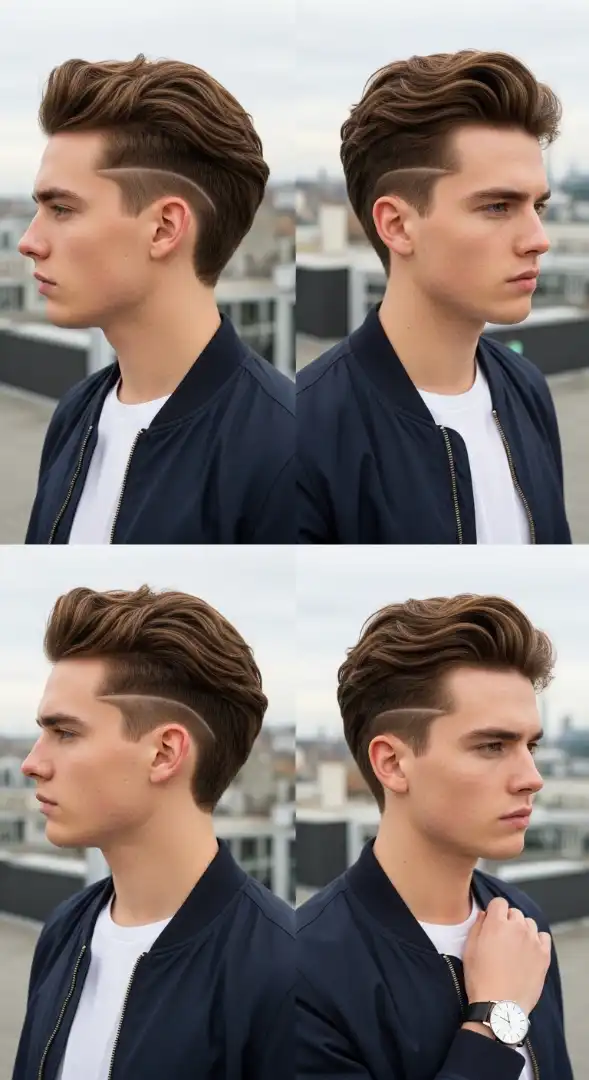
Because heads are not straight. The Drop Fade arcs the fade line down behind the ear toward the nape, following the natural curve of the skull instead of cutting across it. The result looks tailored — like the fade was drawn onto your head shape — and it makes wavy and longer tops look especially good from the back and side.
Face Shape: Flattering on most faces; the dropped arc adds length at the back, which balances shorter, wider silhouettes.
Grooming Kit: A hand mirror to check the back, light pomade for the top, and a brush to keep the nape clean between cuts.
Maintenance: Every 2 weeks. The arc is a shape, and shapes need redrawing before they blur.
Barber Script: "Drop fade — arc the line down behind the ear to the nape, keep the top wavy and natural, blend it soft at the back."
The fade with a curve — tailored to your skull, not cut across it.
Q: Does a drop fade work with a beard?
A: Beautifully. The arc drops right where the beard begins, so a good barber can blend the fade down into the beard at the sideburn for one continuous gradient from hair to beard.
Q: Is a drop fade good for wavy hair?
A: It is one of the best pairings there is. The curved fade tidies the perimeter while the waves on top keep their natural movement, and the shape of the arc echoes the wave pattern.
7 of 20 — The Burst Fade
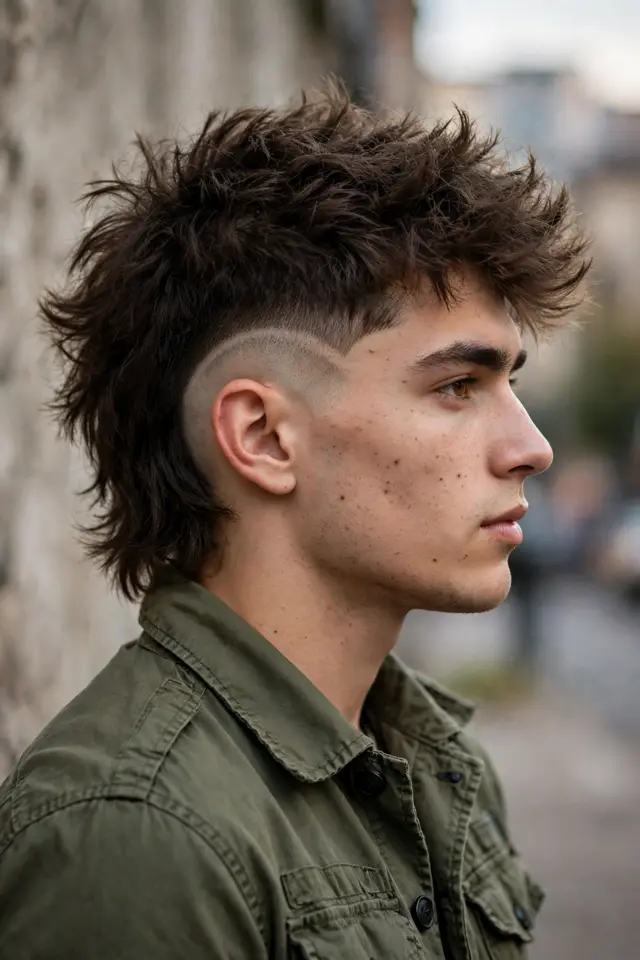
What is a burst fade — and why is it exploding on Pinterest?
The fade is shaped like a sunburst: it fans out in a rounded arc around the ear while the hair at the back stays long. The Burst Fade is the creative heart of the modern mullet — the mullet pin that started this whole trend wave had 4.5k saves — but it works just as well under a messy textured top with no mullet at all.
Face Shape: Great for square and oval faces; the rounded arc softens strong angles while the back length adds presence.
Grooming Kit: Sea-salt spray for the textured top, a diffuser if your hair is wavy, and a trimmer for the arc's edge.
Maintenance: Every 2 weeks — the burst arc is the whole point, and it blurs faster than a straight fade line.
Barber Script: "Burst fade around the ear in a clean arc, keep the length at the back, messy textured top. Blend the arc tight."
The sunburst fade — the most saved shape on Pinterest right now.
Q: Do you need a mullet for a burst fade?
A: No. The burst fade is famous from the mullet, but it sits just as well under a textured crop, a messy fringe or a wavy top. The mullet is optional — the arc around the ear is the signature.
Q: Is a burst fade hard to maintain?
A: It needs a tidy-up about every two weeks because the rounded arc loses definition as it grows. Between visits it still looks intentional, since the back length disguises regrowth better than short fades do.
8 of 20 — The Taper Fade
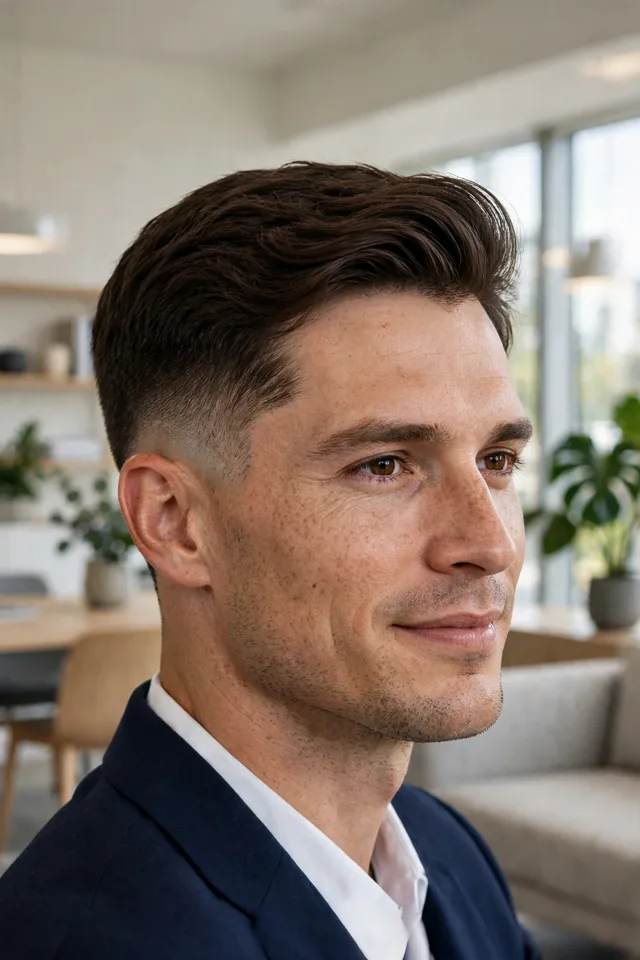
Is the taper fade the most classic fade of all?
It is the original. The Taper Fade has been the gentleman's finish for decades: the hair gradually shortens toward the sideburns and neckline, with no harsh line and no skin showing. It is the fade inside the classic side part, the executive contour and most curtain styles — timeless because it never shouts.
Face Shape: Universally flattering; the gradual taper adds polish without changing the proportions of the face at all.
Grooming Kit: A quality comb, a light pomade with a natural shine, and a neck brush to keep the collar clean.
Maintenance: Every 3–4 weeks — the taper grows out into itself, which is exactly why it has survived every trend cycle.
Barber Script: "Classic taper fade — gradual at the sideburns and nape, keep the sides natural with weight, top side-swept and neat."
The gentleman's fade — it was here before the trend and will outlive it.
Q: Taper fade vs regular taper — what is the difference?
A: Very little in practice. A taper fade blends the edges slightly shorter and tighter than a classic scissor taper, but both keep length on the sides and only clean up the sideburns and neckline.
Q: Is a taper fade good for older men?
A: It is arguably the best fade for older men. It looks distinguished rather than trendy, works with grey hair beautifully, and the soft grow-out means it never looks overdue between appointments.
9 of 20 — The Textured Crop with a Mid Fade
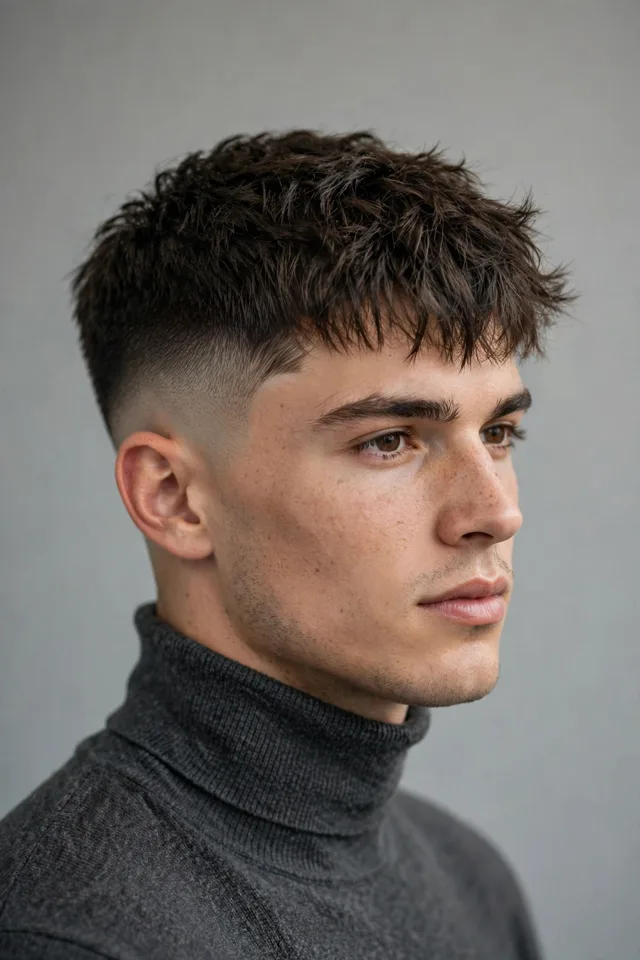
Why is the textured crop fade the easiest sharp look to live with?
Because the top does the work so the morning does not have to. The Textured Crop pushes a blunt, choppy fringe forward over a mid fade — and forward-falling hair hides a multitude of sins, from cowlicks to a shy hairline. It is the signature cut of the winter crops guide for a reason: sharp, French, effortless.
Face Shape: Ideal for long and oval faces; the forward fringe shortens the forehead and the mid fade keeps the sides tidy.
Grooming Kit: Matte clay or powder for piecey texture, your fingers, and nothing else — this cut is a 30-second style.
Maintenance: The fringe needs a trim every 2–3 weeks to stay blunt; the fade follows the same schedule.
Barber Script: "Textured crop with a mid fade — blunt fringe forward, heavy point-cut texture on top, fade clean at mid height."
Forward fringe, zero fuss — the crop fade is the thinking man's shortcut.
Q: Does a textured crop hide a receding hairline?
A: Yes — it is one of the best cuts for it. Pushing the fringe forward covers the temples and softens the hairline, while the texture stops thinning areas from looking flat or obvious.
Q: Can I wear a textured crop with thick hair?
A: Absolutely. Ask your barber to point-cut and remove weight so the crop sits flat rather than puffing up. Thick hair actually holds the choppy, piecey texture of a crop better than fine hair does.
10 of 20 — The Curly Top Fade
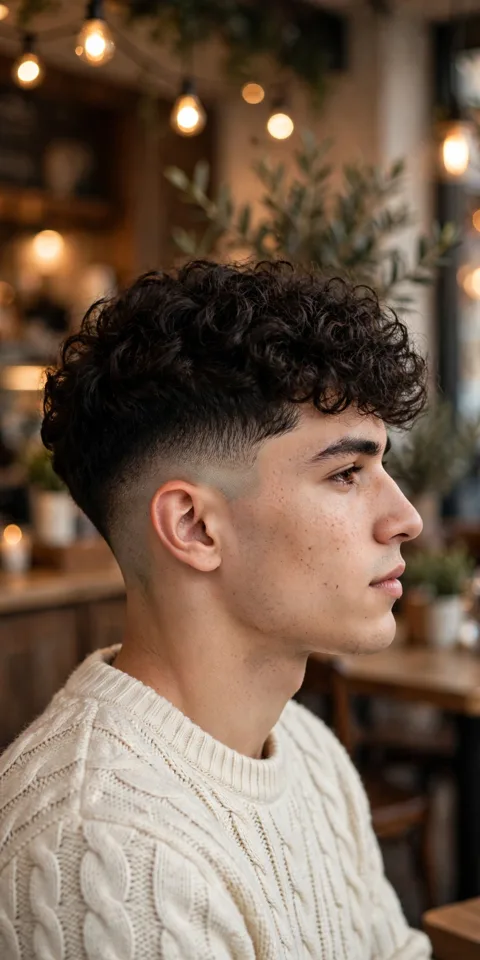
How do you fade curly hair without fighting the curls?
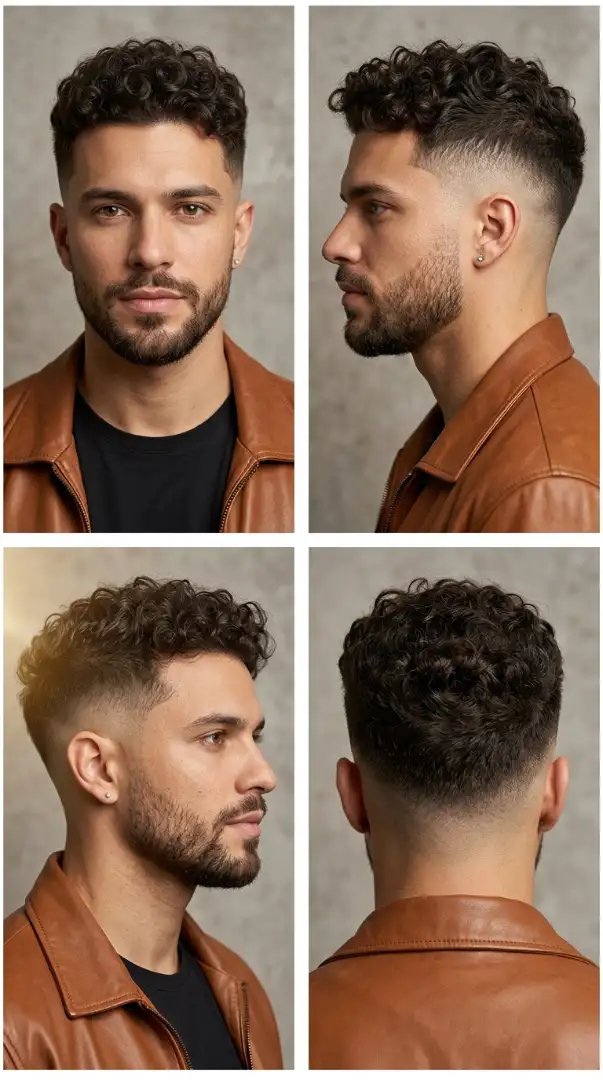
You fade the frame, not the picture. The Curly Top Fade leaves the curls at full volume on top — the way curly hairstyles should be worn — and drops only the sides into a clean low-to-mid fade. The silhouette stays wild where it should and tidy where it counts, which is exactly the balance curly hair usually loses at a careless barber.
Face Shape: Suits most faces; the height of the curls lengthens round faces, and the faded sides stop width from ballooning.
Grooming Kit: A curl cream or leave-in conditioner, a wide-tooth comb or just fingers, and a diffuser attachment for wash days.
Maintenance: Fade every 2 weeks; the curls themselves can go 4–6 weeks between shape-ups if you keep them moisturised.
Barber Script: "Curly top fade — leave all the length and curl on top, fade the sides low-to-mid, and cut the curls dry so they sit right."
Wild on top, disciplined at the sides — the curl fade in perfect balance.
Q: Should curly hair be cut wet or dry?
A: Dry, whenever possible. Curls shrink and spring up as they dry, so a wet cut often ends up far shorter than planned. Cutting dry shows the barber exactly how the curls will sit.
Q: What product works best for a curly top fade?
A: A light curl cream or leave-in conditioner — enough to define the curls without weighing them down. Avoid heavy waxes and gels, which make curls clump and lose volume.
11 of 20 — 360 Waves with a Low Taper Fade
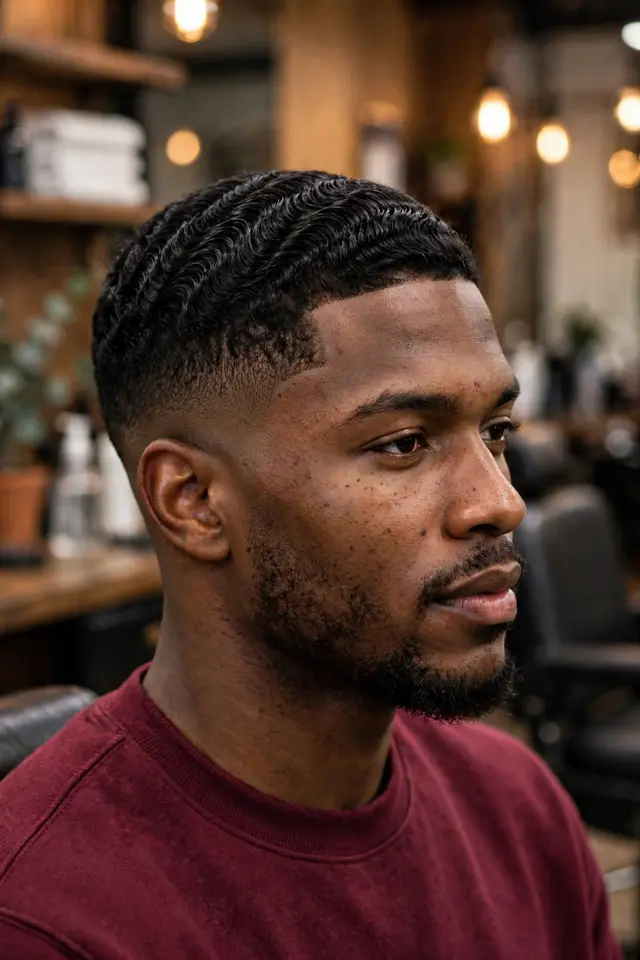
How does a low taper make 360 waves look even sharper?
By giving the waves a frame. 360 Waves with a Low Taper Fade pairs the circular ripple — built with brushing, a durag and patience — with a clean taper at the edges and a razor-sharp lineup. The waves are the art; the taper and lineup are the frame that makes them read as intentional, not accidental.
Face Shape: Suits most faces, particularly rounder ones; the waves add texture and the lineup defines the forehead.
Grooming Kit: A wave brush, a durag for overnight, a light pomade, and a trimmer for lineup touch-ups.
Maintenance: Brush daily, durag nightly, and a taper and lineup refresh every 1–2 weeks to keep the frame crisp.
Barber Script: "360 waves with a low taper fade — keep the waves intact, taper the edges low, and give me a sharp, natural lineup."
Waves are the art, the taper is the frame.
Q: How long does it take to get 360 waves?
A: Most men see a full 360 pattern in 4–8 weeks of consistent brushing and durag use, depending on hair texture. Coarser hair tends to wave faster; finer hair may take a little longer.
Q: Can I keep waves with a skin fade?
A: Yes, but a low taper suits waves better. A skin fade cuts into the wave pattern at the edges, while a low taper keeps the waves visible all the way around and just cleans the perimeter.
12 of 20 — The Fade with a Full Beard
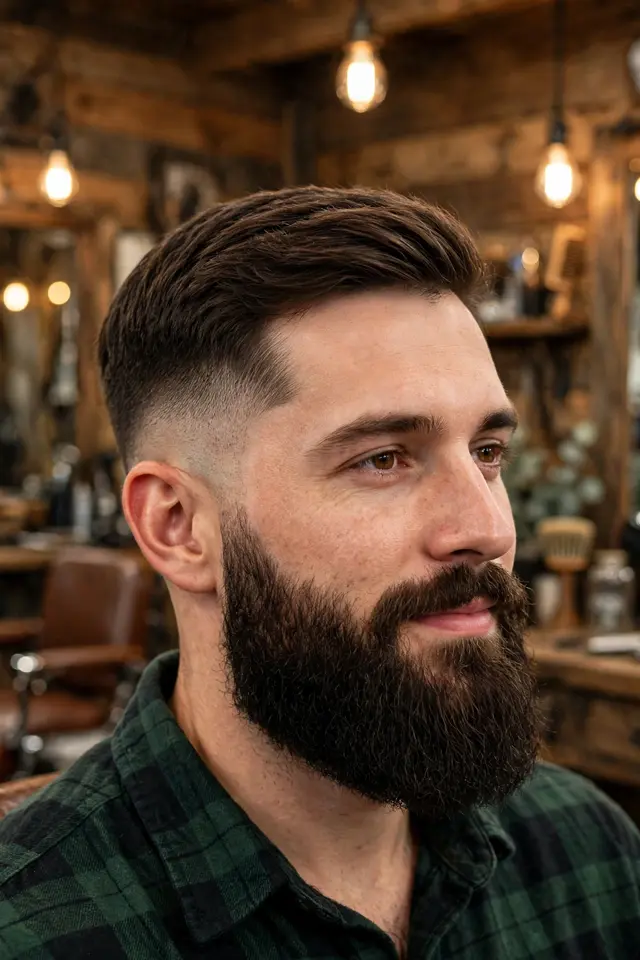
Why is the fade-and-beard combination the ultimate winter look?
Because it does both jobs at once: the fade keeps the head sharp, the beard keeps the face warm — and where they meet at the sideburn, a good barber blends them into one continuous line. The Fade with a Full Beard is the full winter beard look, polished by the fade above it.
Face Shape: Perfect for longer and narrower faces; the beard adds width and presence to the lower face while the fade keeps the top tidy.
Grooming Kit: Beard oil, a beard balm, a boar-bristle beard brush, and a trimmer for the neckline.
Maintenance: Fade every 2 weeks; beard shaped every 2–3 weeks, oiled daily in cold weather to stop dryness and itch.
Barber Script: "Low taper fade blended down into the beard at the sideburn — no harsh line between hair and beard — with the beard shaped and boxed at the cheeks."
Sharp above, warm below — the fade-and-beard is winter's power move.
Q: Should the fade blend into the beard or stay separate?
A: Blending is the modern look and usually the better one — it makes hair and beard read as one intentional style. A hard line between them can look dated and disjointed, though some men prefer the contrast.
Q: How do I stop my beard itching in winter?
A: Oil daily and wash with a gentle beard wash rather than regular shampoo. Cold air and central heating dry the skin under the beard fast, and a dry beard is an itchy beard.
13 of 20 — The Buzz Cut Fade
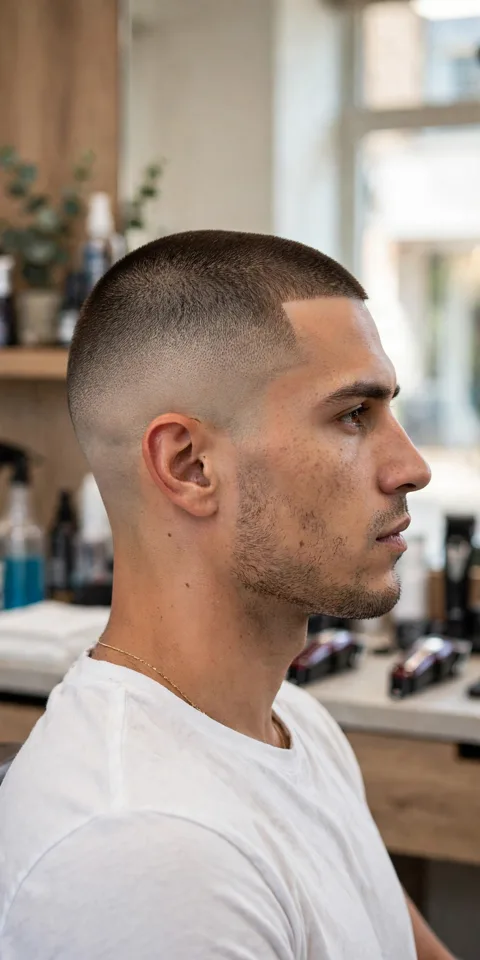
Why is the buzz cut fade the lowest-maintenance sharp cut there is?
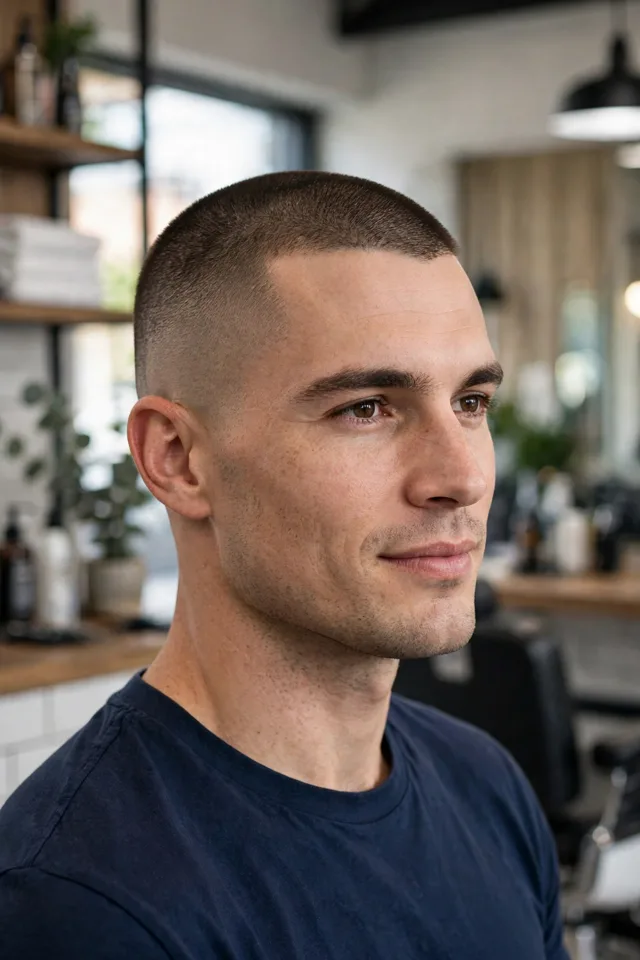
Because it strips the routine to nothing. The Buzz Cut Fade keeps one short length all over the top — clipper guard 1 to 3 — and drops the sides into a skin fade with a sharp lineup. The result is military-clean, takes zero styling time, and still looks deliberate because the fade and the lineup do all the design work.
Face Shape: Best on strong, well-defined faces; with so little hair, the bone structure does the talking.
Grooming Kit: Your own clippers at home, a foil shaver for the lineup, and a good moisturiser for the scalp.
Maintenance: Clip at home weekly or visit the barber every 2 weeks; the fade keeps it looking intentional rather than just short.
Barber Script: "Buzz cut, guard 2 on top, skin fade on the sides, and a sharp lineup. Keep it even all over."
One length, one fade, zero styling — the sharpest shortcut in the book.
Q: What clipper guard is best for a buzz cut fade?
A: Guard 1 or 2 for a close, military look; guard 3 if you want a little more softness on top and a more forgiving grow-out. Most men find guard 2 the sweet spot.
Q: Does a buzz cut fade suit thinning hair?
A: It is one of the best options for thinning hair. A uniform short length makes thinning far less obvious than longer styles, and the fade draws the eye to the clean silhouette rather than the hairline.
14 of 20 — The Quiff with a Low Fade
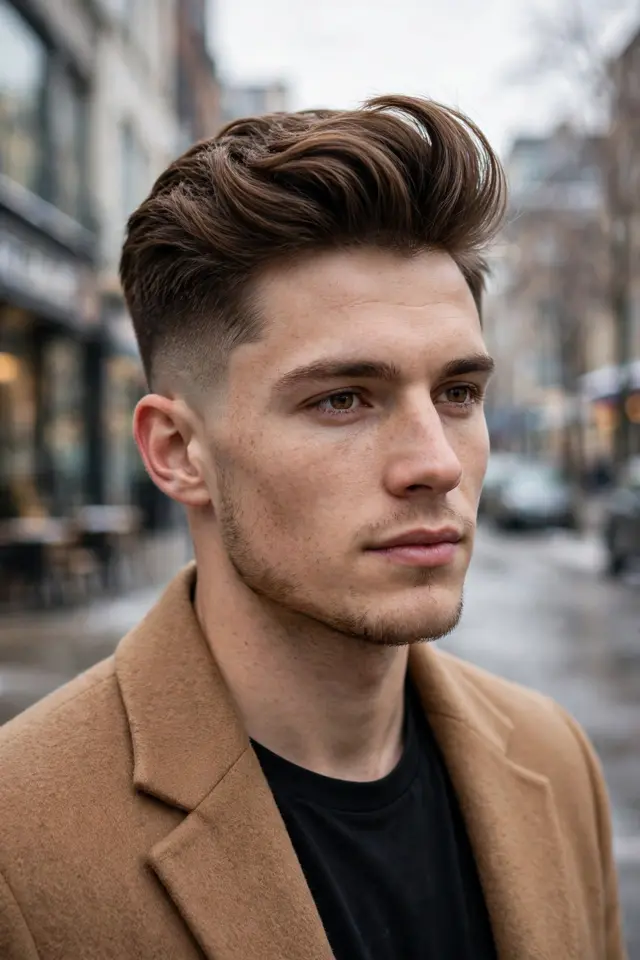
How does a low fade make a quiff look modern instead of retro?
By replacing the heavy, greased sides of the classic quiff with a soft low blend. The Quiff with a Low Fade keeps all the height and sweep at the front — the signature volume — but the low fade underneath makes it lighter, cleaner and unmistakably current. It is the quiff for men who want the drama without the costume.
Face Shape: Great for round faces; the height on top lengthens the face, and the low fade keeps the sides from adding width.
Grooming Kit: A blow dryer, a round brush, and a strong-hold, matte-finish product to hold the sweep without shine.
Maintenance: Fade every 2 weeks; the quiff itself needs 5 minutes of blow-drying each morning to hold its shape.
Barber Script: "Quiff with a low fade — keep plenty of length at the front to sweep up, fade low and soft at the sides, and layer the top so it holds volume."
All the height, none of the grease — the quiff, modernised.
Q: How do I style a quiff without it falling flat?
A: Blow-dry it upward with a round brush and a little pre-styling product, then finish with a strong matte product. The blow-dry is what creates the hold — product alone will not keep a quiff up all day.
Q: Is a quiff too much for everyday wear?
A: Not with a low fade underneath. The soft sides tone the quiff down, and you can wear it lower and more relaxed on casual days and sweep it higher for evenings and events.
15 of 20 — The Slick Back with a Mid Fade
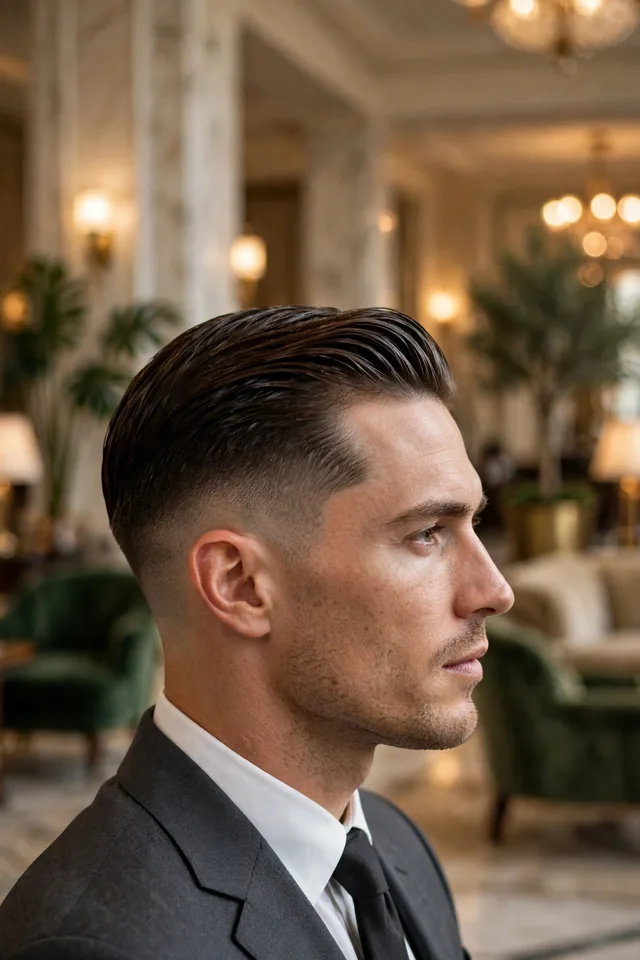
Why does the slick back fade belong in every professional's rotation?
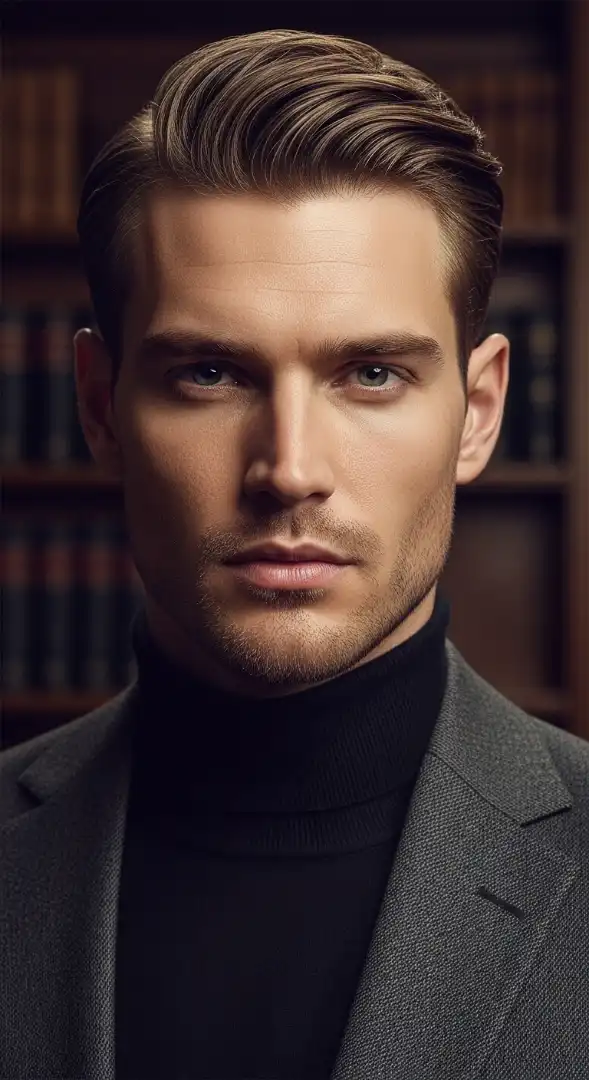
Because nothing reads "in control" faster. The Slick Back with a Mid Fade brushes the top straight back with polish and control, while the mid fade cleans the sides into a crisp frame. It is the cut of boardrooms, weddings and first dates — the fade that says you meant it.
Face Shape: Suits oval and square faces best; the brushed-back top opens up the face and shows off strong features.
Grooming Kit: A strong-hold pomade with shine, a fine-tooth comb, and a blow dryer to set the direction.
Maintenance: Every 2 weeks for the fade; the slick back needs a daily comb-through and a little product to stay in place.
Barber Script: "Slick back with a mid fade — leave length on top to brush straight back, fade clean at mid height, and keep the sides tight so the top stands out."
Polished, controlled, certain — the slick back is confidence you can comb.
Q: Does a slick back work with thin hair?
A: It can, with the right product. A volumising mousse before blow-drying gives thin hair the body it needs to slick back without looking flat, and the mid fade adds contrast that makes the top look fuller.
Q: Slick back vs side part — which is more formal?
A: The slick back is slightly more formal and dramatic, since it exposes the whole face. The side part is softer and more everyday. Both pair beautifully with a fade.
16 of 20 — The Side Part with a Low Taper
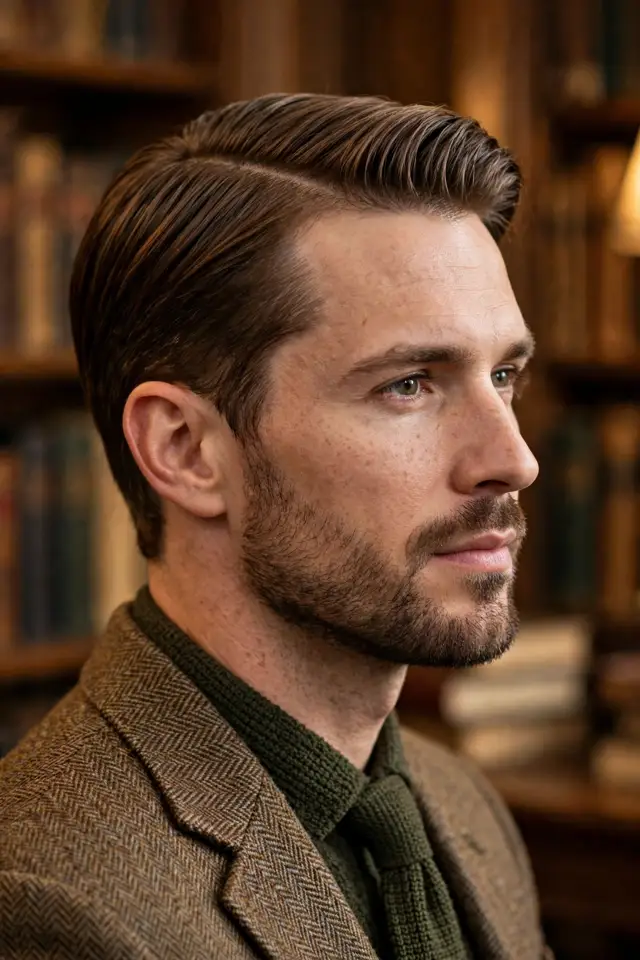
Is the side part low taper the most underrated fade combination?
Quietly, yes. The Side Part with a Low Taper pairs the most classic top in men's hair — a neat, combed side part — with the most quietly modern finish: a low taper at the edges. It is the cut that looks like you were born tidy, and it is the one barbers recommend most to men who want to look sharp without looking like they tried.
Face Shape: Suits every face shape; the part can be placed to balance asymmetry, and the taper adds polish without drama.
Grooming Kit: A comb, a light pomade or cream, and a trimmer for the taper edges.
Maintenance: Every 3–4 weeks — the taper grows out gracefully, and the part itself needs only a daily comb.
Barber Script: "Side part with a low taper — define the part, keep the top combed and neat, taper just the edges at the sideburns and nape."
Effortless polish — the side part taper is quiet luxury for hair.
Q: How do I find my natural part?
A: Comb your hair forward when wet, then push it back and see where it naturally splits. That is your part — fighting it with product only creates a cowlick battle you will lose by midday.
Q: Is a side part low taper good for work?
A: It is one of the safest professional cuts there is. It reads as neat and considered in any office, and the taper keeps it modern rather than old-fashioned.
17 of 20 — The Faux Hawk Fade
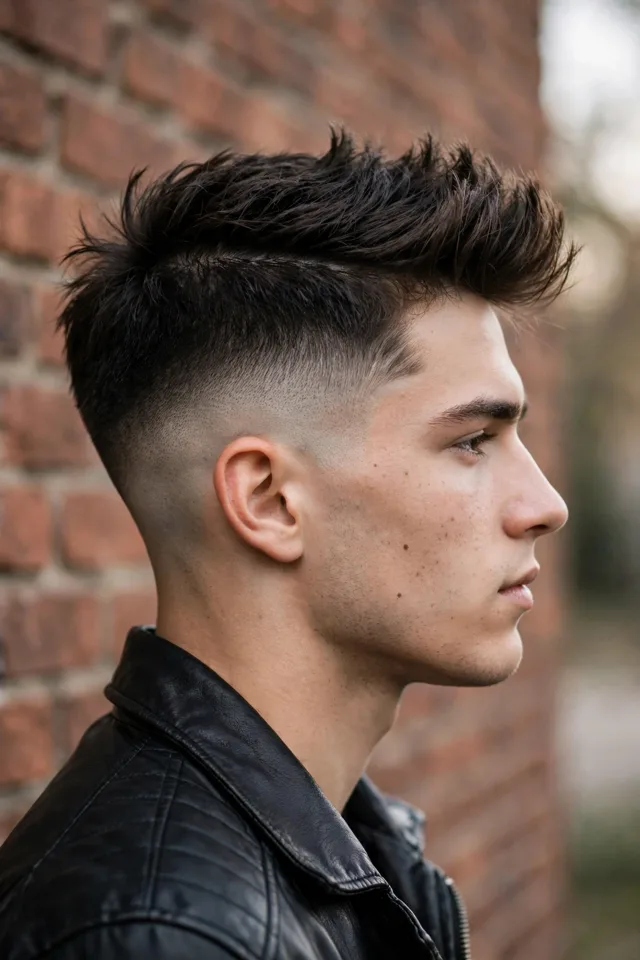
Can a faux hawk fade really work for a grown man?
Yes — when the fade does the heavy lifting. The Faux Hawk Fade keeps a centre strip standing up over high faded sides, but because the sides are faded rather than shaved, the strip reads as textured and intentional, not punk costume. Worn softer and shorter, it is a genuinely wearable weekend cut with real edge.
Face Shape: Great for round faces; the height of the strip lengthens the face, and the faded sides slim it.
Grooming Kit: A strong matte product or wax, your fingers, and a blow dryer for extra height on the strip.
Maintenance: Every 2 weeks — the faded sides are what keep the faux hawk from drifting into mohawk territory.
Barber Script: "Faux hawk fade — high fade on the sides, leave a centre strip long enough to stand up, and texture it heavily so it looks natural, not spiky."
Edge, minus the costume — the faux hawk grows up.
Q: How long does the top need to be for a faux hawk?
A: About 2–3 inches at the front, tapering shorter toward the back, is enough to stand up with product. Shorter than that and the strip will not hold its shape.
Q: Can I wear a faux hawk to work?
A: Worn flat and textured rather than spiked up, the faux hawk fade passes easily in most workplaces. Save the full-height version for weekends and evenings.
18 of 20 — The French Crop Skin Fade
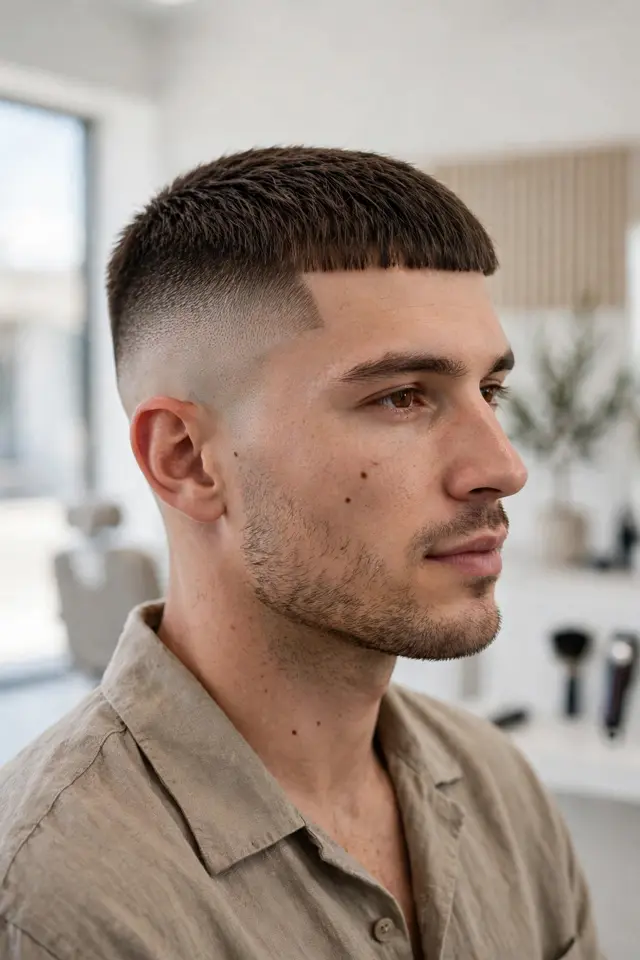
Why is the French crop skin fade the sharpest short cut in Europe?
Because it pairs the bluntest fringe in hair with the cleanest sides in the shop. The French Crop Skin Fade runs a short, straight fringe across the forehead over a bald skin fade — a contrast so crisp it looks drawn on. It is the cut behind half of Europe's street-style photos, and the shortest route to looking deliberately sharp.
Face Shape: Best for oval and longer faces; the fringe shortens the forehead, and the skin fade keeps everything else razor-clean.
Grooming Kit: Matte clay for a hint of texture, a comb for the fringe, and a foil shaver for the fade's upkeep.
Maintenance: Every 1–2 weeks for the skin fade; the fringe needs a trim every 2–3 weeks to stay blunt.
Barber Script: "French crop with a skin fade — blunt fringe straight across, skin fade on the sides, keep the top short and textured."
Blunt on top, bald at the sides — the French crop is precision, worn short.
Q: French crop vs textured crop — what is the difference?
A: The French crop has a shorter, blunter fringe and a neater, flatter top. The textured crop is longer, choppier and more forward-falling. Both pair beautifully with a fade.
Q: Does a French crop suit a big forehead?
A: Yes — it is one of the best cuts for a larger forehead. The blunt fringe covers it completely and balances the face, while the skin fade keeps the overall look sharp.
19 of 20 — The Blowout Taper Fade
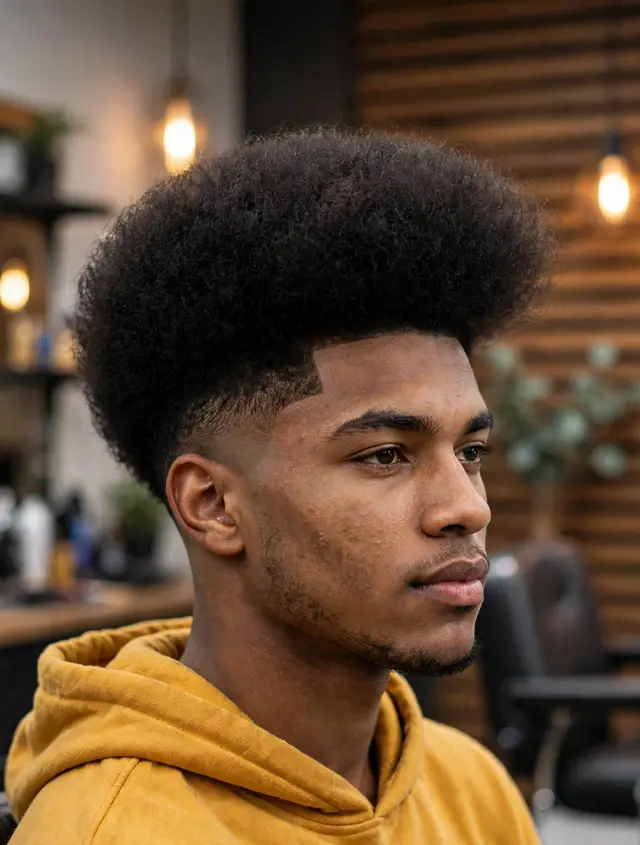
What makes the blowout taper the king of volume?
It refuses to choose between big and tidy. The Blowout Taper Fade keeps the full, rounded Afro blowout on top — maximum volume, maximum presence — and tapers only the edges, with a crisp lineup to frame it all. It is the curly and coily hair equivalent of a crown: the shape is the statement, the taper is the polish.
Face Shape: Suits most faces; the rounded volume balances longer faces, and the tapered edges keep the silhouette controlled.
Grooming Kit: A pick or Afro comb, a leave-in conditioner, a curl-enhancing cream, and a durag or bonnet for overnight shape.
Maintenance: Taper and lineup every 1–2 weeks; the blowout itself needs regular moisturising and a pick-out each morning.
Barber Script: "Blowout taper fade — keep the full rounded shape on top, taper the edges only, and give me a sharp lineup all around."
Volume with discipline — the blowout taper is a crown, kept tidy.
Q: How do I keep a blowout from going flat?
A: Pick it out from the roots each morning, use a light cream rather than heavy oils that weigh it down, and sleep in a bonnet or durag to protect the shape overnight. A weekly wash and deep condition keeps the volume healthy.
Q: Blowout taper vs high-top fade — which should I choose?
A: The blowout taper is rounder and softer, with the taper only at the edges. The high-top fade is more squared and architectural, with the sides faded higher. Choose the blowout for natural volume, the high-top for a sharper, more sculpted silhouette.
20 of 20 — The Winter Fade King
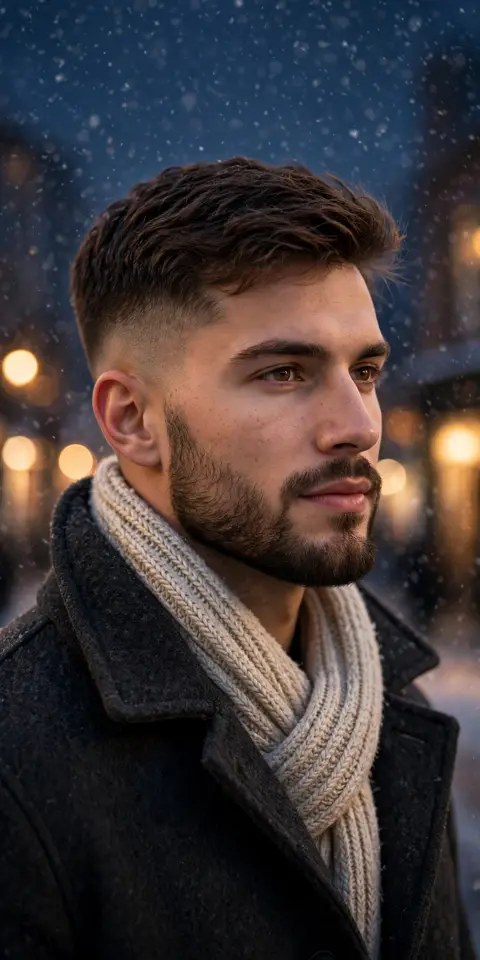
Why is the low taper fade with a beard the king of winter fades?
Because winter rewards softness. The Winter Fade King pairs a soft low taper — warmth kept on the sides, edges just cleaned up — with a textured top and a boxed beard, so the whole silhouette is warm, full and intentional. It is the cut this guide was built around: the fade that does not fight the season.
Face Shape: Suits almost everyone; the beard adds structure to the lower face, and the soft taper keeps the overall shape balanced.
Grooming Kit: Beard oil and balm, a matte paste for the top, a boar brush, and a warm hat that will not flatten the texture — a loose beanie, not a tight skull cap.
Maintenance: The easiest royal court to keep: taper and beard shape every 2–3 weeks, oil daily, and the textured top needs only fingers and a little paste.
Barber Script: "Soft low taper fade, textured top, and a boxed beard blended at the sideburn. Keep it warm and full — this is a winter cut."
The fade that owns winter — soft, warm and completely intentional.
Q: Does a hat ruin a fade?
A: A tight hat flattens texture, but it will not ruin a low taper — the fade itself is at the edges, which a hat does not touch. Wear a loose beanie and re-texture the top with your fingers when you take it off.
Q: Is a low taper fade warm enough for very cold winters?
A: Yes — and that is exactly why it is winning this winter. Keeping the sides fuller traps more warmth than a skin or high fade, and the taper only cleans the edges. In the coldest weeks, pair it with a beard and a beanie and you lose almost no warmth at all compared with a full head of hair.
Q: Can a low taper fade work with a beard in summer too?
A: Yes. The low taper is a year-round cut — in summer just keep the beard shorter and neater, and the same soft taper that kept you warm in winter keeps you tidy in the heat.
Choosing Your Fade: The Quick Verdict
Start with height: low if you want soft and forgiving, mid if you want visible contrast, high if you want drama. Then pick your top — crop, curls, quiff, slick back or waves — and let the fade frame it. The best fade is not the boldest one; it is the one you will actually maintain, because a fresh low taper beats a grown-out skin fade every single time.
If you are still torn, take this guide to your barber and point. The barber scripts in each section are written to be read out loud — they use the words barbers use, so there is no translation gap between what you want and what you get.
How to Maintain Any Fade Between Cuts
Keep the neckline clean with a trimmer, wash with a gentle shampoo, and do not over-wash — two to three times a week is plenty for most hair types. A light product on the top and a daily brush keep the shape honest, and a regular slot with your barber (every 2 weeks for skin and high fades, every 3–4 for tapers) is the single best maintenance habit there is.
Winter adds one rule: moisturise. Cold air dries out both hair and the skin under a fade, so a light oil or balm — on the beard, on the scalp edges, on the skin where a skin fade meets the air — keeps everything comfortable and looking intentional rather than weather-beaten.
Frequently Asked Questions
Q: Which fade haircut is best for beginners?
A: The classic low fade or the low taper fade. Both are soft, forgiving and grow out gracefully, so a first fade never feels like a leap.
Q: How often should I get a fade touched up?
A: Every 1–2 weeks for skin and high fades, every 2 weeks for mid and drop fades, and every 2–4 weeks for low fades and tapers. The lower the fade, the longer you can stretch it.
Q: Do fades suit older men?
A: Yes — especially tapers. A taper fade looks distinguished at any age, and it pairs beautifully with grey hair, where the gradient shows off the silver tones.
Q: What should I ask my barber for a fade?
A: Start with the height (low, mid or high), say whether you want skin at the bottom, then describe the top. The barber scripts in this guide give you the exact wording for each style.
Q: Are fades bad for your hair?
A: No. Clipper cuts do not damage hair the way chemical treatments can. The only risk is skin irritation from very close fades, which a foil finish and good aftercare can prevent.
Q: Can I cut my own fade at home?
A: You can maintain the neckline and edges at home with a trimmer, but a full fade — especially the blend — is hard to do on yourself. Leave the blend to your barber and keep the edges tidy between visits.
Q: Which fade is best for a round face?
A: A high fade or a mid fade with height on top, which lengthens the face. Low tapers also work well if the top has volume, since the height — not the fade height — is what slims a round face.
Q: Do I need to bring a photo to my barber?
A: It always helps. A photo removes guesswork, and pairing it with a barber script from this guide gives your barber both the picture and the words.
Q: How much does a fade haircut cost?
A: Prices vary by city and barber, but a fade typically costs a little more than a standard cut because of the extra blending time. Expect to pay a premium for skin fades, which take the longest to execute well.
Q: Is a low taper fade warm enough for very cold winters?
A: It is the warmest fade option, yes — the sides keep real hair coverage and only the edges are tapered. If you live somewhere brutally cold, keep a beanie for the walk and enjoy the sharpest cut under it when you arrive.
The Bottom Line
Fade haircuts for men all come down to two decisions: how high the fade sits, and what lives on top. Go low and soft — the low taper fade and classic low fade — for winter warmth, easy grow-out and the most searched look of the season. Go mid for balance, high or skin for maximum contrast, and reach for the shaped fades — drop, burst, taper — when you want the fade itself to be the art.
Whichever height you choose, the rules from the barber's chair are the same: a fade is only as good as its last tidy-up, texture on top forgives almost everything, and a fade that meets a beard needs one invisible blend at the sideburn. Save your favourite, show your barber the photo, and read the script out loud. For more winter inspiration, explore the modern mullet, the wolf cut and curtain hairstyles guides next.

3 Comments