20 Beanie Hairstyles for Men: Hat-Proof Cuts That Survive Winter Hats
Every winter morning runs the same experiment: you style your hair, pull on a beanie, arrive at work, take the beanie off — and the haircut you paid for is gone, flattened into hat hair. The problem is rarely the hat. It is the cut. Height dies under a beanie, sculpted polish dents, and wet-look products freeze stiff in cold air — but texture, direction and the right length barely notice a hat at all.
This guide covers 20 beanie hairstyles for men chosen for one test only: the beanie comes off and the haircut is still there. Every style comes with the face shapes it flatters, the grooming kit it needs, its upkeep rhythm under hat season, and the exact words to say to your barber.
The rules of hat season run through all 20: choose texture over polish, direction over height, a taper over a skin fade (it stretches weeks longer between winter appointments), and never — ever — put a beanie on wet hair. For the wider winter picture, see our winter haircuts guide; for the fringe family in depth, the textured crop hairstyles guide is the companion read.
1 of 20 — The Textured Crop
Why is the textured crop the most beanie-proof cut there is?
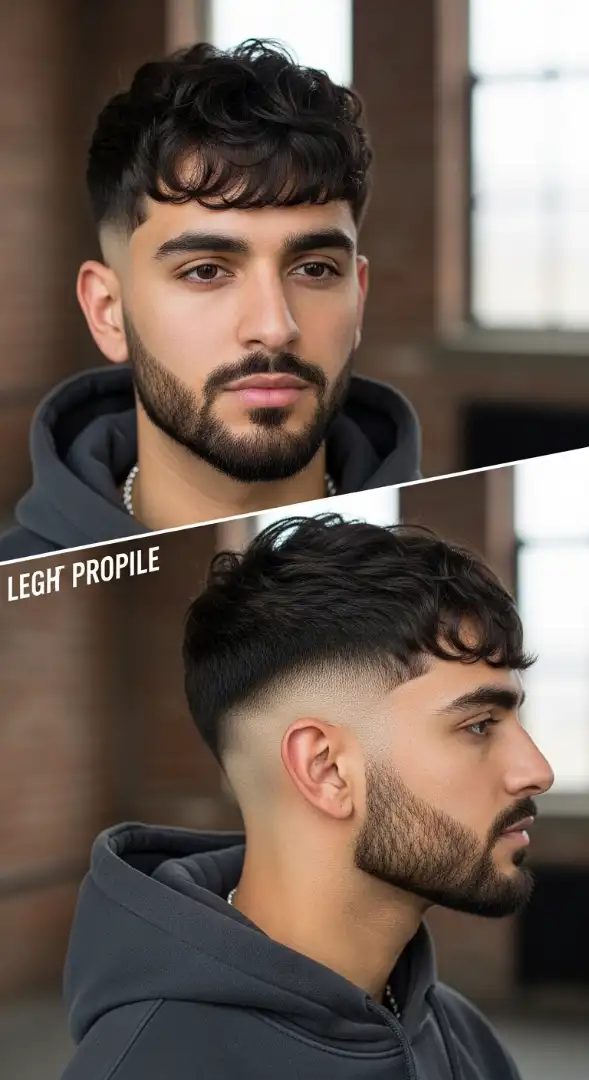
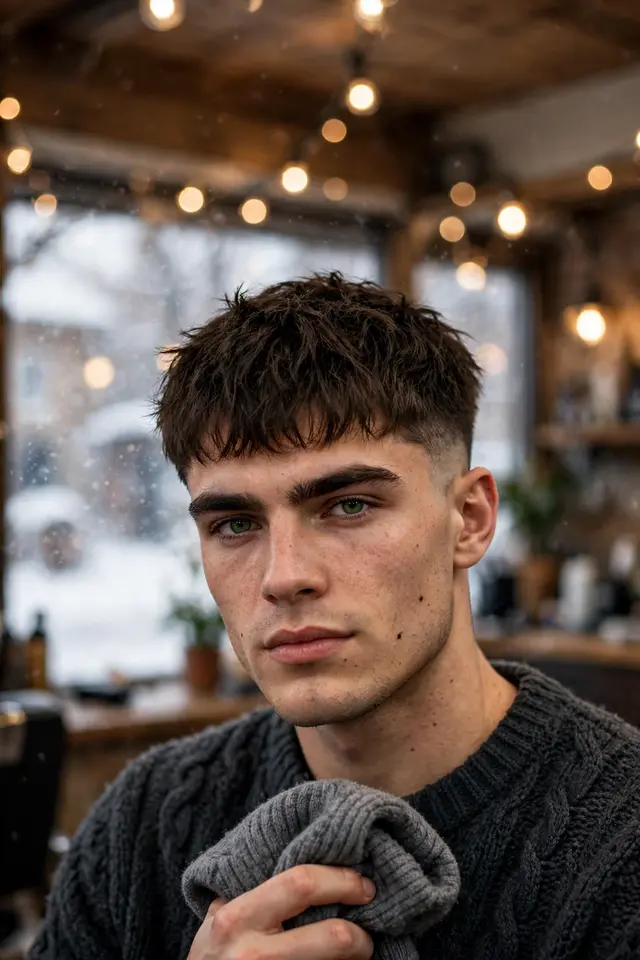
Because there is almost nothing for the hat to ruin. The Textured Crop is short and choppy on top with a forward fringe — compression does not matter at this length, and the piecey texture falls back into place with one run of your fingers. Barbers name it the single most practical winter cut for most men, and hat season is exactly why.
Face Shape: Works on almost everyone; the fringe shortens long faces and the texture widens narrow ones.
Grooming Kit: Matte clay or texture powder — both reactivate with fingertips after the hat comes off, no mirror needed.
Maintenance: Every 3 weeks; hat friction frays the fringe ends first, so keep them trimmed.
Barber Script: “Textured crop — short choppy top, forward fringe, low or mid fade, texture everywhere. It has to survive a beanie.”
The benchmark — hat on, hat off, same haircut.
Q: How do I fix a textured crop after a beanie?
A: Ten seconds: dry fingertips through the fringe, pinch the pieces back into separation. That is the whole routine — if your morning fix takes longer, the crop has grown too long and needs its appointment.
Q: Textured crop or French crop under a beanie?
A: Nearly identical behaviour — both are elite hat cuts. The textured crop wears its fringe pieceier and rougher; the French crop’s fringe sits cleaner and straighter. Choose by the finish you prefer in photos.
2 of 20 — The Grown-Out Buzz
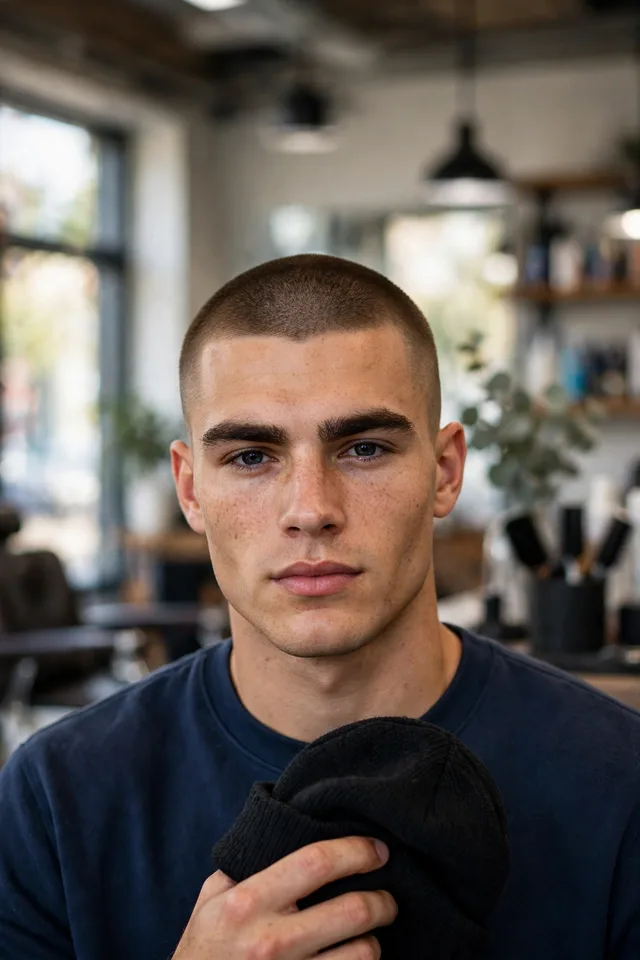
What buzz length survives winter best?
Not the skin-tight one. The Grown-Out Buzz is cut with a No. 3 or No. 4 guard all over — short enough to be completely immune to hats, long enough to keep a layer of warmth on the scalp and avoid the frozen-head feeling of a winter skin buzz. It is the zero-maintenance answer to hat season.
Face Shape: Kindest to well-proportioned heads and strong jaws; grown-out buzzes hide nothing, by design.
Grooming Kit: A moisturising shampoo and a scalp cream — winter dryness, not styling, is this cut’s only enemy.
Maintenance: A home clipper pass every 2–3 weeks, or the barber monthly. The beanie never factors in.
Barber Script: “Buzz all over, number 3 or 4 guard, grown-out and natural — no line-up needed, it’s a winter buzz.”
Nothing to flatten — the hat has no opponent.
Q: Does a buzz cut make your head colder in winter?
A: A No. 0–1 buzz, yes, noticeably. The No. 3–4 grown-out version keeps a real layer of insulation, and the beanie does the rest. If your commute is outdoors, the grown-out length is the smart winter choice.
Q: Buzz or crop for a daily beanie wearer?
A: The buzz if you want zero seconds of styling, forever. The crop if you want a fringe and some shape to show when the hat is off. Both laugh at hats; they differ only in what they offer indoors.
3 of 20 — The French Crop
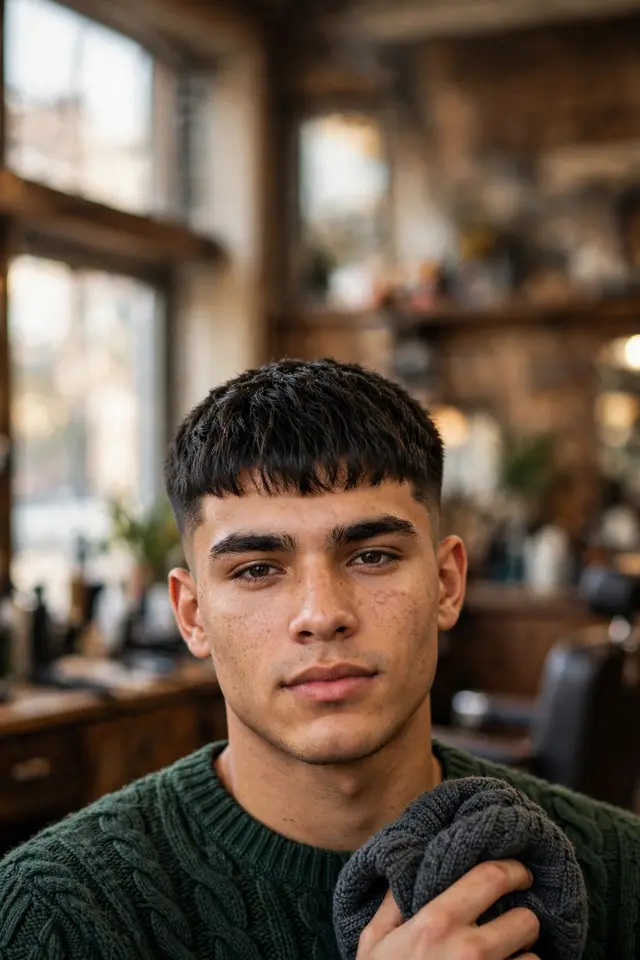
Why do French crops and beanies get along?
Because a hat pushes hair exactly the way a French Crop already falls: forward and down. The blunt fringe and short textured top move in the hat’s own direction, so the cut looks almost identical the moment the beanie comes off. It is the rare hairstyle winter headwear actively agrees with.
Face Shape: Flatters oval and long faces; the fringe’s straight line balances strong features.
Grooming Kit: A pea of matte clay for formal days. Most days the crop needs nothing at all.
Maintenance: Every 3 weeks to keep the fringe line honest through hat friction.
Barber Script: “French crop — blunt forward fringe, short textured top, mid fade, fringe kept clean. Worn under a beanie daily.”
The hat’s favourite direction — forward, like the fringe.
Q: French crop or Edgar under a beanie?
A: Both are fringe-forward and hat-friendly, but the French crop’s softer fade and lower fringe handle hat friction a touch more gracefully. The Edgar reads bolder in photos; the French crop is the easier daily wear.
Q: How do I stop beanie static on a French crop?
A: Static comes from dry hair meeting synthetic fabric. A tiny amount of leave-in conditioner on the fringe before the hat goes on, and a wool or merino beanie instead of acrylic, removes most of it.
4 of 20 — The Messy Fringe
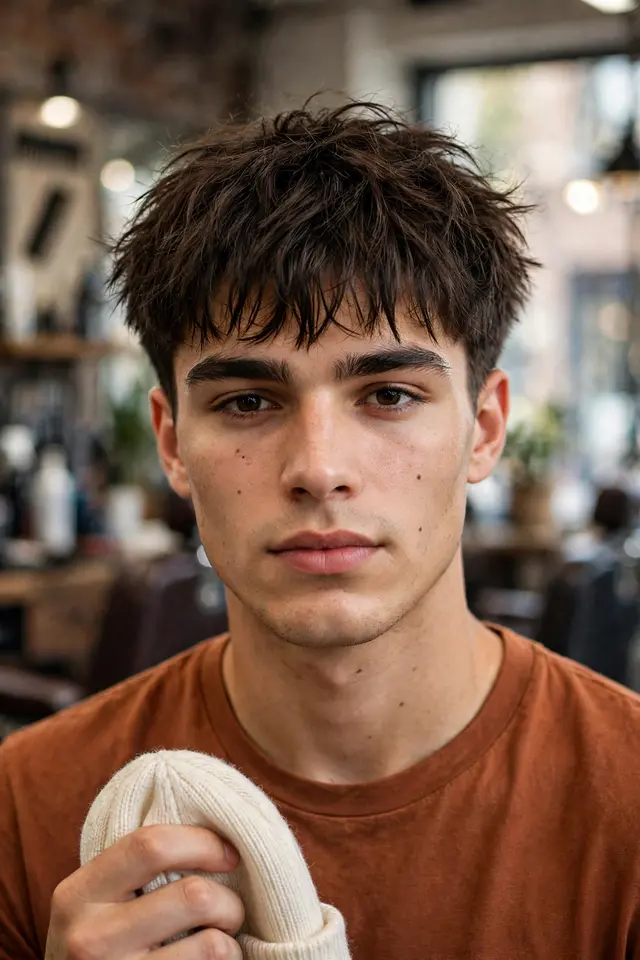
Can a fringe be deliberately messy for hat season?
It is the smartest way to wear one. The Messy Fringe is cut piecey and uneven on purpose, so whatever a beanie does to it reads as part of the design. There is no precise line to destroy — the hat can only add to the disorder you already paid for.
Face Shape: Strong on oval and square faces; the low fringe also shortens a tall forehead kindly.
Grooming Kit: Texture powder is the hero. Clay only if your hair refuses to hold direction at all.
Maintenance: Every 3–4 weeks — messiness forgives growth better than any precise cut.
Barber Script: “Messy fringe — heavily point-cut fringe and top, worn roughed up, low taper or mid fade. Beanie-proof it.”
Disorder as armour — the hat can’t ruin what it didn’t style.
Q: How messy is too messy for work?
A: The rule is neat sides, messy top. Keep the taper and neckline barber-fresh and the roughed-up fringe reads as style; let the sides blur too and it reads as overdue. One clean edge keeps the whole look intentional.
Q: Messy fringe or textured crop — what is the difference?
A: Length at the fringe. The messy fringe lets it fall longer and lower across the forehead in separated pieces; the crop keeps everything shorter and tighter. Same family, same hat immunity.
5 of 20 — The Grown-Out Taper
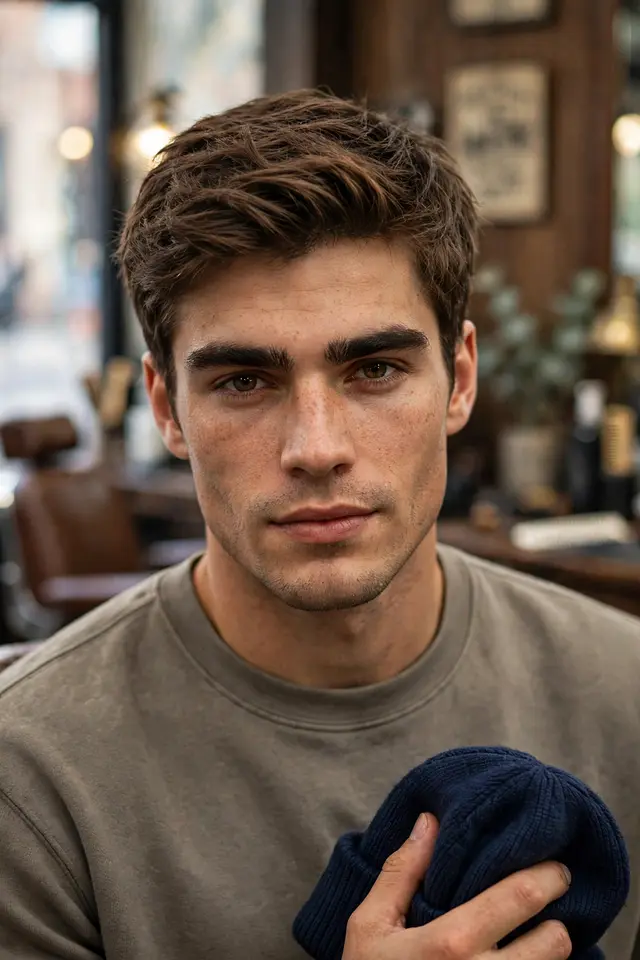
Why do barbers push tapers over fades in winter?
Longevity. A skin fade shows regrowth in ten days; the Grown-Out Taper’s scissored sides and longer top stretch five to six weeks while still looking deliberate — exactly what you want in the months you least feel like visiting the barber. The extra length also keeps the sides and neck warmer under a collar.
Face Shape: The all-rounder of hat season — suits oval, round and square faces without adjustment.
Grooming Kit: A light cream — creams stay pliable in cold air where matte clays can go brittle.
Maintenance: Every 4–5 weeks, with just a neckline tidy in between if you like. Winter’s most relaxed schedule.
Barber Script: “Grown-out taper — leave the top long, scissor the sides tidy, taper only at the edges. I’m stretching winter appointments.”
Winter’s smartest schedule — five weeks between chairs.
Q: Can I really stretch a haircut to five weeks in winter?
A: With a taper, yes — slower winter growth plus soft scissored edges mean nothing blurs into untidiness the way a fade does. The neckline is the only giveaway; a two-minute tidy at home covers even that.
Q: Grown-out taper or low taper crop under a beanie?
A: The grown-out taper keeps more length everywhere and suits men growing their hair out. The low taper crop keeps a proper fringe and shorter top. Choose by where your hair is heading, not just where it is.
6 of 20 — The Curly Top
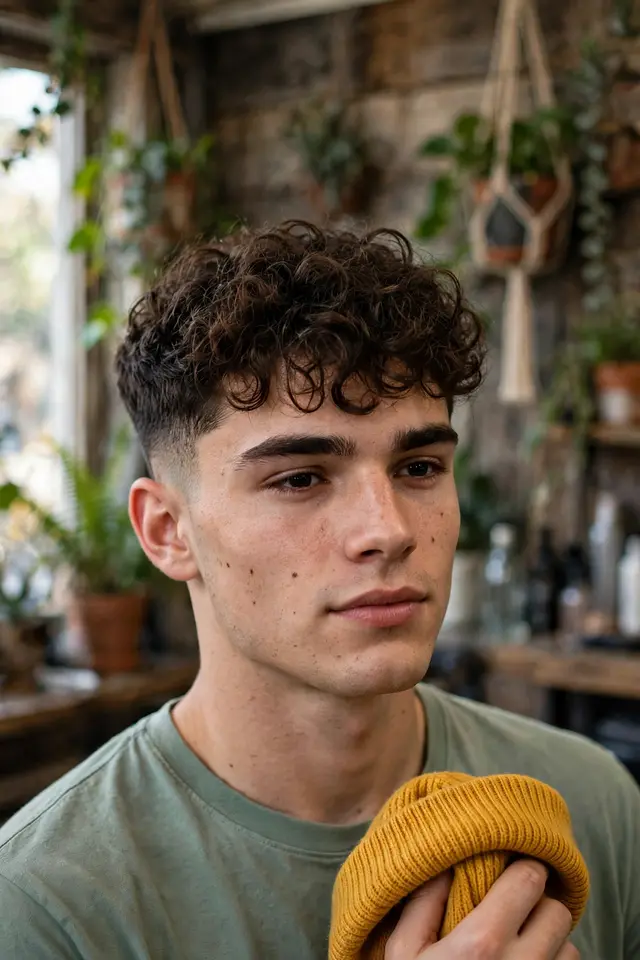
Why do curls bounce back from beanies best?
Elasticity. A longer Curly Top — 2 or more inches with faded or tapered sides — compresses under a hat and springs back the moment it is released, because curl pattern is structure, not styling. A spritz of water and a shake is the entire recovery routine.
Face Shape: Superb on square and angular faces; the volume softens what the fade sharpens.
Grooming Kit: Curl cream, a wide-tooth comb for detangling only, and a water spritz bottle for morning resets.
Maintenance: Sides every 3 weeks; moisturise the curls daily — dry heated indoor air is their winter enemy.
Barber Script: “Curly top — leave the curls long enough to spring, cut them dry, taper or mid fade the sides. Beanie season cut.”
Curls are springs — the hat compresses, the hair answers.
Q: How do I stop a beanie flattening my curls into a triangle?
A: Shake your head upside down for five seconds, spritz with water, then scrunch the curls upward with your palms. Never brush dry curls after a hat — brushing is what builds the frizz triangle.
Q: Should curly hair go under a beanie wet or dry?
A: Dry, always — but that rule doubles for curls. Wet curls under a hat dry in the hat’s shape and stay there all day. If you must rush, a silk-lined beanie reduces both friction and frizz.
7 of 20 — The Wavy Fringe Crop
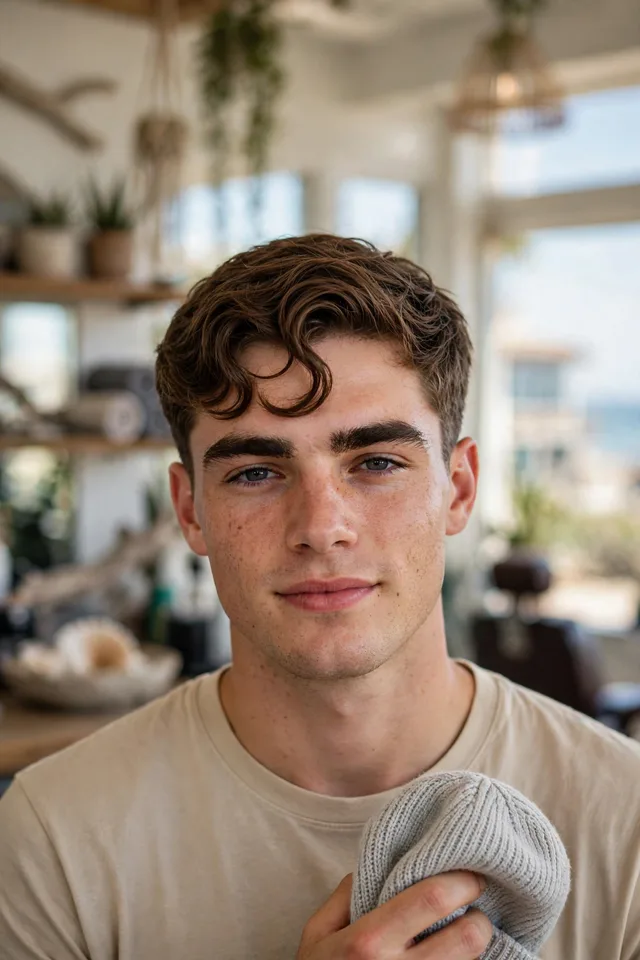
What makes waves and fringes a winter pairing?
Waves hold a memory. The Wavy Fringe Crop combines a forward fringe with the top’s natural S-bend, and wavy hair re-finds its pattern after compression far better than straight hair does — the wave is in the hair, not in the product. The fringe sits low and casual, hiding beanie dents inside its own movement.
Face Shape: Flattering on long faces especially; the low fringe and soft wave offset each other’s severity.
Grooming Kit: Sea salt spray and a light cream. Heavy products flatten the wave you kept the length for.
Maintenance: Every 3–4 weeks; wavy hair hides both growth and hat damage better than straight hair.
Barber Script: “Wavy fringe crop — fringe worn forward and low, top left long enough for the wave, soft taper sides.”
The wave remembers — hats are a pause, not a reset.
Q: How do I refresh a wavy crop after a hat without washing?
A: Damp palms — not wet, damp — pressed through the top, push everything forward, then leave it completely alone while it air-dries for two minutes. Touching it mid-dry is what invites frizz.
Q: Wavy fringe crop or messy fringe — which suits thick hair?
A: The wavy crop, if your thickness comes with a natural bend — it works with the density instead of fighting it. Dead-straight thick hair takes the messy fringe’s point-cutting better.
8 of 20 — The Caesar Cut
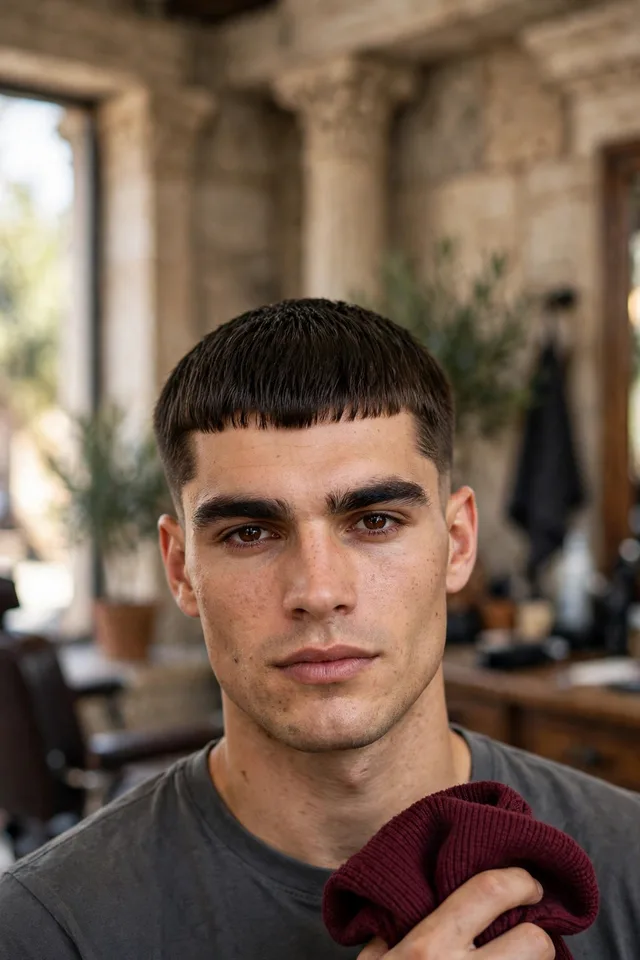
Why has the Caesar survived two thousand winters?
It was designed in a colder empire than yours. The Caesar’s short, forward-combed top and straight fringe lie completely flat by design, so a beanie presses it into exactly the shape it already wears. Nothing stands up, so nothing can be knocked down — the most structurally honest hat cut in this guide.
Face Shape: Excellent on square and oval faces; the horizontal fringe sharpens the whole face beneath it.
Grooming Kit: Almost nothing — a light matte paste on formal days. The Caesar predates product by millennia.
Maintenance: Every 3 weeks; the fringe line is the cut’s signature and blurs first.
Barber Script: “Caesar cut — short top combed forward, straight fringe, tapered sides. Flat by design, beanie-proof.”
Flat by design — the hat presses it into itself.
Q: Caesar or French crop under a beanie?
A: Siblings. The Caesar sits shorter and flatter with a tidier fringe; the French crop carries more texture on top. For pure hat immunity the Caesar edges it; for texture in photos, the crop.
Q: Does a Caesar suit a receding hairline?
A: It is one of the classic answers — the forward comb and straight fringe cover early temple recession better than any swept-back style. Keep the fringe light and textured at the corners for a believable line.
9 of 20 — The Winter Quiff
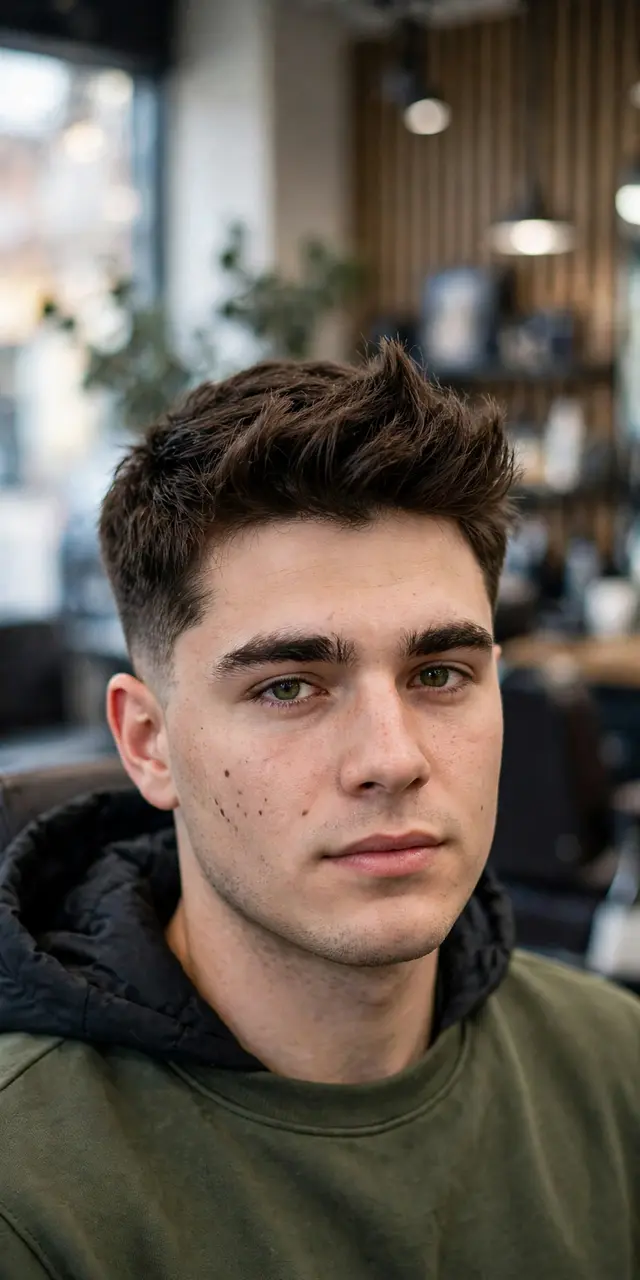
Can a quiff survive a beanie at all?
Only the shortened winter version. The Winter Quiff is cut lower than a summer quiff — enough lift to read as a quiff, not enough height for a hat to crush — and worn with a low taper instead of a fade. Be honest with yourself, though: of all 20 styles here, this one asks the most of its two-minute morning reset.
Face Shape: Adds height that flatters round faces; oval faces carry any quiff easily.
Grooming Kit: A blow dryer and matte paste. The dryer is not optional at this length — air alone won’t rebuild lift.
Maintenance: Every 3 weeks; quiff length discipline matters more in hat season than any other.
Barber Script: “Winter quiff — keep the top shorter than summer, low taper sides, lift at the front only. It lives under a hood mostly.”
The quiff, winterised — lower, tougher, hood-friendly.
Q: Hood or beanie for a quiff?
A: A loose hood, every time — it presses down far less than a tight beanie and leaves the lift largely intact. If your winter coat has a good hood, the winter quiff becomes a genuinely practical cut.
Q: How do I rebuild a crushed quiff fast?
A: Heat is the shortcut: 30 seconds of warm air from a dryer (or a car’s heater vent in a true emergency) while pushing the front up with your fingers, then a pea of matte paste. Cold fingers alone won’t do it.
10 of 20 — The Beanie-Proof Edgar
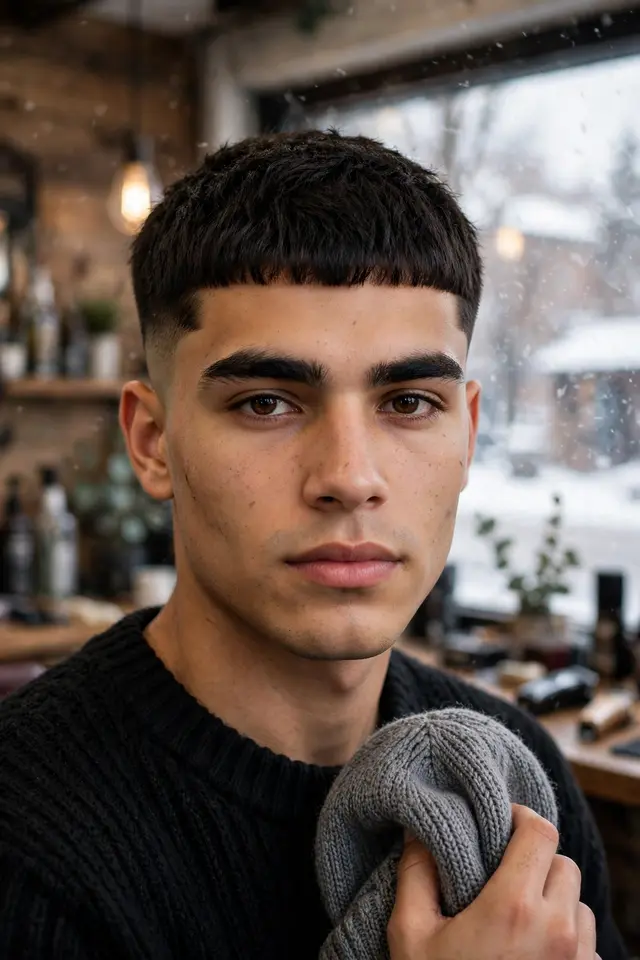
Does the Edgar’s fringe survive a hat?
Better than almost anything with this much attitude. The Edgar’s blunt fringe is worn low and forward — precisely where a beanie pushes hair anyway — and its short textured top has no height to lose. The fade underneath does the rest. If you loved the cut from our Edgar cut hairstyles guide, hat season is no reason to leave it.
Face Shape: Best on oval and square faces; the straight fringe line sharpens everything beneath it.
Grooming Kit: Matte clay for the top, used sparingly — heavy product makes hat friction pull at the fringe.
Maintenance: Every 2–3 weeks — the fringe line and fade both blur fast, beanie or not.
Barber Script: “Edgar, winter version — blunt fringe, textured top, mid fade instead of skin. It has to survive a beanie.”
The fringe points the hat’s way already — forward.
Q: Mid fade or high fade on a winter Edgar?
A: Mid. Beanies rub the sides constantly, and a high skin fade shows that friction and regrowth fastest. The mid fade keeps the Edgar’s contrast while lasting a week longer between chairs in hat season.
Q: How do I keep an Edgar’s fringe straight after a hat?
A: Warm palms pressed down along the fringe line, then pinch the ends back into line. The fringe’s own straightness is the style — ten seconds of pressure restores what the hat bent.
11 of 20 — The Medium Push-Back
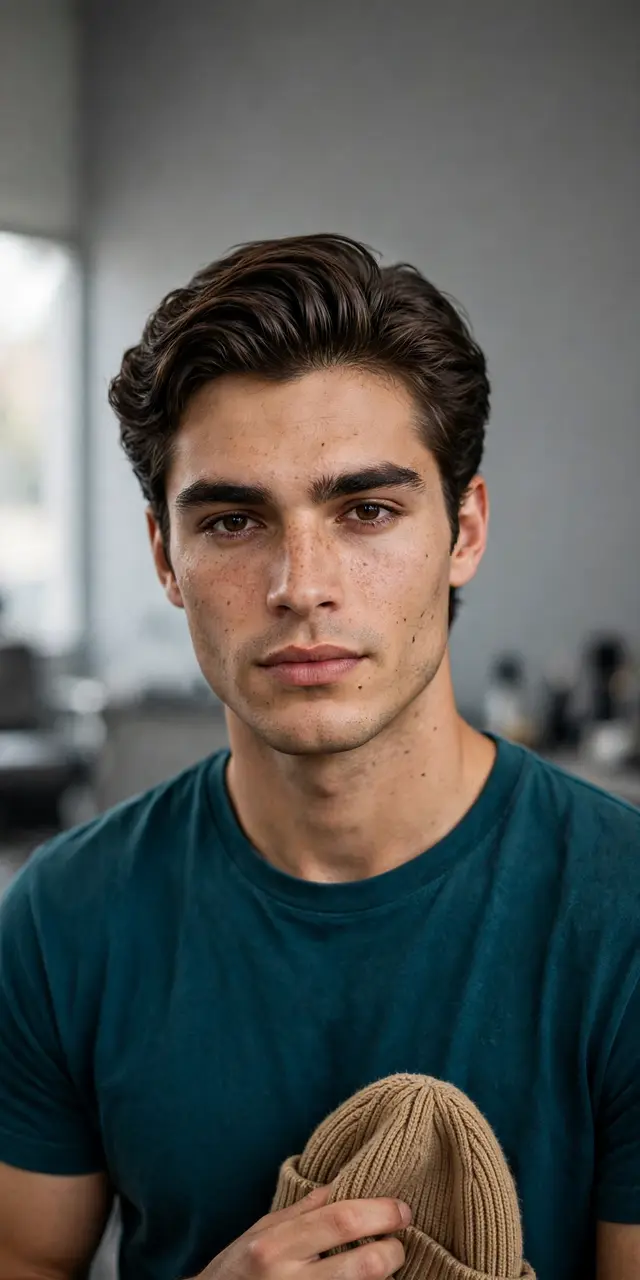
Why does direction beat height under a hat?
Because hats compress vertically, not backwards. The Medium Push-Back keeps 3 to 4 inches on top worn swept back rather than styled up, so a beanie slides the hair along its own direction of travel. Take the hat off, push it back once with a palm, and the style is exactly where you left it.
Face Shape: Suits most faces; the swept-back line lengthens round faces and shows off good hairlines.
Grooming Kit: A grooming cream — pliable in cold air, re-workable all day, unlike brittle matte clays.
Maintenance: Every 4 weeks; medium lengths forgive winter’s slower barber rhythm.
Barber Script: “Medium push-back — three to four inches on top worn back, scissor-cut sides with a soft taper. Direction, not height.”
Swept, not lifted — the hat slides with it, not against it.
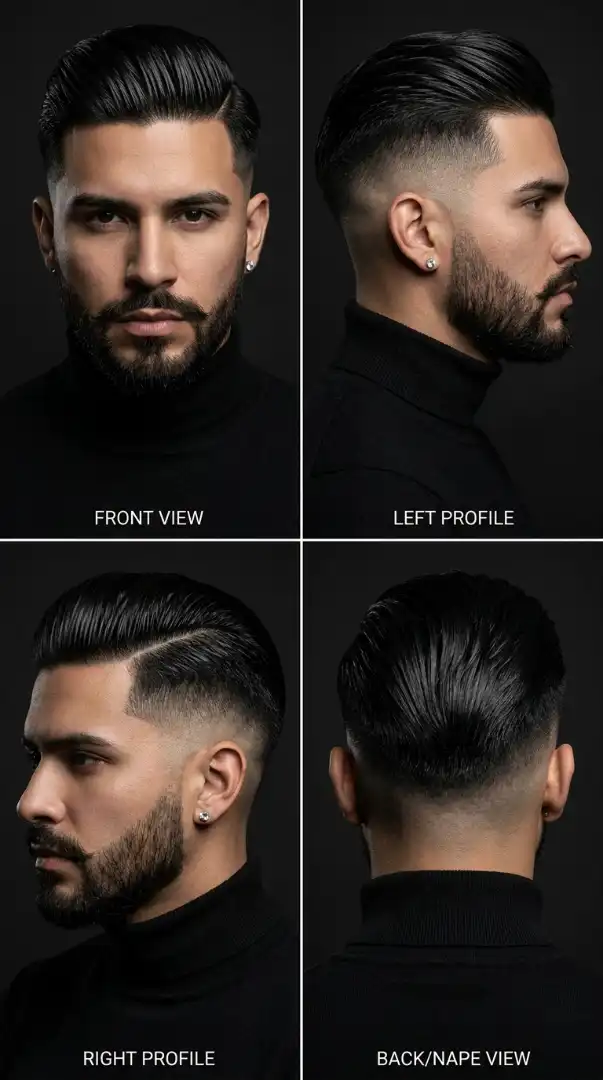
Q: Push-back or slick back in winter?
A: The push-back uses cream and keeps movement; the classic slick back relies on firmer, shinier products that can freeze stiff and separate under a hat. Winter belongs to the cream version.
Q: How long does hair need to be for a push-back?
A: Three inches is the working minimum for the sweep to hold its direction; four is ideal. Below that, wear one of the crops in this guide until it grows — winter is the best growing season anyway.
12 of 20 — The Crop and Beard
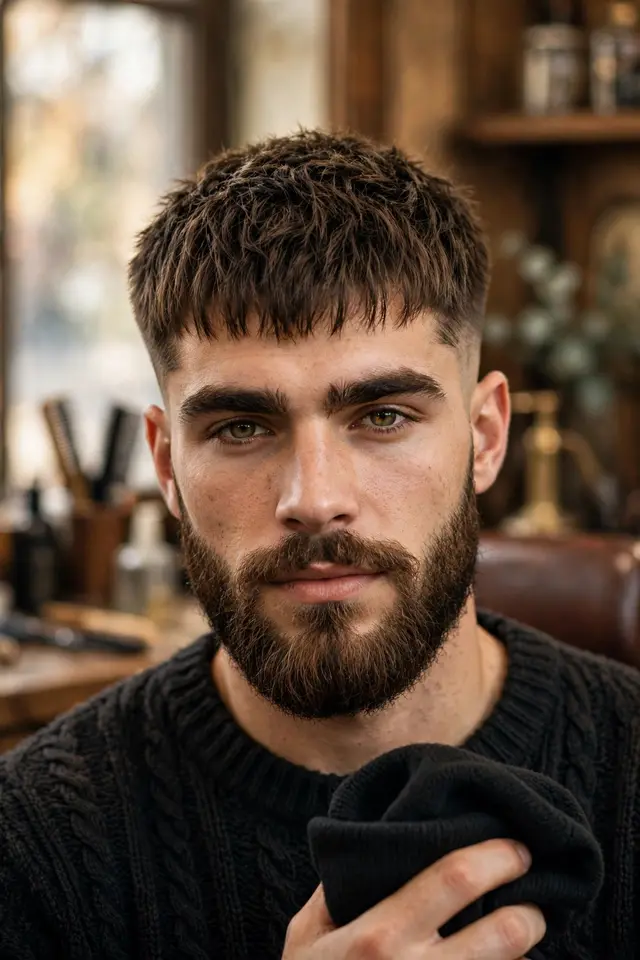
Why is a crop plus a beard the complete winter look?
Coverage and contrast. The hat-proof crop handles everything above the beanie line, and a shaped beard handles everything below it — winter is the one season a beard genuinely insulates, and a longer beard under a beanie brim is the most winter-ready silhouette in this entire guide.
Face Shape: The making of round faces — a sharp crop above plus a structured jaw below slims everything between.
Grooming Kit: Matte clay for the crop; beard oil and a boar brush below. Cold air dries beards faster than scalps.
Maintenance: Crop and beard shaped in the same visit every 3 weeks; oil the beard daily through winter.
Barber Script: “Textured crop on top, and shape the beard to match — fade into the sideburns, cheek lines clean. Full winter set.”
Above the brim, below the brim — nothing left to chance.
Q: What beard length pairs best with a beanie?
A: Medium to full reads best — the beard should be visible below the beanie’s brim to balance the covered head. Keep the neckline and cheeks shaped, or the combination reads as neglect instead of insulation.
Q: How do I stop beard frizz from hat and scarf friction?
A: Beard oil in the morning, and brush the beard down after removing winter layers rather than before. Scarves charge static just like beanies — a boar brush pass settles it in seconds.
13 of 20 — The Crew Cut
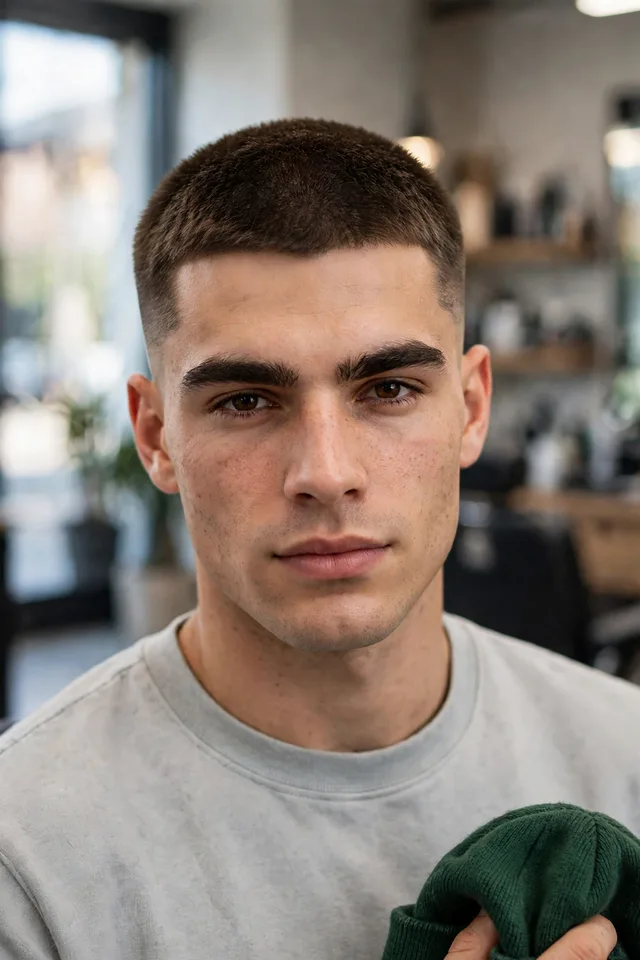
Why is the crew cut winter’s quiet workhorse?
It asks nothing and loses nothing. The Crew Cut’s graduated top is too short to dent and too structured to look accidental, and with a taper instead of a fade it stretches comfortably between winter appointments. It is the cut for men whose winter priority list puts hair last — correctly, in their case.
Face Shape: Flattering on oval and square faces; the slight front lift keeps it from reading severe.
Grooming Kit: A light cream or nothing. The crew was engineered before styling products existed.
Maintenance: Every 3–4 weeks in taper form — the longest leash of any short cut here except the grown-out taper.
Barber Script: “Crew cut, winter version — graduated top, scissor taper sides, no skin fade. Low visits, low effort.”
Too short to dent, too classic to date — winter-proof by nature.
Q: Crew cut or buzz for a beanie wearer?
A: The crew keeps a shaped, graduated top that looks like a haircut indoors; the buzz is simpler and cheaper. If your beanie comes off in meetings, take the crew; if it comes off at home, the buzz wins.
Q: Fade or taper on a winter crew?
A: Taper. Hat and scarf friction blurs a fade’s gradient days faster than normal wear, while the taper’s soft edge hides the same friction completely. Save the fade for spring.
14 of 20 — The Side Part Taper
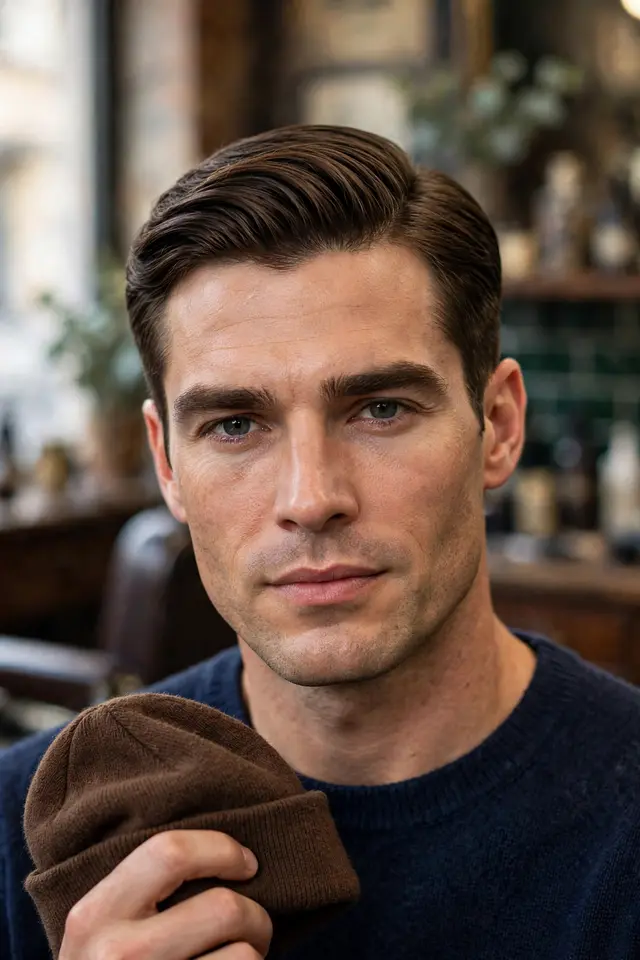
Can a polished style survive hat season?
This one can, because it resets instead of resisting. The Side Part Taper is combed, not sculpted — a beanie flattens it, and ten seconds with a comb and a little cream puts the part back exactly where it belongs. It is the office answer to winter: arrive, comb, meeting-ready.
Face Shape: The universal diplomat — suits round, square and oval faces, and flatters mature faces most of all.
Grooming Kit: A grooming cream and a pocket comb. Cream stays workable in cold air; gels go brittle and flake.
Maintenance: Every 3–4 weeks; the taper’s soft sides forgive the weeks in between.
Barber Script: “Side part with a taper — natural part, scissor-cut sides, nothing to skin. It needs to reset after a hat in seconds.”
It doesn’t fight the hat — it just re-combs after it.
Q: How do I find my part again after a beanie?
A: Comb the top straight back first, then let it fall — the natural part reveals itself where the hair splits on its own. Comb it into place from there; fighting the natural part is why resets fail.
Q: Side part or push-back for winter office wear?
A: The side part reads more formal and resets with a comb; the push-back reads more relaxed and resets with a palm. Both survive hats — choose by your office’s dress code, not by the weather.
15 of 20 — The Long Layers
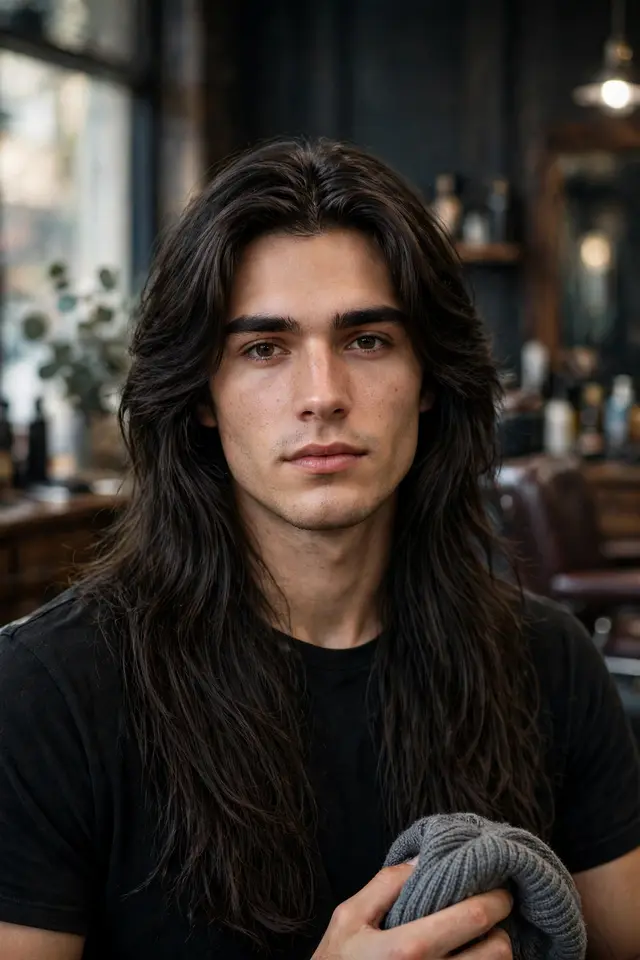
How should long hair handle beanie season?
Tucked, layered and loose. Long Layers worn down get flattened at the crown by a beanie, but the fix is built into the length: shake it out, flip the part to the other side, and the crown volume returns instantly. Layers matter — one-length long hair shows hat dents far worse.
Face Shape: Layers flatter long and oval faces; the side-flip trick adds width for narrow faces.
Grooming Kit: Leave-in conditioner and a wide comb. Dry winter air plus hat friction is long hair’s breakage season.
Maintenance: Ends trimmed every 6–8 weeks; the style itself needs no winter appointments in between.
Barber Script: “Long layers — keep the length, layer it so hat dents hide, clean the ends. It lives under a beanie half the week.”
Flip the part, restore the crown — long hair’s two-second reset.
Q: How do I stop long hair breaking from winter hats?
A: Never wear it wet under a hat, keep leave-in conditioner on the ends, and choose a looser wool beanie over tight acrylic — acrylic’s static and friction are the main breakage drivers in winter.
Q: Should long hair go over or under the beanie?
A: Under, with the hair pushed back first so it falls naturally when the hat comes off. Hair stuffed in twisted is what dries into kinks and dents; hair laid back simply resumes.
16 of 20 — The Man Bun Beanie
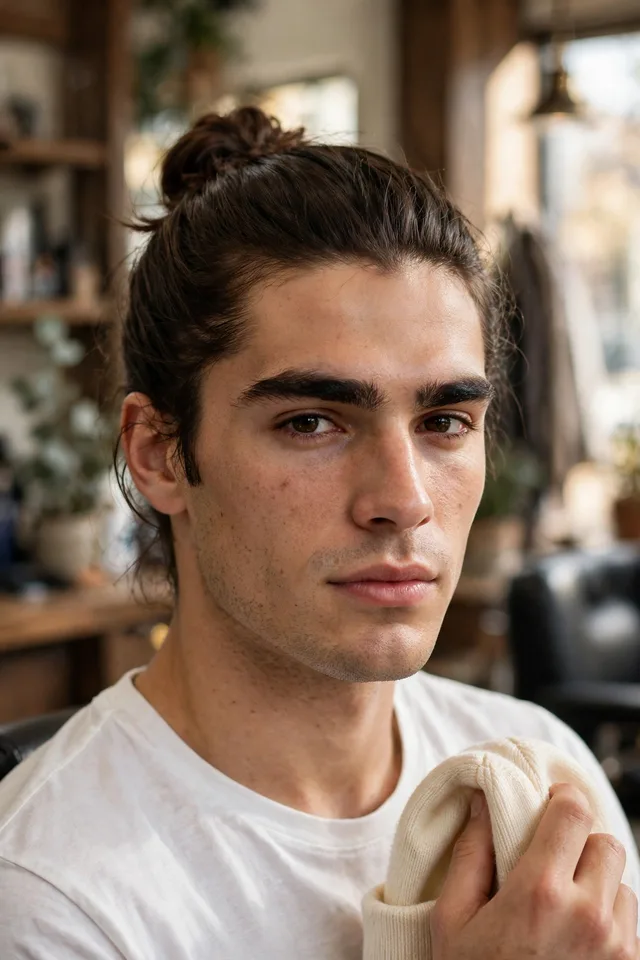
Does a man bun work with a beanie?
It works better than loose long hair. The Man Bun keeps the length gathered at the back or crown where a beanie sits over or behind it — the bun holds the hair’s shape for you all day, and beanie plus bun is a genuinely strong winter silhouette rather than a compromise.
Face Shape: Suits oval and strong-featured faces; the gathered hair shows the whole face, so confidence helps.
Grooming Kit: Soft fabric ties (never rubber bands), leave-in conditioner, and a boar brush for the smoothed sides.
Maintenance: A tidy-up trim every 6–8 weeks. Daily effort is one minute with a tie.
Barber Script: “Keep the length for a bun — tidy the undercut or taper the sides, clean the ends. Bun sits mid-crown.”
The bun holds the shape so the hat doesn’t have to.
Q: Where should the bun sit with a beanie?
A: Mid-crown or lower. A high top-knot fights the beanie’s crown; a mid or low bun lets the hat sit behind or over it comfortably and looks deliberate rather than stuffed.
Q: Man bun or loose long layers in winter?
A: The bun for active days, commuting and wind — itcannot tangle or flatten. Loose layers for evenings and photos. Most long-haired men run both off the same head of hair all winter.
17 of 20 — The Flow
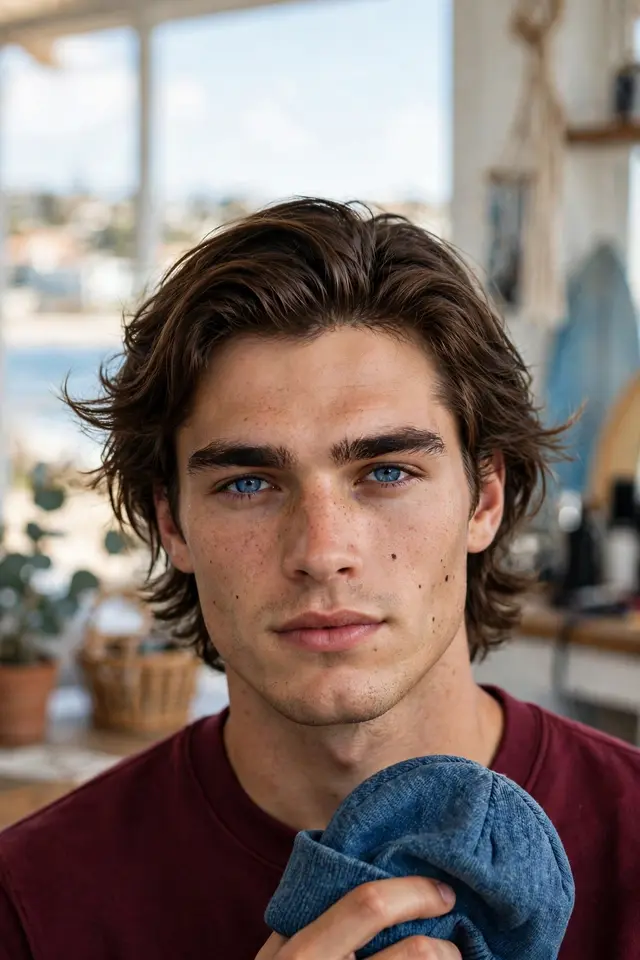
What is ‘the flow’ and why is winter its season?
The Flow is medium-length hair worn back and loose with natural movement — hockey hair, grown with intent. Winter is when it is earned: the awkward growing stages hide under beanies for months, and by the cold season’s peak the flow sits long enough to tuck behind the ears and reset with a shake.
Face Shape: Flatters oval and long faces; the side volume balances narrow features well.
Grooming Kit: Sea salt spray for texture and a light cream for control — nothing heavier, flow must move.
Maintenance: Shape-ups every 5–6 weeks only — winter’s second-most relaxed schedule, and the point of the style.
Barber Script: “The flow — medium length worn back, soft layers, tidy the ends and neckline only. I’m growing it through winter.”
Winter grows it, the beanie hides the awkward part.
Q: How do I stop flow hair looking flat after a hat?
A: Flip it upside down and shake for five seconds, then push it back with both palms. The flow’s volume lives at the roots; the shake is what wakes it. A pinch of texture powder on flat days covers the rest.
Q: How long does it take to grow a flow from short hair?
A: Six to nine months to ear-tucking length, depending on your growth rate. Winter is the strategic start — hats hide the in-between stages that make most men quit in spring.
18 of 20 — The Fine Hair Beanie Cut
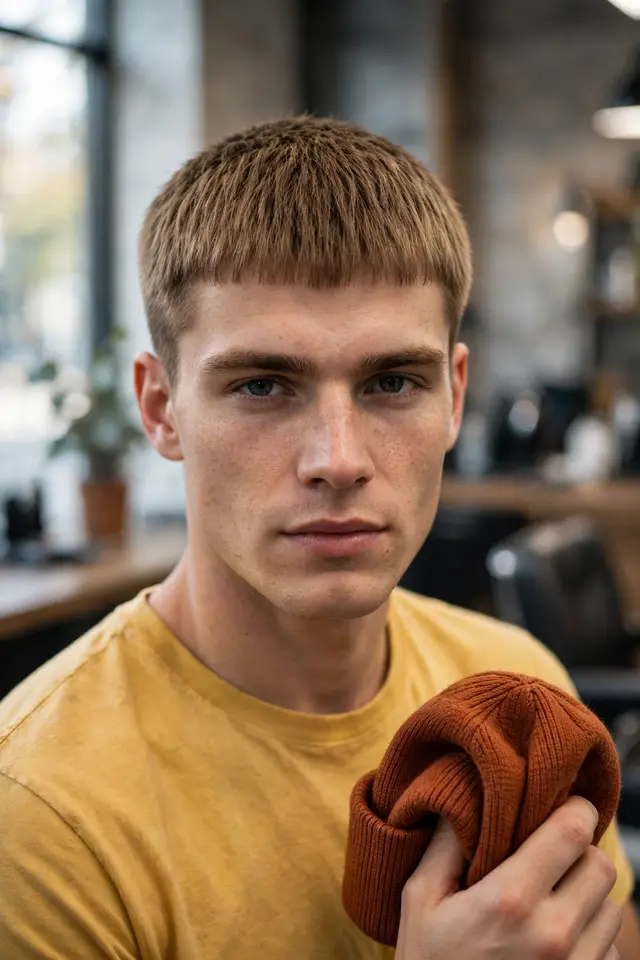
What is the worst hat can do to fine hair — and the cut that answers it?
Static and total flatness. Fine hair charges against synthetic beanies and then lies plastered to the scalp. The Fine Hair Beanie Cut answers with a short blunt-cut crop — blunt ends make fine hair read thicker — worn with texture powder, which adds the grit and separation fine hair cannot make alone.
Face Shape: Works on most faces; the short uniform texture keeps fine hair from exposing any one area.
Grooming Kit: Texture powder is non-negotiable. Skip creams entirely — weight is fine hair’s enemy in every season.
Maintenance: Every 3 weeks; blunt ends are the thickness illusion, and they dull with growth.
Barber Script: “Short blunt crop for fine hair — one length on top, blunt-cut ends, soft taper. No layering the top thin.”
Blunt ends, powder grit — fine hair’s winter armour.
Q: How do I kill beanie static on fine hair?
A: Three layers of defence: rinse with conditioner (not just shampoo) on wash days, a wool or silk-lined beanie instead of acrylic, and texture powder applied after the hat comes off — powder absorbs the charge and the flatness together.
Q: What beanie material is kindest to fine hair?
A: Silk-lined is best, merino wool second, acrylic worst. Acrylic generates the most static and friction; if your favourite beanie is acrylic, a silk liner cap underneath solves it for a few coins.
19 of 20 — The Winter Mullet
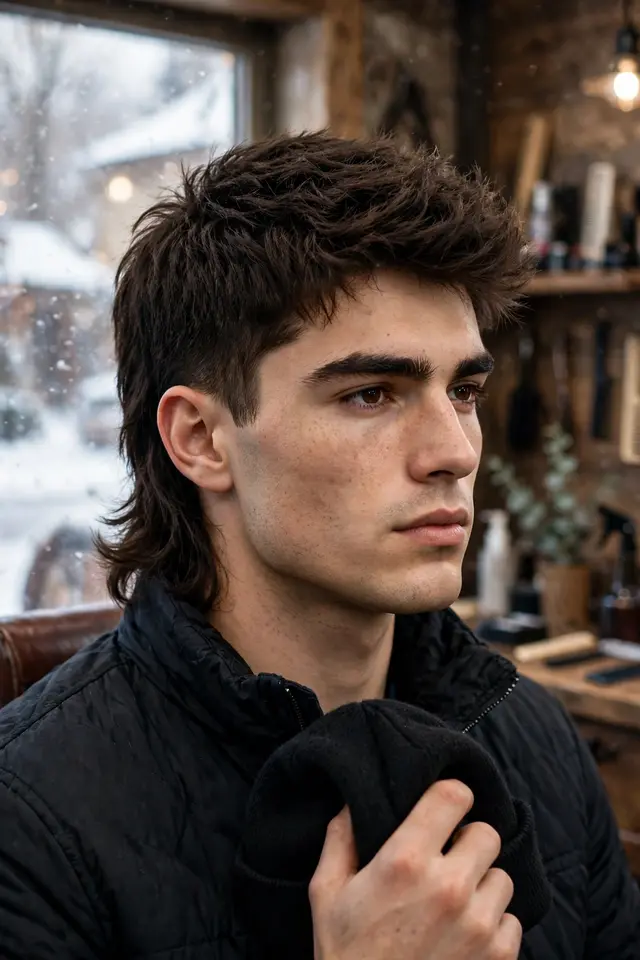
Why does the mullet love a beanie?
Because its party piece lives below the hat line. The Winter Mullet’s back length spills out under the beanie’s brim — the one style in this guide that arguably looks better with the hat on — while the short textured top makes the hat-off reveal perfectly respectable. It also keeps the neck warm, which no other cut here can claim.
Face Shape: Balances oval and long faces; the back length softens a strong jaw from behind.
Grooming Kit: Sea salt spray for the back’s texture and a light cream for the top. Mullet backs frizz in dry air without it.
Maintenance: Every 3–4 weeks for the sides and top; the back grows on its own schedule, trimmed rarely.
Barber Script: “Winter mullet — short textured top, tapered sides, keep the back length growing. It has to spill under a beanie.”
The only cut the beanie improves — length below the brim.
Q: How long should a winter mullet’s back be?
A: Long enough to clear the beanie’s brim and touch the collar — that visible spill is the whole effect. Much longer turns it into a full mullet statement, which is a fine choice, just a louder one.
Q: Winter mullet or flow for growing hair out?
A: The mullet if you want a defined style at every stage — it looks deliberate from month one. The flow if you want one final destination of loose medium hair. Both use winter as their growing season.
20 of 20 — The Beanie King
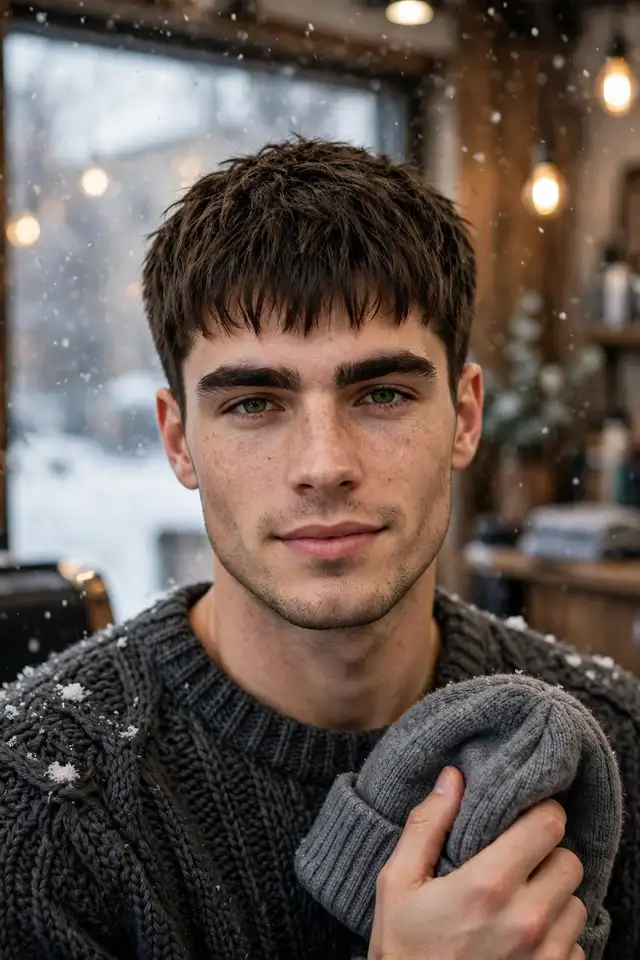
What is the single best beanie hairstyle for men?
The one that combines every lesson in this guide: a textured crop top with a low taper — short choppy texture that cannot dent, a fringe that falls the way hats push, and scissored sides that stretch five weeks between winter appointments. The Beanie King is not a new cut; it is the textured crop and the grown-out taper having the winter child they were always going to have.
Face Shape: The most forgiving silhouette here — suits oval, round, square and long faces with only fringe-length tweaks.
Grooming Kit: Texture powder and a light cream, alternated by day. That is the entire cabinet this cut ever needs.
Maintenance: Every 4–5 weeks — the full winter stretch, with the fringe still honest at the end of it.
Barber Script: “The beanie king — textured crop top, forward fringe, low taper sides, nothing to skin. Built for hat season, five-week stretches.”
Texture, fringe, taper — every winter lesson in one cut.
Q: Why does this beat a plain textured crop for winter?
A: The taper. A faded crop blurs in three weeks and drags you to the barber through the worst weather; the tapered version of the same top lasts five. Same hat immunity, half the winter appointments.
Q: What is the one rule that makes any beanie hairstyle work?
A: Dry hair under the hat. Wet hair under a beanie in freezing air flattens completely, stays that way all day, and breaks more easily. Ten extra minutes of drying is the cheapest hairstyle upgrade in this entire guide.
The Bottom Line
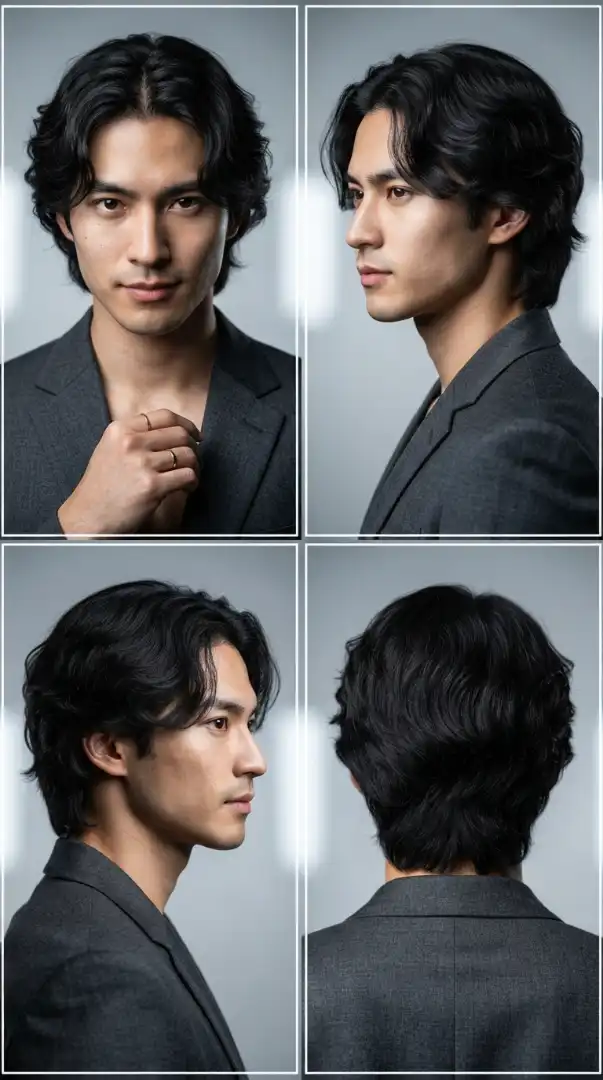
Beanie hairstyles for men all run on three winter rules: texture over polish, direction over height, and a taper over a fade whenever you can manage it — plus the one commandment above them all, never put a hat on wet hair. Pick the short end of this guide (crop, buzz, Caesar, Edgar) if your beanie comes off in public and the reset has to be instant; pick the long end (push-back, layers, bun, flow, mullet) if winter is your growing season and the hat is your hideout.
Whichever you choose, tell your barber the hat is part of the brief — a good barber cuts differently the moment he hears the word beanie. For more cold-season reading, see the winter haircuts guide for the full seasonal picture, and the crew cut hairstyles guide for the quiet workhorse in depth.