20 Beard Fade Styles for Men: Blended Beards for Every Haircut
The sharpest line in men’s grooming right now is not a line at all — it is the place where the line disappears. Searches for beard fades have exploded on Pinterest this year, with “beard fade men” up 764% and “italian beard fade” up 725% in Pinterest’s own 2026 Men’s Trend Report — the biggest grooming rises in the entire report after the wolf cut. The reason is simple: a beard fade carries your haircut’s fade down through the sideburns and into the beard, so hair and beard read as one continuous shape instead of two separate decisions.
This guide covers 20 beard fade styles for men — every height from low to skin, the Italian original, and the pairings that matter: buzz cuts, crops, pompadours, slick backs, waves, mullets and long beards. Every style comes with the face shapes it flatters, the grooming kit it needs, its upkeep rhythm, and the exact words to say to your barber. Winter is the beard’s season anyway — cold air dries facial hair out, heated rooms make it brittle — so every style also carries the cold-weather care notes that keep a faded beard looking blended instead of broken.
If you are choosing the beard itself first, our beard styles guide covers boxed, stubble and full beards; and if the haircut on top is still undecided, the fade haircuts guide covers every height of fade the beard can borrow.
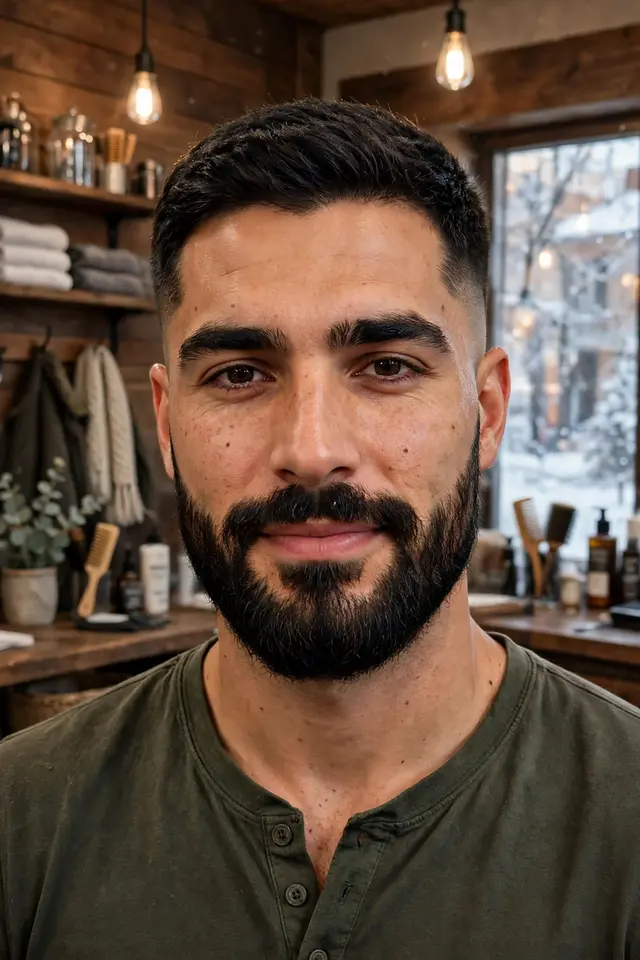
1 of 20 — The Classic Beard Fade
What is a classic beard fade?
The blueprint. The Classic Beard Fade blends the sideburns gradually into the beard with no visible step — the haircut’s taper continues down the cheek until the beard takes over at full length. Nothing is lined up hard, nothing drops to skin; it is a gradient from start to finish, which is exactly why it suits almost every haircut and every workplace. In winter it is the safest pair for a fuller beard: the blend hides the puffiness cold, dry air adds to facial hair, and the shape survives scarves and collars without a hard line to knock out of place.
Face Shape: The all-rounder — the gradual blend softens heavy jaws and adds structure to softer ones.
Grooming Kit: Beard oil daily, a boar brush, and a trimmer with guards for the cheek tidy-up between visits.
Maintenance: The blend needs a barber every 2–3 weeks; beard length and lines can be kept at home weekly.
Barber Script: “Classic beard fade — blend the sideburns into the beard with no hard line, keep the beard’s length and shape.”
Hair and beard as one shape — the fade that started the trend.
Q: What is the difference between a beard fade and a normal beard trim?
A: A trim shapes the beard’s outline and length only. A beard fade changes the density itself — the barber graduates the hair through the sideburns so the beard thickens gradually instead of starting at full volume beside the ear.
Q: Does a classic beard fade suit a patchy beard?
A: It is one of the kinder options. The gradient through the sideburns draws the eye along the blend rather than to any single patch, and keeping the cheeks slightly lower lets the stronger jaw growth carry the look.
2 of 20 — The Italian Beard Fade
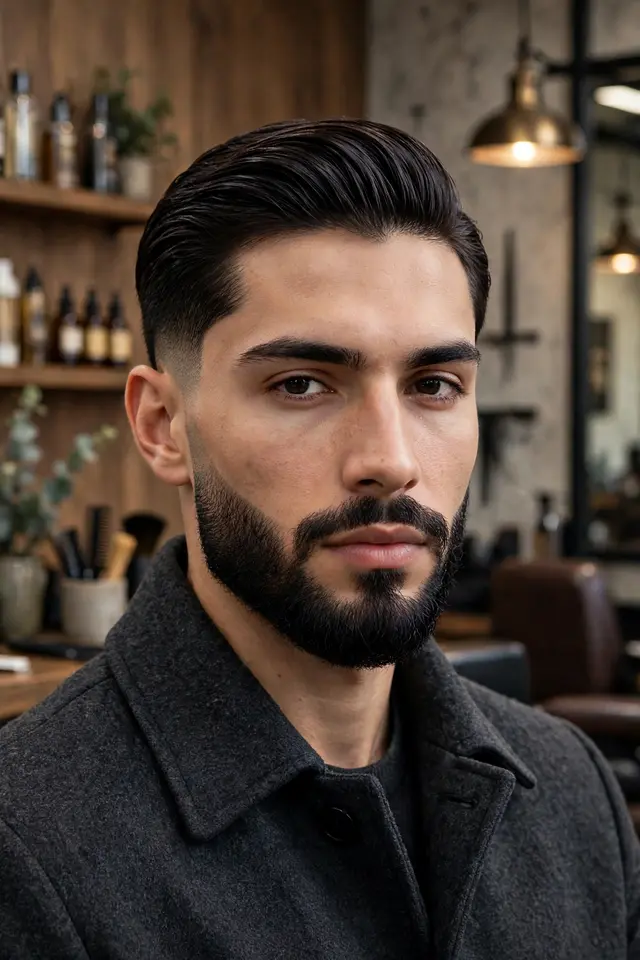
Why is the italian beard fade trending so hard?
Precision with polish. The Italian Beard Fade is the sharpest reading of the idea: a tight, immaculate blend at the sideburns, cheek lines carved clean, and the beard kept short-to-medium and sculpted — the grooming equivalent of a tailored suit. It is the version driving the trend’s biggest numbers, up 725% in searches in Pinterest’s 2026 report, because it photographs like a luxury product: nothing stray, nothing accidental. Winter’s coats, rollnecks and formal season suit it perfectly — this is the beard fade built for evenings where the details get noticed.
Face Shape: Superb on oval and square faces; the carved cheeks sharpen round faces noticeably.
Grooming Kit: A detail trimmer for the cheek line, beard balm for control, and a fine comb — this style is finished, not ruffled.
Maintenance: Every 2 weeks, honestly — precision expires faster than any other style here, lines first.
Barber Script: “Italian beard fade — tight blend at the sideburns, cheek lines carved clean, beard short and sculpted.”
Tailored, not trimmed — the beard fade as a luxury finish.
Q: How short is an Italian beard fade kept?
A: Usually short to medium — roughly a #2 to #4 guard through the body of the beard, with the fade doing the design work at the edges. Length is not the statement here; the precision of the blend and lines is.
Q: Can I maintain the Italian beard fade at home?
A: The cheek line, yes, with a detail trimmer and a steady hand every few days. The sideburn blend, no — recreating a seamless gradient on yourself is where home attempts show. Keep the barber rhythm and tidy only the outline.
3 of 20 — The Low Beard Fade
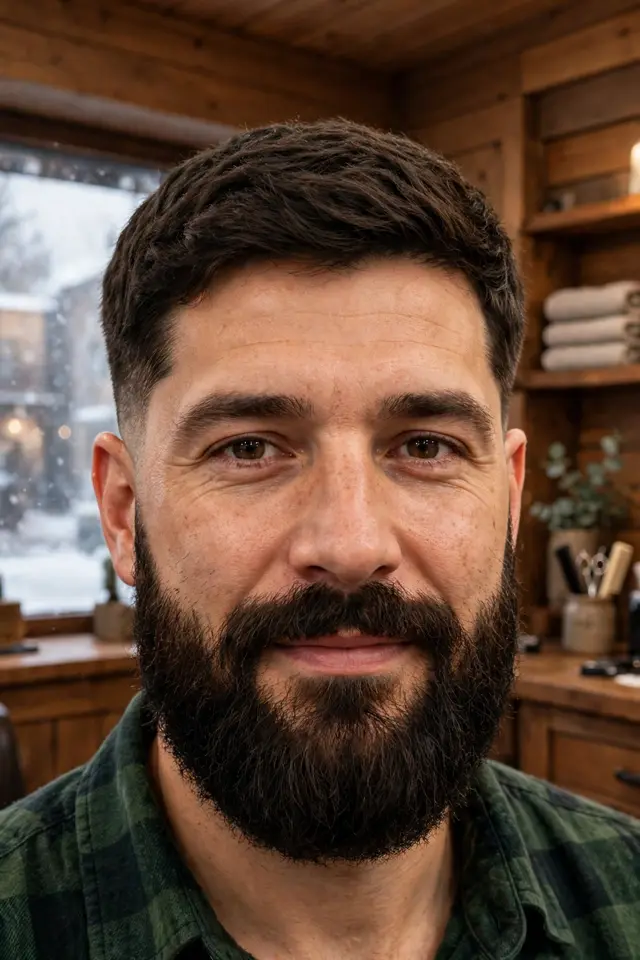
Who should choose a low beard fade?
The conservative end of the family. A Low Beard Fade starts the gradient low — around the bottom of the sideburn and upper cheek — so most of the beard keeps its natural fullness and only the top corner melts into the haircut. It is the version for men who want the connection without the commitment: offices read it as tidy rather than styled, and it pairs naturally with low tapers and scissor-cut haircuts. In winter it forgives the most growth, which matters in the months when barber visits slip — a low blend still reads intentional a week overdue.
Face Shape: Kind to long faces — keeping fullness low on the jaw avoids adding length at the sides.
Grooming Kit: Beard oil and a brush; the fade itself asks for nothing at home beyond the usual line check.
Maintenance: Every 3 weeks is comfortable; the low starting point hides regrowth better than any other height.
Barber Script: “Low beard fade — start the blend at the bottom of the sideburn, keep the beard full below it.”
The quiet connection — fullness kept, corner melted.
Q: Low beard fade or no fade — is it worth it?
A: Yes, for one reason: the sideburn corner. An unfaded beard meets the haircut at a visible step that cheapens both. The low fade removes only that step — the smallest change that makes hair and beard read as one design.
Q: Does a low beard fade work with a taper haircut?
A: It is the natural partner. Both gradients start low and stay subtle, so the whole side of the head — haircut, sideburn, beard — becomes one gentle slope. It is the most traditional, barber-shop-correct combination in this guide.
4 of 20 — The Mid Beard Fade
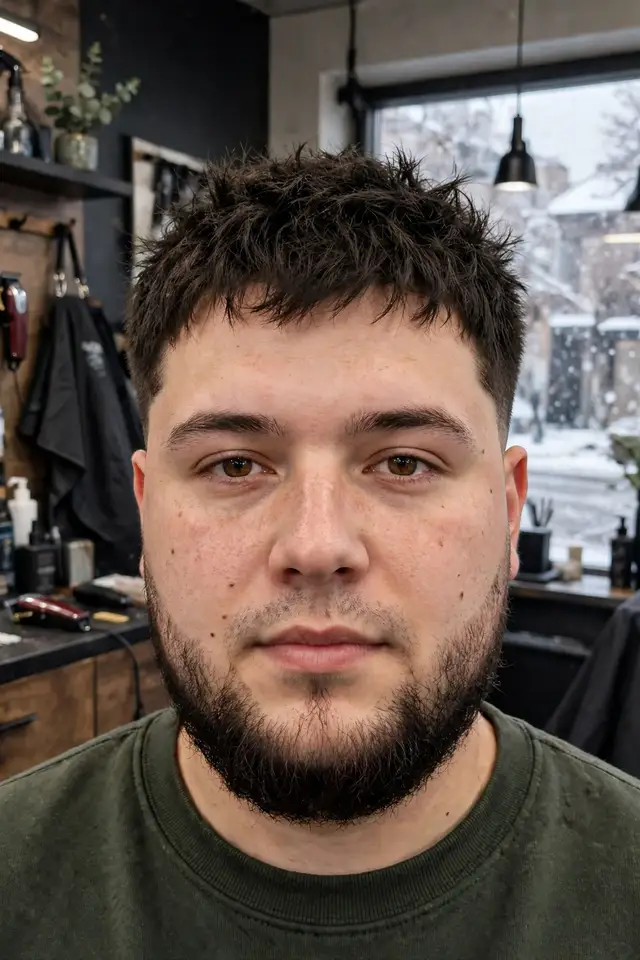
What does a mid beard fade do to a face?
Balance, engineered. The Mid Beard Fade begins the gradient around the middle of the cheek — higher than the low fade, lower than the high — thinning the beard’s upper half so the jaw’s fullness sits where it flatters most. It is the most chosen height in barbershops because it solves the commonest beard problem: bulk high on the cheeks that widens the face. Moving the weight down slims round faces and gives the jaw a drawn, deliberate shape. In winter it also manages the scarf line best — the thinned upper beard compresses less and springs back cleaner.
Face Shape: The making of round faces; the low-slung weight draws the jaw out. Square faces wear it easily too.
Grooming Kit: A trimmer for the jawline tidy, beard balm to keep the fuller lower half lying in formation.
Maintenance: Every 2–3 weeks; the mid blend shows regrowth at the cheek first.
Barber Script: “Mid beard fade — gradient from mid-cheek down, weight kept low on the jaw, cheeks thinned.”
Weight moved down, face drawn longer — the barber’s favourite height.
Q: Mid or low beard fade — how do I choose?
A: By cheek bulk. If your beard grows thick high on the cheeks and widens your face, choose mid — it removes exactly that. If your beard is naturally neat at the top and you only want the corner softened, low is enough.
Q: Will a mid beard fade make my beard look smaller?
A: Slightly shorter at the top, longer where it counts. The overall beard reads the same size from the front; from the side it reads shaped rather than grown. Most men find it looks more substantial, because the outline is clearer.
5 of 20 — The High Beard Fade
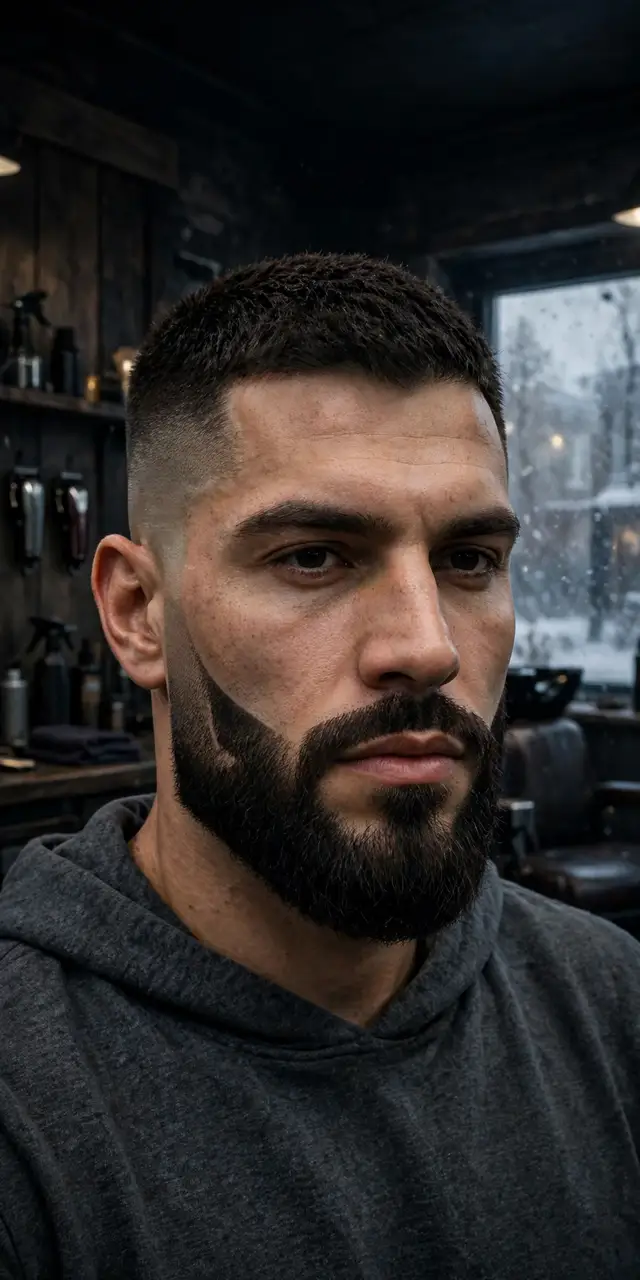
When does a high beard fade work best?
When the haircut is bold, the beard must answer. The High Beard Fade starts the gradient high on the cheek — close to the cheekbone — creating the strongest sculpt and the sharpest contrast in the family. It is the partner for skin fades, high tapers and statement haircuts, where a soft beard corner would look unfinished. The sculpting effect is real: thinning the beard that high carves the cheek and throws the jawline forward. In winter’s low light and heavy clothing it holds its own — the one beard fade that still reads as design under a coat collar and scarf.
Face Shape: Built for round and fuller faces — the high carve creates cheekbones. Long faces should keep more cheek weight instead.
Grooming Kit: Beard balm for the remaining length, a detail trimmer, and discipline — sculpted styles punish neglect visibly.
Maintenance: Every 2 weeks without negotiation; a high blend grows out into an obvious band fastest.
Barber Script: “High beard fade — start the gradient high on the cheek, carve the cheek line, jaw kept full.”
The sculpted end of the family — cheekbones by gradient.
Q: High beard fade or high skin fade on the hair — do both together?
A: They are designed for each other. A high skin fade on the hair with a low, soft beard fade leaves the sideburn zone confused — two different languages. Match the energies: bold haircut, bold beard fade; quiet haircut, quiet fade.
Q: Does a high beard fade suit a short beard?
A: It needs a little length below the fade to land on — a short-to-medium beard works, true stubble does not. If your beard is stubble-short, the stubble fade later in this guide is the honest version of the same idea.
6 of 20 — The Skin Beard Fade
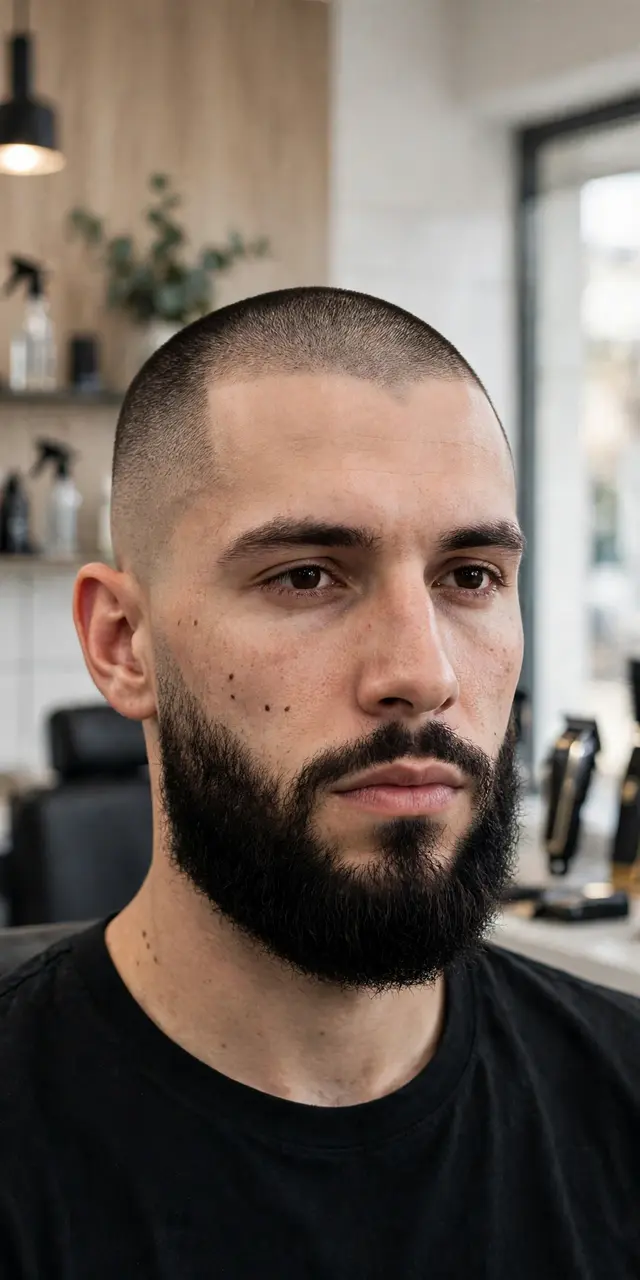
What is a skin beard fade?
Zero at the top, beard at the bottom. The Skin Beard Fade takes the sideburn and upper cheek all the way down to skin before the gradient rebuilds into the beard’s full length — the maximum-contrast version of the blend. Paired with a skin fade haircut, the whole side of the head becomes one unbroken gradient from scalp to jaw, which is why it photographs so sharply. It is also the least forgiving style here: the skin zone shows every day of regrowth, and winter dry skin under a fresh skin fade needs moisture or it flakes visibly against the beard’s edge.
Face Shape: Sharpens almost everything; oval and square faces carry the contrast best.
Grooming Kit: A gentle moisturiser or beard oil worked into the faded zone daily — skin under a zero fade dries fast in winter.
Maintenance: Every 1–2 weeks for the skin zone; this is the highest-upkeep beard in the guide.
Barber Script: “Skin beard fade — take the sideburn and upper cheek to zero, blend up into the fade, beard full below.”
One gradient, scalp to jaw — maximum contrast, zero hiding places.
Q: Skin beard fade or skin fade haircut only — what is the difference?
A: A haircut skin fade ends at the sideburn. The skin beard fade continues the same gradient into the beard itself, so the fade has two destinations. Without it, a skin-faded haircut meets a full beard at a hard, visible shelf.
Q: Does a skin beard fade irritate the skin?
A: It can in winter, when the faded zone is newly exposed to cold air. A fragrance-free moisturiser morning and night for the first week, and no aftershave alcohol on the blend, keeps it calm while the skin adjusts.
7 of 20 — Beard Fade with a Buzz Cut
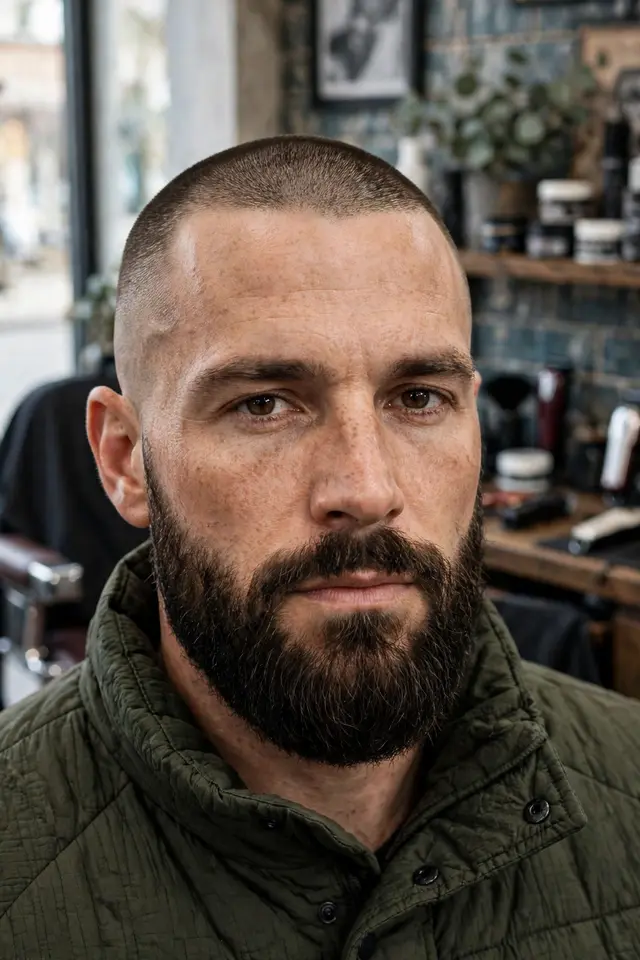
Why pair a beard fade with a buzz cut?
Because the beard becomes the hairstyle. A Beard Fade with a Buzz Cut puts the simplest possible haircut on top — one length, anywhere from a #1 to a #4 — and lets the faded beard carry all the design. The continuous gradient from buzzed scalp through sideburns into a shaped beard is the cleanest silhouette in men’s grooming, and the easiest to live with: no styling, ever. In winter it is the hat owner’s answer — a buzz cannot be ruined by a beanie, and the beard supplies the winter warmth and presence the haircut gives away.
Face Shape: Strong jaws and even head shapes shine; the beard fade adds the structure round faces need.
Grooming Kit: Clippers for home buzz touch-ups, beard oil, and sunscreen habits in summer — winter asks only the oil.
Maintenance: Buzz every 1–2 weeks (easy at home), beard fade at the barber every 2–3.
Barber Script: “Buzz cut on top — and fade the beard through the sideburns so scalp, sideburn and beard run as one gradient.”
The beard is the hairstyle — the cleanest silhouette in grooming.
Q: What buzz length works best with a beard fade?
A: A #2 or #3 is the sweet spot for most men — short enough to read as a buzz, long enough to blend into the fade’s top. A #1 with a full beard is bolder and suits strong head shapes; a #4 starts reading as a crop.
Q: Can I do the whole buzz and beard fade at home?
A: The buzz, yes. The beard fade’s gradient through the sideburn is the one part worth the barber — it is a two-mirror job on an angle you cannot see straight. Many men barber the fade, then maintain the buzz at home between visits.
8 of 20 — Beard Fade with a Textured Crop
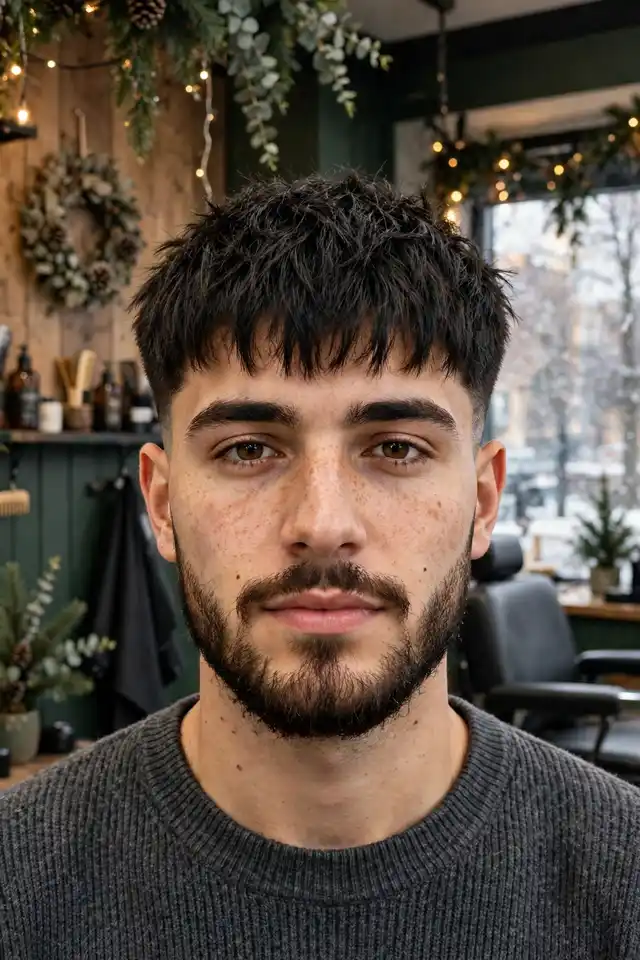
How does a beard fade with a textured crop work?
Short, forward hair meets a blended beard — the most requested pairing in barbershops right now, because both halves are low-effort and high-texture. The crop’s choppy top and tidy fringe sit above a beard faded at the sideburns to medium height, so the face is framed by texture at both ends. Nothing here needs more than a minute in the morning. In winter the pairing is fully hat-proof: the crop springs back, the beard fade’s blend hides any compression line, and the whole look survives the commute untouched.
Face Shape: The fringe shortens long faces while the beard fade structures round ones — a rare both-ways winner.
Grooming Kit: Matte paste for the crop, beard oil for the beard. Two products, whole head.
Maintenance: Crop and beard fade both run on a 3-week rhythm; book them together.
Barber Script: “Textured crop on top — mid beard fade through the sideburns, fringe short and choppy, beard shaped.”
Texture at both ends of the face — the barbershop’s most-booked pairing.
Q: Which beard fade height suits a textured crop?
A: Mid, usually — it matches the crop’s middle-weight energy. A low fade reads too quiet against a choppy fringe; a skin beard fade reads disconnected unless the crop itself is faded to skin at the sides.
Q: Does this pairing suit a receding hairline?
A: It is one of the best answers to early recession: the crop’s forward fringe softens the front honestly, and the beard fade pulls attention to the jaw. Two small redirections that together change what the eye reads first.
9 of 20 — Beard Fade with a Pompadour

Can a beard fade with a pompadour stay modern?
Yes — the beard fade is what updates it. A pompadour’s swept-up volume can read retro on its own; blending the beard through faded sideburns anchors it in the present and balances the height with a structured jaw. The proportions are the pleasure here: volume above, gradient at the sides, fullness below. Keep the pomp textured and matte rather than glossy, and the combination reads deliberate rather than costume. Winter formality is its natural habitat — this is the pairing for weddings, parties and every photograph December produces.
Face Shape: The making of round faces — height above, a drawn jaw below. Avoid extra height on very long faces.
Grooming Kit: A blow dryer and volumising mousse for the pomp; beard balm to keep the lower half as disciplined as the top.
Maintenance: Haircut every 3–4 weeks; the beard fade every 2–3, or the sides start arguing with the top.
Barber Script: “Pompadour on top, textured and matte — fade the beard in at the sideburns, keep the jaw full.”
Height above, structure below — the pomp, anchored.
Q: Pompadour with beard fade or quiff with beard fade — what changes?
A: Direction. A quiff lifts up and slightly forward; a pompadour sweeps up and back. The beard fade behaves identically under both. Choose by your hairline and habit: forward styles forgive cowlicks at the front better than swept-back ones.
Q: How much beard length balances a pompadour?
A: Medium is the proportion that works — enough jaw presence to answer the top’s volume, not so much that the two compete. A long beard under a tall pomp stretches the face at both ends.
10 of 20 — Beard Fade with a Slick Back
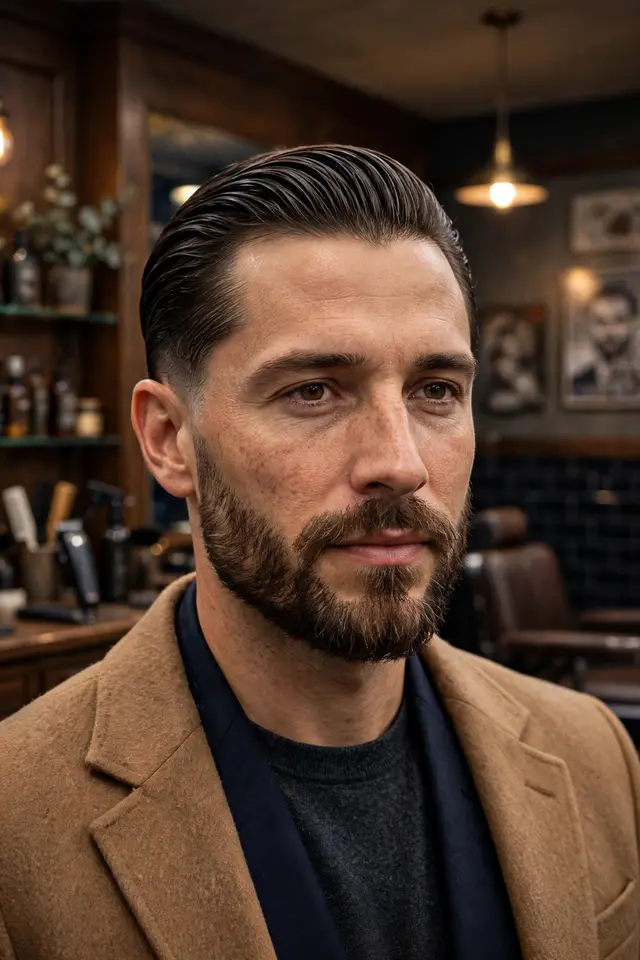
Why does a beard fade with a slick back look so polished?
Because both halves move in the same direction: back, and away from the face. The slick back combs the top cleanly off the forehead — this season’s formal counter-trend, all old-money polish — while the beard fade keeps the jaw equally composed below. Together they produce the most boardroom-and-black-tie silhouette in this guide. The modern version is matte and finger-combed, not wet-look; the beard fade should match that restraint, sitting low-to-mid and clean rather than skin-tight. In winter it is the evening look: coats, collars and candlelight all flatter a swept-back top over a blended beard.
Face Shape: Oval and square faces are its home; the exposed forehead adds length long faces may not need.
Grooming Kit: A medium-hold cream for the slick back, beard oil and a fine comb for the beard — polish is the brief.
Maintenance: Haircut every 4–5 weeks; beard fade every 2–3 to keep the jaw as composed as the top.
Barber Script: “Slick back on top, matte and loose — low-to-mid beard fade, beard combed neat and shaped.”
Everything swept back, everything composed — the evening pairing.
Q: Slick back with a beard — faded or full at the sides?
A: Faded, if the slick back is worn sharp. A full, unfaded sideburn corner interrupts the swept lines the style is built on. If you prefer a softer, grown-in slick back, a low beard fade is the gentle version of the same logic.
Q: What if my hair will not slick back cleanly?
A: Wavy hair needs length — roughly four inches on top — plus product on damp hair and a blow dryer directing it back. Very curly hair fights the style honestly; the curly beard fade later in this guide is the better-matched pairing.
11 of 20 — Beard Fade with a Long Beard
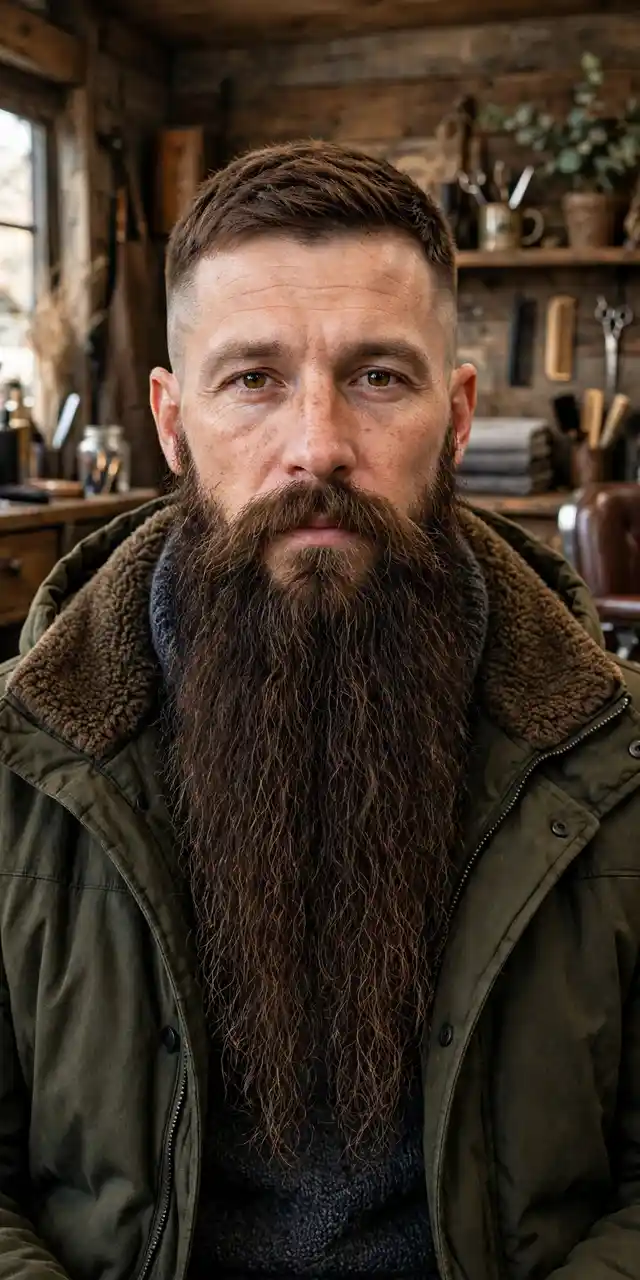
How do you fade a long beard fade without losing length?
By fading only the top of it. A Long Beard Fade keeps the beard’s full length through the chin and jaw while the gradient works just the first inch or two below the sideburn — the cheeks and upper beard melt in, the length below stays untouched and full. It solves the long beard’s oldest problem: the bushy, disconnected corner where long facial hair meets a short haircut. Winter is the long beard’s season — it genuinely insulates — and the fade is what stops a winter-grown beard reading as neglect: the edges say barber, even when the length says mountain.
Face Shape: Lengthens short and round faces kindly; very long faces should cap the length at medium-long.
Grooming Kit: Beard oil daily (long beards are the driest), a boar brush, and a heated brush if the length waves unevenly.
Maintenance: The fade every 3 weeks, the length shaped every 5–6 — two different clocks, one appointment rhythm.
Barber Script: “Fade only the top of the beard into the sideburns — the length below stays full, just shape the ends.”
Length kept, corner connected — winter growth with a barber’s signature.
Q: Will fading the top make a long beard look thinner?
A: Only in the first inch, where it should. The fade removes the cheek bulk that makes long beards look wide rather than long. Below the blend the beard keeps every bit of its fullness — the silhouette reads longer, not smaller.
Q: What haircut pairs with a long beard fade?
A: Anything with a fade or taper borrows the blend naturally. The striking modern answer is the buzz cut (style 7) — maximum contrast in effort. Long hair worn loose also works if the sideburn corner is kept faded and honest.
12 of 20 — The Short Boxed Beard Fade
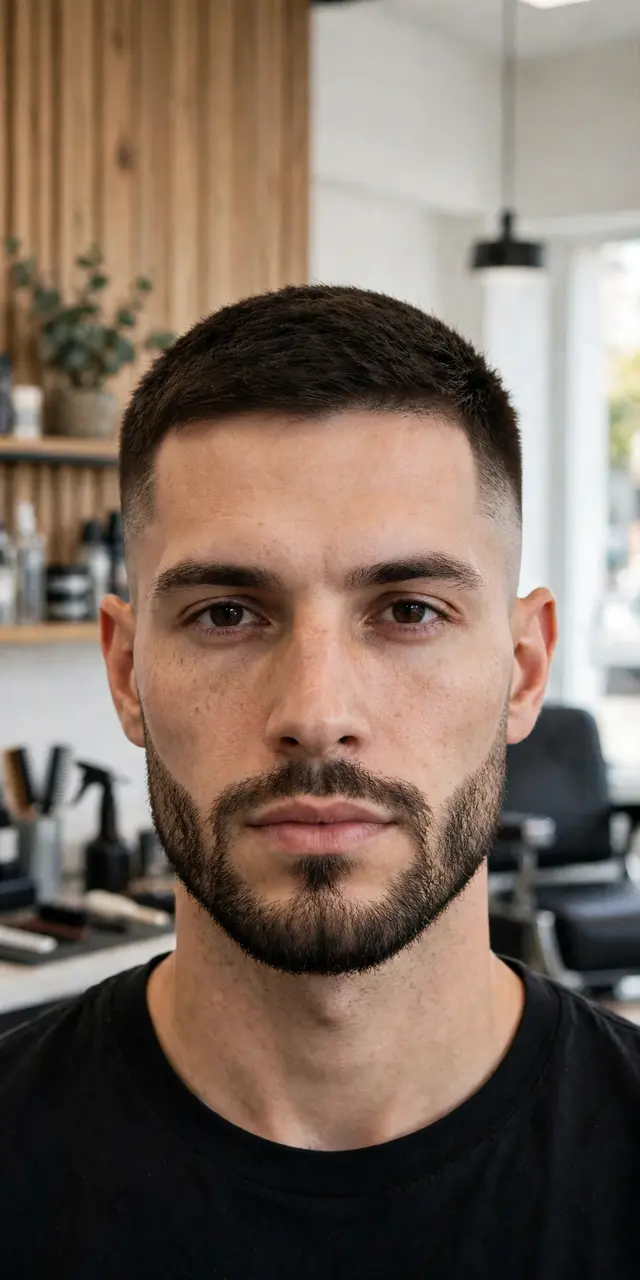
What is a short boxed beard fade?
Structure, squared. The Short Boxed Beard Fade keeps the beard short — a few weeks’ growth, no more — with its outline squared at the jaw and cheeks, while the sideburns fade in so the box has no hard top corner. It is the sharpest short-beard option in this guide: the fade supplies the blend, the boxing supplies the architecture. For men whose beards grow patchy at length, short and boxed is the honest maximum — density reads higher, lines read deliberate. In winter it is the professional’s beard: no scarf tangles, no length to dry out, nothing to maintain but the edges.
Face Shape: The square outline builds a jaw for round and soft faces — the strongest short-beard correction here.
Grooming Kit: A trimmer with guards for length resets at home, beard oil in small amounts — short beards still dry out in heated rooms.
Maintenance: Lines every week at home or 2 weeks at the barber; the fade itself every 2–3 weeks.
Barber Script: “Short beard, boxed lines at the jaw and cheeks — and fade the sideburns in so the top corner blends.”
Squared outline, blended corner — the sharpest short beard.
Q: Short boxed beard fade or stubble fade — what is the difference?
A: Length and lines. The boxed version carries a few weeks’ growth with a squared, visible outline; the stubble version (style 18) is days of growth with a softer edge. Boxed reads deliberate and formal; stubble reads relaxed.
Q: Does a short beard still need the fade?
A: More than a long one, arguably. At short lengths the sideburn step is proportionally bigger — there is less beard to hide it in. The fade is what separates a designed short beard from a haircut that simply stopped shaving.
13 of 20 — Beard Fade with Curly Hair
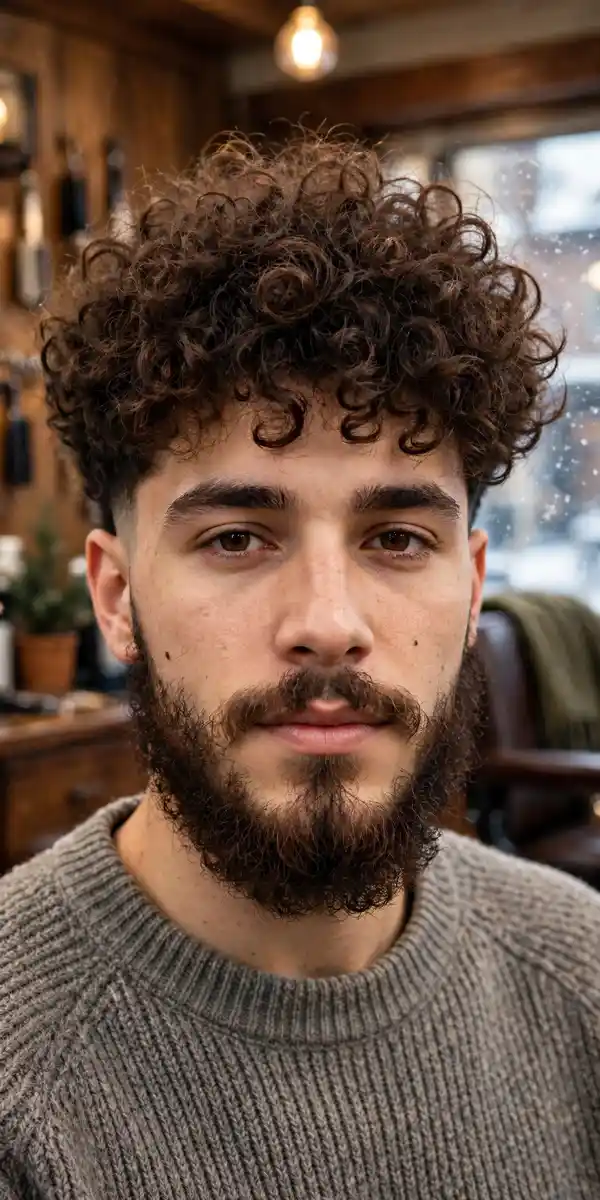
How does a beard fade with curly hair behave?
Beautifully — curl hides the gradient’s seams. A Beard Fade with Curly Hair lets the top’s natural curl carry the volume while the beard — usually curly or wavy itself — is faded at the sideburns so the two textures meet without a shelf. Curly beards grow outward as much as downward, so the fade’s real job here is cheek control: thinning the upper beard stops the whole lower face widening. Winter is curly hair’s driest season on both ends of the face — moisture is the management plan for the hair and the beard alike.
Face Shape: The curl’s volume softens angular faces; the faded cheeks keep round faces from widening further.
Grooming Kit: Curl cream for the top, beard oil (not balm — it weighs curls) for the beard, and a wide-tooth comb used on neither when dry.
Maintenance: Haircut every 5–6 weeks; beard fade every 3 — curly regrowth hides the blend’s expiry longer.
Barber Script: “Keep the curls on top — fade the beard at the sideburns and thin the cheeks so the beard does not widen.”
Curl on top, control at the cheeks — texture meeting texture.
Q: Should a curly beard be faded wet or dry?
A: Dry or barely damp, like curly hair itself — curls shrink as they dry, and a wet-cut fade sits higher than intended once it springs back. Any barber fluent in curls will check the blend with the beard in its natural, dry state.
Q: My beard is straighter than my hair — does the fade still work?
A: Yes — the fade lives at the sideburn, where the two textures meet, and it works regardless of which side curls more. The visible difference is only in the beard’s body below; the blend itself is texture-neutral.
14 of 20 — Beard Fade with Waves
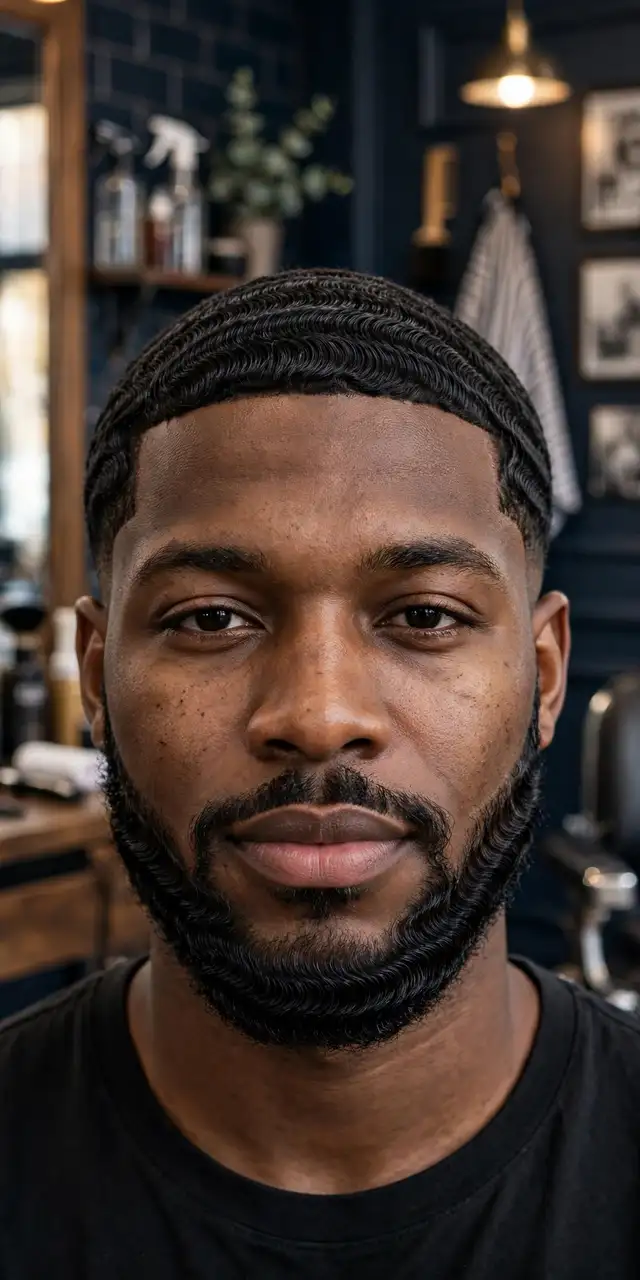
Why do waves need a beard fade with waves pairing?
Because 360 waves are a pattern, and patterns hate interruptions. A Beard Fade with Waves keeps the top’s wave pattern flowing in its tight, disciplined ripples while the beard is faded low at the sideburns, so the pattern’s line continues into a shaped beard without a bushy break at the ear. The beard itself is usually kept short-to-medium and lined precisely — waves are a precision culture, and the beard must speak the same language. In winter the durag-and-beanie rotation protects the pattern; the beard fade below stays clean through all of it.
Face Shape: The pattern flatters most faces; the beard’s shape below supplies whatever jaw the face wants.
Grooming Kit: A wave brush and durag for the top; beard oil and a detail trimmer for the beard’s lines.
Maintenance: Beard fade every 2 weeks to match the waves’ discipline; line-ups weekly if you keep them razor-sharp.
Barber Script: “Waves on top, pattern untouched — low beard fade at the sideburns, beard short and lined clean.”
The pattern continues — waves above, a disciplined beard below.
Q: Low or mid beard fade with waves?
A: Low, almost always. A mid or high beard fade eats into the area where the wave pattern’s side flow is most visible. The low fade connects the beard while leaving the pattern’s full canvas intact above it.
Q: How long should the beard be with waves?
A: Short to medium is the culture’s answer — long enough to shape and line, never long enough to compete with the pattern. The waves are the artwork; the beard is the frame, and frames should not shout.
15 of 20 — Beard Fade with a Side Part
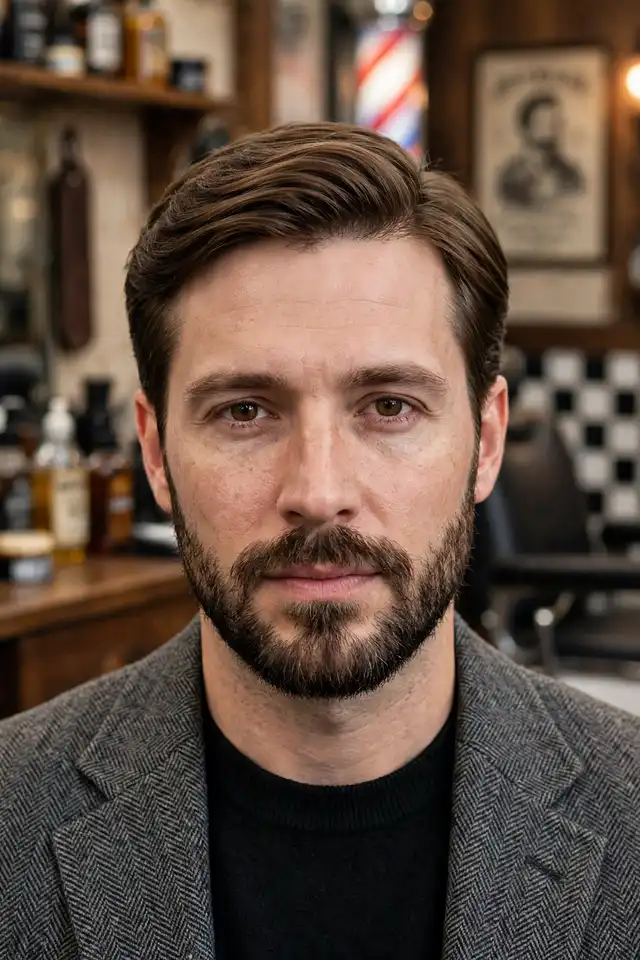
Is a beard fade with a side part too formal?
It is formal the way a good suit is formal — by fit, not by stiffness. The Beard Fade with a Side Part pairs the oldest respectable haircut in the book with the newest beard technique: the parted, combed top reads classic, the faded sideburn-to-beard blend reads current, and together they land in the old-money register that this season keeps rewarding. Keep the part soft, not razor-cut, and the beard fade low or classic — two quiet choices that keep it timeless instead of themed. Winter’s formal calendar is exactly where this pairing earns its keep.
Face Shape: Almost universal; the part’s horizontal line particularly flatters oval and rectangular faces.
Grooming Kit: A fine comb and light pomade for the part; beard oil and a brush below.
Maintenance: Haircut every 3–4 weeks; beard fade every 2–3 — the part and the blend expire on similar clocks.
Barber Script: “Side part on top, soft line not razored — classic beard fade below, beard neat and shaped.”
The oldest haircut, the newest blend — quiet authority.
Q: Hard part or soft part with a beard fade?
A: Soft, for this pairing. A razor-cut hard part is a statement that pulls the look toward the barbershop-bold end; the side part’s charm here is restraint. If you want the hard part, pair it with the high beard fade instead and commit to the boldness.
Q: Does a side part suit a grey beard?
A: It is the grey beard’s best friend in this guide — the part’s classicism makes silver read distinguished rather than ageing, and the fade keeps the whole portrait current. The full grey-specific version is style 16, next.
16 of 20 — The Grey Beard Fade
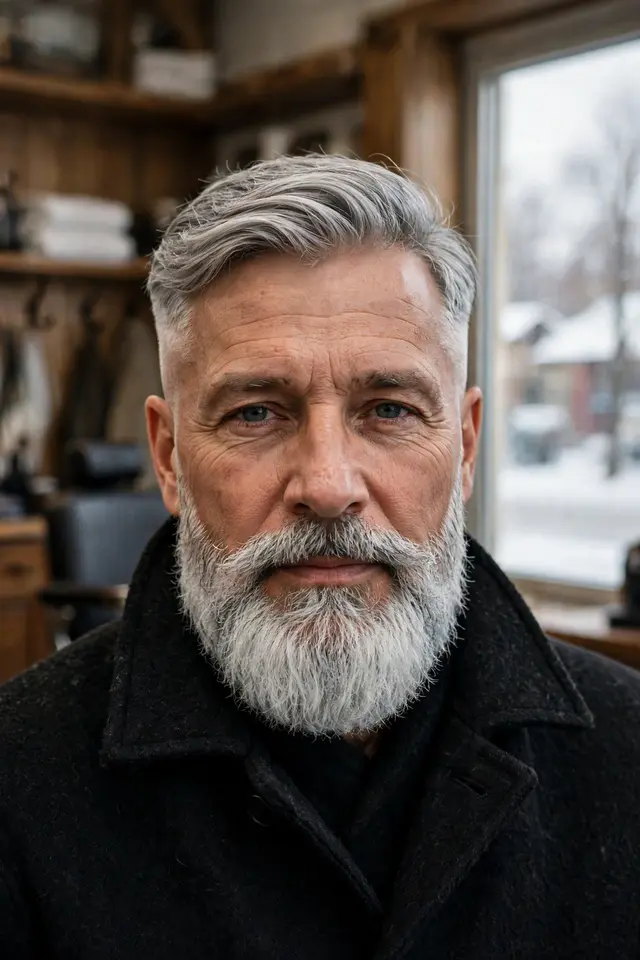
How should a grey beard fade be cut?
Shorter at the sides, proud at the front. Grey and silver beard hair grows wirier and straighter than the hair it replaced, and it shows every uneven edge — so the Grey Beard Fade keeps the blend tight and the cheeks clean, letting the silver read as a deliberate colour rather than a surrender. The fade also solves grey’s patchiness problem: silver rarely arrives evenly, and a gradient hides the transition zones where dark and grey mix. In winter light, a well-faded silver beard against a shaped haircut is the most distinguished portrait in this entire guide — there is a reason the silver styles drove our older men’s research.
Face Shape: Suits mature faces of every shape; the tight sides slim the fuller faces age sometimes brings.
Grooming Kit: A softening beard oil (grey hair is drier and coarser), a boar brush, and patience with strays — silver shows them.
Maintenance: Every 2–3 weeks; grey regrowth at the blend shows faster because the contrast is in colour, not just length.
Barber Script: “Grey beard fade — tight blend at the sideburns, cheeks clean, keep the silver full at the front.”
Silver worn as a colour, not an apology — the distinguished fade.
Q: Should I dye a grey beard instead of fading it?
A: That is a taste call, but know the trade: dyed beards show a hard regrowth line at the roots within days, while a faded grey beard has no line to betray it. Most barbers will tell you the silver, well-cut, wins the room.
Q: Why does my grey beard stick out instead of lying down?
A: Grey hairs are coarser and lose their natural curl pattern, so they grow straighter and more stubbornly. Daily oil, a brush while blow-drying downward on low heat, and the fade removing the wildest upper zone together tame most of it.
17 of 20 — Beard Fade with a Mullet
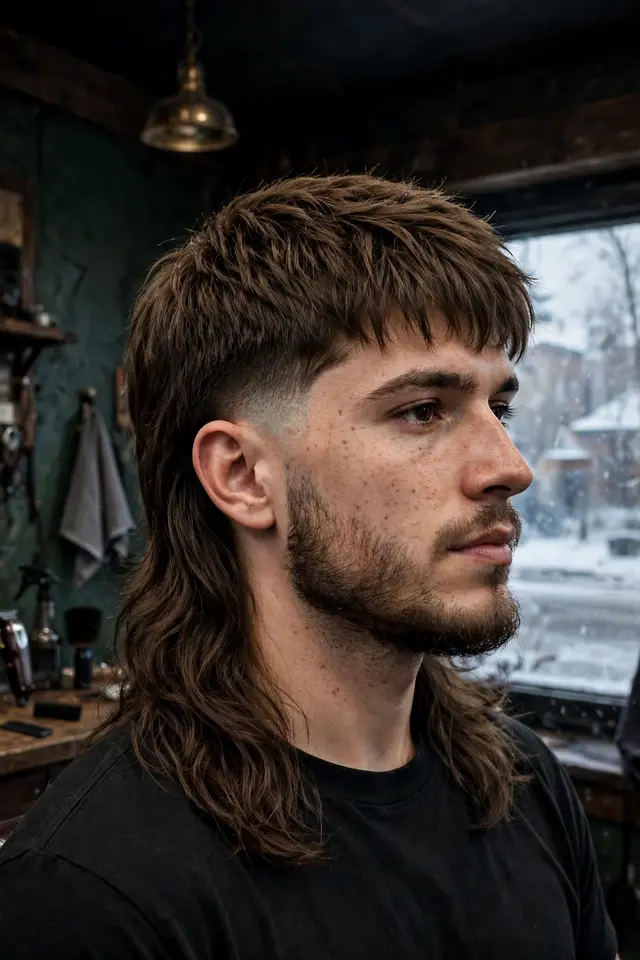
Does a beard fade with a mullet actually work?
It is the version that makes the mullet wearable everywhere. A Beard Fade with a Mullet takes the mullet’s short front and long back and fades the beard at the sideburns — often with the mullet’s own burst fade running straight through into the beard, so the ear becomes the centre of one continuous design. The beard grounds the mullet’s party reputation: from the front, the portrait is barber-clean; the length only announces itself in profile. Winter keeps mullets rising on every trend report, and the bearded version is the one that survives offices, family dinners and photographs alike.
Face Shape: The back length lengthens short faces; the faded beard keeps round faces structured at the front.
Grooming Kit: Sea salt spray for the back’s texture, beard oil below — the mullet half dies under heavy product, the beard half needs the oil.
Maintenance: Mullet shape every 5–6 weeks; the beard-through-burst fade every 2–3, it is the detail that expires first.
Barber Script: “Mullet — short front, length at the back — run the burst fade through the sideburn into a beard fade.”
Party at the back, barber-clean at the front — the mullet, grounded.
Q: Burst fade into the beard, or a separate beard fade?
A: Through, if your mullet has a burst fade — the continuous arc around the ear is the design. If your mullet is scissor-cut and soft with no burst, keep the beard fade separate and low so the two softnesses match.
Q: Beard or clean-shaven with a mullet?
A: Both live, but they say different things. Clean-shaven reads younger and more fashion-forward; the faded beard reads grounded and deliberate. Men over thirty, and men in conservative workplaces, usually land better with the beard.
18 of 20 — The Stubble Beard Fade
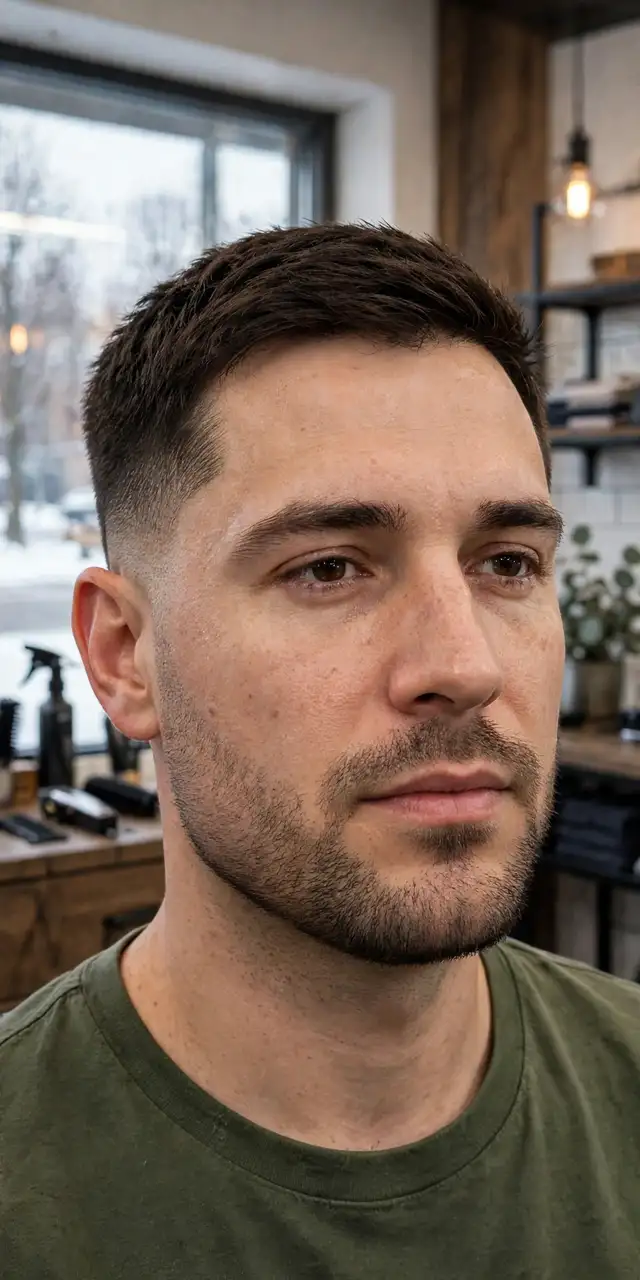
What is a stubble beard fade?
Three to five days of growth, engineered. The Stubble Beard Fade keeps the beard at heavy-stubble length — the zone most men look best in — and fades the sideburn and cheek edges so the stubble ends by gradient instead of by geography. It is the lowest-commitment style in this guide and the one that suits men whose beards grow patchy at length: at stubble length, density reads almost even, and the fade tidies the two places stubble looks accidental — the sideburn step and the cheek scatter. Winter suits it too: no length to dry out, no bulk under scarves, nothing to freeze.
Face Shape: Softens strong jaws and adds shadow-structure to weaker ones — stubble is the great leveller.
Grooming Kit: One trimmer with a short guard, used every 3–4 days; a drop of oil even at this length in winter, for the skin beneath.
Maintenance: Home upkeep is the rhythm — barber only when you want the lines professionally reset, every few weeks.
Barber Script: “Heavy stubble all over — fade the sideburns and clean the cheek line by gradient, not a hard edge.”
Heavy stubble, finished properly — the accident, engineered out.
Q: How many days of growth is a stubble beard fade?
A: Roughly three to five days, or a #1 to #2 guard’s worth depending on how fast and dark your beard grows. The fade is what matters more than the count: the edges must melt, whatever the middle’s length.
Q: Does stubble work in a formal workplace?
A: Faded stubble, yes, in most modern offices — the gradient and clean neck area are what separate it from ‘forgot to shave’. Keep the neckline honest below the jaw and the cheek scatter faded, and it reads as a style choice.
19 of 20 — Beard Fade with a Quiff
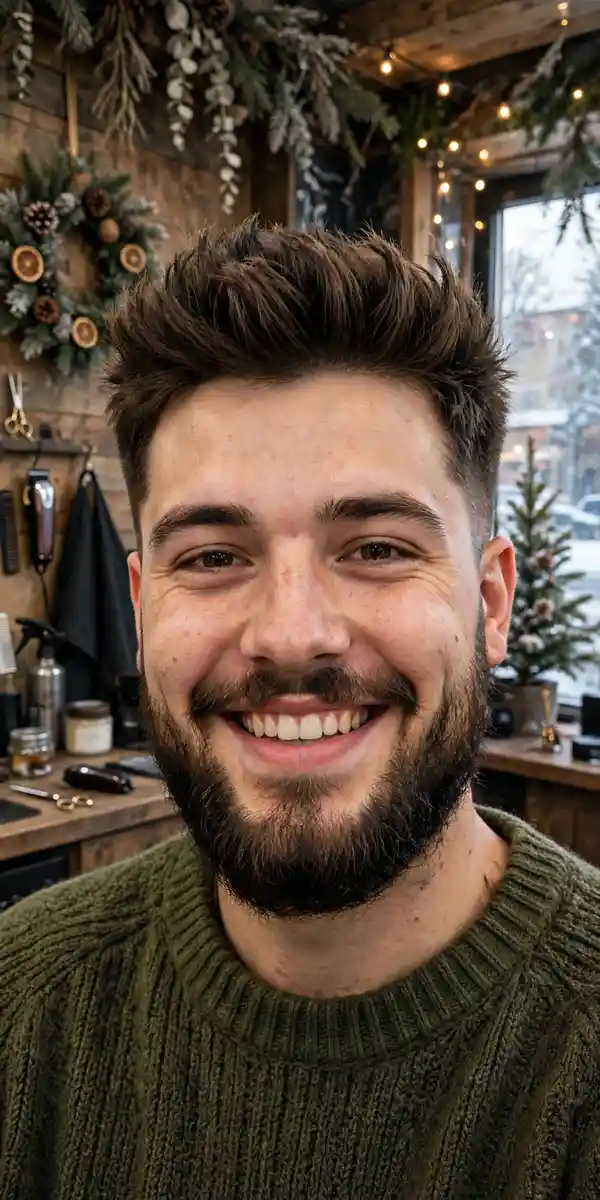
Why pair a beard fade with a quiff?
Lift above, blend below — the quiff is the most-worn volume style in the world, and the beard fade is its natural completion. The Beard Fade with a Quiff brushes the front up and back with texture, while the faded sideburns carry the eye down into a shaped beard, so the face gets height at the top and structure at the bottom in one portrait. It is younger in spirit than the pompadour pairing and easier to style — fingers and matte paste, not a blow-dried ceremony. In winter, keep the lift modest: quiffs and hats negotiate badly, and the beard fade below will carry the look on hat days.
Face Shape: The making of round faces especially — the lift lengthens while the beard’s shape slims.
Grooming Kit: Matte paste and a blow dryer for the lift; beard balm to keep the lower half as intentional as the front.
Maintenance: Haircut every 4 weeks; beard fade every 2–3 — a grown-out fade under a fresh quiff shows immediately.
Barber Script: “Quiff on top, textured lift at the front — mid beard fade through the sideburns, beard shaped to the jaw.”
The most-worn top, the newest blend — height meets structure.
Q: Quiff or pompadour with a beard fade — which is easier daily?
A: The quiff, comfortably. It is styled with fingers and forgives an imperfect morning; the pompadour wants a blow dryer and a smoother finish. Both pair with the same beard fade — the difference is only the top’s daily contract.
Q: How high should the quiff be with a full beard?
A: Moderate — about an inch of lift. A tall quiff over a full beard stretches the portrait at both ends and reads dated; balanced proportions are what make this pairing current. Let one of the two be the statement, not both.
20 of 20 — The Beard Fade King
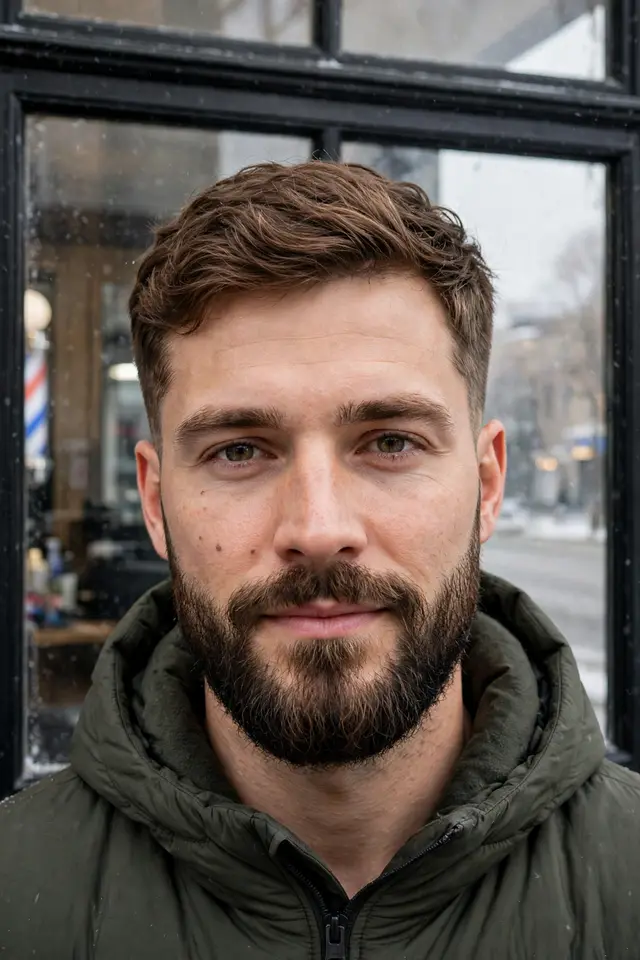
What is the single best beard fade style for men?
The one that combines this guide’s lessons at their most wearable: a mid-height gradient that slims the cheeks, sideburns blended seamlessly into whatever haircut you wear, the beard kept medium and shaped below, and edges clean without a single hard line. The Beard Fade King is not the sharpest here (that is the Italian) or the boldest (that is the high skin fade) — it is the balanced one: barber-fresh for two full weeks, forgiving in the third, and at home under a winter coat, in a boardroom, and in every photograph between. If you book one beard fade this winter, book this one.
Face Shape: The most forgiving silhouette here — the mid blend and medium length adjust to oval, round, square and long faces alike.
Grooming Kit: Beard oil, a boar brush, and a trimmer for the weekly line check. That is the whole cabinet.
Maintenance: Every 2–3 weeks at the barber; five minutes weekly at home keeps the outline honest between visits.
Barber Script: “The full works — mid beard fade, seamless sideburns, medium shaped beard, no hard lines anywhere.”
Blend, balance and no hard lines — the complete winter beard.
Q: Why does this beat a plain shaped beard?
A: The sideburns. A plain shaped beard still meets the haircut at a visible step that dates the whole portrait. The king’s seamless blend is the single detail that makes hair and beard read as one design — the difference between grown and groomed.
Q: What is the one habit that makes any beard fade look better?
A: Oil the skin under the beard, not just the beard. Winter’s heated air dries the skin beneath first, and flaky skin is what makes even a fresh fade look tired. Thirty seconds after a shower keeps the whole gradient looking new.
The Bottom Line
Beard fade styles for men run on three truths: the sideburn is where hair and beard either become one design or betray each other; the fade’s height is a face-shape tool — low for quiet, mid for balance, high for sculpture; and winter is the beard fade’s season, because a blended beard survives coats, scarves and dry heated air better than any hard-edged shape. Pick your height by your cheeks, your pairing by your haircut, and keep the barber rhythm — a beard fade is a two-to-three-week appointment, not a one-time event. For the beard shapes themselves, see the beard styles guide, and for the fades your haircut can borrow, the fade haircuts guide.