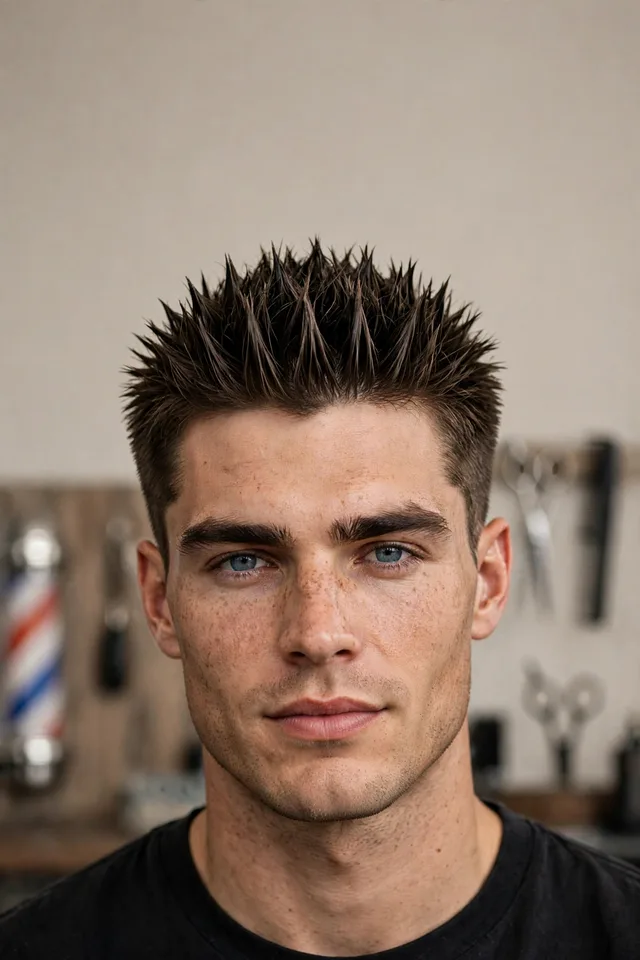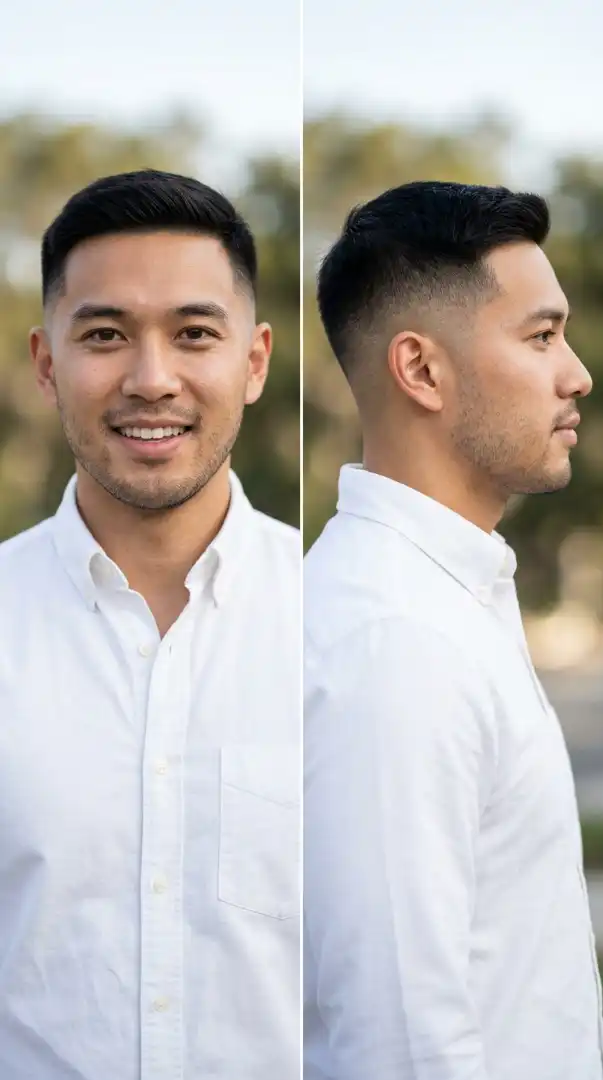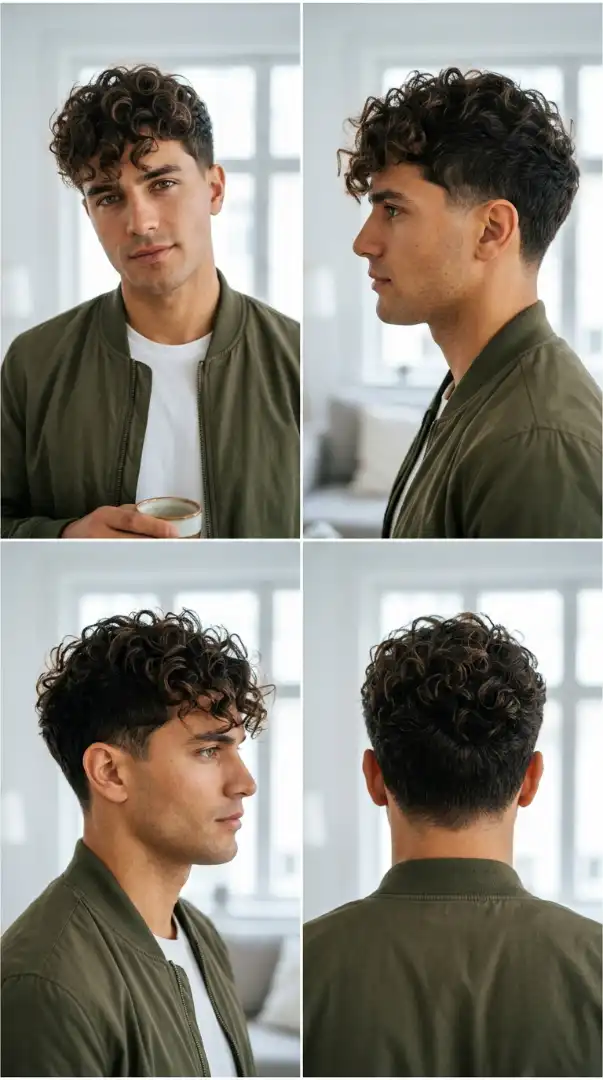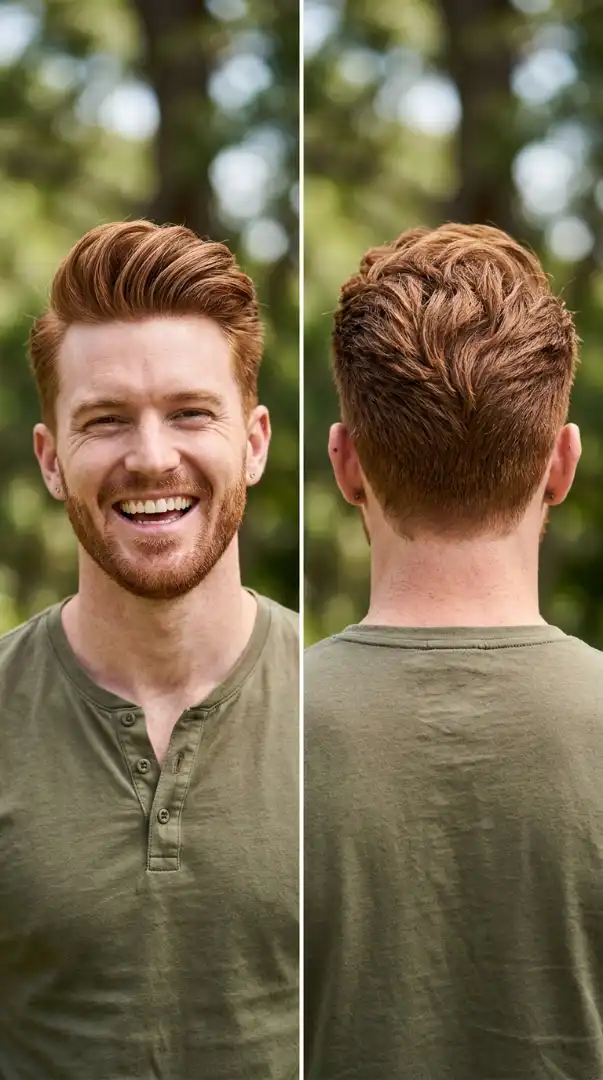
20 Undercut Hairstyles for Men: Disconnected, Faded & Textured Versions
The undercut is the cut that defined a decade of men’s hair — long on top, clipped short underneath, with nothing in between. It powered period dramas, footballers and a million screenshots, and after a few quieter years it is climbing again: trend trackers put undercut variants all over the 2027 lists, spring runways brought the shape back, and Pinterest’s own data has its close cousin, the Korean two-block, up over 200 percent. But the undercut that is returning is not the severe 2015 version. The modern one is softer: the sides sit at a #1 or #2 — or fade gently — instead of bare skin, and the top is worn matte and lived-in rather than lacquered.
Know the architecture before you pick a version. An undercut keeps three to six inches on top and takes the sides and back down to one short length, traditionally with a visible disconnection — a hard line where the two lengths meet. The faded undercut softens that line into a blend, and it is the faded version that most men now wear. One honest warning belongs at the top of this guide: an undercut is a commitment. The sides need tidying every two to three weeks, and growing one out means months of awkward in-between lengths. Men who know that going in love this cut; men who don’t, blame the cut.
Inside: the classic and the disconnected original, the softer faded rewrite, every fade pairing, the side-swept and slicked-back finishes, versions for curly, wavy, thick and fine hair, the long and short extremes, the fringe, the beard pairing, the two-block, the winter version, and the complete look that obeys every rule. Each comes with the face shapes it flatters, the kit it needs, the upkeep it honestly demands, and the exact words to say in the chair. The undercut’s closest relatives live in our slick back hairstyles for men guide — its most famous top finish — and our side part hairstyles for men guide, which borrows its sides more politely.
1 of 20 — The Classic Undercut
What is the classic undercut, exactly?
The original contrast cut. Four to five inches on top, worn slicked or swept, over sides clipped to one short, even length — a #2 or #3 — with the two lengths meeting at a clean, visible edge. No fade, no blend, no apology: the classic undercut is two haircuts sharing one head, and that tension is the entire point. It is the reference every other style in this guide modifies.
Face Shape: Oval and square faces carry the contrast best; the long top adds height that lengthens rounder faces.
Grooming Kit: A pomade or cream with real hold, a comb, and a dryer — the classic top is styled deliberately, every day.
Maintenance: The sides want tidying every two to three weeks; once they soften, the contrast that defines the cut is gone.
Barber Script: “Classic undercut — four to five inches on top, sides clipped to a #2, one even length, clean disconnection, no fade.”
Q: Is the undercut still in style?
A: Yes — in its softer modern form. The shape never disappeared from barbershops; what changed is the finish. Keep the sides off skin and the top matte, and it reads completely current.
Q: How long does the top need to be for an undercut?
A: Three inches is the working minimum — enough to sweep or slick with visible contrast. Four to five inches is the classic proportion this style is built on.
The original contrast — two haircuts, one head.
2 of 20 — The Disconnected Undercut
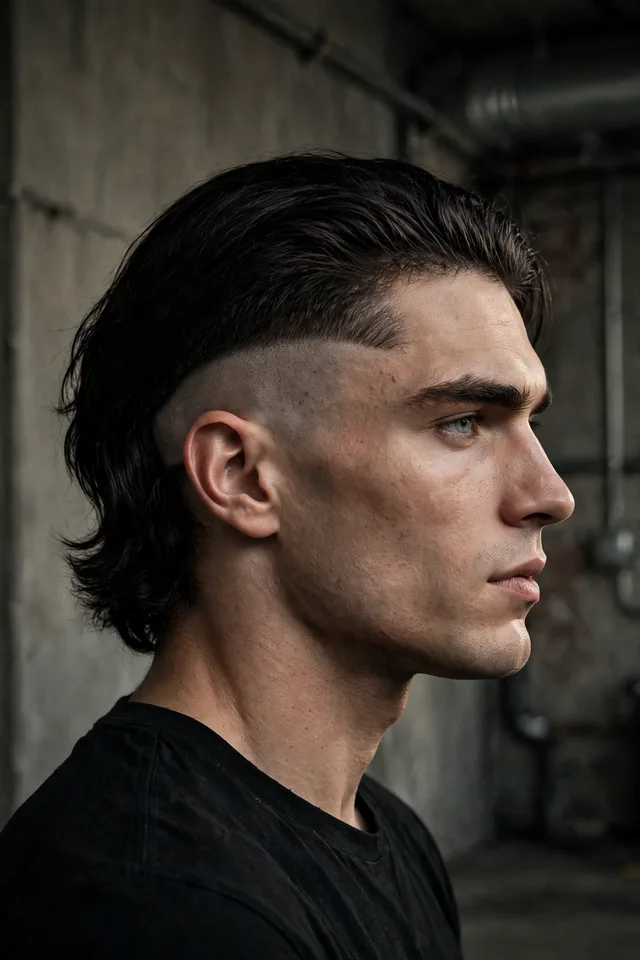
What makes the disconnected undercut the boldest version?
The line. A disconnected undercut refuses to blend anything: the top’s full length ends abruptly at a sharp, visible shelf, below which the sides sit at a #1 or #2. It is the most dramatic silhouette in men’s hair — the top reads as a separate section entirely — and it is the version fashion shoots and bold dressers keep returning to. It is also the least forgiving: the line must be re-cut constantly, and there is no quiet way to wear it.
Face Shape: Strong, angular faces suit the hard geometry; softer faces can find the shelf severe.
Grooming Kit: A strong-hold product and a comb — the top must sit as one deliberate mass, or the disconnection looks like a mistake instead of a decision.
Maintenance: Every two weeks to keep the line surgical. This is the highest-upkeep undercut in the guide.
Barber Script: “Disconnected undercut — sharp line, no blend at all. #2 on the sides, top left at five inches, worn as one piece.”
Q: Disconnected or faded undercut — which should I choose?
A: Disconnected if you want the statement and accept the upkeep; faded if you want the same family with softer edges and half the barber visits. Most men in 2027 are choosing the faded.
Q: Can a disconnected undercut look professional?
A: In creative fields, worn neatly, yes. In conservative ones the shelf reads as fashion, not business — the faded version is the office-safe translation.
The statement — a line drawn on purpose.
3 of 20 — The Faded Undercut
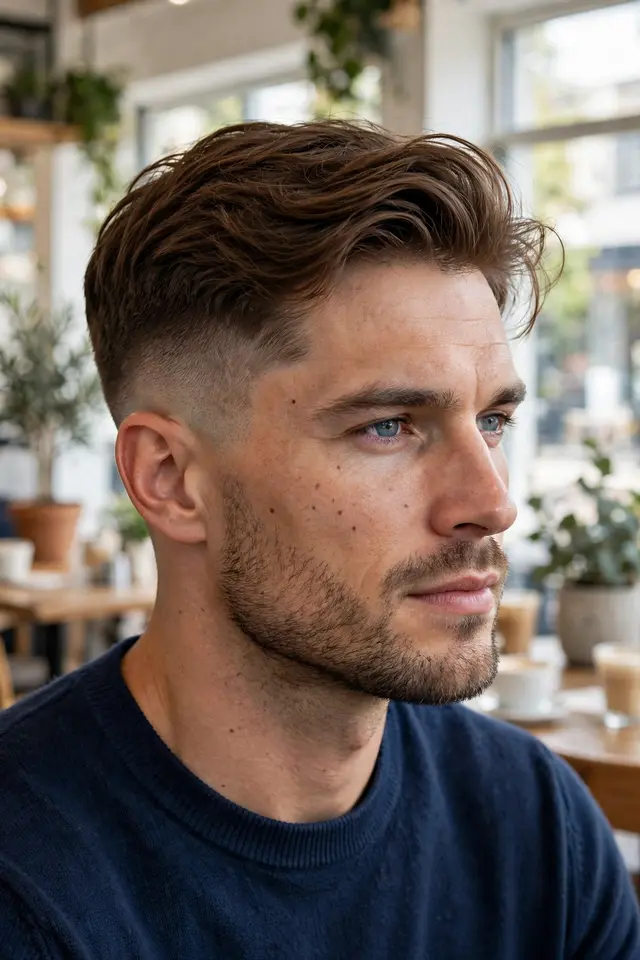
Why is the faded undercut the modern version?
Because it keeps the idea and removes the severity. The faded undercut blends the short sides upward into the long top instead of stopping at a hard shelf, so the contrast is still unmistakably an undercut — but the silhouette is softer, the grow-out is kinder, and the cut suits far more faces and workplaces. Trend guides listing the best undercuts for 2027 lead with this version for a reason: it is the undercut translated for men who have jobs, beards and lives outside the barbershop.
Face Shape: All faces — the blend adjusts to the wearer in a way the hard line never could.
Grooming Kit: The standard undercut kit; the softer edge also forgives a day of lazy styling.
Maintenance: Every three weeks — the fade shows regrowth sooner than a taper but far less brutally than a disconnection line.
Barber Script: “Faded undercut — long top, four to five inches, sides faded up into it. Keep the undercut contrast, soften the line.”
Q: Is a faded undercut still a real undercut?
A: By every definition that matters — long top, short sides, clear contrast. The fade changes the transition, not the architecture. Purists keep the shelf; everyone else wears this.
Q: Which fade height suits the faded undercut?
A: A mid fade is the most common pairing; a low fade is softer still, and a high fade approaches the disconnected look. Choose by how much contrast you want to maintain.
The translation — the same idea, in a softer accent.
4 of 20 — The Textured Undercut
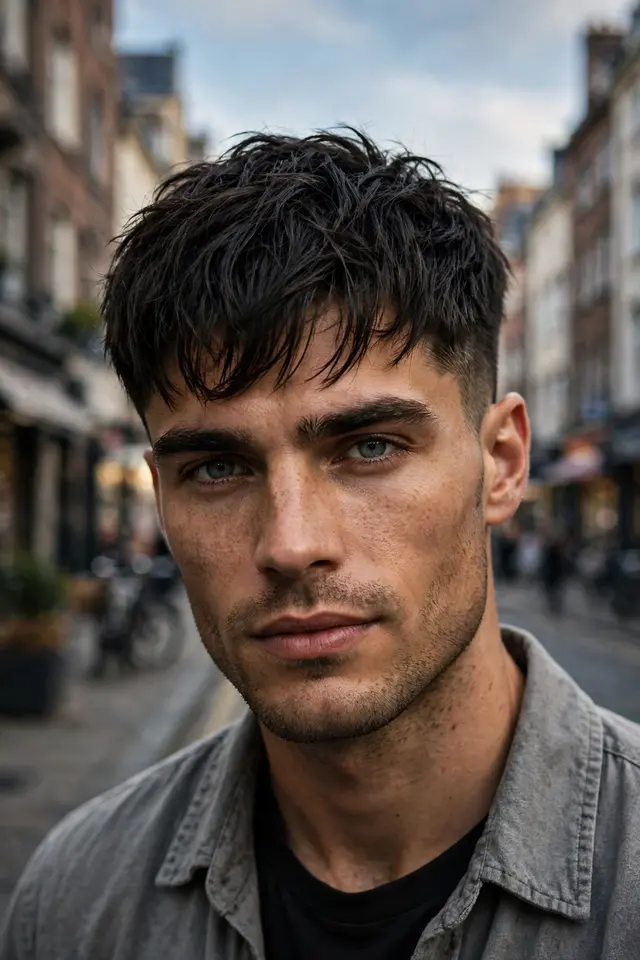
How does texture change the undercut?
It relaxes the top. The textured undercut keeps the short sides but point-cuts the top for separation and wears it matte and piecey — forward, tousled, or loosely swept — instead of the classic’s combed sheet. It is the version for men who want the undercut’s silhouette without the undercut’s formality, and it suits the current taste best of all: natural texture is the finish every 2027 guide describes.
Face Shape: All faces; the broken-up top is the most forgiving version for uneven hairlines and cowlicks.
Grooming Kit: A matte clay or fibre and your fingers. Combs stay in the drawer — this top is placed, not combed.
Maintenance: Three to four weeks. Texture tolerates regrowth kindly on top; the sides still set the appointment rhythm.
Barber Script: “Textured undercut — point-cut the top for separation, matte finish, sides short and clean. I wear it forward and tousled.”
Q: Textured or classic undercut for thick hair?
A: Textured. Thick hair under a classic slick can look like a helmet; point-cutting breaks the mass into pieces that move, and the short sides remove the bulk.
Q: Can I style a textured undercut formally for an event?
A: Yes — comb it back with a cream for the evening and it reads as a soft classic. The texture is in the cut, not a styling prison.
The relaxed rewrite — the silhouette, without the ceremony.
5 of 20 — Undercut with a Low Fade
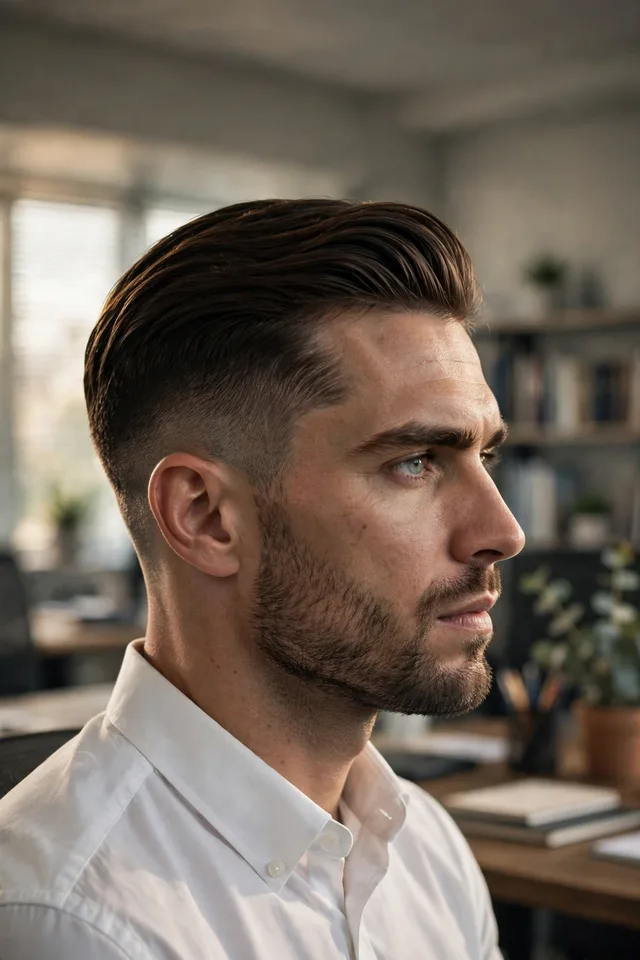
Why pair an undercut with a low fade?
To keep the drama on top and the manners at the edges. Undercut with a low fade concentrates the fade just above the ears and neckline, leaving more side length than other fades — so the undercut’s long top still dominates, but the outline is clean and professional. It is the easiest undercut to wear to work and the gentlest introduction to the family.
Face Shape: All faces, and the best first undercut for narrower faces, which higher fades can make look gaunt.
Grooming Kit: The standard kit, plus the standing three-week barber slot every fade demands.
Maintenance: The fade refreshes every three weeks; the top holds four to five.
Barber Script: “Undercut with a low fade — fade low around the ears and neckline only, long top left disconnected-soft on top of it.”
Q: Low fade undercut or faded undercut — what is the difference?
A: They overlap: this one names the fade height (low), the faded undercut leaves it to the barber. In practice, ask for this when you want the fade kept deliberately low and subtle.
Q: Does a low fade undercut suit older men?
A: It is the gentlest version in the guide and wears well past forty — keep the top textured rather than slicked and it reads distinguished.
Drama on top, manners at the edges.
6 of 20 — Undercut with a Skin Fade
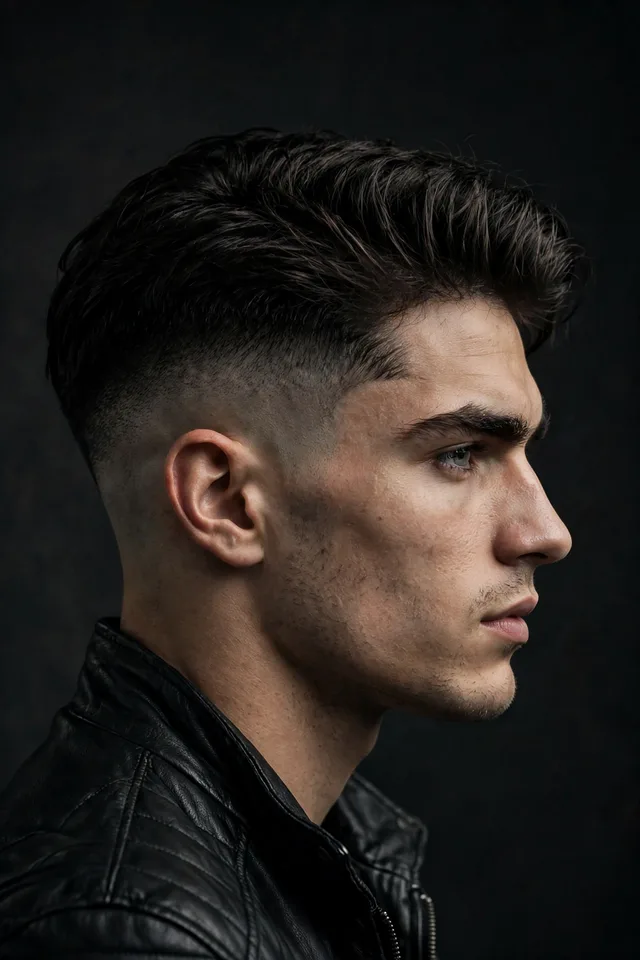
Is the skin fade undercut too much?
It is the maximum — and it knows it. Undercut with a skin fade takes the sides to bare skin beneath a full-length top, producing the highest contrast available in barbering: a floating mass of hair over a blank canvas. It photographs like nothing else and turns heads for two weeks — which is also its lifespan. Choose it for an event, a holiday or a statement, not as a low-effort default.
Face Shape: Strong, defined faces carry the exposure; the bare sides emphasise bone structure completely.
Grooming Kit: The standard kit, plus sunscreen and moisturiser for scalp skin that has never met weather before.
Maintenance: Every two weeks, non-negotiable. Skin fades have the shortest shelf life in this guide.
Barber Script: “Undercut with a skin fade — skin on the sides, blended up, top left long at four to five inches.”
Q: How is this different from the disconnected undercut?
A: The disconnected keeps a #1–#2 shelf with a hard line; this one fades to skin with a blend. Both are maximum contrast — one is graphic, the other is gradient.
Q: Can I let a skin fade undercut grow out gracefully?
A: No — honestly. It passes through a rough month. If grow-out matters, start from the faded or low fade versions instead.
Maximum contrast — a floating top over bare skin.
7 of 20 — The Side-Swept Undercut
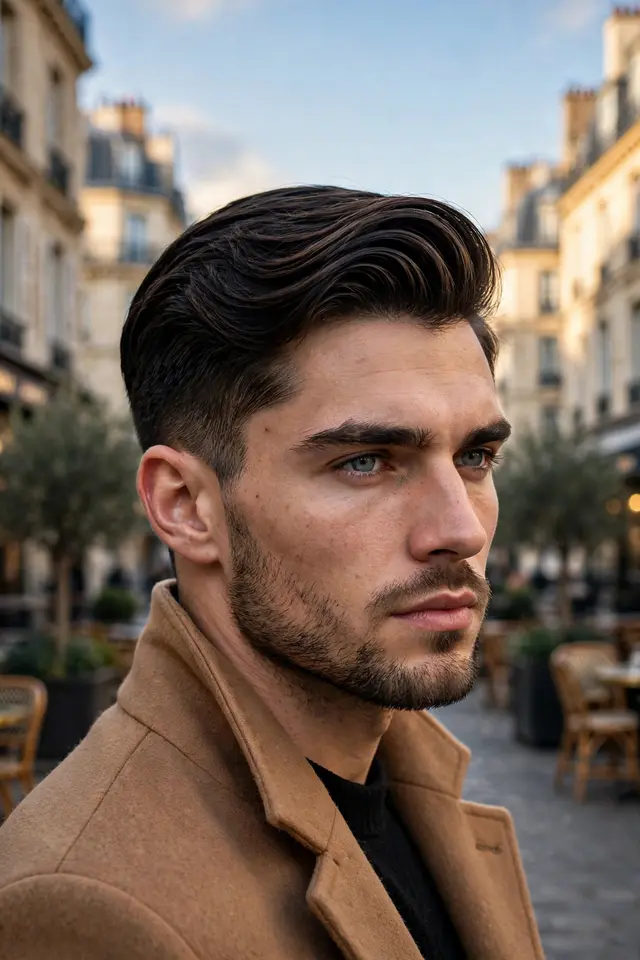
Why is the side-swept undercut the screenshot favourite?
Because it photographs like old money. The side-swept undercut keeps four to six inches on top and sweeps the whole mass to one side over short, neat sides — the long version trend-watchers describe as the “Italian” look that fills saved folders. It borrows the side part’s elegance but keeps the undercut’s edge underneath, so it reads polished from the front and deliberate from the side.
Face Shape: Oval and longer faces carry the sweep’s drama; round faces should keep the sides tighter to avoid width.
Grooming Kit: A dryer with a nozzle, a light cream with real hold, and a soft brush — long sweeps are heat-set, not hoped into place.
Maintenance: Four to five weeks for the top; sides tidy every three.
Barber Script: “Side-swept undercut — five inches on top swept fully to one side, point-cut ends, sides short and clean.”
Q: Side-swept undercut or side part — what is the difference?
A: The sides and the line. A side part tapers its sides and parts the hair; this clips the sides short in undercut fashion and sweeps an unparted mass over. Same direction, different architecture.
Q: How long does it take to train the sweep?
A: Two to three weeks of daily heat-setting on damp hair. Long tops learn direction slowly, then hold it well.
The screenshot favourite — elegance with an edge underneath.
8 of 20 — Slicked-Back Undercut
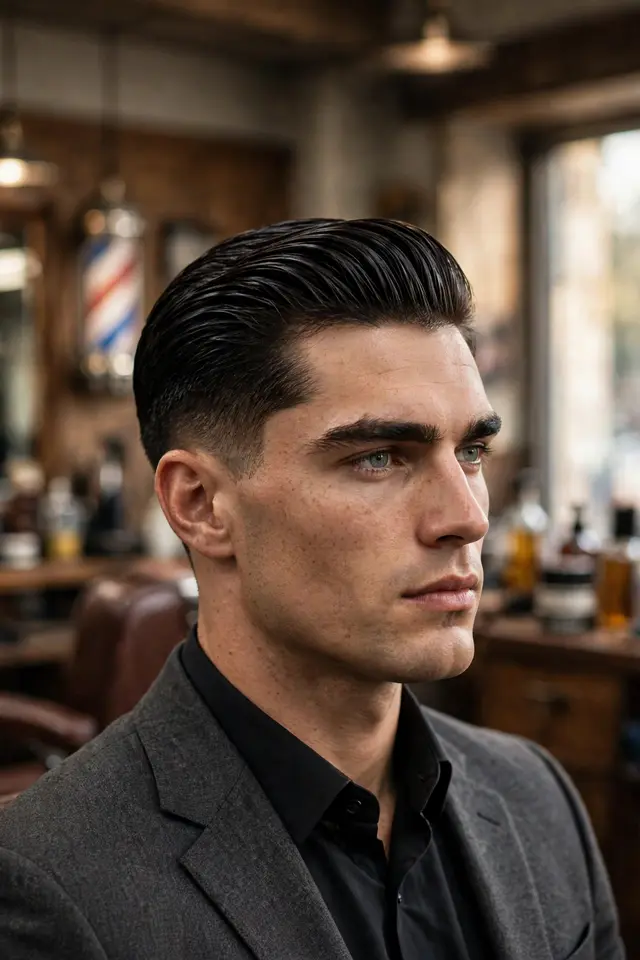
Why is the slicked-back undercut the family’s most famous member?
Because it is the image everyone pictures. The slicked-back undercut combs the full top length straight back over clipped sides — the period-drama, red-carpet version that made the undercut a phenomenon. It demands the most of the top: length, hold and a hairline that can take exposure. Our slick back guide covers the finish in depth; here it stands as the undercut family’s flagship styling.
Face Shape: Oval and strong faces; the fully exposed hairline is unforgiving of recession — see Style 17 for the honest alternative.
Grooming Kit: A pomade with genuine hold, a fine comb, and a dryer. This finish is built, not tousled.
Maintenance: Sides every two to three weeks; the daily styling is the real upkeep — five minutes, every morning.
Barber Script: “Slicked-back undercut — top at five inches combed straight back, sides clipped short, clean and even.”
Q: Why does my slicked-back undercut keep falling to the sides?
A: The top is usually too short or the product too weak. At five inches with a proper pomade applied to towel-dried hair and combed back while damp, it holds.
Q: Slicked-back or side-swept — which is easier to live with?
A: Side-swept. It works with the hair’s natural fall and forgives a skipped styling day; the slick-back demands the full routine daily.
The flagship — the image that made the undercut famous.
9 of 20 — The Curly Undercut
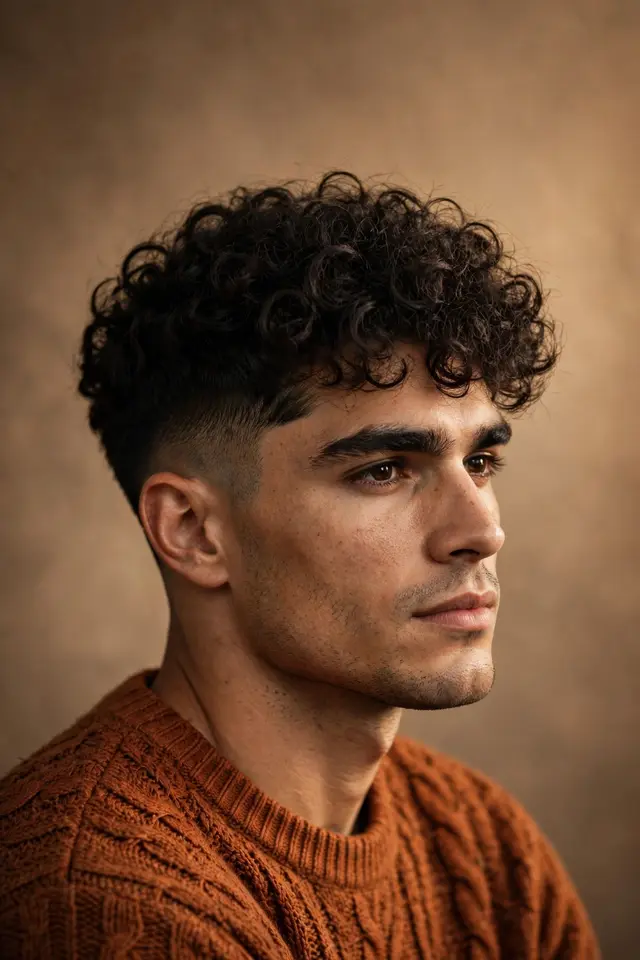
How do curls change the undercut?
They give the top a life of its own. The curly undercut keeps natural curls long on top — where their volume and pattern are the whole show — and takes the sides down short, so the contrast frames the curls instead of fighting them. It is one of the most saved undercut versions on Pinterest for a reason: no other cut gives curly men this much presence with this little daily work.
Face Shape: Longer faces suit the width curls add; round faces should keep the sides faded shorter so the volume stays on top.
Grooming Kit: A curl cream, leave-in conditioner, and fingers or a wide-tooth comb — never a fine comb or a brush.
Maintenance: The sides every three weeks; the top can go six to eight. The weekly moisture routine is the real upkeep.
Barber Script: “Curly undercut — curls left long on top, cut dry and curl by curl, sides faded short and clean.”
Q: Should curly undercut sides be faded or disconnected?
A: Faded, for most curls. The blend softens the transition the curls’ volume creates; a hard shelf under bouncing curls can look like two separate heads.
Q: How do I stop the top looking like a mushroom?
A: Length balance: the top should be shaped, not just left — ask for the curls to be layered so the silhouette narrows toward the top rather than ballooning.
Presence, framed — the curls are the show, the sides are the stage.
10 of 20 — The Wavy Undercut
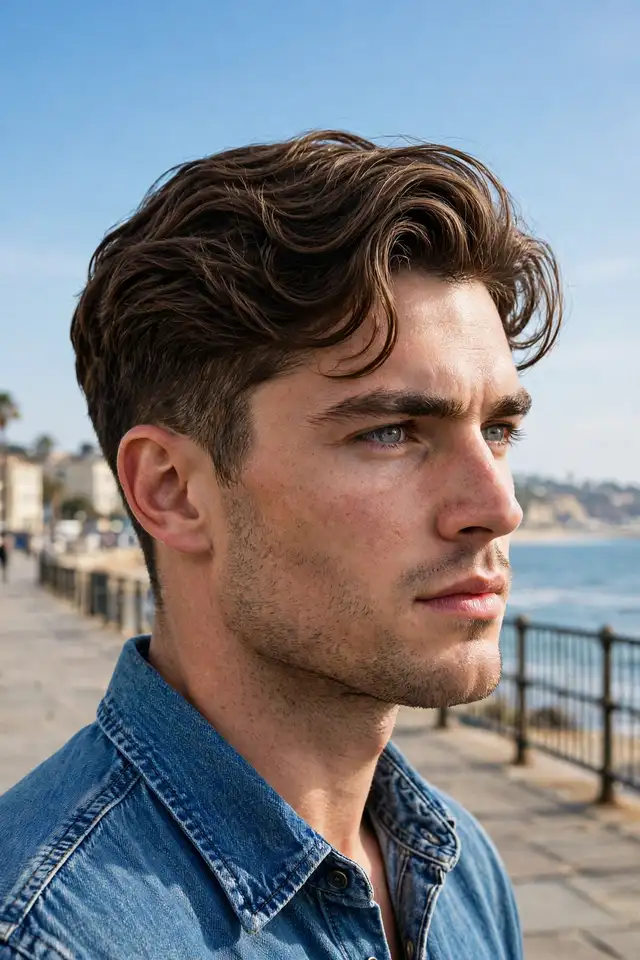
Why is wavy hair the undercut’s sweet spot?
Because waves supply what the classic undercut imitates with product. The wavy undercut lets natural S-shaped hair fall in its own movement over short sides — swept back or to the side, the wave gives the long top a texture that straight hair needs pomade and heat to fake. It is the most natural-looking version in this guide and the easiest long top to wear casually.
Face Shape: All faces. The wave’s volume at the top corner balances round faces; soft sides suit square ones.
Grooming Kit: A light cream or sea-salt spray — heavy products collapse waves into strings — and a wide comb.
Maintenance: Sides every three weeks; the top’s shape holds five to six.
Barber Script: “Wavy undercut — keep my natural wave on top, four to five inches, layers to help it fall. Sides short, cut the top dry if you can.”
Q: How do I keep a wavy undercut from frizzing?
A: Product on damp hair, placed once, then left alone. Every dry touch breaks the wave’s clumps into frizz; wet hands and a pea of cream revive it.
Q: Wavy undercut or textured undercut?
A: They overlap — the wavy version leans on your natural pattern; the textured is point-cut into straighter hair. If your hair waves on its own, take this one.
Born for it — the wave does the styling.
11 of 20 — Undercut for Thick Hair
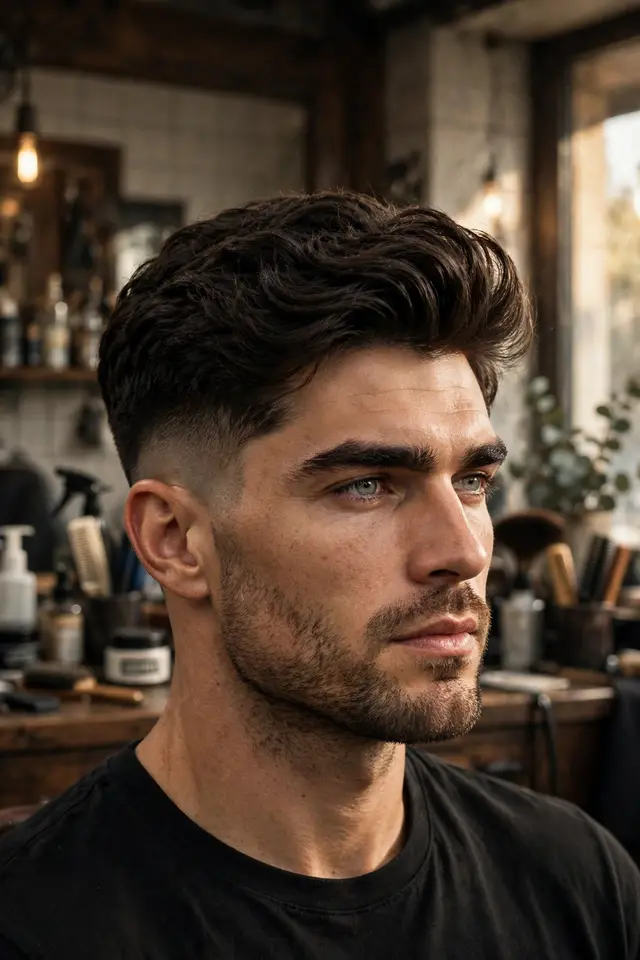
Why is the undercut thick hair’s best friend?
Because it deletes the problem. Thick hair’s enemies are bulk and width, and an undercut removes both at a stroke — the sides, where thick hair puffs widest, simply go. What remains is a full, luxurious top that finally behaves. Undercut for thick hair is the most-requested version in barbershops for a reason: no other cut gives thick-haired men this much control this fast.
Face Shape: Square and larger faces carry the full top in proportion; smaller faces should keep the top shorter and the sides faded.
Grooming Kit: A strong-hold cream or pomade — light products lose to thick hair by noon — and a dryer for the morning set.
Maintenance: Every three weeks. Thick sides regrow with intent; the puff returns first above the ears.
Barber Script: “Undercut for thick hair — take the sides right down, remove the bulk, keep the top full but layered so it lies where I put it.”
Q: Should the top be thinned with shears?
A: Internally, by layering and point cutting — never surface-thinned, which creates frizz that ruins the top’s clean mass. Ask before the shears come out.
Q: Disconnected or faded for thick hair?
A: Faded, usually. The blend manages the transition thick hair makes abrupt; a hard shelf under a very full top can look top-heavy.
Subtraction as freedom — the bulk is simply gone.
12 of 20 — Undercut for Fine Hair
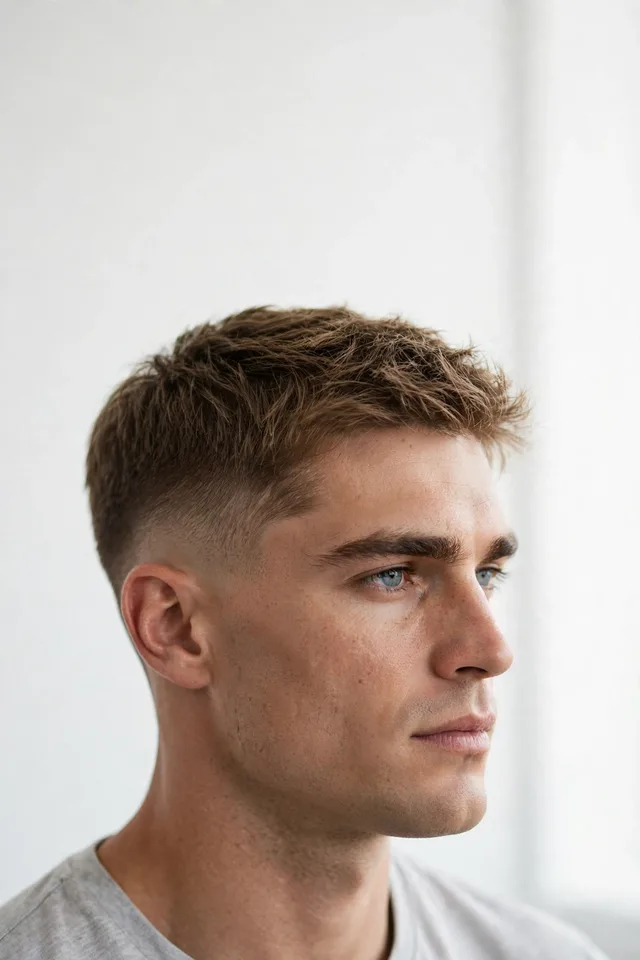
Can fine hair wear an undercut?
Carefully, yes — in its shorter, softer form. Fine hair cannot supply the classic’s long floating top; it goes stringy and shows scalp. Undercut for fine hair stops the top at three inches, chooses the faded version over the disconnected, and keeps a matte finish — so the contrast reads as density rather than exposure. Get those three decisions right and fine hair wears the family well.
Face Shape: All faces; the shorter proportions keep fine hair from overwhelming smaller features.
Grooming Kit: A volumising mousse or root spray, matte clay used sparingly, and a dryer — fine hair’s volume is built warm and set cool.
Maintenance: Every three to four weeks; fine sides show regrowth lines sooner than thick ones.
Barber Script: “Undercut for fine hair — faded version, top at three inches, soft transition. Nothing that exposes the scalp, matte finish.”
Q: What should fine hair avoid in an undercut?
A: The disconnection, skin fades, and length past four inches — all three spotlight the scalp. Soft, short and faded is the formula.
Q: Why does my fine undercut look thin on top by afternoon?
A: Product weight. Oils and heavy pomades separate fine strands; switch to a mousse base and a fingertip of matte clay, applied to dry hair.
The careful version — density by contrast, not by length.
13 of 20 — The Long Undercut
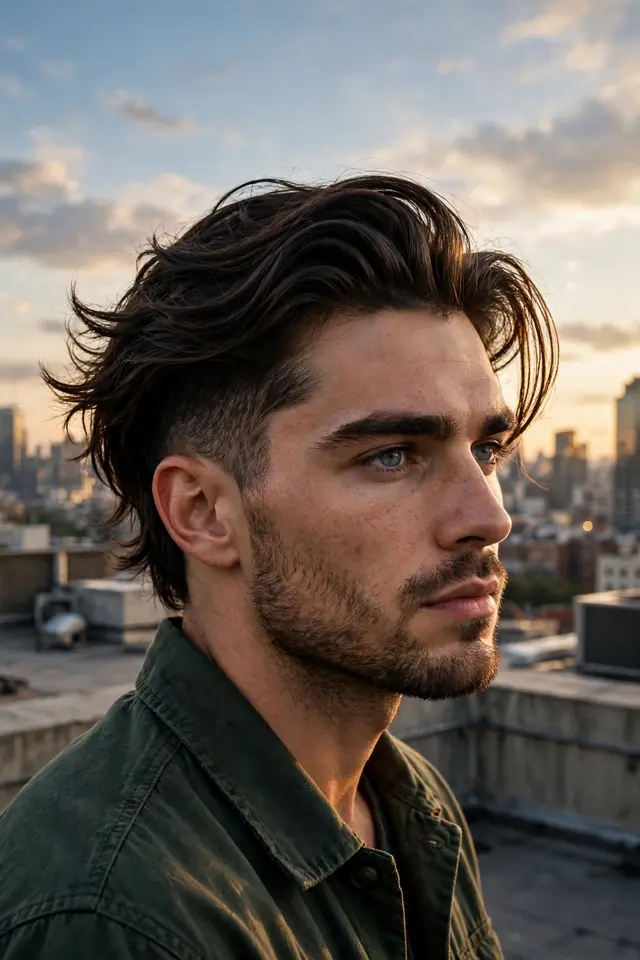
When does an undercut become a long-hair style?
Past five inches. The long undercut keeps the top at five to six-plus inches — long enough to sweep dramatically, tie back loosely, or fall past the ears — over the family’s clipped sides. It is the version that fills saved folders: all of long hair’s romance with none of its side bulk. It is also the biggest commitment here; that top took half a year to grow and takes daily direction.
Face Shape: Oval and longer faces carry the drama; round faces need the tightest sides to balance the length.
Grooming Kit: A dryer with a nozzle, a light cream with real hold, a soft brush, and a hair tie for the gym and the wind.
Maintenance: The top is touched as little as possible; the sides keep the two-to-three-week rhythm — the contrast is maintained from below.
Barber Script: “Long undercut — top at six inches, length protected, point-cut ends only. Sides clipped short and clean.”
Q: How long does it take to grow into a long undercut?
A: From a short cut, five to seven months to reach five-plus inches on top. The sides can be cut into the undercut early — the silhouette arrives before the full length does.
Q: Long undercut or man bun undercut?
A: The bun is this same cut tied up — many long-undercut wearers use it on off days. Grow the long version and the bun is free.
Romance without the bulk — long hair, edited.
14 of 20 — The Short Undercut
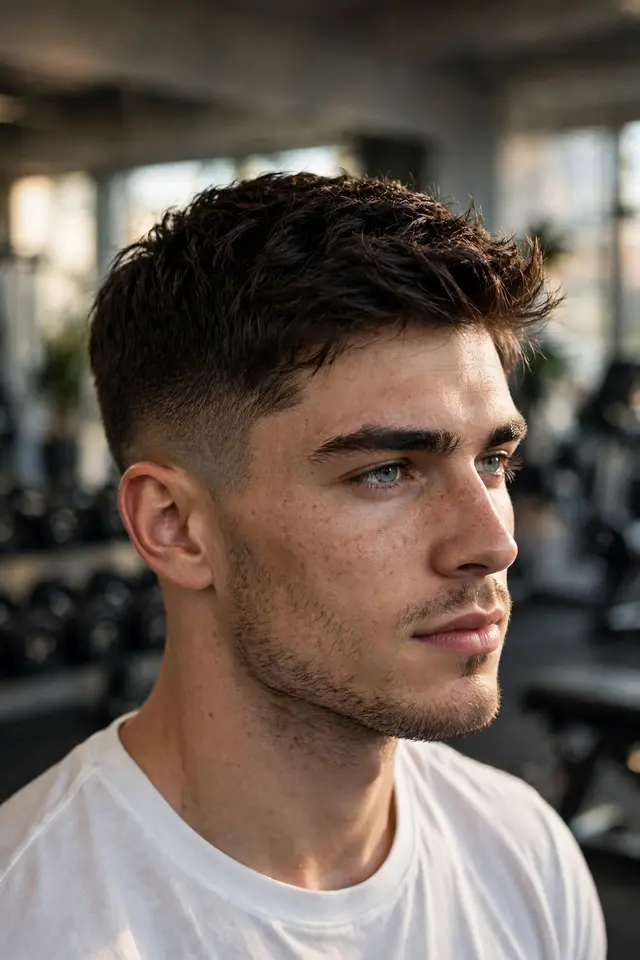
What is the undercut’s minimum viable version?
A cropped top over clipped sides. The short undercut keeps two to three inches on top — enough for texture and a hint of direction — with the family’s short sides, producing the silhouette at its most practical: no training, no heat-setting, no negotiation with the mirror. It is where most men should start with this family, and where many happily stay.
Face Shape: All faces — the compact proportions are the most universally wearable in the guide.
Grooming Kit: A fingertip of matte product and your fingers. That is the entire list.
Maintenance: Every three weeks — short sides show their regrowth honestly, but each visit is fast.
Barber Script: “Short undercut — two to three inches on top, textured, sides clipped short with a soft transition.”
Q: How short can the top go before it stops being an undercut?
A: About two inches. Below that the contrast flattens into a standard short back and sides — which is a fine cut, but a different one.
Q: Is the short undercut a good first undercut?
A: The best. It teaches you the silhouette and the upkeep rhythm at the lowest cost, and every longer version in this guide grows out of it.
The minimum — the silhouette, without the ceremony.
15 of 20 — Undercut with a Fringe
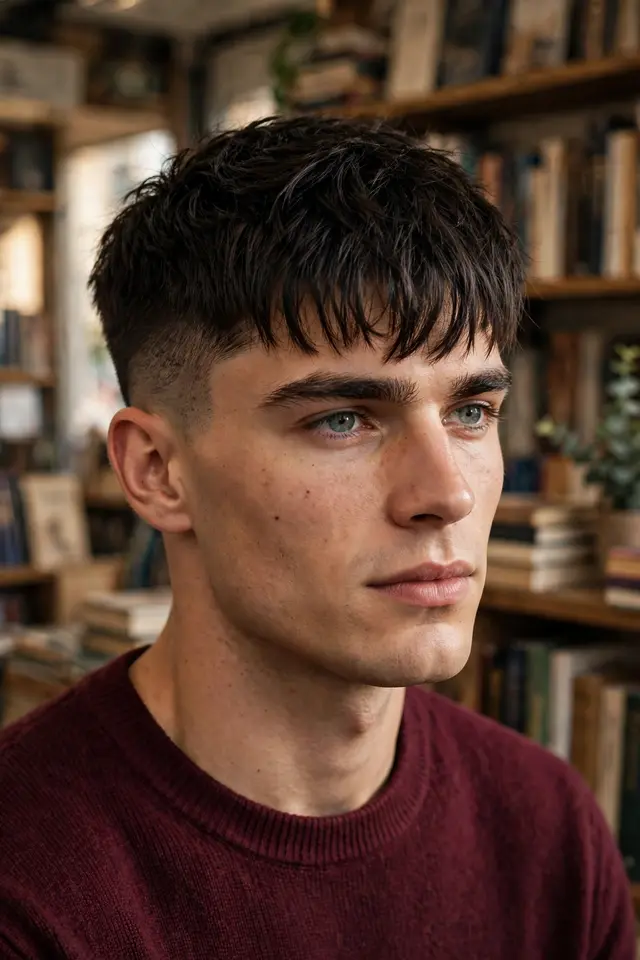
What happens when the undercut’s top falls forward?
It becomes the fringe version — the top worn forward in a textured fringe over the short sides, instead of back or sideways. Undercut with a fringe suits men whose hair grows forward naturally, covers a maturing hairline better than any swept-back version, and reads younger and more relaxed than the classic. It is the undercut for men who found the slick-back too formal and the sweep too deliberate.
Face Shape: Longer faces and higher foreheads gain the most — the fringe shortens both visually.
Grooming Kit: A matte clay and fingers; the fringe is placed forward on damp hair and left to dry in position.
Maintenance: Three to four weeks; the fringe’s length is the feature, so it is trimmed precisely.
Barber Script: “Undercut with a fringe — top worn forward, textured fringe at the front, sides short and faded softly.”
Q: Fringe undercut or textured crop — what is the difference?
A: The sides and the length. The crop is short all over; this keeps a longer, heavier top and true undercut sides. Same direction, more presence.
Q: Can I switch between fringe and swept styles with one cut?
A: Partly — a top cut for a fringe can be swept to the side on occasion, but it will always prefer falling forward. Choose the direction you will wear four days out of five.
Forward, relaxed — the undercut lets its hair down.
16 of 20 — Undercut with a Beard
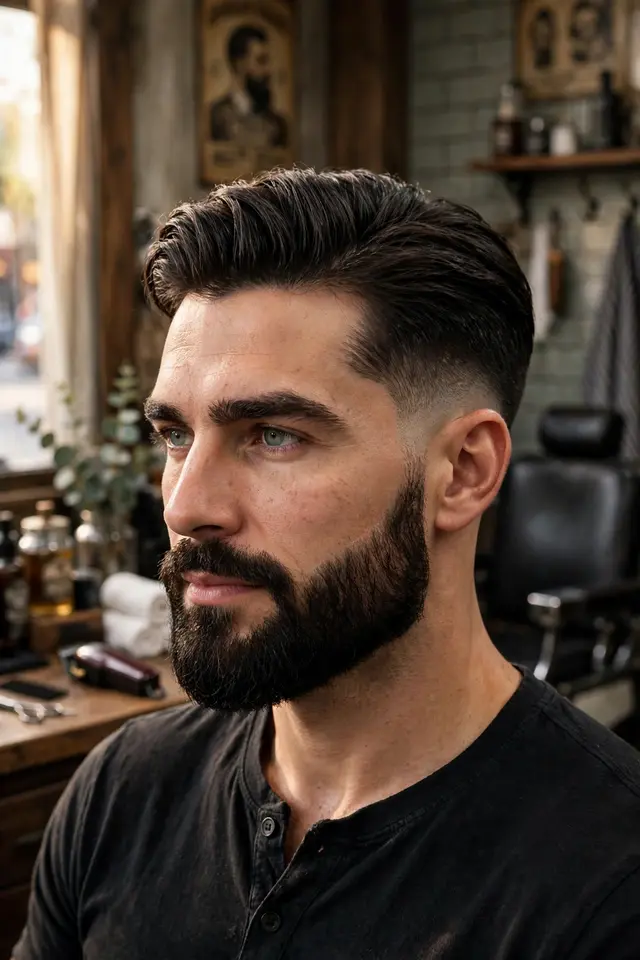
Why do an undercut and a beard complete each other?
Balance. The undercut strips the sides of the head bare of weight; a full, shaped beard returns that weight to the jaw, so the face reads engineered rather than top-heavy. It is the combination barbers photograph most from this family — precision above, presence below — and the rule is the same as with every beard pairing in our guides: the beard must be groomed to the cut’s standard, or it drags the whole look down to its level.
Face Shape: The beard adjusts what the cut cannot — fuller at the chin lengthens round faces; tighter sides slim square ones.
Grooming Kit: Beard oil and a boar brush join the undercut kit; the sideburn junction needs blending at every visit.
Maintenance: Sides on the undercut rhythm; beard edges every few days, shaped professionally with each haircut.
Barber Script: “Undercut on top, beard shaped full but precise — blend the sideburns so the beard and the cut meet cleanly.”
Q: Should the beard fade into the undercut’s sides?
A: It can — a beard fade at the sideburn is the most polished junction. Or keep a clean step between them; both work, but a fuzzy in-between does not.
Q: Which grows first — the undercut or the beard?
A: Either, but finish them together. A fresh undercut over an untended beard looks like two different men sharing a face.
Precision above, presence below — the engineered portrait.
17 of 20 — Undercut for a Receding Hairline

Can an undercut work with a receding hairline?
In its soft form, yes — and this guide will be honest about the limits. A hard disconnected undercut is the wrong choice for recession: the exposed sides and swept-back top spotlight the temples. Undercut for a receding hairline instead takes the faded version, keeps the sides’ transition soft, and wears the top forward or to the side so the front length covers the corners. Chosen that way, the family’s contrast still works for you; chosen the classic way, it works against you.
Face Shape: All faces with early-to-moderate recession. Advanced recession is better served by the short undercut or a crop — your barber should say so honestly.
Grooming Kit: A matte volumising product and a dryer for front volume; shine and wet finishes expose the temples.
Maintenance: Every three to four weeks — the front length’s placement is the strategy, and it must stay where the barber put it.
Barber Script: “Undercut for a receding hairline — faded version only, soft transition, top worn forward over the corners. Nothing disconnected, nothing slicked back.”
Q: Why is the disconnected version so bad for recession?
A: Geometry. The hard line and bare sides draw the eye to exactly the temple points you want softened, and a swept-back top exposes the full hairline. Every element points the wrong way.
Q: What is the safest undercut styling with a hairline like mine?
A: Forward, with texture — the fringe version (Style 15) at a moderate length. It uses the family’s sides while the top does camouflage work.
The honest version — the family’s contrast, aimed carefully.
18 of 20 — The Two-Block Undercut
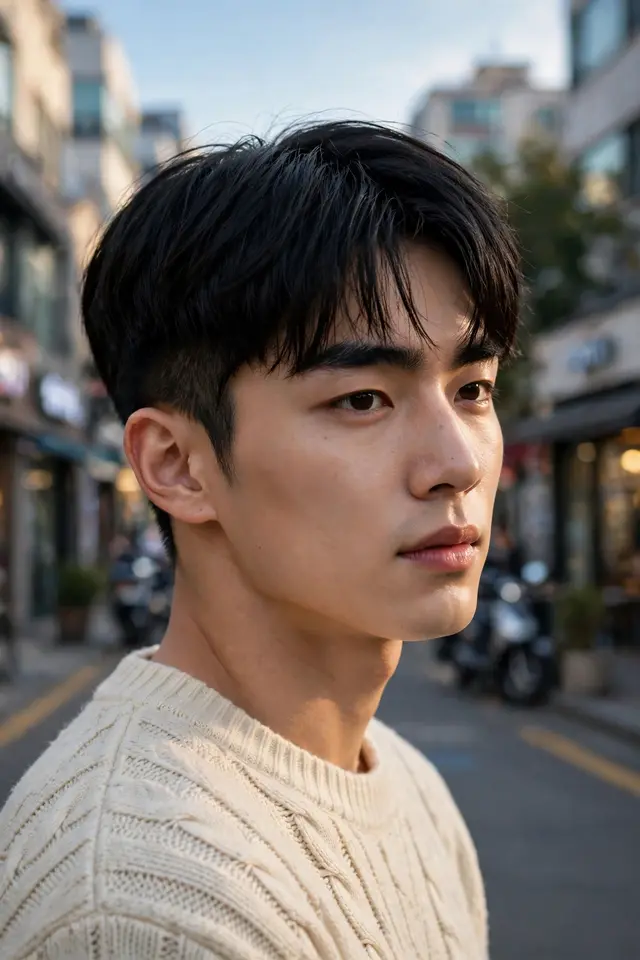
What is the two-block, and why is it in an undercut guide?
Because it is the undercut’s Korean cousin — and one of Pinterest’s biggest risers, with searches up over 200 percent in the platform’s men’s trend data. The two-block undercut cuts the hair into two distinct blocks: the sides and back clipped short like an undercut, the top left as a separate, longer layer that sits over them, often with a soft fringe or a comma-shaped front. It delivers the family’s contrast with a gentler, more fashion-forward finish, straight from the K-drama reference photos.
Face Shape: Oval and angular faces suit the block geometry; the soft fringe version flatters longer faces.
Grooming Kit: A light cream or wax and a dryer — two-block tops are shaped with heat, then left matte and natural.
Maintenance: Every three to four weeks; the block line softens more gracefully than a hard disconnection.
Barber Script: “Two-block cut — sides and back clipped short, top left as a separate longer block, soft fringe at the front.”
Q: Two-block or undercut — what is the real difference?
A: Degree and finish. The two-block’s top sits as a distinct cap with softer edges and usually a fringe; the classic undercut’s top is longer, heavier and worn back or over. Cousins, not twins.
Q: Does the two-block suit non-Asian hair?
A: Yes, with adjustments — wavy and thick hair take it well with layering; very fine or curly hair changes the silhouette enough that your barber should adapt the block lengths.
The Korean cousin — contrast, with a softer accent.
19 of 20 — Winter Undercut
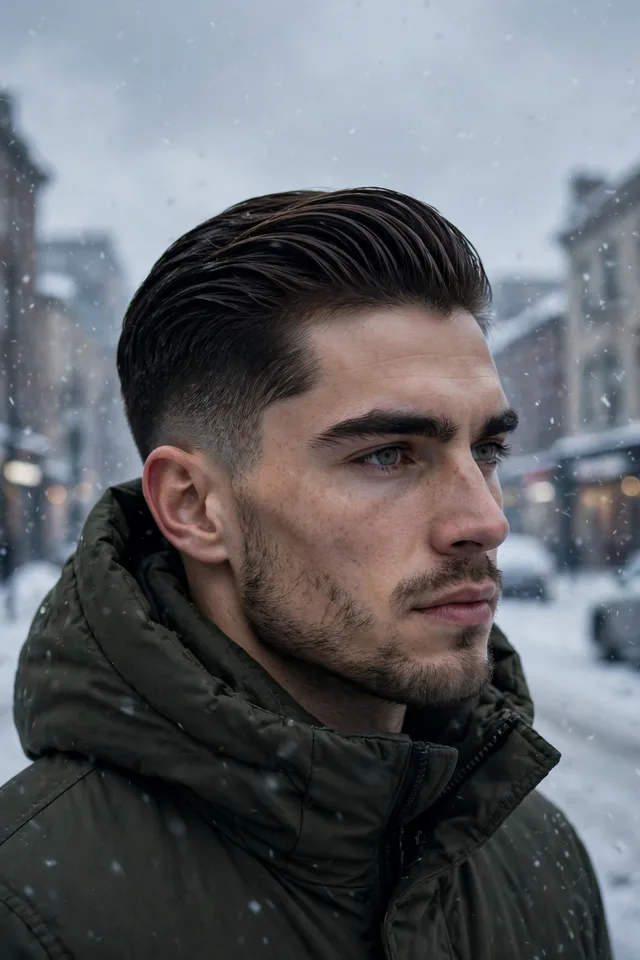
Why does winter suit the undercut?
Because the season’s clothing finishes it. A winter undercut’s clipped sides sit flat under beanies without the bulk that makes longer sides bulge, the long top stays clear of coat collars and scarves, and the contrast reads sharp against heavy layers. The one winter rule: the exposed sides feel the cold, so the beanie is not optional — and this cut, unlike longer styles, survives under it and revives with a comb in thirty seconds.
Face Shape: All faces — choose the underlying version by face shape as normal; winter changes the routine, not the cut.
Grooming Kit: A richer conditioner than summer for the top, a travel comb for the post-beanie reset, and moisturiser for the clipped sides against dry air.
Maintenance: Keep the normal side-trim rhythm through winter; letting the sides grow “for warmth” just produces an untidy cut that is still cold.
Barber Script: “Winter undercut — my usual version, top a touch longer for the season. I wear a beanie and heavy collars over it.”
Q: Do beanies ruin an undercut?
A: They flatten the top, but the short sides mean there is nothing to tangle or bulge — comb the top back into place and it is restored. Put the beanie on back-to-front to preserve the top’s direction.
Q: Should I grow the sides out for winter warmth?
A: No — a #2 side under a beanie is warm; a grown-out undercut under a beanie is just messy. Keep the cut, wear the hat.
The beanie-proof cut — contrast that survives the cold.
20 of 20 — The Undercut King
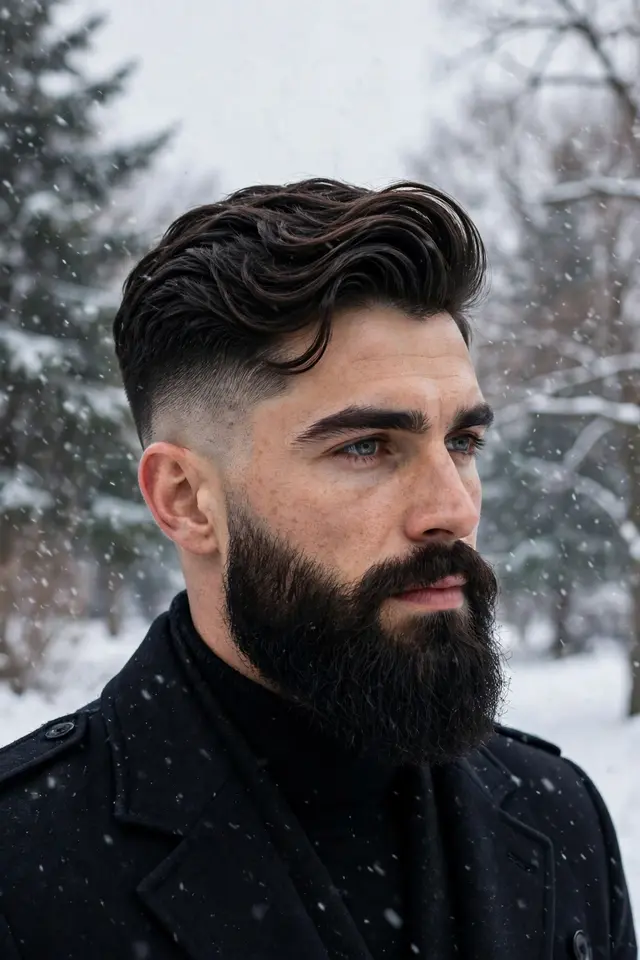
What does the complete undercut obey?
Every rule in this guide at once. The Undercut King runs the full architecture — a textured top at full length, worn with a deliberate sweep, over sides faded so cleanly the contrast needs no hard line, with a shaped beard returning the weight below — finished in falling snow, because winter is when this cut’s engineering shows best against heavy coats and grey streets. Nothing is accidental: the top is point-cut, the fade is gradient-perfect, the beard is balanced, and the whole thing still takes five minutes a morning.
Face Shape: Any face that can grow the beard — the combination is engineered balance, and the fade and beard adjust to the face wearing them.
Grooming Kit: The full bench: matte clay, light cream, a real comb, a dryer, beard oil, and a barber who knows the destination.
Maintenance: Sides every two to three weeks without exception, beard shaped at every visit — the king runs on appointments, not hope.
Barber Script: “The full undercut — textured top at full length, swept, sides faded clean, beard shaped to balance. Every rule: length, texture, contrast.”
Q: What makes this the king and not just a disconnected undercut with extras?
A: The judgement. A disconnected undercut is one loud decision; the king balances length, texture, a gradient fade and a beard against each other — the contrast is total, but nothing shouts.
Q: How do I keep the king looking royal all winter?
A: Condition the top against dry air, keep the side appointments sacred, reset the top after every beanie, and never let a trim shorten the top’s length — the length is the crown.
Every rule obeyed — contrast, at its ceiling.
The Bottom Line
An undercut is a decision, not a default — and that is exactly its appeal. Choose your transition first: disconnected if you want the statement and accept the fortnightly line, faded if you want the family in its modern, wearable form. Then choose your top: slicked back for the flagship, side-swept for the polish, textured or fringed for ease, curly and wavy as nature gave them. Match the version to your hair honestly — thick hair was born for this cut, fine hair must take it short and soft, and a receding hairline should stay faded and forward. Keep the sides’ appointments sacred, because an undercut is maintained from below. Prefer your contrast with a part instead of a sweep? Our side part hairstyles for men guide is the same architecture with manners, and our fade haircuts for men guide covers every fade these sides can wear. Pick your line — hard or soft — and wear it like you mean it.