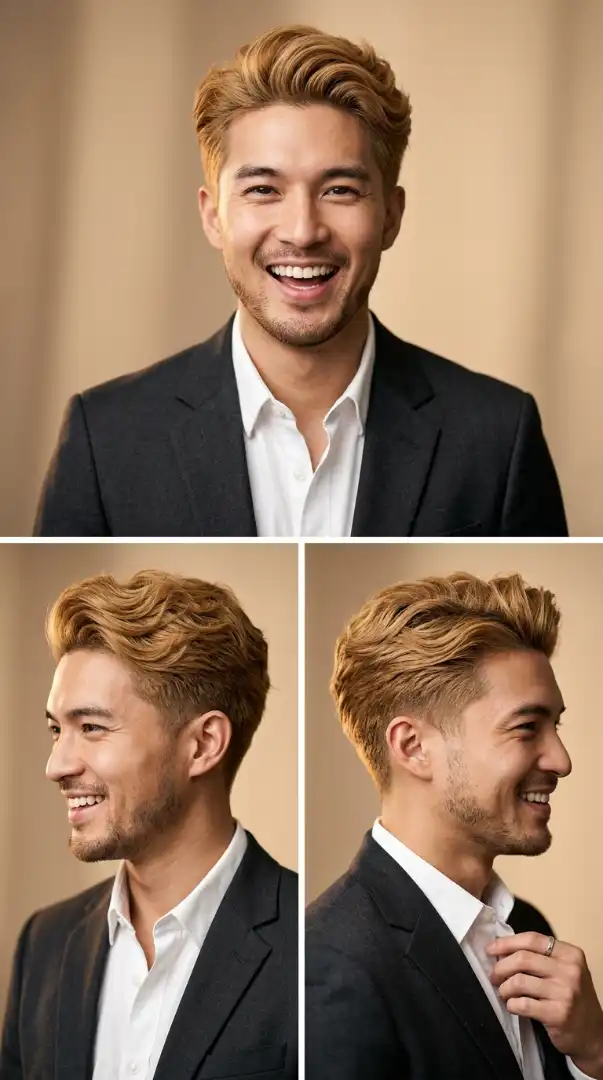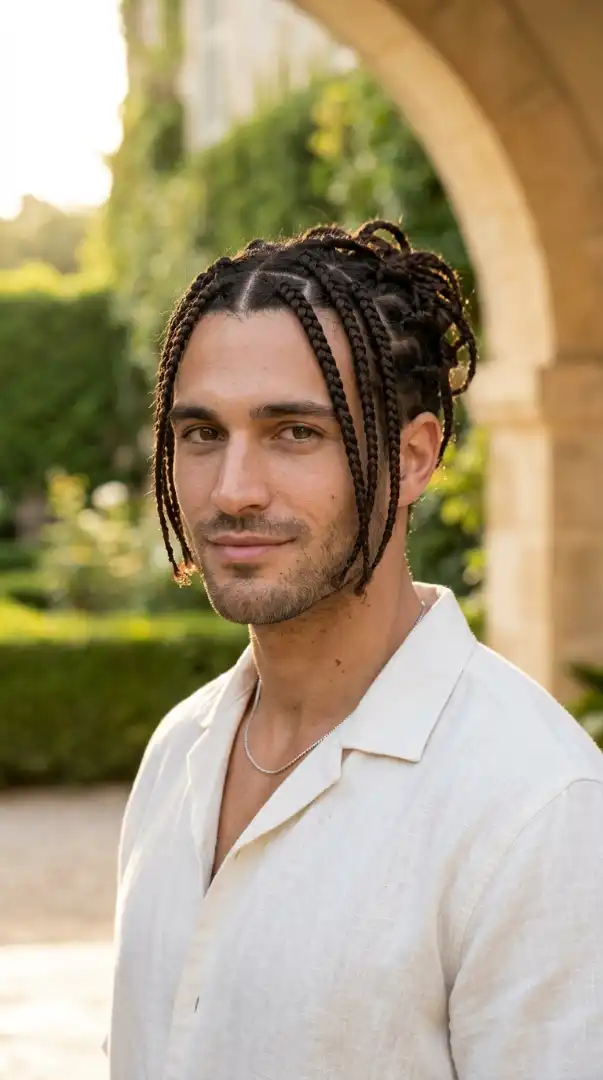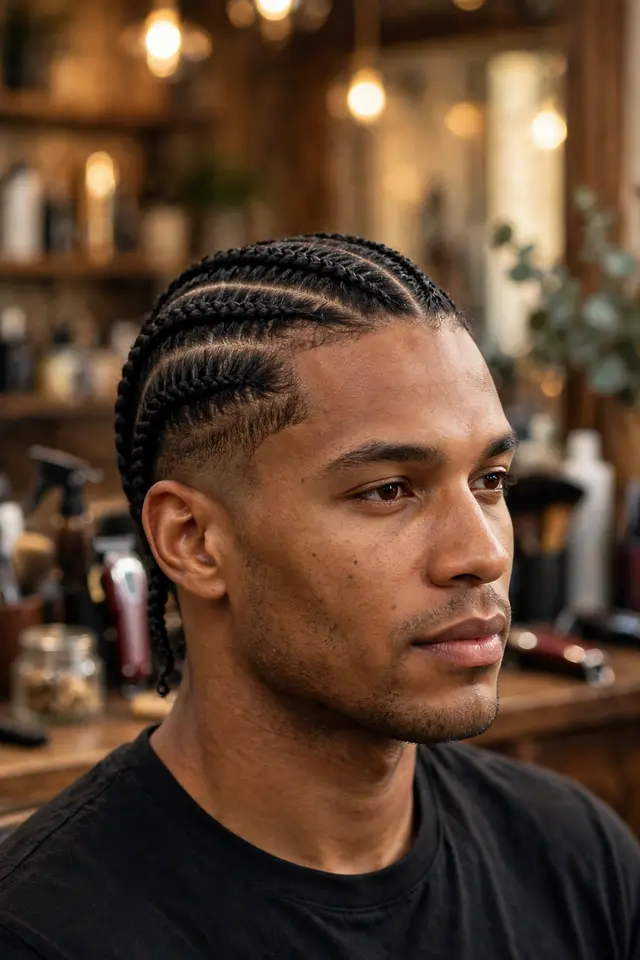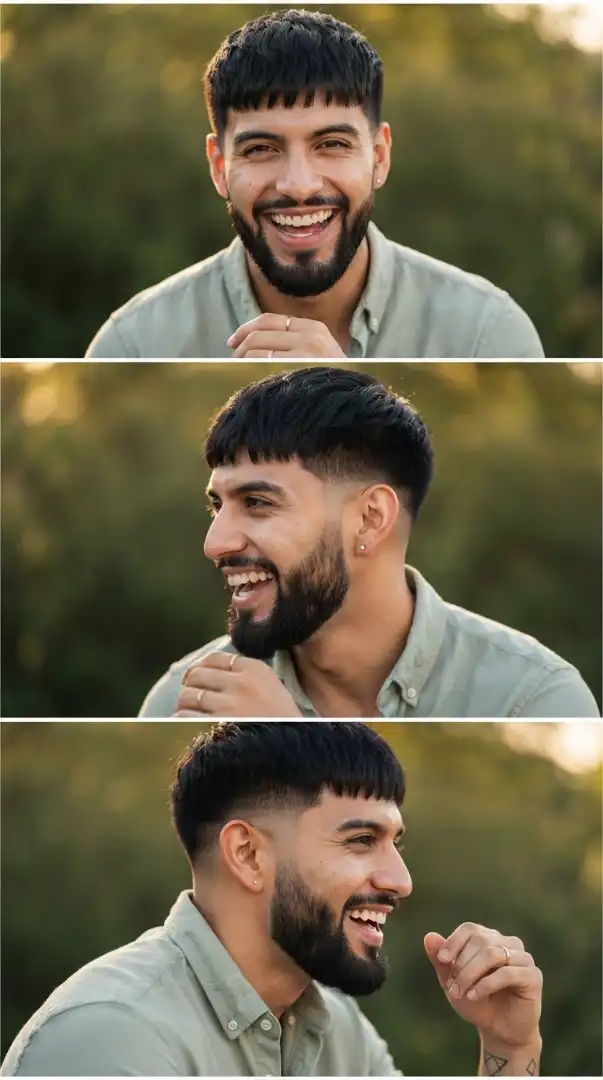
20 Spiky Hairstyles for Men: Textured, Short & Modern Versions
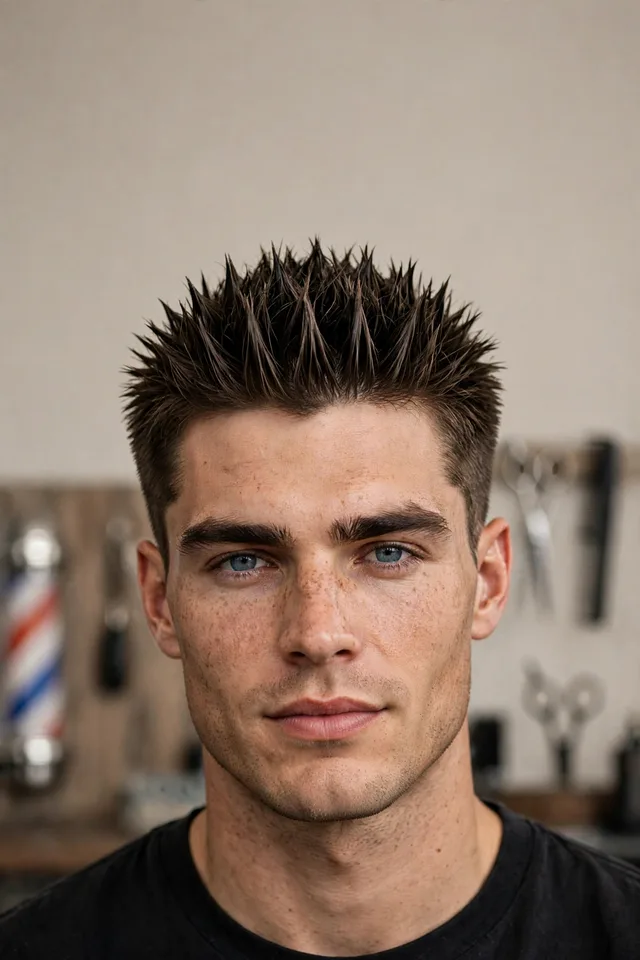
The loudest haircut of the 2000s is back — and it has grown up. Searches for “hair spikes” have surged 112 percent year over year on booking-platform data, two of the most quoted creative directors in barbering are predicting spikes and statement shapes as a defining 2027 direction, runway round-ups put spiky hair first among next season’s men’s trends, and celebrities have started wearing defined spikes again. But read the fine print before you picture the old look: the spikes that are returning are not the hard, gelled, frosted hedgehog of twenty years ago. The modern spike is textured, separated and matte — built by the cut first and finished with clay, not cemented with gel.
So what makes a spike modern? Three things. The top is point-cut into pieces, so the spikes are separated strands with air between them, not one solid ridge. The product is matte — clay or wax, pinched into the ends — so the finish reads dry and deliberate instead of wet and crunchy. And the spikes stay short: one to three inches, tall enough to stand, short enough to look like hair rather than a costume. Get those three right and spiky hair becomes what the trend lists say it is — the energetic, youthful, surprisingly versatile cut of the moment. Get them wrong and you are wearing a tribute act.
Inside: the classic blueprint, the textured hero version, taper, mid fade, high fade and skin fade pairings, the spiky crop, the short spike, the forward fringe, the faux hawk, versions for thick, fine, straight, wavy and curly hair, the messy take, the beard pairing, the receding-hairline case, the winter version, and the complete look that obeys every rule. Each comes with the face shapes it flatters, the kit it needs, the upkeep it honestly demands, and the exact words to say in the chair. For the spiky top inside a rugged cut family, see our warrior cut hairstyles for men guide; for the short textured base many spikes are built on, our textured crop hairstyles for men guide is its home.
1 of 20 — The Classic Spiky Haircut
What is the classic spiky haircut?
The blueprint. The classic spiky haircut runs the top at one to two inches, point-cut for separation, with the sides scissor-cut short and neat, and the top lifted into even, separated spikes with a matte product. No fade theatrics, no extreme lengths — the balanced original from which every louder version in this guide is derived, rebuilt with modern texture instead of 2000s gel.
Face Shape: Oval and square faces wear it best — the vertical spikes add height that balances a strong jaw.
Grooming Kit: A matte clay or wax and your fingers. Spikes are pinched into place, never combed.
Maintenance: Every three to four weeks — spikes lose their separation as the top grows past its length.
Barber Script: “Classic spiky — top at an inch and a half to two inches, point-cut for separation, sides scissor-cut short. I’ll spike it with matte clay.”
Q: How is the modern classic different from the 2000s version?
A: Texture and finish. The old version was gelled into hard, shiny points; the modern classic is point-cut, separated and matte — same silhouette, completely different surface.
Q: How long does morning styling take?
A: Two minutes once the cut is right: product on dry hair, pinch the ends up piece by piece. If it takes longer, the top is too long.
The blueprint — spikes with air between them.
2 of 20 — Textured Spiky Hair
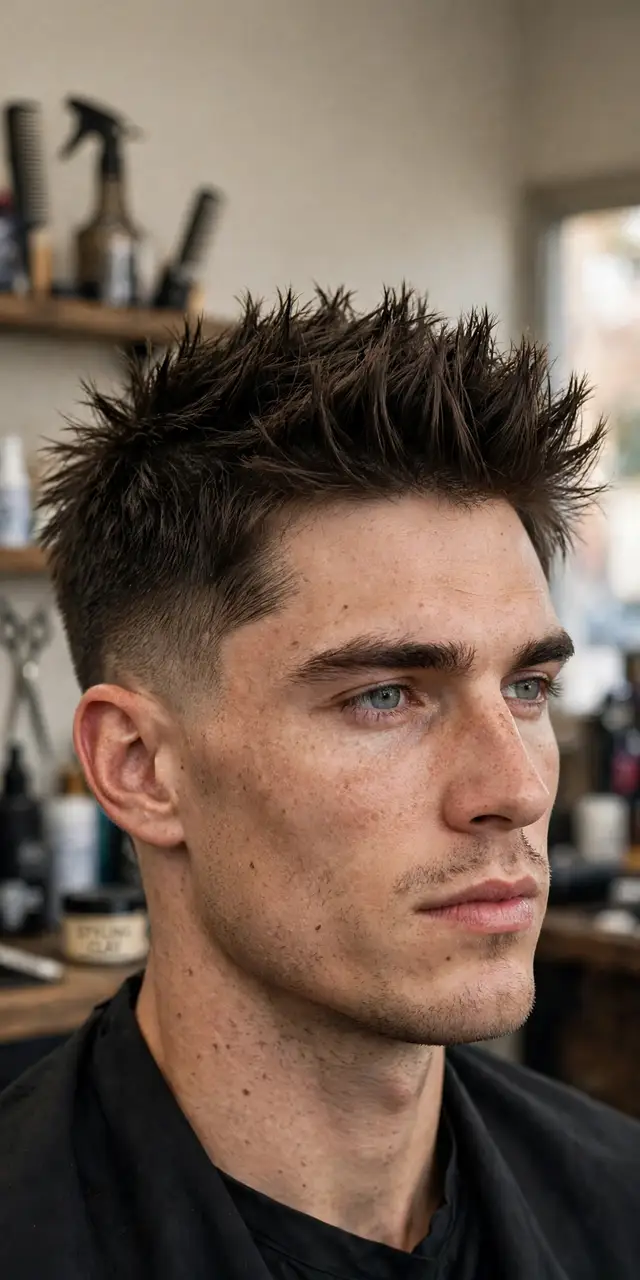
Why is textured the hero version?
Because texture is what separates 2027’s spike from the tribute act. Textured spiky hair point-cuts the top heavily so it breaks into individual pieces, then lifts those pieces into soft, separated spikes with movement between them. It is the version trend lists mean by “modern textured spiky hair” — energetic but grown-up, the spike rebuilt for the texture era.
Face Shape: All faces — the piecey top adds width on narrow faces and breaks up roundness on fuller ones.
Grooming Kit: A matte clay, pea-sized, on fully dry hair; a pinch of fibre for stubborn pieces.
Maintenance: Three to four weeks; the point-cutting keeps pieces separable longer than a blunt top.
Barber Script: “Textured spiky — two inches on top, heavily point-cut into pieces, sides short. Spikes soft and separated, matte finish.”
Q: Textured spikes or classic spikes — which should I choose?
A: Textured, for almost everyone in 2027 — it photographs better, forgives uneven growth and reads modern. The classic is the tidier, more uniform option.
Q: Why do my spikes fall flat by midday?
A: Product on damp hair, or too much of it. Clay goes on bone-dry hair, ends only — weight at the roots is what pulls spikes down.
The hero version — every spike its own piece.
3 of 20 — Spiky Hair with a Low Taper Fade
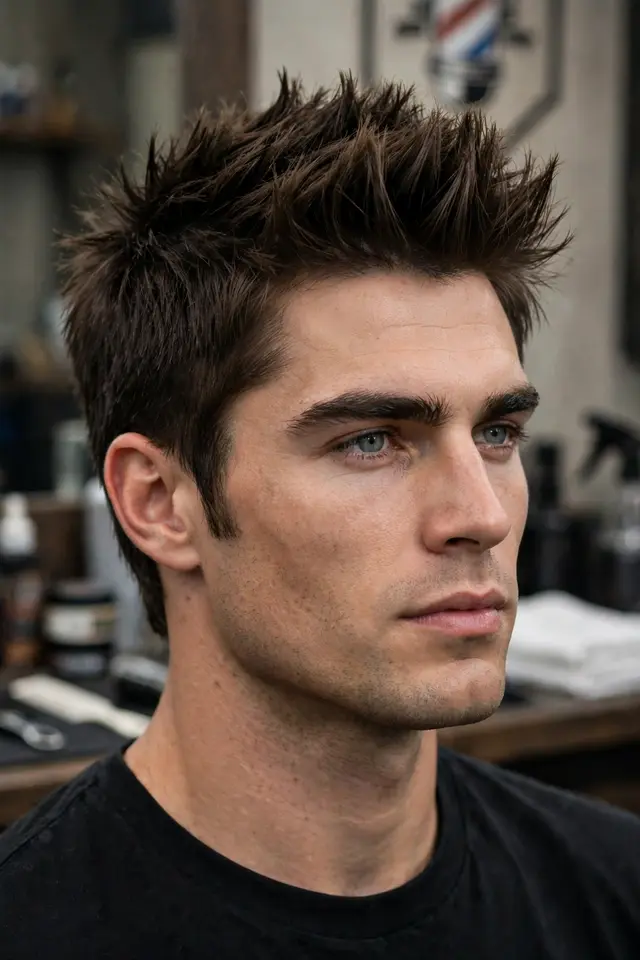
Why pair spikes with a low taper?
Because it is the softest way in. Spiky hair with a low taper fade keeps the textured, lifted top, then tapers only the sideburns and neckline — no fade line climbing the side, no skin. The spikes bring the energy, the edges stay quiet, and the grow-out is the kindest of any spiky pairing in this guide.
Face Shape: All faces, and the safest choice for conservative workplaces that still want the trend.
Grooming Kit: Matte clay for the top; the taper asks for nothing.
Maintenance: Four weeks comfortably — tapered edges blur gracefully instead of expiring.
Barber Script: “Spiky with a low taper fade — textured top at two inches, lifted. Taper the sideburns and neckline only, keep the sides’ length.”
Q: Low taper or scissor sides with spikes?
A: Scissor sides are the classic pairing; the low taper is cleaner at the edges with a softer grow-out. The top — and the spikes — stay identical.
Q: Does the low taper suit a beard?
A: Beautifully — the taper’s gentle edge meets the beard’s top line without a hard junction. It is the grown-up way to wear spikes.
Energy on top, whisper at the edges.
4 of 20 — Spiky Hair with a Mid Fade
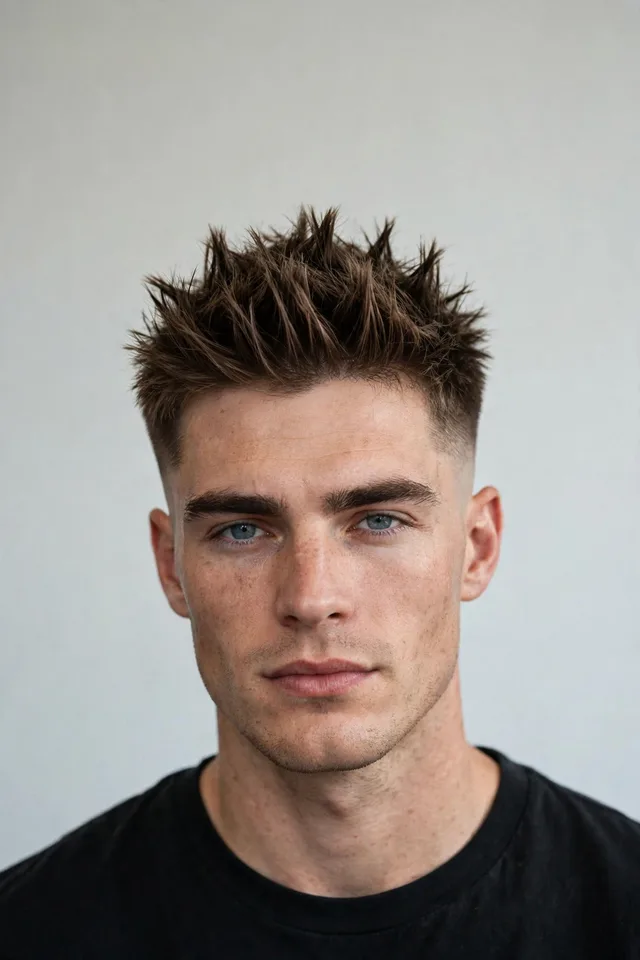
What does the mid fade add?
Balance. Spiky hair with a mid fade blends the sides away at mid height, giving the lifted top a clean frame without the full exposure of a high fade. It is the most-booked spiky pairing in barbershops for a reason: sharp enough to read deliberate, soft enough to wear anywhere.
Face Shape: Round and oval faces gain most — the faded sides slim the head while the spikes add height.
Grooming Kit: Matte paste or clay for the top; nothing for the sides.
Maintenance: Every three weeks — mid fades show their regrowth line on schedule.
Barber Script: “Spiky with a mid fade — textured top around two inches, point-cut, mid fade on the sides blended into the top.”
Q: Mid fade or low taper with spikes?
A: The mid fade is sharper and more defined; the low taper is softer and grows out kinder. Choose by how much contrast you want at the edges.
Q: How do I keep the blend from eating my spikes?
A: Tell the barber to keep the fade below the crown’s weight line — the top’s pieces need their full length to separate and stand.
The balanced pairing — framed, not exposed.
5 of 20 — Spiky Hair with a High Fade
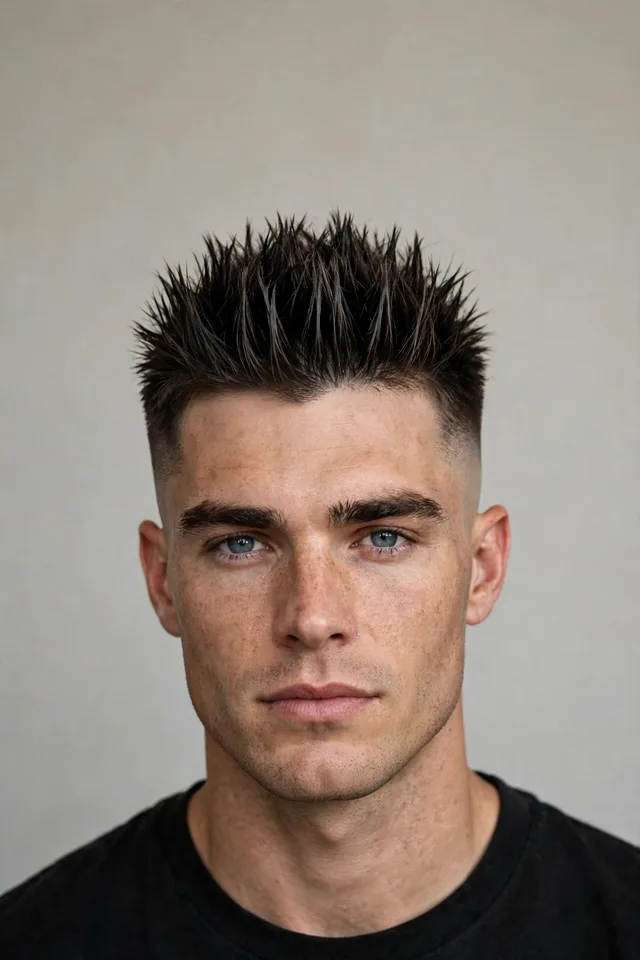
How bold can spiky hair get?
This bold. Spiky hair with a high fade takes the fade up to the temples, leaving the textured top as a standing island — the spikes become the entire silhouette, framed by bare sides. Trend lists single this pairing out as the boldest in the family, and it is the version younger clients ask for by name.
Face Shape: Strong, even features — the exposure is total, so head shape and jaw do the talking.
Grooming Kit: A firm matte clay; the top island must stand all day without help from the sides.
Maintenance: Two to three weeks — high fades show regrowth early and honestly.
Barber Script: “Spiky with a high fade — top two inches, point-cut and lifted, fade taken high to the temples, keep the top’s weight.”
Q: High fade or skin fade with spikes — what differs?
A: Height versus depth. A high fade says where the fade starts (the temples); a skin fade says how short it goes (to skin). This version often does both.
Q: Does a high fade suit a receding hairline?
A: Less well than Style 18 — bare temples beside a thinning front create contrast. The high fade advertises bone structure; it does not hide hairlines.
The spikes as an island — bold water all around.
6 of 20 — Spiky Hair with a Skin Fade
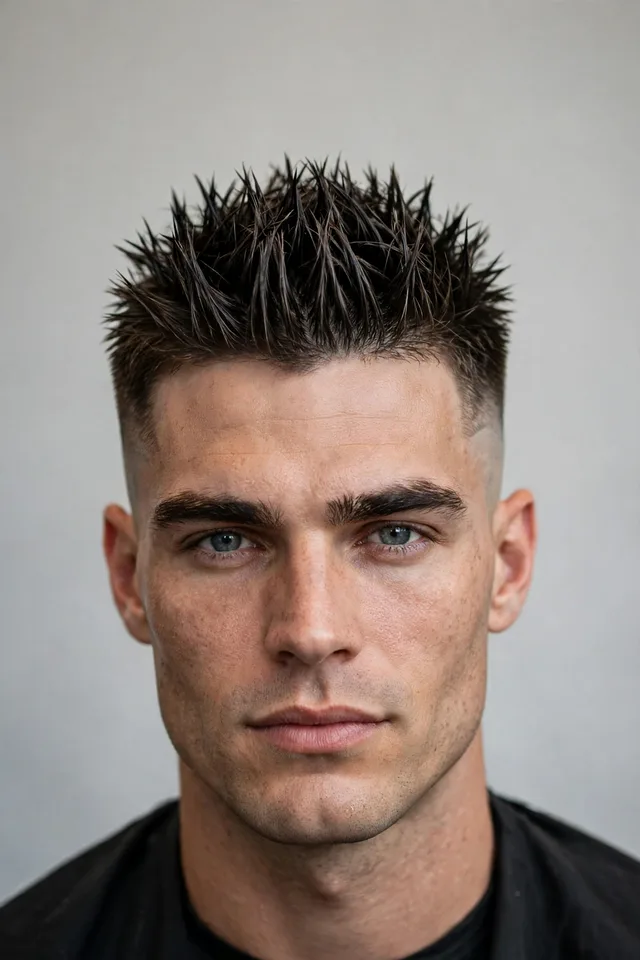
What makes the skin fade version the sharpest?
Contrast at maximum. Spiky hair with a skin fade takes the sides down to the skin and blends up into the standing top, so every spike is drawn against bare skin. It is the crispest, most photographed spiky version — and the one whose upkeep bill arrives fastest.
Face Shape: Angular and oval faces; the total exposure rewards bone structure.
Grooming Kit: None for the sides; matte clay for the top only. Sunscreen for newly exposed skin in week one.
Maintenance: Every two to three weeks — skin fades expire fastest, and this contrast shows it.
Barber Script: “Spiky with a skin fade — textured top at two inches lifted into spikes, skin fade on the sides, blend kept below the crown.”
Q: Is a skin fade spiky office-safe?
A: In creative and casual workplaces, yes; in conservative ones, choose Style 3 — the spikes are identical, only the sides change volume.
Q: How do I keep spikes standing over a skin fade all day?
A: Shorter top, stronger clay, bone-dry hair. Over a skin fade there is no side hair to lean on, so the top’s own length does all the work.
Maximum contrast — every spike drawn against skin.
7 of 20 — The Spiky Crop
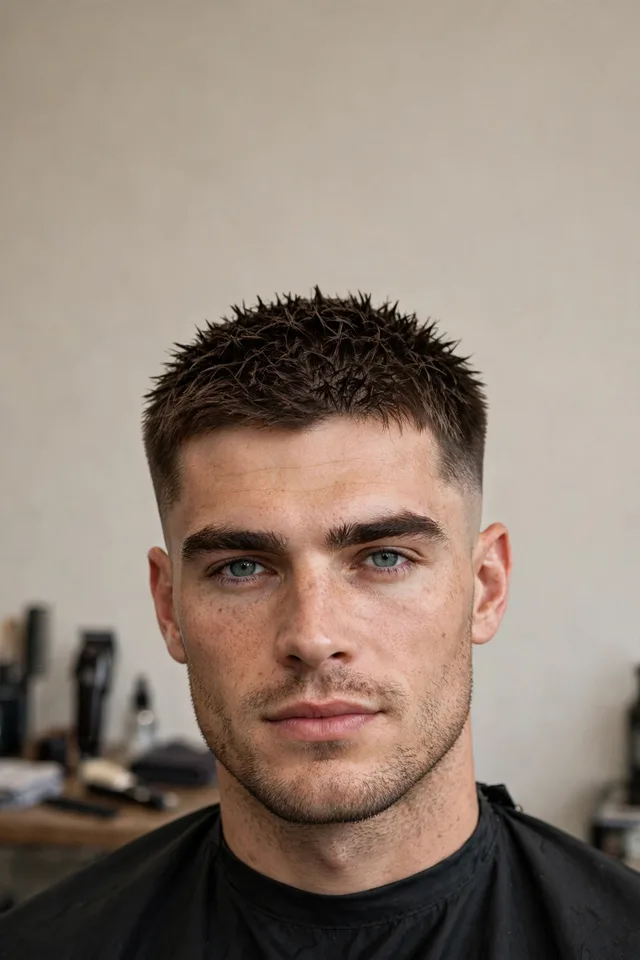
What is a spiky crop?
The spike at minimum length. The spiky crop crops the top short like a textured crop, then pinches the short top into small, separated spikes — energy without height. It is the version stylists recommend to men who want the trend’s texture at the lowest possible styling effort, and it grows out more gracefully than any taller spike.
Face Shape: Oval and angular faces; the tight proportions reward bone structure.
Grooming Kit: A matte fibre, fingertip amount — at this length, a little product does everything.
Maintenance: Three weeks; each visit is quick, and the grow-out stays tidy between them.
Barber Script: “Spiky crop — top cropped to about an inch, point-cut, and I’ll pinch it into short spikes. Sides short and clean.”
Q: Spiky crop or textured crop — what is the difference?
A: Direction. The textured crop lies forward and flat; the spiky crop lifts the same short texture upward into separated points. Same base cut, different finish.
Q: Is the spiky crop good for thinning hair?
A: Very — short, textured and separated is the density formula, as long as the finish stays matte. Wet-look product separates fine hair and shows scalp.
The trend’s texture at minimum height.
8 of 20 — Short Spiky Hair
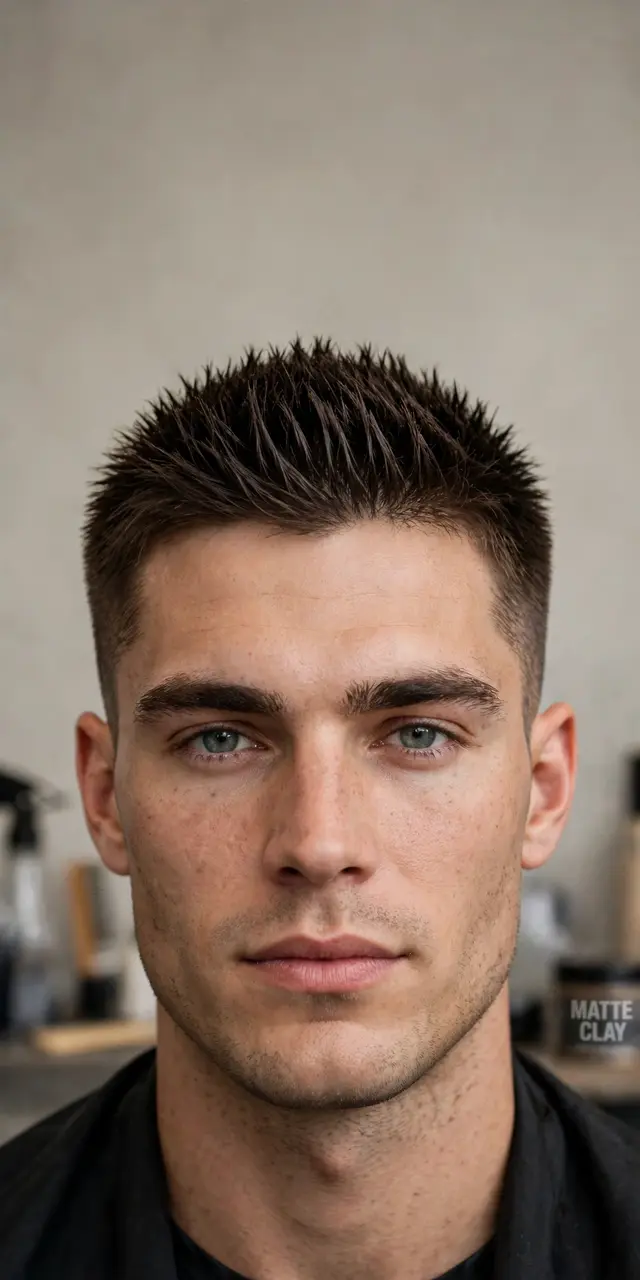
Why is the short spike trending on its own?
Because celebrities made it the reference photo. Short spiky hair keeps the spikes at an inch or under — defined, separated, directional — the version worn in the recent celebrity photos driving the search surge. It reads as grooming rather than statement: the spike for men who want the trend without announcing it.
Face Shape: All faces — at this length the spikes flatter rather than dominate.
Grooming Kit: A light matte paste; short spikes need placement, not hold.
Maintenance: Three weeks — short spikes show their length quickly, but every visit is minutes long.
Barber Script: “Short spiky — top at an inch, point-cut, spikes short and defined. Sides short, nothing extreme.”
Q: Short spikes or a buzz with texture?
A: The spikes are cut and placed — visible separation and direction. A textured buzz is one length with no placement. The short spike is the deliberate version.
Q: Can short spikes work with a cowlick?
A: Yes — spike with the cowlick’s direction, not against it. Short, separated pieces are the easiest way to make a cowlick look intentional.
The celebrity reference — the spike, understated.
9 of 20 — Spiky Fringe
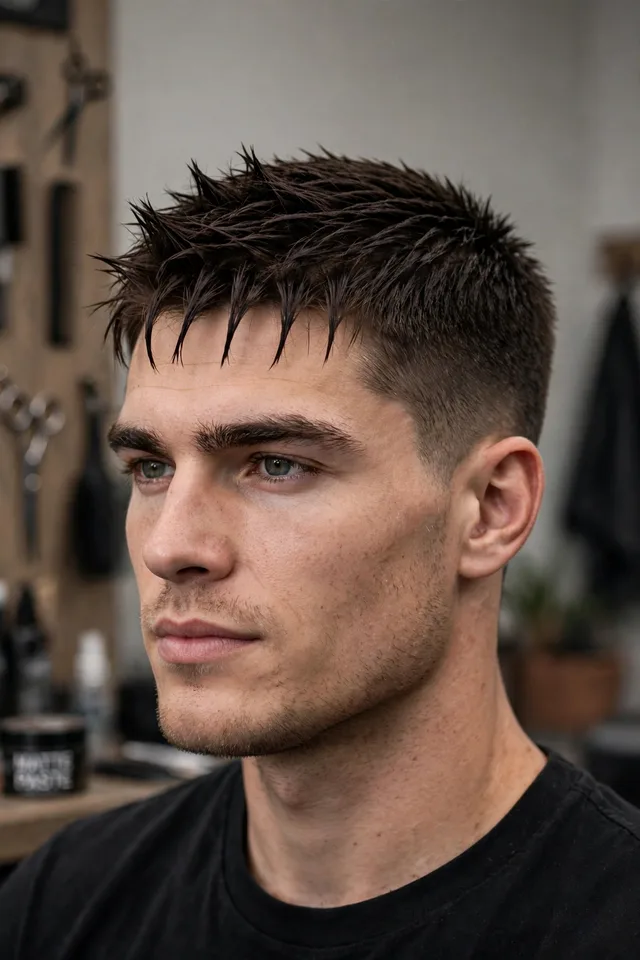
Can spikes point forward instead of up?
They can — and it changes the whole read. Spiky fringe sweeps the textured top forward and pinches the front into separated, spiky points along the forehead: half fringe, half spike. It keeps the family’s energy while borrowing the fringe family’s forehead coverage — the version for men who like spikes but not height.
Face Shape: Long and oval faces gain most — the forward points shorten the forehead while adding texture.
Grooming Kit: A matte clay worked forward; the points are pinched at the front, not lifted.
Maintenance: Three to four weeks; the front points set the appointment rhythm.
Barber Script: “Spiky fringe — textured top at two inches, swept forward, front pinched into separated points. Sides short and clean.”
Q: Spiky fringe or messy fringe — what differs?
A: Definition. The messy fringe’s pieces are uneven and broken; the spiky fringe’s points are separated and deliberate, each one placed. Same direction, sharper intent.
Q: Does a spiky fringe suit a receding hairline?
A: Better than upright spikes — the forward direction covers the temple corners. Keep the points soft and the sides’ length moderate (see Style 18).
Forward points — the fringe with its guard up.
10 of 20 — Spiky Faux Hawk
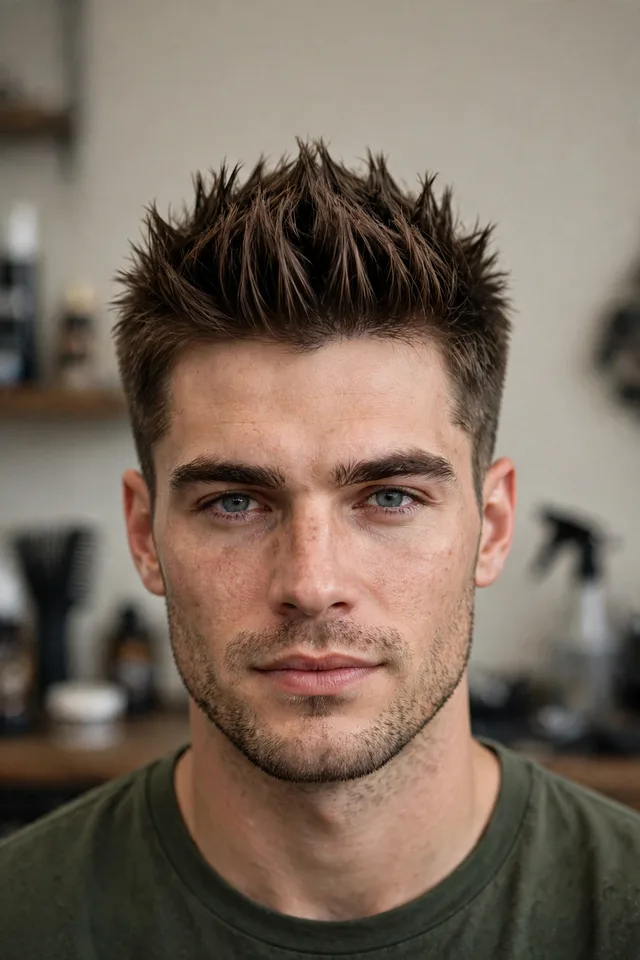
What makes a faux hawk spiky?
The gathering. Spiky faux hawk keeps the sides short and gathers the top’s textured spikes toward a soft centre ridge — the mohawk’s silhouette at a fraction of the commitment. The ridge is pinched, not sculpted: separated spikes leaning together, wearable in daylight, gone with a comb-through.
Face Shape: Oval and narrow faces — the centre ridge adds height and focus without width.
Grooming Kit: A strong matte clay; the ridge needs hold at the centre line, piece by piece.
Maintenance: Three weeks — the sides’ shortness is what keeps the silhouette readable.
Barber Script: “Spiky faux hawk — top two to three inches, point-cut, sides short. I’ll gather the spikes to a soft centre ridge, nothing extreme.”
Q: Faux hawk or full mohawk?
A: The faux hawk keeps hair on the sides and its dignity at the office; the mohawk is shaved and committed. The spiky faux hawk is the trial version of the idea.
Q: How do I stop the ridge looking like a mistake?
A: Gather with product on dry hair, working from the sides toward the centre in small pieces. One big handful makes a lump; small pieces make a ridge.
A soft ridge — the mohawk, on a trial basis.
11 of 20 — Spiky Hair for Thick Hair
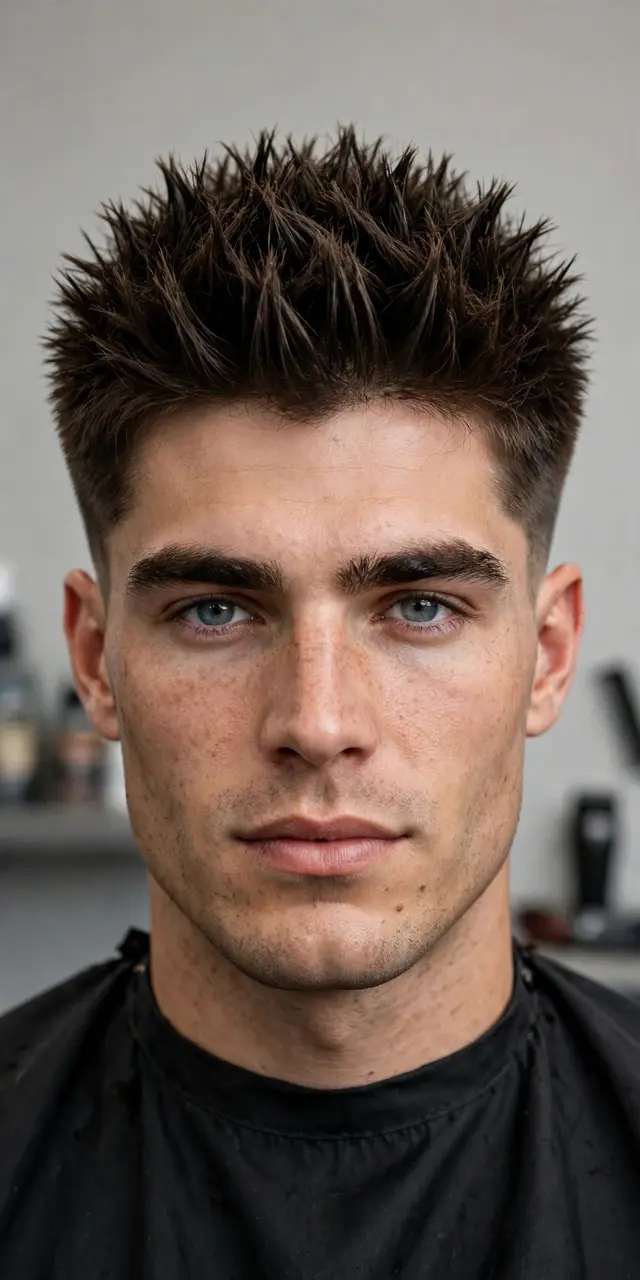
Why do spikes suit thick hair so well?
Because thick hair stands by itself. Spiky hair for thick hair thins the bulk from inside, point-cuts the ends, and lets the hair’s own strength hold the spikes — thick hair is the one type that needs the least product to keep the shape. Barbers call it the easiest spike to maintain, once a barber who removes weight, not length, has built it.
Face Shape: All faces — thick hair’s volume suits the lifted proportions; round faces should keep the sides tighter.
Grooming Kit: A medium matte clay, small amount — thick hair ignores light products and needs less than you think.
Maintenance: Three to four weeks; thick hair regains bulk fast, and the internal thinning is refreshed each visit.
Barber Script: “Spiky for thick hair — top at two inches, point-cut, thin the bulk from inside. I want separated spikes, not a helmet that stands up.”
Q: Why do my thick spikes puff outward instead of up?
A: Bulk. Without internal thinning, thick hair grows out as fast as it grows up. The fix is the barber’s thinning at every visit, not stronger product.
Q: Thick hair — spikes or a textured crop?
A: Both work on the same base. Spikes if you want energy and height; the crop if you want it forward and quiet. The cut underneath barely changes.
Density that stands by itself — thick hair’s easiest trick.
12 of 20 — Spiky Hair for Fine Hair
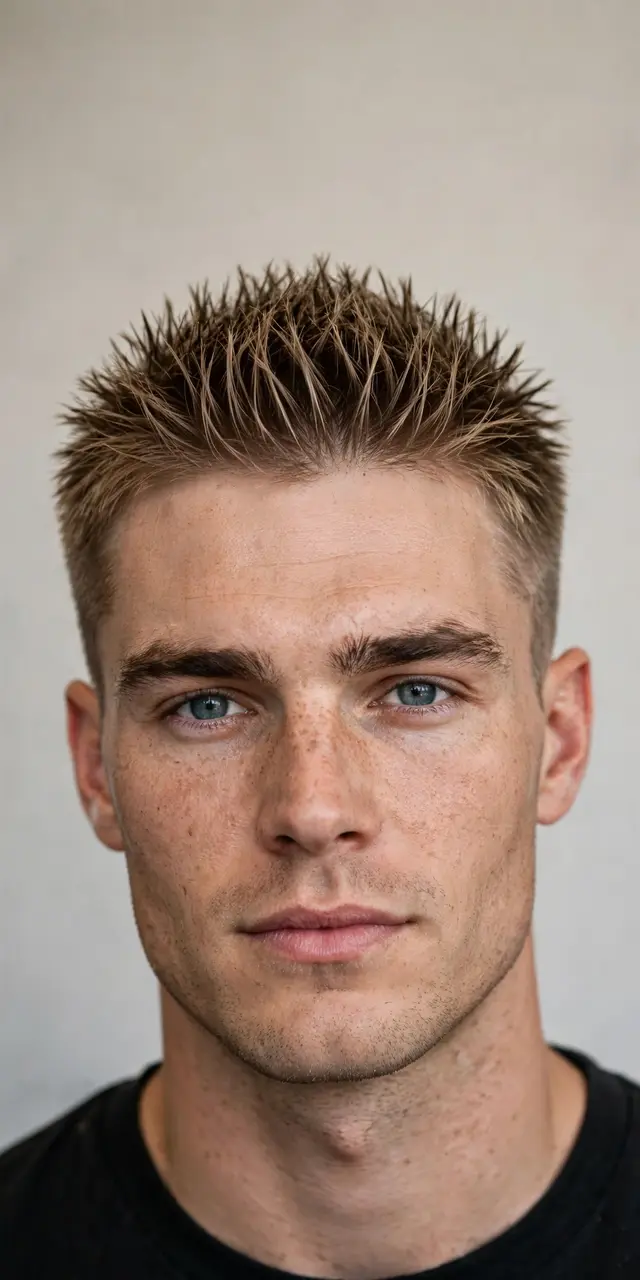
Can fine hair hold spikes?
Yes — if they stay short and light. Spiky hair for fine hair keeps the spikes at an inch or so, builds them from many small separated pieces, and uses the lightest matte products: fine hair’s enemy is weight, and every heavy gel or oil collapses the lift by noon. Done right, the separation makes fine hair read fuller than it is.
Face Shape: All faces — short, light spikes flatter fine hair on any bone structure.
Grooming Kit: A matte volumising paste or dry texture spray; thirty seconds of dryer time upward does more than any product.
Maintenance: Every three weeks — fine hair shows regrowth separation sooner, and shortness is the strategy.
Barber Script: “Spiky for fine hair — top short, around an inch, point-cut lightly. Keep every bit of density; no thinning shears.”
Q: Why must fine hair avoid thinning shears here?
A: Fine hair has no bulk to spare — thinning removes the overlap that creates fullness. Its texture comes from shortness and product, never from shears.
Q: Which products kill fine spikes fastest?
A: Gels, oils and anything shiny or heavy. Wet weight is the enemy; matte, dry and light is the whole strategy for this version.
Short, light, separated — fine hair’s honest lift.
13 of 20 — Spiky Hair for Straight Hair
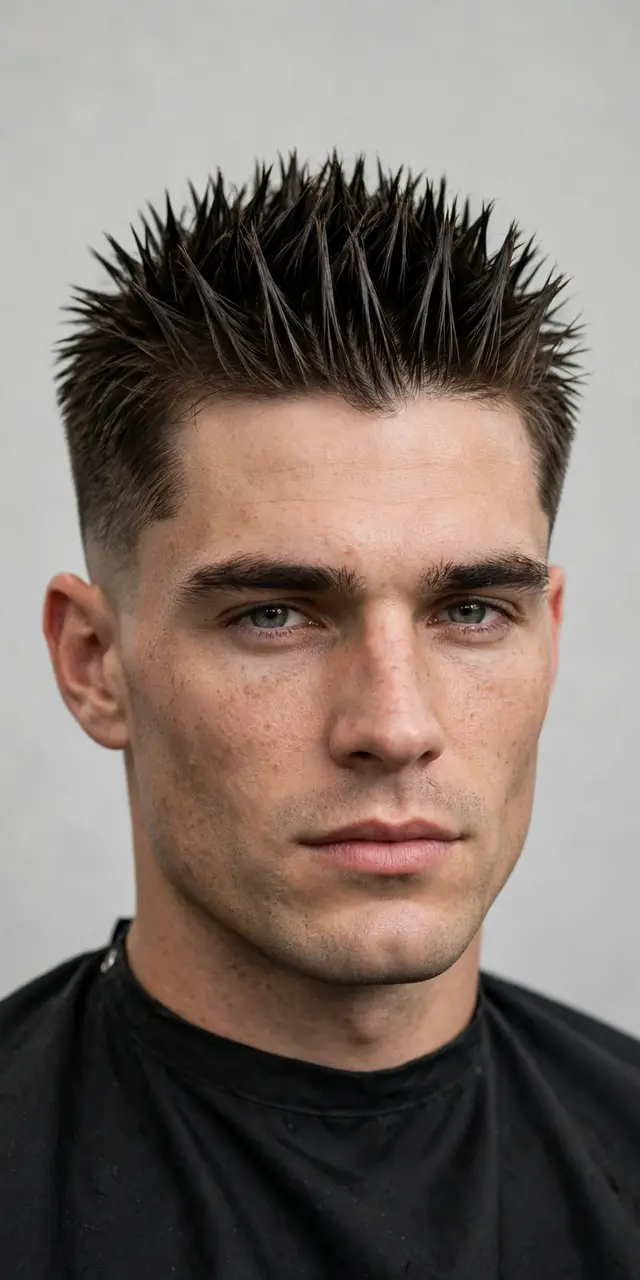
Why is straight hair the spike’s natural home?
Because it stands where it is put. Spiky hair for straight hair lifts the even top into clean, separated spikes that hold their lines all day — no training, no persuasion. Straight hair also shows spike geometry most honestly: every piece is visible, which is why the point-cutting has to be precise.
Face Shape: All faces; long faces should keep spikes shorter so the added height stays in proportion.
Grooming Kit: A matte clay for separation — straight hair’s only spiky problem is lying in one flat sheet by evening.
Maintenance: Three to four weeks; straight hair shows the pieces merging first, so keep the rhythm.
Barber Script: “Spiky for straight hair — top at an inch and a half to two inches, point-cut for separation, spikes clean and even. Sides short.”
Q: How do I stop straight spikes looking like a hedgehog?
A: Vary the pieces. Hedgehog comes from identical, evenly-spaced points; ask for varied piece sizes and pinch some forward, some up. Irregularity is the modern part.
Q: Straight hair — classic or textured spikes?
A: Textured (Style 2) for most — the classic’s uniform points are the one version that can read dated on pin-straight hair. Separation modernises it.
Clean lines that hold — straight hair hides nothing.
14 of 20 — Spiky Hair for Wavy Hair
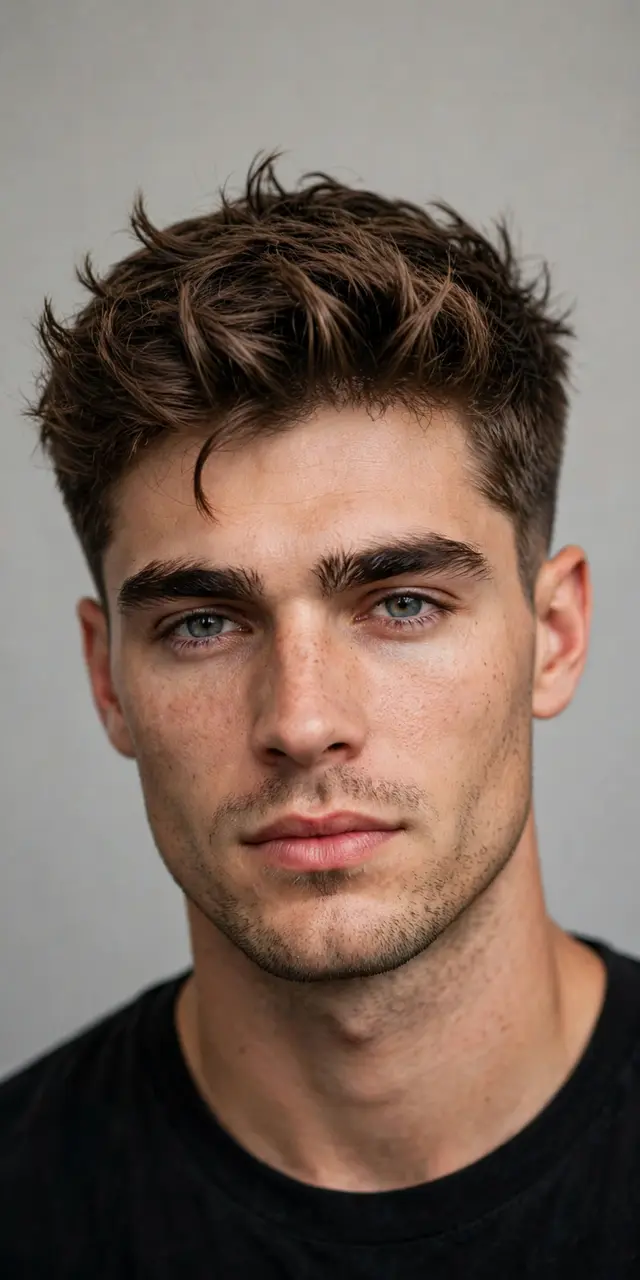
What does the wave do to spikes?
Softens them — in a good way. Spiky hair for wavy hair shapes the top’s natural bend into soft, forward-leaning spikes: the wave gives every piece a curve, so the result reads relaxed where straight spikes read sharp. It is the version for men whose hair refuses to lie flat and has decided to make that the feature.
Face Shape: Oval and rectangular faces; the soft spikes add width that narrow faces welcome.
Grooming Kit: A light cream or matte paste for definition; heavy clay flattens the wave you are trying to keep.
Maintenance: Three to four weeks — waves grow out softly and forgive a late appointment.
Barber Script: “Spiky for wavy hair — top around two inches, cut with the wave, spikes soft and forward-leaning. Sides short and clean.”
Q: Should the spikes follow the wave or fight it?
A: Follow it — always. Spikes placed against the wave’s bend collapse and split. Place them where the wave already leans and they hold themselves.
Q: Wavy spikes or a wavy fringe?
A: Length and direction. The fringe lies forward and longer; the spiky version is shorter, lifted and separated. Same hair, different energy.
Soft spikes — the wave, given a direction.
15 of 20 — Spiky Hair for Curly Hair
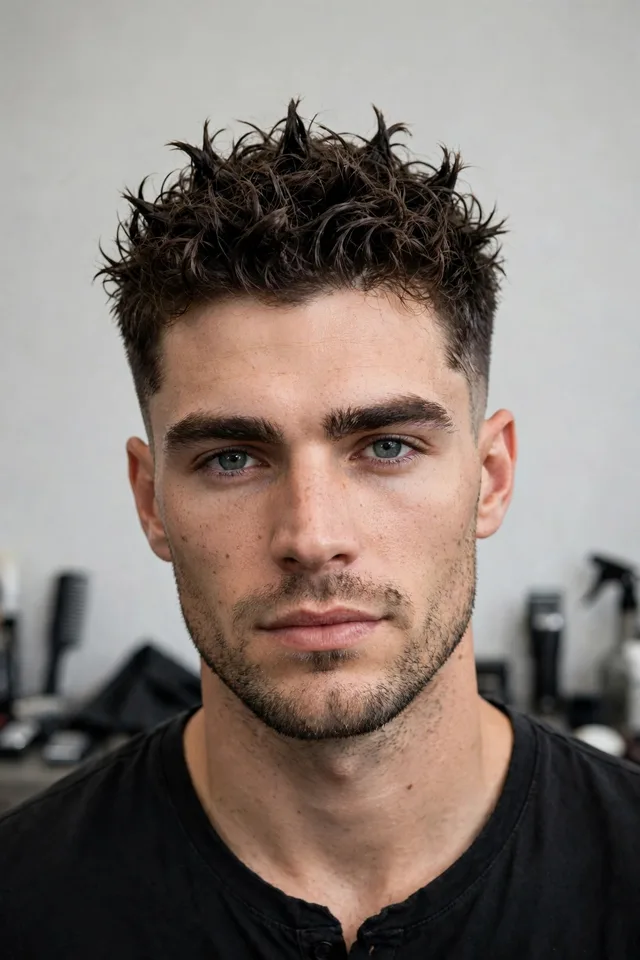
How do curls become spikes?
By shortening them into pieces. Spiky hair for curly hair keeps an inch or two of curl on top, cut dry, and defines the curls into separated, upright pieces with a light curl cream — the curl’s natural clumping does the separation work that straight hair needs scissors for. It ends the daily negotiation with longer curls while keeping their character.
Face Shape: All faces — the short, defined top keeps curly volume from widening the head.
Grooming Kit: A curl cream or leave-in for moisture and definition; matte paste only for a piece that needs persuading.
Maintenance: Three to four weeks; curls forgive side regrowth, but the pieces’ length sets the appointment.
Barber Script: “Spiky for curly hair — top at an inch and a half to two inches, cut dry, curls defined into separated upright pieces. Sides short.”
Q: Should curly hair be cut wet or dry for spikes?
A: Dry, by a barber who knows curls — wet curls stretch and spring back shorter than expected, which is how spiky tops end up an inch too short.
Q: How do I stop curly spikes frizzing by evening?
A: Moisture first, hands off after. Leave-in on damp hair, define the pieces, then let them dry untouched — every touch after that is frizz being made.
Curls, shortened into pieces — character, kept.
16 of 20 — Messy Spiky Hair
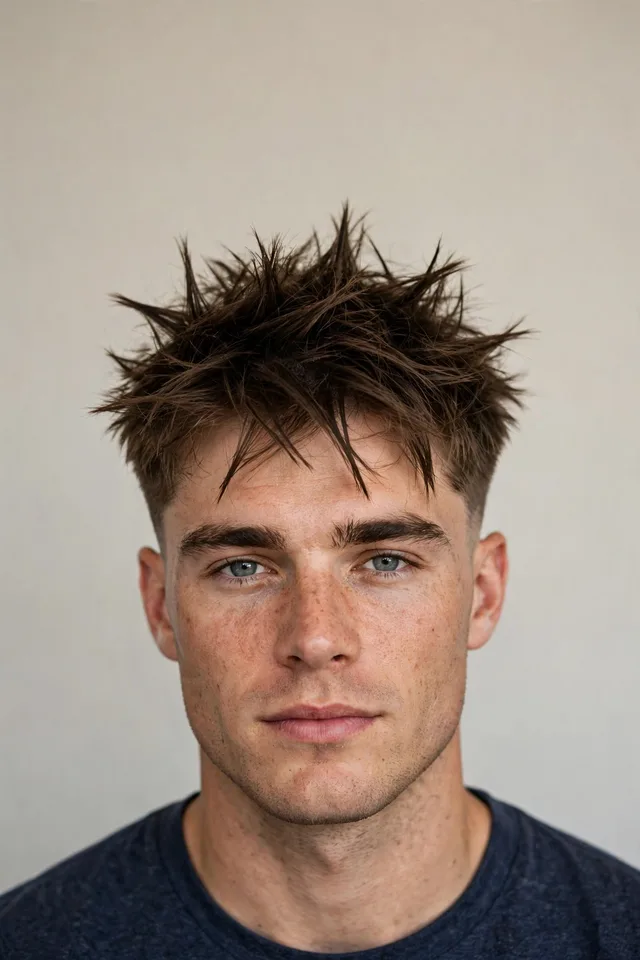
What makes spikes messy on purpose?
Uneven pieces, deliberately placed. Messy spiky hair point-cuts the top into varied, uneven pieces and lifts them in mixed directions — some up, some forward, none identical. It is the version for men who find the classic too tidy: same brevity, same energy, none of the parade-ground finish.
Face Shape: All faces — the irregular pieces soften strong foreheads and flatter narrow faces.
Grooming Kit: A matte paste, fingertip amount, pinched piece by piece — messy is placed, not shaken into being.
Maintenance: Three to four weeks; the mess forgives regrowth better than the uniform versions do.
Barber Script: “Messy spiky — top around two inches, point-cut into uneven pieces, spikes mixed up and forward. Sides short and clean so the mess stays on top.”
Q: Messy spikes or textured spikes — what is the difference?
A: Uniformity. Textured spikes are separated but even; messy spikes vary in size and direction on purpose. One notch further from tidy.
Q: Can messy still look deliberate and not uncut?
A: Yes — the sides are the tell. Clean short sides under an undone top reads as a style; grown-out sides under it reads as neglect.
Placed chaos — every piece uneven on purpose.
17 of 20 — Spiky Hair with a Beard
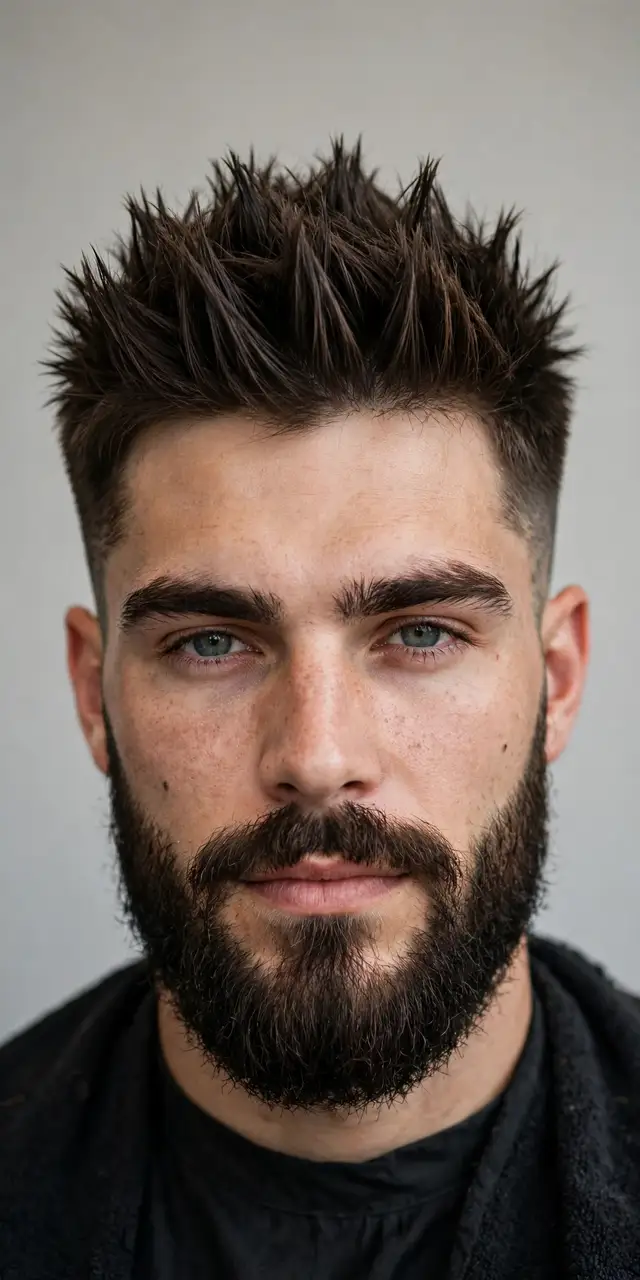
Why do spikes and a beard balance each other?
Weight at both ends. Spiky hair with a beard pairs the lifted, textured top with a full, groomed beard below — the spikes add energy and height, the beard returns gravity and maturity, and the combination reads deliberate rather than young. It is the version that takes spiky hair into rooms the clean-shaven versions cannot enter.
Face Shape: Any face that can grow the beard — the top’s height and the beard’s weight adjust to the face wearing them.
Grooming Kit: Matte clay for the top; beard oil and a brush below. Two routines, two minutes each.
Maintenance: Top every three weeks, beard shaped at every visit — the balance only holds while both ends are kept.
Barber Script: “Spiky with a beard — textured top at two inches lifted, sides short. Shape the beard to balance the top, keep its edges clean.”
Q: How long should the beard be with spikes?
A: Medium to full — enough weight to answer the top’s height. Stubble with tall spikes reads unfinished; a shaped, fuller beard reads engineered.
Q: Which should I grow first, the spikes or the beard?
A: The beard — it takes months, the spikes take one haircut. Book the spiky cut when the beard is nearly at its length.
Energy above, gravity below — the balanced spike.
18 of 20 — Spiky Hair for a Receding Hairline
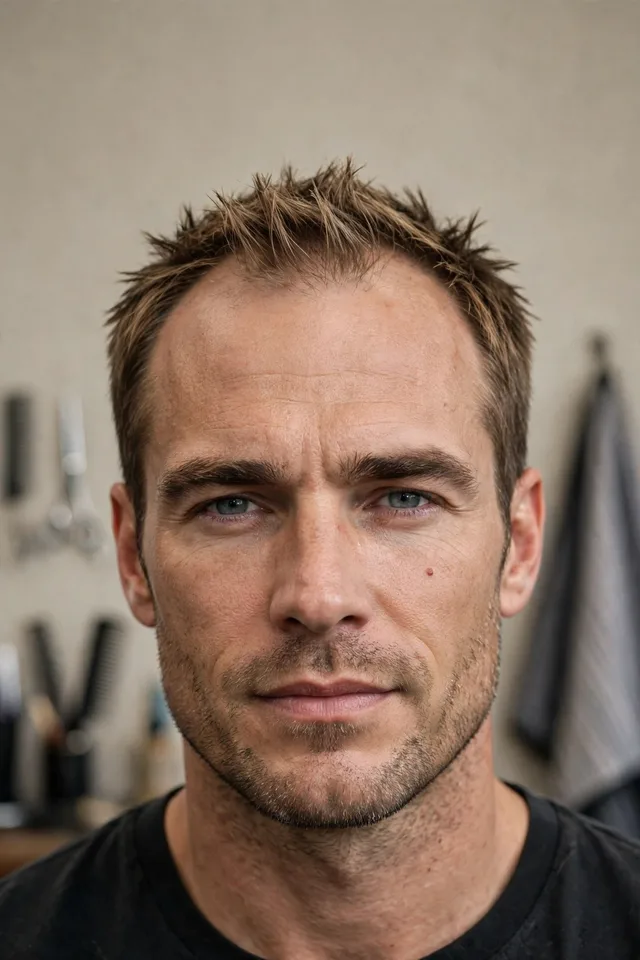
Can spikes be kind to a hairline?
Short ones can — tall ones cannot. Spiky hair for a receding hairline keeps the spikes short and angles the front pieces forward over the temple corners, keeps the sides’ length moderate (no bare contrast beside a thinning front), and uses texture to break up the hairline’s edge. It is not the first cut a barber reaches for here — but cut this way, it is an honest one.
Face Shape: All faces with early-to-moderate recession; advanced recession is better served by a short crop or buzz — your barber should say so honestly.
Grooming Kit: A matte volumising paste and thirty seconds of dryer time forward; shine at the front is the enemy.
Maintenance: Every three weeks — the front pieces’ placement over the corners is the strategy and must stay where the barber put it.
Barber Script: “Spiky for a receding hairline — top short, front pieces angled forward over the corners, sides’ length moderate, no skin fade.”
Q: Why do tall spikes look bad with recession?
A: They frame it. Height at the front draws the eye to the hairline and exposes the corners. Short, forward-angled pieces do the opposite — they cover and soften.
Q: Spikes or a Caesar for a receding hairline?
A: The Caesar (with its forward fringe) covers more and is the kinder first choice. Spikes are the option when you want texture and lift and the recession is still early.
Short and forward — kindness by angling, not height.
19 of 20 — Winter Spiky Hair
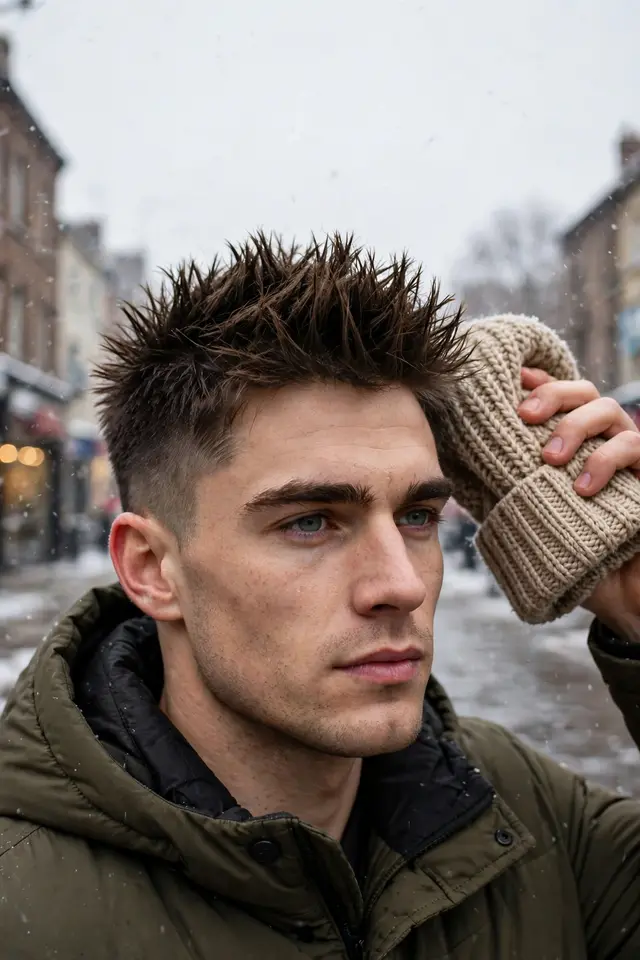
How do spikes survive winter?
By staying short and being reset, not rebuilt. Winter spiky hair keeps the top at its usual one to two inches — a beanie flattens the spikes, but thirty seconds with a fingertip of clay and a pinch restores them, because there is no height to rebuild and no part to lose. It is the rare styled cut whose winter routine is a reset, not a rescue.
Face Shape: All faces — winter changes the routine around the cut, not the cut itself; choose your underlying version by face as normal.
Grooming Kit: Your usual matte clay, a richer conditioner against dry heated air, and a comb for the post-beanie reset.
Maintenance: The three-to-four-week rhythm holds through winter — one appointment covers the whole holiday stretch.
Barber Script: “Winter spiky — my usual textured spikes, maybe a touch shorter for the season. I wear a beanie over it daily and reset it after.”
Q: Do beanies ruin spiky hair?
A: Temporarily, and less than any tall style — the spikes are short, so the reset is a pinch per piece, not a restyle. Carry the clay, not the worry.
Q: Should I switch to a flat style for winter instead?
A: Only if you hate the thirty-second reset. Spikes are one of the few styled cuts whose winter cost is that low; the flat styles simply hide the same problem.
Flattened by the beanie, restored by a pinch.
20 of 20 — The Spiky King
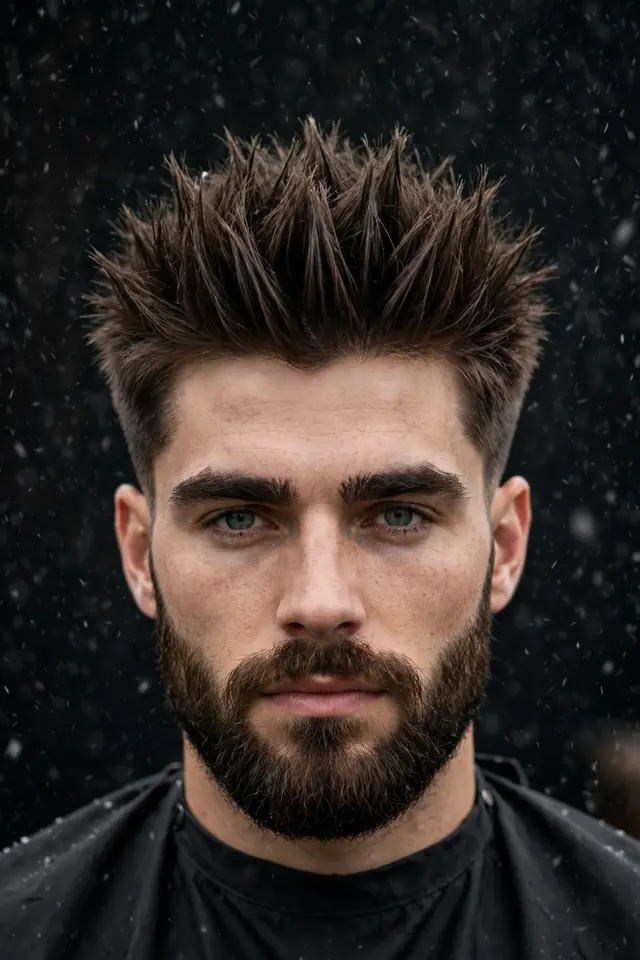
What does the complete spiky look obey?
Every rule in this guide at once. The Spiky King runs the full formula: the top point-cut and lifted into tall, separated, varied spikes with a matte finish, edges tapered clean, and a shaped beard returning weight below — with falling snow behind, because a king’s spikes reset after any weather. Nothing is gelled, nothing is uniform, nothing is left to chance: the pieces are placed, the finish is dry, and the whole thing still takes two minutes a morning.
Face Shape: Any face that can grow the beard — the spikes’ height and the beard’s weight are engineered balance, adjusted to the wearer.
Grooming Kit: The full bench: matte clay, a real comb for the reset, beard oil, and a barber who understands that separation is the crown.
Maintenance: Top and edges every three weeks without exception, beard shaped at every visit — the king runs on rhythm, not hope.
Barber Script: “The full spiky — textured top at two inches, spikes separated and varied, matte finish, edges tapered clean, beard shaped to balance.”
Q: What makes this the king and not just Style 2 with a beard?
A: The completeness. Style 2 is the modern surface; the king adds the beard’s balance, the varied piece placement and every edge finished — the formula, completed.
Q: How do I keep the king looking royal all winter?
A: Condition against dry air, reset the spikes after every beanie, keep the three-week appointments sacred, and never let gel near it — the matte separation is the crown.
Every rule obeyed — the spike, perfected.
The Bottom Line
Spiky hair won its comeback by changing its surface, not its silhouette. The discipline fits in one breath: the top point-cut into pieces at one to three inches, the spikes separated and varied, the finish matte — clay on dry hair, pinched into the ends — and gel, shine and frosted tips left in the 2000s where they belong. Choose your version by your hair and your honesty: the classic for the blueprint, texture for the camera age, the taper for softness, the fades for contrast, the crop and short versions for minimalism, and keep the spikes short and forward if your hairline is retreating. Respect the rhythm (three to four weeks, and guard the separation with your life) and never let a barber sell you height your hair cannot hold. Want the spike inside a rugged frame? Our warrior cut hairstyles for men guide builds it into a tougher cut; want the forward version of the energy? Our fringe hairstyles for men guide takes the points forward and longer. Pick the modern spike — it has had twenty years to grow up.