20 Burst Fade Hairstyles for Men: Textured Tops, Mullets & Clean Curves
One fade draws a curve — and it is the second most searched fade on earth. Search data puts the burst fade at roughly 310,000 searches a month in the US alone, behind only the low taper, and on Pinterest the burst fade’s most famous pairing — the burst fade mullet — became one of the most saved men’s hair pins of the year, with thousands of saves. The shape is unmistakable: instead of fading straight across or only at the edges, the burst fade arcs in a semicircle around the ear, bursting outward like a sunray, and leaves the back of the neckline longer. It is the fade with a signature.
So what makes a burst fade a burst fade? The curve. The fade follows the ear’s arc — short around the ear, blending outward in a radial burst — and because the curve drops behind the ear, the hair at the back keeps its length, which is why the burst pairs so naturally with mullets, longer tops and textured crops. It differs from a drop fade (which follows the head’s shape downward at the back) and from a taper fade (which touches only the edges). Searches for the burst have cooled from their viral peak — down about 17 percent year over year — but at this volume that means the hype left and the haircut stayed: barbers report it among the most requested fades in the chair.
Inside: the classic blueprint, the low and high versions, textured top, crop and fringe pairings, the mullet that Pinterest made famous, the buzz and faux hawk versions, hair-type editions for curly, wavy, straight, thick and fine hair, the beard, quiff and slick back pairings, the Black men’s version, the winter cut, and the complete look that obeys every rule. Each comes with the face shapes it flatters, the kit it needs, the upkeep it honestly demands, and the exact words to say in the chair. This guide covers the burst only; for the full fade family in one place, see our fade haircuts for men guide — and for the pairing Pinterest saved most, our modern mullet haircut guide is its home.
1 of 20 — The Classic Burst Fade
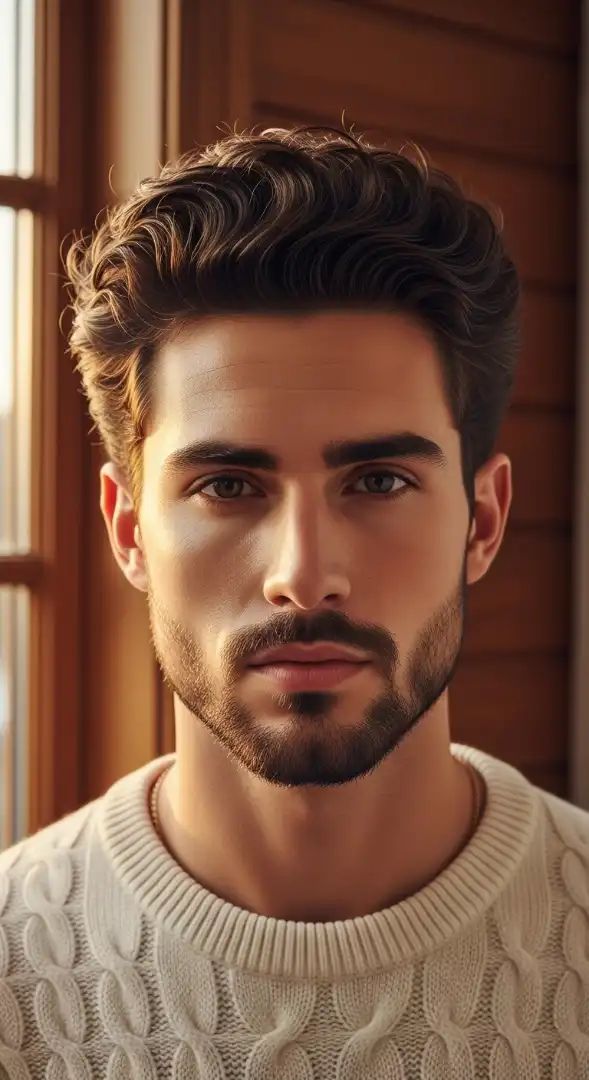
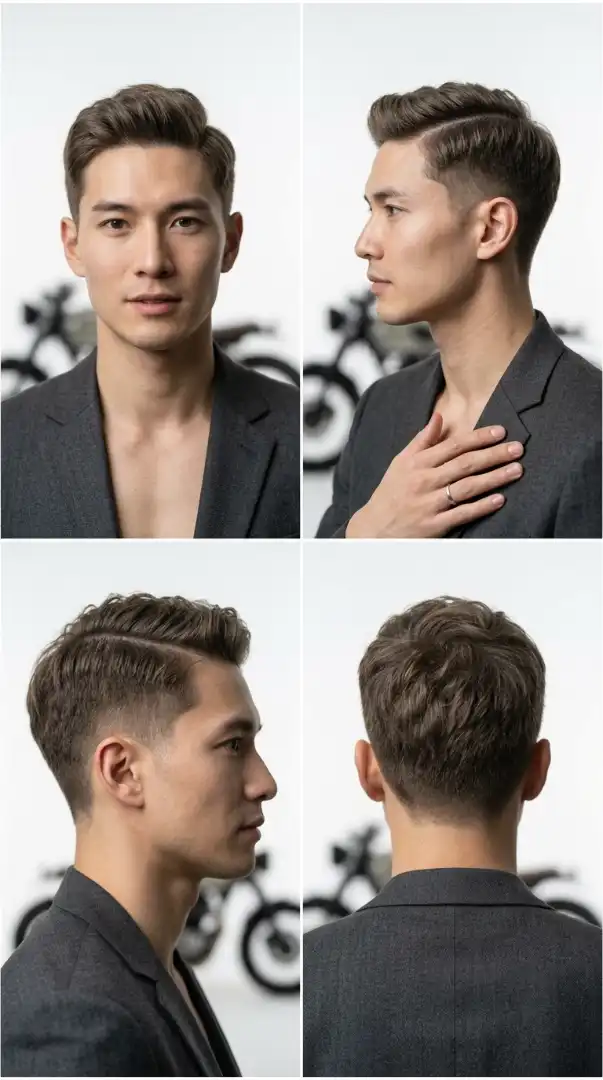
Q: What is the classic burst fade? The blueprint. The classic burst fade arcs the fade in a clean semicircle around the ear — short at the ear, blending outward and upward — leaves the back neckline longer, and pairs it with a short textured top. No extreme height, no skin unless asked: the balanced original from which every version in this guide is derived. Face Shape: Oval and round faces — the curve’s vertical burst slims the sides while the top keeps its length. Grooming Kit: A matte paste for the top; the curve itself asks for nothing between visits. Maintenance: Every two to three weeks — a burst curve shows its regrowth honestly. Barber Script: “Classic burst fade — fade arced around the ear, blended out, back neckline kept longer. Top short and textured.” The original curve — a fade with a signature. Q: Burst fade or drop fade — what is the difference?
A: Direction at the back. The burst arcs around the ear and leaves the back longer; the drop fade follows the skull down and shortens the back. From the side, the burst’s semicircle is the tell. Q: Does the burst fade suit a workplace?
A: In most, yes — the classic keeps the top tidy and the curve clean. Conservative offices can choose Style 2, the low burst, whose smaller curve reads quieter.
2 of 20 — Low Burst Fade
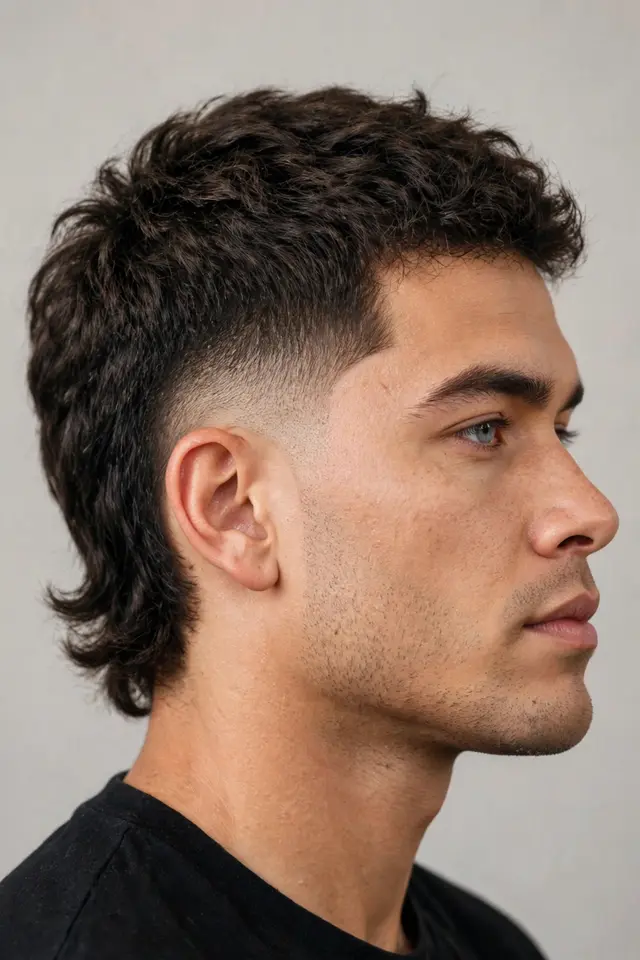
Q: What is a low burst fade? The gentle version. The low burst fade keeps the burst’s semicircle but runs it smaller and lower around the ear, with a softer blend into the sides — less skin, less contrast, the same signature curve. Trend trackers name the low burst as the version still growing while the high-contrast burst cools: the 2027 way to wear it. Face Shape: All faces — the smaller curve flatters without exposing much of the head’s shape. Grooming Kit: Matte paste for the top; nothing else. Maintenance: Three weeks comfortably — the softer blend blurs its regrowth line. Barber Script: “Low burst fade — small curve low around the ear, soft blend, no harsh line. Back kept longer, top textured.” The same signature, at a whisper. Q: Low burst or classic burst — which should I choose?
A: The low burst for a softer, longer-lasting blend and conservative settings; the classic for the full visible curve. The shape is identical — only its size changes. Q: Does the low burst work with a beard?
A: Beautifully — the low curve meets the beard’s top edge without a hard junction, the grown-up way to wear a burst.
3 of 20 — High Burst Fade
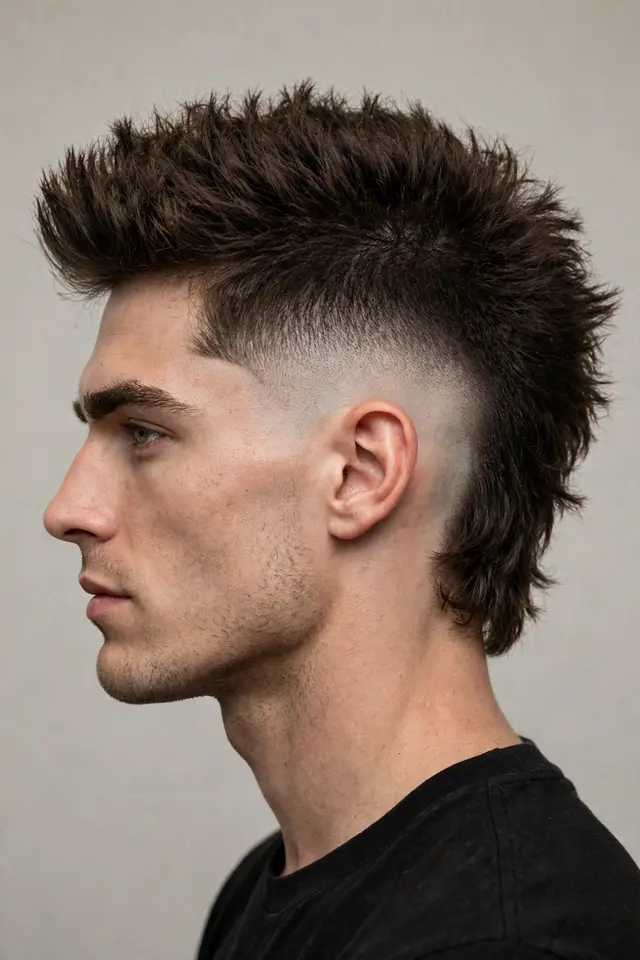
Q: How bold can a burst fade get? This bold. The high burst fade takes the semicircle higher and wider around the ear, often down to skin, so the curve becomes the entire side silhouette and the top stands as an island above it. It is the most photographed burst — and the one whose upkeep bill arrives fastest. Face Shape: Strong, even features — the exposure is total, so head shape does the talking. Grooming Kit: None for the sides; a firm matte paste for the top island. Sunscreen for newly exposed skin in week one. Maintenance: Every two weeks — high curves show regrowth early and honestly. Barber Script: “High burst fade — curve taken high and wide around the ear, down to skin, top kept textured at two inches.” The curve as the whole silhouette. Q: High burst or skin fade — what differs?
A: Shape. A skin fade says how short (to skin) across the whole side; the high burst says where — in a curve around the ear, with length kept at the back. Q: Does a high burst suit a receding hairline?
A: Less well — bare sides beside a thinning front create contrast. Keep the burst low and the top forward if the hairline is retreating.
4 of 20 — Burst Fade with a Textured Top
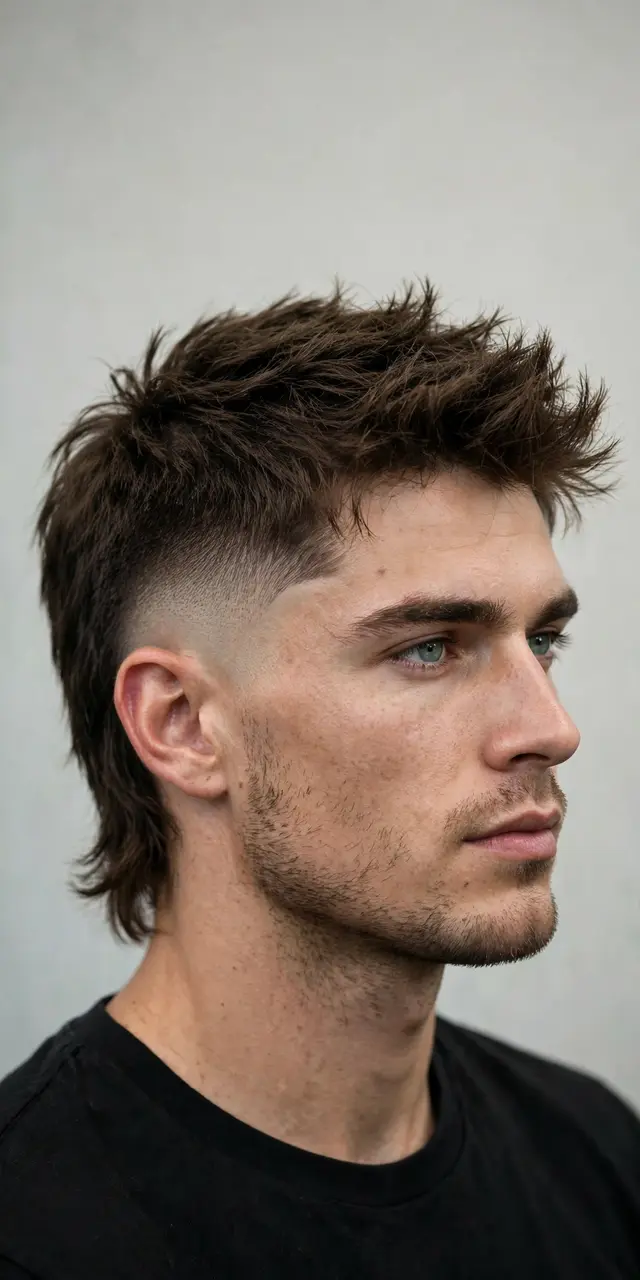
Q: Why pair a burst fade with a textured top? Because texture is the era’s top, and the burst is its cleanest frame. Burst fade with a textured top point-cuts the top into separated pieces and lets the radial curve below do the sharpening — soft above, graphic below. It is the pairing barbers reach for when a client wants the burst without committing to a named style on top. Face Shape: All faces — the piecey top adds width on narrow faces and breaks up roundness on fuller ones. Grooming Kit: A matte clay, pea-sized, on fully dry hair. Maintenance: Two to three weeks, set by the curve; the texture forgives a few extra days. Barber Script: “Burst fade with a textured top — two inches on top, point-cut into pieces, burst arced around the ear, back longer.” Soft above, graphic below. Q: Textured top or crop with a burst — what differs?
A: Length and direction. The textured top is longer and worn naturally; the crop (Style 6) is shorter and pushed forward. The burst underneath stays the same. Q: Why does my textured top fall flat by midday?
A: Product on damp hair, or too much of it. Clay goes on bone-dry hair, ends only — weight at the roots is what pulls texture down.
5 of 20 — Burst Fade with a Mullet
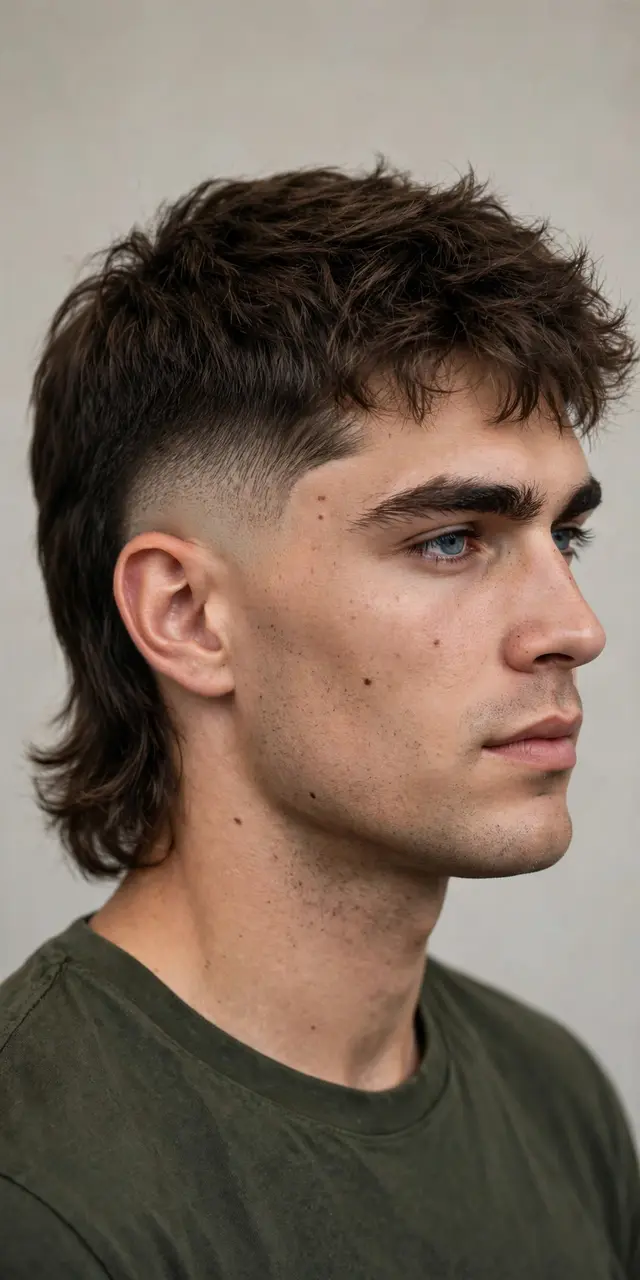
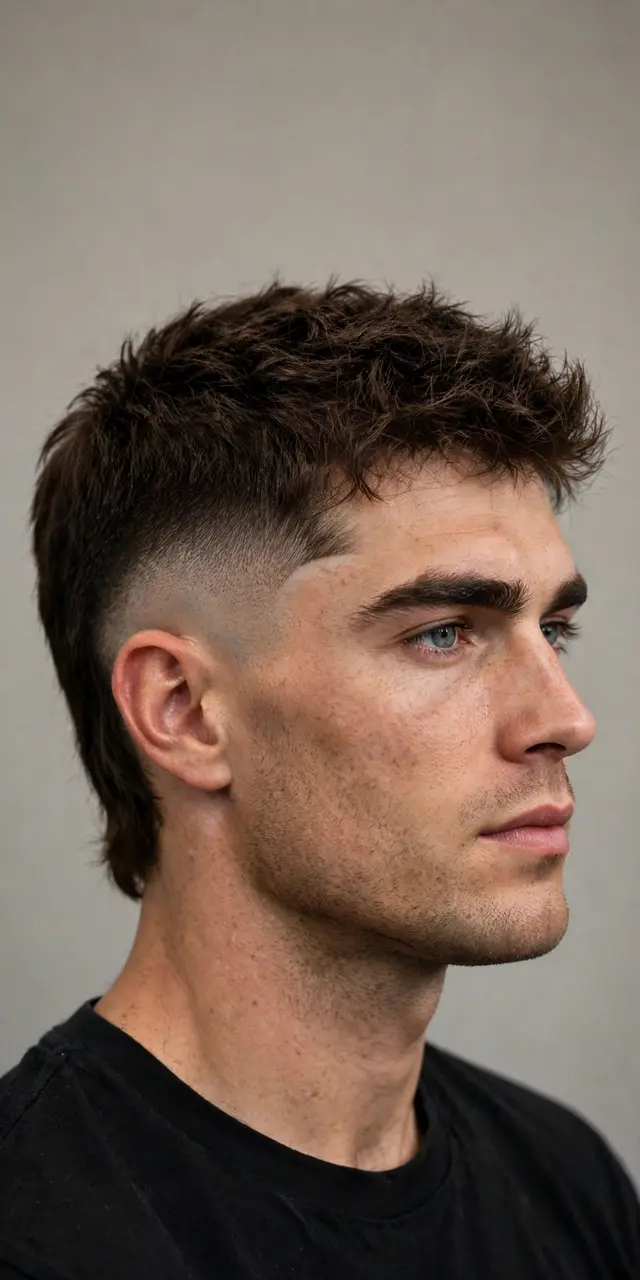
Q: Why is the burst fade mullet the most saved pairing? Because the burst was built for it. Burst fade with a mullet arcs the fade around the ear, and the curve’s natural drop behind the ear flows straight into the mullet’s back length — no step, no disconnect. It is the pairing on the year’s most saved men’s hair pin (thousands of saves), the burst fade’s celebrity moment, still the version clients screenshot most. Face Shape: Oval and long faces — the back length and curved sides balance strong features. Grooming Kit: A light cream for the back’s movement; matte paste on top. Maintenance: Three weeks — the back’s length is forgiving; the curve sets the rhythm. Barber Script: “Burst fade mullet — burst around the ears, textured top, back kept long and blended, no step between the curve and the length.” The pairing Pinterest made famous. Q: Burst mullet or soft mullet — what is the difference?
A: The sides. The soft mullet uses a low taper over the ears; the burst version replaces it with the curved fade, which sharpens the whole silhouette. Q: How long should the back be?
A: To the collar is the classic read; shorter reads modern, longer reads statement. The rule is blending — the length must flow from the curve, never step.
6 of 20 — Burst Fade with a Textured Crop
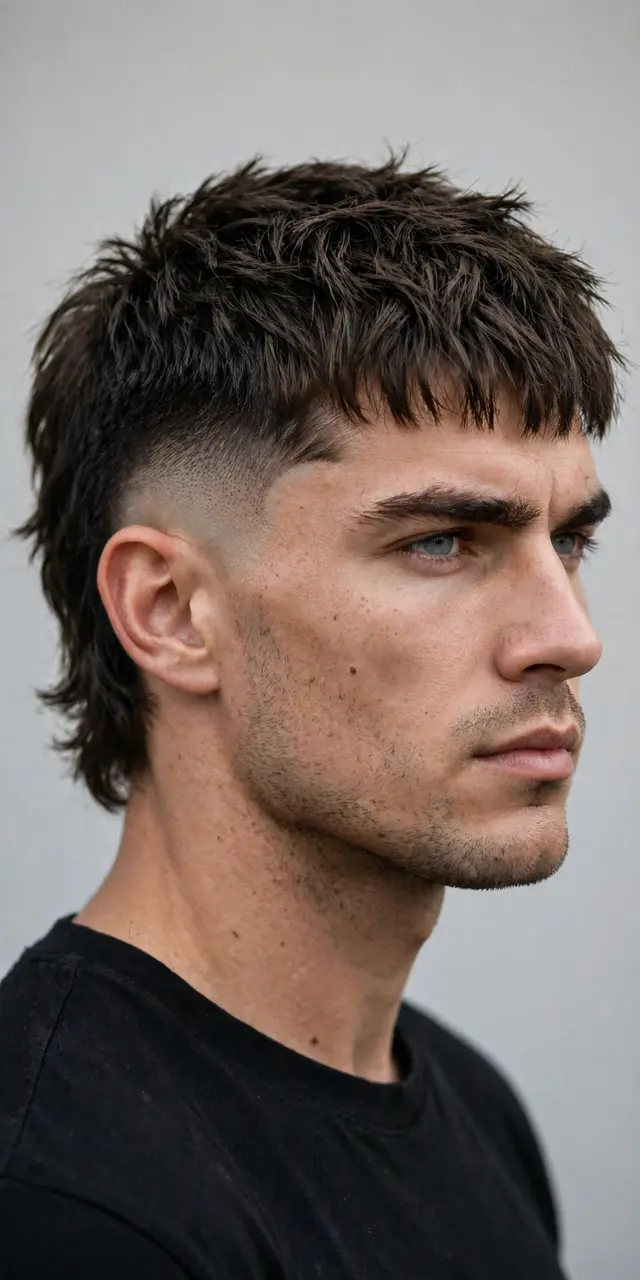
Q: What does a crop gain from a burst fade? A frame with a signature. Burst fade with a textured crop crops the top short and choppy, worn forward, and lets the burst’s curve replace the crop’s usual straight fade — the combination trend lists keep pairing, because the crop’s blunt front and the burst’s round curve contrast perfectly. Face Shape: Oval and angular faces; the forward fringe also softens a high forehead. Grooming Kit: A matte fibre, fingertip amount — at crop length a little does everything. Maintenance: Two to three weeks; the curve and the fringe set the appointment together. Barber Script: “Burst fade with a textured crop — top cropped short and choppy, forward fringe, burst arced around the ear.” Blunt front, round curve — the contrast is the point. Q: Burst crop or French crop — what differs?
A: The sides. The French crop usually sits over a straight fade or taper; the burst version’s curve changes the whole side profile while the top stays the crop. Q: Is the burst crop good for thinning hair?
A: Very — short, textured and forward is the density formula, and the burst keeps the sides tight. Keep the finish matte; shine shows scalp.
7 of 20 — Burst Fade with a Fringe
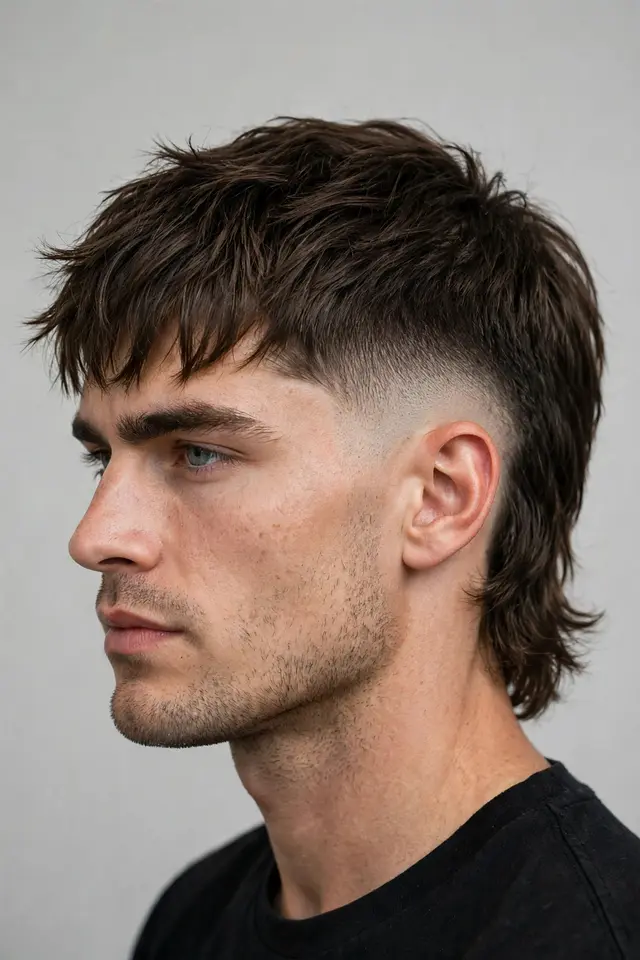
Q: Can a burst fade carry a fringe? It carries one beautifully. Burst fade with a fringe keeps the top longer and textured, worn forward into a piecey fringe, while the burst cleans the sides in its curve — length at the front, graphics at the ear. It borrows the fringe family’s forehead coverage and gives it the burst’s signature at the sides. Face Shape: Long and oval faces gain most — the fringe shortens the forehead while the curve slims the sides. Grooming Kit: A matte clay worked forward; the fringe is pinched at the front, not lifted. Maintenance: Three weeks; the fringe’s length and the curve expire together. Barber Script: “Burst fade with a fringe — top two to three inches, textured and forward, fringe piecey. Burst around the ears, back longer.” Forward at the front, curved at the ear. Q: Burst fringe or burst crop — what differs?
A: Length. The crop’s fringe is short and blunt; this fringe is longer and piecey. Choose by how much forehead coverage and movement you want. Q: Does a burst fringe suit a receding hairline?
A: Better than most bursts — the forward direction covers the temple corners. Keep the burst low so the sides do not add contrast.
8 of 20 — Burst Fade with a Buzz Cut
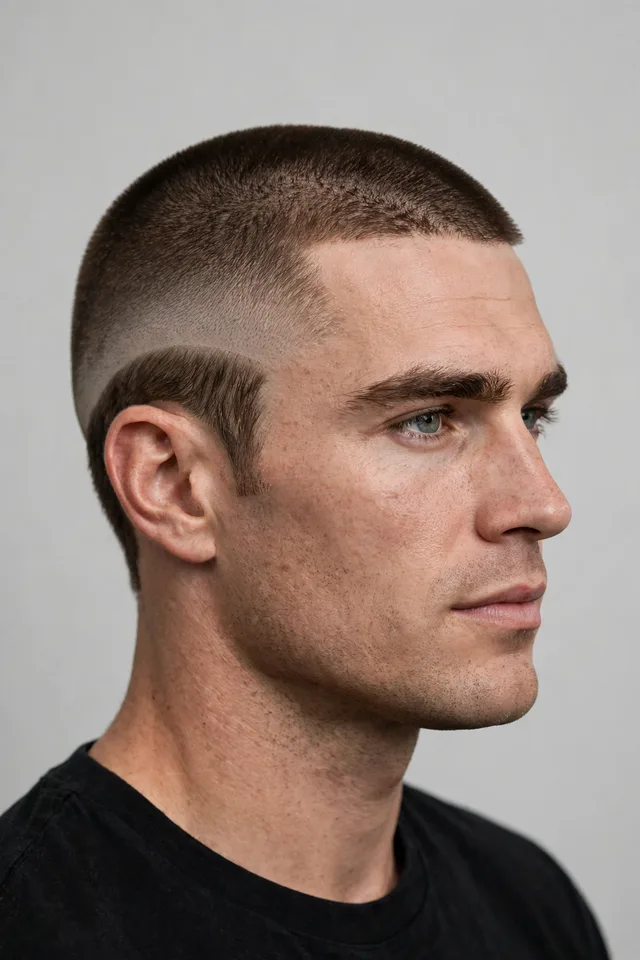
Q: What is a burst fade buzz cut? The burst at minimum length. Burst fade with a buzz cut runs the top at one even short length — a #2 or #3 — and lets the burst’s curve do all the design work around the ears. Zero styling, all signature: the version for men who want the trend’s shape with a buzz cut’s honesty. Face Shape: Strong head shapes and jawlines — at this length, bone structure is the style. Grooming Kit: None. A moisturiser for the scalp in winter is the whole routine. Maintenance: Two to three weeks — the curve’s regrowth, not the top, sets the rhythm. Barber Script: “Burst buzz — #3 on top, one length, burst arced around the ears, back neckline kept natural.” One length on top, one curve at the ear. Q: Burst buzz or buzz with a low fade — what differs?
A: The sides’ shape. The low fade fades the whole side low; the burst concentrates the fade in a curve around the ear and leaves the back longer. Q: Is the burst buzz good for thinning hair?
A: Yes — one even length is the great equaliser for thinning, and the tight burst sides remove the contrast that makes thin tops look thinner.
9 of 20 — Burst Fade with a Faux Hawk
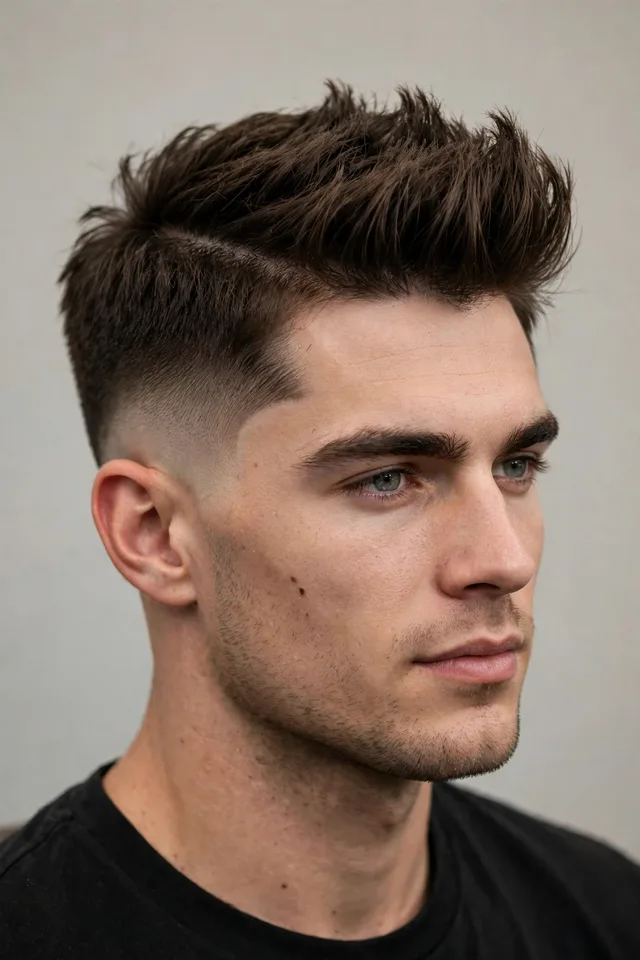
Q: Why do the burst and the faux hawk belong together? Because both are centre-focused shapes. Burst fade with a faux hawk gathers the top’s texture toward a soft centre ridge, and the burst’s curves around both ears mirror each other underneath — the mohawk family’s silhouette with the burst’s polish. Of all the burst pairings, this is the one designed as a single shape. Face Shape: Oval and narrow faces — the ridge adds height and focus without width. Grooming Kit: A strong matte clay; the ridge is built piece by piece toward the centre. Maintenance: Two to three weeks — the curves and the sides’ shortness keep the silhouette readable. Barber Script: “Burst faux hawk — top two to three inches gathered to a soft centre ridge, burst arced around both ears.” A ridge above, two curves below. Q: Burst faux hawk or full mohawk?
A: The faux hawk keeps length on the sides and its dignity at the office; the mohawk is shaved and committed. This is the trial version of the idea. Q: How do I stop the ridge looking accidental?
A: Build it on dry hair from the sides toward the centre in small pieces. One big handful makes a lump; small pieces make a ridge.
10 of 20 — Burst Fade for Curly Hair
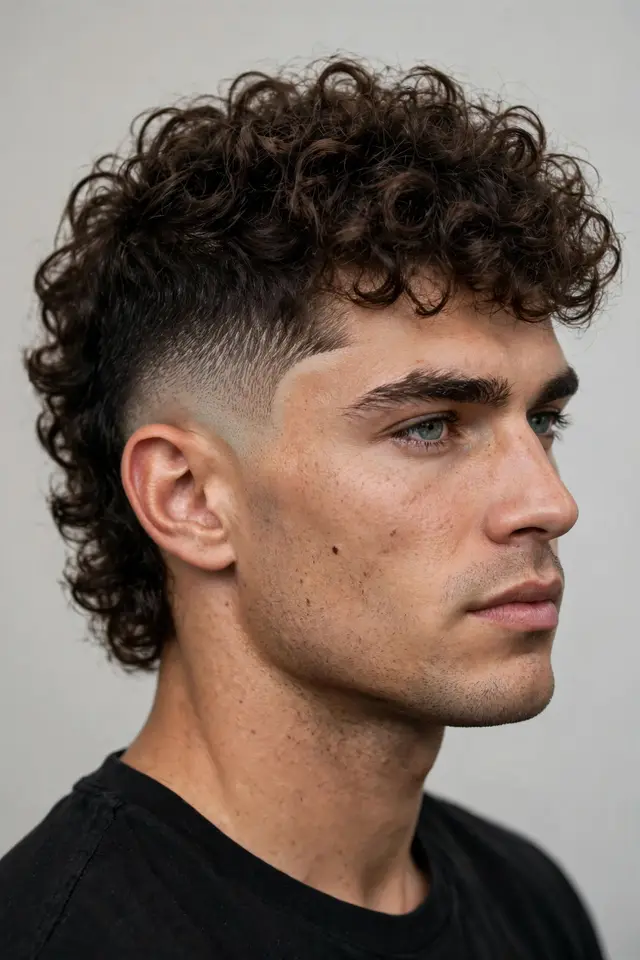
Q: How does a burst fade work on curly hair? By cleaning the edges and freeing the curl. Burst fade for curly hair keeps two to three inches of curl on top, shaped dry, and arcs the burst around the ears so the silhouette reads deliberate — the curl’s volume above, the curve’s precision below. It is among the most requested burst versions in barbershops. Face Shape: All faces — the burst’s tight sides keep curly volume from widening the head. Grooming Kit: A curl cream or leave-in for moisture and definition; hands off while it dries. Maintenance: Three weeks; curls forgive side regrowth, but the curve’s line sets the appointment. Barber Script: “Burst fade for curly hair — curls kept at two to three inches on top, shaped dry, burst arced around the ears.” Curls above, curve below — precision meets volume. Q: Should curly hair be cut wet or dry with a burst?
A: Dry, by a barber who knows curls — wet curls stretch and spring back shorter, which is how tops end up an inch too short. Q: Burst or taper for curly hair?
A: The taper is softer and grows out kinder; the burst is sharper and more designed. Choose by how much signature you want at the ear.
11 of 20 — Burst Fade for Wavy Hair
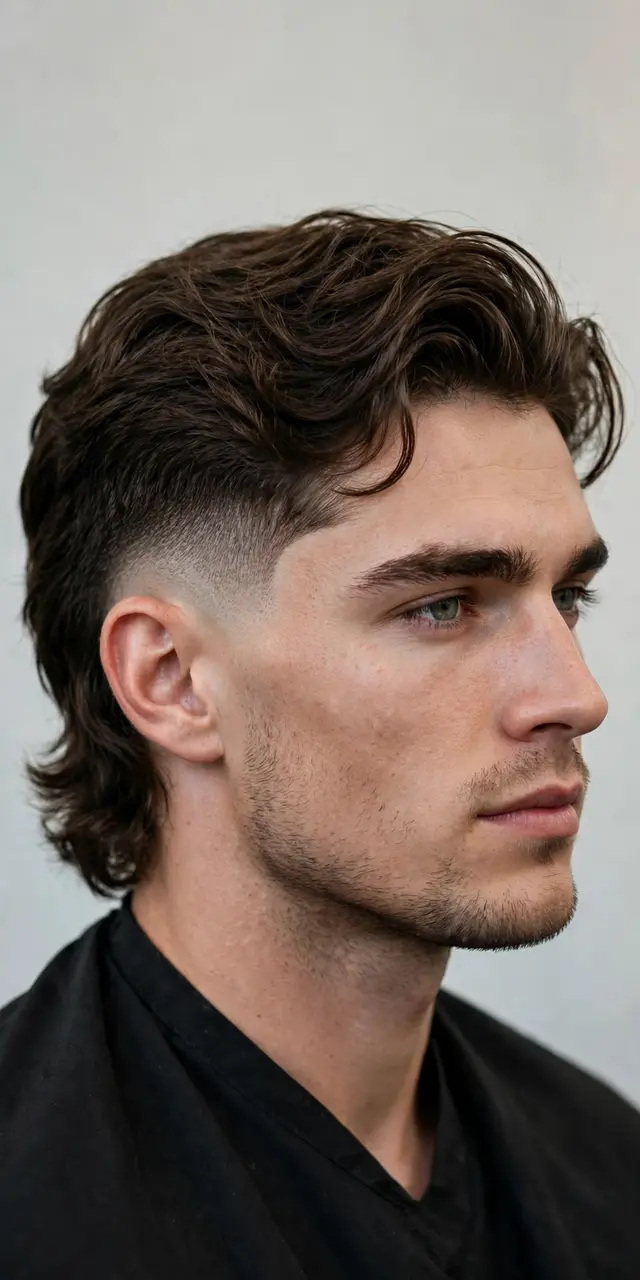
Q: What does the burst do for wavy hair? Frames the movement. Burst fade for wavy hair keeps the top’s natural bend at two to three inches, swept naturally, and lets the burst’s curve tidy the edges — the wave provides the texture, the burst provides the architecture. It is the relaxed man’s burst: designed sides, undone top. Face Shape: Oval and rectangular faces; the wave’s width suits narrower faces best. Grooming Kit: A light cream or sea salt spray for definition; heavy clay flattens the wave. Maintenance: Three weeks — waves grow out softly and forgive a late appointment. Barber Script: “Burst fade for wavy hair — top two to three inches, cut with the wave, burst arced around the ears, back longer.” The wave moves, the curve holds. Q: Should the top follow the wave or fight it?
A: Follow it — always. Product against the wave’s bend collapses by midday. Work with the direction the hair already leans. Q: Wavy burst or wavy flow — which suits me?
A: Length. The flow keeps length everywhere including the sides; the burst version is shorter and sharper at the edges with the same moving top.
12 of 20 — Burst Fade for Straight Hair
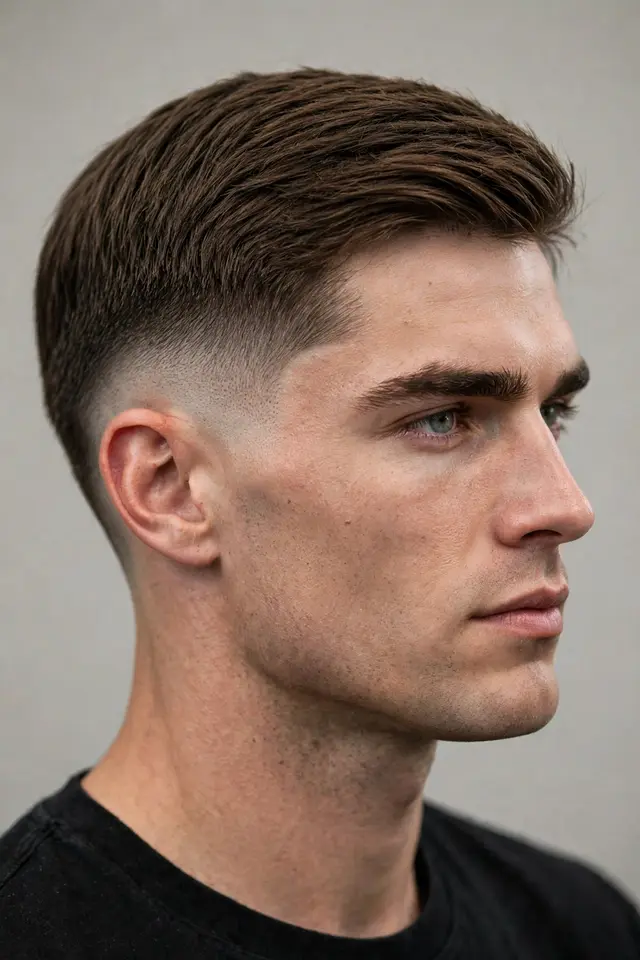
Q: Why does straight hair show the burst best? Because nothing hides. Burst fade for straight hair pairs a straight, textured top with the cleanest possible burst — straight hair reveals the curve’s blend quality completely, which is why this version lives or dies by the barber’s blending. When it is right, it is the crispest burst in the guide. Face Shape: All faces; the top’s direction (forward or back) tunes it to the face. Grooming Kit: A matte clay for separation — straight hair’s only problem is lying in one flat sheet by evening. Maintenance: Two to three weeks; straight hair shows the curve’s regrowth line first. Barber Script: “Burst fade for straight hair — top textured at two inches, burst arced clean around the ear, blend seamless.” The crispest curve — straight hair hides nothing. Q: How do I stop a straight top looking flat over a burst?
A: Texture and direction. Point-cut the top, wear it forward or piecey — a flat sheet of straight hair over a sharp curve reads unfinished. Q: Straight hair — burst or low taper?
A: The low taper is softer and lower-maintenance; the burst is the designed statement. Both keep the same textured top.
13 of 20 — Burst Fade for Thick Hair
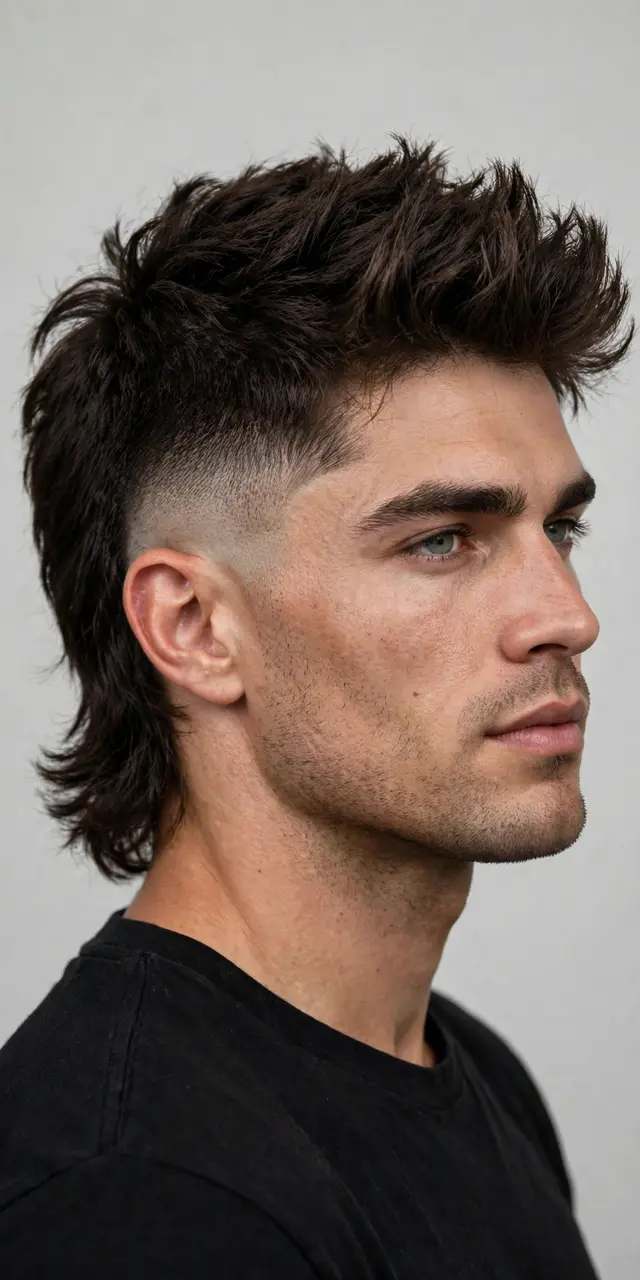
Q: Why do barbers recommend the burst for thick hair? Because it removes exactly the bulk that bothers thick hair — the puff around the ears. Burst fade for thick hair arcs the fade around the ear where thick hair bulges most, thins the top’s bulk from inside, and leaves a strong, separated texture above. Thick hair holds the burst’s shapes with the least product of any type. Face Shape: All faces — removing the ear-level bulk slims wide faces noticeably. Grooming Kit: A medium matte clay, small amount — thick hair ignores light products and needs less than you think. Maintenance: Three weeks; thick hair regains bulk fast, and the thinning is refreshed each visit. Barber Script: “Burst fade for thick hair — burst around the ears to kill the bulk, top two inches, thin from inside, texture separated.” The burst removes the bulk where it lives. Q: Why does my thick hair puff out at the ears?
A: That is thick hair’s natural bulge point — and precisely what the burst fade removes. A straight fade leaves more of it; the curve targets it. Q: Thick hair — burst or undercut?
A: The undercut removes more and reads bolder; the burst keeps a blend and grows out kinder. Same goal, different volume.
14 of 20 — Burst Fade for Fine Hair
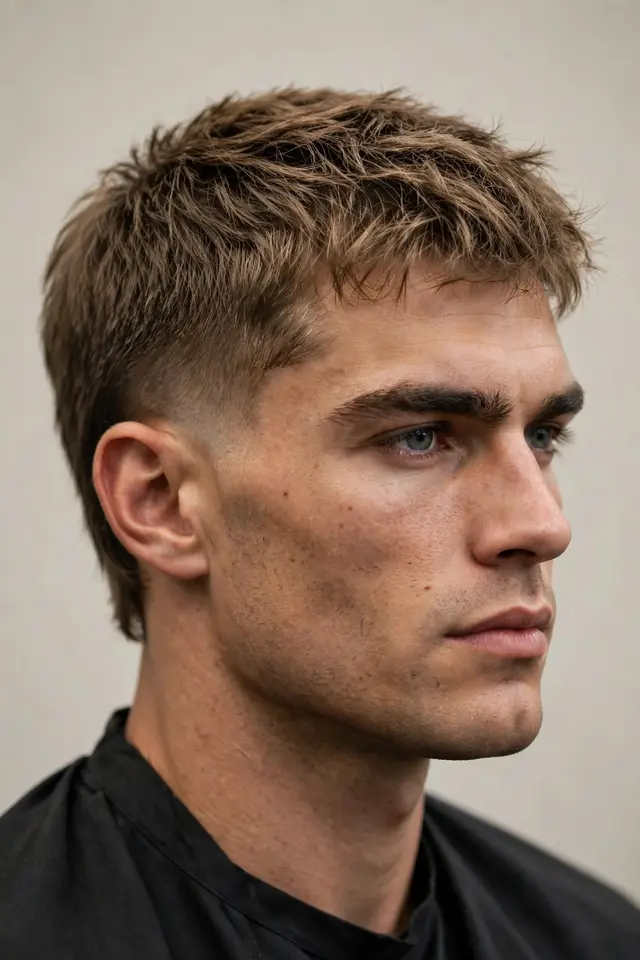
Q: Can fine hair carry a burst fade? Yes — the low, soft version. Burst fade for fine hair keeps the burst small and low (Style 2’s curve), keeps the top short and textured, and avoids skin at the sides: fine hair’s enemy is contrast, which shows the scalp. Done this way, the burst tidies fine hair without exposing it. Face Shape: All faces — short, light proportions flatter fine hair on any bone structure. Grooming Kit: A matte volumising paste or dry texture spray; thirty seconds of dryer time does more than any product. Maintenance: Every three weeks — fine hair shows regrowth separation sooner. Barber Script: “Burst fade for fine hair — small low burst, soft blend, no skin. Top short and textured, keep every bit of density.” Small curve, soft blend — fine hair’s safe burst. Q: Why must fine hair avoid the high burst?
A: Exposure. Bare skin beside a fine top creates contrast that makes the top look thinner. The low burst tidies without the contrast. Q: Which products kill a fine burst fastest?
A: Gels, oils and anything shiny or heavy. Wet weight collapses fine hair; matte, dry and light is the whole strategy.
15 of 20 — Burst Fade with a Beard
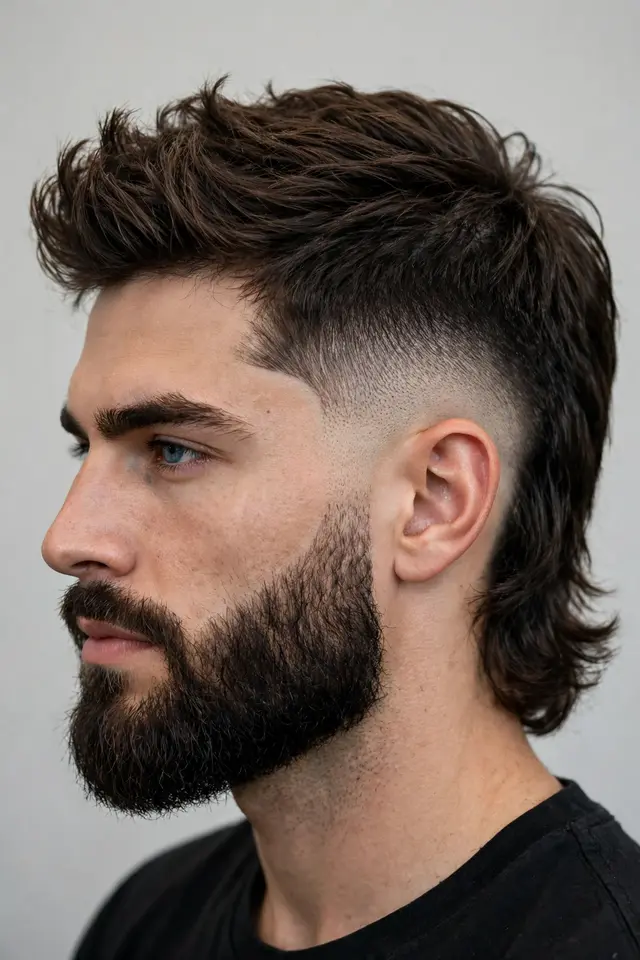
Q: Why do the burst and a beard balance each other? Because the curve points at it. Burst fade with a beard arcs the fade around the ear and lets the curve’s lower edge flow into the beard’s top line — the sideburn becomes the junction, faded smoothly from burst into beard. The top adds its texture above, the beard returns weight below, and the whole head reads as one designed shape. Face Shape: Any face that can grow the beard — the curve and the beard’s weight adjust to the wearer. Grooming Kit: Matte paste for the top; beard oil and a brush below. Two routines, two minutes each. Maintenance: Burst every two to three weeks, beard shaped at every visit — the junction only holds while both are kept. Barber Script: “Burst fade with a beard — burst around the ears, blend through the sideburns into the beard, top textured, beard shaped.” One shape — the curve flows into the beard. Q: How does the burst meet the beard without a gap?
A: Through the sideburn. The barber fades the burst’s lowest point directly into the beard’s top edge — the Italian beard fade principle — so no bare gap appears. Q: How full should the beard be with a burst?
A: Medium to full — enough weight to answer the design above it. Stubble with a sharp burst reads unfinished; a shaped beard reads engineered.
16 of 20 — Burst Fade with a Quiff
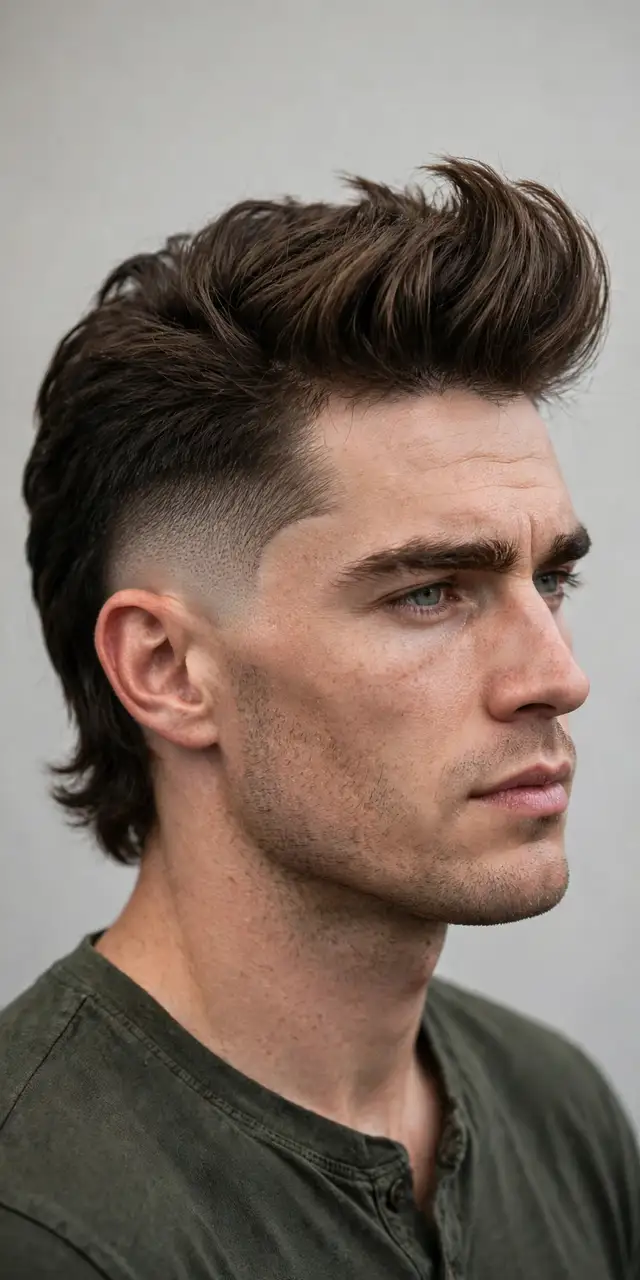
Q: What does a quiff gain from a burst fade? A rounder frame for its height. Burst fade with a quiff lifts the front into the quiff’s signature volume, sweeps it back, and replaces the usual straight fade with the burst’s curve — the curve’s roundness echoes the quiff’s rounded volume, which is why the pairing photographs so well. Face Shape: Round and oval faces gain most — the height lengthens, the curve slims the sides. Grooming Kit: A blow dryer and a matte paste; the quiff is built with heat, then set with product. Maintenance: Two to three weeks — the curve sets the rhythm; the quiff’s length forgives a few days. Barber Script: “Burst fade with a quiff — front kept long for lift, burst arced around the ears, top swept up and back.” Height at the front, curve at the ear. Q: Burst quiff or classic quiff — what differs?
A: The sides’ shape. The classic pairs with a straight fade or taper; the burst version’s curve softens the side profile while the front keeps its drama. Q: How do I keep the quiff standing over a burst all day?
A: Dry it upward with heat first — product alone cannot lift. Paste goes on after the shape exists, to hold what the dryer built.
17 of 20 — Burst Fade with a Slick Back
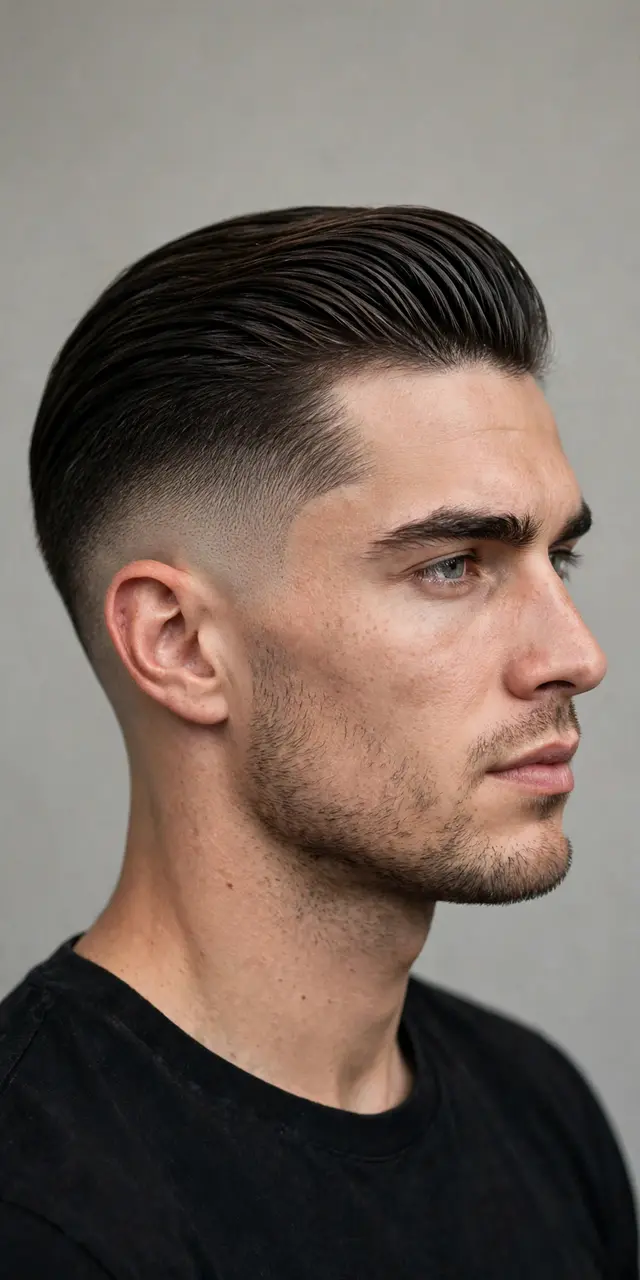
Q: Can a burst fade carry a slick back? It is the modern way to wear one. Burst fade with a slick back sweeps a longer top straight back and lets the burst’s curves frame it at the ears — the slick back’s polish with the burst’s signature replacing the undercut’s harsh line. Old money above, street signature at the sides. Face Shape: Oval and square faces; the swept-back top shows the forehead fully, so confidence helps. Grooming Kit: A light pomade or cream for the sweep; a wide comb for the lines. Maintenance: Three weeks — the top’s length is forgiving; the curve sets the appointment. Barber Script: “Burst fade with a slick back — top kept long enough to sweep back, burst arced around the ears, back longer.” Polish above, signature at the sides. Q: Burst slick back or undercut slick back?
A: The undercut disconnects — a hard shelf. The burst blends in a curve, reads softer and grows out far kinder. Same top, gentler sides. Q: Does a slick back suit a receding hairline?
A: It exposes the front fully, so early recession shows. If the corners are retreating, wear the top forward instead (Style 7) and keep the burst.
18 of 20 — Burst Fade for Black Men
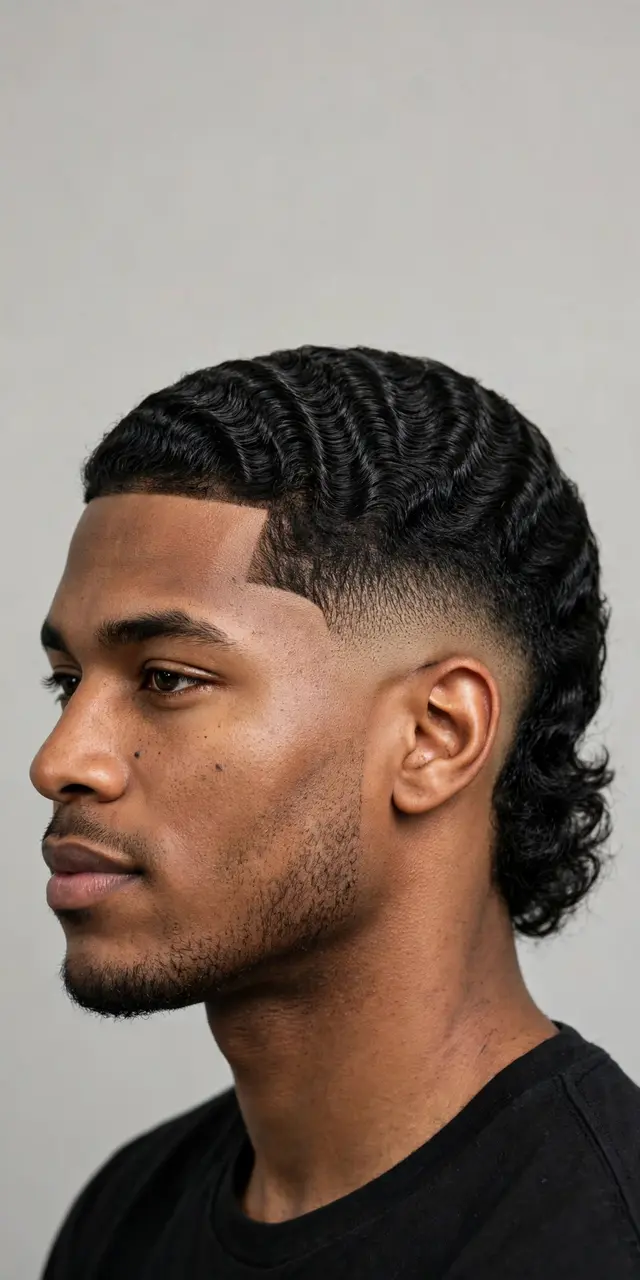
Q: Why is the burst fade a staple for Black men? Because the curve was made for textured hair’s edges. Burst fade for Black men arcs the fade around the ears over waves, curls or twists, finishes with a crisp line up, and leaves the back’s length — the burst has been a barbershop staple on textured hair for years, and the taper-with-texture data (searches up several hundred percent) keeps it there. Face Shape: All faces — the line up sharpens every bone structure it frames. Grooming Kit: A wave brush and durag for waves, or a light moisturiser for twists and curls; matte finish throughout. Maintenance: Every two weeks — the line up and the curve both expire on schedule. Barber Script: “Burst fade — burst around the ears, waves on top kept, line up crisp along my natural hairline, back longer.” The curve and the line up — a barbershop staple. Q: Burst or taper fade for waves?
A: The taper touches only the edges and reads softer; the burst’s curve is the designed statement. Waves wear both — choose by how sharp you want the sides. Q: How do I keep waves laid over a burst?
A: Brush daily in the pattern, durag at night, and keep the top’s length consistent — waves are trained, not cut, and the burst just frames the training.
19 of 20 — Winter Burst Fade
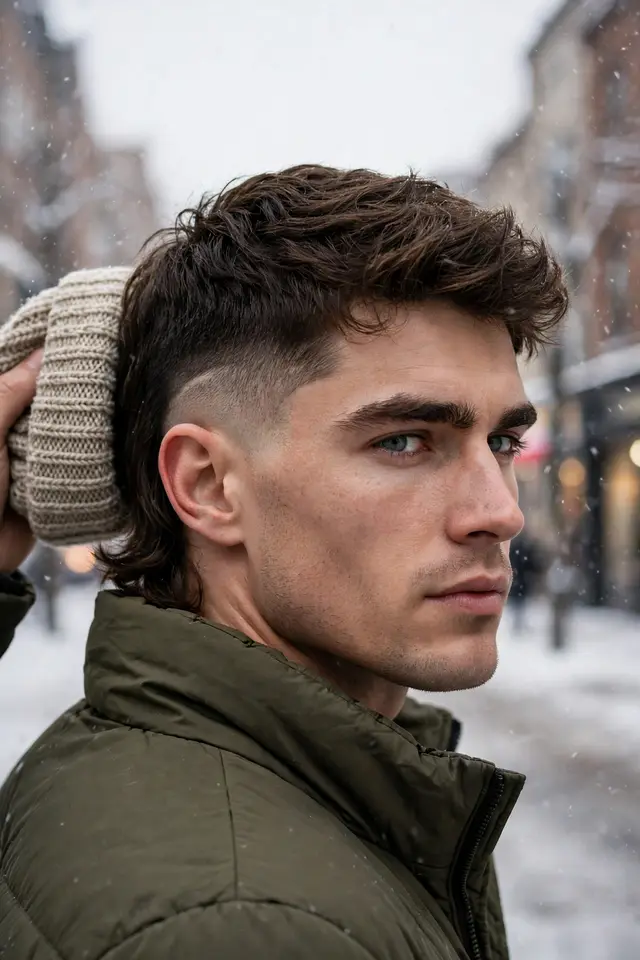
Q: How does a burst fade survive winter? Better than most fades — the back keeps its length. Winter burst fade runs the usual curve and top, but the burst’s longer back means a beanie sits on hair, not on a bare nape, and the curve resets with a comb instead of a rebuild. One three-week appointment covers the whole holiday stretch. Face Shape: All faces — winter changes the routine around the cut, not the cut itself. Grooming Kit: Your usual matte paste, a richer conditioner against dry heated air, and a comb for the post-beanie reset. Maintenance: The two-to-three-week rhythm holds through winter. Barber Script: “Winter burst fade — my usual burst and textured top. I wear a beanie daily; keep the back’s length as the design intends.” The fade whose back was built for beanie season. Q: Do beanies ruin a burst fade?
A: Less than any other fade — the top is short and textured, the back has length, so the reset is a comb and a pinch of paste, not a restyle. Q: Should I grow the burst out for winter instead?
A: You can — the burst grows out softer than a skin fade because the back already has length. Keep one tidy-up before the holidays regardless.
20 of 20 — The Burst Fade King
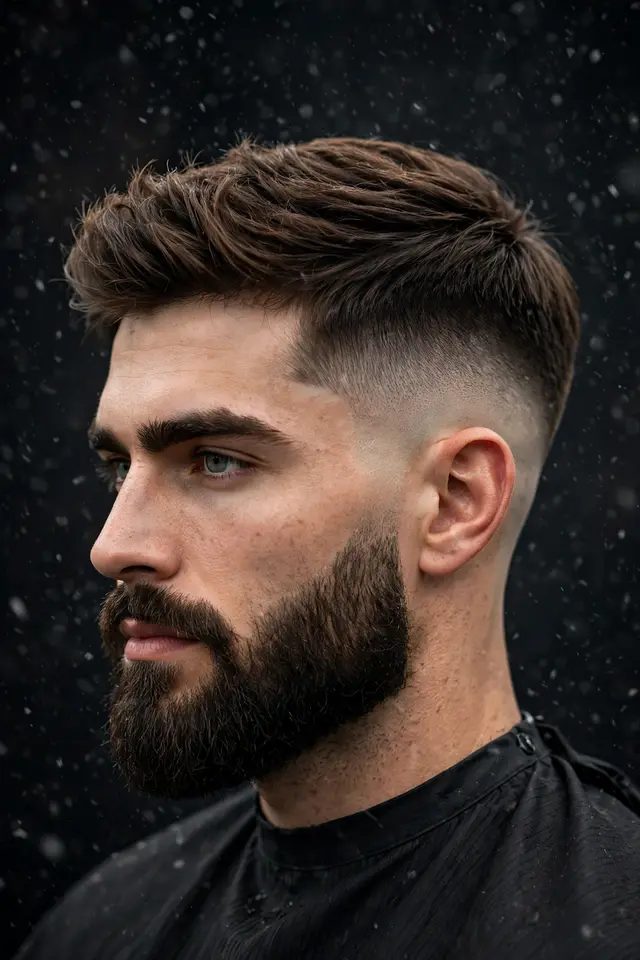
Q: What does the complete burst fade obey? Every rule in this guide at once. The Burst Fade King runs the full formula: the burst arced clean and wide around the ears, the top textured and separated at its best length, the back’s length blended to flow from the curve, and a shaped beard returning weight below — with falling snow behind, because a king’s curve resets after any weather. Nothing is stepped, nothing is accidental: the curve is drawn once and drawn perfectly. Face Shape: Any face that can grow the beard — the curve, top and beard are engineered balance, adjusted to the wearer. Grooming Kit: The full bench: matte paste, a real comb for the reset, beard oil, and a barber who treats the curve as a signature. Maintenance: Curve and edges every two to three weeks without exception, beard shaped at every visit — the king runs on rhythm. Barber Script: “The full burst — curve arced clean around the ears, textured top, back blended long, beard shaped to balance.” Every rule obeyed — the curve, perfected. Q: What makes this the king and not just Style 4 with a beard?
A: The completeness. Style 4 is the modern surface; the king adds the beard’s balance, the back’s perfect blend and every edge finished — the formula, completed. Q: How do I keep the king looking royal all winter?
A: Condition against dry air, reset the top after every beanie, keep the appointments sacred, and never let the back get trimmed into a step — the flow from the curve is the crown.
The Bottom Line
The burst fade earned its volume by having a signature no other fade has: a curve. The discipline fits in one breath — the fade arcs in a semicircle around the ear, the back keeps its length and blends from the curve (never a step), and the top is chosen for your hair and your life: texture for the modern read, the mullet for the pairing Pinterest made famous, the crop and buzz for minimalism, the low burst for softness. Respect the rhythm — two to three weeks, because a curve shows its regrowth — and choose your barber by their blending, because straight and curly hair both expose a badly drawn curve instantly. For the rest of the fade family in one guide, our fade haircuts for men article covers every height; for the burst’s softer cousin, our low taper fade hairstyles for men guide keeps the edges quiet. Pick the curve — 310,000 searches a month already have.