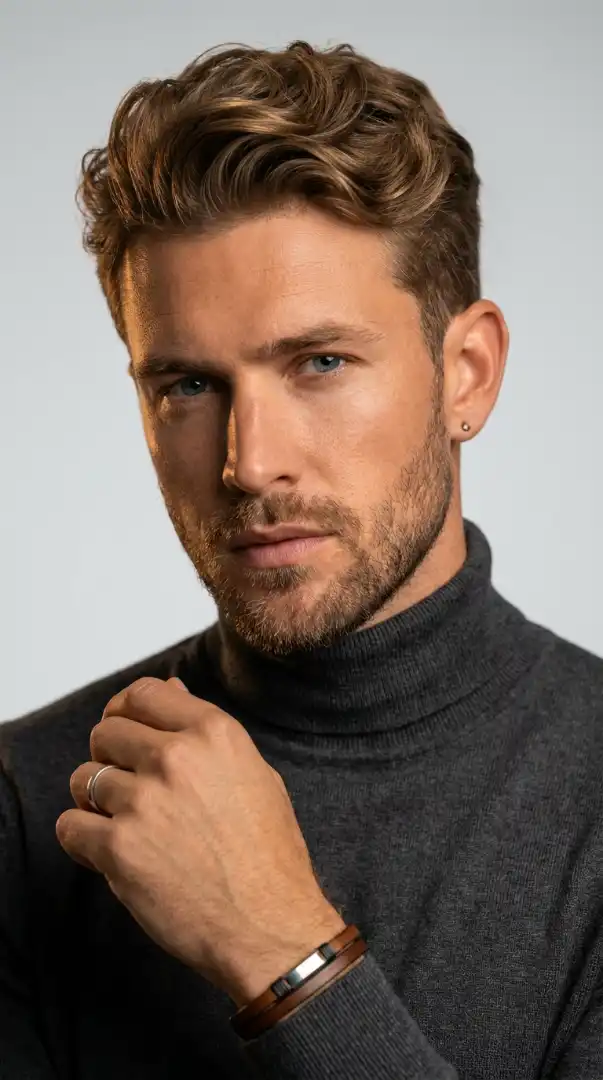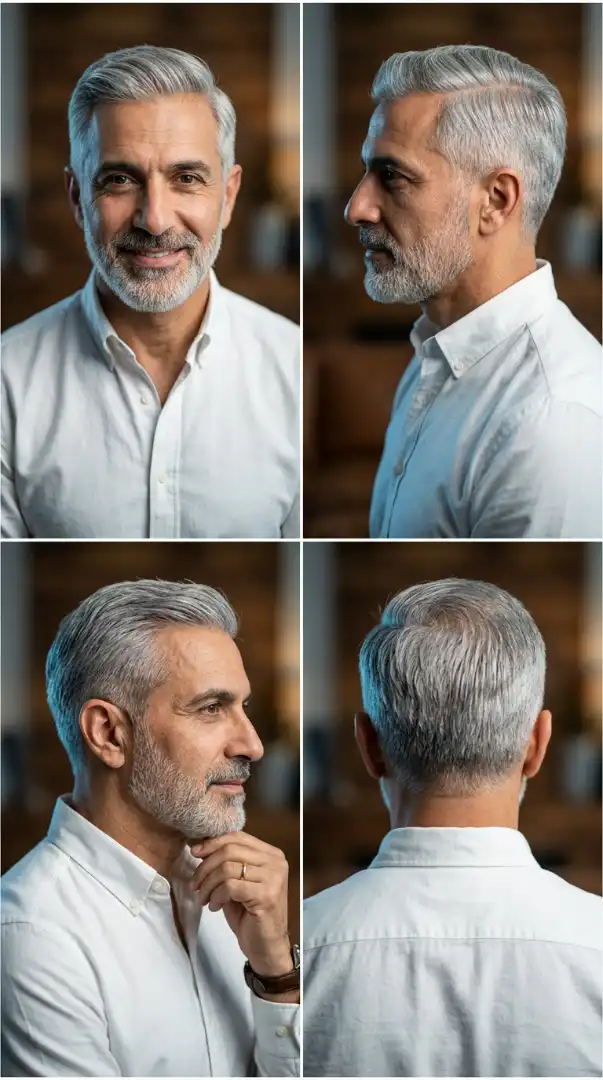

20 Side Part Hairstyles for Men: Classic, Textured & Old Money Versions
The side part is the haircut that never actually left. It sits among the most searched men’s hairstyles on Pinterest year after year, its curly version is one of the platform’s most saved natural styles, and trend trackers keep it in the top tier of 2026 cuts tied to the old-money look — because no other cut moves this easily between a boardroom, a wedding and a winter street. What changed is the finish: the 2026 side part is softer and more textured than the razor-lined version of a decade ago, worn with natural movement instead of lacquered shine.
Know the architecture before you pick a version. A side part is three to five inches of top hair parted on your natural parting side and swept over, with the sides taken shorter — anywhere from a gentle scissor taper to a skin fade. The part itself should be soft: a line the hair falls into, not a trench shaved into the scalp (the hard part exists in this guide as the one deliberate exception). Style it with a comb first and fingers second, keep the product matte to natural, and the cut holds its manners for three to four weeks at a time.
Inside: the classic and its modern textured rewrite, every fade pairing from low taper to skin fade, the old money polish, versions tuned for curly, wavy, straight, thick and fine hair, the long and short extremes, the beard pairing, the receding-hairline placement, the winter version, and the complete look that obeys every rule. Each comes with the face shapes it flatters, the kit it needs, the upkeep it honestly demands, and the exact words to say in the chair. The part is also the silver generation’s signature — our winter hairstyles for older men guide wears it in grey — and its closest cousin, the swept-back polish, lives in our slick back hairstyles for men guide.
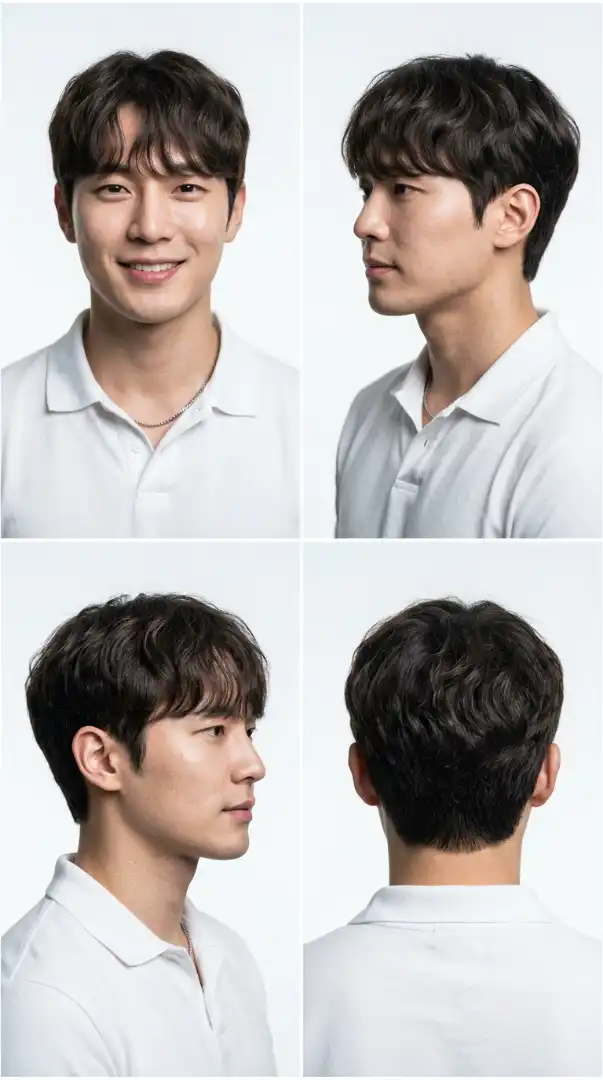
1 of 20 — The Classic Side Part
What is the classic side part, exactly?
The original. Three to four inches on top, parted on the natural side and combed over, with scissor-tapered sides that keep a little length and a completely natural hairline. It is the cut in every black-and-white boardroom photograph and every modern “quiet luxury” reference — not because it is old, but because the proportions have never been improved on: short enough to be neat, long enough to be elegant.
Face Shape: All faces. The sweep adds width at the top corner, which balances round faces, and the soft sides keep square jaws from looking severe.
Grooming Kit: A fine-tooth comb, a light pomade or cream with a natural finish, and a dryer for the morning set. The classic is combed, not finger-styled.
Maintenance: A trim every four weeks keeps the taper and the part crisp. Between visits it asks for two minutes a morning.
Barber Script: “A classic side part — three to four inches on top, parted on my natural side, scissor taper on the sides, natural hairline, nothing shaved in.”
Q: Which side should I part my hair on?
A: Your natural side — where the hair falls when it is wet and combed straight forward, the part opens on its own. Fighting the growth direction costs you product and hold all day.
Q: Is the classic side part old-fashioned?
A: The shape is a century old; the finish is what dates it. Matte product and texture keep it current — it is the styling, not the cut, that reads vintage.
The original — a century of boardrooms cannot be wrong.
2 of 20 — The Textured Side Part

Why is the textured side part the 2026 version?
Because it relaxes the classic’s comb lines. The textured side part keeps the same architecture — natural part, swept top, shorter sides — but the top is point-cut for separation and worn with the fingers, so the sweep moves in pieces instead of one lacquered sheet. It is the version trend reports describe when they say the modern part is softer: same manners, less effort showing.
Face Shape: All faces, and the most forgiving version for men new to the part — the texture hides an imperfect part line.
Grooming Kit: A matte clay or fibre and your fingers. A comb sets the part on damp hair; after that, tools stay in the drawer.
Maintenance: Four to five weeks. Texture is tolerant — the grow-out softens instead of collapsing.
Barber Script: “Textured side part — point-cut the top for separation, soft natural part, tapered sides. I style it with my fingers, matte finish.”
Q: Textured or classic — which should I start with?
A: Textured, for most men. It forgives thick, wavy and slightly unruly hair, and it survives a windy day. Choose the classic when you want the full formal polish.
Q: How do I keep the texture from looking messy?
A: Product on damp hair, part first, then pinch the ends into pieces — never rake dry hair repeatedly. Neat part, relaxed top: that contrast is the whole look.
The modern rewrite — same manners, combed by fingers.
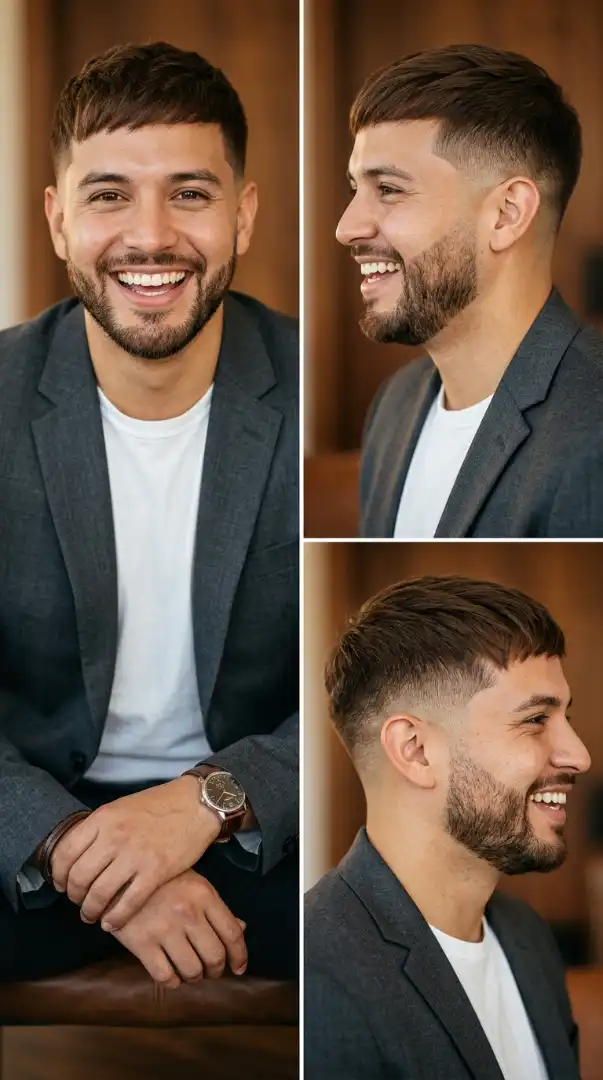
3 of 20 — Side Part with a Low Fade
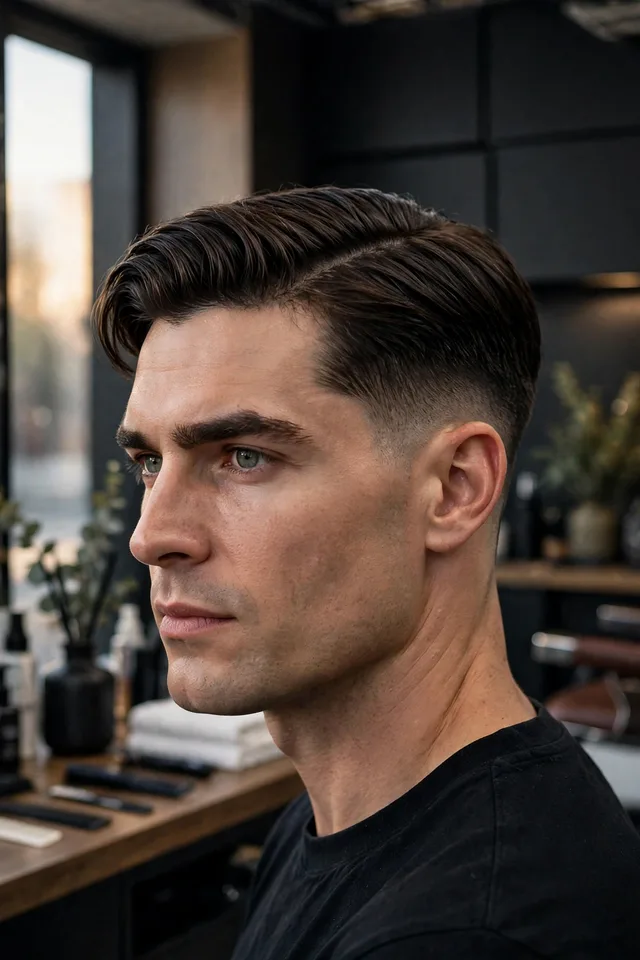
Why is the low fade the side part’s most popular pairing?
Balance. The side part is a conservative top; the low fade gives it a modern base without shouting — the fade starts just above the ear and melts into the parted top, keeping the silhouette clean at the edges and classic above them. It is the version barbers cut most: professional enough for any office, current enough for anywhere else.
Face Shape: All faces. The low fade’s gentle contrast suits men who want the part’s polish without the skin fade’s drama.
Grooming Kit: The classic kit, plus a standing barber slot — fades show regrowth sooner than tapers do.
Maintenance: The fade wants a refresh every three weeks; the top and part hold four.
Barber Script: “Side part with a low fade — fade starts above the ear, blended into the top. Soft natural part, three to four inches to sweep.”
Q: Low fade or low taper under a side part?
A: The fade is cleaner and more defined; the taper is softer and grows out invisibly. Choose the fade for a sharper finish, the taper for the lowest upkeep.
Q: Does a low fade suit older men?
A: Yes — it is the gentlest fade in this guide and the one most worn past forty. Keep the part soft and the top at classic length and it reads distinguished, not trendy.
The people’s pairing — classic above, current below.
4 of 20 — Side Part with a Mid Fade
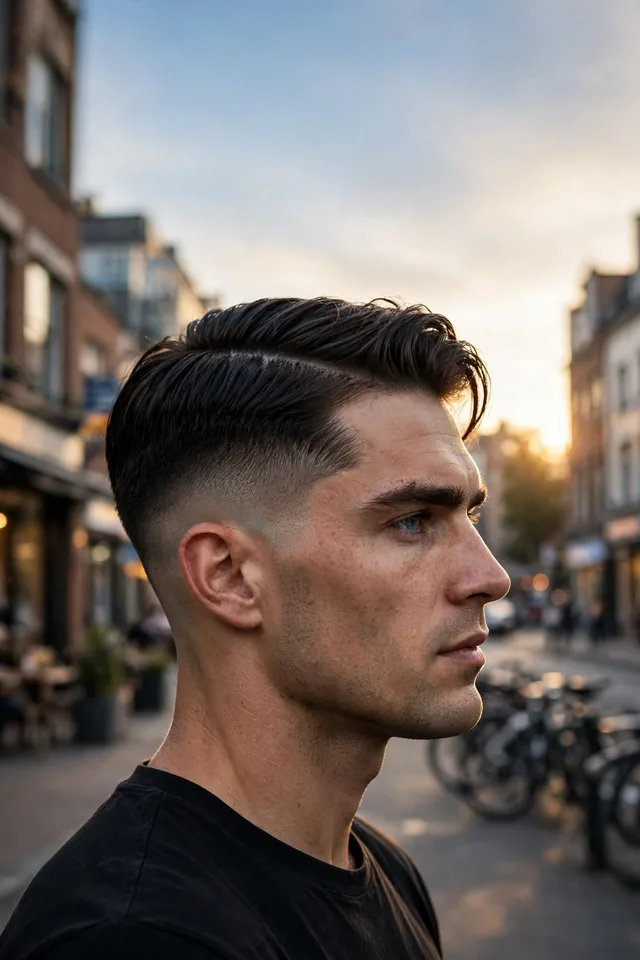
What does the mid fade add to a side part?
Contrast with control. The mid fade starts higher — around the temple — so the parted top stands out against much shorter sides, sharpening the whole silhouette without going to skin at the bottom. It is the version for men who found the low fade too polite: the part reads bolder, the sweep looks longer by comparison, and the cut photographs sharper.
Face Shape: Oval and square faces carry the higher contrast best; round faces gain definition from the tightened sides.
Grooming Kit: A comb and a medium-hold product with a natural finish — the longer-looking top needs its sweep held all day.
Maintenance: Every three weeks. The mid fade’s line sits where regrowth shows fastest.
Barber Script: “Side part with a mid fade — fade to the temple, blended clean. Top three to four inches, swept over, soft part line.”
Q: Mid fade or high fade with a side part?
A: Mid, for almost everyone. A high fade eats so much side that the part’s classic proportions are lost; the mid keeps the contrast where it flatters.
Q: Will a mid fade work with a beard?
A: Yes — blend the beard into the fade at the sideburn so the two gradients meet. A disconnected beard against a mid fade looks unfinished.
Sharper by one notch — the part, underlined.
5 of 20 — Side Part with a Low Taper

Why choose a taper over a fade for a side part?
Because it disappears. Side part with a low taper cleans only the edges — sideburns and neckline — while the sides keep their length and the part does all the talking. Nothing about it announces a fresh haircut, and nothing about it grows out badly: it is the lowest-upkeep pairing in this guide and the most traditional, the way the part was worn for decades before fades existed.
Face Shape: All faces. The kept side length suits narrower faces, which a fade can make look gaunt.
Grooming Kit: Just the classic kit. No fade means no fade-specific upkeep at home either.
Maintenance: Four to six weeks — the taper’s edges soften so gradually that the trim is about the top, not the sides.
Barber Script: “Side part with a low taper — taper the sideburns and neckline only, keep the side length. Soft part, natural finish.”
Q: Is a taper old-fashioned under a side part?
A: It is traditional, which is different. With texture on top and matte product it reads completely current — it is simply the quiet version of the pairing.
Q: How is this different from the classic side part?
A: The classic is usually scissor-cut all over; the low taper uses clippers just at the borders for a cleaner edge. Same silhouette, tidier frame.
The invisible pairing — clean edges, zero announcement.
6 of 20 — The Old Money Side Part

How does the old money side part differ from the classic?
Finish and restraint. The old money side part is the classic cut groomed to a higher standard: a touch more length, a natural shine instead of matte, every hair in its place and nothing — no fade, no line, no product excess — drawing attention to itself. Trend trackers tie the side part’s current surge to this aesthetic: wealth signals that whisper. It is the hardest version to fake, because the grooming has to be perfect daily.
Face Shape: All faces; the polish flatters mature faces particularly, reading as success rather than effort.
Grooming Kit: A quality pomade with a natural shine, a real comb, and a dryer — this version is set with heat every morning.
Maintenance: Every four weeks, and the daily set is non-negotiable. This is the highest-discipline part in the guide.
Barber Script: “Old money side part — classic proportions, a little extra length, scissor finish, natural shine. Nothing faded, nothing shaved.”
Q: What product gives the old money finish?
A: A water-based pomade with medium hold and natural — not wet — shine, applied sparingly to towel-dried hair and combed through once. Excess product is the one thing that ruins it.
Q: Can I wear the old money part casually?
A: It dresses down better than it dresses up the other versions — with knitwear and an open collar it reads as ease. The polish is in the grooming, not the outfit.
Quiet luxury — the part that whispers money.
7 of 20 — The Hard Part
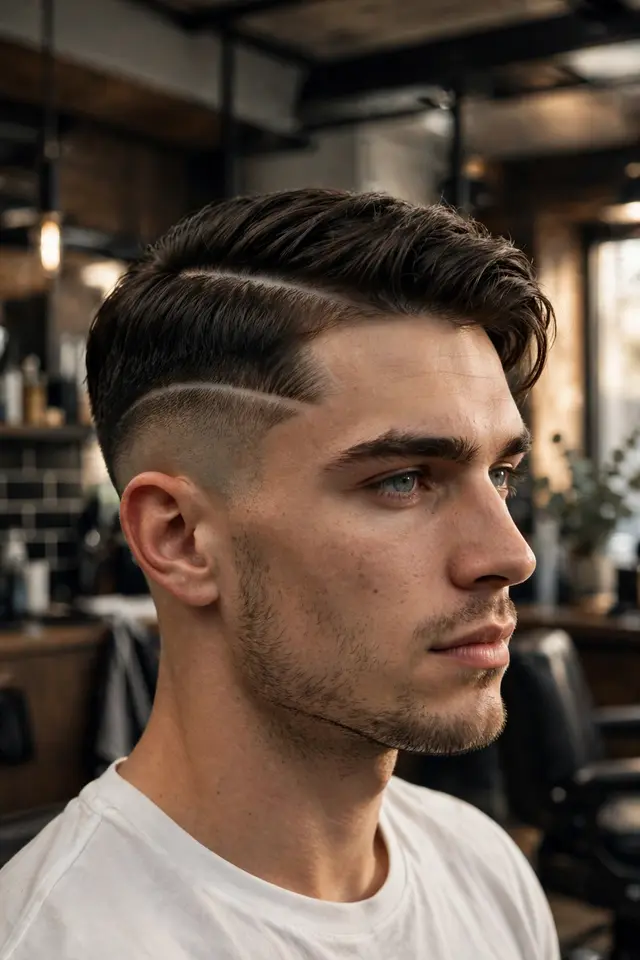
When is a shaved part line the right choice?
When you want the part to be the statement. The hard part is a razor line shaved into the parting, usually over faded sides, so the division between the swept top and the short side is graphic and exact. This guide’s standing advice is a soft part — the hard part is the deliberate exception, for men who like their lines architectural and their barber visits frequent. Know the trade before you choose it: the line grows out visibly within two weeks.
Face Shape: Square and angular faces suit the hard geometry; softer faces can find the line too severe.
Grooming Kit: A comb with a fine tooth to keep the line clean, and product that holds the sweep away from it — stray hairs crossing the line undo the effect.
Maintenance: The line needs re-cutting every two to three weeks. This is the highest-upkeep part in the guide.
Barber Script: “Hard part — shave the part line in on my natural side, fade the sides, top swept over. I know it needs regular re-cutting.”
Q: Does a hard part damage the hair or scalp?
A: No — it is a very short shave along the parting, not a cut into the skin. It does commit you, though: the line must grow out fully if you change your mind, which takes weeks.
Q: Hard part or soft part for a first side part?
A: Soft, always. Live with the part for a few months first; if you still want the line sharpened, it can be shaved into your existing cut in one visit.
The exception — a part drawn with a ruler.
8 of 20 — Side Part with a Skin Fade
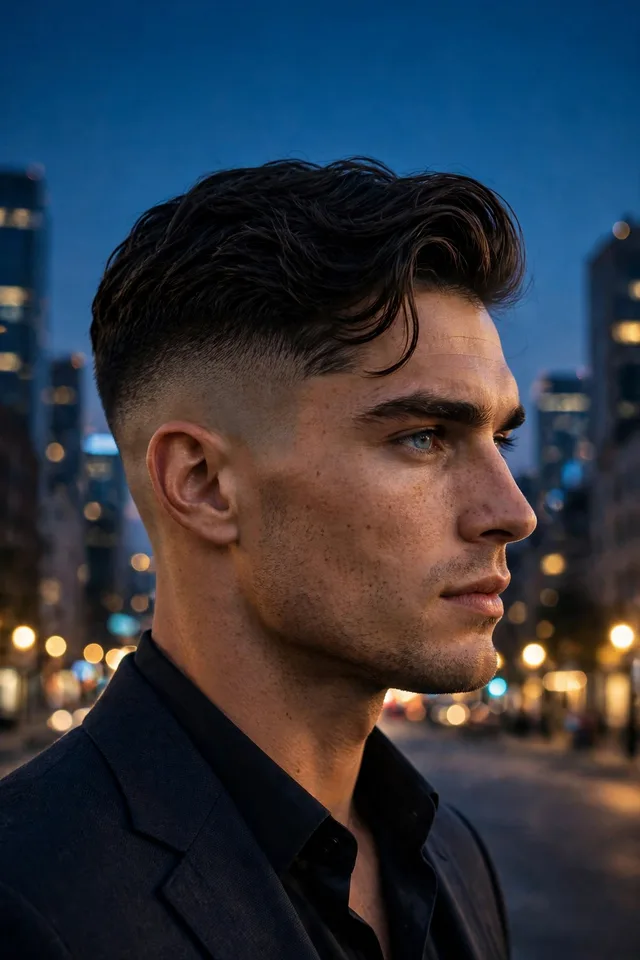
Is the skin fade too much for a side part?
It is the maximum — and for the right man, exactly right. Side part with a skin fade takes the sides to bare skin, so the parted, swept top floats over a blank canvas: the contrast is total, the silhouette is the sharpest in this guide, and the classic top keeps it from reading as a pure fade cut. It is the boldest version here and the one that dates fastest between visits.
Face Shape: Strong, defined faces carry the contrast; the exposed scalp emphasises bone structure, for better or worse.
Grooming Kit: The classic kit, plus sunscreen for the faded scalp in summer and moisturiser in winter — skin that has never seen weather now does.
Maintenance: Every two weeks to stay sharp. Skin fades have the shortest shelf life of any cut in this guide.
Barber Script: “Side part with a skin fade — skin on the sides, blended up, top three to four inches swept over a soft part.”
Q: Skin fade or mid fade for a wedding or formal event?
A: Skin fade, freshly cut within three days of the event. The contrast photographs immaculately in a suit — just do not let it be a week old.
Q: Does the skin fade version suit a workplace?
A: In creative and casual fields, yes. In conservative ones, the low fade or taper versions carry the same part with safer signals.
Maximum contrast — the classic top, on a blank canvas.
9 of 20 — The Curly Side Part

How do curls change the side part?
They make it softer and bigger. The curly side part parts natural curls on the side and lets them fall in their own direction — no combing flat, no fighting the pattern. It is one of Pinterest’s most saved natural styles for men precisely because it works with the hair instead of against it: the part organises the volume, the curls supply the texture, and the whole thing reads effortless.
Face Shape: Longer faces suit the width curls add; round faces should keep the sides shorter so the volume sits on top.
Grooming Kit: A curl cream, leave-in conditioner, and a wide-tooth comb or just fingers — a fine comb is this style’s enemy.
Maintenance: Six to eight weeks between cuts; the moisture routine is weekly. Curls forgive regrowth but not dryness.
Barber Script: “Curly side part — part it on my natural side, cut the curls dry and curl by curl, keep the volume on top.”
Q: How do I find the part in curly hair?
A: On wet hair, comb it all forward, then push it back — the curls separate at the natural part on their own. Set the part there with cream and let it dry untouched.
Q: Can I straighten the top for a cleaner part?
A: You can, but you will fight it daily and damage the curl. The curly part’s appeal is that it does not need to be clean — it needs to be defined and moisturised.
The most saved — the part, in the hair’s own language.
10 of 20 — The Wavy Side Part

Why is wavy hair the side part’s sweet spot?
Because waves sweep like they were designed for it. The wavy side part takes natural S-shaped hair, parts it, and lets the wave carry the top over in one moving sheet — the texture the classic part tries to imitate with product, wavy hair supplies free. It sits between the classic’s polish and the textured version’s ease, and it is the most requested natural-finish part in barbershops.
Face Shape: All faces. Wave volume at the top corner balances round faces; the soft sides suit square ones.
Grooming Kit: A light cream or leave-in — waves frizz under heavy clay — and a wide comb for the morning set.
Maintenance: Four to six weeks. Waves hide regrowth kindly, and the part survives a beanie better than any straight version.
Barber Script: “Wavy side part — keep my natural wave, part on the natural side, layers to help it sweep. Cut it dry if you can.”
Q: How do I stop my wavy part frizzing by afternoon?
A: Product on damp hair, part it, then leave it alone. Every dry touch breaks the wave’s clumps into frizz. A pea-sized amount of cream reactivated with wet hands fixes the worst of it.
Q: Wavy side part or textured side part?
A: They overlap heavily — the wavy version leans on your natural pattern and a cream finish; the textured is point-cut and matte. If your hair waves on its own, take this one.
Born for it — the wave does the sweeping.
11 of 20 — Side Part for Thick Hair

What stops thick hair from holding a part?
Weight and rebellion. Thick hair parts where it wants and puffs where it shouldn’t, so side part for thick hair is built on subtraction: internal layering and weight removal through the top so the sweep lies down, and shorter, cleaner sides so the mass reads as shape, not bulk. Get it right and thick hair produces the fullest, most luxurious part in this guide.
Face Shape: Square and larger faces carry the volume in proportion; smaller faces need the sides tighter and the top flatter.
Grooming Kit: A stronger-hold cream or pomade — light products lose to thick hair by noon — and a dryer to set the sweep while it is damp.
Maintenance: Every four weeks. Thick hair outgrows its layering fast, and the puff returns first above the ears.
Barber Script: “Side part for thick hair — remove weight internally, keep the length on top, tight clean sides. It has to lie down and stay down.”
Q: Should thick hair be thinned with shears for a part?
A: Internally and carefully. Surface thinning creates frizz and flyaways that ruin the part’s clean line. Ask for layering and point cutting instead, and ask before the shears come out.
Q: Why does my thick side part keep falling forward?
A: The top is either too long at the front or too heavy. A barber can shorten the front corner and remove weight so the sweep’s direction wins over gravity.
Subtraction as styling — the fullest part is thick hair, edited.
12 of 20 — Side Part for Fine Hair

How does fine hair keep a part from looking thin?
By keeping it shorter and building volume at the root. Fine hair in a long sweep goes stringy and shows scalp at the part line, so side part for fine hair stops at two to three inches, uses a matte volumising product, and keeps the sides close so the top looks denser by comparison. The part itself should be soft — a hard line on fine hair is a spotlight on the scalp.
Face Shape: All faces; the shorter length keeps fine hair from overwhelming smaller features.
Grooming Kit: A volumising mousse or root spray, a matte clay used sparingly, and a dryer — fine hair’s volume is built warm and set cool.
Maintenance: Every four to five weeks. Fine hair shows regrowth lines sooner, and the ends thin visibly if left.
Barber Script: “Side part for fine hair — two to three inches on top, soft part, close sides. Nothing heavy, I style for root volume.”
Q: What products make fine hair look thinner?
A: Oils, wet-look gels and heavy pomades — they coat fine strands and separate them. The old money shine finish is not for this hair type; matte is your friend.
Q: Should fine hair avoid a side part altogether?
A: No — a short, soft, textured part is one of fine hair’s best cuts. It is the long, slicked versions that betray it. Keep it short and matte and the part flatters.
The illusionist — density by contrast, volume by heat.
13 of 20 — Side Part for Straight Hair
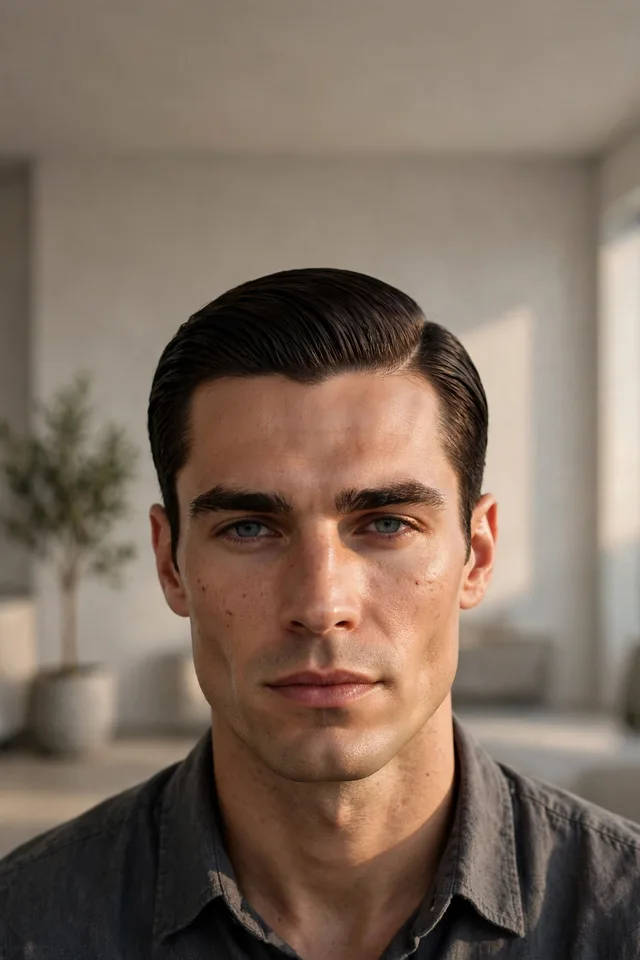
Can straight hair hold a side part all day?
Yes — it is the part’s original hair type. Straight hair combs into the cleanest part lines and the sleekest sweeps; its only enemy is flatness by afternoon. Side part for straight hair counters with a dryer set in the morning, a product with real hold, and — for the stubbornest hair — a slight layer at the front corner so the sweep has somewhere to fall from. The result is the sharpest, most graphic version of the part.
Face Shape: All faces; the sleek finish suits angular faces particularly well.
Grooming Kit: A dryer, a fine comb, and a medium-hold pomade or cream. Straight hair’s part is a heat-set, not a hope.
Maintenance: Four weeks. Straight hair shows an untidy part line sooner than any texture — the trim keeps the geometry honest.
Barber Script: “Side part for straight hair — clean part on my natural side, slight layer at the front corner, tapered sides. I set it with heat.”
Q: My straight hair falls back into a middle part by noon — why?
A: You are parting against the growth direction, or skipping the heat set. Part it on the natural side, blow-dry the root in the sweep’s direction on damp hair, and it will hold.
Q: Straight part or textured part for straight hair?
A: Straight hair takes the classic comb finish better than any type — take the classic or old money version and enjoy the one advantage your hair type owns outright.
The original canvas — the cleanest line in the guide.
14 of 20 — The Long Side Part

When does a side part become a statement?
Past four inches. The long side part keeps the top at four to five-plus inches so the sweep falls fully over in one dramatic sheet — the version screenshots and saves are made of, and the closest the part comes to the flow family. It needs the length trained: long hair has its own ideas about direction, and the first weeks of wearing it over are a negotiation. Win it, and this is the most elegant cut in the guide.
Face Shape: Oval and longer faces carry the sweep’s drama; round faces should keep the sides tight to avoid width.
Grooming Kit: A dryer with a nozzle, a light cream with real hold, and a soft brush — long sweeps are set, not combed once and forgotten.
Maintenance: Five to six weeks, mostly for the sides — the top’s length is the point and should be touched as little as possible.
Barber Script: “Long side part — four to five inches on top, swept fully over, point-cut ends. Sides tight, top length protected.”
Q: How long does it take to train a long sweep?
A: Two to three weeks of daily heat-setting on damp hair. Long hair learns direction slowly but keeps it well once learned — the negotiation is front-loaded.
Q: Long side part or flow — which suits me?
A: The part is structured and deliberate; the flow is loose and swept back. Same length family, different signals: choose the part for polish, the flow for ease.
The dramatic sweep — elegance at full length.
15 of 20 — The Short Side Part
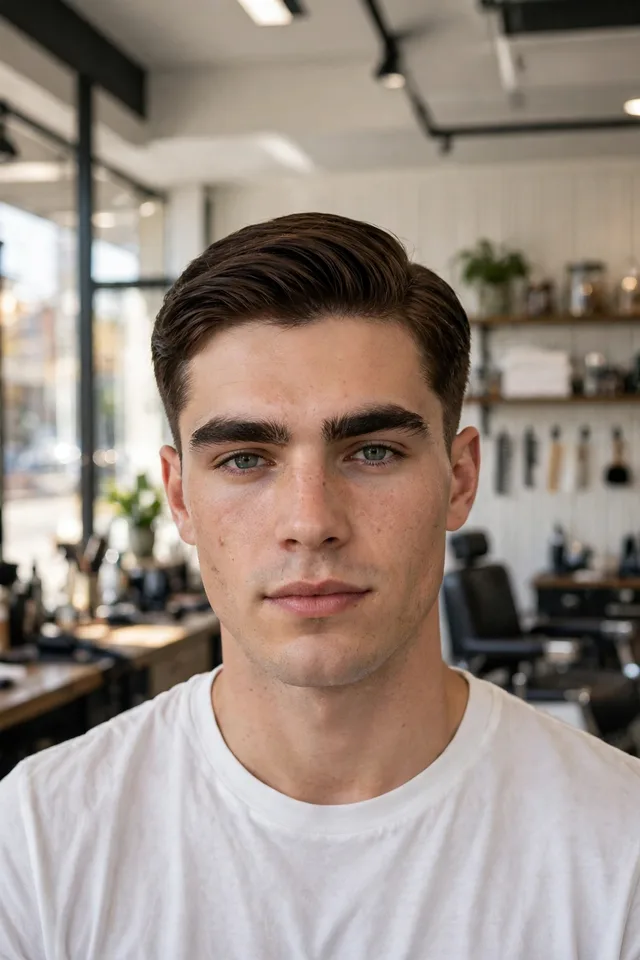
What is the side part’s minimum viable version?
Two inches and a comb. The short side part keeps the top just long enough to part and lay over — the Ivy-adjacent, barbershop-classic short cut that asks almost nothing of its owner. It is the version for men who want the part’s order without the part’s routine: no dryer, no training, no negotiation. If every other version in this guide sounds like work, this is your cut.
Face Shape: All faces — the short proportions are the most universally wearable in the guide.
Grooming Kit: A comb and a fingertip of matte product. That is the entire list.
Maintenance: Every three to four weeks — short hair shows its regrowth honestly, but each visit is quick and cheap.
Barber Script: “Short side part — two inches on top, just enough to lay over, tapered or short faded sides, soft part.”
Q: How short can a side part go before it stops working?
A: About an inch and a half on top is the floor — below that the hair cannot lie over and the part vanishes. Two inches is the comfortable minimum.
Q: Is the short side part a good first part?
A: The best. It teaches you your natural part side and your morning routine at the lowest cost, and every longer version in this guide grows out of it.
The minimum — all of the order, none of the routine.
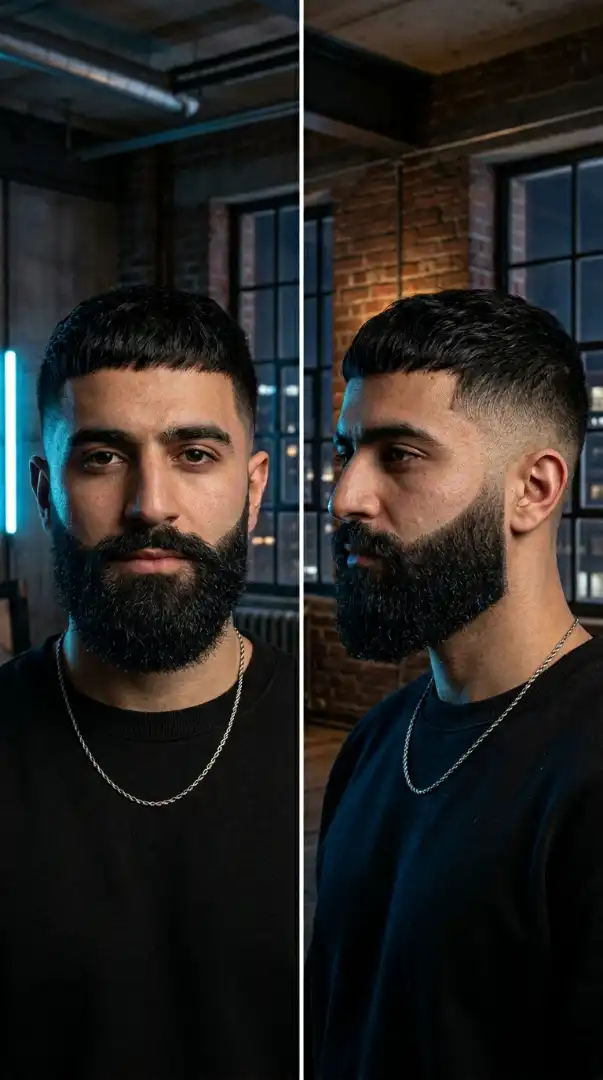
16 of 20 — Side Part with a Beard

Why do a side part and a beard complete each other?
Contrast of signals. The part is the most civilised cut in barbering; a full, shaped beard adds the weight and masculinity that stop it reading as boyish. Together they are the complete professional portrait: precision above, presence below. The rule is balance — the beard must be groomed to the part’s standard, or it drags the whole look down to its level.
Face Shape: The beard lets you adjust what the part cannot — fuller at the chin lengthens round faces; tight sides slim square ones.
Grooming Kit: Beard oil and a boar brush join the part kit; the sideburn blend point needs its own thirty seconds.
Maintenance: Part trims on schedule; beard edges every few days, with the sideburns blended into the sides at every barber visit.
Barber Script: “Side part on top, beard shaped full but precise. Blend the sideburns into both — the beard and the cut should meet cleanly.”
Q: Should the beard be short or long with a side part?
A: Short-to-medium and shaped suits the part’s precision best. A long wild beard fights the message; if you wear one, the part should be the textured version, not the classic.
Q: Which grows first — the part or the beard?
A: Either, but finish them together: a fresh part over an untended beard looks like two different men. Book the beard shape-up for the same visit as the first part cut.
Civilised above, weight below — the complete portrait.
17 of 20 — Side Part for a Receding Hairline

Can a side part work with a receding hairline?
It is one of the oldest solutions to it. A side part for a receding hairline places the part at the recession point itself and sweeps the longer top across, so the hairline’s weakest corner is covered by the sweep’s origin rather than exposed by it. Barbers have used this geometry for a century because it works with the hairline instead of denying it. The rules: keep the front length, keep the finish matte, and never slick it straight back.
Face Shape: All faces with early-to-moderate recession. The sweep’s diagonal shortens a lengthening forehead visually.
Grooming Kit: A matte volumising product and a dryer for front volume — shine and wet finishes expose the scalp at the temples.
Maintenance: Every four weeks. The front corner’s length is the whole strategy, so it must stay exactly where the barber put it.
Barber Script: “Side part at my recession point, sweep the front length across. Keep the front long, matte finish, nothing slicked back.”
Q: Where exactly should the part sit with a receding hairline?
A: Directly above the deeper temple corner. The sweep then originates at the recession and crosses the forehead diagonally — the geometry that camouflages rather than announces.
Q: What should I avoid with a receding hairline and a part?
A: A hard part shaved in (it spotlights the line), wet-look product, and a skin fade that makes the top look thinner by contrast. Soft, matte and swept is the formula.
Geometry as camouflage — the century-old solution.
18 of 20 — The Side Part Pompadour

What happens when the pompadour meets the part?
Height with a direction. The side part pompadour builds the pomp’s volume on top, then parts and sweeps it, so the height travels diagonally instead of straight up. It is the most styled version in this guide — a deliberate, occasion-ready cut that borrows the part’s manners to keep the volume from looking like a costume. Wear it when the classic part feels too quiet and the event rewards presence.
Face Shape: Round and shorter faces gain the most — the diagonal height lengthens and slims.
Grooming Kit: A dryer, a round or vent brush for the lift, and a pomade with real hold. This version is built with heat every time.
Maintenance: Four weeks for the cut; the styling is a daily five minutes, the longest routine here.
Barber Script: “Side part pompadour — length and volume on top, parted and swept, tapered or low faded sides. I blow-dry it up and over.”
Q: Is the side part pompadour too much for daily wear?
A: For conservative workplaces, yes — keep it for events, photos and evenings. Its daily-wear cousin is the textured side part at half the height.
Q: How do I stop the pomp collapsing by afternoon?
A: Build it on damp hair with heat, lift at the root with the brush, and finish with product only after it is dry and shaped. Product on wet hair is weight the lift cannot carry.
Height, given manners — the part goes to the ball.
19 of 20 — Winter Side Part

Why is winter the side part’s home season?
Because winter clothing completes it. The winter side part is any part in this guide worn with the season’s adjustments: the neat sweep sits cleanly above coat collars and scarves where longer styles tangle, the part survives under a beanie better than any swept-back cut — it has a built-in direction to return to — and the whole thing reads as deliberate against heavy layers. It is the professional’s winter answer: order, maintained in the cold.
Face Shape: All faces — choose the underlying version by face shape as normal; winter changes the routine, not the cut.
Grooming Kit: A richer conditioner than summer — indoor heating dries the top out — and a travel comb for the post-beanie reset.
Maintenance: Keep the normal trim rhythm, but reset the part after every beanie: comb it back into place on the spot, thirty seconds, rather than leaving it crushed until morning.
Barber Script: “Winter side part — classic proportions, a little extra length on top for the cold. I wear coats, scarves and a beanie over it.”
Q: Do beanies ruin a side part?
A: They flatten it, but the part is the easiest cut to revive: the line is trained, so a comb and thirty seconds restore it. Put the beanie on back-to-front so the hair keeps its sweep direction underneath.
Q: Should I grow the part longer for winter?
A: Slightly, yes — an extra half inch of top keeps the sweep weighted and calm in dry winter air. Grow for the season in November; trim back in spring.
The professional’s winter — order that survives a beanie.
20 of 20 — The Side Part King

What does the complete side part obey?
Every rule in this guide at once. The Side Part King runs the full architecture — a soft natural part, textured length swept over with the fingers’ finish, edges cleaned by a low taper, a shaped beard balancing the face below — finished in falling snow, because winter is when this cut’s order looks best against the world’s disorder. Nothing is accidental: the part sits on the natural side, the texture is point-cut, the taper is invisible, and the whole thing takes two minutes a morning.
Face Shape: Any face that can grow the beard — the combination is engineered balance, and the taper and beard adjust to the face wearing them.
Grooming Kit: The full bench: matte clay, light cream, a real comb, a dryer, beard oil, and a barber who knows the destination.
Maintenance: The cut every four weeks, taper edges refreshed between, beard shaped with every visit — the king runs on appointments, not hope.
Barber Script: “The full side part — soft natural part, textured sweep, low taper at the edges only, beard shaped to balance. Every rule: part, texture, direction.”
Q: What makes this the king and not just a classic part with extras?
A: The completeness. A classic part is one decision — length, combed over. The king adds the texture’s ease, the taper’s clean borders and the beard’s balance: every layer designed against the others.
Q: How do I keep the king looking royal all winter?
A: Condition against the dry air, reset the part after every beanie, keep the taper and beard appointments, and never let a trim move your part line — the line is the crown.
Every rule obeyed — the part at its ceiling.
The Bottom Line
A side part is not a trend you join — it is a standard you adopt, and its current surge is simply a generation rediscovering why it never left. Start where you are: the short side part if you are new to it, the textured version if your hair has a mind of its own, the classic or old money cut if your life rewards polish. Choose your sides by your appetite for upkeep — taper for invisibility, low fade for balance, mid fade for contrast, skin fade for the bold — and your version by your hair: waves and curls were born for this, straight hair draws the cleanest line, thick hair must be edited into it, fine hair should keep it short and matte. Keep the part soft, keep it on your natural side, and let the one hard rule be this: the line is trained, not forced. Prefer your length swept back instead of over? Our slick back hairstyles for men guide is the same polish in the other direction, and our quiff hairstyles for men guide trades the part for height. Pick your side, and wear it like you mean it.