
9 Quiff Haircut Styles That Make Any Face Look Sharper Instantly
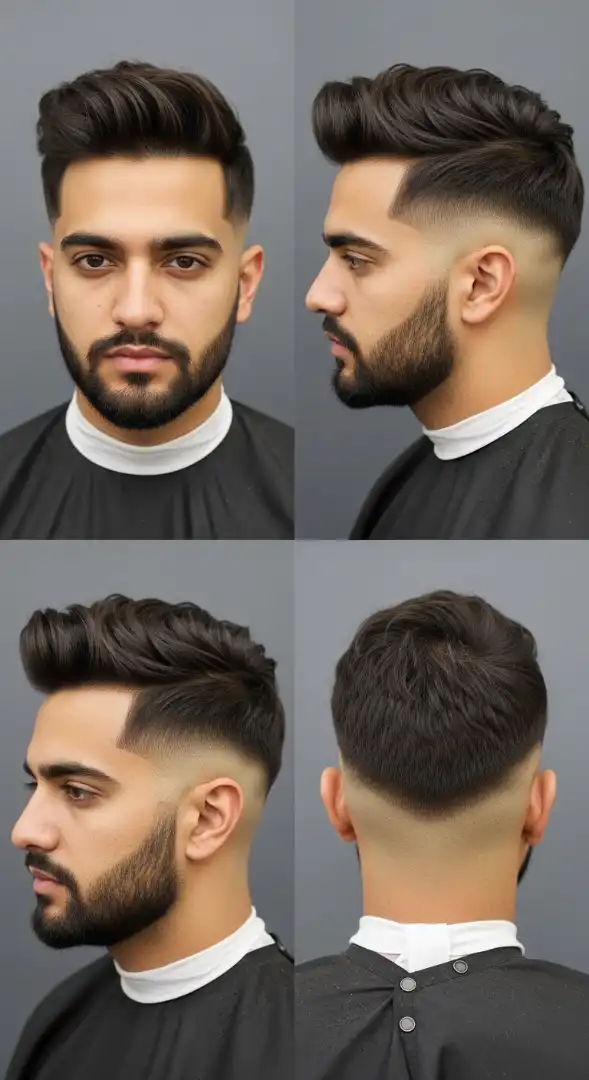
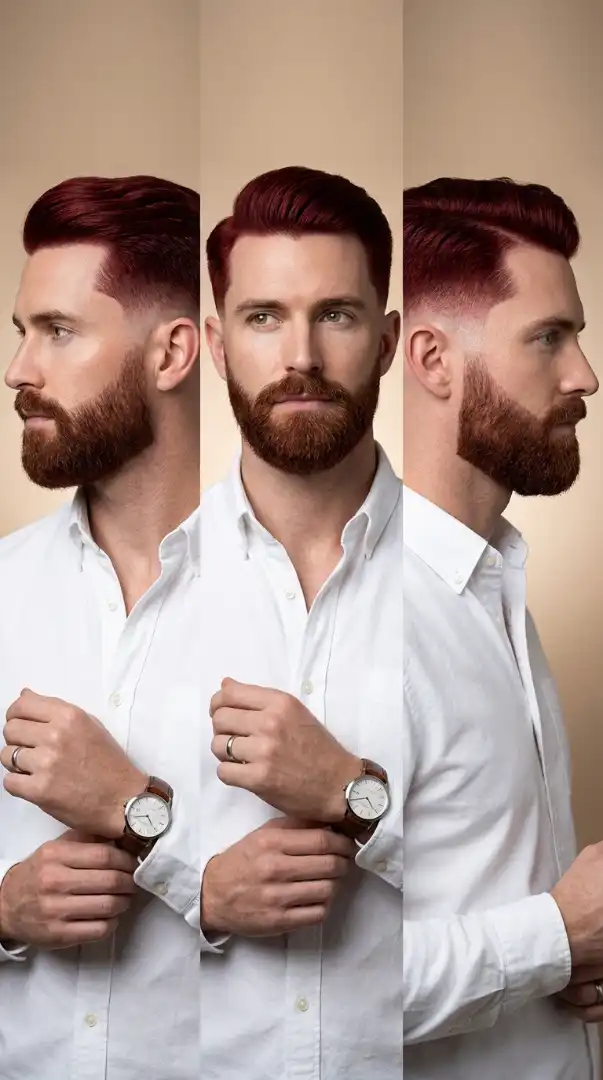
1 of 9 — The Sculpted Quiff Rebel

Why The Sculpted Quiff Rebel Works
The quiff haircut earns its permanent spot in men’s grooming because it does something few cuts manage — it adds real height and structure without looking styled to death. The Sculpted Quiff Rebel takes that classic silhouette and sharpens it with a tighter side taper, making it one of the more versatile cool haircuts a man can walk into a barbershop and ask for today.
Best Face Shape For This Quiff Haircut
Oval and square faces get the most dramatic payoff from this quiff haircut because the lifted front section elongates the face slightly while the tapered sides keep the jawline the focal point. Round faces also benefit — the height at the crown pulls the eye upward and breaks up width. Heart-shaped faces should ask for a slightly lower, softer lift so the volume doesn’t compete with an already-narrow chin, and men with very long faces should keep the front height moderate to avoid over-elongating.
Tools Needed For This Quiff Haircut
Clippers: Wahl Magic Clip (Model 5049-400) or Andis Master (Model 01557) for the side taper. Trimmer/Outliner: Andis T-Outliner (Model 04710) for edge work and a clean hairline. Finishing Tools: Kent 81T fine-tooth comb for parting precision, Denman boar bristle brush for polish and lift. Styling Product: Layrite Original Pomade (medium hold) for a natural finish, or American Crew Fiber (matte finish, high hold) for a more textured look. A dime-sized amount is enough for most hair lengths — start smaller and build up. Maintenance: a lightweight beard oil such as Honest Amish or Viking Revolution keeps the stubble conditioned and sharp-edged.
How Often To Cut This Quiff Haircut
Maintenance Level: MEDIUM. Barbershop visits every 3-4 weeks keep the taper crisp, since the sides grow out faster than the top and blur the contrast first. Daily styling takes about 5-7 minutes — blow-dry the front section upward with a round brush, then work pomade through from mid-length to ends. The routine is two steps: pomade, then a quick comb-through. As it grows out past four weeks, the quiff simply relaxes into a softer side-swept shape rather than looking undone, which makes it forgiving for busy schedules. Monthly maintenance cost typically runs $120-160 including product. Home upkeep difficulty: Beginner to Intermediate.
How To Ask Your Barber For This Quiff Haircut
Say this to your barber: “I want a quiff haircut with a mid skin fade starting just above the ear. Take the top to 3 inches at the front, tapering back to 2 inches toward the crown. Keep the front section long enough to lift and comb back with a round brush. For the fade, blend from a guard #1 at the line up to a guard #4 near the parietal ridge. Taper my stubble close along the jawline so it connects cleanly with the fade. Finish with a crisp lineup at the temples and a natural, not razor-sharp, front hairline.”
If this structured, height-driven look feels like more upkeep than you want on a Monday morning, the next style trades the lift for a lower-maintenance side-swept finish that still reads as one of today’s more popular mens hairstyles.
2 of 9 — The Street King Side Sweep
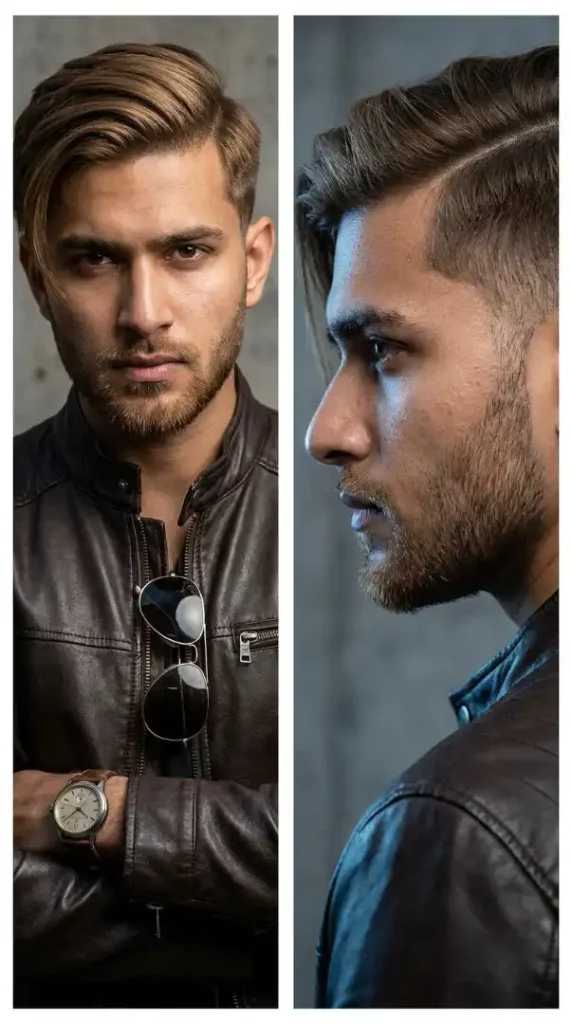
Why The Street King Side Sweep Works
Not every man wants a high-maintenance quiff haircut, and that’s exactly why cool haircuts like The Street King Side Sweep exist — a deep side part with a flat, controlled sweep that reads polished without a single strand out of place. It’s one of the more requested popular mens hairstyles for guys who want structure with almost no daily effort.
Best Face Shape For This Cut
Square and oblong faces suit this side-swept style best because the flat top and defined part add horizontal balance without adding unnecessary height. Round faces benefit from the sharp part line, which visually breaks up fullness at the cheeks. Diamond faces should ask for slightly more volume at the crown to soften an otherwise very angular top section, and very long faces should avoid an overly flat sweep since it can emphasize length.
Tools Needed For This Cut
Clippers: Wahl Magic Clip (Model 5049-400) for the tapered sides. Trimmer/Outliner: Andis T-Outliner (Model 04710) for the part line and edge work. Finishing Tools: Kent 81T fine-tooth comb to carve the part precisely, Denman boar bristle brush to flatten and polish the sweep. Styling Product: a light-hold pomade like Layrite Original Pomade for a natural finish, applied in a pea-sized amount for shorter hair. Maintenance: Honest Amish beard oil to keep the cropped beard conditioned and edge-defined.
How Often To Cut This Style
Maintenance Level: LOW. Barbershop visits every 4-5 weeks are enough since the flat-lying style hides regrowth better than volume-based cuts. Daily styling takes about 3-5 minutes — comb the part while damp, apply a pea-sized amount of pomade, and press flat with a brush. It’s a one-product, two-step routine. As it grows out, the part simply softens rather than collapsing, so the style stays wearable even past the five-week mark. Monthly maintenance cost runs roughly $100-130. Home upkeep difficulty: Beginner.
How To Ask Your Barber For This Cut
Say this to your barber: “I want a side-swept cut with a low skin fade starting just above the ear. Take the top to 2 inches, kept slightly longer at the front for the sweep. Part it deep on the left with a razor-sharp line. For the fade, blend from a guard #1 up to a guard #3 near the temple. Keep my beard close and clean along the jawline with a crisp connection into the fade. Finish with a flat, pressed lineup and no lift at the crown.”
For guys who want that same clean, low-effort payoff but with a little more shape up top, the next style keeps things equally simple while adding a rounder, softer crop that suits curlier textures.
3 of 9 — The Corporate Badboy Quiff
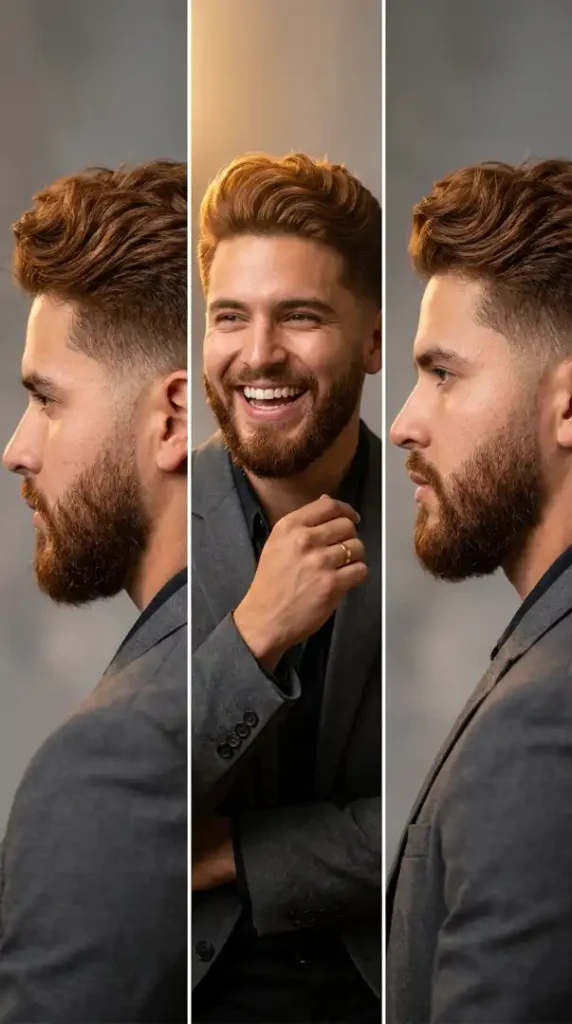
Why The Corporate Badboy Quiff Works
Among today’s popular mens hairstyles, this one earns its name honestly — a full-volume quiff paired with a tight fade that reads sharp enough for the boardroom but has just enough texture to feel unbothered. It’s the cut that shows up most when barbers get asked “what’s trending right now.”
Best Face Shape For This Style
Round faces gain the most from this style since the added crown height and angular fade sides create the illusion of length and sharpen the jawline. Oval faces handle it just as well with slightly less volume at the front. Square faces should ask for a touch more texture on top to soften the strong jaw rather than doubling down on angles, and very oblong faces should keep the crown height moderate to avoid stretching the face further.
Tools Needed For This Style
Clippers: Andis Master (Model 01557) for the side fade. Trimmer/Outliner: Andis T-Outliner (Model 04710) for the hairline and beard edges. Finishing Tools: Denman boar bristle brush for lift and polish, Kent 81T comb for parting precision at the crown. Styling Product: American Crew Fiber (matte finish, high hold) worked through damp hair, roughly a dime-sized amount, then blow-dried upward for volume. Maintenance: Viking Revolution beard oil to keep the full beard soft and manageable.
How Often To Cut This Style
Maintenance Level: MEDIUM-HIGH. Barbershop visits every 3 weeks keep the fade sharp, since the volume-heavy top makes any fade blur more noticeable than on lower cuts. Daily styling takes 7-10 minutes — blow-dry the crown upward with a round brush, then set with fiber paste. It’s a two-step routine but requires a hair dryer for best results. As it grows out, the quiff loses lift and starts falling forward, so most men rebook before week four. Monthly maintenance cost runs roughly $140-180. Home upkeep difficulty: Intermediate.
How To Ask Your Barber For This Style
Say this to your barber: “I want a quiff haircut with a high skin fade starting at the temple line. Take the top to 3.5 inches at the crown for maximum volume, tapering to 3 inches toward the back. For the fade, blend from a guard #1 at the line up to a guard #5 near the crown. Taper my full beard into the fade cleanly at the jawline, keeping length even at about 8mm. Finish with a textured, blow-dried lift at the front and a sharp lineup at the temples.”
If a high-volume commitment like this doesn’t fit your morning schedule, the next style strips the same energy down to a wash-and-dry cut that still holds shape without the blow dryer.
4 of 9 — The Jawline Sculptor Crop
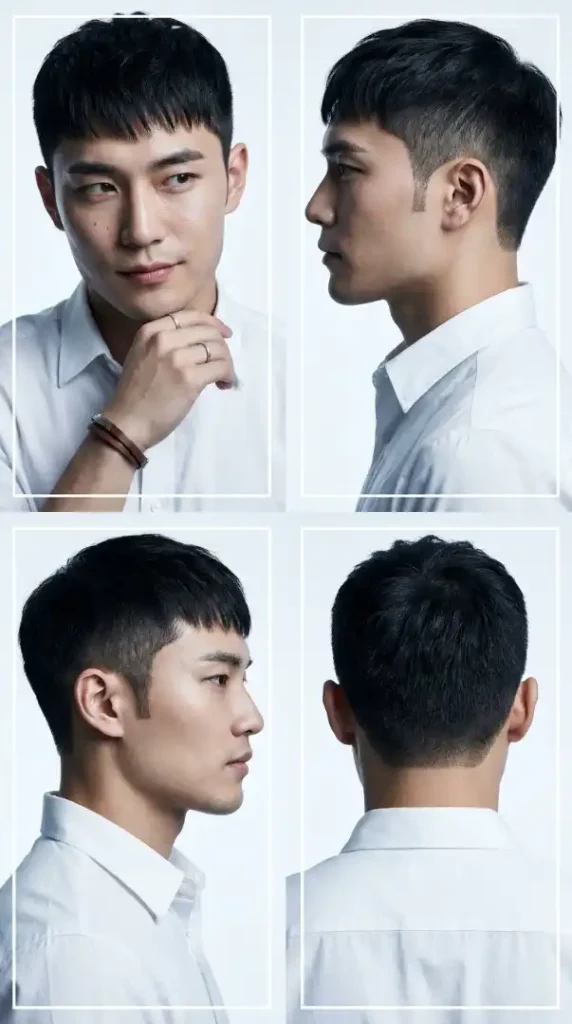
Why The Jawline Sculptor Crop Works
This is a hair cut built entirely around bone structure — a short, textured crop up top with a tight fade that puts every angle of the jaw and cheekbone on display. It’s the kind of hair cut that photographs well from every side, which is exactly why it’s become a go-to barbershop request.
Best Face Shape For This Cut
Diamond and heart-shaped faces see the biggest benefit because the short, forward-textured top balances a narrower chin while the fade keeps the sides from adding extra width. Oval faces suit it just as easily. Round faces can wear it too but should ask for slightly more height at the crown to avoid flattening the top of the head, and very square faces should keep some texture rather than going fully flat to soften the jaw.
Tools Needed For This Cut
Clippers: Wahl Magic Clip (Model 5049-400) for the fade sides. Trimmer/Outliner: Andis T-Outliner (Model 04710) for the crisp nape and hairline. Finishing Tools: Kent 81T comb for texture separation, Denman boar bristle brush for a light matte finish. Styling Product: a matte clay such as American Crew Fiber, applied in a pea-sized amount and worked through with fingertips for a piece-y, forward texture. Maintenance: since this style is clean-shaven, a light daily moisturizer keeps the skin from looking dull under the sharp lighting a strong jawline deserves.
How Often To Cut This Cut
Maintenance Level: MEDIUM. Barbershop visits every 3-4 weeks keep the crop sharp and the fade clean. Daily styling takes about 4-6 minutes — towel-dry, work a small amount of matte clay through with fingers, and press the fringe forward. It’s a single-product, one-step routine. As it grows out, the texture on top gets slightly shaggier but still reads intentional for another week or so before it needs a trim. Monthly maintenance cost runs roughly $110-140. Home upkeep difficulty: Beginner.
How To Ask Your Barber For This Cut
Say this to your barber: “I want a short textured crop hair cut with a mid skin fade starting above the ear. Take the top to 1.5 inches, textured with point cutting so the ends aren’t blunt. For the fade, blend from a guard #1 at the line up to a guard #4 near the parietal ridge. Keep the nape squared off and sharply edged. Finish with a forward-textured fringe and a crisp lineup at the temples and hairline.”
If sharp and structured isn’t quite your speed, the next style softens things with more length on top and a relaxed side-swept finish that’s still just as low-maintenance.
5 of 9 — The Wash-and-Go Statement Cut

Why The Wash-and-Go Statement Cut Works
Among low-effort haircuts for men, this one stands out because it leans into natural texture instead of fighting it — a short, dense top left to fall into its natural coil pattern, framed by a clean tapered side. It’s proof that great haircuts for men don’t always need a blow dryer or a bottle of product.
Best Face Shape For This Cut
Oblong and square faces benefit most since the close-cropped sides keep width in check while the natural top texture avoids adding extra vertical length. Oval faces wear it just as comfortably. Round faces can pull it off too, but should ask for the sides tapered slightly tighter to sharpen the transition, and very narrow faces should keep a bit more density on top for balance.
Tools Needed For This Cut
Clippers: Andis Master (Model 01557) for the tapered sides. Trimmer/Outliner: Andis T-Outliner (Model 04710) for the hairline and beard lineup. Finishing Tools: a wide-tooth detangling comb for the coily top texture, no brush needed to preserve the natural pattern. Styling Product: a light curl-defining cream or leave-in conditioner, roughly a dime-sized amount, scrunched through damp hair rather than combed flat. Maintenance: Viking Revolution beard oil for the low beard, keeping it soft and edge-defined.
How Often To Cut This Cut
Maintenance Level: LOW. Barbershop visits every 3-4 weeks keep the taper clean, since natural texture hides regrowth better than sleek, styled cuts. Daily styling takes about 2-4 minutes — damp the hair, scrunch in product, and let it air-dry into shape. It’s a true wash-and-go routine with no heat tools required. As it grows out, the top simply gains more volume and still looks deliberate, making it one of the more forgiving haircuts for men on a tight schedule. Monthly maintenance cost runs roughly $90-120. Home upkeep difficulty: Beginner.
How To Ask Your Barber For This Cut
Say this to your barber: “I want a low-maintenance textured cut with a mid taper fade starting above the ear. Take the top to 1-1.5 inches and leave the natural texture unmanipulated — no product flattening. For the fade, blend from a guard #1 at the line up to a guard #3 near the parietal ridge. Keep my beard low and tight along the jawline with a clean connection into the fade. Finish with a sharp lineup and no gel or heavy product.”
If low-maintenance is exactly your priority, the next style pushes it even further with a fully side-swept finish that dries into place with barely any product at all.
6 of 9 — The Side-Swept Signature

Why The Side-Swept Signature Works
A great side swept cut never really goes out of fashion, and The Side-Swept Signature proves why — a deep part with longer length combed fully across the forehead, letting natural wave do most of the styling work. It’s a softer, more romantic take on the side swept category compared to a flat, pressed part.
Best Face Shape For This Cut
Heart and diamond faces suit this side swept style particularly well because the fringe sweeping across the forehead softens a narrower chin and balances a wider brow line. Oval faces wear it comfortably too. Square faces can pull it off with slightly more volume to avoid emphasizing the jaw, and round faces should keep the sweep angled rather than flat to maintain length.
Tools Needed For This Cut
Clippers: Wahl Magic Clip (Model 5049-400) for the side taper. Trimmer/Outliner: Andis T-Outliner (Model 04710) for the beard edges and hairline. Finishing Tools: Kent 81T comb to set the sweep direction while damp, Denman boar bristle brush for a soft, natural finish. Styling Product: a lightweight sea-salt spray or soft-hold pomade, applied sparingly, to keep the wave defined without stiffness. Maintenance: Honest Amish beard oil to keep the sculpted beard soft and shape-holding.
How Often To Cut This Cut
Maintenance Level: MEDIUM. Barbershop visits every 4 weeks keep the length and sweep balanced. Daily styling takes about 5 minutes — comb the sweep into place while slightly damp, add a light spray, and let it set. It’s a simple, two-step routine that doesn’t require heat tools if the natural wave is strong enough. As it grows out, the sweep gets even more relaxed and can be worn slightly messier without losing the style. Monthly maintenance cost runs roughly $110-140. Home upkeep difficulty: Beginner.
How To Ask Your Barber For This Cut
Say this to your barber: “I want a side swept haircut with a low taper fade starting just above the ear. Take the top to 3 inches, kept longer at the front for the sweep across the forehead. Part it deep on one side. For the fade, blend from a guard #2 at the line up to a guard #3 near the temple. Sculpt my beard with a clean edge along the jaw, connecting smoothly into the sideburn. Finish with a soft, natural sweep — not pressed flat.”
If the natural, wave-driven look isn’t quite your texture, the next style takes a similar low-effort approach but works specifically with straighter hair types for an even cleaner finish.
7 of 9 — The Modern Gentleman Quiff
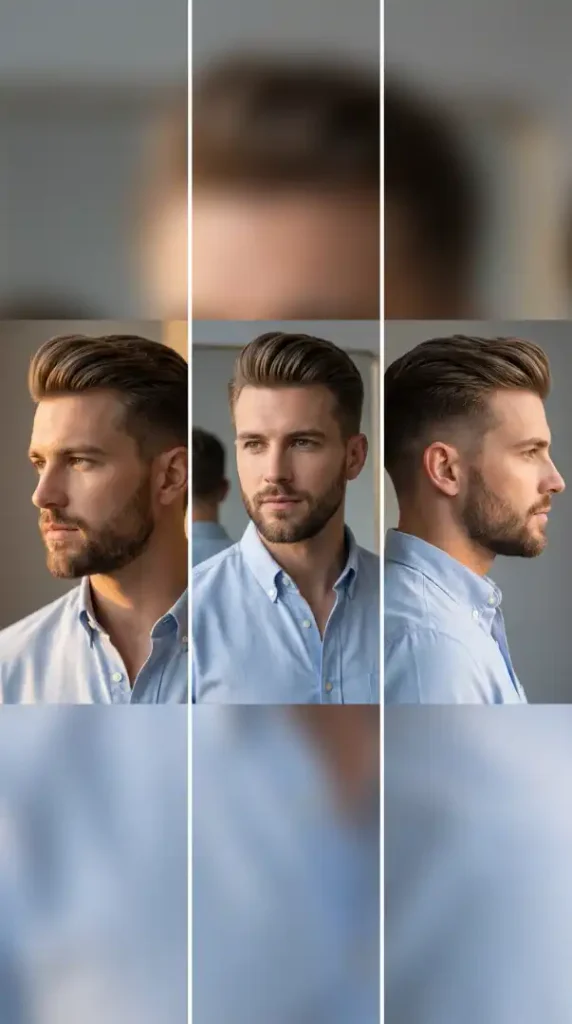
Why The Modern Gentleman Quiff Works
Some cool haircuts lean edgy, others lean polished — The Modern Gentleman Quiff sits firmly in the second camp, taking the classic quiff haircut shape and combing it into a neater, more controlled finish suited for office settings and formal events alike.
Best Face Shape For This Style
Square and oval faces get the cleanest result from this style because the controlled lift adds height without adding bulk, keeping proportions balanced. Round faces also benefit from the vertical lift, which visually narrows the face. Long or oblong faces should keep the front height low and tight to avoid stretching the face further, and diamond faces should ask for a slightly softer part to avoid overemphasizing angular cheekbones.
Tools Needed For This Style
Clippers: Andis Master (Model 01557) for the side taper. Trimmer/Outliner: Andis T-Outliner (Model 04710) for edge work and the part line. Finishing Tools: Kent 81T comb for a precise, controlled part, Denman boar bristle brush for a smooth, polished finish. Styling Product: Layrite Original Pomade (medium hold) for a natural sheen that holds through the day, applied in a dime-sized amount. Maintenance: a light beard balm to keep the short, neat beard shaped and soft.
How Often To Cut This Style
Maintenance Level: MEDIUM. Barbershop visits every 3-4 weeks maintain the crisp taper and clean part line. Daily styling takes about 5-6 minutes — comb the quiff upward and slightly back while damp, then set with pomade for a controlled finish. It’s a two-step routine: comb, then pomade. As it grows out, the quiff simply gets a touch softer and less structured but remains presentable for meetings and events well past the three-week mark. Monthly maintenance cost runs roughly $120-150. Home upkeep difficulty: Beginner to Intermediate.
How To Ask Your Barber For This Style
Say this to your barber: “I want a modern quiff haircut with a mid taper fade starting just above the ear. Take the top to 3 inches at the front, tapering slightly toward the crown. Keep the front long enough to comb upward and back for a controlled lift, not a loose textured look. For the fade, blend from a guard #2 at the line up to a guard #4 near the parietal ridge. Keep my beard short and neatly lined along the jaw. Finish with a polished, combed finish and a sharp lineup at the temples.”
If a controlled, combed finish isn’t your everyday preference, the next style keeps the same overall structure but swaps in a looser, more textured top for a casual everyday feel.
8 of 9 — The Textured Trendsetter
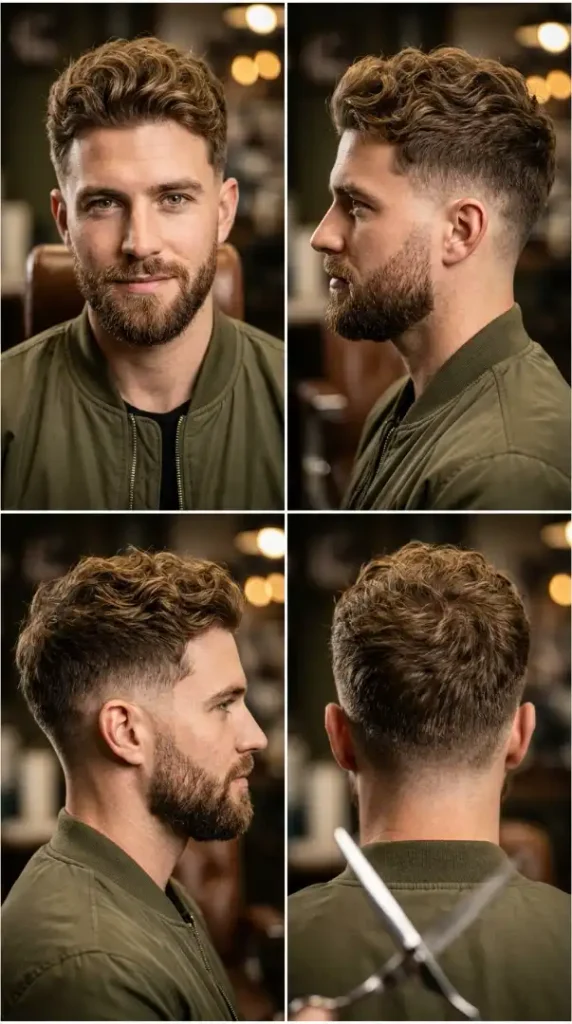
Why The Textured Trendsetter Works
Among today’s popular mens hairstyles, texture-forward cuts consistently outperform sleek, combed looks in searches — The Textured Trendsetter delivers that piece-y, tousled top while still keeping a tight, professional taper underneath, making it a genuine crowd favorite at the barbershop.
Best Face Shape For This Style
Oval and round faces suit this style especially well because the loose top texture adds volume without weight, and the tapered sides keep the silhouette from looking heavy. Square faces also do well, since the tousled texture softens strong jaw angles. Long or oblong faces should keep the top texture closer to the head to avoid adding extra height, and diamond faces should ask for slightly fuller sides to balance sharp cheekbones.
Tools Needed For This Style
Clippers: Wahl Magic Clip (Model 5049-400) for the taper. Trimmer/Outliner: Andis T-Outliner (Model 04710) for the nape and beard edges. Finishing Tools: Kent 81T comb for separating texture at the roots, fingers used in place of a brush to preserve the tousled effect. Styling Product: a matte texturizing paste, roughly a dime-sized amount, worked through damp hair and scrunched upward for lift. Maintenance: Viking Revolution beard oil for the textured beard, keeping strands soft and defined.
How Often To Cut This Style
Maintenance Level: MEDIUM. Barbershop visits every 4 weeks keep the taper clean while allowing the top to build enough length for texture. Daily styling takes about 5-7 minutes — towel-dry, apply texturizing paste, and scrunch upward with fingers for natural movement. It’s a simple, one-product routine. As it grows out, the texture only gets shaggier in a good way, extending the style’s wearable window past the standard four weeks. Monthly maintenance cost runs roughly $110-140. Home upkeep difficulty: Beginner.
How To Ask Your Barber For This Style
Say this to your barber: “I want a textured haircut with a mid taper fade starting above the ear. Take the top to 2.5-3 inches, texture with point cutting so the ends move naturally rather than sitting blunt. For the fade, blend from a guard #1 at the line up to a guard #4 near the parietal ridge. Keep my beard medium length with texture matched to the top, tapering cleanly into the fade. Finish with a tousled, piece-y texture on top and a soft, natural lineup — not razor sharp.”
If a textured, undone finish isn’t quite your everyday style, the final look in this guide brings things back to a clean, classic taper that pairs a quiff haircut shape with the simplest possible daily routine.
9 of 9 — The Classic Taper Quiff Finale

Why The Classic Taper Quiff Finale Works
Closing out the list with the most fundamental hair cut in men’s grooming makes sense — a classic taper paired with a moderate quiff at the front. It’s the hair cut every barber knows how to execute perfectly, and it’s the safest, most versatile choice for a man who wants one reliable style he can request anywhere.
Best Face Shape For This Cut
Square and oval faces are the most natural fit for this hair cut, since the moderate quiff adds just enough height to balance strong features without overstatement. Round faces benefit from the vertical lift at the front, which visually slims the face. Oblong faces should keep the quiff height lower to avoid adding unwanted length, and diamond faces should ask for a slightly fuller side taper to soften angular cheekbones.
Tools Needed For This Cut
Clippers: Wahl Magic Clip (Model 5049-400) for the taper sides. Trimmer/Outliner: Andis T-Outliner (Model 04710) for the hairline and beard edges. Finishing Tools: Kent 81T comb for a clean part and lift, Denman boar bristle brush for a smooth, classic finish. Styling Product: Layrite Original Pomade (medium hold), applied in a dime-sized amount for a natural, all-day finish. Maintenance: Honest Amish beard oil to keep the short, groomed beard soft and sharp-edged.
How Often To Cut This Cut
Maintenance Level: LOW-MEDIUM. Barbershop visits every 3-4 weeks are enough to keep the classic taper looking fresh, since the moderate volume up top is more forgiving than higher-maintenance styles. Daily styling takes about 4-5 minutes — comb the front section up and slightly back, then set with a small amount of pomade. It’s a simple, two-step routine suited to almost any schedule. As it grows out, the taper simply softens gradually rather than losing shape suddenly, making it dependable well past the standard touch-up window. Monthly maintenance cost runs roughly $100-130. Home upkeep difficulty: Beginner.
How To Ask Your Barber For This Cut
Say this to your barber: “I want a classic quiff haircut with a mid taper fade starting just above the ear. Take the top to 2.5-3 inches at the front, moderate volume, not overly dramatic. For the fade, blend from a guard #1 at the line up to a guard #3 near the parietal ridge. Keep my beard short and neatly edged along the jawline, connecting cleanly into the fade. Finish with a classic combed lift at the front and a sharp, natural lineup.”
This classic taper quiff rounds out the full lineup — from bold and structured to soft and effortless, there’s a hair cut here for every face shape, hair type, and morning routine.