20 Blowout Hairstyles for Men: Taper Blowouts With Volume & Texture
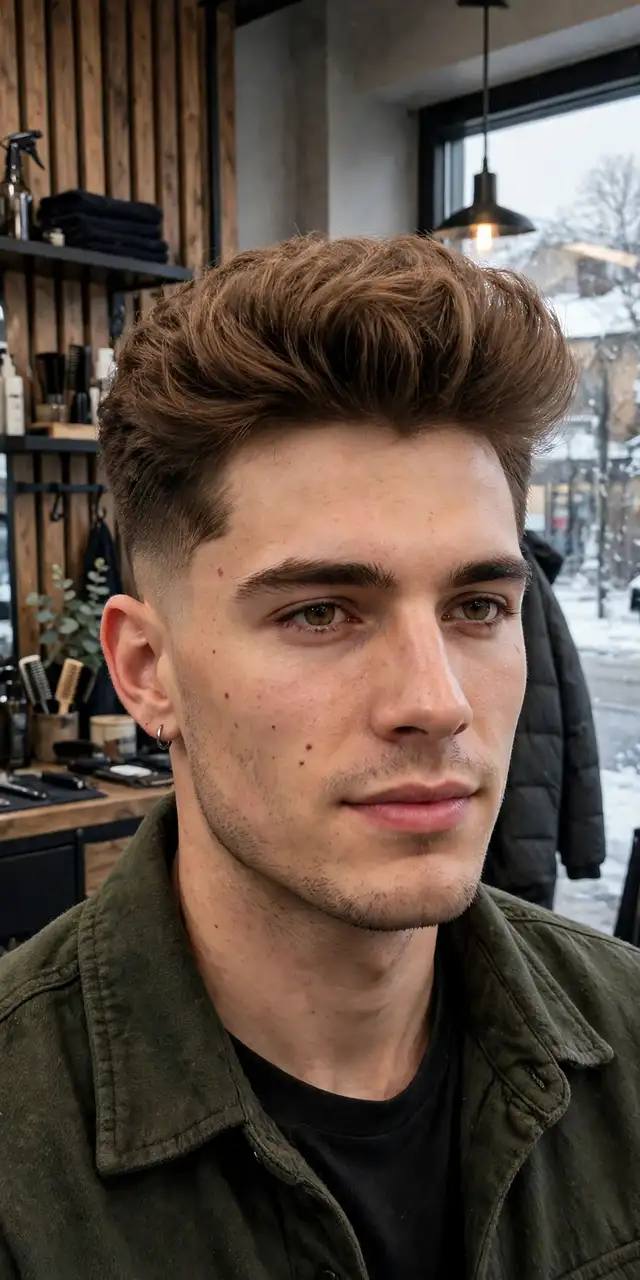
The haircut taking over barbershops this year is not short, sharp or skin-tight — it is volume. The blowout taper pairs clean, tapered sides with a top that is blow-dried up and out into a rounded, lifted shape, and it has become one of the most-searched fades on Pinterest and one of the most-requested cuts of 2026, with barbers across TikTok calling it the young men’s haircut of the year. The appeal is balance: the taper keeps the edges barber-clean while the top keeps its weight, movement and personality — a pompadour’s body without the retro polish, a fringe’s ease without the flatness.
This guide covers 20 blowout hairstyles for men — the classic blowout taper at every height, the skin-fade version, and the variations that matter: textured fringe, curly, straight, mullet, perm, Edgar, quiff finish and the cuts for thick and fine hair. Every style comes with the face shapes it flatters, the grooming kit it needs, its upkeep rhythm, and the exact words to say to your barber. Winter notes run throughout, because volume and cold weather negotiate constantly: dry air makes the top fly away, hats flatten it, and heated rooms frizz it — each style carries the fix that applies to it.
If the sides are still undecided, our fade haircuts guide covers every fade height the blowout can sit on; and if the top wants to lie forward instead of standing up, the textured crop guide is the other direction to compare.
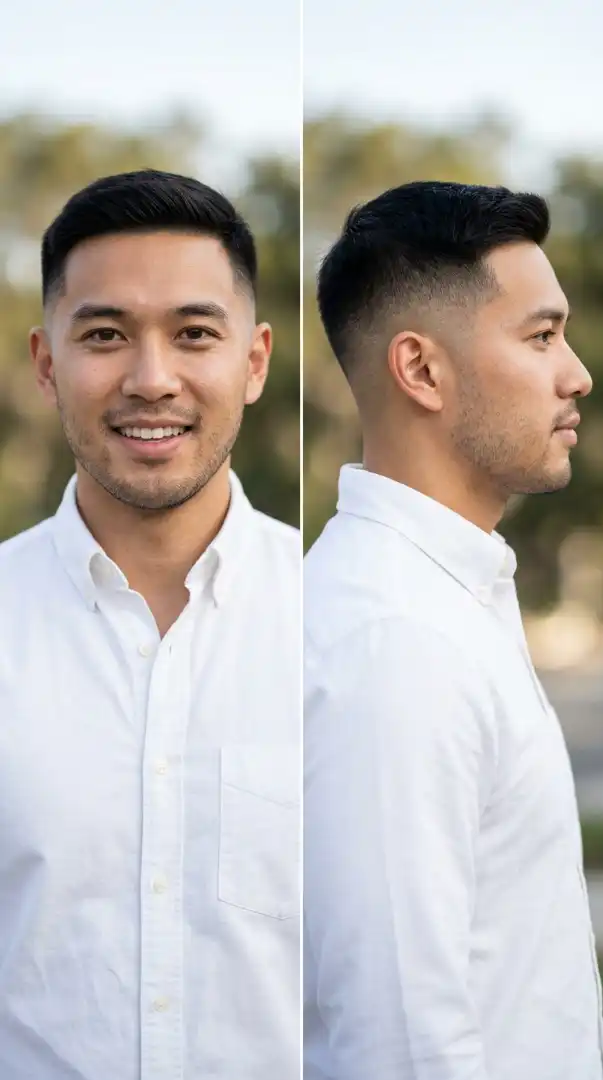
1 of 20 — The Classic Blowout Taper
What is a classic blowout taper?
The blueprint. Hair is tapered cleanly around the ears and neckline — short, but never to skin — while the top keeps three to four inches that are round-brushed upward and slightly back as they dry, building a rounded, lifted silhouette. Nothing about it shouts: the taper reads tidy from the side, the volume reads confident from the front. It is the version that travels furthest — school, office, photographs — because it is energy with manners. In winter it is the safest blowout to own: the volume is moderate enough to rebuild in two minutes after a hat, and the tapered edges survive scarves without a skin line to grow out patchy.
Face Shape: Almost universal — the rounded top softens square jaws and the lifted front lengthens round faces.
Grooming Kit: A blow dryer, a round or vent brush, and a light matte cream. The dryer is not optional — it is the style.
Maintenance: Taper every 3 weeks; the top holds its shape for 5–6. A two-minute morning blow-dry is the daily contract.
Barber Script: “Classic blowout taper — taper the sides and neckline, keep three to four inches on top for volume, nothing to skin.”
Clean edges, lifted top — the volume blueprint.
Q: What is the difference between a blowout taper and a blowout fade?
A: The finish on the sides. A taper keeps a soft, natural edge around the ears and neckline and never reaches skin; a fade blends shorter, often to skin. The top — blow-dried volume — is identical on both.
Q: How long does the top need to be for a blowout?
A: Three inches is the working minimum; four is the sweet spot. Shorter than that and the hair cannot lift into the rounded shape — it just stands up. Longer works, but the blow-dry takes proportionally longer every morning.
2 of 20 — The Low Blowout Taper
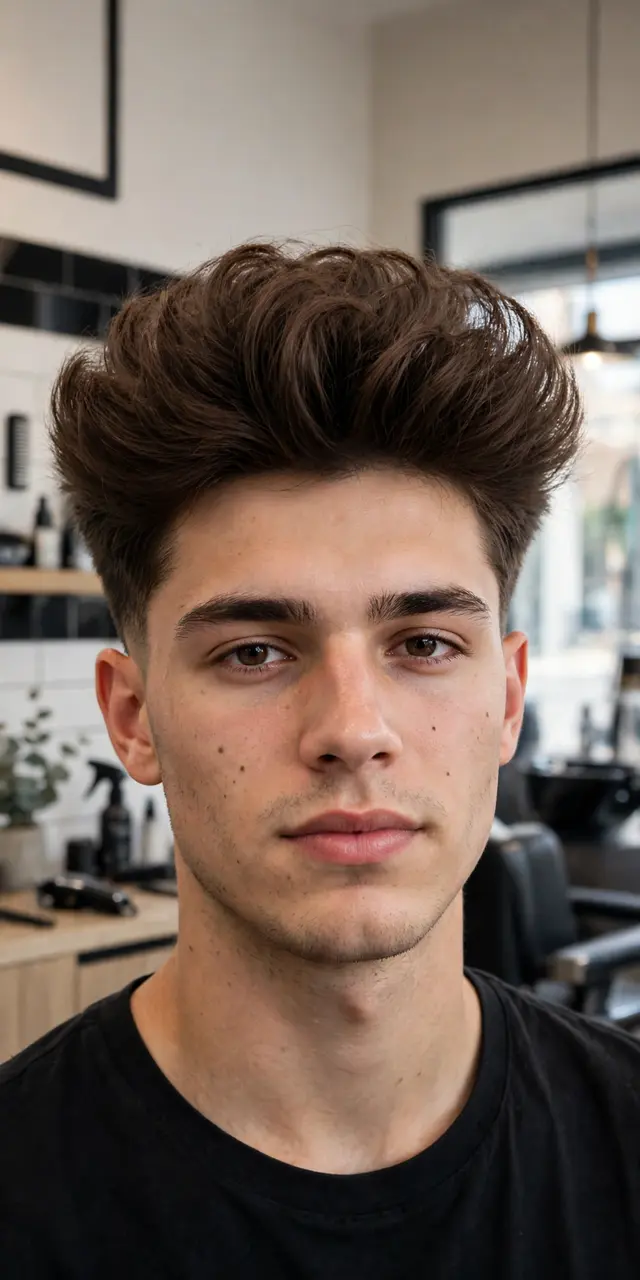
Who should choose a low blowout taper?
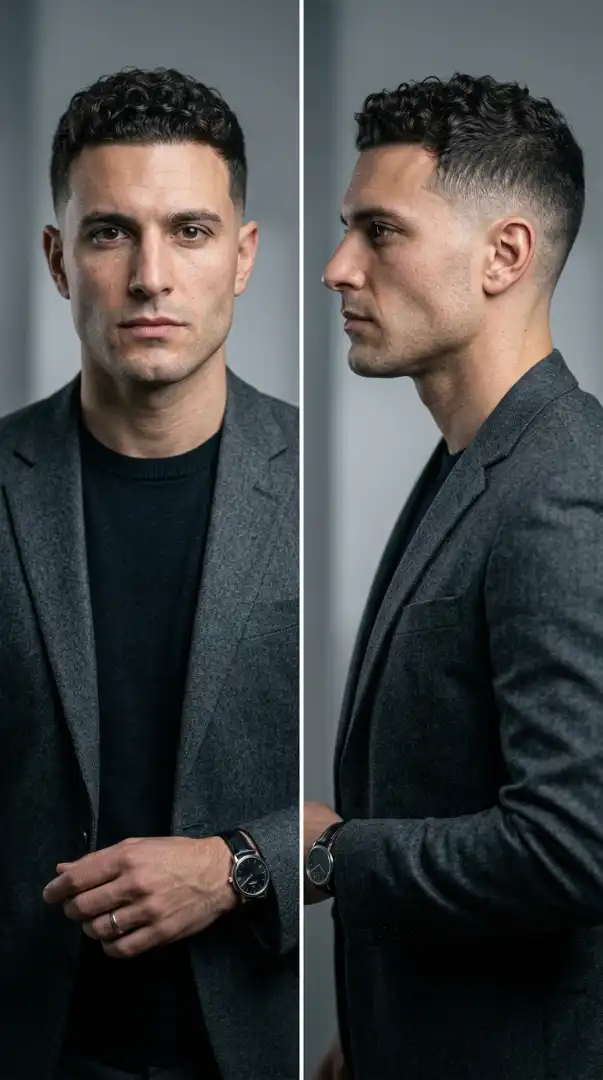
The gentle entry. The Low Blowout Taper keeps the blend at its lowest setting — just around the ears and the very bottom of the neckline — so the head’s outline stays soft and grown-in looking while the top carries the blowout’s lift. It is the version for first-timers, conservative workplaces and anyone growing out a fade who wants the volume without the barbershop-sharp edges. In winter it is also the lowest-maintenance blowout here: a low taper forgives a missed appointment better than any other edge, which matters in the months when schedules slip.
Face Shape: Kind to long and narrow faces — the soft, low edges keep width where the face wants it.
Grooming Kit: Blow dryer, vent brush, light cream — and nothing heavier, or the gentle edges look greasy.
Maintenance: Every 3–4 weeks comfortably; the low taper is the last edge to look overdue.
Barber Script: “Low blowout taper — blend only around the ears and neckline, keep the top full for blow-dried volume.”
Volume up top, manners at the edges — the first-timer’s blowout.
Q: Low blowout taper or classic — which is more modern?
A: The classic reads more deliberately styled; the low reads more natural. Both are current. Choose by your workplace and your patience: the low taper forgives a skipped appointment, the classic looks sharper in the week it is fresh.
Q: Can a low blowout taper suit thin hair?
A: Yes, with the right top length — three inches and a matte product. Blow-drying lifts fine hair optically thicker, and the low taper avoids exposing the scalp at the sides the way a higher blend would.
3 of 20 — The Mid Blowout Taper
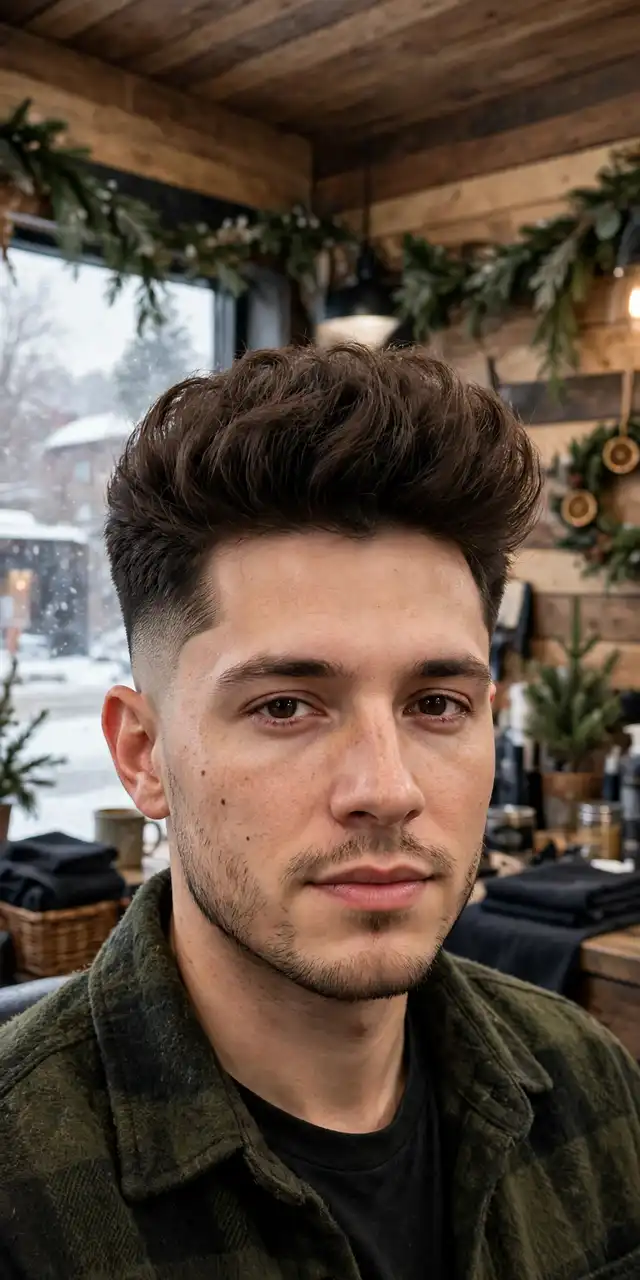
What does a mid blowout taper do best?
Balance. The Mid Blowout Taper starts the blend around the temples — higher than the low, cleaner than the classic — giving the volume on top a defined frame without the severity of a skin fade. It is the most-booked height in most barbershops because it splits the difference for the widest range of faces: enough contrast to read as a fresh cut for a full two weeks, enough softness to grow out gracefully in the third. For winter it is the sweet spot too — hat lines sit lower on the head, below the blend, so the shape rebuilds fastest after the commute.
Face Shape: The all-rounder’s height — it frames oval faces perfectly and adds the structure round faces want.
Grooming Kit: Blow dryer and round brush for the top; a touch of matte paste at the front corners if they fall flat by midday.
Maintenance: Every 2–3 weeks — the mid blend is honest about regrowth at the temples first.
Barber Script: “Mid blowout taper — start the taper at the temples, keep the top’s length and volume, blend clean.”
The barbershop’s favourite height — contrast with softness kept.
Q: Mid or low blowout taper — how do I choose?
A: By how fresh you want to look and how often you will sit in the chair. Mid reads sharper and needs a 2–3 week rhythm; low reads softer and forgives 4. If your hair grows fast, the low taper will save you two visits a season.
Q: Does the mid blowout taper work with a beard?
A: Very well — the temple blend leaves a natural sideburn to connect into a faded beard. Keep the beard’s fade low or classic so the two gradients meet at the same energy rather than competing.
4 of 20 — The High Blowout Taper
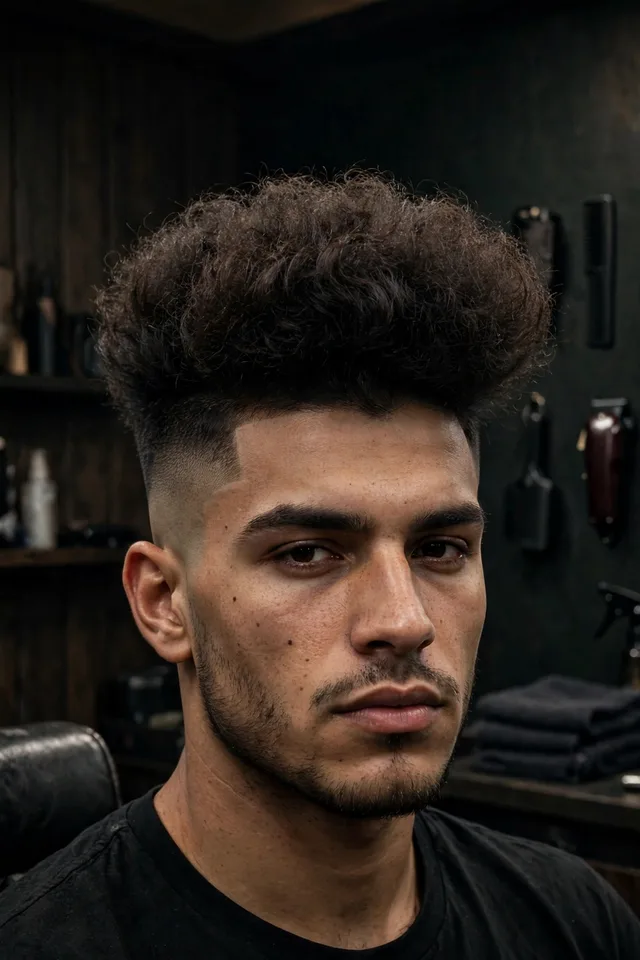
When does a high blowout taper work best?
When contrast is the point. The High Blowout Taper takes the blend up above the temples, tightening the sides so the blowout’s rounded top sits on a narrow, sculpted base — the boldest silhouette in the taper family. It makes thick hair look deliberate instead of heavy, carves cheekbones out of round faces, and photographs with real drama. The trade is upkeep: a high blend announces its regrowth first. In winter’s low light and heavy coats it holds its own — the one blowout that still reads as design under a collar.
Face Shape: Built for round and fuller faces; long faces should keep the blend lower so the height does not stretch them further.
Grooming Kit: Blow dryer, round brush, and a slightly stronger matte paste — a sculpted base deserves a finished top.
Maintenance: Every 2 weeks, honestly — the high taper’s clean phase is the shortest here.
Barber Script: “High blowout taper — take the blend above the temples, top stays full and round-brushed up.”
Sculpted base, rounded crown — the boldest taper.
Q: High blowout taper or blowout fade — what is the difference?
A: How far the shortness goes. A high taper still keeps a soft natural edge at the very bottom; a blowout fade continues the blend down to skin. If you want maximum contrast, the fade (style 6) is the step beyond this one.
Q: Does a high blowout taper suit thick hair?
A: It is arguably made for it. Thick hair supplies the volume for free, and the high taper removes the side bulk that makes thick hair look like a helmet. Ask for weight taken out of the top only if it still sits heavy after the taper.
5 of 20 — Blowout Taper with a Textured Fringe

Why is the blowout taper with a textured fringe the most popular variation?
Because it solves the blowout’s one weakness: the front. Instead of sweeping everything up and back, the Blowout Taper with a Textured Fringe lets the top fall forward into a piecey, broken fringe while keeping the blowout’s air and volume through the crown — the version all over TikTok this year, and the most requested variation of 2026. It forgives cowlicks and uneven hairlines that fight a swept-back front, and it reads younger and more relaxed than the classic shape. In winter it is also the most hat-compatible blowout: a forward fringe rebuilds with fingers alone, no brush, no mirror.
Face Shape: A gift to longer faces and higher foreheads — the fringe shortens what the volume lengthens.
Grooming Kit: Blow dryer used forward, not back; a vent brush and matte paste worked in with fingertips for the piecey finish.
Maintenance: Taper every 3 weeks; the fringe needs its edge back at the same visit or it starts lying flat.
Barber Script: “Blowout taper with a textured fringe — volume through the crown, fringe forward and piecey, matte finish.”
Volume behind, fringe in front — the TikTok generation’s blowout.
Q: Blowout fringe or Edgar — are they the same cut?
A: Cousins, not twins. Both fall forward, but the Edgar’s fringe is blunt and straight-edged with a higher, sharper fade; the blowout fringe is broken and textured with a soft taper. The blowout version forgives more hairlines and ages more gracefully.
Q: How do I stop the fringe going flat by afternoon?
A: Dry it forward from wet — hair takes its orders while it dries. Work against the growth at the root with the dryer for the first minute, then let it fall. Product goes in after drying, never before, or the fringe separates and lies down.
6 of 20 — The Blowout Fade
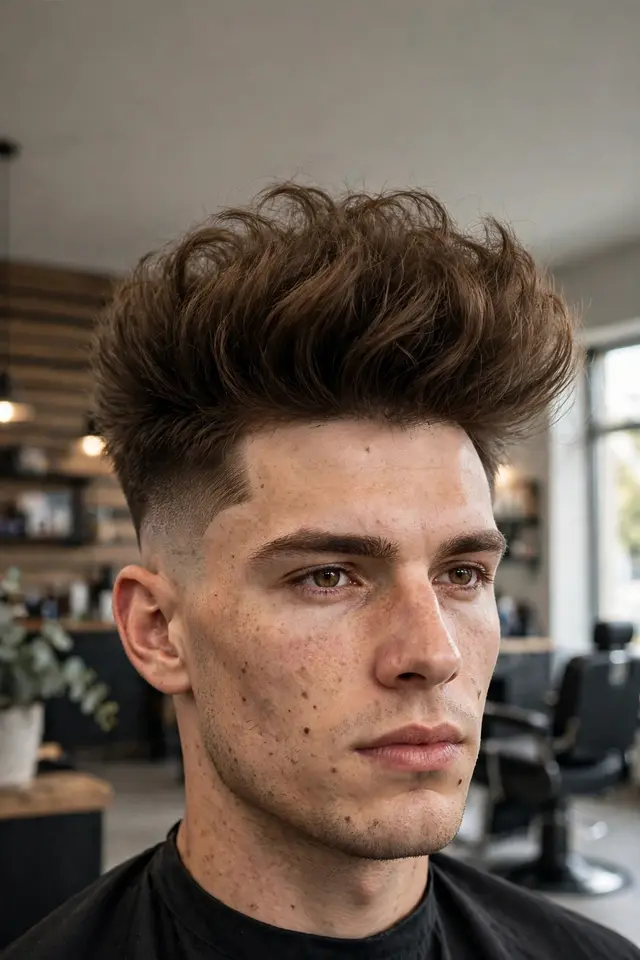
What is a blowout fade?
The blowout, sharpened. The Blowout Fade replaces the taper’s soft edge with a true fade — mid or skin — so the sides graduate to nothing while the top erupts into blow-dried volume. The contrast is the design: the eye reads a clean, fading frame and then all that lifted hair above it. It is the version for men who found the taper too quiet, and the one that pairs naturally with line-ups and sharp front edges. Winter’s caution is the fade itself: skin-close sides feel the cold and show dry, flaky skin faster, so the scalp needs moisture the taper versions never ask for.
Face Shape: The contrast slims wide faces and sharpens soft jawlines; very long faces should pick the taper instead.
Grooming Kit: Blow dryer, round brush, matte paste — plus a light scalp moisturiser through winter for the faded zone.
Maintenance: Every 2 weeks for the fade’s clean phase; the top can run a visit behind without showing it.
Barber Script: “Blowout fade — mid skin fade on the sides, top long and blow-dried up with volume, front edge clean.”
Volume with voltage — the taper’s louder brother.
Q: Blowout fade or taper — which grows out better?
A: The taper, comfortably. A fade’s regrowth shows as a visible band within two weeks, while a taper softens into itself. Choose the fade for the fresh fortnight, the taper for the graceful month.
Q: Can I get a blowout fade with a line-up?
A: Yes — it is the natural partner. A crisp front edge and temples match the fade’s precision. Just know the line-up expires fastest of all: plan on a shape-up between full cuts if you keep it razor-sharp.
7 of 20 — Blowout Taper with Curly Hair
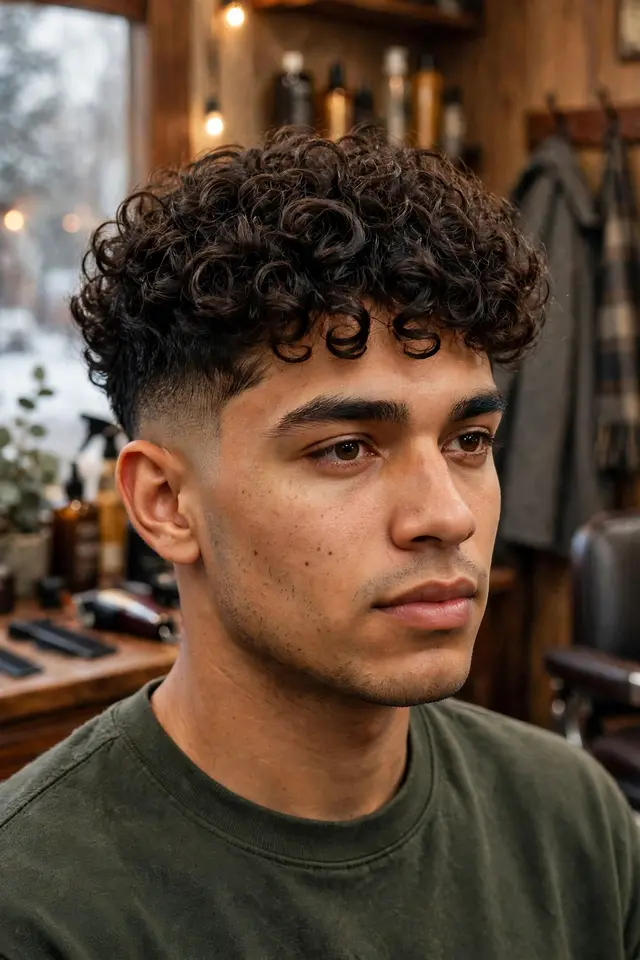
How does a blowout taper with curly hair work?
Curl does half the work — natural volume is the one thing straight hair has to manufacture. A Blowout Taper with Curly Hair keeps the curl pattern long enough on top to show its shape, tapered clean at the edges so the silhouette stays intentional instead of expanding. The blow-dry here is different: a diffuser, low heat, scrunching rather than brushing — you are encouraging the curl, not straightening it into a blowout’s usual roundness. Winter is curly hair’s driest season, so moisture is the management plan: the curls on top and the skin under the taper both dry out first.
Face Shape: The top volume softens angular faces; the clean taper stops round faces widening at the sides.
Grooming Kit: A diffuser attachment, curl cream, and a wide-tooth comb used only on wet hair. The round brush stays in the drawer.
Maintenance: Taper every 3 weeks; curls forgive an extra week on top — get the edges done and the shape holds.
Barber Script: “Blowout taper for curly hair — keep the curls’ length on top, taper the edges clean, cut it dry.”
Curl supplies the volume — the taper just frames it.
Q: Should curly hair be cut wet or dry for a blowout taper?
A: Dry, or barely damp. Curls shrink as they dry, and a wet-cut top sits an inch shorter than planned once it springs back. Any barber fluent in curl will shape the top in its natural, dry state.
Q: How do I keep the curls from frizzing in winter?
A: Moisture and restraint. Leave-in conditioner on wash days, curl cream on damp hair, and no touching while it dries — every touch separates the curl and invites frizz. A satin-lined beanie beats wool for the same reason.
8 of 20 — Blowout Taper for Straight Hair

Can straight hair hold a blowout taper?
Yes — straight hair is where the blow-dry earns its name. Without natural curl or wave to help, the Blowout Taper for Straight Hair is built entirely on technique: enough length on top (four inches is honest), point-cut texture so the ends separate instead of lying in a sheet, and a round brush pulling the hair up and back while it dries. The reward is the cleanest, most deliberate version of the shape — the original East Coast blowout was a straight-hair invention. Winter static is the straight-hair tax: dry air makes the lifted top fly away, so the finish needs a touch more product weight than summer allows.
Face Shape: The manufactured lift lengthens round faces; square faces gain height without width.
Grooming Kit: This is the full kit: blow dryer, round brush, volumising mousse on damp hair, matte paste to finish. Technique beats product — learn the brush.
Maintenance: Top texture refreshed every 4–5 weeks; taper every 3. The daily blow-dry is 3–4 minutes once the hands learn it.
Barber Script: “Blowout taper for straight hair — four inches on top, point-cut texture, taper clean at the edges.”
No curl to help — the blow-dry does it all.
Q: Why does my straight-hair blowout fall flat by midday?
A: Usually one of two causes: product applied before drying (it weighs the root down), or drying without tension. The brush must pull upward while the heat is on — that is what sets the lift. Finish with cool air to lock it.
Q: Is a perm the only fix if my hair will not lift?
A: Not the only one — a soft perm (style 10) is the permanent fix, but most straight hair lifts fine with length, texture and heat. Try the technique honestly for two weeks before booking chemistry.
9 of 20 — The Blowout Taper Mullet
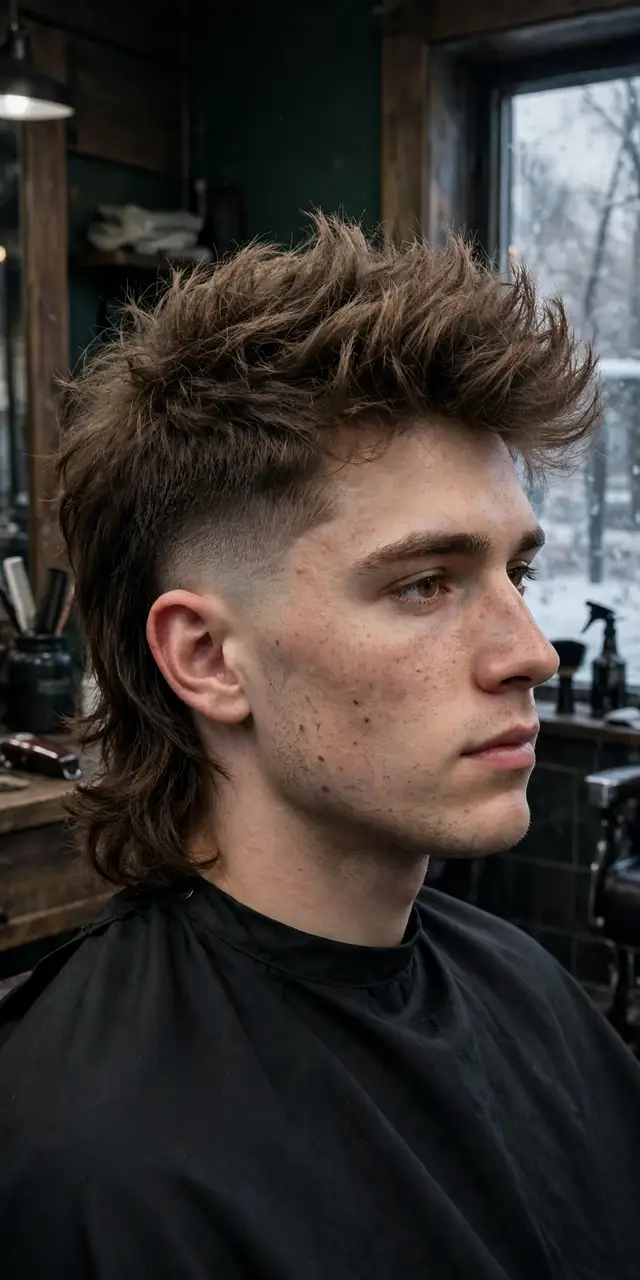
Does a blowout taper mullet actually work?
It is the transition cut of the year. The Blowout Taper Mullet keeps the blowout’s lifted, voluminous top and tapered sides, then lets the back keep its length — the cut barbers recommend to men growing out or cutting down a mullet, because it keeps the party’s outline while the front becomes a clean, modern blowout. From the front it reads as a standard, sharp blowout; the length announces itself in profile. Winter is kind to it: the back length sits under collars, and the tapered sides keep hats sitting properly instead of perching.
Face Shape: The back length balances the top’s height on longer faces; short faces should keep the back modest.
Grooming Kit: Blow dryer for the top, sea salt spray for the back’s texture — the two halves want different products.
Maintenance: Taper every 3 weeks; the back’s length shaped every 6–8, or it stops reading as a choice.
Barber Script: “Blowout taper mullet — volume on top, taper the sides, keep the length at the back, textured ends.”
Clean at the front, length at the back — the mullet, promoted.
Q: Blowout mullet or full mullet — what changes?
A: The front and sides. A full mullet keeps its length over the ears; the blowout version tapers them clean and lifts the top. It reads as two different commitment levels — the blowout mullet can walk into far more rooms.
Q: I am growing out a mullet — is this the intermediate step?
A: It is the barber-recommended one. Taper the sides and lift the top now, and the back can either keep growing toward a flow or be trimmed off in one visit later — both exits stay open, which is the point.
10 of 20 — Blowout Taper with a Soft Perm
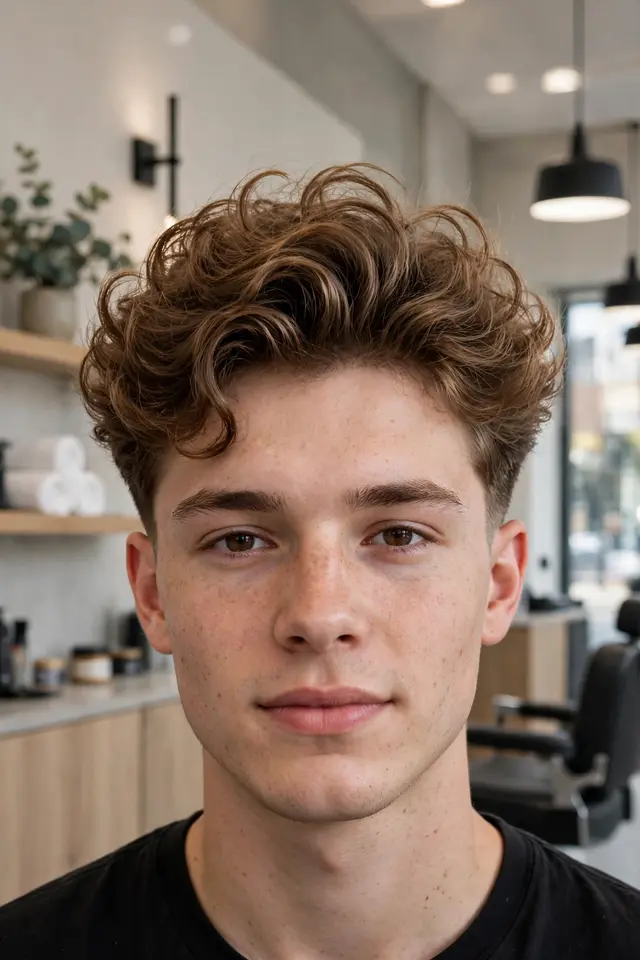
Why pair a blowout taper with a soft perm?
Because the perm gives the blowout permanent raw material. A Blowout Taper with a Soft Perm puts loose, wavy curl through the top — the loose wavy perm searches have risen 228% on Pinterest — so the volume and movement the blow-dry normally builds each morning is simply there when you wake up. The taper keeps the chemistry looking like a haircut rather than a hairstyle experiment. It is the straight-haired man’s shortcut and the fine-haired man’s volume answer. Winter suits the timing: perm it now and the driest, flattest hair season stops mattering.
Face Shape: The permed volume widens narrow faces kindly; round faces should keep the perm loose and the taper mid or high.
Grooming Kit: Curl cream, a diffuser for wash days, and sulphate-free shampoo — permed hair is thirstier hair. The round brush retires.
Maintenance: The perm lasts 2–4 months; the taper still runs on its own 3-week clock. Two schedules, one chair — book the taper inside the perm’s life.
Barber Script: “Blowout taper with a soft perm on top — loose waves, natural volume, taper clean at the sides.”
Wake up with the volume already in — chemistry does the blow-dry.
Q: Will a soft perm damage my hair?
A: Modern perms are gentler than their reputation, but they are still chemistry — hair comes out drier and wants conditioner at every wash. On already bleached or fragile hair, a good barber will refuse, and you should thank him.
Q: Soft perm or Korean perm — is there a difference?
A: They are close cousins: both aim for loose, natural-looking wave rather than tight curl. The Korean perm tends to be styled forward and softer at the front; the blowout pairing directs the wave up and back. The rod size matters more than the name — ask for loose.
11 of 20 — The Blowout Taper Edgar
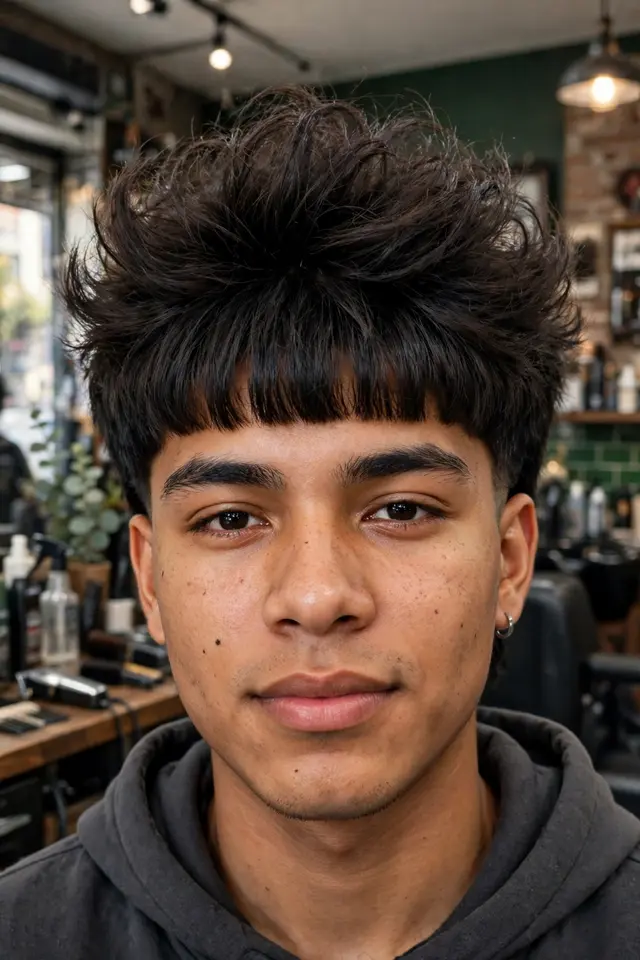
What is a blowout taper Edgar?
The forward front, blown up. The Blowout Taper Edgar takes the Edgar’s blunt, straight fringe and gives it the blowout’s air — the top is dried forward and slightly up, so the fringe keeps its sharp line but sits lighter, with the crown’s volume behind it. The sides run as a taper rather than the Edgar’s usual high fade, softening the whole portrait a degree. It is the Gen-Z handshake between the two biggest young cuts of the decade. Winter note: the blunt fringe line is the first thing hat hair bends — it rebuilds with a forward blow-dry in under a minute.
Face Shape: The fringe shortens long faces and higher foreheads; the lifted crown keeps it from reading too severe on round ones.
Grooming Kit: Blow dryer used forward, vent brush, and the smallest amount of matte paste at the fringe line only.
Maintenance: Every 2–3 weeks — the blunt fringe is a line, and lines expire on schedule.
Barber Script: “Blowout taper Edgar — blunt fringe forward, volume through the top, taper instead of a high fade.”
The Edgar’s line, the blowout’s air.
Q: Blowout Edgar or classic Edgar — how do I pick?
A: By sharpness. The classic Edgar is all hard edges — blunt fringe, high fade. The blowout version trades a little severity for movement and a softer taper. If the classic reads too aggressive on you, this is the same idea at lower volume of attitude.
Q: Does the blowout Edgar suit wavy hair?
A: It can, if the wave is loose — the fringe needs to lie straight enough to read as a line. Tight curl will fight the blunt edge daily; the textured fringe blowout (style 5) is the curl-friendly version of the same front.
12 of 20 — The Textured Blowout

What makes a textured blowout different?
Finish. The Textured Blowout keeps the blowout’s shape — tapered sides, lifted top — but the top is point-cut heavily and styled matte and broken, with pieces separating in every direction instead of sweeping in one. It is the blowout for men who found the classic too neat: same silhouette, rumpled execution. It also forgives the most: a textured top hides uneven growth, a wandering hairline and a rushed morning better than any swept version. In winter it is the most practical blowout here — hat hair, rewetted with fingers and matte paste, looks like the style rather than its ruin.
Face Shape: Universal in the way messy styles always are — the broken top flatters every jaw by refusing to mirror it.
Grooming Kit: Blow dryer, matte paste or clay — clay’s grip suits the broken finish best. A brush is optional; fingers do most of it.
Maintenance: Taper every 3 weeks; texture refreshed every second visit. The daily restyle is the fastest here — under two minutes.
Barber Script: “Textured blowout — taper the sides, heavy texture on top, matte and broken finish, nothing swept.”
The blowout, rumpled — same shape, zero stiffness.
Q: Textured blowout or textured crop — what is the difference?
A: Direction and height. The crop lies forward and flat-ish; the textured blowout stands up with air under it. If you like the crop’s ease but want more presence and height, the textured blowout is your upgrade path.
Q: How much product does a textured blowout need?
A: Less than you think — a pea-sized amount of clay, warmed and worked from the back forward. Over-product is the one way to ruin it: the pieces clump, the air leaves, and the shape collapses into a crop with ambitions.
13 of 20 — The Blowout Quiff
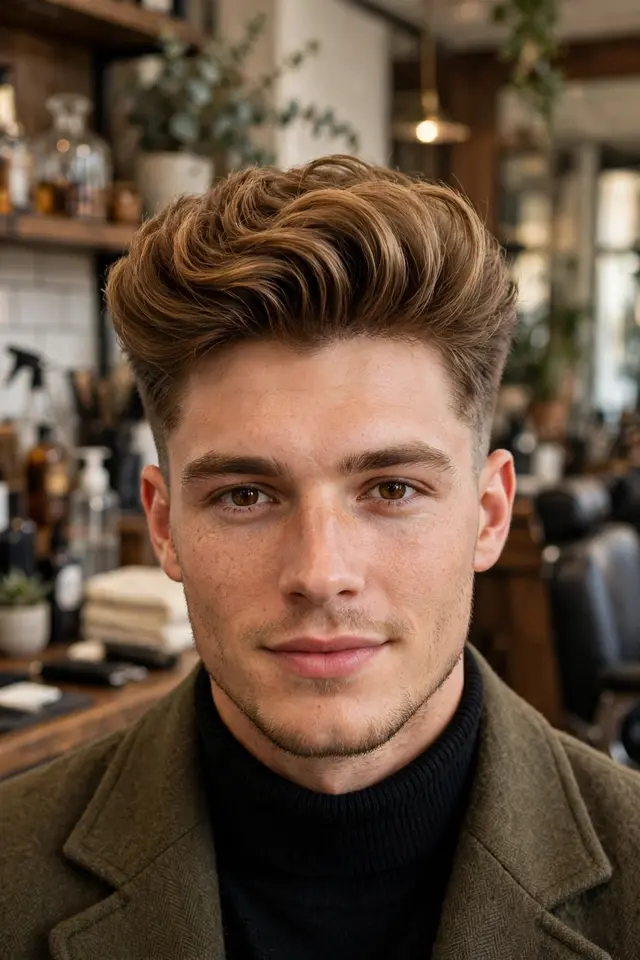
How does a blowout quiff differ from a classic blowout?
Direction at the front. The Blowout Quiff dries the top up and then tips the front section forward into the quiff’s signature lift-and-curl, while the rest of the top follows the blowout’s rounded volume behind it. It is the blowout with a focal point — the front gets the drama, the taper keeps the frame quiet. Men who wear a classic quiff already own the skills; the blowout version just asks for more air through the whole top, not just the front. Winter formality suits it: this is the blowout that wears a coat and a collar best.
Face Shape: The making of round faces — the front lift lengthens while the tapered sides slim.
Grooming Kit: Blow dryer, round brush (essential for the front curl), volumising mousse, and a light paste to hold the tip.
Maintenance: Taper every 3 weeks; the quiff’s front wants the top’s length checked monthly or it stops curling and starts flopping.
Barber Script: “Blowout quiff — taper the sides, volume through the top, front lifted and curled forward like a quiff.”
The blowout with a focal point — lift at the front, air behind.
Q: Blowout quiff or pompadour blowout — what changes?
A: The front’s direction. A quiff lifts up and tips forward; a pompadour sweeps up and back. The quiff reads younger and more casual, the pomp more formal. Both sit on the same blowout body — pick by your mornings and your hairline.
Q: How do I keep the quiff front from splitting?
A: Dry it as one piece — brush the front section together, upward, before it dries separately. Splits are set at the drying stage; product afterwards can only glue them, and it shows. Cool air at the end locks the curl.
14 of 20 — Blowout Taper for Thick Hair
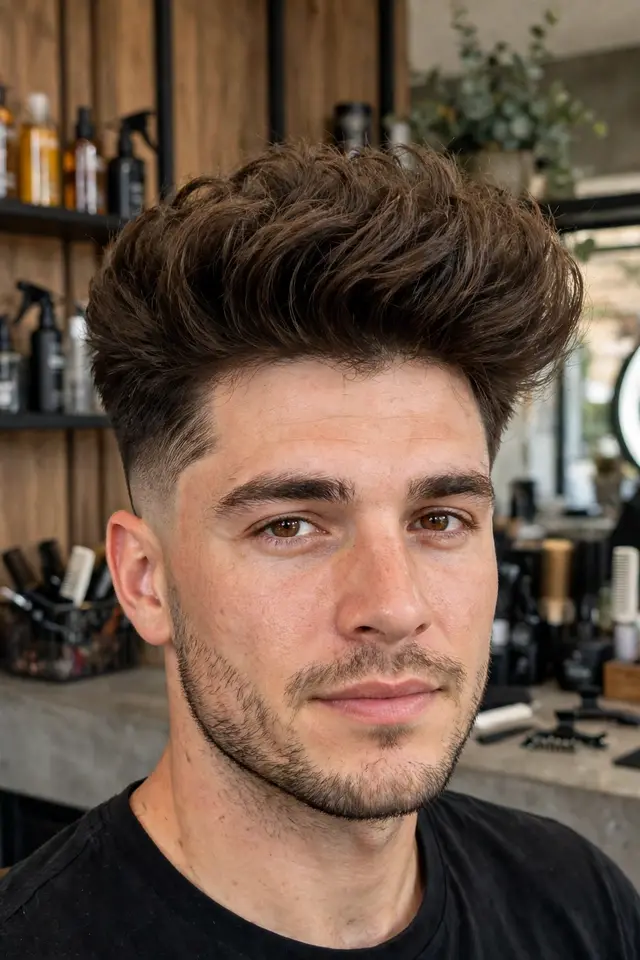
Why is the blowout taper ideal for thick hair?
Because thick hair brings its own volume — the blowout is the rare trend that asks for exactly what thick hair already has too much of. The trick is management: the Blowout Taper for Thick Hair tapers the sides down so the bulk lives only where it flatters, and the barber takes weight out of the top’s interior (never the ends) so the lift reads as shape rather than helmet. Thick-haired men usually fight their hair flat; this cut stops the fight and promotes the volume to the design. Winter’s dry air makes thick hair expand further — the taper’s discipline matters more, not less, in December.
Face Shape: The taper’s slimming sides balance the top’s width on square faces; round faces gain height without more width at the ears.
Grooming Kit: A strong dryer (thick hair dries slowly), a vent brush, and matte cream. Skip heavy pomades — weight is the enemy you already have.
Maintenance: Every 2–3 weeks — thick hair’s regrowth changes the silhouette faster than any other type.
Barber Script: “Blowout taper for thick hair — taper the sides right down, take the weight out of the top’s middle, keep the length.”
Thick hair stops being the problem — it becomes the material.
Q: Should thick hair be thinned for a blowout?
A: Internally, yes; at the ends, no. Thinning shears or razor work through the top’s middle removes the bulk that makes the shape sit heavy, while the ends keep their clean outline. Ask for weight removal, not length removal — the words matter in the chair.
Q: How long does a thick-hair blowout take each morning?
A: Four to five minutes once learned — thick hair holds a blow-dry better than fine hair, so the work pays for a full day. Section the top into two passes; trying to dry it all at once is why it takes beginners ten.
15 of 20 — Blowout Taper for Fine Hair
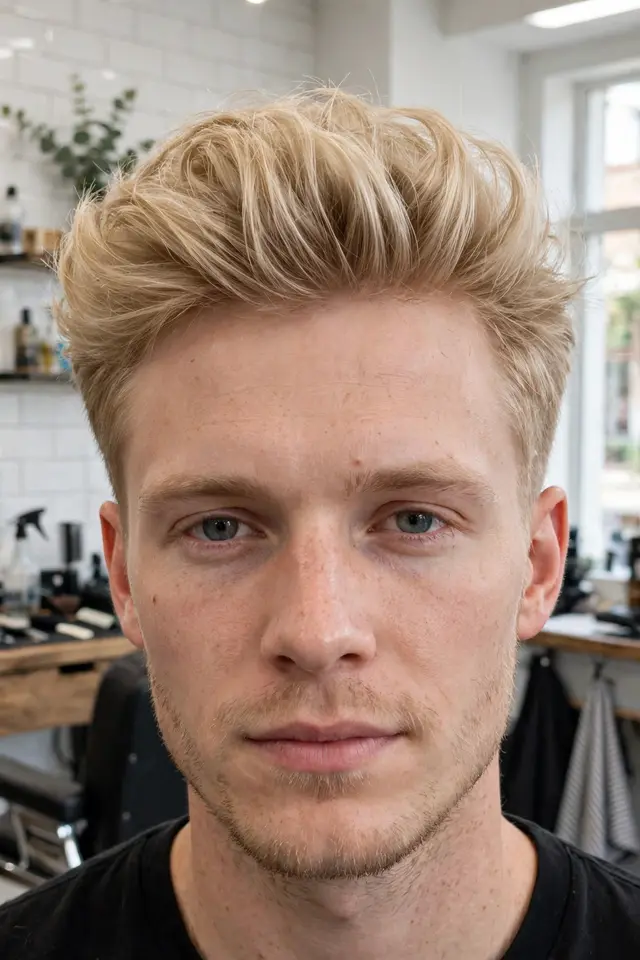
Can fine hair wear a blowout taper?
Yes — and the pairing is smarter than it looks. Fine hair’s problem is that length lies flat and exposes the scalp; the Blowout Taper for Fine Hair answers with the two things that create optical thickness: a low-to-mid taper that never takes the sides short enough to show skin, and a blow-dried top whose lift separates the strands and hides the scalp under movement. Keep the top around three inches — longer fine hair separates into strings and confesses everything. Winter static is the fine-hair tax doubled: a light anti-static cream, not oil, is the finish that survives heated rooms.
Face Shape: The lift lengthens round faces without width; long faces should choose the fringe version instead.
Grooming Kit: Blow dryer, vent brush, volumising mousse on damp hair, and a dry matte paste. Oils and balms are banned — they collapse fine hair on contact.
Maintenance: Taper every 3–4 weeks; the top’s length is the discipline — past three and a half inches the illusion thins.
Barber Script: “Blowout taper for fine hair — low taper, nothing to skin, top at three inches, texture for thickness.”
Lift is fine hair’s best disguise — the taper keeps the secret.
Q: Will blow-drying fine hair every day damage it?
A: Not at medium heat with the dryer moving. Damage comes from high heat held still. Keep the nozzle six inches away, keep it moving, and the daily two minutes are gentler than the sun your hair already gets.
Q: What is the biggest mistake fine-haired men make with a blowout?
A: Growing the top too long, chasing volume in the wrong place. Past a certain length, fine hair’s weight defeats the dryer and the strands separate visibly. The volume lives in the lift, not the length — three inches, lifted, beats five inches lying down.
16 of 20 — The Afro Blowout Taper
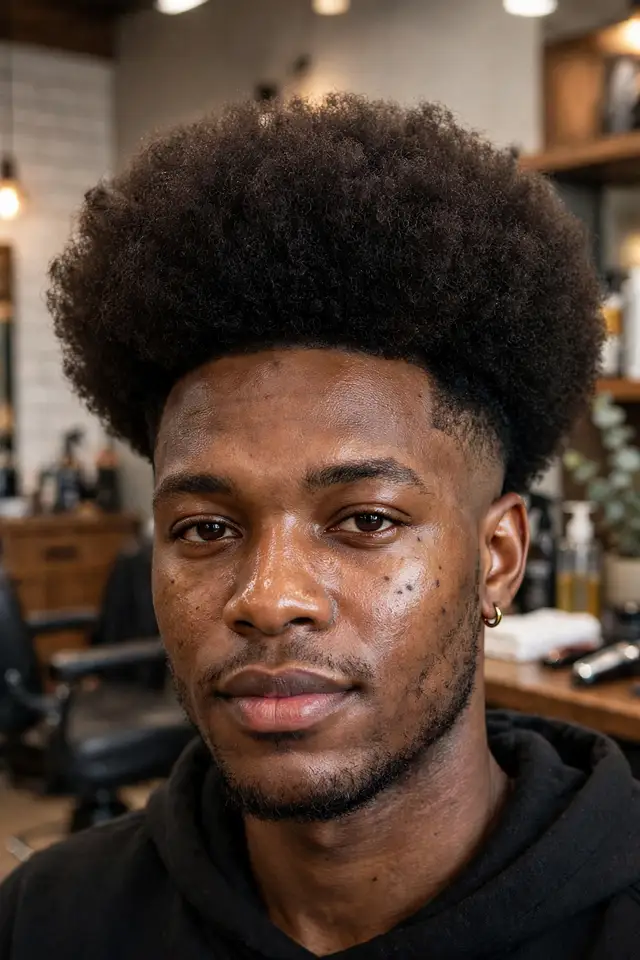
How does the blowout taper work on Afro hair?
Beautifully — Afro hair’s natural lift is the blowout’s endgame. The Afro Blowout Taper keeps the top’s coiled volume picked out into a rounded, deliberate shape while the taper cleans the edges to a sharp frame — the modern, tapered descendant of the classic Afro, with barbershop discipline at the borders. The blow-dry here is gentle heat with a pick or sponge, stretching the coil just enough to shape it, never straightening it out. Winter is Afro hair’s driest season by far: moisture is not a styling step, it is the whole maintenance plan, for the top and the tapered skin alike.
Face Shape: The rounded top flatters almost every face; height can be tuned — taller for round faces, wider for long ones.
Grooming Kit: A hair pick, a twist sponge if you define the top, rich leave-in conditioner, and oil for the tapered zone. Heat stays low.
Maintenance: Taper and line every 2 weeks to keep the frame sharp; the top’s shape holds as long as moisture does.
Barber Script: “Afro blowout taper — keep the top’s volume rounded and natural, taper the sides and neckline clean.”
Natural lift, barber-clean frame — the modern Afro silhouette.
Q: How do I keep the top’s shape from shrinking in winter air?
A: It is a moisture equation. Cold dry air pulls water out of coiled hair and it contracts; leave-in conditioner plus a light oil seal after washing keeps the hydration in. A satin-lined hat beats wool — friction and dryness are the two thieves.
Q: Taper or fade on Afro hair with a blowout top?
A: Both live — the taper reads softer and more classic, the fade sharper and more modern. The top does not change. Pick by how crisp you want the portrait; the frame sets the tone, the volume carries it either way.
17 of 20 — The Long Top Blowout
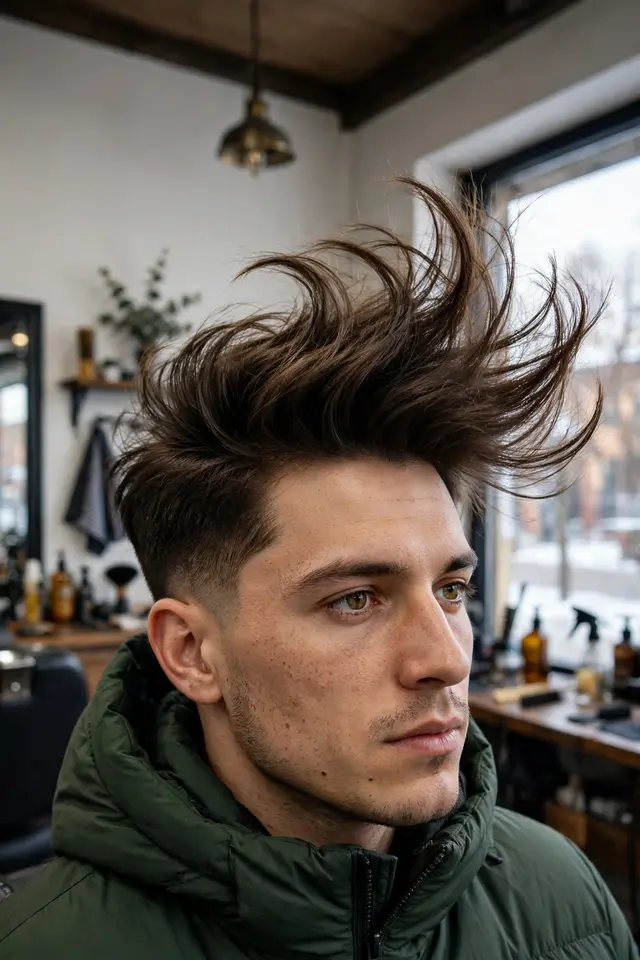
Who suits a long top blowout?
Men who want the blowout at full expression. The Long Top Blowout keeps five to six inches on top — enough to sweep, wave and move — over a clean taper that stops all that length from reading as unkempt. It is the most dramatic and the most demanding version here: the blow-dry is a real five minutes, and the shape is a daily decision rather than a default. The payoff is a top with genuine weather in it — it moves when you do. Winter is its best season photographically (coats, collars, low light all flatter drama) and its hardest practically: hats are negotiations now, settled by carrying the brush for the rebuild.
Face Shape: The sweeping top suits oval and square faces; round faces should keep the sides’ taper higher to balance the width the length brings.
Grooming Kit: Blow dryer, large round brush, volumising mousse and a light cream. This version justifies the full shelf.
Maintenance: Taper every 3 weeks; top shaped every 6 — the length is the style, so it is trimmed, never just tidied.
Barber Script: “Long top blowout — five to six inches on top, tapered sides, shape the ends, keep all the movement.”
The blowout at full sail — drama with a taper’s discipline.
Q: Long top blowout or flow — what is the difference?
A: Direction and lift. A flow falls back and lies along the head; the long blowout is dried up and out first, so it stands away from the scalp with air under it before it falls. Same length, different architecture — the blowout reads styled, the flow reads grown.
Q: How do I stop a long blowout collapsing under its own weight?
A: Dry it upside down for the first minute — roots lifted against gravity set the foundation. Then brush it into shape right-side up. Mousse on damp hair, never paste until it is fully dry, or the length drags itself down.
18 of 20 — The Blowout Side Sweep

What is a blowout side sweep?
The blowout, dressed up. The Blowout Side Sweep dries the top up for volume and then over to one side in a soft sweep — no hard part shaved in, just direction — giving the blowout family its most formal member: volume for the photographs, a sweep for the polish. It is the office-and-evening answer for men who found the straight-up blowout too young, and it ages the best of everything here, working just as well at forty as at twenty. Winter’s formal calendar is its home turf: this is the blowout that wears a blazer without apology.
Face Shape: The diagonal sweep flatters oval and rectangular faces, and softens a strong square jaw.
Grooming Kit: Blow dryer, round brush for the sweep’s bend, and a medium-hold cream — matte, never wet-look.
Maintenance: Taper every 3 weeks; the sweep’s length on top checked monthly so the bend survives.
Barber Script: “Blowout side sweep — volume on top swept to the side, soft natural part, taper clean.”
Volume with a dress code — the blowout grows up.
Q: Side sweep or side part — which is more modern?
A: The sweep. A side part is a line; a side sweep is a direction, and the softer finish is what dates less. Men keeping a classic part can simply stop razoring it in and let the blow-dry suggest it — most find the sweep within one haircut.
Q: Does the side sweep work with a receding hairline?
A: Yes, worn toward the stronger side — the sweep covers ground honestly without a comb-over’s pretence, because the volume underneath keeps it looking like style rather than strategy. Your barber will know which side your growth supports.
19 of 20 — The Winter Blowout

How should a blowout change for winter?
Softer, slightly longer, and defended against the hat. The Winter Blowout is the seasonal adjustment of the classic: the taper grown a touch longer at the edges, the top kept at the fuller end of its range, and the finish matte and flexible rather than locked — because winter will move your hair whether you permit it or not, between beanies, hoods, wind and heated rooms. The morning routine changes too: dry fully before leaving (damp hair in cold air goes frizzy, then flat), and carry the two-minute rebuild — fingers, a breath of warm air, done. Grown this way, the blowout is winter’s best volume answer.
Face Shape: The fuller, softer version suits every face the classic does, and forgives the ones it does not.
Grooming Kit: Blow dryer, vent brush, flexible matte cream — and a satin-lined beanie, the single best winter investment in this guide.
Maintenance: Every 3–4 weeks through the season; winter growth reads slower under longer edges.
Barber Script: “Winter blowout — classic blowout taper but softer and a touch longer all round, flexible finish.”
Built for hat weather — volume that rebuilds in two minutes.
Q: How do I fix beanie-flattened blowout hair fast?
A: Warmth and moisture, in that order. Thirty seconds of warm dryer air (or a radiator’s worth of warm hands) reactivates the roots; a fingertip of water at the roots resets the worst dents, then re-lift with fingers. Never add more product to flat hair — it seals the flatness in.
Q: Should I skip the blowout in winter because of hats?
A: No — adjust it, per this style. The men who quit volume in November are reacting to the locked, fragile version. The softer winter cut bends under a hat and stands back up after it, which is the whole design.
20 of 20 — The Blowout King
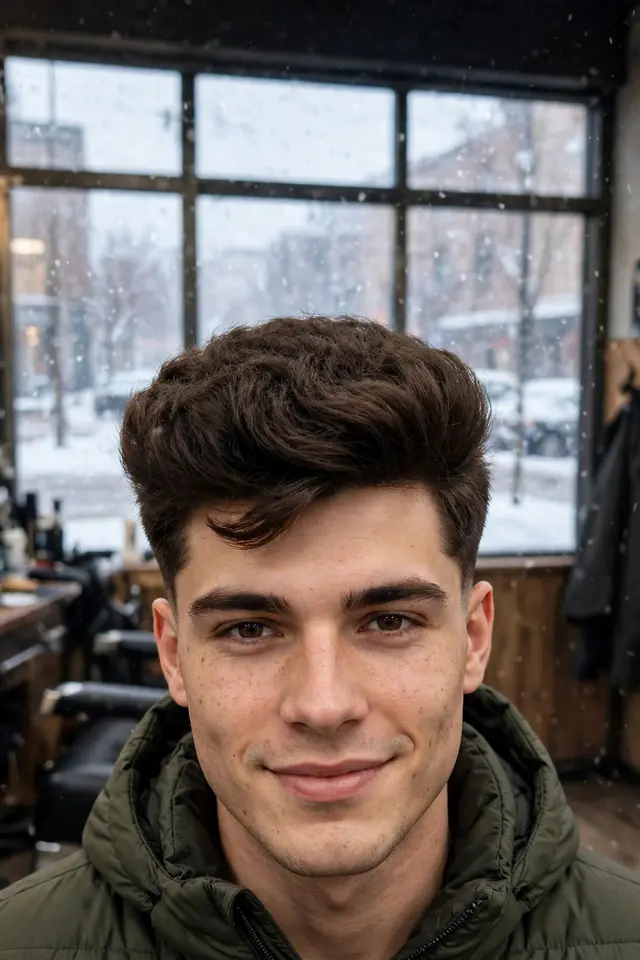
What is the single best blowout hairstyle for men?
The one that combines this guide’s lessons at their most wearable: a mid taper framing the head, four inches of top blow-dried into a rounded lift with the front given the quiff’s slight forward tip, texture through the ends so nothing reads stiff, and a matte finish that survives a winter day. The Blowout King is not the boldest here (that is the high taper) or the sharpest (that is the fade) — it is the balanced one: barber-fresh for two weeks, graceful in the third, and equally at home in a classroom, an office and every December photograph between. If you book one blowout this year, book this one.
Face Shape: The most forgiving silhouette here — the mid taper and rounded lift adjust to oval, round, square and long faces alike.
Grooming Kit: Blow dryer, round brush, volumising mousse and matte paste. Four items, whole style.
Maintenance: Every 3 weeks at the barber; three minutes each morning is the honest daily price, and it shows when paid.
Barber Script: “The full works — mid blowout taper, four inches on top, rounded lift with a slight forward tip at the front, matte.”
Lift, balance and clean edges — the complete blowout.
Q: Why does this beat a plain taper fade with a long top?
A: The drying. An undried long top lies where it falls; the king’s blow-dry builds the rounded architecture on purpose, every morning, in three minutes. The haircut is only half the style — the other half is hot air and a brush, and skipping it is why most home blowouts disappoint.
Q: What is the one habit that makes any blowout look better?
A: Drying from fully wet, every time. A blowout attempted on towel-damp or slept-in hair never reaches the shape — the roots have already set in the wrong direction. Wet it down, dry it up: that sequence is 80% of the style.
The Bottom Line
Blowout hairstyles for men run on three truths: the taper decides how clean the frame reads — low for soft, mid for balance, high or faded for contrast; the top decides everything else, and it is built with a dryer and a brush, not with product; and winter is the blowout’s real test, passed by softer edges, a flexible finish and a two-minute rebuild after every hat. Pick your taper by your workplace, your top by your hair type — curl keeps its diffuser, straight hair earns its lift, perms buy it permanently — and keep the three-week rhythm. For the fades your sides can borrow, see the fade haircuts guide, and for the forward-lying alternative, the textured crop guide.