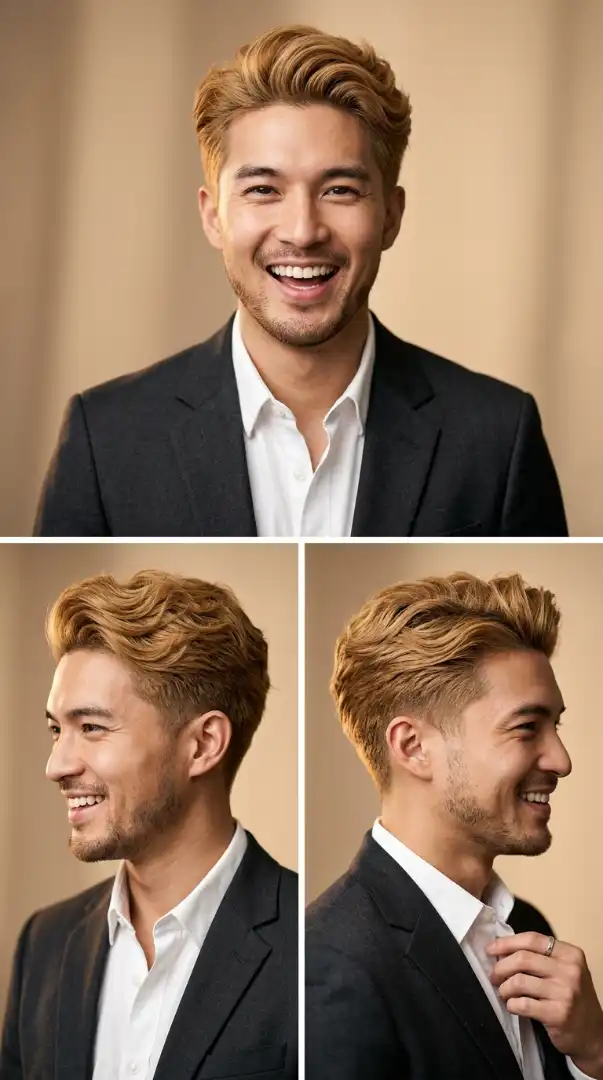
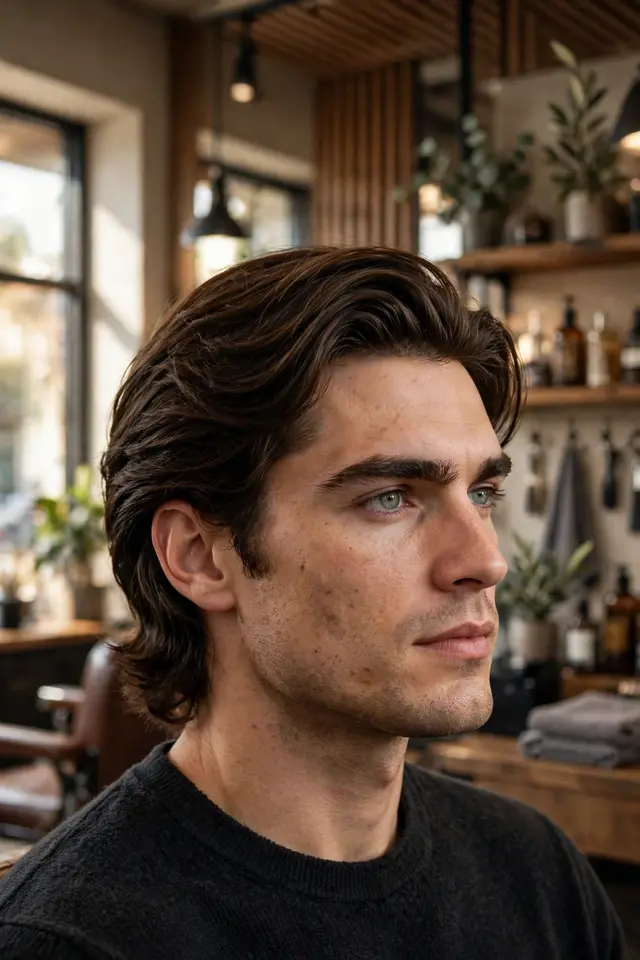
20 Flow Hairstyles for Men: Bro Flow, Hockey Flow & European Flow Versions
The flow is the haircut the moment keeps choosing. Booking platform Fresha reports searches for the flow haircut up 173% year over year, the 2026 FIFA World Cup turned Spain’s Ferran Torres into its breakout poster, grooming editors call hockey hair the biggest men’s trend of the year on the back of Heated Rivalry and Off Campus, and one winter top-ten list gives the flow two of its ten slots — because no other cut works with coats, scarves and layers the way moving, medium-length hair does. The direction of travel is set: softer, longer, and built to move.
Know what a flow actually is before you grow one. A flow is medium-length hair — roughly four to six inches on top, over the ears and touching the collar at the back — cut in scissor layers so it sweeps back off the face and tucks behind the ears. There is no skin fade underneath; a soft low taper at the edges is the only clipper work allowed. The price is patience: from a short cut, a real flow takes three to six months of growing, with shaping trims on the way. The reward is a cut that takes two minutes a morning and grows more graceful, not less, between barber visits.
Inside: the classic flow and its three famous brothers — the bro flow, the hockey flow and the polished European flow — then flows tuned for wavy, curly, straight, thick and fine hair, the one fade pairing that respects the style, the grow-out stages nobody warns you about, the winter version, and the complete look that obeys every rule. Each comes with the face shapes it flatters, the kit it needs, the upkeep it honestly demands, and the exact words to say in the chair. Growing past flow length entirely? Our long hairstyles for men guide takes over from the collar down, and our shaggy hairstyles for men guide covers the flow’s messier, more layered cousin.
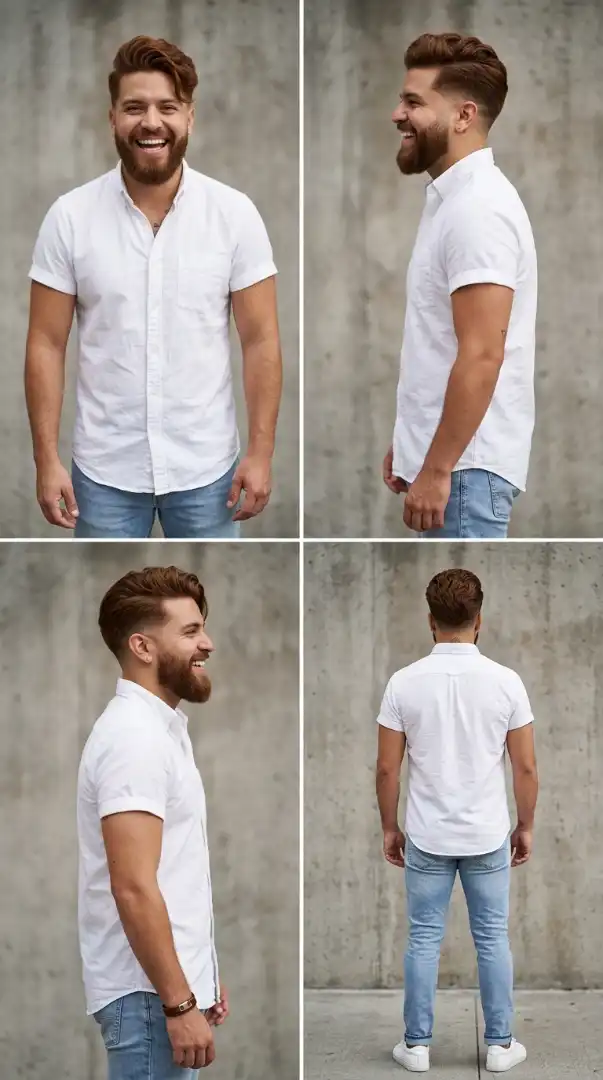
1 of 20 — The Classic Flow
What is the classic flow, exactly?
The blueprint. The classic flow is medium-length hair, layered and swept back so it falls behind the ears and moves when you do — no part, no fade, no hard lines anywhere. It is the version surfers wore in the seventies and the version every modern variation is measured against: hair that looks like it simply grew into shape, because the cut — not product — does the shaping.
Face Shape: All faces. The backward sweep lengthens round faces, and the soft sides soften square jaws.
Grooming Kit: A sea salt spray for texture, a light styling cream, and a wide-tooth comb — the classic flow is styled with fingers, not tools.
Maintenance: A shaping trim every six to eight weeks to refresh the layers and ends. Between visits it asks for almost nothing.
Barber Script: “A classic flow — scissor-cut layers, four to six inches on top, over the ears, back touching the collar. No fade, no clippers on the sides.”
Q: How long does hair need to be for a classic flow?
A: Four inches on top is where it starts to sweep and tuck properly; five to six inches is the full effect. Below four, you are in the grow-out stages covered later in this guide.
Q: Does a flow work in an office?
A: Yes — the classic flow reads neat precisely because it has no extreme elements. Keep the edges tidy, use matte product, and it sits as professionally as any short cut.
The blueprint — every flow in this guide is this cut, tuned.
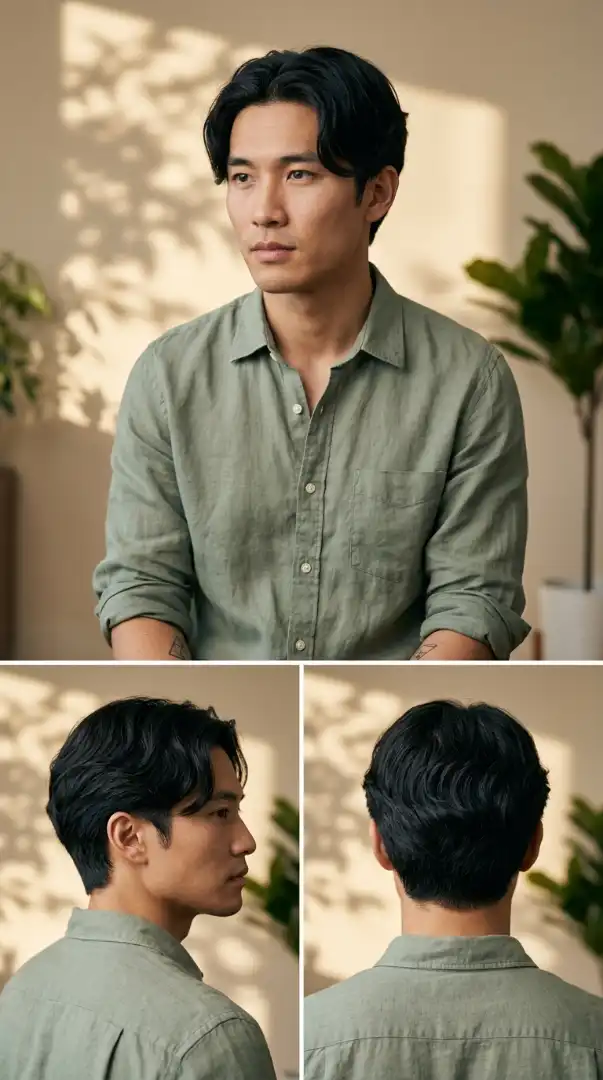
2 of 20 — Bro Flow

Why is the bro flow the version everyone asks for by name?
Because it is the flow with the edges relaxed. The bro flow keeps the same swept-back, tucked-behind-the-ears shape as the classic, but wears it looser: less polish, more natural fall, the collar-length back left to do what it wants. It is the flow of athletes off duty and actors on weekends — deliberate-looking without looking deliberate, and the name most men now say in the chair.
Face Shape: Oval and longer faces suit the relaxed volume; round faces should keep the sides tucked tighter behind the ears.
Grooming Kit: Salt spray and a matte cream. The bro flow dies under heavy product — if it looks styled, it is overstyled.
Maintenance: Trims every six to eight weeks, mostly to stop the back outgrowing the top. The grow-out is the most forgiving in this guide.
Barber Script: “Bro flow — medium length, layered, swept back and tucked. Relaxed finish, nothing polished, length left at the back.”
Q: Bro flow or classic flow — what is the real difference?
A: Intent. The classic is groomed neat; the bro flow is the same architecture worn looser and less perfected. Same cut, different attitude — and you can move between them with product alone.
Q: How do I stop my bro flow looking messy at work?
A: Tuck it fully behind the ears, use a small amount of matte cream on damp hair, and keep the neckline trim current. Neat edges carry the whole look.
The relaxed brother — same bones, zero effort showing.
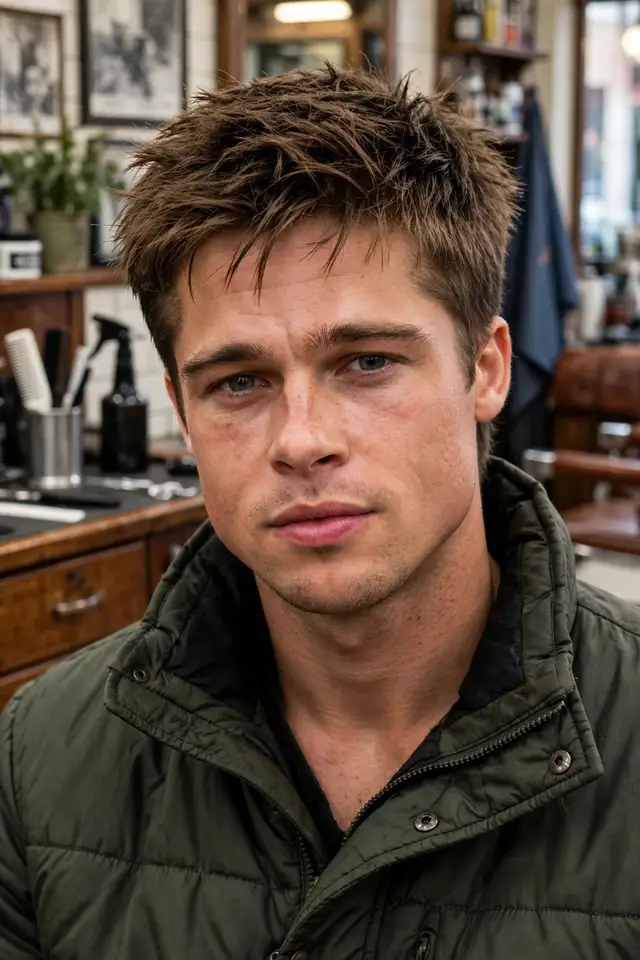
3 of 20 — Hockey Flow
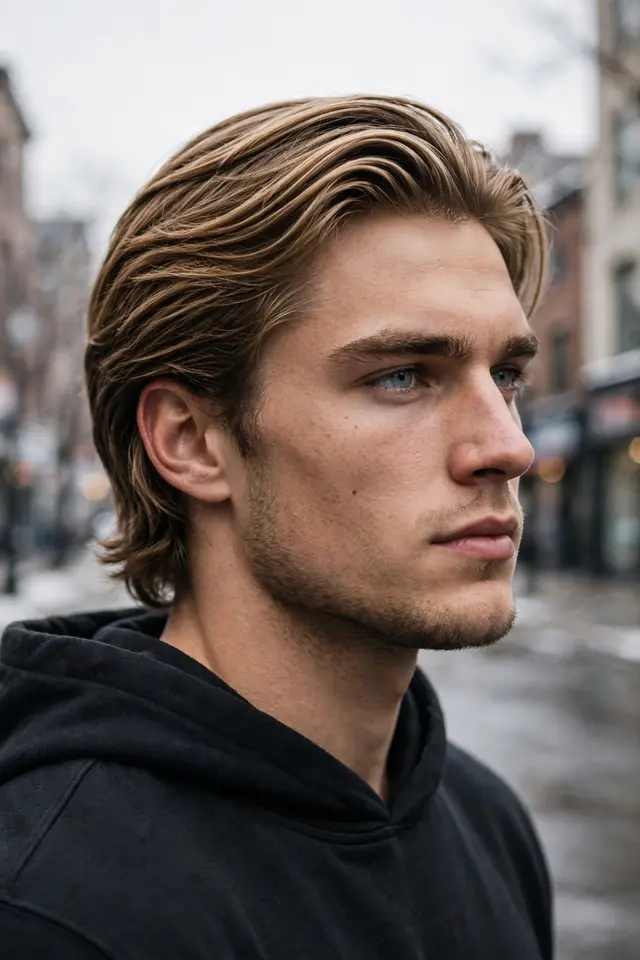
What makes hockey flow different from every other flow?
Length with an origin story. Hockey flow — “lettuce” in the locker room — is the longer, fuller version that spills out from under a helmet: layered length at the back reaching past the collar, the top swept straight back, the whole thing built by a season of growing rather than a single cut. TV’s hockey moment has pushed it from the rink to the mainstream, and barbers now field requests from men who have never held a stick.
Face Shape: Strong and angular faces carry the extra length best; the volume at the back balances a prominent jaw.
Grooming Kit: A leave-in conditioner — helmet-length hair dries out — plus salt spray and a proper brush for the longer back.
Maintenance: The longest grow-out in this guide: six months or more from short. Shaping trims every eight weeks keep it a style instead of an accident.
Barber Script: “Hockey flow — long layered back past the collar, top swept back, sides over the ears. Shape it, do not shorten it.”
Q: How long does hockey flow take to grow?
A: From a short cut, six to nine months to genuine helmet length. The back reaches the collar around month four; the full flowing effect needs the top to catch up.
Q: Is hockey flow just a mullet with better PR?
A: No — a mullet is short at the front and sides by design. Hockey flow keeps length everywhere: over the ears, full at the sides, long at the back. The silhouette is one flowing mass.
The athlete’s lettuce — a season of patience, worn like a trophy.
4 of 20 — The European Flow
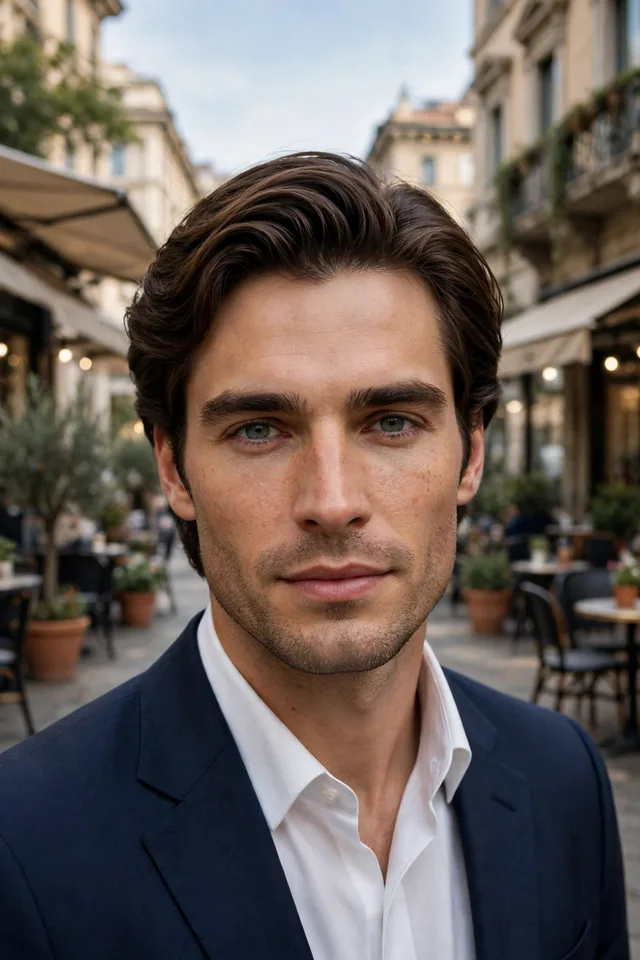
How does the European flow make the style office-formal?
By polishing the same raw material. The European flow takes medium-length hair and finishes it the Milan way: soft layers, a cleaner sweep, a hint of natural shine, the ends precise rather than beachy. Fall trend reports name it one of the biggest looks of the season precisely because it crosses over — casual with a jacket off, boardroom-credible with one on.
Face Shape: All faces, and the safest flow for conservative workplaces — the neat finish keeps the silhouette controlled from every angle.
Grooming Kit: A light cream with a natural (not matte, not wet) finish, and a comb for the morning set — this version is combed first, finger-finished second.
Maintenance: Every six weeks. The polish is perishable: this flow needs its ends and edges kept more current than its brothers.
Barber Script: “European flow — medium length, soft layers, swept back with a clean finish. Polished, not slick. Natural shine.”
Q: European flow or bro flow for a client-facing job?
A: European, every time. It is the same length and movement with the grooming signals turned up — combed, finished, deliberate. The bro flow reads weekend by comparison.
Q: Does the European flow need more product?
A: Slightly, and better product. A quality light cream on damp hair, combed back once, then left alone. The expense is in the trim schedule, not the shelf.
The Milan finish — flow that wears a suit without apologising.
5 of 20 — Medium Length Flow
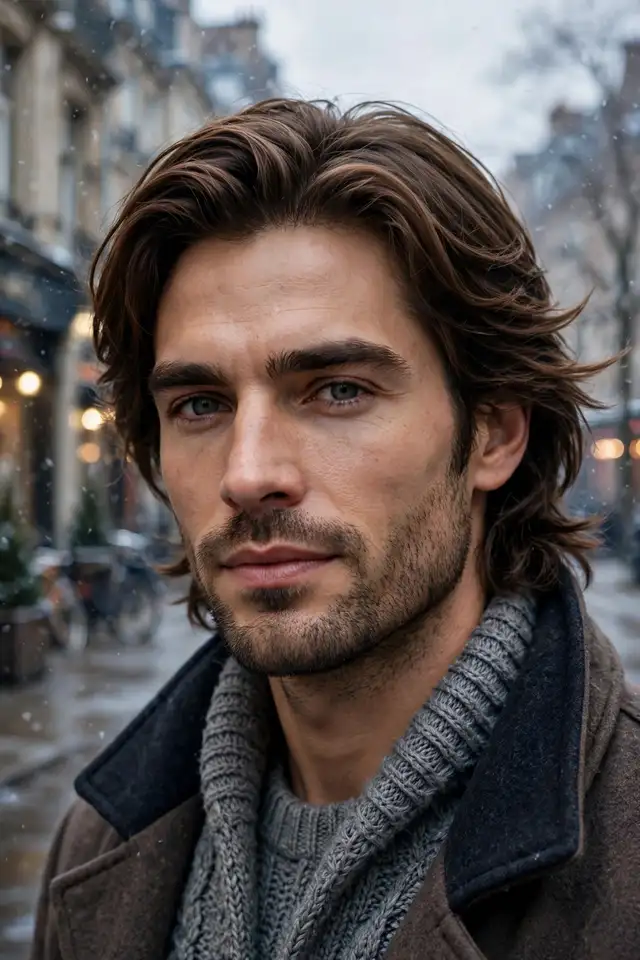
Why is medium length the flow’s sweet spot?
Because it is where the style fully switches on. Medium length flow — hair covering the ears, grazing the collar, four to six inches on top — is long enough to sweep, tuck and move, and short enough to dry fast, behave under a collar, and never read as “long hair.” Winter lists place it among the season’s best because it complements sweaters and coats instead of fighting them.
Face Shape: All faces. This is the reference length — adjust up for the hockey version or down for the short flow from here.
Grooming Kit: The standard bench: salt spray, light cream, wide-tooth comb. Medium length needs nothing specialised.
Maintenance: Six to eight weeks between shaping trims. Of all the lengths here, this one holds its shape the longest per trim.
Barber Script: “Medium length flow — over the ears, grazing the collar, layered throughout. Swept back, tucked, natural movement.”
Q: Is medium length flow high maintenance day to day?
A: No — two minutes. Spray or cream on damp hair, push it back and behind the ears, let it dry. The cut’s layers do the rest of the work.
Q: Can I wear medium length flow under a beanie?
A: Yes, and winter is its season. Expect it to sit flatter afterwards; revive it with a water spritz and your fingers rather than re-washing.
The sweet spot — long enough to flow, short enough to forget about.
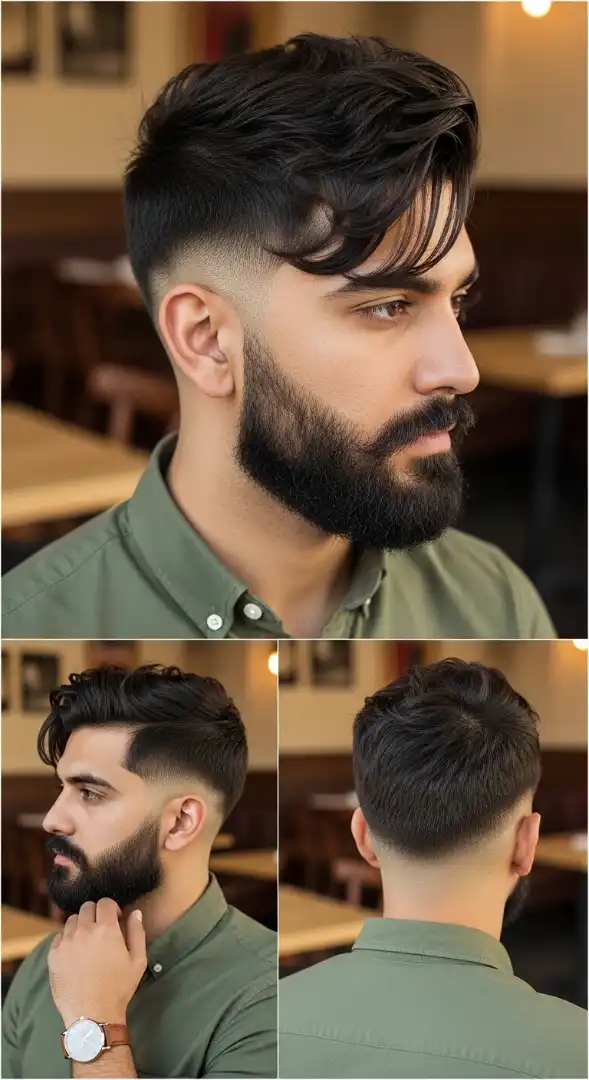
6 of 20 — Flow with a Low Taper
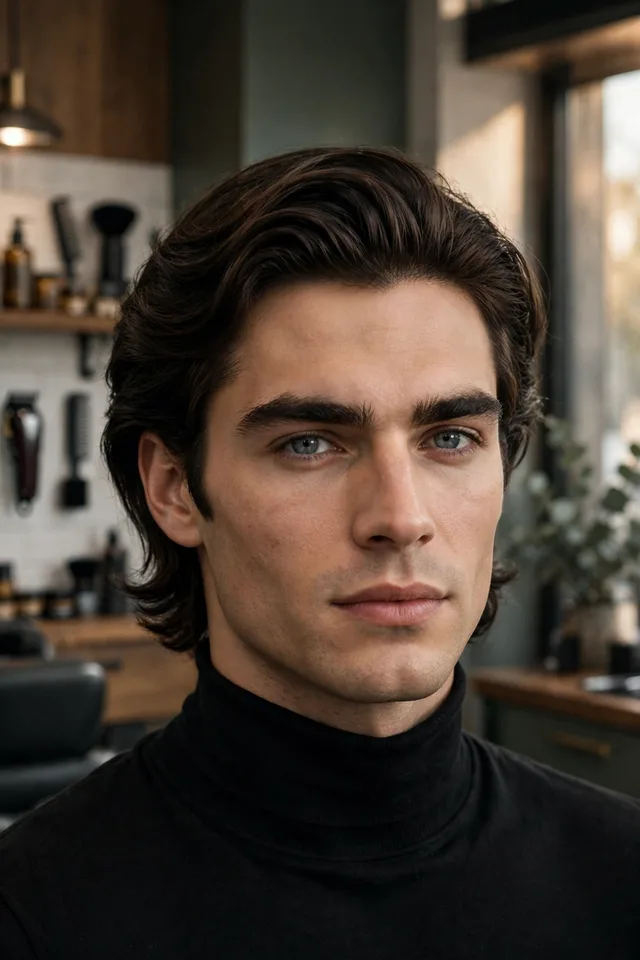
Can a flow have a fade and still be a flow?
One fade, kept low and soft. Flow with a low taper tidies only the edges — a gentle taper at the sideburns and neckline — while the length, the ears and the sweep stay untouched. It is the pairing for men who love the flow but miss the barbershop-clean finish at the borders, and it grows out invisibly because the taper was never dramatic to begin with.
Face Shape: All faces. The tidied edges suit men whose natural hairline is untidy or whose flow sits in a formal workplace.
Grooming Kit: The flow basics, plus a standing barber slot — the taper’s freshness fades faster than the flow’s shape does.
Maintenance: The taper wants a refresh every three to four weeks; the flow itself keeps its six-to-eight-week shaping rhythm.
Barber Script: “Flow on top, low taper at the edges only — sideburns and neckline. Keep the length over the ears, no skin fade.”
Q: Low taper or low fade under a flow?
A: Taper. A fade eats upward into the sides and shortens the silhouette; a taper only cleans the borders. The flow’s whole identity is length at the sides — protect it.
Q: Does the taper ruin the grow-out?
A: No — it improves it. The edges stay presentable while the length builds, which is exactly when most grow-outs get abandoned. This is the grow-out’s best friend.
Clean borders, wild middle — the only fade a flow allows.
7 of 20 — The Wavy Flow

Why is wavy hair the flow’s natural home?
Because waves already want to move. The wavy flow takes natural S-shaped hair and gives it the two things it needs — length and layers — then gets out of the way. The wave pattern supplies the texture and volume that straight hair has to fake with product, and the backward sweep organises the waves into one direction instead of a halo.
Face Shape: All faces. Wavy volume at the sides widens narrow faces; tucking behind the ears slims rounder ones.
Grooming Kit: A curl-friendly leave-in or light cream — wavy hair frizzes with salt spray overuse, so alternate — and a diffuser if you blow-dry.
Maintenance: Six to eight weeks. Wavy flows hide regrowth and unevenness better than any other texture here.
Barber Script: “Wavy flow — keep my natural wave, layer it to move back, over the ears. Cut it dry if you can, so the wave sits true.”
Q: Should wavy hair be cut wet or dry for a flow?
A: Dry cutting shows the barber the wave’s real fall and spring, so the layers land where the hair actually lives. Many texture specialists insist on it — ask before you book.
Q: How do I stop my wavy flow frizzing?
A: Product on wet hair, then hands off while it dries. Every touch after that point breaks the wave’s clumps into frizz. A silk pillowcase helps overnight.
Born for it — the wave does the styling, you do the growing.
8 of 20 — The Curly Flow
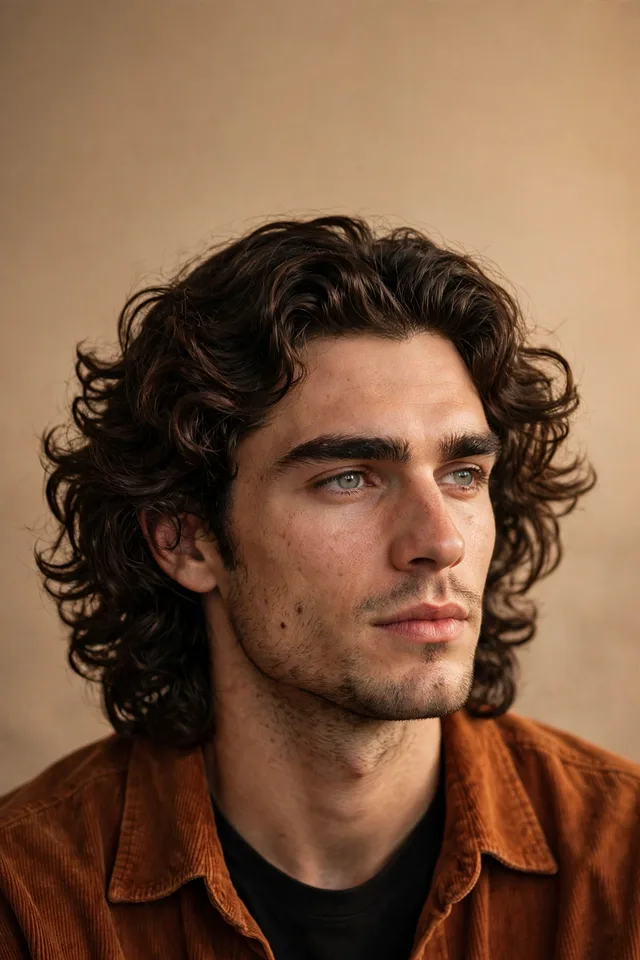
How do curls change the flow’s rules?
They rewrite the timeline and the layering. The curly flow grows curls out into a swept, falling shape — but curls shrink as they dry, so the hair must be grown longer than the target, and the layers must be cut curl by curl so the shape holds instead of pyramiding. Done right, it is the most striking flow in this guide: volume, movement and texture no straight hair can imitate.
Face Shape: Longer faces suit the width curls add at the sides; round faces should keep more length on top and less at the ears.
Grooming Kit: A proper curl cream, leave-in conditioner, and a wide-tooth comb used only on wet hair. Curly flows are a moisture routine with a haircut attached.
Maintenance: Eight weeks between cuts — curls forgive regrowth — but the conditioning schedule is weekly and non-negotiable.
Barber Script: “Curly flow — grow-out shape, layers cut curl by curl, length kept longer than the target to allow for shrinkage.”
Q: How much longer should I grow curly hair for a flow?
A: Plan for shrinkage of a third or more. Hair that hangs six inches wet may sit at four dry. Grow past the length you want, then let the barber shape down to it.
Q: Can I brush a curly flow?
A: Dry, never — brushing separates curls into frizz. Detangle wet with conditioner and a wide-tooth comb, apply cream, and let the curls form untouched.
The showpiece — slower to grow, impossible to ignore.
9 of 20 — Flow for Straight Hair

Can straight hair actually flow?
Yes — it just has to be taught. Straight hair’s problem is direction: it falls forward and flat where wavy hair sweeps. Flow for straight hair fixes it with three tools — layers that remove the weight pinning it down, heat training while it grows (blow-drying it back daily until the direction sticks), and texturising product that gives straight strands something to grip each other with.
Face Shape: All faces. Straight flows read sleeker and sharper, which suits angular faces particularly well.
Grooming Kit: A blow-dryer — non-negotiable for this one — salt spray for grip, and a matte paste for the finish.
Maintenance: Six to eight weeks, and the daily two-minute blow-dry-back is part of the deal for the first months.
Barber Script: “Flow for straight hair — layers to remove weight, point-cut texture on top, length over the ears. I will be training it back.”
Q: How long does heat training take to work?
A: Most men see the direction hold after three to four weeks of daily blow-drying back on damp hair. The hair’s growth pattern adapts to the repeated direction — patience is the product.
Q: Will a perm help straight hair flow?
A: A loose wave perm is the shortcut some men take — it builds in the movement permanently. It is a commitment with its own upkeep; try heat training for a month first.
The taught flow — direction is a habit, and hair learns it.
10 of 20 — Flow for Thick Hair
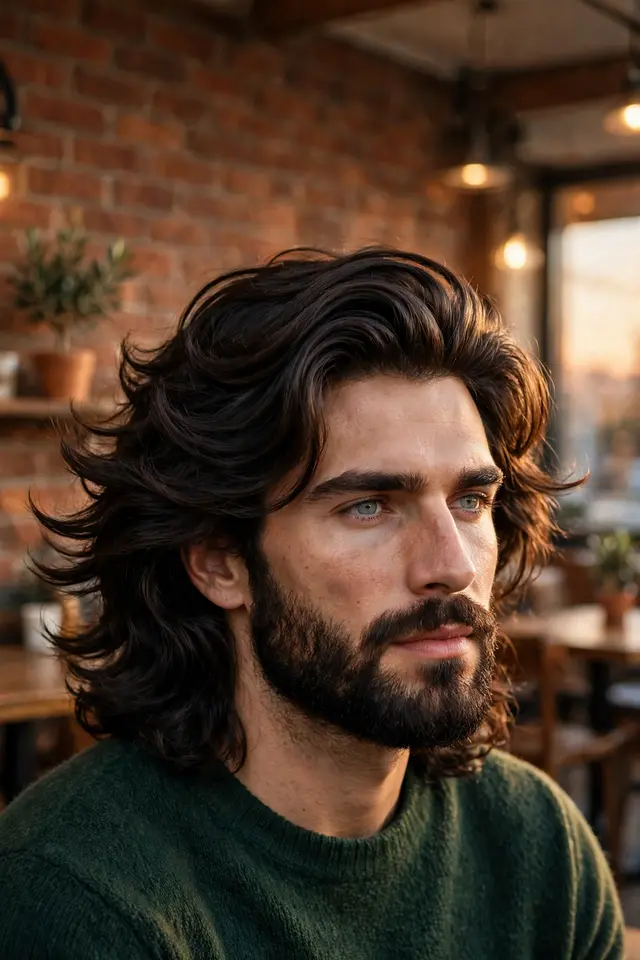
What stops thick hair from flowing?
Bulk. Thick hair grown out without layering does not flow — it puffs, forming a helmet that widens by the week. Flow for thick hair is an exercise in subtraction: internal layers and weight removal throughout, so the mass that remains can actually move. Get the subtraction right and thick hair produces the fullest, most enviable flow of any type — there is simply more of it moving.
Face Shape: Square and larger faces carry the volume in proportion; smaller faces need the sides kept closer and tucked.
Grooming Kit: A smoothing cream to keep the mass calm, and a good brush — thick flows need real detangling, not finger-raking alone.
Maintenance: Six weeks. Thick hair outgrows its layering faster, and the puff returns first at the sides — that is your trim signal.
Barber Script: “Flow for thick hair — remove weight throughout with internal layers, keep the length. I want movement, not volume for its own sake.”
Q: Should thick hair be thinned with shears for a flow?
A: Carefully, and not at the ends. A skilled barber removes weight internally with layering and point cutting; aggressive thinning shears near the surface create frizz and flyaways. Ask how they remove weight before they start.
Q: Why does my thick flow look like a mushroom?
A: The sides have outgrown the top’s layers — weight is sitting at ear level. It means the layering is due, not that the style failed. A shaping trim restores the sweep.
Subtraction as styling — the fullest flow is thick hair, edited.
11 of 20 — Flow for Fine Hair

How does fine hair fake the flow’s volume?
By keeping it shorter and texturing smarter. Fine hair grown to full flow length goes stringy and transparent, so flow for fine hair stops at the short end of medium — three to four inches, worn with point-cut texture, a volumising product at the roots, and a matte finish that makes strands look thicker than they are. It reads as a flow in silhouette while playing to fine hair’s strengths.
Face Shape: All faces; the shorter length keeps fine hair from overwhelming smaller features.
Grooming Kit: A volumising mousse or root spray, a matte clay, and a blow-dryer — fine hair’s volume is built warm, then set.
Maintenance: Every five to six weeks. Fine hair shows regrowth lines sooner, and the ends thin visibly if left too long.
Barber Script: “Short flow for fine hair — three to four inches, point-cut texture, nothing heavy. I style for volume at the roots.”
Q: What products weigh fine hair down?
A: Oils, waxes and wet-look gels. They coat fine strands and separate them into strings. Stay with mousses, sprays and matte clays applied sparingly.
Q: How long should fine hair grow for a flow?
A: Stop at the shorter end — around four inches on top. Past that, fine hair loses the density battle no matter the product. The short flow is a destination, not a compromise.
The illusionist — silhouette over length, texture over mass.
12 of 20 — Flow with a Beard
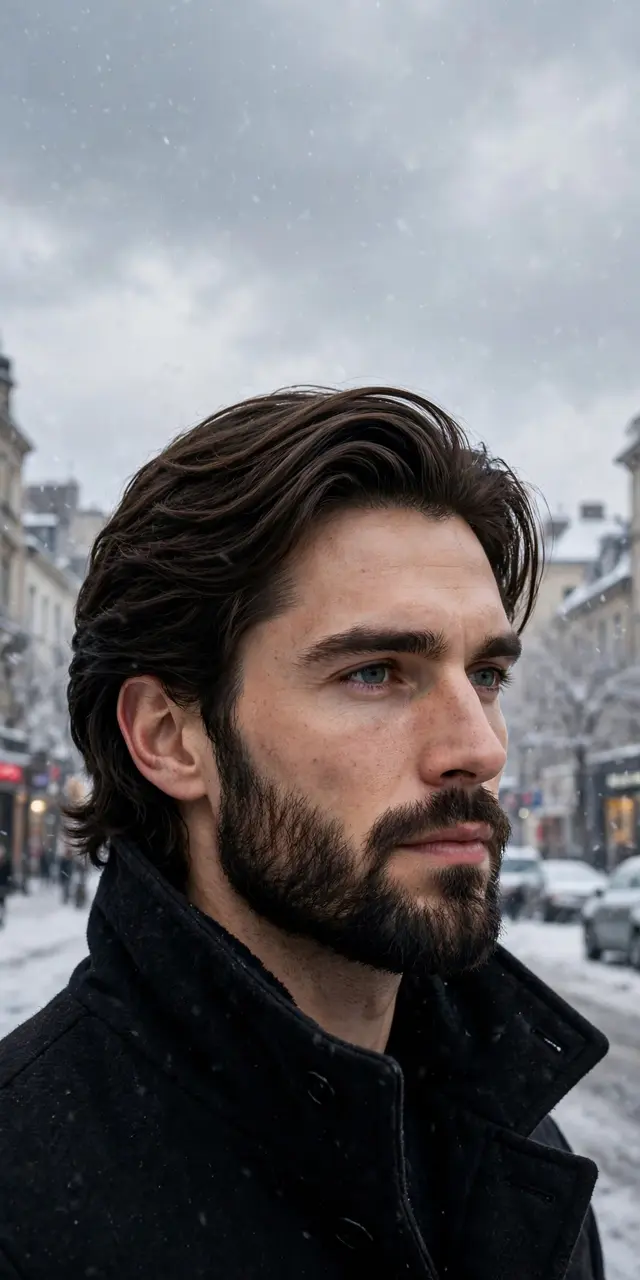
Why do a flow and a beard complete each other?
Balance, again. The flow’s movement sits above; a full, shaped beard grounds the face below, and the two textures — sweeping hair, dense beard — frame the face between them. It is the combination the winter lists keep photographing, because it suits the season’s clothing: collar up top, beard below, nothing bare to the cold.
Face Shape: The beard lets you adjust your face shape — fuller at the chin lengthens round faces; keeping the beard’s sides tight slims square ones.
Grooming Kit: Beard oil and a boar brush join the flow kit; the beard needs its own daily minute so it deserves the hair above it.
Maintenance: Flow trims on schedule; beard edges every few days and a full shape-up with every flow trim.
Barber Script: “Flow on top, beard shaped full but tidy. Balance the beard’s weight against the hair’s length — neither should outgrow the other.”
Q: Should the beard be grown before or during the flow grow-out?
A: During — they mature together over the same months, and your barber can balance them at every shaping trim. Starting the beard at month one of the grow-out is the classic move.
Q: How full should the beard be with a flow?
A: Full but edged. The flow is soft, so the beard’s lines — cheeks and neck — should be the sharp element. A wild beard plus a soft flow reads unkempt; one of them must be precise.
Movement above, gravity below — the winter portrait, complete.
13 of 20 — Surfer Flow
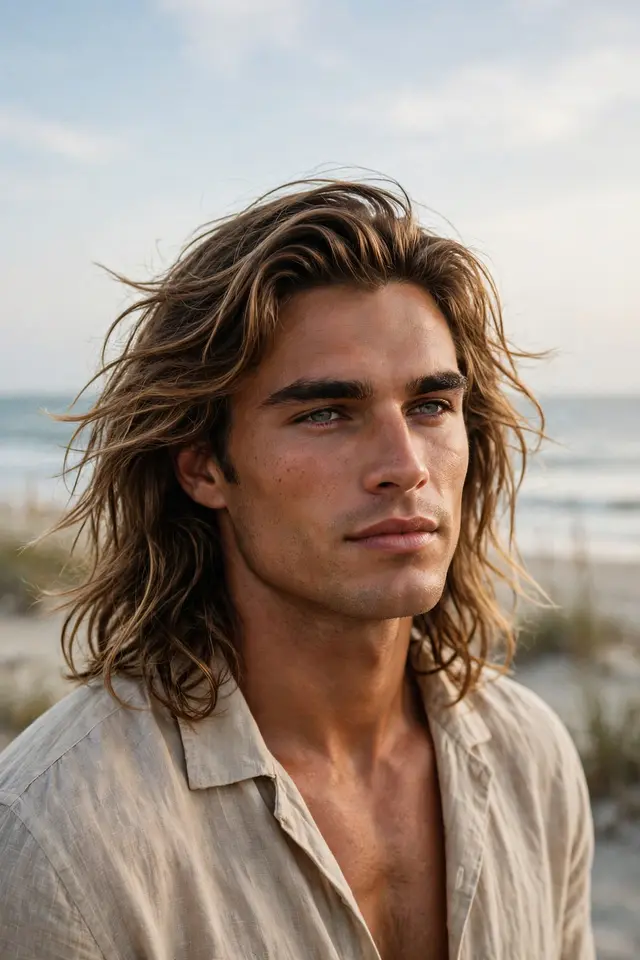
What makes surfer flow different from bro flow?
Salt and sun. Surfer flow is the original beach version — longer, lighter at the ends from sun, textured by salt water into piecey separation no product fully imitates. Where the bro flow is the surfer’s polished cousin, this is the source: worn completely loose, never combed, at its best on day three after the ocean did the styling.
Face Shape: All faces; the loose, longer silhouette suits relaxed features and longer faces best.
Grooming Kit: Salt spray (the bottled version of its natural stylist), a deep conditioner to repay what sun and salt take, and nothing else.
Maintenance: Eight weeks or longer — this is the lowest-upkeep long style here, provided the conditioning keeps pace with the sun.
Barber Script: “Surfer flow — long layers, natural piecey ends, nothing polished. Shape it like it lives outdoors, because it does.”
Q: Can I get surfer texture without the ocean?
A: Mostly. Salt spray on damp hair, scrunched and air-dried, gets you eighty percent of the way. The sun-lightened ends take a summer — or a few subtle highlights — to match.
Q: Is surfer flow unprofessional?
A: It is the most casual flow here. For conservative workplaces, the European flow is the same family with the signals changed. Keep this one for creative fields and weekends.
The source — the beach wrote this one, barbers just transcribe it.
14 of 20 — The Short Flow
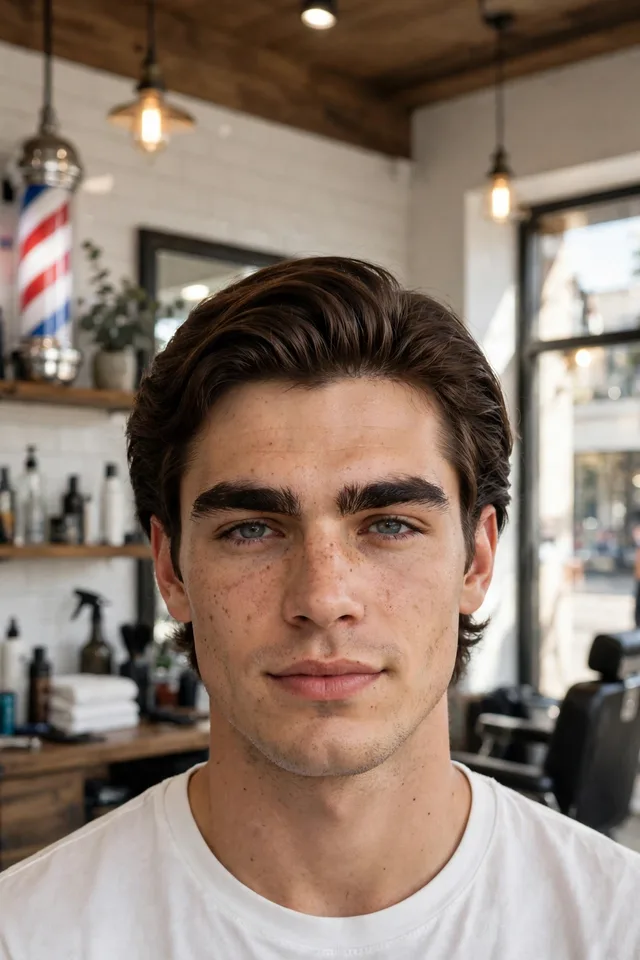
Where does a flow actually begin?
At three to four inches, swept back. The short flow is the first true stage of the grow-out: the top is long enough to push back off the forehead and start tucking at the sides, the back is still short of the collar, and the whole thing already reads as a flow rather than a haircut growing out. For fine hair, as covered earlier, it is also a permanent destination.
Face Shape: All faces — the shorter length is the most universally wearable flow in this guide.
Grooming Kit: Salt spray and a light cream; short flows need direction help most, because gravity has not yet joined your side.
Maintenance: Every five to six weeks while growing — frequent light shaping is what carries a grow-out through looking intentional.
Barber Script: “Short flow — three to four inches on top, swept back, starting to tuck. Shape the ends, keep every millimetre of length.”
Q: How do I style the awkward first weeks of a short flow?
A: Blow-dry it back on damp hair with a little cream, every morning, without exception. At this length the direction is trained daily or not at all — the habit built now pays off for the whole grow-out.
Q: Short flow or straight to medium — should I stop here?
A: Stop here if your hair is fine, your workplace is strict, or you simply like it. Keep growing if you want the tuck and the collar length. Both are legitimate endpoints.
The first true stage — proof the grow-out is working.
15 of 20 — The Long Flow
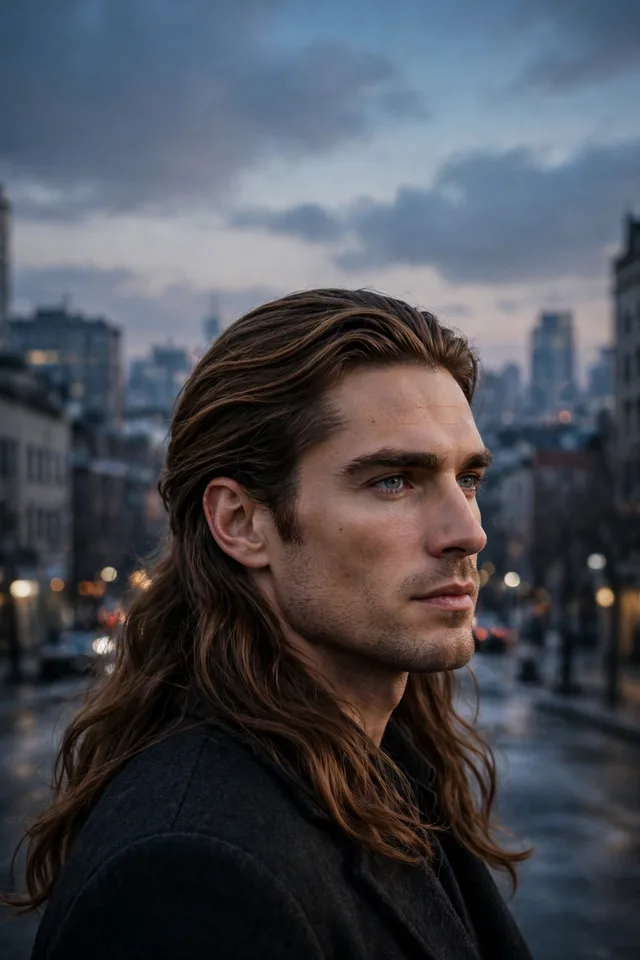
When does a flow become long hair?
At the collar, heading for the shoulders. The long flow keeps the flow’s architecture — layers, backward sweep, no part — at lengths where the hair moves in a single mass and can be tied back when it must. It is the last stop before true long-hair territory, and the version that turns heads, because so few men survive the grow-out to reach it.
Face Shape: Longer and oval faces carry the length in proportion; round faces should keep the top swept high rather than flat.
Grooming Kit: A real brush, leave-in conditioner for the ends, and snag-free ties for training days — long hair is cared for like fabric.
Maintenance: Eight to ten weeks between trims, but the ends are the oldest hair on your head — condition them like it shows, because it does.
Barber Script: “Long flow — layers refreshed, ends cleaned, length kept. Swept back, no part, movement in one mass.”
Q: How long does the long flow take to grow from a short cut?
A: Twelve months or more, honestly stated. Hair grows about half an inch a month; collar-to-shoulder length is a year of patience with trims that only shape.
Q: Long flow or just long hair — what is the difference?
A: The cut. Long hair is length without architecture; the long flow is layered and directed to sweep back as one shape. The difference is visible from across the street.
The survivor’s length — a year of patience, worn daily.
16 of 20 — Flow with a Middle Part
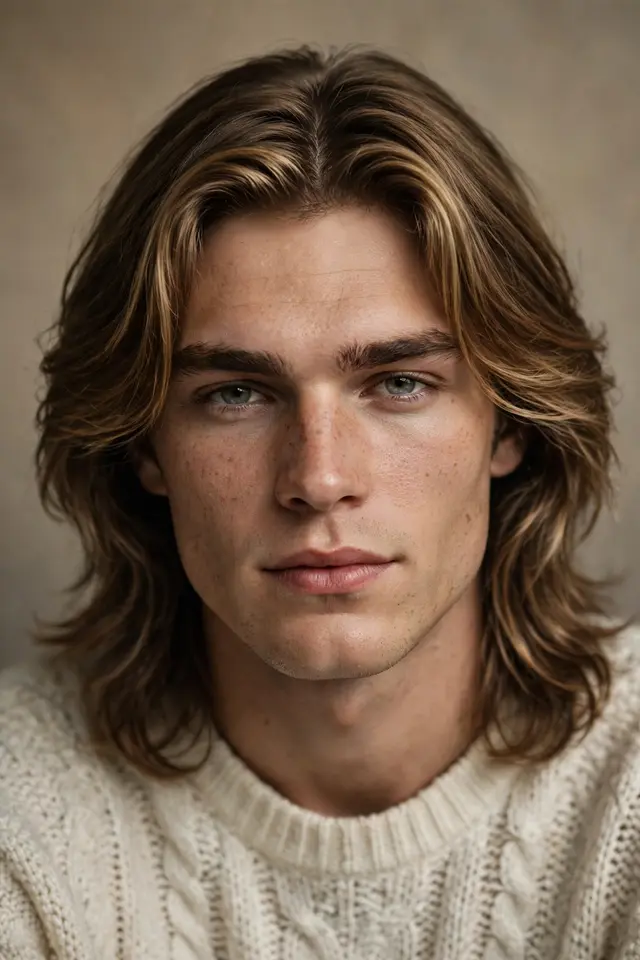
How does a middle part change the flow?
It splits the sweep in two. Flow with a middle part — the curtain’s grown-up sibling — parts the medium length at the centre so it falls to both sides of the face, framing it symmetrically while the back keeps flowing. Trend lists keep it among the defining shapes of the moment: it suits the same medium length as the classic flow but reads younger, softer and more deliberate.
Face Shape: Symmetrical and oval faces wear the centre part best; longer faces gain width from the side fall.
Grooming Kit: A comb to set the part on damp hair, light cream, and a dryer if your hair resists parting where it is told.
Maintenance: Six to eight weeks. The part itself is trained, not cut — expect the first fortnight of it wandering before it settles.
Barber Script: “Flow with a middle part — medium length, layered to fall to both sides from a centre part. Back keeps its length.”
Q: My hair will not part in the middle — what now?
A: Train it: part it on damp hair every morning, set it with heat, and hold it with a cap or clip for twenty minutes. Most hairlines surrender within two weeks of consistency.
Q: Middle part flow or curtain haircut?
A: Curtains are the shorter, face-framing version worn forward; the middle part flow is longer, swept and flowing at the back. Same part, different length and intent.
The symmetrical sweep — one part, two curtains of moving hair.
17 of 20 — Flow for a Receding Hairline
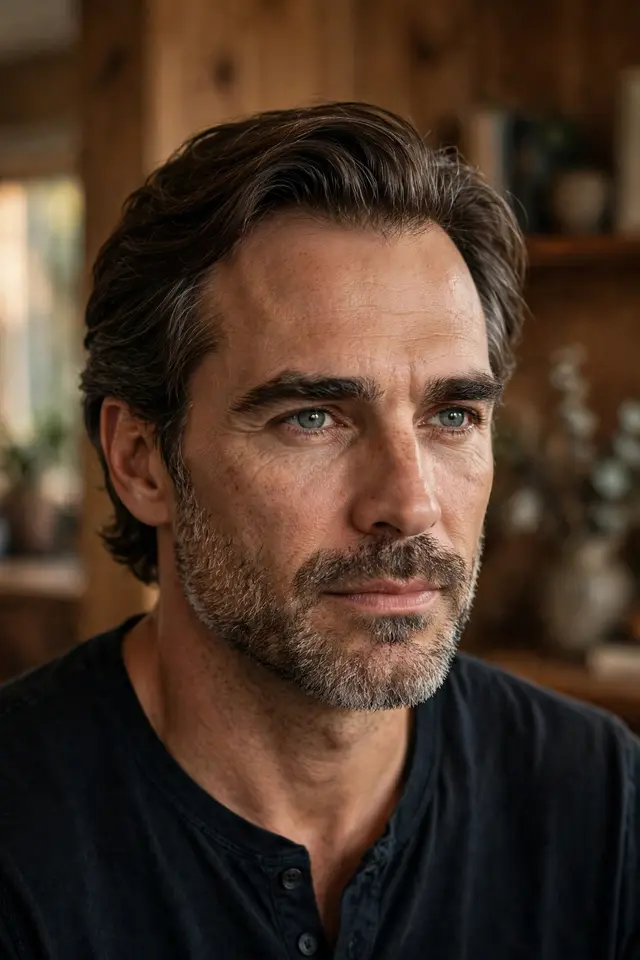
Can a flow work with a receding hairline?
Yes — if it sweeps the right way. The instinct to grow a flow back and expose the temples is exactly wrong here; flow for a receding hairline keeps length at the front and wears it forward-and-back, so the fringe area softens the temples instead of spotlighting them. Worn this way, the flow’s volume on top draws the eye to the hair that is there.
Face Shape: All faces with early-to-moderate recession. The forward weight balances a lengthening forehead.
Grooming Kit: A matte volumising product — shine and wet finishes expose the scalp — and a dryer for building the front volume warm.
Maintenance: Six weeks. The front shaping is the whole strategy, so it must stay current; a neglected front undoes the effect first.
Barber Script: “Flow with a receding hairline — keep the front length, wear it forward then back. Nothing slicked straight off the temples.”
Q: Does growing a flow make recession more obvious?
A: A backward-slicked one can. The forward-swept version does the opposite — it is one of the better camouflage strategies available, which is why the direction, not the length, is the decision.
Q: What should I avoid with a receding hairline and a flow?
A: Wet-look products, centre parts that start too far back, and length at the sides that makes the top look thinner by contrast. Matte, forward, and balanced is the formula.
Direction over denial — the flow that works with the hairline it has.
18 of 20 — The Grown-Out Flow
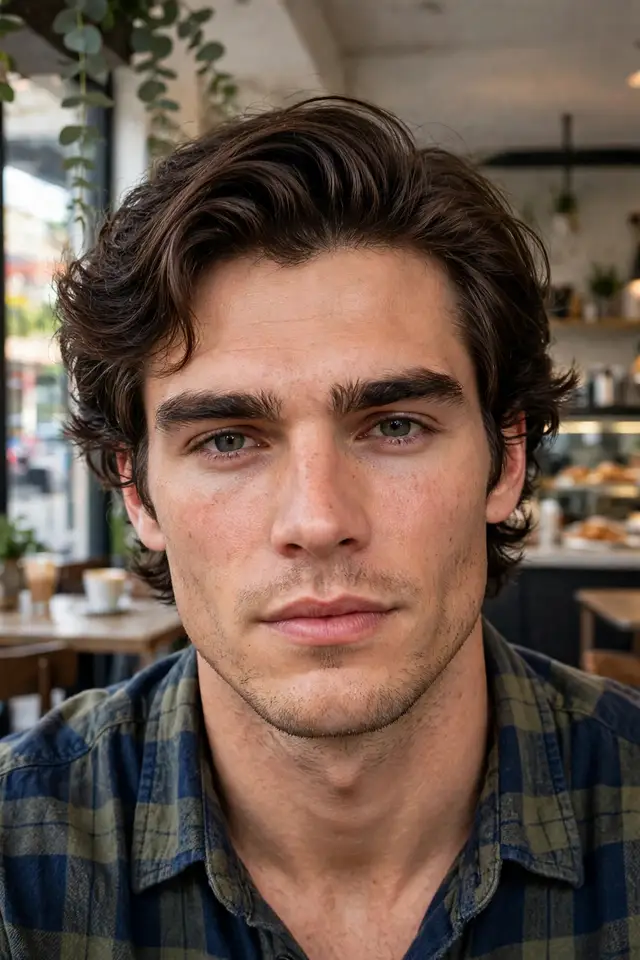
What do you do at the awkward stage?
You shape it, and you call it this. The grown-out flow is the deliberate styling of a short cut mid-journey — months two to four, when the top flops, the sides puff and every man is tempted to shave it off. Barbers who specialise in grow-outs treat this as a style in its own right: weight removed at the sides, ends cleaned, direction trained daily, until the length arrives.
Face Shape: All faces — this is a stage, not a silhouette, and every face passes through it on the way to a full flow.
Grooming Kit: A hat you actually like for the worst weeks, a headband for training, and the full styling bench — this stage uses everything.
Maintenance: Light shaping every four to five weeks — more often than the finished flow, because small corrections are what keep it looking chosen.
Barber Script: “Grown-out flow — I am mid-grow-out. Remove the side bulk, clean the ends, keep all the length. Shape it, do not reset it.”
Q: How long does the awkward stage last?
A: Roughly months two to four from a short cut — the top is too long to sit and too short to tuck. It ends the week the sides first stay behind your ears.
Q: What is the biggest grow-out mistake?
A: The rescue haircut. One frustrated visit that takes the sides back to a fade resets months of progress. Book shaping trims with a barber who knows the destination, and tell them every time.
The bridge — every flow in this guide was once this, survived.
19 of 20 — Winter Flow

Why is winter the flow’s home season?
Because the season rewards length. Winter flow is any flow in this guide worn with winter adjustments: the length insulates where a fade would freeze, the sweep sits naturally above coat collars and scarves instead of being crushed by them, and the care routine shifts to fight the dry air and indoor heating that make medium hair brittle. The winter lists that give flow two of their top ten slots are recognising a practical truth, not just a look.
Face Shape: All faces — choose the underlying flow by face shape as normal; winter changes the care, not the cut.
Grooming Kit: A richer conditioner than summer, a leave-in for heating-dried ends, and a soft brush — static is the season’s tax on length.
Maintenance: Keep the normal trim rhythm, but condition weekly and never force a beanie over the sweep — put it on front-to-back so the flow survives underneath.
Barber Script: “Winter flow — medium length, layers refreshed, ends sealed. I will be wearing coats and scarves over it daily.”
Q: Do beanies ruin a flow?
A: They flatten it temporarily. Put the beanie on front-to-back so the hair keeps its direction, and revive the sweep afterwards with a water spritz and your fingers — thirty seconds, no rewash.
Q: Should I grow a flow longer for winter?
A: The medium lengths in this guide are already the winter optimum — enough to insulate and sit over collars, not so much that scarves tangle it. Grow for the style, not the season.
The season’s own cut — length as insulation, movement as style.
20 of 20 — The Flow King
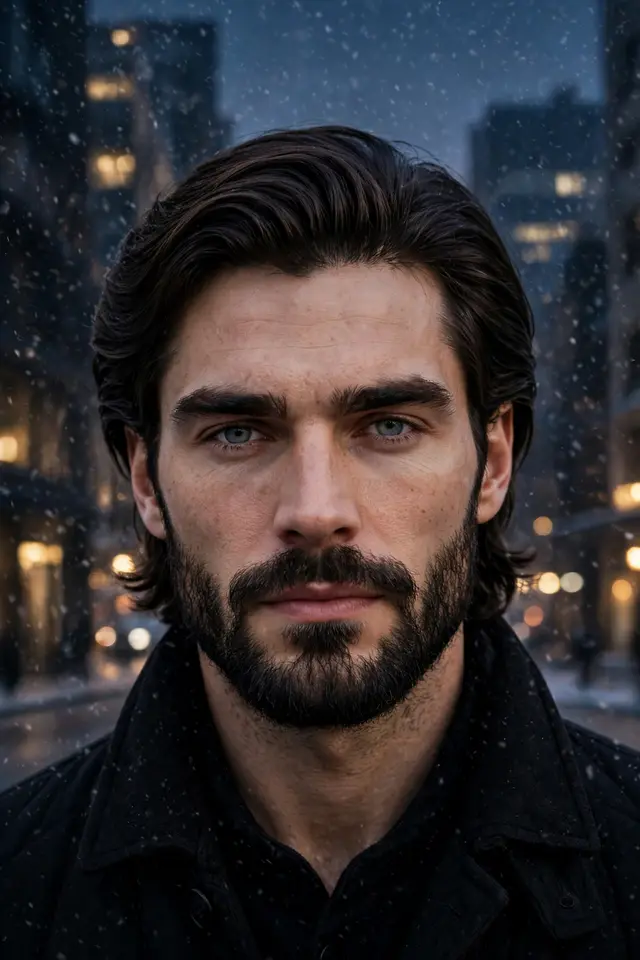
What does the complete flow obey?
Every rule in this guide at once. The Flow King runs the full architecture — layered medium length swept back and tucked, the back at the collar, edges softened by a low taper, a shaped beard balancing the face below — finished in falling snow, because this is the season the style owns. Nothing is accidental: the grow-out was survived, the layers are current, the direction is trained, and the whole thing takes two minutes a morning.
Face Shape: Any face that can grow the beard — the combination is engineered balance, and the taper and beard adjust to the face wearing them.
Grooming Kit: The full bench: salt spray, light cream, leave-in conditioner, beard oil, a real brush, and a barber who knows the destination.
Maintenance: Shaping every six weeks, taper edges at three to four, beard with every visit — the king runs on appointments, not hope.
Barber Script: “The full flow — layered length swept back, low taper at the edges only, beard shaped to balance. Keep every rule: length, layers, direction.”
Q: What makes this the king and not just a bro flow with extras?
A: The completeness. A bro flow is one decision — length, worn loose. The king adds the layering discipline, the taper’s clean borders and the beard’s balance: every layer designed against the others.
Q: How do I keep the king looking royal all winter?
A: Condition weekly against the dry air, revive the sweep after every beanie, keep the taper and beard appointments, and never let a shaping trim become a shortening.
Every rule obeyed, every layer finished — the flow at its ceiling.
The Bottom Line
A flow is not a haircut you get — it is a haircut you grow into, and the men who reach it are simply the ones who survived months two to four. Start where you are: the short flow if you are beginning, the grown-out shaping trims if you are mid-journey, and a barber who hears “shape it, do not shorten it” as the whole job. Choose your version by your life — bro flow for ease, European for the office, hockey for the statement, the low taper if you need clean borders — and by your hair: waves and curls were born for this, straight hair can be taught it, thick hair must be edited into it, fine hair should stop at the short end. Winter is this family’s home season, so the man who starts growing now wears the finished flow while the cold lasts. Growing further still? Our long hairstyles for men guide continues past the collar, and our mod cut hairstyles for men guide covers the other great medium-length return of the season. Grow it once, grow it right, and let it move.