20 Mod Cut Hairstyles for Men: The Modern Mod, Classic Mod & Textured Versions
Every few years a haircut comes back so completely that barbers stop calling it retro. The mod cut is there now. Alexim’s Autumn/Winter 2026/27 trend list puts the mod at number two of its six defining cuts and calls it the most distinctive of the set, and salon trend reports updated this month describe the modern mod — the Jacob Elordi version — as one of the defining men’s hair trends of the year. The Oasis reunion poured fuel on it, but the cut survives on its own merits: it is all scissors, all texture, and it flatters almost every head it lands on.
Know the family rules before you pick a version. A real mod cut is scissor-cut, never clipper-faded to skin. The sides keep length — over the ears, sometimes down towards the chin — and the fringe is the signature: full, forward, and cut into pointed sections rather than one blunt line, often swept on a diagonal. Internal layering does the shaping, which is why a mod never reads as a bowl cut when it is cut properly. If your taste runs shaggier, our shaggy hairstyles for men guide covers the mod’s looser cousin, and if the fringe is the part you love most, our fringe hairstyles for men guide takes that single element further.
Inside: the classic sixties original, the softer modern mod, the side-swept Alexim version, mod crops, mods for thick, fine, wavy and curly hair, the Britpop mod, a winter-proof mod, and the one cut that combines every rule. Each comes with the face shapes it flatters, the kit it needs, the upkeep it honestly demands, and the exact words to say in the chair.
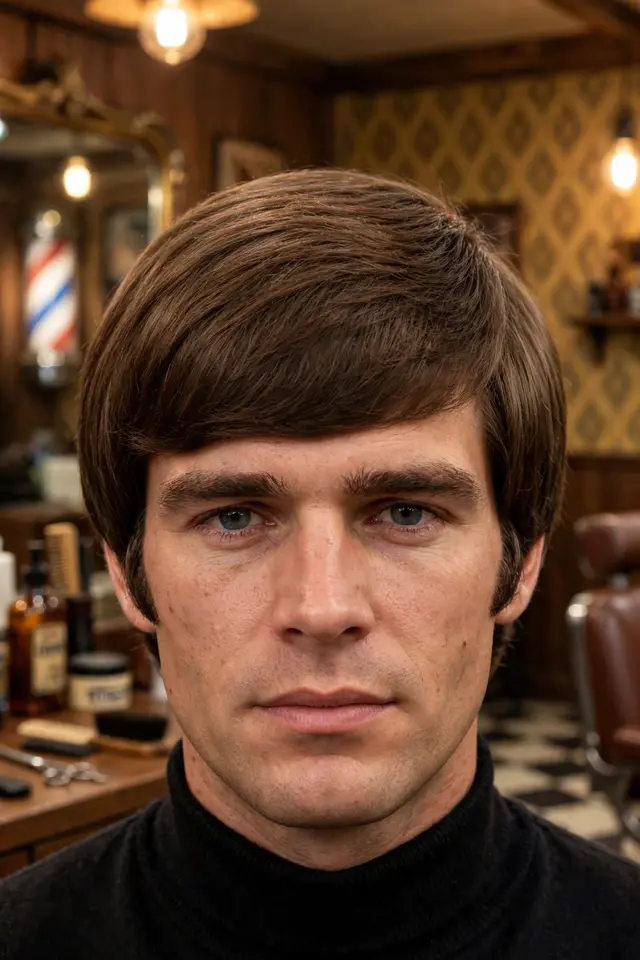
1 of 20 — The Classic Mod Cut
What makes the classic mod cut the original blueprint?
The blueprint itself: a rounded, scissor-cut shape with a full brow-length fringe, sides worn over the ears, and pointed sideburns. The classic mod cut is pure sixties — the Small Faces and early Beatles silhouette — built from internal layers so the outline stays smooth, never stepped. No clippers, no fade, no disconnection. It is the reference every other cut in this guide is measured against, and on the right head it still looks sharper than most modern cuts.
Face Shape: Oval and square faces carry the full fringe best; the side length softens a strong jaw.
Grooming Kit: A wide-tooth comb, light styling cream, and a blow dryer for the fringe direction.
Maintenance: A shape-up every 4 to 5 weeks; the fringe needs a free trim between visits on most barbers’ chairs.
Barber Script: “Classic mod, all scissors. Rounded shape, fringe to the brows, sides over the ears, pointed sideburns — no clippers on the sides.”
Q: Is the classic mod cut just a bowl cut?
A: No. A bowl cut is one blunt length all round. The mod is internally layered with pointed fringe sections, so it moves and separates instead of sitting like a helmet.
Q: How long does my hair need to be for a classic mod?
A: Around four inches on top and enough side length to cover the ears. Most men growing out a crop reach a workable mod in about three months.
The original still sets the standard — everything after this is a variation on its rules.
2 of 20 — The Modern Mod Cut

How does the modern mod cut soften the sixties original?
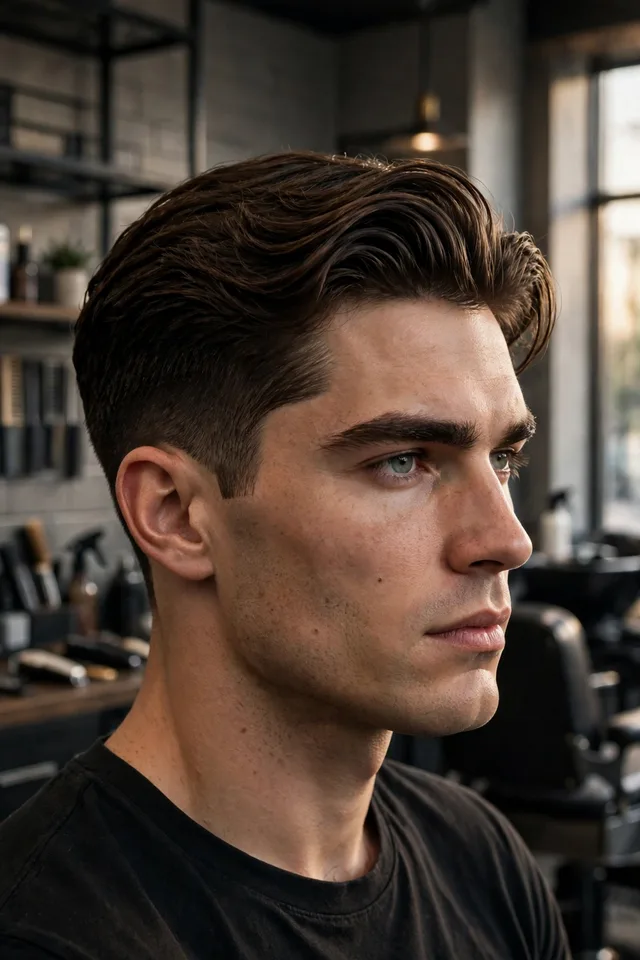
Same bones, relaxed finish. The modern mod cut keeps the layered shape and full fringe but breaks the outline up: more texture through the ends, a fringe that falls in pieces instead of a curtain, and sides that sit softer around the ears. This is the version Jacob Elordi and Paul Mescal made current — intentional without looking styled, and the mod most men under thirty are actually booking.
Face Shape: Works on almost every face; the broken fringe is kind to longer faces that a blunt curtain would stretch.
Grooming Kit: Matte paste the size of a pea, fingers for styling, and a dryer on low for root direction.
Maintenance: Trim every 4 to 5 weeks. It grows out gracefully — week six still looks deliberate, not overdue.
Barber Script: “Modern mod — scissor-cut layers, textured ends, fringe in pieces not a curtain, sides soft over the ears. Natural finish.”
Q: What is the difference between the classic and modern mod cut?
A: The classic keeps a smooth, rounded outline and a full curtain fringe. The modern version point-cuts the ends, breaks the fringe into pieces, and wears everything looser and more textured.
Q: Does the modern mod cut need product every day?
A: A pea of matte paste most days, worked through dry hair with fingers. On lazy days the cut’s layering carries the shape on its own — that is the point of it.
The mod for men who want the reference without the fancy-dress feeling.
3 of 20 — Mod Cut with a Side-Swept Fringe
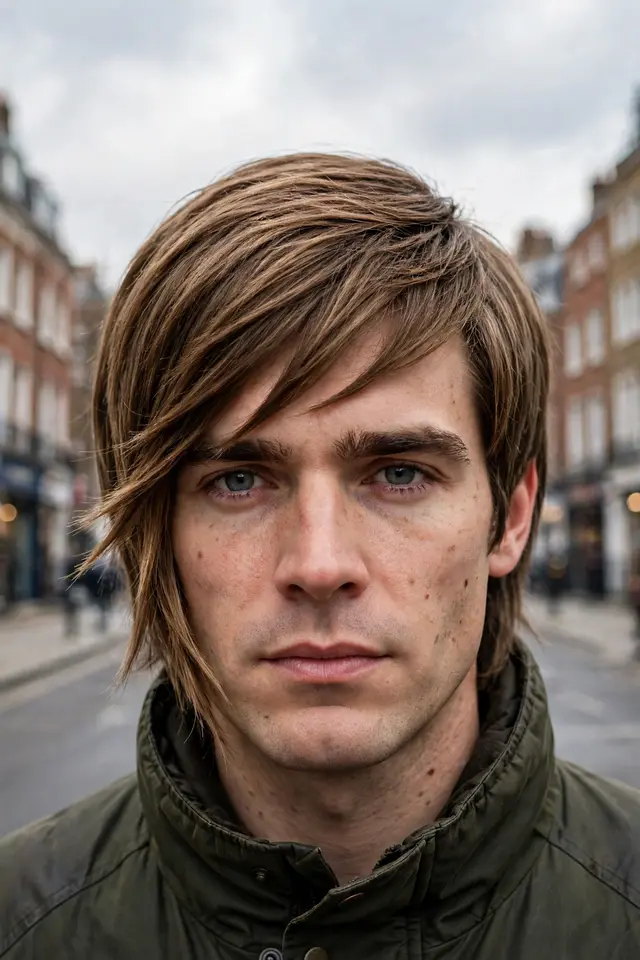
Why is the side-swept fringe the mod cut’s signature detail?
This is the detail the trend reports single out: the fringe swept on a diagonal across the forehead instead of falling straight. The side-swept mod cut keeps length towards the chin at the sides, cuts the fringe into pointed sections, and lets it travel sideways — instantly more movement, and the easiest mod for wavy hair, which wants to travel that way anyway.
Face Shape: The diagonal line is excellent on round faces — it breaks the symmetry and adds angles the face does not supply.
Grooming Kit: Light cream for direction, a vent brush for the sweep, and a dryer to set the diagonal while damp.
Maintenance: Every 4 to 5 weeks. The diagonal needs its longest point kept just clear of the eye.
Barber Script: “Mod cut, fringe cut pointed and swept diagonally to my left, length kept at the sides towards the chin, all scissors.”
Q: Which side should the fringe sweep to?
A: Follow your natural growth — most men’s hair falls easier to one side, and fighting it doubles your morning work. Your barber can find the natural direction in seconds.
Q: Does a side-swept fringe work on straight hair?
A: Yes — the pointed sections give straight hair the broken edge it needs. Set the sweep with the dryer while damp and it holds the diagonal all day.
One diagonal line is the whole difference between a mod and a mop.
4 of 20 — The Textured Mod Cut
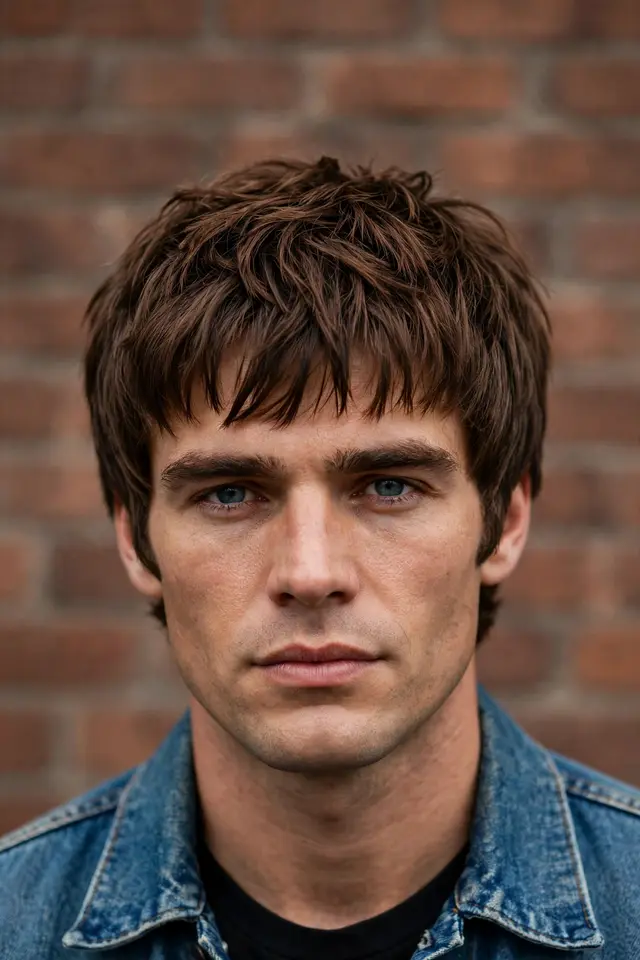
How much texture can a mod cut take before it stops being a mod?
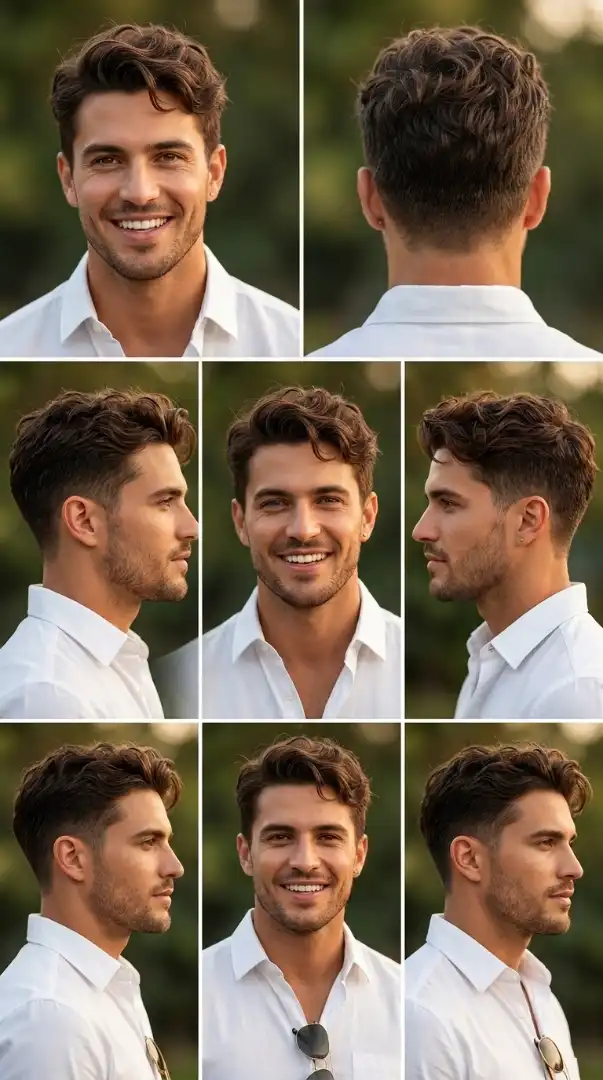
Plenty — as long as the outline survives. The textured mod cut point-cuts and razor-finishes the layers so the top separates into visible pieces, while the rounded mod silhouette, full fringe and ear-covering sides stay intact underneath. It is the mod for men who found the classic too neat, and the easiest mod to style because the texture does the work.
Face Shape: Universal. The separation on top adds height that balances round and wider faces.
Grooming Kit: Sea salt spray for grit, matte clay for piece definition, and no comb — fingers only.
Maintenance: Every 4 weeks keeps the pieces crisp; texture blurs as it grows, so do not stretch past 5.
Barber Script: “Textured mod — keep the mod outline, but point-cut the layers hard and finish the ends with a razor. Fringe broken, sides scissored.”
Q: Will heavy texture make my mod look like a shag?
A: Only if the outline goes too. Keep the rounded shape and ear-length sides and it reads mod; let the back grow long and layered and you have crossed into shag territory.
Q: How do I style a textured mod in two minutes?
A: Salt spray on damp hair, dry it forward with your fingers, then pinch the ends with a little clay. The pieces should look separated, never spiky.
The outline says mod; the pieces say you actually live in it.
5 of 20 — Mod Cut with a Low Taper

Can a mod cut have a taper and still be a mod?
Purists say scissors only — but this hybrid is the version many barbers actually cut now. The mod cut with a low taper keeps the layered top, full fringe and most of the side length, then cleans just the edges: a soft low taper around the ears and neckline. You lose a little sixties purity and gain a cut that still looks sharp in an office.
Face Shape: Square and oval faces suit the cleaner edges; the fringe keeps the mod softness up front.
Grooming Kit: Matte paste, a comb for the fringe line, and a dryer for volume at the front.
Maintenance: The taper wants refreshing every 3 to 4 weeks even though the top could go five — book for the edges.
Barber Script: “Mod on top — layers and a full fringe — with a soft low taper just around the ears and neckline. Keep the side length above the taper.”
Q: Does the taper ruin the mod shape as it grows out?
A: No — a low taper grows out softer than any fade. By week four it simply looks like a scissor-cut mod again, which is the hybrid’s hidden advantage.
Q: Is a mod with a taper appropriate for work?
A: It is the most office-safe mod in this guide. The tidy edges read professional while the top keeps the character that makes the cut worth having.
The compromise cut — mod character on top, clean edges where the boss looks.
6 of 20 — The Long Mod Cut

How long can a mod cut go before it becomes a flow?
Longer than most men expect. The long mod cut pushes the side sections down towards the chin and lets the top fall well past the brows, while the internal layering and pointed fringe keep it reading as a mod rather than a grown-out flow. It is the most dramatic version in the family — and the one that needs the most honest upkeep conversation.
Face Shape: Long and oval faces wear it best; the chin-length sides add width that shorter faces can find swamping.
Grooming Kit: Leave-in conditioner, a wide comb, and cream for the ends — long layers dry out faster than short ones.
Maintenance: Ends trimmed every 5 to 6 weeks. The shape forgives, but split ends punish — skip trims and it turns scraggly.
Barber Script: “Long mod — keep the length at the sides towards the chin, layer it internally, fringe pointed and past the brows. Just clean the ends.”
Q: How long does it take to grow into a long mod?
A: From a standard mod, about three to four months. From a short crop, plan on most of a year with shaping cuts every six weeks so it looks deliberate throughout.
Q: Does long hair at the sides suit older men?
A: Yes, in silver it is one of the most distinguished looks in this guide — the length reads intentional, and the fringe covers a retreating hairline better than any short cut.
The full-commitment mod — maximum length, maximum presence.
7 of 20 — The Short Mod Crop
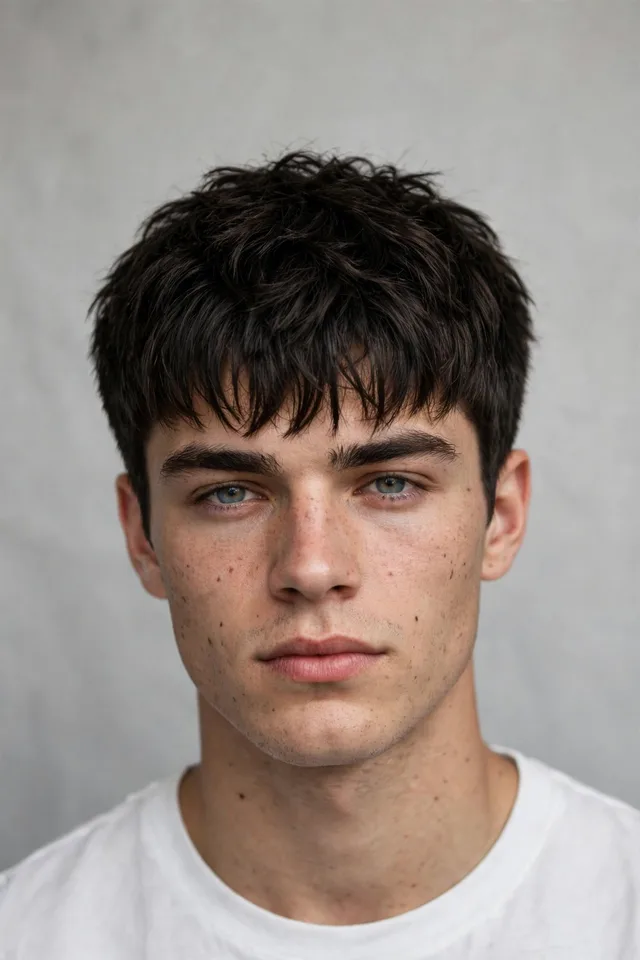
What is the mod crop — the version some are calling the haircut of the year?
The mod translated to crop length. The short mod crop keeps finger-length texture on top, a soft broken fringe, and a clean taper — but the proportions, the forward fall and the piecey front are pure mod rather than Caesar. Trend writers have called its cousin, the modern mod crop, the haircut of the year, and barbers quote it as their most requested short cut because it grows out beautifully.
Face Shape: Square and heart-shaped faces suit the short proportions; the soft fringe keeps it from reading severe.
Grooming Kit: Matte clay and fingers. This cut was designed to need almost nothing else.
Maintenance: Every 3 to 4 weeks — short cuts show growth fastest, though the soft edges forgive a late booking.
Barber Script: “Mod crop — finger-length on top with heavy texture, soft messy fringe, clean taper but no skin. Forward fall, mod proportions.”
Q: How is a mod crop different from a French crop?
A: The French crop’s fringe is blunt and straight. The mod crop’s fringe is longer, pointed and piecey, and the top carries more layered movement — same family, different finish.
Q: Is the mod crop good for thinning hair?
A: One of the best short options — the forward fall and texture disguise a light crown, and short sides keep the contrast low so thin areas show less.
The gateway mod: crop convenience, mod character.
8 of 20 — Mod Cut for Thick Hair

How do you stop a thick-haired mod from turning into a helmet?
Weight removal, done invisibly. A mod cut for thick hair keeps the full outline and fringe but carves the bulk out from inside — internal layers, sliced ends, and thinned side sections that still cover the ears. Done right, thick hair is actually the mod’s best raw material: the fringe falls full and the shape holds all day.
Face Shape: All faces — the win here is proportion. Removing bulk narrows the silhouette so the head never looks wider than it is.
Grooming Kit: A light cream only. Thick hair needs control at the ends, not hold at the roots, and heavy wax just adds weight back.
Maintenance: Every 4 weeks. Thick hair regains its bulk fast, and the helmet effect returns from the inside out.
Barber Script: “Mod cut, but take the weight out internally — slice the ends, thin the sides inside, keep the outline and full fringe. No helmet.”
Q: Will thinning shears damage thick hair?
A: Used inside the cut, no — they remove bulk where it hides. Problems start when shears are dragged through the fringe line, which leaves it wispy. Keep the fringe scissor-cut only.
Q: My thick hair grows out as fast as it grows long — any fix?
A: Ask for the sides taken slightly shorter inside the shape. The outline still covers the ears, but the regrowth has further to travel before it pushes the shape out.
Thick hair is not the obstacle to a mod — it is the ideal material for one.
9 of 20 — Mod Cut for Fine Hair
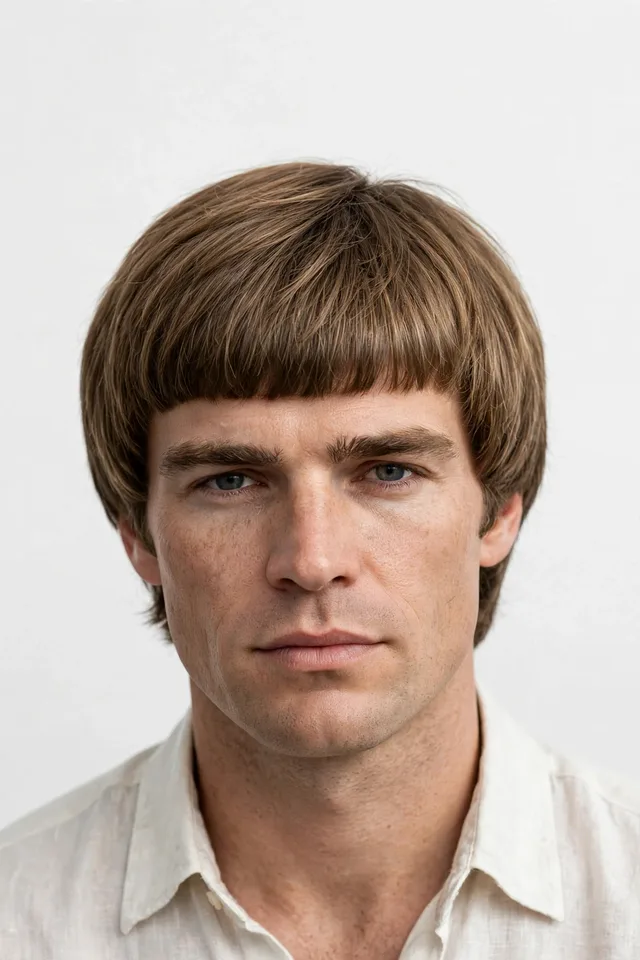
Can fine hair hold a mod cut without collapsing?
Yes — if the fringe does the heavy lifting. A mod cut for fine hair keeps the layers longer and blunter than usual, because every short layer steals visible density. The full fringe creates the impression of thickness at the front, light texture at the ends adds separation, and the sides stay scissored so nothing looks stringy.
Face Shape: Oval and longer faces benefit most; the full fringe shortens the face visually and frames it with apparent density.
Grooming Kit: Volumising mousse on damp hair, a dryer lifting at the roots, and the lightest matte paste you can find — heavy product is fine hair’s enemy.
Maintenance: Every 4 to 5 weeks, and do not let a barber over-layer it between visits. Length is density for fine hair.
Barber Script: “Mod for fine hair — keep the layers long and blunt, full fringe, minimal layering, scissors only. I need the weight left in.”
Q: Should fine hair avoid the mod’s long sides?
A: Mostly, yes. Chin-length sides can look thin and separate. Keep the sides just over the ears where fine hair still reads full, and the shape stays convincing.
Q: What styling mistake collapses a fine-hair mod fastest?
A: Wet-look or heavy products. They clump fine strands into strings and show scalp. Dry, matte, and minimal is the whole game.
Fine hair’s mod is built on what you refuse to cut away.
10 of 20 — The Wavy Mod Cut

Why does wavy hair make the mod cut look effortless?
Because the wave does the texturing for free. A wavy mod cut follows the hair’s natural S-bend: layers cut to sit where the wave breaks, a fringe that falls in soft separated curves, and sides that move instead of lying flat. It is the lowest-effort mod in the guide — and for many men, the best-looking one.
Face Shape: Round faces gain from the wave’s height at the crown; square faces are softened by the moving outline.
Grooming Kit: Curl cream or light leave-in, a diffuser if you dry it, and otherwise hands off — wavy hair punishes over-touching with frizz.
Maintenance: Every 5 weeks. Waves forgive growth better than any other texture, and the shape relaxes instead of collapsing.
Barber Script: “Wavy mod — cut it dry if you can, layer to the wave, fringe left to fall in its own curves. No straightening, no blunt lines.”
Q: Should a wavy mod be cut wet or dry?
A: Dry, ideally. Waves spring up when they dry, and a wet cut that looks perfect in the chair can dry two inches shorter and a different shape entirely.
Q: How do I stop my wavy mod frizzing by afternoon?
A: Cream on soaking-wet hair, then do not touch it while it dries. Most frizz is created by hands and towels, not by the hair itself.
The wave is the texture, the movement and the styling — your only job is not to fight it.
11 of 20 — The Curly Mod Cut
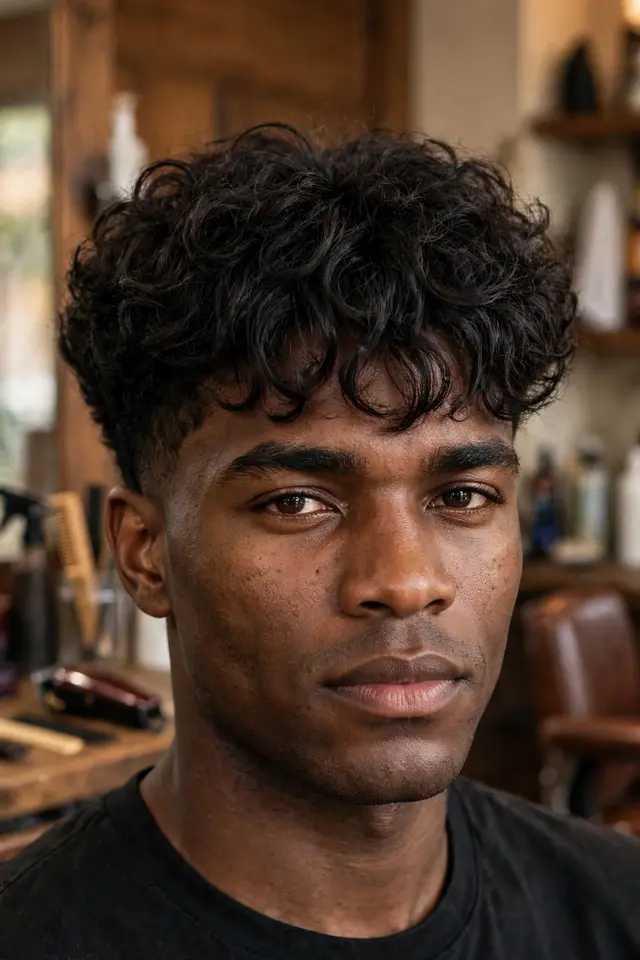
How do curls change the mod cut’s shape?
They round it — gloriously. A curly mod cut leaves the curls long and layered on top so they form the mod’s rounded outline naturally, with a fringe of loose curls instead of a straight curtain and scissored sides kept shorter so the silhouette holds. It is proof the mod was never only a straight-hair cut.
Face Shape: Longer faces suit the width curls add at the sides; round faces should keep the sides tighter to avoid doubling the roundness.
Grooming Kit: Curl cream, a wide-tooth comb used only in the shower, and a diffuser. Brushes are banned — they explode the shape.
Maintenance: Every 5 to 6 weeks. Curls hide growth well, but the outline eventually turns triangular and needs its layers back.
Barber Script: “Curly mod — cut it dry, curl by curl if needed. Rounded layered outline, curl fringe at the front, sides scissored shorter. No thinning shears.”
Q: Why must a curly mod be cut dry?
A: Curls shrink as they dry — sometimes by half their wet length. A dry cut shows the barber the true outline, so the fringe lands where you actually wear it.
Q: Can I straighten the fringe for a classic mod look?
A: Occasionally, with heat protection — but daily heat will damage the curl pattern and the fringe will fight you by midday. The curl fringe is the look; own it.
Curls were always going to round the mod — this version just lets them.
12 of 20 — Mod Cut with a Beard
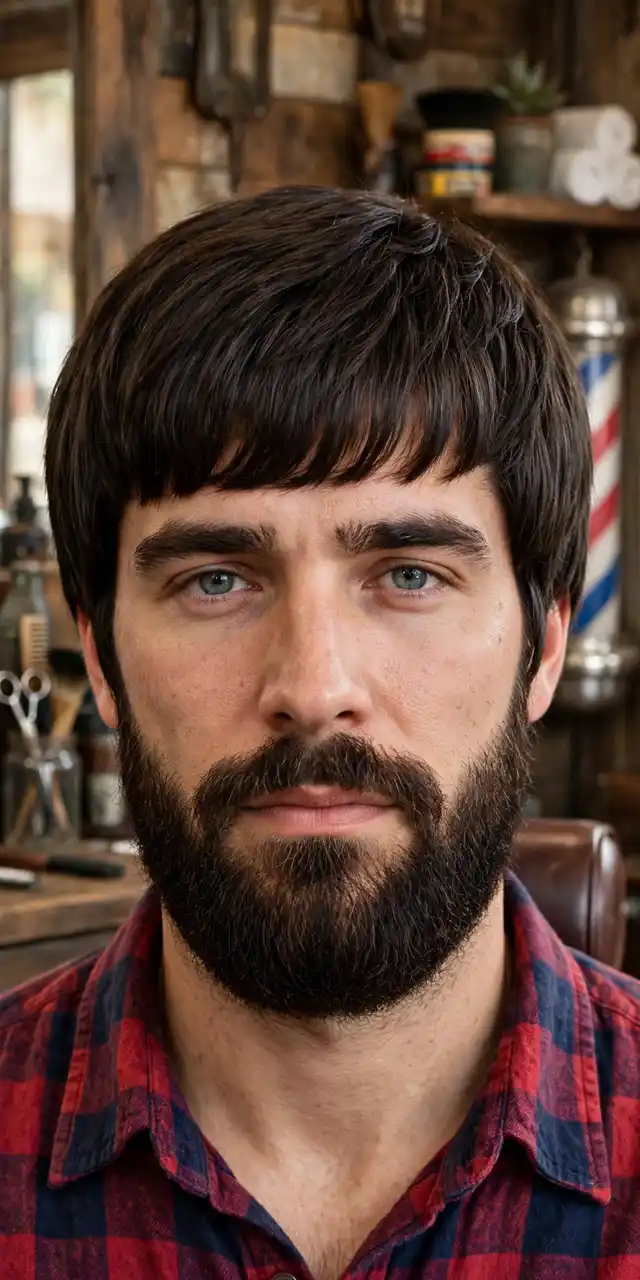
How do you balance a mod cut with a full beard?
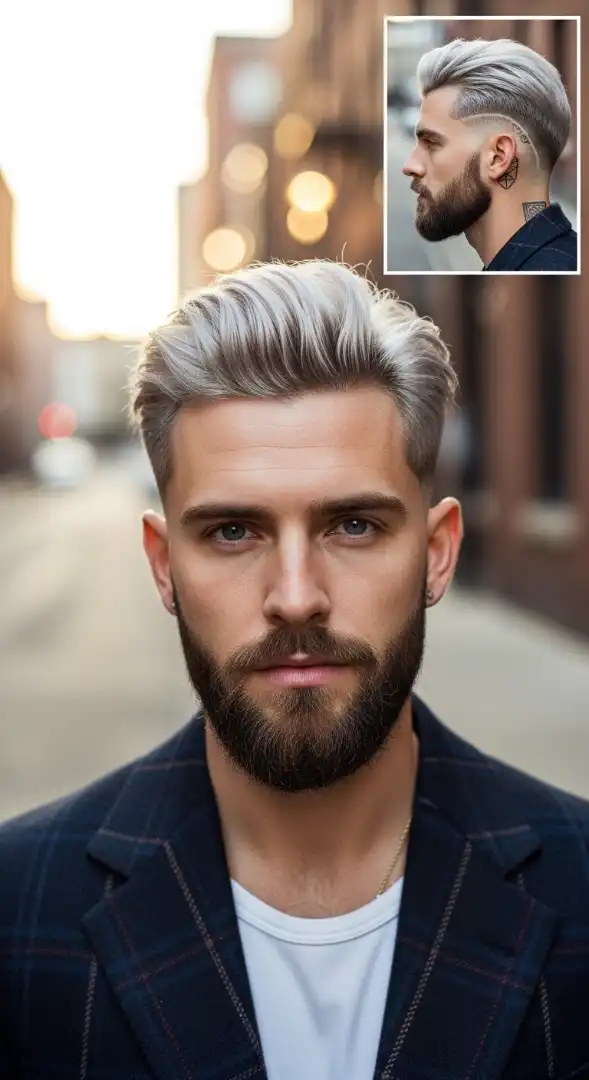
By treating them as one silhouette. A mod cut with a beard pairs the soft, layered top and full fringe with a beard kept groomed and shaped — the fringe frames the top of the face, the beard frames the bottom, and the clean cheek and neck lines keep the middle from disappearing. Keep the beard’s edges sharp; the contrast between soft hair and precise beard lines is the whole effect.
Face Shape: Round faces gain the most — the beard adds the jaw definition while the fringe shortens the face from above.
Grooming Kit: Beard oil and a boar brush join the usual light cream. The mod top stays matte so the beard’s healthy sheen reads as the feature.
Maintenance: Hair every 4 to 5 weeks; beard lines weekly at home, full beard shape at the same barber visit as the hair.
Barber Script: “Mod cut — layers, full fringe, sides over the ears — and shape the beard to match: clean cheeks, defined neckline, length kept through the chin.”
Q: How long should the beard be with a mod cut?
A: Medium and groomed suits best — enough length to frame the jaw, never so wild that it fights the fringe for attention. The hair is the statement; the beard is the frame.
Q: Does a beard change which mod version suits me?
A: Slightly. A full beard adds visual weight low on the face, so keep the mod’s sides a touch shorter and the fringe full — balance, not bulk, at both ends.
Soft on top, sharp at the jaw — the contrast is the style.
13 of 20 — The Britpop Mod
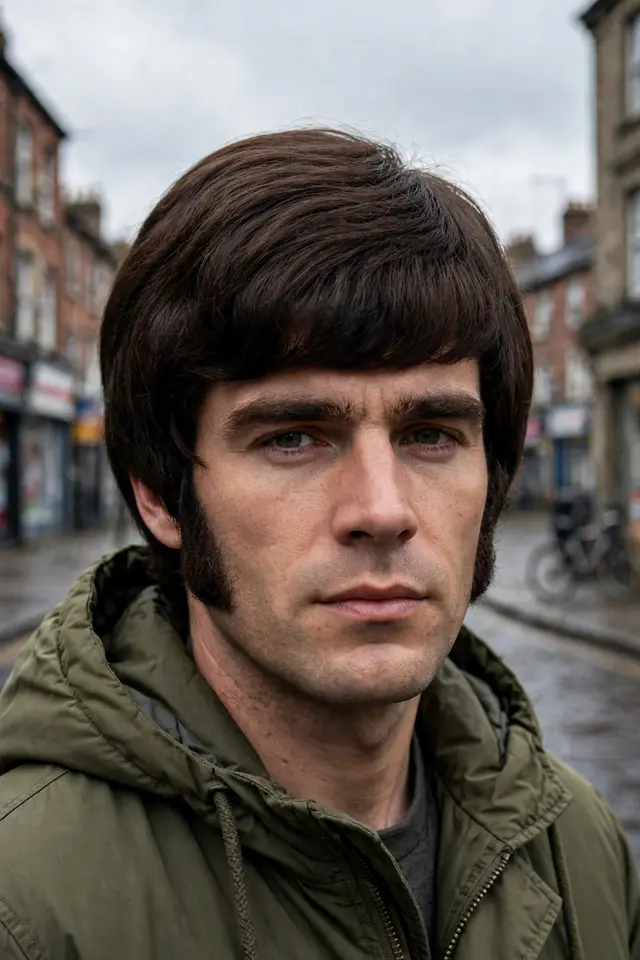
What makes the Britpop mod different from the sixties original?
Attitude and weight. The Britpop mod — the Gallagher shape that the Oasis reunion dragged back into barbershops — is rounder and heavier than the sixties cut: a thick fringe worn low, long sideburns, and sides that hug the head with more length and less polish. It is the classic mod after a night out, and deliberately so.
Face Shape: Oval and square faces carry the heavy fringe; the low brow line shortens longer faces usefully.
Grooming Kit: Almost nothing — a little cream through the ends. Over-styling a Britpop mod kills exactly what makes it work.
Maintenance: Every 5 weeks. It is meant to look slightly grown-in, so it forgives — but the fringe must stay out of the eyes.
Barber Script: “Britpop mod — heavy rounded shape, thick fringe worn low, long sideburns, sides long and hugging. Gallagher, not Carnaby Street polish.”
Q: Is the Britpop mod just an unstyled classic mod?
A: No — it is cut heavier, with a thicker fringe section and more weight left in the sides. An unstyled classic looks soft; a Britpop mod looks dense. The difference is in the cutting, not the morning routine.
Q: What clothes does the Britpop mod actually suit?
A: It grew up with parkas, polos and trainers, and still reads best with casual layers. With a suit it looks like a deliberate clash — some men want exactly that.
The mod with its collar up — heavier, lower, and in no hurry to tidy itself.
14 of 20 — The Messy Mod Cut

How messy can a mod cut get before it stops reading as a mod?
Messier than the classic, tidier than a shag. The messy mod cut keeps the rounded outline and ear-length sides but dishevels everything inside them: fringe pushed in pieces, layers separated and lifted in different directions, a matte finish that looks slept-in on purpose. It is the modern mod’s rebellious sibling.
Face Shape: Universal — the disorder distracts from any single feature, which is why it flatters almost everyone.
Grooming Kit: Salt spray and matte clay, applied to dry hair in that order. A comb would undo the entire point.
Maintenance: Every 4 to 5 weeks. Mess has a shelf life — past six weeks it stops reading deliberate and starts reading overdue.
Barber Script: “Messy mod — keep the outline, wreck the inside. Point-cut everything, fringe in pieces, texture I can push around with my fingers.”
Q: How do I make it look messy, not unwashed?
A: Wash it, dry it fully, then add the mess with product on clean hair. Messy is a finish applied to clean hair — the texture is placed, not accumulated.
Q: Does the messy mod work in a smart office?
A: In most modern offices, yes — the outline is tidy even when the top is not. For very formal workplaces, the low-taper mod earlier in this guide is the safer cousin.
Order in the outline, chaos in the middle — that ratio is the whole cut.
15 of 20 — Mod Cut for a Receding Hairline

Why is the mod cut one of the best answers to a receding hairline?
Because its signature is a full forward fringe — the exact feature that covers retreating temples. A mod cut for a receding hairline brings layered hair forward from further back, points the fringe so it sits naturally over the corners, and keeps the sides soft so there is no harsh contrast line pointing at the hairline.
Face Shape: All faces benefit; men with longer foreheads gain the most, since the fringe restores proportions a short cut cannot.
Grooming Kit: Light matte paste only — anything wet or shiny thins the fringe visually and shows scalp. Dry texture is camouflage.
Maintenance: Every 4 weeks. The coverage depends on the fringe’s length and weight, and both drift as it grows.
Barber Script: “Mod cut — bring the fringe forward from further back, point it over the temples, keep the sides scissored and soft. No fade near the hairline.”
Q: Will a fringe look like I am hiding something?
A: Not if it is cut as a mod — the fringe is the style’s signature, worn by men with perfect hairlines too. It reads as fashion first and camouflage second, which is exactly the order you want.
Q: How far back can the fringe start from?
A: A skilled barber can build the fringe from hair two to three inches behind the hairline. Beyond that, the top gets too thin to lend — ask honestly and a good barber will tell you where the limit is.
The fringe was the mod’s signature long before it was anyone’s solution — wear it as the first.
16 of 20 — The Centre-Part Mod

What happens when the mod cut opens in the middle?
It meets the curtain halfway. The centre-part mod keeps the layered mod shape and ear-covering sides but opens the fringe down the middle, so the front falls in two soft curtains instead of one sweep. It keeps the mod’s outline while borrowing the middle part’s face-framing symmetry — a genuine hybrid, not a compromise.
Face Shape: Oval faces suit the symmetry best; the open front lengthens round faces usefully.
Grooming Kit: Light cream and a dryer to train the part while damp. A centre part is a habit the hair learns over about two weeks.
Maintenance: Every 4 to 5 weeks. The two curtains must stay balanced — uneven growth shows faster in a parted fringe.
Barber Script: “Mod cut with a centre part — layers and length at the sides, fringe opened down the middle into two curtains. Pointed ends, no blunt line.”
Q: My hair has never had a centre part — will it stay?
A: For the first week it will try to close. Dry it parted, wear it parted, and the growth direction adapts. By the second week it falls open on its own.
Q: Centre-part mod or curtain haircut — what is the difference?
A: Length and outline. A curtain cut is usually longer and looser all over; the centre-part mod keeps the mod’s rounded, structured shape and ear-length sides underneath the parted front.
Two curtains, one outline — the mod learns to open at the front.
17 of 20 — The Grown-Out Mod

Is the grown-out mod a style or just a stage?
A style — if it was cut as a mod first. The grown-out mod is the same layered shape four to eight weeks past its trim: fringe below the brows, sides well over the ears, everything softer and longer. Because the original layering was internal, it grows into this instead of collapsing into a shapeless mop — which is why barbers praise the mod’s grow-out more than any other cut’s.
Face Shape: All faces. The extra length adds softness everywhere, which forgives strong features.
Grooming Kit: Leave-in conditioner for the older ends, cream for control, and a wide comb — grown-out layers tangle more than fresh ones.
Maintenance: This IS the maintenance phase — enjoy weeks 4 to 8, then book the reshape before week 9 turns it feral.
Barber Script: “Reshape my grown-out mod — keep the length, rebuild the internal layers, clean the ends, fringe back to just above the eyes.”
Q: How do I keep a grown-out mod looking deliberate, not overdue?
A: Keep the ends clean and the fringe out of your eyes. Those two details are the entire border between grown-out and given-up.
Q: Can I ask for a mod to be cut pre-grown-out?
A: Yes — ask for the long mod earlier in this guide and wear it from day one. Barbers cut it with the extra length built in, so it starts where other mods arrive at week six.
The mod’s best party trick is how good it looks when you do nothing to it.
18 of 20 — The Winter Mod Cut

How do you winter-proof a mod cut?
Cut it slightly fuller and style it drier. The winter mod keeps the classic shape but leaves a touch more weight in the sides so the outline survives hats, and relies on matte cream instead of anything wet, because winter air and central heating turn light products to frizz. It is the mod built for coat collars, cold streets and beanie weather.
Face Shape: All faces — the slightly fuller sides add warmth to the silhouette that suits narrower faces especially well in winter layers.
Grooming Kit: Matte cream, a satin-lined beanie (less friction, less static), and a richer conditioner once a week against dry heated air.
Maintenance: Every 5 weeks through winter. The fuller cut forgives, and nobody’s fringe behaves under a hat anyway — revive it with damp fingers, not more product.
Barber Script: “Winter mod — classic shape, a touch fuller at the sides for hat weather, fringe pointed. It has to survive a beanie and a coat collar.”
Q: How do I fix beanie-flattened mod hair in ten seconds?
A: Dampen your palms, push the fringe and top back into place with your fingers, and let it air-set. Water reactivates the morning’s product — adding more just builds up.
Q: Does winter change how often I should wash a mod?
A: Most men can wash less in winter — two to three times a week with conditioner between. Dry air already strips moisture; daily shampooing makes the fringe brittle and static-prone.
Built for the season it is trending in — fuller sides, drier finish, hat-proof shape.
19 of 20 — Mod Cut with Long Sideburns
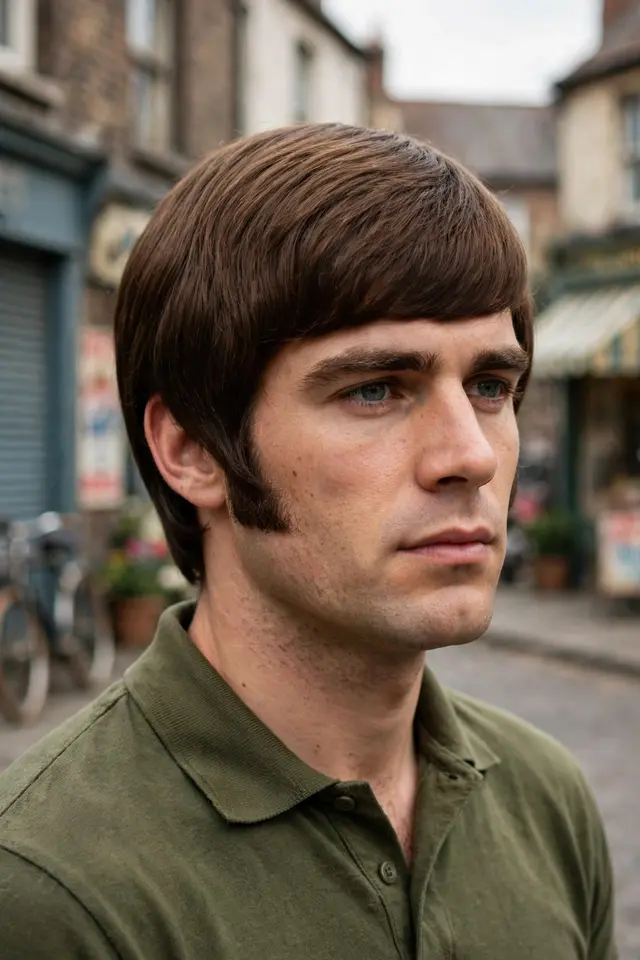
Why do long sideburns finish a mod cut so well?
Because the mod was designed around them. Long sideburns — worn to the mid-ear or lower, cut pointed — extend the mod’s side sections and frame the jaw in one unbroken line from fringe to chin. It is a small detail that changes the whole read of the cut from neat to unmistakably mod.
Face Shape: Longer faces should keep sideburns at mid-ear; square faces can take them lower, where they lengthen the jaw line elegantly.
Grooming Kit: A detail trimmer for the points, and the discipline to keep them level — uneven sideburns are visible in every mirror you pass.
Maintenance: Points tidied at home weekly; the full shape returns with the 4 to 5 week haircut.
Barber Script: “Mod cut with long sideburns — to the mid-ear, cut pointed, blended into the side length. Check them level before I leave.”
Q: How long is too long for mod sideburns?
A: Past the earlobe you have left mod territory for seventies rock. Mid-ear is the classic mod point; the bottom of the ear is the boldest you can go and stay in the family.
Q: Do long sideburns work with a beard?
A: They merge into one — grow the sideburns into the beard’s line and the whole side of the face becomes one framed shape. Keep the join clean and it looks tailored, not shaggy.
Two pointed details at the ears — the smallest change with the loudest effect.
20 of 20 — The Mod King
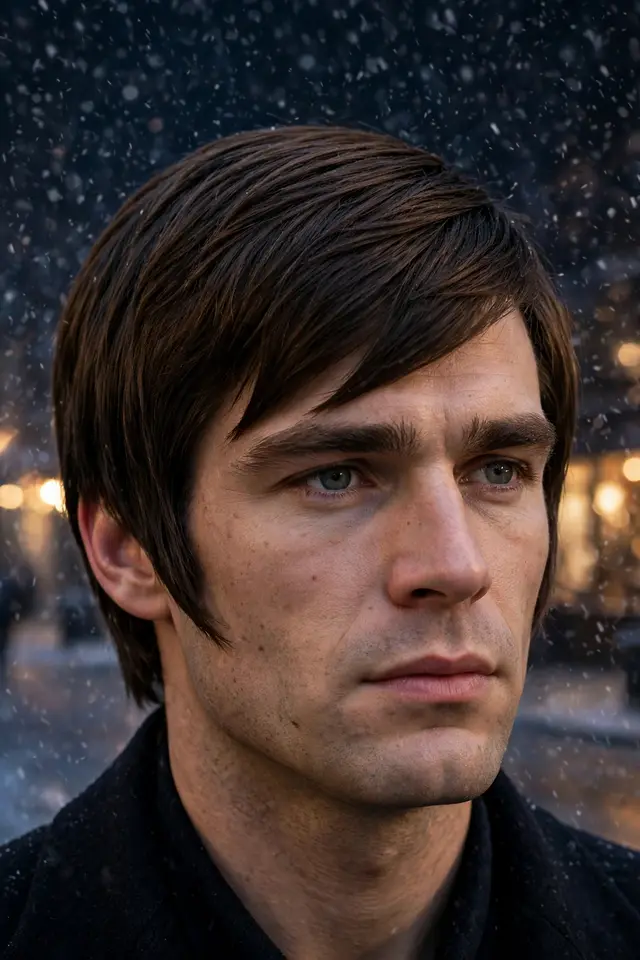
What does the complete mod cut look like with every rule obeyed?
Everything in this guide, obeyed at once. The Mod King is a fully scissor-cut shape: pointed fringe sections swept on a slight diagonal, internal layering building a rounded outline, side sections falling towards the chin, pointed sideburns, and a natural matte finish with not a clipper mark in sight. It is the reference photo — the one to save and hand to your barber.
Face Shape: The complete package flatters oval and square faces most, but every element adjusts — the diagonal, the side length and the fringe weight are all dials your barber can turn.
Grooming Kit: The full small kit: light cream, matte paste for the pieces, a vent brush, and a dryer. Five minutes, no more.
Maintenance: Every 4 to 5 weeks, religiously. A reference cut only stays a reference while its proportions are fresh.
Barber Script: “The full mod — all scissors, pointed diagonal fringe, internal layers, sides towards the chin, pointed sideburns, natural finish. Nothing clipped, nothing blunt.”
Q: What should I show my barber to get the Mod King?
A: This photo, plus the script above. A complete reference image and the five technical points — scissors only, pointed fringe, internal layering, side length, natural finish — leave nothing to interpretation.
Q: How much does a proper mod cut cost?
A: Expect a scissor-cut price, not a clipper-cut price — in most cities roughly the cost of a premium barber visit, and more in major metros. Twenty styles in this guide all need a barber confident with scissors; that skill is what you are paying for.
Every rule, one head — this is the photo to save.
The Bottom Line
The mod cut’s return is not nostalgia — it is a correction. After a decade of skin fades and hard lines, the most-booked direction in barbershops is a scissor-cut shape with a real fringe, real side length and texture that moves. Whether you take the classic blueprint, the softer modern version, the Alexim side-swept signature, the Britpop heavyweight or the crop-length gateway, the family rules stay the same: pointed sections, internal layers, nothing blunt, nothing clipped to skin.
Pick by your hair first and your face second — thick hair wants its weight carved out, fine hair wants its layers kept long, waves and curls want to be cut dry and left alone. Then hand your barber the script under your chosen style and let the scissors do what clippers cannot. And if the mod’s looser relatives call to you, the shaggy hairstyles for men guide and the fringe hairstyles for men guide are the natural next reads.