20 Shaggy Hairstyles for Men: Layered, Textured & Effortlessly Messy Cuts
Every few winters, men’s hair loosens up — and this is that winter. The polished, clipped, product-heavy cuts are giving ground to layers: hair that moves, falls forward, and looks better slightly undone than perfectly placed. At the centre of the shift sits the shag — the layered, feathered, fringe-friendly cut that barbers report rising fastest on booking platforms and trend reports alike, precisely because it asks so little and gives back so much movement.
This guide covers 20 shaggy hairstyles for men built for the cold season: short shags, wavy shags, curly shags, shaggy mullets and grown-out winter layers. Every style comes with the face shapes it flatters, the grooming kit it needs, its upkeep rhythm, and the exact words to say to your barber — plus the winter notes that matter for layered hair: how shags behave under hats, why winter is the strategic season to grow one out, and how to keep layers from going flat in dry indoor air.
If you are weighing the shag’s wilder cousin, our wolf cut hairstyles guide covers the bolder outline; the long hairstyles guide takes length further, and the beanie hairstyles guide covers the cuts that survive winter hats best.
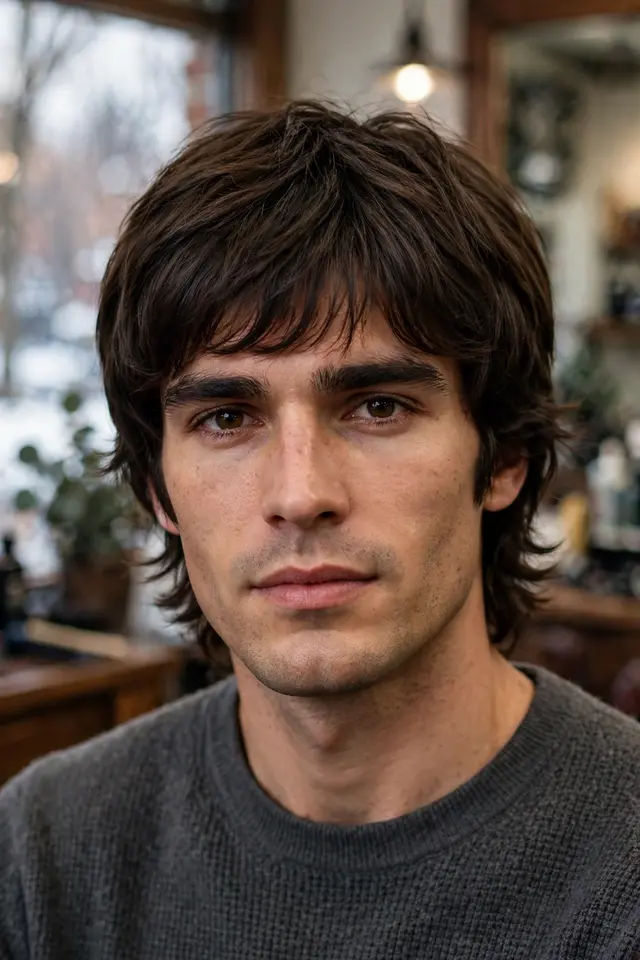
1 of 20 — The Classic Shag
What is the classic shag haircut for men?
The blueprint everything else varies. The Classic Shag stacks shorter layers through the crown over longer layers below, finishes the ends feathered rather than blunt, and wears a soft fringe at the front — a shape built in the 1970s and refined ever since. In winter it earns its keep: the layers sit happily under coats and scarves, and the shape forgives a hat completely, because ‘slightly compressed’ is already its natural state.
Face Shape: The all-rounder — crown volume balances round faces, feathered sides soften square ones.
Grooming Kit: A light mousse or sea salt spray and your fingers. The classic shag predates heavy product and behaves like it.
Maintenance: Every 6–8 weeks — the longest leash in this guide; shags are designed to grow.
Barber Script: “Classic shag — layered crown, feathered ends, soft fringe, length kept at the nape. Movement, not polish.”
The original layered cut — winter just gave it its season back.
Q: Is the shag a high-maintenance haircut?
A: The opposite. It is cut to look good unstyled — layers do the work product does in other cuts. Most men spend under a minute on it: damp hands, a shake, done. The appointments are also the rarest here.
Q: Does the classic shag suit straight hair?
A: Yes, with point-cut layers to manufacture the movement straight hair lacks. Wavy hair wears it most naturally, but a good barber builds the same broken finish into straight hair with the scissors alone.
2 of 20 — The Modern Textured Shag
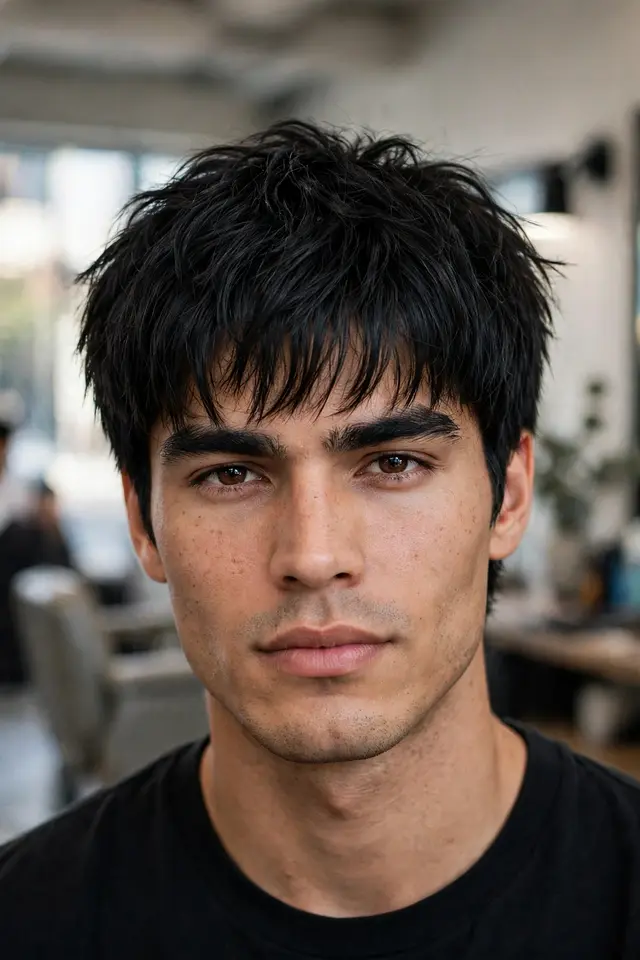
What makes the textured shag haircut the modern barbershop version?
Precision underneath, mess on top. The Modern Textured Shag keeps the classic layered skeleton but adds heavy point-cutting and razor work through the ends, so the surface breaks into visible pieces instead of soft feathers. It is the version Fresha’s booking data calls the ‘textured shag’ — the one rising fastest — because it reads contemporary rather than retro, and pairs with a soft taper at the edges when you want the outline cleaner.
Face Shape: Suits most faces; the piecey surface flatters strong features and busy schedules equally.
Grooming Kit: Matte texture paste, pea-sized, worked through dry hair. Shine is this cut’s enemy.
Maintenance: Every 5–6 weeks; the texture expires before the length does.
Barber Script: “Textured shag — layers through the crown, point-cut and razored ends, soft fringe, tidy taper at the edges only.”
Classic skeleton, broken surface — the shag in modern dress.
Q: Textured shag or classic shag — what is the difference?
A: The finish. A classic shag’s ends are feathered soft; a textured shag’s ends are cut into deliberate visible pieces. Same layers underneath, different surface — textured reads younger and sharper in photographs.
Q: Can a textured shag have a fade?
A: A soft low taper at the edges, yes — many modern versions wear one. A skin fade fights the cut’s logic, though: the shag’s softness needs hair at the edges to melt into.
3 of 20 — The Short Shaggy Cut
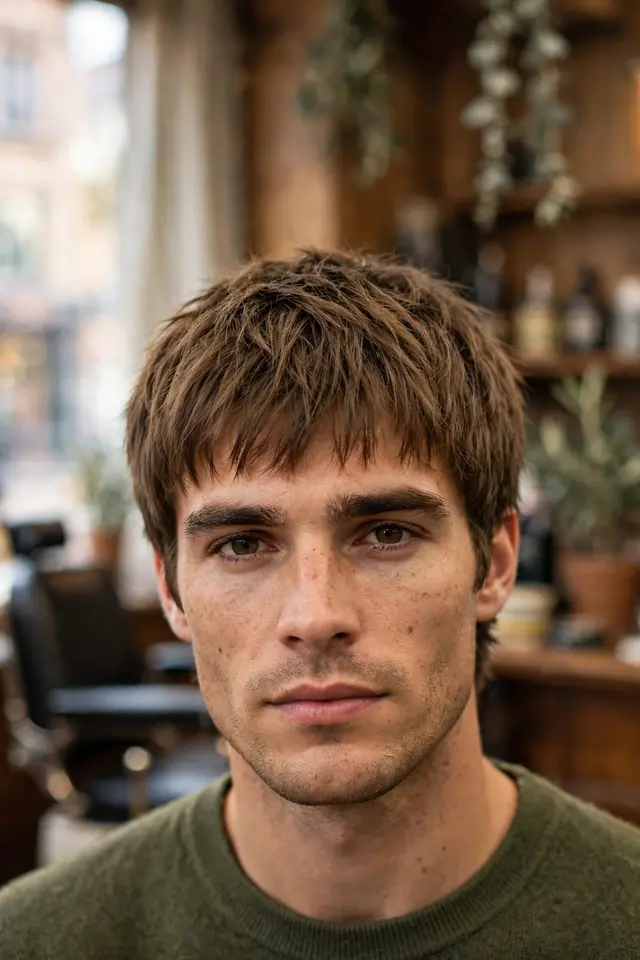
Can a short shaggy haircut keep the shag’s character?
Completely — the shag is a layering idea, not a length. The Short Shaggy Cut keeps the crown layered and the fringe forward but trims the whole thing closer: nape tidy, sides short, ends still broken and piecey. It is the entry point for men leaving crops and crews behind, and winter’s easiest experiment, because if you hate it, you are one ordinary haircut away from home.
Face Shape: Kind to most faces; the forward fringe shortens long faces and softens strong brows.
Grooming Kit: A fingertip of matte paste on the days you care; nothing on the days you don’t.
Maintenance: Every 4–5 weeks — shorter shags show growth sooner than their longer brothers.
Barber Script: “Short shag — layered top, broken ends, forward fringe, keep it close at the nape and sides.”
All the movement, half the commitment — the shag’s front door.
Q: How short can a shag go before it becomes a crop?
A: When the layers disappear. A shag needs at least two visible layer lengths — shorter crown over longer lower sections. Take it below roughly two inches on top and you are wearing a textured crop, which is a fine cut, just a different one.
Q: Is a short shag a good first step toward longer hair?
A: The best one. It teaches you how your hair behaves layered and longer at the front, without the awkward months a full grow-out demands. Winter is the kind season to start — hats cover the experiment.
4 of 20 — The Tousled Wavy Shag
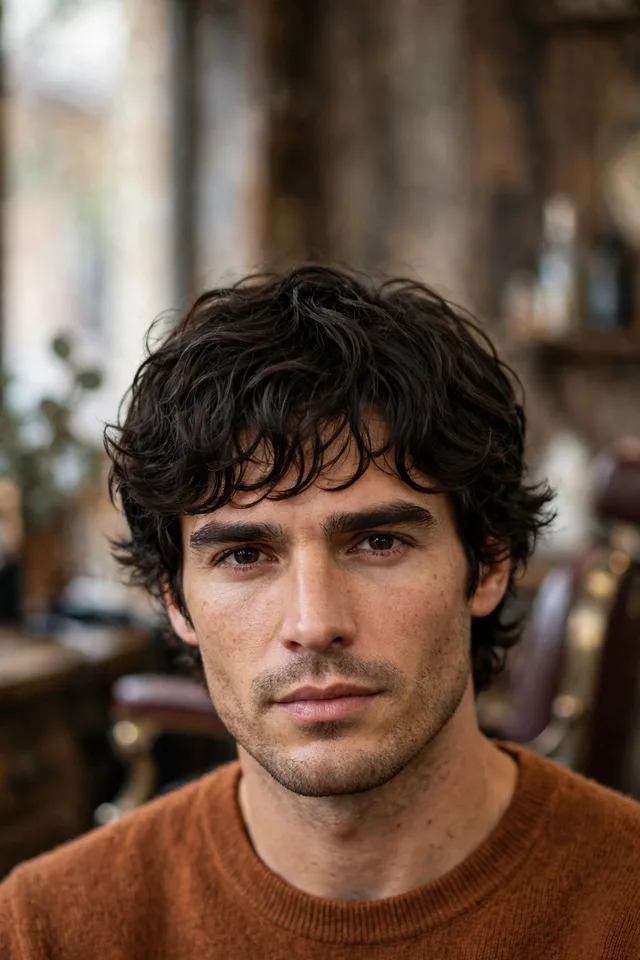
Why does a wavy shag haircut wear the style best?
Because the wave does half the cutting’s work. The Tousled Wavy Shag keeps medium length so the natural S-bend can show, layers cut to follow the wave rather than fight it, and a fringe that falls in loose pieces. Wavy hair’s movement is built in, so this version needs the least product and survives winter hats best of all — compression is just a pause the wave recovers from the moment the hat comes off.
Face Shape: Excellent on long and angular faces; the soft volume gentles everything it frames.
Grooming Kit: Sea salt spray or a light curl cream — never heavy wax, which flattens the wave you kept the length for.
Maintenance: Every 6 weeks; wavy hair hides growth and hat friction better than straight hair does.
Barber Script: “Wavy shag — medium length, layers that follow the wave, soft fringe, nothing clipped harsh.”
The wave is in the hair — the cut just lets it speak.
Q: How do I refresh a wavy shag after a hat without washing?
A: Damp palms — not wet — pressed through the top, then leave it completely alone for two minutes while the wave resets. Touching mid-dry is what invites frizz, at any length.
Q: Should wavy shags be cut wet or dry?
A: Dry, ideally — waves shrink and sit differently dry, and a wet cut guesses the final shape. Barbers who work with texture will usually cut wavy hair dry without being asked.
5 of 20 — The Shaggy Fringe
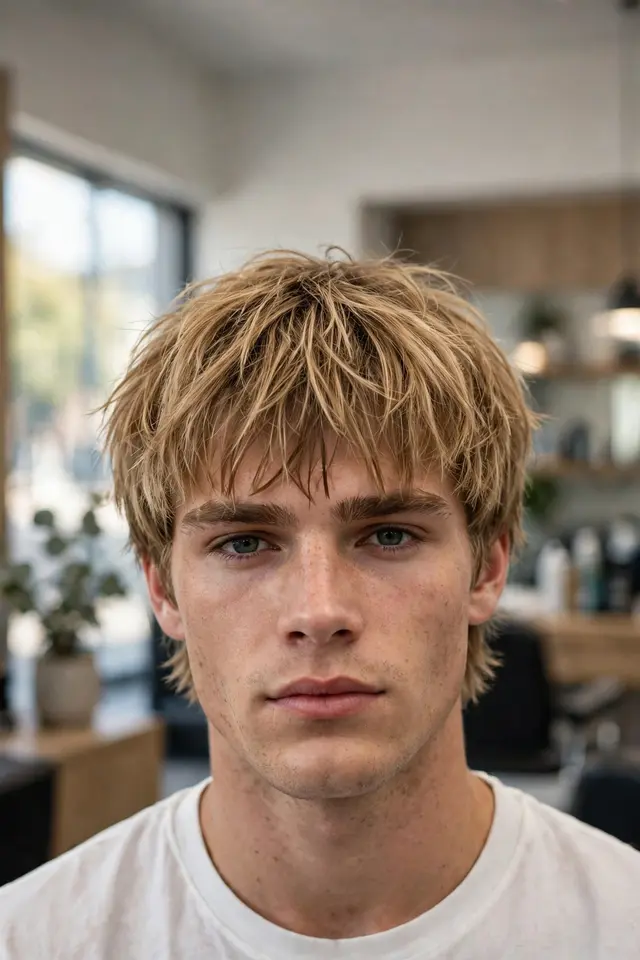
What does a shaggy fringe haircut add to the cut?
A front that does the talking. The Shaggy Fringe keeps the layered shag body but gives the fringe the starring role: longer, broken, falling in loose uneven pieces across the forehead. It is the Gen-Z engine inside this guide — the fringe family is the most-requested shape in barbershops right now — softened here into something a grown man wears without costume. Winter bonus: a fringe is the one part of a haircut a beanie improves, pressing it into place.
Face Shape: Flatters long faces and high foreheads most — the fringe shortens and balances both.
Grooming Kit: Matte paste, fingertip-sized, and a light touch. Fringe styling is a ten-second job or it is overdone.
Maintenance: Fringe trim every 3–4 weeks; the perimeter is the whole look, the rest can stretch to 6.
Barber Script: “Shaggy fringe — layered shag body, fringe long and broken falling forward, tapered edges.”
The fringe leads, the layers follow — winter’s most-asked front.
Q: Shaggy fringe or Edgar fringe — what is the difference?
A: Edges. An Edgar’s fringe is blunt, straight and lined-up sharp; a shaggy fringe is broken, piecey and soft. The Edgar is a statement of precision; the shaggy fringe is a statement of ease. Choose by temperament.
Q: Does a fringe suit a receding hairline?
A: A forward, textured one can soften early recession honestly — it covers nothing, it just changes what the eye reads first. Keep it broken and matte; a heavy, straight fringe draws the very line you are softening.
6 of 20 — The Curly Shag
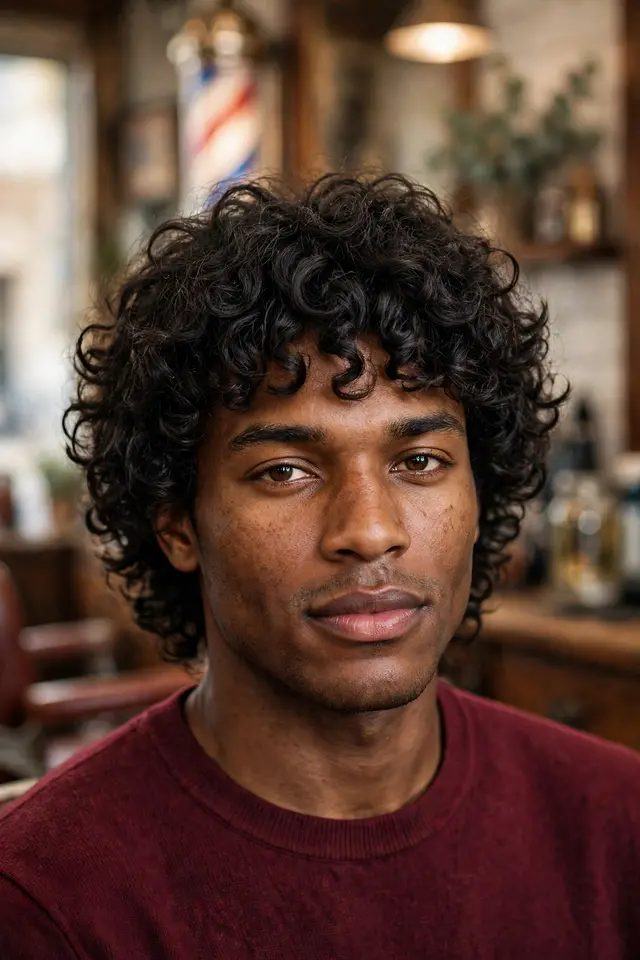
What happens when a curly shag haircut meets winter?
Volume with architecture. The Curly Shag layers curls so each coil sits in its own space — crown shorter, lengths longer below — instead of stacking into a triangle. Curls compress under a winter hat and spring back on release, and the layered shape means the spring-back lands in formation. It is the shag’s most joyful version in summer, and winter adds dry heated air as its one enemy — moisture is the whole management plan.
Face Shape: Superb on square and angular faces; the volume softens what the jaw sharpens.
Grooming Kit: Curl cream, a wide-tooth comb for detangling only, and water in a spray bottle for morning resets.
Maintenance: Shape every 6–8 weeks; moisturise daily through winter — heated air is ruthless with curls.
Barber Script: “Curly shag — layers that follow the curl pattern, cut dry, fringe left to spring where it wants.”
Curls, layered into architecture — every coil in its own space.
Q: How do I stop a beanie turning my curls into a frizz triangle?
A: Take it off, tip your head upside down, spritz with water and scrunch upward with your palms. Never brush dry curls after a hat — brushing is what builds both the frizz and the triangle.
Q: Should curly shags be cut on wet or dry hair?
A: Dry, always — curls shrink unpredictably, and a wet cut guesses the shape. Any barber who works with curls cuts them dry; if yours reaches for the spray bottle first, consider it information.
7 of 20 — The Long Shag

Who should wear a long shag haircut?
The man growing with intent. The Long Shag takes the layered structure to full length — past the ears, toward the collar — with layers throughout so the length moves instead of hanging. Winter is historically its season: scarves and coats frame long layers like nothing else, and cold dry air keeps long hair smoother than summer humidity ever does. This is the shag at full statement, and it knows it.
Face Shape: Suits oval and long faces best; side volume balances narrow features kindly.
Grooming Kit: A rich conditioner, a wide comb, and a drop of oil for the ends — long layered hair is the driest hair here.
Maintenance: Ends and shape every 8 weeks; the style itself asks only for a comb and confidence.
Barber Script: “Long shag — keep the length, layers throughout so it moves, ends cleaned, fringe at brow length.”
Length with layers is a style; length without them is just waiting.
Q: How long does it take to grow a long shag?
A: From a medium cut, roughly six to nine months to collar-skimming layers. Winter is the strategic season to grow — hats hide every awkward stage that makes men quit in spring.
Q: Does a long shag suit thinning hair?
A: Honestly, it is the riskiest pick here for advanced thinning — length separates and shows scalp. Early thinning with good density can wear a medium shag well; beyond that, the shorter layered cuts in this guide will serve you better.
8 of 20 — The Shaggy Mullet

How does a shaggy mullet differ from a modern mullet?
Softness at every edge. The Shaggy Mullet keeps the mullet’s short-front, long-back outline but replaces the modern mullet’s crisp tapers with shag layers throughout — the back falls in feathered pieces instead of a clean curtain, and the fringe is broken rather than cropped. It is the mullet for men who want the silhouette without the severity, and winter — mullets still rising on every trend report — keeps it current.
Face Shape: The back length lengthens short faces; oval faces carry the full drama easily.
Grooming Kit: Sea salt spray and fingers. This cut dies under precision styling.
Maintenance: Every 5–6 weeks; the back’s layers fray first, keep them honest.
Barber Script: “Shaggy mullet — short layered front, feathered length at the back, no harsh taper, fringe broken.”
The mullet’s outline, the shag’s manners — drama without severity.
Q: Shaggy mullet or modern mullet — which is easier to wear to work?
A: The shaggy one, for most offices. Its soft edges read as ‘layered medium hair’ from the front, and the back’s length is the only giveaway. The modern mullet’s burst fades and sharp lines announce themselves louder.
Q: How long should the back of a shaggy mullet be?
A: Long enough to read as a mullet in profile — usually two to four inches past the nape’s hairline. Feather the ends; a blunt curtain at the back is the one thing that tips it from modern to retro costume.
9 of 20 — The Layered Flow Shag
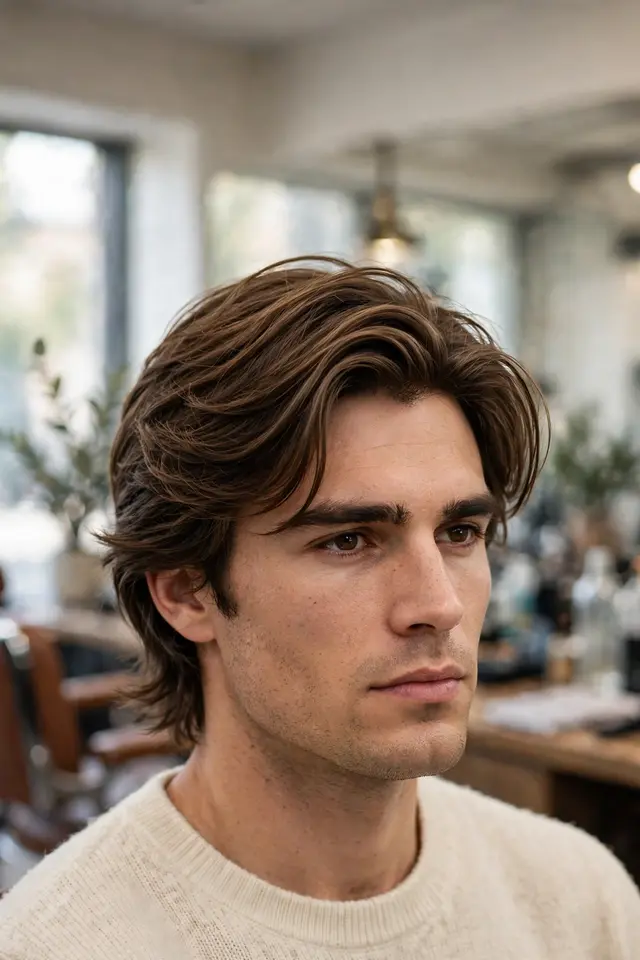
What is a layered shag haircut that flows?
The shag pointed backwards. The Layered Flow Shag keeps the crown layered and the lengths long enough to sweep back and move — think of the flow’s direction with the shag’s broken texture inside it. Fresha’s data has the flow haircut up 173% in searches, and this is its textured evolution: less surfer-smooth, more broken and lived-in, which is exactly why it survives winter wind and hats better than the sleek original.
Face Shape: Suits oval and square faces; the backward sweep opens the whole face up.
Grooming Kit: A light cream and a wide comb. Weight kills flow — keep products feather-light.
Maintenance: Every 6–8 weeks; flow shags forgive growth better than almost anything here.
Barber Script: “Flow shag — layers throughout, length to sweep back, ends broken, fringe long enough to push back.”
Flow’s direction, shag’s texture — movement in both senses.
Q: Flow shag or classic flow — what actually changes?
A: The inside. A classic flow is mostly one length swept back; a flow shag is layered throughout, so it moves in pieces and resets after hats and wind instead of falling as one sheet.
Q: Can I grow a flow shag from a short cut?
A: Yes — it is one of the kinder grow-outs, because the layers give each awkward stage a shape. Book shape-ups every six weeks and let the barber tidy only the ends and neckline.
10 of 20 — The Centre Part Shag
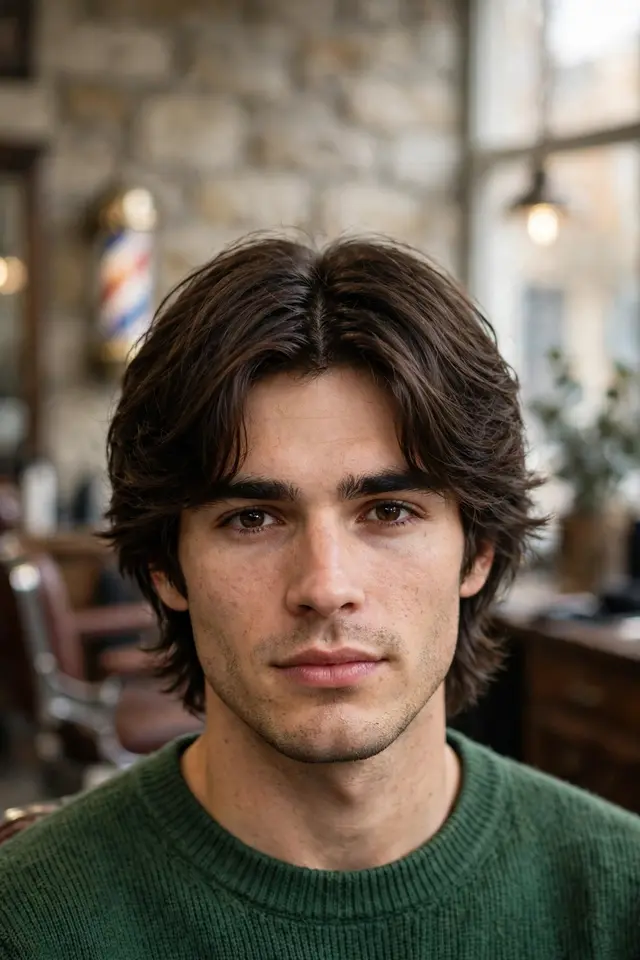
Why does a shag haircut with a middle part work so well?
Symmetry meets mess. The Centre Part Shag splits the shag’s fringe down the middle so it falls in two loose curtains, layered sides framing the face. The middle part has sat at S-tier in trend rankings for two winters now, and the shag version is its most forgiving form — the layers mean the part never has to be ruler-straight, and winter hats press the two sides into place instead of ruining them.
Face Shape: Best on oval and heart-shaped faces; the twin falls slim fuller cheeks.
Grooming Kit: A comb for the part line and a light cream — the part is the only precision this cut owns.
Maintenance: Every 5–6 weeks; the front lengths frame the face, keep them even.
Barber Script: “Centre part shag — layers throughout, fringe parted in the middle falling both sides, soft tapered edges.
Two curtains, one part — the shag’s most symmetrical mood.
Q: How do I train hair to sit in a centre part?
A: Comb it into place on damp hair every morning for two weeks — hair learns direction faster than most men expect. A light cream holds the lesson through the day; winter hats, worn after styling, actually set it.
Q: Centre part shag or curtain hairstyle — are they the same?
A: Cousins. A curtain hairstyle is usually smoother and longer at the front, worn cleaner; the centre part shag is layered and broken throughout, worn messier. Same parting, different texture philosophy.
11 of 20 — The Shaggy Crop
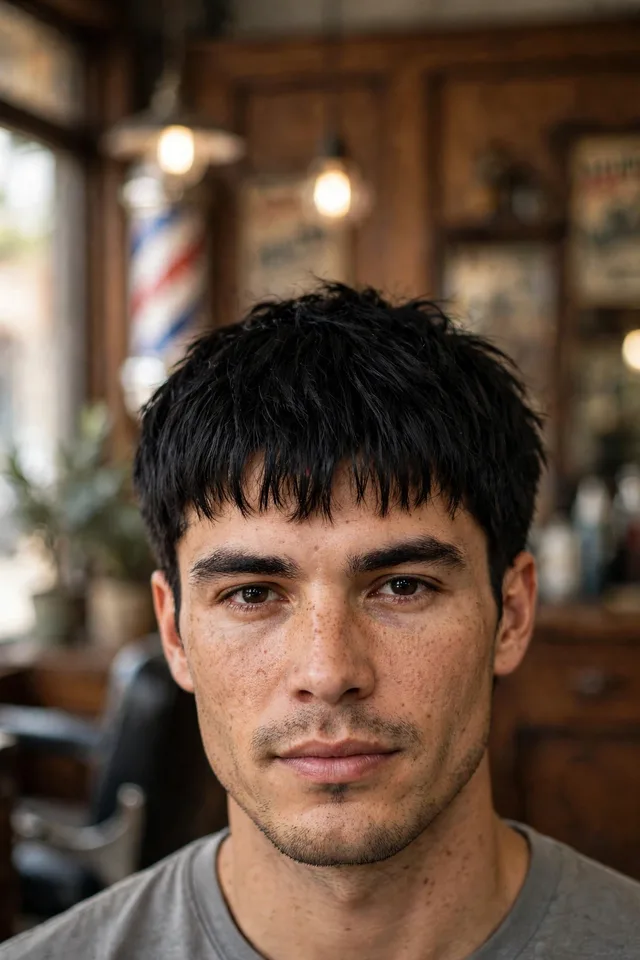
What is a shaggy crop, exactly?
The crop’s relaxed brother. The Shaggy Crop keeps the crop’s short, forward, practical skeleton but swaps the tidy fringe for a broken, piecey one and lets the top’s layers sit uneven on purpose. It is the shag family at its shortest and most office-safe — and the one to pick if the full shag feels like a leap. In winter it is fully hat-proof for the same reason the fringe is: forward hair has nowhere bad to be pressed to.
Face Shape: Works on almost everyone; the fringe shortens long faces and softens a strong brow.
Grooming Kit: Matte paste, fingertip-sized. This cut’s styling budget is thirty seconds.
Maintenance: Every 3–4 weeks; short fronts show growth fastest.
Barber Script: “Shaggy crop — short forward top, broken piecey fringe, layered not blunt, tapered sides.”
Crop practicality, shag attitude — the smallest step into layers.
Q: Shaggy crop or textured crop — what is the difference?
A: Fringe discipline. A textured crop’s fringe is short and relatively tidy; a shaggy crop’s is longer, broken into pieces and worn looser. The shaggy version reads more relaxed and grows out more gracefully.
Q: Is the shaggy crop a good winter office cut?
A: One of the best here. It reads neat at meeting distance, needs almost no morning work, and a beanie cannot hurt it. If your workplace is conservative, this is the shag to start with.
12 of 20 — The Shag and Beard
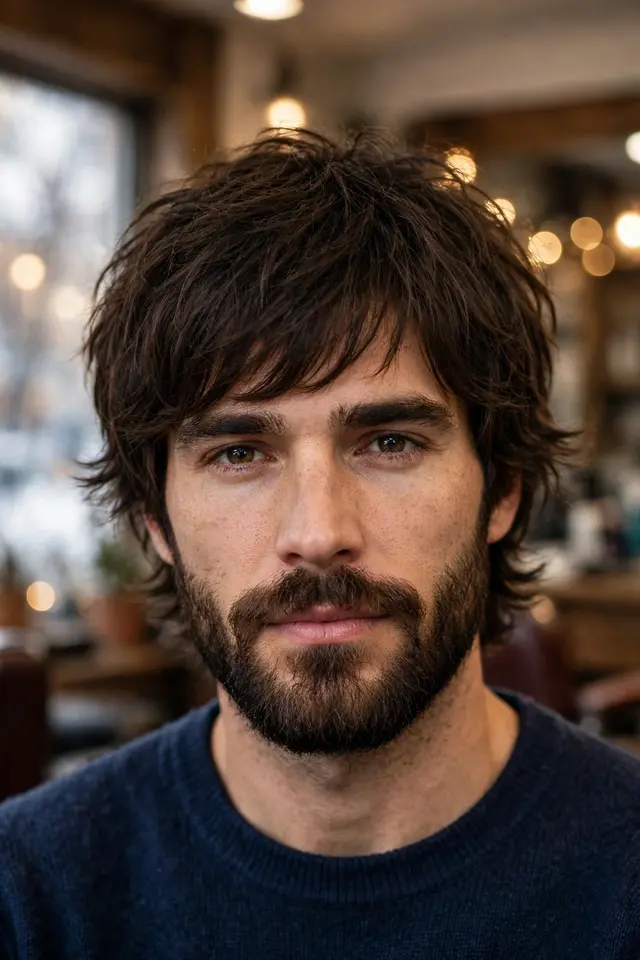
Why pair a shag haircut with a beard?
Balance. The Shag and Beard combination lets the top stay loose and layered while the beard supplies the structure below — the jaw gets its frame from facial hair, so the haircut can afford maximum ease. Winter is the beard’s season anyway: it genuinely insulates, and a shaped medium beard under a layered shag is the cold-weather portrait at its most complete. The rule is contrast — the looser the top, the tidier the beard’s lines.
Face Shape: The making of round faces — movement above, a structured jaw below.
Grooming Kit: Beard oil daily in cold air, a boar brush, and the same light touch on top as your chosen shag needs.
Maintenance: Hair every 5–6 weeks; beard lines shaped every 2–3, or maintained at home between visits.
Barber Script: “Layered shag on top — and shape the beard to carry the structure: cheek and neck lines clean.”
Loose above, structured below — winter’s most balanced portrait.
Q: What beard length pairs best with a shag?
A: Medium and shaped — long enough to frame the jaw, with cheek and neck lines kept honest. Very long beards plus long shags can blur into one mass; one of the two should keep a boundary.
Q: Shag and beard, or shag clean-shaven?
A: By face. A beard adds jaw definition round faces want; strong-jawed men often look sharper clean-shaven under a shag, letting the layers frame an already-structured face. Both are honest — pick by bone structure.
13 of 20 — The Feathered 70s Shag
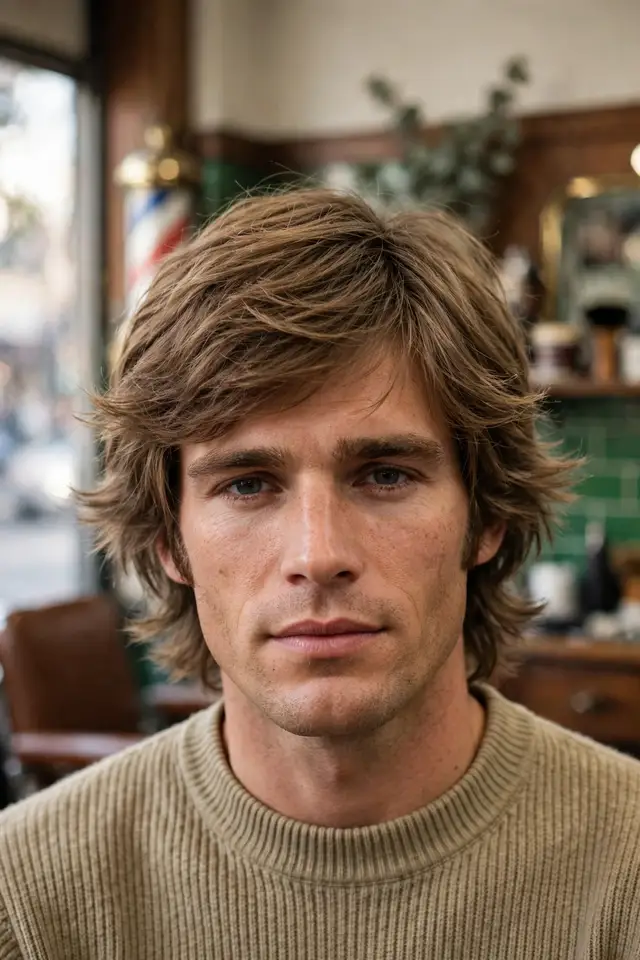
What defines a 70s shag haircut for men today?
Feathers, worn soft. The Feathered 70s Shag revives the original decade’s version faithfully: centre-weighted layers flicking outward, a longer fringe brushed to the sides, and length at the collar. The modern update is restraint in product and a barber who feathers with scissors rather than a razor’s harshness. In winter it pairs with rollnecks and coats so naturally it looks styled by the wardrobe itself.
Face Shape: Suits oval and long faces; the flicked sides add width where narrow faces want it.
Grooming Kit: A blow dryer and a round brush for the flick — this is the one shag that owns a styling ritual.
Maintenance: Every 6–8 weeks; the feathered shape holds remarkably well between visits.
Barber Script: “70s shag — feathered layers flicking out, side-brushed fringe, collar length kept, soft everywhere.”
The original decade’s feathers, cut with modern restraint.
Q: How do I stop a 70s shag looking like a costume?
A: Keep the length moderate — collar-skimming, not shoulder-length — and the feathers scissor-soft rather than dramatically flicked. Worn with modern clothes instead of retro ones, it reads as a layered cut with heritage, not fancy dress.
Q: Does the feathered shag need a blow dryer every day?
A: For the full flick, yes — two minutes with a round brush. On lazy days it air-dries into an ordinary layered shag, which is the style’s hidden kindness: the costume is optional, the cut is not.
14 of 20 — The Shag for Thick Hair
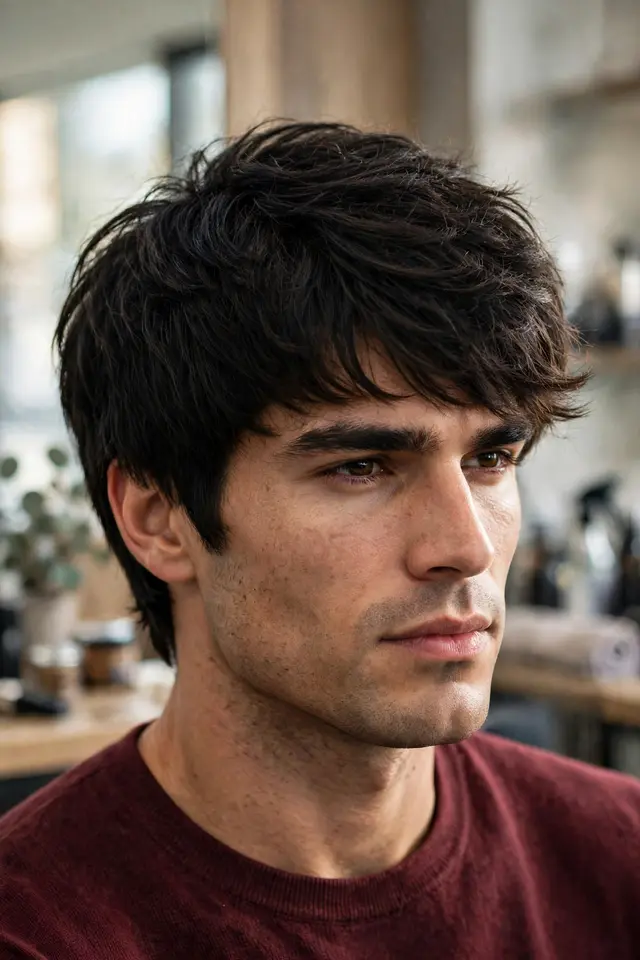
What is the best shag haircut for thick hair?
One that removes weight from inside. Thick hair’s shag problem is never length — it is bulk: unlayered thick hair puffs at the sides and sits like a helmet. The Shag for Thick Hair answers with deep internal layers and thinned, feathered ends, so the mass becomes movement. Winter coats and scarves add enough bulk to a silhouette already; this cut makes sure the hair is not adding more.
Face Shape: Suits most faces once the bulk is managed; the internal layers slim wide faces noticeably.
Grooming Kit: A light cream only. Thick hair needs control of flyaways, not hold — heavy products just add the weight back.
Maintenance: Every 5–6 weeks; thick hair’s regrowth shows in bulk before it shows in length.
Barber Script: “Shag for thick hair — deep internal layers, weight out of the ends, sides kept close so nothing puffs.”
Thick hair is not the problem — unlayered thick hair is.
Q: Will thinning shears damage thick hair’s shag?
A: Used inside the cut, no — they remove bulk invisibly. Used on the ends, they can make thick hair look stringy. Ask your barber to thin internally and feather the ends with scissors or a razor instead.
Q: Why does my thick hair puff out more in winter?
A: Dry heated air lifts the cuticle and static does the rest. A light cream on damp hair, and never brushing it bone-dry with a fine brush, keeps the layers lying in formation instead of expanding.
15 of 20 — The Shag for Fine Hair
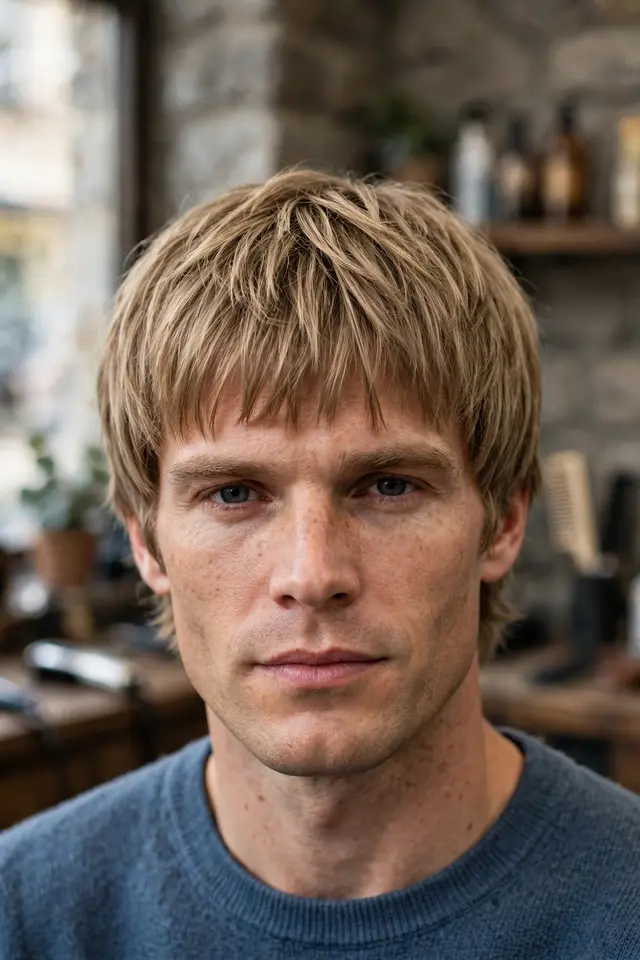
Can a shag haircut for thin hair actually add volume?
Yes — if the layers stay few and soft. Fine hair’s shag must be cut opposite to thick hair’s: fewer, longer layers and fuller ends, because over-layering fine hair makes the ends vanish. Cut right, the broken surface scatters light and multiplies apparent density, and the fringe worn forward borrows fullness for the front. It is the most barber-dependent cut in this guide — choose the barber before the style.
Face Shape: Suits most faces; the forward fringe flatters high foreheads and early recession kindly.
Grooming Kit: A volumising mousse on damp hair and texture powder for occasions. Heavy waxes are fine hair’s executioner.
Maintenance: Every 4–5 weeks; fine hair’s illusion of density expires with growth.
Barber Script: “Shag for fine hair — few soft layers, ends kept full, forward fringe. Density first, movement second.”
Fewer layers, fuller ends — fine hair’s shag plays by opposite rules.
Q: What is the biggest mistake with fine hair shags?
A: Copying a thick-haired reference photo layer for layer. The same cut on fine hair comes out wispy and see-through. Bring the photo for the silhouette, then let the barber rebuild it with fewer, longer layers.
Q: Do shags make fine hair look thinner at the back?
A: Only when over-layered at the crown. Keep the crown layers long and the weight through the mid-lengths, and the back holds its coverage. This is precisely why the barber matters more than the brief here.
16 of 20 — The Shaggy Side Sweep
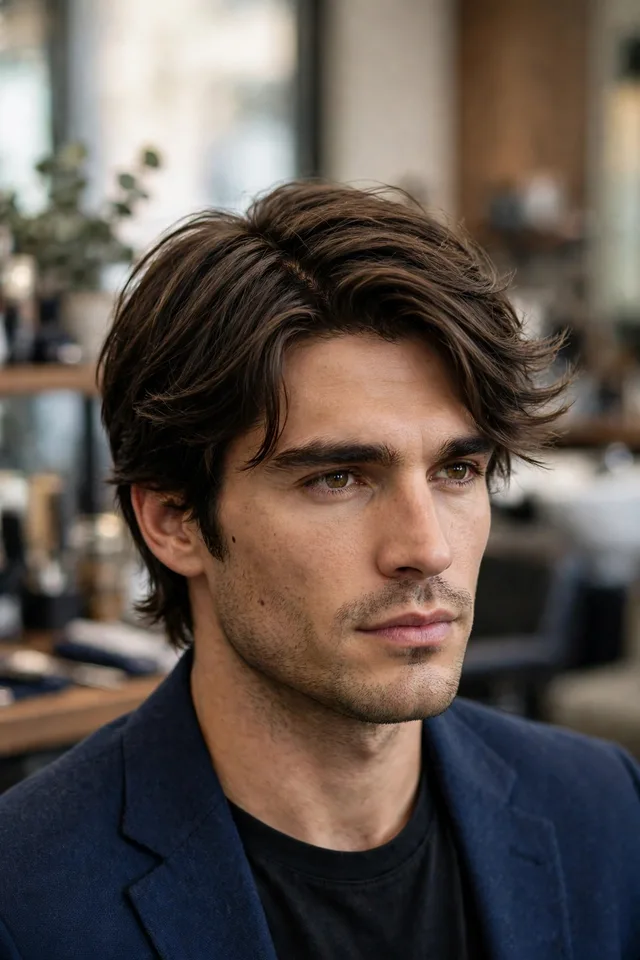
What is a side swept shag for men who want polish?
The shag in a blazer. The Shaggy Side Sweep keeps the layered, broken texture but directs the whole top diagonally from a soft side part — movement with a destination. It is the version for men who want the shag’s ease at a workplace that still expects a parting, and winter formality suits it: swept layers under a coat collar read deliberate in every photograph while needing a comb and thirty seconds.
Face Shape: Best on oval and round faces; the diagonal line slims and lengthens both.
Grooming Kit: A comb and a light cream with a soft finish — matte reads too casual for this one’s brief.
Maintenance: Every 4–5 weeks; the sweep’s direction discipline expires with length.
Barber Script: “Side sweep shag — layers throughout, top long enough to sweep from a soft part, edges tapered.”
Layers with a destination — the shag that still owns a parting.
Q: Side sweep or side part — what changes with the shag version?
A: Texture and obedience. A classic side part lies flat and combed; the shaggy sweep is layered and piecey, combed into direction but never into flatness. It looks styled for about a tenth of the effort.
Q: Will a side sweep stay in place in winter wind?
A: Better than most — the sweep goes with the hair’s layered grain rather than against a shape. A light cream on dry hair and a palm pressed along the sweep sets it; gusts move it, and movement is this cut’s native language anyway.
17 of 20 — The Surfer Shag
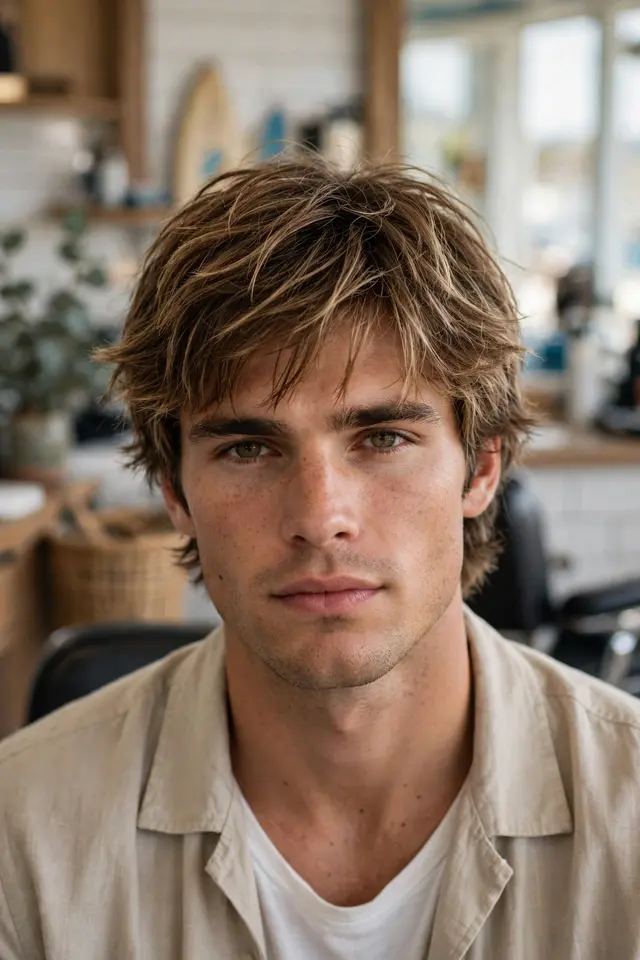
Why is a surfer shag haircut in a winter guide?
Because its texture is winter-proof. The Surfer Shag — sun-and-salt texture, medium layers, ends that look weathered on purpose — was built by men who wear hats, helmets and weather for a living, and it behaves: wind rearranges it into itself, hats press it flatter in the same direction it already falls, and dry winter air gives it the matte separation summer humidity destroys. Bring the beach’s texture; leave the bleach unless it is already yours.
Face Shape: Suits most faces; the medium frame flatters strong jaws and softens nothing it shouldn’t.
Grooming Kit: Sea salt spray — the one product this entire style is named after — and nothing else, ever.
Maintenance: Every 6–8 weeks; weathered ends forgive everything, including your diary.
Barber Script: “Surfer shag — medium layers, weathered ends, natural fringe, texture over tidiness.”
Weather is its stylist — winter just gives it more weather.
Q: Do I need blonde highlights for a surfer shag?
A: No. The cut is about texture and layer placement, not colour — it works in every natural shade. Highlights were the 2000s version’s uniform; the modern surfer shag keeps your own colour and spends its effort on the cut.
Q: How do I get salt-spray texture without it feeling crunchy?
A: Spray on damp hair, scrunch with your hands, and let it air-dry completely before touching it. Crunch comes from too much product on dry hair; two or three sprays on damp hair give movement that still feels like hair.
18 of 20 — The Shaggy Quiff
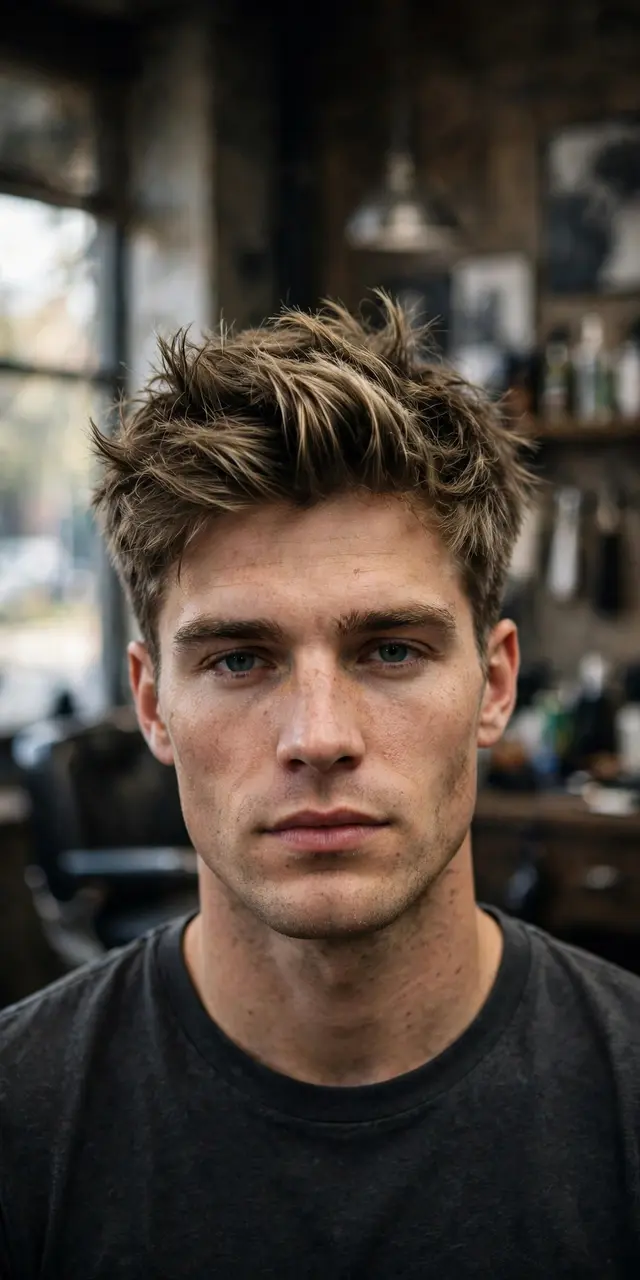
Can a shaggy quiff keep lift without the polish?
It trades polish for texture — deliberately. The Shaggy Quiff lifts the shag’s layered front upward instead of forward, but where a classic quiff is smooth and deliberate, this one is broken and piecey at the front edge. You get the quiff’s face-lifting geometry with the shag’s ‘barely tried’ surface, which is why it photographs young without looking styled. In winter, keep the lift modest — hats and height have an understanding, and it is not friendship.
Face Shape: The making of round faces especially; the lift lengthens what the layers soften.
Grooming Kit: A blow dryer for the lift and a matte paste to keep the front edge piecey, not smooth.
Maintenance: Every 4–5 weeks; front length discipline is this cut’s whole contract.
Barber Script: “Shaggy quiff — layered top, front lifted and broken piecey, tapered sides, lift kept modest.”
Quiff geometry, shag surface — lift without the ceremony.
Q: How much lift should a shaggy quiff have?
A: About an inch — enough to read as a quiff in profile, with the ends visibly separated rather than combed into one smooth wave. If it looks blow-dried for an occasion, it has left shag territory.
Q: Shaggy quiff or classic quiff — which grows out better?
A: The shaggy one, comfortably. Its layers mean the front falls into a forward fringe as it grows, buying you an extra week or two; a classic quiff’s smooth shape simply slumps once the length goes.
19 of 20 — The Grown-Out Winter Shag
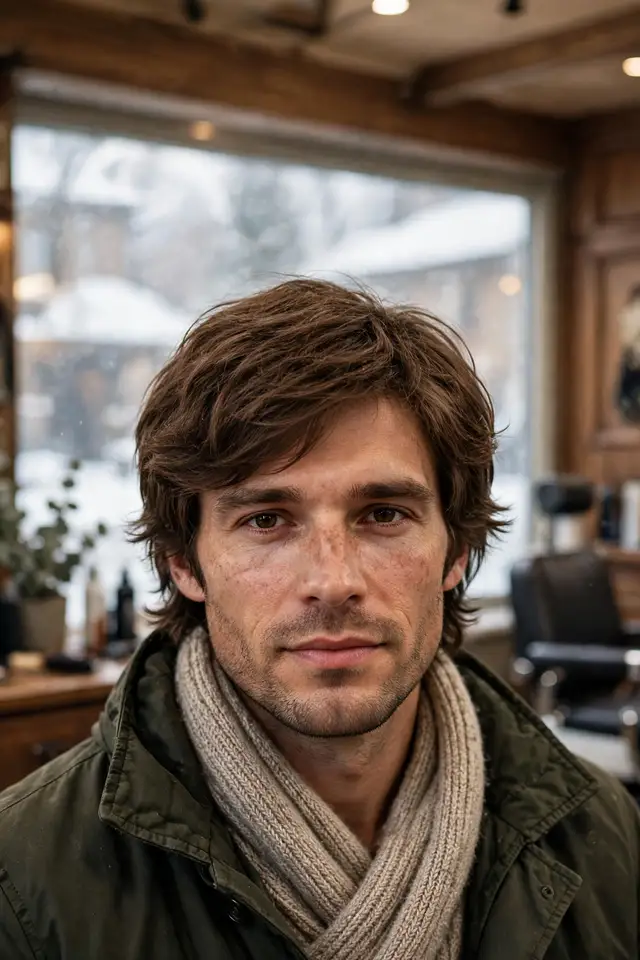
Why is the grown out shag haircut a winter strategy?
Because winter hides the journey. The Grown-Out Winter Shag is a medium shag deliberately left to lengthen through the cold months — sides tidied at shape-ups only, top and layers growing with intent. Hats cover every in-between stage, scarves frame the growing length, and by spring the hair arrives at full shag length with its layers already established by a barber instead of accumulated by accident. Growing out is a plan; this is the plan.
Face Shape: Suits oval and long faces; growing side volume balances narrow features as it lengthens.
Grooming Kit: A light cream for control and a rich conditioner — growing hair is ageing hair at the ends.
Maintenance: Shape-ups every 6 weeks only — ends and neckline tidied, length untouched by agreement.
Barber Script: “Growing the shag out for winter — tidy ends and neckline only, layers refreshed, length stays.”
Hats hide the awkward months — layers make the destination a style.
Q: Grow-out shag or long shag — what is the difference?
A: Intent and stage. The grow-out is the journey — a medium shag lengthening on a plan; the long shag is the arrived state. Today’s disciplined grow-out is next season’s long shag, with better ends.
Q: How do I keep a grow-out from looking neglected?
A: The neckline and the ends. Hair can be any length and still read deliberate if the neck is clean and the ends are even; it reads neglected the week either goes. That is why the shape-ups are non-negotiable.
20 of 20 — The Shag King
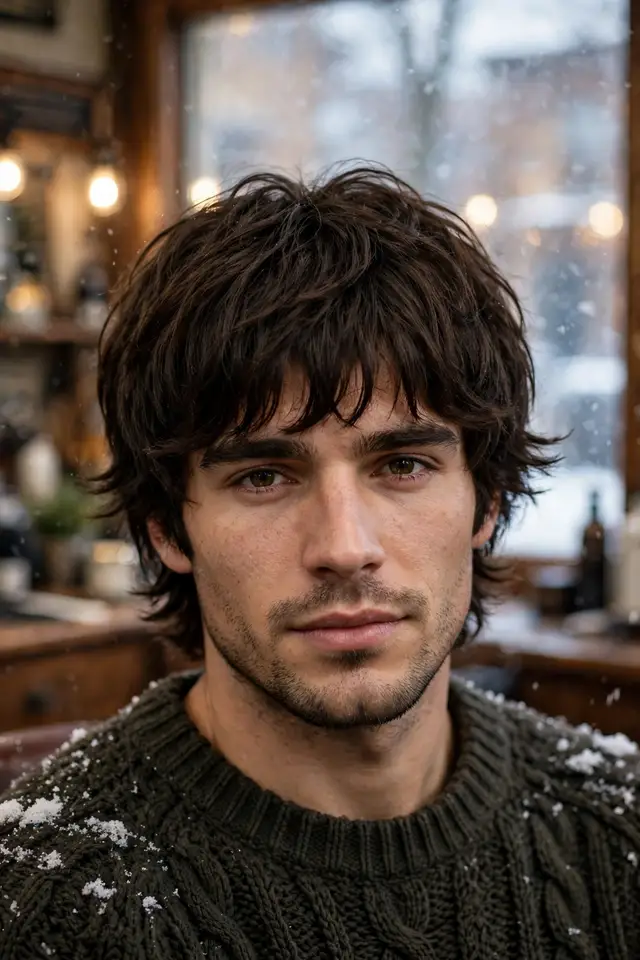
What is the single best shaggy hairstyle for men this winter?
The one that combines this guide’s lessons: a medium layered shag’s movement, a broken fringe’s modern front, layers deep enough to survive hats and wind, and ends feathered so the whole thing grows out for six weeks without a bad day. The Shag King is not the longest or the wildest here — it is the balanced one: crown layers for volume, a fringe worn in pieces, edges softly tapered, and a texture that resets with damp hands and thirty seconds.
Face Shape: The most forgiving silhouette here — suits oval, round, square and long faces with only fringe tweaks.
Grooming Kit: Sea salt spray or a light mousse, and a matte paste for the fringe on formal days. That is the whole cabinet.
Maintenance: Every 6 weeks — the layers’ grace stretches the schedule, the fringe trim keeps the front honest.
Barber Script: “The shag king — medium layered shag, broken fringe, deep layers, soft taper edges. Six-week grow-out.”
Layers, fringe and movement in balance — the complete winter shag.
Q: Why does this beat a plain layered cut for winter?
A: The fringe and the depth of layering. A plain layered cut flattens under hats into one direction; the king’s broken fringe and crown layers reset in pieces, so hat hair reads as texture instead of damage.
Q: What is the one habit that makes any shag look better?
A: Stop brushing it dry. Shags are styled with damp hands and fingers — a brush pulls the layers into one flat sheet and builds frizz in dry winter air. Hands reset the pieces; brushes erase them.
The Bottom Line
Shaggy hairstyles for men run on three truths: layers do the work that product does in other cuts; the fringe — broken, forward, unprecious — is the modern front; and winter is the shag’s natural season, because hats, wind and scarves rearrange layered hair into itself instead of ruining it. Pick the short end of this guide (short shag, shaggy crop) if you are leaving clipped cuts behind; pick the long end (long shag, flow shag, 70s feathers) if you are ready to wear movement as a statement. And grow deliberately: a shag planned with a barber beats a grow-out that merely happened. For the shag’s bolder outline, see the wolf cut hairstyles guide, and for the cuts built purely to survive headwear, the beanie hairstyles guide.




One Comment