
20 Winter Hairstyles for Older Men: Silver, Salt-and-Pepper & Distinguished Cuts
Somewhere in your forties, winter changes sides. The cold that used to flatten a young man’s haircut now works for you: grey hair has more texture and body than the hair it replaced, winter beards grow in fuller and more distinguished, and the season’s wardrobe — coats, scarves, knitwear — was practically designed around silver hair. The men who look best in winter are not fighting their grey. They are cutting it properly.
This guide covers 20 winter hairstyles for older men built on that idea: silver, salt-and-pepper and grey hair cut with intent. Every style comes with the face shapes it flatters, the grooming kit it needs, its upkeep rhythm, and the exact words to say to your barber — plus the winter-specific notes that matter at this stage: grey hair’s wiry texture, thinning crowns, receding temples, and purple shampoo, the one product every silver man needs when indoor heating starts yellowing his grey.
If you are also weighing the whole cold-season picture, our general winter haircuts guide covers the younger end of the same season, and the beard styles guide pairs with half the cuts below.
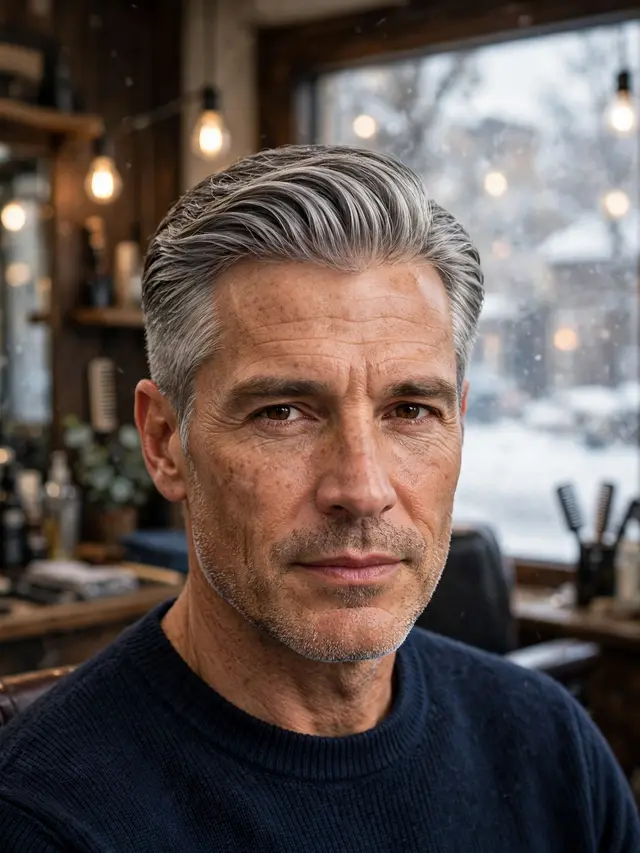
1 of 20 — The Silver Side Part
Why is the side part the definitive older man’s winter cut?
Because it is the rare style that improves with grey. The Silver Side Part’s clean comb lines show off the salt-and-pepper pattern instead of hiding it, the structure reads as authority in every winter photograph, and it sits perfectly under a coat collar and scarf — polished for the office party, effortless at the family table.
Face Shape: The universal diplomat — suits round, square and oval faces, and flatters mature faces most of all.
Grooming Kit: A fine-tooth comb, a medium-shine cream, and purple shampoo once a week to keep the silver bright, not yellow.
Maintenance: Every 3–4 weeks; the part line is the signature, so keep the neckline and edges honest between visits.
Barber Script: “Classic side part — natural part line, scissor-cut sides with a soft taper, length on top to comb over. Silver stays silver.”
Grey doesn’t hide in this cut — it headlines.
Q: How do I keep silver hair from going yellow in winter?
A: Indoor heating, smoke and mineral-heavy water all yellow grey hair. A purple shampoo once a week neutralises the brass tones, and a clarifying wash once a month removes build-up. It is the single highest-value habit in silver hair care.
Q: Shine or matte product on grey hair?
A: A natural, medium shine. Grey hair is naturally drier and more light-scattering than pigmented hair, so fully matte products make it look dusty; a cream with a soft sheen restores the healthy silver glow.
2 of 20 — The Salt-and-Pepper Textured Crop
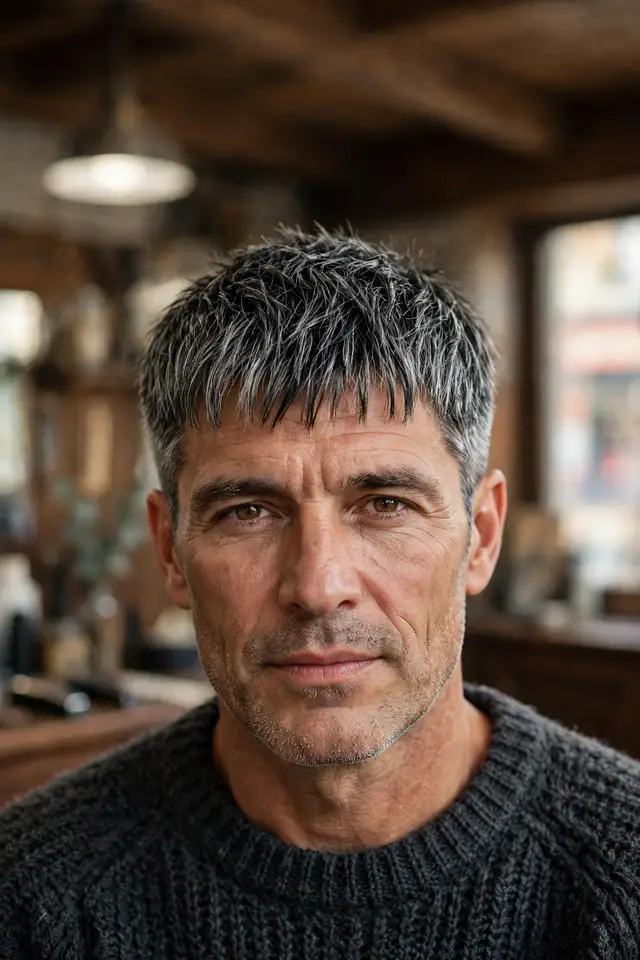
What makes the crop the easiest distinguished cut of winter?
Texture is grey hair’s gift. Grey strands grow in wirier and thicker-feeling than the hair before them, and the Salt-and-Pepper Textured Crop is built entirely on that texture — short, choppy, forward — which means it needs almost no product, survives hats completely, and turns the two-tone salt-and-pepper pattern into the style itself.
Face Shape: Works on almost everyone; the fringe shortens long faces and softens a strong brow — a mature face’s best friend.
Grooming Kit: A fingertip of matte paste at most. A rich conditioner matters more — grey texture drinks moisture in winter.
Maintenance: Every 3 weeks; winter hats fray fringe ends first, whatever your age.
Barber Script: “Textured crop — short choppy top, forward fringe, tapered sides. Work with the grey texture, don’t fight it.”
Your hair changed texture — this cut was designed by that change.
Q: Does a crop make thinning hair look better or worse?
A: Better, when it is short enough. A uniform short top removes the contrast between thin and thick zones that longer styles advertise. Keep the top under two inches and the fringe forward, and thinning reads as texture, not loss.
Q: Crop or side part for a first distinguished cut?
A: The crop if your mornings allow thirty seconds; the side part if you enjoy a comb and a ritual. Both flatter silver completely — choose by temperament, not by hair.
3 of 20 — The Silver Pompadour
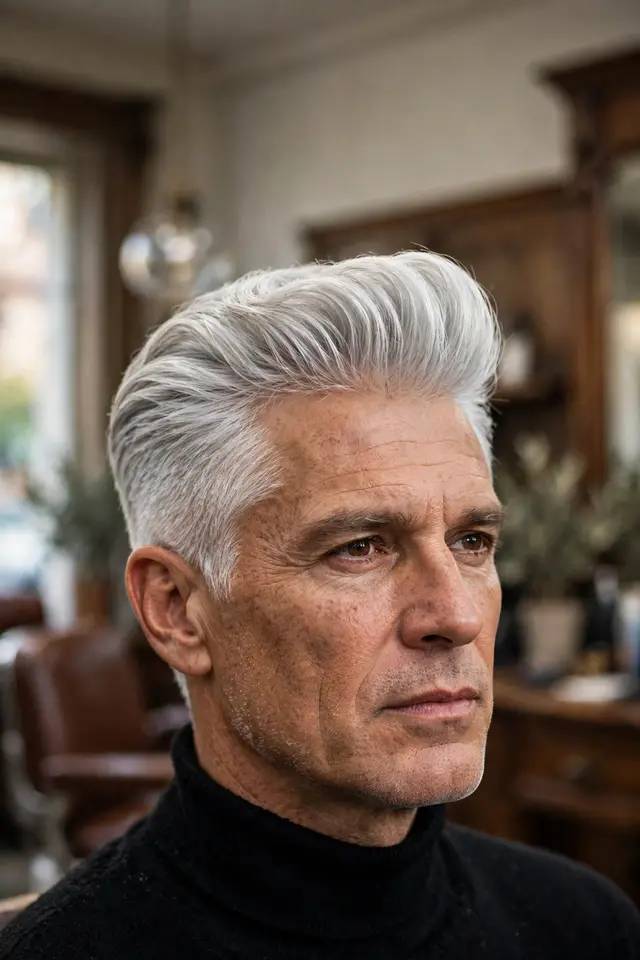
Can an older man still wear a pompadour?
Silver may be its best colour. The Silver Pompadour takes the classic volume-and-sweep shape and lets grey do the drama — the height shows every strand’s brightness, and on a mature face the pomp reads as confidence rather than costume. Keep the sides tapered rather than faded; winter formality suits the softer outline.
Face Shape: Adds height that flatters round and shorter faces; oval faces carry any pomp easily.
Grooming Kit: A blow dryer, a round brush, and a medium-hold cream. Grey hair is lighter and springier — it builds volume faster than young hair does.
Maintenance: Every 3 weeks to hold the silhouette; pomps forgive nothing once the sides slump.
Barber Script: “Silver pompadour — volume at the front, swept back, tapered sides, nothing to skin. Classic, not costume.”
The pomp grew up — and grey is its finest suit.
Q: How do I stop a silver pomp looking like a costume?
A: Two rules: keep the height moderate (an inch and a half of lift, not three), and taper the sides instead of fading them to skin. The restraint is what makes it distinguished rather than theatrical.
Q: Does grey hair hold a pompadour’s shape well?
A: Surprisingly well — grey hair’s wiry texture grips volume better than fine young hair. The trade-off is dryness: use cream-based hold rather than gel, which flakes visibly white on silver.
4 of 20 — The Distinguished Slick Back
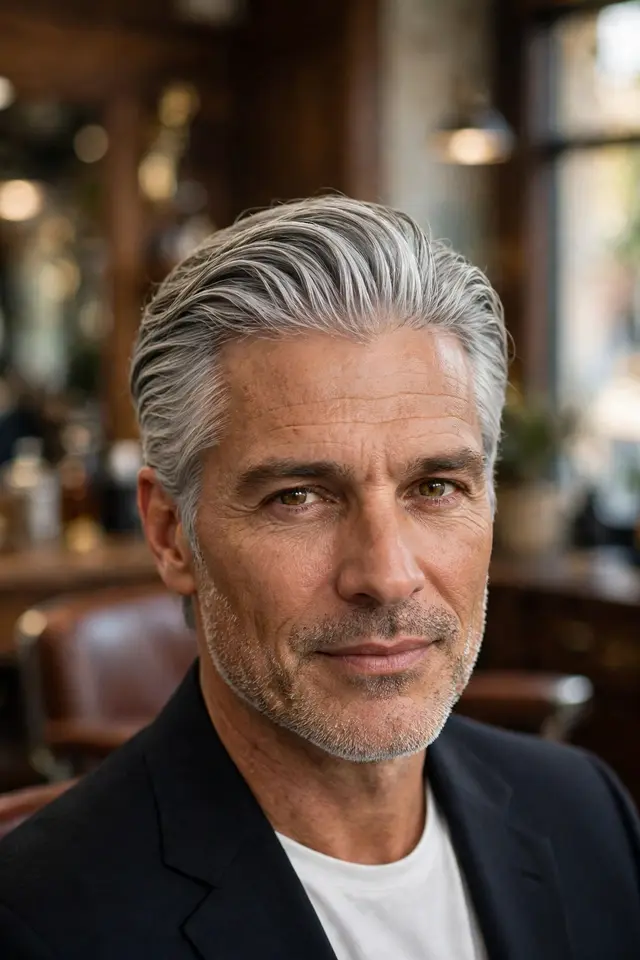
Why does the slick back belong to mature men in winter?
Because presence is its whole point. The Distinguished Slick Back sweeps silver straight back from the face — nothing hidden, nothing apologised for — and pairs with winter tailoring better than any cut in this guide. It is the black-tie answer, the boardroom answer, and the portrait answer, all in one comb stroke.
Face Shape: Best on oval and square faces with a hairline you are happy to show; it hides nothing by design.
Grooming Kit: A wide comb and a grooming cream with soft shine — gels dry grey hair out and flake.
Maintenance: Every 3–4 weeks; the outline and neckline carry the polish, so keep them crisp.
Barber Script: “Slick back — length on top to sweep fully back, tapered back and sides, keep it connected, no disconnection.”
Nothing hidden — that is the entire statement.
Q: Slick back or side part for winter formality?
A: The slick back for black-tie and evening presence; the side part for daytime polish and a softer read. Many men in this guide’s audience own both across the same head, parted or swept by occasion.
Q: How do I keep a slick back from separating in cold wind?
A: Apply cream to fully dry hair, comb it back, then finish with a warm palm pressed along the sweep — body heat sets the cream. A pea-sized second pass only on the front third holds the line without stiffness.
5 of 20 — The Silver Quiff

What does a quiff do for a mature face?
It lifts everything. The Silver Quiff’s modest height at the front draws the eye upward, balances a heavier jaw, and gives grey hair a brightness showcase right at the hairline — where silver is usually at its most striking. Lower than a young man’s quiff, always; the dignity is in the restraint.
Face Shape: The making of round faces especially; the lift lengthens and the grey brightens the whole picture.
Grooming Kit: A blow dryer and a light cream or mousse — heavy waxes drag silver down and dull it.
Maintenance: Every 3 weeks; quiff length discipline matters more than the product everwill.
Barber Script: “Silver quiff — modest lift at the front, shorter than a young quiff, tapered sides. Lift, not height.”
Silver at the front — the brightest frame a face can wear.
Q: How much lift should an older man’s quiff have?
A: About an inch — enough to read as a quiff in profile, not enough to read as an attempt at twenty-five. If a stranger would describe it as ‘neat with a lift’, you have it exactly right.
Q: Quiff or pompadour for silver hair?
A: The quiff for everyday ease and a softer silhouette; the pompadour for maximum ceremony. The quiff is also kinder to early thinning at the front, since its hair goes up rather than back.
6 of 20 — The Grey Crew Cut
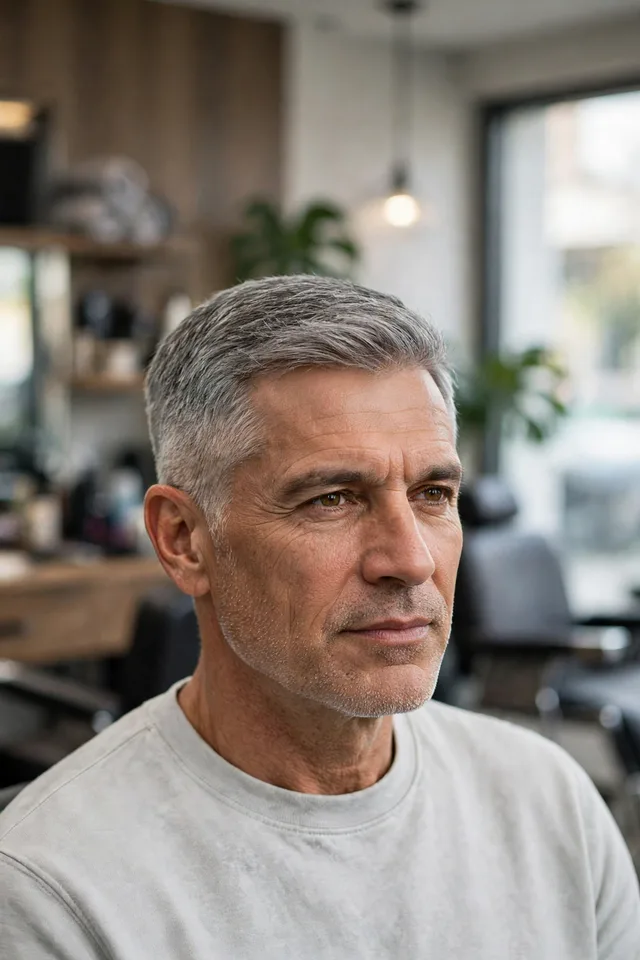
Why do so many older men land on the crew — and stay?
Because it asks nothing and returns plenty. The Grey Crew Cut’s graduated top frames the face, grey’s natural texture gives it a density young crews have to fake, and it stretches longer between winter appointments than almost anything here. It is the cut of men who have stopped performing and started owning.
Face Shape: Flattering on oval and square faces; the slight front length keeps it from reading severe.
Grooming Kit: Conditioner, mostly. A light cream on the days you want the front to behave.
Maintenance: Every 3–4 weeks in taper form — the longest leash of the short cuts.
Barber Script: “Grey crew — graduated top, scissor taper sides, keep the grey texture natural, no skin fade.”
Zero performance — all presence.
Q: Crew or crop for grey hair?
A: The crew keeps a graduated, tidier silhouette and reads more classic; the crop is pieceier and more casual. Grey hair flatters both — the crew is the safer first step if you are leaving longer hair behind.
Q: Does a crew cut suit a receding hairline?
A: Very well — the short graduated top keeps the eye on the overall shape rather than the corners. Keep the front slightly longer and textured; it blurs the recession line better than a fringe at this length.
7 of 20 — The Salt-and-Pepper Buzz
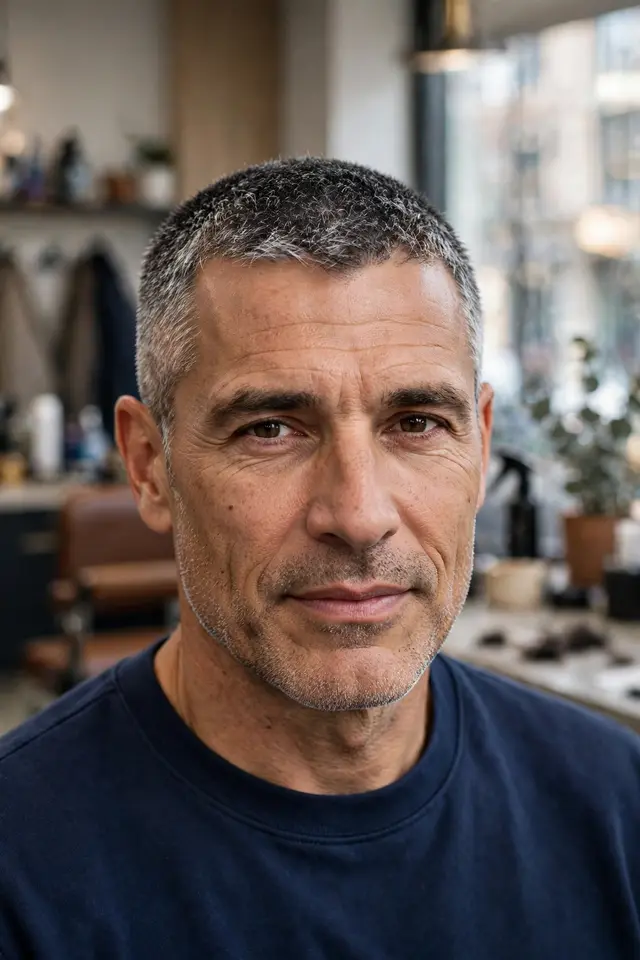
What is the honest case for buzzing it in winter?
Freedom, with a condition: at No. 3–4, not skin. The Salt-and-Pepper Buzz at a grown-out guard length shows the two-tone pattern beautifully, erases the thin-versus-thick contrast entirely, and reduces winter hair care to a moisturiser. The beanie — which you will want, a buzzed scalp feels winter — becomes part of the uniform.
Face Shape: Kindest to well-proportioned heads and strong features; buzzes hide nothing, by design.
Grooming Kit: A moisturising shampoo and scalp care — winter dryness and flaking are this cut’s only real enemies.
Maintenance: A home clipper pass every 2–3 weeks, or monthly at the barber. Nothing else, ever.
Barber Script: “Buzz, number 3 or 4 all over, grown-out and natural. Salt-and-pepper on show, no harsh line-up.”
The pattern is the style — nothing left to arrange.
Q: Will a buzz make my thinning more obvious?
A: At the right length, the opposite. Uniform shortness removes the contrast that makes thinning visible — most men are surprised how much fuller a No. 3 buzz reads than the longer hair they were protecting. Go below No. 2, though, and scalp starts winning the argument.
Q: How do I stop winter scalp flaking with a buzz?
A: Moisturise the scalp like skin — because now it essentially is. A light scalp oil or cream after washing, and a proper moisturising shampoo, prevents the dry winter flaking a buzz cannot hide.
8 of 20 — The Classic Taper
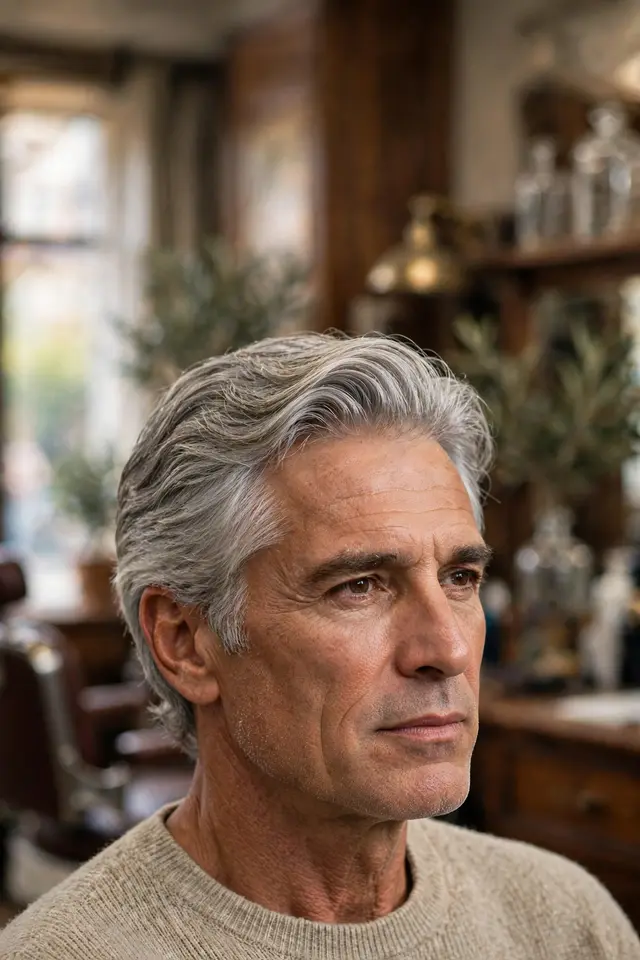
Why is the classic taper the connoisseur’s winter cut?
It is the haircut equivalent of a good coat: entirely scissor-cut, no clipper lines anywhere, sides that melt into the top and keep the ears and neck warmer than any fade. The Classic Taper grows out so gracefully that winter appointments can stretch to five weeks — a luxury no faded cut can offer a man with a diary.
Face Shape: The safest cut in this guide — suits every face shape without adjustment.
Grooming Kit: A comb and a light cream. This cut predates product culture and behaves like it.
Maintenance: Every 4–5 weeks, with only a neckline tidy in between. Winter’s most relaxed classic.
Barber Script: “Classic taper, all scissors — no clipper fade, sides left full, blended edges only. Five-week grow-out.”
Cut like a coat is tailored — nothing clipped, everything shaped.
Q: Taper or fade for an older man in winter?
A: The taper, on both counts that matter in winter: it keeps warmth at the sides and neck, and it grows out invisibly. Save fades for summer and for the younger cuts in your memory — winter belongs to scissors.
Q: How do I find a barber who still scissor-cuts?
A: Ask directly: ‘Do you do a full scissor cut?’ Old-school barbers and classic gentlemen’s shops specialise in it — and once you find one, book the next appointment before you leave. They are a shrinking, valuable breed.
9 of 20 — The Silver Fox Flow
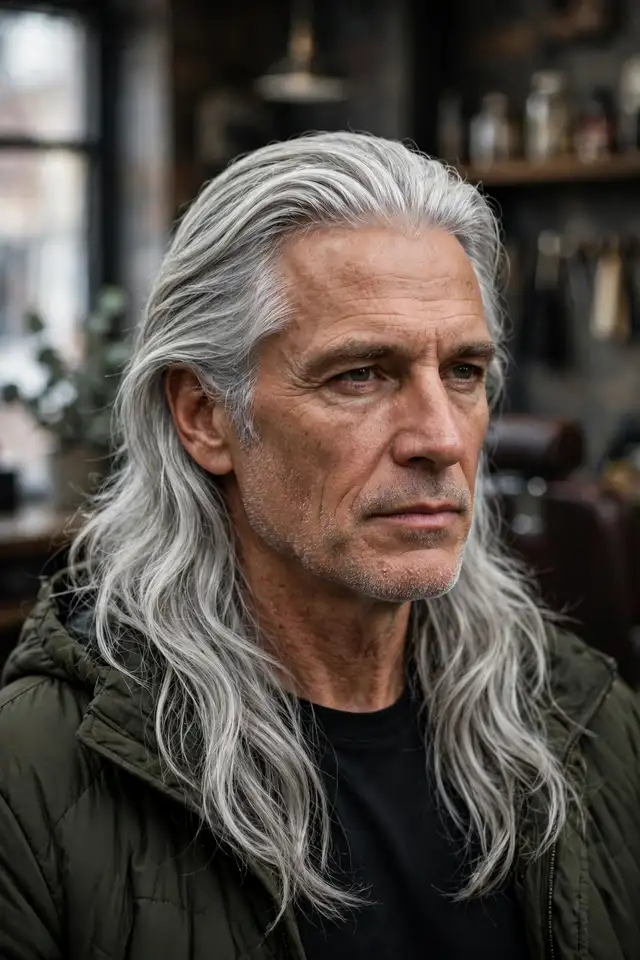
What is the boldest silver statement in this guide?
Length, worn without apology. The Silver Fox Flow keeps silver hair at medium length — swept back, tucked behind the ears, moving — and it is the look that turns heads across every room it enters. Winter flatters it most: scarves and coats frame the length, and dry cold air keeps it smoother than summer humidity ever did.
Face Shape: Suits oval and long faces best; the side volume balances narrow features well.
Grooming Kit: A rich conditioner, a wide comb, and a light oil for the ends — long grey hair is the driest hair of all.
Maintenance: Ends and shape every 6–8 weeks; the style itself asks only for a comb each morning.
Barber Script: “Silver flow — keep the length, clean layers so it moves, tidy the ends. It’s worn back and loose.”
Silver, grown to full statement — winter frames it best.
Q: How long does it take to grow a silver flow?
A: From a short cut, roughly a year to ear-tucking length. Winter is the strategic season to start — hats hide every awkward in-between stage that makes men quit in spring.
Q: How do I stop long grey hair looking wiry?
A: Moisture and weight. Condition every wash, use a drop of oil on the ends daily, and never brush it dry with a fine brush — a wide comb, used gently, keeps the flow sleek instead of electric.
10 of 20 — The Receding-Hairline Crop

What is the smartest cut for temples that have retreated?
Forward, short, and honest. The Receding-Hairline Crop brings a light textured fringe forward to soften the temple line, keeps the top at a uniform short length so nothing contrasts, and never — this is the entire secret — sweeps hair back or sideways to ‘cover’ anything, because cover is always the thing that gives the game away.
Face Shape: Works on most faces; the forward fringe shortens long faces and balances a strong brow kindly.
Grooming Kit: Matte paste, fingertip-sized. Anything shiny draws light — and eyes — exactly where you do not want them.
Maintenance: Every 3 weeks; this cut’s honesty depends on the top staying uniformly short.
Barber Script: “Short forward crop — textured top, light fringe forward, soften the temples, tapered sides. No comb-over tricks.”
Nothing covered up — so there is nothing to catch out.
Q: What is the worst thing to do with a receding hairline?
A: Grow the sides long to compensate, or sweep a long top across. Both announce the recession louder than the hairline itself. Short, forward and uniform always reads younger than any cover strategy.
Q: Does a fringe look too young on an older man?
A: Not the light, textured one this cut uses — it reads as a crop’s front edge, not a boyish fringe. Keep it short, broken and matte, and it simply looks like good judgement.
11 of 20 — The Thinning-Hair Textured Top
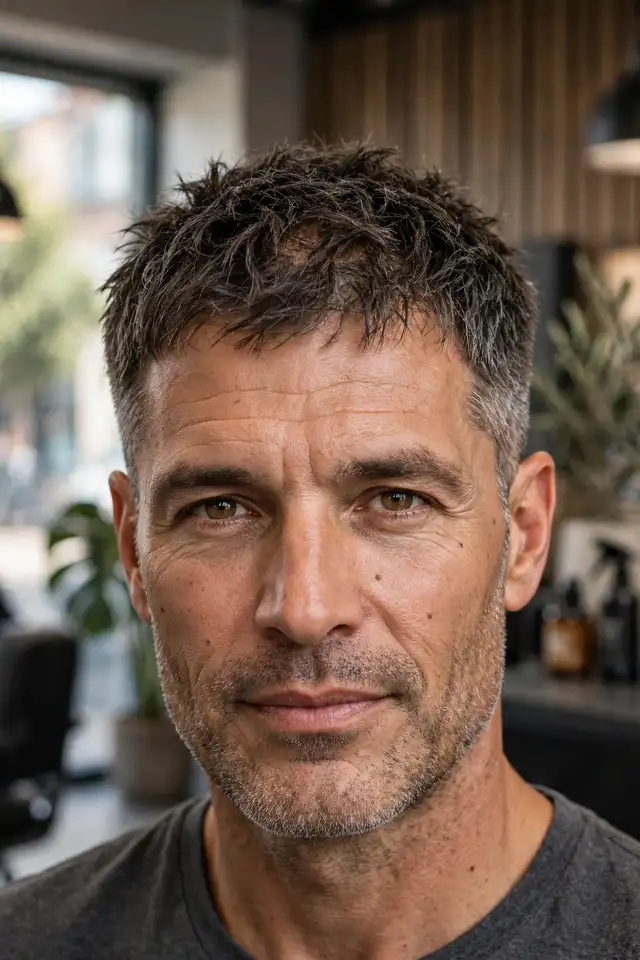
How should a thinning crown be cut in winter?
Short at the sides, textured — never long — on top. The Thinning-Hair Textured Top uses choppy point-cutting to break up the top’s surface so light scatters instead of pooling on the scalp, keeps the sides tighter to reduce the width contrast, and finishes matte. Winter adds one ally: beanies no longer flatten what little product you use, because this cut barely needs any.
Face Shape: Suits most faces; tighter sides slim fuller faces particularly well.
Grooming Kit: Texture powder for special occasions — otherwise nothing. Weight and shine are thinning hair’s two enemies.
Maintenance: Every 3 weeks; the illusion of density is a short-hair illusion and expires with growth.
Barber Script: “Textured top for thinning hair — point-cut the top choppy, tighter tapered sides, keep everything matte. Density, not length.”
Choppy, matte, honest — texture does the work length can’t.
Q: What products make thinning hair look worse?
A: Gels, oils and anything wet-look — they clump strands together and expose the scalp between them. Texture powder and dry matte pastes do the opposite: they separate and roughen each strand, multiplying apparent density.
Q: Should thinning hair be grown longer to cover the crown?
A: No — longer hair separates into ribbons and shows more scalp, especially in winter wind. The counterintuitive truth every good barber will tell you: shorter reads fuller, at every age.
12 of 20 — The Silver Beard and Crop
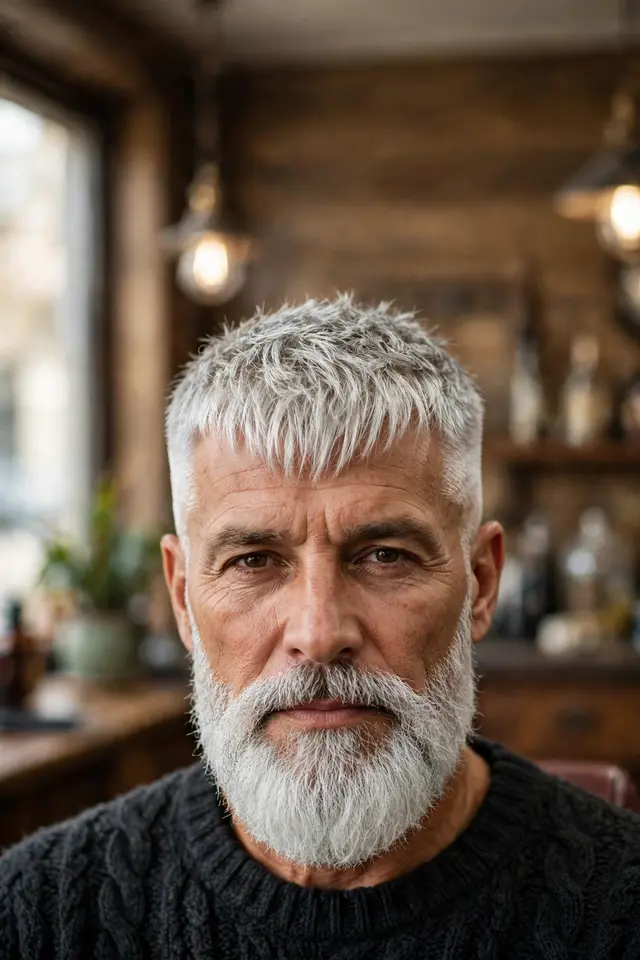
Why is winter’s best older look half beard?
Because a silver beard is an asset no young man can buy. The Silver Beard and Crop pairs the easy hat-proof crop on top with a full, shaped silver beard below — winter is the season beards genuinely insulate, and a well-kept silver beard is the single most distinguished object in any cold-weather room. The rules: the crop stays tight, the beard stays shaped.
Face Shape: The making of round faces — sharp texture above, a structured silver jaw below.
Grooming Kit: Beard oil daily (cold air dries beards faster than scalps), a boar brush, and grey-beard patience — silver beards yellow too, so rinse well.
Maintenance: Crop and beard shaped together every 3 weeks; oil and brush the beard daily through winter.
Barber Script: “Textured crop on top, and shape the silver beard to match — fade into the sideburns, cheek and neck lines clean.”
Silver above, silver below — the complete winter portrait.
Q: What beard length flatters an older man most in winter?
A: Medium to full — long enough to read as intentional and to show the silver, with the cheek line and neckline kept razor-honest. Length without lines reads as neglect; length with lines reads as a silver beard.
Q: How do I stop a grey beard looking yellow or scruffy?
A: Rinse it daily (food and smoke stain grey fastest), use the same purple shampoo on it once a week if it yellows, and oil it — a dry grey beard looks wiry, an oiled one looks like polished silver.
13 of 20 — The Ivy League
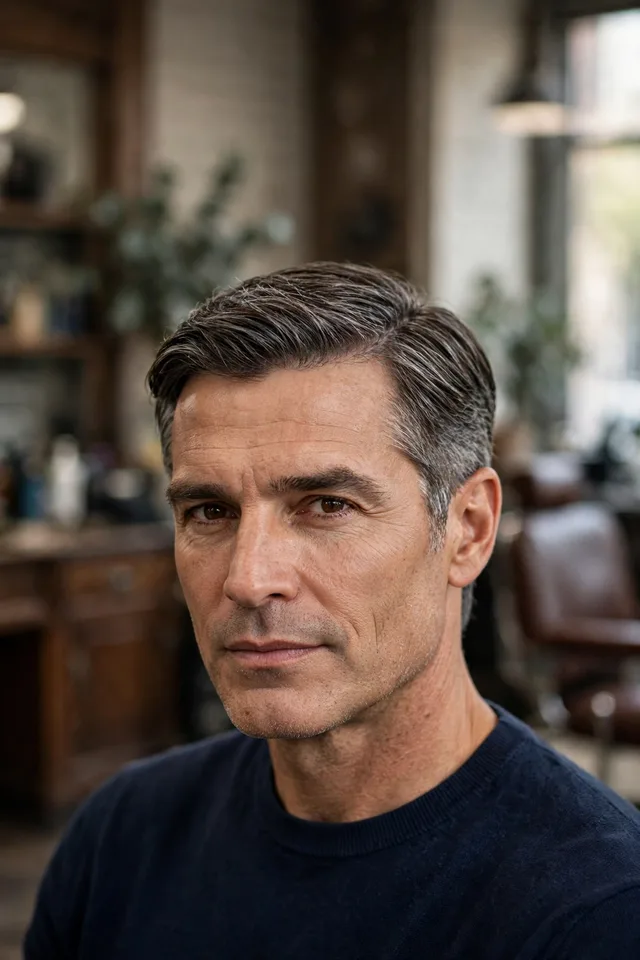
What is the Ivy League’s offer to the older man?
The crop’s smarter brother: a crew-length top with just enough length at the front to comb into a small side part — the polish of a part with the practicality of a crop. In winter it is the diplomat’s cut: hats barely touch it, meetings respect it, and grey texture gives its neatness a richness young hair cannot match.
Face Shape: Suits oval, square and round faces; the mini-part adds a formality most short cuts lack.
Grooming Kit: A small comb and a light cream. The Ivy League travels well — it fits a wash-bag life.
Maintenance: Every 3–4 weeks; the front length is the discipline, keep it honest.
Barber Script: “Ivy League — crew length with enough front to part, scissor taper sides, neat but not severe.”
Crew practicality, part polish — the diplomat’s compromise.
Q: Ivy League or crew cut — what is the actual difference?
A: The front. An Ivy League keeps the front long enough to comb sideways into a small part; a crew’s front just stands graduated. That inch of ceremony is the whole distinction — and it photographs considerably smarter.
Q: Does the Ivy League suit thinning temples?
A: Reasonably well, because the part is small and forward-angled rather than a grand sweep. If recession is advanced, though, the receding-hairline crop in this guide will serve you more honestly.
14 of 20 — The Wavy Salt-and-Pepper

Why do waves flatter grey hair so generously?
Because grey hair’s wiriness amplifies natural wave into real presence. The Wavy Salt-and-Pepper keeps medium-short length so the S-bend can show, softens a mature face’s stronger lines, and recovers from winter hats better than any straight style — the wave is in the hair itself, so compression is only a pause.
Face Shape: Excellent on long and angular faces; the soft wave gentles everything it frames.
Grooming Kit: Sea salt spray or a light cream — never heavy products, which flatten the wave you kept the length for.
Maintenance: Every 3–4 weeks; wavy hair hides growth and hat friction better than straight hair does.
Barber Script: “Wavy salt-and-pepper — medium-short, keep the length for the wave, soft taper sides, nothing clipped harsh.”
The wave is in the hair — hats can only pause it.
Q: How do I refresh waves after a hat without washing?
A: Damp palms — not wet — pressed through the top, then leave it completely alone for two minutes while it resets. Touching mid-dry is what invites frizz, at any age.
Q: Why does grey hair wave more than my hair used to?
A: Grey follicles change shape and the strands grow in wirier, so many men genuinely gain texture and wave as they silver. It is one of greying’s few unambiguous gifts — this cut exists to spend it.
15 of 20 — The Curly Grey Top

What happens when curls go silver?
They become architecture. The Curly Grey Top keeps two or more inches of silver curls on top with tapered sides — curls compress under a winter hat and spring back on release, and the grey running through them gives every coil a highlight money cannot buy. It is the most joyful cut in this guide, and men who wear it know it.
Face Shape: Superb on square and angular faces; the volume softens what the taper sharpens.
Grooming Kit: Curl cream, a wide-tooth comb for detangling only, and water for morning resets. Moisture above all.
Maintenance: Sides every 3 weeks; moisturise the curls daily — heated indoor air is their winter enemy.
Barber Script: “Curly grey top — leave the silver curls long enough to spring, cut them dry, taper the sides. Moisture-friendly everything.”
Every coil highlighted in silver — nature’s own dimension.
Q: How do I stop a beanie turning my curls into a frizz triangle?
A: Take it off, tip your head upside down, spritz with water and scrunch upward with your palms. Never brush dry curls after a hat — brushing is what builds the frizz triangle, especially in dry grey hair.
Q: Should curly grey hair be cut wet or dry?
A: Dry, always — silver curls shrink and spring differently dry, and a wet cut guesses the shape. Any barber who works with curls will cut them dry without being asked; if yours reaches for the spray bottle first, find a new one.
16 of 20 — The Grey Caesar
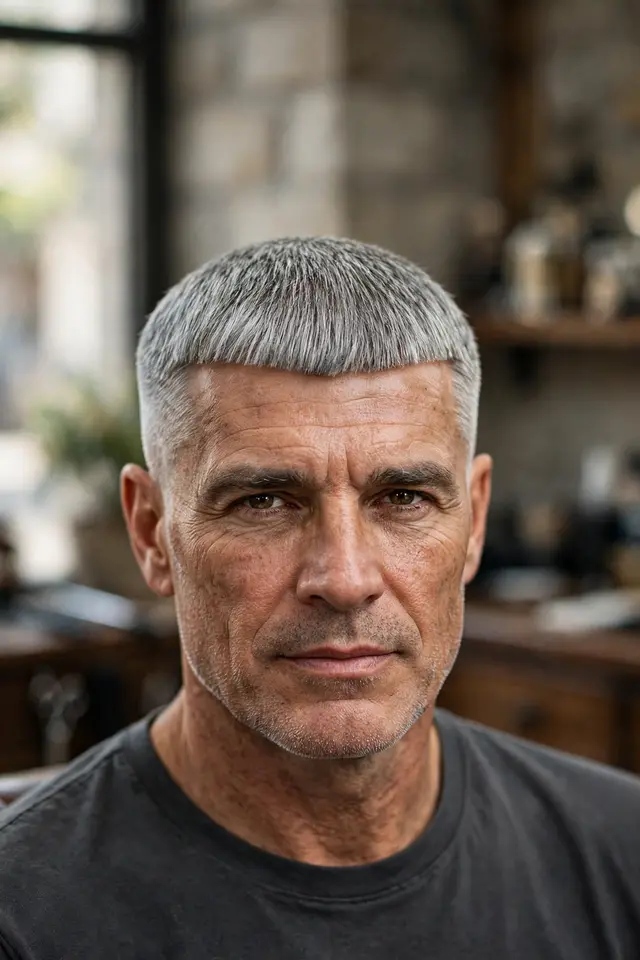
Why does the Caesar suit grey hair so precisely?
Because the Caesar’s short, forward, flat silhouette turns grey’s texture into a close-cropped silver field — think less ‘haircut’, more ‘finish’. It lies completely flat by design, so winter hats press it into itself; it covers early recession honestly with its forward comb; and it asks for almost no product, ever.
Face Shape: Excellent on square and oval faces; the horizontal fringe sharpens the whole face beneath it.
Grooming Kit: Nearly nothing — a light matte paste on formal days, and rich conditioner against winter dryness.
Maintenance: Every 3 weeks; the fringe line is the signature and blurs first.
Barber Script: “Grey Caesar — short top combed forward, straight fringe, tapered sides. Flat, silver, simple.”
Silver, finished like brushed steel — flat by design.
Q: Caesar or crop for grey hair?
A: Siblings. The Caesar sits shorter and flatter with a tidier fringe and reads more formal; the crop is pieceier and more relaxed. For hat immunity the Caesar edges it; for texture in photos, the crop.
Q: Does a Caesar work with a beard?
A: A short, neat one, yes — the Caesar’s severity pairs with a tight boxed beard very well. A long full beard unbalances it; that pairing belongs to the crop-and-beard style earlier in this guide.
17 of 20 — The Bald and Silver Beard
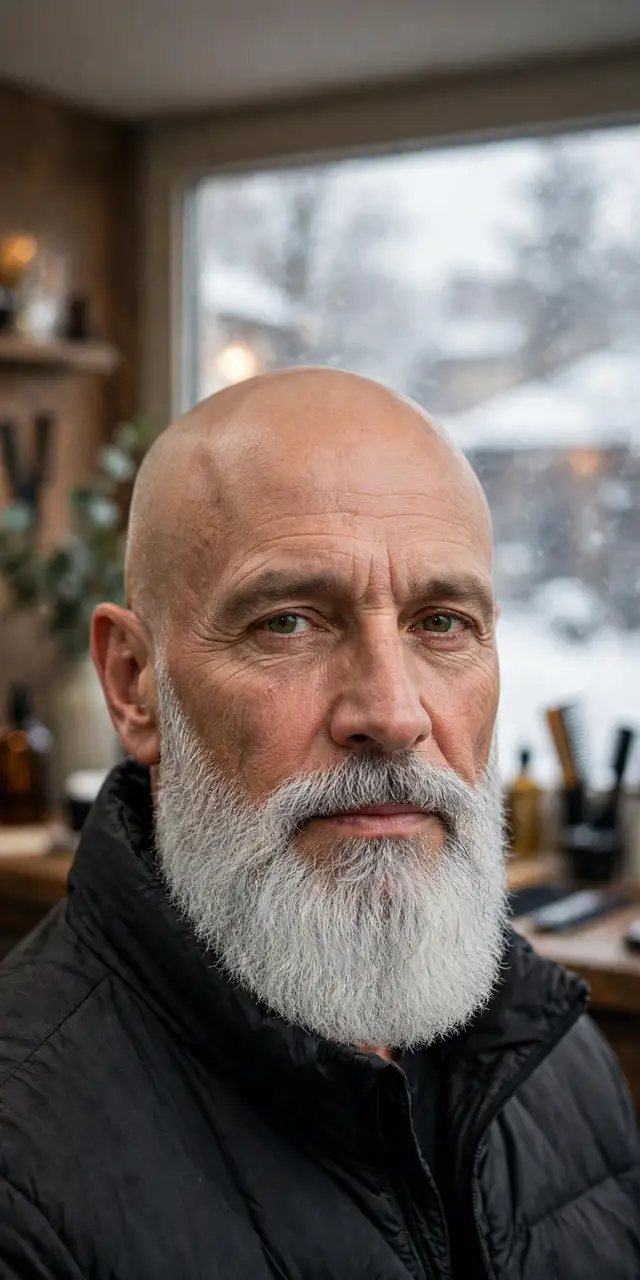
What is the boldest winter answer of all?
Remove the question. The Bald and Silver Beard — a clean-shaven or zero-guard head with a full, shaped silver beard — turns hair loss from a negotiation into a silhouette. The beard carries the entire distinguished brief, the silver in it does the talking, and winter adds its own logic: the beard insulates the face the scalp no longer covers, and the beanie becomes a chosen accessory, not a disguise.
Face Shape: Suits strong-featured faces of most shapes; the beard’s shape becomes the face’s frame, so its lines matter most.
Grooming Kit: Scalp moisturiser and SPF habits year-round; beard oil and a brush for the main event below.
Maintenance: Head shaved or buzzed every few days at home; beard shaped at the barber every 3 weeks.
Barber Script: “Take the head to zero — then spend the whole appointment on the beard: shape it full, lines clean, silver shining.”
Nothing on top, everything in the beard — winter’s boldest silhouette.
Q: How do I keep a bald head comfortable in winter?
A: Moisturise it like your face — cold air and indoor heating dry an exposed scalp fast — and wear the beanie proudly when outside; it is warmth, not hiding. A light scalp cream after shaving prevents the tight, flaky feeling.
Q: What beard shape suits a bald head best?
A: A full beard with some length at the chin balances the bare scalp and gives the face its vertical structure. Keep the cheek line natural rather than carved, and the neckline two fingers above the Adam’s apple.
18 of 20 — The Modern Comb Over
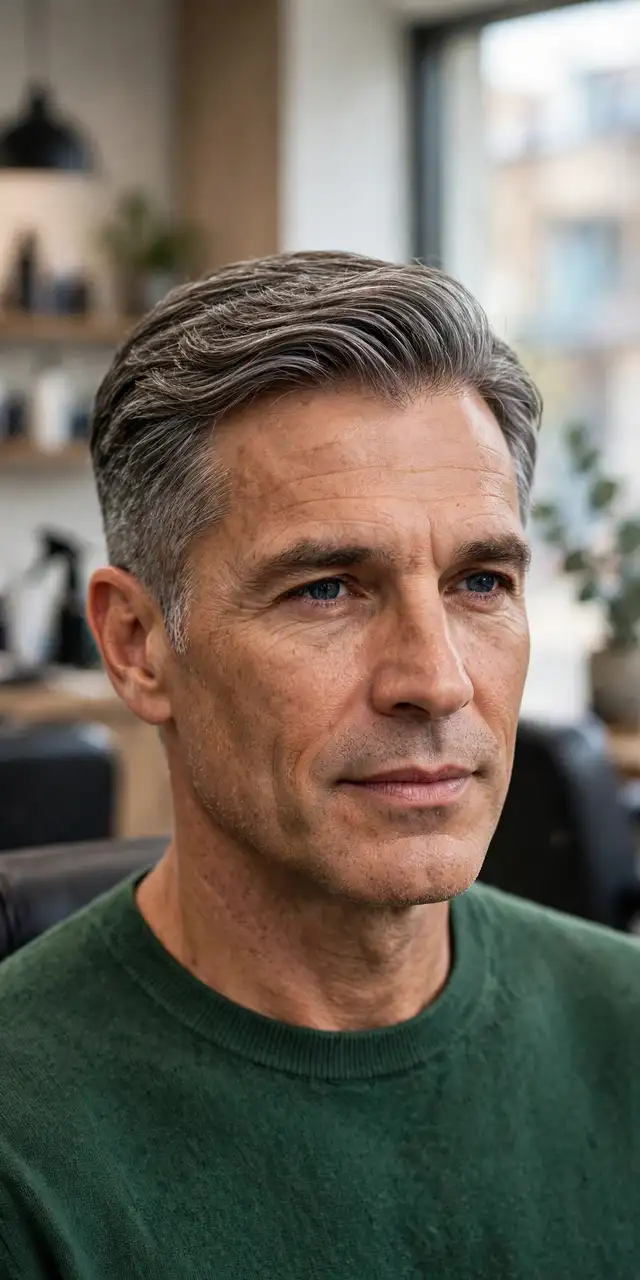
Can a comb over be worn with dignity?
The modern one can — because it is not hiding anything. The Modern Comb Over keeps a genuine, modest sweep from a natural part, with the sides tapered and the top short enough that the sweep reads as styling, not strategy. The old comb over failed because it was long, thin and desperate; this one is short, textured and relaxed about the whole subject.
Face Shape: Suits oval and round faces; the sideways direction adds a width that flatters both.
Grooming Kit: A light cream and a comb — matte finish only. Shine on a sweep reads as effort, and effort is what this cut is avoiding.
Maintenance: Every 3 weeks; the sweep’s honesty expires the moment the top gets long enough to look deliberate.
Barber Script: “Modern comb over — natural part, short textured sweep, tapered sides. Keep it modest, keep it matte.”
Short, matte, modest — the sweep with nothing to prove.
Q: How is this different from the old-fashioned comb over?
A: Length and intent. The old version grew one side long to drape across a bald crown — the drape was the deception. The modern version sweeps short, full hair sideways as pure style on a head that could wear a crop tomorrow. If you could buzz it without fear, your sweep is honest.
Q: When should I retire the comb over for a crop?
A: When the top’s coverage gets thin enough that the sweep separates into strands in daylight. A good barber will tell you the day arrives — ask him to, every visit, and believe him the first time.
19 of 20 — The Winter Grow-Out

Why is winter the season to grow it out — at any age?
Because the awkward months hide under hats. The Winter Grow-Out keeps an older man’s hair at a longer, looser medium length — sides just tidied, top and back growing with intent — and silver rewards the patience: longer grey hair gains wave, weight and presence that read as ‘distinguished’ rather than ‘overdue’, provided the ends and neckline stay barber-honest all the way through.
Face Shape: Suits oval and long faces; the extra side volume balances narrow features.
Grooming Kit: A light cream for control and a rich conditioner — longer silver is the driest hair in this guide.
Maintenance: Shape-ups every 5–6 weeks only — the style is the growing; the appointments are just border control.
Barber Script: “Growing it out for winter — tidy the ends and neckline only, keep the length, soft layers so the grey moves.”
Hats hide the awkward months — silver makes the destination worth it.
Q: Grow-out or silver flow — what is the difference?
A: Destination and intent. The grow-out is the journey — medium, loose, on its way somewhere; the flow is the arrived state, longer and worn back as a finished look. Today’s grow-out is next winter’s flow.
Q: How do I keep a grow-out from looking neglected?
A: The neckline and the ends. Hair can be any length and still read deliberate if the neck is clean and the ends are even; it reads neglected the week either one goes. That is why the shape-ups are non-negotiable.
20 of 20 — The Silver King
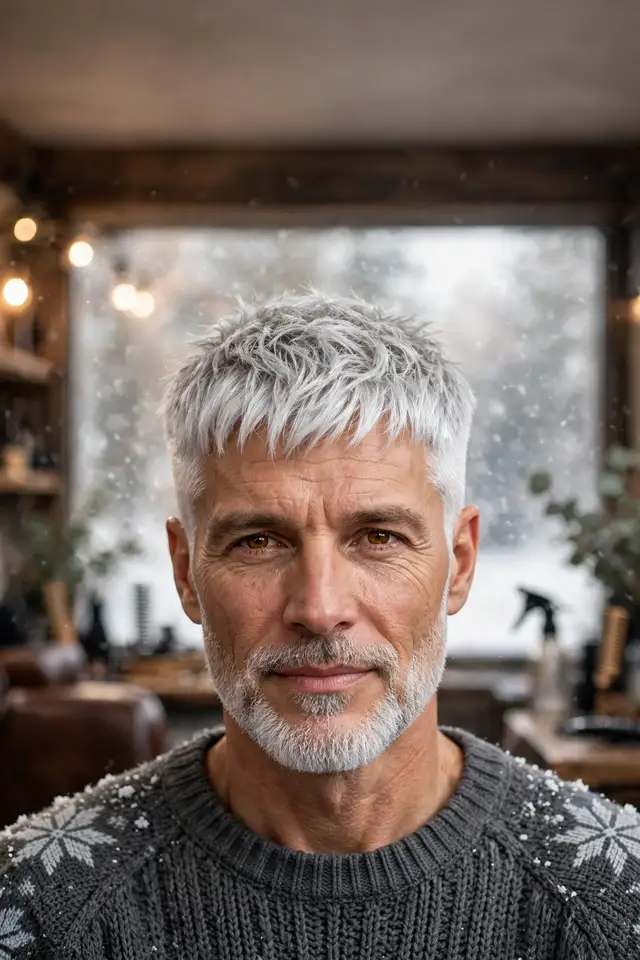
What is the single best winter hairstyle for an older man?
The one that combines this guide’s lessons: a textured crop’s ease, a taper’s warm graceful grow-out, silver worn at its brightest, and a short shaped beard framing the jaw. The Silver King is cut like the crop, grown like the taper, and finished like a portrait — texture on top for density, scissors at the sides for warmth, purple shampoo in the shower for brightness, and not one strand apologising for its colour.
Face Shape: The most forgiving silhouette here — suits oval, round, square and long faces with only fringe-length tweaks.
Grooming Kit: Texture paste for the top, purple shampoo weekly, beard oil if you wear the frame. That is the whole cabinet.
Maintenance: Every 4 weeks — the taper’s grace stretches the schedule, the crop’s top stays honest within it.
Barber Script: “The silver king — textured crop top, full scissor taper sides, short shaped beard. Bright silver, warm sides, four-week stretch.”
Texture, taper and silver at full brightness — the complete winter portrait.
Q: Why does this beat a plain silver crop for winter?
A: The sides. A faded crop shows regrowth in a fortnight and bares the neck to the cold; the Silver King’s scissored taper keeps warmth, grows invisibly, and doubles the time between winter appointments.
Q: What is the one habit that makes any silver hairstyle look better?
A: The weekly purple shampoo. Yellow, brassy grey undermines every cut in this guide, and bright neutral silver flatters all of them. It costs four minutes a week — the highest-return habit in older men’s grooming.
The Bottom Line
Winter hairstyles for older men run on three truths: grey hair’s texture is an asset to be cut into, not camouflaged; scissors and tapers beat fades in the cold, on warmth and on grow-out alike; and brightness is maintenance — the weekly purple shampoo separates distinguished silver from tired grey more than any cut can.
Pick the short end of this guide (crop, crew, buzz, Caesar) if you want winter to cost you thirty seconds a morning; pick the long end (slick back, flow, grow-out) if you are ready to wear silver as a statement. And tell your barber the truth about what you want — at this stage of life, the distinguished look is simply the honest one, cut well. For more cold-season reading, see the general winter haircuts guide, and the beanie hairstyles guide for the cuts that survive winter hats best.

One Comment