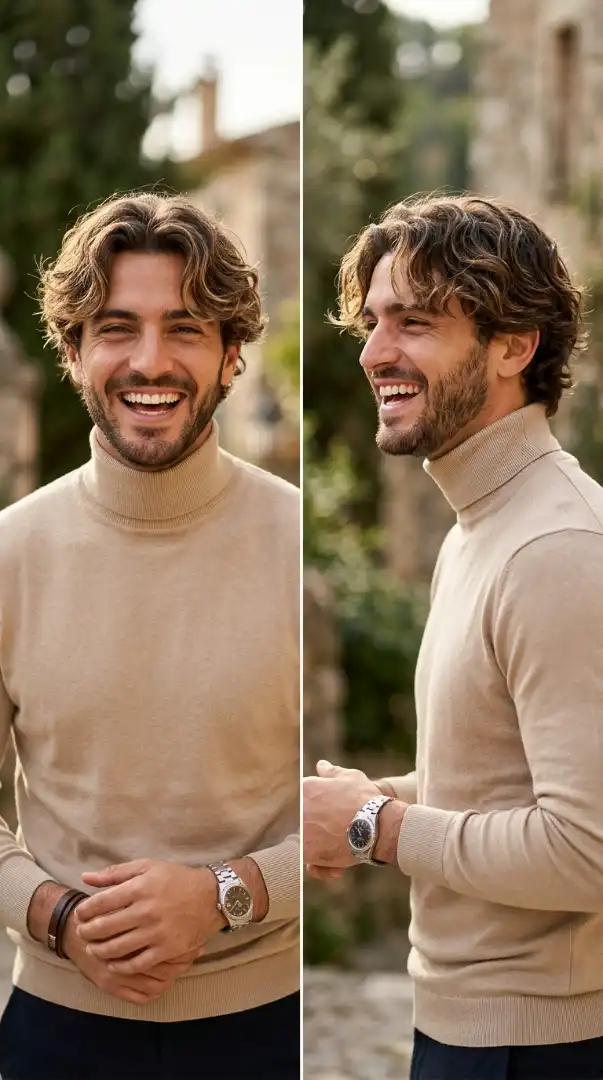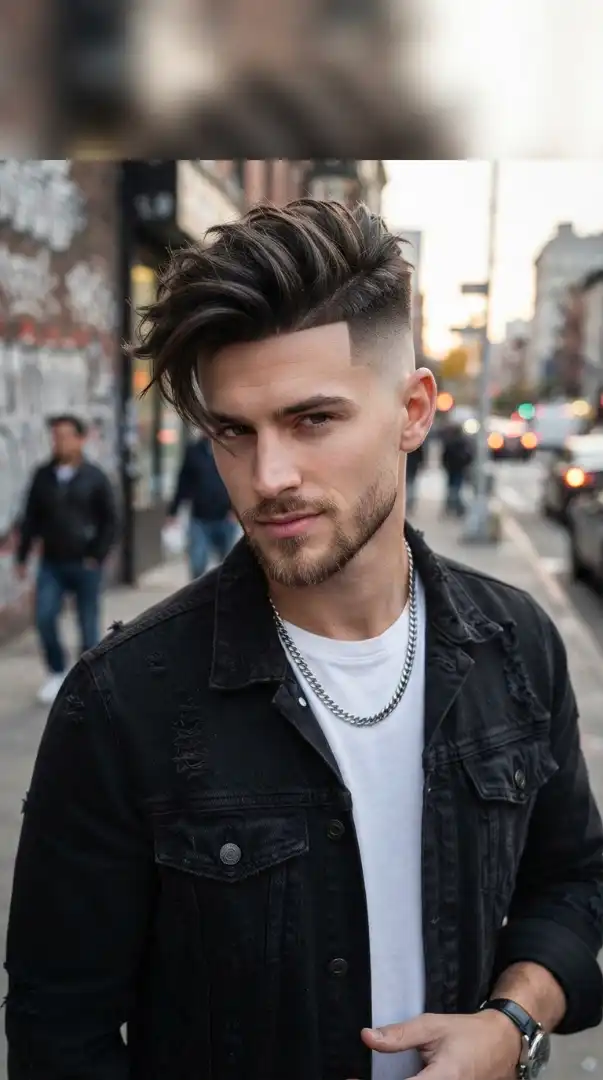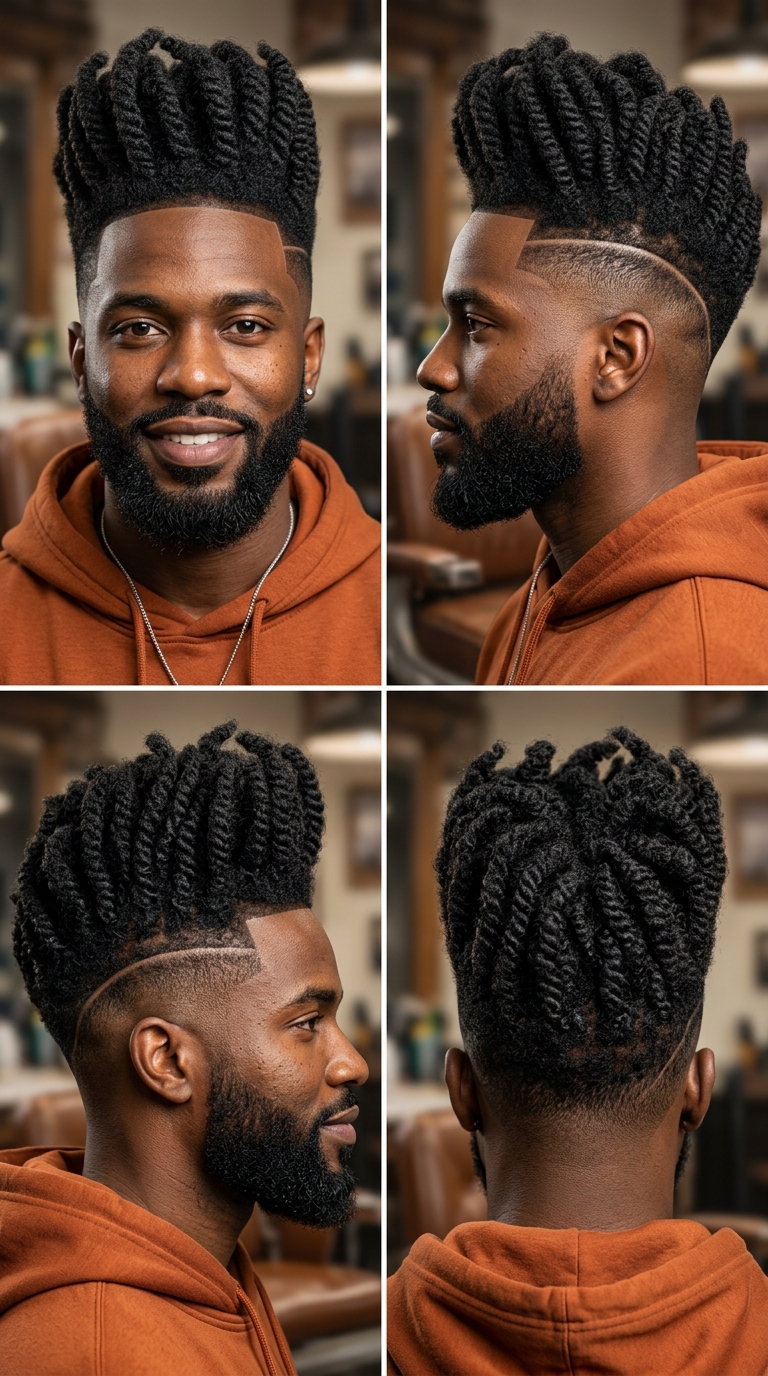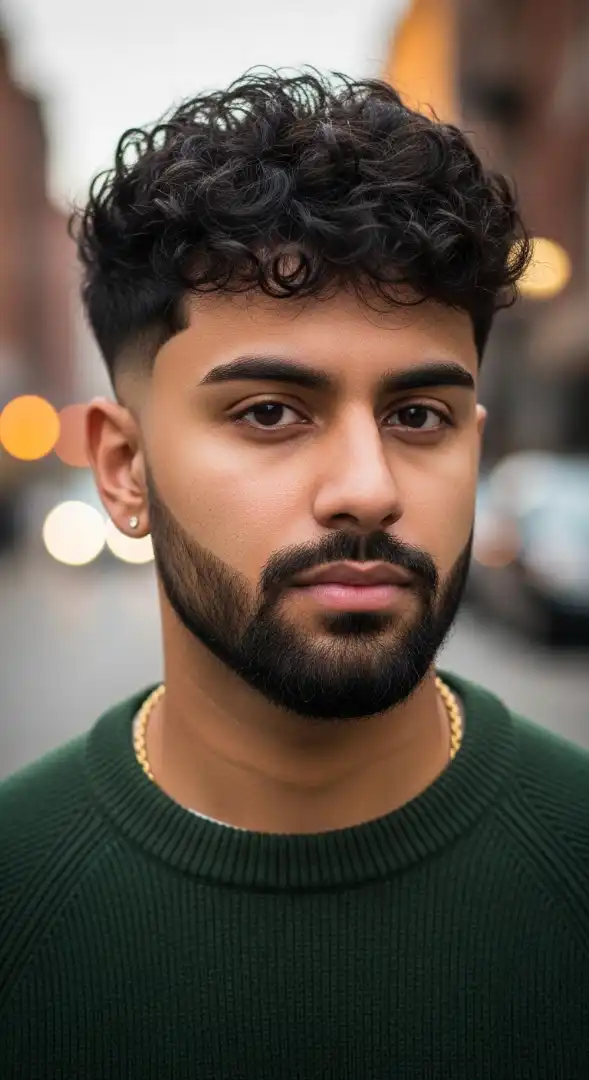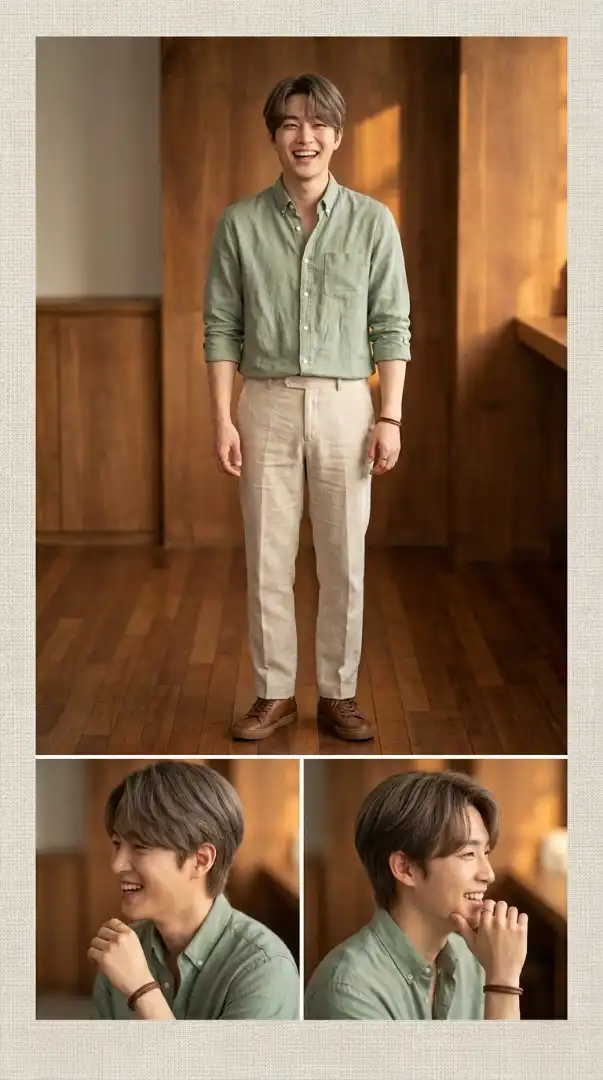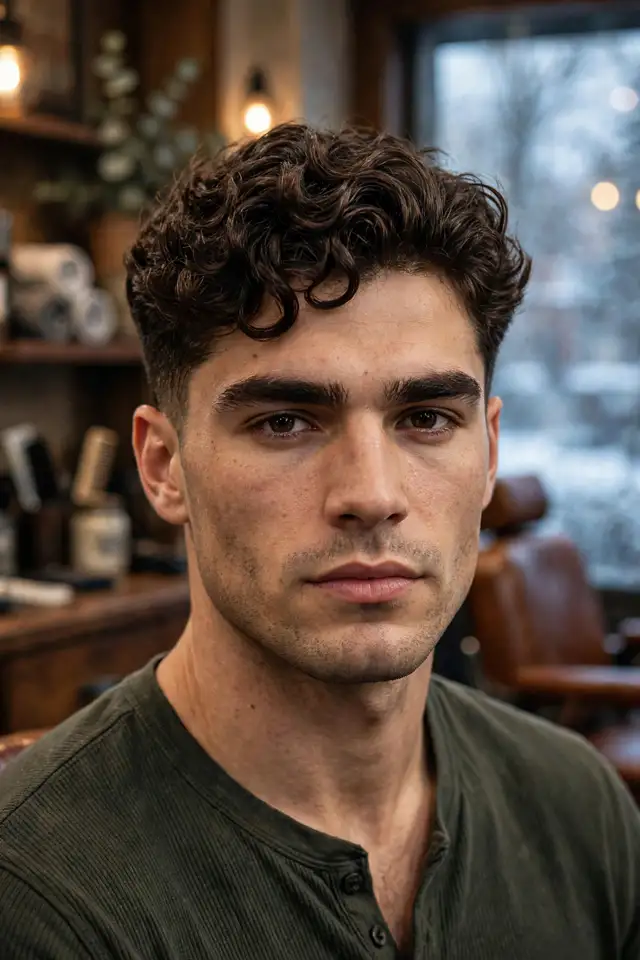
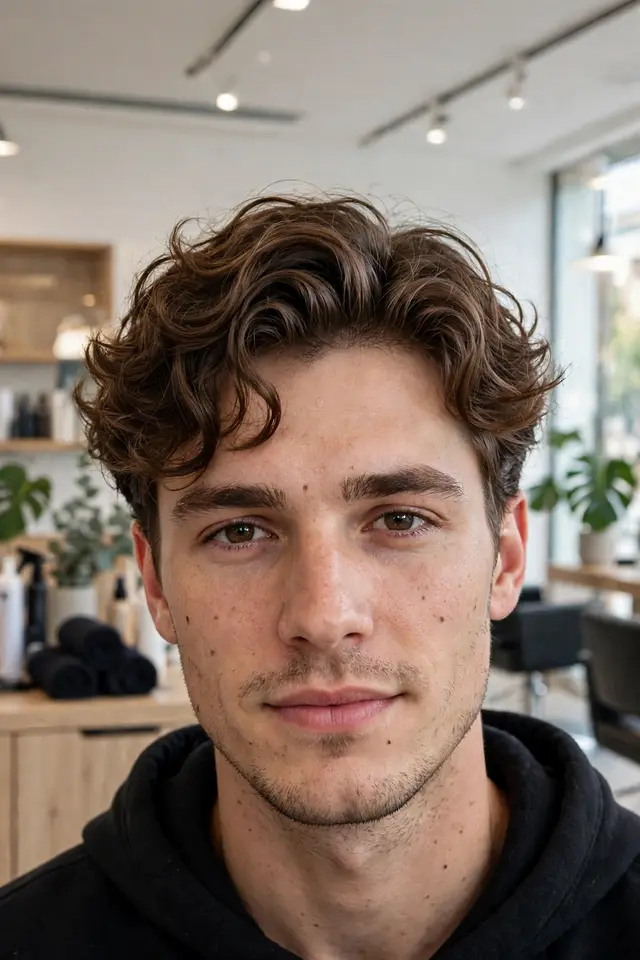
20 Perm Hairstyles for Men: Loose Waves, Korean Perms & Modern Curls
The word “perm” still carries a 1980s photograph, but the service men are booking in 2026 is a different animal entirely: a soft, loose wave that looks like the hair simply grew that way. The data is unambiguous. Pinterest’s 2026 Men’s Trend Report puts searches for “loose wavy perm men” up 228% and “loose perm men” up 81%, and Fresha’s booking figures tell the same story from the salon side — curly haircut bookings rose 13.1% in the first half of 2026, with consultations (the appointment men book before a big change) up 14.7%. Men are not just searching for perms; they are sitting down and getting them.
This guide covers 20 perm hairstyles for men — the loose wave that leads the trend, the Korean perm, the taper and fade combinations that dominate the photos, perms tuned for straight, fine, thick and long hair, and the winter care build that keeps a perm alive through hat season. Every style comes with the face shapes it flatters, the grooming kit it needs, its upkeep rhythm, and the exact words to say at the salon. The rules that define the modern perm run throughout: the rod decides the curl (an inch and up means a loose wave, smaller rods mean real curls), the top needs at least three inches for a wave to travel, and the perm is booked first — the cut comes a week later, once everyone can see the wave they are cutting into.
A perm builds on hair you might already be researching: men with natural curls should compare these against the curly hairstyles guide, and the Korean perm in style 2 belongs to the same world as the Korean hairstyles shaping a generation of cuts — both are worth reading alongside this one.
1 of 20 — The Loose Wave Perm
What is a loose wave perm?
The trend’s headline act. The Loose Wave Perm uses large rods — an inch and up — on three to four inches of hair to build long, open S-bends that read as “he woke up like this” rather than “he got a perm.” That disguise is exactly why it is the most requested men’s perm right now: it delivers the texture and movement that straight hair refuses to hold, without announcing the service that built it. Under three inches on top the wave has nowhere to travel and just looks fluffy, so length is the entry ticket. The perm itself lasts three to six months, relaxing gradually rather than expiring.
Face Shape: Kind across the board — the soft wave flatters oval and square faces and adds width where long faces want it.
Grooming Kit: Sulfate-free shampoo, a real conditioner, sea salt spray, and a diffuser if you dry with heat.
Maintenance: The perm lasts 3–6 months; the sides and shape need a cut every 4–5 weeks, booked a week after the perm.
Barber Script: “Loose wave perm — large rods, one inch and up, natural open waves on top, sides kept short.”
The wave that denies it is a perm — the trend’s front door.
Q: How long does a loose wave perm actually last?
A: Three to six months in the hair that was treated. It does not fall out on a date — it relaxes gradually, and the growing roots come in straight, so the wave softens month by month until the treated hair is cut away.
Q: What does a men’s perm cost?
A: Published US salon price indexes put men’s perms roughly between $50 and $200, depending on hair length and technique. A loose wave on a medium top sits mid-range; the consultation is where you get the honest number for your hair.
2 of 20 — The Korean Perm
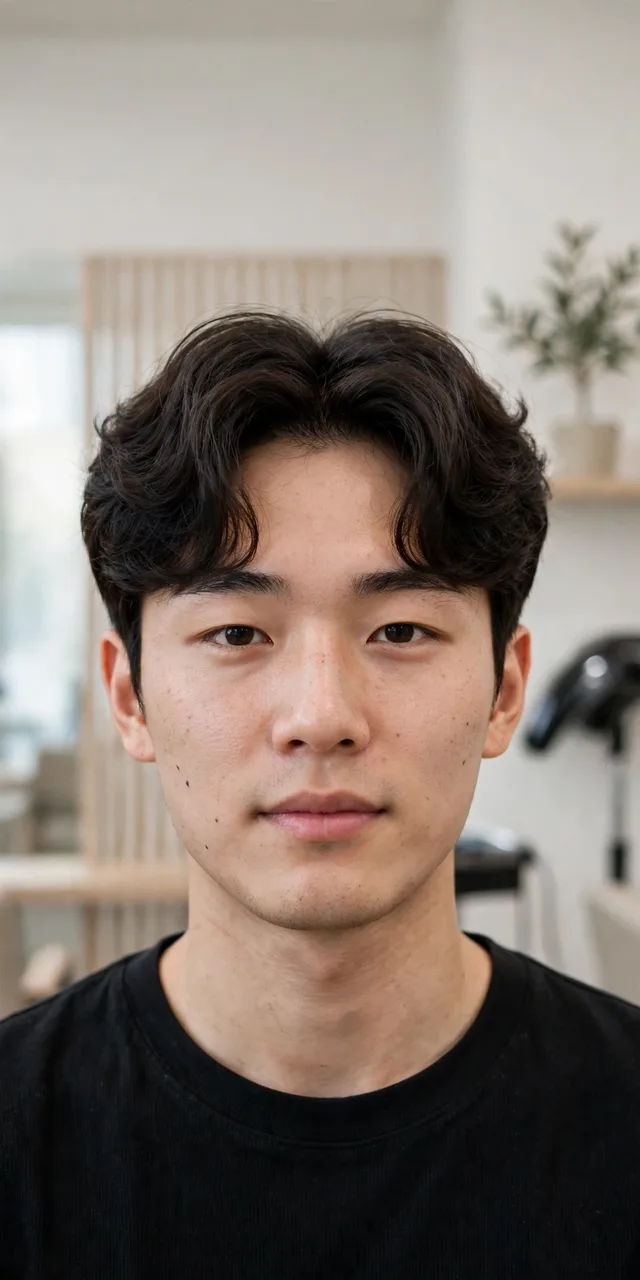
What is a Korean perm?
The softest, most engineered seat in the family. The Korean Perm comes out of Seoul’s salon system — digital and cold-wave techniques built to produce a natural result: gentle volume and a soft bend through the top, usually on a two-block base, often paired with a down perm that presses the sides flat so the silhouette stays neat instead of puffing out. Where the Western loose wave aims for movement, the Korean perm aims for polish — hair that looks born well-behaved. It is the perm behind half the drama stills your barber gets shown, and the natural partner to the two-block cuts already driving Korean-inspired trends.
Face Shape: The neat silhouette suits oval and long faces; the top’s volume balances a narrower forehead.
Grooming Kit: A light essence or leave-in, a dryer with a nozzle for the root direction, and almost no heavy product.
Maintenance: The perm holds 3–5 months; the two-block sides want a tidy every 3–4 weeks to keep the line.
Barber Script: “Korean perm — soft natural volume and bend on a two-block base, down perm on the sides if they puff out.”
Seoul polish — volume with manners.
Q: What is a down perm, and do I need one?
A: A down perm is a Korean technique that relaxes the side hair so it lies flat against the head instead of sticking out — a common problem with thick, straight Asian hair. If your sides puff, it is the difference between a neat two-block and a helmet.
Q: Korean perm or loose wave perm — what is the difference?
A: Direction of intent. The loose wave chases visible movement and a slightly undone finish; the Korean perm chases control — softer bend, flatter sides, a cleaner outline. Same family of chemistry, different manners.
3 of 20 — Perm with a Low Taper Fade
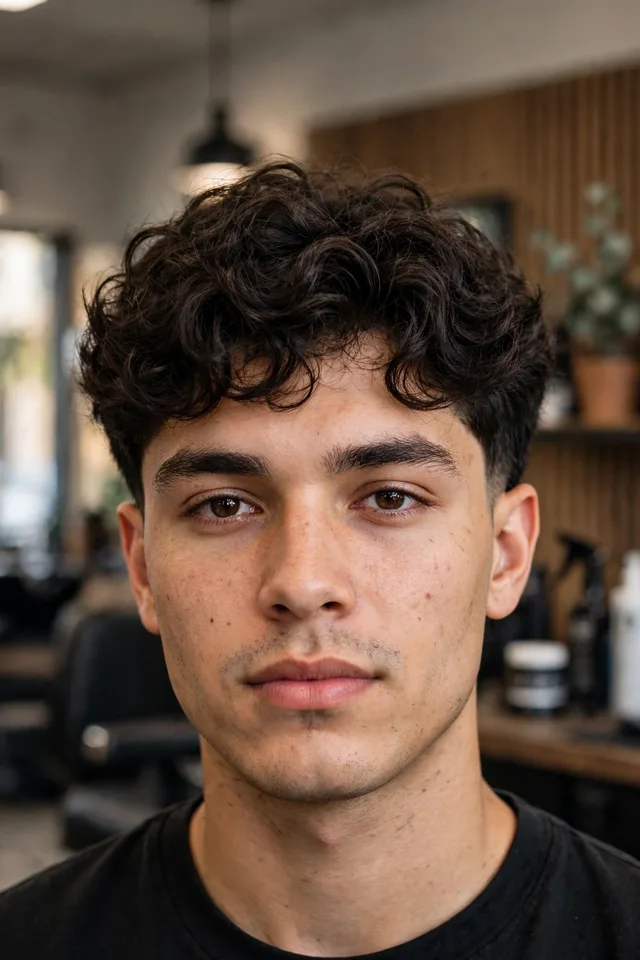
Why pair a perm with a low taper fade?
Because contrast is what makes curls look intentional. Perm with a Low Taper Fade keeps the permed top at full volume and graduates the sides only around the ears and neckline, so the tight, flat frame makes the wave above it look deliberate rather than overgrown. It is the combination that dominates men’s perm photos right now — low taper is the most requested finish across modern styles, and with a perm it does double duty: neatness without the harshness of a high skin fade against soft curls. The taper also grows out kindly under a perm’s longer service cycle.
Face Shape: The slim low frame suits round faces especially, while the permed top supplies the height.
Grooming Kit: Curl cream or sea salt spray for the top, nothing for the taper — the frame maintains itself.
Maintenance: Taper tidy every 2–3 weeks if you like it crisp; the perm itself runs 3–6 months.
Barber Script: “Perm with a low taper fade — loose waves on top, low taper only, keep the blend soft into the curl.”
Soft curls, disciplined frame — the photo everyone brings in.
Q: Perm first or cut first?
A: Perm first, cut about a week later. The wave changes how the hair sits and how long it looks, so a stylist cutting after the perm can see the true shape. Cutting blind, then perming, is how tops end up an inch shorter than the plan.
Q: Will a taper fade work with tight curls too?
A: Yes — the frame logic is identical. With tighter curls keep the taper low and the blend soft; a hard line against dense curl reads as a shelf. Style 5 covers the tighter curl itself.
4 of 20 — Wavy Perm with Short Sides
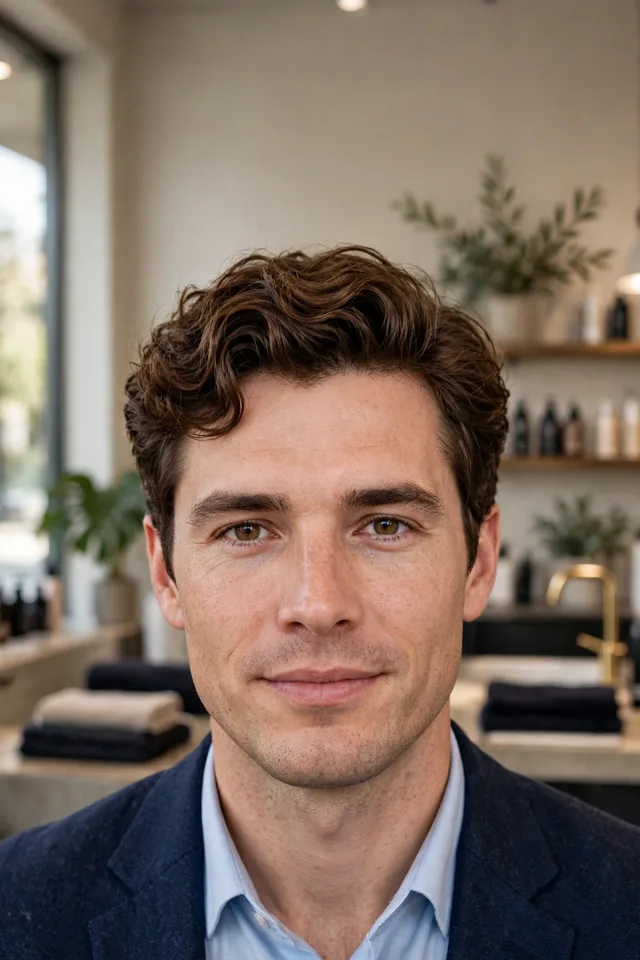
What is a wavy perm with short sides?
The balanced classic of the family: a wavy perm through the top — open bends on three to four inches — with the sides taken short in a taper or a #2–#3 scissor finish rather than a fade. It is the version stylists reach for when a man wants the perm’s movement with an office-safe outline, and it is one of the most forgiving builds here: the short sides keep the portrait tidy while the top does the expressive work. Because the sides are scissored rather than clipped to skin, the whole cut grows out as one soft shape — the winter-friendly option among the faded frames.
Face Shape: Oval and round faces lead; the short sides slim, the waves soften a strong jaw.
Grooming Kit: Sea salt spray, a light curl cream, and a wide-tooth comb for wet hair only.
Maintenance: Sides and shape every 4–6 weeks; the perm holds 3–6 months on top.
Barber Script: “Wavy perm with short sides — loose wave on top, sides short and scissored, no skin fade.”
Movement up top, manners at the edges.
Q: How short can the sides go with a perm?
A: Down to a #2–#3 taper comfortably. Shorter than that and the contrast hardens into a different haircut — fine if wanted (styles 3 and 12), but the soft classic here lives on scissored sides with some hair left to blend.
Q: Does this perm suit a professional setting?
A: It is the family’s interview answer. The wave is loose and controlled, the outline is clean, and nothing about it reads experimental. Keep the top at the looser end of the rods and it passes in conservative rooms.
5 of 20 — The Curly Perm
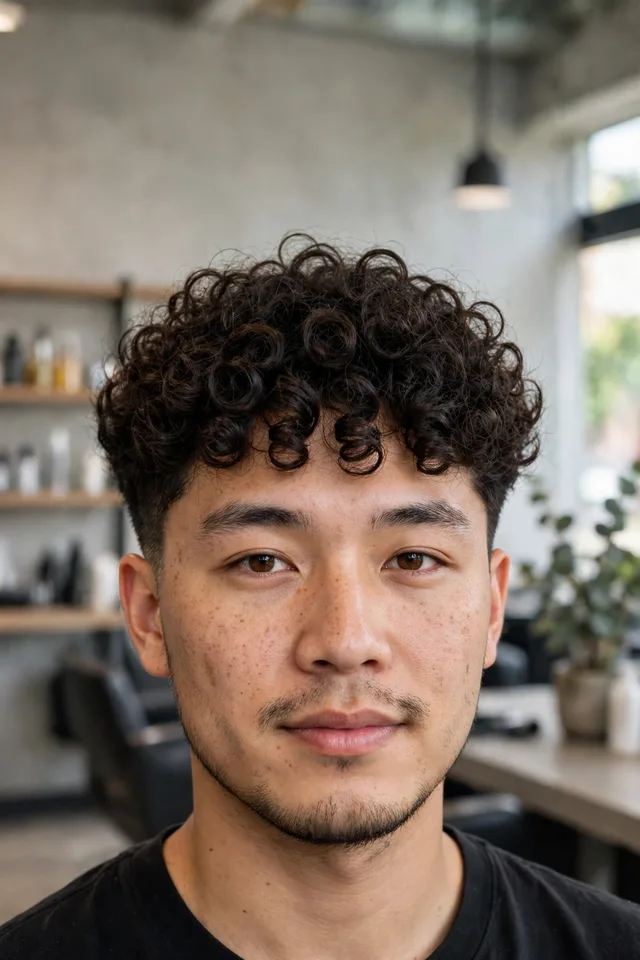
What is a curly perm for men?
Where the loose wave whispers, this one speaks. The Curly Perm uses medium and smaller rods to build defined, springy curls through the top — the full texture transformation, usually on a low taper or two-block base. It is the perm for men whose reference photos are genuinely curly men, and it changes the daily equation the most: curls with this much structure need moisture before they need styling, and they reward a routine built on cream and patience. Done on the right hair it is the most dramatic seat in this guide — and the one where an honest consultation matters most, because rod size is destiny.
Face Shape: Defined curls flatter angular and oval faces; round faces keep the sides tighter and the top’s height controlled.
Grooming Kit: Curl cream, a leave-in conditioner, a diffuser, and a sulfate-free shampoo. Combs touch it wet only.
Maintenance: Curls last 4–6 months; shape and sides every 4 weeks, with moisture as a daily habit.
Barber Script: “Curly perm for men — medium rods, defined curls on top, low taper sides, keep the curls’ length as they spring up.”
The full transformation — curls with a structure and a routine.
Q: How much length do curls lose to shrinkage?
A: A real amount — permed curls spring up one to two inches beyond their wet length. A curl-fluent stylist works with that, cutting and checking dry. If the plan assumes wet length, the result lands shorter than the mirror promised.
Q: Can I brush a curly perm?
A: Not dry, unless frizz is the goal. Detangle wet with fingers or a wide-tooth comb, apply cream, and leave the curls strictly alone while they dry. The brush is what turns defined curls into a halo.
6 of 20 — The Fringe Perm
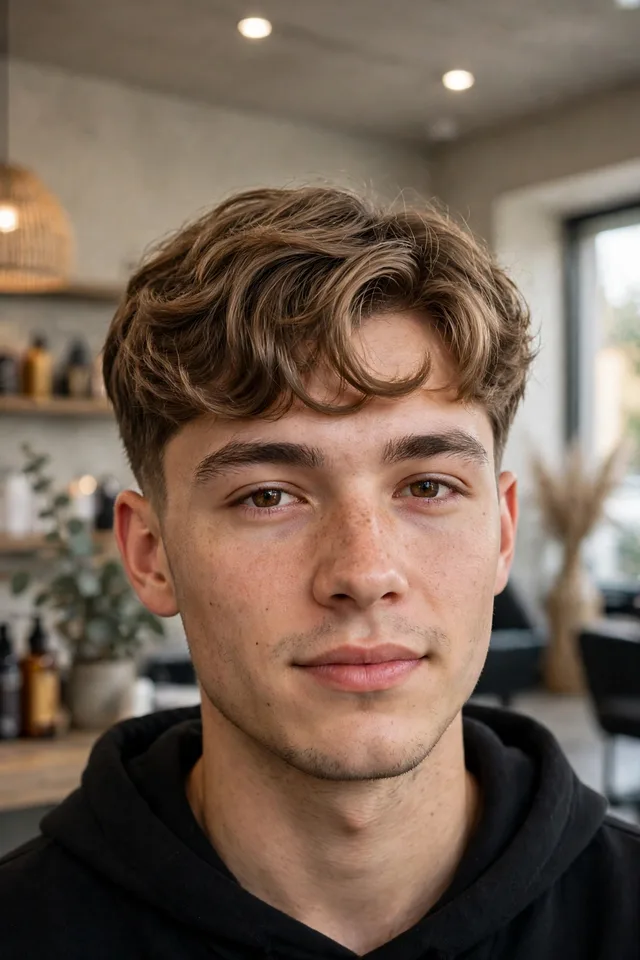
What is a fringe perm?
The front-loaded build: a perm whose wave is directed forward, so the top’s bend collects into a soft, curved fringe over the forehead — the comma-adjacent silhouette that Korean styling made famous, loosened for Western wear. The Fringe Perm works because a perm gives straight hair the one thing a forward fringe demands and straight hair lacks: a bend that stays. Without it, a fringe on poker-straight hair lies flat by noon; with it, the front holds its curve through the day. It is the youngest-looking seat in the family and the natural bridge from the fringe cuts of the last two seasons.
Face Shape: The forward curve shortens long faces and softens a high forehead; oval faces wear it effortlessly.
Grooming Kit: Sea salt spray, a light cream, and a dryer used forward — the fringe is set while drying.
Maintenance: The fringe’s curve softens first as it grows — plan a front tidy at 3–4 weeks; perm lasts 3–5 months.
Barber Script: “Fringe perm — loose wave directed forward into a curved fringe, low taper sides.”
The bend that stays — a fringe with a memory.
Q: Fringe perm or Korean comma hair — same thing?
A: Cousins. The comma is one defined curl of fringe swept to a point, usually on a Korean perm base; the fringe perm keeps the whole front wavy and forward. The comma is a styling finish; this is a cut-wide direction.
Q: Will a permed fringe survive a beanie?
A: Better than a straight one — the bend is chemical, not just styled, so it re-forms when you rough it forward with fingers. Dry it forward again at the door and the curve returns. Winter section 19 covers the full routine.
7 of 20 — Perm for Straight Hair

Can straight hair take a perm?
It is not only possible — it is the perm’s main job. Most men booking perms start with straight hair that refuses every textured style in the barber’s book: crops lie flat, fringes split, quiffs collapse by lunch. A Perm for Straight Hair changes the hair’s structure rather than fighting its habits daily, building the wave the styling products were faking. The honest cautions live here too: the first 48 hours decide the result (no washing, no hats crushed on wet hair), previously bleached or heavily damaged hair may be refused, and a strand test is a sign of a good salon, not a slow one.
Face Shape: Unchanged from your straight-hair range — the perm adds texture, not a new geometry; discuss height with your stylist.
Grooming Kit: Sulfate-free shampoo and conditioner from day one, sea salt spray, and patience for the first two days.
Maintenance: First perm on straight hair usually runs 3–5 months; regrowth is straight, so the blend softens over time.
Barber Script: “Perm for straight hair — loose natural wave on top, strand test first, keep maximum length.”
Stop fighting straight hair — reissue it with a wave.
Q: How soon can I wash my hair after a perm?
A: Wait about 48 hours before the first wash, and keep the hair dry and uncrushed in that window — no tight hats on damp hair, no ponytails or clips. The bonds are still settling; the first two days are the perm’s foundation.
Q: My hair is bleached — can I still perm?
A: Often not safely. Bleach and perm chemistry both restructure the hair, and stacking them risks breakage. A reputable salon will strand-test or refuse — and a refusal is the salon protecting your hair, not upselling you. Grow out or trim the bleach first.
8 of 20 — Perm for Fine Hair

Can fine hair wear a perm?
Fine hair is the perm’s quiet success story — with the rods kept large. A Perm for Fine Hair is really a body wave: the biggest rods, the loosest bend, built to give fine strands the apparent thickness and root lift they never hold from a dryer alone. Fine hair’s dangers are the mirror of thick hair’s: too-tight rods read as frizz, heavy products collapse it, and over-processing shows fast because each strand is delicate. Kept loose, gentle and weightless in product, the result is the fullest fine hair has ever looked — the volume answer that is not a haircut trick but a texture change.
Face Shape: The added volume suits long and narrow faces; round faces keep the sides tighter so the lift reads as height.
Grooming Kit: Volumising mousse or sea salt spray, the lightest curl cream, sulfate-free shampoo. Everything weightless.
Maintenance: Gentler processing means a softer hold — expect 3–4 months; shape every 4 weeks.
Barber Script: “Perm for fine hair — largest rods, body wave only, gentle processing, keep the sides neat.”
Body, borrowed permanently — fine hair’s fullest chapter.
Q: Will a perm damage fine hair?
A: Any perm is a chemical service, and fine hair shows damage sooner — which is why the loose, gentle version and a strand test matter. With an honest stylist and conditioner as a habit, fine hair wears a body wave well; with tight rods and bleach history, it does not.
Q: Why does my fine perm fall flat by evening?
A: Product weight, almost always. Cream-heavy routines glue fine waves down by noon. Mousse or spray on damp hair, dried with lift at the roots, and nothing more — the wave itself is doing the work now.
9 of 20 — Perm for Thick Hair
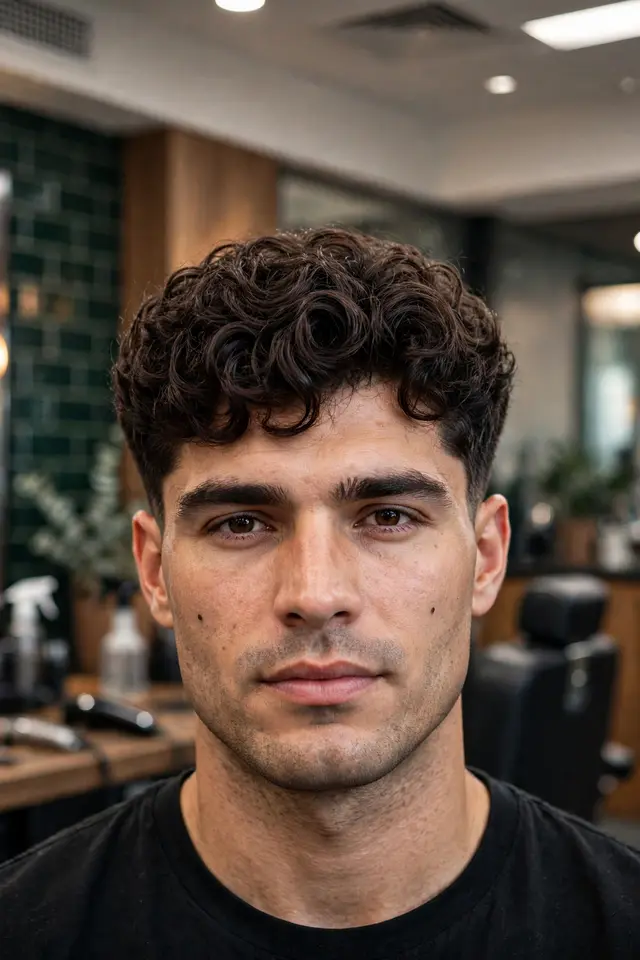
Why does thick hair love a perm?
Because thick hair’s problem is the opposite of fine hair’s: it has body to spare and no direction. A Perm for Thick Hair gives dense, straight growth a uniform wave pattern to follow, so the mass moves as one texture instead of expanding as one block. The stylist’s work is in the sectioning — thick hair needs the solution distributed evenly or the outside waves and the inside does not — and in the cut a week later, where the new wave lets the barber remove interior weight that straight thick hair could never spare. Winter’s dry air expands thick permed hair further; moisture is the season’s tax.
Face Shape: The controlled movement flatters square faces most; round faces keep the taper tight so volume reads upward.
Grooming Kit: A rich conditioner, curl cream, sea salt spray for definition, and a diffuser for wash days.
Maintenance: Thick hair holds a perm well — 4–6 months; interior reshaping every 4–5 weeks as it grows.
Barber Script: “Perm for thick hair — even sections, loose-to-medium rods, then remove interior weight at the cut next week.”
Density, given directions — thick hair finally moves as one.
Q: My thick permed hair puffs out at the sides — why?
A: The sides were left in the perm or grew back with the top’s energy. The fix is structural: sides tapered or down-permed (style 2) so only the top carries the wave. Puff is a silhouette problem, not a product problem.
Q: Does thick hair need a stronger perm solution?
A: It needs thorough, even application more than raw strength — resistant hair is a known category and stylists formulate for it. What it cannot survive is rushed sectioning: the wave is only as even as the wrap.
10 of 20 — The Long Perm
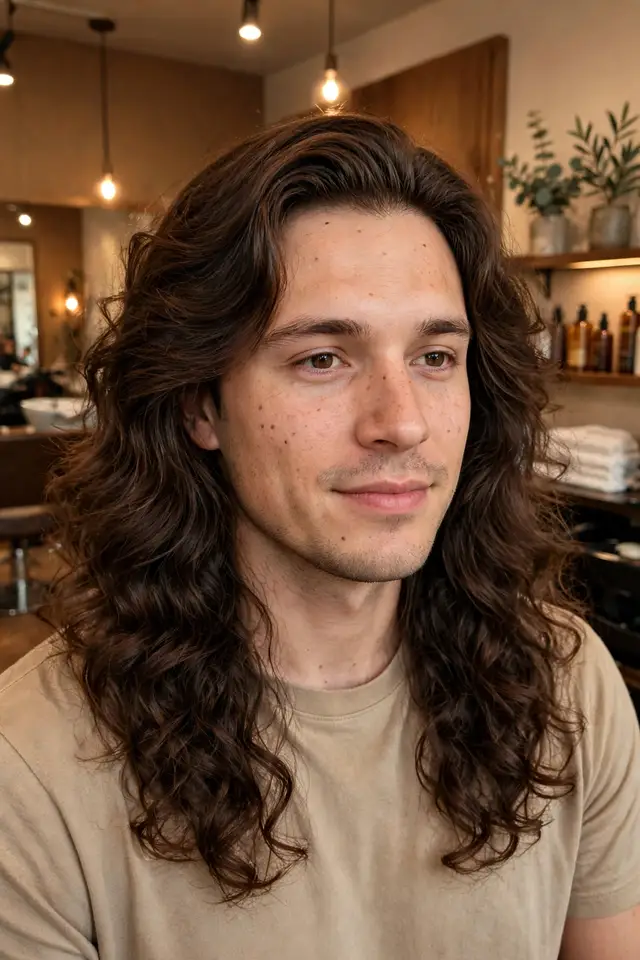
What is a long perm for men?
The family’s upper register: the top kept at four inches and beyond, permed into flowing, connected waves — the surfer-adjacent, romantic end of the perm world. Length changes the physics: long permed hair has the room for the full S-curve to show, and the weight of the hair itself stretches the wave looser over the months, so the Long Perm often ages the most gracefully of all. It asks the most care in return — long chemically-treated hair tangles, dries at the ends, and shows split ends honestly. For men growing their hair out, it converts the awkward in-between year into a style with intent.
Face Shape: Long faces should watch total length (waves plus length reads very long); it shines on oval and square faces.
Grooming Kit: Leave-in conditioner, curl cream, a wide-tooth comb, and a satin pillowcase if you are serious.
Maintenance: The perm runs 4–6 months, loosening as it grows; ends trimmed every 6–8 weeks to stay healthy.
Barber Script: “Long perm for men — large rods, flowing connected waves, keep every bit of length, layers only at the ends.”
The grow-out, converted — length with a wave pattern.
Q: Can I perm my hair while growing it out?
A: It is one of the best reasons to. The perm carries the in-between lengths with texture and intent instead of a headband and hope. Just budget the ends: treated hair growing long needs trims, or the last two inches pay for the journey.
Q: Long perm or natural long waves — how do I choose?
A: By what your hair does unassisted. If your natural hair dries wavy, a perm is chemistry you may not need; if it dries straight and heavy, the long perm is how the reference photos were actually achieved. Your consultation settles it in one look.
11 of 20 — The Short Perm
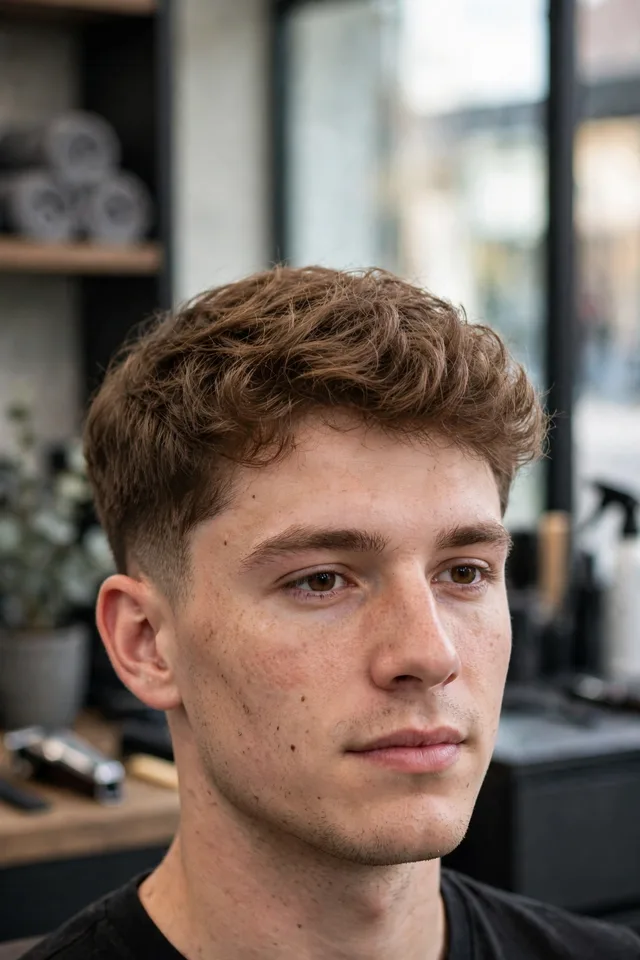
What is a short perm for men?
The cautious entry: a perm on a shorter top — around two to three inches — where the rods build a gentle bend rather than a travelling wave. The Short Perm trades drama for subtlety: at this length you get texture, lift and a top that no longer lies in one flat direction, which is all many men actually want. It is also the fastest-growing-out seat here — the shorter the hair, the sooner the treated length is cut away — which makes it the right first perm for the undecided: a three-month experiment, not a half-year commitment.
Face Shape: The subtle lift flatters most faces; very long faces gain least and should look at style 1’s length.
Grooming Kit: Sea salt spray and a light matte cream. At this length, product is a finishing touch, not a structure.
Maintenance: The treated hair is gone in 3–4 months of trims; cuts every 3 weeks hold the shape.
Barber Script: “Short perm for men — gentle bend on a two-to-three-inch top, largest rods, nothing dramatic.”
A bend, not a wave — the three-month experiment.
Q: Is a short perm worth it if it grows out fast?
A: As a first perm, yes — that is its purpose. You learn how your hair takes the chemistry, how the wave behaves, and whether you enjoy the routine, at the lowest commitment in the family. Most men who start here book longer next time.
Q: How short is too short for a perm?
A: Below about two inches the hair will not wrap the rods properly and the result is frizz, not bend. If your top is shorter, grow it for one cycle first — the perm needs something to hold onto.
12 of 20 — Perm with a Mid Fade
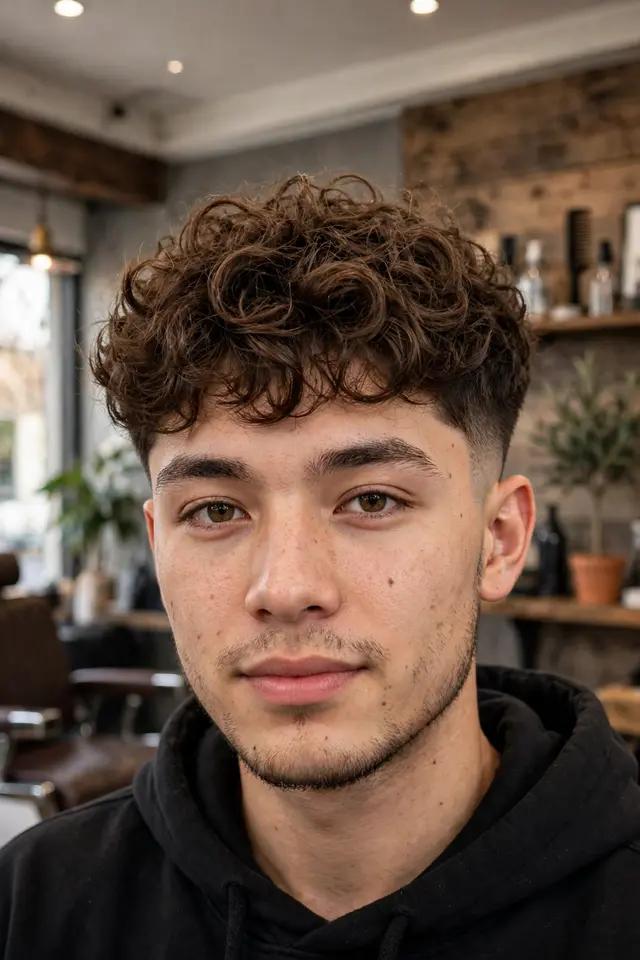
Is a mid fade right with a perm?
It is the sharper remix of style 3. Perm with a Mid Fade lifts the fade line to the temples, giving the permed top a crisper, younger frame and the portrait more contrast — the version all over barbershop feeds, where the curls sit above a clean gradient. The honest trade is upkeep and tone: the fade’s freshness expires in two to three weeks while the perm runs for months, and the harder frame makes the whole portrait more deliberate, less soft. Choose it when you want the perm to read as a barbershop cut first and a texture story second.
Face Shape: The faded sides slim round faces; the permed top’s height lengthens the portrait further.
Grooming Kit: Curl cream for the top; a moisturiser for the faded skin in winter if it shows dry.
Maintenance: Fade refresh every 2–3 weeks; the perm itself 3–6 months — the sides set the calendar.
Barber Script: “Perm with a mid fade — loose curls on top untouched, mid fade on the sides, soft blend into the curl.”
The remix — living curls, sharper frame.
Q: Why not a high or skin fade with a perm?
A: You can, but the contrast turns severe fast: dense curls perched over bare skin reads as two haircuts stacked. The mid fade keeps enough shadow to marry the top to the head. If severe is the intent, commit knowingly.
Q: Does the fade get permed too?
A: No — the perm lives on the top’s length; the faded sides are far too short to wrap or need it. A good stylist protects the boundary so solution does not creep into the frame you are paying to keep clean.
13 of 20 — The Broccoli Perm
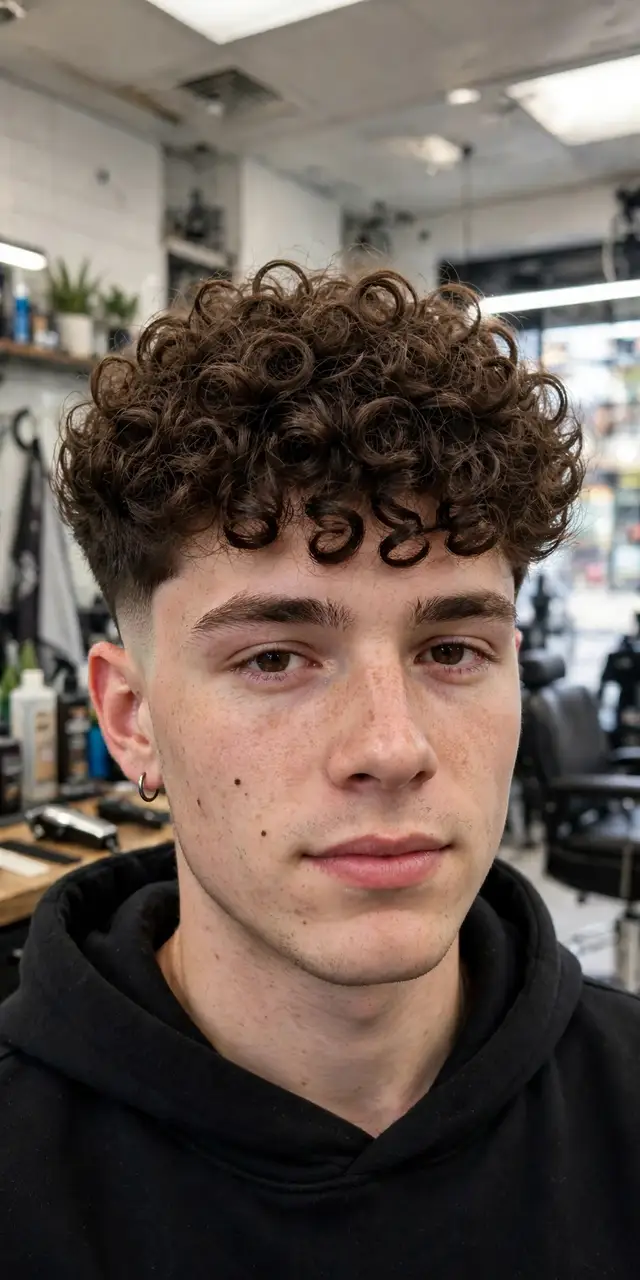
What is a broccoli perm?
The Gen Z emblem — named, half-affectionately, for the dense crown of tight curls it builds: a perm concentrated on the top section, small-to-medium rods, the curls worn full and forward over short faded sides. Whatever the jokes, the Broccoli Perm is a real, heavily requested service: it is the alpaca-adjacent silhouette (the fluffy rounded top) achieved by chemistry on straight hair, and for a generation raised on it, it simply reads as “hair.” Worn well — curls moisturised, sides fresh — it is a legitimate texture statement; worn dry and overgrown, it becomes the meme.
Face Shape: The dense crown suits oval and long faces; round faces keep the sides at their tightest to avoid a full circle.
Grooming Kit: Curl cream daily, leave-in conditioner, a diffuser. This perm’s reputation lives and dies on moisture.
Maintenance: The fastest upkeep here — fades every 2 weeks, curls re-permed or cut out in 3–4 months.
Barber Script: “Broccoli perm — tight defined curls on the top section only, worn forward, faded sides kept fresh.”
The emblem — dense crown curls, done properly or not at all.
Q: Broccoli perm or alpaca haircut — what is the difference?
A: The alpaca is a cut — a fluffy rounded top built by scissors on hair with natural volume. The broccoli perm is a service that manufactures the curl itself on straight hair. Same neighbourhood of silhouette, different machinery underneath.
Q: How do I keep the broccoli perm from looking dry?
A: Moisture, scheduled. Cream on damp hair every morning, conditioner at every wash, and no dry brushing. The meme version is simply this perm neglected — the shape is fine, the care is what photographs badly.
14 of 20 — The Messy Perm
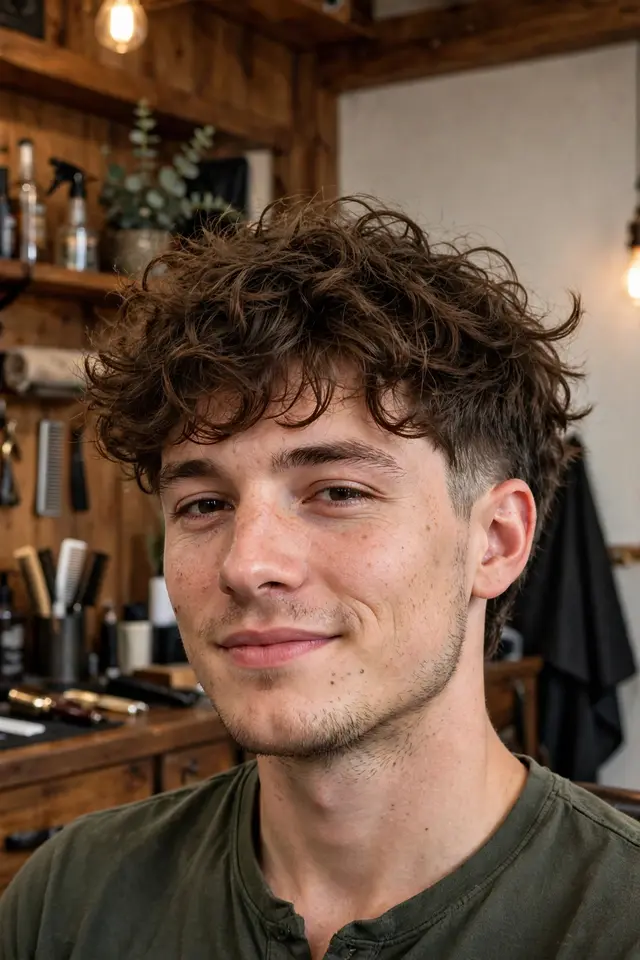
What is a messy perm?
The undone finish of the family: a loose-to-medium perm worn deliberately dishevelled — waves broken up with fingers, pieces falling in several directions, no visible styling order. The Messy Perm suits the same men the messy fringe and warrior families serve: the texture is the style, and the morning routine is thirty seconds of roughing it back into disorder. Its secret is that the mess is built on a disciplined base — the perm supplies the pattern, the barber supplies the shape, and only the finish is allowed to look accidental. It is winter’s easiest perm, because hat hair simply gets re-messed.
Face Shape: Forgiving everywhere; the disorder softens sharp features and the volume widens narrow faces.
Grooming Kit: Sea salt spray, matte cream, and fingers. A diffuser on wash days, set to scrunch, not smooth.
Maintenance: Shape every 4–5 weeks; the perm relaxes gracefully over 4–6 months into this style’s whole point.
Barber Script: “Messy perm — loose-to-medium wave, cut for a broken-up finish, nothing symmetrical.”
Disorder, engineered — the thirty-second morning.
Q: Messy perm or loose wave perm — where is the line?
A: Finish and rod size. The loose wave (style 1) uses the largest rods and a calmer, connected wave; the messy perm can go a size smaller and is cut and styled to break apart. Same family — one is combed by the wind, the other is combed by fingers.
Q: Can a messy perm look professional when it has to?
A: Within limits — cream instead of salt spray, pieces directed rather than scattered, and it passes in most modern offices. For genuinely formal rooms, style 4’s short sides and calmer top are the safer booking.
15 of 20 — Perm with a Textured Crop
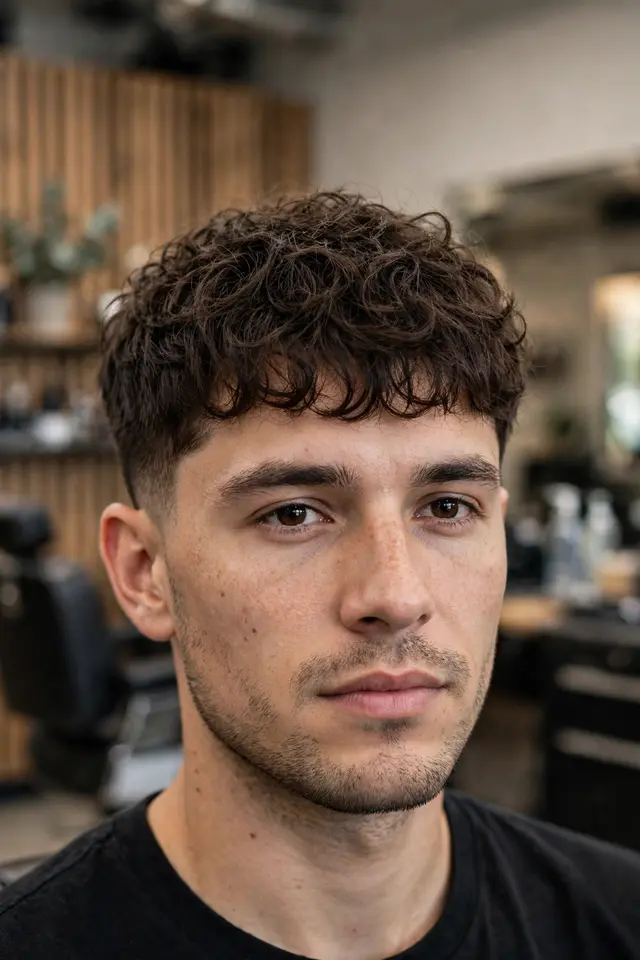
What is a perm with a textured crop?
The hybrid: the textured crop’s short, forward, point-cut architecture with a perm supplying the texture the scissors usually fake. On straight hair, a crop’s choppy pieces lie flat within the hour; permed, the same cut holds its separation all day, because the bend is in the hair itself. Perm with a Textured Crop is the lowest-drama way into this guide — crop length means less hair treated, a faster service, and a grow-out measured in weeks of trims rather than months of blend. It is also the natural upgrade path for the millions of men already wearing the crop and wondering why theirs never looks like the photos.
Face Shape: The crop’s forward front shortens long faces; round faces keep the crop’s height and the sides tight.
Grooming Kit: A pea of matte clay or a mist of salt spray. The perm does the texture; you just wake it up.
Maintenance: Crop trims every 2–3 weeks; expect the perm’s effect to ride along for 3–4 months of cuts.
Barber Script: “Perm with a textured crop — crop length and point-cut pieces, loose perm for the texture, forward fringe.”
The crop, finally holding — texture that survives the day.
Q: Why perm a crop instead of just using product?
A: Product rents texture by the hour; the perm owns it for months. If your crop looks right at 8am and flat by lunch despite clay, the missing ingredient is structure in the hair — which is precisely the perm’s job.
Q: Crop first or perm first at this length?
A: The standing rule holds — perm first, cut a week later — but at crop length many stylists will do a light version in one visit: perm, rinse, then a conservative cut, with the true shaping at the next appointment. Ask yours which they prefer and why.
16 of 20 — The Beach Wave Perm

What is a beach wave perm?
The relaxed, sun-adjacent build: the loosest, longest bends in the family, worn with a sun-lightened, holiday ease — a perm that imitates a month of salt water rather than a salon hour. The Beach Wave Perm usually sits on a medium top with soft, scissored sides (a fade would argue with the mood), and its styling is the lightest here: scrunch with salt spray, air-dry, done. It peaks, honestly, as a warm-weather look — but it earns its winter place as the grow-out champion: the looser the wave, the softer the months-old version looks under a coat collar.
Face Shape: The wide, soft wave flatters long and narrow faces; square faces gain ease at the edges.
Grooming Kit: Sea salt spray (finally, literally), leave-in conditioner, and nothing with hold stronger than a cream.
Maintenance: The most relaxed rhythm in the family — shape every 5–6 weeks, perm 4–6 months.
Barber Script: “Beach wave perm — the largest rods, longest loosest bends, scissored soft sides, no fade.”
A month of salt water, bottled — the loosest seat here.
Q: Beach wave or loose wave perm — are they different?
A: Degree, not kind. The beach wave sits at the extreme loose end — bigger rods, longer hair, softer sides, less polish. The loose wave of style 1 is its tidier sibling, the one that attends meetings.
Q: Does a beach wave perm suit winter at all?
A: As a grow-out, yes — it is the perm least interested in crispness, so hats and scarves cannot ruin an intention it never had. The daily tax is dryness: winter air plus a loose wave wants leave-in conditioner as a habit.
17 of 20 — Perm for a Receding Hairline

Can a perm help a receding hairline?
Handled honestly: no perm regrows hair, and no stylist should promise otherwise. What a Perm for a Receding Hairline legitimately does is maximise what remains — the wave adds apparent density and shadow at the front, and a permed fringe worn forward covers the temples’ weakest ground with texture that holds its position, where straight hair would lie flat and expose. The tuning matters: the loosest rods (tight curls can separate and show scalp), length kept at the front, and sides tapered rather than faded so the contrast at the temples stays soft. Deep recession still belongs to shorter answers — a good salon will say so.
Face Shape: Follows the classic perm’s range; the forward wave also softens a high forehead’s corners.
Grooming Kit: Light mousse or salt spray — everything weightless and dry-finish; heavy wet-look products draw the eye to the scalp.
Maintenance: Every 3–4 weeks — the coverage is length- and shape-dependent, and growth spends both.
Barber Script: “Perm for my hairline — loosest rods, fringe kept full and forward, taper the sides, no fade, be honest about coverage.”
Volume and a forward fringe — camouflage, honestly labelled.
Q: Will a perm make thinning hair look thicker?
A: It makes the hair you have occupy more visual space — waves create shadow, separation and movement that read as density. That is a real effect, not a trick. It is not more hair, and any salon selling it as regrowth is selling you something else.
Q: At what point is a perm the wrong answer for recession?
A: When the hairline’s retreat passes the fringe’s honest reach — roughly where the temple points sit behind where a forward fringe can fall. From there, short and owned (the buzz family) is the stronger portrait, and the perm budget is better spent elsewhere.
18 of 20 — The Grown-Out Perm
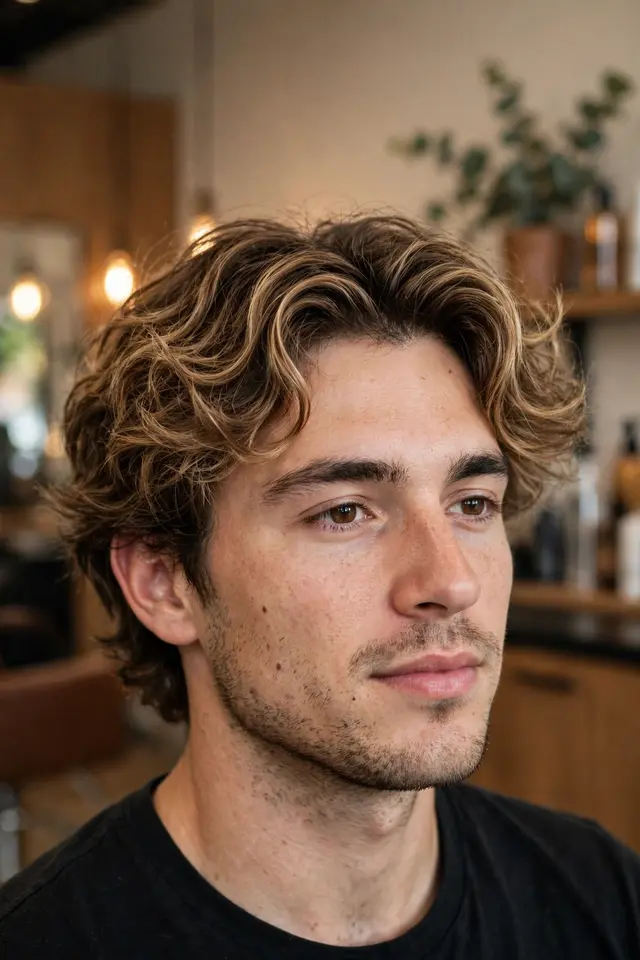
What is a grown-out perm, months later?
Not a style you book — the one you plan for. A perm’s second half of life has its own look: the treated lengths keep a softening wave while the roots grow in straight, and the blend between them decides whether month four looks like a style or an expiry date. Men who choose loose rods, longer tops and softer frames (styles 1, 14 and 16) find the Grown-Out Perm reads as a wavy, lived-in cut that simply relaxes over the season. The strategy: at the three-month mark, decide — re-perm the new growth, transition the cut toward the wave’s remains, or grow it out entirely under regular shaping.
Face Shape: Unchanged from the original perm — the silhouette softens evenly rather than collapsing in one place.
Grooming Kit: The same kit, softer hand: cream over spray, moisture up as the treated ends age.
Maintenance: Shaping every 5–6 weeks keeps the blend honest; the re-perm decision lands around month 3–4.
Barber Script: “Shape my grown-out perm — keep the waved lengths, blend the straight roots, no hard lines.”
Month four, by design — the perm’s graceful second act.
Q: Why does my perm look straighter at the roots?
A: Because it is — the roots are new, untreated hair. That two-texture blend is normal from month two onward. Loose waves hide it best; tight curls announce it, which is one more reason the modern perm defaults to loose.
Q: Can I re-perm just the roots?
A: Yes — a regrowth service treats the new hair only, and it is the standard maintenance path for committed perm wearers. The risk is a visible difference between old and new wave if the rod choice changes; take a photo of your original rods’ result to the appointment.
19 of 20 — The Winter Perm

How should a perm change for winter?
The perm itself stays — the care around it hardens. Winter attacks a perm from three sides: dry indoor heat pulls moisture out of treated hair (already thirstier than untreated), wool hats crush and friction-frizz the wave, and the season’s longer gaps between washes meet a hair type that needs conditioner more, not less. The Winter Perm answers with a routine, not a different rod: conditioner at every wash, leave-in before any hat, satin-lined headwear where possible, and the top dried before the beanie goes on — a damp perm under wool dries in the hat’s shape. Rebuilt at the door with cream and fingers, the wave returns.
Face Shape: Follows your perm’s own range — winter changes the routine, not the geometry.
Grooming Kit: Rich conditioner, leave-in spray, curl cream for the door rebuild, and a satin-lined beanie.
Maintenance: Your perm’s own rhythm, plus moisture discipline; a deep-condition weekly is the season’s rent.
Barber Script: “Winter perm — keep my usual wave, and set me a cold-season care routine with the cut.”
The wave survives winter — moisture is the whole strategy.
Q: How do I fix hat-flattened permed hair fast?
A: Mist the top lightly with water or leave-in, scrunch upward with fingers, and let it re-form for a minute — the wave is chemical, so it remembers. Never brush it out flat and never add wax to a flattened perm; both fight the memory you paid for.
Q: Should I wash a perm less in winter?
A: Wash when it needs it, but change what washing means: sulfate-free shampoo, conditioner every single time, and co-washing (conditioner-only rinses) between full washes if your hair runs dry. Winter perm hair dies of thirst, not dirt.
20 of 20 — The Perm King

What is the single best perm for men?
The one that keeps every rule the modern family runs on: large rods building a loose, open wave on three to four inches of top — movement that reads as grown, not made; sides in a soft low taper that frames without arguing; a fringe left long enough to fall forward or sweep; and a care routine of sulfate-free washing, real conditioner and thirty seconds of morning arrangement. The Perm King is not the tightest here (that is the curly perm), not the neatest (the Korean), not the loudest (the broccoli) — it is the reference the trend data is actually describing: the loose wave, at the length that flatters the most faces, with upkeep a normal calendar survives. If you book one perm this winter, book this one, at a salon that strand-tests first.
Face Shape: The family’s most forgiving seat — oval and square lead, round faces slim under its volume, long faces shorten under its front.
Grooming Kit: Sulfate-free shampoo, real conditioner, sea salt spray, a light curl cream, and a diffuser. Five items, every version of the week.
Maintenance: The perm runs 4–6 months at this looseness; shaping every 4–5 weeks, perm booked before each cut.
Barber Script: “The full modern perm — large rods, loose open wave, three to four inches on top, low taper, fringe left to fall forward.”
The reference itself — loose, long enough, and honestly maintained.
Q: Why does this beat a natural curly cut?
A: It does not compete with one — it serves the men who do not have one. If your hair is naturally curly, the curly guide is your book. The king exists for straight and flat hair that wants the same portrait; comparing them is comparing a tailor to a gym.
Q: What is the one habit that makes any perm look right?
A: Moisture before styling, every time. A perm is restructured hair, and restructured hair is thirsty hair; cream or leave-in on damp hair is the difference between waves that photograph and waves that frizz. Every other rule in this guide is commentary on that one.
The Bottom Line
Perm hairstyles for men in 2026 are defined by restraint: loose rods, enough length, and care that respects the chemistry. Book the perm before the cut, wait the 48 hours, keep everything sulfate-free and moisturised, and the wave the Pinterest data is chasing — up 228% for the loose wavy perm — is genuinely this simple. Pick your build by your hair (straight hair is the main client, fine hair goes loosest, thick hair needs even sectioning) and your calendar (the short perm is a three-month experiment; the king runs half a year). For hair that curls on its own, see the curly hairstyles guide, and for the two-block world the Korean perm lives in, the Korean hairstyles guide.