
20 Slick Back Hairstyles for Men: Classic, Modern & Old Money Versions
Some haircuts trend for a season. The slick back is doing something bigger: trend forecasters have called it the dominant silhouette of the year, it tops best-hairstyles lists for 2026, and Jim Shaw — one of the most quoted men’s hairdressers in the business — names the old money slick back among his defining autumn/winter looks, built for the season’s celebrations. It owned the runways as the sleek look of the moment, and barbers report the burst-fade version as the single most-requested cut in their chairs right now.
Know the family rules before you pick a version. A slick back needs length on top — four to six inches before hair will travel back and stay there. The current version is softer than the one from a decade ago: pushed back with the fingers rather than glued down with a comb, finished matte or with a controlled shine instead of a wet helmet, and worn over sides that are soft-blended with no harsh line. The fade underneath decides the character — our fade haircuts for men guide breaks down every fade level if you want the full map before choosing.
Inside: the classic original, the softer modern version, four fade pairings from low to burst, the undercut, the old money scissor cut, textured and long versions, slick backs for thick, fine, wavy and curly hair, a winter-proof build, and the one cut that obeys every rule. Each comes with the face shapes it flatters, the kit it needs, the upkeep it honestly demands, and the exact words to say in the chair. Growing your length out first? Our long hairstyles for men guide covers the journey.
1 of 20 — The Classic Slick Back
What makes the classic slick back the original?
The blueprint: hair combed straight back from the forehead in one clean sweep, sides scissor-blended or lightly tapered, and a natural shine finish. The classic slick back is the boardroom original — the silhouette associated with a century of men who looked like they owned the building — and it still works because it asks for nothing but length, direction and discipline.
Face Shape: Oval and square faces carry the exposed forehead best; the swept-back volume adds height that suits rounder faces too.
Grooming Kit: A fine comb for the morning set, a medium-shine pomade, and a dryer to lay the direction in while damp.
Maintenance: Scissor-blended sides hold 4 to 5 weeks. The top needs no trimming until it stops lying flat — usually every second visit.
Barber Script: “Classic slick back — four to six inches on top swept straight back, sides scissor-blended, no fade line. Natural shine finish.”
Q: How long does my hair need to be for a classic slick back?
A: Four inches is the working minimum, five to six is comfortable. Shorter than four and the hair springs forward instead of lying back, no matter the product.
Q: Is the classic slick back too formal for everyday wear?
A: It reads polished, not stiff — with a natural shine rather than a wet finish it sits as easily with a t-shirt as with a suit. The finish decides the formality.
The original still sets the standard — everything after this is a variation on its rules.
2 of 20 — The Modern Slick Back
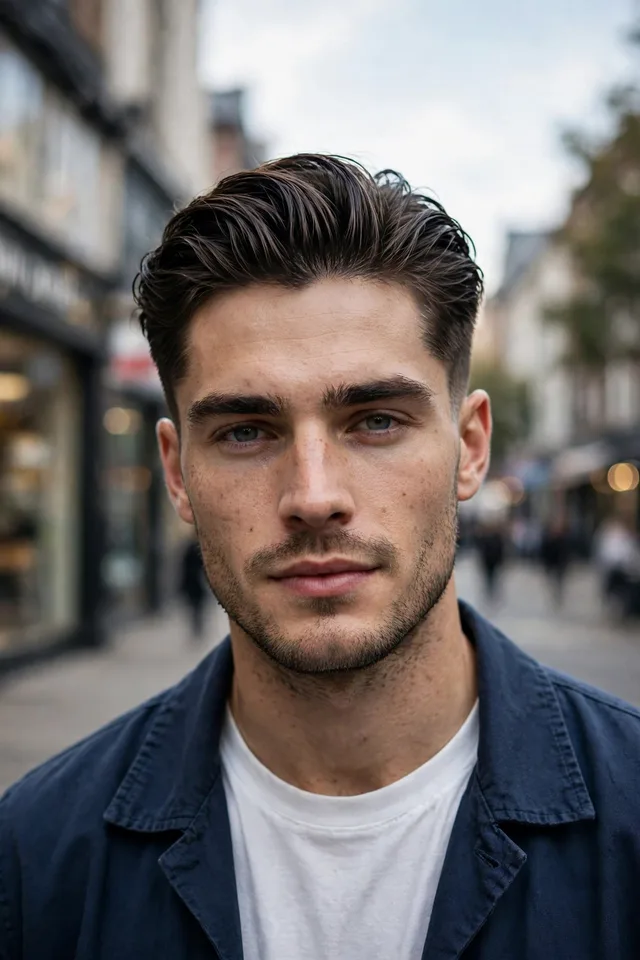
How does the modern slick back update the classic?
Same direction, relaxed finish. The modern slick back keeps the swept-back top but swaps the comb for fingers, the shine for a matte or low-sheen finish, and the hard side line for a soft blend. This is the version most clients actually ask for now — it looks deliberate without looking lacquered, and it forgives a windy day because it was never shellacked to begin with.
Face Shape: Universal. The softer finish and slight texture flatter faces that find the classic’s sleekness too severe.
Grooming Kit: Matte clay or paste, your fingers, and a dryer on medium to set the backward direction at the roots.
Maintenance: With a soft fade underneath, book every 3 weeks; with scissor sides, 4 to 5. The matte finish hides a week of growth better than shine does.
Barber Script: “Modern slick back — top pushed back with texture, matte finish, sides soft-blended with no line. Fingers, not a comb.”
Q: What is the difference between the classic and modern slick back?
A: Product and finish. The classic is combed smooth with visible shine; the modern version is finger-styled, matte, and slightly separated, with softer sides. Same silhouette, different century.
Q: Which product holds a modern slick back without shine?
A: A matte clay or fibre paste, worked through dry hair from back to front. Apply it after drying the hair backward — product on wet hair is what creates accidental shine.
The slick back for men who want the authority without the lacquer.
3 of 20 — Slick Back with a Burst Fade
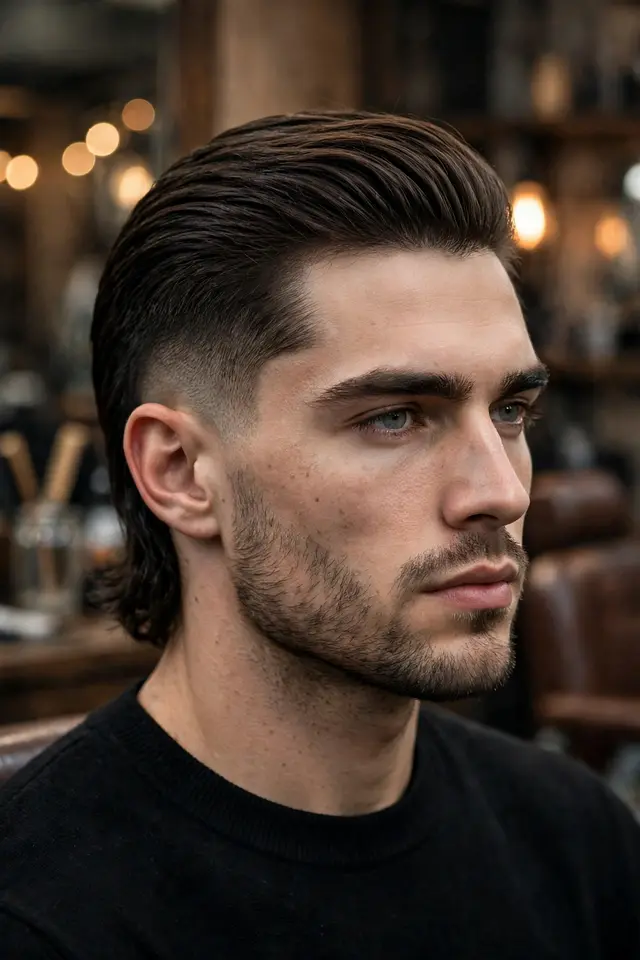
Why is the burst fade the most-requested slick back pairing?
Because it solves the slick back’s one boring angle: the side view. A slick back with a burst fade keeps the long swept top, then curves the fade in an arc around the ear, leaving length at the back to meet the top’s flow. Barbers name it the single most-requested slick back version in their chairs right now — the arc gives the profile a designed detail the straight sweep lacks.
Face Shape: Square and oval faces suit the strong profile; the arc around the ear sharpens softer jawlines.
Grooming Kit: Matte paste for the top, a brush for the burst’s edge, and a dryer to keep the back length travelling in the same direction.
Maintenance: The burst is a precision shape — every 2 to 3 weeks or the arc blurs into an ordinary fade.
Barber Script: “Slick back on top, burst fade around the ears, keep the back length long enough to meet the top. Soft blend, no hard line.”
Q: Does a burst fade work with a longer slicked top?
A: It is built for it. The burst removes weight only around the ear, so the top and back keep the length the slick back needs while the profile stays sharp.
Q: How is a burst fade different from a normal fade with a slick back?
A: A standard fade shortens the whole side evenly. The burst concentrates the fade in a semicircle around the ear and leaves the back long — the silhouette from behind stays full.
The profile is the whole point — the arc around the ear does what a straight sweep cannot.
4 of 20 — Slick Back with a Low Fade
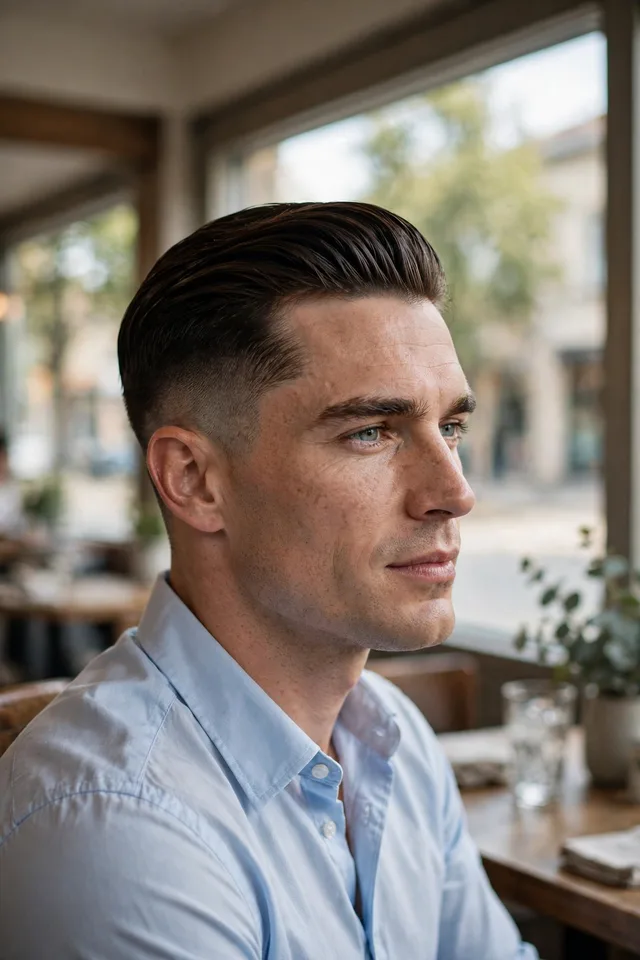
Why is the low fade the safest slick back pairing?
Because it keeps the most hair where the slick back needs it. A slick back with a low fade sweeps the full top back and cleans only the lowest inch around the ears and neckline, so the sides keep enough weight to blend into the top’s direction. It is the office-safe version: sharp at the edges, conservative everywhere else, and the easiest fade pairing to grow out.
Face Shape: All faces. The retained side weight suits narrower faces that a high fade would make look narrower still.
Grooming Kit: Light pomade or cream, a comb for the edges, and a dryer for the top’s direction.
Maintenance: Every 3 weeks keeps the low fade crisp; it grows out the softest of all the fade pairings, so a late booking is forgiven.
Barber Script: “Slick back with a low fade — just clean the bottom around the ears and neck, keep the side weight, top swept straight back.”
Q: Is a low fade slick back appropriate for formal workplaces?
A: It is the most conservative version in this guide. The silhouette reads classic, the edges read tidy, and nothing about it draws a second look in a boardroom.
Q: Low fade or taper for a first slick back?
A: The low fade — it commits a little more at the edges but keeps the shape readable as it grows. A taper is softer still and suits men testing the length.
Clean edges, full weight, zero risk — the gateway fade pairing.
5 of 20 — Slick Back with a Mid Fade
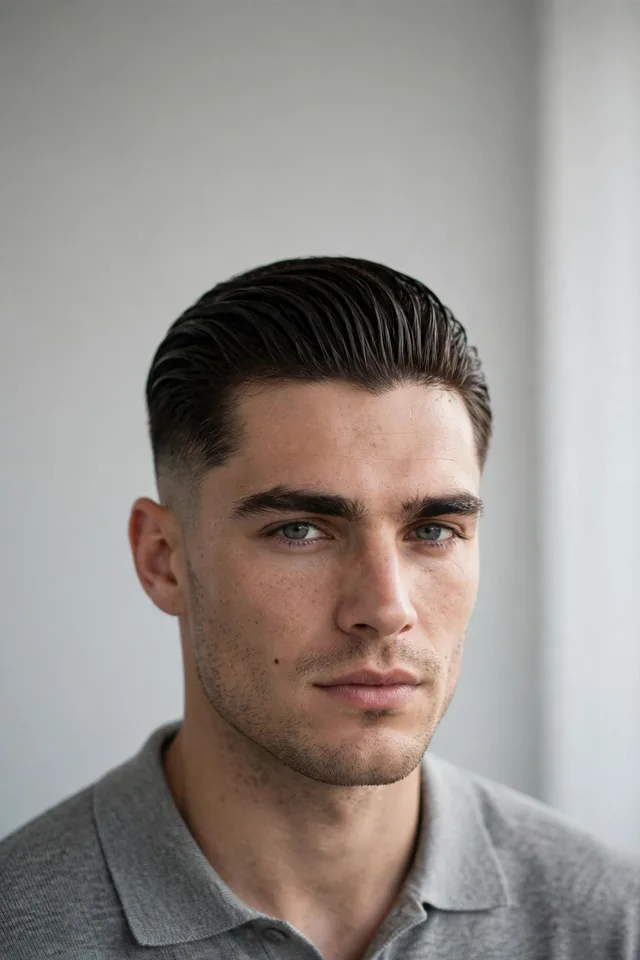
What does the mid fade add to a slick back?
Balance. A slick back with a mid fade takes the sides down to a medium height — higher and sharper than the low fade, calmer than the high — so the swept top gets real contrast without the drama of skin at the temples. For most men this is the sweet spot: the silhouette reads modern from every angle and the grow-out stays civilised.
Face Shape: Round faces gain the most — the mid-height fade slims the sides while the swept top adds length above.
Grooming Kit: Matte paste, a dryer, and a wide comb for the first pass before finishing with fingers.
Maintenance: Every 2 to 3 weeks. A mid fade shows its blur line sooner than a low fade but later than a high one.
Barber Script: “Slick back, mid fade on the sides blended soft into the top — no hard line, top kept long and swept back.”
Q: Mid fade or low fade — which suits a round face?
A: The mid fade. Taking the sides shorter at a higher point narrows the face’s widest part, and the slicked-back height on top finishes the lengthening effect.
Q: Does a mid fade slick back work on wavy hair?
A: Yes — the fade removes the unruly side bulk and the top’s waves sweep back into a controlled S. It is one of the best pairings for natural wave.
The middle road most men should actually take — contrast with manners.
6 of 20 — Slick Back with a High Fade
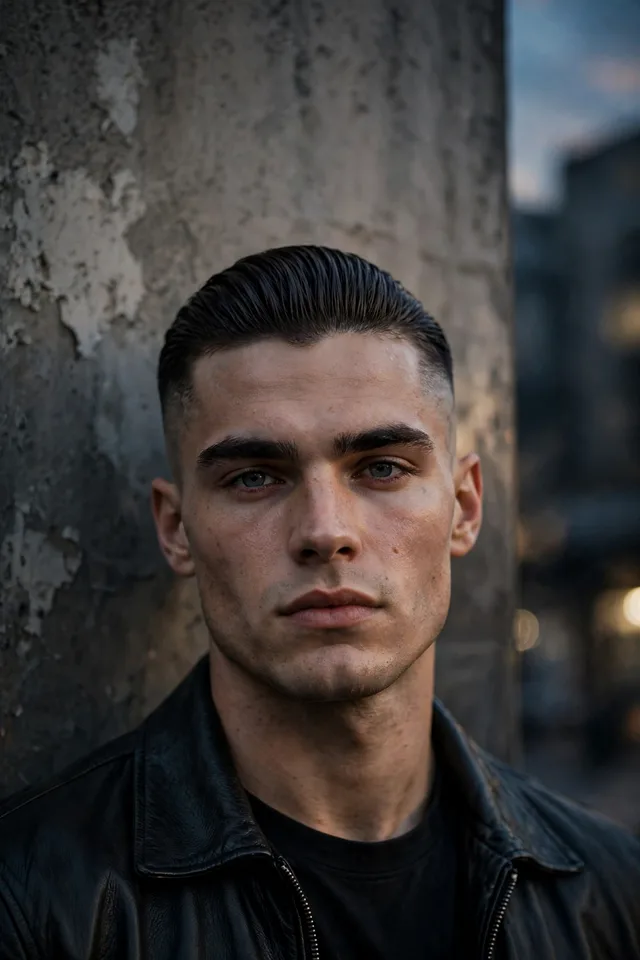
How dramatic can a slick back get?
This dramatic. A slick back with a high fade strips the sides to skin high on the head and leaves the full swept length sitting on top like a banner. The contrast is the style — nothing about it is subtle, and on the right head it is the sharpest silhouette in this guide. It is also the highest-maintenance version here; the drama expires fast.
Face Shape: Square and angular faces carry the contrast best. Round faces should keep more top length to balance the exposed sides.
Grooming Kit: Strong-hold matte product, a dryer used daily, and a brush to keep the top’s direction disciplined.
Maintenance: Every 2 weeks, non-negotiable. A high fade’s line is its whole value, and by week three the line is gone.
Barber Script: “High fade, skin at the sides taken high, top left long and slicked straight back. Maximum contrast, soft blend at the very top edge.”
Q: Who should avoid the high fade slick back?
A: Men with very round faces or prominent ears — the exposed high sides emphasise both. The mid fade delivers most of the effect with none of the exposure.
Q: How do I stop the top flopping forward with a high fade?
A: Dry it backward from wet, every time — direction is trained by heat, not product. Then lock it with product on fully dry hair, applied back to front.
Maximum contrast, minimum forgiveness — book the upkeep before you book the cut.
7 of 20 — Slick Back Undercut
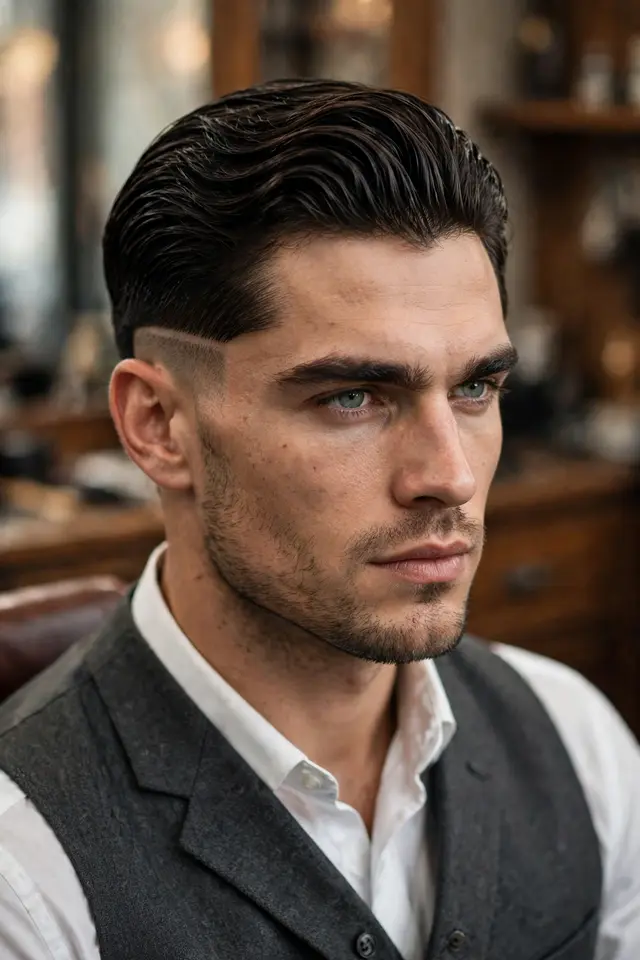
What makes the undercut the slick back’s sharpest partner?
Disconnection. The slick back undercut clips the sides short in one uniform length with no blend at all, so the long top falls over a visible shelf line. It is the Peaky Blinders silhouette — the most recognisable version of the family and the one with the strongest vintage charge. The modern update softens it slightly: a #2 to #4 guard instead of bare skin, so the contrast reads grown-up rather than costume.
Face Shape: Oval and square faces suit the hard geometry; the shelf line widens narrow faces usefully.
Grooming Kit: Pomade with real hold, a comb for the clean sweep, and a trimmer to keep the disconnect line honest between visits.
Maintenance: The line needs a tidy every 2 to 3 weeks, though the uniform clipper length makes home maintenance easier than any fade.
Barber Script: “Slick back undercut — sides one length, number 3, fully disconnected, top long and swept back over the line. No blending.”
Q: Is the undercut slick back still current or is it dated?
A: The extreme skin-tight 2014 version reads dated. The softened version — #2 to #4 sides, longer looser top — is what runways and barbers are actually cutting now.
Q: Can I blend an undercut out if I change my mind?
A: Yes, but it takes two to three cuts over about two months as the top of the sides grows down to meet the blend. Plan the exit before you commit.
The shelf line is the signature — wear it softened, or do not wear it at all.
8 of 20 — The Old Money Slick Back
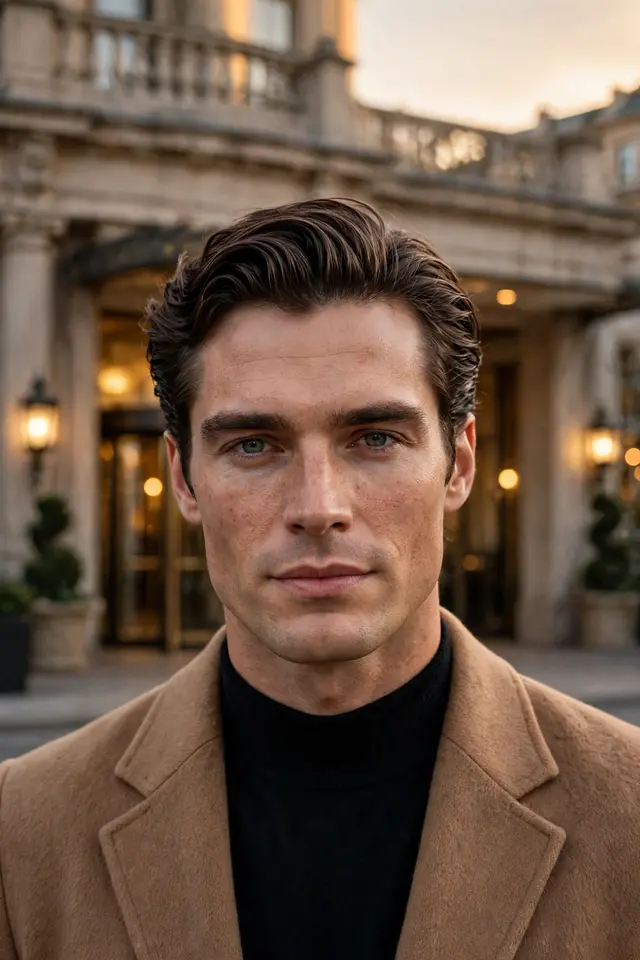
What is the old money slick back, exactly?
The quiet-luxury version: hair swept back with movement rather than plastered flat, sides scissor-cut and tapered by hand, and a finish so natural the product is invisible. The old money slick back is the one trendsetters keep naming for the festive season — roughly three inches or more on top, softly blended sides, no fade line anywhere. It whispers where the high fade shouts.
Face Shape: All faces — the softness is the point. It particularly suits men whose features a hard fade would make look harsh.
Grooming Kit: A light styling cream (the invisible kind), a dryer, and a wide comb. If anyone can name your product, you used too much.
Maintenance: Every 4 to 5 weeks for the scissor taper. It is the lowest-upkeep polished cut in this guide.
Barber Script: “Old money slick back — scissors only, tapered sides by hand, top swept back with movement. Natural finish, no visible product, no fade.”
Q: How is the old money slick back different from the classic?
A: Intent. The classic aims for a sleek, combed finish; the old money version aims for hair that looks naturally perfect — softer sides, visible movement, invisible product.
Q: What product gives the invisible old money finish?
A: A light grooming cream, pea-sized, through towel-dried hair, then dried backward. Creams disappear; pomades announce themselves. That invisibility is the whole aesthetic.
Wealth whispers — this is the slick back with its voice down.
9 of 20 — The Textured Slick Back
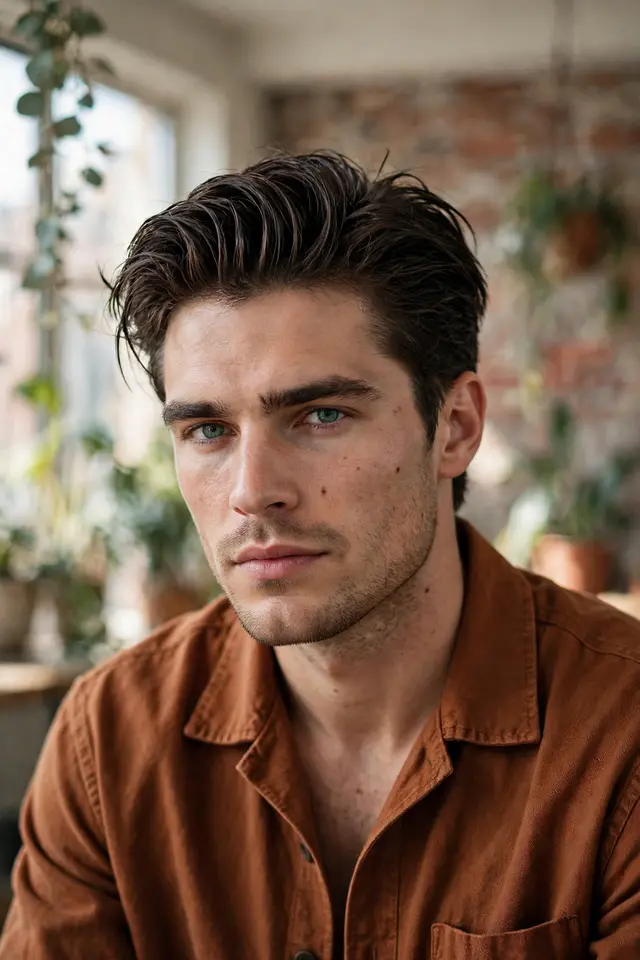
How much texture can a slick back take?
More than tradition allows. The textured slick back point-cuts the top so the swept-back hair separates into visible pieces, then styles it back with fingers and matte product so the strands read individually instead of as one shell. It is the headline version of the current trend — the slick back rebuilt for men who find the smooth original too polished.
Face Shape: Universal. The separation breaks up the forehead’s expanse, which helps longer faces that a smooth sweep would stretch.
Grooming Kit: Sea salt spray for grit, matte clay for piece definition, and a dryer — never a fine comb, which irons the texture out.
Maintenance: Every 3 to 4 weeks; the point-cut pieces blur as they grow, and the separation is the first thing to go.
Barber Script: “Textured slick back — point-cut the top hard, keep the length, sides soft-blended. I style it back in pieces with my fingers.”
Q: Will texture stop my slick back staying in place?
A: Slightly — textured hair moves more than a smooth shell. That movement is the look. A light clay through dry hair keeps the direction while letting the pieces live.
Q: Can straight hair hold a textured slick back?
A: Yes — the point-cutting creates the separation the hair lacks naturally. Salt spray on damp hair before drying backward does the rest.
One shell becomes a hundred pieces — the modern finish on the classic direction.
10 of 20 — The Long Slick Back
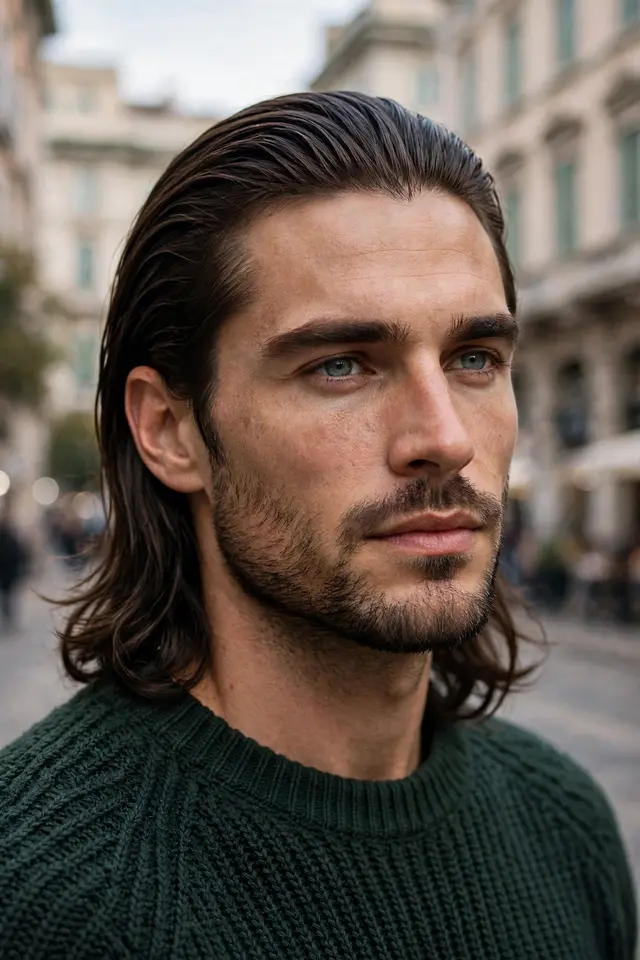
How long can a slick back go?
To the collar and beyond. The long slick back brushes medium-to-long hair straight back off the face and lets it fall past the ears and neckline — the Milan-and-runway version, worn slightly soft rather than wet. It is the most impressive silhouette in this guide and the most honest about its price: eight to twelve months of growing, weekly conditioning, and trims that protect the ends.
Face Shape: Long and oval faces wear it best; the back-flowing length can swamp shorter faces and smaller frames.
Grooming Kit: Leave-in conditioner, a light cream for the ends, a wide comb, and patience. Long hair is a routine, not a product.
Maintenance: Ends trimmed every 6 to 8 weeks. Skip them and the back turns to straw — the silhouette survives on its ends.
Barber Script: “Long slick back — keep all the length, clean the ends only, layer lightly so it falls back cleanly. Scissors only.”
Q: How do I grow out a short slick back into the long version?
A: Keep the top growing and tidy only the sides for the first months, then let the sides join the length. Expect an awkward phase around month four — hats and patience.
Q: Does the long slick back suit older men?
A: In silver it is one of the most distinguished looks in this guide — the swept length reads intentional and pairs with a groomed beard exceptionally well.
The full-commitment version — the grow-out is the price, the presence is the payout.
11 of 20 — The Short Slick Back
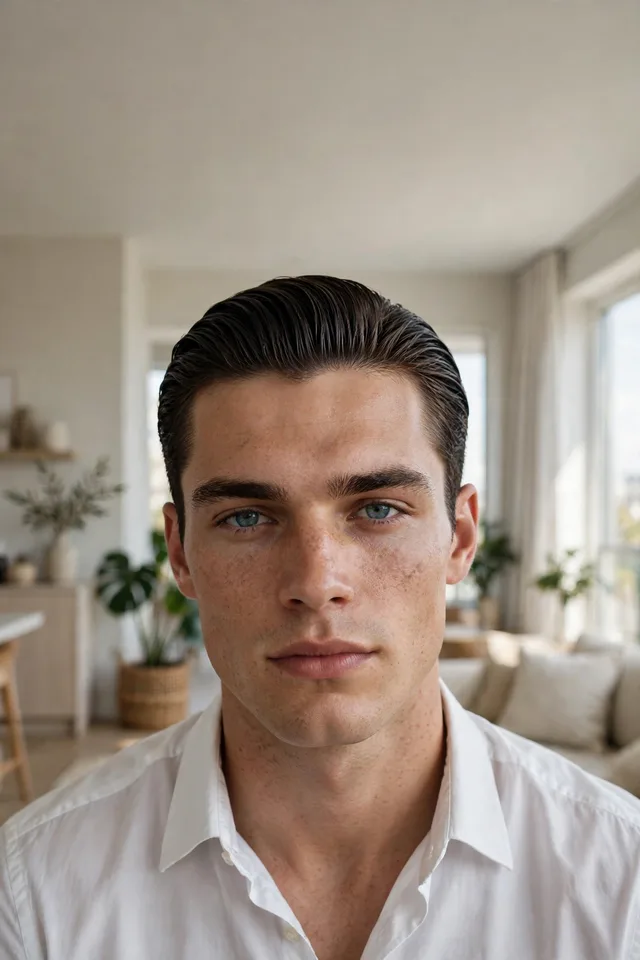
Can a slick back work at short length?
Yes — at the honest minimum. The short slick back keeps the top at around three to four inches, just enough to brush back and stay, with tidy faded or tapered sides. It gives men with shorter hair, slower growth or conservative jobs the direction and polish of the family without the grow-out commitment. What it cannot do is fake length: below three inches it becomes a brush-back, not a slick back.
Face Shape: Square and heart-shaped faces suit the compact proportions; the short sweep keeps the forehead from dominating.
Grooming Kit: A light pomade or cream and a small comb. Short slick backs need direction, not hold — heavy product overwhelms short hair.
Maintenance: Every 3 weeks. Short versions show growth fastest, and the back-swept line is the first casualty.
Barber Script: “Short slick back — three to four inches on top brushed back, tidy tapered sides, nothing taken that stops it lying back.”
Q: What is the minimum length for a short slick back?
A: Three inches, and four behaves better. At three the hair lies back with product help; at two it simply stands up and calls itself a quiff.
Q: Is the short slick back a good first step to the classic?
A: It is the perfect rehearsal — same direction, same routine, half the commitment. Grow the top between visits and you arrive at the classic in two cuts.
The direction without the dedication — a rehearsal that looks like the real thing.
12 of 20 — Slick Back for Thick Hair
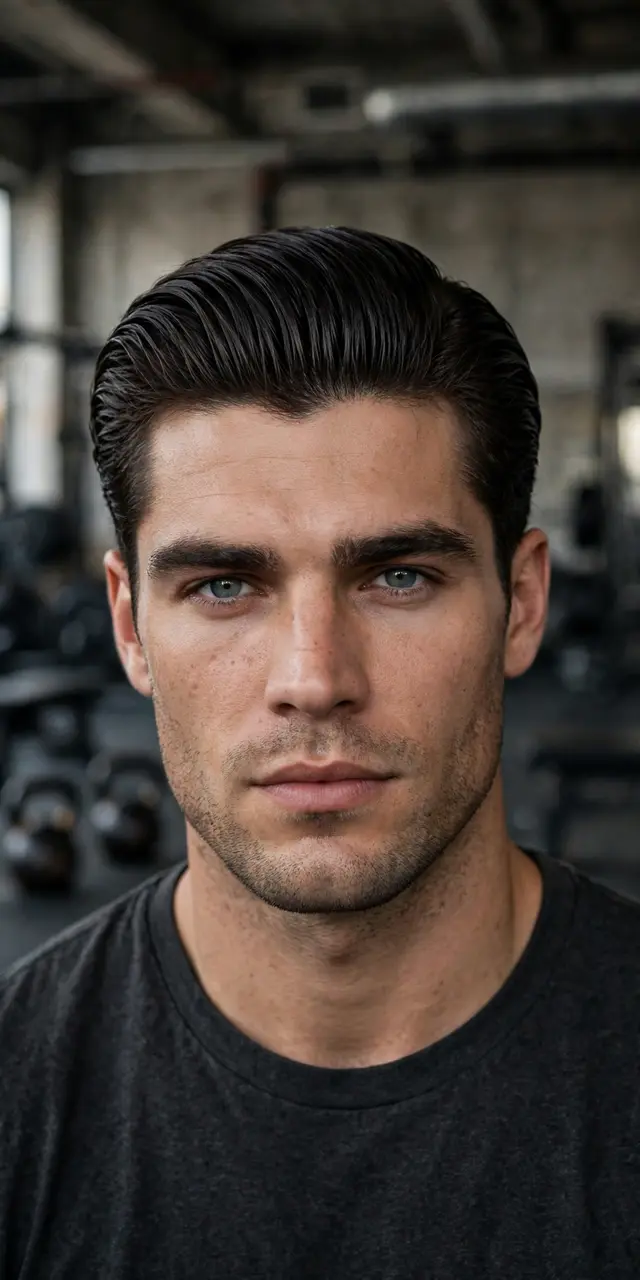
How do you stop a thick slick back from puffing up?
Weight management. A slick back for thick hair keeps the full swept length but removes bulk from underneath — the underside of the top thinned and the sides tapered closer — so the hair lies back instead of ballooning. Thick hair is actually excellent raw material here: once the weight is controlled, the sweep holds all day on density alone.
Face Shape: All faces — the win is proportion. Controlling the bulk keeps the head from reading wider than it is.
Grooming Kit: A strong but flexible pomade, a dryer with a nozzle, and heat — thick hair takes direction from hot air better than from product.
Maintenance: Every 3 to 4 weeks. Thick hair regains its bulk fast, and the puff returns from underneath first.
Barber Script: “Slick back for thick hair — keep the top length, take the weight out underneath, taper the sides closer. It has to lie flat, not puff.”
Q: Should thick hair use gel for a slick back?
A: Gel holds but dries helmet-hard and flakes by evening. A strong pomade or clay, applied after blow-drying the hair back, gives the same control with a natural finish.
Q: Why does my thick slick back keep lifting at the front?
A: The front is where the weight is longest. Dry the front section backward first, while the hair is wettest — direction set at the roots is what survives the day.
Thick hair is not the obstacle to a slick back — uncontrolled, it is. Controlled, it is the ideal.
13 of 20 — Slick Back for Fine Hair
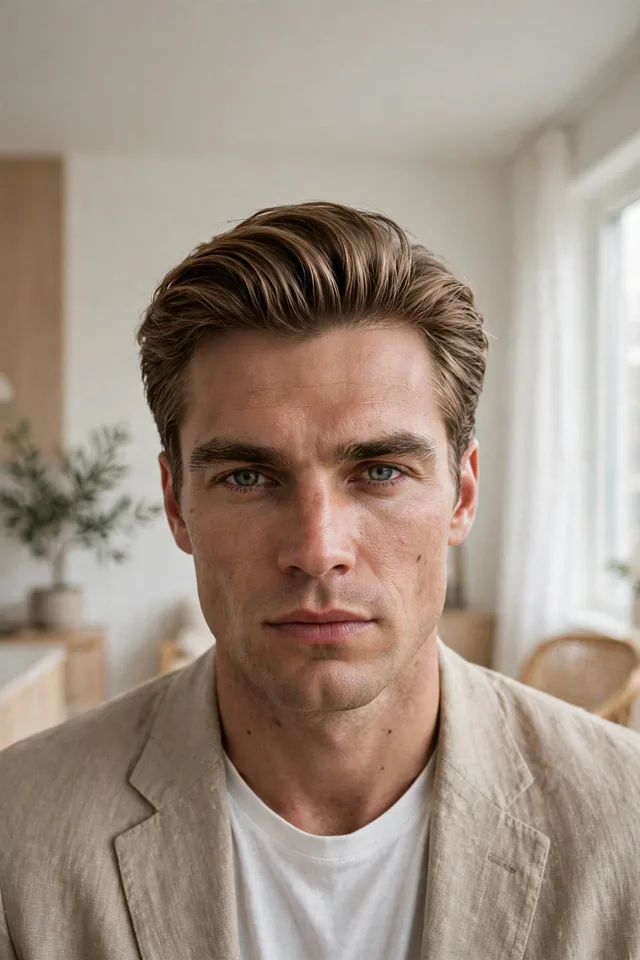
Can fine hair hold a slick back without looking thinner?
Yes — if volume is built before direction. A slick back for fine hair is dried backward with the roots lifted, then finished with the lightest matte product available, because heavy pomade clumps fine strands into strings and shows scalp. The paradox to respect: fine hair slicked flat looks thinner; fine hair swept back with air in it looks deliberate.
Face Shape: Oval and longer faces benefit; the lifted sweep adds width at the crown that balances a long face.
Grooming Kit: Volumising mousse or a pre-styling spray, a dryer with the roots lifted by a brush, and a feather-light matte paste.
Maintenance: Every 4 weeks, and guard the length — every layer a barber adds steals visible density fine hair cannot spare.
Barber Script: “Slick back for fine hair — keep the layers long and blunt, no thinning shears anywhere. I need all the weight left in the top.”
Q: What is the worst product mistake for a fine-hair slick back?
A: Wet-look gel or heavy pomade. They separate fine hair into visible strands and shine a light on the scalp. Dry, matte and minimal is the entire strategy.
Q: Does blow-drying really matter for fine hair?
A: It is the difference between flat and full. Drying backward with root lift builds the volume the style borrows its confidence from — air-dried fine hair lies down and gives up.
Fine hair’s slick back is built on air and restraint, never on product weight.
14 of 20 — Slick Back for Wavy Hair
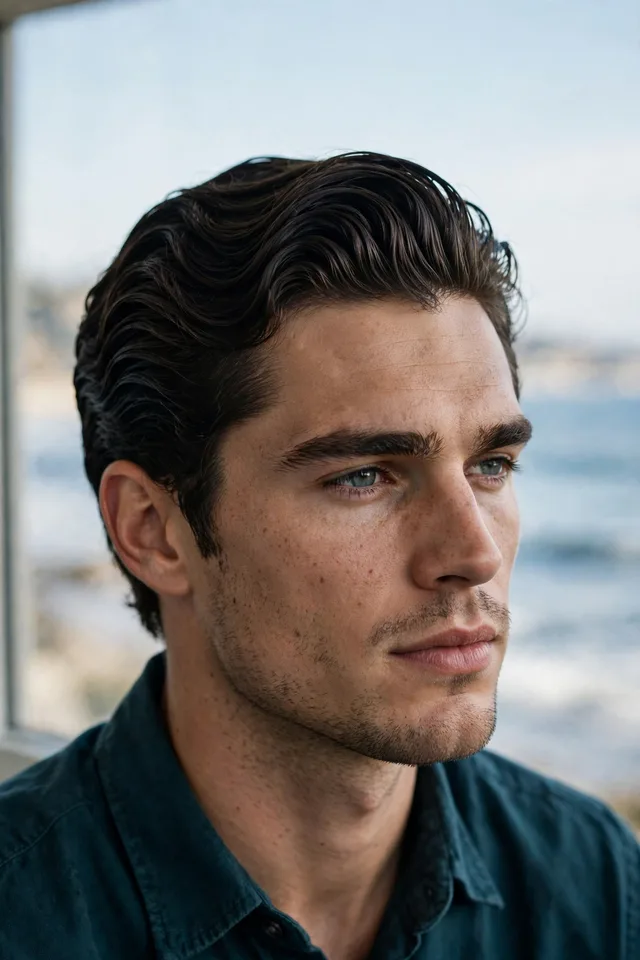
Why does wavy hair make the slick back look expensive?
Because the wave gives the sweep a rhythm a straight comb-out cannot fake. A slick back for wavy hair brushes the natural S-bend backward so the hair travels in soft parallel waves — the version stylists reach for when they want the cut to look like money. The trick is control without erasure: the wave stays visible, the direction stays absolute.
Face Shape: Round faces gain from the swept height; square faces are softened by the wave’s movement across the top.
Grooming Kit: A light cream or soft pomade, a wide comb for the wet set, and a diffuser or low dryer heat — high heat blows the wave into frizz.
Maintenance: Every 4 weeks. Waves forgive growth kindly, and the sweep relaxes rather than collapsing between visits.
Barber Script: “Slick back for wavy hair — keep the length, layer lightly to the wave, sides tapered soft. The wave stays; only the direction changes.”
Q: How do I stop my wavy slick back puffing out by afternoon?
A: Set it wetter than feels natural — comb the cream through soaking hair and dry it fully back. Wavy hair styled half-dry reverts to its own map by midday.
Q: Straighten it or keep the wave?
A: Keep the wave. A straightened slick back fights you daily and fries the hair doing it; the wavy version is the one people photograph.
The wave is not the problem to solve — it is the luxury detail itself.
15 of 20 — Slick Back for Curly Hair
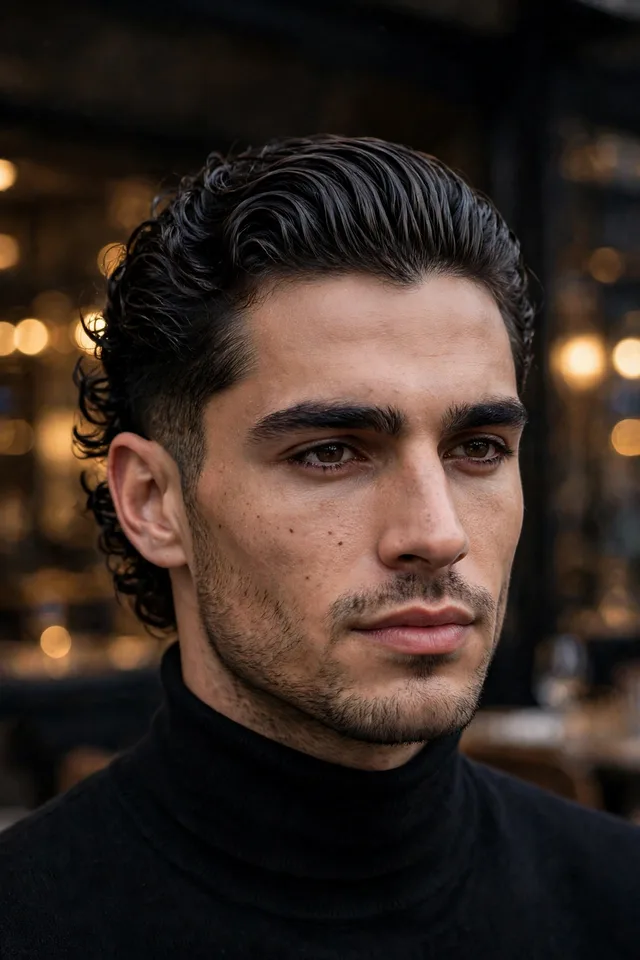
Can curly hair be slicked back at all?
Yes — with stretch, moisture and honesty about the daily work. A slick back for curly hair lengthens the curls with heat and product, sweeps them back while stretched, and keeps the sides tapered short so the silhouette stays clean. It will never be the wash-and-go version of this cut, and on special occasions nothing in this guide looks sharper.
Face Shape: Longer faces suit the width the curls keep at the crown; round faces should take the sides shorter to balance the volume.
Grooming Kit: A leave-in conditioner, a strong-hold cream or gel for the stretch, a boar brush, and a dryer with a concentrator nozzle.
Maintenance: Sides every 2 to 3 weeks; the top’s length is precious, so ends only every second visit. Moisture is a daily appointment.
Barber Script: “Slick back for curly hair — keep maximum length on top, taper the sides short, no thinning. I stretch and sweep it back myself.”
Q: How long does a curly slick back take each morning?
A: Ten to fifteen minutes once the routine is learned: dampen, condition, brush back in sections, set with heat. It is the highest-effort version in this guide — plan for it.
Q: Will daily heat damage my curls?
A: Use heat protection and keep the dryer moving, and the pattern survives. The bigger risk is dryness — deep-condition weekly and the curls forgive the styling.
The hardest-working version in the guide — and on the right night, the best-looking.
16 of 20 — Slick Back with a Beard
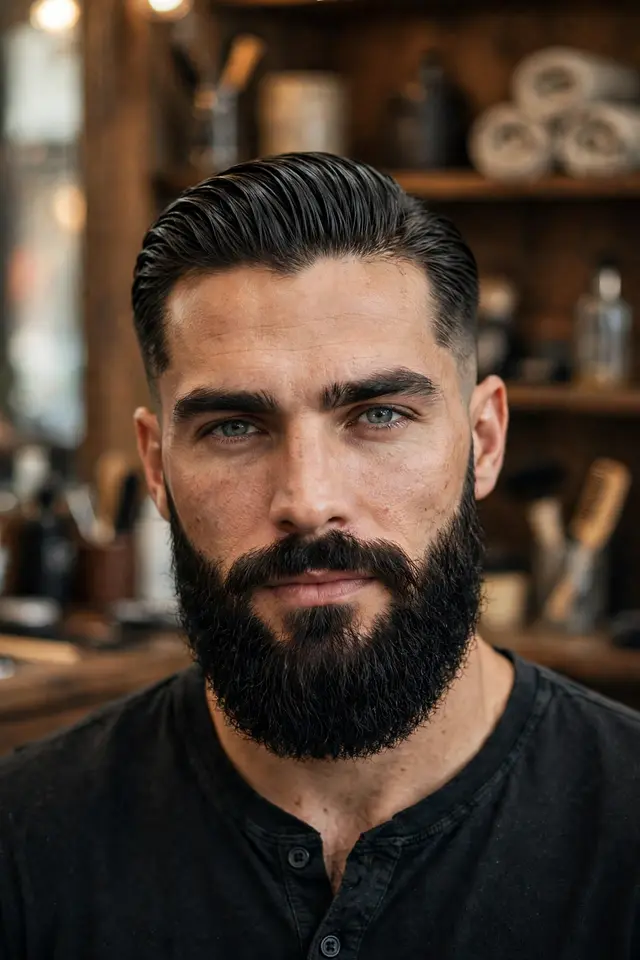
How do you balance a slick back with a full beard?
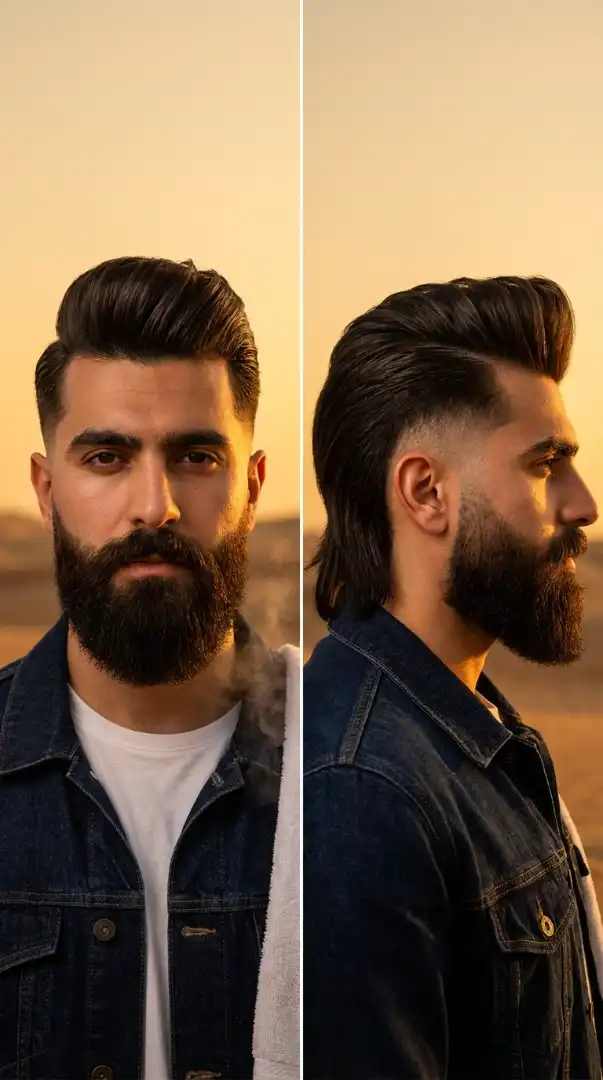
By treating hair and beard as one frame. A slick back with a beard pairs the swept, polished top with a beard kept groomed and shaped — the slicked hair frames the face from above, the beard from below, and clean cheek lines keep the middle defined. Keep the sides of the hair faded or tapered into the beard’s line so the whole silhouette connects without a break.
Face Shape: Round faces gain the most — the beard supplies the jaw the slick back’s exposed forehead asks for.
Grooming Kit: Beard oil and a boar brush join the usual pomade. Keep the hair’s finish matte if the beard carries the sheen, or vice versa — one shine per face.
Maintenance: Hair every 3 weeks with the fade; beard lines weekly at home, full shape at the same barber visit.
Barber Script: “Slick back — top swept back, sides faded into the beard line — and shape the beard: clean cheeks, defined neckline, length through the chin.”
Q: How long should the beard be with a slick back?
A: Medium and groomed suits the polish best — enough to frame the jaw, never so wild it argues with the hair’s discipline. The contrast between tidy top and tidy beard is the style.
Q: Fade or taper with a beard slick back?
A: A low or mid fade that dissolves into the beard’s top edge looks most connected. A taper works too, but leave enough side length to bridge into the beard.
Discipline at both ends of the face — the frame is the style.
17 of 20 — Slick Back for a Receding Hairline
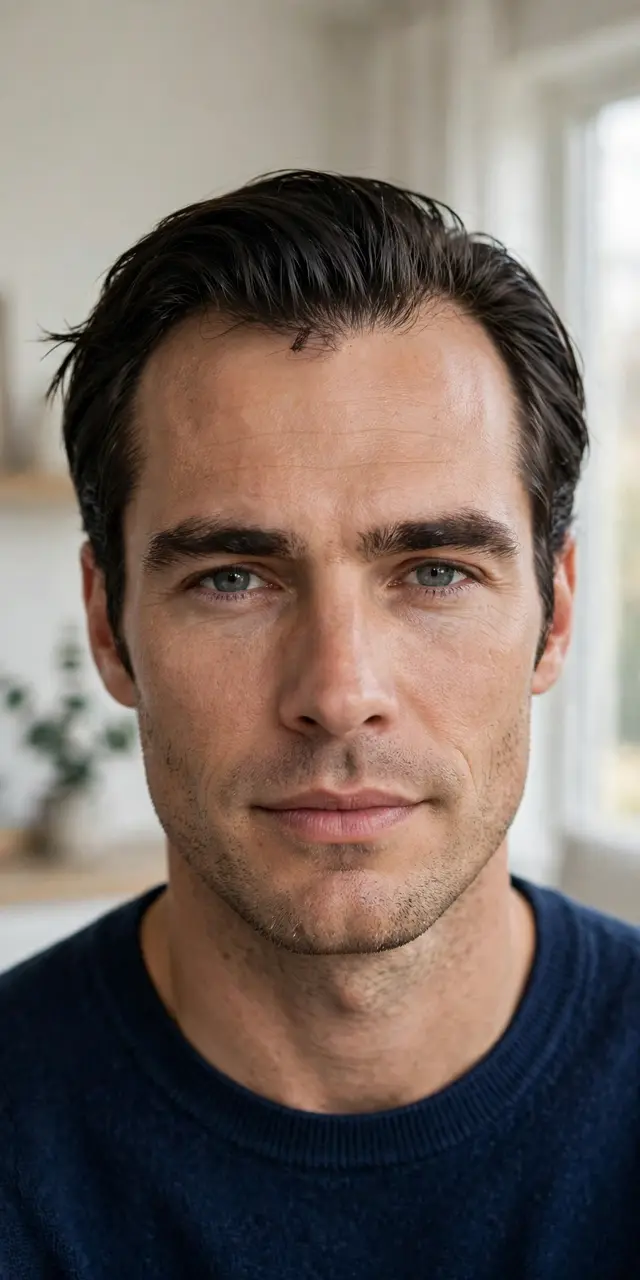
Is a slick back a mistake with a receding hairline?
It depends entirely on the degree — and honesty matters more here than in any other section. A slick back for a receding hairline works while the recession is mild: the hair is swept back from a softened, slightly broken front rather than one hard line, and textured product keeps it from looking painted on. Once the temples have retreated far, the sweep exposes exactly what it should hide, and a forward style serves better. A good barber will tell you which side of the line you are on.
Face Shape: All faces with early recession; men with longer foreheads should break the front with texture so the sweep does not frame the hairline like a picture.
Grooming Kit: Matte clay only — shine is the enemy here, because it outlines the scalp. A dryer for root direction, no wet products.
Maintenance: Every 3 to 4 weeks. The softened front depends on precise length, and growth hardens the line quickly.
Barber Script: “Slick back with a soft front — break the hairline edge with texture, sweep it back matte, tapered sides. Tell me honestly if the recession has gone too far for it.”
Q: What makes a receding slick back look natural instead of forced?
A: A broken, textured front edge and a matte finish. A hard straight hairline plus shine is what reads as forced — remove both and the style relaxes.
Q: When should I switch from a slick back to something else?
A: When the swept hair no longer covers the temple corners without gaps. At that point a forward textured crop covers more and asks less — your barber can show you in the mirror.
The one version where the honest conversation matters more than the cut.
18 of 20 — The Wet-Look Slick Back
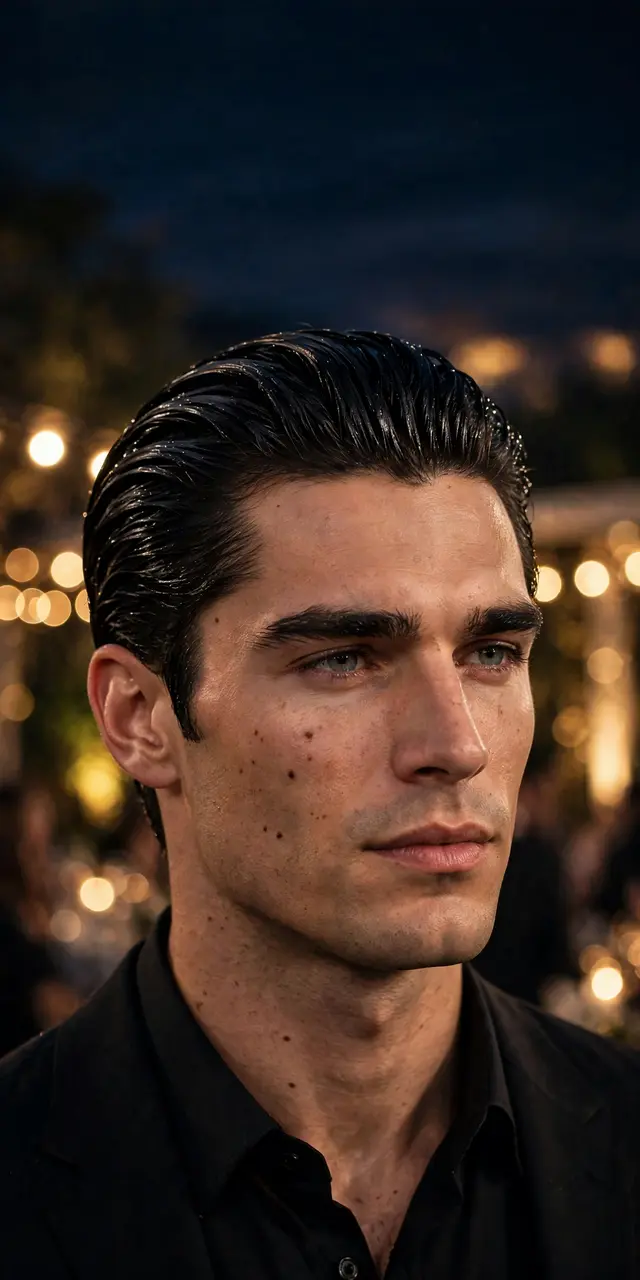
What defines the wet-look slick back?
Shine, deliberately. The wet-look slick back combs the hair back with a high-shine product so it looks freshly rained on — the runway version that put the whole family back on trend lists. It is a night and occasion style: maximum polish, maximum presence, and a finish that announces itself. Worn with soft-blended sides it stays current; with a hard undercut it slides back a decade.
Face Shape: Oval and square faces carry the gloss best; the shine draws the eye upward, lengthening round faces usefully.
Grooming Kit: A wet-look gel or high-shine pomade, a fine comb for the glass finish, and a second product at home — this look is re-combed, not touched up.
Maintenance: The cut underneath follows the classic rhythm, 4 to 5 weeks with scissor sides. The finish itself is rebuilt every single wear.
Barber Script: “Slick back cut for a wet finish — top long, sides soft-blended, no fade line. I will style the shine myself.”
Q: How do I get the wet look without the crunch?
A: Use a high-shine pomade instead of gel, applied to damp hair and combed back once. Gel dries hard and flakes; pomade keeps the gloss and stays re-combable all night.
Q: Is the wet look appropriate for the office?
A: In creative industries, yes; in conservative ones, it reads as evening wear. The modern matte version earlier in this guide is the same cut dressed for daytime.
Glass on top, occasion only — the runway version earns its shine.
19 of 20 — The Winter Slick Back
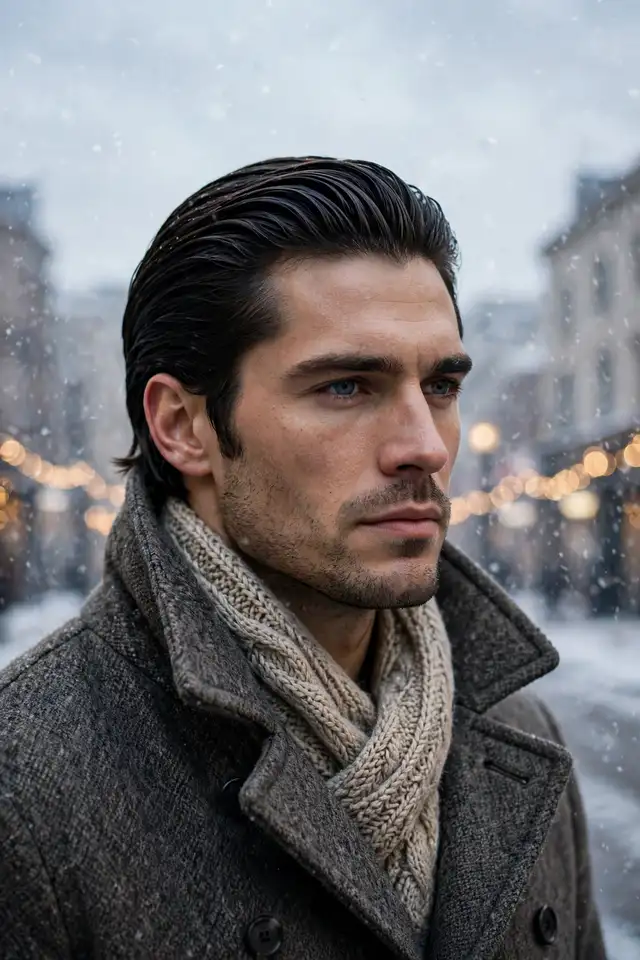
How do you winter-proof a slick back?
Cut it a touch longer and finish it drier. The winter slick back keeps the classic sweep but leaves extra length through the sides so the silhouette survives hats and coat collars, and swaps wet products for matte cream — winter air and heated rooms turn light gels brittle and flaky. It is the version built for the festive season itself: parties, photographs, and cold streets between them.
Face Shape: All faces — the slightly fuller sides suit narrower faces especially well under winter layers and collars.
Grooming Kit: Matte cream, a satin-lined beanie for the commute (less friction, less static), and a richer conditioner once a week against dry heated air.
Maintenance: Every 4 weeks through winter. Revive hat-flattened hair with damp palms pushed back — water reactivates the morning’s product.
Barber Script: “Winter slick back — classic sweep, a touch more length at the sides for hat weather, matte finish. It has to survive a beanie and a coat collar.”
Q: How do I fix a hat-flattened slick back in ten seconds?
A: Wet your palms, push everything straight back with your fingers, and let it air-set for a minute. The water wakes the product already in your hair — adding more just builds up.
Q: Slick back for a Christmas party — which finish?
A: The wet-look version for the night itself, or the old money soft shine for a smarter room. Book the cut a week before the party, not the day before, so the edges soften in.
Built for the season it is trending in — longer sides, drier finish, party-proof.
20 of 20 — The Slick Back King
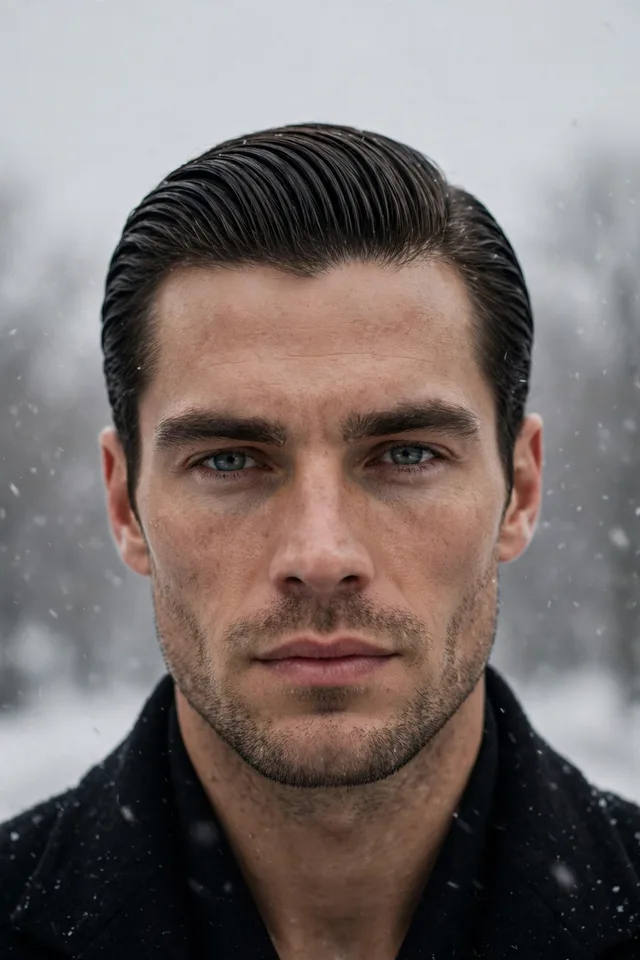
What does the complete slick back look like with every rule obeyed?
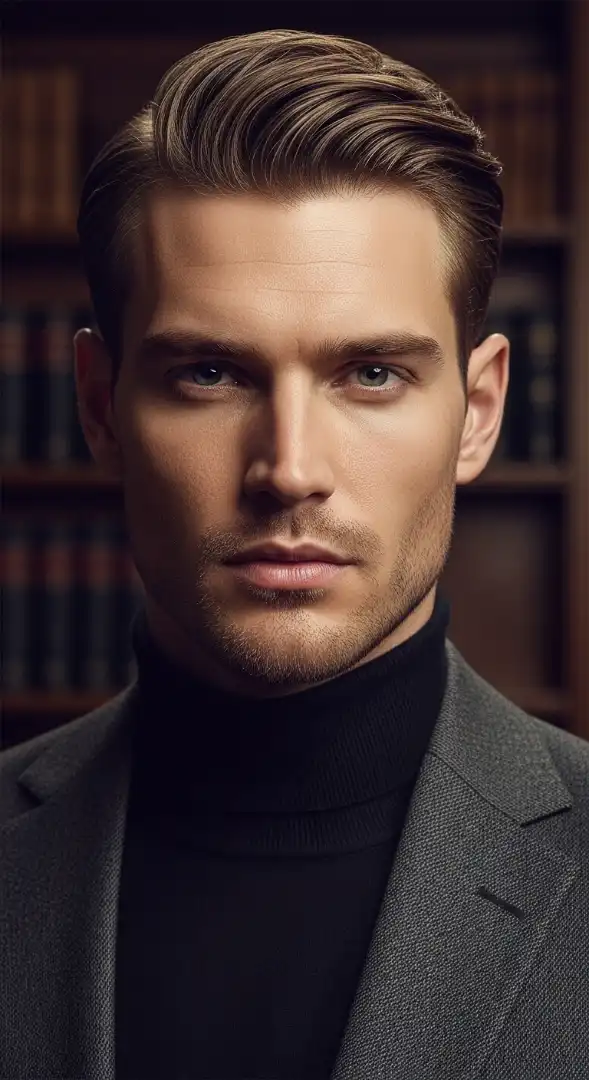
Everything in this guide, obeyed at once. The Slick Back King is a five-to-six-inch top swept straight back with trained direction, soft-blended scissor sides with no fade line and no shelf, a finish that sits exactly between matte and shine, and not a strand out of its lane. It is the reference photo — the one to save and hand to your barber when you want the definitive version of slick back hairstyles for men.
Face Shape: The complete package flatters oval and square faces most, but every dial turns — side blend, top length and finish are all adjustable to the face in the chair.
Grooming Kit: The full small kit: a quality pomade, a matte clay for casual days, a dryer with a nozzle, a fine comb and a wide one.
Maintenance: Every 4 weeks, religiously. A reference cut only stays a reference while its proportions are fresh.
Barber Script: “The full slick back — five to six inches on top swept straight back, scissor-blended sides, no line, no disconnect, finish between matte and shine.”
Q: What should I show my barber to get the Slick Back King?
A: This photo, plus the script above. A complete reference image and the four technical points — length, direction, blended sides, controlled finish — leave nothing to interpretation.
Q: How long until my hair can carry the King version?
A: If your top is under four inches, plan on two to three months of growing with tidy-up trims. The King is a length cut first and a styling cut second.
Every rule, one head — this is the photo to save.
The Bottom Line
The slick back’s return is not nostalgia — it is range. One direction of hair now covers the boardroom classic, the matte modern version, four fade pairings, the old money whisper and the runway wet look, which is why forecasters call it the year’s dominant silhouette and barbers call the burst-fade version their most-requested chair cut. The rules underneath never change: four to six inches on top, direction trained with heat, sides blended soft, and a finish chosen on purpose rather than by habit.
Pick by your hair first and your calendar second — thick hair wants its weight taken out underneath, fine hair wants air at the roots and no heavy product, waves should be kept and curls budgeted honestly. Then match the upkeep to your life: fades ask for two to three weeks, scissor sides forgive five. If the fade choice is still open, our fade haircuts for men guide maps every level, and if you are growing toward the long version, our long hairstyles for men guide is the natural next read.
One Comment