20 Braids for Men: Cornrows, Stitch Braids, Box Braids & Braids with a Fade
Braids are having more than a moment. One of the biggest men’s hair sites calls braids paired with a fade arguably the defining men’s braid look of 2026, working barbers name stitch braids, Pop Smoke braids and Viking braids as the top trending braid styles of the year, and box braids remain the most searched braid style on the planet — with the men’s braiding market growing every year and nearly a third of salons reporting a steady rise in male clients asking for them. Add winter, when cold dry air punishes loose textured hair, and a protective style that lasts for weeks stops being a fashion choice and becomes a strategy.
Know the family rules before you pick a style. Most braids need at least two to three inches of hair; box braids want three or more. Longevity differs by type — cornrows run two to four weeks, stitch braids two to three, box braids six to eight — and the golden rule overrides everything: braids should never be installed painfully tight, because chronic tension causes traction hair loss. Scalp care does not stop because the hair is braided; it matters more. Our hairstyles for Black men guide covers the wider textured-hair picture this family belongs to.
Inside: the classic cornrow and its stitched evolution, box braids in three weights, every fade pairing from taper to undercut, feed-ins, Pop Smoke braids, twists, a Viking plait, a braided bun, winter-proof protective braids, and the one look that obeys every rule. Each comes with the face shapes it flatters, the kit it needs, the upkeep it honestly demands, and the exact words to say in the chair. Choosing the fade underneath? Our fade haircuts for men guide maps every level.
1 of 20 — Classic Cornrows
Why do classic cornrows never leave?
Because they are the foundation everything else is built on. Classic cornrows braid the hair in straight, close rows from the hairline back to the nape — clean parts, even tension, no decoration needed. They are the most requested braided look in barbershops for a reason: they suit nearly every face, they ask almost nothing of you each morning, and they protect the hair underneath while they do it.
Face Shape: All faces. Straight-back rows lengthen rounder faces; the clean scalp lines sharpen softer features.
Grooming Kit: A light scalp oil, a durag or silk scarf for sleeping, and a spray bottle for refreshing — cornrow care is scalp care.
Maintenance: Two to four weeks per install. Oil the scalp every two to three days, and sleep covered or the rows fuzz from the edges in.
Barber Script: “Classic cornrows — straight back, even rows, clean parts. Firm, never tight enough to hurt. Natural finish at the nape.”
Q: How much hair do I need for classic cornrows?
A: About two inches is the working minimum for rows that grip and hold. Shorter hair can be braided by a skilled hand, but the rows loosen days sooner.
Q: Should cornrows hurt when they are fresh?
A: No — snug is right, painful is wrong. Headache-level tightness is how traction damage starts. A good braider works firm without pain, and the style should feel comfortable by the first night.
The foundation style — every other braid in this guide is a variation on these rows.
2 of 20 — Stitch Braids
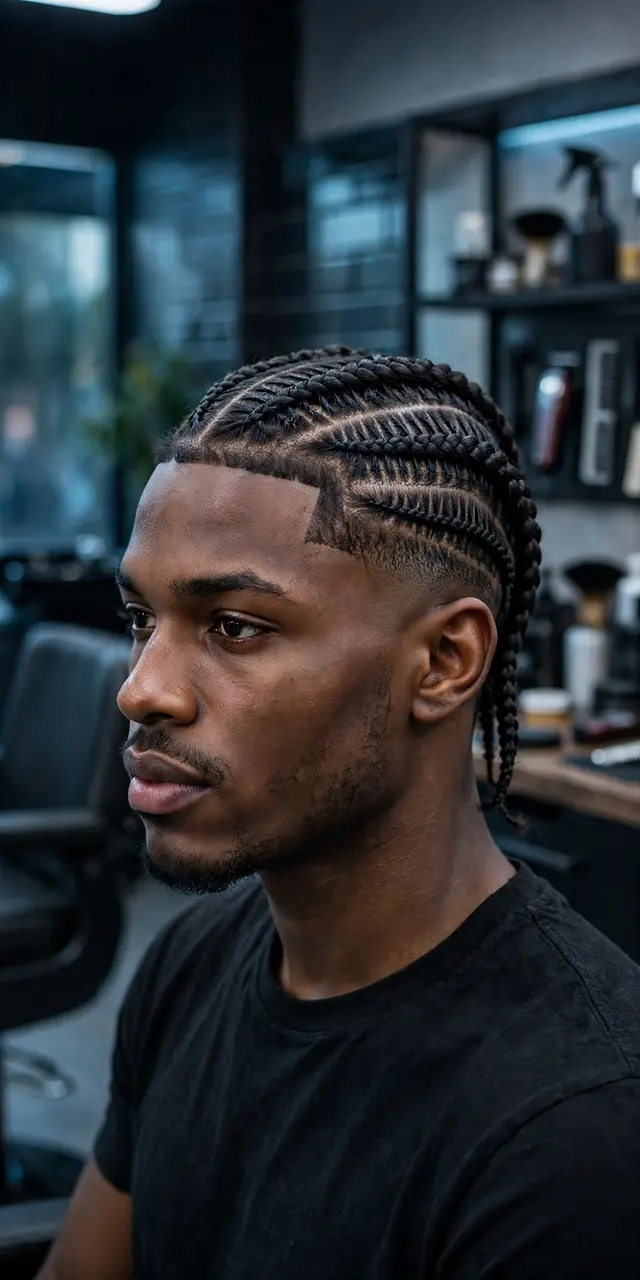
What makes stitch braids the sharpest cornrow evolution?
The lines. Stitch braids are cornrows built with a fingernail technique that feeds hair in small, even sections, leaving horizontal stitched lines across each row and parts so crisp they look drawn. Barbers name them among the top trending braid styles of the year, and social media cannot get enough of them — this is the braid that photographs like graphic design.
Face Shape: Oval and longer faces suit the strong horizontal lines best; heart-shaped faces gain balance from the pattern’s width at the sides.
Grooming Kit: Mousse for laying the edges, light scalp oil, and a soft brush — stitch braids live on their lines, and frizz is the enemy of lines.
Maintenance: Two to three weeks. The stitch pattern blurs as new growth comes in, faster than plain cornrows — this is a style you refresh on schedule.
Barber Script: “Stitch braids — straight back, stitched lines, parts as clean as you can make them. Faded sides, sharp line-up.”
Q: Stitch braids or classic cornrows — what is the real difference?
A: The finish. Classics are smooth continuous rows; stitch braids show segmented, stacked lines along each row and sharper parts. Same foundation, noticeably more detail — and a slightly shorter lifespan.
Q: How long do stitch braids take to install?
A: Two to three hours for a full head, depending on the row count and pattern. The fingernail sectioning that creates the stitch effect is slow, precise work — budget the chair time.
Graphic, precise, unmistakably current — the cornrow rebuilt for the camera.
3 of 20 — Box Braids
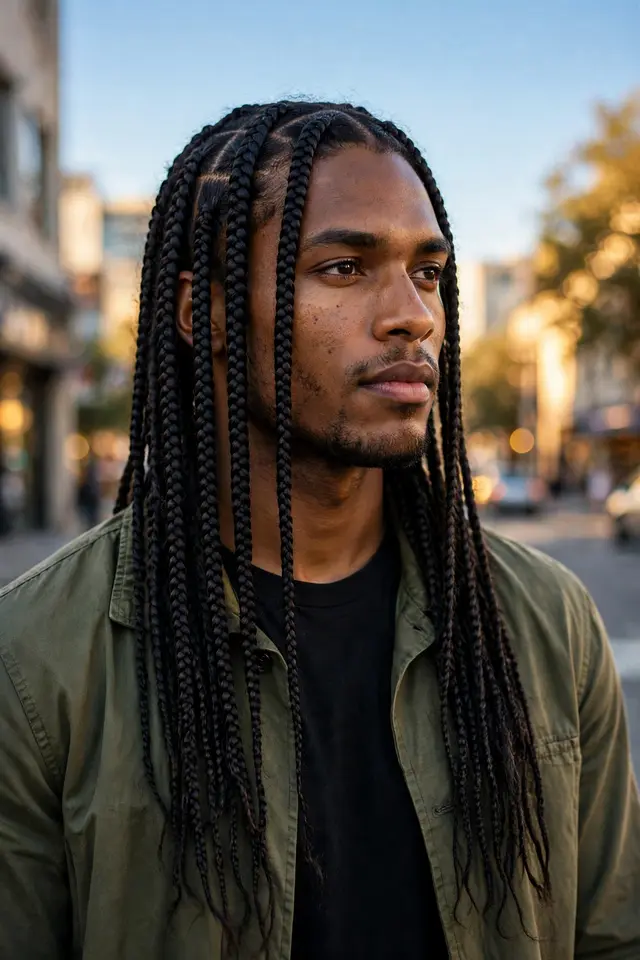
Why are box braids the most searched braid style in the world?
Freedom. Box braids section the hair into square parts and braid each one individually, so the plaits hang loose and move — worn down, tied back, or up in a bun. They are consistently the most searched braid style globally, and the longest-lasting in this guide: a well-kept set runs six to eight weeks, which makes them the traveller’s and the busy man’s braid.
Face Shape: All faces — the hanging length frames longer faces well, and tying them back opens up rounder ones.
Grooming Kit: Scalp oil, a residue-free braid spray, and patience on wash day — box braids are washed in sections, not in one rush.
Maintenance: Six to eight weeks maximum, then they come out — wearing any install longer invites matting at the roots. Moisturise the scalp twice a week.
Barber Script: “Box braids — medium size, square parts, length past the shoulders. Natural ends, not too tight at the hairline.”
Q: How long does my hair need to be for box braids?
A: Three inches minimum, four to six behaves far better. The braid needs enough of your own hair to anchor the plait securely for a two-month wear.
Q: Can box braids damage my hair?
A: Installed with sane tension and removed on schedule, they protect it. The damage stories come from rock-tight installs worn for three months — both are choices, not properties of the style.
The two-month braid — maximum freedom, maximum lifespan, minimum mornings.
4 of 20 — Knotless Box Braids
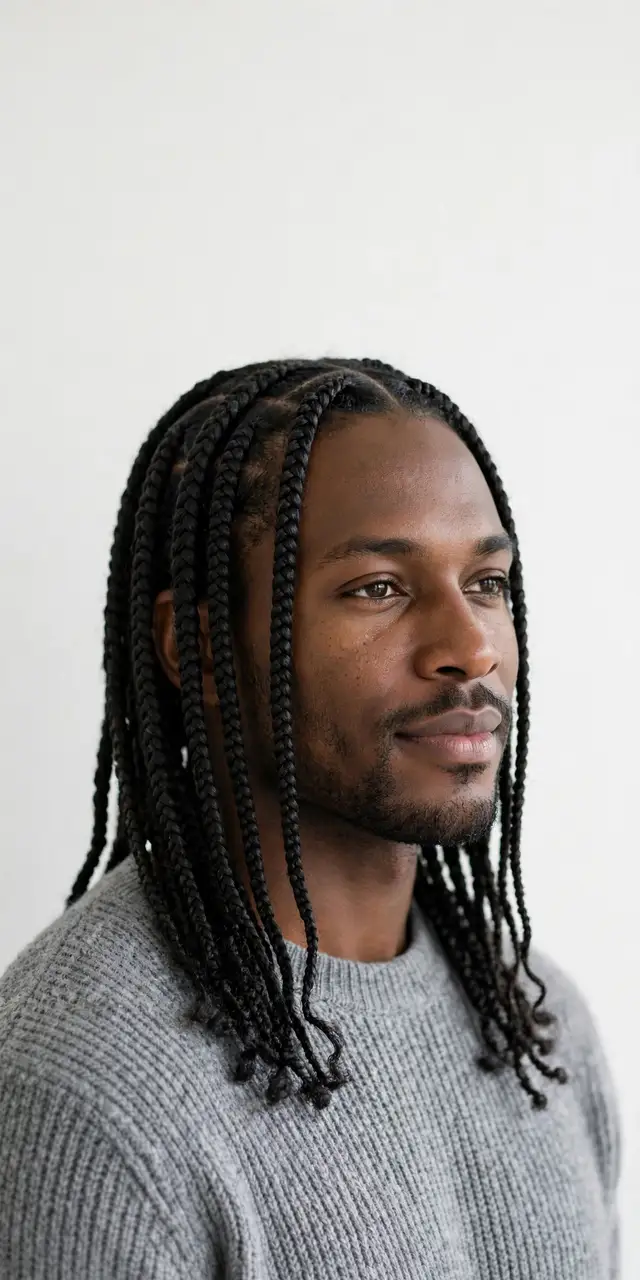
What do knotless box braids fix about the classic version?
The first three days. Knotless box braids start with your own hair and feed the braiding hair in gradually, so there is no bulky knot at the root — which means no scalp tension, no fresh-install headache, and a plait that falls naturally from day one instead of sticking out at angles. They have become the most requested box braid variation for exactly that comfort.
Face Shape: All faces. The flatter, more natural root makes them the easiest box braid for first-timers to wear.
Grooming Kit: The same as box braids — scalp oil and braid spray — plus a satin pillowcase if a scarf is not your habit.
Maintenance: Six to eight weeks like the classic, with the same hard stop. The gentler roots forgive a first-timer’s learning curve in aftercare.
Barber Script: “Knotless box braids — feed the hair in gradually, no knots, medium size. Comfortable tension, natural fall.”
Q: Do knotless braids last as long as regular box braids?
A: Yes — the same six-to-eight-week window with the same care. The difference is comfort and root appearance, not durability.
Q: Are knotless box braids more expensive?
A: Usually a little — the feed-in technique is slower at every single root. Most men who have worn both consider the pain-free first week worth the difference.
All of the box braid, none of the break-in pain — the upgrade most men now ask for first.
5 of 20 — Braids with a Fade
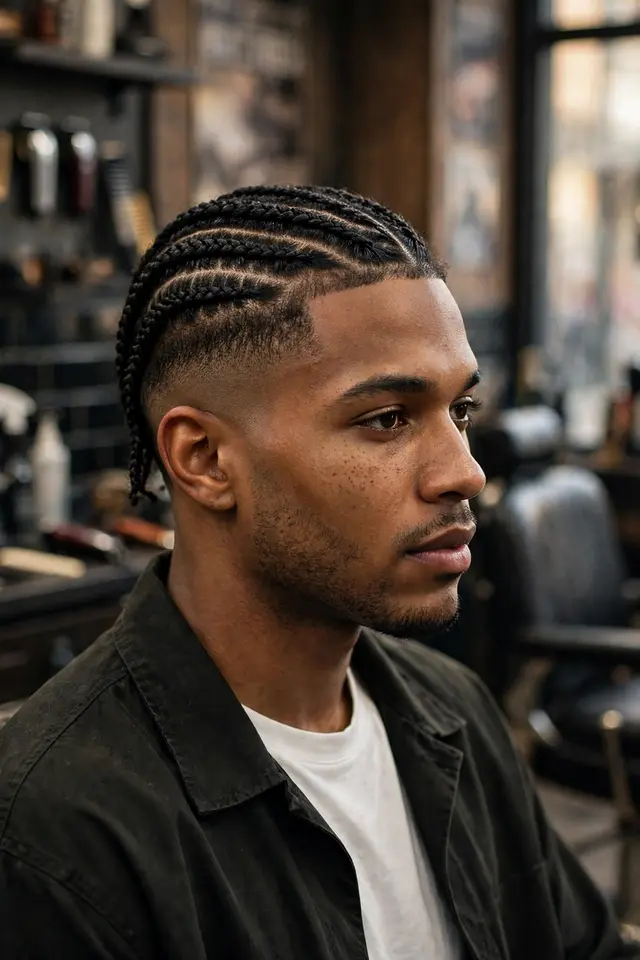
Why is the fade the defining partner for braids in 2026?
Because it gives braids a barbershop edge. Braids with a fade keep the braided work on top and clip the sides down to a clean gradient, so the silhouette reads sharp from every angle — the combination the biggest trend guides call arguably the defining men’s braid look of the year. It is also practical: the faded sides never tangle, never fuzz, and make the whole install look fresher for longer.
Face Shape: Round faces gain the most — the faded sides slim the silhouette while the braids add height and length above.
Grooming Kit: Clipper access or a standing barber slot for the fade, plus the usual scalp oil — the top and sides run on two different schedules.
Maintenance: The braids last their natural span; the fade needs a refresh every one to two weeks to keep the contrast honest.
Barber Script: “Braids on top, mid fade on the sides blended into the braid line. Keep the braids’ edges clean, line-up sharp.”
Q: Which fade level works best with braids?
A: A mid fade is the most versatile — enough contrast to read, not so high it eats into the braiding area. Low fades suit offices; high fades suit statements.
Q: Do I braid first or fade first?
A: Your braider will usually section and braid the top first, then the fade is cut around the finished pattern. Book both in one visit so the blend is designed, not improvised.
The combination of the year — braided craft on top, barber precision on the sides.
6 of 20 — Cornrows with a Fade
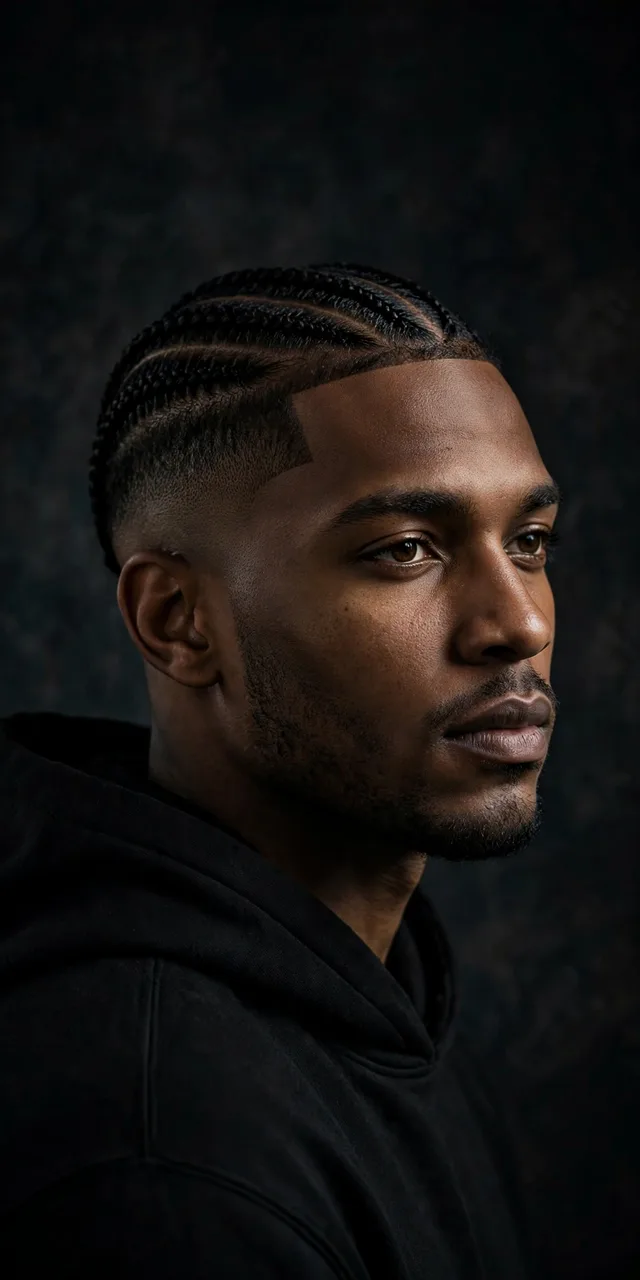
How do cornrows with a fade sharpen the classic?
By framing it. Cornrows with a fade run the straight-back rows on top and dissolve the sides into a skin-close gradient, so the rows end in clean air instead of a natural hairline. The effect is architectural: all the tradition of cornrows, with a frame that makes the pattern look intentional from across the street.
Face Shape: Square and oval faces carry the geometry best; the faded frame narrows wider faces usefully.
Grooming Kit: Scalp oil, an edge brush, and a weekly fade tidy — this version’s sharpness is perishable.
Maintenance: Rows last two to four weeks; the fade wants attention every week to ten days. Plan the install around that rhythm.
Barber Script: “Cornrows straight back on top, skin fade on the sides, rows ending clean at the fade line. Sharp line-up.”
Q: Cornrows with a fade or braids with a fade — which should I choose?
A: Cornrows sit flat and read graphic and athletic; individual braids hang and move. Choose flat if you wear helmets or hats daily, hanging if you want the length and motion.
Q: How many rows should cornrows with a fade have?
A: Six to ten is the classic range. Fewer rows read bolder and install faster; more rows show finer detail and suit smaller heads.
The classic rows, framed like a picture — tradition with a barber’s signature on it.
7 of 20 — Feed-In Braids
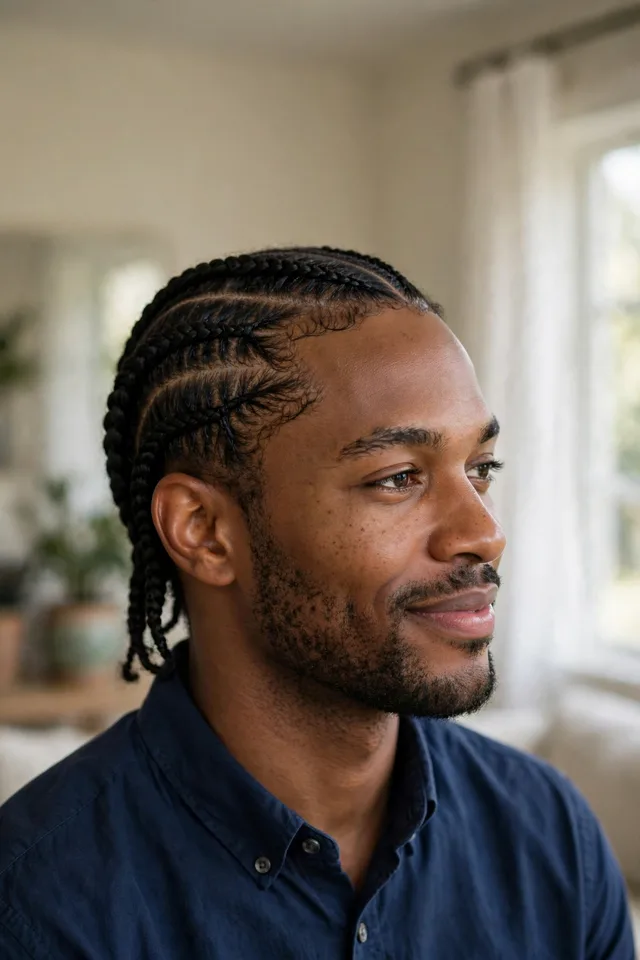
What problem do feed-in braids solve?
The bulky start. Feed-in braids build each cornrow gradually — the braider starts with your own hair and feeds braiding hair in piece by piece, so the row grows from a fine natural start to full thickness with no lump at the hairline. The result is the most natural-looking cornrow there is: it reads as your hair, just longer and sleeker.
Face Shape: All faces — the natural hairline keeps the look soft enough for conservative settings and first-time braiders.
Grooming Kit: Light oil and a scarf for sleep. Feed-ins are low-maintenance by design; heavy products only dull the finish.
Maintenance: Two to four weeks. The fine starts are delicate — no rough towel drying, and refresh the front rows if they lift early.
Barber Script: “Feed-in braids — start fine at the hairline, build gradually, straight back. I want it to look like my own hair grew this way.”
Q: Are feed-in braids good for a thinning hairline?
A: They are the kindest cornrow for one — the gradual start avoids the pulled-back look a standard install can give, and the fine roots put the least tension on fragile edges. Keep them loose.
Q: Feed-ins or stitch braids?
A: Feed-ins chase naturalism; stitch braids chase graphic detail. If you want people to ask who your braider is, stitch. If you want them to think it is your hair, feed-in.
The invisible install — cornrows that look grown, not made.
8 of 20 — Pop Smoke Braids
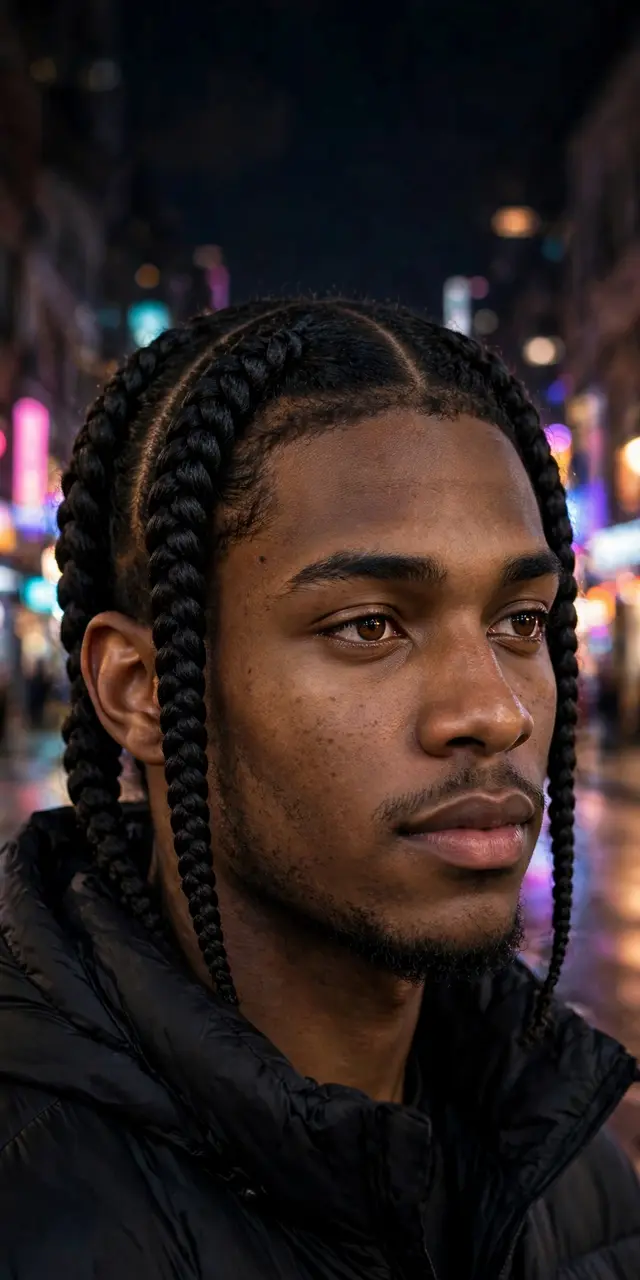
What are Pop Smoke braids, exactly?
Four chunky braids — two on each side of a dead-centre part — popularised by the late Brooklyn rapper whose name they carry. Pop Smoke braids are symmetrical, bold and fast to install, and barbers name them among the top trending braid styles of 2026. The simplicity is the statement: no pattern to hide behind, just four perfect plaits and a razor-clean part.
Face Shape: Symmetrical faces wear the centre part best; oval faces carry the boldness without competition.
Grooming Kit: Edge control for the part, scalp oil, and a brush — with only four braids, every detail shows.
Maintenance: Two to three weeks. Chunky braids loosen faster than fine ones, and the centre part needs its line kept honest.
Barber Script: “Pop Smoke braids — centre part, two chunky braids each side, symmetrical. Clean part, sharp edges.”
Q: How much hair do Pop Smoke braids need?
A: Four to six inches gives the chunky plaits their weight. On shorter hair the four-braid pattern still works but reads slimmer and loosens sooner.
Q: Are Pop Smoke braids the same as jumbo cornrows?
A: Cousins, not twins. Pop Smoke braids are a specific four-braid layout with a centre part; jumbo describes braid thickness generally, in any pattern.
Four braids, one part, zero hiding — the boldest simple style in this guide.
9 of 20 — Two-Strand Twists
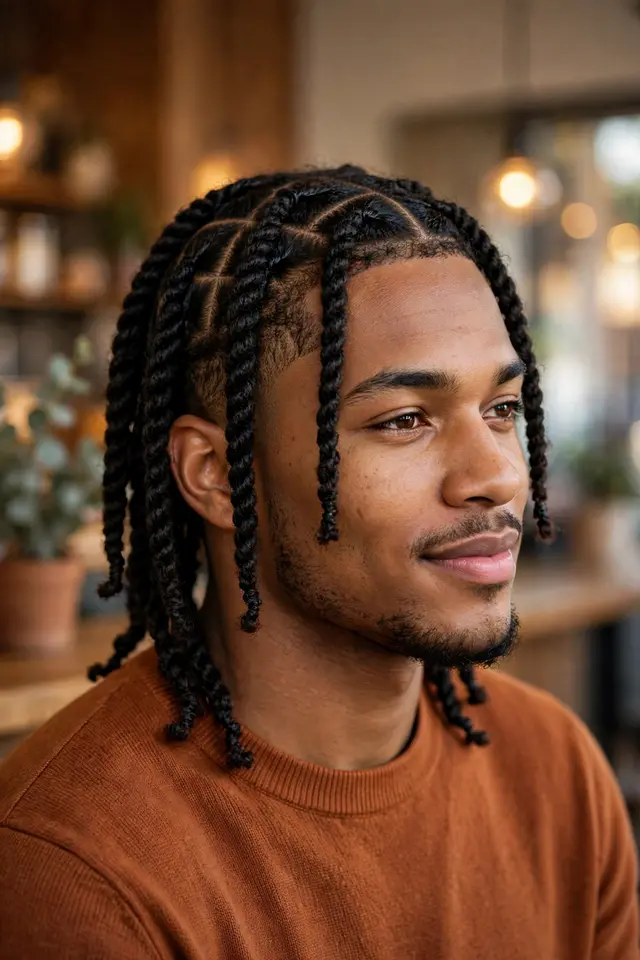
Why do two-strand twists keep dominating?
Because they are the easiest style in this guide to live with. Two-strand twists rope two sections of hair around each other instead of braiding three — the result hangs like a soft rope, installs faster than braids, removes in minutes, and can even be untwisted later for a twist-out. For men testing textured styles for the first time, this is the front door.
Face Shape: All faces. The hanging ropes frame longer faces; tying them back sharpens round ones.
Grooming Kit: A twisting cream or gel, light oil for the scalp, and a scarf at night — twists frizz faster than braids if left uncovered.
Maintenance: Two to four weeks. Twists unravel sooner than braids by nature; a weekly palm-roll refresh keeps them neat.
Barber Script: “Two-strand twists — medium size, clean parts, tapered sides. Even tension, rope finish, natural ends.”
Q: Twists or braids for a first protective style?
A: Twists — cheaper, faster in and out, and gentler while you learn the aftercare. Move to braids when you want the longer wear and sharper lines.
Q: Can I wash two-strand twists?
A: Yes, gently — diluted shampoo worked through with fingertips, rinsed without scrubbing. Expect some frizz afterwards; it is the price of the soft finish.
The front door of protective styling — fast in, easy out, soft everywhere.
10 of 20 — Viking Braids
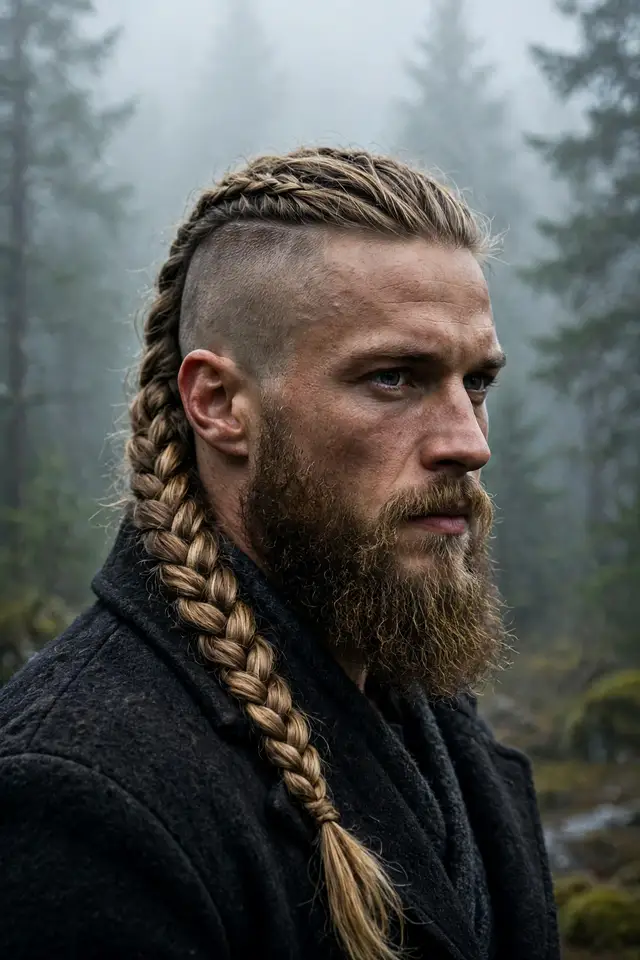
What makes Viking braids different from every other style here?
Scale and theatre. Viking braids gather long hair into one or a few thick plaits — often a single centre braid or two — worn over shaved or faded sides, the warrior silhouette that trend guides say is dominating modern barbershops. It is the one style in this guide built for genuinely long hair, and it carries a beard like it was designed for one.
Face Shape: Strong, angular faces carry the drama; the bare sides expose the jaw, so this style rewards bone structure.
Grooming Kit: Hair ties that do not snag, beard oil for the full picture, and a brush — a single thick plait shows every tangle.
Maintenance: The plait itself is redone in minutes daily or lasts days per braid; the faded sides need the usual one-to-two-week tidy.
Barber Script: “Viking braids — one thick centre plait, sides faded to skin, length kept long at the back. Beard shaped to match.”
Q: How long does hair need to be for Viking braids?
A: Eight inches or more for a plait with real presence. This is the long-hair end of the family — there is no short version that keeps the effect.
Q: Are Viking braids one braid or several?
A: Both exist. One thick centre plait is the iconic version; two or three parallel plaits read more detailed. The faded sides are the constant.
The warrior’s plait — the only style here that treats hair like a weapon and a banner at once.
11 of 20 — Braids with a Taper Fade

Why choose a taper fade under your braids instead of a full fade?
Restraint. Braids with a taper fade clean up only the edges — the hairline, sideburns and nape — while the sides keep their natural length and flow into the braids. It is the office-safe member of the fade family: sharp where people look, soft everywhere else, and the grow-out is so gentle nobody can date your last barber visit.
Face Shape: All faces, and the safest choice for conservative workplaces — the silhouette stays natural from every angle.
Grooming Kit: The usual scalp oil plus an edge brush; the taper’s whole point is tidy edges, so keep them tidy.
Maintenance: Braids on their natural span; the taper refreshes every two weeks and forgives a late appointment better than any skin fade.
Barber Script: “Braids on top, taper the edges only — hairline, sideburns, nape. Keep the sides natural, no skin fade.”
Q: Taper fade or low fade with braids?
A: A taper touches only the edges; a low fade blends a band around the ears and neckline. The taper is softer and grows out invisibly; the low fade reads slightly sharper.
Q: Does a taper fade work with every braid style?
A: Yes — it is the universal base. Cornrows, box braids and twists all sit happily over a taper because it never cuts into the braiding area.
The quiet professional — all the neatness, none of the fade’s drama.
12 of 20 — Zigzag Cornrows
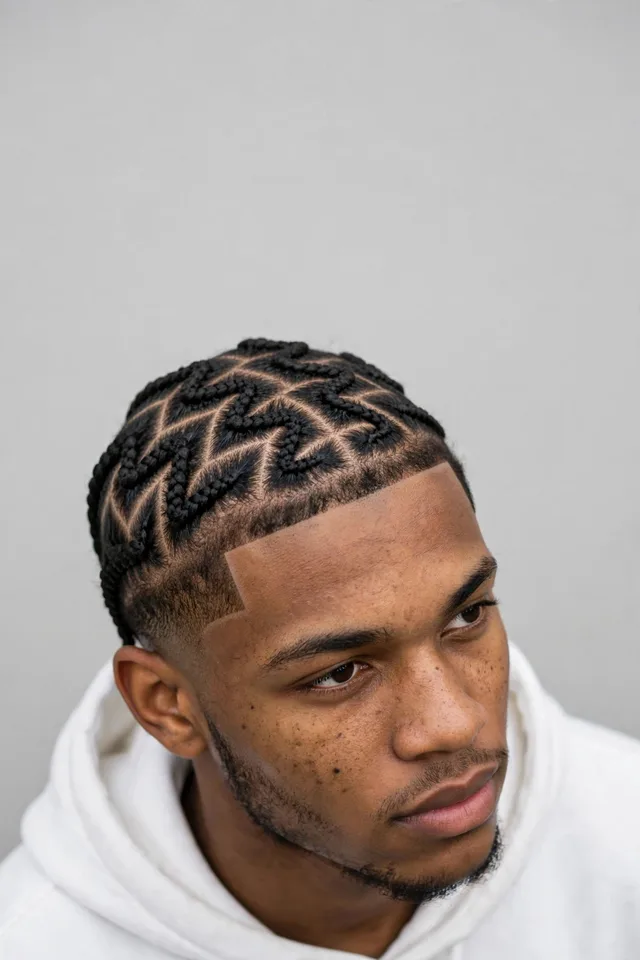
What do zigzag cornrows add to straight-back rows?
A signature. Zigzag cornrows braid the classic rows in a deliberate zigzag pattern across the scalp, turning the parting itself into the design. Creative scalp patterns are one of the defining braid directions of the year, and this is their most wearable form — same longevity as classics, twice the conversation.
Face Shape: Oval and square faces carry the bold pattern best; keep the zigzag scale larger on bigger heads.
Grooming Kit: Mousse for the parts, light oil, and a good mirror — pattern styles live and die by their lines staying clean.
Maintenance: Two to four weeks, like classic cornrows. The pattern softens as growth comes in, so the sharpest weeks are the first two.
Barber Script: “Zigzag cornrows — even zigzag pattern across the whole head, parts razor-clean. Line-up sharp, finish natural.”
Q: Do zigzag cornrows take longer to install?
A: Yes — the pattern must be mapped before the first row is braided, and each turn is placed deliberately. Expect roughly half an hour more than straight-backs.
Q: Can zigzag cornrows be combined with a fade?
A: They pair beautifully with one — the pattern on top, the gradient below. Book the fade for the same visit so the pattern’s edges are designed around it.
The pattern is the personality — classic rows taught to dance.
13 of 20 — The Braided Man Bun
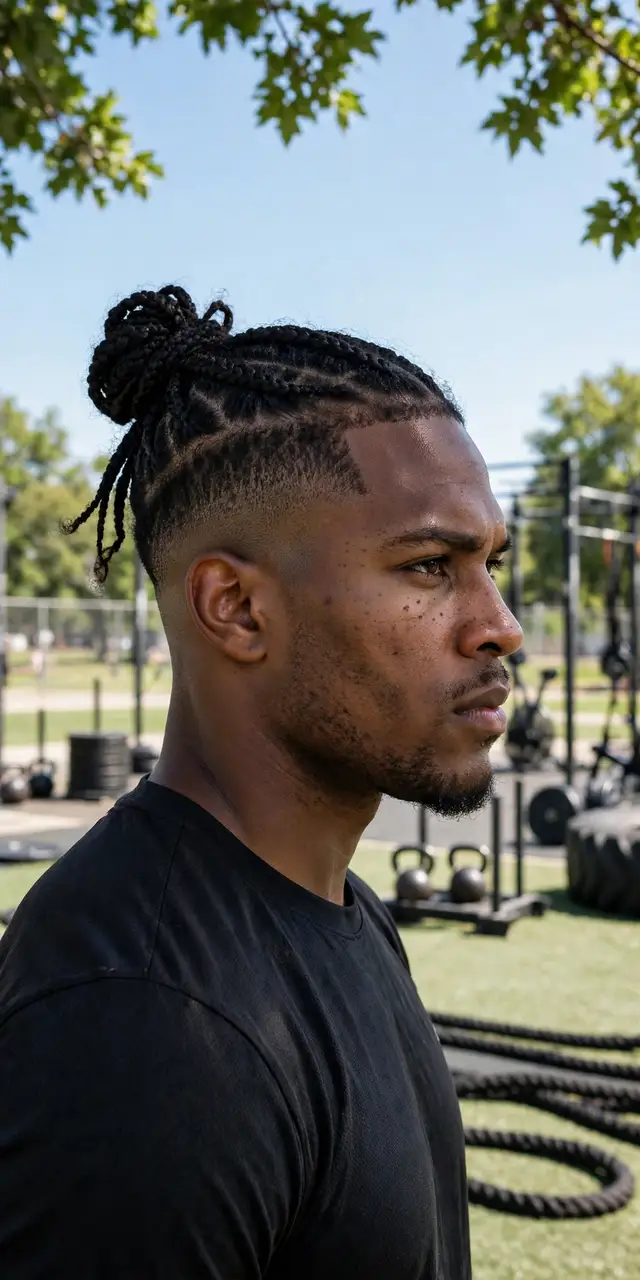
How does the braided man bun use length?
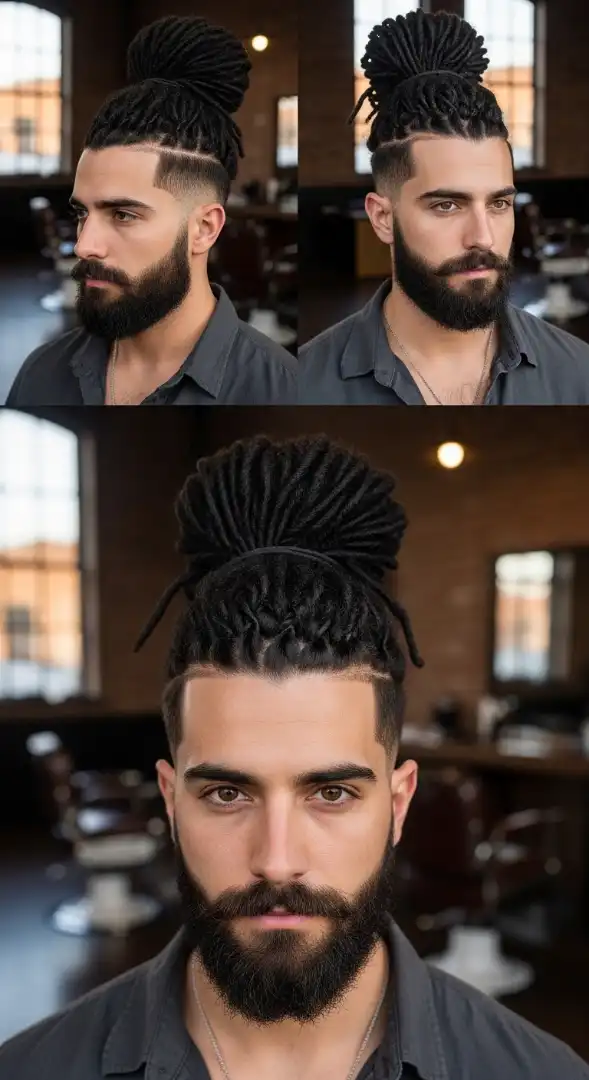
It displays it, then tidies it. Long box braids or cornrows-to-length are gathered up into a bun at the crown or back, usually over faded sides — two looks in one install: braids down for presence, bun up for training, work or heat. It is the style athletes and lifters live in, because nothing swings, sticks or interferes.
Face Shape: Longer and oval faces suit the height; keep the bun at the crown rather than high on top if your face is round.
Grooming Kit: Snag-free ties, edge control for the hairline, and scalp oil — a bun worn daily pulls on the front edges, so rotate its position.
Maintenance: The braids run their natural span; the bun itself is a thirty-second restyle. Never sleep in a tight bun — the tension works all night.
Barber Script: “Braids long enough for a bun, faded sides. I will wear it up most days — keep the front tension gentle.”
Q: How long do braids need to be for a man bun?
A: Long enough to gather and wrap — usually braids reaching past the shoulders. Shorter sets can fake a small top knot, but the full bun needs length.
Q: Is wearing a bun every day bad for braids?
A: A tight one is — constant pull on the hairline is traction by another name. Wear it loose, move its position, and let the braids hang at night.
Two looks, one install — the athlete’s answer to long braids.
14 of 20 — French Braids
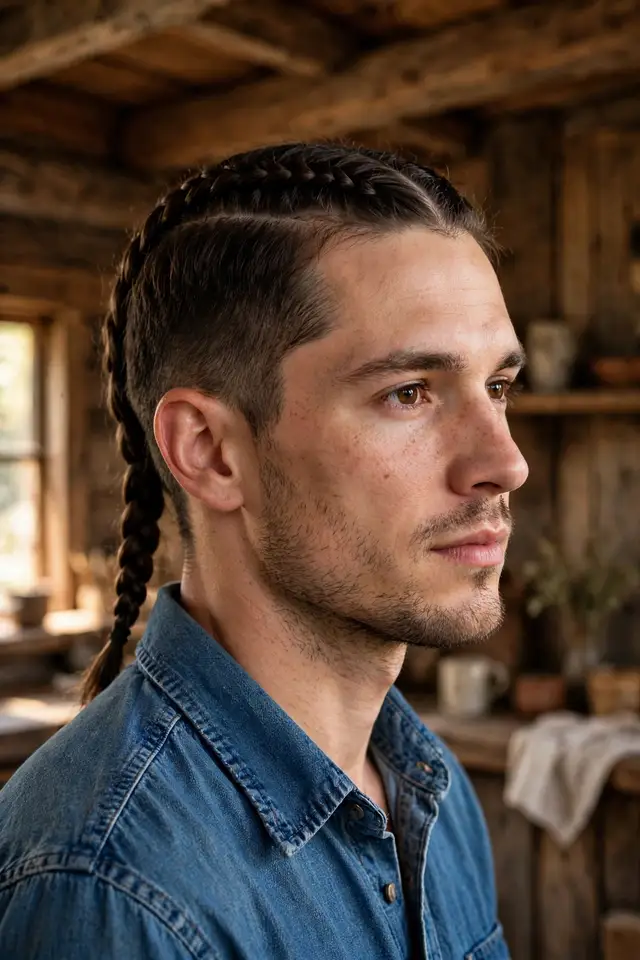
Why do French braids suit men with straight or wavy hair?
Because they were never only for textured hair. French braids weave three sections along the scalp — most often one single plait down the centre — and they grip straight and wavy hair that cornrow techniques struggle with. For long-haired men outside the coily-hair world, this is the braid that actually stays in.
Face Shape: All faces. A single centre plait lengthens the profile; two plaits read sportier and suit rounder faces.
Grooming Kit: A light styling cream for grip while braiding, ties, and a brush — straight hair slips, and product is the difference between hours and days.
Maintenance: Days, not weeks — straight hair works loose faster than textured hair. Treat it as a one-to-three-day style and rebraid fresh.
Barber Script: “One French braid down the centre, woven tight to the scalp, sides natural or lightly tapered. Secure the end cleanly.”
Q: Why do my French braids fall out by evening?
A: Slippage — straight hair has no coil to lock the weave. Braid on slightly damp hair with a grip cream, keep sections small, and the same braid lasts days.
Q: Single or double French braids for men?
A: Single reads classic and minimal; double reads athletic and younger. Both are the same technique — the choice is pure silhouette.
The bridge style — braiding for the straight and wavy-haired.
15 of 20 — Braids for Short Hair
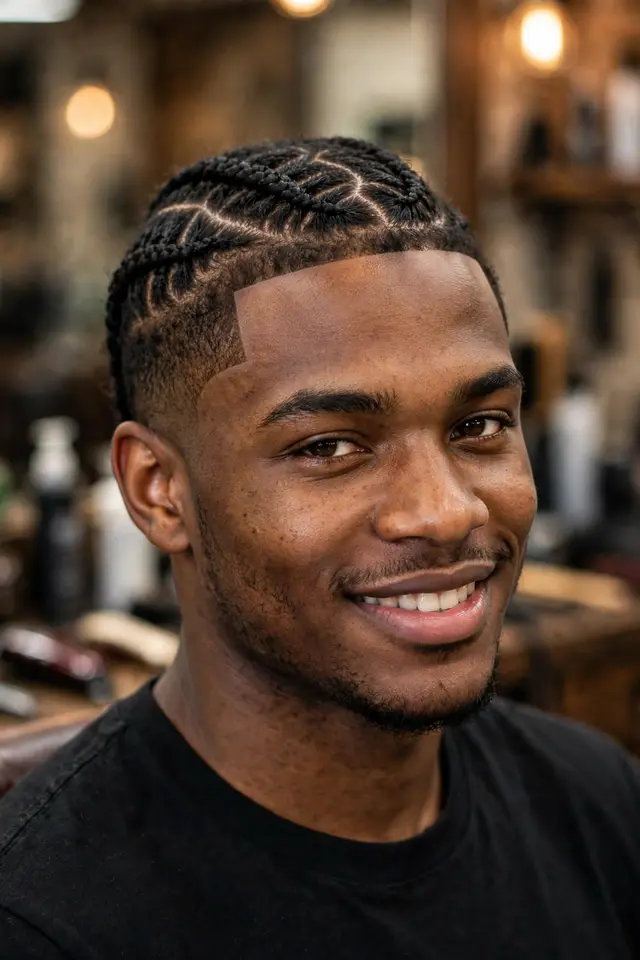
Can you braid genuinely short hair?
Yes — with the right pattern. Braids for short hair use compact cornrow designs — straight-backs, curves and small patterns — that work at the two-inch minimum where hanging styles cannot. It is how men growing their hair out, or keeping it short by choice, get the braided look and the protective benefit without waiting a year.
Face Shape: All faces. Small-scale patterns suit smaller heads; keep rows slightly thicker on larger ones for proportion.
Grooming Kit: Scalp oil and a wave brush — short braids expose more scalp, and dry scalp shows more. Oil on schedule.
Maintenance: Two to three weeks — short rows loosen sooner than long ones because there is less hair locking each pass. A durag at night is non-negotiable here.
Barber Script: “Short cornrow pattern — my hair is about two inches. Small clean rows, tapered edges, nothing that needs length I do not have.”
Q: What is the absolute minimum length for braids?
A: Around two inches for cornrow patterns a skilled braider can grip. Below that, grow first — forced braids on one inch of hair mean extreme tension and a week of wear.
Q: Which braid style suits short hair best?
A: Cornrows, in any pattern. Hanging styles — box braids, twists — need length to exist. Flat styles only need grip.
Proof the family starts at two inches — no growing-out period required.
16 of 20 — Braids with a Beard
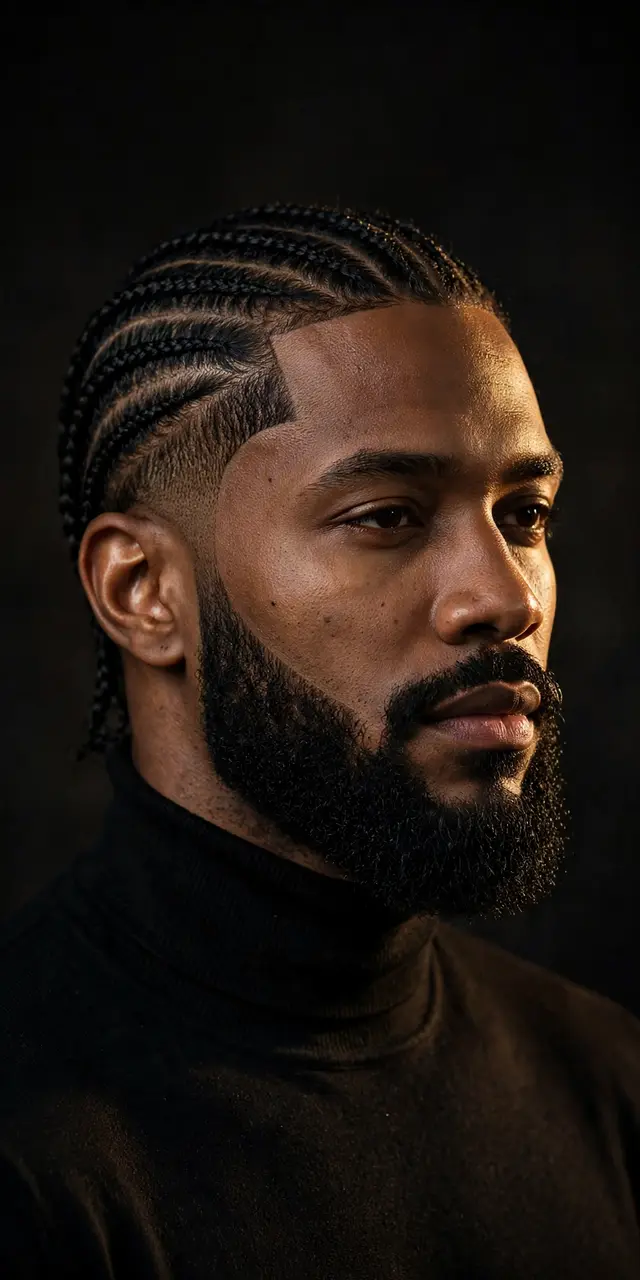
Why do braids and a beard complete each other?
Balance. Braids with a beard pair the scalp’s clean geometry with a full, shaped beard below — the pattern draws the eye up, the beard grounds the face, and the line-up connects them into one designed silhouette. It is the most complete-looking combination in this guide, and the one that photographs like a portrait.
Face Shape: The beard lets you cheat your face shape — fuller at the chin lengthens round faces; trimmed sides slim square ones.
Grooming Kit: Beard oil and a boar brush join the braid kit; the beard needs daily shaping to deserve the braids above it.
Maintenance: Braids on schedule; beard edges every few days, full shape-up with every fade or braid refresh.
Barber Script: “Cornrows on top, beard shaped full with a sharp line-up. Connect the line-up from the braids to the beard in one line.”
Q: Should the beard be shaped before or after braiding?
A: After — the finished braid pattern sets the hairline the beard’s top edge must meet. One visit, braids first, beard second, line-up last.
Q: Which braids pair best with a big beard?
A: Clean, flat ones — cornrows or stitch braids. The beard already supplies volume; busy hanging braids plus a big beard crowd the face.
Geometry above, gravity below — the full portrait version.
17 of 20 — Jumbo Box Braids
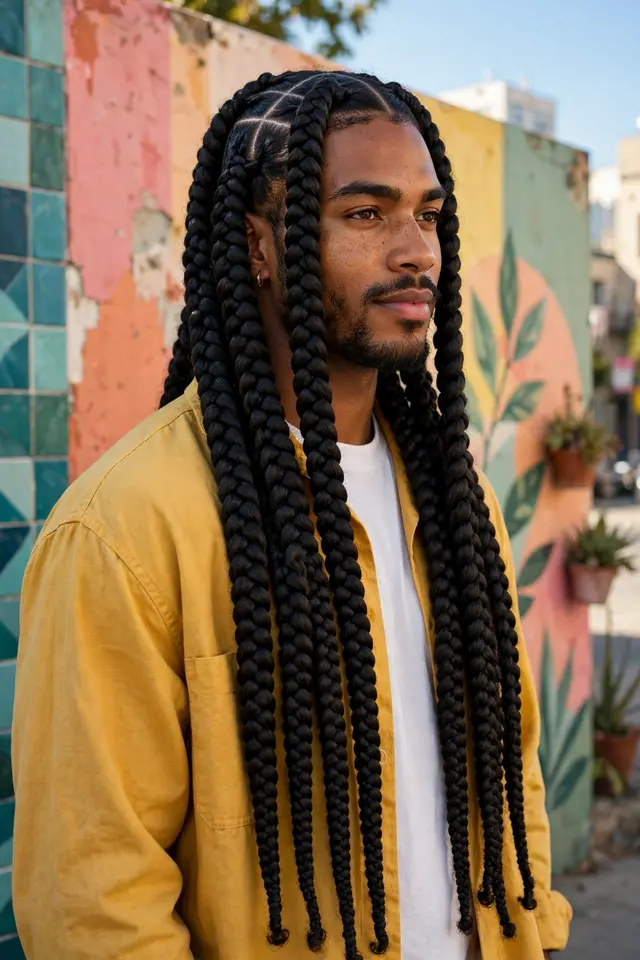
What changes when box braids go jumbo?
Everything scales. Jumbo box braids use far fewer, far thicker sections — the plaits are chunky, the parts are wide, the install is dramatically faster, and the statement is twice as loud. Where medium box braids whisper versatility, jumbos announce themselves. They are the choice when the braid itself is the outfit.
Face Shape: Larger heads and stronger features carry the scale; petite faces can be overwhelmed by the thickness.
Grooming Kit: Scalp oil with a nozzle applicator — wide parts expose more scalp, and it needs direct oiling. Braid spray for the lengths.
Maintenance: Four to six weeks — slightly shorter than medium box braids, because each thick plait carries more weight per root. Watch the front sections.
Barber Script: “Jumbo box braids — big sections, chunky plaits, length past the shoulders. Even weight, gentle tension at the front.”
Q: Are jumbo box braids heavier than regular ones?
A: Per braid, yes; per head, similar total hair spread over fewer roots — which is why the front sections need watching and the wear is a little shorter.
Q: How long do jumbo box braids take to install?
A: Often half the time of a medium set — fewer sections means fewer plaits to build. Two to three hours is typical where mediums run four to six.
The loud version — fewer braids, bigger presence, faster chair time.
18 of 20 — Braids with an Undercut
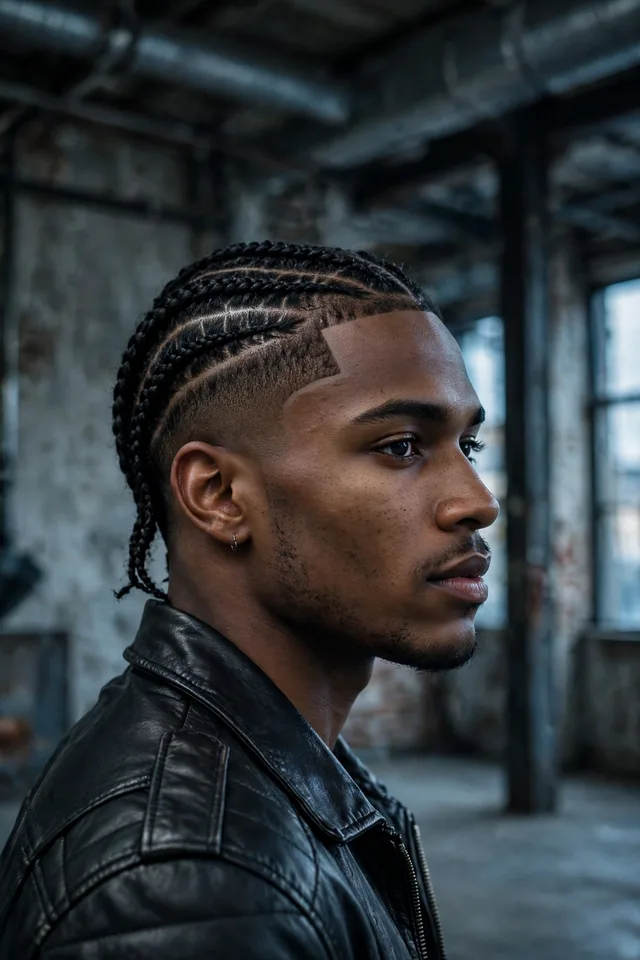
How do braids with an undercut create contrast?
By disconnection. Braids with an undercut clip the sides short with a hard line where the braids begin — no gradient, no blend — so the braided top sits like a crown over bare sides. It is the boldest framing in the fade family, borrowed from the Viking playbook, and it makes even simple cornrows read like a statement.
Face Shape: Square and angular faces suit the hard geometry; the disconnect widens narrow faces usefully.
Grooming Kit: The braid basics plus a plan for the grow-out — undercuts pass through an awkward regrowth phase the fade family avoids.
Maintenance: Braids on their span; the undercut needs clipping every one to two weeks to keep the disconnect line honest.
Barber Script: “Braids on top, undercut the sides with a hard disconnect — no blend. Keep the line exactly where the braids start.”
Q: Undercut or fade under braids — which grows out better?
A: The fade, easily — it softens as it grows. An undercut’s hard line grows into a shelf that needs either commitment or a re-cut. Choose the undercut for impact, the fade for ease.
Q: Can I tie braids with an undercut up?
A: Yes — a top knot or bun over undercut sides is one of the strongest silhouettes in this guide. Just keep the tie loose at the front edges.
The hard line — braids crowned over bare sides, no blending, no apology.
19 of 20 — Winter Braids
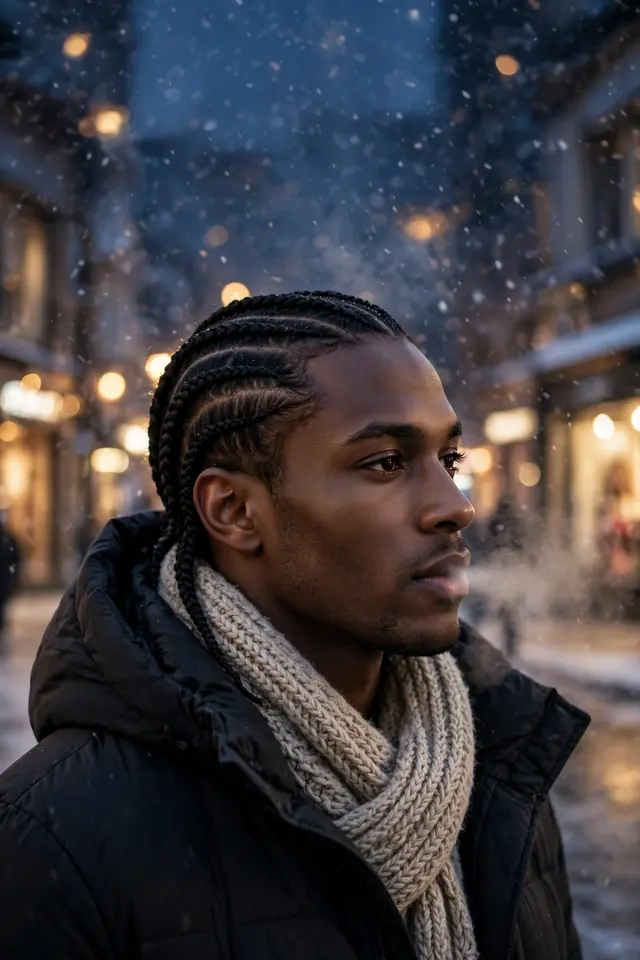
Why are winter braids a strategy, not just a style?
Because winter is when textured hair suffers most. Winter braids are any protective install — cornrows, box braids, twists — chosen and maintained for the cold months: the hair is tucked away from dry freezing air, hats go over the style instead of crushing it, and the scalp routine shifts to fight indoor-heating dryness. This is the season braids were made for.
Face Shape: All faces — choose the underlying style by face shape as normal; winter changes the care, not the geometry.
Grooming Kit: A richer scalp oil than summer, a satin-lined beanie (bare wool and cotton rub braid edges raw), and a moisturising braid spray for indoor-heating days.
Maintenance: Keep the install’s normal lifespan, but oil the scalp more often — two to three times a week — and never put a hat on damp braids.
Barber Script: “Protective braids for winter — cornrows, medium rows, nothing too tight. I will be wearing beanies over them daily.”
Q: Do beanies damage braids?
A: Rough fabrics do — wool and cotton friction fuzz the edges and dry the hair. A satin-lined beanie removes the problem entirely and is the single best winter upgrade.
Q: Should braids be looser in winter?
A: The same sane tension as always — but winter is the worst season for a tight install, because dry, cold-stressed hair breaks more easily under tension. Comfort matters double now.
The season’s armour — hair tucked away, style intact, hat on top.
20 of 20 — The Braid King
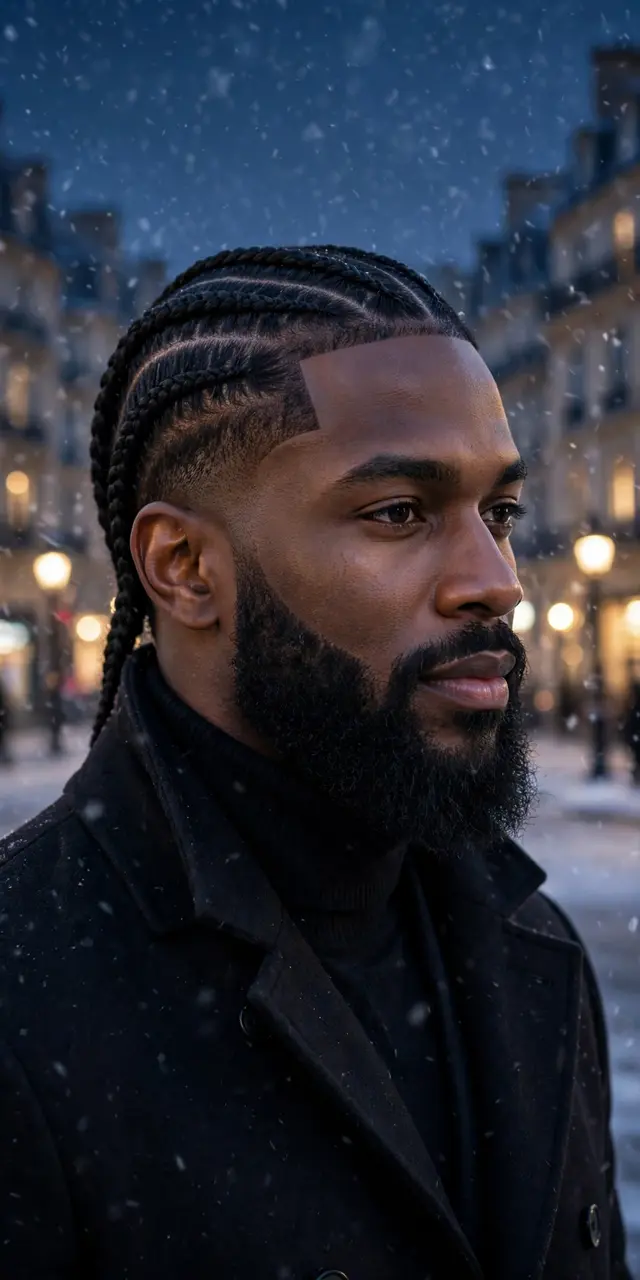
What does the complete braided look obey?
Every rule in this guide at once. The Braid King runs stitch cornrows — the sharpest pattern — over a clean mid fade, finished with a razor line-up and a shaped, groomed beard: graphic detail above, gradient precision on the sides, portrait balance below. Nothing is accidental: the tension is comfortable, the parts are drawn-clean, the scalp care is scheduled, and the whole silhouette holds for weeks.
Face Shape: Any face that can grow the beard — the combination is engineered balance, and the fade level adjusts to the face.
Grooming Kit: The full bench: scalp oil, mousse for the lines, beard oil, a durag for the night, and a satin-lined beanie for the season.
Maintenance: Stitch rows refresh at two to three weeks, the fade weekly, the beard with every visit — the king runs on appointments, not hope.
Barber Script: “Stitch braids straight back, mid fade, line-up razor sharp, beard shaped to connect. Comfortable tension — I am keeping this for weeks.”
Q: What makes this the king and not just stitch braids with extras?
A: The completeness. Stitch braids alone are a pattern; the king adds the fade’s frame, the line-up’s finish and the beard’s balance — every layer designed against the others.
Q: How do I keep the king looking royal for the full install?
A: Sleep in the durag, oil the scalp on schedule, keep the fade and edges touched up between braid appointments, and never let a hat sit on damp braids.
Every rule obeyed, every layer finished — the braided look at its ceiling.
The Bottom Line
Braids reward the man who picks by his hair, his calendar and his face — not by the loudest photo. Start with the foundation if you are new: classic cornrows or two-strand twists, worn at a tension that never hurts. Choose box braids — knotless if comfort matters — when you need six to eight weeks of freedom, and feed-ins when you want the world to think you grew it. Frame any of them with a fade for the defining look of the year, or keep the taper if your office prefers quiet. Winter is this family’s home season: install before the cold bites, line your beanie with satin, and oil the scalp like it is your job. The fade underneath any of these is its own decision — our fade haircuts for men guide walks through every level, and our hairstyles for Black men guide covers the wider textured-hair family these styles grow from. Braid it once, braid it right, and enjoy the weeks of mornings it gives you back.