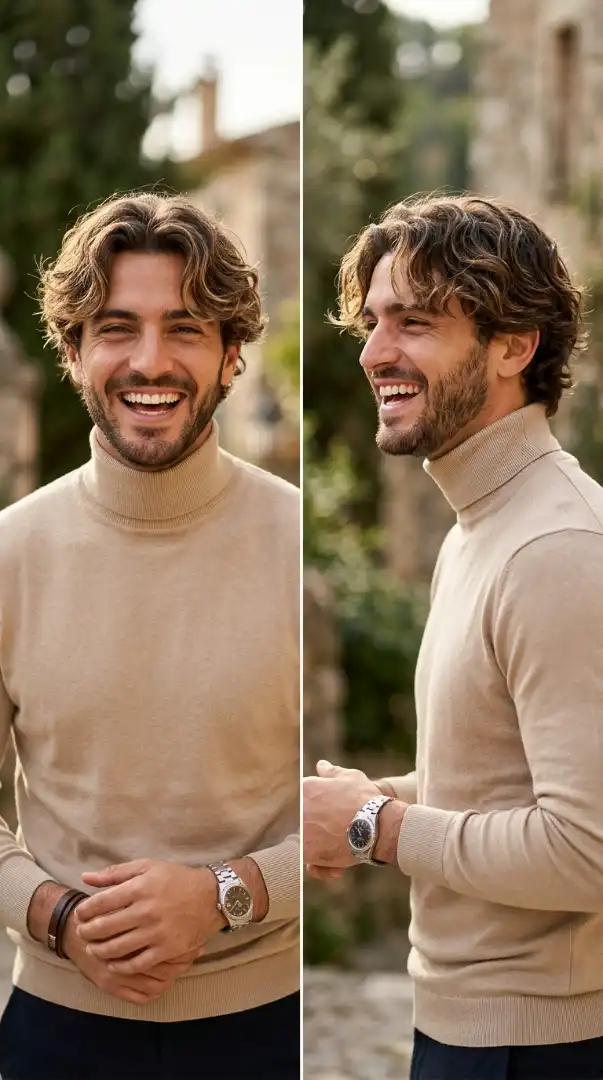
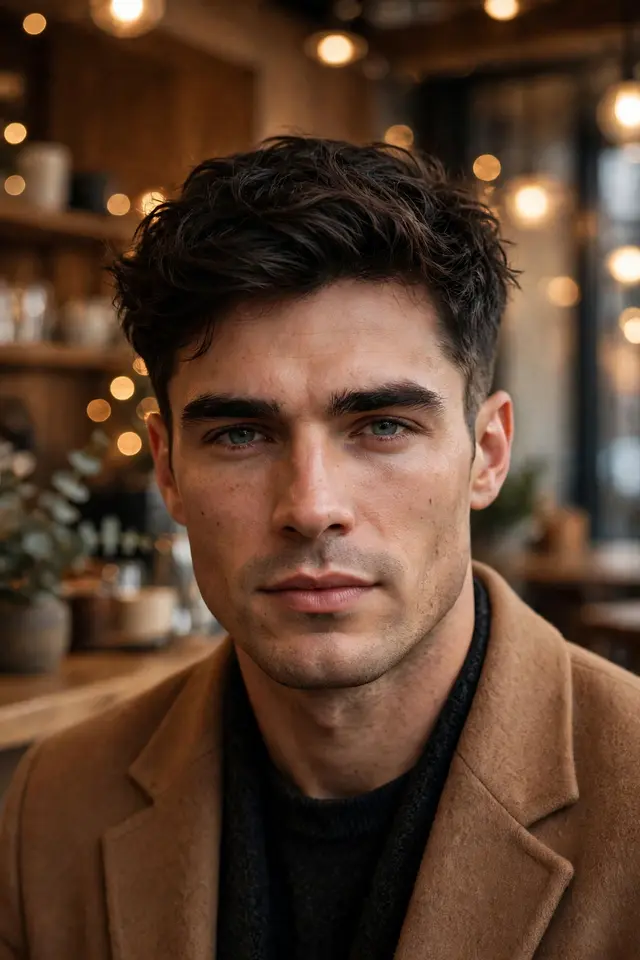
20 Low Taper Fade Hairstyles for Men: Textured Fringes, Crops & Clean Tapers
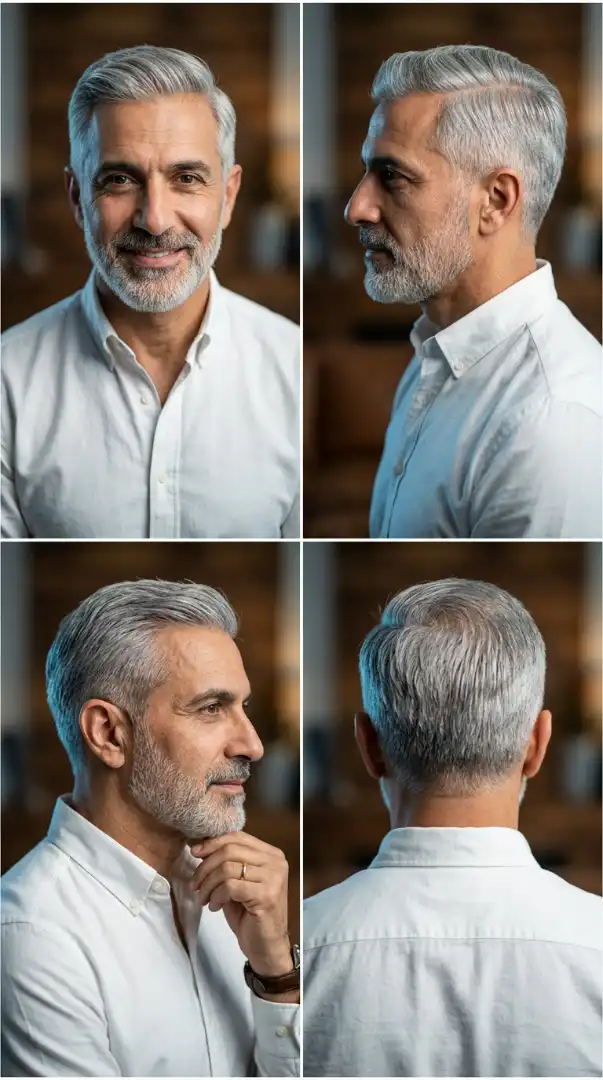
One fade survived the great fade backlash — and it is not close. Search data puts the low taper fade at roughly 550,000 searches a month in the US alone, more than any other named men’s cut, and trend trackers listing the most requested and most saved cuts heading into 2027 put the low taper at the very top. The reason is discipline: while high skin fades shouted, the low taper whispered. It shortens the hair only where the haircut ends — around the sideburns and the neckline — and leaves everything above it with real length. The result reads less like a fade and more like a haircut that simply finishes perfectly.
Understand the architecture and every version in this guide makes sense. A taper is not a fade up the whole side: the barber blends the hair down to its shortest only at the edges — a small zone above the ears and around the nape — so there is no line, no skin show-through unless you ask for it, and no harsh regrowth stage. That is why the low taper grows out more gracefully than any other clipper work (four to five weeks between visits, against three for a classic fade) and why it works in conservative offices and creative studios alike. The 2027 story, though, is what sits on top: texture. The fastest-rising pairings in the data are the low taper with a textured fringe (searches roughly doubled) and with a messy fringe (up over 100 percent) — the taper has become the frame, and the textured top is the picture.
Inside: the classic blueprint, both fringe heroes, the crop pairing, versions for curly, wavy, straight, thick and fine hair, the short and buzz extremes, the side part, slick back and quiff finishes, the beard pairing, the receding-hairline case, the winter version, and the complete look that obeys every rule. Each comes with the face shapes it flatters, the kit it needs, the upkeep it honestly demands, and the exact words to say in the chair. This guide deliberately covers only the low taper — for the full fade family (mid, high, skin, burst), see our fade haircuts for men guide; for the fringe in depth, our fringe hairstyles for men guide is its home.
1 of 20 — The Classic Low Taper Fade
What is a low taper fade, exactly?
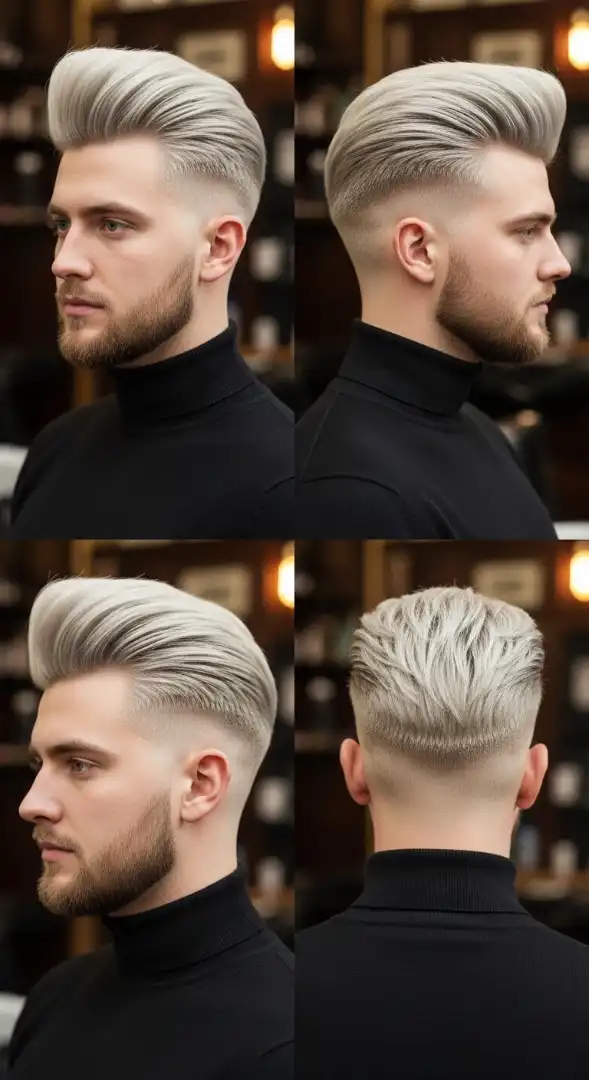
The blueprint. The hair is tapered — blended down to its shortest — only around the sideburns and the neckline, while the sides above keep their length and the top is worn at two to three inches, textured and natural. There is no visible line anywhere: the haircut just gets cleaner as it reaches its edges. If a stranger cannot tell where the fade is, the classic low taper fade has done its job.
Face Shape: All faces — the most universally flattering clipper cut in men’s hair, because it changes so little of the head’s natural shape.
Grooming Kit: A light cream or a fingertip of matte paste, and a comb. This cut needs direction, not construction.
Maintenance: Every four to five weeks — the most forgiving schedule of any fade, because the regrowth has no line to betray it.
Barber Script: “Classic low taper fade — taper only at the sideburns and neckline, keep the length on the sides, two to three inches textured on top.”
Q: What is the difference between a taper and a fade?
A: A fade blends the whole side upward from short to long. A taper shortens the hair only at the edges — sideburns and neckline — leaving the sides with length. The low taper fade is the gentle end of the fade family.
Q: Does a low taper fade suit a professional job?
A: It is the most office-safe clipper cut there is. No skin, no line, nothing extreme — it simply looks like a very well-kept haircut.
The whisper fade — clean only where the haircut ends.
2 of 20 — Low Taper Fade with a Textured Fringe
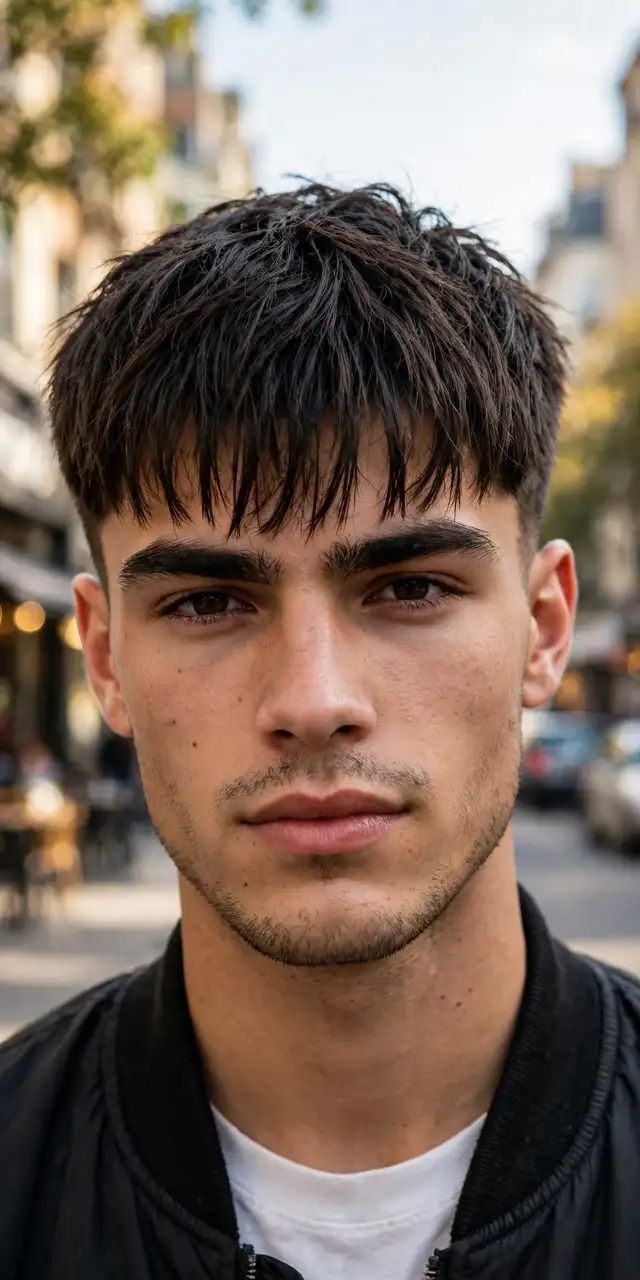
Why is this the most searched pairing of all?
Because it is the 2027 formula in one cut. Low taper fade with a textured fringe runs a point-cut, forward-falling fringe over the low taper’s clean edges — and searches for the pairing roughly doubled in a year to hundreds of thousands, making it the most-searched rising combination in men’s hair. The fringe brings the personality; the taper keeps it employable. If you copy one style from this guide, the data says copy this one.
Face Shape: Oval and longer faces gain the most — the forward fringe shortens them; round faces should keep the fringe shorter and the top textured upward.
Grooming Kit: A matte clay and your fingers; the fringe is placed forward on damp hair and left to dry in position.
Maintenance: Four to five weeks; the fringe’s length is the feature, so it is trimmed precisely at each visit.
Barber Script: “Low taper fade with a textured fringe — taper at the edges only, top about three inches, point-cut and textured so it falls forward to the eyebrows.”
Q: How long should the fringe be?
A: Long enough to reach toward the eyebrows when dry — usually cut a touch longer, since textured hair springs up as it dries. Your barber should cut it dry or account for the shrinkage.
Q: Textured fringe or messy fringe — what is the difference?
A: Control. The textured fringe is placed piece by piece; the messy fringe (next style) is the same cut styled looser and more tousled. Same haircut, two mornings.
The formula — personality in front, discipline at the edges.
3 of 20 — Low Taper Fade with a Messy Fringe
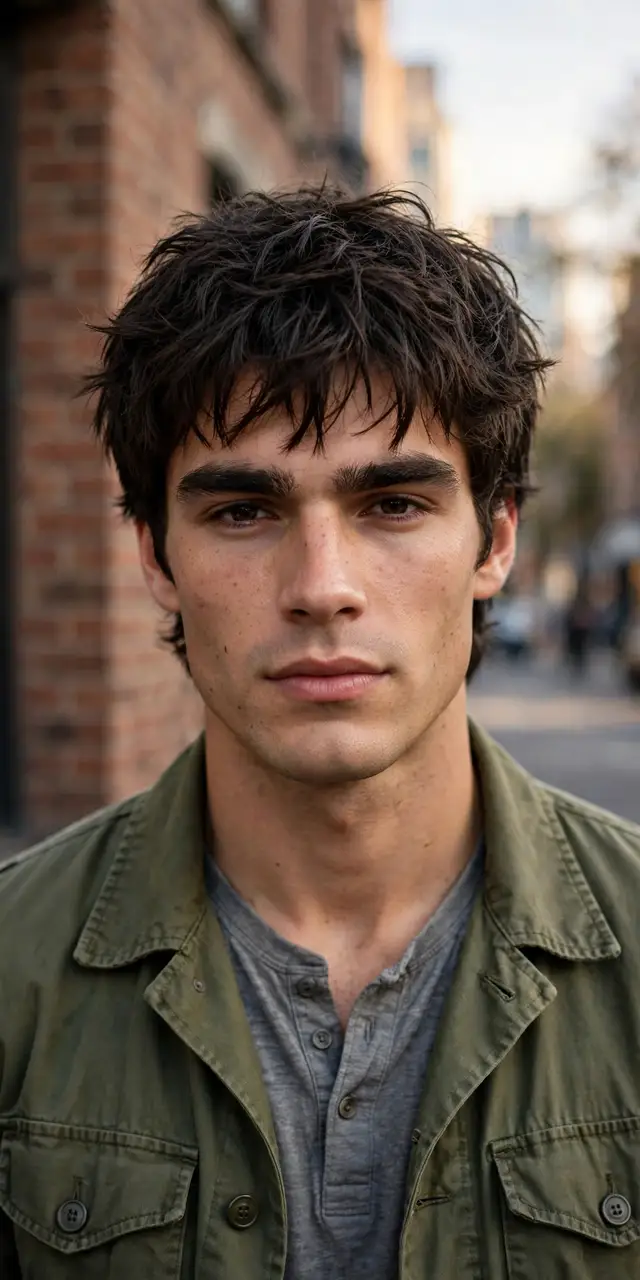
What makes the messy fringe version different?
Intent, mostly — the messy fringe takes the same architecture and styles it like it just happened. Low taper fade with a messy fringe wears the top longer and looser, tousled forward with separated, uneven pieces, and searches for it grew even faster than its tidier sibling (up over 100 percent in a year). It is the version for men whose hair refuses to lie flat anyway: this cut stops fighting it and makes the refusal the style.
Face Shape: Longer and narrower faces suit the width a messy fringe adds; very round faces should keep it shorter and more controlled.
Grooming Kit: A texturising powder or a pea of matte paste, applied to dry hair and scrunched, never combed.
Maintenance: Four to five weeks for the taper; the top tolerates growing longer than any other style here — mess forgives length.
Barber Script: “Low taper fade with a messy fringe — edges tapered clean, top left longer and heavily textured, worn forward and messy.”
Q: How do I style a messy fringe without it looking dirty?
A: Clean hair, tiny product, dry application. The mess must look deliberate: wash it, dry it fully, then scrunch in texturising powder. Greasy hair plus mess reads as neglect; clean hair plus mess reads as style.
Q: Can a messy fringe work in an office?
A: A mild version can — keep the mess subtle and the taper crisp. The wilder saved-photo versions belong to weekends.
Deliberate disorder — the refusal, styled.
4 of 20 — Low Taper Fade with a Textured Crop
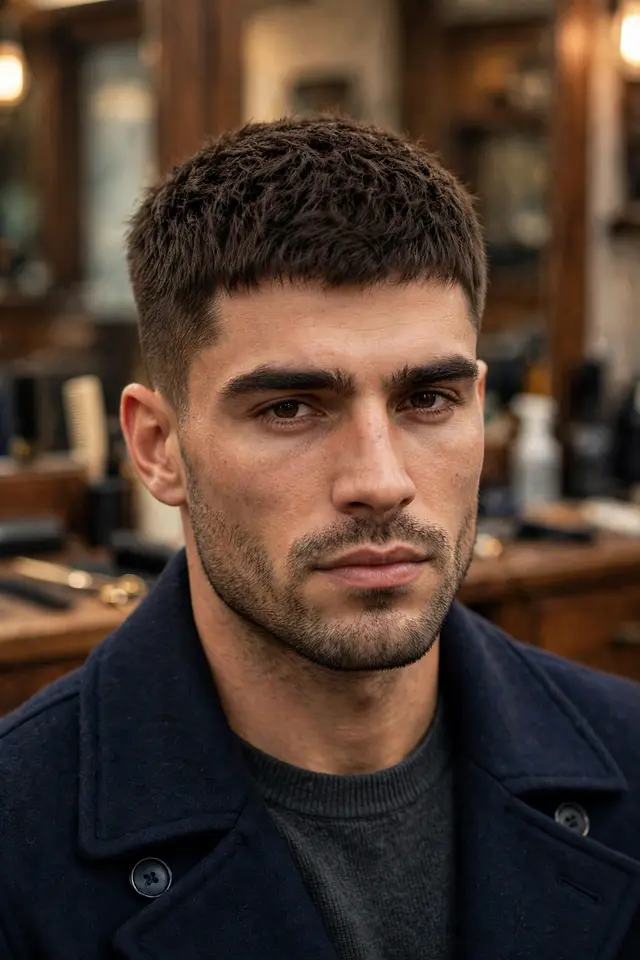
Why do the crop and the low taper belong together?
Because both are minimalists. Low taper fade with a textured crop pairs the crop’s short, point-cut, forward-worn top with the taper’s edge-only finish — searches for crop-and-fade pairings have climbed steeply (the mid-fade version tripled), and the low taper version is the softest of them. Under a minute of styling, no visible fade line, nothing to maintain between visits: this is the thinking man’s shortcut.
Face Shape: All faces; the crop’s forward weight is also the kindest short cut for a maturing hairline.
Grooming Kit: A fingertip of matte clay. Some mornings, honestly, nothing at all.
Maintenance: Four to five weeks — both halves of this cut grow out gracefully, which is the entire point.
Barber Script: “Low taper fade with a textured crop — short textured crop on top worn forward, taper only at the sideburns and neckline.”
Q: Low taper or mid fade with a textured crop?
A: The mid fade version is sharper and more graphic; the low taper is softer and grows out better. Choose by how much fade you want to see in the mirror.
Q: Is this different from a French crop?
A: Cousins. The French crop’s fringe is blunter and heavier; this textured crop’s fringe is point-cut and separated. The taper underneath is the same.
Two minimalists — the thinking man’s shortcut.
5 of 20 — Low Taper Fade with a Curly Top
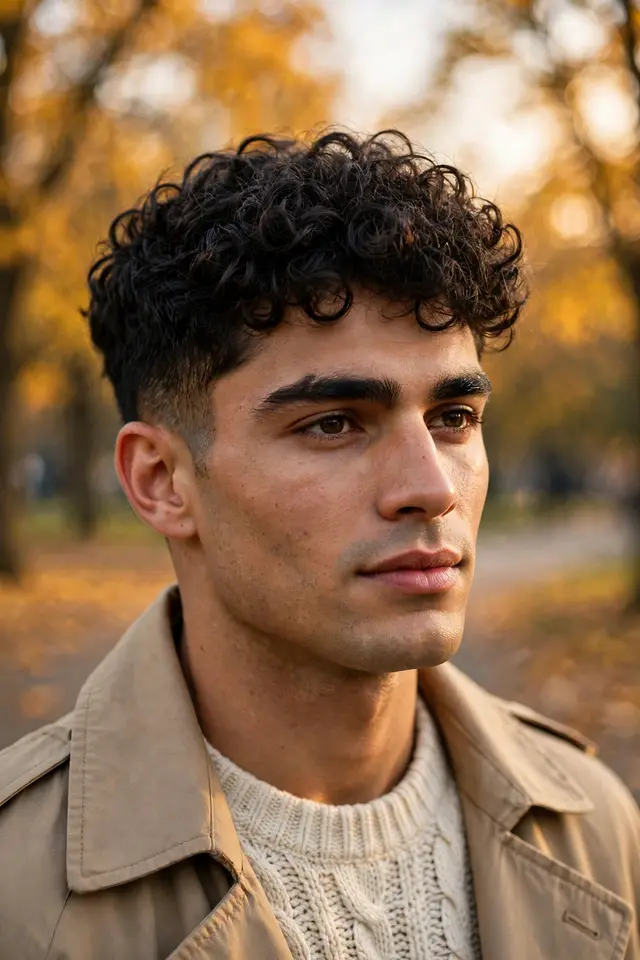
Why is the low taper the curly cut of the moment?
Because it lets curls be the whole style. Low taper fade with a curly top keeps two to four inches of natural curl on top — long enough to form properly — while the taper cleans only the edges, so nothing competes with the curl pattern. Trend lists for 2027 name the tapered curly top among the most saved looks on Pinterest, and it is easy to see why: maximum character, minimum intervention.
Face Shape: Longer faces suit the width curls add on top; round faces should keep the curls’ volume concentrated upward rather than outward.
Grooming Kit: A curl cream and leave-in conditioner; fingers only — brushes and fine combs are banned from this style.
Maintenance: The taper every four weeks; the top can go eight. The moisture routine is the real upkeep.
Barber Script: “Low taper fade with a curly top — taper the edges only, curls left long enough to form on top, cut dry and curl by curl.”
Q: Why not a higher fade with curls?
A: You can — but the low taper keeps the silhouette natural and the grow-out kind. Higher fades under curls create a shelf that needs constant policing.
Q: How do I stop the top looking like a mushroom?
A: Shaping, not just length: ask for the curls to be layered so the silhouette narrows as it rises, and keep the taper clean so the base stays neat.
The curl is the style — the taper just frames it.
6 of 20 — Low Taper Fade with a Wavy Top
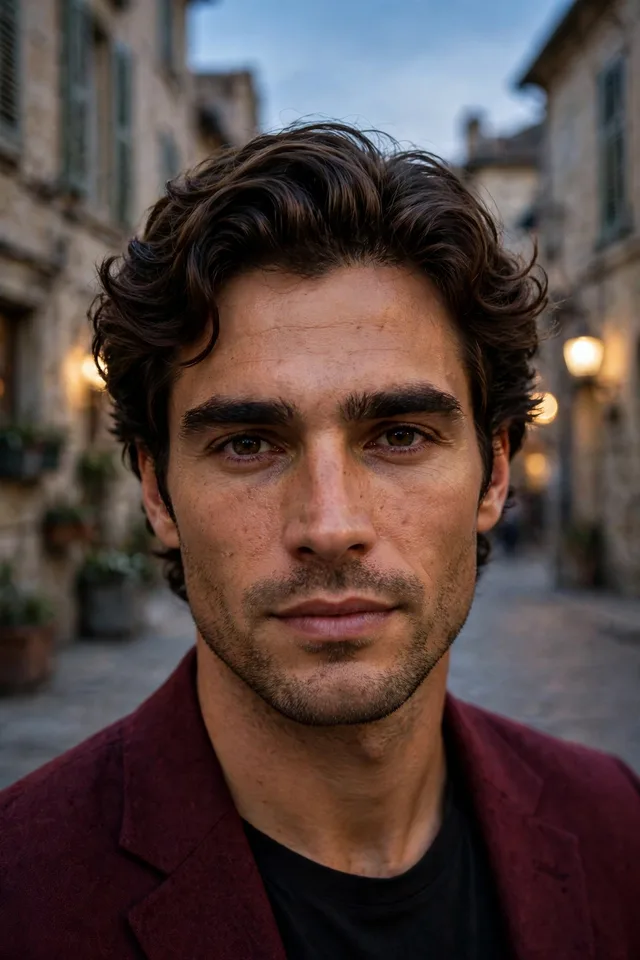
What does the wavy version do differently?
It follows the hair’s own direction. Low taper fade with a wavy top keeps the natural S-wave at two to four inches, swept loosely back or to the side, over the taper’s clean edges — the softest, most romantic version in this guide, and the one that looks most like a scissor cut despite the clipper work underneath. Waves plus a whisper of taper is the combination European barbers have been quietly recommending for two seasons.
Face Shape: All faces; the wave’s movement softens square jaws and adds life to longer faces.
Grooming Kit: A light cream or sea-salt spray — heavy products collapse waves into strings.
Maintenance: Four to five weeks; waves tolerate regrowth gracefully at both the top and the edges.
Barber Script: “Low taper fade with a wavy top — keep my natural wave, two to four inches, layers so it falls. Taper only at the edges.”
Q: How do I keep the wave from frizzing by evening?
A: Product on damp hair, placed once, then hands off. Every dry touch breaks the wave’s clumps into frizz; a pea of cream on wet hands revives it.
Q: Wavy top or curly top — where is the line?
A: Curl pattern. If your hair forms ringlets or coils, take Style 5; if it moves in S-shapes without coiling, this is your version.
The romantic — waves above, a whisper below.
7 of 20 — Low Taper Fade for Straight Hair

Why does straight hair love the low taper?
Because straight hair shows every mistake — and the low taper makes none visible. Low taper fade for straight hair keeps a textured, piecey top (straight hair needs point-cutting to avoid a Lego-flat sheet) over edges tapered so gradually that no blend line can ever appear. For men whose hair grows straight and fast, it is the lowest-maintenance respectable cut available.
Face Shape: All faces; straight hair’s clean lines suit angular faces especially well.
Grooming Kit: A matte paste for separation — straight textured hair without product reads as one flat mass by noon.
Maintenance: Four to five weeks; straight hair’s fast, even regrowth is exactly what the taper’s soft edges forgive.
Barber Script: “Low taper fade for straight hair — point-cut the top heavily for texture, taper only at the sideburns and neckline, no lines anywhere.”
Q: Why does my straight hair look flat with this cut?
A: It was probably cut blunt. Straight hair needs point-cutting and layering to separate; ask for texture explicitly, and style with paste on dry hair.
Q: Can straight hair wear the fringe versions?
A: Yes — Styles 2 and 3 were practically designed for it. Straight fringes fall exactly where they are placed.
No lines to hide behind — and none needed.
8 of 20 — Low Taper Fade for Thick Hair
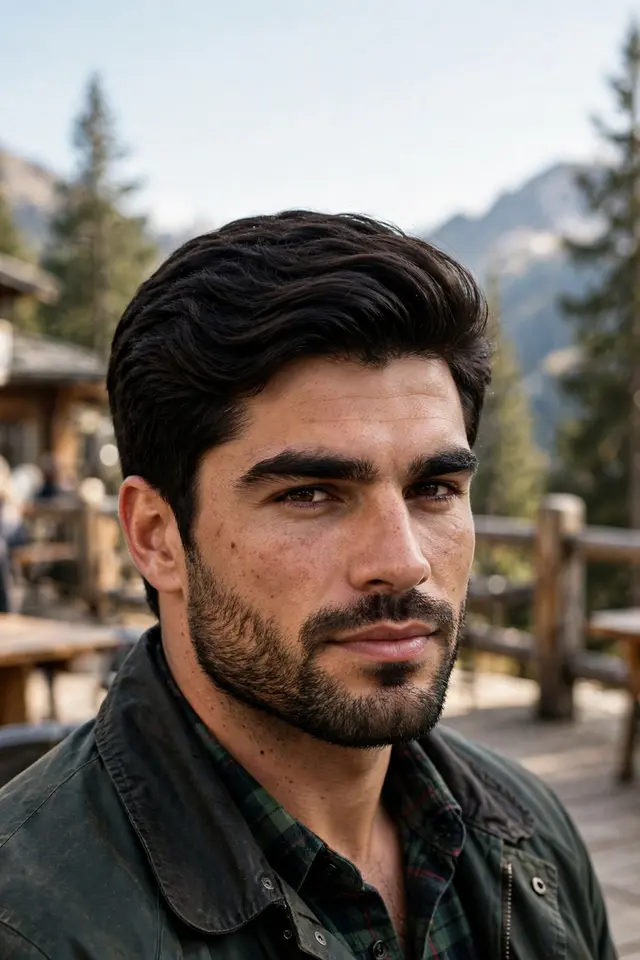
Can a gentle taper control thick hair?
Better than you’d expect — because thick hair’s problem is width at the sides, and even a low taper removes the worst of it exactly where it puffs: around the ears. Low taper fade for thick hair keeps the top full but internally layered, so the silhouette narrows instead of ballooning. Men who find full fades too severe get the control without the exposure.
Face Shape: Square and larger faces carry the full top; smaller faces should ask for more internal layering to reduce the mass.
Grooming Kit: A cream or paste with real hold — light products lose to thick hair by midday — and a dryer for the morning set.
Maintenance: Four weeks; thick sides regrow with intent, and the puff returns first above the ears — which is precisely where the taper works.
Barber Script: “Low taper fade for thick hair — taper the edges, take the bulk out of the sides, top full but layered so it lies where I put it.”
Q: Should the top be thinned with shears?
A: Internally, through layering — never surface-thinned, which frizzes the top layer. Say so before the shears come out.
Q: Low taper or mid fade for thick hair?
A: Mid fade removes more bulk and reads sharper; low taper keeps a softer, more natural silhouette. Most thick-haired men who try both settle on the taper for winter.
Control without exposure — the bulk leaves quietly.
9 of 20 — Low Taper Fade for Fine Hair

Why is the low taper fine hair’s safest fade?
Because it never shows the scalp. High and skin fades spotlight fine hair’s transparency; the low taper fade for fine hair keeps length everywhere it matters, tapering only the last few millimetres at the edges. Pair it with a shorter, matte, textured top and the whole head reads denser than it is — the contrast trick working at its gentlest setting.
Face Shape: All faces; keep the top’s proportions modest so fine hair never looks overwhelmed by its own style.
Grooming Kit: A volumising mousse or root spray, matte clay used sparingly, and a dryer — fine hair’s volume is built warm and set cool.
Maintenance: Every four weeks; fine hair shows regrowth sooner, but the taper’s softness keeps it presentable between visits.
Barber Script: “Low taper fade for fine hair — taper only at the very edges, keep all the length you can on the sides, top short and textured, matte finish.”
Q: What should fine hair avoid with tapers?
A: Skin finishes and high blends — anything that lets light reach the scalp at the sides makes the top look thinner by comparison. Gentle is the whole strategy.
Q: Why does my fine top look thin by afternoon?
A: Product weight. Switch to a mousse base and a fingertip of matte clay on dry hair; heavy pomades separate fine strands into strings.
Density by gentleness — the scalp never enters the conversation.
10 of 20 — The Short Low Taper Fade
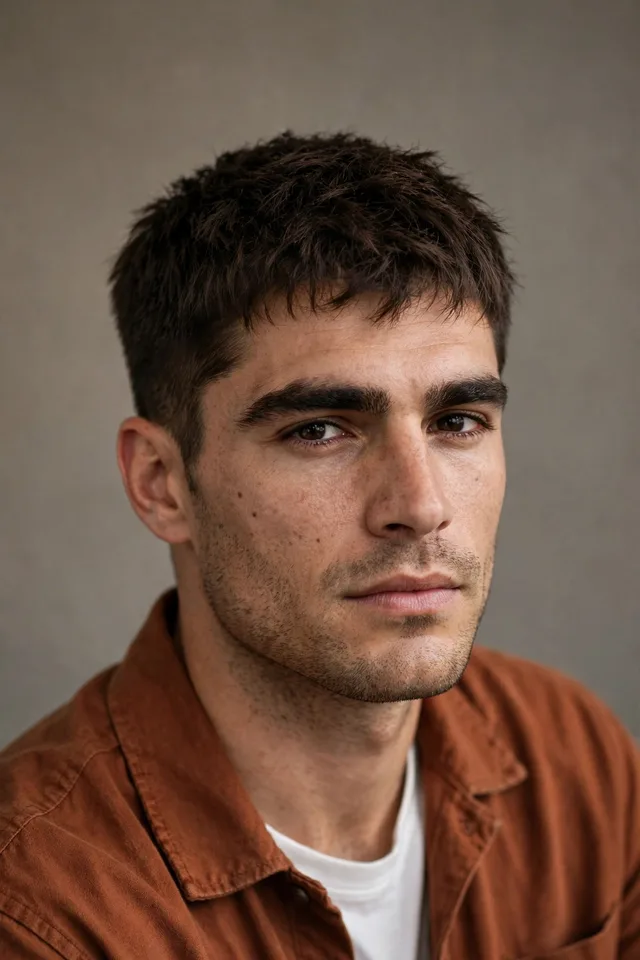
What is the minimum version of this cut?
A cropped top over the classic edges. The short low taper fade keeps an inch or two on top — textured, forward, done — making it the lowest-upkeep respectable haircut in this guide: no styling decisions, no fringe management, nothing to train. It is where busy men land, and barbers recommend it more than any other cut here when a client says the words “easy” and “clean” in the same sentence.
Face Shape: All faces — the compact proportions flatter almost everyone, which is why barbers reach for it.
Grooming Kit: Optional. A fingertip of matte product on the days you want polish; nothing on the days you don’t.
Maintenance: Four to five weeks, and each visit is the fastest in the guide.
Barber Script: “Short low taper fade — one to two inches on top, textured and forward, taper at the sideburns and neckline only.”
Q: How short can I go before it becomes a buzz cut?
A: Around half an inch the texture disappears and you are in buzz territory (Style 11). At one to two inches you keep the crop’s character.
Q: Is the short version good for a first taper?
A: The best introduction — it teaches you the upkeep rhythm and the grow-out at the lowest possible cost.
Easy and clean — the barber’s honest recommendation.
11 of 20 — Low Taper Fade with a Buzz Top
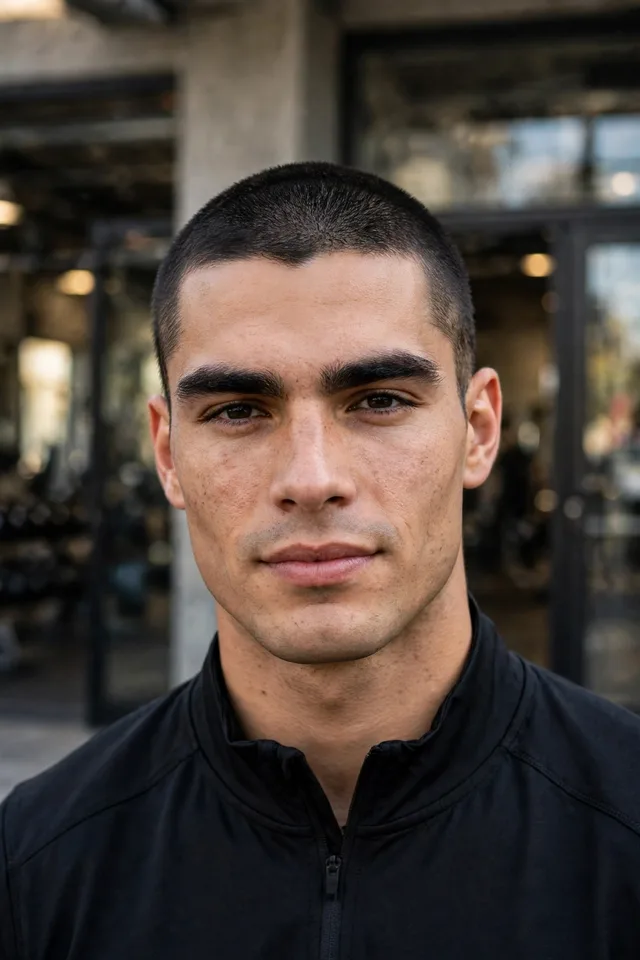
Why pair a buzz with a taper instead of a fade?
Softness. Low taper fade with a buzz top runs a uniform buzzed top — a #3 or #4 — over tapered edges instead of the usual skin fade, producing the gentlest possible version of the buzz: no scalp glare at the sides, no hard line, and a grow-out that never looks abandoned. Trend data has buzz-with-low-fade pairings rising for two years; the taper version is the same idea with the volume turned down.
Face Shape: Strong, even features carry the exposure; the soft edges forgive more head shapes than a skin-faded buzz does.
Grooming Kit: None for styling; sunscreen and moisturiser for a scalp newly introduced to weather.
Maintenance: Every three to four weeks — buzzes show regrowth honestly, though the taper hides its own.
Barber Script: “Low taper fade with a buzz top — #4 on top, even all over, taper the sideburns and neckline, no skin fade.”
Q: Buzz with a taper or with a skin fade?
A: Skin fade for maximum sharpness and contrast; taper for a softer, more natural finish that grows out kindly. Winter favours the taper.
Q: What guard length suits a first buzz?
A: A #4 — short enough to be unmistakably a buzz, long enough to forgive an uneven head shape. You can always go shorter next visit.
The gentle buzz — no glare, no hard lines.
12 of 20 — Low Taper Fade with a Side Part
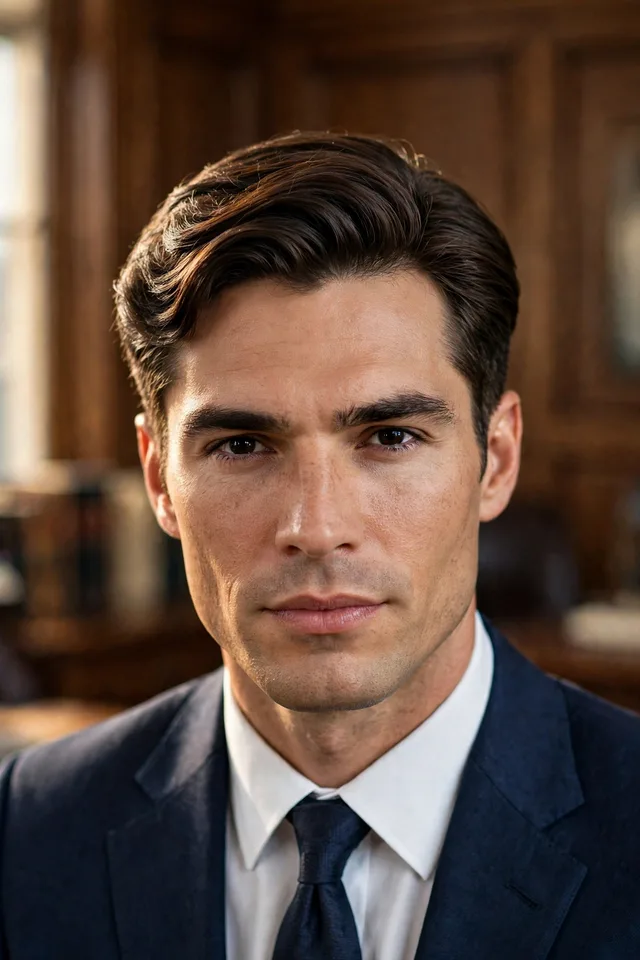
Can the low taper wear a part?
Beautifully — it is the office combination. Low taper fade with a side part sweeps a two-to-four-inch top over a soft, natural part line, with the taper keeping the edges immaculate: the full old-money effect, achieved with the gentlest clipper work in barbering. Where our side part guide offers fades for contrast, this version keeps everything quiet — the choice for men whose workplaces reward polish over statement.
Face Shape: Oval and rectangular faces suit the part’s geometry; round faces should keep the top shorter to avoid width.
Grooming Kit: A light pomade or cream, a comb for the part line, and fingers to finish — the part must look found, not drawn.
Maintenance: Four to five weeks; the taper and the part both age gracefully.
Barber Script: “Low taper fade with a side part — soft natural part, top swept over at three inches, taper only at the edges.”
Q: Soft part or hard part with a low taper?
A: Soft, always — a razor-cut hard part fights the taper’s whole philosophy of no visible lines. The soft part keeps the family resemblance.
Q: Which side should the part be on?
A: Your natural parting side — find where the hair falls open on its own after washing. Fighting it costs you ten minutes every morning.
Old money, whisper volume — polish without a single line.
13 of 20 — Low Taper Fade with a Slick Back
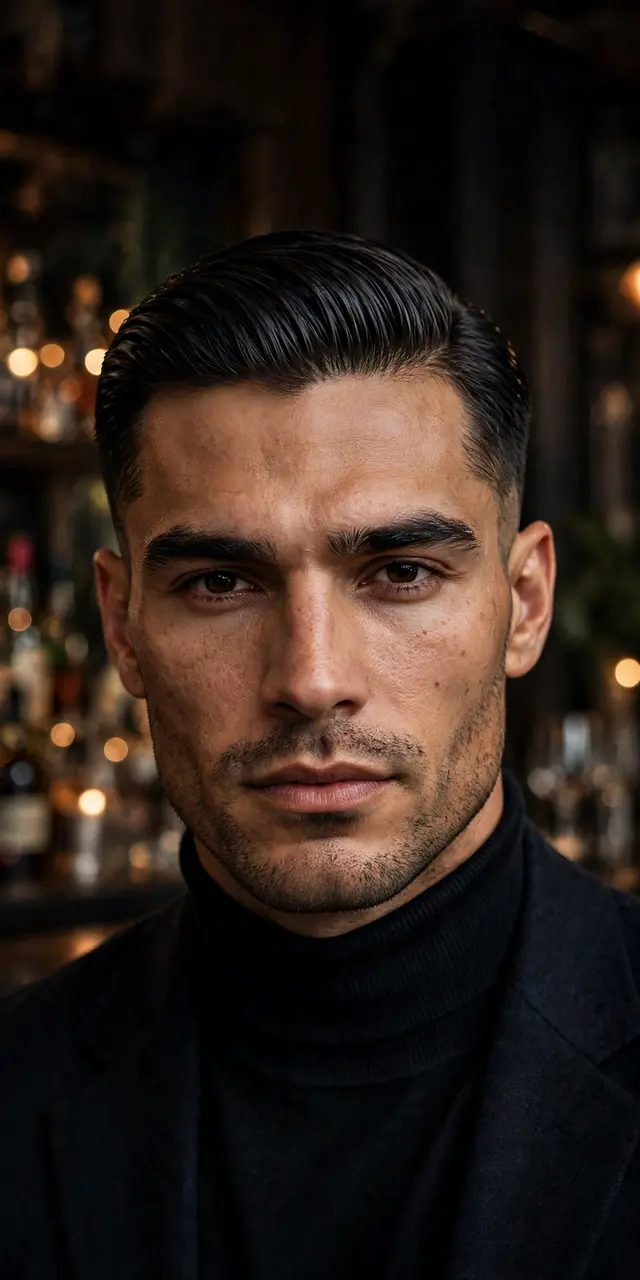
Does a slick back work over something this soft?
It is the contrast that makes it interesting. Low taper fade with a slick back combs a longer top straight back over edges that simply vanish — no fade line competing with the sweep, nothing to distract from the top’s clean sheet. Men who found the classic slick back’s faded or undercut sides too aggressive get the same flagship finish on the gentlest possible base.
Face Shape: Oval and strong faces; a fully exposed hairline is unforgiving — see Style 17 for the honest alternative.
Grooming Kit: A pomade with genuine hold, a fine comb, and a dryer. This finish is built each morning, not tousled.
Maintenance: The top and edges hold four to five weeks; the daily five-minute styling is the real upkeep.
Barber Script: “Low taper fade with a slick back — top at four to five inches combed straight back, taper only at the sideburns and neckline.”
Q: Why does my slick back fall to the sides by noon?
A: Usually the top is too short or the product too weak. At four-plus inches, with pomade worked into towel-dried hair and combed back while damp, it holds.
Q: Slick back or side part over a low taper?
A: Side part for daily ease — it works with the hair’s fall. Slick back for the deliberate, dressed finish, at the price of a daily routine.
The flagship finish, on the gentlest base.
14 of 20 — Low Taper Fade with a Quiff
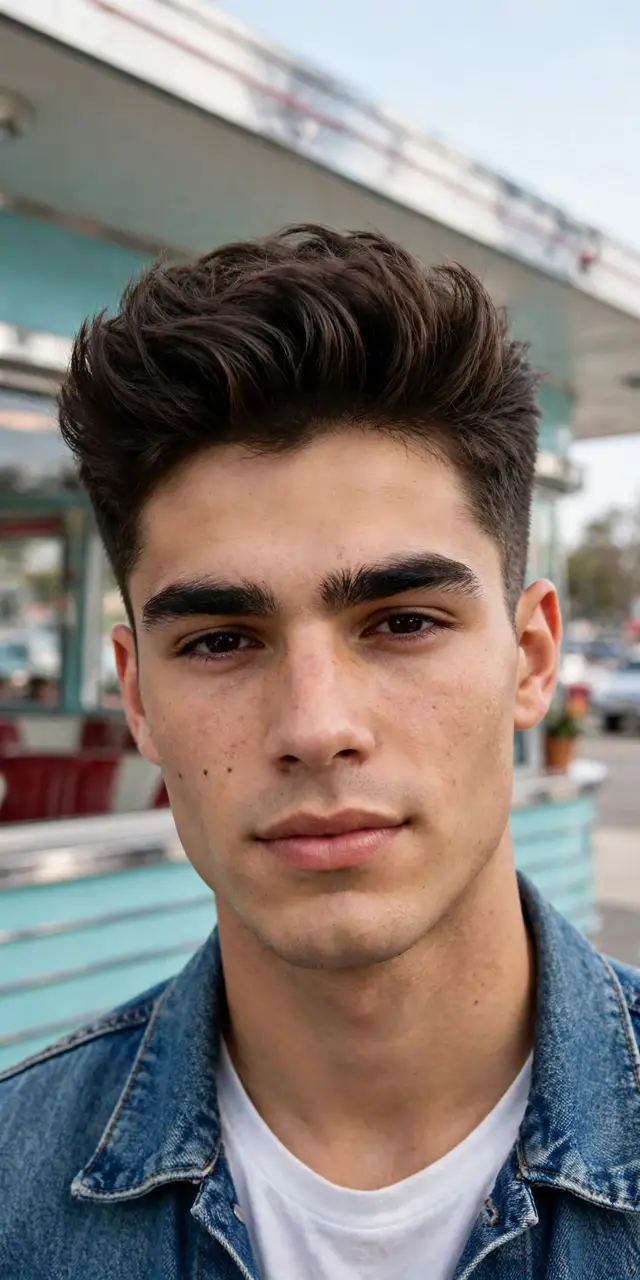
What does the quiff gain from a low taper?
A softer frame for the height. Low taper fade with a quiff lifts a textured three-to-four-inch front upward and back, while the taper keeps the sides quiet — so all the drama concentrates in the lift, none in the edges. It is the friendliest quiff for fine or maturing hair too, since nothing at the sides exposes the scalp while the front does the work.
Face Shape: Round and shorter faces gain the most — the lift adds visible length; longer faces should keep the quiff lower and wider.
Grooming Kit: A dryer with a nozzle, a round brush or your fingers, and a matte paste with real hold — the quiff is heat-set, then fixed.
Maintenance: Four to five weeks; the front’s length is the feature and is trimmed precisely.
Barber Script: “Low taper fade with a quiff — front at three to four inches, textured and lifted, taper only at the edges, nothing high or tight.”
Q: How do I keep the quiff up all day?
A: Dry it upward first — product cannot lift what heat has not placed. Blow-dry the front up and back on damp hair, then fix with paste once cool.
Q: Quiff or textured fringe over a low taper?
A: Opposite directions for opposite faces: the fringe shortens long faces, the quiff lengthens round ones. Both sit on the same taper.
Height in front, quiet at the edges.
15 of 20 — Low Taper Fade with Longer Top
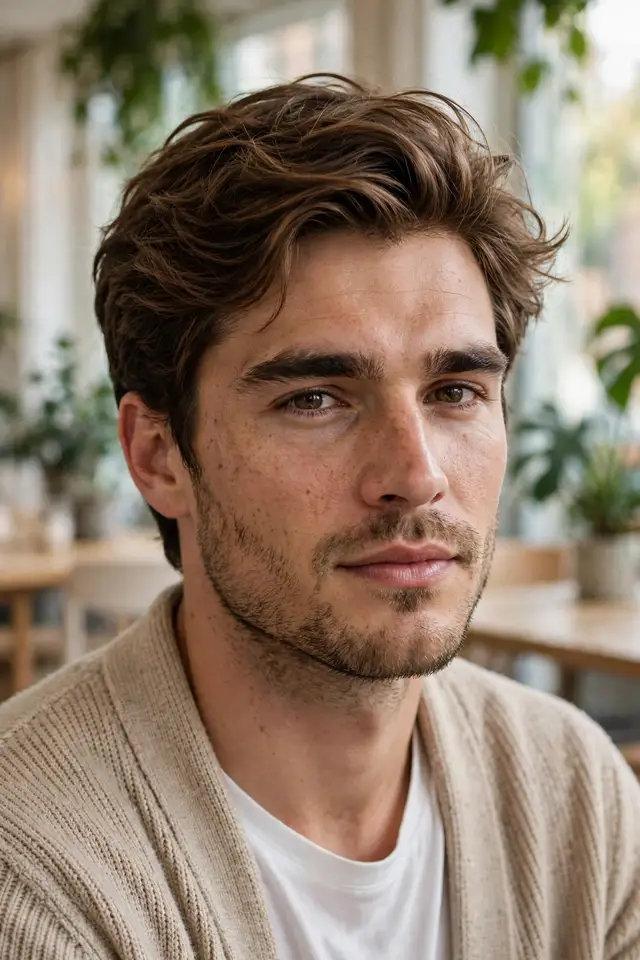
How long can the top go over a low taper?
Further than most men think. Low taper fade with longer top keeps four to six inches worn loose — swept, parted informally, or falling natural — while the taper quietly maintains the edges. It is the bridge between this guide and the flow family: the length and movement of longer hair, with edges that never embarrass it. The taper is what makes longer hair look intentional instead of overdue.
Face Shape: Oval and longer faces carry the length; round faces should keep the sides’ taper crisp to balance the top’s width.
Grooming Kit: A light cream with real hold, a wide comb or brush, and a dryer with a nozzle for direction.
Maintenance: The top is barely touched; the edges keep the four-week rhythm — the haircut is maintained from the bottom up.
Barber Script: “Low taper fade with a longer top — top at five inches, length protected, point-cut ends only. Taper the sideburns and neckline.”
Q: At what length does it stop being a taper cut and become a flow?
A: Around six inches, when the top starts covering the ears and the taper disappears beneath it. Until then the edges define the cut.
Q: How do I keep a longer top from looking messy at work?
A: The taper does most of it — clean edges make length read as a choice. Add a light cream and a morning comb-through and it passes anywhere.
Length, made intentional — the edges keep the secret.
16 of 20 — Low Taper Fade with a Beard
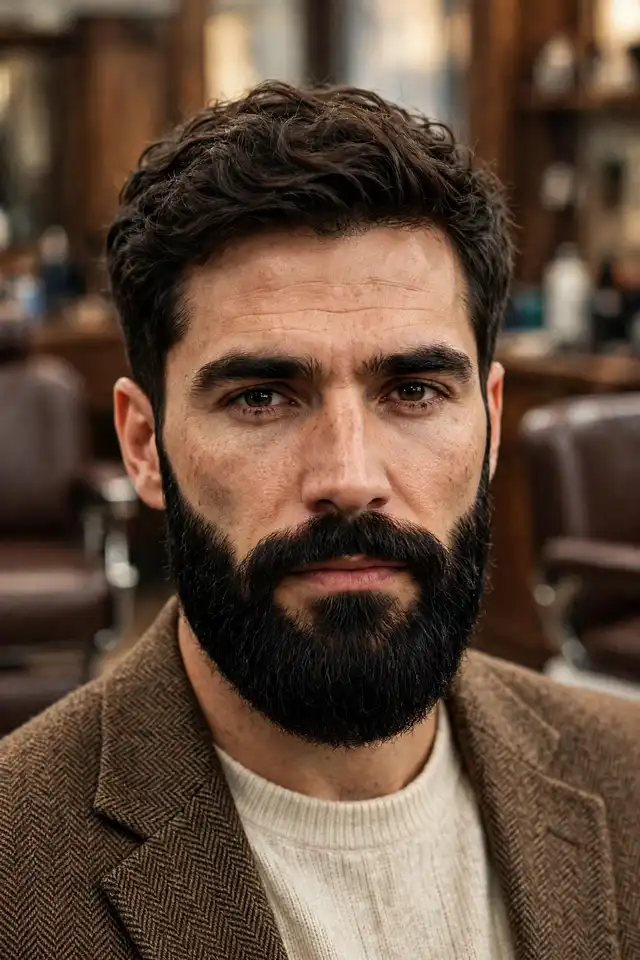
Why do a low taper and a beard suit each other?
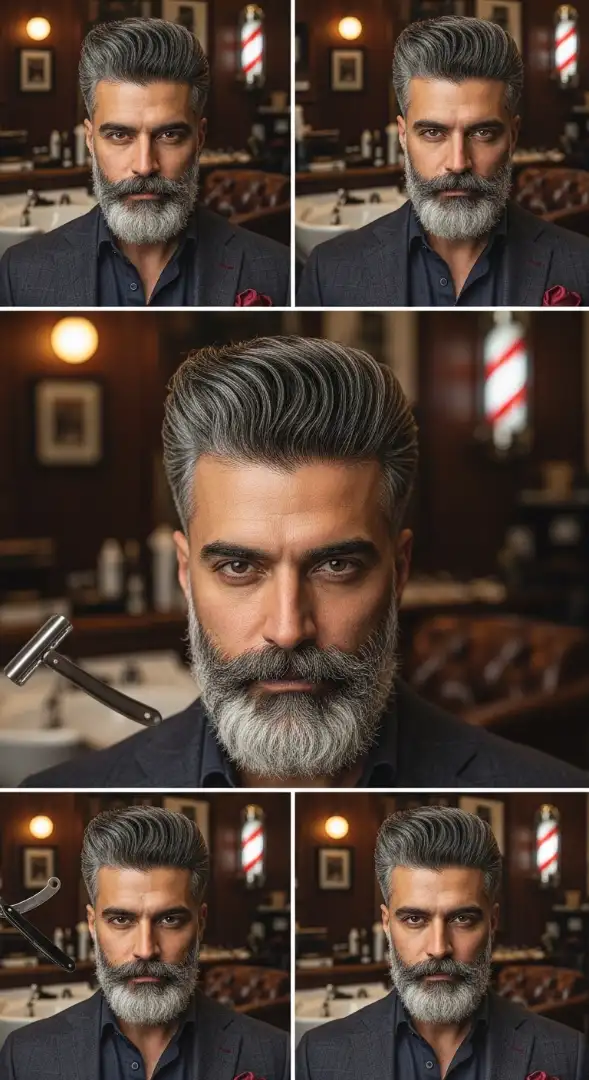
They share a philosophy: nothing overdone. Low taper fade with a beard pairs the softest clipper work with a full but precisely shaped beard — the taper’s gentle edges meet the beard’s clean lines at the sideburn, and the whole portrait reads considered rather than constructed. It is the most-grown-up combination in this guide, and the one barbers photograph when they want to show restraint.
Face Shape: The beard does the adjusting — fuller at the chin lengthens round faces; tighter cheeks slim square ones. The taper suits all.
Grooming Kit: Beard oil and a boar brush join the standard kit; the sideburn junction is blended at every visit.
Maintenance: Edges on the four-week taper rhythm; beard lines tidied every few days, shaped professionally with each haircut.
Barber Script: “Low taper fade with a beard — taper the edges, beard shaped full but precise, blend the sideburns so they meet cleanly.”
Q: Should the beard fade into the taper?
A: It can — a gentle beard fade at the sideburn is the most polished junction. Or keep a clean step; both work, but a fuzzy in-between does not.
Q: Which looks better with a beard — low taper or skin fade?
A: The skin fade is louder; the low taper is more distinguished. For winter and for beards with real length, the taper wins.
Restraint, twice — the considered portrait.
17 of 20 — Low Taper Fade for a Receding Hairline

Why is this the kindest fade for a hairline?
Because it refuses to expose anything. Low taper fade for a receding hairline keeps length at the sides (no scalp show-through to contrast with a thinning top), tapers only the edges, and pairs with a forward, textured top that covers the temple corners. Of every clipper cut in barbering, this is the one designed — almost by accident — to flatter a maturing hairline at every point.
Face Shape: All faces with early-to-moderate recession; advanced recession is better served by Style 10 or 11 — your barber should say so honestly.
Grooming Kit: A matte volumising product and a dryer for front volume; shine and wet finishes at the front are the enemy.
Maintenance: Every four weeks — the front length’s placement is the strategy and must stay where the barber put it.
Barber Script: “Low taper fade for a receding hairline — keep the sides’ length, taper only the edges, top textured and forward over the corners.”
Q: Why do high fades look so bad with recession?
A: Contrast. Bare sides next to a thinning top make the thin area the most noticeable thing on the head. The low taper removes the contrast entirely.
Q: Which top works best with this version?
A: The textured fringe (Style 2) at a moderate length — forward coverage with the same taper underneath. It is the combination specialists recommend.
Kindness by design — no contrast, no exposure.
18 of 20 — Low Taper Fade for Black Men
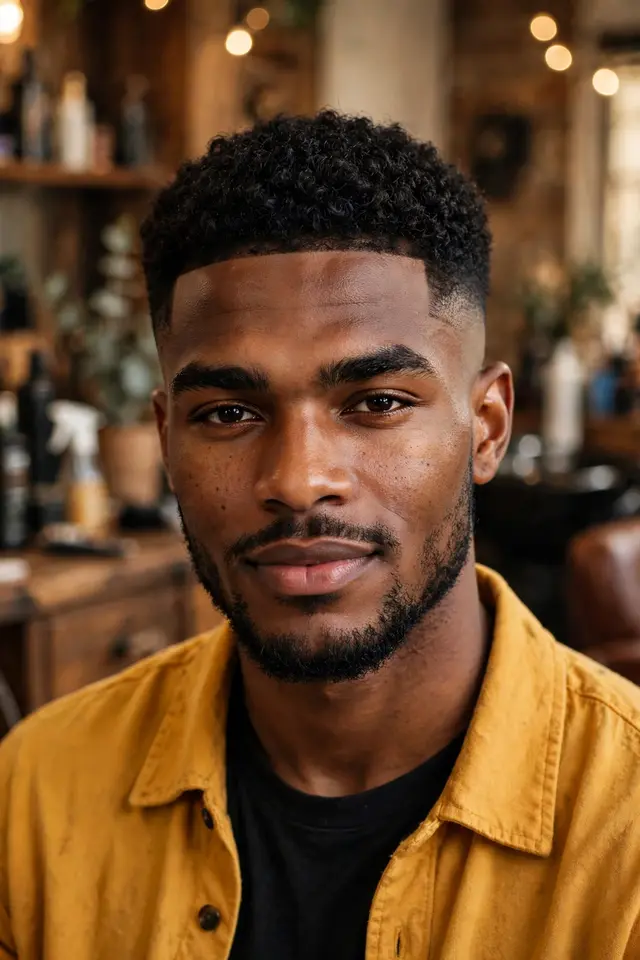
Why is the taper a cornerstone of Black barbering?
Because it finishes textured hair perfectly. Low taper fade for Black men tapers the edges — sideburns, temples and neckline — beneath a natural top of curls, coils or short waves, producing the clean outline that makes textured hair look sculpted rather than simply cut. The taper is also the base under most line-ups and shape-ups: get the edges this clean and the whole cut reads sharp for weeks.
Face Shape: All faces; the top’s height and shape are adjusted to the wearer, while the taper’s clean outline flatters every bone structure.
Grooming Kit: A moisturising cream or butter for the top, a soft brush for wave training if worn, and a durag for the night routine.
Maintenance: The taper and line-up refresh every two to three weeks — edges are the detail everyone sees first; the top goes longer.
Barber Script: “Low taper fade — taper the sideburns, temples and neckline, keep my natural top, finish with a clean line-up.”
Q: Taper or temp fade — what is the difference?
A: They are close relatives: the temp (temple) fade concentrates on the temples and sideburns, while the low taper also includes the neckline. Ask for both zones and you have this cut.
Q: How do I keep the top moisturised in winter?
A: Dry air is textured hair’s enemy: a leave-in moisturiser daily, a heavier butter twice a week, and the durag at night to hold both moisture and shape.
The clean outline — textured hair, sculpted.
19 of 20 — Winter Low Taper Fade
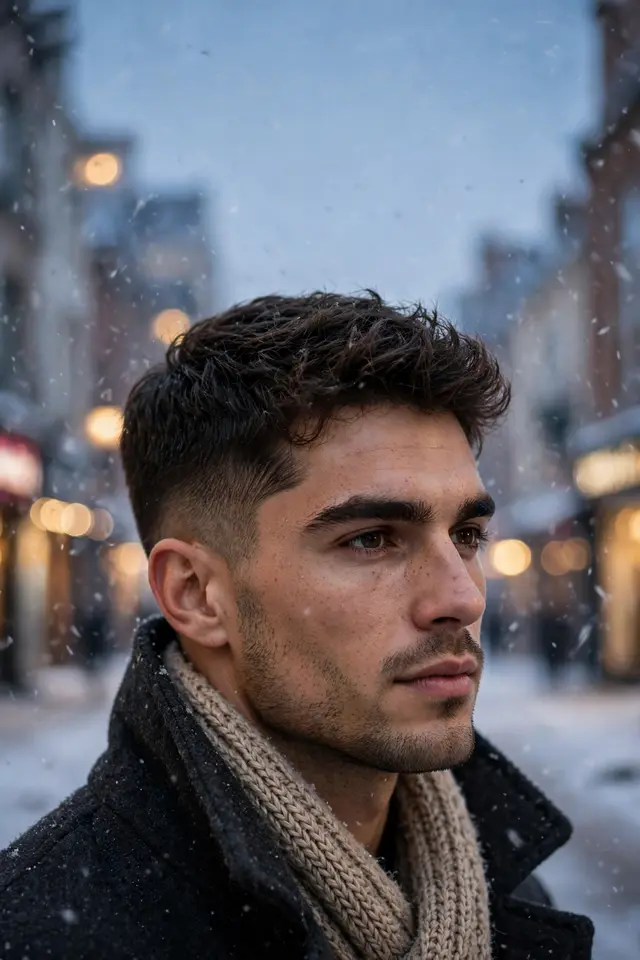
Why is the low taper the perfect winter fade?
Because winter punishes every other fade. Skin and high fades expose the scalp to cold air and look overgrown within a fortnight of holiday-season neglect; the winter low taper fade keeps its length, sits flat and comfortable under a beanie, and — growing out more gracefully than any clipper cut — survives the weeks between December and January appointments without ever looking abandoned. It is the fade you can forget about until the new year.
Face Shape: All faces — choose the underlying top by face shape as normal; winter changes the routine, not the cut.
Grooming Kit: A richer conditioner than summer for the top, moisturiser for the edges against dry air, and a comb for the post-beanie reset.
Maintenance: The four-to-five-week rhythm holds through winter — one appointment covers the whole holiday stretch.
Barber Script: “Winter low taper fade — my usual taper, top a touch longer for the season. I wear a beanie over it daily.”
Q: Do beanies ruin a low taper?
A: Less than any other cut — there is no fade line to crush and no skin to chill. Comb the top back into place and it is restored in seconds.
Q: Should I grow my fade out for winter warmth?
A: With a low taper you never need to choose — it already keeps its length. Keep the appointments and stay neat and warm.
The forgettable fade — neat from December to January.
20 of 20 — The Low Taper King
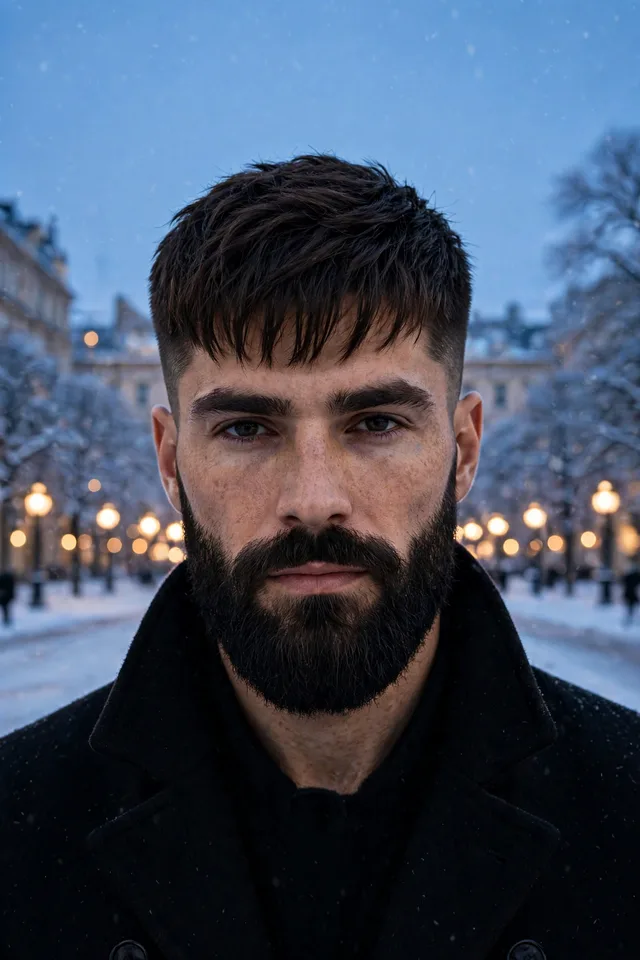
What does the complete low taper fade obey?
Every rule in this guide at once. The Low Taper King runs the full formula the search data crowned — a textured fringe at its full, deliberate length over edges tapered so gradually no line exists anywhere — with a shaped beard returning weight below and falling snow behind, because winter is when this cut’s grace shows best. Nothing is loud: the fringe is point-cut, the taper is invisible, the beard is balanced, and the whole thing still takes two minutes a morning.
Face Shape: Any face that can grow the beard — the combination is engineered balance, and the fringe and beard adjust to the face wearing them.
Grooming Kit: The full bench: matte clay, light cream, a real comb, a dryer, beard oil, and a barber who understands that the taper is the point.
Maintenance: Edges every four weeks without exception, beard shaped at every visit — the king runs on rhythm, not hope.
Barber Script: “The full low taper fade — textured fringe at full length, taper only at the sideburns and neckline, no line anywhere, beard shaped to balance.”
Q: What makes this the king and not just Style 2 with a beard?
A: The completeness. Style 2 is the data’s favourite pairing; the king adds the beard’s balance, the full fringe length and the discipline of every edge — the formula, finished.
Q: How do I keep the king looking royal all winter?
A: Condition against dry air, reset the top after every beanie, keep the four-week edge appointments sacred, and never let a trim turn the taper into a fade — the softness is the crown.
Every rule obeyed — the whisper, perfected.
The Bottom Line
The low taper fade won by refusing to shout. Its discipline is simple enough to say in one breath: taper only at the sideburns and neckline, keep the sides’ length, and let a textured top do the talking. Choose that top by your hair and your life — the textured or messy fringe the data is chasing, the crop for minimalism, curls and waves as nature gave them, the part or slick back for polish, the buzz for honesty. Respect the rhythm — every four to five weeks, which is the gentlest schedule in the fade family — and never let a barber drift your taper upward into a fade without being asked. Want the louder relatives? Our fade haircuts for men guide covers the whole family, and our textured crop hairstyles for men guide takes Style 4’s top into its own territory. Pick the quiet fade — it is the one everyone is saving.