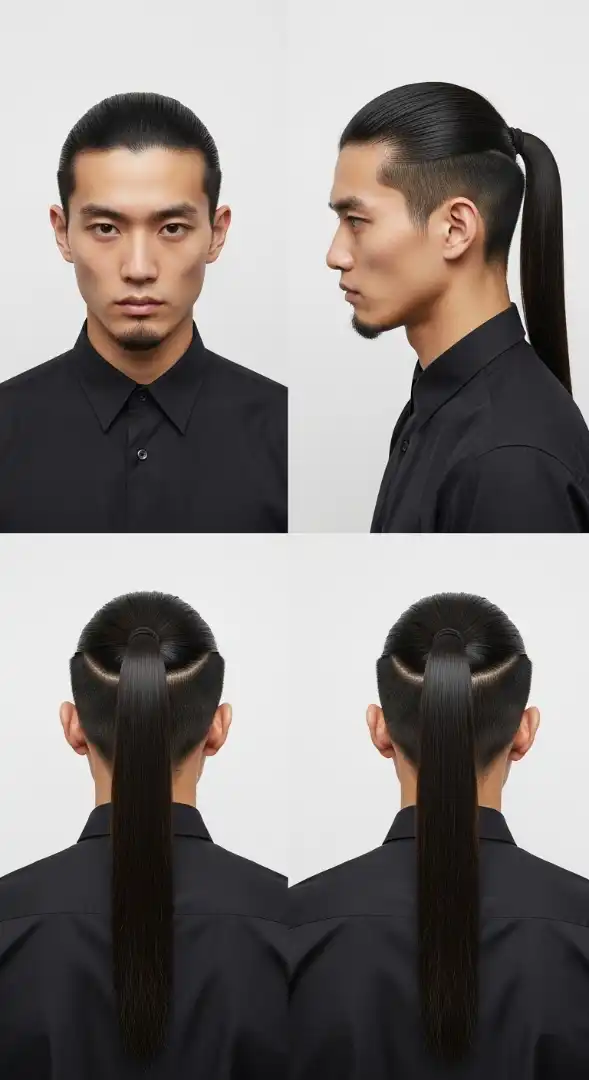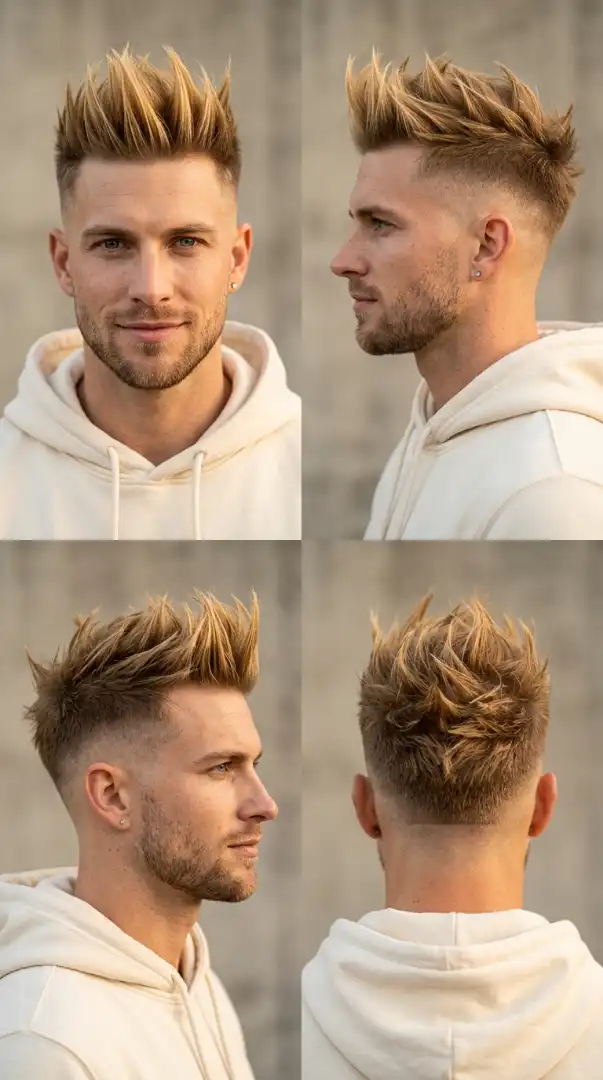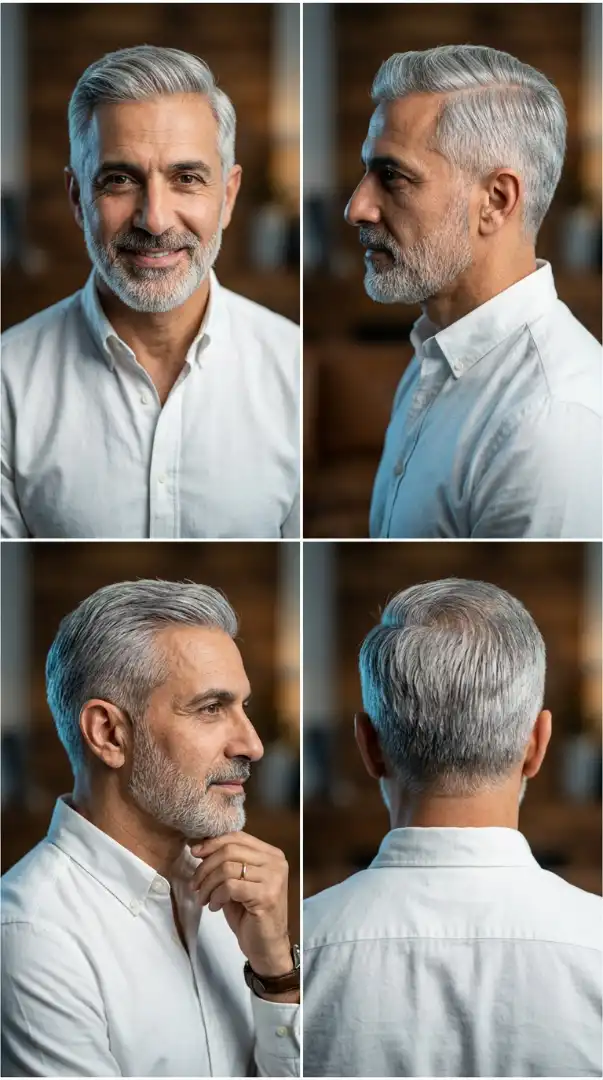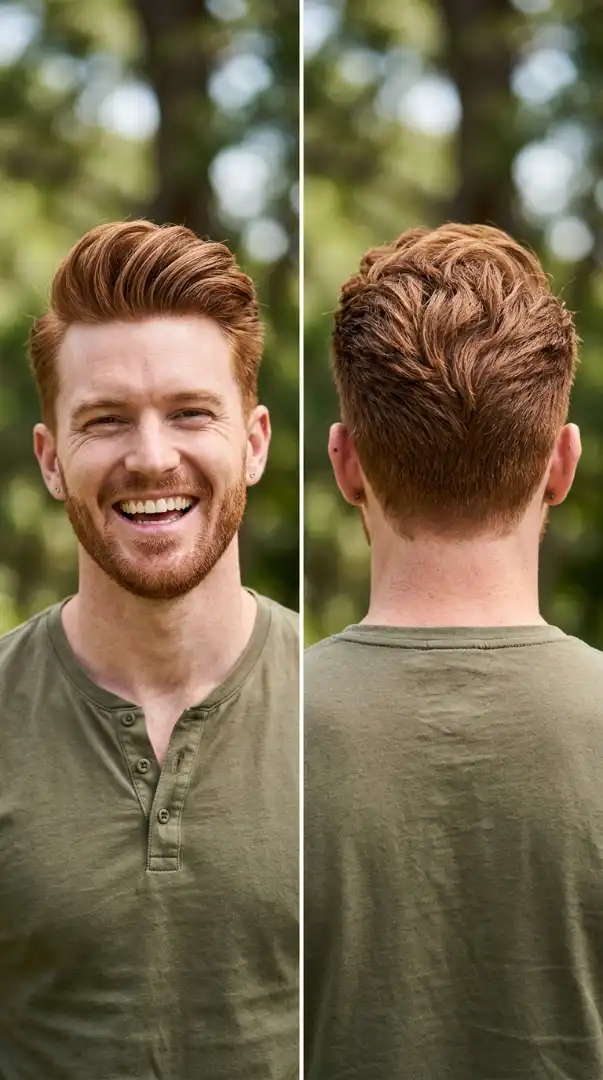
11 Taper Fade Hair Styles for Men: Must Try Haircuts
1 of 11 — The Executive Taper
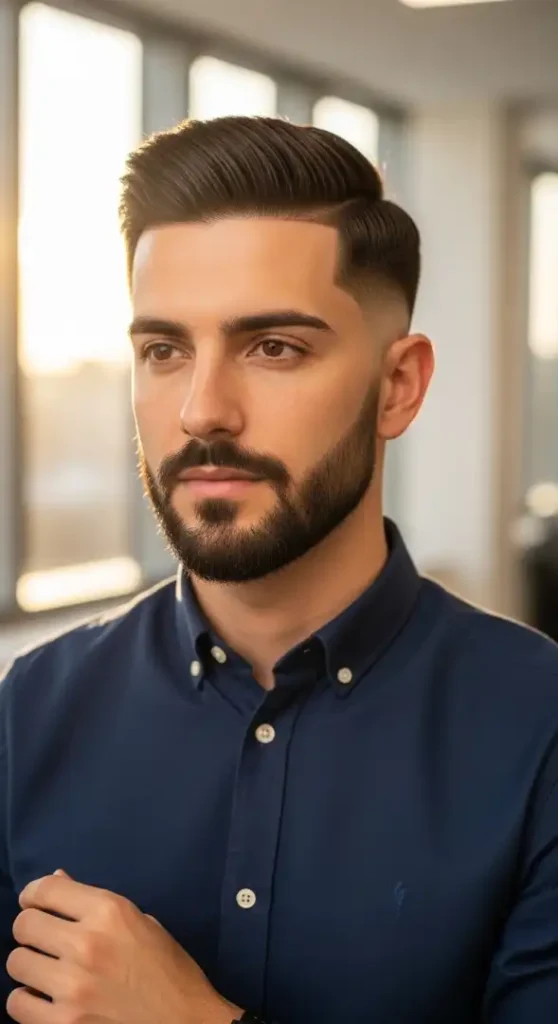
The Executive Taper is engineered for professionals who demand precision without pretension. This cut strategically removes visual weight from the sides while maintaining enough length on top to style versatility into your workweek. The mid-temple fade line creates vertical emphasis that elongates Round and Square face shapes by drawing the eye upward, while the textured top adds dimension that prevents Oval faces from appearing too stretched. The graduated taper — transitioning from 3 inches at the crown to skin-tight at the nape — requires mathematical precision in clipper work that separates master barbers from corner-shop cutters.
FACE SHAPE MATCH: Best for: Round, Square, Oval. The mid-level fade removes lateral bulk without creating the harsh contrast of a high skin fade, making it ideal for rounder faces that need lengthening but not dramatic reshaping. Square jawlines benefit from the soft graduation that doesn’t compete with angular bone structure. Oval faces can wear this universally, as the balanced proportions maintain natural head shape without distortion.
GROOMING KIT: You’ll need professional-grade tools for home maintenance. Clippers: Wahl Magic Clip (corded for consistent power) for bulk removal and initial taper work. Trimmer: Andis T-Outliner for edge-ups and maintaining that crisp temple line between salon visits. Finishing tools: Kent 81T fine-tooth comb for precise parting, Denman boar bristle brush for training hair direction. Styling products: Layrite Original Pomade (medium hold, natural shine) for office-appropriate finish, American Crew Forming Cream for textured casual styling, Honest Amish Beard Balm for beard grooming and connecting the facial hair to the fade seamlessly.
MAINTENANCE LEVEL: MEDIUM. Salon visits every 14-18 days to maintain the fade’s crisp graduation — tapers grow out more gracefully than skin fades but still require professional touch-ups. Daily styling: 4-6 minutes. Morning routine: dampen hair, work quarter-size amount of pomade through damp hair from roots to ends, comb into place with side part, brush edges smooth. Weekly routine: Sunday night beard trim with adjustable trimmer at 4mm, oil application to keep growth soft and connected to the fade line.
BARBER TALK (THE EXACT SCRIPT): “I want a mid taper fade starting at the temple line. Use a 3 on top, blend down to a 1.5 at the ears, then taper to skin at the nape — no hard lines, just smooth graduation. Leave 3 inches of length on top with point-cut texturing for movement. Clean up the hairline with a tight edge-up at the temples and forehead. For the beard, trim everything to 4mm and blend the sideburns into the fade transition zone so there’s no gap. Finish with a hot towel and straight-razor cleanup on the neck.”
The Executive Taper proves that corporate professionalism doesn’t require boring hair — but wait until you see how the next style takes this same foundation and pushes it into street-style territory.
FAQs
Q: How do I maintain a taper fade at home between barber visits?
A: Use a quality trimmer with guard attachments to clean up your neckline every 5-7 days, keeping the taper’s bottom edge crisp. Invest in edge-up clippers for maintaining temple lines and front hairline. Apply light pomade daily to prevent the textured top from looking messy as it grows out, and book your barber appointment when the fade line starts to blur — typically 14-18 days for tapers.
Q: What’s the difference between a taper fade and a regular fade?
A: A taper fade gradually reduces hair length from top to bottom but doesn’t go down to skin — it tapers to very short hair. A skin fade (or bald fade) cuts all the way down to bare skin. Tapers are more conservative, grow out more gracefully, and work better in professional environments. Skin fades are higher-contrast, more dramatic, and require more frequent maintenance.
Q: Which face shape suits a mid taper fade best?
A: Round and Square faces benefit most because the mid-level fade removes width at the temples without the aggressive height contrast of high fades. The graduation creates subtle vertical lines that elongate round faces, while the soft blend complements rather than competes with strong square jawlines. Oval faces can wear any fade level, making mid tapers a safe versatile choice.
Q: How often should I get a taper fade touched up?
A: Every 14-18 days for optimal appearance. Tapers grow out more gracefully than skin fades, giving you a slightly longer window. If you maintain your neckline and edges at home, you can stretch to 3 weeks, but the fade gradient will lose its precision. Professionals in client-facing roles should stick to the 2-week schedule.
2 of 11 — The Textured Wave Taper
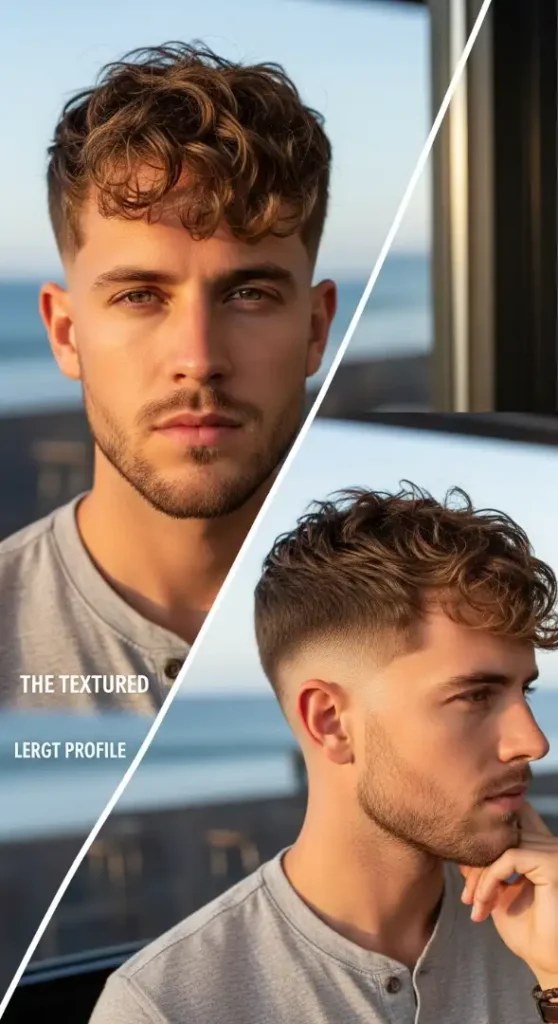
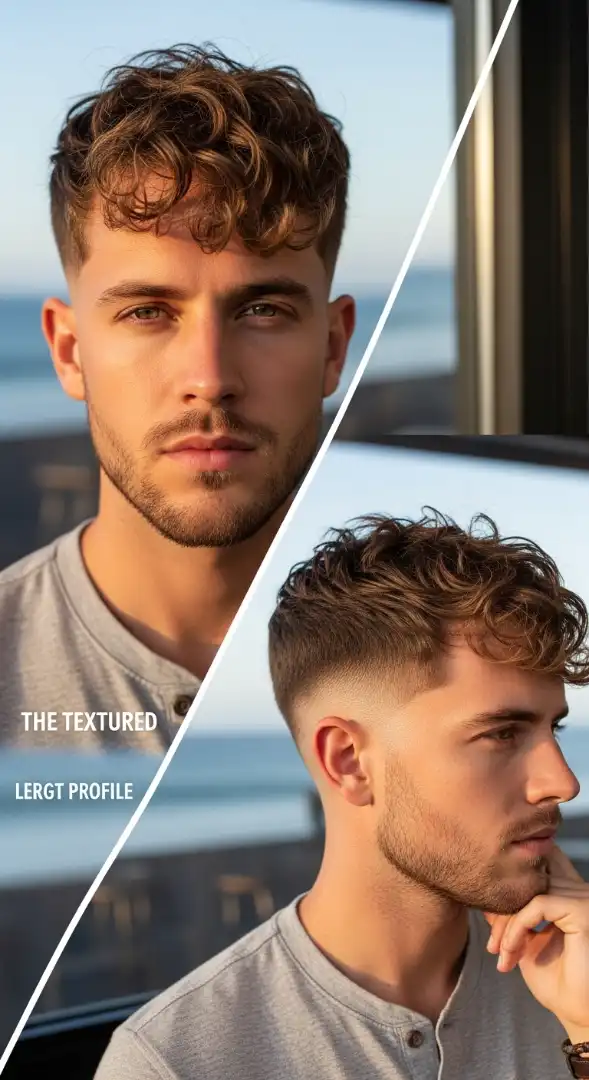
The Textured Wave Taper is the answer for men with natural wave pattern who’ve spent years fighting their hair texture instead of weaponizing it. This cut leverages your hair’s natural movement by keeping substantial length on top — 4 to 5 inches — while the low taper fade removes competing bulk from the sides. The result is a style that looks intentionally casual, like you woke up near the ocean and your hair just cooperated. The low fade starting point, positioned just above the ear line, creates a more gradual transition that suits wavy hair’s organic volume better than aggressive high fades that can make the top look disproportionately heavy.
FACE SHAPE MATCH: Best for: Oval, Oblong, Diamond. The forward-styled wavy fringe adds horizontal width across the forehead, which counterbalances the length of Oblong faces and prevents them from appearing too stretched. Diamond face shapes benefit from the volume around the temple area created by the low fade’s higher starting point, filling in the narrow temple zone. Oval faces wear this universally well. NOT recommended for Round faces, as the forward texture and low fade can add unwanted width.
GROOMING KIT: Clippers: Andis Master (adjustable blade for precise low fade graduation). Trimmer: BaByliss Pro FX787 Gold FX Outliner for maintaining clean ear outlines and temple points. Finishing tools: Wide-tooth comb for detangling wavy hair without destroying curl pattern, Denman D3 brush for training waves in desired direction when blow-drying. Styling products: Uppercut Deluxe Sea Salt Spray for enhancing natural texture, Hanz de Fuko Claymation for matte hold without weighing down waves, Honest Amish Leave-In Conditioner for keeping wavy hair hydrated and frizz-free between washes.
MAINTENANCE LEVEL: MEDIUM-HIGH. Salon visits every 16-20 days — the low fade grows out more gradually than mid or high fades, buying you extra time. However, wavy hair shows length faster, so the top needs trimming to prevent looking unkempt. Daily styling: 6-8 minutes. Morning routine: spray damp hair with sea salt spray, scrunch and squeeze to activate wave pattern, blow-dry with diffuser on low heat while scrunching, work dime-size amount of clay through dry hair focusing on ends and mid-lengths for separation. Avoid touching throughout the day to prevent frizz.
BARBER TALK (THE EXACT SCRIPT): “I want a low taper fade — start the fade about an inch above my ears and keep it gradual. Use a 2 guard at the starting point and blend down to a 0.5 at the bottom, no skin. Leave 4 to 4.5 inches on top and don’t thin it out too much — I need the density for the wave pattern to show. Point-cut the fringe and top layers for texture and movement, and texturize the crown area so it doesn’t stick up weird. Clean edge-up at the temples but keep it looking natural, not too sharp. For the stubble, just clean up my neck and cheek lines.”
Once you see how the low taper works with natural texture, the next style shows what happens when you take that same approach but add modern barbering techniques for even more dimension.
FAQs
Q: How do I style wavy hair with a taper fade?
A: Work with your natural texture, not against it. Apply sea salt spray to damp hair, scrunch to activate waves, then either air-dry or use a diffuser on low heat. Once dry, use a small amount of matte clay or fiber to separate strands and add definition. Never brush dry wavy hair — it destroys the curl pattern and creates frizz.
Q: What’s a low taper fade compared to a mid or high fade?
A: A low taper starts the fade just above the ear, creating a subtle gradient that’s more conservative and grows out gradually. Mid tapers start at temple level (more common, balanced look), while high tapers start 2+ inches above the ear for dramatic contrast. Low fades work best with longer tops and wavy/curly textures that need to maintain some lateral volume.
Q: Which face shape should avoid a low taper fade?
A: Round faces should generally avoid low taper fades, especially when paired with forward-styled texture on top. The low starting point doesn’t remove enough width from the sides, and forward fringe adds horizontal emphasis, making round faces appear wider. Round faces benefit more from mid or high fades that create vertical lines.
Q: Can I get a taper fade if I have wavy hair?
A: Absolutely — wavy hair actually works better with tapers than with skin fades. The gradual blend of a taper complements the organic volume of waves, while skin fades can create too much contrast. Keep enough length on the sides at the fade starting point (at least a 2 guard) so the transition doesn’t look abrupt against your textured top.
3 of 11 — The High Skin Taper
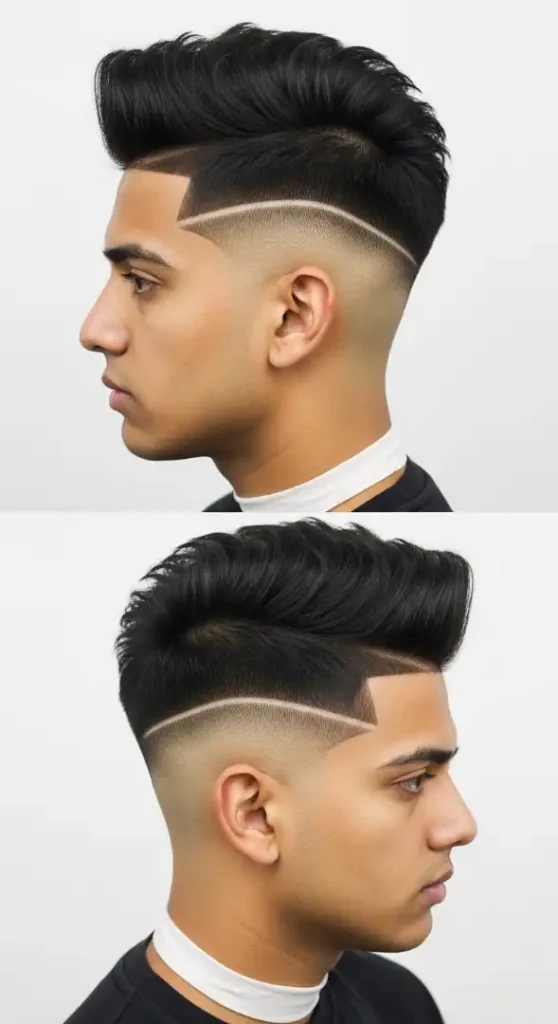
The High Skin Taper is precision barbering as performance art — a cut that announces your commitment to grooming before you say a word. Starting the fade 2+ inches above the temple line creates maximum contrast between the textured top and bare-skin sides, effectively doubling the visual height of your hairstyle. This aggressive gradient works by manipulating proportion: removing all lateral volume forces the eye upward, making the face appear longer and more angular. It’s the geometry of confidence — sharp lines, clean execution, zero room for error. This cut demands a master barber, not a budget chain, because the transition from full hair density to skin happens within a 1-inch window that requires blade control most stylists simply don’t possess.
FACE SHAPE MATCH: Best for: Round, Square, Heart. Round faces benefit dramatically — the high starting point removes width at the widest part of the face while the skin-level sides create strong vertical lines that elongate. Square faces gain refined sophistication as the clean sides soften blocky jaw angles through contrast rather than competition. Heart-shaped faces with wider foreheads use the high fade to balance proportions by minimizing upper-head width. NOT for Oblong faces — adding more vertical emphasis to already-long faces creates disproportion.
GROOMING KIT: This is a professional-maintenance cut requiring premium tools. Clippers: Wahl Senior (powerful motor for bulk removal), Andis Master (adjustable blade for mid-fade work). Trimmer: Andis T-Outliner (absolute requirement for skin-fade precision and edge work). Finishing: BaByliss Pro FX Skeleton Trimmer for zero-gap detailing, straight razor for ultra-clean hairline and temple shaping. Styling products: Suavecito Firme Hold Pomade for the structured quiff, Uppercut Deluxe Matte Clay for textured separation, Jack Black Turbo Wash for daily hair washing (high fades show oil quickly). At-home maintenance: Wahl Peanut trimmer for quick neckline cleanup every 4-5 days.
MAINTENANCE LEVEL: HIGH. Salon visits every 7-10 days — this is non-negotiable. Skin fades grow out noticeably within one week as stubble appears where skin was bare. The high contrast means there’s no “graceful grow-out period” — it either looks fresh or it looks neglected, no middle ground. Daily styling: 5-7 minutes. Morning routine: dampen hair, work dime-size pomade through from roots to ends with fingers, blow-dry while lifting at the roots with a round brush for quiff volume, finish with small amount of matte clay on the tips for texture. Weekly: hot oil scalp massage to prevent dryness from frequent washing.
BARBER TALK (THE EXACT SCRIPT): “I want a high skin fade — start the fade line 2 inches above my temples and take it all the way down to skin. Use a 0.5 guard at the fade line, blend to zero, then finish with a bald fade using the trimmer and straight razor. Leave 2.5 to 3 inches on top with textured layers — point-cut for separation, don’t blunt-cut. I want to style it forward and up into a quiff. Aggressive edge-up at the temples and hairline — sharp corners, no curves. Completely remove my sideburns. Use a hot towel and razor for the skin portions so it’s perfectly smooth.”
The High Skin Taper proves that modern men’s grooming has reached couture-level precision, but the next style shows what happens when you take this technical foundation and add old-school swagger.
FAQs
Q: How often do I need to get a skin fade touched up?
A: Every 7-10 days for professional appearance. Skin fades grow out faster than regular tapers because bare skin shows stubble within 4-5 days. If you maintain the neckline yourself with a trimmer, you can occasionally stretch to 11-12 days, but the fade gradient loses its precision. Budget $40-60 per visit for quality work — this cut requires master-level skill.
Q: What’s the difference between a high taper and a high skin fade?
A: A high taper starts the fade high (2+ inches above temples) but tapers down to very short hair, not bare skin. A high skin fade also starts high but goes all the way to bald/skin level. Skin fades have higher contrast, look more dramatic, and require more frequent maintenance. Tapers are more conservative and grow out more gracefully.
Q: Can people with round faces wear a high skin fade?
A: Yes — actually, round faces benefit most from high skin fades. The high starting point removes width at the temples (the widest part of round faces), while the vertical lines created by the bare sides draw the eye upward, visually elongating the face. Keep substantial length on top (2.5+ inches) to maximize this effect.
Q: How do I style a quiff with a skin fade?
A: Apply pomade to damp hair, focusing on roots for hold. Blow-dry while brushing hair up and forward, lifting at the roots with a round brush. Once dry, add a small amount of matte clay to the ends for texture and separation. The quiff should have volume at the front without looking stiff — it needs movement.
4 of 11 — The Business Professional Taper
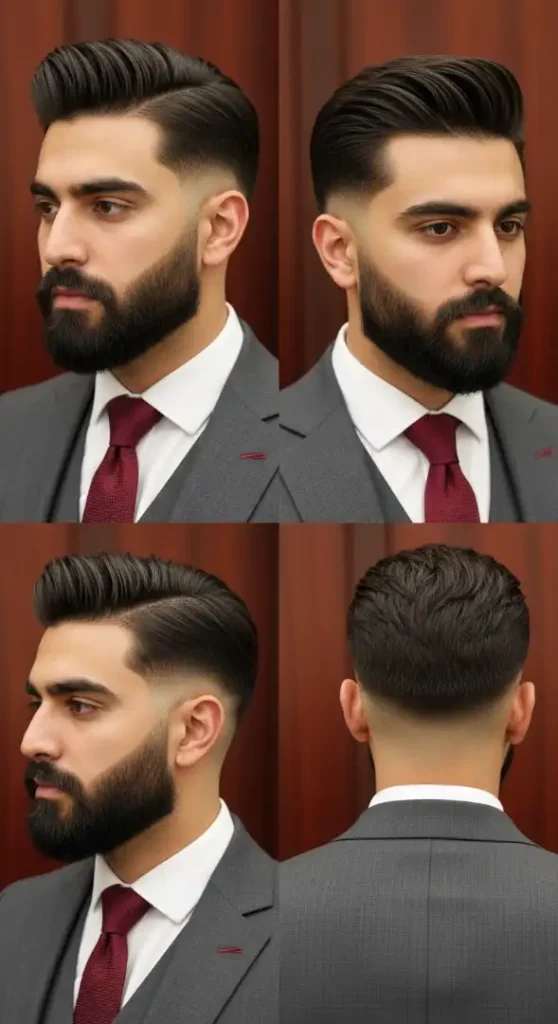
The Business Professional Taper exists in the intersection of modern grooming and corporate conservatism — a cut engineered for men who need to project authority without appearing fashion-forward. The mid-low taper starting point sits at ear midpoint, creating just enough graduation to look current while maintaining the covered-sides aesthetic that conservative industries demand. The 2.5-inch top length allows for classic side-part styling that reads as timeless rather than trendy, while the subtle fade prevents the dated “helmet hair” look of traditional business cuts. This is strategic grooming: appearing well-maintained without drawing attention to the maintenance itself.
FACE SHAPE MATCH: Best for: Square, Diamond, Oval. Square faces with strong jaw definition benefit from the refined taper that complements rather than competes with angular bone structure — the subtle graduation adds sophistication without softening masculine edges. Diamond faces use the mid-low starting point to add width at cheekbone level, balancing narrow chin and forehead. Oval faces wear this universally as the conservative proportions maintain natural head shape. NOT ideal for Round faces seeking dramatic reshaping — choose mid or high fades for more vertical emphasis.
GROOMING KIT: Executive-level grooming requires reliable professional tools, not budget alternatives. Clippers: Oster Classic 76 (industry workhorse, consistent power for bulk work), Wahl Magic Clip for mid-fade graduation. Trimmer: Andis T-Outliner for beard lining and edge detail. Finishing tools: Mason Pearson Popular Mixture brush (boar and nylon) for daily styling and distributing natural oils, Kent 20T fine-tooth comb for precise parting. Styling products: Uppercut Deluxe Featherweight for light hold that doesn’t look product-heavy, Baxter of California Clay Pomade for textured professional finish, Jack Black Beard Lube for pre-trim conditioning, Honest Amish Beard Balm for daily beard softening and connecting facial hair to fade naturally.
MAINTENANCE LEVEL: MEDIUM-LOW. Salon visits every 18-21 days — the conservative fade height and gradual blend grow out gracefully, extending time between cuts compared to aggressive fades. This is the lowest-maintenance fade option while still looking current. Daily styling: 3-4 minutes. Morning routine: apply small amount of featherweight pomade to damp hair, comb into side part with fine-tooth comb, brush smooth with boar bristle brush for natural shine. Beard: trim to 5mm every Sunday evening, apply balm daily after morning shower. Weekly: use clarifying shampoo Thursday nights to remove product buildup so Friday morning styling looks fresh.
BARBER TALK (THE EXACT SCRIPT): “I need a professional business cut with a mid-low taper fade. Start the fade at the middle of my ear and keep it conservative — use a 2.5 guard at the starting line, blend down to a 1 at the bottom, no skin showing. Leave 2.5 inches on top, cut with scissors for a natural finish, and give me a clean left side part. Don’t texturize too much — I want it to lay flat and professional. For the beard, trim everything to 5mm uniform length and create a clean cheek line and neck line. Blend the sideburns into the fade transition so there’s no gap. Finish with a straight razor cleanup on the beard edges and neckline.”
The Business Professional Taper proves you can honor corporate dress codes without sacrificing modern grooming standards, but the next style breaks free from those constraints entirely.
FAQs
Q: What’s a business-appropriate taper fade for corporate environments?
A: A mid-low taper fade starting at or below ear level maintains professionalism. Keep the top at 2-3 inches maximum, styled with a side part, and avoid skin-level fades in conservative industries. The fade should be subtle enough that colleagues notice you look well-groomed, not that you got a trendy haircut. Traditional finance, law, and government sectors favor this conservative approach.
Q: How do I maintain a professional taper fade between barber visits?
A: Invest in a quality trimmer to clean up your neckline every week — maintaining a crisp neck edge extends the professional appearance. Keep the top groomed with light pomade daily to prevent messy growth. Book your next appointment before leaving the barbershop to maintain a consistent 18-21 day schedule, ensuring you never look unkempt in client meetings.
Q: Should I get a beard with a professional taper fade?
A: Yes, if your workplace culture allows facial hair. A neat 5mm corporate beard adds definition and connects to the fade professionally. Keep beard lines clean — sharp cheek line, defined neck line below the jawbone. The beard should look groomed, not trendy. Avoid mustache-only or patchy growth in corporate settings.
Q: Which is more professional: taper fade or regular taper?
A: Both can be professional — it depends on starting height and contrast. A mid-low taper fade (starting at ear level, not going to skin) is equally professional as a traditional taper. The fade technique creates a more refined blend than older taper methods. High skin fades are generally too trendy for conservative corporate environments.
5 of 11 — The Drop Fade Taper
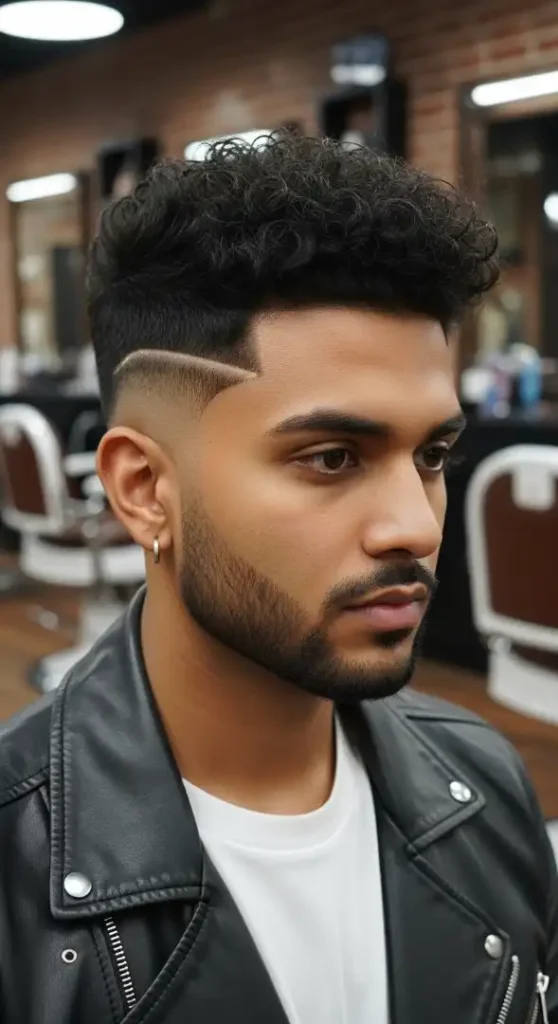
The Drop Fade Taper introduces curved geometry into the traditionally straight-line world of fades, creating a following arc that traces the natural head shape from temple to nape. Unlike standard fades that maintain a consistent horizontal line around the head, the drop fade literally drops downward as it curves behind the ears — starting high at the temple, descending to its lowest point behind the ear, then rising slightly toward the nape. This anatomical following creates a custom-contoured effect that flatters virtually every head shape by working with natural bone structure rather than imposing a rigid template. For coily and curly hair textures, the drop fade is particularly effective because it accommodates the volume differential between tight-curled tops and the need for skin-level sides without creating awkward bulk behind the ears.
FACE SHAPE MATCH: Best for: ALL face shapes, but particularly effective for Round and Heart shapes. The curved drop line breaks up the horizontal width of Round faces better than straight fades by creating diagonal movement that guides the eye in a slimming arc. Heart-shaped faces with wider foreheads and narrow chins benefit from the drop’s lower fade point behind the ears, which adds perceived width at jaw level for balance. The custom-contoured nature means skilled barbers can adjust the drop’s arc depth to complement any head shape — deeper drops for round heads, shallower curves for longer faces.
GROOMING KIT: Drop fades require master-level barbering and premium tools for home maintenance. Clippers: Wahl Magic Clip for initial bulk removal and fade foundation work, Andis Master with adjustable blade for the curved drop gradient. Trimmer: BaByliss Pro FX Skeleton trimmer for zero-gap detail work along the curved fade line. For coily hair: Wide-tooth detangling comb, Denman D4 brush for curl definition, satin pillowcase to prevent coil crushing during sleep. Styling products: Cantu Shea Butter Natural Hair Moisturizing Curl Activator Cream for coil definition, SheaMoisture Curl Enhancing Smoothie for hold without crunch, As I Am DoubleButter Cream for moisture retention. Maintenance: Wahl Peanut trimmer for neckline cleanup between visits.
MAINTENANCE LEVEL: MEDIUM-HIGH. Salon visits every 10-14 days — the curved nature of the drop means uneven growth shows faster than straight fades. The temple area grows out first, disrupting the arc’s visual flow. This cut absolutely requires a barber who specializes in drop fades; the technique demands precision that many stylists haven’t mastered. Daily styling: 7-10 minutes for coily hair. Morning routine: dampen hair completely, apply curl activator cream to soaking wet hair, scrunch and squeeze to encourage coil formation, apply curl enhancing smoothie for hold, air-dry or diffuse on low heat. Never brush dry coily hair — it destroys curl pattern. Nighttime: sleep in satin bonnet or on satin pillowcase to maintain curl definition.
BARBER TALK (THE EXACT SCRIPT): “I want a drop fade — start at temple level and drop the fade line down in a curve behind my ears, lowest point directly behind the ear, then bring it back up slightly toward the nape. Take it to skin at the bottom using a bald fade technique. Leave 3 inches of length on top and don’t thin out my coils — I need the density for natural volume. Just shape the top outline and remove any uneven length. The drop curve should be smooth and gradual, not a sharp angle. Clean up my hairline with a tight edge-up, and use a hot lather and straight razor for the skin fade portions so it’s perfectly smooth.”
The Drop Fade Taper shows that technical innovation in barbering isn’t about inventing new styles, just perfecting the geometry of established ones — and the next style proves that sometimes simplicity executed perfectly beats complexity every time.
FAQs
Q: What’s the difference between a drop fade and a regular taper fade?
A: A regular taper fade maintains a horizontal line around the head at a consistent height. A drop fade curves downward behind the ears, following the natural head shape. The drop starts high at the temple, descends to its lowest point behind the ear, then rises toward the nape. This creates a more custom-contoured look that often flatters head shapes better than straight fades.
Q: Does a drop fade work with curly or coily hair?
A: Yes — actually, drop fades work exceptionally well with curly and coily textures. The curved drop line accommodates the natural volume of textured hair better than straight fades, preventing awkward bulk buildup behind the ears. The key is finding a barber experienced with both drop fades and your hair texture.
Q: How often should I get a drop fade touched up?
A: Every 10-14 days for optimal appearance. The curved nature means the fade grows out unevenly — the temple area shows growth first, disrupting the arc’s visual flow. If you maintain your neckline at home with a trimmer, you might stretch to 15-16 days, but the drop’s precision requires professional touch-ups more frequently than straight fades.
Q: Can I get a drop fade at any barbershop?
A: No — drop fades require advanced technique that not all barbers have mastered. The curved gradient demands precision and understanding of head anatomy. Look for barbers who showcase drop fades in their portfolio (Instagram is useful here) and read reviews mentioning “drop fade” specifically. Budget $50-80 for quality drop fade work.
6 of 11 — The Pompadour Taper Fade
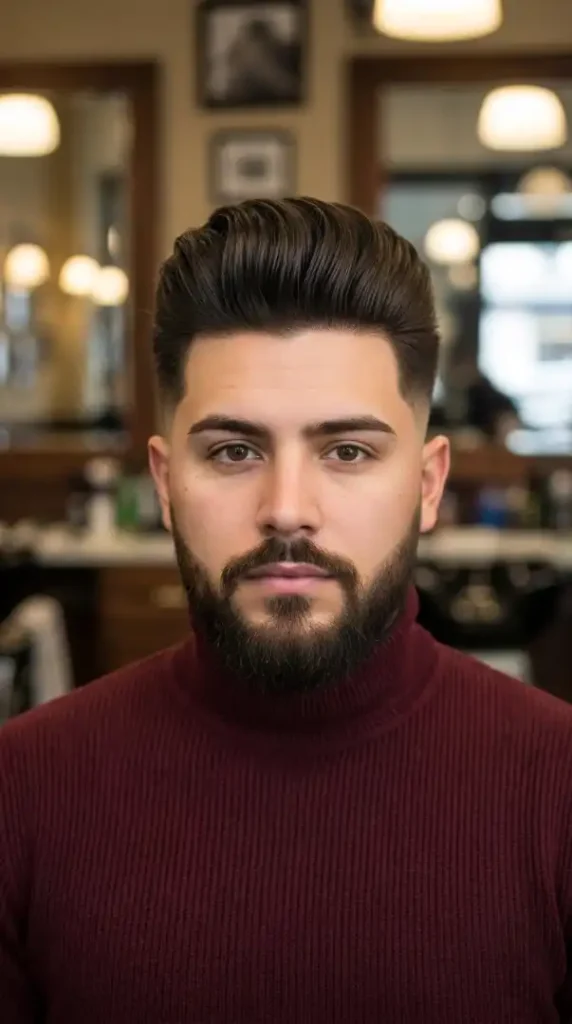
The Pompadour Taper Fade resurrects 1950s rebellion through modern barbering technique, creating a style that honors rockabilly heritage while functioning in contemporary contexts. The pompadour’s defining characteristic — hair swept upward and backward off the forehead with substantial height — demands precise engineering: the front section requires 4-5 inches of length to achieve lift without looking costume-like, while the sides must be tapered aggressively enough to create proportion. A mid taper fade starting at temple level removes just enough lateral bulk to make the top’s volume appear intentional rather than accidental. This is controlled drama — maximum visual impact through mathematical proportion, not random styling. The pompadour works because it defies gravity in a way that signals effort and confidence simultaneously.
FACE SHAPE MATCH: Best for: Oval, Diamond, Oblong. The vertical emphasis of the pompadour adds height that elongates Diamond and Oval faces beautifully, while the backward sweep creates a strong frontal profile. Oblong faces can wear pompadours IF they style with slight forward angle rather than straight back, preventing over-lengthening. NOT recommended for Round faces — adding height without removing enough side width creates a top-heavy disproportion that emphasizes roundness. Round faces should choose high skin fades with pompadours to maximize side reduction.
GROOMING KIT: Pompadours are high-maintenance styles requiring premium products and tools. Clippers: Wahl Senior for bulk removal, Andis Master for mid-fade precision. Trimmer: Andis T-Outliner for edge work and Van Dyke beard shaping. Styling tools: Round brush (medium barrel) for blow-drying lift, wide-tooth comb for initial shaping, fine-tooth comb for final detailing. Products: Layrite Super Hold Pomade (water-based, strong hold for all-day height), American Crew Pomade (lighter hold for reworkability), Uppercut Deluxe Styling Powder for volume boost at roots before pomade application, heat protectant spray for blow-drying. Beard: Honest Amish Beard Balm for Van Dyke softness, precision scissors for mustache trimming.
MAINTENANCE LEVEL: HIGH. Salon visits every 12-16 days — the pompadour’s height reveals length quickly, and the taper requires regular maintenance. However, pompadours grow out more gracefully than skin fades if you maintain daily styling. Daily styling: 10-15 minutes, non-negotiable. Morning routine: apply styling powder to damp roots for volume foundation, blow-dry hair upward and backward using round brush to create lift and shape, work pomade through hair from roots to ends while still warm from dryer, use comb to perfect the backward sweep and height, finish with light hairspray for hold. Evening: if going out, refresh with small amount of pomade and comb. Weekly: deep-cleanse shampoo Sunday night to remove product buildup.
BARBER TALK (THE EXACT SCRIPT): “I want a classic pompadour with a mid taper fade. Leave 4.5 to 5 inches of length at the front, graduating to 3.5 inches at the crown — I need that length differential for the backward sweep. Point-cut layers for texture but maintain density for volume. Start the taper at temple line, use a 2 guard at the fade line and blend down to a 0.5 at the bottom, keeping it smooth and gradual. Clean edge-up at temples and hairline. For my Van Dyke: shape the chin beard and soul patch at 6mm, mustache slightly longer with definition above the lip line, and completely clean-shave my cheeks. Blend the soul patch into the chin beard naturally.”
The Pompadour Taper Fade is proof that classic styles don’t expire, they just get refined — but the next cut shows what happens when you abandon historical reference entirely and build something architecturally modern.
FAQs
Q: How do I style a pompadour with a taper fade?
A: Apply styling powder to damp roots for volume, blow-dry hair upward and backward using a round brush for lift and shape. While hair is still warm, work strong-hold pomade from roots to ends. Use a comb to perfect the backward sweep, ensuring the front has maximum height. Finish with light hairspray. The key is blow-drying — pompadours without blow-dry prep collapse within hours.
Q: How much length do I need for a pompadour?
A: Minimum 4 inches at the front, graduating to 3-3.5 inches at the crown. Less than 4 inches won’t create enough lift to qualify as a pompadour — you’ll just have a generic quiff. The length differential (longer front, shorter back) is critical for the signature backward sweep. If you’re growing it out, wait until you reach these lengths before getting the pompadour cut.
Q: Can I wear a pompadour in a professional office?
A: It depends on your industry. Creative fields, modern tech companies, and less conservative industries generally accept pompadours as they’re classic Americana styling. Traditional corporate environments (law, finance, government) may view them as too fashion-forward. Keep the height conservative (under 3 inches of lift) if you’re testing workplace reception. The Van Dyke beard is similarly industry-dependent.
Q: How often should I wash a pompadour?
A: Every 2-3 days maximum to prevent product buildup that weighs down volume. Use a clarifying shampoo once weekly to deep-clean pomade residue. On non-wash days, refresh styling with a small amount of pomade and recomb. Over-washing strips natural oils that help hair hold the pompadour’s shape — your hair’s natural texture contributes to the style’s longevity.
7 of 11 — The Crop Top Taper
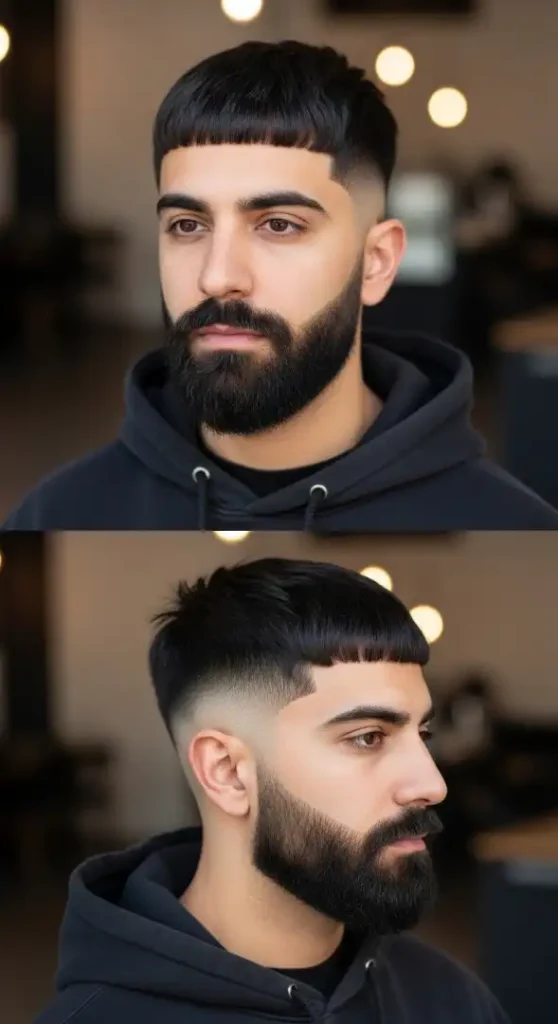
The Crop Top Taper represents European minimalism translated through barbering precision — a cut that rejects traditional American styling in favor of geometric simplicity. The French crop’s defining characteristic, a horizontal fringe cut blunt across the forehead, creates a strong architectural line that frames the face differently than swept or lifted styles. Combined with a high taper fade that removes lateral bulk aggressively, this cut generates clean proportion through subtraction rather than addition. There’s no pompadour lift, no textured volume games, just horizontal and vertical lines intersecting at calculated angles. The result reads as intentionally understated, which paradoxically makes it stand out in contexts filled with over-styled hair. This is confidence through restraint.
FACE SHAPE MATCH: Best for: Oval, Square, Oblong. The horizontal fringe adds width across the forehead, which balances Oblong faces beautifully by reducing apparent length. Square faces with strong jawlines benefit from the crop’s soft horizontal line contrasting with angular bone structure — creates sophisticated interplay between hard and soft elements. Oval faces wear this universally. NOT ideal for Round faces — the horizontal fringe and high fade can emphasize width if not executed with aggressive enough taper. Round faces should request the highest fade possible to maximize vertical emphasis.
GROOMING KIT: The crop’s simplicity is deceptive — it requires quality tools for maintenance. Clippers: Wahl Magic Clip for bulk removal and high taper foundation, Oster Fast Feed for precision guard work. Trimmer: Andis T-Outliner for sharp temple edges and fringe line maintenance. Scissors: Professional cutting shears for fringe blunt-cutting at home (only if confident) or leave to barber. Styling: Wide-tooth comb for rough styling, fine-tooth comb for fringe precision. Products: American Crew Fiber (matte texture without shine), Hanz de Fuko Claymation for choppy separation, light sea salt spray for pre-styling texture. Beard: Wahl Lithium Ion trimmer for maintaining 8mm length uniformly, Honest Amish Heavy Duty Beard Balm for thick beard conditioning and control.
MAINTENANCE LEVEL: MEDIUM. Salon visits every 14-18 days — the high taper shows growth quickly but the crop top’s blunt fringe maintains its shape longer than graduated styles. The horizontal line actually looks intentional even as it grows slightly, giving you more flexibility than styles requiring specific length ratios. Daily styling: 4-6 minutes. Morning routine: work small amount of fiber through damp hair focusing on top and fringe, use fingers to create choppy texture and separation, comb fringe forward into horizontal line, adjust individual sections for intentional messiness. The crop should look slightly undone, never perfectly groomed. Beard: trim to 8mm every Sunday, apply balm daily after morning shower, brush downward for uniform appearance.
BARBER TALK (THE EXACT SCRIPT): “I want a French crop with a high taper fade. Cut the fringe blunt and horizontal just above my eyebrows — no graduation, straight line. Leave 2 to 2.5 inches on top with choppy point-cut texture for separation, but keep some weight for the crop structure. Start the high taper 2+ inches above my temples and blend to a 0.5 at the bottom — smooth gradient but keep it clean and geometric. Aggressive temple edge-up with sharp corners. For the beard, trim everything to 8mm uniform length, create clean cheek line and neck line, and make sure the sideburns blend naturally into the fade transition. Keep my salt-and-pepper pattern natural — don’t try to even it out.”
The Crop Top Taper proves that minimalism in grooming is about precision, not simplicity — and the next style demonstrates that sometimes tradition executed flawlessly beats trendy innovation.
FAQs
Q: What’s a French crop haircut?
A: A French crop features a short, blunt-cut horizontal fringe across the forehead (usually just above the eyebrows) with a textured top section. Unlike traditional fringe cuts that graduate or sweep, the crop’s fringe is cut in a straight horizontal line. It’s typically paired with faded or tapered sides for contrast. The style originated in France and emphasizes geometric simplicity over volume-based styling.
Q: How do I style a crop top taper fade?
A: Work matte styling product (fiber or clay) through damp hair on top. Use your fingers to create choppy, separated texture — the style should look intentionally messy, not perfectly groomed. Comb or push the fringe forward into a horizontal line across your forehead. The key is achieving texture without looking over-styled. Let it air-dry or rough-dry with minimal heat.
Q: What face shapes work best with a French crop?
A: Oval, Square, and Oblong faces wear French crops best. The horizontal fringe adds width to balance longer Oblong faces, while the clean geometric line complements Square jawlines. Round faces can wear crops but should request the highest possible fade to add vertical emphasis and minimize the fringe’s horizontal weight.
Q: Can older men wear a crop taper fade?
A: Absolutely — the French crop is particularly flattering on men with mature hairlines or thinning hair because the forward fringe covers recession while the short length prevents obvious thinning at the crown. Salt-and-pepper hair adds distinguished character to the style. Keep the beard full to balance the short hair and create mature sophistication.
8 of 11 — The Classic Side Part Taper
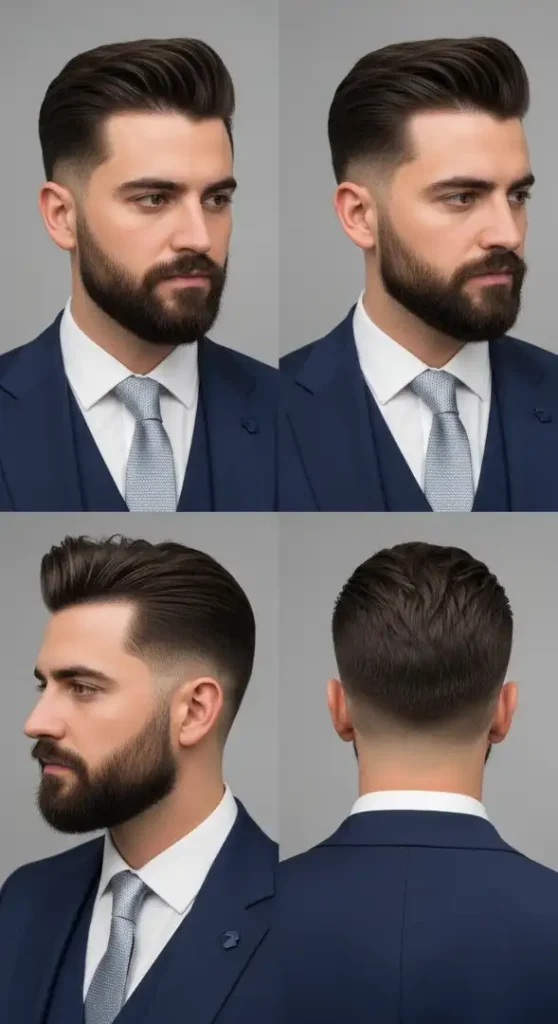
The Classic Side Part Taper is the grandfather of modern men’s grooming — a style that predates contemporary barbering trends yet remains relevant through timeless proportion and universal flattery. The side part’s power lies in asymmetry: creating visual interest through the simple act of dividing hair into unequal sections. The low taper fade modernizes what would otherwise be a 1940s throwback, adding contemporary refinement to traditional structure. This is the ultimate versatile cut — professional enough for conservative industries, stylish enough for social occasions, and simple enough to maintain without daily drama. The low fade starting point preserves coverage and fullness while still delivering clean lines, making it ideal for men who want to look groomed without appearing fashion-focused.
FACE SHAPE MATCH: Best for: ALL face shapes — genuinely universal. The side part’s asymmetry adds visual interest that flatters every structure. Round faces benefit from the diagonal line of the part creating slimming angles. Square faces gain sophisticated refinement as the soft swept style contrasts with angular jawlines. Oval faces wear it effortlessly. Diamond faces use the side volume to balance narrow chins. Oblong faces can wear it with slightly more volume on top. The low taper’s conservative height works with any face length because it doesn’t manipulate proportion dramatically.
GROOMING KIT: This classic cut requires classic tools executed well. Clippers: Oster Classic 76 for reliable bulk work, Wahl Magic Clip for low fade precision. Trimmer: Andis T-Outliner for edge work and beard lining. Styling tools: Kent 81T fine-tooth comb for creating and maintaining the part line, Denman D3 brush for distributing product evenly. Products: Uppercut Deluxe Pomade (traditional water-based formula with natural shine), Layrite Original (medium hold for professional finish), American Crew Forming Cream (matte alternative for less shine), Honest Amish Beard Balm for 4mm beard conditioning and softening. Home maintenance: mirror and trimmer for weekly neckline cleanup.
MAINTENANCE LEVEL: LOW-MEDIUM. Salon visits every 18-24 days — the low fade and conservative length grow out gracefully, making this the lowest-maintenance fade option while still looking current. This cut is designed for busy professionals who want to look good without thinking about it constantly. Daily styling: 2-4 minutes. Morning routine: dampen hair, apply small amount of pomade to palms and distribute evenly through hair, create part with fine-tooth comb (always in the same location for muscle memory), comb right section smoothly to the right, brush for polish and shine. That’s it. Evening refresh if needed: re-comb, no additional product. Weekly: trim beard to 4mm Sunday evening, apply balm daily.
BARBER TALK (THE EXACT SCRIPT): “I want a classic side part with a low taper fade. Create a clean left side part and leave 2.5 inches on top — cut with scissors for a natural finish, not clipper-cut. Start the fade at the bottom of my ear and keep it subtle — use a 2 guard at the starting line and blend down to a 1 at the very bottom, no skin showing. I want it to look refined and professional, not trendy. Clean up my hairline but keep it natural-looking, not sharp corners. For the beard, trim to 4mm uniform length with clean cheek and neck lines. Blend the sideburns into the beard naturally at the same length.”
The Classic Side Part Taper is proof that some styles transcend trend cycles because they’re built on universal principles of proportion and balance — and the next cut shows what happens when you take that classic foundation and modernize the texture.
FAQs
Q: How do I create a side part at home?
A: Always part in the same location for consistency — typically starting from the outer edge of your eyebrow, extending straight back. Use a fine-tooth comb on damp hair, creating a clean straight line by dragging the comb backward. Apply pomade, then re-comb the part to sharpen the separation. The key is consistency — using the same part location daily trains your hair to naturally separate there.
Q: What’s the most professional taper fade for conservative workplaces?
A: A low taper fade with a side part is the most conservative modern option. The fade starts at or below ear level and doesn’t go to skin. Keep the top at 2-3 inches maximum, styled with a side part, and use products that provide natural shine (traditional pomades) rather than matte finishes. This reads as “well-groomed professional” not “following fashion trends.”
Q: Can I wear a side part if I have a cowlick?
A: Yes — actually, working with your cowlick often determines where your side part should naturally fall. Part where the cowlick wants to divide your hair, not where you think it should go aesthetically. Fighting a cowlick creates daily frustration; working with it creates effortless styling. Your barber can identify your natural growth pattern and recommend the ideal part location.
Q: How often should I get a low taper fade touched up?
A: Every 18-24 days for professional appearance. Low fades grow out the most gracefully of all fade types because the starting point is conservative and the blend is subtle. If you maintain your neckline at home every 7-10 days with a trimmer, you can comfortably stretch to 24-26 days between full haircuts.
9 of 11 — The Textured Quiff Taper
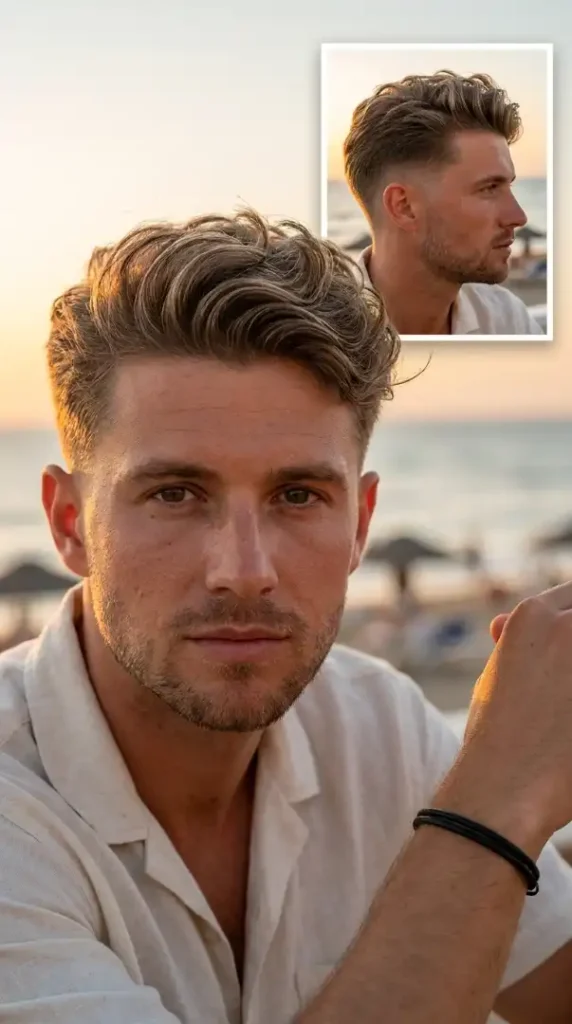
The Textured Quiff Taper strikes the balance between effortless and intentional — a style that looks casually cool but requires deliberate technique to achieve. Unlike the structured pompadour that demands rigid control, the textured quiff embraces natural movement and welcomes imperfection as part of its appeal. The 3.5-inch front length creates lift and forward angle without pompadour-level drama, while choppy point-cutting throughout generates separation that makes the style appear constructed from individual pieces rather than one solid mass. The mid-high taper fade starting between temple and ear-top removes enough lateral bulk to make the textured top appear intentionally voluminous rather than accidentally messy. This is controlled casualness — the appearance of waking up looking good, achieved through 7 minutes of morning work.
FACE SHAPE MATCH: Best for: Oval, Diamond, Oblong. The forward-leaning quiff adds dimension to Diamond faces by filling temple width, while the upward lift elongates without over-emphasizing like pompadours. Oval faces wear this effortlessly as the balanced proportions maintain natural head shape. Oblong faces benefit from the slight forward angle preventing over-lengthening that straight-back styles create. NOT ideal for Round faces — the moderate fade height and textured volume can add unwanted width. Round faces should pair textured quiffs with high skin fades for maximum side reduction.
GROOMING KIT: Textured styles require specific products and tools. Clippers: Wahl Magic Clip for bulk removal, Andis Master for mid-high fade work. Trimmer: BaByliss Pro FX Outliner for temple edge-up and stubble maintenance. Styling tools: Vented brush for blow-drying volume, fingers for texturizing (never use a comb on dry textured hair). Products: Uppercut Deluxe Matte Clay (strong hold, zero shine), Hanz de Fuko Claymation for extreme texture, Redken Brews Sea Salt Spray for pre-styling grit, blow dryer with concentrator nozzle for directed airflow. Stubble maintenance: Philips OneBlade for quick 3-day length maintenance without full shave.
MAINTENANCE LEVEL: MEDIUM-HIGH. Salon visits every 12-16 days — the mid-high fade shows growth noticeably but the textured top maintains its messy-intentional appearance longer than structured styles. Daily styling: 7-9 minutes, non-negotiable if you want it to look intentional rather than bedhead. Morning routine: apply sea salt spray to damp hair focusing on roots, blow-dry while lifting and directing hair upward and slightly forward with vented brush or fingers, once 80% dry work clay through hair focusing on mid-lengths and ends, use fingers to create separation and texture by pulling small sections upward and pinching, adjust front quiff angle and height, let air-dry the final 20%. Never touch throughout the day — oils from hands destroy texture. Stubble: maintain at 1-2mm every 2-3 days with OneBlade, no need for full shaves.
BARBER TALK (THE EXACT SCRIPT): “I want a textured quiff with a mid-high taper fade. Leave 3.5 to 4 inches at the front for lift, graduating to 2.5 inches at the crown. Point-cut heavy texturizing throughout — I want lots of separation and movement, not a solid mass. Start the fade between my temple and the top of my ear, use a 1.5 guard at the fade line and blend down to a 0.5 at the bottom. Clean temple edge-up but keep it looking natural, not geometric. I’m keeping 3-day stubble, so just clean up my neck and cheek lines — don’t take it down to skin. Make sure the stubble length works with the fade transition.”
The Textured Quiff Taper is for men who want modern style without looking like they spent an hour in front of a mirror — and the next cut proves that sometimes the boldest statement is going shorter than everyone else.
FAQs
Q: What’s the difference between a quiff and a pompadour?
A: A pompadour is swept straight back with high volume and structured hold — it’s formal and requires precision. A quiff is swept upward and forward with textured, separated strands — it’s casual and embraces natural movement. Pompadours use strong-hold pomade and blow-drying for structure. Quiffs use matte clay and finger-styling for intentional messiness. Quiffs are lower maintenance and more forgiving.
Q: How do I style a textured quiff?
A: Apply sea salt spray to damp hair, blow-dry while lifting upward and forward with your fingers or a vented brush. Once mostly dry, work matte clay through mid-lengths and ends. Use your fingers to pull small sections upward, creating separation by pinching and twisting slightly. The key is finger-styling — never use a comb on a textured quiff or you’ll destroy the separation.
Q: Can I wear a quiff with wavy hair?
A: Yes — actually, wavy hair creates better quiff texture than straight hair because the natural wave pattern adds movement and dimension. Use the sea salt spray to enhance waves, then blow-dry while encouraging the natural pattern. Your waves will create organic texture that straight-haired guys have to manufacture with products.
Q: How much length do I need for a quiff?
A: Minimum 3 inches at the front, though 3.5-4 inches works better for substantial lift. Less than 3 inches won’t create enough volume to distinguish a quiff from regular short hair. The front should be longer than the crown (graduating from 4 inches front to 2.5 inches back) to achieve the forward-leaning angle.
10 of 11 — The Slick Back Taper
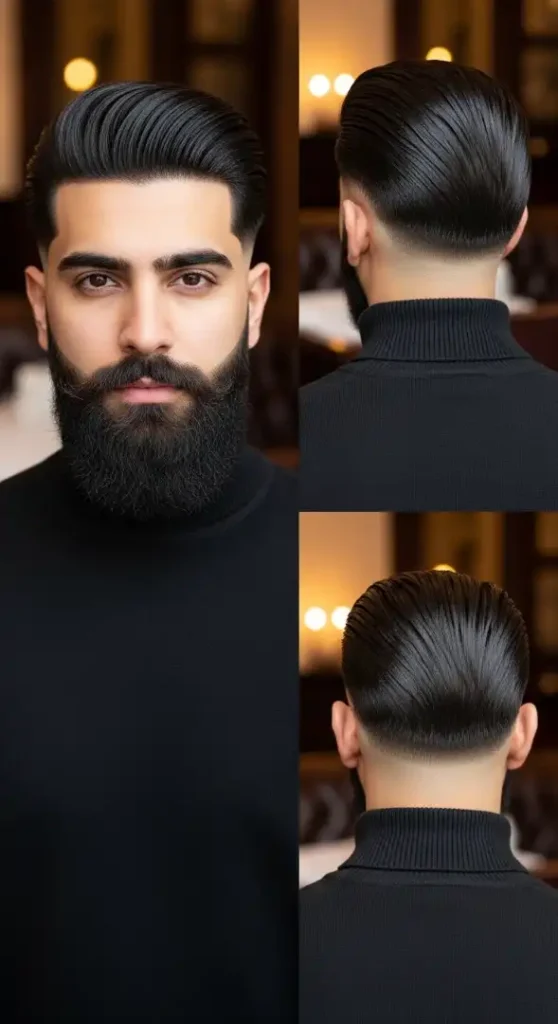
The Slick Back Taper is power dressing translated into grooming — a style that projects confidence through polish and control. Slicking hair straight back removes any softening elements from the face, demanding that your facial structure and grooming carry the entire aesthetic. This is why the slick-back works best with a full beard: the hair’s severity needs the beard’s texture for balance, creating masculine sophistication rather than aggressive starkness. The low-mid taper fade maintains enough coverage on the sides to prevent the “wet head” look while still delivering clean contemporary lines. The high-gloss pomade finish is non-negotiable — this style’s entire identity revolves around that reflective shine that catches light and announces deliberate grooming. This cut isn’t for men seeking subtle style; it’s for those comfortable being noticed.
FACE SHAPE MATCH: Best for: Oval, Oblong, Square. Slicking hair back fully exposes the face, so strong facial structure is an asset. Oval faces wear this effortlessly as balanced proportions need no compensating styling. Oblong faces can wear slick-backs when paired with full beards that add width at the jaw, preventing over-lengthening. Square faces with defined jawlines gain refined power — the clean lines complement angular bone structure. NOT recommended for Round faces or weak chin/jawline structures — slicking hair back removes all softening elements and exposes every facial characteristic without mitigation. Heart-shaped faces should avoid this as it emphasizes narrow chins.
GROOMING KIT: The slick-back demands premium grooming tools and products. Clippers: Oster Classic 76 for bulk work, Wahl Magic Clip for low-mid fade precision. Trimmer: Andis T-Outliner for beard sculpting and sharp line creation. Beard tools: Professional barber scissors for mustache trimming, beard comb for daily grooming, straight razor for cheek and neck line maintenance. Styling products: Suavecito Firme Hold Pomade (water-based, extreme shine, strong hold), Layrite Super Hold (for humidity resistance), Murray’s Superior (petroleum-based for maximum shine if you don’t wash daily). Beard: Viking Revolution Beard Oil for 7mm length softness, Honest Amish Heavy Duty Balm for sculpting and hold, boar bristle beard brush for daily grooming and shine distribution.
MAINTENANCE LEVEL: MEDIUM-HIGH. Salon visits every 14-18 days for the taper maintenance and professional beard sculpting. However, the slick-back top requires less frequent trimming than textured styles since length variation doesn’t disrupt the aesthetic — you’re combing everything back anyway. Daily styling: 5-7 minutes. Morning routine: dampen hair thoroughly, apply generous amount of high-shine pomade working from front to back, use fine-tooth comb to slick hair straight back from hairline to crown with visible comb lines, ensure even distribution and perfect smoothness, finish with small amount of additional pomade on surface for maximum shine. Beard: comb daily with beard comb, apply oil after shower, sculpt with balm for hold, maintain sharp cheek and neck lines with trimmer twice weekly.
BARBER TALK (THE EXACT SCRIPT): “I want a slick-back style with a low-mid taper fade. Leave 3.5 to 4 inches on top, cut with scissors for natural finish — I’m combing it all straight back so the length needs to be uniform, no layering or texturing. Start the fade just above my ear and keep it refined — use a 2 guard at the starting line, blend down to a 1 at the bottom, no skin. Clean up my hairline but nothing too aggressive. For my beard, I want a full sculpted look at 7mm — create a sharp straight cheek line about one finger-width below my cheekbone, and a defined curved neck line about one finger-width above my Adam’s apple. The beard should look deliberately shaped, not natural-edged. Blend my sideburns into the fade transition smoothly.”
The Slick Back Taper is grooming as armor — a statement of control and confidence — and the final style in this collection shows that sometimes the most modern approach is stripping everything down to essential geometry.
FAQs
Q: How do I slick my hair back without it looking greasy?
A: Use water-based pomades (Suavecito, Layrite) rather than petroleum-based products. Water-based formulas provide shine without the heavy greasy feel of old-school pomades. Apply to damp hair for easier distribution, and use a fine-tooth comb to work product through evenly. The key is enough product for hold and shine, but not so much that hair looks wet hours later.
Q: Can I slick my hair back if I have a receding hairline?
A: Slicking hair back fully exposes hairline recession, so it depends on your comfort level with that exposure. If you’re confident about your hairline (even if receding), the slick-back can look distinguished and powerful. If you’re self-conscious, forward-styled options like textured crops or fringes provide coverage. Never fight your hairline — either own it or cover it, but don’t do half-measures.
Q: Do I need a beard with a slick-back hairstyle?
A: Not mandatory, but highly recommended. Slicking hair back removes all textural softness from the face, creating a severe clean look. A full beard (5mm+) adds texture and dimension that balances the hair’s smoothness. Without a beard, slick-backs can look overly stark unless you have particularly strong facial structure. Even a well-groomed 3-day stubble helps soften the overall aesthetic.
Q: What’s the best pomade for slicked-back hair?
A: For high shine and strong hold: Suavecito Firme Hold or Layrite Super Hold (both water-based, washable). For maximum shine and vintage feel: Murray’s Superior Pomade (petroleum-based, requires more effort to wash out). For humidity resistance: Imperial Barber Classic Pomade. Start with water-based pomades — they’re easier to work with and wash out completely.
11 of 11 — The Buzz Cut Taper Fade
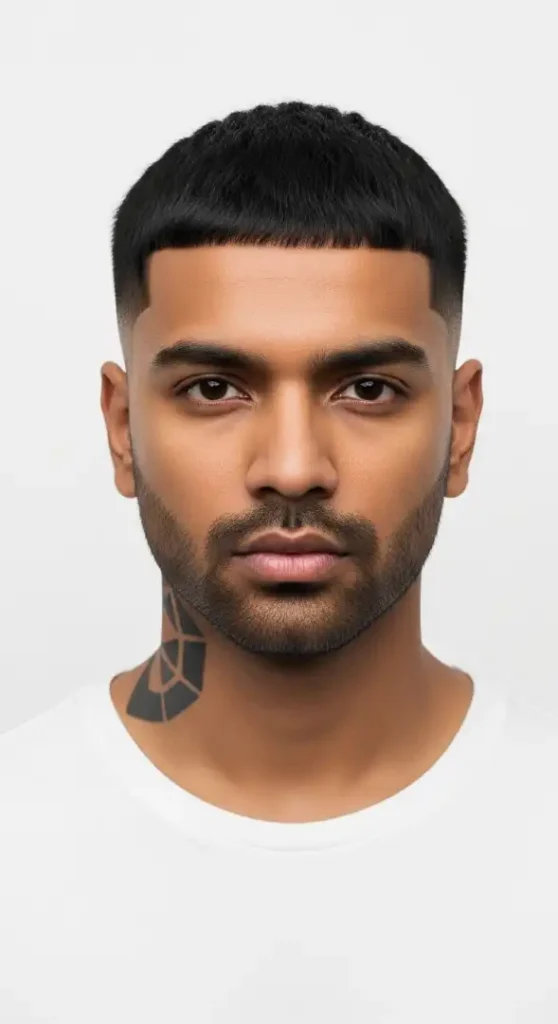
The Buzz Cut Taper Fade is minimalism as radical statement — a deliberate rejection of styling complexity in favor of geometric purity. At 6mm uniform length across the entire top, this cut removes the possibility of bad hair days, morning styling routines, and product dependency. The high skin fade creates maximum contrast, transforming what could be a simple military buzz into contemporary barbering by adding graduated precision along the sides. This is anti-vanity vanity: choosing the lowest-maintenance option available while demanding it be executed with master-level fade technique. The buzz cut taper fade works because it completely exposes head shape and facial structure, requiring confidence in your natural features rather than relying on hair to create illusions. This cut is for men who are done performing grooming theater.
FACE SHAPE MATCH: Best for: Oval, Square, Diamond — but ONLY if you have strong facial structure. Buzz cuts reveal everything: head shape, facial proportions, bone structure, even ear placement. Oval faces with balanced features wear this confidently. Square faces with defined jawlines gain powerful masculine edge as the minimal hair emphasizes angular bone structure. Diamond faces with strong cheekbones use the high fade to maintain temple width while the buzz reveals facial architecture. NOT for Round faces unless paired with facial hair — removing all hair without strong bone structure creates a spherical appearance. NOT for receding hairlines that you’re self-conscious about — buzz cuts expose rather than conceal.
GROOMING KIT: Ironically, the lowest-maintenance haircut requires premium tools for proper execution and home upkeep. Clippers: Wahl Senior (powerful for bulk buzz work), Andis Master (adjustable blade for high fade precision). Guards: Quality magnetic guards at 6mm (#2) for consistent buzz length. Trimmer: Andis T-Outliner for edge work and maintaining the high skin fade between barber visits. Home maintenance: Oster Fast Feed or Wahl Magic Clip for touching up the 6mm buzz weekly at home — this is critical for maintaining uniformity as even 2-3mm of growth creates visible length variation in such short hair. Skin care: face moisturizer with SPF (your face gets more sun exposure without hair coverage), scalp sunscreen if you’re in sun frequently.
MAINTENANCE LEVEL: LOW for the buzz, MEDIUM-HIGH for the fade. Total paradox: the hair requires almost zero daily maintenance (no styling, no products, wash with body soap if you want), but the high skin fade demands professional touch-ups every 7-10 days to maintain the sharp contrast. You can extend this slightly by learning to maintain your own fade at home with quality clippers, but the precision work around the temples and nape requires skill. Weekly: buzz the top yourself at home with 6mm guard to maintain uniform length — takes 5 minutes. Daily: literally nothing. Just wash your face. The buzz cut taper fade is for men who want to eliminate daily grooming time but are willing to invest in frequent professional fade maintenance.
BARBER TALK (THE EXACT SCRIPT): “I want a buzz cut with a high skin fade. Use a #2 guard — 6mm — uniformly across the entire top, crown, and front. Keep it completely even, no variation in length anywhere on top. For the fade, start 2 to 2.5 inches above my temples and take it all the way down to skin. I want a high-contrast skin fade — use progressively smaller guards from the 6mm buzz line down to zero, then finish with trimmer work and straight razor on the skin portions for a bald fade. Aggressive clean edge-up at my hairline and temples — sharp corners, geometric precision. Since I’m clean-shaven, make sure my facial hairline cleanup is equally crisp.”
The Buzz Cut Taper Fade proves that in a world of over-styled complexity, radical simplicity executed with precision is the ultimate power move — and brings us full circle to where modern men’s grooming began: military-inspired functionality elevated through contemporary barbering technique.
FAQs
Q: How short is a buzz cut?
A: Traditional buzz cuts range from 1mm (#0.5 guard) to 12mm (#4 guard). The most common length is 6mm (#2 guard), which shows hair texture and density without requiring any styling. Shorter than 6mm starts looking military/boot camp. Longer than 12mm isn’t really a buzz cut anymore — it’s just short hair that requires some styling.
Q: Can I do a buzz cut at home?
A: Yes — the buzz itself is simple with quality clippers and the right guard. Run the clippers against the direction of hair growth in overlapping passes until length is uniform. HOWEVER, the high skin fade portion requires professional barbering skill. You can maintain the top buzz weekly at home, but visit a barber every 7-10 days for the fade touch-up.
Q: Will a buzz cut look good on me?
A: Honest test: Are you comfortable with your head shape, facial structure, and features being fully exposed? Buzz cuts hide nothing — no hairstyle to soften a weak jawline, cover a receding hairline, or add facial length. If you have strong bone structure (defined jaw, good cheekbones, balanced features) and confidence in your natural appearance, buzz cuts look powerful. If you rely on hair to create facial balance, choose a different style.
Q: How often do I need to cut a buzz cut?
A: Buzz the top yourself weekly at home (5 minutes with clippers) to maintain the 6mm uniform length — even 2-3mm of growth creates visible variation in such short hair. Professional barber visits every 7-10 days for the high skin fade touch-up. The fade is what separates a contemporary buzz cut taper from a simple home buzz — and it requires professional maintenance.